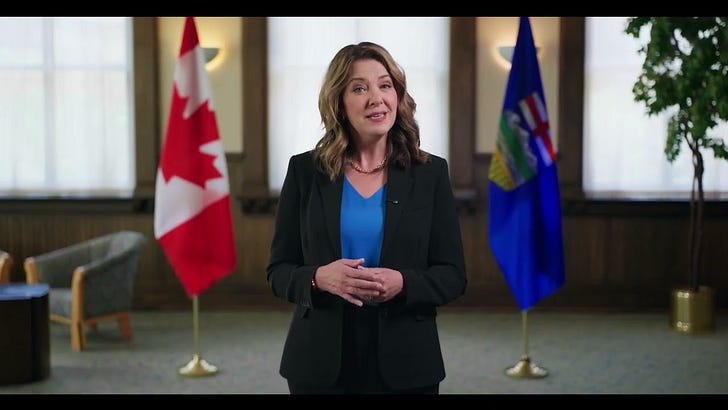
Alberta Premier Danielle Smith (source: Danielle Smith / Facebook)
Alberta separatism, attacks on the NDP, and culture war politics could dominate the biggest political event of the fall
With one month passed since Albertans voted in a referendum to choose whether our province should stay in Canada or go down the very complicated path to “independence,” political watchers will soon turn their eyes to Calgary’s BMO Centre, where in one week thousands of United Conservative Party members will be gathering for the governing party’s annual general meeting.
UCP activists will debate policy, elect board members, and hear from Premier Danielle Smith, and her two special guests, Saskatchewan Premier Scott Moe and British Columbia Premier Lorne Doerkson.
It is the hottest political event of the season, and it comes as Smith’s UCP government faces the fallout from the referendum vote that divided Albertans, urban and rural, and conservatives, on immigration, constitutional reforms and Alberta separation.
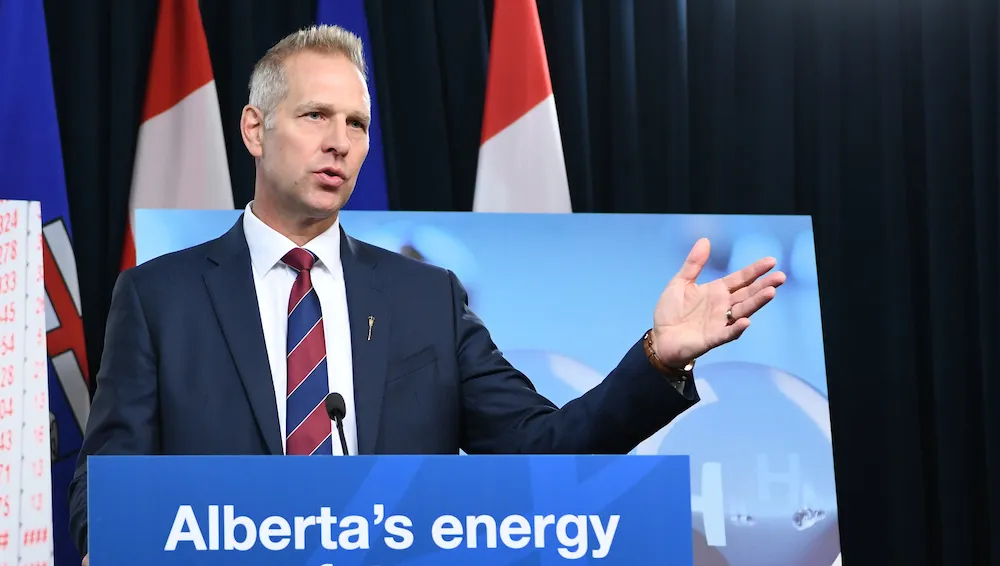
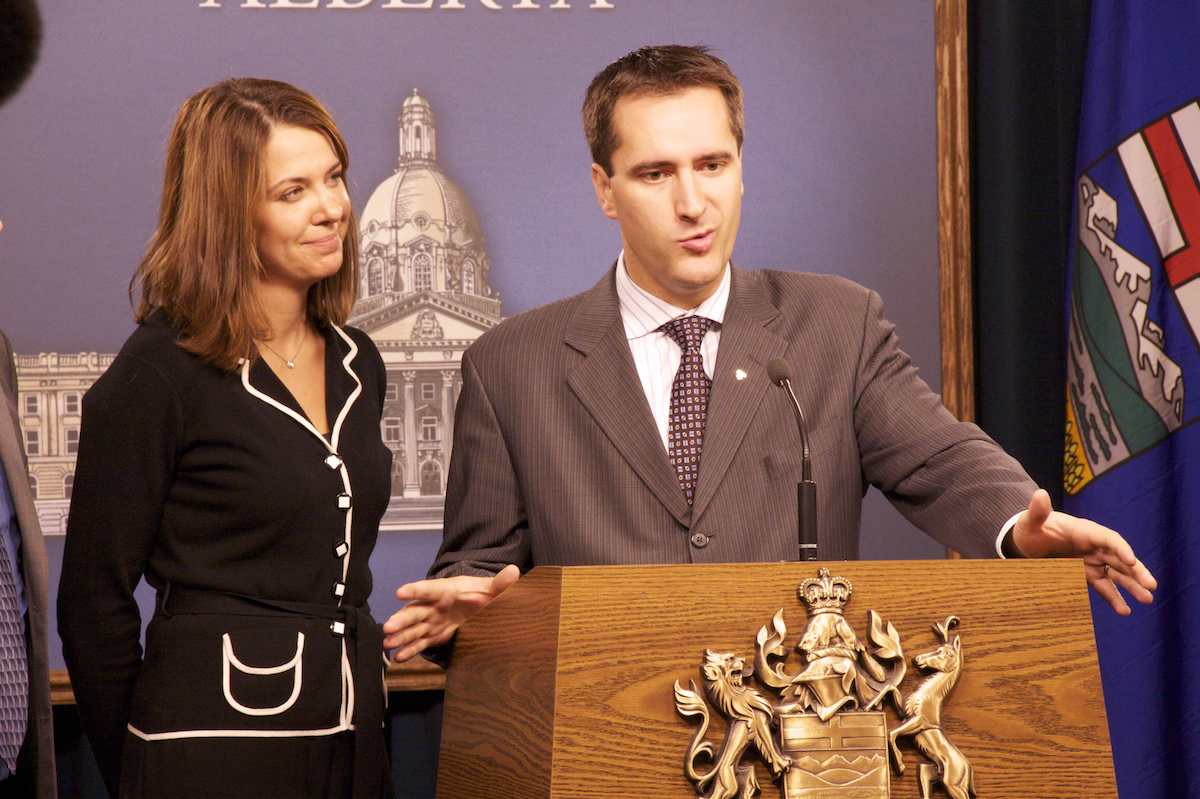
Minister of Affordability and Utilities Nathan Neudorf speaks at a government press conference in Edmonton on April 10, 2025 (source: Alberta Government / Flickr)
The most egregious change is how the O’Ferrall map indulge UCP cabinet minister Nathan Neudorf’s dream of carving up Lethbridge into massive “hybrid” rural-urban ridings.
Neudorf argued in his submission to the boundaries commission in early 2025 that slicing the city into “three or four complementary ridings that create a cohesive agri-innovation corridor.” would give “producers, processors, researches, and urban businesses a unified voice in the Legislature.”
The O’Ferrall map agreed with Neudorf’s argument and its final report used similar language, though it recommended leaving a single urban riding in the city’s centre. That will result in the number of electorally competitive ridings in the southwest Alberta city dropping from two to one. The creation of the three large hybrid rural-urban ridings and appears to be designed to isolate the NDP to one riding in the region.
How would the UCP react if the NDP did this? Spoiler: Not well.
The process of redistributing Alberta’s electoral boundaries is normally a fairly boring administrative process but, like most things in Alberta politics these days, nothing is spared from political drama. The chaos machine chugs along.
The new maps proposed by an Advisory Panel to the Special Select Committee on Electoral Boundaries were tabled in the Legislature last week, with no shortage of controversy. These maps replaced the maps proposed by the bipartisan Electoral Boundaries Commission that were tossed aside by Premier Danielle Smith’s United Conservative Party government more than six months ago.
The Advisory Panel’s map aren’t the gerrymandering nightmare scenario that were proposed by the UCP minority on the boundaries commission earlier this year but these new maps come with their own set of problems. The biggest problem is that the government was so eager to intervene in what should be an arms-length process.
Unlike the last three decades of bipartisan boundaries commissions, which have been conducted with public hearings, public feedback and public transcripts, the Advisory Panel chaired by retired judge and UCP donor Brian O’Ferrall drew its map in private without any public input or feedback.
The Advisory Panel report included a map supported by O’Ferrall and the UCP appointed panelists, former Conservative MP Monte Solberg and emergency management strategist Darwin Durnie, and a minority opinion supported by the two NDP appointees, University of Alberta Law professor Gerard Kennedy and former Okotoks town councillor Brent Robinson (for the purpose of this column, I’m going to refer to the UCP-supported Advisory Panel map as the O’Ferrall map).
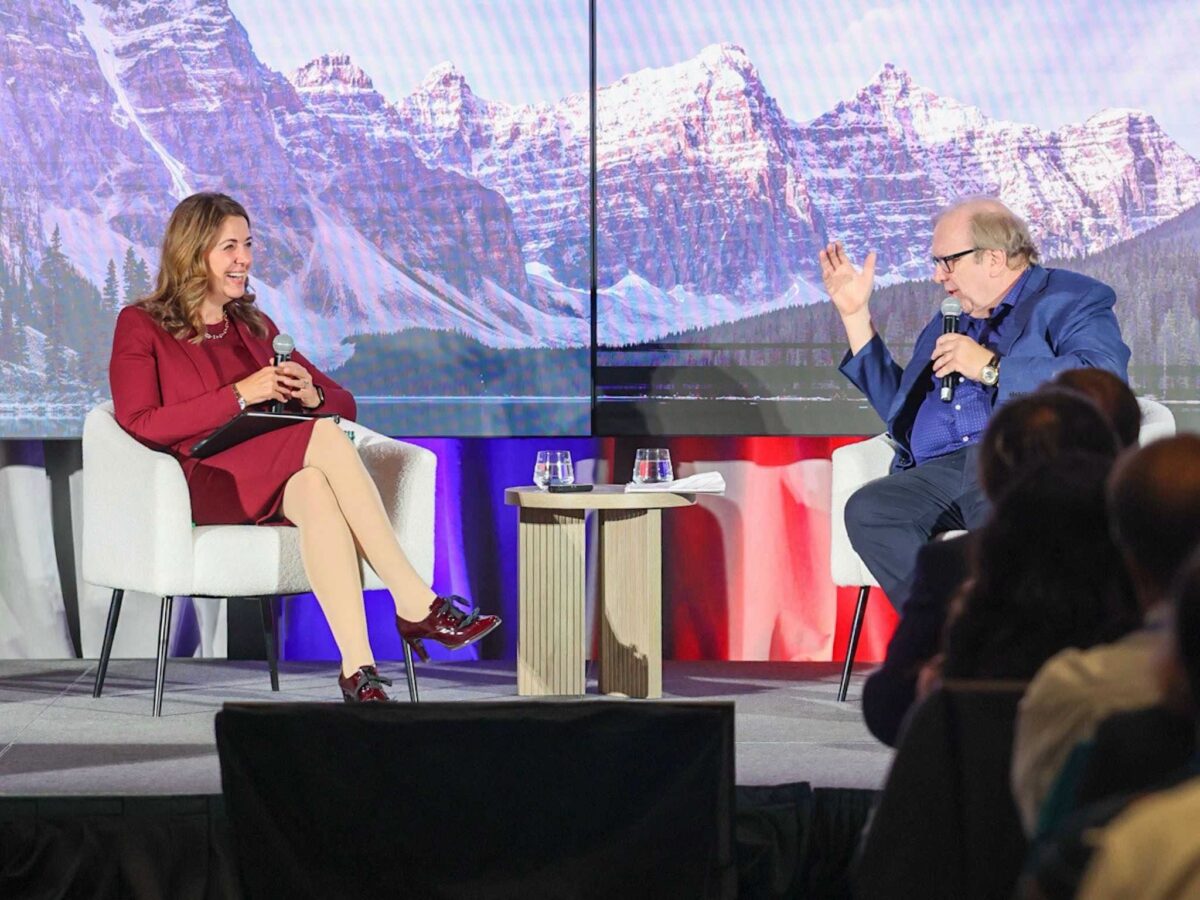
Premier Danielle Smith chats with Postmedia columnist Rick Bell during a session at the Canada Strong and Free Network conference in Calgary in October 2026 (source: Danielle Smith / Facebook)
Chief Elections Officer says he won’t have time to implement the new maps ahead of the October 2027 election
Less than two weeks after the referendums that dominated Alberta politics for months, Chief Elections Officer Gordon McClure is warning that his office won’t have the time or resources to implement the new electoral maps before the October 18, 2027 provincial election. The new maps were submitted by an advisory panel to an MLA committee last week and will be tabled in the Legislature on Monday, November 2.
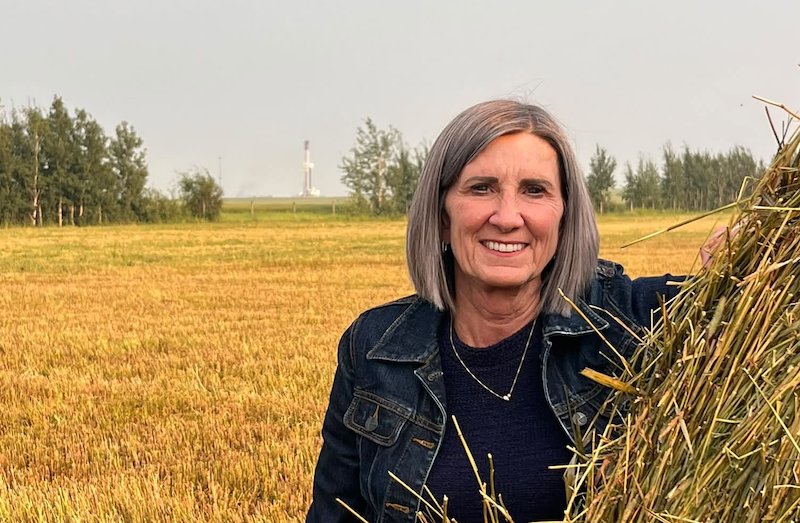
Former UCP nomination candidate Karen Peters was disuqlified from the party’s candidate selection race in Grande Prairie-Wapiti (source: Vote Karen Peters / Facebook)
Karen Peters has been disqualifed from the United Conservative Party nomination contest in Grande Prairie-Wapiti, making first-term MLA Ron Wiebe widely expected to be acclaimed to run for re-election in the 2027 provincial election.
Peters was the UCP constituency president in the northwest Alberta riding and has posted on her personal Facebook page about chemtrails and vaccination conspiracy theories. These posts raised eyebrows among political watchers but neitherissue is grounds for disqualification in the current UCP.
Divided boundaries commission gives us a level-headed majority report and drastically different minority report
The final report of the bi-partisan Electoral Boundaries Commission usually settles where the lines are drawn on Alberta’s electoral map, but like most decisions in Alberta politics these days — an injection of polarization and partisanship threatens to tear apart a system that has worked pretty well for the past thirty years.
Alberta is getting a new electoral map for the next provincial election that increases the total number of ridings from 87 to 89 but what that map looks like will depend on what MLAs decide to do when the United Conservative Party government introduces the next version of the Electoral Divisions Act into the Legislature.
With duelling maps included in the final report, it’s unclear what the government’s bill will include and how active MLAs will be in redrawing the map themselves.
A fairly level-headed majority report was supported by government-appointed chair Dallas K. Miller (a retired Judge of the Court of Queen’s Bench of Alberta) and NDP-appointed commissioners Greg Clark (former Alberta Party MLA for Calgary-Elbow and former UCP-appointed chair of the Alberta Balancing Pool) and Susan Samson (former mayor of the Town of Sylvan Lake).
A drastically different and much more controversial minority report was supported by UCP-appointed commissioners John Evans (a Lethbridge-based lawyer) and Julian Martin (a Professor Emeritus from the University of Alberta and former federal Conservative government senior staffer).
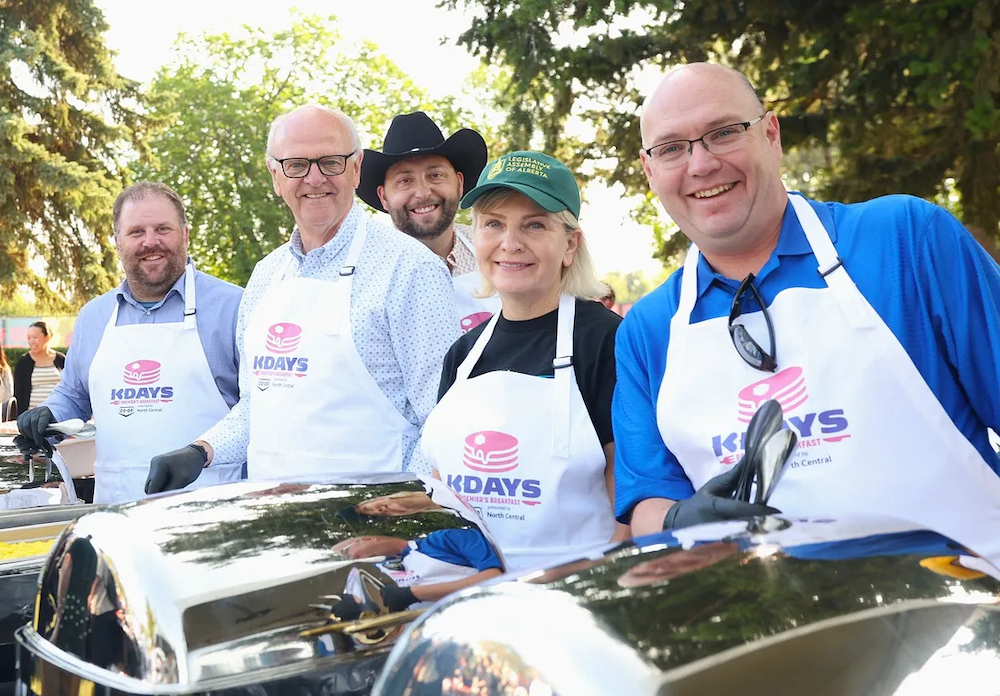
UCP MLAs Brandon Lunty, Ron Wiebe, Justin Wright, Jackie Lovely and Searle Turton at the Premier’s K-Days BBQ in 2025. Wiebe, Wright, Lovely and Turton are among the 26 MLAs facing recall campaigns (source: United Conservative Caucus / Facebook)
Will any MLAs lose their jobs because of these direct democracy campaigns? (Probably not)
It was always going to be really hard.
Two of the 26 recall campaigns launched against United Conservative Party and New Democratic Party MLAs have been submitted to Elections Alberta and have fallen short of the number of signatures needed to force a recall vote in those ridings.
The law introduced by the UCP government in 2021 allows a recall election to happen in a riding where petitioners are able to gather the in-person signatures amounting to at least sixty-percent of the number of people who voted the riding in the last provincial election. They only have three months to do it.
That’s a lot of signatures and not a lot of time.
Overturning a free and fair democratic election isn’t something that should be easy to do and, regardless of how you feel about the current government or how MLAs have behaved or misbehaved, they won their election three years ago fair and square.
Alberta is getting a new electoral map and the commissioners tasked with the job of redrawing the province’s political boundaries released their interim report in October.
The Alberta Electoral Boundaries Commission is now collecting input about the interim map before the commissioners go back to the drawing board to sketch out their final report, which will be submitted to Speaker Ric McIver by March 28, 2026.
The new map would be used for the next provincial election if it is approved by the Legislature and if a provincial election isn’t called next spring, as some political watchers suspect could happen.
Conservative Party candidate Pierre Poilievre in Carbon, Alberta (source: Pierre Poilievre / Facebook)
Pierre Poilievre is going to win. The only real question is: by how much?
Conservative Party leader Pierre Poilievre will return to the House of Commons after he wins the federal by-election happening in the sprawling rural riding of Battle River-Crowfoot on Monday, August 18.
The by-election marking Poilievre’s return to Ottawa also marks a return to Alberta after he left his hometown of Calgary more than 20 years ago to work as a political staffer in Ottawa and run in a riding just outside the capital city. After spending 21 years as an Ottawa-area MP, Poilievre was defeated by Liberal Bruce Fanjoy in Carleton on April 28, which many believe was a result of his strong support of the anti-vaccine trucker convoy that harassed residents of the capital city in January and February 2022.
Minister of Affordability and Utilities Nathan Neudorf speaks at a government press conference in Edmonton on April 10, 2025 (source: Alberta Government / Flickr)
I read all 197 submissions to Alberta’s Electoral Boundaries Commission so you don’t have to
The City of Lethbridge could be carved into four provincial ridings that sprawl into the surrounding rural areas if a local United Conservative Party MLA gets his wish. Lethbridge-East MLA Nathan Neudorf submitted a written proposal to the Electoral Boundaries Commission calling for the southwest Alberta city to be reconfigured into “three or four complementary ridings that create a cohesive “agri-innovation corridor.”
Neudorf’s submission, which is one of 197 written submissions received by the commission and posted on its website, proposes a dramatic change in the electoral map he says would give “producers, processors, researches, and urban businesses a unified voice in the Legislature.”
Lethbridge-West NDP candidate Rob Miyashiro was joined by NDP leader Naheed Nenshi at his victory party last night in Lethbridge (source: Alberta NDP / Facebook)
Alberta NDP candidate Rob Miyashiro won the provincial by-election in Lethbridge-West.
Two former City Councillors running for NDP nomination
The stakes are high for Alberta NDP leader Naheed Nenshi in the upcoming Lethbridge-West by-election. This will be the new NDP leader’s first electoral test since his landslide victory in June and, because of that, it’s also a race that Premier Danielle Smith’s United Conservative Party really want to win.
The by-election to choose who will succeed former three-term NDP MLA Shannon Phillips’ hasn’t been called yet but the date of the vote will need to be set by January 1, 2025. The NDP and UCP have both started their nomination process to select candidates.
I usually share Daveberta newsletters later in the week, but with MLA Shannon Phillips announcing her resignation yesterday, I wanted to share my thoughts earlier this week. Enjoy!
Shannon Phillips is smart as a whip and tough as nails but after nine years in the Alberta Legislature, she is stepping down as the NDP MLA for Lethbridge-West.
Mayor Amarjeet Sohi delivers his State of the City Address to the Edmonton Chamber of Commerce on May 9, 2023 (source: https://medium.com/mayorsohi)
Edmonton Mayor Amarjeet Sohi and United Conservative Party leader Danielle Smith presented two very different approaches on Tuesday morning to address the challenges facing the capital city’s downtown core.
No one will deny that there are big social problems facing Edmonton’s downtown. You can take a walk down almost any street downtown and see people facing mental health or addictions challenges. It’s sad and troubling.
Danielle Smith and Rob Anderson in 2010 (source: Dave Cournoyer)
Popular opinion would have that summer is a quiet and boring time in politics, but not so in Alberta.
I can’t remember there was a boring political summer in Alberta?
Last year was the Best Summer Ever disaster and the summer before that was the first COVID summer. Before that was the Summer of Repeal. And so on.
This summer, the most unexpected political comeback might be happening before our eyes.
In almost every aspect, former Wildrose Party leader Danielle Smith is defining what the United Conservative Party leadership race is about.
Following her “Alberta First” campaign slogan, Smith declared plans to introduce an Alberta Sovereignty Act to let Alberta MLAs vote on which federal laws they want the province to follow.
Her campaign chair, Rob Anderson, is founder of the Free Alberta Strategy and was one of two Progressive Conservative MLAs to cross the floor to Smith’s Wildrose in 2010 (he later crossed the floor back to the PCs with Smith in 2014).
Smith declared Alberta will never ever have a lockdown again (we never *really* had a lockdown).
The other candidates responded.
She made wild statements about any cancer before Stage 4 is a result of poor personal choices.
Everyone responded.
Postmedia columnist Don Braid wrote that her “dabbles in quackery” are sometimes almost funny but “this one is dangerous.”
When Smith hosted a popular radio talk show she promoted hydroxychloroquine as a cure to COVID-19. She even touted ivermectin as a treatment. Now she wants to appoint chief medical officers of alternative medicine.
Quackery is putting it politely.
It’s the realm of internet pseudoscience.
As my friend David Climenhaga opined, it is the Donald Trump strategy of saying outrageous stuff that appeals to the base voters and damn the consequences.
Rehn was briefly expelled from the UCP Caucus in 2021 after taking a hot holiday to Mexico while most Albertans respected the government’s own COVID-19 travel advice and stayed home, and local municipal leaders called on him to resign after spending more time in Texas than his own riding.
Kenney said Rehn would not be allowed to run for the UCP nomination in the next election but he was quietly allowed to rejoin the UCP Caucus last summer. But now Kenney is on his way out.
Some might say I’m playing into the Smith-comeback narrative by writing this article, but she’s the only candidate saying anything interesting – even if it’s quackery.
She’s drawing crowds and appears to be hitting the right notes with a motivated segment of the UCP base, which says a lot about who the membership of the UCP is today.
This isn’t your father’s Progressive Conservative Party, folks.
The other candidates in the UCP race better get their acts together, because the membership sales deadline is on August 12.
Paul Hinman and Danielle Smith in 2010. (source: Dave Cournoyer)
If there’s one thing we can depend on Alberta’s cottage industry of fringe right-wing separatist parties to deliver, it’s drama.
It looks like Paul Hinman has been ousted as leader of the Wildrose Independence Party. The ouster comes shortly after the Independence Party of Alberta announced that merger talks with WIP broke off.
Hinman has been replaced by Jeevan Mangat, who ran for the Wildrose Party in Calgary-Fort in 2012 and 2015.
The WIP was created in 2020 through the merger of the Wexit group and the Freedom Conservative Party (which was previously known as the Alberta First Party, the Separation Party of Alberta and the Western Freedom Party). The party has struggled with fundraising and Hinman placed a distant third in the recent Fort McMurray-Lac La Biche by-election.
Before his time as WIP leader, Hinman served as a Wildrose MLA from 2004 to 2008 and 2009 to 2012, and as leader of the Wildrose Alliance Party immediately before Danielle Smith was chosen as leader in 2009.
Meanwhile, the IPA is still looking for a new leader. Past federal Liberal candidate Katherine Kowalchuk is the only candidate in the race, so far.