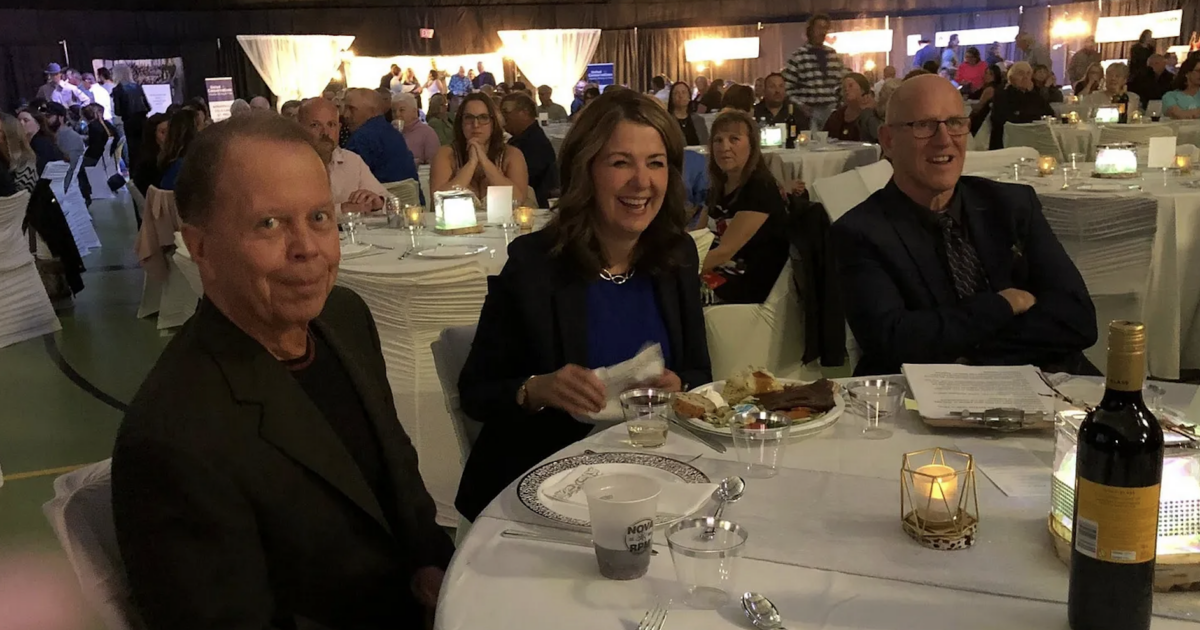
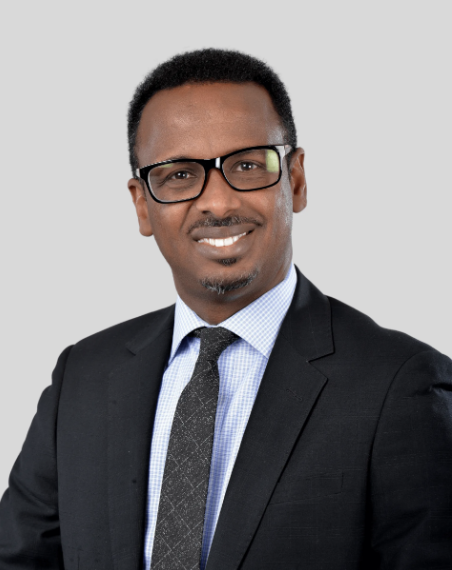
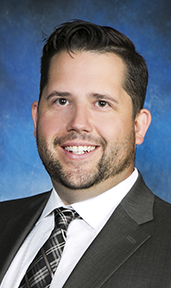
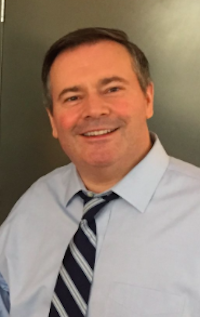
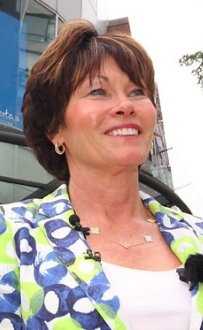
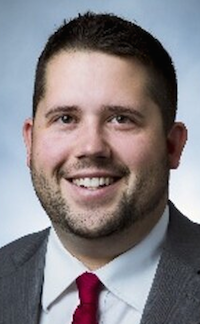
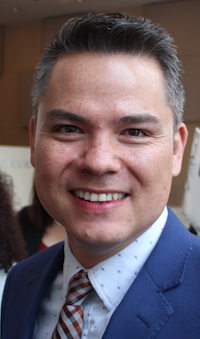
Alberta separatist leaders Dr. Dennis Modry (left) and Mitch Sylvestre (right) with Premier Danielle Smith (centre) at the UCP fundraising dinner in Bonnyville in May 2025 (source: Bonnyville-Cold Lake-St. Paul UCP / Facebook)
The time to stand up for a Strong Alberta within a Strong Canada is now.
It’s still unclear who will lead the pro-Canada side in a referendum campaign that could happen as early as fall of this year. This is likely because a lot of prominent supporters of federalism in Alberta have had a hard time believing Albertans would vote in favour of separation or that a referendum will even be held in the first place.
Polls show support for Alberta leaving Canada sits at around 28 per cent and drops to 15 per cent when people are faced with the possible consequences, but this is not the time for Albertans who also count themselves as proud Canadians to be complacent.
In another time, the Premier of Alberta would be a strong voice against separatism, but Danielle Smith is now leading a party with an activist base deeply engaged in the separatist movement and she is not interested in upsetting that base of supporters.
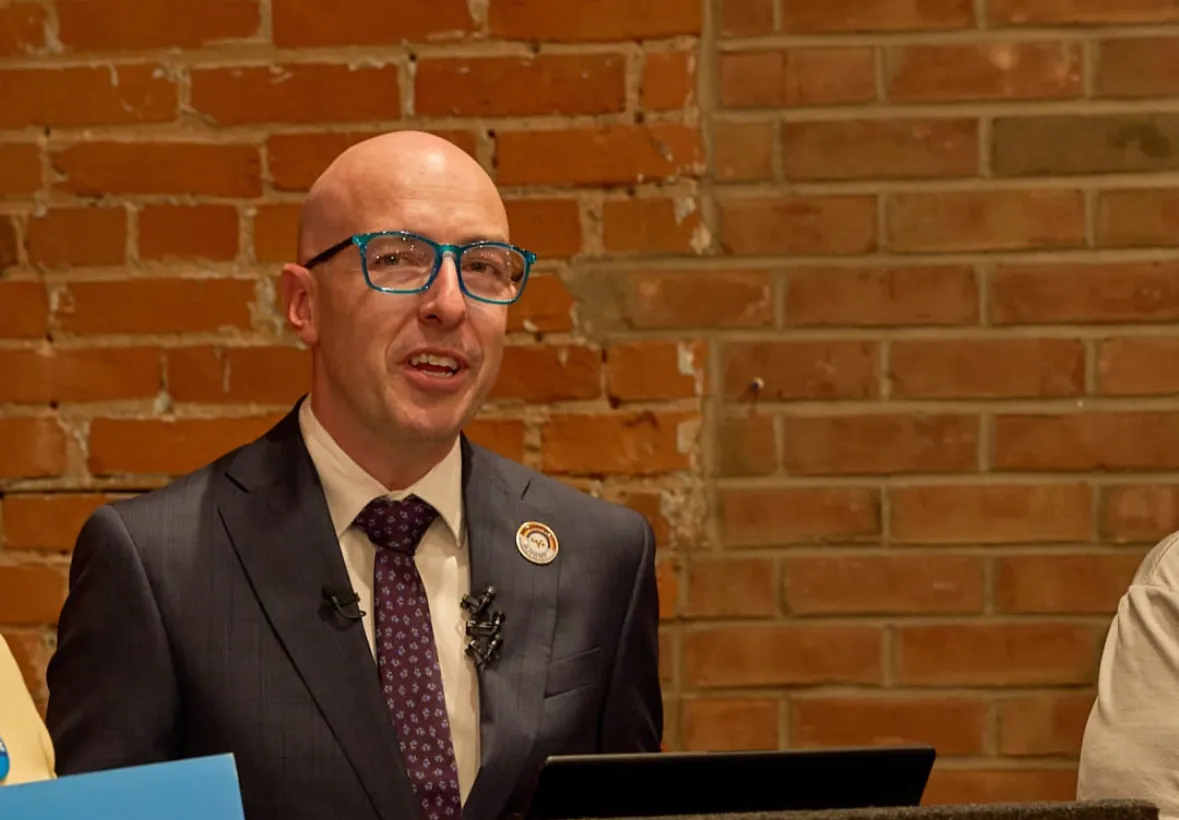
Andrew Knack speaks to reporters after winning Edmonton’s 2025 mayoral election (source: Andrew Knack / Instagram)
Knack bests former frontrunner Tim Cartmell in race to replace Amarjeet Sohi
Results from Edmonton’s low-key municipal election were very slow to trickle in but by mid-afternoon today we learned that Andrew Knack will be the next Mayor of Edmonton.
The three-term councillor has represented west Edmonton since he was first elected in 2013 and jumped into the mayoral race after initially planning to leave municipal politics and not seek re-election to council.
Knack bucked what felt like a strong wave of anti-incumbent sentiment going into the campaign and defeated south side councillor and Better Edmonton Party leader Tim Cartmell by a margin of around 8 points with an abysmal 30 per cent turnout of voters at the polls (at the time I am writing this only 217 of 236 polls are reporting in the mayoral election). Knack ran as an independent candidate.
Former Calgary mayor Al Duerr argued in his written submission to the commission that lumping rural and commuter communities into Calgary ridings would be impractical, unfair and a detriment to effective representation.
The former four-term Calgary mayor, who served from 1989 to 2001, wrote that Calgary residents share different interests than people in neighbouring communities and they access different services and go to schools in wholly different school systems…
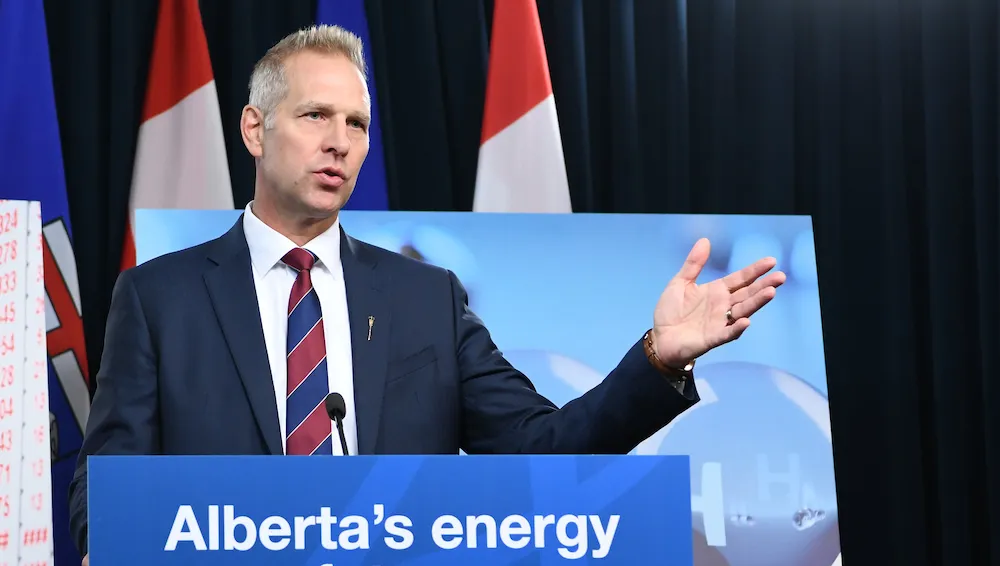
Minister of Affordability and Utilities Nathan Neudorf speaks at a government press conference in Edmonton on April 10, 2025 (source: Alberta Government / Flickr)
I read all 197 submissions to Alberta’s Electoral Boundaries Commission so you don’t have to
The City of Lethbridge could be carved into four provincial ridings that sprawl into the surrounding rural areas if a local United Conservative Party MLA gets his wish. Lethbridge-East MLA Nathan Neudorf submitted a written proposal to the Electoral Boundaries Commission calling for the southwest Alberta city to be reconfigured into “three or four complementary ridings that create a cohesive “agri-innovation corridor.”
Neudorf’s submission, which is one of 197 written submissions received by the commission and posted on its website, proposes a dramatic change in the electoral map he says would give “producers, processors, researches, and urban businesses a unified voice in the Legislature.”
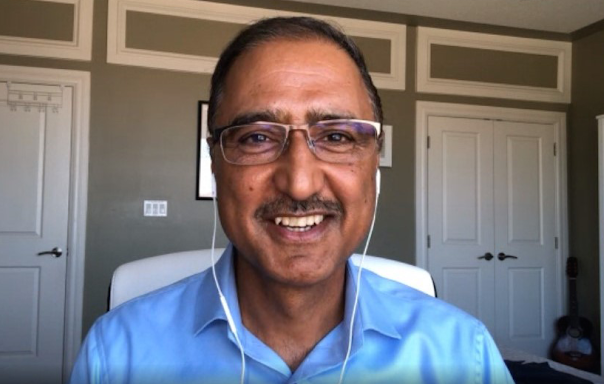
Who’s on first in the race to replace Amarjeet Sohi? It’s hard to tell.
There are 87 days until municipal election day in Alberta and Edmonton’s sleepy mayoral race is beginning to take shape.
With Mayor Amarjeet Sohinot running for re-election after serving one term in the office, what looks like a fairly open field of current and former city councillors has emerged in the race to replace him.
With the city facing an addictions and mental health crisis, a pitch battle over zoning and infill in mature neighbourhoods, huge population growth that is putting immense pressure on the city’s public services, infrastructure, schools and hospitals, and a provincial government is openly hostile to the current city council, whoever is in the mayor’s chair for the next four years will face a rough and challenging time.
To celebrate 20 years of Daveberta, I’m happy to offer free subscribers a 20 percent discount on an annual paid subscription ($40/year down from the regular $50/year). Paid subscribers get full access to all Daveberta newsletters and columns, full episodes of the Daveberta Podcast and a shout out on the podcast, and special Alberta politics extras.
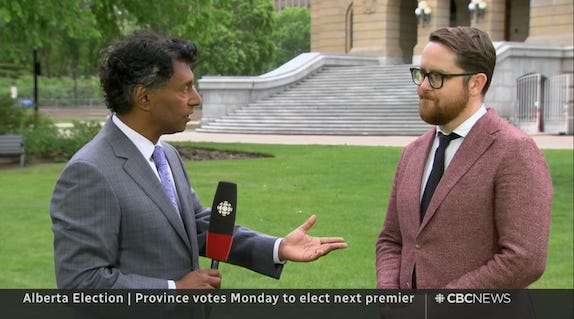
CBC The National reporter Ian Hanomansing interviews Dave Cournoyer on the day before Alberta’s 2023 provincial election (source: CBC)
I’ve been writing about Alberta politics since 2005 and it’s been a wild ride
It was 2005.
After a short stint on the dysfunctional Calgary Board of Education, former Fraser Institute intern Danielle Smith was in her fifth year as a columnist and editorial board member at the Calgary Herald. Smith joined the Herald a few years earlier while the journalists who worked for the paper were on strike.
Harvard-educated Naheed Nenshi was teaching non-profit management at Mount Royal College in Calgary. Nenshi was recovering from an unsuccessful first campaign for city council the year earlier and was about to build his profile as a civic affairs columnist in the same newspaper that employed Smith.
And somewhere on the University of Alberta campus in Edmonton, a young political science student named Dave plucked away at his laptop keyboard writing posts to publish on his new blog, Daveberta.
A lot has happened in the 20 years since. Time flies when you’re having fun.
I never expected or planned to still be writing about Alberta politics today but it turns out that it was something I enjoyed doing and people enjoyed reading, so I kept it up. And I’m glad I did.
To celebrate 20 years of Daveberta, I’m happy to offer free subscribers a 20 percent discount on an annual paid subscription ($40/year down from the regular $50/year). Paid subscribers get full access to all Daveberta newsletters and columns, full episodes of the Daveberta Podcast and a shout out on the podcast, and special Alberta politics extras.
Changes will send chills through municipal councils and create a lot of grief for MLAs
One of my goals when I moved Daveberta over to this Substack newsletter in 2022 was to take a different approach to writing about Alberta politics. For 17 years I published, sometimes, almost daily commentary on Alberta politics. Now, being on this site gives me a chance to take a breath, observe, and not feel like I need to rush analysis of what’s happening on our province’s political scene.
With that in mind, it has been very interesting to watch over the past week how Premier Danielle Smith’s United Conservative Party government has unrolled its suite of changes to municipal governance and local election laws, and responded to the loud backlash from municipal leaders.
The UCP has spent a lot of political capital and government resources in its ongoing jurisdictional fights with the federal Liberal government in Ottawa, but Smith’s sovereignty agenda isn’t limited to challenging the powers of the federal government. This week’s Bill 20, Municipal Affairs Statutes Amendment Act and last month’s Bill 18, Provincial Priorities Act are aimed at removing decision making powers from Alberta’s locally elected leaders and increasing the powers of the provincial government.
The drastic changes to the Local Authorities Election Act and the Municipal Government Act introduced by Minister of Municipal Affairs Ric McIver gives the provincial government sweeping powers to overturn municipal bylaws and increased powers to remove locally elected municipal mayors, councillors, and school board trustees.
Changes also include legalizing corporate and union donations to municipal candidates and introducing a formal structure for political parties in municipal elections in Calgary and Edmonton.
It’s hard to imagine how most of these changes would improve municipal government or municipal elections, or that there is even broad support for some of these changes (there isn’t).
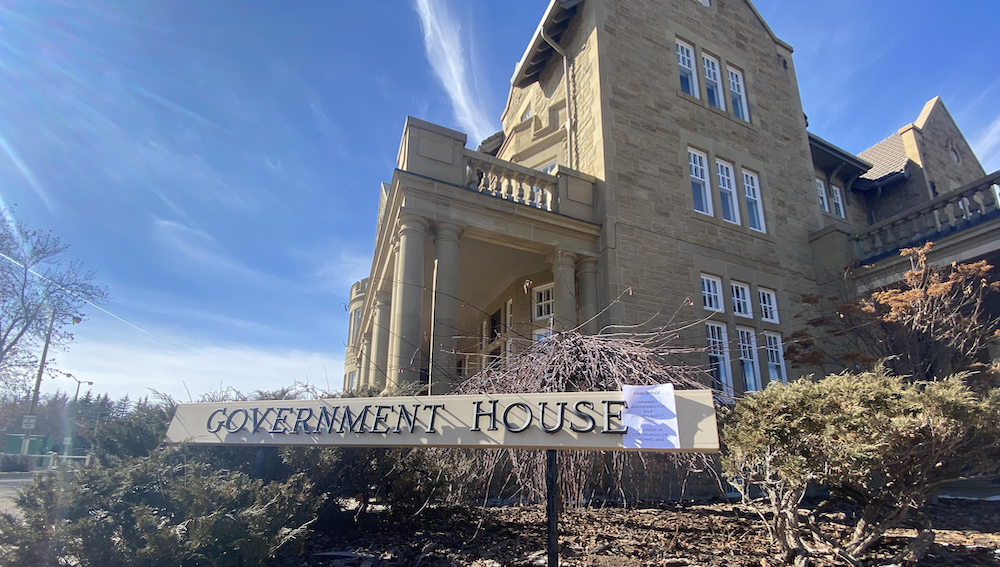
Government House with a repossession notice attached on April 1, 2024 (source: michaeljanz.ca)
“FINAL NOTICE. PROPERTY REPOSSESSED FOR SALE (Effective April 1st, 2024).”
Anyone walking by Government House in Edmonton’s posh Glenora neighbourhood on April 1 might have noticed a white paper sign attached to the grand mansion-turned provincial government conference facility.
The sign was put there by Edmonton City Councillor Michael Janz, and as far as April Fools’ Day jokes by politicians go, it was pretty good – and it made a good point.
The Government of Alberta currently owes the City of Edmonton around $60 million in unpaid property taxes that have accumulated since 2019. That’s a point that Janz first wrote about in a December 2023 op-ed in the Edmonton Journal and that Mayor Amarjeet Sohi raised in a public letter to Premier Danielle Smith this week.
But while the next election is scheduled to take place in May 2023, there is increasing speculation that Kenney could call an early summer or fall 2022 election if he wins the leadership review in order to clear out his growing chorus of opponents in the UCP Caucus.
Back to nominations. Here we go.
Richard Feehan
Edmonton-Rutherford NDP MLA Richard Feehan announced last Friday that he will not run for re-election when the next provincial election is called.
The second-term MLA for Edmonton-Rutherford was first elected in 2015 and served as the NDP’s Minister of Indigenous Relations from 2016 to 2019.
Before his election, Feehan worked as a social worker, social work instructor at the University of Calgary, Vice President of Catholic Social Services, and Program Director of the Edmonton Social Planning Council.
Feehan was re-elected in 2019 with 54.8 per cent of the vote, ahead of UCP candidate Hannah Presakarchuk, who finished second with 34.7
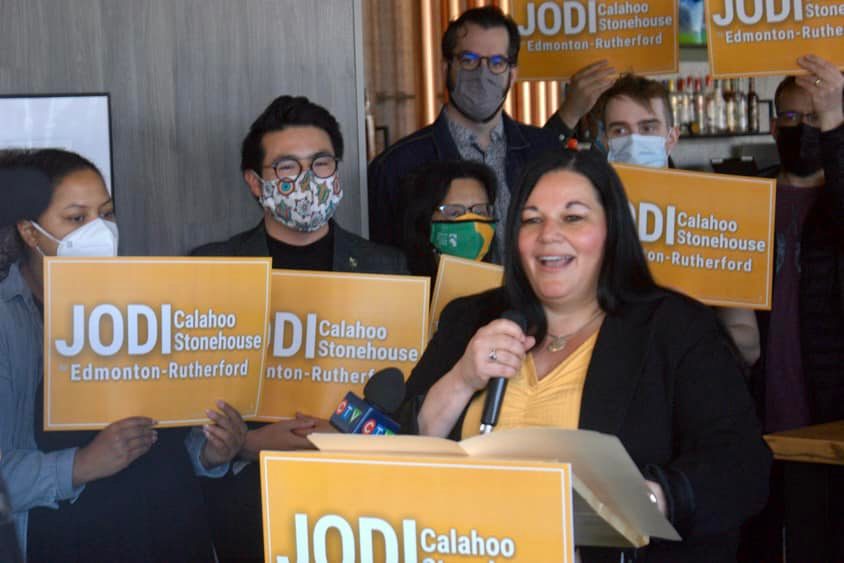
Jodi Calahoo Stonehouse is the first person to enter the NDP nomination contest in this southwest Edmonton riding.
Calahoo Stonehouse is the Executive Director of the Yellowhead Indigenous Education Foundation and is a member of the Edmonton Police Commission. She is a former Band Councillor with the Michel First Nation and in 2021 she ran to become National Chief of the Assembly of First Nations.
Endorsing Calahoo Stonehouse at her camapign launch were Edmonton-Griesbach NDP Member of Parliament Blake Desjarlais and City Councillor Michael Janz.
Sharif Haji
On the north side of the capital city, Sharif Haji has announced his plans to challenge two-term MLA Chris Nielsen for the NDP nomination in Edmonton-Decore.
Haji is executive director of the Africa Centre and previously worked as for the provincial government’s departments of Seniors and Housing and Health.
Calgary-Bow: Former city councillor Druh Farrell is expected to be acclaimed at a May 12, 2022 nomination meeting in this south west Calgary riding. Farrell served on Calgary City Council from 2001 to 2021 and her candidacy created some controversy among local New Democratic activists in the riding.
Nagwan Al-Guneid
Calgary-Glenmore: Sustainable energy development expert Nagwan Al-Guneid and communications professional Jennifer Burgess are seeking the NDP nomination scheduled for May 10, 2022.
Calgary-North: Moses Mariam is seeking the NDP nomination. Mariam is a Member Administrator at Calgary’s CommunityWise Resource Centre.
Central Peace-Notley: Fairview resident Lynn Lekisch is seeking the NDP nomination in Central Peace-Notley. She is the owner of Enviro Projects and has previously worked as an environmental project manager for various energy companies.
Part of the riding was represented by NDP MLA Marg McCuaig-Boyd from 2015 until she was defeated by UCP MLA Todd Loewen after the riding was redistributed in the 2019 election. Loewen was ejected from the UCP Caucus in May 2021 after calling for Premier Jason Kenney to resign.
Edmonton-South West: The NDP have set June 18, 2022 for a nomination meeting in the only Edmonton riding that did not elect an NDP MLA in 2019. Ben Acquaye, Chand Gul, Mohammad Ali Kamal, and Nathan Ip are seeking the nomination.
Leduc-Beaumont: Paramedic Cam Heenan was nominated as the NDP candidate in Leduc-Beaumont. Heenan defeated Registered Nurse Chantelle Hosseiny to win the nomination.
“I became a paramedic because I wanted to help people. I want to see a better future for our province, and that’s what led me to wanting to join Rachel Notley’s team,” Hennan said. “I know that with her leadership, Alberta’s NDP can expand our public healthcare, invest in education, and ensure all Alberta families can afford their bills at the end of the month.”
The riding has been represented by UCP MLA Brad Rutherford since 2019 and was held by NDP MLA Shaye Anderson from 2015 to 2019.
Morinville-St. Albert: Former Sturgeon County Councillor Karen Shaw and teacher James Grondin will face off for the NDP nomination at a meeting scheduled on April 30.The riding is currently represented by UCP MLA Dale Nally, who serves as Associate Minister of Natural Gas.
Sherwood Park:Kyle Kasawski is the second candidate to enter the NDP nomination in Sherwood Park, a suburban hamlet of 71,000 people located directly east of Edmonton.
Kasawski is President of Solar People, a solar energy company, and previously worked as a Client Development Director with Alberta Municipalities and as an Instructor in the NAIT Alternative Energy Technology Program where he taught Advanced Energy System Design and Energy Economics.
“I want to help create an Alberta with an amazing, affordable, high quality of life – where our kids go to excellent public schools, access to healthcare is dependable, and we have a few bucks left over at the end of each month after paying all of the bills,” Kasawski said when reached for comment. “I want this to be a place for people to live and thrive.”
Kasawski will face former MLA Annie McKitrick in the nomination race.
The riding is currently represented by UCP MLA Jordan Walker, who is seeking his party’s nomination for re-election.
The Incumbents
Edmonton-Meadows: MLA Jasvir Deol is running for the NDP nomination, which is scheduled to take place on May 28, 2022. Deol was first elected in 2019 after defeating former MLA Denise Woollard for the NDP nomination.
Edmonton-Mill Woods: Christina Gray was nominated as the NDP candidate in Edmonton-Mill Woods. Gray has represented the riding since 2015 and served as Minister of Labour from 2016 to 2019.
Edmonton-North West: MLA David Eggen has announced his plans to run for re-election. Eggen was first elected in 2004 and served as MLA for Edmonton-Calder from 2004 to 2008 and 2012 to 2019 before being re-elected in the redrawn Edmonton-North West riding in 2019. He served as Minister of Education from 2015 to 2019. A nomination meeting is scheduled for May 18, 2022.
Searle Turton
The UCP has opened up nominations in a handful of ridings. Nominations are now open in Calgary-Cross, Calgary-Currie, Calgary-Foothills, Calgary-Peigan, Sherwood Park and Spruce Grove-Stony Plain. Unsurprisingly, these ridings are all represented by MLAs who would be described as Kenney-loyalists.
While most of the UCP MLAs representing these ridings are expected to seek re-election, only Calgary-Cross’ Mickey Amery, Sherwood Park’s Walker and Spruce Grove-Stony Plain MLA Searle Turton have confirmed their intentions.
Turton was first elected to the Legislature in 2019 after serving three-terms on Spruce Grove City Council. He currently serves as the parliamentary secretary to the Minister of Energy and the Minister of Labour and Immigration’s liaison to private sector unions, and he is the chairperson of the UCP’s Capital Region Caucus.
Meanwhile, newly elected UCP MLA, Kenney critic and leadership aspirant Brian Jean says he would reopen the UCP nomination in Rimbey-Rocky Mountain House-Sundre to allow disqualified candidate Tim Hoven to challenge cabinet minister Jason Nixon.
Nixon, Kenney’s chief lieutenant, was acclaimed for the UCP nomination after Hoven was disqualified by the party. Many political observers believe that Hoven was mounting a very strong challenge to Nixon in the nomination.
NDP fixated on Calgary
The NDP have been spending a lot of time in Calgary.
Rachel Notley and a group of MLAs and candidates were on hand for a nomination rally for Rosman Valencia in Calgary-East. The NDP believe significant gains in east and northeast Calgary are critical to their path to winning the next election.
MLA David Eggen was recently spotted on social media door-knocking with Calgary-North East candidate Gurinder Brar and Richard Feehan was door-knocking with supporters in Calgary-Beddington.
MLA David Eggen with Gurdiner Brar and supporters in Calgary-North East.
NDP MLAs were also spotted door knocking in Canmore and Banff with Banff-Kananaskis candidate Sarah Elmeligi. I’m told Elmeligi was joined on the doors by Notley and MLAs Joe Ceci, Sarah Hoffman, Janis Irwin, Marlin Schmidt, Irfan Sabir and Shannon Phillips. Notley and Irwin also posted a photo on social media with Banff Mayor Corrie DiManno.
NDP leader Rachel Notley, Banff Mayor Corrie DiManno, and NDP MLA Janis Irwin (source: Twitter)
Edmonton City Councillor Michael Janz joins the Daveberta Podcast to talk about the recent municipal election, his experiences during his first month on City Council, what he hopes to accomplish in the years ahead, and how ordinary Edmontonians can have an impact on decisions at City Hall. We also dive into provincial politics and what might lie ahead in the future for Premier Jason Kenney and Alberta’s 2023 election.
The Daveberta Podcast is a member of the Alberta Podcast Network: Locally grown. Community supported.
You can listen and subscribe to the Daveberta Podcast on Apple Podcasts, Google Play, Spotify, Stitcher, or wherever you find podcasts online. We love feedback from our listeners, so let us know what you think of this episode and leave a review where you download.
One of the fun things about writing about politics is that every few years I have a chance to say nice things about friends and people I know who are running as candidates for election.
As the advance voting stations have opened this week and Edmontonians are beginning to mark their municipal election ballots, there are a few people who I want to write some nice things about.
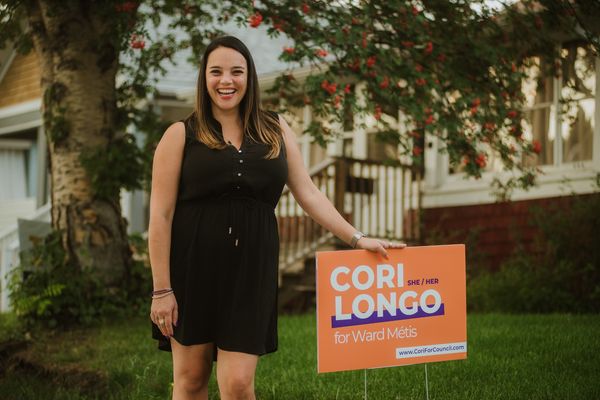
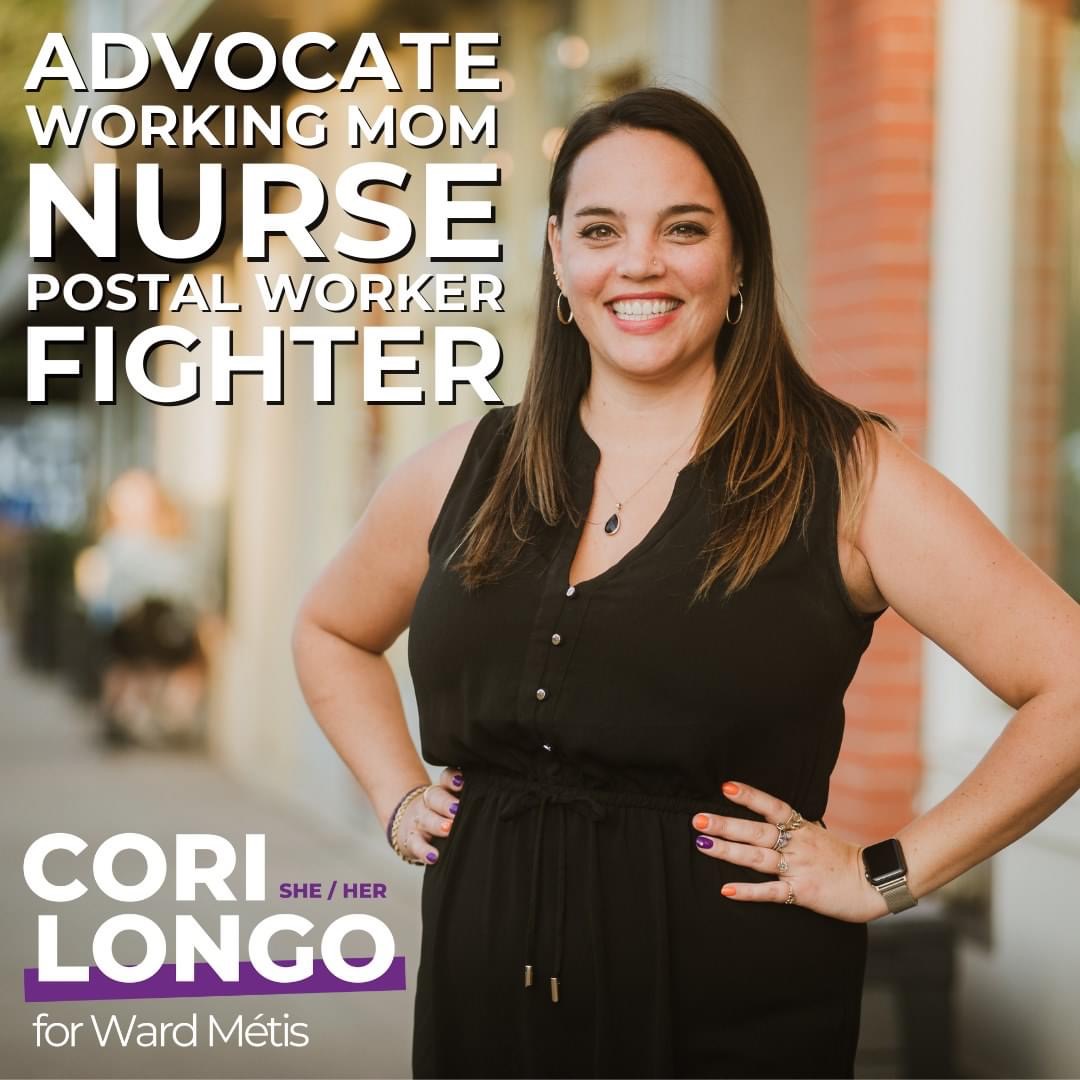
Cori Longo (source: Facebook)
The first is my friend Cori Longo, who is running in my City Council ward of Ward Métis.
I first met Cori ten years ago through our involvement in the labour movement and have had the privilege of co-facilitating an annual Communications for Union Activists course with her for many years since then. I learned first hand during these classes that she is probably one of the best facilitators I’ve ever worked with.
Cori’s enthusiasm and positivity is contagious and she is incredibly down to earth. She is without pretence and doesn’t carry any hint of elitism with her.
And as the mother of young kids, I think she will bring an important voice to City Council that isn’t always represented under the glass pyramids.
These traits, along with her progressive values, I believe will serve Cori well as a City Councillor.
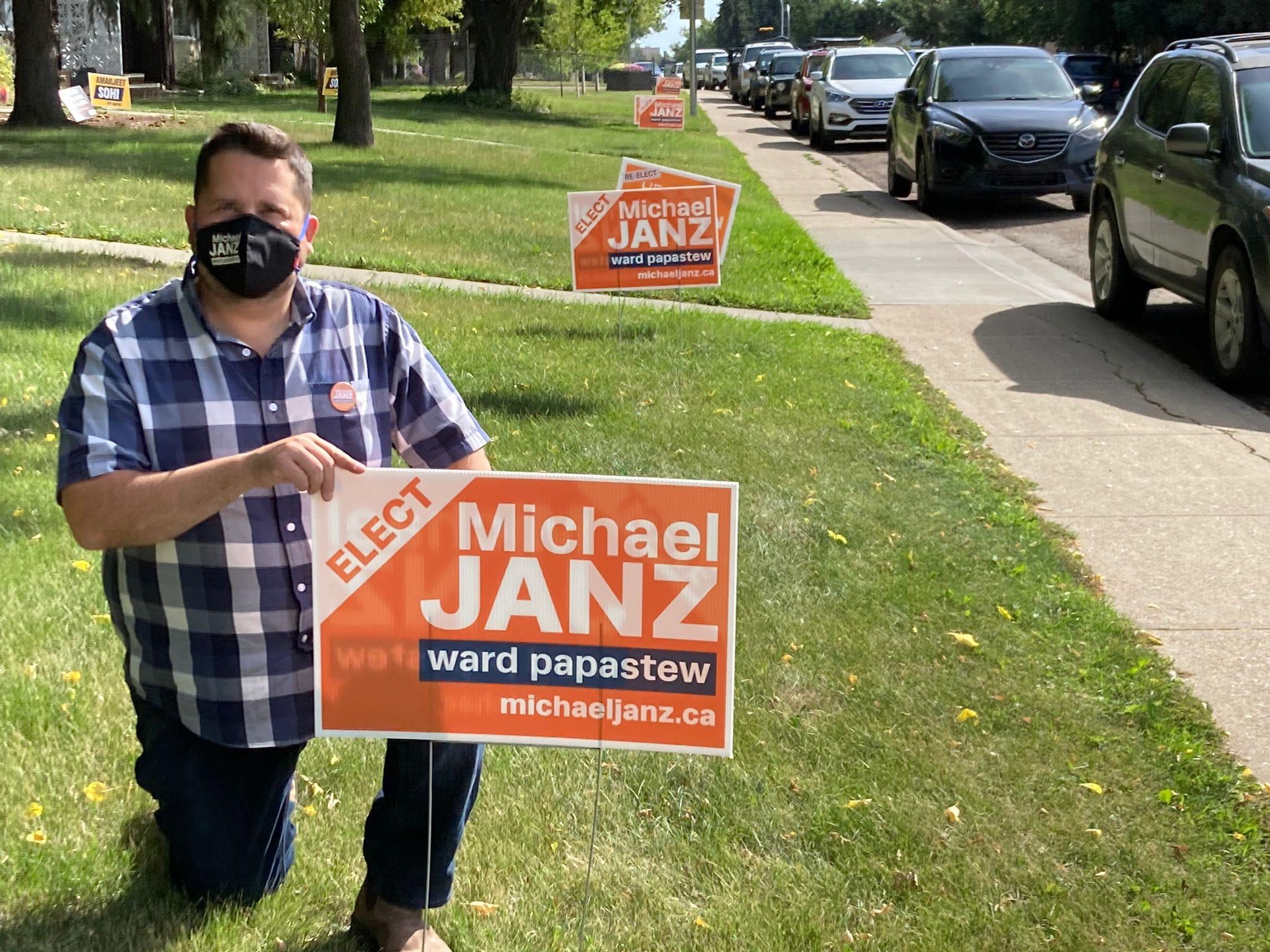
Michael Janz (source: Facebook)
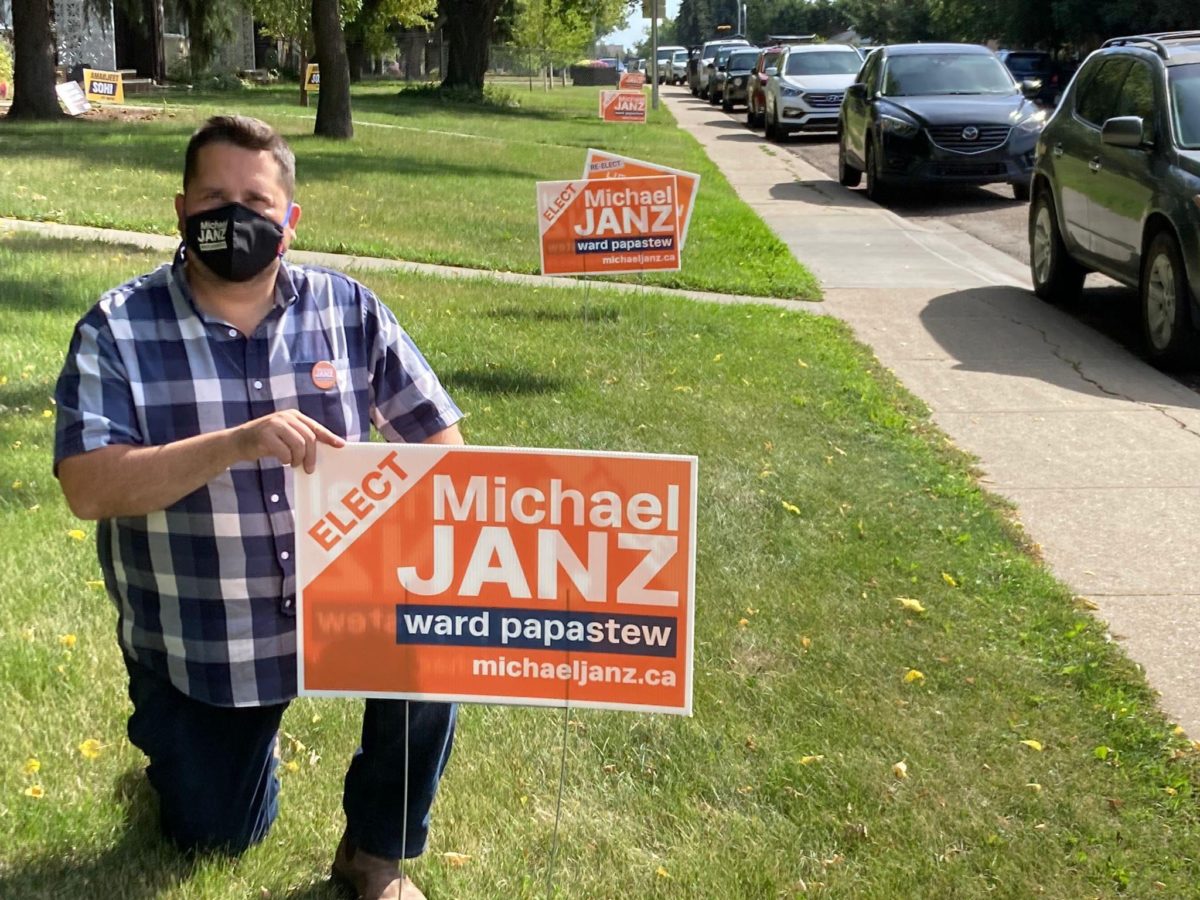
The second person I want to write some nice things about is my friend Michael Janz, who is running for City Council in Ward Papastew.
I’ve been friends with Michael since we were students many years ago at the University of Alberta. I actually first met him when he volunteered for my campaign for Students’ Union Vice President External (I won) and we’ve been good friends ever since.
One of the things I like most about Michael is his addiction to learning. He reads more books and listens to more podcasts than anyone else I know. It’s remarkable.
Michael has also proven himself to be an enthusiastic and relentless advocate for better public education during his eleven years as a trustee on the Edmonton Public School Board. I have no doubt he will bring that same tireless work ethic to City Council if he is elected on Oct. 18.
For the Edmonton Public School Board, I am happy to support Trisha Estabrooks in her bid for re-election in Ward D. Trisha has been a strong advocate for public education and the safety of children during the COVID-19 pandemic.
Amarjeet is one of the most sincere, humble, genuine and hardest working politicians I have ever met. He brings a wealth of real world experience with him with a resume that ranges from cab driver to bus driver to city councillor to federal cabinet minister. I think he would be an exceptional Mayor of Edmonton.
I also want to give a shout-out to Jenn Prosser, who is running for City Council in Lethbridge and DJ Kelly who is running for City Council in Calgary. If you live in their communities please consider supporting them on Election Day.
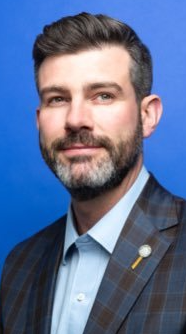
Michael Janz is filing his papers to run for Edmonton City Council in the new Ward papastew. The ward encompasses many central Edmonton neighbourhoods that lie south of the North Saskatchewan River.
The three-term public school trustee announced late last year that he would not run for re-election to the Edmonton Public School Board after 11 years, a handful which he served as board chairperson and vice president of the Alberta School Boards Association. Janz has been an outspoken advocate for fair and equitable funding for public schools and improving financial literacy in schools.
Janz was re-elected in 2017 with a landslide, earning more votes than any winning municipal candidate in Edmonton except Mayor Don Iveson.
Along with filing his papers with the municipal elections office to officially enter the race, Janz released a long list of prominent Edmontonians who are endorsing his city council campaign. The list includes Edmonton-Glenora NDP MLA Sarah Hoffman, former Liberal MLA Raj Sherman, former Edmonton-Strathcona NDP MLA Raj Pannu, former city councillors Allan Bolstad and Michael Phair, former school trustees Heather Mackenzie, Dave Colburn and Ray Martin, former Catholic school trustee John Acheson, past city council candidate Sim Senol, past school board candidate Neda Asadi, harm reduction advocate Petra Schulz, and former cabinet minister Danielle Larivee among many others.
Already in the race in papastew are Haruun Ali, Kirsten Goa, Tarcy Schindelka, and Byron Vass. Visit the Edmonton Elections page to see the full list of candidates running for Council, Mayor, and School Boards in Edmonton in the October 2021 elections.
Publisher’s Note: Michael Janz is a friend of mine and I have enthusiastically supported his campaigns for public school board in 2010, 2013 and 2017. He was a guest on the Daveberta Podcast in December 2019.
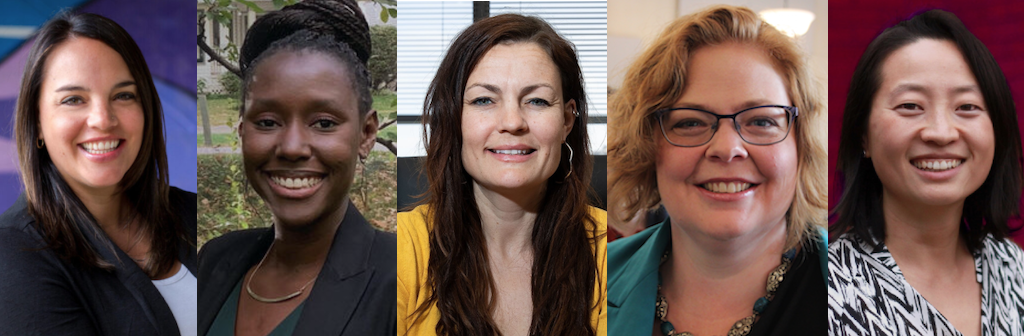
Declared Edmonton City Council candidates Cori Longo, Shamair Turner, Glynnis Lieb, Kirsten Goa, and Keren Tang.
With less than a year to go until the 2021 municipal elections, candidates are stepping up to run for Edmonton City Council.
Don Iveson
The big unanswered question about the October 18, 2021 election is whether incumbent Mayor Don Iveson will seek re-election for a third-term. Iveson was first elected in 2013 and won re-election with 73.6 per cent of the vote in 2017. When I asked about his plans for the election on a recent episode of the Daveberta Podcast, Iveson said he wasn’t yet ready to announce his intentions for 2021.
Also rumoured to be considering a run is former Member of Parliament Amarjeet Sohi, who previously served on city council from 2007 to 2015.
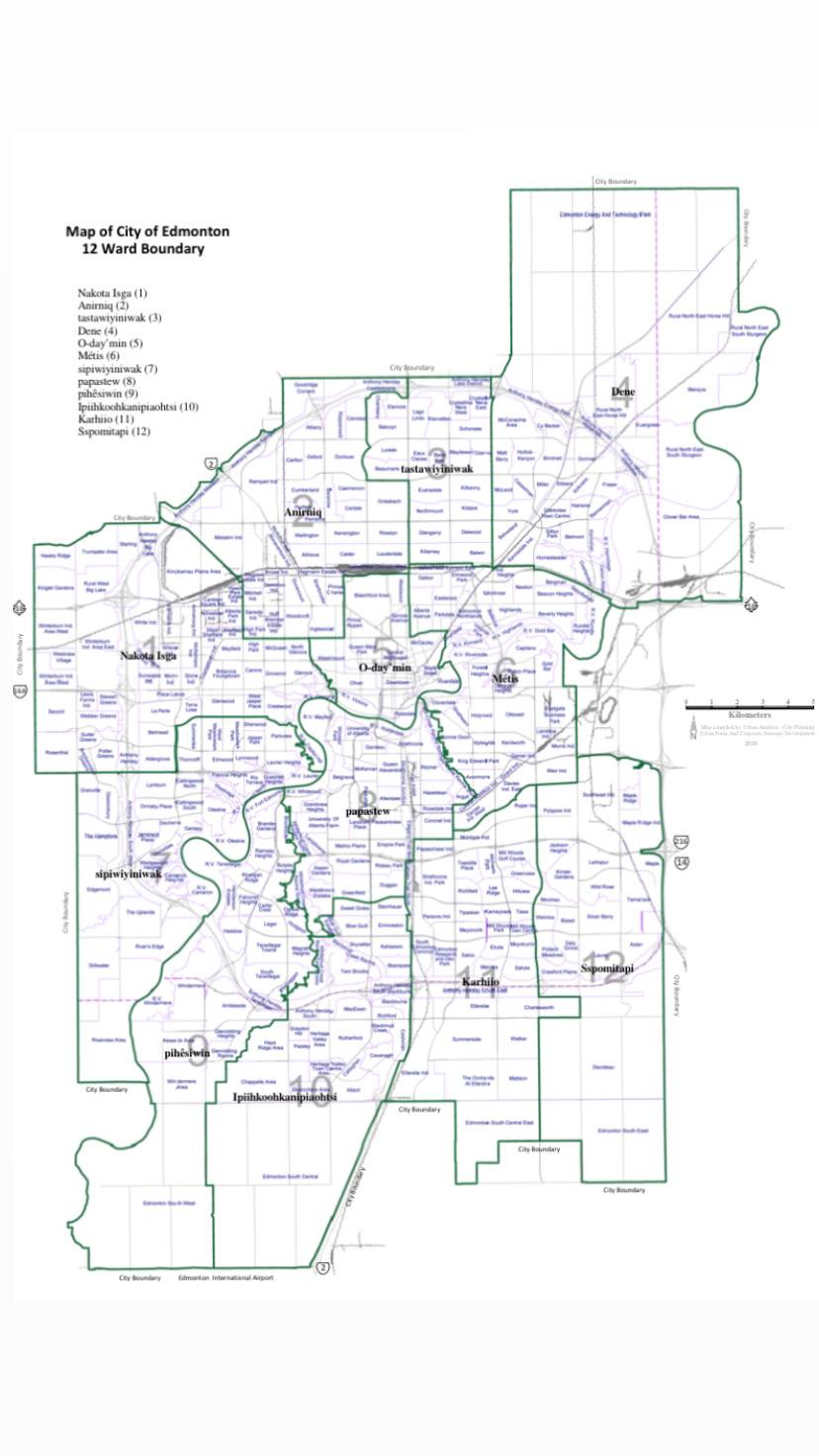
Edmonton City Council’s new Ward boundaries with new Indigenous names.
Newly redrawn Ward boundaries will also come with new Indigenous names, a first for a large Canadian city. The new boundaries and new names will be initially confusing for many Edmontonians, but I am hopeful that the City of Edmonton will engage the public in an education campaign explaining the meaning of the new names and the role they play in reconciliation.
By my count, the candidates who have already announced their plans to run are:
Glynnis Lieb is running in Ipiihkoohkanipiaohtsi. Lieb is the Executive Director of iSMSS in the Faculty of Education at the University of Alberta.
Keren Tang and Shamair Turner have announced their plans to run in the new Karhiio ward. Tang was a candidate in Ward 11 in the 2017 election, where she placed second and earned 26.7 per cent of the vote. Turner is a first time candidate and former Vice President and Account Executive at Aon Risk Solutions.
Cori Longo and Caroline Matthews are running in the Metis ward. Longo is a former postal worker and Registered Nurse who has worked as the Alberta regional representative for the Canadian Labour Congress. Matthews is the former Director of Recruitment for the University of Alberta’s MBA program and appears to have been endorsed by Edmonton-Greisbach Conservative MP Kerry Diotte, who is pictured campaigning with her in photos on social media.
Community organizer Adrian Bruff is running in the O-day’min ward, which encompasses most of the central core neighbourhoods of the city.
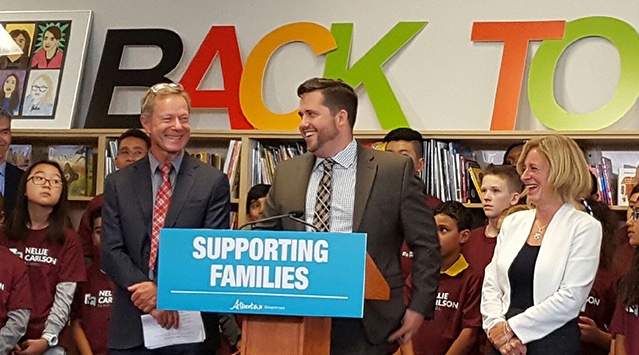
Michael Janz (source: EPSB)
Kirsten Goa has announced her plans to run in the papastew ward. Goa placed second in Ward 8 in the 2017 election, earning 23 per cent of the vote. Also rumoured to be considering running in this new ward is Edmonton Public School Trustee Michael Janz. Janz was first elected to the school board in 2010 and was re-elected in a landslide in 2017.
I am once again tracking candidates who have announced their plans to run for Mayor, City Council and School Board in Edmonton. If I am missing anyone on the list, please send me an email at david.cournoyer@gmail.com or post a comment and let me know. Thanks!
Walters not seeking re-election
Michael Walters (centre) and a team of supporters at the Edmonton Municipal Election Nomination Day in 2013.
Public education advocate and school trustee Michael Janz joins Dave Cournoyer on this episode of the Daveberta Podcast to discuss the state of public education in Alberta and how cuts in the United Conservative Party‘s first provincial budget will impact the education system in our province. We also discuss what is behind the UCP’s drive to expand private and charter schools, and why the New Democratic Party did not cut the 70% subsidy for private schools in Alberta while they were in government.
Michael Janz (source: EPSB)
We also opened the mailbag to answer some of the great Alberta politics questions sent in by our listeners, and announce the launch of the Best of Alberta Politics 2019 survey which starts later this week.
A huge thanks to our producer, Adam Rozenhart, who tried to keep us on track during this episode.
The Daveberta Podcast is a member of the Alberta Podcast Network, powered by ATB. The Alberta Podcast Network includes more than 30 great made-in-Alberta podcasts.
You can listen and subscribe to the Daveberta Podcast on Apple Podcasts, Google Play, Spotify, Stitcher, or wherever you find podcasts online. We always love to feedback from our listeners, so let us know what you think of this episode and leave a review where you download.
Send us your feedback, or ask us any questions you have for our next episode. You contact us on Twitter, Instagram, Facebook, or you can email us at podcast@daveberta.ca.
Albertans risk political isolation on climate change urgency
Jason Kenney
While politicians like Alberta Premier Jason Kenney and Energy Minister Sonya Savagedoubling down in defence of the oil and gas industry and abandoning provincial climate change initiatives, attitudes toward climate change in most of the rest of Canada could lead to Alberta to become increasingly politically isolated on this critical issue.
Two surveys released over the summer suggest there could be a deep divide between Albertans and most of the rest of Canada on the urgency of climate change crisis.
According to a survey conducted by Abacus Data in July 2019, only 27 per cent of Albertan surveyed believed that climate change is now an emergency, compared to 59 per cent in Quebec, 42 per cent in British Columbia, 39 per cent in Atlantic Canada, and 38 per cent in Ontario.
When asked about the threat of climate change, only 32 per cent of Albertans surveyed by Angus-Reid in August 2019 said that it is a very serious threat and 24 per cent said it is not really a threat at all. This is big difference from the 49 per cent in British Columbia and Quebec and 50 per cent in Ontario who told Angus-Reid that climate change is a very serious threat.
Sonya Savage
The overwhelming presence and influence that oil and gas companies hold over political discourse and media coverage in Alberta, especially over issues like oil pipelines and climate change, is not a surprise.
When asked in the Angus-Reid survey what they believe should be the bigger priority overall for Canada for the next five to ten years, 60 per cent of Albertans said the oil and gas sector, and 31 per cent said climate change. Nationally, 52 per cent chose climate change and 34 per cent chose the oil and gas sector.
Seth Klein, who commissioned the Abacus poll, wrote on rabble.ca that “we see the highest level of support for bold action is in Quebec, while the lowest levels of support are in Alberta. Most of the country falls somewhere in between the two provinces.“
Depending on the results of the October 21 federal election, just how out of step Albertans attitudes are about climate change may become an increasing focal point of provincial and federal politics. And as along as the oil sands remain the fastest growing source of carbon emissions in Canada, national attitudes toward climate change will have an increasing impact on our province.
Public School Board grants academic amnesty to Climate Strikers
Students from the Edmonton Public School Board are being granted academic amnesty if they have parental consent to attend the student-led global climate strikes on Friday, September 27, 2019. The strikes have been held over the past week in protest of climate change and the lack of action being taken against it by institutions and governments.
The motion to support the strike was tabled by trustee Michael Janz, who said in a statement that “Public education is the cornerstone of our democratic system and exists to create an engaged and educated electorate. Now, in the midst of a federal election, our young people are trying to urge us into action on a life-or-death issue deciding our future. As adults, we need to make sure that we get out of the way, and not get in the way of their engagement in real-life education.”
Education Minister Adriana LaGrange, a former Catholic School Trustee from Red Deer, took issue with the motion and denounced Janz as an “activist school board trustee.”
Students and supporters will march from MacEwan University, the University of Alberta, and Churchill Square to the main rally outside Alberta’s Legislature Building, which is set to begin at 1:30 p.m. on September 27.
Edmonton City Council declared a climate emergency
A majority of City Councillors endorsed a motion introduced by Councillor Aaron Paquette. Paquette’s motion called for the City of Edmonton declare a climate emergency and for the City administration to “provide quarterly memorandums to Council and the public, beginning in 2020, on the City of Edmonton’s climate action progress and future actions directed by Edmonton’s Energy Transition Strategy.”
Declaring a climate emergency is a political statement that serves a few purposes:
1. These motions add to the growing list of governments and organizations building a critical mass in support of taking action against climate change by making bold statements. Hundreds of municipalities and big cities, including Vancouver, Ottawa, Halifax and London (and soon, Toronto), have declared a climate emergency. Some city councils have taken further steps to investigate the potential for lawsuits against large fossil fuel corporations in response to climate change.
2.These motions act as a public declaration that cities can hold themselves accountable. The quarterly reports on the City’s climate action progress will be an important reminder of this commitment. It will be up to Councillors to ensure that the required action is being taken and that this is not simply incrementalism or bureaucratic lip-service to a critical challenge.
Note about the surveys referenced in this post:
The Abacus survey was conducted online with 2,000 Canadians aged 18 and over from July 16 to 19, 2019. The margin of error for a comparable probability-based random sample of the same size is +/- 2.1%, 19 times out of 20.
The Angus Reid survey was conducted online from August 21 – 26 among a representative randomized sample of 1,534 Canadian adults who are members of Angus Reid Forum. For comparison purposes only, a probability sample of this size would carry a margin of error of +/- 2.5 percentage points, 19 times out of 20.