It has been a tough year for many of us and we struggled with whether to even hold these awards this year. But we thought that in these dark times it is perhaps even more important to focus on the positive. So we are continuing the annual tradition of hearing from you about the big political players and issues of 2021. Submit your choices in six categories.
Who was the best Alberta MLA of 2021?
Who was the best Alberta cabinet minister of 2021?
Who was the best opposition MLA of 2021?
Who is the up and coming MLA to watch in 2022?
What was the biggest political issue of 2021 in Alberta?
What was the biggest political play of 2021 in Alberta?
Submissions for the Best of Alberta Politics 2021 Survey are open until Dec. 16, 2021 at 12:00 pm and the top three choices in each category will be included in a round of voting starting later that day. Voting for the top 3 will be open until Dec. 22, 2021 at 6:00 pm and the winners will be announced shortly afterward.
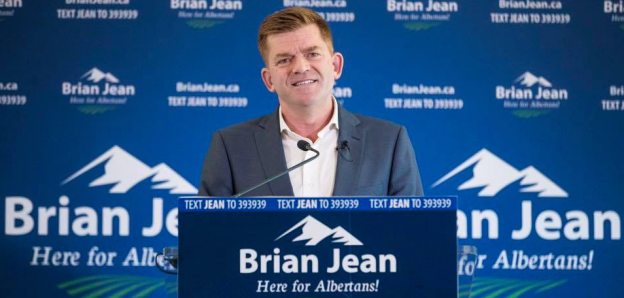
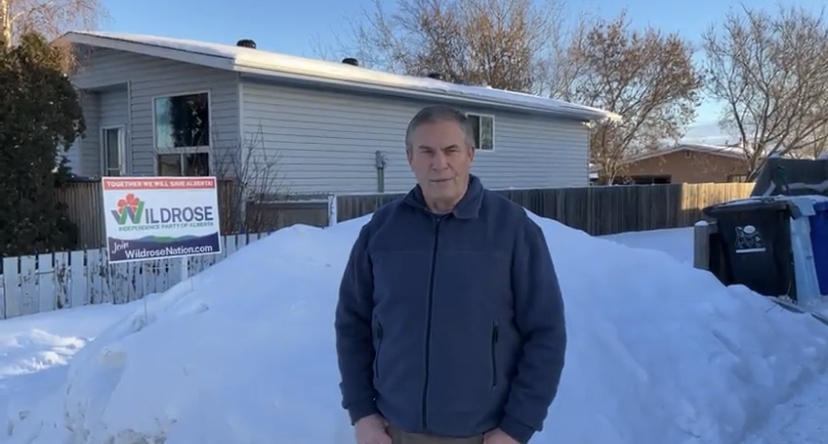
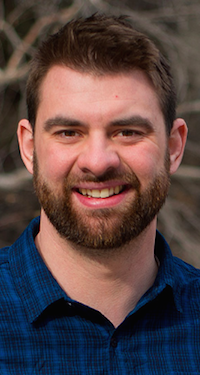
Former Wildrose Party leader Brian Jean won the United Conservative Party nomination in Fort McMurray-Lac La Biche, defeating engineer and economist Joshua Gogo.
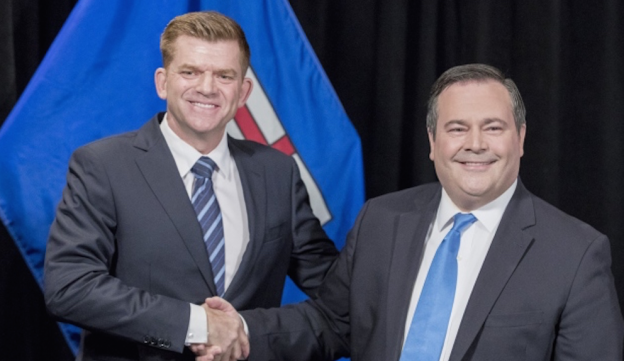
Jean’s candidacy was criticized by Premier Jason Kenney and Gogo had the support of Justice Minister Kaycee Madu, who was reported to have been campaigning with him in Lac La Biche last week.
Reports say that Jean won with 68 per cent of the vote. He represented the area as an MP from 2004 to 2014 and MLA from 2015 to 2018.
Jean left elected office shortly after losing the UCP leadership to Kenney in 2017 (it was later revealed that Kenney’s inner circle backed a kamikaze campaign against Jean), but he never quite left politics. Instead, he opined about provincial politics online and in the pages of Postmedia newspapers, becoming a harsh critic of Kenney’s leadership.
In the summer of 2021 he called on Kenney to step down and warned that the NDP would win the next election if he did not resign.
Jean clearly believes he’s the person who can lead the UCP to win re-election in 2023, and he may have a willing following among the small but vocal group of UCP MLAs who have criticized or called on Kenney to resign.
Kenney said he would respect the wishes of UCP voters in the nomination contest, but failing to defeat Jean is a big blow to a Premier who has been lauded for his skills as a political organizer, and is facing a leadership review in April 2022.
While party leaders typically trumpet the nomination of their party’s candidates, both Kenney’s and the UCP’s normally prolific social media feeds were silent last night.
After announcing his win on social media, Jean said he would soon travel the province, presumably to rally opposition to Kenney ahead of the leadership review.
If he’s allowed to run under the UCP banner, Jean’s convincing win means the UCP candidate in the Fort McMurray-Lac La Biche by-election will also be an openly anti-Kenney candidate.
Mancini congratulates Jean
Ariana Mancini
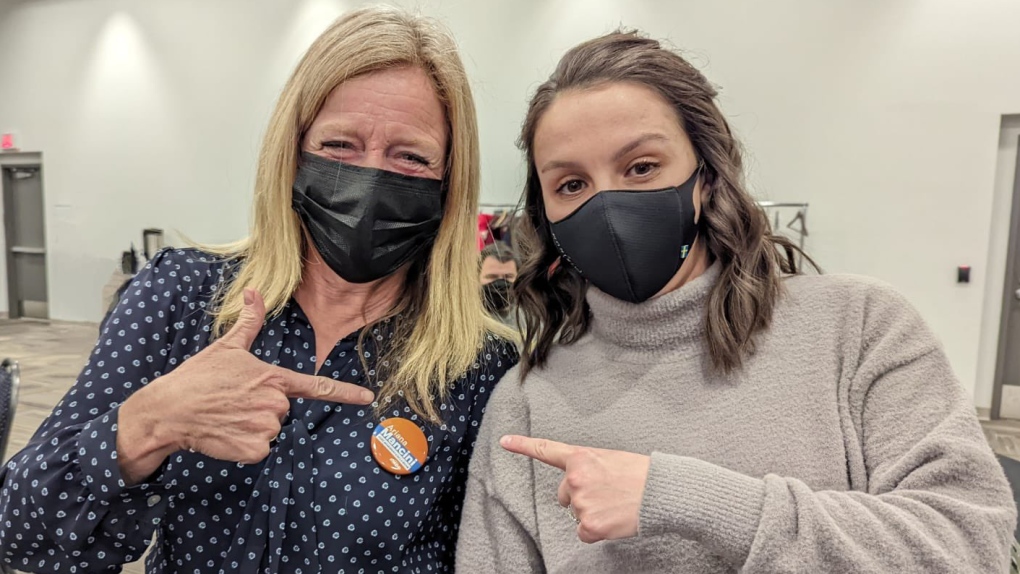
Alberta NDP candidate Ariana Mancini released a statement congratulating Jean on his nomination.
“I want to congratulate Brian Jean on being nominated as the United Conservative Party candidate in the coming Fort McMurray-Lac La Biche by-election.”
“Mr. Jean has made it clear, even this evening, that he is running because of his rivalry with Jason Kenney. I am running for the people of Fort McMurray and Lac La Biche. UCP MLAs haven’t delivered for our region. I am focused on job creation, improving public healthcare, protecting public education, protecting our community from flood and fire, and ensuring we have reliable EMS.”
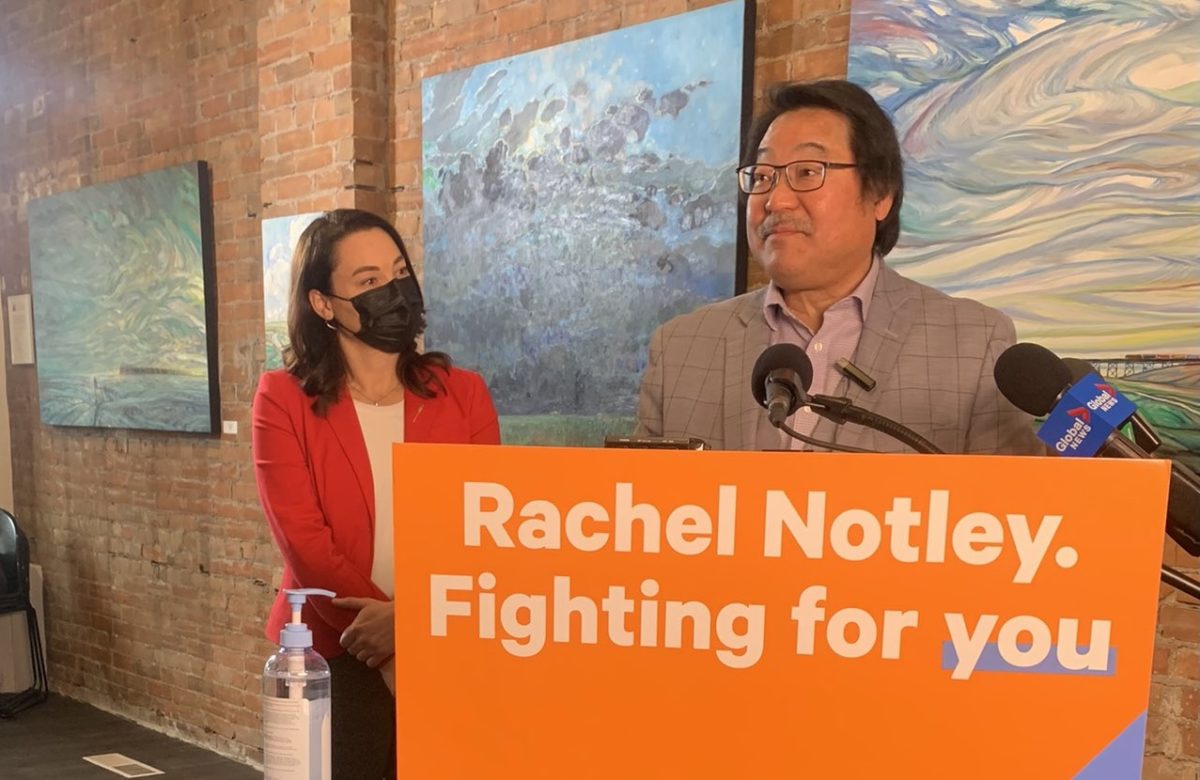
Mancini was joined by NDP leader Rachel Notley at a nomination rally held last week in Fort McMurray.
Another former Wildrose Party leader, Paul Hinman, announced he is also running in the by-election, but this time as leader of the separatist Wildrose Independence Party.
I am building a list of candidates running for party nominations ahead of Alberta’s expected 2023 provincial election. If I have missed any candidates on my list, please post a comment below or send me an email at david.cournoyer@gmail.com. Thank you!
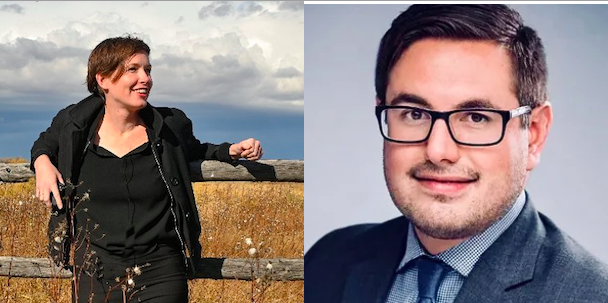
Adrienne King and Matt Solberg join the Daveberta Podcast for our year-end episode of 2021. We delve into Premier Jason Kenney‘s leadership challenges, the fireworks at the end of Alberta’s longest legislative session on record, and the upcoming Fort McMurray-Lac La Biche by-election.
Adrienne King works for the Now Group, and is the former Chief of Staff to Alberta NDP Leaders Rachel Notley and Brian Mason, and Saskatchewan NDP Leader Ryan Meili.
Matt Solberg is a Partner at New West Public Affairs and is a former Wildrose and UCP staffer who has worked at various times along-side Paul Hinman, Danielle Smith, Brian Jean, and Jason Kenney.
Best of Alberta Politics 2021
We also launched the fifth annual Best of Alberta Politics Survey and asked Adrienne and Matt for their picks the best of 2021:
Best Cabinet Minister
Adrienne: Travis Toews, Minister of Finance
Matt: Jason Copping, Minister of Health
Best Opposition MLA
Adrienne: Shannon Phillips, NDP MLA for Lethbridge-West
Matt: David Shepherd, NDP MLA for Edmonton-City Centre
Up and Comer to Watch in 2022
Adrienne: Rakhi Pancholi, NDP MLA for Edmonton-Whitemud
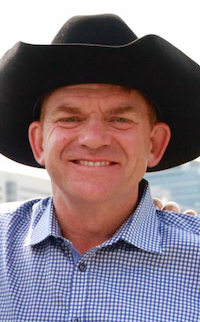
Matt: Nate Horner, Minister of Agriculture and Forestry
Submissions for the Best of Alberta Politics 2021 Survey are open until Dec. 16, 2021 at 12:00 pm and the top three choices in each category will be included in a round of voting starting later that day. Voting for the top 3 will be open until Dec. 22, 2021 at 6:00 pm and the winners will be announced shortly afterward.
The Daveberta Podcast is a member of the Alberta Podcast Network: Locally grown. Community supported.
You can listen and subscribe to the Daveberta Podcast on Apple Podcasts, Google Play, Spotify, Stitcher, or wherever you find podcasts online. We love feedback from our listeners, so let us know what you think of this episode and leave a review where you download.
The much awaited United Conservative Party nomination vote in Fort McMurray-Lac La Biche is being held on Dec. 11 and 12. The contest between former MLA and former Wildrose Party leader Brian Jean and economist Joshua Gogo has attracted a lot of political attention.
Nursing a grudge from the 2017 leadership race and tapping into the current UCP leader’s unpopularity, Jean has openly predicted that Rachel Notley’s NDP would win the next election if Premier Jason Kenney doesn’t resign (a recent poll commissioned by CBC showed only 3 in 10 Albertans respect Kenney).
In response, Kenney and his staff have openly criticized Jean for a lack of sticktoitiveness after failing resigning mid-term as Member of Parliament and MLA for the area, causing two by-elections including the one that elected the former MLA for Fort McMurray-Lac La Biche, Laila Goodridge.
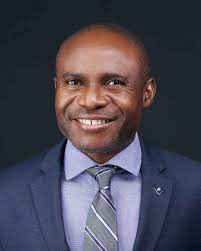
Kenney’s supporters jumped at the opportunity to slam Jean’s description of Gogo as a “Nigerian economist living in Fort McMurray.” Despite a plummeting approval ratings from the public, Kenney has benefited from not having a challenger inside the party that his opponents could rally around. Jean wants to be that challenger.
This by-election will mark the first time the UCP government has had to face voters since it was elected in 2019, and also the first time since then that the question of Kenney’s leadership will be on a provincial ballot.
Under most circumstances, winning this by-election would be a slam dunk for the UCP, but Jean’s candidacy definitely complicates matters for Kenney’s party.
Here is a look at two scenarios that could play out as ballots are cast and counted in this weekend’s UCP nomination contest:
Brian Jean loses the nomination. Losing the nomination would be a big blow to Jean, who has never lost an election in Fort McMurray before. And it would be a win for Kenney. Jean would definitely be a diminished political force within the UCP after losing, and might decide to remain on the sidelines or retreat to private life. But he could decide to run as an Independent candidate. He has significant name recognition and enough personal funds and financial supporters in the riding that he would be a contender even without the blessing of local UCP members.
Brian Jean wins the nomination. Winning the nomination would be a big blow to Kenney, who has used his position as leader to speak out against Jean’s nomination bid. Unless Kenney refused to sign his nomination papers or found a way to disqualify him from winning the nomination, Jean would immediately become the central figure in effort to defeat Kenney at the April 9, 2022 leadership review. Jean has pledged to continue campaigning against Kenney’s leadership.
Mancini nominated as NDP candidate
Rachel Notley and Ariana Mancini (source: Twitter)
Local teacher Ariana Mancini was acclaimed as the Alberta NDP candidate at a nomination rally featuring party leader Rachel Notley this week.
“This campaign is an opportunity for our region to send a message to Jason Kenney,” Mancini is reported to have told the crowd in Fort McMurray. “The message is that we don’t have to choose between bad and worse. We can choose better. Even the conservatives don’t like the conservatives. That’s saying something,” she said.
This is Mancini’s second time running as an NDP candidate. She placed second to Jean in the 2015 election in the former Fort McMurray-Conklin riding.
Another former Wildrose leader running for separatist party
Paul Hinman (source: Twitter)
Another former Wildrose Party leader has announced his plans to run in the by-election.
Wildrose Independence Party leader Paul Hinman, who led the Alberta Alliance-turned-Wildrose Alliance from 2005 to 2009, announced on social media today that he will run for the recently rebranded separatist party in the by-election (the Wildrose Independence Party was named the Freedom Conservative Party in the 2019 election and was previously known as the Western Freedom Party, the Alberta First Party and the Separation Party of Alberta).
Describing it on social media as the most important by-election in history, Hinman described Fort McMurray-Lac La Biche as “ground zero for Trudeau’s carbon net-zero attack against Alberta.”
Hinman appears to be relying on support from federal People’s Party of Canada supporters and has been loudly promoting COVID-19 conspiracy theories on social media.
He served as the MLA for Cardston-Taber-Warner from 2004 to 2008 and Calgary-Glenmore from 2009 to 2012.
I am building a list of candidates running for party nominations ahead of Alberta’s expected 2023 provincial election. If I have missed any candidates on my list, please post a comment below or send me an email at david.cournoyer@gmail.com. Thank you!
Supporters of the Alberta Liberal Party will gather virtually this weekend for the party’s annual general meeting two years after the party was shut out of the Legislative Assembly for the first time in more than three decades.
The Liberals formed the official opposition for most of the period from their defeat until the 1967 election, when the Progressive Conservatives led by Peter Lougheed knocked the Liberals to third place in the Legislature.
As the Liberals ponder what it means to be a seatless party in 2021, I took a look back at what happened the last time the Liberals were shut out of the Legislature.
The 1967 election marked the Liberal Party’s poorest showing in decades, and death, defection and resignation would mean the party’s three MLA caucus would not survive the full term.
Michael Maccagno
Party leader and Lac La Biche MLA Michael Maccagno resigned his seat in early 1968 to run in the federal election and later formally resigned as leader in October 1968. Edson MLA William Switzer died of a heart attack in June 1969. And in November 1969 the party’s sole remaining caucus member, Calgary-Glenmore MLA Bill Dickie, crossed the floor to join Lougheed’s PC Party.
The party was on the decline and faired poorly in the by-elections to replace Maccagno and Switzer, with Liberal candidates finishing third in Lac La Biche and fourth in Edson.
But that was not where this story of the Alberta Liberal Party’s ends.
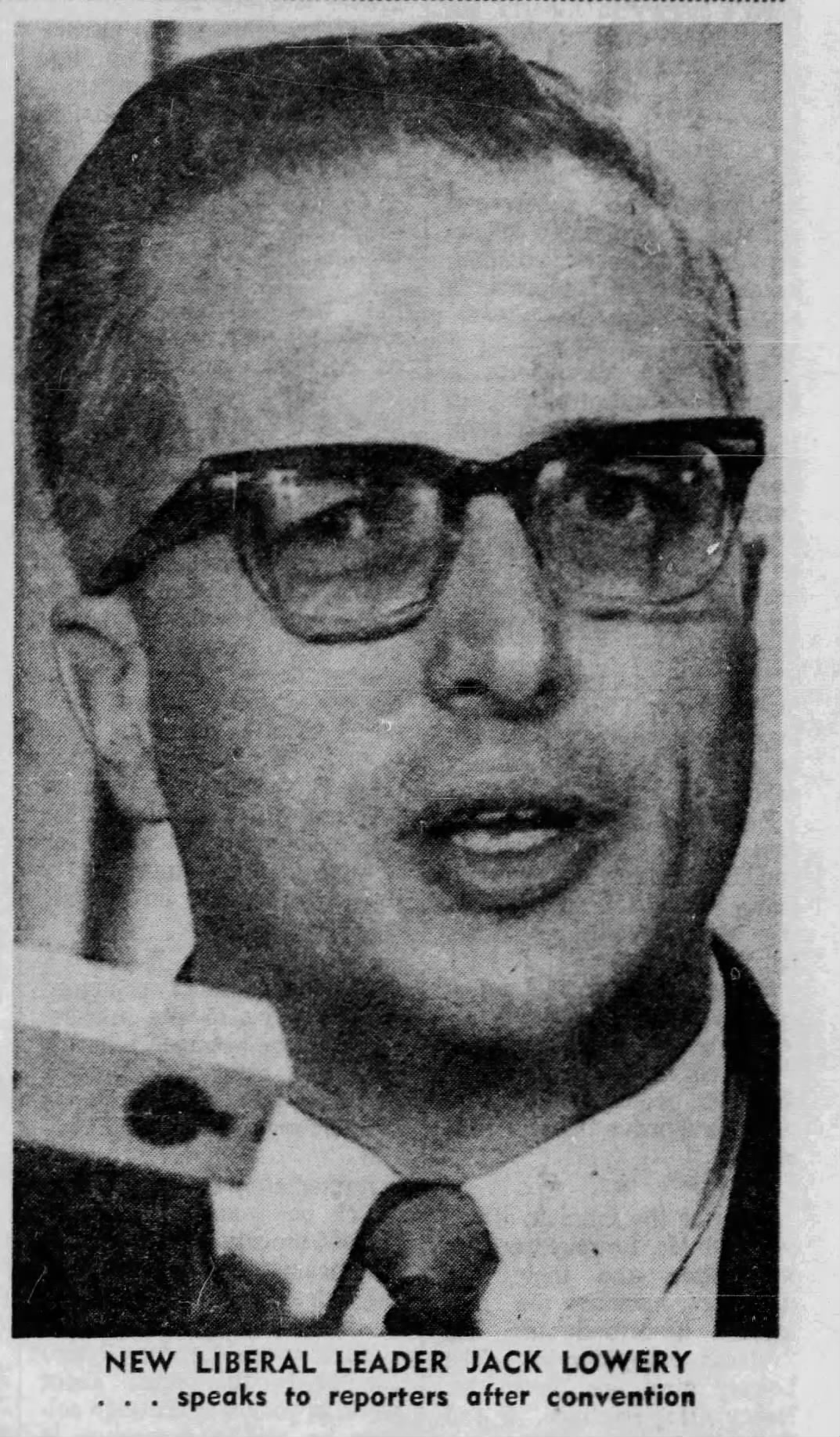
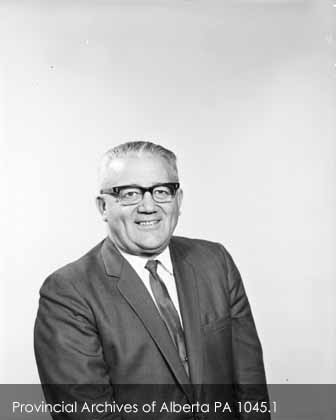
Former United Church Minister Jack Lowery, who preached at Calgary’s Southwood United Church without collecting remuneration so he could work full-time as the public relations manager for ATCO Industries Ltd., was chosen as leader on April 26, 1969.
Harry Strom
He was also the chief statistician for the Calgary Stampeder Football Club, where he led a team of analysts and technicians who tracked the CFL team’s performance. It is no wonder that Calgary Herald’s Johnny Hopkins described him in 1967 as someone who simply couldn’t find enough activities to fill all his waking hours.
With none of the party’s MLA entering the leadership race, Lowery defeated Town of Manning Mayor Don Branigan (who would later become Mayor of Whitehorse in Yukon), future party leader Bob Russell, and 20-year old University of Alberta political science student Trevor Midgley (who entered the race 8 minutes before the nomination deadline).
The 39-year old Lowery moved to Alberta after graduating from theology school in Toronto to serve churches in the Hardisty area and described himself as an “issues-oriented pragmatist” with a left-orientated slant on social development philosophy and “small conservative” financial ideas.
A campaign poster from Nick Taylor’s campaign in Calgary-Centre in 1968.
This was Lowery’s second foray into elected politics, having just the previous year mounted an unsuccessful campaign against oilman and school board trustee Nick Taylor for the federal Liberal nomination in Calgary-Centre (Taylor would go on to lead the Liberals back into the Legislature in 1986).
“It’s been said for a long time that there are those in the Liberal Party who have had a vested interest in defeat,” Lowery told Calgary Herald for the “Personality of the Week” column on May 30, 1969.
“They’ve been quite happy to go directly to Ottawa without having to work in a party structure that could go somewhere. All of these people will be encouraged to become party of the team,” Lowery said.
Peter Lougheed
Lowery was an outsider who inherited the leadership of a deeply divided and cash poor party that was overshadowed by a flashier and increasingly unpopular federal Liberal Party led by Prime Minister Pierre Elliott Trudeau.
He was the Liberal Party’s third leader in five years following the resignation of Adrian Berry after nine months as leader in 1966 and the return of Maccagno as leader for a second time before Lowery was chosen.
Early on in his leadership he dismissed the chances of Lougheed’s PCs and pledged to reestablish the Liberals as the alternative to the long-governing Social Credit Party, which he described as “very long on promises and short on implementation.”
The decision by MLA Dickie to join the Lougheed PCs in November 1969 because of what he described as “leftist philosophy” in the Liberal Party meant the party no longer had any representation in Legislature.
“This merely clears the decks so that we can do the kind of building we’ve been wanting to do. I do not agree with him that we have a leftist philosophy,” said Lowery in response his Dickie’s defection.
But it all really started to unravel for Lowery when was revealed the next month that he had reached out to Social Credit Premier Harry Strom to either merge or create an electoral alliance between the two parties.
His fate was sealed.
Pat Mahoney
“We can run candidates in the traditional sense in the next election. We can stand aside and let the Social Credit and Conservative partiee fight it out, or we can work with Social Credit to determine areas of mutual interest,” Lowery told the Calgary Herald on Dec. 30, 1969.
“We are 10 years away from being an effective political force and some form of coalitionin which the Liberal party would retain its identity is one of the alternatives open,” Lowery said.
Calgary-South Liberal Member of Parliament Pat Mahoney, a former President of the Calgary Stampeders Football Club, said the idea should be pursued with an open mind.
“The Alberta Liberals have been unfairly burned by the identification with Ottawa and the necessity of supporting federal policies,” Mahoney told the Calgary Herald. “They have a right to pursue an independent course.”
Hu Harries
But Mahoney’s federal colleague from Edmonton had a different opinion. Edmonton-Strathcona Liberal MP Hu Harries called the proposal “bloody nonsense” and predicted it will not receive support from the Alberta Liberals membership.
Harries called on Lowery to resign and described talk of a Liberal-Socred alliance as a “selfish, stupid reaction to a complete failure” that was the Liberal Party’s inability to win the by-elections to replace the party’s former MLAs.
Prominent Edmonton Liberal and well-known publisher Mel Hurtig described the idea as absurd and clashed with Lowery at a party meeting in January 1970.
“Liberals are not people who are concerned with developing deals where they sell out their principles,” Hurtig was reported to have said.
Lowery defended his position by arguing that the merger discussions with the Socreds had “provoked interest and has given us an opportunity to delineate what we stand for as Liberals.”
But Harries and Hurtig were not alone. Constituency association presidents from across the province revolted against the idea – and Lowery.
And despite Lowery’s optimism, Strom’s own public response poured cold water on the entire idea of a Socred-Liberal alliance.
“We would be prepared to welcome those members of the Liberal party or any other party, who wish not join and work with us, but we are not at all interest in any deals or mergers,” Strom said.
The other opposition parties took it as an opportunity to welcome disaffected or confused Liberals into their camps.
Alberta New Democratic Party leader Grant Notley said his party would open wide the doors for disgruntled Liberals who wish to join “a genuine alternative to the conservative consensus of the Socreds and Tories.”
And Lougheed said any move toward a Liberal-Socred alliance would benefit his PC party.
“The last provincial election and the last two by-elections indicate that the majority of liberal-inclined voters would prefer to see a new progressive government in Alberta end 35 years of Social Credit control,” Lougheed said.
On February 16, 1970, only 10 short months after winning the leadership, Lowery resigned as leader of the Alberta Liberal Party.
He was replaced by the third-place finisher from the previous year’s leadership contest, Bob Russell.
A year later, Lowery re-emerged into the political spotlight to publicly announced he had left the provincial Liberals and was joining the Social Credit Party. He was soon after named the coordinator of the party’s Calgary campaign for the 1971 provincial election.
When the votes were counted on August 30, 1971, Lougheed’s PC Party had unseated the Socreds to form the first new government in Alberta since 1935. It was a political earthquake from which the Socreds would never recover.
And the Liberals remained shut out of the Legislature. The party’s vote dropped to 1.01 per cent and no where in Alberta did a Liberal candidate come close to winning election.
The Liberals would remain in the electoral wilderness in Alberta for the next 15 years.
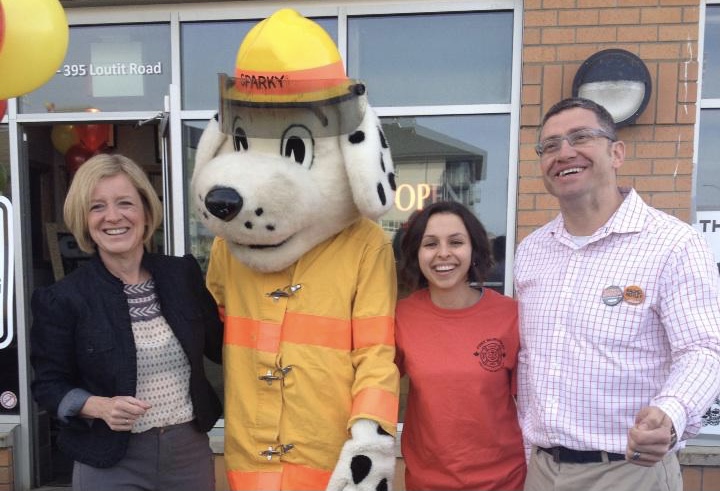
Rachel Notley with the local fire dog and Fort McMurray NDP candidates Ariana Mancini and Stephen Drover during the 2015 election.
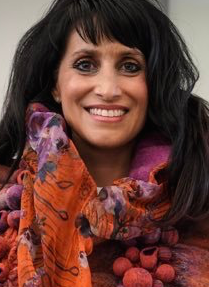
Fort McMurray teacher Ariana Mancini is running for the Alberta NDP nomination in Fort McMurray-Lac La Biche ahead of the upcoming by-election in the riding.
Mancini teaches Grade 4 at Ecole Dickinsfield School in Fort McMurray and is on the executive of Fort McMurray Local 48 of the Alberta Teachers Association.
“Conservatives have failed to deliver on the promises they made in the last election. Their corporate tax cuts haven’t created the jobs they promised,” Mancini said in a press release. “Under Jason Kenney, life is getting more expensive: income taxes are up, insurance rates are up, electricity rates are up, tuition is up.
“It’s time we had representation in our region that believed in making life more affordable for families,” Mancini said.
Don Scott
A nomination meeting is scheduled for Dec. 9 and Mancini is expected to be acclaimed. NDP leader Rachel Notley will be in Fort McMurray for what the party describes will be a nomination rally.
This will be Mancini’s second time running for the provincial NDP.
In 2015 she placed second behind Wildrose Party leader Brian Jean (who is also running for the United Conservative Party nomination to run this by-election) and ahead of incumbent Progressive Conservative MLA Don Scott (who would later serve as Mayor of Wood Buffalo from 2017 to 2021) in the former Fort McMurray-Conklin riding.
NDP are the underdog in this race
Despite Notley’s NDP leading in the province-wide polls since last November and Premier Jason Kenney reaching record low approval ratings, it will be an uphill battle for any party other than the UCP to win this by-election. Voters in this region of north east Alberta have reliably elected Conservative candidates for over three decades.
Leo Piquette
Popular municipal councillor Jane Stroud was only able to earn 24 per cent as the NDP candidate in the 2019 election, and you have to look all the way back to 1986 to find the last time a New Democrat was elected in the area (NDP MLA Leo Piquette represented Athabasca-Lac La Biche from 1986 to 1989).
The last time a candidate from a non-Conservative party was elected in this area was in 1993, when Adam Germain was elected in Fort McMurray and Paul Langevin was elected in Lac La Biche-St. Paul under the Liberal Party banner (though, the Liberals in that election were arguably more conservative than they have ever been since).
All that said, by-elections can sometimes produce unexpected results.
The nasty feud between Jean and Kenney, unhappiness with the UCP’s response to COVID-19, persistent high unemployment, displeasure with the forced provincial centralization of ambulance dispatch, and skepticism about the UCP’s move to abandon the RCMP and form a provincial police force might just be a few of the issues that help voters decide who to cast their ballot.
The by-election in Fort McMurray-Lac La Biche must be called by Feb. 15, 2022.
Lethbridge-East NDP candidate Rob Miyashiro (right) with Lethbridge-West NDP MLA Shannon Phillips.
Former Lethbridge City Councillor Rob Miyashirodefeated former MLA Maria Fitzpatrick, non-profit executive director Amanda Jensen, and teacher Kevin McBeath to win the Alberta NDP nomination in Lethbridge-East on Nov. 21.
Miyashiro served on Lethbridge City Council from 2013 until 2021 and is the executive director of the Lethbridge Senior Citizens Organization.
This will be Miyashiro’s second time running as a candidate in Lethbridge-East. He was the Alberta Liberal candidate in the district in the 2012 provincial election, placing third with 14.6 per cent of the vote behind Progressive Conservative candidate Bridget Pastoor, who crossed the floor from the Liberals in 2011.
As I’ve previously noted, Lethbridge-East has a unique voting history for a district in southern Alberta, with voters electing Liberal MLAs in every election from 1993 to 2008. Voters embraced the Orange Wave in 2015, electing Fitzpatrick as the riding’s first-ever NDP MLA.
Calgary-Buffalo: Two-term MLA Joe Ceci was acclaimed as the NDP candidate in Calgary-Buffalo, a riding he has represented since 2019. Ceci was first elected as the MLA for Calgary-Fort in 2015 and ran for re-election in the neighbouring Calgary-Buffalo in 2019 following the redrawing of electoral boundaries ahead of the last election.
Ceci served as a City Councillor in Calgary from 1995 to 2010 and was the Minister of Finance during the NDP’s four years as government.
Jennifer Burgess
Calgary-Glenmore: Communications professional Jennifer Burgess announced yesterday that she is seeking the Alberta NDP nomination in this southwest Calgary riding.
Burgess is the President of the Braeside Community Association and a long-time NDP activist. She was president of the Calgary-Buffalo constituency association in 2016 and in 2019 managed the campaign of Calgary-Glenmore candidate Jordan Stein.
Burgess previously ran for the NDP against then-Progressive Conservative leader Jim Prentice in the 2014 by-election in Calgary-Foothills. Her partner is former NDP MLA Graham Sucha, who represented Calgary-Shaw from 2015 to 2019.
The riding is currently represented by UCP MLA Whitney Issik, who was appointed Associate Minister of Status of Women in July 2021. Before Issik’s election in 2019 the riding was represented by NDP MLA Anam Kazim. Kazim was elected in 2015 and was defeated by Stein in a nomination race ahead of the 2019 election.
Fort McMurray-Lac La Biche: The UCP hasn’t officially made the announcement it on its website, but the Elections Alberta website notes that the UCP will hold their nomination meeting in Fort McMurray-Lac La Biche on December 11.
Membership sales closed over the weekend in the race to choose a candidate to run in the upcoming by-election, which has to be called by Feb. 15, 2022.
Former Wildrose Party leader Brian Jean, who represented much of the riding as an MLA from 2015 to 2018 and an MP from 2004 to 2013, is facing business consultant Joshua Gogo.
With a by-election call imminent, a steady stream of NDP MLAs have been travelling to Fort McMurray to raise the party banner and meet with locals.
Edmonton-City Centre NDP MLA and health critic David Shepherd was in Fort McMurray earlier this week, and party leader Rachel Notley, Edmonton-Beverly-Clareview MLA Deron Bilous and Edmonton-Rutherford MLA Richard Feehan have recently visited Fort Mac.
There is still no word on who will run for the NDP in this by-election. The candidate who ran for the party in the 2018 by-election and 2019 election, Jane Stroud, was acclaimed to another term on the Wood Buffalo municipal council, a position she has held since 2010.
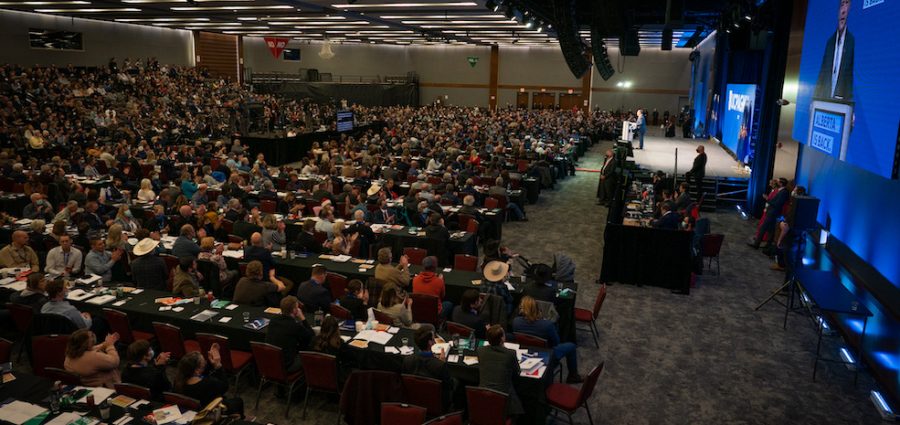
Premier Jason Kenney appeared to walk away mostly unscathed from last weekend’s United Conservative Party Annual General Meeting in Calgary.
Jason Kenney
Kenney delivered a much-watched keynote speech to more than a thousand UCP delegates that appears to have been generally well-received, though sounded like it might have been more appropriately aimed at a Chamber of Commerce or business crowd luncheon than a room of partisans hungry for more partisanship.
Kenney’s speech and it’s focus on the economy, and not his government’s fumbling response to the COVID-19 pandemic and failed “Open for Summer” plan, gives an indication of the direction the Premier and his inner circle believe they need to shift their message in order to salvage his embattled leadership and the party’s chances of winning re-election in 2023.
Regardless, Kenney tried hard to present an upbeat appearance, but as anyone who follows politics will know – party conventions are all production and all a show.
Leela Aheer (Source: Twitter)
Kenney commanded the support of the convention, though he lost a critical vote on a special resolution that would have increased the number of constituency associations able to trigger a leadership vote from 1/4 of 87 to 1/3 of 87.
The motion received support from 57 per cent of delegates but fell short of the 75 per cent required to make the constitutional change.
The new UCP President, Cynthia Moore, has said the newly elected party board will review the motions, though conservatives I’ve spoken with suggest that Kenney’s supporters are energetically searching for a technicality to disqualify the motions for an earlier vote.
Recent public opinion polls have shown Kenney with a 22 per cent approval rating among Albertans and his party has trailed Rachel Notley‘s Alberta NDP in the polls since November 2020, which has led to a growing number of UCP MLAs, including former UCP deputy leader Leela Aheer, willing to publicly criticize his leadership or call for his resignation.
Even MLAs who are reluctant to publicly criticize Kenney are reluctant to publicly defend him.
Maclean’s columnist Jason Markusoff tweeted from the convention that reporters “asked Fort McMurray MLA Tany Yao how many members here want Kenney as leader. Half, he said. Does he want Kenney as leader? Sighed, said “you’ve put me in a tough spot,” then a minister’s press secretary whisked him away.”
Daniel Williams
But perhaps the most interesting part of the convention was the vote by UCP delegates to pass a motion in support of conscience rights for health care professionals, which critics say could lead to the denial of access to women’s health and abortion services. A private members bill supporting conscience rights introduced into the Legislature by Peace River MLA and Kenney acolyte Dan Williams (now a parliamentary secretary – see below) failed at committee last year.
The passage of the policy at the UCP convention might provide an idea of how strong the different parts of the conservative coalition dominate the UCP right now, in this case – social conservatives.
Support for conscience rights for health care professionals stirred up quite a bit of controversy and backlash against the Wildrose Party during the 2012 provincial election.
“It is unclear in what ways health professionals are being denied freedom of conscience at the moment,” penned the Globe & Mail editorial board on April 9, 2012.
“Are doctors being required to perform abortions against their will? If so, no public complaint has been made that we are aware of. Would doctors have the right to swear off treating patients of the opposite sex? Would family physicians be entitled to refuse to prescribe birth control pills, or could they insist, when faced with a teenage girl, on counselling abstinence only?”
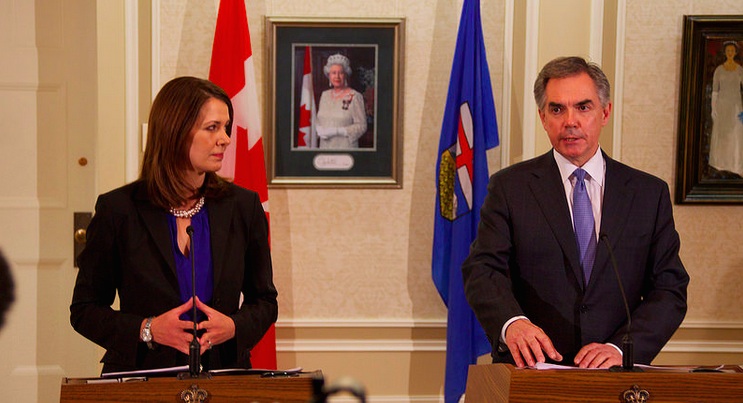
Former Wildrose leader Danielle Smith and Premier Jim Prentice on December 17, 2014.
And speaking of the Wildrose Party, former party leader Danielle Smith was at the AGM and publicly mused to a reporter from Derek Fildebrandt‘s Western Standard website that she would run for the leadership of the UCP if Kenney’s stepped down.
Smith was quick to clarify to subscribers to her weekly email newsletter that she was merely musing and that she is not planning to run because the job is already filled. But that Smith could so casually make a comment like that to a reporter while standing in the same convention ball room as the current leader is embarrassing for Kenney.
And, continuing the blast from the past theme is another former Wildrose leader, Brian Jean, who is weeks away from potentially being selected as the UCP candidate in the Fort McMurray-Lac La Biche by-election – that is, if he is not stopped by Joshua Gogo, a Fort McMurray economist.
Jean is probably Kenney’s main target now.
Trying to defeat him in the nomination vote, which is set for December 11 according to the Elections Alberta website, is likely one of the first steps the Premier will take in trying to reconsolidate his support in the UCP ahead of the next year’s leadership review – whether it be held in April or February.
Joshua Gogo
Kenney has recently criticized Jean and questioned his political record after resigning before finishing his elected terms as a Member of Parliament and MLA for Fort McMurray, criticisms that were echoed by the Premier’s political staff on social media.
Also hanging out there is the Kamikaze campaign that Kenney’s closest advisors helped manufacture as part of the effort to defeat Jean in the 2017 UCP leadership race and the ongoing RCMP investigation into alleged voter fraud.
If he is not able to stop Jean from winning the nomination, Kenney will probably a harder time pretending he’s in an upbeat mood.
Kenney names five new parliamentary secretaries
Premier Kenney announced that five UCP MLAs have been appointed as Parliamentary Secretaries, roles that do not bring any additional salary but are a sign of which backbenchers could be on track for promotions to cabinet in the future – and which backbenchers a party leader in trouble is trying to solidify support from.
Lethbridge-East MLA Nathan Neudorfis Parliamentary Secretary to the Minister of Environment and Parks for Water Stewardship. He also serves as UCP Caucus Chair.
Peace River MLA Dan Williams is Parliamentary Secretary to the Minister of Culture and for la Francophonie. Before returning to Alberta to seek the UCP nomination, Williams worked in Ottawa for Kenney while he served as a federal cabinet minister.
Both Neudorf and Williams also sit as the MLA representatives on the UCP Board of Directors.
Camrose MLA Jackie Lovelyis Parliamentary Secretary to the Associate Minister of Status of Women. Lovely was first elected as MLA for Camrose in 2019 and previously ran for the Wildrose Party in Edmonton-Ellerslie in 2012 and 2015.
Calgary-Klein MLA Jeremy Nixonis Parliamentary Secretary to the Minister of Community and Social Services for Civil Society. Nixon was first elected as MLA in 2019 and previously ran as a Wildrose Party candidate in Calgary-Klein in 2012 and 2015. Nixon was removed from his previous role as parliamentary secretary for civil society after disregarding COVID-19 restrictions and traveling to Hawaii for a hot holiday in December 2020. He is the brother of Environment & Parks Minister and Government House Leader Jason Nixon.
Spruce Grove-Stony Plain MLA Searle Turton is Parliamentary Secretary to the Minister of Energy. A former Spruce Grove City Councillor, Turton was widely rumoured to have been a potential pick for Minister of Municipal Affairs following Tracy Allard’s demotion in Jan. 2021. Turton also serves as the private sector union liaison for the Ministry of Labour and Immigration.
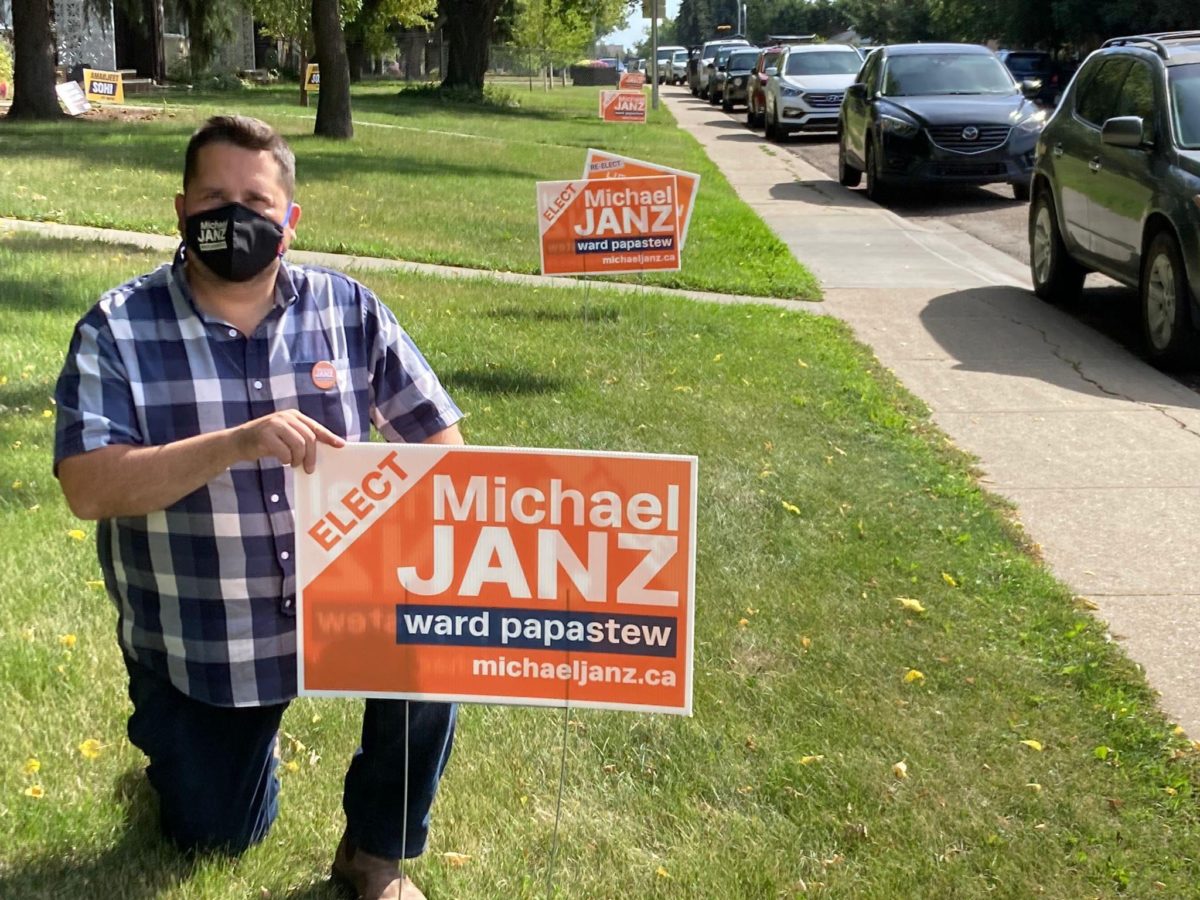
Edmonton City Councillor Michael Janz joins the Daveberta Podcast to talk about the recent municipal election, his experiences during his first month on City Council, what he hopes to accomplish in the years ahead, and how ordinary Edmontonians can have an impact on decisions at City Hall. We also dive into provincial politics and what might lie ahead in the future for Premier Jason Kenney and Alberta’s 2023 election.
The Daveberta Podcast is a member of the Alberta Podcast Network: Locally grown. Community supported.
You can listen and subscribe to the Daveberta Podcast on Apple Podcasts, Google Play, Spotify, Stitcher, or wherever you find podcasts online. We love feedback from our listeners, so let us know what you think of this episode and leave a review where you download.
Alberta Premier Jason Kenney’s good news week ahead of this weekend’s United Conservative Party annual general meeting was largely overshadowed by a slow motion rebellion in his party.
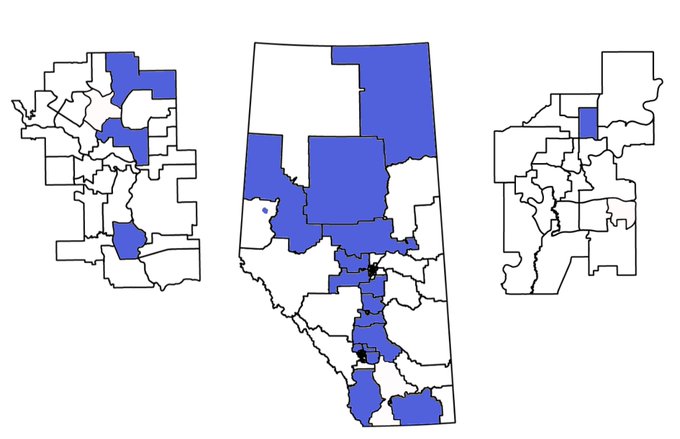
While the Premier wanted to talk about childcare and the economy, a disgruntled group of UCP constituency presidents announced Monday morning that they had convinced 22 constituency associations to pass identical motions calling for a review of Kenney’s leadership to be moved before March 1, 2022.
The leadership review had been pushed to April 2022 from fall 2022 after Kenney averted a caucus revolt over the summer.
a map of the United Conservative Party constituency associations that have passed motions calling for a review of Jason Kenney’s leadership before March 1, 2022.
According to recent polling, Kenney is the least popular Premier in Canada, sitting at 22 per cent approval among Albertans, and his party has floundered in the polls and fundraising for the past year.
Rachel Notley would be Premier once again if an election were held today, which will surely be a future on the minds of many UCP activists this weekend.
Kenney’s fumbling response to the COVID-19 pandemic is part of the problem, but so to is his cabinet’s decision to wage a multi-front war against everyone from Alberta’s parks, nurses and teachers while trying to open the Rocky Mountains up to open-pit coal mining.
A party that famously promised “Jobs, Economy and Pipelines” in the 2019 election has delivered everything but.
When the business of the meeting begins, special resolutions will only be able to be brought to the floor of the AGM by Kenney and one resolution being introduced by the Kenney-friendly UCP association in Edmonton-North West would increase the number of constituency associations needed to trigger an early leadership review from 1/4 of 87 to 1/3 of 87.
A list of of the 22 constituency associations who passed the motion calling for an early review shows that this is largely a rural revolt against Kenney’s leadership, likely from the unruly rural Wildrose-side of the party, which has never been satisfied to subjugate itself to to the kind of centralized leadership that the Premier would have been comfortable with in Ottawa.
The first signatory of the letter from the 22 was a name that would be quite familiar to Kenney – Jack Redekop – the current president of the Calgary-Fish Creek UCP and former president of Kenney’s won former federal electoral district association in Calgary-Midnapore.
One of the common criticisms of Kenney is that he has become detached from the party’s organization and local leadership since his election as Premier in 2019. Wildrosers who don’t like a centralized party leadership are unhappy, as are former Progressive Conservatives, who might be accustomed to more attention and access to their leadership.
The two groups have also discovered that all the things they disliked about each others politics when they were two parties are still there, except now they are in the same party.
The revolt hasn’t been limited to the party membership.
Jason Kenney and former UCP deputy leader Leela Aheer in happier time (source: YouTube)
Four MLAs – Chestemere-Strathmore MLA Leela Aheer, Airdrie-Cochrane MLA Peter Guthrie, Airdrie-East MLA Angela Pitt, and Calgary-Fish Creek MLA Richard Gotfried – have either publicly called for Kenney to resign or have openly criticized his leadership. And while most of their colleagues have avoided making public comments about Kenney’s leadership, the unhappiness among UCP MLAs and their staff is palpable.
There has been a steady stream of high-profile political staffers leaving their positions in the UCP government for jobs in the private sector. This past month saw the departure of press secretary Blaise Boehmer, who levelled some pretty heavy criticisms against Kenney, and UCP Caucus executive director Brittany Baltimore, who both recently took jobs with government relations companies.
Guthrie levelled allegations to the UCP Caucus this week that Political Action Committees supporting Kenney were paying the delegate fees of supporters in order to stack the votes in favour of the Premier during the AGM.
Peter Guthrie
Postmedia columnist Don Braid wrote in his most recent column that a private company was organizing to send delegates in order to curry favour with UCP cabinet ministers if Kenney survives his leadership challenges.
Albertans, and UCP members, are angry at Kenney, but aside from former Wildrose Party leader Brian Jean who is running for the UCP nomination in the Fort McMurray-Lac La Biche by-election, there is no obvious heir apparent inside the UCP for his opponents to rally around.
Cynthia Moore has been acclaimed as President and Sonia Kont acclaimed as Vice President of Fundraising, but there are races for the Secretary and Vice President of Communications positions.
A number of candidates are contesting regional director positions, including Sundre-resident Heidi Overguard, who was appointed by the UCP government to the Board of Directors of Alberta Health Services in Nov. 2019.
Meanwhile, UCP members will be lining up at the microphone to debate policies about cancel culture, private health care, private schools, and hydrogen, among other issues. The CBC reported that Kenney’s office instructed staffers to vote down policies “introducing a provincial sales tax, relocalizing 911 dispatch, a moratorium on new coal exploration and development on the eastern slopes of the Rockies and creating a revenue-neutral Alberta carbon tax to replace the federal backstop.”
This weekend’s convention will be a much different affair from the party’s last in-person annual general meeting after it’s big win in the 2019 election.
Kenney will surely be focused on rallying the party to give him one more chance ahead of next spring’s review, but don’t expect to hear many of the celebratory rallying cries we heard two years ago. The party no longer feels like it is united and it is certainly not the one big conservative happy family that Kenney helped establish in 2017.
The UCP AGM starts at the Grey Eagle Resort & Casino in Calgary on Friday, Nov. 19 and will wrap up on Sunday, Nov. 21.
Eremenko was the party’s 2019 candidate in the neighboring Calgary-Elbow riding and ran for City Council in 2017. Her nomination candidacy was endorsed by former City Councillor Evan Woolley.
Calgary-Currie was the location of one of the closest races in the 2019 election, which saw Malkinson unseated by United Conservative Party candidate Nicholas Miliken by 191 votes.
The NDP have nomination meetings scheduled in Calgary-Buffalo on Nov. 15, where incumbent MLA Joe Ceci is expected to be acclaimed, and in Lethbridge-East on Nov. 21, where former MLA Maria Fitzpatrick, local non-profit executive director Amanda Jensen, teacher Kevin McBeath, and former City Councillor Rob Miyashiro will seek the nomination.
Chand Gul running for NDP nomination on Edmonton-South West
Behavioral specialist and trained clinical psychologist Chand Gul has announced plans to seek the Alberta NDP nomination in Edmonton-South West, the only riding in the capital city not currently represented by the NDP.
Chand Gul
“We want to move on from the negativity of Kacey Madu and Jason Kenney,” Gul said in a press release. “Rachel Notley has a positive vision for people; she shares my values of giving back to the community, defending human rights, and making sure government improves the lives of people. I want to be part of her team!”
Gul is the former president of the Alberta Pashtoon Association and previously worked for the Edmonton Mennonite Centre for Newcomers through the organization’s Community Connector Immigrant Women’s Integration network.
She is also the former chair of the women’s wing of the Pakistan-Canada Association of Edmonton, and has also served as a Youth mentor to the Edmonton Immigrant Services Association and a board member for Canadians for a Civil Society.
Gul ran unsuccessfully for the NDP nomination in Edmonton-Meadows ahead of the 2019 election, a race where she and incumbent MLA Denise Woollard were defeated by Jasvir Deol.Deol was elected as MLA in the 2019 election.
Before joining the Alberta NDP, she was the South Edmonton Regional director for the Alberta Liberal Party and a member of the federal Liberal Party’s board of directors in Edmonton-Mill Woods.
Kaycee Madu (Source: Twitter)
If nominated, she will likely face UCP MLA Kaycee Madu, who was first elected in 2019, and as I already mentioned, is the only UCP MLA from Edmonton. Madu defeated former journalist and political staffer John Archer by 715 votes in that election.
Madu was appointed as Minister of Municipal Affairs in 2019 and became Minister of Justice in a 2020 cabinet shuffle. Known for his abrasive-style of partisan politics, Madu has become a controversial figure in Jason Kenney’s UCP cabinet.
Former Wildrose Party leader and Fort McMurray-Lac La Biche UCP nomination candidate Brian Jean has come out against mandatory vaccinations and the expansion of the province’s vaccine passport program for businesses.
Jean also faced criticism for a Facebook post in which he described his UCP nomination opponent, Joshua Gogo, as a “Nigerian economist who lives in Fort McMurray,” a description his opponents were quick to describe as a racist dog whistle.
Jean is running for the nomination to run in the upcoming by-election in the riding he mostly represented from 2015 to 2018, but he has also set his sights on challenging Kenney’s leadership of the UCP.
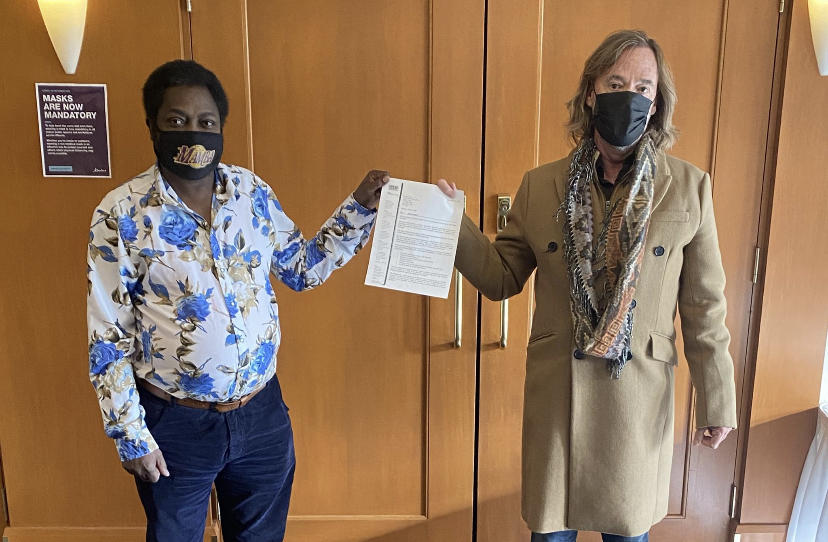
Longtime Cargill worker and Local 401 Executive Board member Joseph Kog (right) handed the strike notice to Cargill representatives. UFCW Local 401 President Thomas Hesse is pictured with him in this photo.
Workers at the Cargill meat packing plant in High River have voted overwhelming in favour of taking strike action.
Workers at the meat packing plant represented by UFCW Local 401 voted 97 per cent in support of strike action if the Minnesota-based multi-billion dollar corporation does not make them a fair offer.
Richelle Stewart
“Our Cargill union members came to bargaining with a genuine interest in improving working conditions at the Plant,” UFCW Local 401 Secretary Treasurer Richelle Stewart said in a press release. “Unfortunately, Cargill has focused on playing games that have slowed the process down and stopped real progress. That has been very disappointing.”
The union has given the employer notice that workers could go on strike on Dec. 6 if demands to improve workplace safety are not met.
The Cargill plant in High River was the site of one of the worst early workplace outbreaks of COVID-19 in Alberta and lead to the death of three workers. More than 1,500 COVID cases were linked to the outbreak at the site.
At the time, the corporation and the Alberta government were criticized for not acting quickly to shut down the plant when it was apparent that the outbreak was only getting worse.
“Local 401 fought and was successful in having Cargill’s High River Plant closed,” said Stewart. “The Government of Alberta did nothing to address the unfolding tragedy and was later revealed to be untruthful in its dealings with Cargill workers.”
Devin Dreeshen
The Agriculture and Forestry Minister at the time was Devin Dreeshen.
Replacing Dreeshen as the newly renamed Minister of Agriculture, Forestry and Rural Economic Development is Nate Horner, who was only raised from the backbenches to become Associate Minister of Rural Economic Development on July 8, 2021. The rancher from Pollockville was elected as the UCP MLA for Drumheller-Stettler in 2019.
Nate Horner
If the Horner name sounds familiar, it is because he comes from a legitimate Alberta political family. His cousin Doug Horner served as Agriculture Minister from 2004 to 2006 and his great-uncle Hugh Horner was Agriculture Minister from 1971 to 1975. His grandfather Jack Horner even served as Pierre Trudeau’s Minister of Industry, Trade and Commerce after crossing the floor to the Liberals in 1977. The patriarch of the Horner family, his great-grandfather Ralph Horner, was a Senator from Saskatchewan and another one of his great-uncles, Norval Horner, was also an MP.
Tyler Shandro
A strike by workers at one of the province’s largest meat packing plants could be the first big challenge faced by Horner and newly appointed Labour Minister Tyler Shandro, who was shuffled out of the Health Ministry after fumbling the government’s response to the COVID-19 pandemic.
The strike notice issued by UFCW Local 401 notes that the job action could be accompanied by a variety of other actions, including asking Albertans to boycott the beef industry until Cargill workers are treated fairly, as well as picketing and leafleting in front of other workplaces that sell Cargill products, like McDonald’s drive-thrus.
An updated version of the well-known Alberta campaign.
The meat packing plants in southern Alberta were the sites of some great injustices during the COVID-19 pandemic and those workers – the people who slaughter the beef Albertans claim to love so much – deserve to have their demands for improved safety and workplace conditions not only met, but exceeded.
The Livingstone Landowners Group, a group that opposed the United Conservative Party government’s plans to allow open-pit coal mining in the Eastern Slopes of Alberta’s Rocky Mountains, has released a short video documentary about the importance of the rivers in the area and the impact coal mining would have on the water that is critical for life in southwest Alberta.
The Livingstone Landowners Group represents landowners and supporters of the Livingstone-Porcupine Hills area in southwest Alberta, some of the most biodiverse and sensitive ecosystems in the province.
The government announced this week that the Coal Policy Committee has been granted a second extension to submit its final report to Energy Minister Sonya Savage – now to Dec. 31, 2021. The committee was created in response to the widespread public backlash against the UCP’s unilateral decision to dissolve the province’s longstanding 1976 Coal Policy and open new areas of the Rockies to coal mining.
Energy analyst and strategy consultant Samir Kayande has announced he is seeking the Alberta NDP nomination in Calgary-Elbow.
Samir Kayande (source: Pembina Instittute)
“Enhancing our already-enviable quality of life in the face of worldwide commitments to reduce pollution requires foresight, creativity and vision,” Kayande said in a press release. “Albertans must protect what we have while preparing for the future.”
“Sadly, the UCP government has failed to deliver on their promise of economic prosperity,” Kayande said. “A strong, caring Alberta with an NDP government will attract and keep high-paying jobs, and my expertise can help build that future.”
Kayande has a Chemical Engineering degree from the University of Alberta and a Master of Business Administration from the Tepper School of Business at Carnegie Mellon University. According to his press release, he has advised institutional money managers—pension funds, mutual funds, private equity—on their energy portfolios.
If successful in the nomination, Kayande would likely face United Conservative Party MLA Doug Schweitzer in the next provincial election. Currently serving as Minister of Jobs, Economy and Innovation, Schweitzer ran for the UCP leadership in 2017 and is considered by many to be a potential leadership candidate if Premier Jason Kenney resigns before the next election.
Klein’s first provincial election saw him win in a close race against Liberal candidate Gilbert Clark, the father of future MLA Greg Clark.
The NDP candidate from the 2019 election, Janet Eremenko, is currently challenging former MLA Brian Malkinson for the nomination in the neighbouring Calgary-Currie riding. Eremenko recently posted a photo on social media showing her campaigning for the nomination with the support of former City Councillor Evan Woolley.
The NDP have not announced a date for the Calgary-Elbow nomination meeting.
Calgary-East poll results from the 2019 election (source: Election-Atlas.ca)
“It is such an honour to serve the businesses and people in this community and east Calgary,” Karim-McSwiney said in a press release. “My goal is to continue to apply the same passion and energy to advocating and fighting for east Calgary that I’ve shown throughout my career.”
Back in 2016, Karim-McSwiney spoke in support of the previous NDP government’s Act to End Predatory Lending.
“This is ground-breaking legislation. It ensures vulnerable borrowers are protected, particularly now when budgets are tight,” Karim-McSwiney said in a 2016 government press release. “These changes will positively impact our community’s revitalization efforts, and help attract new businesses to our neighbourhood.”
Jason Kenney and Peter Singh
Calgary-East has been represented by United Conservative Party MLA Peter Singh since 2019. Singh was elected with 49.7 per cent of the vote over New Democrat Cesar Cala, who finished second with 32.1 per cent.
Singh faced allegations of bribery and fraud from the four other candidates he defeated in the UCP nomination contest and, days before the 2019 election, his auto-repair shop was searched by the RCMP in connection with the investigation into allegations of voter fraud during the UCP’s 2017 leadership campaign.
Robyn Luff represented the riding as a New Democrat from 2015 until she was removed from the caucus in 2018 after speaking out about “culture of fear and intimidation.” She sat as an Independent MLA for the remainder of her term and did not run for re-election.
In 2015, Luff unseated six-term PC MLA Moe Amery, who had run in every election in the riding since 1986 (his son, Mickey Amery, was elected as the UCP MLA in the neighbouring Calgary-Cross riding in 2019).
A date for the nomination meeting in Calgary-East has not been set.
The UCP have opened nominations in the Fort McMurray-Lac La Biche by-election, with Joshua Gogo and former Wildrose Party leader Brian Jean entering the contest.