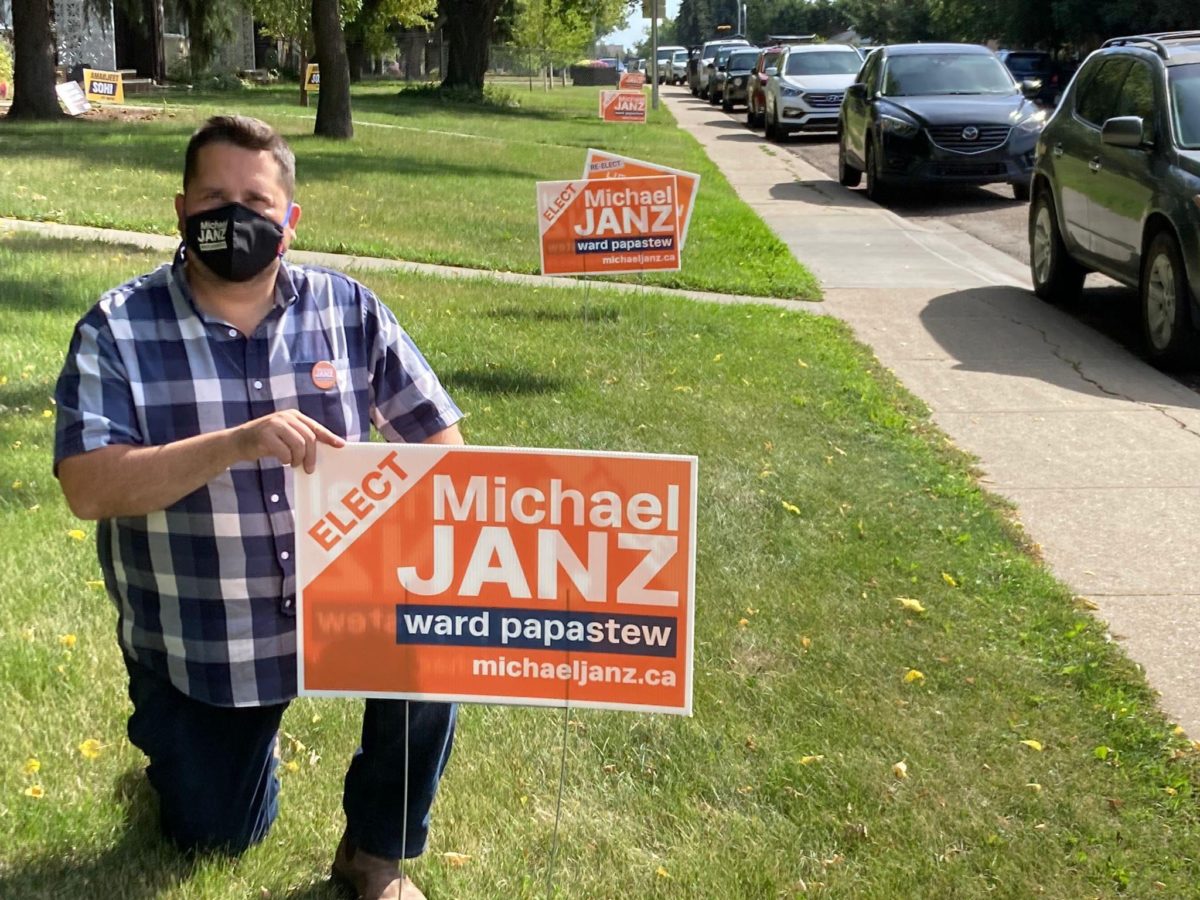
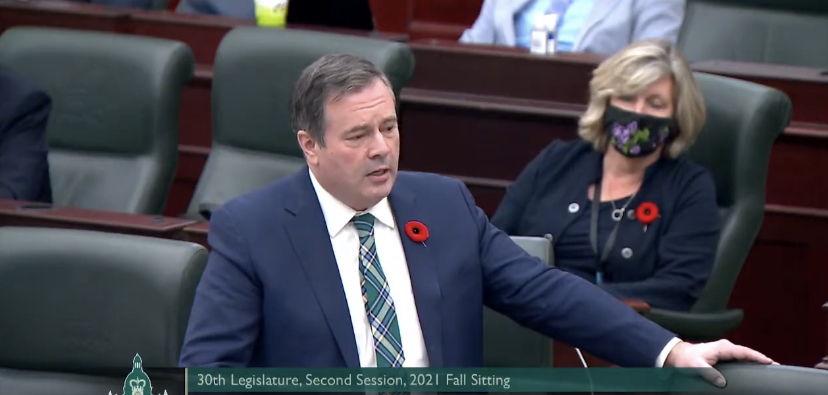
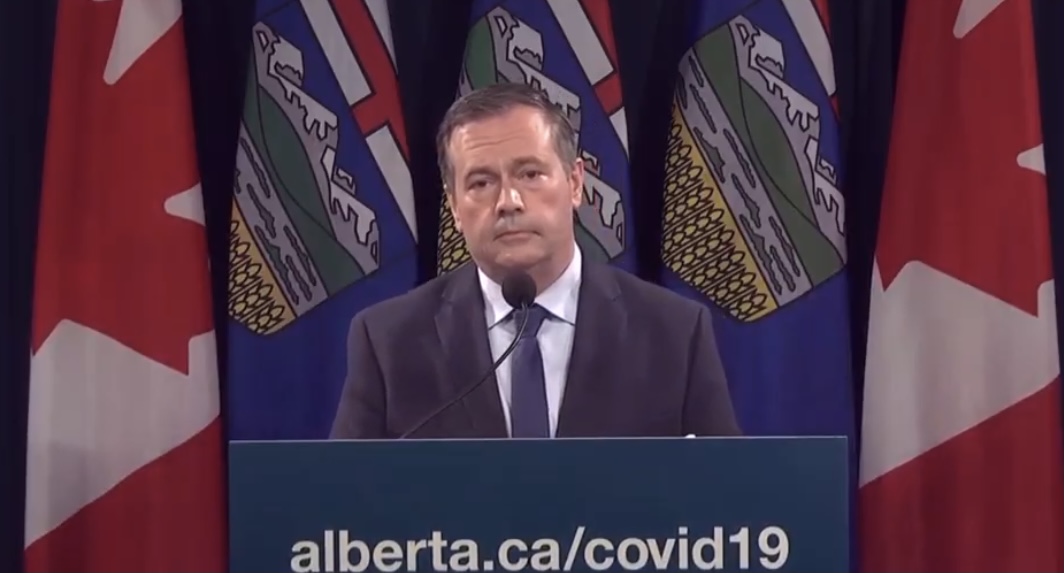
Edmonton City Councillor Michael Janz joins the Daveberta Podcast to talk about the recent municipal election, his experiences during his first month on City Council, what he hopes to accomplish in the years ahead, and how ordinary Edmontonians can have an impact on decisions at City Hall. We also dive into provincial politics and what might lie ahead in the future for Premier Jason Kenney and Alberta’s 2023 election.
The Daveberta Podcast is a member of the Alberta Podcast Network: Locally grown. Community supported.
You can listen and subscribe to the Daveberta Podcast on Apple Podcasts, Google Play, Spotify, Stitcher, or wherever you find podcasts online. We love feedback from our listeners, so let us know what you think of this episode and leave a review where you download.
Alberta Premier Jason Kenney’s good news week ahead of this weekend’s United Conservative Party annual general meeting was largely overshadowed by a slow motion rebellion in his party.
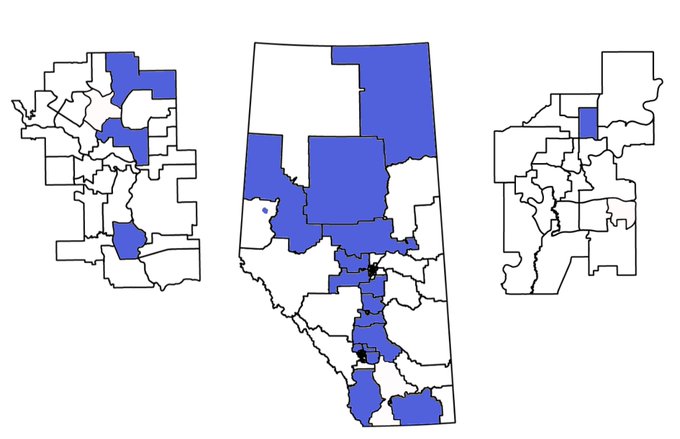
While the Premier wanted to talk about childcare and the economy, a disgruntled group of UCP constituency presidents announced Monday morning that they had convinced 22 constituency associations to pass identical motions calling for a review of Kenney’s leadership to be moved before March 1, 2022.
The leadership review had been pushed to April 2022 from fall 2022 after Kenney averted a caucus revolt over the summer.
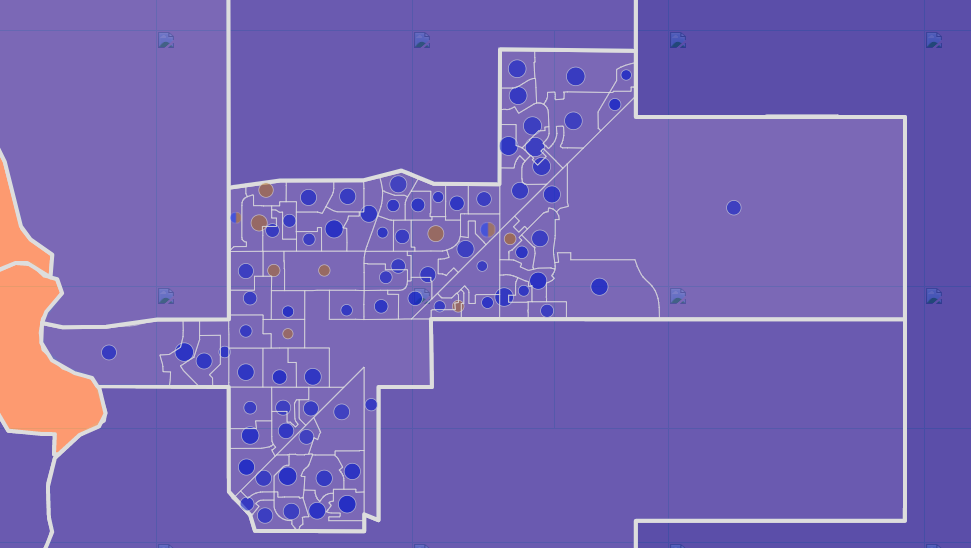
a map of the United Conservative Party constituency associations that have passed motions calling for a review of Jason Kenney’s leadership before March 1, 2022.
According to recent polling, Kenney is the least popular Premier in Canada, sitting at 22 per cent approval among Albertans, and his party has floundered in the polls and fundraising for the past year.
Rachel Notley would be Premier once again if an election were held today, which will surely be a future on the minds of many UCP activists this weekend.
Kenney’s fumbling response to the COVID-19 pandemic is part of the problem, but so to is his cabinet’s decision to wage a multi-front war against everyone from Alberta’s parks, nurses and teachers while trying to open the Rocky Mountains up to open-pit coal mining.
A party that famously promised “Jobs, Economy and Pipelines” in the 2019 election has delivered everything but.
When the business of the meeting begins, special resolutions will only be able to be brought to the floor of the AGM by Kenney and one resolution being introduced by the Kenney-friendly UCP association in Edmonton-North West would increase the number of constituency associations needed to trigger an early leadership review from 1/4 of 87 to 1/3 of 87.
A list of of the 22 constituency associations who passed the motion calling for an early review shows that this is largely a rural revolt against Kenney’s leadership, likely from the unruly rural Wildrose-side of the party, which has never been satisfied to subjugate itself to to the kind of centralized leadership that the Premier would have been comfortable with in Ottawa.
The first signatory of the letter from the 22 was a name that would be quite familiar to Kenney – Jack Redekop – the current president of the Calgary-Fish Creek UCP and former president of Kenney’s won former federal electoral district association in Calgary-Midnapore.
One of the common criticisms of Kenney is that he has become detached from the party’s organization and local leadership since his election as Premier in 2019. Wildrosers who don’t like a centralized party leadership are unhappy, as are former Progressive Conservatives, who might be accustomed to more attention and access to their leadership.
The two groups have also discovered that all the things they disliked about each others politics when they were two parties are still there, except now they are in the same party.
The revolt hasn’t been limited to the party membership.
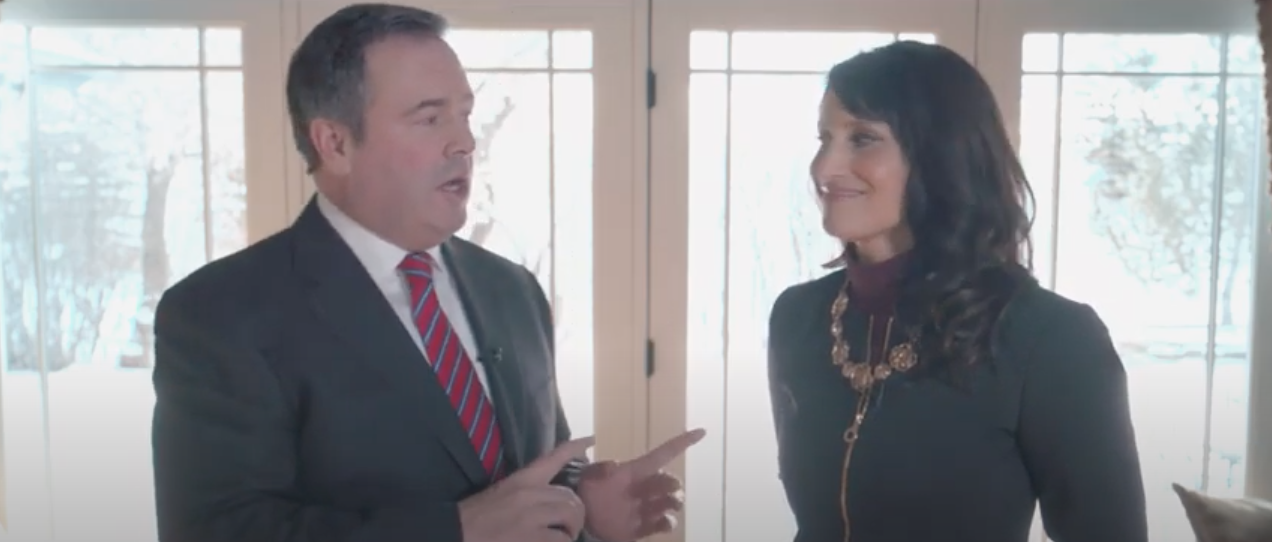
Jason Kenney and former UCP deputy leader Leela Aheer in happier time (source: YouTube)
Four MLAs – Chestemere-Strathmore MLA Leela Aheer, Airdrie-Cochrane MLA Peter Guthrie, Airdrie-East MLA Angela Pitt, and Calgary-Fish Creek MLA Richard Gotfried – have either publicly called for Kenney to resign or have openly criticized his leadership. And while most of their colleagues have avoided making public comments about Kenney’s leadership, the unhappiness among UCP MLAs and their staff is palpable.
There has been a steady stream of high-profile political staffers leaving their positions in the UCP government for jobs in the private sector. This past month saw the departure of press secretary Blaise Boehmer, who levelled some pretty heavy criticisms against Kenney, and UCP Caucus executive director Brittany Baltimore, who both recently took jobs with government relations companies.
Guthrie levelled allegations to the UCP Caucus this week that Political Action Committees supporting Kenney were paying the delegate fees of supporters in order to stack the votes in favour of the Premier during the AGM.
Peter Guthrie
Postmedia columnist Don Braid wrote in his most recent column that a private company was organizing to send delegates in order to curry favour with UCP cabinet ministers if Kenney survives his leadership challenges.
Albertans, and UCP members, are angry at Kenney, but aside from former Wildrose Party leader Brian Jean who is running for the UCP nomination in the Fort McMurray-Lac La Biche by-election, there is no obvious heir apparent inside the UCP for his opponents to rally around.
Cynthia Moore has been acclaimed as President and Sonia Kont acclaimed as Vice President of Fundraising, but there are races for the Secretary and Vice President of Communications positions.
A number of candidates are contesting regional director positions, including Sundre-resident Heidi Overguard, who was appointed by the UCP government to the Board of Directors of Alberta Health Services in Nov. 2019.
Meanwhile, UCP members will be lining up at the microphone to debate policies about cancel culture, private health care, private schools, and hydrogen, among other issues. The CBC reported that Kenney’s office instructed staffers to vote down policies “introducing a provincial sales tax, relocalizing 911 dispatch, a moratorium on new coal exploration and development on the eastern slopes of the Rockies and creating a revenue-neutral Alberta carbon tax to replace the federal backstop.”
This weekend’s convention will be a much different affair from the party’s last in-person annual general meeting after it’s big win in the 2019 election.
Kenney will surely be focused on rallying the party to give him one more chance ahead of next spring’s review, but don’t expect to hear many of the celebratory rallying cries we heard two years ago. The party no longer feels like it is united and it is certainly not the one big conservative happy family that Kenney helped establish in 2017.
The UCP AGM starts at the Grey Eagle Resort & Casino in Calgary on Friday, Nov. 19 and will wrap up on Sunday, Nov. 21.
Eremenko was the party’s 2019 candidate in the neighboring Calgary-Elbow riding and ran for City Council in 2017. Her nomination candidacy was endorsed by former City Councillor Evan Woolley.
Calgary-Currie was the location of one of the closest races in the 2019 election, which saw Malkinson unseated by United Conservative Party candidate Nicholas Miliken by 191 votes.
The NDP have nomination meetings scheduled in Calgary-Buffalo on Nov. 15, where incumbent MLA Joe Ceci is expected to be acclaimed, and in Lethbridge-East on Nov. 21, where former MLA Maria Fitzpatrick, local non-profit executive director Amanda Jensen, teacher Kevin McBeath, and former City Councillor Rob Miyashiro will seek the nomination.
Chand Gul running for NDP nomination on Edmonton-South West
Behavioral specialist and trained clinical psychologist Chand Gul has announced plans to seek the Alberta NDP nomination in Edmonton-South West, the only riding in the capital city not currently represented by the NDP.
Chand Gul
“We want to move on from the negativity of Kacey Madu and Jason Kenney,” Gul said in a press release. “Rachel Notley has a positive vision for people; she shares my values of giving back to the community, defending human rights, and making sure government improves the lives of people. I want to be part of her team!”
Gul is the former president of the Alberta Pashtoon Association and previously worked for the Edmonton Mennonite Centre for Newcomers through the organization’s Community Connector Immigrant Women’s Integration network.
She is also the former chair of the women’s wing of the Pakistan-Canada Association of Edmonton, and has also served as a Youth mentor to the Edmonton Immigrant Services Association and a board member for Canadians for a Civil Society.
Gul ran unsuccessfully for the NDP nomination in Edmonton-Meadows ahead of the 2019 election, a race where she and incumbent MLA Denise Woollard were defeated by Jasvir Deol.Deol was elected as MLA in the 2019 election.
Before joining the Alberta NDP, she was the South Edmonton Regional director for the Alberta Liberal Party and a member of the federal Liberal Party’s board of directors in Edmonton-Mill Woods.
Kaycee Madu (Source: Twitter)
If nominated, she will likely face UCP MLA Kaycee Madu, who was first elected in 2019, and as I already mentioned, is the only UCP MLA from Edmonton. Madu defeated former journalist and political staffer John Archer by 715 votes in that election.
Madu was appointed as Minister of Municipal Affairs in 2019 and became Minister of Justice in a 2020 cabinet shuffle. Known for his abrasive-style of partisan politics, Madu has become a controversial figure in Jason Kenney’s UCP cabinet.
Former Wildrose Party leader and Fort McMurray-Lac La Biche UCP nomination candidate Brian Jean has come out against mandatory vaccinations and the expansion of the province’s vaccine passport program for businesses.
Jean also faced criticism for a Facebook post in which he described his UCP nomination opponent, Joshua Gogo, as a “Nigerian economist who lives in Fort McMurray,” a description his opponents were quick to describe as a racist dog whistle.
Jean is running for the nomination to run in the upcoming by-election in the riding he mostly represented from 2015 to 2018, but he has also set his sights on challenging Kenney’s leadership of the UCP.
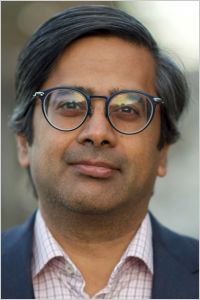
Energy analyst and strategy consultant Samir Kayande has announced he is seeking the Alberta NDP nomination in Calgary-Elbow.
Samir Kayande (source: Pembina Instittute)
“Enhancing our already-enviable quality of life in the face of worldwide commitments to reduce pollution requires foresight, creativity and vision,” Kayande said in a press release. “Albertans must protect what we have while preparing for the future.”
“Sadly, the UCP government has failed to deliver on their promise of economic prosperity,” Kayande said. “A strong, caring Alberta with an NDP government will attract and keep high-paying jobs, and my expertise can help build that future.”
Kayande has a Chemical Engineering degree from the University of Alberta and a Master of Business Administration from the Tepper School of Business at Carnegie Mellon University. According to his press release, he has advised institutional money managers—pension funds, mutual funds, private equity—on their energy portfolios.
If successful in the nomination, Kayande would likely face United Conservative Party MLA Doug Schweitzer in the next provincial election. Currently serving as Minister of Jobs, Economy and Innovation, Schweitzer ran for the UCP leadership in 2017 and is considered by many to be a potential leadership candidate if Premier Jason Kenney resigns before the next election.
Klein’s first provincial election saw him win in a close race against Liberal candidate Gilbert Clark, the father of future MLA Greg Clark.
The NDP candidate from the 2019 election, Janet Eremenko, is currently challenging former MLA Brian Malkinson for the nomination in the neighbouring Calgary-Currie riding. Eremenko recently posted a photo on social media showing her campaigning for the nomination with the support of former City Councillor Evan Woolley.
The NDP have not announced a date for the Calgary-Elbow nomination meeting.
Calgary-East poll results from the 2019 election (source: Election-Atlas.ca)
“It is such an honour to serve the businesses and people in this community and east Calgary,” Karim-McSwiney said in a press release. “My goal is to continue to apply the same passion and energy to advocating and fighting for east Calgary that I’ve shown throughout my career.”
Back in 2016, Karim-McSwiney spoke in support of the previous NDP government’s Act to End Predatory Lending.
“This is ground-breaking legislation. It ensures vulnerable borrowers are protected, particularly now when budgets are tight,” Karim-McSwiney said in a 2016 government press release. “These changes will positively impact our community’s revitalization efforts, and help attract new businesses to our neighbourhood.”
Jason Kenney and Peter Singh
Calgary-East has been represented by United Conservative Party MLA Peter Singh since 2019. Singh was elected with 49.7 per cent of the vote over New Democrat Cesar Cala, who finished second with 32.1 per cent.
Singh faced allegations of bribery and fraud from the four other candidates he defeated in the UCP nomination contest and, days before the 2019 election, his auto-repair shop was searched by the RCMP in connection with the investigation into allegations of voter fraud during the UCP’s 2017 leadership campaign.
Robyn Luff represented the riding as a New Democrat from 2015 until she was removed from the caucus in 2018 after speaking out about “culture of fear and intimidation.” She sat as an Independent MLA for the remainder of her term and did not run for re-election.
In 2015, Luff unseated six-term PC MLA Moe Amery, who had run in every election in the riding since 1986 (his son, Mickey Amery, was elected as the UCP MLA in the neighbouring Calgary-Cross riding in 2019).
A date for the nomination meeting in Calgary-East has not been set.
The UCP have opened nominations in the Fort McMurray-Lac La Biche by-election, with Joshua Gogo and former Wildrose Party leader Brian Jean entering the contest.
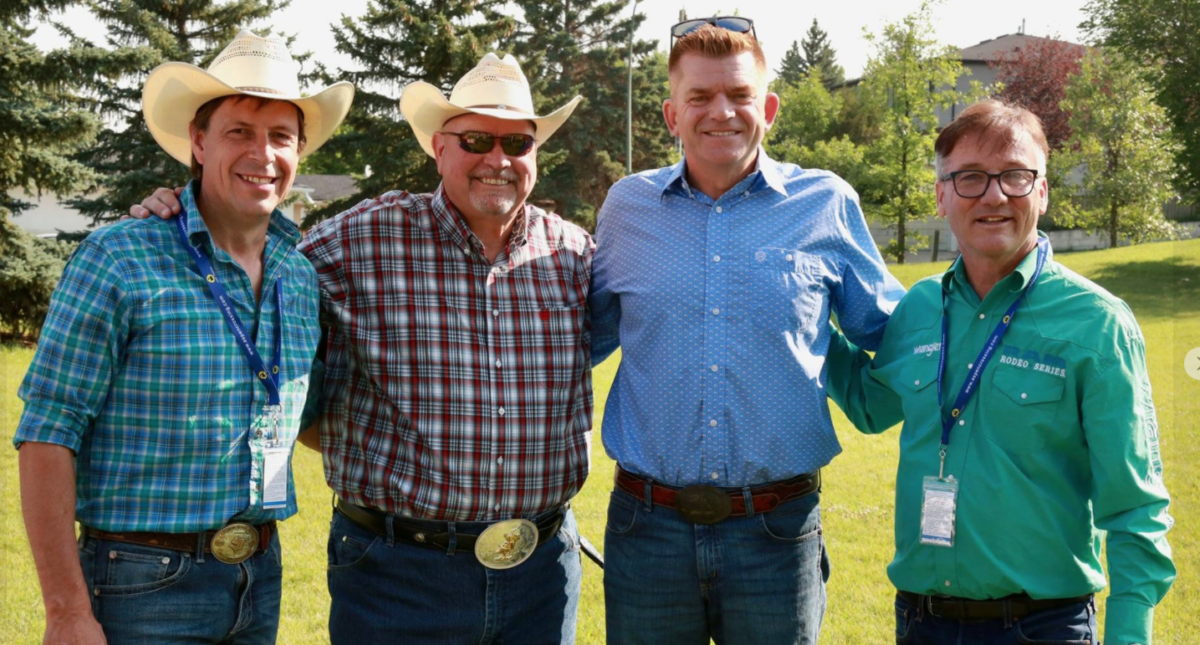
Todd Loewen, former MLA Wayne Anderson, Brian Jean, and Drew Barnes at the Calgary Stampede BBQ in July 2021. (Source: Facebook)
Here he goes, again.
Former Wildrose Party leader Brian Jean announced today that he plans to run for the job he quit three years ago.
Jean announced on Facebook that he plans to seek the United Conservative Party nomination in the upcoming Fort McMurray-Lac La Biche by-election. The by-election to replace Laila Goodridge, who was recently elected as a Member of Parliament, needs to be called by Feb. 15, 2022. He is the second candidate to announce after Joshua Gogo entered the race last month.
Jean represented the predecessor riding, Fort McMurray-Conklin, from 2015 until 2018, when he quit after losing the UCP leadership to Jason Kenney.
This is Jean’s second political comeback. His first happened when he was a last minute candidate for the Wildrose Party leadership in 2015 after stepping down as a MP in 2014. He saved the party from the brink of oblivion in that election and became leader of the Official Opposition.
Since leaving the Legislature in 2018, he has become a vocal critic of the government, flirted with western separatism in online columns, and called for Kenney to resign as leader of the UCP.
“Something must be done or Rachel Notley will win the next election with an overwhelming majority,” Jean wrote on Facebook of the popular NDP leader who’s party has been leading in the polls since last November, once again publicly signalling his lack of confidence in Kenney.
Jean has every reason to dislike Kenney after an alleged Kamakaze campaign was organized against him during the UCP leadership race, and since quitting he has appeared to take pleasure in poking at his rival from the sidelines.
Jean was even spotted at a Calgary Stampede BBQ hosted by ousted UCP MLAs Drew Barnes and Todd Loewen over the summer.
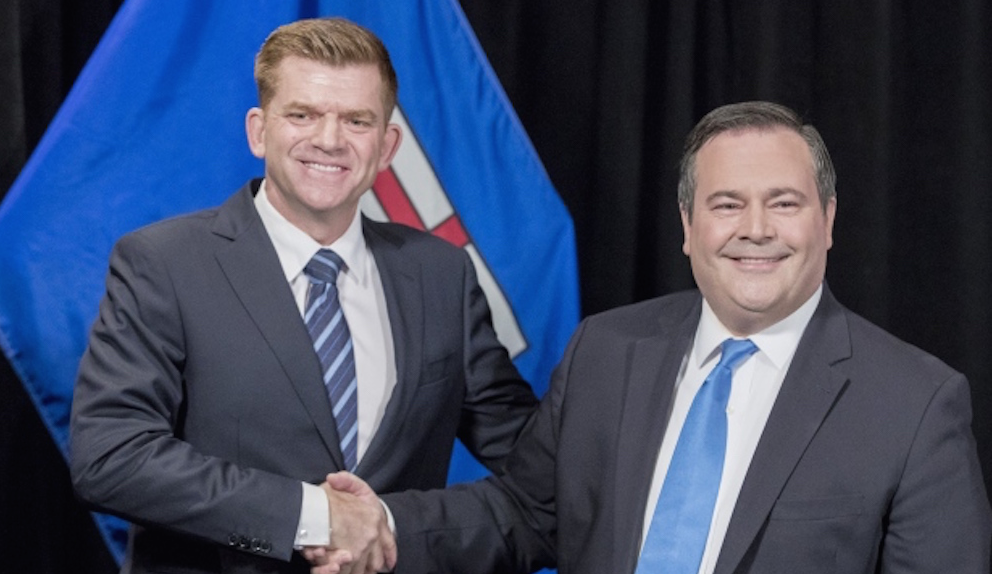
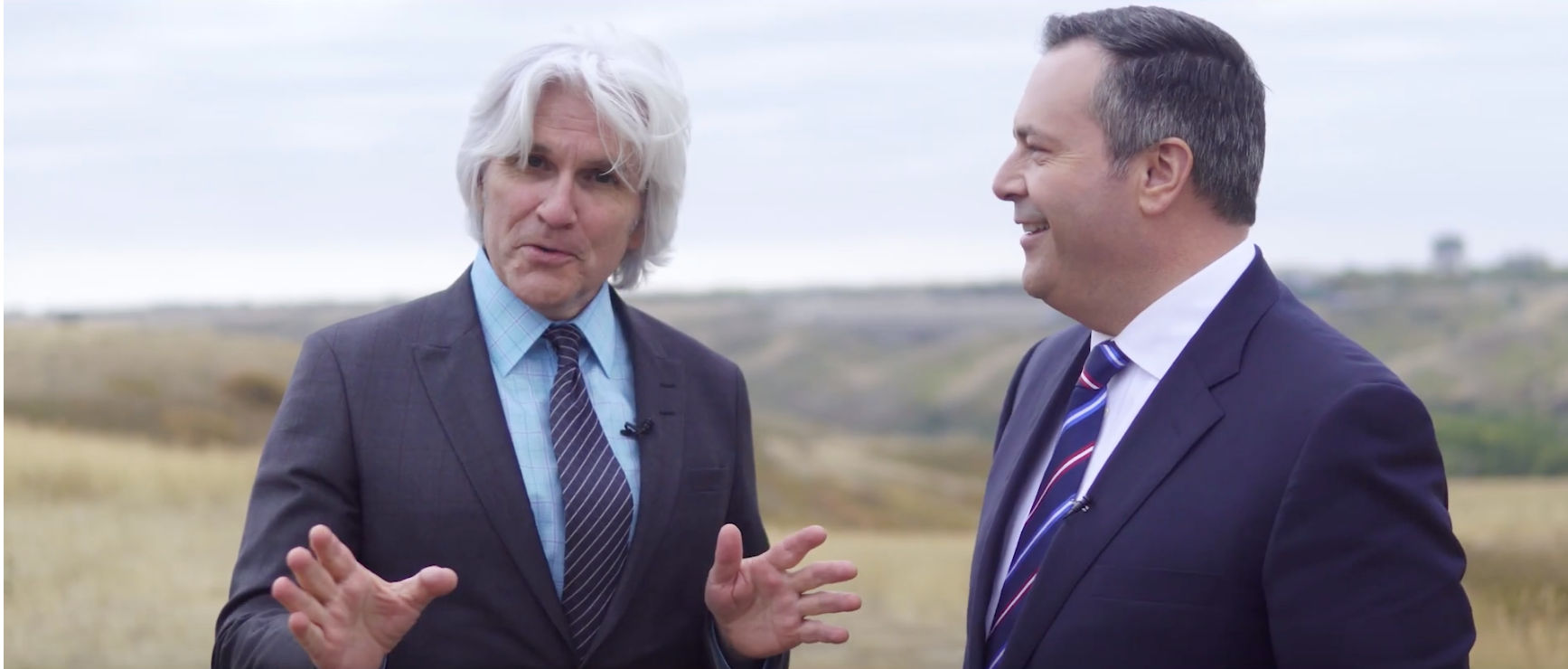
Brian Jean and Jason Kenney
There is little doubt that he could win the nomination and the by-election. He is a well-known and popular figure in Fort McMurray, and he comes across as affable and down to earth to anyone who meets him. His lack of stick-to-it-iveness should probably raise some concerns, but at this point local conservatives might just be hopeful to find a candidate who can reliably hold on to the seat.
The question is whether the increasingly unpopular Kenney will allow a rival who has openly called for his resignation to run under his party’s banner?
And if Jean isn’t allowed to run for Kenney’s party, will he run as an Independent or for another party, like the struggling Wildrose Independence Party.
Of course, Jean isn’t alone in calling for Kenney’s resignation.
No emergency caucus meeting was held to kick them out, and perhaps more notably, no Kenney loyalists in the cabinet or caucus stepped up to rebuke them and defend their leader. The silence was deafening.
So, Jean now wants his seat back, and he probably wants his party back too.
It is not uncommon for party leaders and politicians to spend time in ridings where by-elections are expected,
Edmonton-Beverly-Clareview NDP MLA Deron Bilous, who served as Economic Development Minister in the first Notley government, is in Fort McMurray this week and has posted a series of videos about his visit on Instagram.
The UCP Caucus was scheduled to hold its annual retreat in Fort McMurray on Sept. 15 and 16, but the event that would have brought most UCP MLAs to the northeast Alberta city ahead of the by-election was abruptly canceled on Sept. 10 after rumours that Kenney was facing a caucus revolt. Kenney also cancelled his scheduled Sept. 15 keynote speech to the annual Oil Sands Conference and Trade Show, which the UCP Caucus retreat was planned around.
On Oct. 26, 2021, Alberta Premier Jason Kenney was having a rare good day. He got the result he argued he was looking for from the province-wide Equalization Referendum and Prime Minister Justin Trudeau gave him the gift of appointing long-time environmental activist Steven Guilbeault as Minister of Environment and Climate Change.
Kenney’s good day lasted less than 24 hours.
In what can only be described as a bombshell story, the CBC first reported today that a former ministerial Chief of Staff is suing the Premier’s Office, “saying she suffered from a toxic workplace culture and was fired as retribution for speaking out about the problems she saw there.”
Devin Dreeshen
The allegations in Ariella Kimmel‘s lawsuit include sexual harassment and heavy drinking by ministers and staff in legislature offices, as well as claims that senior staff in the premier’s office fabricated rumours about her contributing to her termination, reported CBC journalist Elise von Scheel.
The CBC reported that Kimmel has filed a lawsuit against the Kenney’s office for alleged sexual harassment and defamation.
Kimmel was Chief of Staff to Minister Doug Schweitzer until February 2021 and before that worked as Director of Community Relations in the Premier’s Office and as the United Conservative Party’s Director of Outreach before the 2019 election.
Kimmel had previously worked for Kenney during his time in Ottawa as executive coordinator for multiculturalism when he was Minister of Employment and Social Development and as an assistant during his time as Minister of Citizenship and Immigration.
The statement of claim, which is reported in detail by CBC, makes serious allegations against numerous officials and staffers in the UCP government, including Agriculture and Forestry Minister Devin Dreeshen.
Responding to a question in the Assembly today from Edmonton-Highlands-Norwood NDP MLA Janis Irwin, Kenney said that his office was appointing an independent review to make recommendations to revise human resource practices for political staff.
Calgary-Fish Creek UCP MLA Richard Gotfried called on the government to not wait for a review and instead immediately adopt the Respect in the Workplace program promoted by Respect Group Inc.
While none of the allegations have been proven in court, the conditions described are probably not uncommon in political offices across Canada. Kimmel’s lawsuit shines a big spotlight on a toxic workplace culture in the Legislature that needs to change immediately.
Aheer is having none of it
Jason Kenney and Leela Aheer (source: YouTube)
Chestermere-Strathmore UCP MLA Leela Aheer responded to the allegations by calling on Kenney to resign and drawing comparisons to disgraced Calgary City Councillor Sean Chu. A A former cabinet minister and UCP deputy leader, Aheer was dropped from cabinet after criticizing the UCP’s mishandling of the COVID-19 pandemic.
Standing at a podium in the Legislature Rotunda today, Aheer refused to stand down and appeared to be daring Kenney and her MLA colleagues to remove her from the UCP Caucus.
UCP MLAs voted to remove Cypress-Medicine Hat MLA DrewBarnes and Central Peace-Notley MLA Todd Loewen from the caucus in June following Loewen’s call for Kenney to resign.
Kenney avoided a caucus revolt and non-confidence vote last month when he agreed to push up his leadership review from fall 2022 to April 2022. That move was successful in appeasing the disorganized opposition inside the UCP Caucus, but not the party, as numerous UCP constituency associations continue to push for Kenney’s review to be held before March 1, 2022.
Kenney’s approval rating dropped to an abysmal 22 per cent last month and leaked poll results showed that 75 per cent of Albertans disapprove of the UCP government, one of the strongest disapproval ratings for an Alberta government in recent memory.
Alberta Energy Minister Sonya Savage releases the final report of the Public Inquiry into Anti-Alberta Energy Campaigns.
To be very clear, I have not found any suggestions of wrongdoing on the part of any individual or organization. No individual or organization, in my view, has done anything illegal. Indeed, they have exercised their rights of free speech. – Page 596 of the Final Report of the Public Inquiry into Anti-Alberta Energy Campaigns
A key part of Premier Jason Kenney’s “Fight Back Strategy” against perceived enemies of Alberta’s oil and gas industry, the public inquiry was launched in July 2019 with a political promise to unearth the vast conspiracy of wealthy international foundations and environmental activists who were working together in the shadows to undermine Alberta’s oil and gas industry.
It was these secretive groups and their dark money, Albertans were lead to believe, who were blocking oil pipelines and were the source of our economic woes. This public inquiry was meant to intimidate those critics.
Speaking to a crowd of supporters on the night of the United Conservative Party’s victory in the 2019 election, Premier Jason Kenney declared he had a message for the “foreign funded special interests who have been leading a campaign of economic sabotage against this great province.”
“To the Rockefeller Brothers Fund, to the Tides Foundation, to the LeadNow, to the David Suzuki Foundation, and to all of the others, your days of pushing around Albertans with impunity just ended,” Kenney decreed.
More than two years and $3.5 million later, Commissioner Steve Allan’s final report does not detail a vast conspiracy, because a vast conspiracy doesn’t exist. It turns out that most of the information he was looking for is already public and the devious activity he was sent to uncover was totally legal.
In fact, Allan’s final report released by Energy Minister Sonya Savage says that “[w]hile anti-Alberta energy campaigns may have played a role in the cancellation of some oil and gas developments, I am not in a position to find that these campaigns alone caused project delays or cancellations.”
The pretence of the report and the boogeymen created to blame for the cancellation of oil pipeline projects completely leaves off the hook the large oil companies and the Alberta government, with their own near bottomless pockets of money and resources to combat any advertising campaign launched by environmental groups.
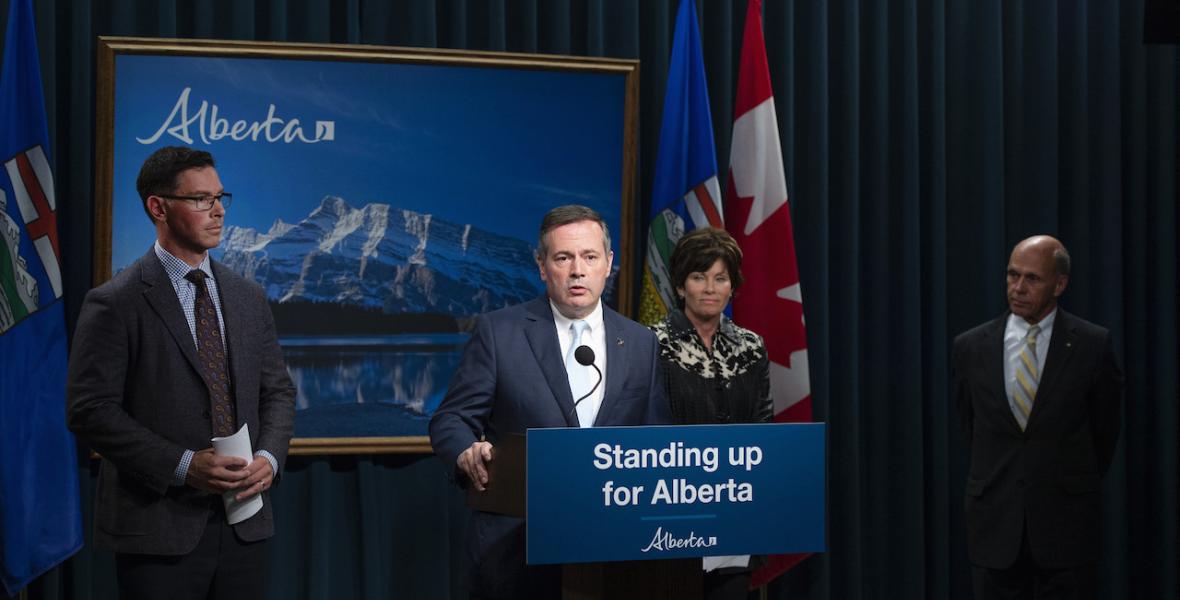
Premier Jason Kenney (at the podium) announces the appointment of Steve Allan (right) as Commissioner of the Public Inquiry into Anti-Alberta Energy Campaigns.Also pictured are then-Justice Minister Doug Schweitzer and Energy Minister Sonya Savage.
Unlike the press conference that launched the inquiry, during which Kenney, Savage, Allan, and then-Justice Minister Doug Schweitzer stood together on stage, Savage stood alone at the podium this week as she was given the unenviable task of releasing the report and trying to justify its results.
Kenney was nowhere to be seen (he currently has a 22 per cent approval rating), Schweitzer is no longer Justice Minister, and Allan has presumably been relieved of his duties.
The over-budget and thrice-extended public inquiry was conducted almost completely in secret, with no actual public hearings, leaving the inquiry to instead hold “hearing by correspondence.”
The confusingly organized 657 page report details how Environmental Non-Profit Groups wrote grants to receive funding for environmental advocacy in Canada, but there is no suggestion of wrong doing or that anything illegal happened.
But that hasn’t stopped Savage and her UCP MLA colleagues from bandying around a $1.2 billion number, which is the amount the report says it found foreign donors provided in grant funding to Canadian environmental organizations between 2003 and 2019.
But the report found that, of the $1.2 billion, around $554 million went to well-known and respected conservation groups like Ducks Unlimited Canada, which does not participate in “anti-Alberta” campaigns (Ducks Unlimited Canada is run by CEO Larry Kaumeyer, who until recently was employed as Kenney’s Chief of Staff and Principal Secretary), and only somewhere between $37.5 to $58.9 million was specifically granted to anti-oil and gas campaigns in Canada.
Canadian Energy Centre CEO Tom Olsen and Alberta Premier Jason Kenney. (Source: Facebook)
In fact, the most interesting result of Allan’s final report are his criticisms of the other left foot of Kenney’s Fight Back Strategy – the Canadian Energy Centre.
The CEC, known to most Albertans as the “War Room,” was created in 2019 and is run by former UCP candidate Tom Olsen.
Established as a Crown Corporation with a $30-million annual budget, the Canadian Energy Centre essentially operates as a publicly-funded public relations agency for the oil and gas industry.
Buried on the last page of Allan’s report is a list of criticisms of the Canadian Energy Centre, including an observation that “it may well be that the reputation of this entity has been damaged beyond repair.”
Allan wrote that the way the War Room was established, as a Crown Corporation, with three provincial cabinet ministers as its board of directors (Savage, Schweitzer and Environment & Parks Minister Jason Nixon) has “seriously compromised” the organization’s credibility.
“There may be a need for a vehicle such as this, assuming proper governance and accountability is established, to develop a communications/marketing strategy for the industry and/or the province, but it may well be that the reputation of this entity has been damaged beyond repair,” Allan wrote.
While Savage deflected from questions from reporters about what was accomplished by the $3.5 million inquiry by denouncing foreign-funded campaigns and demanding transparency from ENGOs who run campaigns in Alberta, the FOIP-exempt War Room recently purchased billboards in Washington D.C. and New York City’s Times Square.
War Room CEO Olsen issued a statement in response to the Public Inquiry’s criticisms but the statement had to be resent soon afterward because of typos. (I’m not making this up).
So, the great Alberta witch hunt is over and no witches have been found.
Now that this embarrassing public inquiry is over, the other part of Kenney’s failed strategy – the Canadian Energy Centre – should be scrapped.
If the public inquiry taught us anything, it is probably that our leaders should be focused on figuring out how Alberta is going to survive the massive shifts happening in world energy markets and not wasting precious time making empty threats and settling vendettas with critics of the oil and gas industry.
Energy Minister Sonya Savage will be back next month to release the report of the committee investigating open-pit coal mining in Alberta’s Rocky Mountains.
Amplifying the loud public opposition to open-pit coal mining in Alberta’s Rockies, a group of country music artists released a new version of the popular song, This Is My Prairie. The song features Corb Lund, Terri Clark, Brett Kissel,, Sherryl Sewepagaham, Paul Brandt, Armond Duck Chief, Katie Rox and Brandi Sidoryk.
Jyoti Gondek defeats Jeromy Farkas to become Calgary’s next Mayor.
Amarjeet Sohi defeats Mike Nickel to become Edmonton’s next Mayor.
Eight of Edmonton’s 12 City Councillors elected today are women – a historic record. Four are persons of colour. Four incumbents are on the verge of defeat.
Premier Jason Kenney’s referendum to remove Equalization from the constitution gets a very tepid endorsement (59% support in Calgary – Edmonton results next week).
Support for abandoning the twice yearly time change is even more divided.
University of Alberta political scientist Dr. Jared Wesley joins Dave Cournoyer on the Daveberta Podcast for a deep dive into Alberta’s October 18 Equalization Referendum, why it is being held, what Premier Jason Kenney hopes to accomplish (and why he’s been absent on the campaign trail), and what the ramifications of the vote could be for Alberta and Canada.
We also answer some great listener questions about Equalization and dive into the history of Alberta’s low-key Senate Nominee Elections and more.
The Daveberta Podcast is produced by the talented Adam Rozenhart.
The Daveberta Podcast is a member of the Alberta Podcast Network: Locally grown. Community supported.
You can listen and subscribe to the Daveberta Podcast on Apple Podcasts, Google Play, Spotify, Stitcher, or wherever you find podcasts online. We love feedback from our listeners, so let us know what you think of this episode and leave a review where you download.
According to the poll, 60 per cent of Edmontonians said they are more likely to vote for a mayor who opposes the policies of the provincial government. Only 14 per cent said they would be more likely to vote for a candidate who supports the government’s actions
Calgary Mayor Naheed Nenshi and Edmonton Mayor Don Iveson spoke on CBC’s West of Centre Podcast and shared criticism of Kenney’s handling of the COVID-19 pandemic and a leadership style that soured the relationship with the two largest cities.
“I know that even the cabinet ministers who are just trying to do a good job are frustrated that they’re unable to make decisions or move files forward because petty partisan politics get in the way,” Nenshi said.
Premier Jason Kenney managed to out maneuver disgruntled United Conservative Party MLAs by convincing them to withdraw a motion of non-confidence by pushing ahead his leadership review to April 2022, but he still has his party to contend with.
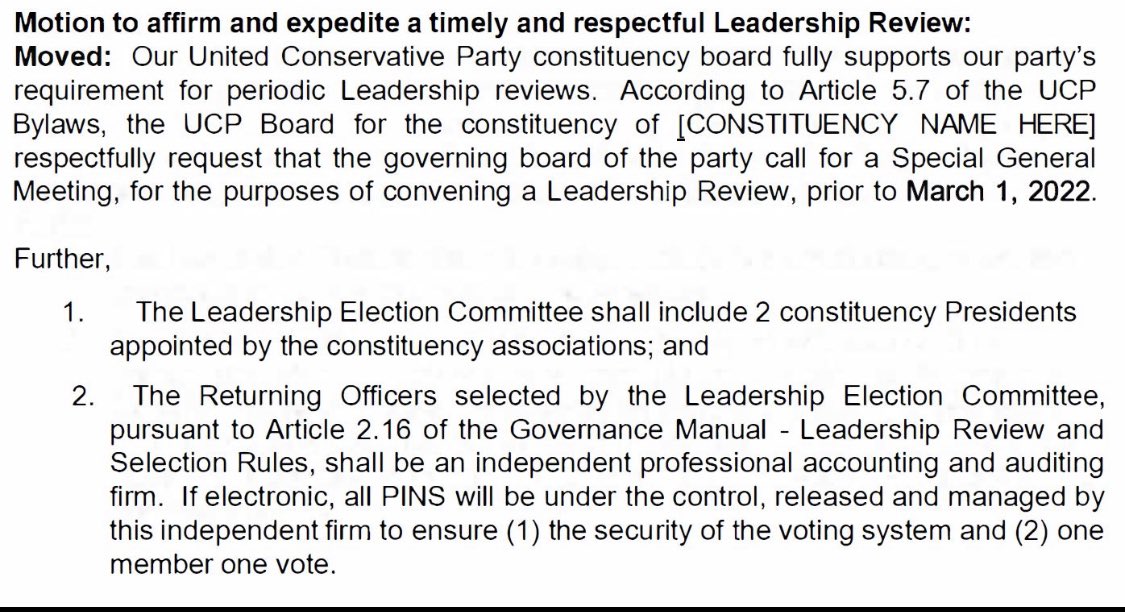
A growing number of UCP constituency associations have passed motions calling for a leadership review to take place before March 1, 2022. The CBC first reported that more than 10 constituency associations had passed motions, and Postmedia columnist Don Braid tweeted that number was 16.
Text of the UCP motion calling to hold a review of Jason Kenney’s leadership before March 1, 2021.
Calgary-Fish Creek UCP MLA Richard Gotfried, who has been publicly critical of Kenney’s handling of the COVID-19 pandemic, posted the text of the motion on Twitter.
Gotfried noted that his constituency board passed the motion two weeks ago with 21 votes in favour and none opposed.
For Kenney’s opponents in the UCP, 22 is the magic number of constituency boards required to force the leadership vote before March 1 and quite possibly at the party’s upcoming annual general meeting in Calgary in November 2021.
Kenney’s leadership has been in a constant state of turmoil for most of the past two years and a recent poll from ThinkHQ showed him plummeting to a dismal 22 per cent approval rating. According to the poll, Kenney is deeply unpopular with every demographic and regional group of Albertans.
Alberta’s municipal election is only 14 days away.
When you think of municipal elections, you might immediately think about roads, libraries, sidewalks, pools, traffic, playgrounds, potholes, public transit, bike lanes and snow removal. And while these are some of the more high-profile responsibilities of municipal governments, the amount of information being thrown at voters in this year’s election has muddied the water about what the ballot issues on October 18 might be.
Electing Mayors, Councillors and School Trustees
The primary function of municipal elections is for voters to elect their local municipal officials in their city, county, municipal district, town, or village. Voters also cast ballots for trustees to govern their Public, Catholic or Francophone school boards. (Here is a list of candidates running in Edmonton’s municipal election).
As if there weren’t already are a lot of challenges facing municipalities, the COVID-19 pandemic has hit Alberta hard and municipal governments are bearing the brunt of many of those health, social and economic challenges.
Municipalities also face a hostile provincial government that has not hesitated to interfere in local issues, in some cases leaving Albertans with a choice between candidates who agree with the provincial government interference, candidates who want to keep their heads down in hopes for a change of provincial government in 2023, or candidates who will stand up for their communities and challenge the United Conservative Party government.
Senate Nominee Election
When you vote on Oct. 18 or in the advance polls you will probably be handed a few different ballots. One of them will ask you to choose up to three candidates in this year’s Senate Nominee Election.
Senate Nominee elections are a uniquely Alberta activity dating back to 1989. The elections are held to choose a list of names for the Premier to recommend to the Prime Minister for appointment to the Senate if vacancies occur.
There is currently one vacancy in Alberta’s 6-member Senate delegation and another vacancy is expected when Senator Doug Blackretires on October 31, 2021.
Unfortunately for the candidates running in this election, they are not going to be appointed unless the Prime Minister is a member of the Conservative Party, the only major party that recognizes the elections as legitimate. The Liberal Party has created a new application process for Senate appointments, dismantling the old partisan patronage machine, and the NDP believe the Upper Chamber should be abolished.
One of the major flaws of the Senate Nominee election is that winning candidates who might eventually be appointed to the Senate never ever have to face re-election, so there is no opportunity for voters to hold these “elected” Senators accountable for their decisions. In fact, they can stay in the Senate until they turn 75-years old if they decide to.
Another major flaw is that a province-wide election in a province of 4.3 million people makes it impossible for the Senate candidates to meaningfully reach many voters. I doubt most Albertans could name a candidate running in year’s Senate Nominee election, but here they are:
Physicians Dr. Sunil Sookram. and Dr. Karina Pillay (also the former Mayor of Slave Lake), Ponoka Mayor Rick Bonnett, former Western Barley Growers Association President Jeff Nielsen, and former deputy premier and finance minister Doug Horner are running as Independent candidates are are the more serious candidates with real public service experience.
Then there are the three People’s Party endorsed candidates who filed their papers to run in the Senate Nominee election only hours before they were defeated as candidates in the Sept. 20 federal election – Nadine Wellwood, Kelly Lorencz, and Ann McCormack.
And finally there are the three UCP loyalists endorsed by the Conservative Party of Canada – lobbyist and former UCP President Erika Barootes, right-wing activist and failed municipal candidate Pam Davidson, and Ukrainian-Canadian trade association president Mikhailio Martyniouk.
The three UCP/Conservative Party candidates, who appear to have less comparable actual public service experience than many of the Independent candidates on the ballot, are still probably going to win. But like previous Senate Nominee elections, the turnout will be low and number of spoiled ballots will be high.
Alberta’s Senate Nominee election should be a serious affair, but it will probably end up being a joke or an afterthought for most Albertans who will have no idea who to vote for.
Plebiscites and Referendums
Depending where you live in Alberta you could also be handed one, two or three additional ballots to cast your vote for referendums and plebiscites, though there is a good chance you haven’t heard much about them during this election.
Even if the Equalization formula was removed from the Constitution, Albertans wouldn’t actually notice any change. We would still pay federal taxes the same as we do now, but the federal government would not be obligated to distribute funds collected through federal taxes to the provinces through an Equalization formula as currently required by the Constitution.
The Equalization referendum is all about the politics of grievance and saving Jason Kenney’s leadership of the UCP. A yes vote won’t accomplish much and a no vote will probably hurt Kenney’s chance of remaining in the Premier’s Office for much longer (Kenney’s approval rating has dropped to 22 per cent according to a recent poll from ThinkHQ).
In this referendum, a no vote is a vote to continue the annual time change and a yes vote is a vote for darker mornings and lighter evenings in the winter. If I understand correctly, it could also mean that from March to November each year Alberta’s timezone will be two hours ahead of the times observed in much of British Columbia. The result of the vote on this question is binding on the provincial government.
At least in Edmonton, candidate endorsements have become a mini-story.
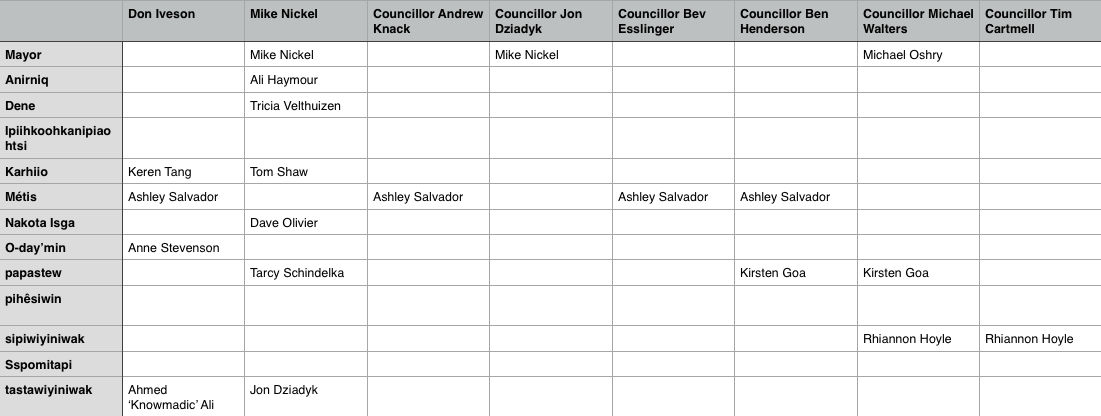
This year’s city council election has seen a string of high-profile endorsements of city council candidates from Mayor Don Iveson, mayoral candidate Mike Nickel and some individual NDP MLAs across the city. While it is not unheard of for incumbent City Councillors to endorse candidates in a municipal election, the number of endorsements in this year’s election is significantly higher than usual.
List of candidates incumbent Edmonton City Councillors have endorsed in this municipal elections.
Just like City Councillor endorsements, it is not unheard of for MLAs to endorse candidates, but this year the number of MLAs endorsing municipal candidates is higher.
The decision by some NDP MLAs to endorse candidates has flustered some political watchers who for some reason believe municipal politics should exist in a vacuum outside of provincial and federal politics, the endorsements appear to be a choice made by individual MLAs rather than a decision made by the party.
And in at least one case, NDP MLAs have endorsed different candidates. In Ward tastawiyiniwak, for example, the NDP endorsements appear to be split, with Edmonton-City Centre MLA David Shepherd endorsing Ahmed Knowmadic Ali and Edmonton-Beverly-Clareview NDP MLA Deron Bilous endorsing Cody Bondarchuk.
List of City Council candidates who Edmonton MLAs have endorsed in this election.
While there was an attempt a year ago to create a single-slate of progressive candidates in Edmonton’s city council election in response to expectations that the UCP would organize a slate, the organizing effort appears to have failed because there were too many progressive candidates wanting to run for city council to make a single-slate feasible.
While it has certainly made Edmonton’s political establishment uncomfortable, it is positive to see progressive groups organizing to support candidates. With traditional low turnout, low interest and high-incumbent re-election, municipal politics in Edmonton could use a bit of disruption.
The new rules make it legal for wealthy people to donate up to $5,000 each to as many candidates as they want in any municipal or school board election across the province, effectively removing the cap on individual donations. While municipal political donors do not receive the generous tax credits they get from provincial or federal donations, there are wealthy Albertans with the ability to financially influence candidates across the board.
The UCP also removed the requirement for candidates to disclose their list of donors ahead of Election Day, which would have allowed voters to see who is financially supporting candidates before they go to the ballot booth. Many candidates will already do this on their own but many won’t because they are not required to by law.
The new rules introduced by the UCP also allow Third Party Advertisers, colloquially known as political action committees, to spend up to $500,000 on advertising during the referendums, up from the previous $150,000 limit. Third Party Advertisers that spend less than $350,000 on advertising during a referendum are not required to file financial statements with Elections Alberta, which means those groups don’t have to publicly disclose their donor lists.
There are currently four registered Third Party Advertisers registered with Elections Alberta that are advertising during the Referendum. Alberta Proud (who’s contact person is former Wildrose Party press secretary Vitor Marciano), Equalization Fairness Alberta (run by former UCP ministerial chief of staff Dr. Bill Bewick), Society of Albertans Against Equalization (run by Canadian Taxpayers Federation director Franco Terrazzano), and Vote Yes To End Equalization Inc.
One Third Party Advertiser registered to participate in Calgary’s municipal election is being investigated by Elections Alberta for allegedly sending out campaign signs for Calgary mayoral candidate Jeff Davison.
And that is a quick guide to the dog’s breakfast that is Alberta’s 2021 municipal elections. Make sure to vote on Oct. 18 or in the advance polls starting today.
Brad Lafortune joins Dave Cournoyer on the Daveberta Podcast to discuss the federal election results in Alberta, including NDP candidate Blake Desjarlais‘ spectacular win over Kerry Diotte in Edmonton-Griesbach, and the ongoing troubles in the United Conservative Party and how many more days Jason Kenney might have as leader.
We also discuss the future of childcare and early childhood education in Alberta now that Justin Trudeau’s Liberals have formed government after signing $10/day childcare agreements with more than half of Canada’s provinces.
The Daveberta Podcast is a member of the Alberta Podcast Network: Locally grown. Community supported.
You can listen and subscribe to the Daveberta Podcast on Apple Podcasts, Google Play, Spotify, Stitcher, or wherever you find podcasts online. We love feedback from our listeners, so let us know what you think of this episode and leave a review where you download.
I was up early this morning to join CBC Radio’s Matt Galloway on The Current to discuss Premier Jason Kenney‘s leadership challenges and the wild ride that is Alberta politics.
Take a listen to the segment where strategist Stephen Carter from The Strategists Podcast and I (separately) discuss Kennev’s leadership challenges and the wild ride that is Alberta politics.
Kenney lasts another day
He may have a plummeting approval rating, but Jason Kenney is still King of the United Conservative Party.
As I noted in the interview on The Current, Kenney is a political survivor. It appears as though he out maneuvered his growing but disorganized opposition in his party and caucus.
Kenney avoided an attempted caucus coup when a motion for a confidence vote put forward by a group of MLAs was withdrawn when they discovered it would not be a secret ballot. He has pushed off demands for a leadership review at the party’s November 2021 annual general meeting by agreeing to a leadership review in Spring 2022 instead. A review had already been scheduled for the party’s planned November 2022 annual meeting.
Moving the leadership review to next Spring gives Kenney time to organize against his opponents in the cabinet, caucus and party. If he can last that long and not turn his political fortunes around, it will be bad for his party and good for Rachel Notley‘s NDP, whose fundraisers had their prayers answered.
The NDP are hoping this financial quarter, which ends on September 30, will mark the fourth in a row that their party has raised more cash than the UCP.