Categories
Alberta Politics

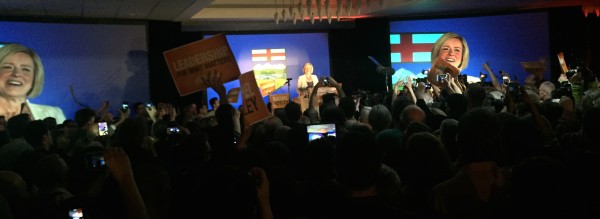
One year ago today the NDP won in Alberta. The next day hell froze over.

The attention of most Albertans this week is rightfully focused on the wildfires that are raging through northern Alberta and the more than 80,000 residents of Fort McMurray who have fled to safer ground in the south. It is a testament to our resilience as Canadians that a mandatory evacuation order could be carried out in a community of 80,000 people without any violence or resistance.

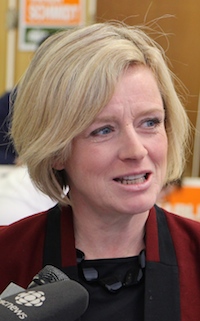
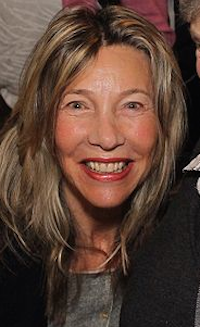
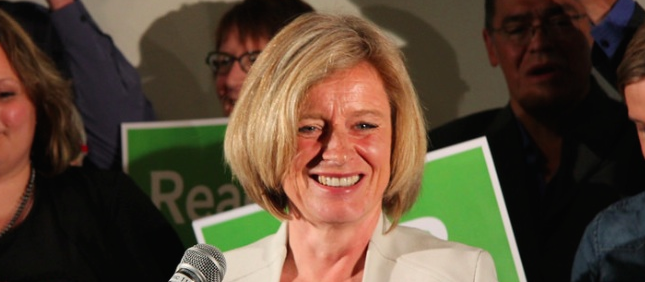
Rachel Notley Alberta NDP leader
Rachel Notley

Overshadowed by the wildfires, and rightfully so, is today’s anniversary of the major political earthquake that reshaped our province over the past year. On May 5, 2015, Albertans turned their backs on the Progressive Conservative regime that had governed since Peter Lougheed won in 1971 and replaced the old guard with a choice that would have been unbelievable in previous elections, the New Democratic Party.

It wasn’t always a forgone conclusion that Albertans would elect an NDP government. At points during last year’s campaign. Two polls released days before the writ was dropped showed the governing PCs and official opposition Wildrose Party in a race for first place with the NDP in a distant third. Disillusionment with an arrogant and entitled PC regime that had squandered the last oil boom and the pitch-perfect campaign led by Rachel Notley’s NDP resulted in a majority government.

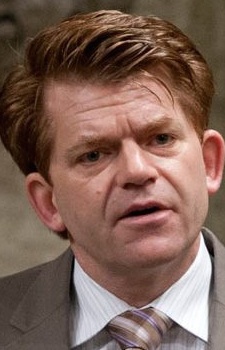
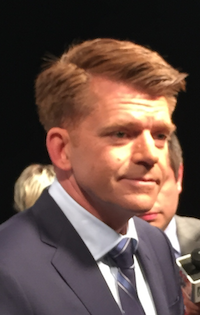
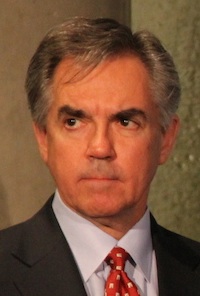
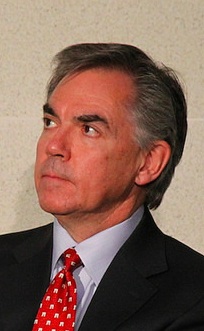
Brian Jean Wildrose
Brian Jean

Those election results exposed a demographic shift, including a split between urban and rural Alberta. The NDP elected most of their 54 MLAs in Alberta’s fast-growing urban areas and central and northern rural Alberta. The Wildrose Party, led by former Member of Parliament Brian Jean won back most of the seats lost in the 2014 floor-crossings and made gains in rural Alberta. Jim Prentice‘s Tories earned 27 percent of the vote but fell victim to the first-past-the-post system and only elected 10 MLAs. The Alberta Party elected its first MLA, leader Greg Clark in Calgary-Elbow, and the Liberals were reduced to one MLA, interim leader David Swann in Calgary-Mountain View.

Joe Ceci Calgary NDP
Joe Ceci

May 5, 2015 saw the election of the a record number of women, including nearly half of the MLAs in the newly minted NDP caucus. The soon to be appointed provincial cabinet would have gender parity, a first in Canada. A contingent of under-30 MLAs were elected, bringing a new sense of diversity into the stodgy Legislative Assembly. Openly gay and lesbian MLAs were elected. And soon after, expecting and new mothers would become a common sight on the floor of the Assembly. Our Legislative Assembly felt more reflective of Alberta than it had in previous years.

The tone of government had changed.

The NDP banned corporate donations to political parties, a move that would never have happened under the corporate-donation fuelled PC Party. The new government not only admitted it believed in Climate Change, it also announced plans to do something about it. The NDP introduced a progressive income tax system and raised corporate taxes. They also reinstated funding to education, health care and post-secondary education that was cut by the PCs in their pre-election budget.

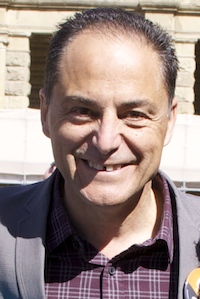
Smart, articulate, tough and quick on her feet, Ms. Notley has proven to be the government’s greatest asset. The senior cabinet ministers surrounding her, Sarah Hoffman, Danielle Larivee, Shannon Phillips, Kathleen GanleyDavid Eggen, Deron Bilous, Joe Ceci and Brian Mason, to name a few, have developed into a stronger team over the past year.

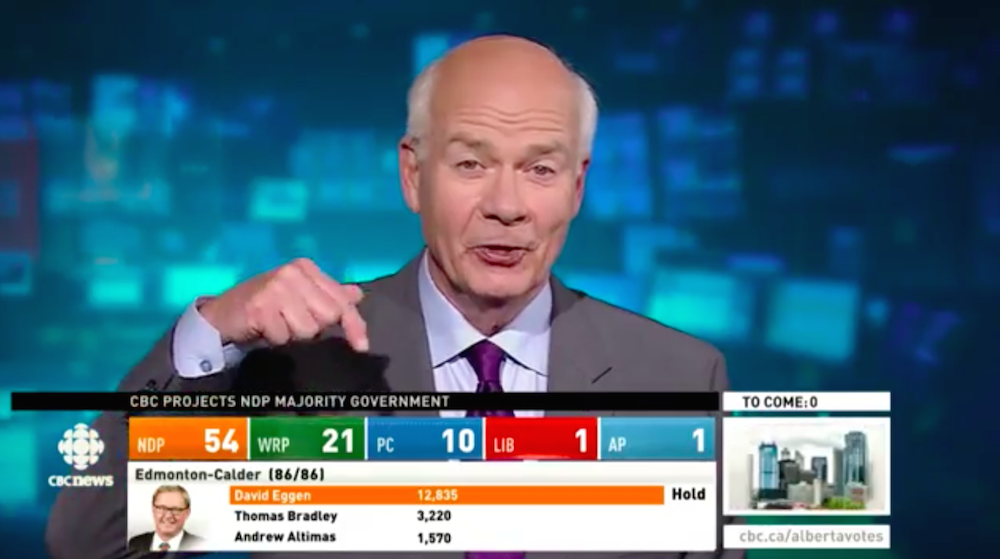
CBC National News Anchor Peter Mansbridge reacts to the results of Alberta's 2015 provincial election.
CBC National News Anchor Peter Mansbridge reacts to the results of Alberta’s 2015 provincial election.

Getting off the royalty rollercoaster’ by fixing a revenue system that was over-reliant on natural resource royalties to fund the government’s operations budget is a central theme of the new government.

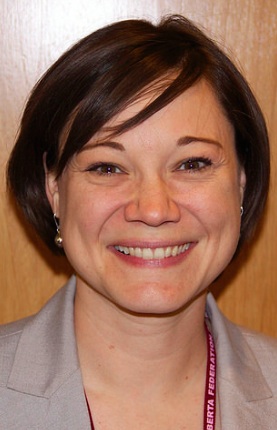
Shannon Phillips
Shannon Phillips

A sharp decline in the international price of oil meant the new government faced higher private sector unemployment and decreased activity in the oil industry in our province.

The Alberta Advantage, a myth spun by conservative politicians and pundits over the past twenty years quickly turned into a disadvantage. The low taxes boasted by the previous government turned into a disadvantage when the price of oil dropped and left the province with a $10 billion shortfall in revenue.

Instead of slashing the budget, as the conservative opposition parties would have done, the NDP looked for outside advice from former Bank of Canada Governor David Dodge. The budget tabled by Mr. Ceci included investments in infrastructure while keeping operating funding steady to avoid major service cuts and job losses that would increase the province’s unemployment levels.

Sarah Hoffman NDP MLA Edmonton-Glenora
Sarah Hoffman

The NDP plan focuses on stability and job creation but it is yet to be seen whether those large deficits will be embraced by Albertans at the next election. The future of this government, like the PC government before it, may ultimately depend on the international price of oil.

The optimism of the new government masked a certain naivety. Transitioning into the role of government has been challenging.

The transition from a 4-MLA opposition caucus to majority government led the NDP to import senior political staff from across Canada, including those with experience working in Ottawa and for NDP governments in Saskatchewan, Manitoba and Nova Scotia.

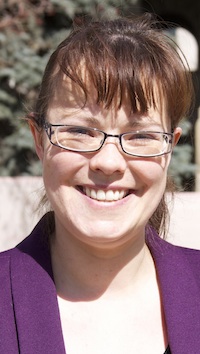
Kathleen Ganley NDP Calgary Buffalo
Kathleen Ganley

The rushed introduction of new farm safety laws made the NDP look as if they were more interested in dragging rural communities into the 21st century rather than leading them in that direction.

Like something out of the 1950s, Wildrose MLAs and conservative newspaper columnists have become prone to red-baiting, accusing Alberta’s NDP government of holding communist or socialist sympathies. While some individual NDP MLAs have self-identified as socialists, the reality is the new government has been quite moderate and even small-c conservative at times. Ms. Notley has become one of Canada’s strongest advocates for oil pipelines and the NDP even decreased the small business tax from 3 percent to 2 percent in the recent budget.

Days before last year’s election I asked the question, ‘how bad would Alberta’s conservatives need to screw up for Albertans to elect an NDP government.’ We found out on May 5, 2015.

The NDP had been elected in Alberta. Hell had frozen over.

On the morning of May 6, 2015, Albertans woke up to a new government and an unwelcome spring snowstorm. Today, as most Albertans focus on wildfires instead of politics, we can only hope for a repeat of that snowstorm to put an end to the fires ravaging Fort McMurray.


The governments of Alberta and Canada will be matching individual donations made to the Canadian Red Cross Alberta Fires Emergency Appeal to help the people impacted by the Fort McMurray wildfire. Click here to donate.

Categories
Alberta Politics

6 reasons why Alberta history will be kind to Ed Stelmach

Five years ago today, Ed Stelmach began the process of quietly stepping out of the political spotlight by announcing his resignation as Premier of Alberta after nearly five years in the office.

The mild-mannered farmer from the Village of Andrew dedicated more than twenty-five years of his life to municipal and provincial politics and led the Progressive Conservative Association to win one of its largest electoral victories in its forty-four years as government. Despite this win, his party’s Calgary establishment never forgave him for defeating their choice for leader in the 2006 leadership race.

On January 25, 2011, facing dangerous ideological divisions in his party and caucus, Mr. Stelmach announced his decision to resign. On October 7, 2011, he was replaced as premier and party leader by Calgary MLA Alison Redford.

While there were certainly controversies and missteps during his time as premier, Mr. Stelmach made a number of significant decisions that have had a positive effect on our province. Considering my history with the man, some readers may be surprised to learn that I believe history will be kind to Alberta’s thirteenth Premier. Here’s why.

Six reasons why Alberta history will be kind to Ed Stelmach

1) Mr. Stelmach reinvested in public services and infrastructure. After years of neglect, his government tackled the province’s growing deferred maintenance budget by investing billions of dollars into public infrastructure.

The Municipal Sustainability Initiative and the $1 billion GreenTrip Fund provided to municipalities allowed for the expansion of public transit in Alberta’s fast-growing cities. A series of 5% increases to the health care budget helped to stabilize the see-saw of unpredictable funding allocated by his predecessor, Ralph Klein.

2) The creation of the Capital Region Board helped de-escalate the tensions and narrow the deep divisions between the dozens of municipalities in the Edmonton region. While tensions still exist in some corners of the capital region, Mr. Stelmach helped usher a détente‎ by forcing the municipal politicians to use a process for resolving grievances and planning the future.

3) The creation of the Ten-Year Plan to End Homelessness set a bold plan in motion to eliminate homelessness in our province by 2017. While homelessenss will not be eliminated by 2017, the provincial plan along with plans to end homelessness in CalgaryEdmonton and other cities, thousands of Albertans have been successfully housed through programs like Housing First.

4) The introduction of the Lobbyist Registry helped shine a spotlight into the shadowy world of political lobbying and horse-trading. Although not foolproof, the registry gives Albertans a chance to see who is being paid to influence their elected officials on a daily basis.

5) During his first year in office, Mr. Stelmach concluded a deal with the Alberta Teachers’ Association in which the province agreed to contribute $2.1 billion towards the $6.6 billion unfunded pension liability. In exchange, Alberta’s 34,000 teachers  agreed to a five-year contract. This is a stark contrast to his predecessor and successor, who waged war on Alberta’s public sector workers, their pensions and their unions.

6) In the spirit of former Premier Peter Lougheed, Mr. Stelmach moved the Tories back to the centre of the political spectrum. While he did not stay to face them in an election, he recognized that to compete with the right-wing Wildrose Party, then led by Danielle Smith, he needed to move his party to the middle, rather than the political right. While this angered his opponents both inside and outside his party, this decision may have helped save his party from political defeat in the 2012 election. Had he remained leader of the PC Party, he might still be Premier of Alberta today.

While he never enjoyed the same level of personal popularity as Mr. Klein, I suspect the actions Mr. Stelmach took while in office will have a longer lasting positive impact in this province than those of his immediate predecessor.

(This post is an updated version of an article first published in 2013)

Categories
Alberta Politics

Albertans are more progressive than you might think. I’m not surprised.

A new report, “The Quiet Majority“, released by a new group called Progress Alberta shows that we Albertans may be more progressive than we believe we are.

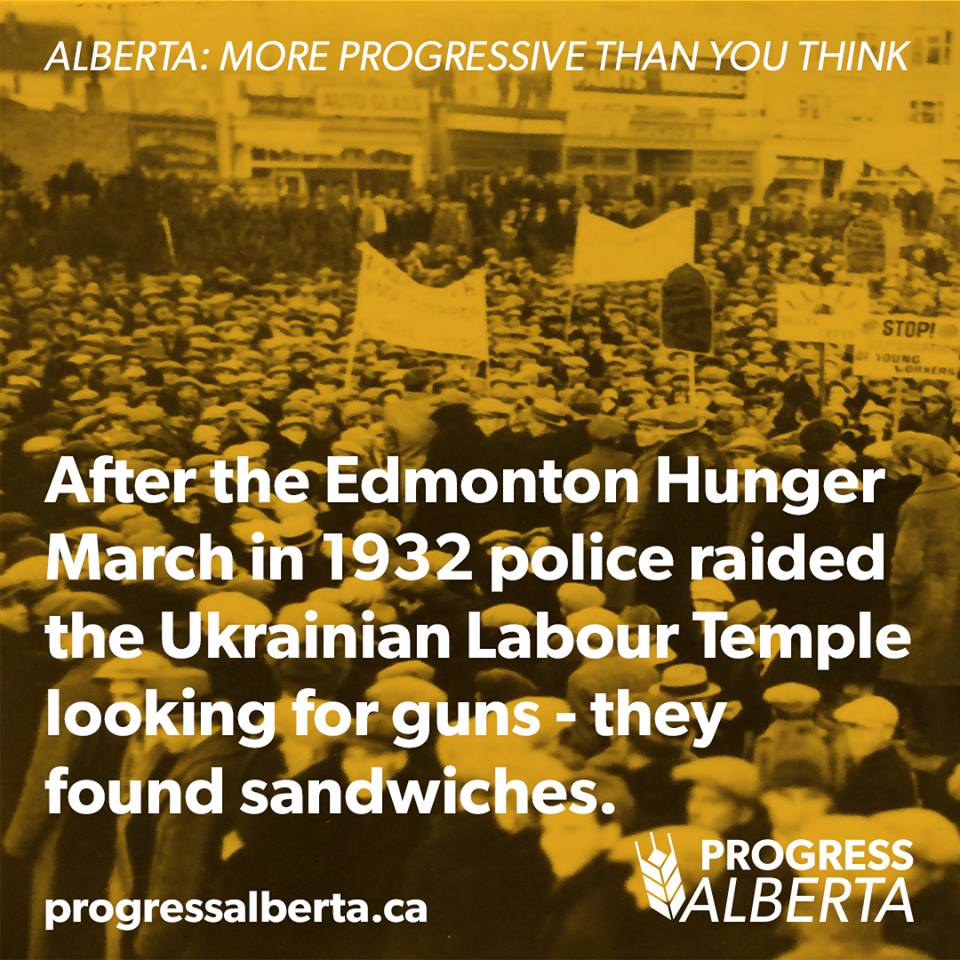
Progress Alberta Edmonton Hunger Ukrainian Strike
A infographic released by Progress Alberta.

According to a survey conducted by Abacus Data, when Albertans were asked whether they consider themselves to be progressive, 59 percent answered yes. It appears that although we identify our province as being conservative, a significantly larger group of Albertans identify as being moderate or progressive.

“Urbanization, in-migration, and generational change are all shifting the province’s political attitudes and behavior,” Abacus Data’s David Coletto said in a press release today.

The survey also shows strong support for same-sex marriage and the decriminalization of marijuana, and support for raising personal income taxes on high income earners and the introduction of a carbon tax.

This survey also reinforces the arguments made by political watchers like Corey Hogan, that shifting demographics and massive population growth have created a new political environment in Alberta which made an electoral win by the New Democratic Party possible in 2015.

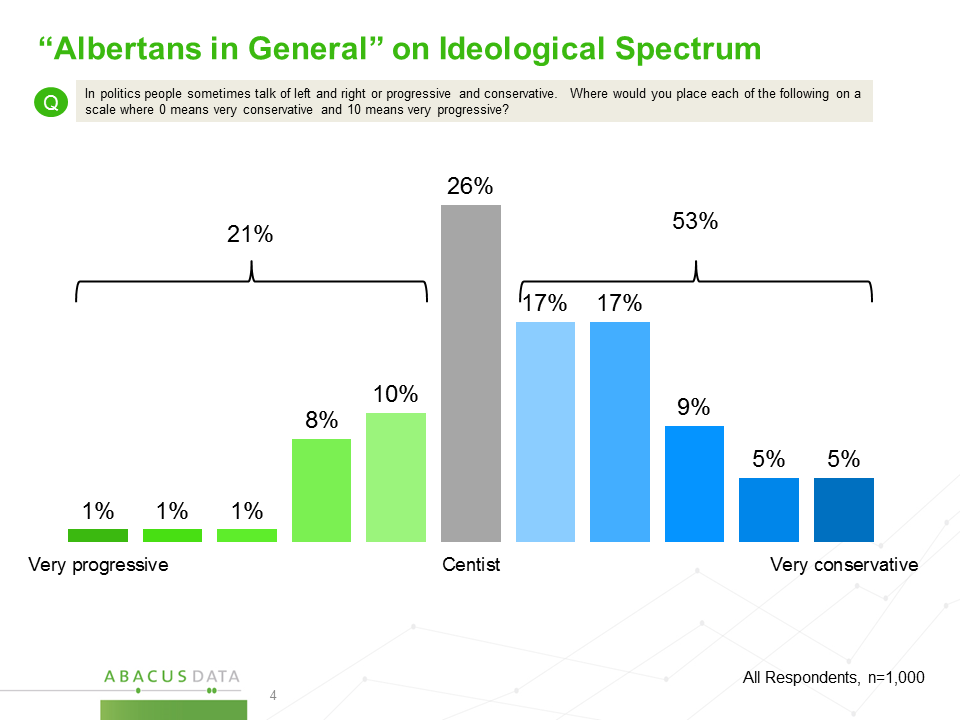
As shown in the graphs below, where Albertans place themselves and where they believe most of the population sits on the ideological spectrum is quiet different.

AB_Ideological_Self-Placement-1
Where Albertans place themselves on the ideological spectrum.
AB_in_General_Ideological_Placement
Where Albertans believe most of the population sits on the ideological spectrum.

The results of the survey are not surprising to anyone who has been paying close attention to Alberta politics, as I have over the past ten years. While there are a large number of self-identified conservatives in our province, Alberta’s electorate has always been more populist than conservative.

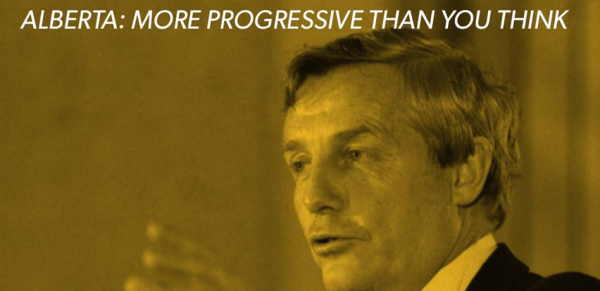
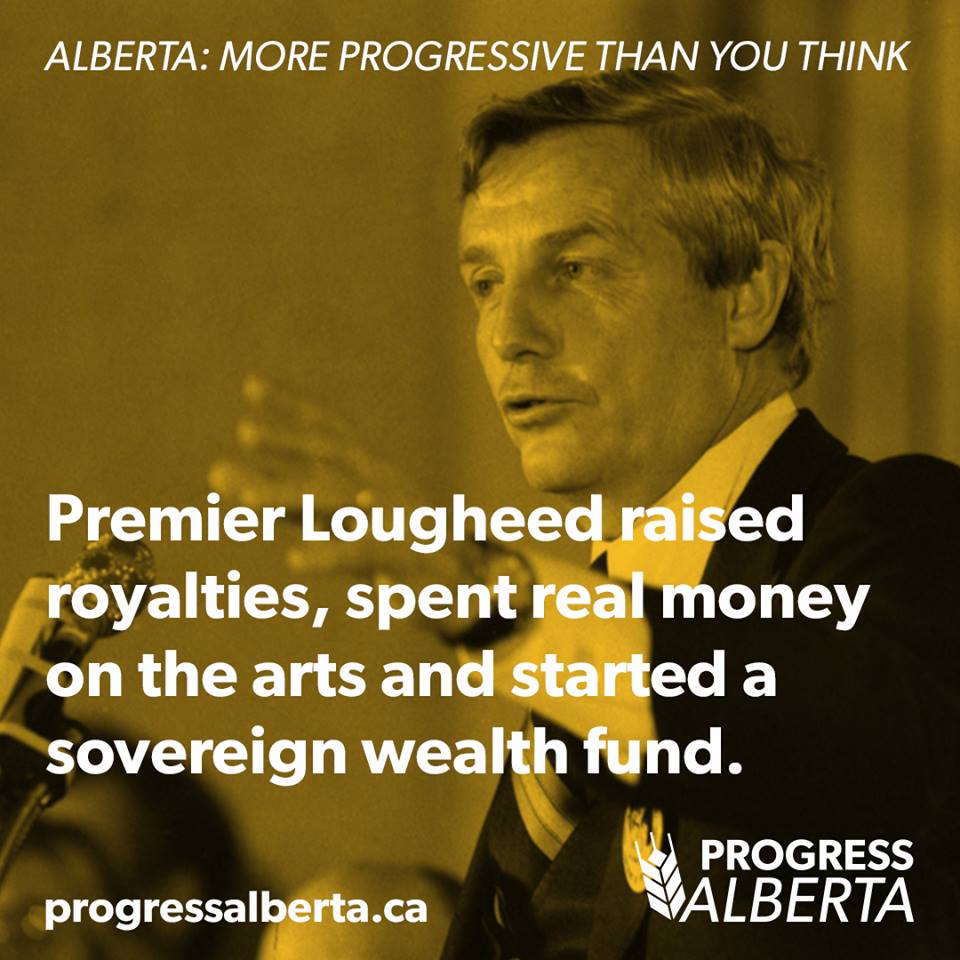
Peter Lougheed Alberta Conservative Premier
A infographic released by Progress Alberta.

The great success of the old Progressive Conservative government, starting under the leadership of Peter Lougheed in 1971, was forged with the creation of a broad political coalition that appealed to conservative, moderate and progressive voters in Alberta. And at the height of the Ralph Klein-era in Alberta politics, the Liberals and NDP were still able to garner between 30 and 40 percent of the province-wide vote.

This is why I am hesitant to predict the death of the PC Party in Alberta, even in its current weakened state.

The right-wing Wildrose Party led by Brian Jean continues to mount a campaign to take over the PC Party. At meetings across the province, Wildrose Party members are being encouraged to purchase PC Party memberships in order to push the merger agenda at constituency associations and other internal party levels.

Proponents of the take over characterize it as a merger but it is likely that the Wildrose needs the PCs more than the PCs need the Wildrose and the limited appeal of the ideological social conservatism that much of its membership base represents. The PCs won 12 elections from 1971 to 2012 by raising a big tent centrist party, not by just uniting conservatives under one conservative party banner, as Mr. Jean and MLAs like Derek Fildebrandt appear to be proposing.

A infographic released by Progress Alberta.

Many members of the PC Party, including Calgary-North West MLA Sandra Jansen remain opposed to merging with the Wildrose, which could drag the PCs further to the political right and away from where most Albertans stand, near the moderate centre. With the right leader, the PCs may be able to regain the trust of voters lost in 2015.

It is becoming increasingly clear that the Wildrose Party’s strategy is to eliminate the PC Party as an alternative while continuing to brand the NDP government as “risky”, “extreme” and “ideological,” despite no real evidence supporting those claims.

The success of Rachel Notley‘s NDP in 2015 was based on her appeal to moderate and progressive voters. It is not surprising that during last year’s election campaign Ms. Notley frequently invoked the memory of Mr. Lougheed, who was seen by many Albertans as the embodiment of a progressive and forward-looking leader.

The success of the NDP in the 2019 election could be based on their ability to remain appealing to that coalition of moderate and progressive voters. This will require Ms. Notley to keep the balance and moderation that was promised in her party’s election platform and not veer too far left to appease her party’s fringe.

This is only one poll and is not an indicator of how Albertans will vote in future elections but it does provide some valuable information about the values held by many voters in our province. It is encouraging that groups like Progress Alberta are being formed to ensure that issues important to progressive Albertans are publicly discussed in a province dominated by conservative commentators and pundits.

Publisher’s Note

I am pleased to be contributing to Progress Alberta as a member of their advisory board. See the full list of advisory board members here.

Information about the survey

The survey informing this study was conducted online with 1,000 Albertans aged 18 and older from December 2 to 7, 2015. A random sample of panelists was invited to complete the survey from a large representative panel of Albertans recruited and managed by Research Now, one of the world’s leading providers of online research samples.

The Marketing Research and Intelligence Association policy limits statements about margins of sampling error for most online surveys. The margin of error for a comparable probability-based random sample of the same size is +/- 3.1%, 19 times out of 20.

Categories
Alberta Politics

Alberta NDP should tap the brakes on Bill 6, its new Farm and Ranch Safety law

The Alberta government needs to rethink its approach to overhauling safety laws on family farms and ranches. Since it was introduced in the Legislature on Nov. 17, confusion about Bill 6: Enhanced Protection for Farm and Ranch Workers Act has triggered a significant backlash from Albertans in rural communities across the province.

Bill 6 would expand sections of the Occupational Health and Safety Act, Workers’ Compensation Act, Employment Standards Code and Labour Relations Code to apply to farm worksites. If Bill 6 is approved by the Legislature, WCB coverage will be mandatory and farms and ranches in Alberta will no longer be exempt from OHS laws. Alberta is currently the only province without employment standards coverage for farm and ranch workers.

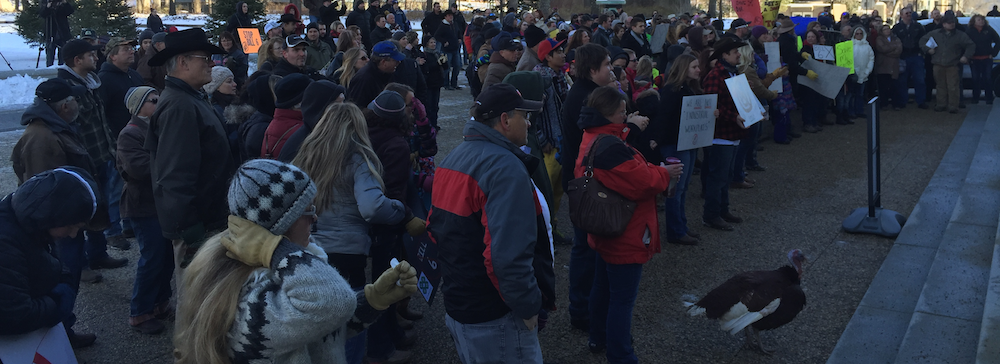
Around 200 protesters gathered at the Alberta Legislature on Nov. 27, 2015.

Nearly 400 angry farmers showed up to voice their concerns about Bill 6 at a government-organized town hall meeting in Grande Prairie last week. The event was hosted by public servants and consultants with no MLAs in attendance. Western Producer reporter Mary MacArthur reported this week that MLAs will be present at future town hall meetings planned for Red Deer, Okotoks, Lethbridge, Medicine Hat, Leduc, Vegreville, Olds and Athabasca.

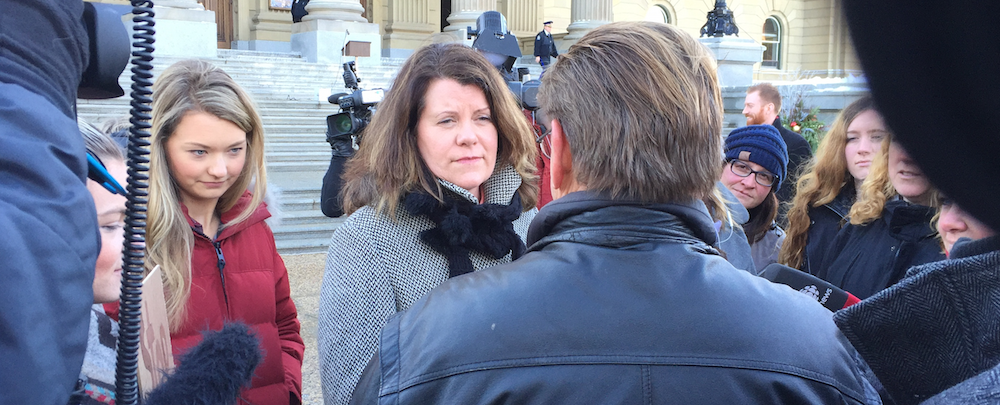
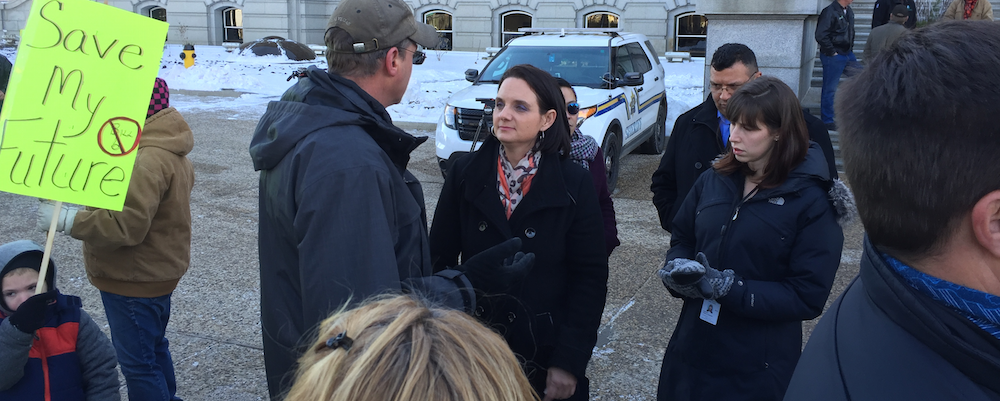
Close to 200 people, along with 2 ponies, 1 border collie and 1 turkey (see above), staged an afternoon protest against Bill 6 outside the Alberta Legislature on Nov. 27, 2015. To their credit, Jobs, Skills, Training and Labour Minister Lori Sigurdson and Municipal Affairs Minister Danielle Larivee waded into the crowd of protesters at the Legislature to hear their concerns.

Lori Sigurdson waded into the crowd of protesters outside the Legislature.

It is clear that there are some changes that do need to be made to farm safety laws in Alberta. As is the case in every other province in Canada, the government has a responsibility to ensure that safety standards exist for all worksites in Alberta, including agricultural work environments.

But this is where the New Democratic Party government may have put the cart before the horse. It is unfortunate that the government did not choose to hold these public consultation meetings before introducing the bill. It seems that the NDP could have saved themselves a lot of grief if Agriculture Minister Oneil Carlier, Premier Rachel Notley, Ms. Sigurdson and other NDP MLAs had started this process by travelling to the rural areas of the province to ask farmers and ranchers how changes could impact them.

Danielle Larivee waded into the crowd of protesters outside the Legislature.

Under current safety laws, provincial officers are not allowed to conduct investigations when a workplace fatality takes place on a farm or ranch. The WCB is a shield to protect employers from lawsuits in case of workplace injury and should probably be extended to cover all actual employees of farms and ranches. And farm workers should not be exempt from being given the choice to bargain collectively, a right affirmed by the Supreme Court of Canada.

But legal changes also need to reflect the uniqueness of family farms and ranches.

Unlike other worksites, farms rely heavily on incidental and seasonal help during spring and fall from family, friends and neighbours. And by definition, work on a family farm will include work done by family members, some who will not be paid a regular salary and some who will be under the age of 18. It has not been clearly communicated by the government how these changes would impact the day to day operations of these family farms or whether exceptions will be made for smaller farming operations.

While some of the criticism of Bill 6 is rooted in hyperbole and hysterics generated by opponents of the government, it is clear that there is much confusion around this bill, which is a communications failure on the part of the government.

Ms. Sigurdson released a statement following yesterday’s protest at the Legislature trying to clarify the government’s position. “A paid farmworker who is directed to do something dangerous can say no, just like other workers in Alberta and Canada. And if they are hurt or killed at work, they or their family can be compensated, just like other workers in Alberta and Canada,” Ms. Sigurdson said.

The debate around Bill 6 also highlights a political divide between rural and urban Alberta, neither of which are monolithic communities. It would be easy for us city dwellers to cast rural Albertans opposing these legislative changes as being backward or uncaring when we read media reports of workers or young children killed in farm accidents. And comments by MLAs like Liberal leader David Swann that the current legal framework would make “Charles Dickens blush” probably do not help foster a feeling of collaboration, even if there is a hint of truth to how far behind Alberta is in farm safety rules compared to other provinces.

Alberta is an increasingly urban province. According to Statistics Canada, in 1961, 53 percent of Albertans lived in rural areas. As of 2011, 83 percent of Albertans lived in urban centres with only 17 percent of our province’s population living in rural areas. This is a massive population shift.

The recent provincial election marked a rare moment in our province’s history where MLAs from rural Alberta do not have a large voice in the government caucus. Twelve of the 53 NDP MLAs elected in May 2015 represent rural or partially rural constituencies. Most areas of rural Alberta are represented by Wildrose Party MLAs, who have taken every opportunity to attack the new government and advance the narrative that the NDP do not understand rural Alberta.

As most of their NDP MLAs were elected in urban centres, they should heed the advice that MLA Hugh Horner gave Progressive Conservative Party leader Peter Lougheed more than forty years ago.

David Wood observed in his biography of Mr. Lougheed, the Lougheed Legacy, that “Horner made one point that Lougheed and his colleagues have never forgotten: when you start believing that the people in rural Alberta are somehow different than the people in the bigger centres, you’re making a mistake. Rural Albertans come into the cities, go to concerts, shop in the malls: they’re as sophisticated and as aware of the rest of the world as any of their city cousins.”
Ms. Notley grew up in the northern Alberta town of Fairview. Her father, Grant Notley, was elected and re-elected as the MLA for Spirit River-Fairview four times between 1971 and 1984. Coming from rural Alberta, Ms. Notley should have an understanding of these changes could impact farmers and ranchers.

The government has a responsibility to ensure that safety standards exist for all worksites in Alberta, including agricultural work environments. It also has a responsibility to clearly communicate to Albertans why these changes are needed and how they would be implemented. The NDP would demonstrate good will to rural Albertans by slightly tapping the breaks on Bill 6 and restarting this process with a thorough and meaningful consultation about improving farm and ranch safety in Alberta.

Update (Dec 1, 2015): The government announced it is proposing amendments to Bill 6 that would:

  • make clear WCB coverage would be required only for paid employees, with an option for farmers to extend coverage to unpaid workers like family members, neighbours and friends;
  • make clear that Occupational Health and Safety standards apply when a farm employs one or more paid employees at any time of the year.
Categories
Alberta Politics

Throwback Thursday: Alberta ‘should annex’ parts of Canada’s North

On April 19, 1972, Calgary MLA Dave Russell, minister of municipal affairs in the newly elected Progressive Conservative government led by Premier Peter Lougheed publicly suggested that the Province of Alberta should annex parts of the Northwest and Yukon territories.

The Calgary Herald reported that Mr. Russell’s plan was to redraw the map so that on the eastern border the province would run from the American border to the top of Canada. The province’s western border would include the Mackenzie River Valley and parts of the Yukon.

“It makes sense in view of transportation and pipelines,” Mr. Russell told the Herald.

Here is an excerpt (pdf) from Mr. Russell’s speech in the Legislative Assembly as recorded by Hansard:

Mr. Speaker, because of what is happening in the field of energy resource development and transportation on the North American continent at this time, it seems to me that there is a great deal of logic in extending the existing northern Alberta boundary from its present location up to the northern limit of our country. I am thinking that the entire area lying between an extension of Alberta’s eastern boundary and the Yukon-Northwest Territories boundary, logically some day probably belongs in the Province of Alberta.

I am putting this proposition in the form of a question, because I am wondering if it has occurred to the hon. members what an exciting prospect there is there in making the entire area, from the 49th parallel right up through the Greater Slave Lake region and the Mackenzie Delta the energy and resource corridor and political entity on the North American continent. I think the potential there and the logic of carrying out such a move makes a great deal of sense.

Categories
Alberta Politics

Notley creates Economic Development ministry, appoints rural Municipal Affairs minister

Alberta’s provincial cabinet grew from twelve to thirteen today with the appointment of Lesser Slave Lake MLA Danielle Larivee to the posts of Minister of Municipal Affairs and Service Alberta.

Ms. Larivee takes over those roles from Deron Bilous. Mr. Bilous, one of the four NDP MLAs elected before this year’s orange chinook swept across Alberta, is now the Minister of Economic Development and Trade, a new department created from elements of the Ministry of Advanced Education and Innovation and International and Intergovernmental Affairs.

With Finance Minister Joe Ceci scheduled to table the provincial budget in the Legislative Assembly on Oct. 27, the creation of this new ministry is meant to send a message about the importance of job creation and economic diversification. It was announced today that the budget will also include an “economic development plan” that will help provide some direction for this initiative.

The provincial budget is expected to include significant investment in public infrastructure and job creation projects to compensate for the loss of jobs caused by the drop in the international price of oil.

Calgary No Longer the Centre of Alberta’s Political Universe

The appointment of a rural northern Alberta MLA to cabinet has already generated complaints from some Calgary-based pundits. Only four of thirteen cabinet ministers represent constituencies south of Edmonton, including Finance Minister Joe Ceci, Justice Minister Kathleen Ganley and Environment Minister Shannon Phillips.

Over the course of its 44 years in power, the old Progressive Conservative government was led by Calgarians for more than three decades – Premiers Peter Lougheed (1971 to 1985), Ralph Klein (1992 to 2006), Alison Redford (2011-2014) and Jim Prentice (2014-2015).

It is suspected that former Alderman Bob Hawkesworth would have been appointed to cabinet as Minister of Municipal Affairs if he had won a September by-election in the Calgary-Foothills riding. If this is true, Calgarians can rightfully ask why one of the other eleven NDP MLAs in Calgary wasn’t appointed to cabinet. But they would be mistaken to believe they are the only group the provincial government is trying to represent.

As an MLA representing a large rural constituency, Ms. Larivee’s appointment to the Municipal Affairs post is more likely a tip of the hat to the Alberta Association of Municipal Districts and Counties. An incredibly well-connected lobby group during the PC Party’s time in power, the AAMDC has found itself sitting on the outside of political power for the first time in decades.

The group was known in political circles as the PC Party’s “farm team,” because many of its officials have used the group as a springboard in attempts to win PC candidate nominations (including current president Al Kemmere and former cabinet minister Jack Hayden).

As a registered nurse who worked in a community health care setting, Ms. Larivee will understand some of the challenges facing the rural and remote communities represented by the AAMDC. It just so happens that Ms. Larivee’s new job starts a month before her first large event as minister – the AAMDC’s annual general meeting on November 17 and 18.


Alberta’s New Cabinet

Rachel Notley (Edmonton-Strathcona) – Premier

Deron Bilous (Edmonton-Beverly-Clareview) – Economic Development and Trade

Oneil Carlier (Whitecourt-Ste. Anne) – Agriculture and Forestry

Joe Ceci (Calgary-Fort) – Finance and Treasury Board President

David Eggen (Edmonton-Calder) — Education and Culture and Tourism

Kathleen Ganley (Calgary-Buffalo) Justice and Aboriginal Affairs

Sarah Hoffman (Edmonton Glenora)— Health and Seniors

Danielle Larivee (Lesser Slave Lake) – Municipal Affairs and Service Alberta

Brian Mason (Edmonton-Highlands-Norwood) –  Infrastructure and Transportation

Margaret Mccuaig-Boyd (Dunvegan-Central Peace-Notley) – Energy

Shannon Phillips (Lethbridge-West) – Environment and Parks and Status of Women

Irfan Sabir (Calgary-McCall) – Human Services.

Lori Sigurdson (Edmonton-Riverview) – Advanced Education, and Jobs, Skills, Training & Labour

Categories
Alberta Politics

Let’s Review Oil Royalties and Start Acting Like Owners Again.

Alberta’s new NDP government has taken steps to fulfill one of their key election promises by appointing a panel to ensure Albertans are receiving their fair share from their natural resource wealth through the royalty rates paid by the oil industry to the Alberta government.

Rachel Notley Alberta NDP leader
Rachel Notley

The choice of Alberta Treasury Branches President Dave Mowat, energy economist Peter Tertzakian, former Alberta deputy minister of finance Annette Trimbee, and Mayor of Beaverlodge Leona Hanson to review Albertans royalties should calm any anxiety industry leaders may have had with this process. These are sensible choices for this important review.

Like the panel reviewing Alberta’s climate change strategy, the royalty review panel is stacked with knowledgable appointees who cannot be accused being partisan New Democrats. And while some industry leaders are still uncomfortable with this year’s election results, Mr. Tertzakian has some advice for conservative-connected business leaders.

Peter Tertzakian
Peter Tertzakian

“The industry needs to have more than just an open mind — I think you have to go with forward thinking and that this is an opportunity to get away from business as usual,” Mr. Tertzakian told a business reporting website after Rachel Notley‘s NDP was elected with a majority government on May 2015.

The appointment of Mr. Tertzakian received immediate praise online from two prominent conservative voices –  former Wildrose MLA Heather Forsyth and former Wildrose leader Danielle Smith.

The panel has an important task ahead of it and has a mandate to “optimize” returns to Albertans as owners of the resource, industry investment, diversification opportunities, such as value-added processing, and responsible development of Alberta’s resources.

Bill Hunter, who chaired the 2007 royalty review panel established by former Premier Ed Stelmach, wrote in his final report that “Albertans do not receive their fair share from energy development. Albertans own the resource. The onus is on their government to re-balance the royalty and tax system so that a fair share is collected.”

Marg McCuaig Boyd (photo by Connor Mah)

Nearly a decade after Mr. Hunter penned those words, the responsibility once again falls on Alberta’s government to ensure that Albertans are receiving their fair share from energy development.

It is up to the current panel to consult with Albertans and industry to determine what that proper balance will be.

Part of that balance will be timing, as Energy Minister Marg McCuaig-Boyd told reporters today that any changes to royalties will not be implemented until 2017. And like any other panel review, Ms. McCuaig-Boyd and Ms. Notley have the leeway to ignore any recommendations that might appear to be politically unpalatable or carry too much risk. This is why government’s like to employ these types of panels to review potentially controversial policy changes.

Politicians from the opposition benches have been fiercely critical of NDP plans to review royalties. The WildroseAlberta PartyLiberal and the Progressive Conservative opposition have described the review as “job killing.” A September 3 by-election in Calgary-Foothills has escalated the partisan rhetoric from the opposition, who see a by-election win as a way to discredit the new government’s agenda.

Dave Mowatt
Dave Mowat

But others, like Alberta Oil Magazine editor Max Fawcett, argue that now is the perfect time for a royalty review. Canadian Association of Petroleum Producers president Tim McMillan has said he does not want the government to delay the review, and even Mr. Stelmach has said the review should happen.

Comparisons can be made to a rookie PC government led by Peter Lougheed, which reviewed royalties during its first year in office, to the consternation of industry leaders who had grown accustomed to a comfortable relationship with the old Social Credit government.

“The oil companies, not unexpectedly, are howling – while the natural gas industry is quaking in its boots because the government also has made clear it is going to change its taxes in the fall,” the Ottawa Citizen reported on May 8, 1972.

Ed Stelmach
Ed Stelmach

“This is a sale of a depleting resource that’s owned by the people. Once a barrel of oil goes down the pipeline it’s gone forever. It’s like a farmer selling off his topsoil,” Mr. Lougheed once said while encouraging Albertans to think like owners.

As the owners of the resources, Albertans deserve to know whether we are getting our fair share. But the result of a royalty review is made more important if the government does something meaningful with the funds collected through the rent of our natural resources.

Alberta launched the Alberta Heritage Savings Trust Fund in 1976. Under Mr. Lougheed’s leadership, the Heritage Fund initially received 30% of government resource revenues and was worth $12.7 billion in 1986, when the PCs began a 17 year freeze on new deposits into the fund. The Heritage Fund is now worth only $17.4 billion. Despite an embarrassment of riches during most of its 44-years in power, the old conservative government proved to be poor financial managers once Mr. Lougheed retired.

In their 2015 election platform, the NDP campaigned on the promise that “100% of incremental royalty revenue, above the sums earned by Alberta under the current regime, will be invested into Alberta’s Heritage Fund.

The current downturn in the price of oil will certainly change some of the new government’s short-term plans when the budget is tabled in October 2015, but significant investment in the Heritage Fund when oil prices do rise again will pay off for Albertans in the long-term. And ensuring that the owners – Albertans – are receiving their fair share from energy development, as Mr. Hunter wrote in 2007, will be key to this long-term planning.

Categories
Alberta Politics

Notley should avoid getting dragged into oilsands election trap

Rachel Notley Alberta NDP leader
Rachel Notley

When Conservative Party leader Stephen Harper claimed on the campaign trail last week that Alberta’s new government was “a disaster,” Premier Rachel Notley and Finance Minister Joe Ceci calmly and cautiously responded.

But when Mr. Harper again criticized Alberta’s new government during a brief stop in Edmonton this week, Mr. Ceci delivered a sharply worded response criticizing the federal Conservatives eight consecutive years of budget deficits.

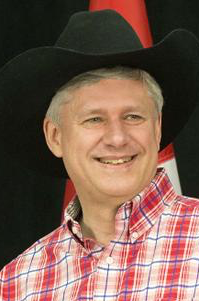
Stephen Harper Calgary Stampede
Stephen Harper

The decision to stay out of the personal fight was typical of Ms. Notley, who already demonstrated her ability to fly above the political fray when Saskatchewan Premier Brad Wall attempted to goad her into a political war of words last month.

Mr. Harper’s bluster is a sign of larger problems for the Ottawa Conservatives across Canada. Nationally, they are in a three-way race with the NDP and Liberals. Provincially, the political environment in Alberta has undergone a seismic shift and the Conservatives no longer have natural allies sitting in government in Edmonton.

Should Notley respond to McQuaig?
Linda McQuaig Oilsands Alberta
Linda McQuaig

Acting as if the topic of natural resource policy should be taboo in election campaigns, Conservative politicians and columnists have wasted no time pilling on Toronto Centre NDP candidate Linda McQuaig and other NDP and Liberal candidates for comments made about Canada’s oil sands .

Ms. McQuaig is known for her strong opinions about Canada’s natural resources, she should not be demonized for staking a position in the public debate (well-known public deviants such as former Bank of Canada Governor Mark Carney and former Premier Peter Lougheed also questioned the speed of growth and environmental impact of oil development).

Alberta Premier Peter Lougheed
Peter Lougheed

While support for the oilsands and pipeline construction is high in Alberta and Saskatchewan, there is significant public opposition in other parts of Canada.

A lax approach to environmental concerns has cost Alberta in political currency and a visceral reaction to these criticisms will not help build a successful public case for oilsands expansion and pipeline construction across Canada.

Having already described the oilsands as a “tremendous public asset,” Ms. Notley should not get caught in the trap of rebutting every political candidate or commenter who criticizes the province’s natural resource track record. The appointment of an expert panel to recommend a new approach to climate change has the potential to have a more positive impact on public opinion.

But what Ms. McQuaig’s comments do suggest is that a future divide between elements of the federal NDP and Ms. Notley’s provincial NDP over the future of natural resource development is almost inevitable. And when it comes to national debates about energy, Albertans will rally behind their Premier, regardless of who sits in office in Ottawa.

Categories
Alberta Politics

7 Conservatives scandals that still haunt Alberta politics

After forty-four years of Progressive Conservative government in Alberta, it still feels surreal to believe that another party has been elected into government. Two and a half months after the NDP victory, Premier Rachel Notley is putting her stamp on Alberta politics. But Alberta’s new government is left to deal with some of the more unhelpful legacies created by the previous government. Here is a look at a few of the Progressive Conservative scandals that continue to haunt Alberta politics.

Funeral Homes

CBC reports that it has obtained documents showing how the Alberta Funeral Service Association pressured former minister Jonathan Denis and the Department of Justice to reopen a contract and abandon earlier efforts to control spending. CBC reports the contract was reopened and revised against the advice of a government lawyer and chief medical examiner Dr. Anny Sauvageau.

Kananaskis Golf Course

Alberta’s auditor general is reviewing a controversial contract between the government and a private company operating a publicly-owned Kananaskis golf course. During this year’s election, NDP MLA Brian Mason asked the auditor general to investigate why the government paid $9.3 million to the company, which is known to have connections to the PC Party. The golf course has been closed since the 2013 floods in southern Alberta.

Wildrose MLA Derek Fildebrandt, who chairs the Standing Committee on Public Accounts, has said he hopes to compel former PC cabinet ministers, including Diana McQueen, to appear at a committee meeting. Critics have criticized the 1983 contract as a “sweetheart deal.”

Airplane sale

The rushed sale of the government’s fleet of airplanes led to a $5 million loss for Albertans. This contradicts claims by former PC premier Jim Prentice that the sale of the planes netted $6.1 million for the government. The planes were sold after Ms. Redford and PC MLAs faced harsh criticism for alleged misuse of the government air fleet for personal and partisan activities.

Public Sector Pensions

Alberta public sector pension liabilities dropped by more than $400 million last year, suggesting evidence that changes planned to the funds by former premier Alison Redford and finance minister Doug Horner were not necessary. The attacks on public sector pensions alienated thousands of public sector workers in Alberta, many who voted for Ms. Redford’s PC Party in the 2012 election. The PC government’s planned changes to the pension plan were scrapped after Ms. Redford resigned as premier in early 2014.

Cowboy welfare

The auditor general reported that the government has been forgoing an estimated $25 million in annual revenue by not limiting surface rights compensation paid by the energy companies to holders of provincial grazing leases. The report states the province does not track which leases have oil and gas activity on them or how much was paid to the leaseholders for access to the natural resources.

“Current legislation allows an unquantified amount of personal financial benefit to some leaseholders over and above the benefits of grazing livestock on public land,” the report says.

Previous attempts to change the law governing the leases met fierce opposition from rural leaseholders, including a posse of sixty cowboys on horseback who tried to block premier Ralph Klein from visiting the Royal Tyrrell Museum in 1999.

Carbon Capture and Storage

The government’s large investments in carbon capture and storage development has not paid off, according to a July 2014 report from the auditor general. Marketed as a key piece of the PC government’s climate change plan, the auditor general reported that “with only two carbon capture and storage projects planned, the total emissions reductions are expected to be less than 10% of what was originally anticipated.”

The NDP pledged to end the carbon capture contracts and instead reinvest hundreds of millions of dollars into public transit programs, but high cost of cancelling binding contracts with private sector corporations developing the projects could solidify this PC legacy.

Heritage Fund

When premier Peter Lougheed created the Heritage Savings Trust Fund in 1976, the government dedicated 30% of annual revenues into the rainy day fund “to save for the future, to strengthen or diversify the economy, and to improve the quality of life of Albertans.” The PC government halted non-renewable resource transfers to the fund in 1987, when it was worth $12.7 billion. Investments into the fund were only started again in 2004.

Despite Alberta’s immense natural wealth, the fund is now only worth an estimated $17.4 billion.

Categories
Alberta Politics

PC Party patronage machine grinds to a halt, future of appointees unknown

After 44 years as government, Alberta’s Progressive Conservative Party built an impressive patronage machine. For many decades, there very likely has not been a board with provincially appointed members that did not enjoy the presence of a PC Party member. That political machine ground to a halt on May 5 when Albertans swept Rachel Notley‘s New Democratic Party into office.

As the NDP transition into office is the first real change of power since 1971, we can expect that many PC-connected appointees on numerous agencies, boards and commissions will exit or not have their terms renewed in the next few years. The same can be said for a slew of ideologically-based advocacy groups that have enjoyed generous funding from the PC Government in recent years.

While having a PC Party membership should not automatically preclude an individual from serving on a public board in the future, as many honest Albertans have held a membership in that party over its four decades in power, it will no longer be a golden ticket into the corridors of power in Alberta.

Here is a quick look at some prominent PC Party members, supporters and former MLAs and cabinet ministers who are currently serving in government appointed roles at colleges and universities:

Here are a number of other high-profile PC supporters who are serving in government appointed roles:


The last Social Credit Party education minister, Robert Clark, currently serves as chair of the Board of Governors of Olds College. Mr. Clark was elected as Social Credit MLA for Olds-Didsbury in 1960 at the age of 23 and served until 1981. He was Leader of the Official Opposition from 1973 to 1980.

Categories
Alberta Politics

It’s still hard to believe the NDP won Alberta’s election

Two days later it is still hard to believe. The New Democratic Party won an election in Alberta? The NDP won a majority government in Alberta? Rachel Notley is the next Premier of Alberta? Get used to it, because Albertans have spoken.

Rachel Notley Alberta NDP leader
Rachel Notley

A change in government is a good thing for Alberta. It was desperately needed.

As I wrote on election night, it would be a mistake to believe this election signals Albertans have shifted to the political left.This election was never about ideology and Albertans remain largely politically moderate. This defining narrative of this campaign was trust and accountability, and on this issue Albertans turned away from Jim Prentice‘s  Progressive Conservatives and embraced Ms. Notley’s moderate and progressive Lougheed-esq platform. The “time for a change” narrative was too strong for the PCs to survive.

But it could still be a while before it stops sounding totally strange. I have never seen another party form government in Alberta until this week. The PCs were first elected 12 years before I was born. My parents were in junior high school when Peter Lougheed became Premier. And this week that dynasty, which governed Alberta for forty-four straight years, collapsed in a spectacular fashion.

Alberta Premier Peter Lougheed
Peter Lougheed

Only one week ago, days before their defeat, the Tories revved up their impressive fundraising machine with a $500 per plate dinner in downtown Edmonton that raised around $800,000 in one night. A similar fundraising dinner, which I am told was sold out, is scheduled to be held on May 14 in Calgary.

But now electorally demolished, on their way out of government and without a leader following Mr. Prentice’s election night resignation, will the PC Party go on? Who will show up for the pricy dinner now that there will be no Premier at the podium or cabinet ministers to dine and wine with? What is the future of the PC Party, now that it is no longer in government?

Albertans wanted a change and they sent a message loud and clear.

On Tuesday night, 74 new MLAs were elected. Forty-nine of those new MLAs will sit in the government benches and 20 will be in opposition, including 18 in the resurgent conservative Wildrose Official Opposition led by Brian Jean. The average age of Alberta’s MLAs also tumbled from 52 years old to 36 40 years old after this election and almost half of the NDP caucus will be made up of women MLAs.

Jim Prentice Premier Alberta
Jim Prentice

The government and opposition now hold differing political views, a difference from the past legislature which could help create an atmosphere of real debate in the Legislative Assembly. This marks a seismic change in a Alberta’s political environment that has been dominated by one party for four decades.

Any new government can be expected to make lots of rookie mistakes, but the incoming Premier has spent the days following the election to set a pragmatic and moderate tone for the new government.

Ms. Notley made a point of using her first days after the election to set a positive tone with Alberta’s energy industry leaders, many who are also likely seeing their first change in government in Alberta. Ms. Notley has repeatedly made clear what Albertans already know: that energy industry is key to our economy. And the NDP Government’s proposed royalty review and modest increase to corporate taxes will ensure the role of Energy Minister remains very important in the new cabinet.

Energy Minister could be a role so important that Ms. Notley takes it on the responsibility herself, as Mr. Prentice took on the extra roles of Aboriginal Relations and Intergovernmental Affairs when he became Premier in September 2014.

While some fear-mongering conservatives, still bitter from their first electoral loss in 44 years, are predicting that the entire energy industry will pack up and leave because Albertans voted in a new government, there is an opportunity for corporate leaders to create a respectful working relationship with the new Alberta Government. And for Albertans, it could be refreshing change to have a government that acts like a partner with the energy industry rather than a wholly owned subsidiary of the energy industry. Albertans want to ensure they are getting their fair share of the wealth collected from their natural resources and industry, quite fairly, wants to know they will be treated fairly by the new government.

As Ms. Notley’s NDP Caucus transitions into their new role as government, the first time this has happened in 44 years, there are still a lot of unknowns. When will a new budget be tabled? When will the Legislative Assembly sit next? Will there be any major changes in the senior ranks of the public service? Will Alberta’s position on major national issues drastically change? Who will be appointed to cabinet?

We can expect incumbent NDP MLAs Brian Mason, David Eggen, and Deron Bilous to be at the cabinet table. Other possible cabinet appointments could include Edmonton-Glenora MLA Sarah Hoffman (former Edmonton Public School Board chair), Calgary-Fort MLA Joe Ceci (former Calgary Alderman), Lethbridge-West MLA Shannon Phillips (policy analyst), Medicine Hat MLA Bob Wanner (former Public Services Commissioner for Medicine Hat), Edmonton-Whitemud MLA Bob Turner (Doctor), St. Albert MLA Marie Renaud (non-profit executive director), and Dunvegan-Central Peace-Notley MLA Margaret Mccuaig-Boyd (former Vice-President of Grande Prairie College), Calgary-Buffalo MLA Kathleen Ganley (labour lawyer), Athabasca-Sturgeon-Redwater MLA Colin Piquette (university instructor) and Calgary-Varsity MLA Stephanie McLean (criminal defence lawyer). And while their critics have focused on the perceived inexperience of new MLAs, we should not be surprised to see some of these unlikely politicians excel in their new roles.

There will be a lot of unknowns in Alberta politics in the coming months and years. This is not a bad thing. In most provinces it is completely normal. We live in a democracy and can expect, from time to time, that voters will decide it is someone else’s turn to govern.

Change is good. And while it still might be a while before it is easy to believe, Albertans sent a clear message on May 5 that they wanted a change in Edmonton, and they got it.


On Wednesday morning I joined Ryan Jespersen and Steven Dollansky on 630 CHED to talk about this week’s historic NDP election win in Alberta, the Wildrose resurgence and the collapse of the 43-year old PC dynasty.

Categories
Alberta Politics

Alberta Election Week 1: The Economy and Corporate Tax confusion

Recent polls show a three-way split in support between the Progressive Conservatives, New Democratic and Wildrose Parties have generated some interest in Alberta’s provincial election campaign but with 24 days left until voting day we can expect a lot to change. Here is a quick review of what the politicians were saying and political parties were spinning in the first week of this election campaign.

Progressive Conservatives
PC leader Jim Prentice launched his party's election campaign in Edmonton.
PC leader Jim Prentice launched his party’s election campaign in Edmonton.

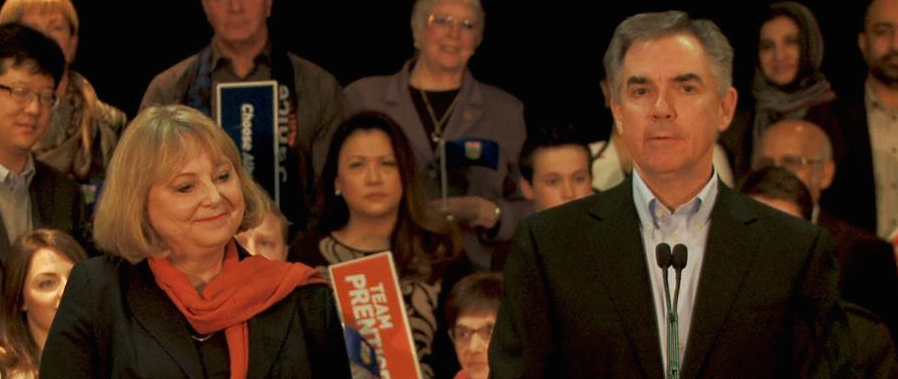
Campaigning on issues related to the March 2015 provincial budget, Progressive Conservative leader Jim Prentice spent most of his week travelling around rural Alberta in his party’s campaign bus.

Mr. Prentice targeted his opponents as extremists while moderating his own tone around Alberta’s economy. Before the election was called, Mr. Prentice’s repeated doom-and-gloom messages led opposition critics to name him “Grim Jim.” The PCs are attempting to present Mr. Prentice as the balanced (a.k.a. safe) candidate, as opposed to the extremist (a.k.a. dangerous) leaders of the opposition.

The PCs promised to double the $17.4 billion Heritage Fund as part of a ‘ten year plan’ and Mr. Prentice repeated his pre-election statement that he would remove the provincial government’s dependence on natural resources revenues.

PC Social Media blitz

The recent provincial budget included almost sixty tax and fee increases, including increases to personal taxes but no increases to corporate taxes, which appears to have been a political miscalculation on the part of the PCs. The government’s own budget survey results showed 69% of Albertans support a corporate tax increase, a point the NDP has stressed.

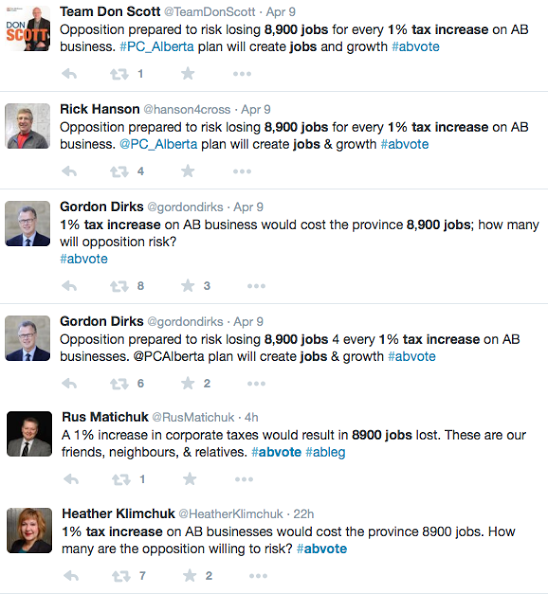
PC MLAs and candidates took to social media to post different variations of a message that 8,900 jobs would be lost if corporate taxes were increased by 1%. It is unclear what study the 8,900 jobs number originates from.

Creating more confusion around corporate tax increases, a PC press release from April 9 stated ‘Prentice pointed out that more than 95% in Alberta are small businesses, employing fewer than 50 people, and questioned those who would put those jobs at risk with a corporate tax increase.” This is a good talking point, if not for the issue that small businesses do not pay corporate tax rates.

According to the Department of Finance website, small businesses earning $500,000 of less profit each year pay a separate 3% small business tax, not the 10% corporate tax applied to companies earning more than $500,000 in profit annually. The PCs dropped the corporate tax rate in Alberta from 15% in 2001 to the current 10% in 2006.

Edmonton Police are investigating bribery allegations made during the Edmonton-Ellerslie PC nomination contest and disqualified Edmonton-Decore PC nomination candidate Don Martin is suing the PC Party for $124,000 over bribery allegations. Dismissed nomination candidate Jamie Lall declared that he is running as an Independent candidate against PC MLA Bruce McAllister in Chestermere-Rockyview.

New Democratic Party
NDP leader Rachel Notley with Calgary candidates on April 8, 2015.

NDP leader Rachel Notley launched her party’s election campaign in Edmonton and travelled to Calgary and Lethbridge to campaign with candidates in those cities. It is notable that the NDP are focusing resources on candidates outside of Edmonton, where the party has traditionally been weak. Calgary-Fort candidate Joe CeciCalgary-Varsity candidate Stephanie McLean and Lethbridge-West candidate Shannon Phillips were prominently placed at Ms. Notley’s side during photo-ops at these stops

NDP messaging in the first week of the campaign focused on the economy. Ms. Notley announced the creation of a Job Creation Tax Credit for businesses as the first NDP election promise, providing balance from their calls for corporate tax increases. The credit sounds reasonable, but much like the PC Party’s 8,900 job loss argument, I am skeptical about this credit creating 27,000 new jobs. The NDP also announced that in-province refining and upgrading is also a top priority. Before the election was called, Ms. Notley’s unveiled her party’s plans to create a Resource Owners’ Rights Commission.

The NDP responded to Mr. Prentice’s “extremist” claims with an “extremist of the week” press release quoting former Premier Peter Lougheed’s support of increased corporate taxes and former Deputy Premier (and current PC candidate) Thomas Lukaszuk support for in-province refining and upgrading.

Ms. Notley was also a guest on this week’s #abvote Google Hangout.

Wildrose Party
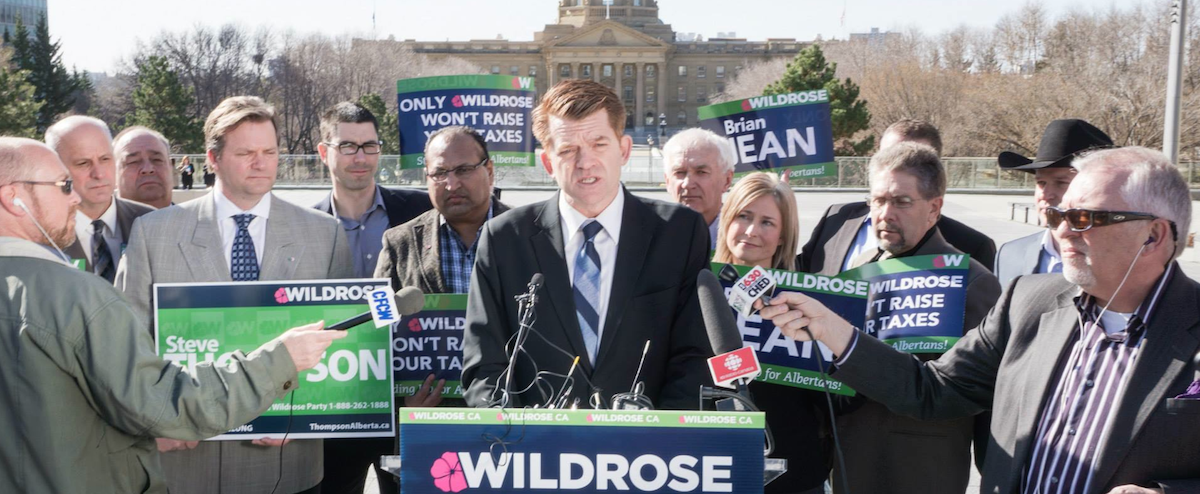
Wildrose leader Brian Jean

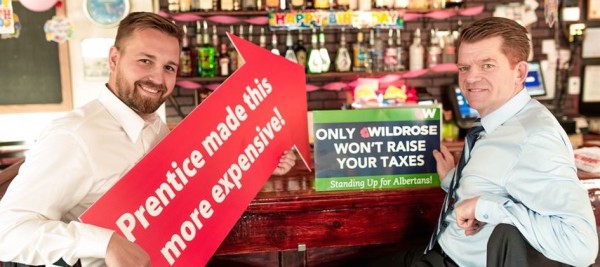
Focusing on rural Alberta, Wildrose leader Brian Jean campaigned in southern Alberta and his Fort McMurray constituency this week. While the campaign trail in Strathmore-Brooks, Mr. Jean and candidate Derek Fildebrandt cleverly walked around town with a giant arrow in hand pointing out services and commodities, like alcohol and gas, which became more expensive due to tax increases in the recent provincial budget.

Mr. Jean released his party’s “Five Priorities” that include positions on taxes, health care, education, democracy and rural Alberta. Part of the Wildrose plan to balance the budget by 2017 without raising taxes includes cutting 3,200 management jobs, including 1,600 in Alberta Health Services and 1,600 in the Government public service.

The Wildrose announced they would sell the Kananaskis Golf Course, a publicly owned and privately-operated golf course that the provincial government had paid millions of dollars to repair after it was damaged by floods in 2013.

Mr. Jean backtracked on comments made about Mr. Prentice undermining Prime Minister Stephen Harper.

The Wildrose Party also nominated new candidates this week including City Councillor Buck Buchanan in Red Deer-North, past mayoral candidate Shelley Biermanski in St. Albert, Don Koziak in Edmonton-Glenora and Ian Crawford in Edmonton-Riverview.

Liberals
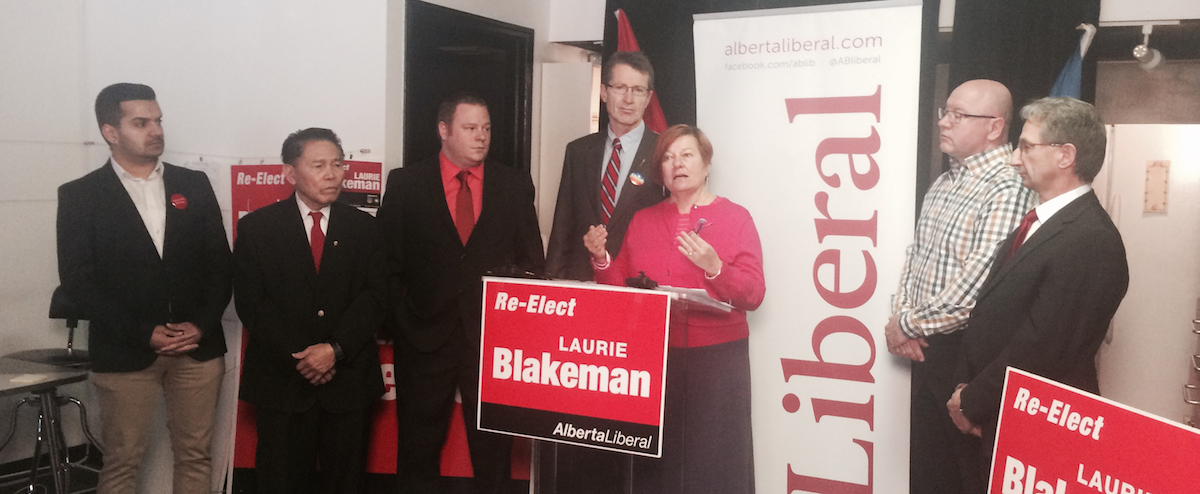
Liberal MLA Laurie Blakeman, interim leader David Swann and Edmonton Liberal candidates unveil the party's pay equity proposal.
Liberal MLA Laurie Blakeman, interim leader David Swann and Edmonton Liberal candidates unveil the party’s pay equity proposal.

The Liberal Party announced they would introduce pay equity legislation, increase funding to Family and Community Support Services and reinstate the Charitable Donation Tax Credit, which was decreased in the recent budget. Interim leader David Swann , who is running for re-election in Calgary-Mountain View, received an endorsement from Senator and retired Lieuteant General Romeo Dallaire. Receiving the 2015 Calgary Peace Prize this week, Mr. Dallaire called Mr. Swann a “true humanitarian.”

Edmonton Journal columnist Graham Thomson wrote that the Liberal Party might need “a ballot box miracle” in order to save themselves from political oblivion.

Alberta Party 

Alberta Party Leader Greg Clark released his party’s policy platform and Economic Recovery Plan. Most of the party’s focus is on electing Mr. Clark in Calgary-Elbow, where he placed a strong second to PC MLA Gordon Dirks in a 2014 by-election. Mr. Clark’s campaign is using DirksRecord.ca to target Mr. Dirks’ record.

The party also grabbed media attention for scooping up the domain names choosealbertasfuture.ca and .com after the PC campaign slogan was unveiled earlier this week.

Green Party 

The Green Party published a media release criticizing the PC Government’s record on environmental regulation, describing it as a “fake, not authentic, regulation and thus an insult to the intelligence, dignity and trusting nature of Albertans.”  The release takes issue with the South Saskatchewan Regional Plan and calls on the government to create a regulator that understands the impact of proposed activity and puts rules in place to prevent any unacceptable impacts.

Other Groups

The Council of Alberta University Students (CAUS) launched a campaign to increase voter turnout among university students in this election. “We are going to sign up thousands of students and make sure they turn out on Election Day,” CAUS chairperson Navneet Khinda said in a press release.

The Parkland Institute released a new report looking at political values of Albertans. Public Interest Alberta released its “Priorities for Change” report as a resource for political candidates in this election And Change Alberta has returned to rank the progressive candidates most likely to win in constituencies across Alberta.

Categories
Alberta Politics

PCs and NDP seal up full slates, election call expected tomorrow

With Alberta’s provincial election expected to be called tomorrow, both the governing Progressive Conservatives and New Democratic Party are expected to have candidates in place in all 87 constituencies today. If the writ is dropped tomorrow, April 7, then the provincial election will be held 28 days later on Tuesday, May 5, 2015.

Tony Caterina City Councillor PC MLA Candidate
Tony Caterina

The final PC candidate nomination meetings being held today are in Calgary-McCall and Calgary-Fort. There are six candidates seeking the nomination in Calgary-McCall (Rajinder Harika, Issa MosaMuhammad Rasheed, Jagdeep Sahota, Jangbahadur Sidhu and Kuldeep Sidhu) and four in Calgary-Fort (Bev DeSantis, Andy Nguyen, Christopher Primeau and Peter Singh). Ms. DeSantis has received Mr. Prentice’s endorsement in the Fort nomination.

Edmonton City Councillor Tony Caterina is the PC candidate in Edmonton-Beverly-Clareview. Mr. Caterina will face hard-working first-term NDP MLA Deron Bilous. Mr. Caterina is well-known in northeast Edmonton, having represented that area since 2007, and his candidacy will keep this swing riding in play.

Since 2004, the constituency has changed hands three times between the PCs and NDP, with Mr. Bilous defeating PC MLA Tony Vandermeer in 2012 by 245 votes.

Harman Kandola Edmonton Ellerslie
Harman Kandola

This is Mr. Caterina’s second attempt at provincial office. He stood as the Alberta Alliance candidate in Edmonton-Centre in the 2004 provincial election.

According to CBC reports,  when the election is called Mr. Caterina will suspend his City Council salary but he will continue to participate in council meetings during the campaign.

Mr. Caterina replaces Harman Kandola, who was nominated as the PC candidate in that constituency in late March. Mr. Kandola is now the appointed PC candidate in Edmonton-Ellerslie, a spot that was vacated under controversy by former cabinet minister Naresh Bhardwaj.

The PCs appointed Catherine Keill as their candidate to challenge Liberal/Green/Alberta Party candidate Laurie Blakeman in Edmonton-Centre. Ms. Keill is the Director of Community and Caucus Outreach in the Premier’s Office and previously worked for Mr. Prentice when he was a cabinet minister in Ottawa. She also served as Deputy Chief of Staff to former Mayor Stephen Mandel and was campaign manager for former City Councillor Karen Leibovici‘s mayoral election bid in 2013. The last time a PC candidate was elected in this constituency, Peter Lougheed was premier.

I have updated the list of Alberta Election candidates with these and more changes.


Alberta NDP leader Rachel Notley NDP Leader Alberta
Alberta NDP leader Rachel Notley

Mack, Ryan and I are excited to announce that NDP leader Rachel Notley will be our guest on the AbVote Google Hangout at 7:00 p.m. on Thursday, April 9, 2015. Watch the hangout live at abvote.ca and send us your questions using the #abvote hashtag on Twitter. You can also watch previous hangouts with Edmonton-Centre MLA Laurie Blakeman and the Wildrose leadership candidates.

Categories
Alberta Politics

Alberta can’t afford to ignore the Provincial Sales Tax

rat2.jpg.size.xxlarge.promoRat-free, PST-free and Liberal-free” has been a Conservative mantra in Alberta since the reign of Pierre Elliott Trudeau. But is this trifecta now in jeopardy?

The decline of government revenues caused by the drop in the price of oil has once again sparked the discussion around resource diversification and tax increases in Alberta. And with talk of economic doom and gloom, Premier Jim Prentice is managing expectations and preparing Albertans for the upcoming provincial budget and likely a Spring provincial election.

Jim Prentice Premier of Alberta
Jim Prentice

Will the budget include deep funding cuts or tax increases? Under most circumstances, deep budget cuts would be the natural choice for the long-governing Progressive Conservatives, but there is growing speculation that Mr. Prentice could be softening the ground for the introduction of a Provincial Sales Tax (PST) in Alberta.

At a 2013 provincial fiscal summit, economist Bob Ascah suggested that a 1 per cent sales tax could raise $750 million in annual revenue for the provincial government. Diversifying income sources with a five or six per cent sales tax could help soften the blow of the dreaded $7 billion gap that Mr. Prentice has warned will face the provincial budget if oil prices do not increase by next year.

Late last year, Mr. Prentice declared in a speech to the Calgary Chamber of Commerce that he would not consider introducing a PST, but the Premier has changed his tune in 2015, saying that everything is on the table.

This is not the first time PST has been at the centre of discussion in Alberta. Few Albertans may know it, but Alberta did have a two per cent sales tax for a short period ending in 1937.

Alberta Premier Peter Lougheed
Peter Lougheed

In the aftermath of the last major economic downturn in June 2008, when the price of oil dropped from a high of $145 per barrel in July to a low of $30 per barrel in December 2008, PC cabinet ministers like Doug Griffiths openly mused about PST. When prices increased, resource royalties once again poured in provincial coffers and Alberta’s political class moved away from the PST discussion.

Facing a decline in the price of oil in 1984, Premier Peter Lougheed publicly mused about introducing a sales tax, but did not act on it.

The Alberta Taxpayer Protection Act, introduced by Premier Ralph Klein in 1995, states that a referendum must be held before a Provincial Sales Tax can be introduced. The PCs have shown in the past that they have no problem sweeping away old laws like this one. In 2009, the PC government amended their much touted Fiscal Responsibility Act which prohibited deficit budgets in order to pass a deficit budget.

Relying on a boom-bust economy, a real lack of long-term financial planning has been the biggest weakness of the 43-year governing PC Party.

Ted Morton MLA
Ted Morton

The introduction of a PST would be a bold and courageous move – one that could land Mr. Prentice in Alberta’s history books beside statesmen like Mr. Lougheed and Ernest Manning. And while under normal circumstances this would be a kiss of death to a Premier’s political career, we may now be witnessing a once in a lifetime opportunity to introduce a sales tax.

The Wildrose Opposition is both leaderless and in complete disarray, and the opposition New Democrats and Liberals could have a difficult time protesting a move that could majorly diversify the government’s revenue stream. And with the departure of Derek Fildebrandt late last year, the local Tax Outrage Industry is lacking a major spokesperson.

The move also comes with the support of former Finance Minister Ted Morton, a member of the right-wing Calgary School, who recently penned an opinion-editorial in the Calgary Herald calling for a PST. And while he was teaching at the University of Alberta, Mr. Prentice’s Chief of Staff Mike Percy admitted that a “sales tax gives you greater stability.”

Kevin Taft Liberal Party MLA Alberta
Kevin Taft

As reported on David Climenhaga‘s blog, Conference Board of Canada chief economist Glen Hodgson also weighed in on Alberta’s tax dilemma: “Not having a provincial consumption or sales tax is highly popular and has been great politics, but it denies the provincial government a steady and stable source of revenue through the business cycle.”

To get a grasp of how embarrassingly low our tax rates current are in Alberta, Kevin Taft in his 2012 book, Follow the Money, says that Alberta could increase its tax rates by $11 billion and would still have the lowest tax rate in Canada.

Critics will argue that a sales tax would unfairly penalize low income Albertans, and they are right. The government should also scrap the short-sighted flat tax and return to a real progressive income tax system. Alberta is currently the only province with a Flat Tax, the odd-ball brain child of former Treasurer Stockwell Day.

While Albertans look with envy at Norway’s $900 billion petroleum fund, it could be decades before our government imposes meaningful increases in natural resource royalties. The PCs bowed to political pressure from the oil and gas industry and paid a significant political price when trying to implement meaningful increases to resource revenues in the late 2000s.

The strongest opposition to the introduction of a PST may come from inside the PC caucus. Many PC MLAs are said to be unconvinced that Albertans would support a PST, and the presence of 11 anti-tax former Wildrose MLAs in the government caucus could stiffen the opposition from within. Skeptical MLAs would probably be correct that they will receive a blowback from Albertans in the short-term, but the right decisions are not necessarily the most popular when they are initially implemented. And without a credible government-in-waiting, now could be the the only time the PCs could implement a PST.

Alberta should strive to remain rat-free forever, but on the revenue front, we need to break our dependency on resource revenues that cripple our provincial government each time there is a hiccup in the market.

Categories
Alberta Politics

Joe Anglin fires opening shot in Wildrose Civil War

Danielle Smith Joe Anglin Wildrose MLA Election Alberta 2012
Happier times: Wildrose leader Danielle Smith with Joe Angiln during the 2012 Alberta Election.

Citing a “civil war” within the Wildrose Party, MLA Joe Anglin has decided to leave the Official Opposition caucus to sit as an Independent MLA.

Mr. Anglin said in a Facebook message posted this morning that he did so in advance of today’s caucus meeting, where leader Danielle Smith was expected to introduce a motion to expel him from the Official Opposition caucus.

The first-term MLA for Sundre-Rocky Mountain House-Rimbey claimed foul-play when losing his nomination bid to represent the Wildrose in the next election. A divisive split in the local constituency association has drawn the ire of senior party officials.

His departure represents the first time the Wildrose has lost an MLA to a defection and now leaves the Official Opposition with 16 MLAs.

A political wildcard, Mr. Anglin admitted in his Facebook post he had “been a round peg in a square hole in the Wildrose Party.” And despite the more recent troubles, rumours of his departure have been circulating in political circles for at least one year.

The former leader of the Alberta Green Party and outspoken critic of electrical transmission line development in rural Alberta was an odd fit for the Wildrose Party.

Mr. Anglin’s advocacy came to province-wide attention in 2007 when it was revealed the now defunct Energy and Utilities Board hired a private detective to spy on central Alberta landowners who were organizing in opposition to transmission line construction through their property.

Fanning the flames of enraged farmers and landowners, Mr. Anglin, along with lawyer Keith Wilson, helped lay the ground for the Wildrose surge in central and southern Alberta in the 2012 election.

The question now is whether Progressive Conservative Premier Jim Prentice‘s peace-offerings towards property-rights activists like Mr. Anglin could convince him to join the government caucus, or at the very least support related legislation expected to be introduced in November.

While the party’s loss in four recent by-elections put the spotlight on Ms. Smith and her call for a leadership review at the party’s November convention, Mr. Anglin’s departure casts a light on a split in the party and caucus.

It has been caught up in a civil war between ideologues and pragmatists, with staff, volunteers, and even MLAs being placed into and forced out of positions with alarming frequency,” Mr. Anglin wrote in his Facebook post.

While most Wildrose Party activists I have spoken with support Ms. Smith’s leadership, there is a group who remain disappointed with the party’s lack of focus and inability to hold significant ground against the PCs in the polls.

The clear beneficiary of this public dispute is Mr. Prentice, who, after nearly two months in office, has left the Wildrose Party scrambling to respond to a post-Alison Redford reality.

Since Peter Lougheed catapulted from official opposition leader to Premier in 1971, leadership positions in Alberta’s opposition benches have become a political graveyard for many well-intentioned and ambitious politicians.

If Ms. Smith is able to rally her MLAs and party activists in unity at the party’s convention and secure a strong leadership vote, the party could remain competitive going into the next election.

If Mr. Anglin’s departure deepens the splits in the party, and other MLAs join him or cross the floor to the PCs, Ms. Smith may be destined to join the list of many other Official Opposition leaders who failed to defeat Alberta’s 43-year governing PC Party.