Albertans’ negative reaction to the government’s handling of the teachers strike was probably a big reason why Premier Danielle Smith was scheduled to leave the country before her UCP MLAs passed Bill 2.
We don’t know exactly what Smith was looking at on her phone when she was photographed sitting at the Calgary International Airport while her UCP MLAs were still in the Legislature on Monday night, but her conveniently scheduled week-long trip to Saudi Arabia and the United Arab Emirates means that she will not face questions from reporters about suspending constitutional rights of citizens.
United Conservative Party Premier Danielle Smith’s own approval rating took a beating as well. The Premier saw her job approval drop from 44 per cent in May to 38 per cent this month. And, for the first time, that puts Smith below NDP leader Naheed Nenshi, who saw his approval jump up to 43 per cent in the same period.
Taking his seat in the Legislature this week, it definitely felt like Bill 2 gave Nenshi an opportunity to step into the spotlight and he didn’t disappoint.
Alberta Premier Danielle Smith (right) was photographed sitting at the Calgary International Airport while UCP MLAs were still in the Legislature pushing through Bill 2 on Monday night. Smith is spending the week in Saudi Arabia and Dubai. (photo: publicinterestalberta / Instagram)
Danielle Smith left for Saudi Arabia before invoking Notwithstanding Clause
The fall session of the Legislature started on Monday and Premier Danielle Smith’s United Conservative Party government wasted no time pushing through its legislation to force striking Alberta teachers back to work.
In a severely time-limited debate that took less than 12 hours in total, UCP MLAs voted on third reading to pass Bill 2: Back to Work Act at around 2:00 a.m. on Tuesday.
The bill imposed a new contract on 51,000 striking teachers until 2028, threatened hefty fines for any teachers who dared defy the UCP’s rushed law, and used the constitutional sledgehammer known as the Notwithstanding Clause to suspend teachers’ and the Alberta Teachers’ Associations’ rights to collective bargaining under the Charter of Rights and Freedoms.
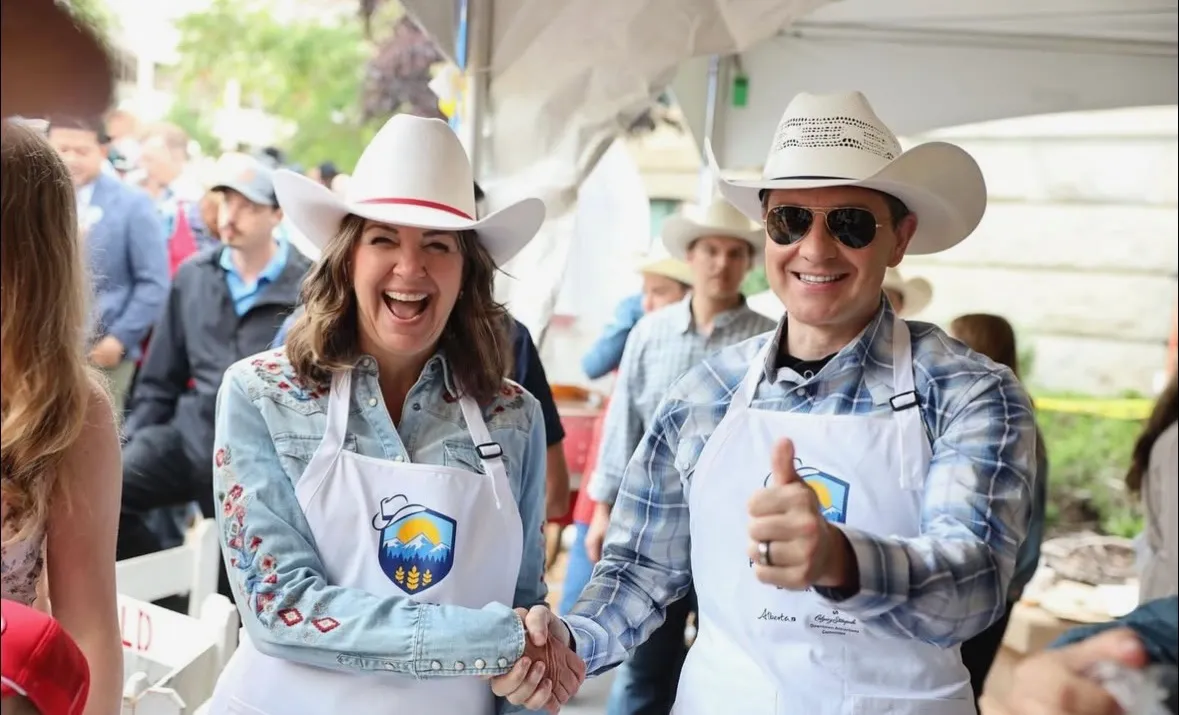
Premier Danielle Smith and Conservative by-election candidate Pierre Poilievre (source: Danielle Smith / Instagram)
A Liberal win in this sprawling rural riding would be one in a trillion
With Stampede season soon winding down in Calgary, attention of the political class will quickly turn from the lobbyist receptions, pancake flips, and oil industry cocktail parties to the land of real cowboys. The federal by-election in Battle River-Crowfoot has been called for August 18 and Conservative Party leader Pierre Poilievre is the favourite to win this vote and reclaim a seat in the House of Commons after his defeat in Ontario on April 28.
Toor’s first term as a UCP backbencher was not short of controversy.
In June 2020, CBC reported that the owners of two popular food trucks claimed they were being bullied and harassed by residents who didn’t want them there, including Toor.
He was hit with a $15,000 fine from Elections Alberta in July 2021 for violating five sections of the Election Finances and Contributions Disclosure Act. And in September 2021, Alberta Health Services issued a closure order for a Gleichen hotel owned by Toor.
Toor was one of only a handful of UCP MLAs to support Danielle Smith in her bid to win the party’s leadership and he was rewarded in October 2022 with an appointment as Parliamentary Secretary for Multiculturalism.
This is a riding the NDP believe they can flip. It is on my list to watch.
Four in Livingstone-Macleod UCP race, former candidate now running for Alberta Party
It looked like there might be six or seven candidates in the race but when the nomination papers were handed in, there were only four candidates contesting the ‘do-over‘ UCP nomination Livingstone-Macleod.
Two candidates who previously announced their candidacies dropped out of the race. Christina Lee and Nanton town councillor Kevin Todd did not submit their nomination forms.
This was an extremely difficult decision to make, and I didn’t make it lightly. However, after being involved more closely with the party, I found that some of my values, morals and ethics were just not aligning as much as they used to.
Constituency office manager Lizette Tejada defeated four other candidates to win the NDP nomination in this hotly contested Calgary riding. This was the party’s second time holding a nomination contest in the riding. Brady Adkins, Angela McIntyre, Mattie McMillan and Laurie O’Neil were the other candidates in the race.
All quiet in Grande Prairie-Wapiti
Travis Toews (Travis Toews/Facebook)
What’s one of the big questions being asked in Alberta political circles this week?
Will Finance Minister Travis Toews run for re-election?
The rancher-accountant and UCP leadership race runner-up has been silent on his plans for the next election and the party has not released any news about nominating a candidate in his Grande Prairie-Wapiti riding.
Will Toews bow out of provincial politics after tabling the spring budget? We’ll find out soon.
Calgary-Bhullar-McCall: Sonya Virk joins Amanpreet Singh Gill in the UCP nomination race in this north east Calgary riding. Virk is a former member of the Alberta Party provincial board. A vote is scheduled for March 5.
Edmonton-Glenora: Shannon Berry and Amit Batra are seeking the UCP nomination. Batra previously ran as a Liberal candidate in Edmonton-Calder in 2015, was active in Wexit Alberta and, until recently, served as a director of the Wildrose Independence Party.
Edmonton-McClung: Daniel Heikkinen defeated Terry Vankka to win the UCP nomination. Heikkinen was a candidate for Edmonton City Council in October 2021.
Edmonton-Manning: Alberto Mazzocca and Jaspreet Saggu are seeking the UCP nomination. A nomination vote is scheduled for February 22, 2023.
Lethbridge-West: Rick Dempsey and Torry Tanner are seeking the UCP nomination. Dempsey ran for the nomination in 2018. Tanner was named in an unsuccessful lawsuit against former Chief Medical Officer of Health Dr. Deena Hinshaw challenging Alberta’s COVID-19 public health restrictions. A nomination vote is scheduled for March 14.
Lesser Slave Lake: Martine Carifelle, Jerrad Cunningham, Scott Sinclair, and Silas Yellowknee are seeking the UCP nomination. A vote is being held on February 25 and 26.
Alberta NDP
Calgary-Lougheed: Venkat Ravulaparthi and Kim Wagner are seeking the NDP nomination. A nomination vote is scheduled for March 14.
Drumheller-Stettler: Pharmacist Juliet Franklin was nominated as the NDP candidate. This was the only riding where the NDP candidate placed 4th in the 2019 election.
Rimbey-Rocky Mountain House-Sundre: Fisheries biologist Vance Buchwald was nominated as the NDP candidate.
Green Party
Julian Schulz has been nominated as the Green Party candidate in Edmonton-Glenora. Two of the party’s nominated candidates have withdrawn their candidacies: Brandy Kinkead in Calgary-Edgemont and Lucas Bevan in Sherwood Park.
You can also now subscribe to the Substack to support my work and get access to some extra features for the podcast and the Substack that I’m working on.
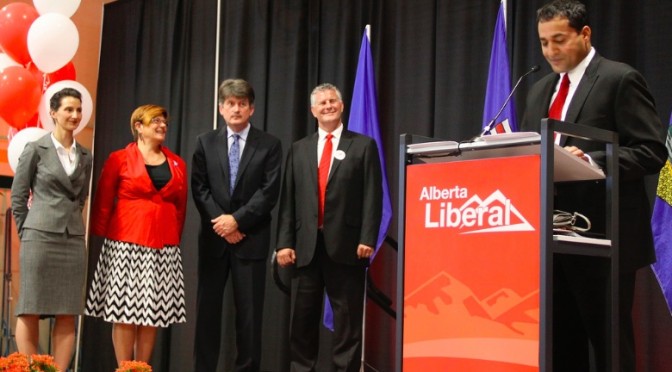
Raj Sherman (right) accepts the Alberta Liberal Party leadership in 2011. To the left: Leadership chairperson Josipa Petrunic, MLA Laurie Blakeman, MLA Hugh MacDonald and candidate Bruce Payne.
Despite being rejected as a candidate for the United Conservative Party leadership last year, former Liberal Party leader Dr. Raj Sherman is running for the UCP nomination in Edmonton-Whitemud.
Running on a leadership platform to fix the health care system, Sherman requested an exemption to run in the race for not being a party member for 6 months.
The party has opened up nominations in Edmonton-Whitemud but has not signalled if they plan to let Sherman actually enter the race.
Sherman served as MLA for Edmonton-Meadowlark as a Progressive Conservative from 2008 to 2010, as an Independent MLA from 2010 to 2011 and as a Liberal from 2011 to 2015. He led the Alberta Liberal Party from 2011 to 2015.
Edmonton-Whitemud has been represented by Alberta NDP MLA Rakhi Pancholi since 2019, when she was elected with 49.18 per cent of the vote.
AUPE’s Heisted running for NDP nomination in Innisfail-Sylvan Lake
Jason Heistad (source: AUPE)
Innisfail Town Councillor and AUPE Executive Secretary-Treasurer Jason Heistad is running for the NDP nomination in the central Alberta riding of Innisfail-Sylvan Lake.
Heistad was first elected to town council in 2010 and was re-elected in 2021 with the most votes of any councillor candidate. He was elected to his fifth term as AUPE’s Executive Secretary-Treasurer in 2021.
A nomination vote is scheduled for February 6.
The riding is currently represented by UCP MLA and cabinet minister Devin Dreeshen.
UCP MLA Pat Rehn not running for re-election
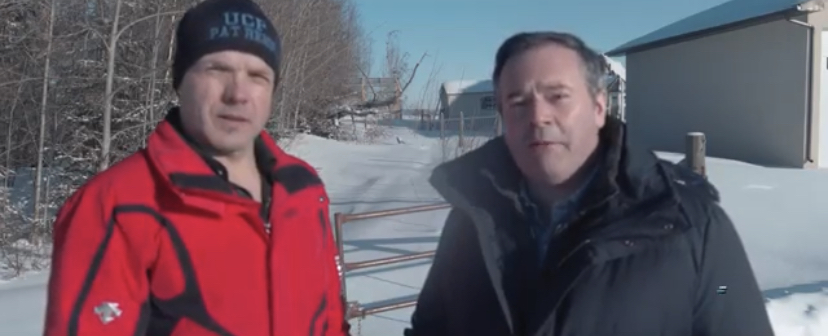
Pat Rehn and then-UCP leader Jason Kenney during the 2019 election.
The one-term MLA was ejected from the UCP Caucus in January 2021 after taking a trip to Mexico in defiance of his own government’s COVID-19 travel recommendations.
Martine Carifelle and Scott Sinclair are seeking the UCP nomination. The NDP have nominated registered nurse Danielle Larivee, who represented the riding from 2015 to 2019 and served as a cabinet minister in Rachel Notley‘s first government.
Calgary-Klein: Mattie McMillan, Angela McIntyre and Lizette Tejada are running for the NDP nomination in Calgary-Klein on February 15.
Drumheller-Stettler: Stettler pharmacist Juliet Franklin is running for the NDP nomination in this sprawling east central Alberta riding. A nomination meeting is scheduled for February 13, 2023.
Rimbey-Rocky Mountain House-Sundre: Fisheries biologist Vance Buchwald is running for the NDP nomination in this sprawling west central Alberta riding. A nomination meeting scheduled for February 15, 2023. In 2021, Buchwald urged Clearwater County Council to take a stand against coal mining development near Nordegg.
Green Party of Alberta
The Green Party has nominated Regan Boychuk in Banff-Kananaskis, Ahmad Hassan in Calgary-Falconridge, Kenneth Drysdale in Calgary-Klein, and Cheri Hawley in Edmonton-Whitemud.
Heather Morigeau has withdrawn her candidacy in Calgary-Buffalo, as has Jonathan Parks in Calgary-Currie.
Alberta Party
The Alberta Party has opened up nominations in Calgary-Varsity. Nominations closed on January 15. If more than one candidate entered the race a nomination vote will be held on January 29, 2023.
Vulcan County Councillor Jodie Gateman is challenging MLA Joseph Schow for the United Conservative Party nomination in Cardston-Siksika. Gateman appears to have the support of the Take Back Alberta group, which is organizing against Premier Jason Kenney ahead of the April 9 leadership review in Red Deer.
Jodie Gateman
Gateman was elected to Vulcan County Council in 2021 and was the UCP’s first Vice President Communications from 2018 to 2019. Her previous political experience includes working as a campaign manager for Reform Party Member of Parliament Grant Hill in 1997 and 2000.
A 2009 profile in the Calgary Herald described Gateman as a the then-principal and executive director of Green Learning Academy (a private school in Calgary that years later went bankrupt) and a graduate of the University of Dallas and American Intercontinental University.
Schow was first elected in 2019 and currently serves as the Deputy Government House Leader, a position that plants him firmly in the Kenney loyalist camp. Before his election as MLA he ran for the federal Conservative nomination in Medicine Hat-Cardston-Warner and before that worked for Sherwood Park-Fort Saskatchewan Conservative MP Garnett Genuis.
A nomination meeting has been scheduled for March 21, 2022.
Like former Clearwater County Councillor Tim Hoven, who is challenging Government House Leader and Environment & Parks Minister Jason Nixon for the UCP nomination in Rimbey-Rocky Mountain House-Sundre, Gateman’s social media feeds suggest her political views are solidly on the right-wing of the UCP.
Former UCP nomination candidate enters NDP contest in Edmonton-South West
Lakeland College business instructor Ben Acquaye is the third candidate to join the NDP nomination contest in Edmonton-South West.
Ben Acquaye
“Families, businesses and communities are under stress, and as a province we have a lot of challenges ahead of us,” Acquaye said in a statement announcing his candidacy. “I am convinced in the leadership of Rachel Notley to steer us through these times to a more diversified economy that allows working families and communities to thrive.”
In 2018, Acquaye ran for the UCP nomination in Vermilion-Lloydminster-Wainwright, a contest that was won by current MLA Garth Rowswell.
The riding is currently represented by UCP MLA and Minster of Justice and Solicitor General Kaycee Madu, who stepped back from his ministerial duties last month.
Two more UCP MLAs running for re-election
Jackie Homeniuk-Armstrong
MLA Jackie Homeniuk-Armstrong is running the the UCP nomination in Fort Saskatchewan-Vegreville. Homeniuk-Armstrong was first elected in 2019 after unseating NDP MLA Jessica Littlewood. She is the chair for the Advisory Council on Alberta-Ukraine Relations, and chair of the UCP Skilled Trades Caucus. A nomination meeting has been scheduled for March 24, 2022.
Minister of Agriculture, Forestry, and Rural Economic Development Nate Horner is seeking the UCP nomination in Drumheller-Stettler. The rancher from Pollockville and scion of one of Alberta’s most prominent political families was first elected in 2019. A nomination meeting has been scheduled for March 24, 2022.
The UCP has also opened nominations in five more ridings: Calgary-Beddington (represented by Minister of Seniors and Housing Josephine Pon), Calgary-East (represented by MLA Peter Singh), Lethbridge-East (represented by UCP Caucus chair Nathan Neudorf), Olds-Didsbury-Three Hills (represented by Speaker and former UCP interim leader Nathan Cooper), and Sherwood Park (represented by MLA Jordan Walker)Strathcona-Sherwood Park (represented by Service Alberta Minister Nate Glubish).
Jason Nixon and Jason Kenney celebrating Victoria Day in 2019.
Government House Leader and Environment & Parks Minister Jason Nixon is running to reclaim the United Conservative Party nomination in Rimbey-Rocky Mountain House-Sundre. Nominations in this and three other ridings held by Jason Kenney loyalists were quietly opened earlier this week.
Nixon appears to be facing a challenge from former Clearwater County Reeve and Councillor Tim Hoven. Elections Alberta lists March 21, 2022 as the nomination meeting date.
Nixon’s younger brother, Jeremy Nixon, will face a nomination vote on March 24, 2022 in Calgary-Klein. It is unclear whether he will face any challengers.
UCP MLA Matt Jones is also seeking his party’s nomination to run for re-election in Calgary-South East. A nomination meeting has been scheduled for March 21, 2022, according to Elections Alberta’s website.
Nominations were opened tonight in five other ridings currently held by Kenney loyalists – Calgary-Edgemont (represented by Minister of InfrastructurePrasad Panda), Drumheller-Stettler (represented by Minister of Agriculture Nate Horner), Fort Saskatchewan-Vegreville (represented by MLA Jackie Armstrong Homeniuk), Morinville-St. Albert (represented by Associate Minister of Natural Gas Dale Nally), and Peace River (represented by MLA Dan Williams). The deadline for candidates to enter these nomination contests is March 3.
Michelle Landsiedel running for Alberta Party in Fort McMurray-Lac La Biche by-election
Michelle Landsiedel
Suncor employee Michelle Landsiedel is the Alberta Party candidate in the Fort McMurray-Lac La Biche by-election.
Landsiedel is the vice-chair of the Board of Directors of the Boys and Girls Club of Fort McMurray and is an Emergency Response Team Supervisor and National Member of the Canadian Red Cross. She was a candidate for Wood Buffalo municipal council in 2021 in Ward 1.
Election Alberta also listed Abdulhakim Hussein as the Liberal Party candidate.
Nurse Diana Batten running for NDP nomination in Calgary-Acadia
Diana Batten
Registered Nurse Diana Batten announced she plans to run for the NDP nomination in Calgary-Acadia.
“Like many, I have struggled with feelings of hopelessness and frustration throughout the pandemic,” Batten writes on her campaign website. “The lack of transparency, communication, and planning demonstrated by the UCP government, while strengthening my resolve, has also reinforced that my values do not align with this government.”
Batten is a Nursing Instructor at Bow Valley College and a nurse at the Rotary Flames House, a residential community-based hospice at the Alberta Children’s Hospital.
Calgary-Acadia is currently represented by UCP MLA Tyler Shandro, who was first elected in 2019, and until recently served as Minister of Health. He is now Minister of Labour.
Wyatt Tanton running for NDP nomination in Camrose
Wyatt Tanton
Educational Assistant Wyatt Tanton is the second candidate to enter the NDP nomination contest in the Camrose riding.
“Classroom sizes are ballooning, staff are burning out, and students are the ones paying the price when the government implements unjustifiable sweeping cuts, fires tens of thousands of essential support staff, and continues pushing forward a curriculum so outdated and out-of-touch that it would’ve made Ernest Manning pause in the 60’s,” Tanton said. “We need a strong voice for our constituency in Edmonton, and a government that’s willing to listen to them – and I want to be that strong voice for Camrose when we elect Rachel Notley and the Alberta NDP to a strong mandate in 2023.”
Tanton was a candidate for Camrose City Council in 2021 and is currently pursuing a Bachelor of Commerce through Athabasca University. He joins Registered Psychiatric Nurse Tonya Ratushniak in the contested nomination race.
The riding is currently represented by UCP MLA Jackie Lovely, who is being challenged for her party’s nomination by Beaver County Reeve Kevin Smook.
Dave Klepacki fourth candidate in Banff-Kananaskis NDP race
Dave Klepacki is the fourth candidate to join the NDP nomination contest in Banff-Kananaskis.
Klepacki is the co-founder of Experience Journeys and the former Vice President of Wilcox Energy Corporation. He earned a PhD in Geological Sciences from the Massachusetts Institute of Technology mapping rock structures along the Kootenay Arc of British Columbia.
Klepacki joined the other candidates in the nomination race – Sarah Elmeligi, Gavin McCaffrey, and Mark Tkacz – at the second candidate’s forum on Zoom organized by the local NDP association on Feb. 17. More than 50 NDP members in the riding attended the forum, which focused on climate and the environment.
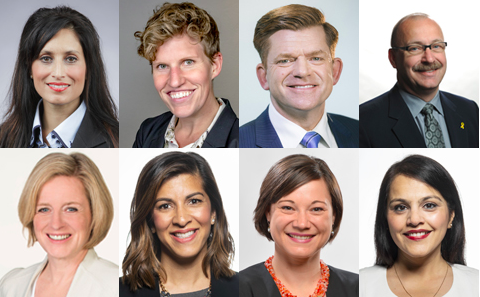
Best of Alberta Politics 2021 nominees: Leela Aheer, Janis Irwin, Brian Jean, Ric McIver, Rachel Notley, Rakhi Pancholi, Shannon Phillips, and Rajan Sawhney.
With hundreds of submissions made to the Best of Alberta Politics 2021 survey, your choices have been sorted and you can now vote in each category. Voting is open until Dec. 22, 2021 at 6:00 pm and the winners will be announced shortly after that.
2. Who was the best Alberta cabinet minister of 2021? – VOTE
Leela Aheer, Minister of Culture, Multiculturalism and Status of Women
Ric McIver, Minister of Municipal Affairs
Rajan Sawhney, Minister of Transportation
Honourable mentions to runners-up Minister of Health Jason Copping and Minister of Finance Travis Toews. It is also worth noting that a large number of people chose to submit various versions of “none of the above.”
3. Who was the best opposition MLA of 2021? – VOTE
Janis Irwin, MLA for Edmonton-Highlands-Norwood
Rachel Notley, MLA for Edmonton-Strathcona
Shannon Phillips, MLA for Lethbridge-West
Honourable mention to runners-up Edmonton-City Centre MLA David Shepherd and Edmonton-Whitemud MLA Rakhi Pancholi..
4. Who is the up and coming MLA to watch in 2022? – VOTE
Janis Irwin, MLA for Edmonton-Highlands-Norwood
Brian Jean, (potentially future) MLA for Fort McMurray-Lac La Biche
Rakhi Pancholi, MLA for Edmonton-Whitemud
Honourable mentions to runners-up Drumheller-Stettler MLA Nate Horner and Edmonton-South MLA Thomas Dang.
5. What was the biggest political play of 2021 in Alberta? – VOTE
Brian Jean’s political comeback
Jason Kenney’s “Open For Summer/Best Summer Ever” COVID-19 plan
Jyoti Gondek’s election as Mayor of Calgary
What was the biggest political issue of 2021 in Alberta?
In some past years this category has been a dog’s breakfast, but like last year, this year your choice was clear. COVID-19 was the clear choice of the overwhelming majority of people who submitted in this category. The global COVID-19 pandemic defined Alberta politics in 2021, with the failure of Premier Jason Kenney’s “Open For Summer” plan and the fourth wave that followed garnering the most submissions.
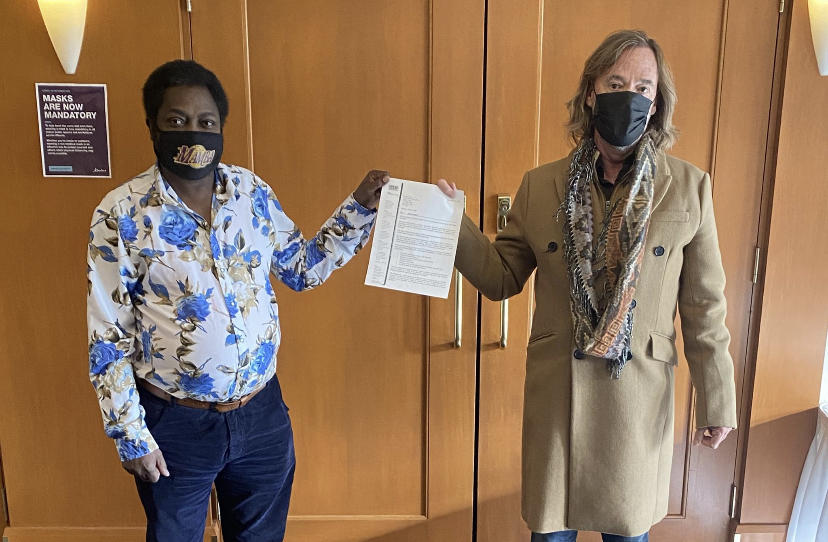
Longtime Cargill worker and Local 401 Executive Board member Joseph Kog (right) handed the strike notice to Cargill representatives. UFCW Local 401 President Thomas Hesse is pictured with him in this photo.
Workers at the Cargill meat packing plant in High River have voted overwhelming in favour of taking strike action.
Workers at the meat packing plant represented by UFCW Local 401 voted 97 per cent in support of strike action if the Minnesota-based multi-billion dollar corporation does not make them a fair offer.
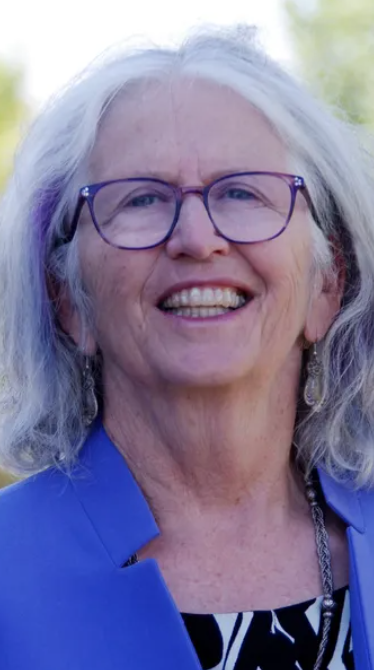
Richelle Stewart
“Our Cargill union members came to bargaining with a genuine interest in improving working conditions at the Plant,” UFCW Local 401 Secretary Treasurer Richelle Stewart said in a press release. “Unfortunately, Cargill has focused on playing games that have slowed the process down and stopped real progress. That has been very disappointing.”
The union has given the employer notice that workers could go on strike on Dec. 6 if demands to improve workplace safety are not met.
The Cargill plant in High River was the site of one of the worst early workplace outbreaks of COVID-19 in Alberta and lead to the death of three workers. More than 1,500 COVID cases were linked to the outbreak at the site.
At the time, the corporation and the Alberta government were criticized for not acting quickly to shut down the plant when it was apparent that the outbreak was only getting worse.
“Local 401 fought and was successful in having Cargill’s High River Plant closed,” said Stewart. “The Government of Alberta did nothing to address the unfolding tragedy and was later revealed to be untruthful in its dealings with Cargill workers.”
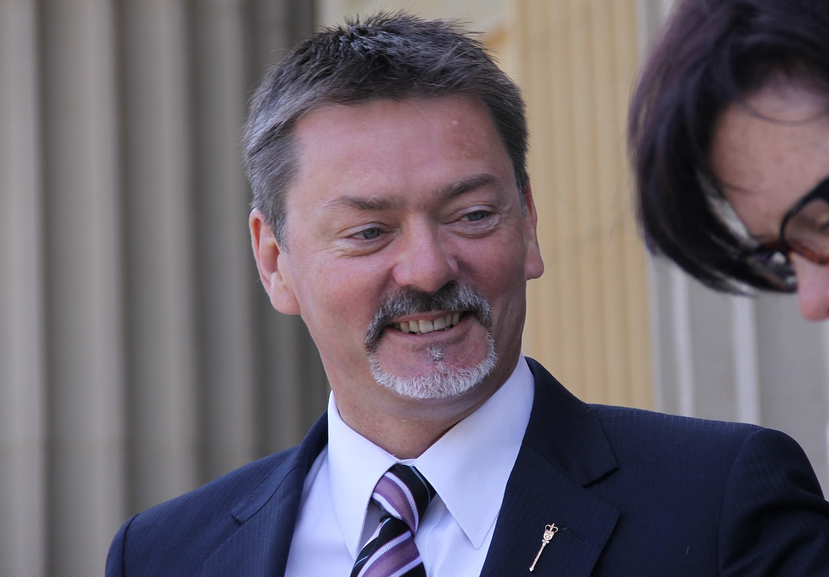
Devin Dreeshen
The Agriculture and Forestry Minister at the time was Devin Dreeshen.
Replacing Dreeshen as the newly renamed Minister of Agriculture, Forestry and Rural Economic Development is Nate Horner, who was only raised from the backbenches to become Associate Minister of Rural Economic Development on July 8, 2021. The rancher from Pollockville was elected as the UCP MLA for Drumheller-Stettler in 2019.
Nate Horner
If the Horner name sounds familiar, it is because he comes from a legitimate Alberta political family. His cousin Doug Horner served as Agriculture Minister from 2004 to 2006 and his great-uncle Hugh Horner was Agriculture Minister from 1971 to 1975. His grandfather Jack Horner even served as Pierre Trudeau’s Minister of Industry, Trade and Commerce after crossing the floor to the Liberals in 1977. The patriarch of the Horner family, his great-grandfather Ralph Horner, was a Senator from Saskatchewan and another one of his great-uncles, Norval Horner, was also an MP.
Tyler Shandro
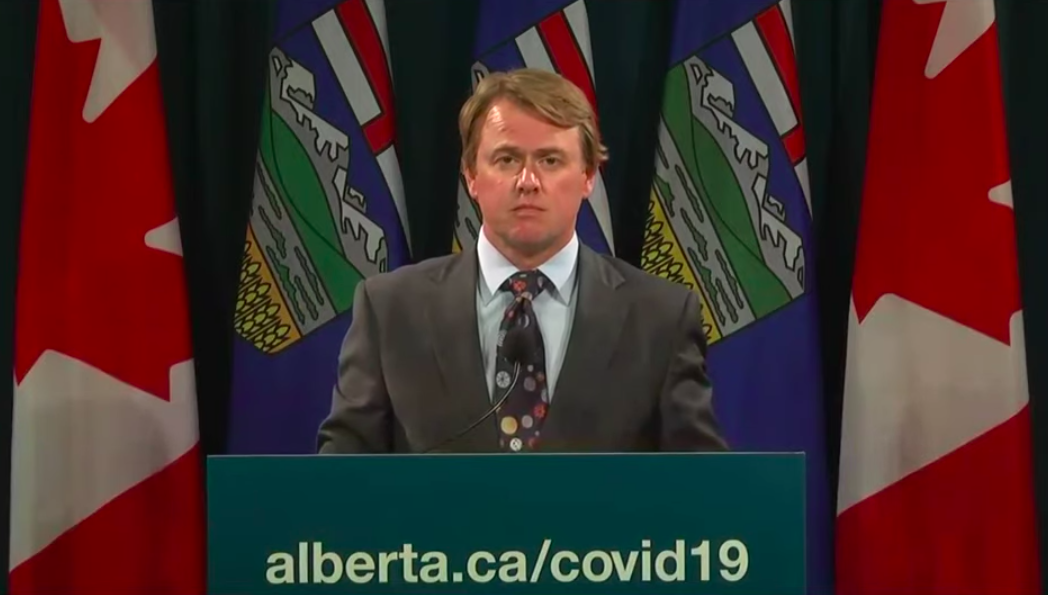
A strike by workers at one of the province’s largest meat packing plants could be the first big challenge faced by Horner and newly appointed Labour Minister Tyler Shandro, who was shuffled out of the Health Ministry after fumbling the government’s response to the COVID-19 pandemic.
The strike notice issued by UFCW Local 401 notes that the job action could be accompanied by a variety of other actions, including asking Albertans to boycott the beef industry until Cargill workers are treated fairly, as well as picketing and leafleting in front of other workplaces that sell Cargill products, like McDonald’s drive-thrus.
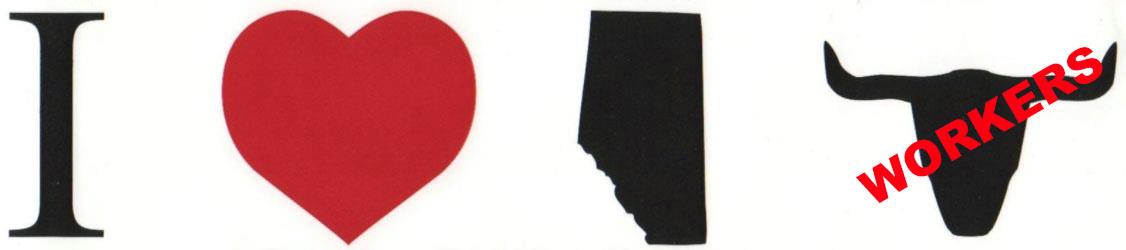
An updated version of the well-known Alberta campaign.
The meat packing plants in southern Alberta were the sites of some great injustices during the COVID-19 pandemic and those workers – the people who slaughter the beef Albertans claim to love so much – deserve to have their demands for improved safety and workplace conditions not only met, but exceeded.
Doug Horner as he announced his campaign for the Progressive Conservative Party leadership in 2011 (source: Dave Cournoyer)
Former cabinet minister Doug Horner is planning to run in Alberta’s Senate Nominee elections happening on October 18, 2021. The former Deputy Premier and Finance Minister quietly announced on his LinkedIn page that he is collecting signatures to make his candidacy official.
“I have also thought long and hard about the idea of running as a candidate with the endorsement of a political party,” Horner wrote on LinkedIn. “I believe that the Senate should have a strong degree of independence as well as representing Albertans and not parties, as such I will be going as an independent.”
“In my view the Senate can serve a very important purpose to review, advise, and give input to the Federal Government on legislative initiatives from the perspective of their experience and representation of their regions,” wrote Horner.
Horner was first elected as a Progressive Conservative MLA after unseating two-term Liberal MLA Colleen Soetaert in Spruce Grove-Sturgeon-St. Albert in 2001. He was re-elected in 2004 after facing a spirited challenge from Liberal Ray Boudreau and re-elected by large margins in 2008 and in 2012 in the redistributed Spruce Grove-St. Albert district.
Between 2004 and 2014 he served as Minister of Agriculture and Rural Development, Minister of Advanced Education and Technology, Deputy Premier and Minister of Finance.
He placed third in the 2011 PC Party leadership, with most of his votes shifting to help Alison Redford defeat frontrunner Gary Mar on the the third ballot. He resigned as an MLA in January 2015 after he was dropped from cabinet by Jim Prentice.
Horner is the scion of a genuine Western Canadian political family dynasty. He is the son of former Deputy Premier Hugh Horner, nephew of former MPs Jack Horner, Albert Horner and Norval Horner, and grandson of Saskatchewan Senator Ralph Horner. Drumheller-Stettler United Conservative Party MLA Nate Horner is his first cousin once removed.
The Conservative Party of Canada has already announced its endorsement of lobbyist and former United Conservative Party president Erika Barootes, UCP activist Pamela Davidson, and Canadian Ukrainian Free Trade Agreement Association president Mykhailo Martyniouk in the Senate Nominee elections. While he has not yet formally endorsed Barootes, Premier Jason Kenney was spotted at a Calgary Stampede event wearing one of her campaign buttons.
Also running are Progress Alberta executive Director Duncan Kinney, emergency medicine doctor Sunil Sookram, retired lawyer Randy Hogle, former Western Barley Growers Association president Jeff Nielsen, and Chad Jett Thunders Sauders.
Former NDP MLA running for Mayor
Annie McKitrick
Former NDP MLA Annie McKitrick is running for mayor of Strathcona County. McKitrick served as MLA for Sherwood Park from 2015 to 2019.
“I am deeply committed to inclusion and planning for the future through more sustainable social, economic and environmental outcomes,” McKitrick wrote in a post on Facebook.
“As our community, Alberta, Canada and the rest of the world adjusts to what is often called the “new normal” we need a Mayor with the experience and knowledge to provide leadership in collaboration with other elected officials and with resident input.”
McKitrick will be challenging incumbent mayor and past Liberal candidate Rod Frank and former Strathcona-Sherwood Park PC MLA and past Alberta Party candidate Dave Quest.
UCP MLA Recall law is MIA
It has been 88 days since Bill 52: Recall Act received Royal Assent but it still hasn’t been proclaimed into law by the Kenney government. When proclaimed, the law would allow Albertans to collect signatures to hold a vote to recall their MLA from the Legislature and trigger a by-election to replace them.
Political scientist Duane Bratt recently speculated on Twitter that “One theory is that there is a red zone of six months before an election, so it will be proclaimed in another year. This will prevent recalls until 18 months after 2023 election.”
I am sure the UCP’s poor standing in the polls and Kenney’s plummeting approval ratings have nothing to do with this law not yet being enacted.
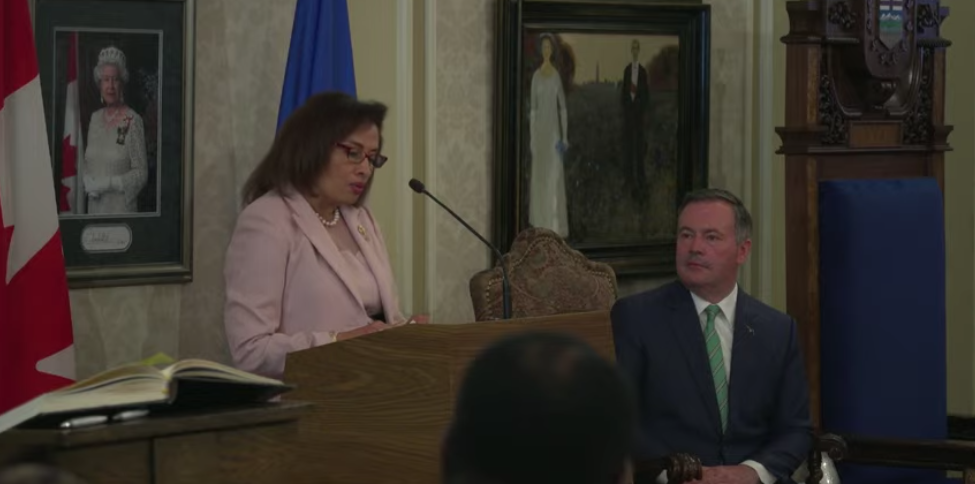
Lieutenant Governor Salma Lakhani and Premier Jason Kenney
It isn’t really a saying in Alberta politics but maybe it should be: When a Premier is in trouble, the cabinet gets growing.
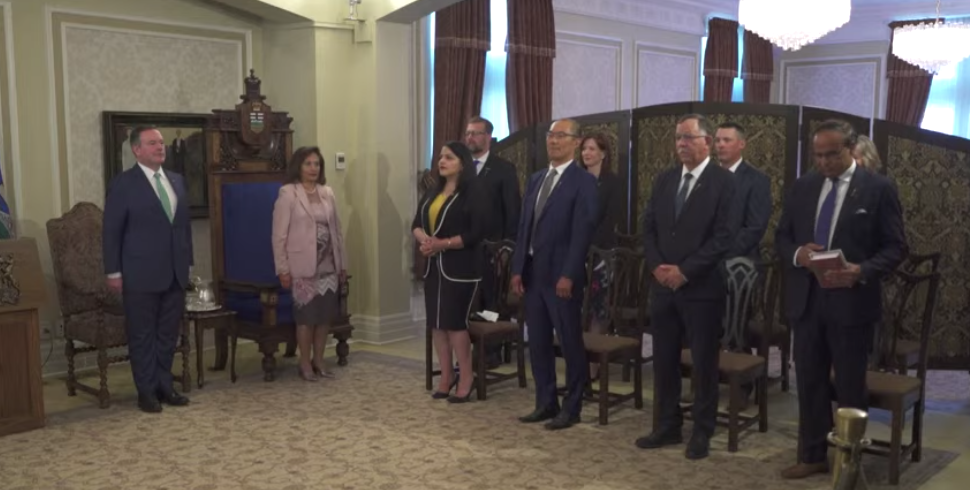
That’s what we saw today as embattled Premier Jason Kenney made a major expansion of the provincial cabinet.
It is being described as a post-pandemic reset but today’s cabinet shuffle and expansion probably has more to do with internal turmoil in the UCP Caucus than any actual reset in the government’s agenda. Problem-creating ministers like Health Minister Tyler Shandro, Education Minister Adriana LaGrange and Environment & Parks Minister Jason Nixon remain firmly in place.
Kenney, who eagerly declared the COVID-19 pandemic over in Alberta on July 1, has seen his approval ratings and his party’s popularity plummet as it mismanaged its response to the pandemic and pushed forward with an unpopular political agenda that included opening the Rocky Mountains to open-pit coal mining, a backward draft curriculum for kids, and aggressive attacks against doctors and nurses.
Kenney’s unpopularity now appears to be spilling over into the federal scene and dragging down the federal Conservative Party’s support in Alberta, which a string of polls show at a historic low.
Kenney is so unpopular that Prime Minister Justin Trudeau was able to openly mock him at a press conference in Calgary yesterday and there was no public backlash in defence of the provincial Conservative leader.
Facing dissent from inside and outside his caucus and party, Kenney has taken the predictable route of previous Alberta premiers who were in political trouble and expanded his cabinet. Appointments to cabinet posts come with the prestige of a ministerial title, office and staff, a hefty pay hike and are seen as a way to reward a premier’s supporters – and punish dissenters.
The past twenty years of turmoil in conservative politics in Alberta has given us a few clear examples of how cabinets grow when premier’s find themselves in political trouble.
Premier Ralph Klein’s cabinet grew from a slim 17 in 1992 to an expanded 24 by the time he resigned in 2006 after his party’s membership gave him a weak 55.4 per cent endorsement in a leadership review.
Klein’s successor, Premier Ed Stelmach, started with a cabinet of 19 ministers in 2006 only to expand it to 23 by the time he resigned in the face of a caucus revolt in 2011.
But perhaps most famously, Premier Alison Redford’s cabinet grew from 21 in 2011 to 29, including 10 associate ministers, in 2013, representing almost half of the Progressive Conservative Caucus. There was a running joke at the time that if a PC MLA wasn’t in cabinet they must have done something really wrong.
Yesterday Kenney’s cabinet had 22 cabinet ministers and associate ministers. Today, Kenney’s cabinet has 26.
I bet it grows again in a few months.
Premier Jason Kenney, Lieutenant Governor Salma Lakhani and the new cohort of cabinet ministers.
Shuffled around …
Jason Luan, MLA Calgary-Foothills, is moved from Associate Minister of Additions and Mental Health to become Minister of Community and Social Services. Luan served as MLA for Calgary-Hawkwood from 2012 until his defeat in the 2015 election to NDP candidate Michael Connolly. Luan returned to the Legislature in 2019.
Ric McIver, MLA Calgary-Hays, keeps his role as Minister of Municipal Affairs but loses his dual role of Minister of Transportation. McIver took over Municipal Affairs when former minister Tracy Allard was removed from cabinet following her COVID rule breaking hot holiday to Hawaii in December 2020. McIver was first elected as a PC MLA in 2012 and previously served as an alderman on Calgary City Council from 2001 to 2010.
Rajan Sawhney, MLA Calgary-North East, leaves her current role as Minister of Community and Social Services to become Minister of Transportation. Sawhney is seen by many political insiders as an up and comer in the UCP cabinet.
Muhammad Yaseen, MLA Calgary-North, leaves his role as Parliamentary Secretary for Immigration to become the Associate Minister of Immigration and Multiculturalism reporting to Minister of Labour and Immigration Jason Copping. Yasseen is a former president of the Pakistan Canada Association of Calgary and was first elected as an MLA in 2019.
New in cabinet…
Mike Ellis, MLA Calgary-West, leaves his role as UCP Caucus Whip to become Associate Minister of Mental Health and Addictions. Ellis was first elected in a 2014 by-election and was only one of a handful of PC MLAs re-elected in 2015.
Nate Horner, MLA Drumheller-Stettler, becomes Associate Minister of Rural Economic Development reporting to Minister of Jobs, Economy and Innovation Doug Schweitzer. Horner is the grandson of former Member of Parliament Jack Horner and the cousin of former deputy premier Doug Horner.
Whitney Issik, MLA for Calgary-Glenmore, becomes the Associate Minister of Status of Women reporting to newly appointed Minister of Culture and Status of Women Ron Orr. Issik will also serve as UCP Whip. She was first elected in 2019 and was a longtime PC Party volunteer, serving as campaign manager for Jim Prentice during his brief run for the federal PC Party nomination in Calgary-Southwest in 2002, as a constituency assistant to former Calgary-Mountain View MLA Mark Hlady, and as policy co-chair of the federal PC Party during the 2000 federal election.
Ron Orr, MLA Lacombe-Ponoka, becomes Minister of Culture. Orr once declared that legalizing cannabis would spark a communist revolution and he wrote on Facebook in May 2021 that Kenney was raised by God to be leader of Alberta and public health restrictions are just as bad as getting COVID. Before his election as a Wildrose MLA in 2015 he worked as a Baptist Minister in Alberta and British Columbia.
Back in cabinet is Tanya Fir, MLA Calgary-Peigan, as Associate Minister of Red Tape Reduction. Fir was surprisingly dropped from her role as Minister of Economic Development, Trade and Tourism in August 2020. Fir was one of the UCP MLAs caught travelling on a hot holiday in December 2020, breaking the government’s public health restrictions.
Out of cabinet…
Leela Aheer, MLA Chestermere-Strathmore and UCP Deputy Leader, has lost her cabinet role as Minister of Culture and Status of Women. Her departure from cabinet is probably retribution for her publicly calling on Kenney to apologize after he and other senior cabinet ministers were caught breaking the government’s COVID-19 restrictions by holding a boozy dinner party on the balcony of the Sky Palace. Aheer also criticized Kenney for his tone-deaf defence of Sir John A Macdonald following the discovery of unmarked graves of children at former Indian Residential School sites.
Grant Hunter, MLA Taber-Warner, loses his position as Associate Minister of Red Tape Reduction. Hunter is currently on a province-wide ministerial tour of northeast Alberta with Justice Minister Kaycee Madu and Infrastructure Minister Prasad Panda. Hunter was the only cabinet minister from south of Calgary.
Other non-cabinet changes today included:
Joseph Schow, MLA Cardston-Siksika, the current the deputy government whip becomes deputy government house leader. Brad Rutherford, MLA Leduc-Beaumont, becomes deputy government whip.
After 6 months without a permanent Chief of Staff, Premier Kenney has named his Deputy Chief of Staff Pam Livingston to the role. Livingston started working in the Premier’s Office in January 2021 after the resignation of Jamie Huckabay, who was caught in the international holiday scandal.
Interim Chief of Staff Larry Kaumeyer returns to his previous role as Principal Secretary in the Premier’s Office.
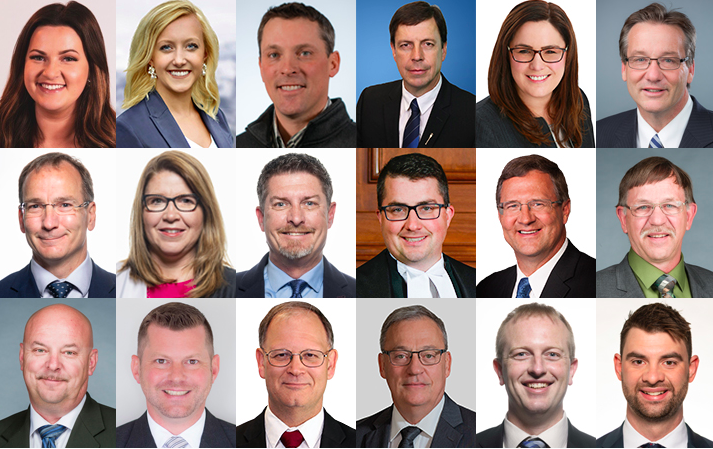
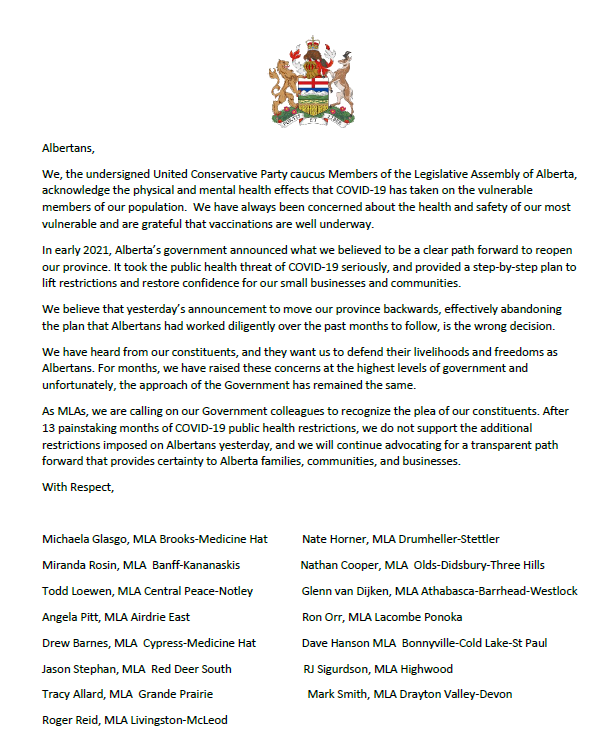
New cases of COVID-19 are on the rise and the third wave of the global pandemic is hitting Alberta, but that did not deter a group of nearly 20 United Conservative Party MLAs from publicly speaking out against the provincial government’s implementation of mild public health restrictions in response.
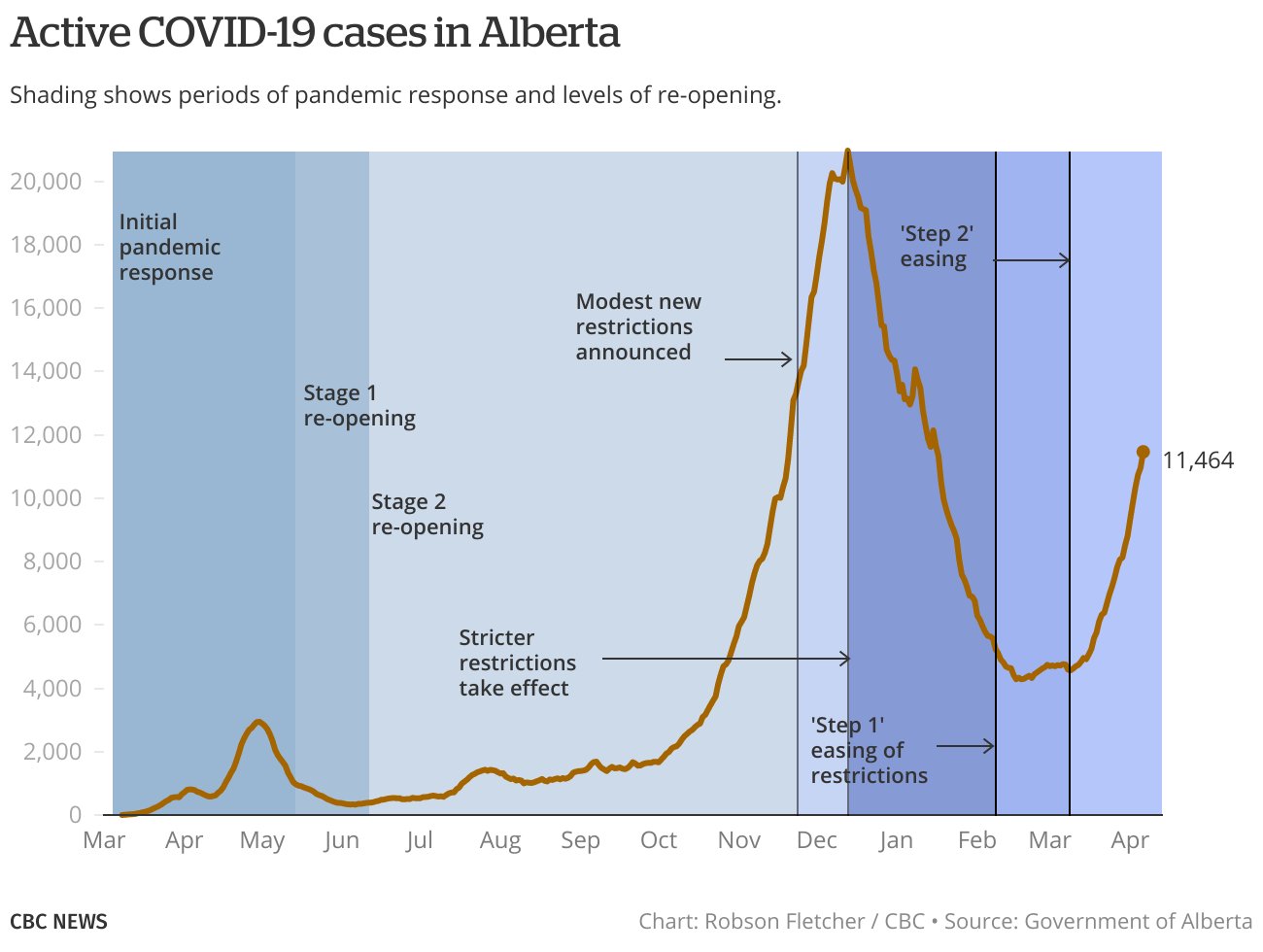
Like the virus, the group of COVID critics inside the UCP Caucus has grown exponentially from the original six-pack of MLAs who publicly spoke out against public health measures at the beginning of March. The public letter signed by 15 UCP MLAs criticized Premier Jason Kenney for moving back to Step 1 of the province’s mild public health measures in response to the spike in new cases, which is largely a result of a vicious new variant of the deadly virus.
The letter signed by the 15 MLAs was soon after endorsed by Vermilion-Lloydminster-Wainwright MLA Garth Rowswell and West Yellowhead MLA Martin Long, who also serves as the parliamentary secretary for small business. Also signalling support for the letter’s intentions was Calgary Member of Parliament Michelle Rempel-Garner, who serves as the Official Opposition Health Critic in Ottawa.
Peace River MLA Dan Williams, a long-time Kenney acolyte from Ottawa, did not endorse the letter but posted a video on social media criticizing the decision by Alberta Health Services to close down the rebel GraceLife Church, which had been holding in-person services in defiance of the government’s public health orders. He was joined in this call by Ontario MP Derek Sloan, who was kicked out of the federal Conservative caucus for his extreme social conservative views.
Active COVID-19 cases in Alberta (chart from @CBCFletch on Twitter)
That the leaders of the UCP caucus mutiny appear to largely be from the former Wildrose caucus, or Wildrose-wing of the party, is not surprising. The former opposition party was notoriously raucous and unwilling to bow to the kind of centralized party leadership that Kenney would have become accustomed to during his many years in Ottawa.
It was also clear during Kenney’s press conference on Tuesday that he expected a negative reaction from his caucus. A significant portion of Kenney’s lecture was dedicated to managing MLAs expectations and acknowledging the differences of opinion in his caucus. Difference of opinion is one thing, but this is something entirely different.
The public health restrictions that Alberta fell back to earlier this week are nothing close to what restrictions have looked like in jurisdictions that have actually implemented lockdowns. Alberta schools are still open for in-person classes, and Albertans can still gather with up to 10 people outside, go shopping for non-essential items, get a haircut or a massage, dine or have drinks on a restaurant patio, and exercise at a gym with a personal trainer.
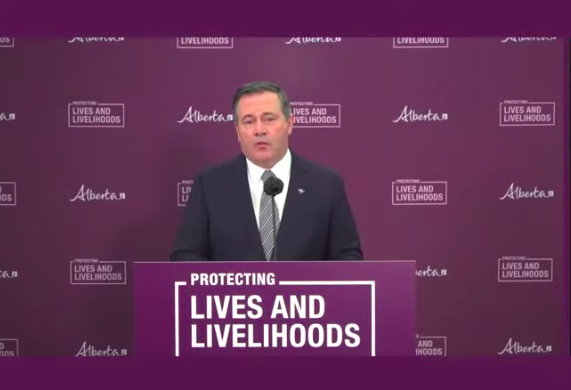
Premier Jason Kenney on April 6, 2021.
There is no doubt a lot of Albertans are frustrated about how the provincial government has handled the COVID-19 pandemic, and the Kenney government has not helped itself by releasing a string of confusing and inconsistent public health measures and messaging to Albertans about the government’s response.
While public opinion polling suggests many Albertans would like the government to impose stronger measures to stop the spread of the deadly virus, there is a loud minority who want to see the current restrictions lifted.
It is yet to be seen whether the revolt will extend beyond this strongly worded letter, but there is little doubt these MLAs are actively undermining the work being done by public health professionals and health care workers on the frontlines of the COVID-19 pandemic.
The caucus revolt is probably a reflection of deepening regional and partisan divides in Alberta, with most of the COVID Caucus MLAs representing largely rural and small town districts. It is notable that no UCP MLAs from Calgary, so far the hardest hit in the third wave, have publicly joined the revolt.
It also suggests that the United Conservative Party is not as united as its leader would like Albertans to believe.
Kenney’s personal approval ratings and support for his government’s handling of the COVID-19 pandemic plummeted over the past 13 months, and his party has floundered in the polls, finishing behind Rachel Notley’s NDP in a handful of recent voter opinion polls. The rise of the separatist Wildrose Independence Party in rural Alberta has some backbench UCP MLAs nervously looking over their right shoulders.
In some ways, the revolt probably serves as a welcome distraction to some in the UCP from the never ending string of scandals and policy failures, most recently the failure to stop the Carbon Tax at the Supreme Court, the loss of $1.5 billion of public money when the Keystone XL Pipeline was cancelled, the failure to sign a new contract with Alberta doctors, the retreat on open-pit coal mining, and the open rebellion by parents against the draft K-6 curriculum.
Under normal circumstances it would be hard to believe that this kind of caucus revolt would happen on a day when more than 1,300 new cases of COVID were reported and doctors are calling for a circuit breaker response, but in today’s world of Alberta politics, it would be harder to believe this would happen if the UCP were not floundering so deeply in the polls.
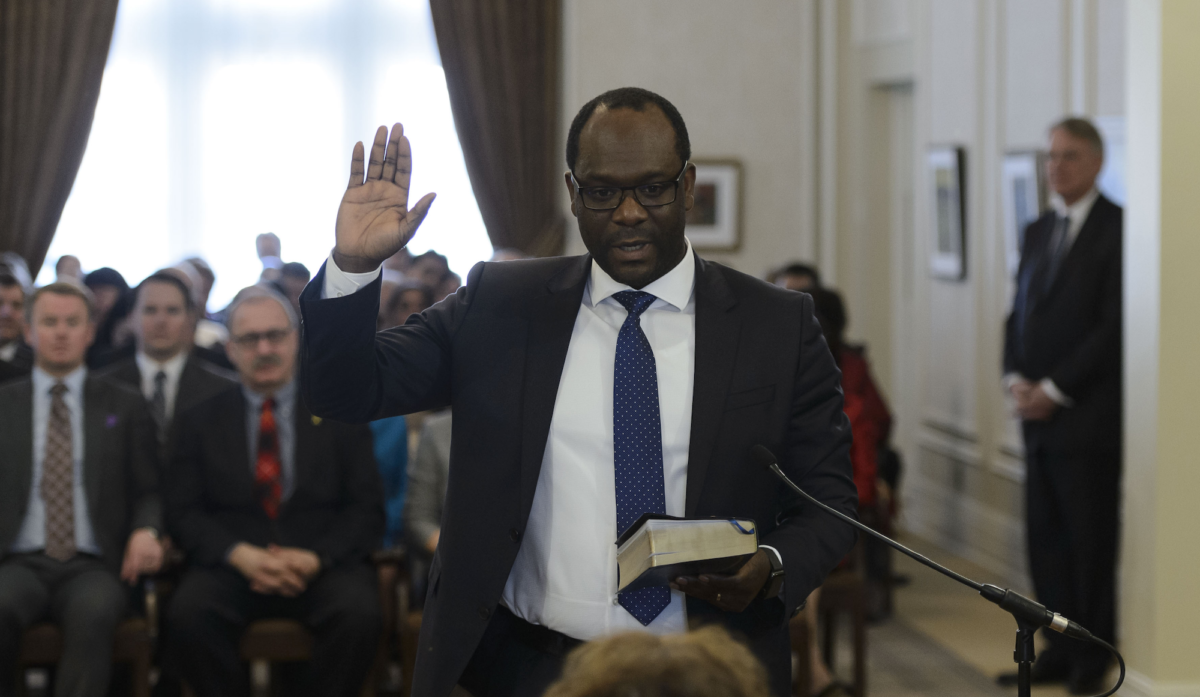
Kaycee Madu is sworn-in as Alberta's Minister of Municipal Affairs (source: Flickr)
Edmonton’s lone United Conservative Party MLA got a big promotion today in a mini-cabinet shuffle. After a year as Minister of Municipal Affairs, Edmonton-South West MLA Kaycee Madu has been appointed as Solicitor General and Minister of Justice.
Madu replaces Doug Schweitzer, who is the new Minister of Jobs, Economy and Innovation, a rebranded Economic Development, Trade and Tourism department. Current EDTT Minister Tanya Fir moves to the backbenches and Grande Prairie MLA Tracy Allard is the new Municipal Affairs Minister.
Tracy Allard (source: Facebook)
The mini-cabinet shuffle, the first since the UCP formed government in April 2019, is a minor readjustment and not nearly what many had expected, with controversial Health Minister Tyler Shandro and Education Minister Adriana LaGrange retaining their cabinet posts.
It was the uproar in rural Alberta that most likely lead to Madu being shuffled. Dozens of rural municipalities have spoken out against the government exemptions for municipal oil and gas taxes.
Rural governments that were already having a difficult time collecting taxes from oil and gas companies said the new changes imposed by the UCP government force them to hike property and business taxes in their counties. And rural MLAs, who make up the majority of the UCP caucus, have been receiving an earful from normally supportive local leaders over the tax changes.
Doug Schweitzer
Madu may have spent a year burning bridges with municipalities but he is the only UCP from inside Edmonton city limits and a loyal party soldier, a geographic fact and trait that has now earned him a senior cabinet role. Control of the UCP cabinet and caucus is so firmly held by Premier Jason Kenney and his inner circle of political staff that unflinching loyalty is the key to promotion.
Madu is now expected to oversee changes to the Police Act, and provincial election finance laws proposed by the Select Special Democratic Accountability Committee. He will also oversee the implementation of MLA recall legislation and the Fair Deal report recommendations, the government’s never-ending fight against the federal government over the carbon tax, and the expected referendum on equalization in October 2021.
The public inquiry, which has been conducted in complete privacy, is over-budget and behind schedule and has had its mandate changed twice since it was formed, suggesting that the one-man commission is having troubling completing its goal of rooting out the alleged global conspiracy against Alberta.
Tanya Fir
Schweitzer’s move signals that the UCP is desperate to recover the “jobs and economy” part of their election slogan that has been sideswiped by the collapse in the international price of oil and economic shutdown in response to COVID-19 pandemic. Schweitzer will be responsible for the new Invest Alberta crown corporation.
Tracy Allard: The first-term MLA from Grande Prairie and owner of Tim Hortons restaurant franchises in Prince Rupert, British Columbia, and in Grande Prairie is now the ninth Minister of Municipal Affairs since 2010. Her first order of business will likely be trying to repair some of the many relationships damaged by Madu during his short tenure, and, as Kenney announced in today’s press conference, oversee the creation of a spending report card for municipal governments in Alberta.
Tanya Fir: It is unclear what led to Fir’s demotion to the backbenches. The first-term UCP MLA from Calgary-Peigan appeared to be well-spoken and had not caused much public drama for the government. Fir appears to have avoided controversy but her election campaign manager, long-time conservative activist Craig Chanlder, has never shied from controversy and was recently a featured speaker at a separatist rally.
Who was left out: Not making it into cabinet in this mini-shuffle are a number of UCP MLAs who are rumoured to be cabinet contenders: UCP Caucus chairperson Todd Loewen, Fort McMurray-Wood Buffalo MLA Tany Yao, Calgary-West MLA Mike Ellis, Drumheller-Stettler MLA Nate Horner, and Brooks-Medicine Hat MLA Michaela Glasgo.
Also missing from the shuffle is former UCP finance critic Drew Barnes, now the third-term MLA for Cypress-Medicine Hat, who was left out of cabinet when the party formed government last year. Barnes recently made comments in support of separation if Alberta fails to get Ottawa’s attention regarding issues brought forward from the Fair Deal Panel.
Kaycee Madu is sworn-in as Alberta's Minister of Municipal Affairs (source: Flickr)
Albertans could soon be given more opportunities to cast their ballots but with much less transparency about and accountability for who is spending money to influence their votes.
The United Conservative Party government continued to unwrap its electoral reform package this week with the introduction of:
Bill 26: Constitutional Referendum Amendment Act: introduced by Justice Minister Doug Schweitzer, the bill amends the Constitutional Referendum Act law to allow for province-wide referendums to be held on non-constitutional issues
These bills are part of a series of election bills that are expected to also include future bills allowing for the recall of MLAs, municipal politicians and school trustees, citizen initiated referendums, and major changes to provincial election laws.
Doug Schweitzer
The three bills introduced this week provide more opportunities for Albertans to vote for candidates and on issues, but they also claw back important transparency and accountability rules implemented by the previous New Democratic Party government less than two years ago.
It has almost been 50 years since the last time a province-wide plebiscite was initiated by the Alberta government. Bill 26 would allow the provincial government to hold referendums on non-constitutional issues, like creating an Alberta Pension Plan or deciding if we should remain on Daylight Saving Time. Providing an opportunity for Albertans to cast ballots on important issues can be a powerful tool to engage voters, but the timing and wording of such votes can also be intentionally manipulative.
The bill allows third-party groups, colloquially known as political action committees, to spend up to $500,000 on advertising up from the current $150,000 limit. Third-party groups that spend less than $350,000 on advertising during a referendum would not be required to file financial statements with Elections Alberta.
Schweitzer did not hold a press conference to announce the bill, so it is unclear why he chose to include such a massive gap in transparency.
Changes to municipal election laws included in Bill 29 are being framed by Madu as helping “level the playing field” for new candidates running for municipal councils and school boards by not allowing incumbents to carry over campaign war chests between elections and increasing the amount candidates can spend ahead of the election period from $2,000 to $5,000.
Bill 29 raises the election period donation limit from $4,000 back up to $5,000 and allows candidates to self-finance their campaign up to $10,000, reversing a number of changes made by the NDP government in 2018 that have not had a chance to be tested in a municipal election campaign.
Madu’s bill would also make it legal for wealthy individuals to donate up to $5,000 each to as many candidates as they want in any municipal or school board election across the province, effectively removing the cap on individual donations.
Eliminating the ability of incumbents to store campaign surpluses in war chests for future elections might lower the amount of cash on hand at the beginning of an election campaign. But in Edmonton at least, only two city councillors – Sarah Hamilton and Ben Henderson – reported having surpluses of more than $10,000 at the end of the 2017 election, suggesting that war chests are not necessarily a significant issues in the capital city.
Raising the donation limit could strengthen the advantage of incumbents with name recognition and developed political networks running against challengers who may be seeking political office for the first time.
The advantage of name recognition that helps incumbents get re-elected in large numbers at the municipal level is a feature that predates any of the changes to municipal election finance laws introduced by the previous NDP and Progressive Conservative governments over the past decade. The incumbent advantage even existed when there were no donation limits.
Bill 29 removes the requirement that candidates disclose their donors ahead of election day, which allows voters to see who is financially supporting candidates before they head to the ballot box.
The bill also removes spending limits for third-party groups before the start of the election period, allowing groups like Calgary’s infamous Sprawl Cabal of land developers free reign to spend unlimited amounts of money on advertising before May 1, 2021.
Madu’s Bill 29 introduces big money back into municipal elections under the guise of fairness and without creating any of the structural changes required to design a real competitive electoral environment at the municipal level.
Bill 29 also removes all references to the Election Commissioner, a housekeeping item necessitated by the controversial firing of the Commissioner by the UCP government in November 2019. In its place, the bill creates a Registrar of Third Parties, though it is unclear if the person holding this title would have the legal investigative authority of the now defunct Election Commissioner.
In past elections many municipalities simply did not have the resources available to enforce municipal election finance rules, so in some cases complaints were simply left uninvestigated.
Some of these changes were expected and were included in the UCP’s 2019 election platform, others were necessitated by inconsistencies in the changes made by the NDP in 2018, and some have come completely out of left-field.
Alberta’s election laws should be dynamic and designed to encourage and facilitate participation by voters and candidates, not to hide the identities of those who would spend money influencing election campaigns.
Overall, these bills could probably be summed up as one step forward for democracy and two steps back for transparency and accountability.
Changes coming to provincial election laws
Joseph Schow
These changes are likely a taste of what is to come from the recently appointed Select Special Democratic Accountability Committee. Chaired by Cardston-Siksika UCP MLA Joseph Schow, the committee will review Alberta’s Election Act and the Election Finances and Contributions Disclosure Act within the next six months and has be tasked with answering a series of questions submitted by Schweitzer within four months.
Along with Schow, the committee membership includes Drumheller-Stettler MLA Nate Horner, Grande Prairie MLA Tracy Allard, Calgary-Buffalo MLA Joe Ceci, Edmonton-South MLA Thomas Dang, Fort McMurray-Lac La Biche MLA Laila Goodridge, Calgary-Klein MLA Jeremy Nixon, Edmonton-Whitemud MLA Rakhi Pancholi, Highwood MLA R.J. Sigurdson, Drayton Valley-Devon MLA Mark Smith and Edmonton-Manning MLA Heather Sweet.