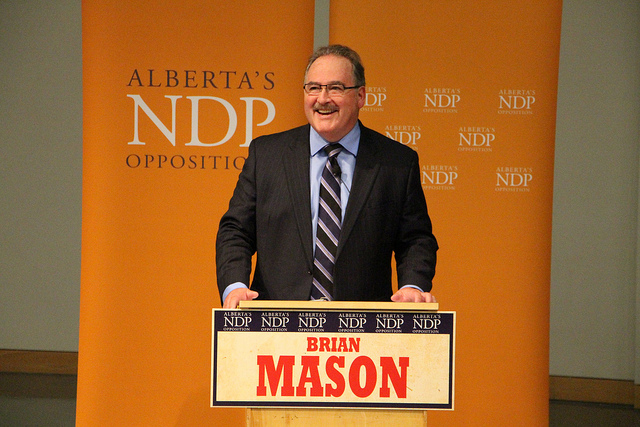
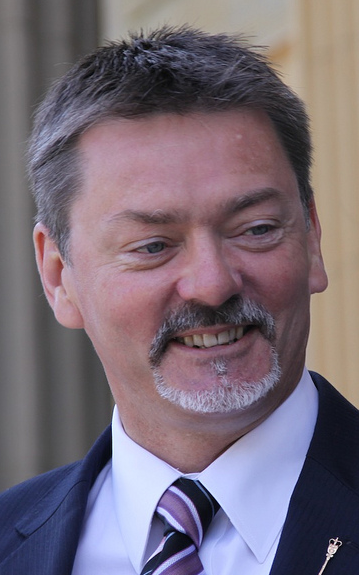
Alberta NDP leader Brian Mason announced this week that he will be retiring as leader of his party in October 2014.
Back in the mid-2000s, when I worked for the Alberta Liberals, Alberta NDP leader Brian Mason was a constant source of frustration for my colleagues and I. Each week, I was amazed at how the leader of the tiny perfect NDP could consistently earn so much press and scoop away the media attention deserved by of my party’s Official Opposition MLAs (of course, there were a few other contributing factors at play).
At the time, I had a professional respect for Mr. Mason and, since stepping back from the world of partisan politics and having engaged with him in more informal settings, I now have a personal respect for him (he is also my MLA).
Scrappy and strong willed, Mr. Mason has always punched above his weight with ease, putting even the most confident Progressive Conservative cabinet ministers on edge.
Ten years ago, the NDP had two MLAs in Alberta, no sign of life outside of central Edmonton and a dozen Members of Parliament in Ottawa (none from Alberta).
Today, the NDP is now the Official Opposition in Ottawa (with one MP from Alberta), are back up to four MLAs in Alberta, their vote has grown in Edmonton and they now have a beachhead of support in Lethbridge.
While the NDP is a long way from being a competitive alternative to the two Conservative parties in this province, the next two years present the new NDP leader with a unique opportunity to speak with voters searching for an alternative (I will write more on this later).
While it would be unfair to solely credit Mr. Mason for the change over the past decade, in many ways, he will leave the Alberta NDP in a better shape than it was the day he started the job.
At 3:00 p.m. on the same day, AUPE President Guy Smith took to the podium at a press conference to announce that, after a long and tumultuous process, his union had reached a tentative agreement with the provincial government for a new contract (here are the details of the tentative agreement).
Contrasting the current and previous premier, Mr. Smith praised Premier Dave Hancock for working with him to find a resolution to the acrimonious round of negotiations. In the same breath which Mr. Smith heaped glowing praise on Mr. Hancock, he delivered a harsh shot at Labour minister Thomas Lukaszuk, who he said played no role in achieving this resolution.
“We are prepared to rebuild the relationship with the government that is needed to ensure that Albertans get the quality services they deserve,” Mr. Smith said in AUPE’s press release.
By reaching a tentative agreement and abandoning the fight to salvage an unpopular law (which was likely unconstitutional), the governing Progressive Conservatives hope to avoid a nasty and very public battle with AUPE over bargaining that could have been drawn out over the course their leadership race. They may also hope this agreement could derail AUPE’s informal alliance with Danielle Smith‘s Wildrose opposition, which threatened to dog the Tories into the next election.
It is perhaps not surprising that Mr. Hancock, whose dedication to his party in unquestioned, would wish to put this issue to rest before the next PC leader leader, possibly Jim Prenticeor Ken Hughes, is chosen at that party’s September leadership vote.
At least for the moment, Albertans can have hope that the current premier may take a more mature approach to labour relations than we saw under the province’s previous leadership.
Settling the negotiations with the province’s largest union was a sensible decision and the beginning of a detente at best. But if the Tories hope this announcement is a first step in creating an entente cordiale with Alberta’s labour movement and progressive voters, there is still a long way to go (backing down on the attack on public sector pensions would be another meaningful next step they could take).
Necessitated by the resignation of Premier Alison Redfordon March 19, the race to choose the next leader of Alberta’s 43-year long governing PC Party has so far drawn little interest from serious candidates and yawns from political watchers.
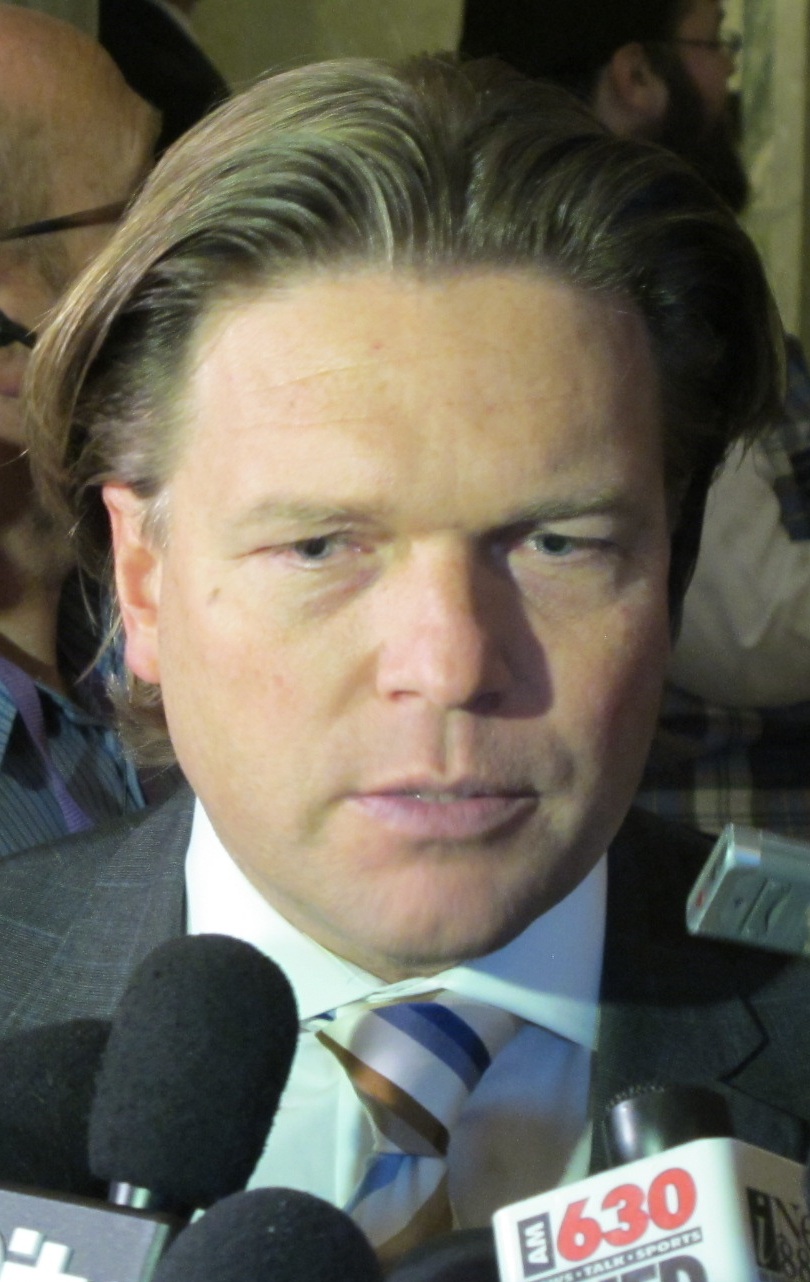
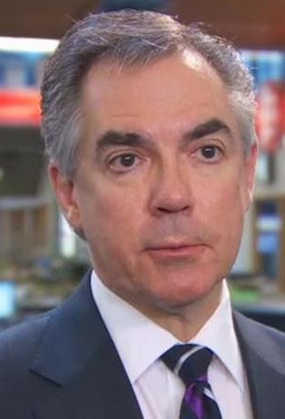
While other would-be contenders, like Labour Minister Thomas Lukaszuk and Justice Minister Jonathan Denis, are kicking-tires and positioning themselves for a run, the popular wisdom of the day suggests that Mr. Prentice would be an unstoppable front-runner. Even the sole candidate to have entered the contest so far, former Municipal Affairs minister Ken Hughes, has publicly suggested he would consider withdrawing his candidacy if Mr. Prentice runs. [see comment section below for clarification]
Some Tories I have spoken with talk about Mr. Prentice as their only hope of stopping Danielle Smith‘s Wildrose Party in the next election. They talk about Mr. Prentice as the only person who can shake off the damaging baggage left after Ms. Redford’s tenure as PC leader. And they talk about the large amount of corporate money they expect he could attract to fill their party’s coffers.
As an outsider, it appears the Tories risk being blinded by star power, as all these hopes and dreams are built on a complete lack of information about what Mr. Prentice would stand for as a party leader and premier.
Sure, Mr. Prentice has built a respectable career as a cabinet minister in Ottawa and as a senior executive of a major Canadian bank, but no one really knows what kind of Premier or Party leader he would be. Does he support Finance minister Doug Horner‘s plans to impose drastic changes on public sector pension plans? How would he approach the province’s choppy relationships with Alberta’s fast-growing cities? Where does he stand on public health care? Education curriculum? Agriculture? Public infrastructure? Climate change?
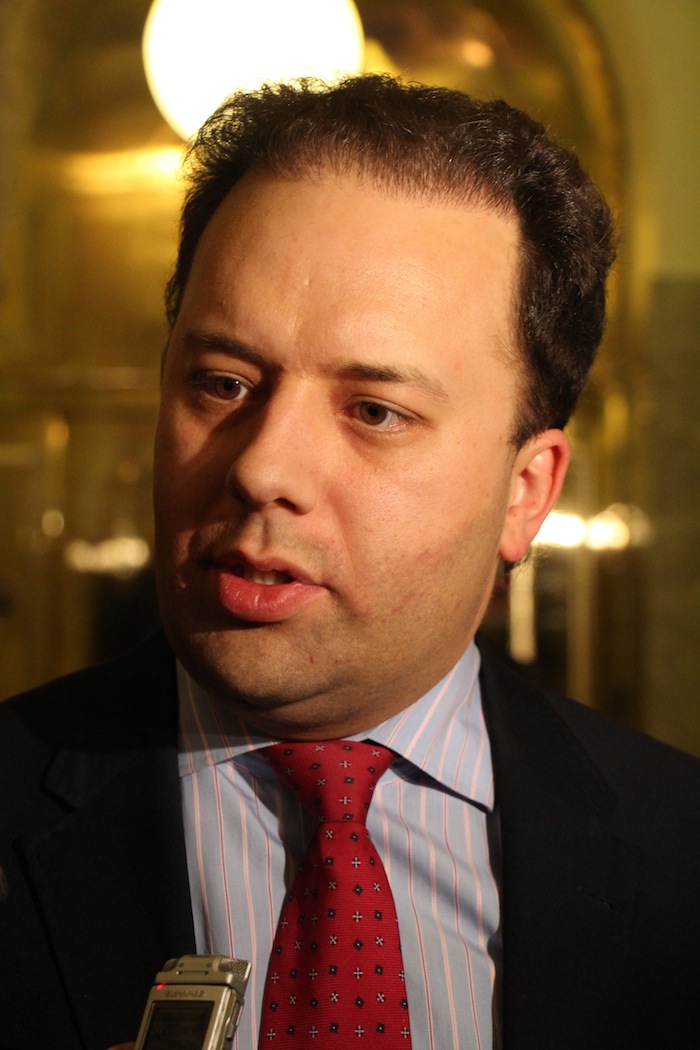
Jonathan Denis
Two years ago, many Albertans looked at Ms. Redford’s resume and assumed that she hailed from the Lougheedian progressive side of the her party. Many of those same Albertans were bitterly disappointed when she forced deep funding cuts on universities and colleges, and attacked the public sector workers whose votes saved her party from defeat on election day in 2012.
A coronation would also present a missed opportunity for the PC Party to reconnect with its supporters and discover who its base of support is in 2014. This would be important because it is not entirely clear what the PC Party stands for today and is very unclear what it will stand for after their new leader is selected in September.
Provincial By-Elections?
With Ms. Redford appearing uninterested in continuing her duties as the MLA for Calgary-Elbow, it is possible that a by-election could be held to provide an opportunity for a new party leader who is not an MLA to earn a seat in the Assembly. This would be the second by-election in that riding in eight years. Liberal Craig Cheffins won the seat in the by-election held to replace retired Premier Ralph Klein in 2007.
Other opportunities for by-elections may open up if the three MLAs seeking federal party nominations – Calgary-McCall MLA Darshan Kang, Calgary-Foothills MLA Len Webber, and Edmonton-McClung MLA David Xiao – decide to resign their seats in advance of the next federal election.
When was the last time we talked about opening a new school in the urban core, rather than closing one down?
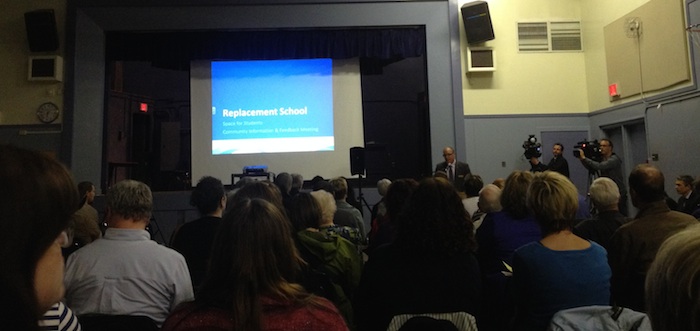
Packed into the gym of the hundred year-old Highlands Junior High School, hundreds of school and community members heard about plans to replace three already existing schools with a brand new Kindergarden to Grade 9 school.
The provincial government has presented the Edmonton Public School Board with a funding opportunity to build a replacement school for a mature community in Edmonton’s urban core.
The school board has identified the Greater Highlands Area, the Greater Lawton Area and the Greater Westmount Area as potential areas for the new school. Only one of these areas will be selected for the first, of what could be many, replacement school.
While there remains a number of unanswered questions about the project and how it will impact the community, I am generally excited about the prospect of a new school being built in the community I call home.
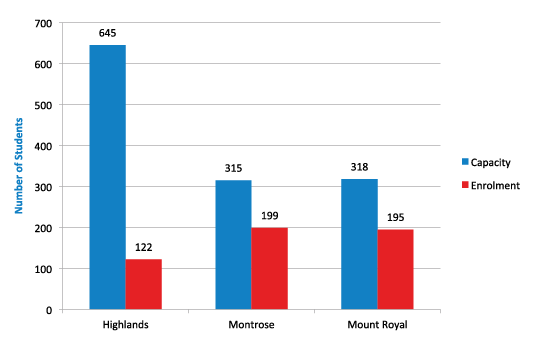
While the currently existing schools – Highlands, Mount Royal and Montrose – are important community hubs, they are also old buildings facing the challenges of low-enrolment and growing maintenance costs.
Capacity and Enrolment: Capacity represents the maximum number of students that can attend the school. Enrolment represents how many students are currently attending the school.
Of course, it is important that a new school be accessible to all members of the Greater Highlands community, including the more ethnically diverse community living north of 118 Avenue in Montrose area. A new school in this area must recognize and be inclusive of our city’s fast-growing urban aboriginal population.
Improvements to schools are an important part of revitalizing mature neighbourhoods, as they will help attract and retain young families who want to live core communities. It’s part of building a smart city.
I look forward to further participating in the consultation process and am grateful that school board has opened up this process to the community.
April 22-24, 2014 – First Public Meetings
May 20-22, 2014 – Second Public Meetings
June 19, 2014 – Final Public Meetings
June 24, 2014 – Site selection for replacement school will be presented to the School Board to Trustees
Update: This website is currently experiencing some technical difficulties with the hosting service that are preventing comments from being posted. I hope to have this resolved by the end of the day. In the meantime, please feel free to leave your comments on the daveberta.ca page on Facebook. Thanks for your patience. – Dave
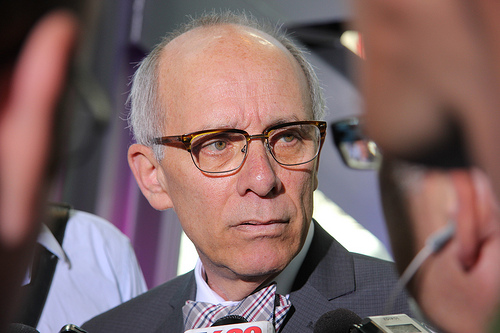
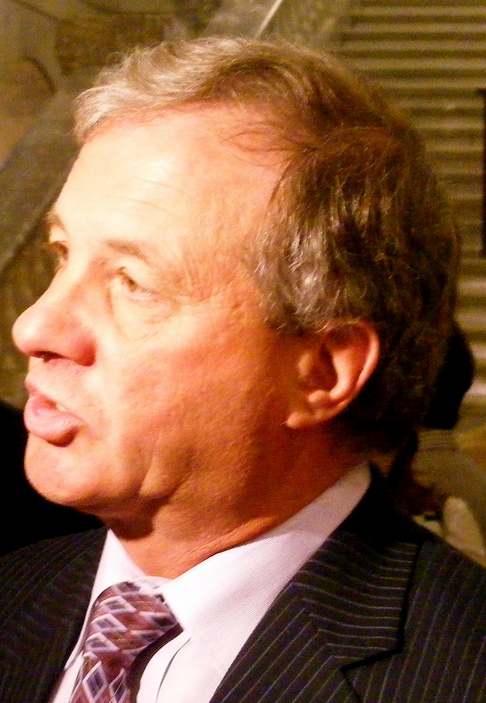
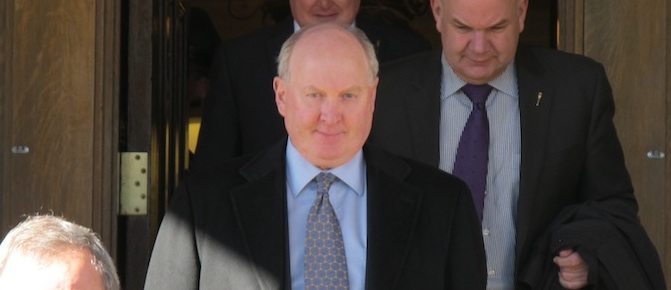
Former Edmonton Mayor Stephen Mandel is not running for the PC Party leadership
Former Edmonton mayor Stephen Mandel announced yesterday that he will not run for the Progressive Conservative Party leadership. Mr. Mandel was seen as a great hope by many Edmonton Tories, who believed him to be the outsider who could breath some fresh air into the stuffy corridors of the Alberta Legislature. Mr. Mandel would have been 70-years old by the time the next election would be called.
Jim Prentice
Former cabinet minister Gary Mar has ruled himself out as a candidate, as has former Finance minister Jim Dinning. Conservative MP James Rajotte is frequently mentioned as a potential leadership candidate, but it seems unlikely. Senator Scott Tannas briefly expressed interest, but has since declined.
With the obvious outsiders sitting out, this leadership race could end up being a contest defined by insiders pretending they are outsiders.
Announcing his bid last week, Municipal Affairs minister Ken Hughes is the first candidate to enter the contest. He launched his campaign by positioning himself as a political outsider, but the evidence suggests otherwise.
The former MP and chairman of Alberta Health Services served on Premier Alison Redford‘s transition team before he jumped back into electoral politics in 2011. Running for the PC nomination in Calgary-West, Mr. Hughes lost and then won a subsequent vote against former MLA Shiraz Shariff. Upon his election, he was immediately appointed Minister of Energy, one of the most coveted positions in cabinet.
Doug Horner
If Finance minister Doug Horner is going to run for the leadership, which may not a certainty, he is expected to wait until after the provincial budget is passed before resigning from cabinet. Mr. Horner’s support for controversial changes to Alberta’s public sector pension plan, which could negatively impact the retirement security of more than 300,000 Albertans, will certainly dog him during the campaign.
Currently scheduled to break on June 5, Premier Dave Hancock suggested this week the spring session of the Assembly might be cut short before May 15. That also happens to be the first day that candidates for the PC Party leadership can pick up their nomination packages and pay $20,000 of the $50,000 entry fee. Nominations close on May 30 and accepted nominees will be announced at a party event on June 2.
Other cabinet ministers rumoured to be preparing a run for the leadership include Labour minister Thomas Lukaszuk, Justice minister Jonathan Denis, Energy minister Diana McQueen, and Infrastructure minister Ric McIver. Of this group, perhaps only Mr. McIver, a first-term MLA and former Calgary alderman, could realistically argue he is an outsider.
——————————————-
Union donations in Alberta
Labour unions traditionally make up a small percentage of donors to Alberta’s political parties, and when they donate, it is typically to one party in particular.
According to financial disclosures from Elections Alberta, the large majority of political donations made by trade unions in the first quarter of 2014 were made to the Progressive Conservatives, with more than $18,000. The province’s social democratic NDP, the traditional party of organized labour, collected slightly more $6,100 in union donations in the same period.
While the epic battle between Rob Anders and Ron Liepert in Calgary-Signal Hill was entertaining to watch, preparation for the next federal election has sparked nomination contests in ridings across the province. And with two by-elections expected to be called within weeks, federal political parties are lining up their candidates for the vote.
By-Election nominations
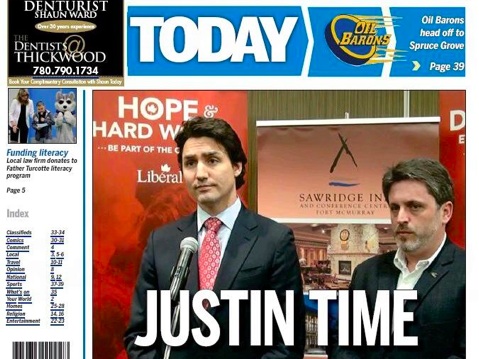
Justin Trudeau and Kyle Harrietha on the front page of Fort McMurray Today.
Fort McMurray-Athabasca
On March 30, Liberal Party members chose Kyle Harrietha as their candidate. Mr. Harrietha faced Chris Flett in the nomination contest.
The Liberals are expected to run a strong campaign in the sprawling northeast Alberta riding. Liberal leader Justin Trudeau recently visited the riding, drawing a crowd of hundreds to a meet-and-greet event in Fort McMurray.
The Conservative Party will hold its nomination votes on April 24 in High Prairie and Slave Lake, April 25 in Athabasca and Lac La Biche, and April 26 in Fort McMurray. The results will be announced following the Fort McMurray vote. Fort McMurray lawyer Arlan Delisle and Athabasca County councillor David Yurdiga are the only two candidates seeking the nomination.
Oilsands worker Lori McDaniel will run for the New Democrats and firefighter Tim Moen is the Libertarian Party candidate.
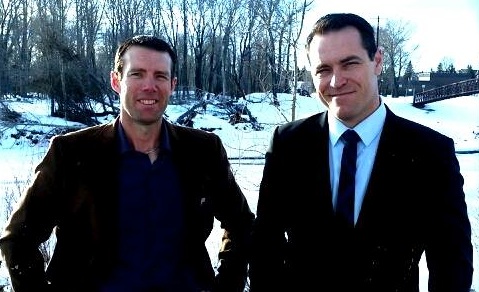
John Barlow and George Canyon
Macleod
On April 6, Dustin Fullerwas nominated as the federal Liberal candidate in the upcoming by-election. Mr. Fuller will face Conservative John Barlow when the by-election is called. There has so far been no sign of any NDP or Green Party candidates.
General Election nominations
Meanwhile, nominations for the general election are also underway. As most of Alberta are largely considered safe territory for the Conservatives, competitive races have emerged in newly redrawn ridings across Alberta. Here are some ridings with recent updates:
Bow River
Country music crooner George Canyon has withdrawn his name from the Conservative nomination contest in southern Alberta’s Bow River. Christian television talk show host Paul Arthur has since announced he will seek the nomination.
Calgary-Nose Hill Michelle Rempel was acclaimed as the Conservative candidate in this newly redrawn north Calgary riding. Ms. Rempel has represented the Calgary-Centre North riding since 2011.
Calgary-Rocky Ridge
Recent defeated in the Calgary-Signal Hill nomination contest, Mr. Anders may seek the Conservative nomination in this neighbouring riding. The Conservative nomination is already being sought by former MP Eric Lowther and party organizer Gord Elliott.
Mr. Lowther represented Calgary-Centre as the Reform Party/Canadian Alliance MP from 1997 until 2000, when he was defeated by former Prime Minister Joe Clark, who had returned to politics to lead the Progressive Conservative Party of Canada.
Edmonton-Mill Woods Edmonton-Sherwood Park MP Tim Uppal has decided to jump across the city to seek the Conservative nomination in the new Edmonton-Mill Woods riding. Mr. Uppal was the Canadian Alliance/Conservative candidate in that area in 2000 and 2004 but was defeated by Mike Lake for the Conservative nomination in 2006.
Varinder Bhullar is seeking the Liberal nomination and Deep Hundal has announced that he plans to run for the NDP nomination.
This is not Mr. Chowdhury’s first attempt at a party nomination. In 2011, he challenged Matt Jeneroux for the Progressive Conservative nomination in the provincial riding of Edmonton-South West and in 2008 he unsuccessfully sought the federal Liberal Party nomination in Edmonton-Strathcona.
Sherwood Park-Fort Saskatchewan Recent municipal election candidate Nicole van Kuppeveld has announced she will seek the Conservative nomination in this new riding east of Edmonton. Ms. van Kuppeveld, the former president of the Sherwood Park provincial PC Party, will face off against Garnett Genuis, the 2012 Wildrose candidate in Sherwood Park.
With a less efficient dollar-to-vote ratio was Ms. Leibovici, who earned 41,182 votes (19% of the total vote) while outspending Mr. Iveson by more than $237,500 and declaring a steep $142,415.27 campaign deficit.
Released last week, the financial disclosures for Edmonton’s 2013 Mayoral and City Council elections detail how much each mayoral and councillor candidate raised and expensed during the campaign. Below is the breakdown for the top three mayoral candidates.
Mayoral candidates Josh Semotiuk and GordonWard self-financed their campaigns and did not declare any donations. Candidate Kristine Acielo did not file a financial disclosure.
Here are the financial breakdowns submitted from elected city council candidates competing in Edmonton’s 12 wards.
Edmonton City Council Election 2013, Financial Disclosure
Candidate
Total Revenue
Total Expenses
Surplus/(Deficit)
Andrew Knack
$43,143.06
$43,143.06
$0
Bev Esslinger
$34,044.28
$33,220.88
$823.40
Dave Loken
$97,054.50
$96,906.55
$147.95
Ed Gibbons
$93,461.44
$93,254.44
$207.00
Michael Oshry
$82,587.85
$82,929.85
$295.00
Scott McKeen
$105,862.81
$103,585.54
$2,277.27
Tony Caterina
$87,950.00
$87,603.00
$347.00
Ben Henderson
$59,335.06
$31,640.26
$27,714.80
Bryan Anderson
$68,836.47
$43,783.69
$25,052.78
Michael Walters
$107,198.85
$106,744.60
$454.25
Mike Nickel
$65,199.00
$64,793.81
$405.19
Amarjeet Sohi
$130,840.99
$85,105.30
$45,735.69
According to the Local Authorities Elections Act, donations to municipal election candidates are limited to a maximum of $5,000 for individuals, corporations and trade unions during an election year.
Former MLA Ron Liepert defeated 17-year MP Rob Anders in a nasty and divisive contest for the Conservative nomination in the new Calgary-Signal Hill riding.
After a campaign filled with accusations of dirty tricks and political mischief, arch conservative Member of Parliament Rob Anders lost the Conservative Party nomination in the new Calgary-Signal Hill riding. After 17-years and many attempts, Calgary’s political establishment finally managed to achieve their goal of denying Mr. Anders the party nomination he needs to win in the next election.
It highlights how divisive a figure Mr. Anders is that Calgarians rallied around and many outsiders (including myself) quietly cheered for his opponent, Ron Liepert. The former provincial cabinet minister’s record suggests that he is not a Red Tory, as some would expect, and perhaps not even a moderate conservative.
Ron Liepert
During his time in provincial politics, Mr. Liepert was known as a hard-nosed conservative bulldog who the media cast as the bully of the Alberta Legislature. He will fit in well in Stephen Harper‘s Ottawa.
To his credit, Mr. Liepert accomplished something that many other challengers failed to do. Mr. Anders had until yesterday succeeded in the past in besting high-profile challenges from former MLA Jocelyn Burgener, future premier Alison Redford and future MLA Donna Kennedy-Glans in nomination votes and defeated future Calgary mayor Dave Bronconnier and former Liberal MLA Frank Bruseker in general elections.
Unless he decides to seek a nomination in the neighouring Calgary-Rocky Ridge riding or elsewhere, Mr. Anders is now partially unleashed from his partisan obligations in the next campaign and could cause serious trouble for Mr. Liepert and his party before the 2015 election.
While Mr. Liepert may not prove to be a huge improvement from Mr. Anders, he and his team have certainly done Canadians a service by delivering Mr. Anders the political defeat he deserved.
I am sure I speak for many Canadians when I say: good riddance, Mr. Anders.
Be it resolved that the Legislative Assembly urge the Government to introduce legislation, like Manitoba’s and Ontario’s, requiring all school boards to develop policies to support students who want to lead and establish gay-straight alliance activities and organizations, using any name that is consistent with the promotion of a positive school environment that is inclusive, welcoming, and respectful for all students regardless of sexuality, sexual orientation, or gender identity.
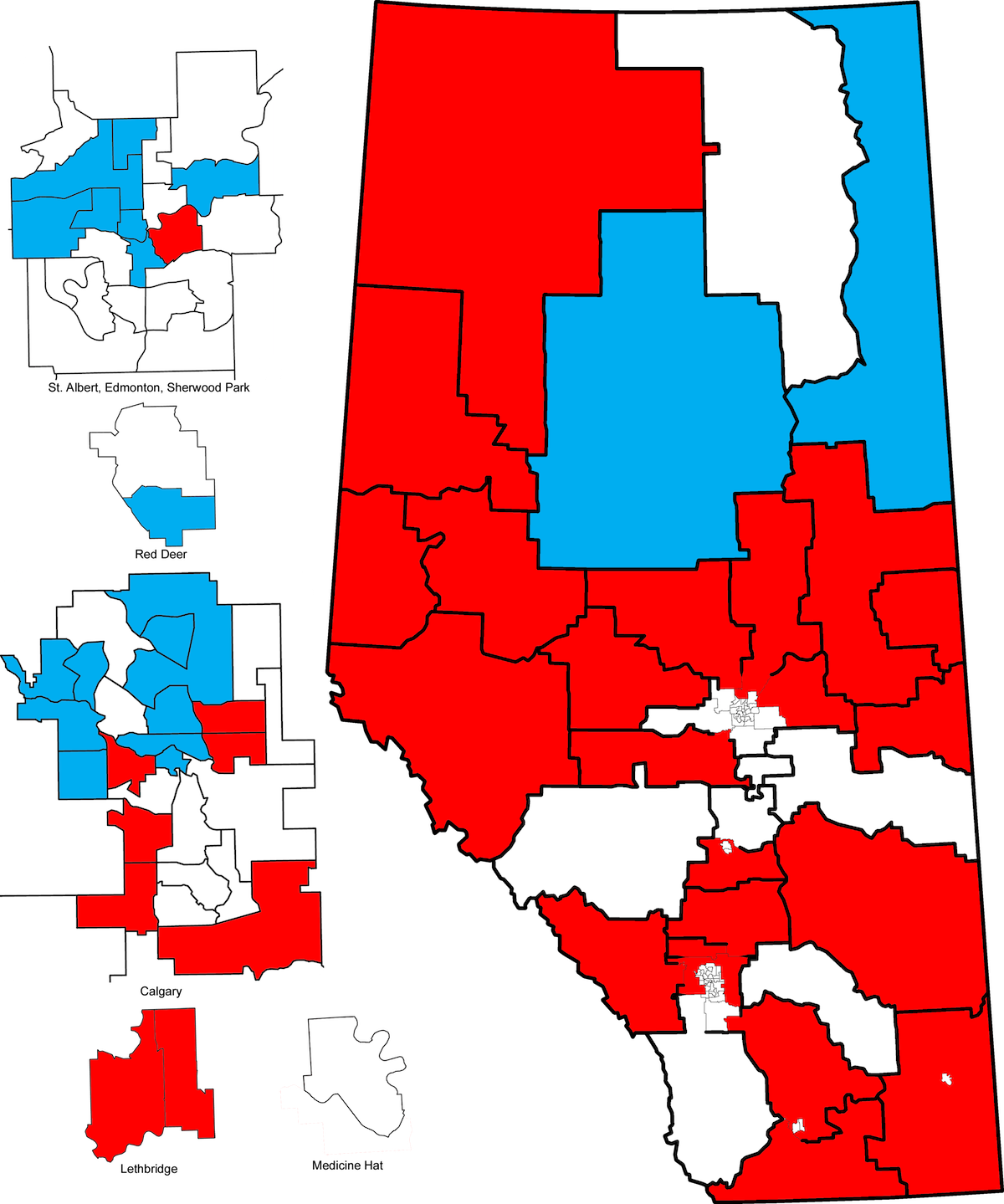
It was a simple motion introduced on the floor of Alberta’s Legislative Assembly on April 7, 2014 that would help create safer environments for students in schools. Nineteen Liberal, New Democrat, and Progressive Conservative MLAs voted in favour of the motion, but it failed after 31 PC and Wildrose MLAs stood up and voted against it.
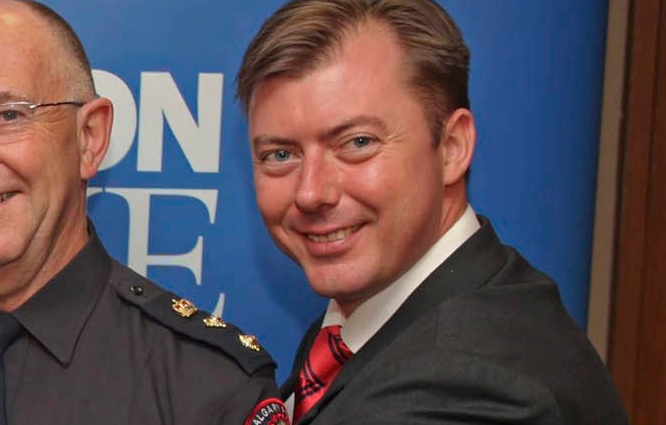
Kent Hehr
Motion 503, introduced by Calgary-Buffalo MLA Kent Hehr, was not a piece of binding legislation, it was a symbolic message of that all students, regardless of sexual orientation or identity, can be welcomed and accepted in Alberta’s education system.
Creating safe and supportive environments for all students, including LGBTQ youth who may face discrimination in and outside of school, should be something that is encouraged by MLAs.
Mr. Hehr’s motion undoubtably would have made some social conservatives uncomfortable, but it would have ultimately helped drag some of Alberta’s more stodgy school boards into the 21st century. The motion would not have forced any school board to form student-led gay-straight alliances, but it would have compelled the elected boards to accept the existence of the groups if students in their schools chose to organize them.
A map showing the constituencies represented by MLAs who voted in favour (blue) and against (red) Motion 503. White indicates MLAs who were not present for the vote. (Click to enlarge)
Passage of this motion would have sent a strong message that tolerance and acceptance are priorities Alberta’s provincial legislators.
Anti-bullying minister Sandra Jansen voted in favour but Education minister Jeff Johnson voted against it.
Missing from the vote were Premier Dave Hancock and NDP leader Brian Mason, who both later said they would have voted in favour had they been in the Assembly. Wildrose opposition leader Danielle Smith was not present for the vote and it is not clear if she would have voted differently than her party’s MLAs.
The divided PC government caucus also missed an opportunity to send a clear message that they embrace 21st century values by singling out the opposition Wildrose as the only party to unanimously vote against the motion – and remind Albertans of the infamous Lake of Fire. And for the Wildrose, a vote for the motion, even by one or two of that party’s MLAs, would have done a lot of demonstrate the party is more moderate on social issues than its opponents claim.
In total, 36 MLAs were absent from the vote (minus the Speaker, who abstains from votes of the Assembly).
Voted in Favour: 19
Deron Bilous (NDP)
Laurie Blakeman (LIB)
Neil Brown (PC)
Pearl Calahasen (PC)
Cal Dallas (PC)
Alana DeLong (PC)
David Eggen (NDP)
Kyle Fawcett (PC)
Kent Hehr (LIB)
Ken Hughes (PC)
Sandra Jansen (PC)
Heather Klimchuk (PC)
Jason Luan (PC)
Thomas Luksazuk (PC)
Rachel Notley (NDP)
Don Scott (PC)
Raj Sherman (LIB)
David Swann (LIB)
Teresa Woo-Paw (PC)
Voted against: 31
Moe Amery (PC)
Rob Anderson (WR)
Drew Barnes (WR)
Gary Bikman (WR)
Robin Campbell (PC)
Ron Casey (PC)
Christine Cusanelli (PC)
Ian Donovan (WR)
David Dorward (PC)
Wayne Drysdale (PC)
Jacquie Fenske (PC)
Rick Fraser (PC)
Yvonne Fritz (PC)
Hector Goudreau (PC)
Jeff Johnson (PC)
Linda Johnson (PC)
Maureen Kubinec (PC)
Genia Leskiw (PC)
Bruce McAllister (WR)
Everett McDonald (PC)
Diana McQueen (PC)
Frank Oberle (PC)
Bridget Pastoor (PC)
Dave Rodney (PC)
Bruce Rowe (WR)
Shayne Saskiw (WR)
Richard Starke (PC)
Rick Strankman (WR)
Kerry Towle (WR)
George VanderBurg (PC)
Greg Weadick (PC)
Ken Hughes has resigned from cabinet, but has yet to announce he is running for leader of the PC Party.
Nineteen days have passed since former Premier Alison Redfordannounced her resignation and not one candidate has officially announced their intentions to enter the race to become the next leader of Alberta’s Progressive Conservatives.
But there is at least one unofficial candidate, maybe. Municipal Affairs minister Ken Hughes made the strange move of resigning from cabinet yesterday, but would not yet say whether he would enter the race. Mr. Hughes’ recently announced he would launch an “exploratory committee” to gauge support for a leadership bid.
Aside from Mr. Horner, whose political family dynasty stands on its own, most of the potential candidates are tied to the legacy and culture of entitlement that forced Ms. Redford to resign.
And unlike previous PC leadership races, which were billed by the establishment as the “real election,” because the next leader was virtually guaranteed to be the premier after the next election, this race cannot provide that guarantee.
There has been talk of potential outsiders interested in the race.
Former federal cabinet minister Jim Prentice would be a strong candidate, but most political watchers suspect has loftier ambitions to become the next resident of 24 Sussex Drive when Prime Minister Stephen Harper retires. His entry into the race would also force him to leave a very lucrative job as a vice-president of the Canadian Imperial Bank of Commerce.
All about the numbers
Over the course of its 43 years in government, the PC Party has shown a remarkable ability to survive and reinvent itself. But can Alberta’s natural governing party survive a lacklustre or uninspiring leadership race?
Regardless of how many candidates enter, there will be comparisons drawn from previous contests. If the race fails to inspire widespread interest, membership sales could be lower than previous races that drew large sales of memberships.
In 2006, 144,289 PC Party members voted in the second ballot of the leadership vote that was won by Ed Stelmach.
Five years later in 2011, 78,176 PC Party members voted in the second ballot of the contest that selected Ms. Redford as leader.
Raising only $2.86 million in 2013, the PC Party ran a $136,000 deficit and owed $1.1 million on a line of credit. This shaky financial situation is unheard of for a natural governing party that is usually flush with cash.
The PC Party is are also facing criticism over a secret trust fund – the TAPCAL fund – which is a holdover from before changes were made to Alberta’s elections laws 36 years ago.
At the local-level, PC constituency associations raised more than $1.4 million in 2013. While most of the 87 PC associations reported revenue in the thousands of dollars in the post-election year, a sharp gap in fundraising amounts has highlighted wealthy and poorer constituency associations in the PC Party.
More than $650,000 of the $1.4 million were raised by eleven local PC associations. In former premier Alison Redford‘s Calgary-Elbow constituency, the local PC association claimed more than $119,000 in revenue in 2013. In Calgary-Hays, represented by Infrastructure minister Ric McIver, the local PC association raised more than $95,000 last year. Most of the other nine associations are located in constituencies represented by cabinet ministers.
Meanwhile, PC associations in opposition held constituencies mostly reported low or insignificant levels of revenue in 2013. Many of these areas are now represented by Wildrose MLAs and had been represented by PC MLAs since the 1970s.
Last year, formerly powerful PC constituency associations in Innisfail-Sylvan Lake, Medicine Hat reported zero revenue in 2013. PC associations in Cypress-Medicine Hat, Little Bow, Fort McMurray-Wood Buffalo, Calgary-McCall, and Edmonton-Mill Woods reported less than $1,000 in revenue in 2013.
These low numbers suggest that some Tories may be having a difficult time adjusting to business without a local MLA to boost their fundraising initiatives.
The Alberta NDP MLAs Brian Mason, David Eggen, Rachel Notley, and Deron Bilous in last year’s Edmonton Folk Music Festival program book.
With vibrant progressive campaigns winning on the municipal-level in Calgary and Edmonton, it is difficult to understand why there is not be a progressive party, or even a non-conservative party, able to compete on the provincial-level in Alberta.
The Alberta NDP declared $775,152 in revenue in 2013, roughly $2.2 million less than the Wildrose Party. Most of the NDP donations came from that party’s impressive individual donor base, and less than 10% from labour unions. The NDP accepted a small amount of donations from small-businesses, but shies away from larger corporate donors.
With the conservative parties eagerly tapping into a wealth of corporation donors in Alberta, is the NDP handicapping itself by refusing to accept larger corporate donations?
Party purists would argue that the NDP should stick to its social democratic principles by not accepting corporate donations, which would corrupt the party’s morals. Many of the same purists would argue that principles alone win elections. The Alberta NDP’s historically small real-estate in the opposition benches would suggest this is not a winning strategy.
If a party is not seeing consistent growth in funds and votes, then it should change tactics.
In other provinces, like British Columbia, the provincial NDP accepted $2.1 million in corporate donations during last year’s election. While that party did not win that election, it has formed government in the past and remains competitive on a provincial level.
A political party cannot be effective in the long-run if it is not competitive in fundraising. In Alberta, the NDP is falling short of being able to raise the funds necessary to compete with the Progressive Conservatives and Wildrose Party on a province-wide level.
The next provincial election presents a very real opportunity for a progressive political party to make gains by providing an alternative to the two main conservative parties. That progressive party would also need the funds and resources to compete on a province-wide level, which would require more money than the NDP appears able to raise without accepting corporate donations.
With the race for the Conservative Party nomination in Calgary-Signal Hill in less than 10 days, the Rob Anders campaign has broadcast a new robocall praising the incumbent MP for decreasing the federal Goods and Services Tax.
Ron Liepert
The message also includes an attack on his opponent Ron Liepert for musing about introducing a Provincial Sales Tax while he was Alberta’s Finance minister.
Mr. Liepert, who was known for his abrasive and partisan approach in the Legislature, appears to have found his match in this nomination contest.
The robocall coincides with the launch of a new attack website – ronlieperttruth.com – which accuses Mr. Liepert of being “a tax-and-spend liberal.”
Personal attacks and threats of lawsuits have turned the race to become the Conservative candidate in the next election into a race into a race to the bottom. It appears that no matter who wins the nomination on April 12, the voters of Calgary-Signal Hill will still lose.
Find your home away from home in Edmonton, Alberta in the newly renovated art-deco Federal Building. Elegant features throughout the Premier’s Penthouse Suite are designed to make a private place in the province’s capital as special as it can be.
This luxurious penthouse suite includes sleeping and grooming quarters with clothing storage for an adult and one teenager, a separate private study, a relaxed, social space for entertaining and watching TV, and a library area. The spacious suite features a seated formal and semi-formal dining room for 8 to 12 people, comfortable seating for meetings and entertaining, and panoramic views of the Alberta Legislature.
Whether your visit is for government business, family sightseeing or lounging in the TV room, your enjoyment is our priority.
Mayor Don Iveson, surrounded by Edmonton city councillors and PC MLAs, responds to the provincial government’s new committed funds for the LRT (photo by mastermaq, creative commons licensed)
The same poll that showed former Premier Alison Redford with a 75% disapproval rating also showed urban Albertans have huge confidence in the leadership of their big city mayors.
With Ms. Redford’s resignation sparking a leadership vacuum at the provincial level, Albertans in Edmonton and Calgary have confidence in the leadership of their mayors and councils. The poll also showed 58% percent approved or strongly approved of Edmonton City Council and, in Calgary, 60% approved or strongly approved of their City Council.
Leading Calgary through the largest flood in recent memory, Mr. Nenshi has helped redefine what it means to be a big city mayor. And he is no slouch. He has remained focused on creating a balanced approach to dealing with the city’s growth challenges while taking on wealthy suburban developers, who declared war on him before his landslide re-election.
The two mayors have many common interests and their cities are facing many of the same growth challenges, but Calgary, Edmonton and Alberta’s other cities are very different political environments. Urban Alberta is not a monolith.
As the Progressive Conservatives scramble to choose a new leader, Mr. Iveson and Mr. Nenshi are well-positioned to drive an urban agenda for Alberta. Their political strength and high approval ratings will make it difficult for the next PC leader and whoever becomes the premier after the next election to ignore the concerns of urban Albertans.
The survey was conducted from March 10 to 16 though ThinkHQ’s Voice of Alberta and Vision Critical online research panel. The sample size included 534 Calgarians and 405 Edmontonians with a margin of error of +/- 4.2% and 4.9%.