You can listen and subscribe on Apple Podcasts, Google Play, Stitcher, or wherever you find podcasts online. We’d love to hear what you think of this episode, so feel free to leave a review where you download, comment on the blog, Facebook or Twitter or send us an email at podcast@daveberta.ca.
Also, it would be a big help if you could leave a review where you download this podcast and share this episode with a friend.
We are always thankful to our hard working producer, Adam Rozenhart, who helps make each episode of the Daveberta Podcast sound so great.
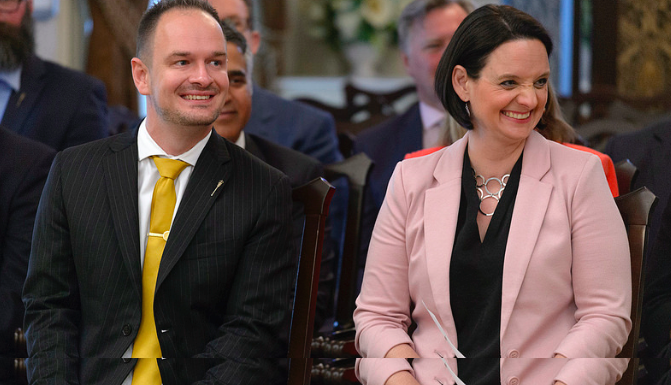
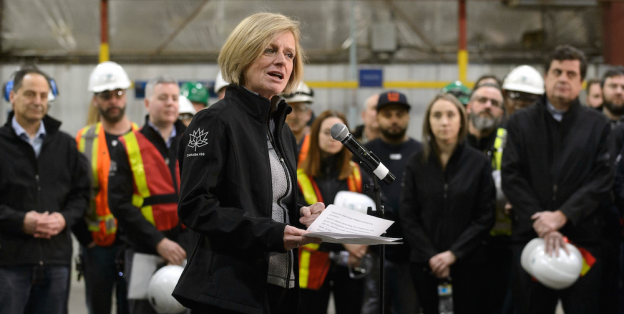
Sandra Jansen (left) and Premier Rachel Notley (right) at the press conference announcing the PC MLA had crossed the floor to join the NDP. (Photo from Premier Rachel Notley's Facebook Page)
It was supposed to be an event highlighting an effort to recruit more conservative women into politics in Alberta, but it was overshadowed by the news that former Prime Minister Stephen Harperplans to personally campaign against New Democratic Party MLA Sandra Jansen in the next provincial election.
For UCP activists, and Jason Kenney in particular, the fight in Calgary-North West likely feels personal. Jansen was elected as a Progressive Conservative in 2012 and re-elected in 2015 before crossing the floor to the NDP in 2016. But Conservative anger was directed at Jansen before her floor-crossing.
Jansen’s support for her friend Nirmala Naidoo, who ran as a Liberal candidate in the 2015 federal election, drew the ire of the legions of federal Conservatives who were moving to take over the PC Party following its defeat in the 2015 election (Naidoo’s Conservative competitor, now Member of Parliament Pat Kelly, is endorsing UCP nomination candidate and pipeline lobbyist Sonya Savage).
Sonya Savage
Jansen attempted a mount a campaign for the leadership after her party’s disastrous results in the last election but was all but drummed out of the party by social conservatives allied with Kenney.
Her moderate views on social issues like abortion and rights for sexual minorities, as well as her role as a former communications manager and key supporter of former premier Alison Redford contributed to the mounting tension from more hard-line conservatives.
Jansen accused Kenney of wanting to destroy the PC Party in his plans to merge with the Wildrose Party. And when push came to shove at the PC Party’s annual convention in 2016, Jansen was shoved hard by social conservative activists and soon after decided to leave the party.
For Conservative partisans, this was the biggest betrayal.
Pat Kelly
As Minister of Infrastructure, Jansen has a powerful spot at the cabinet table, allowing her to champion the construction of big capital projects like the new Calgary Cancer Centre and the completion of the city’s ring road and the Green Line C-Train route.
Jansen plays a big role in Premier Rachel Notley’s charm offensive in Calgary, but her tendency to get involved in petty arguments with Conservative partisans on social media distracts from the NDP government’s narrative. As I have written in the past, she could probably spend less time arguing on Twitter and more time trying to boost her government’s fortunes in Calgary.
Uniting the Right meant CPC-UCP unity too
Regardless of whether Jansen wins or loses the next election, she should take it as a complement that a Conservative heavy hitter like Harper would personally campaign against her. She should wear it as a badge of honour.
Harper likely remains popular among Conservatives in particular and Calgarians in general, and his support for Kenney’s UCP is not surprising. Harper endorsed Kenney’s leadership bid last year and was rumoured to be one of the driving forces behind the scenes in the PC-Wildrose unity referendum last year.
Harper is now the chairman of the International Democratic Union, an international club of right-wing political parties from 63 countries. His congratulatory tweet to extreme right-wing Hungarian Prime Minister Viktor Orbán in April 2018 raised eyebrows among political watchers. Orbán was re-elected after campaigning on a platform that included hostile anti-immigrant rhetoric.
But the federal Conservative connections to the UCP go deeper than Harper. Organizationally, the UCP has become an extension of the Conservative Party of Canada in Alberta, with most Conservative MPs actively involved or endorsing candidates in UCP nomination races. This is a significant change since the 1990s, when the provincial PC Party and the federal Reform Party were at each other throats.
Despite forming the opposition, the UCP are not the underdogs going into the next election. The next election campaign will represent the first time in more than 25-years that the dominant federal and provincial conservative parties in Alberta will be marching in lock-step.
While this may give Conservatives a big boost in an election campaign, it is yet to be seen whether a UCP government would stand up for the interests of Albertans over partisan gain if faced by a Conservative government in Ottawa.
Not first time a Calgary-North West MLA targeted
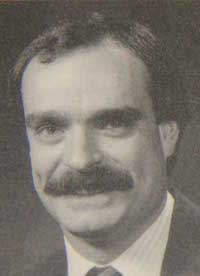
Frank Bruseker
It is reminiscent of another election in Calgary-North West more than two decades ago. Liberal MLA Frank Bruseker had represented the district since 1989 and had become a major thorn in the side of Premier Ralph Klein going into the 1997 election.
Bruseker was described at the time as being a relentless and ferocious critic of Klein during the Multi-Corp Inc. share affair, in which the premier was accused of promoting a company his wife had shares in.
It was reported during that campaign that PC Party campaign manager Rod Love had a poster hanging in his office of Bruseker framed by the crosshairs of a rifle scope.
The PCs poured significant resources into Calgary-North West and, when the dust settled in March 1997, Bruseker was unseated by Tory Greg Melchin by a margin of 1,964 votes.
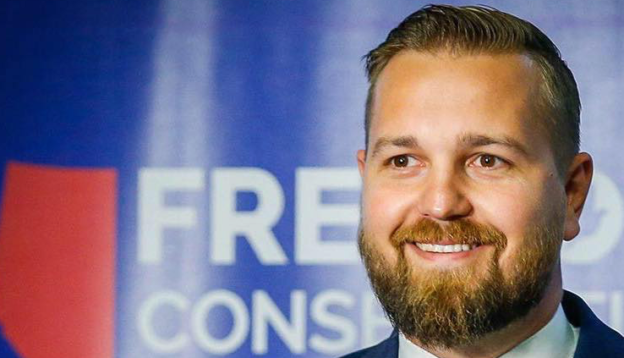
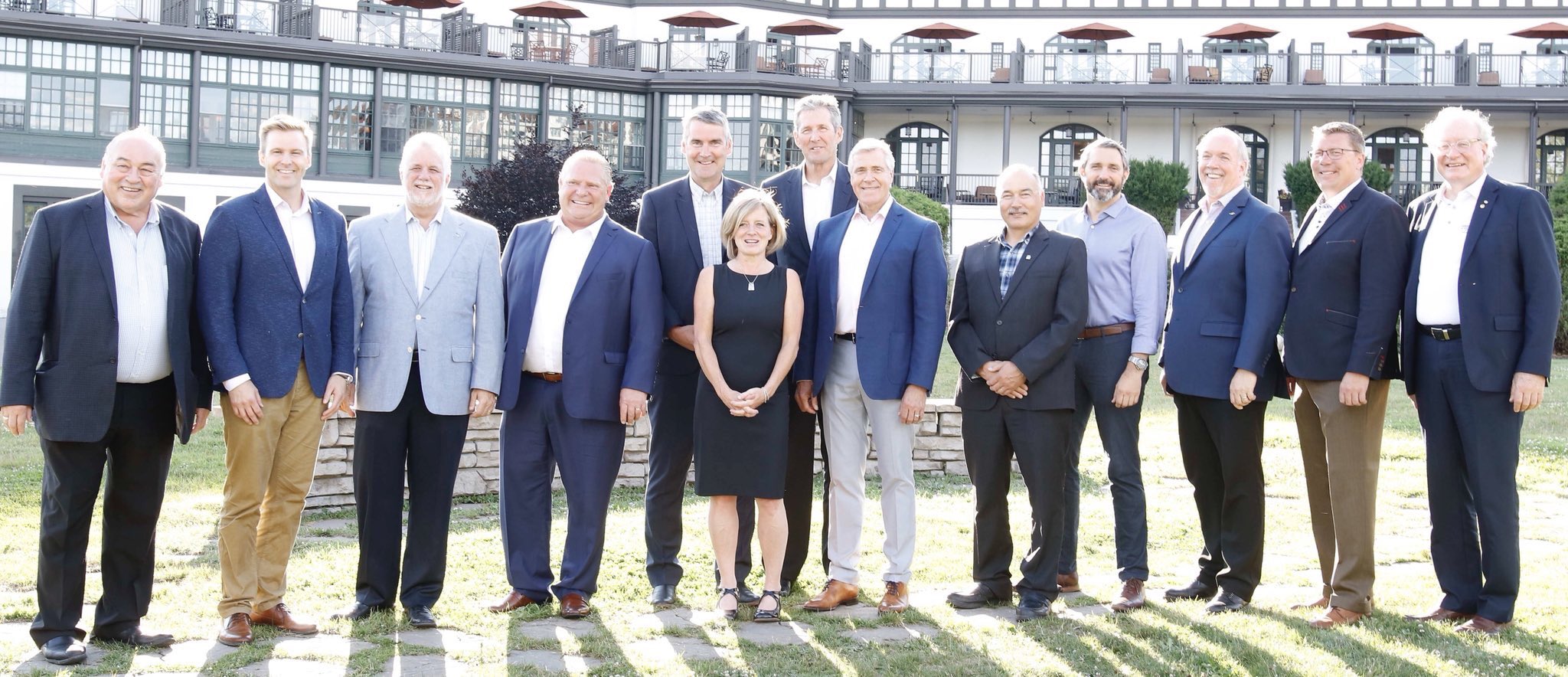
In this episode of the Daveberta Podcast, Dave Cournoyer and Ryan Hastman discuss whether Derek Fildebrandt‘s Freedom Conservative Party will be relevant in the next election, Rachel Notley‘s role at the recent Council of the Federation meeting in New Brunswick, the decision by Greyhound to withdraw from western Canada, and Edmonton-Mill Woods MP Amarjeet Sohi‘s new job as Minister of Natural Resources (and pipelines).
We also discuss some of the latest political gossip, including the departure of Prab Gill from the United Conservative Party and Stephen Harper’s re-emergence on the political stage (and whether he’s softening the ground for a political comeback).
Canada’s Premiers, July 2018 (photo source: Rachel Notley’s twitter)
You can listen and subscribe on Apple Podcasts, Google Play, or wherever you find podcasts online. We’d love to hear what you think of this episode, so feel free to leave a review where you download, comment on the blog, Facebook or Twitter or send us an email at podcast@daveberta.ca.
We are always thankful to our hard working producer, Adam Rozenhart, who helps make each episode of the Daveberta Podcast sound so great.
The number of candidates in the United Conservative Party nomination contest in the sprawling northwest district of Peace River has dropped from five to two.
Daniel Williams
Lisa Wardley, deputy reeve of Mackenzie County, and Dan Williams, who worked as a political staffer for Jason Kenney, are the two remaining candidates in the contest after three other candidates, Kelly Bunn, Donald Lee, and Shelly Shannon, dropped out over the past few weeks.
Bunn announced his withdrawal in a Facebook post citing disillusionment with Kenney’s “Grassroots Guarantee” and what he describes as a top heavy approach to candidate nominations. Lee withdrew citing a lack of support. And Shannon announced her departure from the contest by endorsing Williams.
In a post on Facebook, Wardley criticized the locations of the voting stations chosen by the UCP nomination committee for the July 31 and August 1, 2018 vote as “not representative of the largest Riding in the Province.”
Wardley wrote that the voting stations “do not lend to fairness, accessibility or the importance and value of all of our communities and citizens. Does not take into account the working communities that we host (with the early day hours in High Level), the lack of public transportation to and from communities, the addition of three new communities to the riding… or really anything else that is specific to this region other than hitting the three largest urban centers.”
When contacted by this writer, Wardley said she was shocked when she learned that the nomination committee chose only three voting stations in the largest urban centres of the large rural district – Peace River, High Level and La Crete.
The new Peace River district. UCP voting stations circled in blue. (Click to enlarge)
“All our communities and members are important and distance, accessibility to polling stations, travel time, workforce demographics, fairness are just some of the criteria that needed to be added to the mix when deciding,” Wardley wrote, saying that she would like to see voting stations in more communities and the voting period extended by one day.
For readers not familiar with this district, it would take more than 5 hours to drive from the northern most community of Indian Cabins to the southern more community of Reno.
UCP members in this district will vote to choose their candidate on July 31, 2018 in Peace River from 2:00 p.m. to 8:00 p.m. and August 1, 2018 in High Level from 9:30 a.m. to 1:30 p.m. and La Crete from 3:00 p.m. to 9:00 p.m.
The Peace River district is currently represented by New Democratic Party MLA Debbie Jabbour. Jabbour was first elected in 2015, earning 39 percent of the vote. She currently serves as Deputy Speaker and Chair of Committees in the Legislative Assembly.
Showdown in Athabasca-Barrhead-Westlock
Incumbent UCP MLA Glenn van Dijken will face a challenge from farmer Monty Bauer in a nomination meeting on July 14 in the new district of Athabasca-Barrhead-Westlock. van Dijken was first elected as a Wildrose Party candidate in 2015 in the Barrhead-Morinville-Westlock district. His opponent is being supported by former area Member of Parliament Brian Storseth. Bauer ran againstJeff Johnson for the Progressive Conservative nomination in Athabasca-Redwater in 2007.
A Sweet nomination in Edmonton-Manning
MLA Heather Sweet is expected to be nominated as the NDP candidate in this northeast Edmonton district on July 14, 2018. Sweet was first elected in 2015, earning 71 percent of the vote in a district that had swung between the PCs and Liberals in previous elections. She currently serves as Deputy Chair of Committees in the Legislative Assembly.
Citizenship judge appointed by Kenney seeks UCP nomination
Laurie Mozeson is seeking the UCP nomination in the southwest district of Edmonton-McClung. Mozeson is a long-time prosecutor with the federal and provincial governments and was appointed as a citizenship judge in 2012 by then federal immigration minister Jason Kenney.
A November 2012 report by the Hill Times noted Mozeson’s daughter, Marlee, had worked in Kenney’s office as an intern and special assistant, and later worked as assistant to Chungsen Leung, Kenney’s parliamentary secretary for multiculturalism. Her son, Jonah, had previously worked as communications director for Public Works Minister Rona Ambrose.
Gill resigns as deputy whip over ballot-snatching allegations
Current Calgary-Greenway MLA Prab Gill has resigned as UCP caucus deputy whip following allegations of ballot-snatching at the founding meeting of the Calgary-North UCP association. Gill has announced he is seeking the UCP nomination in the Calgary-North East district.
Calgary-Beddington – Daniel Kostak has announced his withdrawal from the UCP nomination contest and he has endorsed Randy Kerr.
Calgary-Bow – Eldon Siemens is seeking the UCP nomination.
Calgary-Currie – Terry Devries is seeking the UCP nomination. Devries was the Wildorse Party candidate in this district in the 2015 election, where he placed third with 20 percent of the vote behind New Democrat Brian Malkinson and PC MLA Christine Cusanelli.
Calgary-Falconridge – Devinder Toor is seeking the UCP nomination. Toor was the Wildrose Party candidate in the 2016 by-election and 2015 general election in Calgary-Greenway.
Calgary-Foothills: UCP members in this district will vote to choose their candidate on July 14, 2018. Former Calgary-Hawkwood PC MLA Jason Luan and federal Conservative political staffer Connor Staus are seeking the nomination.
Calgary-McCall – Jangbahadur Sidhu is seeking the UCP nomination.
Calgary-North – Tanis Fiss, Manpreet Sidhu and Muhammed Yassen are seeking the UCP nomination.
Calgary-Peigan – Andrew Griffin has withdrawn from the UCP nomination contest. Griffin has previously worked as a constituency assistant for Kenney.
Calgary-Varsity – Beth Barberree has been nominated as the Alberta Party candidate. Barberree was the Alberta Party candidate in Calgary-Hawkwood in the 2015 election. Grace Lane is seeking the UCP nomination.
Edmonton-Rutherford – Arnold D’Souza is seeking the Alberta Party nomination.
Edmonton-Strathcona – Jovita Mendita is seeking the UCP nomination. Mendita is a real estate agent with the Melnychuk Group. This district has been represented by Premier Rachel Notley since 2008.
Leduc-Beaumont – Scott Wickland is seeking the UCP nomination.
Lesser Slave Lake – Brenda Derkoch is seeking the UCP nomination.
Red Deer-South – Ryan McDougall has been nominated as the Alberta Party candidate.
St Albert – Rodney Laliberte is seeking the UCP nomination. Laine Matoga was withdrawn his name from the UCP nomination contest.t
Sherwood Park – Sue Timanson has been nominated as the Alberta Party candidate. Timanson ran for the PC nomination in Sherwood Park in 2012 and 2015, and she is a former regional director of the PC Party.
Strathcona-SherwoodPark – Robb Connelly will challenge former PC MLA Dave Quest for the Alberta Party nomination in this district east of Edmonton.
If you know any candidates who have announced their intentions to stand for party nominations, please send me an email at david.cournoyer@gmail.com. I will add them to the list. Thank you!
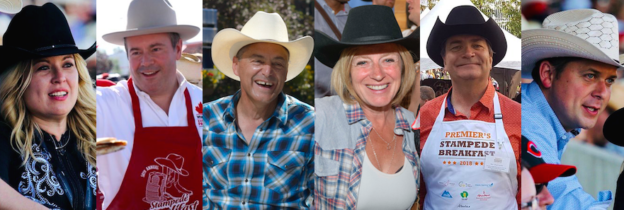
It is Calgary Stampede season, which means politicians from across Canada are flocking to Alberta’s largest city to show off their recently purchased plaid shirts and cowboy hats.
You can listen and subscribe on Apple Podcasts, Google Play, or wherever you find podcasts online. We’d love to hear what you think of this episode, so feel free to leave a comment on the blog, Facebook or Twitter or send us an email at podcast@daveberta.ca.
We are always thankful to our hard working producer, Adam Rozenhart, who helps make each episode of the Daveberta Podcast sound so great.
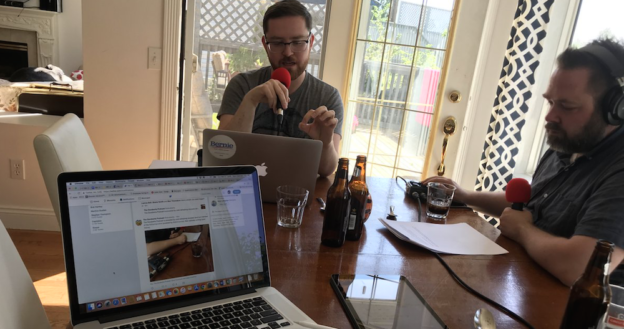
What does the renewal of the national Equalization formula mean for Alberta? What should Rachel Notley and Jason Kenney be doing this summer? What do we think about the New Democratic Party’s latest attack ad? And how should election candidates be using social media in 2019? These are a few of the topics that Dave Cournoyer and Ryan Hastman discuss in this episode of the Daveberta Podcast.
You can listen and subscribe on Apple Podcasts, Google Play, or wherever you find podcasts online. We’d love to hear what you think of this episode, so feel free to leave a comment on the blog, Facebook or Twitter or send us an email at podcast@daveberta.ca.
We are always thankful to our hard working producer, Adam Rozenhart, who helps make each episode of the Daveberta Podcast sound so great.
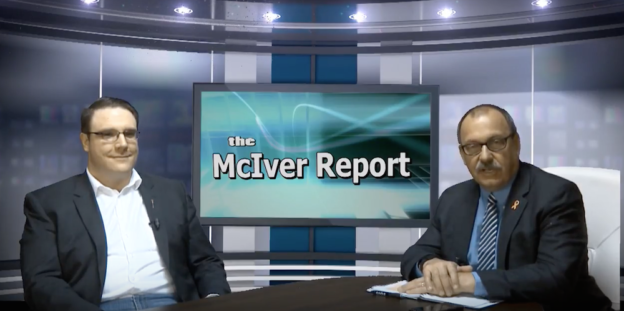
UCP MLAs Jason Nixon (L) and Ric McIver (R) on The McIver Report.
Photo: UCP MLA Jason Nixon (left) and UCP MLA Ric McIver (right) as the host of The McIver Report.
I was surprised to discover this week that Ric McIver, the United Conservative Party MLA from Calgary-Hays and former Calgary Alderman, is the host of a TV show which is recorded in a basement studio at a private residence in the town of Olds. The McIver Report is broadcast on CATV1 and ONET Channel 55 in central Alberta.
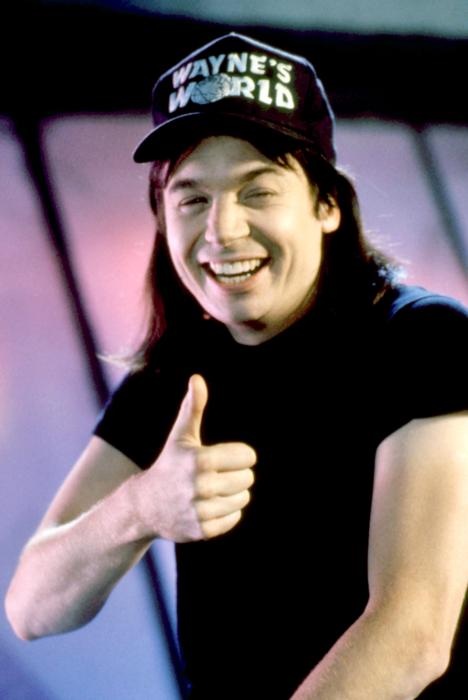
Wayne Campbell (Source: Wikipedia)
Are you wondering why an MLA from suburban south east Calgary would host a TV show in Olds, which is located 100 km away from his constituency?
I sure was.
Speaking to McIver on the phone this week, he told me that he was randomly approached by company owner Fred May “a couple of years ago” with an offer to host a show. He couldn’t remember the exact dates or how many shows he has hosted, but there have been a few.
McIver described the show as “a fun thing” he does in a volunteer capacity every now and then between trips from Calgary to the Legislature in Edmonton.
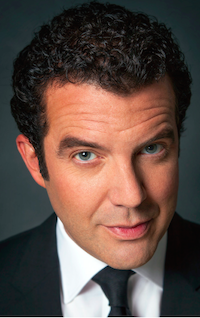
Even though the show is recorded for a community television station in a basement studio, it’s not quite Wayne’s World, and despite the name, it’s not quite The Mercer Report either.
Guests on McIver’s show have included 2017 Progressive Conservative leadership candidate Byron Nelson, tax lawyer Arthur Olson, and UCP MLA Jason Nixon, who represents the central Alberta district of Rimbey-Rocky Mountain House-Sundre. The Olson and Nixon episodes are available to view for free on the CATV1 website, while the others appear to be located on a Video on Demand site.
Rick Mercer (Source: CBC)
The McIver/Nixon interviews are what you would expect a conversation would be like when two UCP MLAs sit down to talk about politics in Alberta. The interview is slow-paced, friendly, and peppered with typical UCP claims about NDP economic mismanagement, the carbon tax, rural alienation, and a parting partisan pitch.
“We need Albertans to help stand up with us and help us fill the coffers,” Nixon said about UCP fundraising in the sixth segment of the McIver/Nixon interviews. “Now we’re going to need help from Albertans to make sure we have a big enough war chest to face the NDP,” Nixon continued in an awkwardly placed fundraising pitch.
You can watch the episodes available online and judge for yourself, but we should encourage our MLAs to use different communications tools available to them. Though I suspect there is a danger that some unsuspecting grandma in Carstairs or Cremona might tune in believing this it to be a ‘fair and balanced’ public affairs program. McIver basically presents what could be an MLA local newspaper column in video format. Only, he’s not the local MLA.
McIver told me that a similar program, called “The Marz Report” was hosted by former Olds-Didsbury-Three Hills MLA Richard Marz until his retirement in 2012. It is still not clear to me why the current local UCP MLA, Nathan Cooper, is not the host of the show.
For all the effort that goes into producing The McIver Report, I was mostly surprised that McIver and the company have not tried to promote the show on social media, where it might reach a larger audience, including McIver’s constituents in Calgary-Hays.
Note: McIver asked if I would be interested in being a guest on his show. I told him I would be interested if I we could make our schedules work.
Mini-Cabinet Shuffle
Brian Malkinson and Danielle Lariviee (Photo credit: Chris Schwarz/Government of Alberta)
Two New Democratic Party MLAs not seeking re-election in next year’s provincial election were shuffled out of cabinet. Now former Service Alberta Minister Stephanie McLean and Associate Health Minister Brandy Payne will return to the backbenches when the Assembly resumes in the fall.
Calgary-Currie MLA Brian Malkinson takes over McLean’s role as Minister of Service Alberta, and current Children’s Services Minister Danielle Larivee takes the additional role of Minister of the Status of Women. Larivee was appointed to cabinet in 2015 and has been seen as a rising star in Rachel Notley’s cabinet.
In a different context in another part of the world, July 12 is known as Orangemen’s Day, but don’t expect any kind of NDP orange parade to march through these districts on July 12. Both districts are traditionally reliably conservative voting areas that elected Wildrose Party candidates in the 2015 election. And Innisfail-Sylvan Lake has been one of the strongest conservative voting districts in Alberta over the past two decades.
Judging by the voting history of the two districts, it is very likely the UCP should win both by-elections. Anything less than landslide victories in both districts will be bad news for the UCP.
While we can expect New Democratic Party cabinet ministers and MLAs to campaign alongside their party’s candidates in both districts, it appears likely that the governing party will focus most of its by-election resources in Fort McMurray-Conklin. The results will provide an indication if Premier Rachel Notley‘s championing the Trans Mountain Pipeline has had any impact on the electorate.
The strong showing by the Liberals in the 2014 by-election in the federal Fort McMurray district proves that the Conservative party’s electoral grip on the area has been loser than other rural areas of the province, but a lot has changed in Alberta politics in the past 4 years.
I almost feel sorry for the NDP that none of their MLAs have resigned since the 2015 election. All five by-election elections that have taken place during the NDP’s first term in government have been located in unfriendly districts that elected Progressive Conservative or Wildrose MLAs in 2015.
A respectable second place finish will look good for the NDP.
The Alberta Party sat out the previous two by-elections in Calgary-Greenway in 2016 and Calgary-Lougheed in 2017, but they now are fielding candidates in these races. This is the party’s first electoral test since former PC cabinet minster and Edmonton mayor Stephen Mandel was selected as the party’s leader. How the Alberta Party fares in these by-elections could provide them with momentum ahead of next year’s expected provincial election.
A respectable second place finish will look great for the Alberta Party and help them position themselves as a viable conservative alternative to the UCP.
It is important to remember that by-elections can sometimes produce unpredictable results, and that those results that may or may not be an indicator of future general election results. But as these two districts have very long histories as conservative voting areas, it is difficult to see voters in these districts choosing any other candidate but the UCP in 2018.
Here are the candidates nominated as of June 14, 2018.
Note: Reform Party of Alberta leader Randy Thorsteinson had initially announced plans to run in the Innisfail-Sylvan Lake by-election. He has since withdrawn his candidacy.
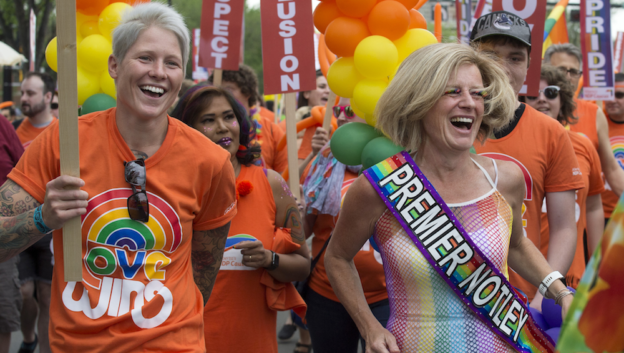
Alberta Premier Rachel Notley was dancing up a storm in front of thousands of Edmontonians at the capital city’s Pride Festival Parade on Saturday. The annual march travels down Whyte Avenue in the heart of Notley’s Edmonton-Strathcona district.
Notley was joined by dozens of Alberta NDP MLAs and Olypmian Jen Kish. Kish was captain of Canada’s Women’s Sevens Team at Rio 2016 where they won bronze in the inaugural Olympic rugby sevens tournament.
The United Conservative Party held its own event a few blocks away. After being declined a spot to march in the parade, UCP leader Jason Kenney announced that instead of attending the parade or other pride events, his party would hold its own event. The event featured speaker Lorne Mayencourt, an openly gay politician who represented downtown Vancouver in the BC Legislature from 2001 and 2009 and was a federal Conservative candidate in 2008.
The now-defunct PC Party participated in Edmonton Pride-related festivities in the past. Premier Alison Redford spoke at the parade in 2012 and Premier Dave Hancock rode in the parade in 2014. Even Wildrose Party leader Danielle Smithshowed up at Edmonton’s Pride events in 2012.
The obsession some Wildrose-turned-UCP MLAs and UCP party activists have about gay-straight alliances has certainly contributed to the party believing its representatives might feel less than welcome at Edmonton’s Pride celebrations.
As a professional politician Kenney is a master at schmoozing his way into all kinds of events, so it is unlikely he did not show up just because he was not allowed to march in the parade. Kenney is a social conservative whohasspentmuchof his 21-year long career in elected office opposing LGBTQ rights in Canada and he appealed to social conservatives in order to win the leadership of the UCP last year.
Perhaps not surprisingly, even though he did not attend the event, Kenney has strong opinions about the Pride Festival Committee deciding not to include police and military in future parades.
With an election coming up in early 2019, and Kenney’s UCP holding a solid lead in the polls, it might be unlikely we’ll see another Premier dancing in the streets anytime soon.
Rachel Notley, Justin Trudeau, John Horgan Bill Morneau and Andrew Weaver.
We own a pipeline!
Well, not yet.
Federal Finance Minister Bill Morneau announced yesterday that the federal government plans to purchase the existing Trans Mountain Pipeline from Kinder Morgan Inc. by August 2018 if another investor cannot be found. The federal government has committed to help the Texas-based corporation find a new owner for the pipeline by August 2018, or else Ottawa will “purchase the company’s Trans Mountain Expansion Project and related pipeline and terminal assets for $4.5 billion.”
In the meantime, the federal government will loan funds to Kinder Morgan Inc. in order to start construction on the pipeline this summer. If the federal government does purchase the pipeline, which seems likely, then a Crown Corporation will be created to complete the estimate $9 billion expansion of the currently existing pipeline.
Morneau declared the federal government would be eager to sell the pipeline back to a private company once it is built, but if the project is truly in the national interest – and going to be built with public dollars – then maybe it should remain an asset of the federal government and the people of Canada.
Here is a look at how yesterday’s pipeline announcement impacts some of the key players in this seemingly never ending political dispute:
Justin Trudeau: The Prime Minister of Canada silenced conservative opponents from claiming he was secretly plotting the pipeline’s demise and mutes his social democratic opponents who say he was just kowtowing to a Texas-based oil company. While the project will move forward with the powers of the federal government behind it, it is unclear if this will help Trudeau’s Liberals electorally in Alberta (where his Liberal Party holds three seats) or in British Columbia (where his party holds 19 seats).
Rachel Notley: This is a big win for the Premier of Alberta. Notley has been the strongest public advocate for the pipeline expansion and has poured almost all of her political capital into the success of this project. She has taken a firm line with pipeline opponents, most notably the Government of British Columbia, by threatening to slow or halt the transport of oil and gas from Alberta into BC.
John Horgan: The Premier of British Columbia says he will continue to use the tools available to him to oppose the pipeline expansion, including its current legal challenges. The entry of the federal government as the owner of the pipeline introduces a new dynamic between the governments in Victoria and Ottawa. As many premiers have discovered, running for re-election with Ottawa as your main opponent can be a recipe for success.
Andrew Weaver: The leader of the BC Green Party holds the balance of power in his province as long as his 3-MLA caucus continues to support Horgan’s NDP government in Victoria. The Green leader described the federal government’s intervention as “a betrayal by a government who ran on a hopeful vision for a better future.” The Greens will expect Horgan to continue their fight against the pipeline and likely will not consider ending their agreement with the NDP until sometime after the upcoming Proportional Representation referendum.
Jason Kenney: The leader of the Official Opposition in Alberta supported Notley’s pitch last month for the Alberta government to invest in the pipeline, so he has once again been relegated to the sidelines on the pipeline issue.
Andrew Scheer: The leader of the Official Opposition in Ottawa attacks the Trudeau Liberals for driving away private sector investment and claimed Trudeau forced through expansion of the Trans Mountain pipeline by nationalizing the project. To better understand the track record of government involvement in the energy industry, Scheer would benefit from taking a crash-course in Canada’s energy history. I recommend he start his education by reading Larry Pratt’s The Tar Sands: Syncrude and the Politics of Oil, which is an essential text on the history of Alberta’s oil sands.
Will the pipeline actually get built? Maybe.
Ownership of the pipeline will change and the federal government does have powers, both political and legal, that a private corporation does not, the opposition to the pipeline has not magically evaporated overnight. Public opinion remains mixed in British Columbia and the opposition to the pipeline expansion is firm. There will continue to be protests against the pipeline and demonstrations of civil disobedience can be expected.
There is also a federal election scheduled to take place in October 2019 and a provincial election expected to be called in Alberta in spring 2019.
While Morneau was clear he wants construction on the Trans Mountain Pipeline expansion to begin immediately, a number of legal and political challenges still stand in the way of the project’s completion.
Ryan leads this week’s ‘So you want to be a candidate‘ segment with volunteer recruitment and management tips for anyone planning to run in next year’s election. And we answer a few questions from our listeners.
We’d love to hear what you think of this episode, so feel free to leave a comment on this blog, Facebook or Twitter or send us an email at podcast@daveberta.ca.
We are always thankful to our hard working producer, Adam Rozenhart, who helps make each episode of the Daveberta Podcast sound so great.
Premier Rachel Notley met with steel workers during a tour of the Tenaris Prudential welded pipe mill in Calgary on Feb. 8, 2018. (photography by Chris Schwarz/Government of Alberta)
Kinder Morgan Inc. has given the provincial and federal governments a deadline of May 31, 2018 to sort out the political dispute over the expansion of the already existing pipeline from Edmonton to Burnaby. But it appears as though federal Finance Minister Bill Morneau saying the federal government is willing to offer significant financial support to the corporation to compensate for any inconveniences our Canadian system of federalism and democracy may cause the Texas-based corporation.
Jagmeet Singh
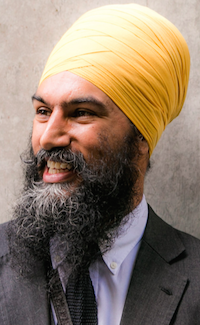
Singh shows up to the party:Federal NDP leader Jagmeet Singh finally waded into the debate over the Kinder Morgan Trans Mountain Pipeline today. Singh tweeted that “Liberals are giving Texas oil company #KinderMorgan a blank cheque while dumping all the risks on Canadians. Rigged process, First Nations & local communities shut out, oil spill threats, science ignored & now billions on the line It’s clear this pipeline should not be built.”
Singh’s choice to oppose the pipeline reflects the composition of his federal caucus of 43 Members of Parliement, which includes 1 MP from Alberta and 14 MPs from British Columbia.
Giant new provincial park: Environment and Parks Minister Shannon Phillips announced the creation of five new wildland provincial parks covering 1.3 million hectares of new protected areas in northern Alberta. Along with the Wood Buffalo National Park, and the Caribou Mountains Wildland Provincial Park these new wildland provincial parks are the biggest contiguous legislated protection the world’s boreal forest. According to a Government of Alberta press release, the new protected areas were created through a partnership with the provincial and federal governments, the Tallcree First Nation, Syncrude and the Nature Conservancy of Canada.
“Protecting landscapes from industrial activity is an essential element of responsible oilsands and oil and gas development,” said Simon Dyer of the Pembina Institute.
“Other planning processes underway will further protect under-represented ecosystems and habitats for woodland caribou. We look forward to Alberta becoming the first jurisdiction in Canada to achieve the benchmark of 17 per cent of its landscapes as legislatively protected areas as landscape planning is completed in other parts of the province,” Dyer said.
Do as I say, not as I do: It was not long ago that United Conservative Party leader Jason Kenney declared that “I believe that we can have a respectful debate on ideas without resorting to the nasty politics of personal destruction.”
But this week, Kenney unleashed the nasty politics of personal destruction against Prime Minister Justin Trudeau in a column written by Postmedia’s Rick Bell. Of Trudeau, Kenney claimed that “He doesn’t have a clue what he’s doing. This guy is an empty trust-fund millionaire who has the political depth of a finger bowl. He can’t read a briefing note longer than a cocktail napkin, O.K.”
Kenney’s harsh words give an indication of how relations between Alberta and Ottawa could sour if he becomes Premier of Alberta in 2019.
Ryan leads this week’s ‘So you want to be a candidate‘ segment with useful fundraising tips for Albertans wanting to run in next year’s election. And we answer a few great questions from our listeners.
We’d love to hear what you think of this episode, so feel free to leave a comment on this blog, Facebook or Twitter or send us an email at podcast@daveberta.ca.
We are always grateful for our producer, Adam Rozenhart, who helps make each episode of this podcast a reality. This episode was recorded remotely over Google Hangout.
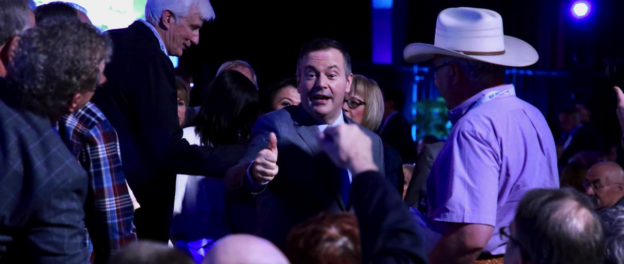
With more than 2,500 party members in attendance, this weekend’s United Conservative Party founding convention was one of the biggest political events in Alberta’s recent memory. It was a big show of force for the official opposition party, which continues to dominate in the polls and fundraising.
Fifty-seven percent of convention delegates voted in favour of a policy that would out students who join Gay-Straight Alliances. Supporters of the policy claimed it was about parental rights, but that did not stop three MLAs from going to mic to plead with UCP members to end the madness.
“This is about outing gay kids,” said Calgary-Hays UCP MLA Ric McIver as he pleaded with party members not to pass the policy. “Don’t be called the Lake of Fire party, I’m begging you. This will really severely hurt our chances at winning. Don’t do that to yourself.”
“When we’re talking about freedoms, that means all people’s freedoms. That means making sure that children have safe spaces in schools,” urged Chestermere-Rockyview UCP MLA Leela Aheer.
But the pleas from the MLAs were not enough to change the minds of members, including a well organized contingent of social conservatives, at the convention.
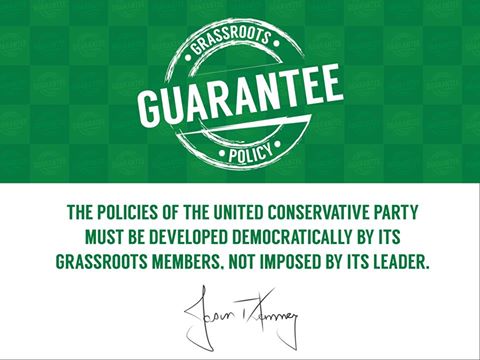
It could, and probably will, be argued that Kenney’s denouncement of this policy contradicted his “Grassroots Guarantee” that the party membership will determine the party’s policies. Kenney used the “guarantee” as a way of circumventing any substantive policy debates during the 2017 UCP leadership contest.
It is not clear what other member-endorsed policies Kenney will choose to ignore if and when he becomes Alberta’s next premier.
UCP members also adopted policies to eliminate the carbon tax, reintroduce a flat tax, increase privatization in health care and education, and require parental consent for invasive medical procedures on a minor (this motion was cheered by anti-abortion groups).
All things considered, it is hard to imagine that Rachel Notley‘s New Democrats could have hoped for a better outcome this weekend.
One Big Conservative Family
An underreported story of this weekend’s convention is the very close relationship between the UCP and the Conservative Party of Canada.
The presence of a federal Conservative leader Andrew Scheer as a keynote speaker would have been unheard of at any provincial party convention in recent years. Scheer was joined at the convention by a number of Conservative MPs, and former leader Rona Ambrose, who spoke at the convention on a panel about women in politics.
The relationship between the federal and provincial conservative parties has always been complex, but it has been exceptionally complicated over the past three decades. The rise of the Reform Party and collapse of the federal PC Party in the early 1990s meant there was no formal alliance between the dominant federal and provincial conservative parties in Alberta for many years.
Almost as soon as the Conservative Party of Canada was formed in 2003, the Alberta Alliance, and later the Wildrose Alliance and Wildrose Party split the provincial conservative movement, leaving federal Conservative MPs divided in their loyalties for the PC and Wildrose parties.
While most of the focus has been on the Wildrose-PC merger, Kenney’s “unity” extends to the federal party as well.