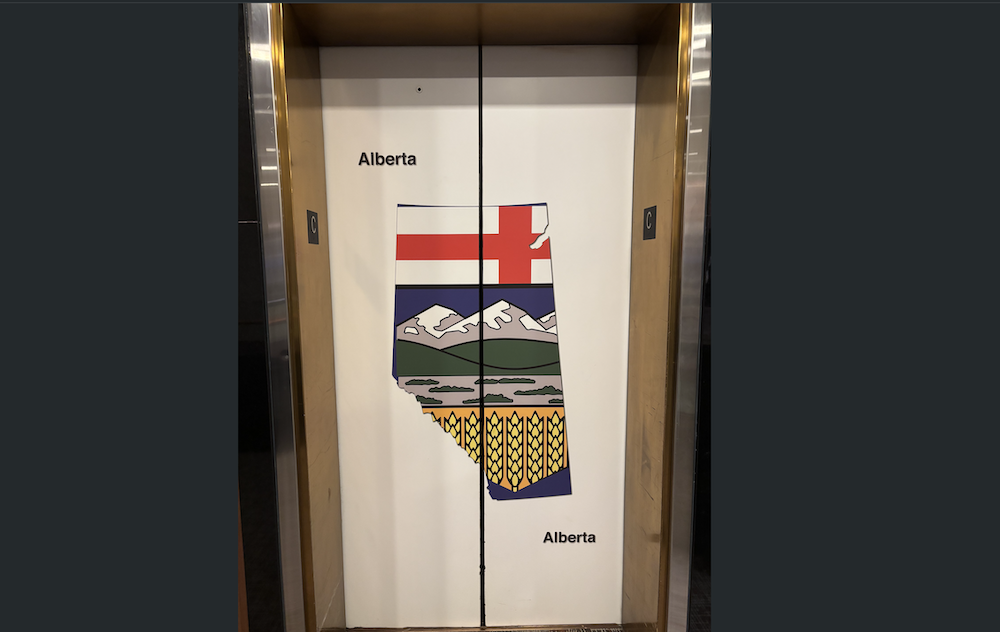
An appropriate Alberta-themed decal on a hotel elevator in Ottawa (Source: Dave Cournoyer)
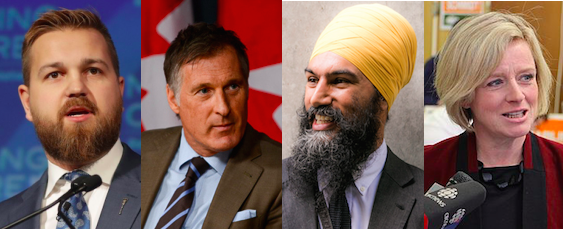
A list of pro-Canada and Alberta independence supporters in the October 19, 2026 referendum
Albertans are being asked to vote on ten referendum questions on October 19, 2026 and, unsurprisingly, the one question attracting the most attention is about Alberta’s separation from Canada.
I am a proud Canadian and proud Albertan and will be voting for Alberta to remain in Canada in this referendum.
Similar to my nomination candidate tracking list, I will be updating this page as I receive new names, so please click on the title link and bookmark it to keep up to date.
If there are any names or website links that should be added or removed from this list, please send me an email at david.cournoyer@gmail.com. I am striving to do my best to keep this list as accurate as possible during a very noisy political debate.
Premier Danielle Smith and separatist leader Mitch Sylvestre at a UCP fundraising dinner in Bonnyville in May 2025 (source: Bonnyville-Cold Lake-St. Paul UCP / Facebook)
Does it make any sense? No. But not much does in Alberta politics these days.
“Should Alberta remain a province of Canada, or should the Government of Alberta commence the legal process required under the Canadian Constitution to hold a binding provincial referendum on whether or not Alberta should separate from Canada?”
That’s the referendum question that Premier Danielle Smith has decided to put on the 10th paper ballot that Albertans will be handed when they show up to vote on October 19, 2026.
Smith says the wordy multiple choice question was her only option because the court ruling quashing Elections Alberta’s approval of the separatist Stay Free Alberta citizen initiative petition ruled out a question where yes and no were the only answers.
Smith had an option to not hold the referendum at all but she opened this can of worms and it won’t easily be closed. The populist-turned-separatist-wing of the United Conservative Party that booted former premier Jason Kenney and then boosted Smith into the Premier’s Office is now firmly entrenched in the governing party — and they are not going away.
You can listen and subscribe on Apple Podcasts, Google Play, Stitcher, or wherever you find podcasts online. We’d love to hear what you think of this episode, so feel free to leave a review where you download, comment on the blog, Facebook or Twitter or send us an email at podcast@daveberta.ca.
Also, it would be a big help if you could leave a review where you download this podcast and share this episode with a friend.
We are always thankful to our hard working producer, Adam Rozenhart, who helps make each episode of the Daveberta Podcast sound so great.
A screenshot of a Keep Alberta Working campaign video.
It won’t come as a surprise to many political watchers in Alberta that the most vocal critics of the NDP government’s yet to be announced reforms to Alberta’s outdated labour laws have strong ties to the province’s Conservative establishment.
The media contact person listed on the press release announcing the “Keep Alberta Working” campaign is New West employee Sonia Kont, who is also president of the Progressive Conservative youth-wing and an ardent Kenney supporter. Also thrown into the mix is prolific tweeter Blaise Boehmer, who worked for Solberg’s company as a senior associate until leaving in 2016 to become Communications Director on Kenney’s leadership campaign.
The Keep Alberta Working campaign has been harshly critical of the NDP government’s plans to reform Alberta’s labour laws, some of which have remained untouched since the 1970s. The group was fair to criticize the relatively short consultation period the NDP government allowed for when preparing the reforms, but its claims that the NDP could destroy democracy by introducing a card-check system for union organizing are totally preposterous.
We won’t know what is included in the reforms until Bill 17, the Fair and Family-friendly Workplaces Act, is introduced into the Legislative Assembly by Labour Minister Christina Gray tomorrow. Depending on how it could be structured, a card-check system could make it harder for anti-union employers to block their employees from joining a union.
Looking to the debate ahead, the card-check issue could cause more political trouble for the NDP than they expect. As the NDP know from past experience as a tiny scrappy opposition party, it is much easier for the opposition to cast a government as heavy-handed and undemocratic than it is for a government to explain detailed public policy in a 15 second soundbite.
But there is little evidence that any reforms to Alberta’s labour laws will lead employees of the companies represented by these groups to stampede into the closest union recruitment office.
It’s not really surprising that key Conservative politicos are at, or close to, the centre of a campaign to oppose reforms to Alberta’s outdated labour laws, but the connections to Kenney and his leadership bid are worth noting.
So, when you hear this group’s criticism of the NDP’s labour law reforms tomorrow, consider the source. Also remember that while the changes might be described as catastrophic or disastrous by corporate-funded lobby groups, the changes included in Bill 17 might not be dramatic enough for some traditional NDP supporters on the political left.
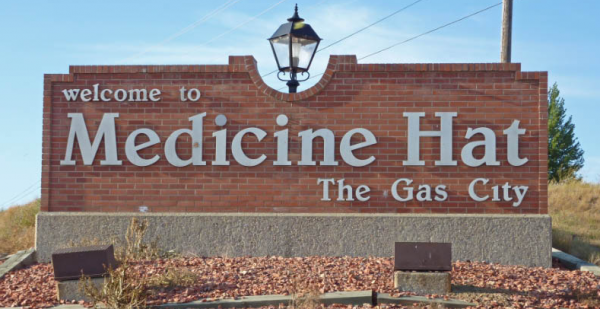
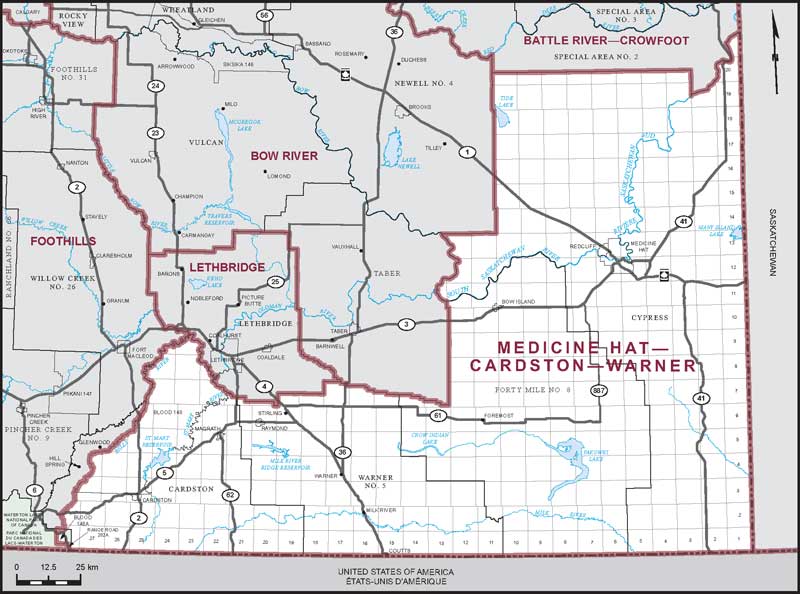
Following the death of Conservative Member of Parliament Jim Hillyer on March 23, 2016, Elections Canada has announced that a by-election must be called in the Medicine Hat-Cardston-Warner electoral district before September 26, 2016. The earliest a by-election could be held is May 16, 2016.
A map of the electoral district.
By-elections can produce unexpected results, as we have seen recently in Alberta, but as one of the strongest Conservative voting areas of the country, it is very likely the next MP for this area will be a Conservative. Mr. Hillyer was elected in October 2015 with 68 percent of the vote, ahead of LiberalGlen Allan with 17 percent and New DemocratErin Weir with 9 percent (not that Erin Weir).
Conservatives partisans in this region of Alberta tend to occupy the social conservative side of that party’s coalition. But that does not necessarily mean they are united.
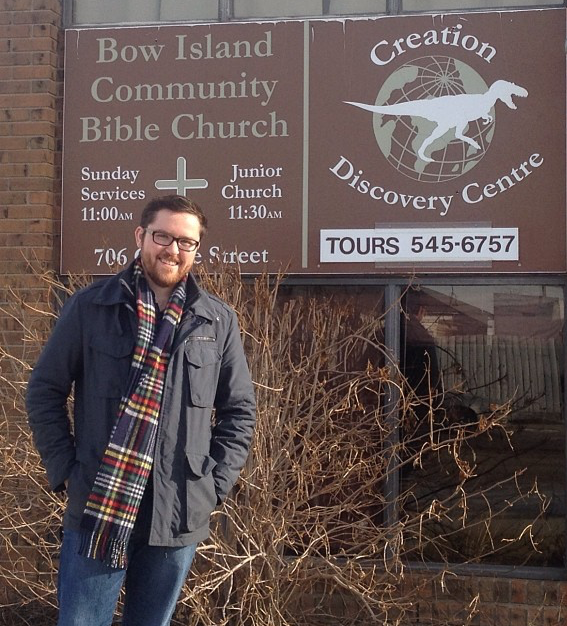
The author of this blog outside the Creation Science Museum in Bow Island, Alberta.
Former Social Credit MP Bud Olson was re-elected as a Liberal MP in 1968 and served as Minister of Agriculture in Prime Minister Pierre Trudeau’s cabinet until his electoral defeat in 1972. The riding became a Progressive Conservative stronghold from 1972 to 1993.
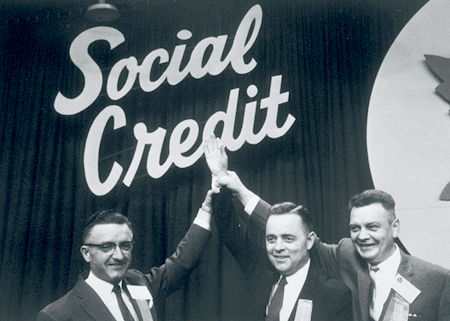
Supporters celebrate 77 years of Social Credit rule in Alberta.
CALGARY STAR-TRIBUNE
In 1935, Fred Astaire and Ginger Rogers’ hit song “Cheek to Cheek” topped the music charts and the Winnipeg Blue Bombers became the first western Canadian team to win the Grey Cup. It was also the year that the Social Credit Party formed government in Alberta.
Fresh from celebrating the party’s 21st consecutive election win, Premier Rob Anderson will join party faithful this weekend to celebrate the Social Credit Party’s 77th year in government.
Long abandoned are the social credit monetary policies that defined the party when it formed government in 1935. Social Credit in 2012 embraces what political watchers have called the Conservatism of the New Albertan Century.
Rob Anderson
“One of the regular talking points of the Official Opposition is to claim that after 77 years of Socred rule, the province of Alberta is some grim, dark, horrible place to live,” said Premier Anderson. “It’s entirely untrue, of course. And it doesn’t say much for the Opposition that they say such terrible things about this great province.”
“Alberta is the best place to live, work and play in Canada,” said the Premier.
Only once in the party’s 77 year history has it faced the threat of electoral defeat.
Harry Strom
While the history books record Premier Harry Strom as the great conciliator of Canadian confederation, he led the dynasty to its narrowest victory the 1971 election. New to the office, Strom fought back young Peter Lougheed‘s liberal-minded Progressive Conservatives, leading his party to form a small majority government.
Four years later, Strom led Social Credit to a decisive victory over the Tories.
Many historians credit Social Credit’s survival in 1971 to the failure of the Daylight Savings Time plebiscite.
Lingering in the opposition benches in the 41 years since 1971, the PC Party has been unable to topple the long-standing government.
Current PC Party leader Raj Sherman has called the Social Credit Party old and out of touch.
“The simple fact is that over the past 77 years the government has backed itself into a corner on revenue and desperately needs to find a way to return to solid financial ground,” said Sherman, an emergency room doctor.
“While Albertans deserve to have a say in all matters of public policy, I am troubled by this administration’s penchant for government by polling – particularly when they are so selective about the feedback that they choose to heed,” said Sherman.
NDP leader Rachel Notley has called on Premier Anderson to tear down the economic “Firewall” that divides Alberta from the rest of Canada. “Too often the Socreds make poorly studied, reactionary decisions based on industry lobbying”, said Notley.
“As things stand now, we are closing our eyes, crossing our fingers, and hoping for the best,” Notley said. “Albertans deserve better,” said Notley.
Albertans can follow the weekend’s celebrations using the Twitter hashtag #after77years.