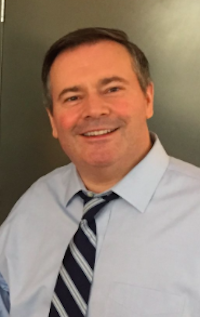
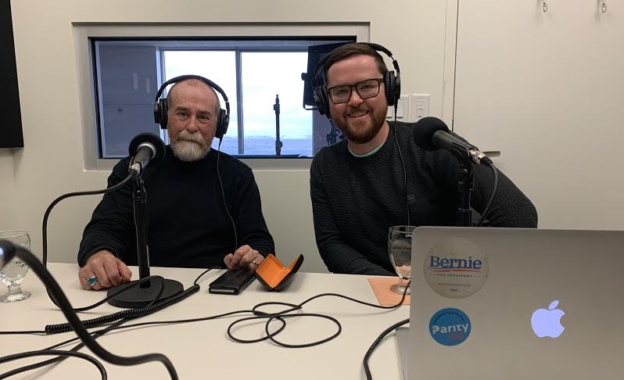
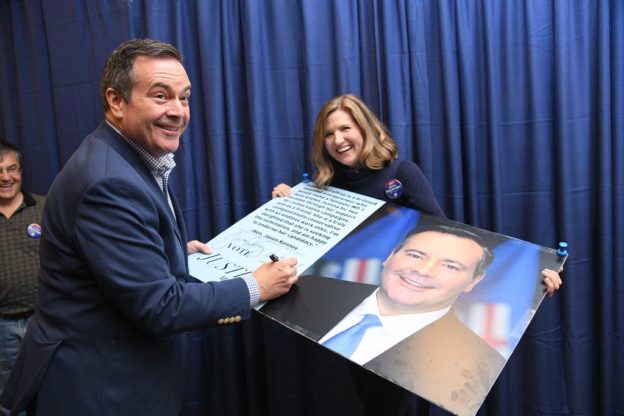
I was thrilled to spend an hour with Ryan Jespersen on 630CHED today to talk about American and Alberta politics.
We covered a lot of ground, including the political theatre between United States President Donald Trump and House Speaker Nancy Pelosi at the State of the Union address, the federal Conservative Party leadership race and whether a Draft Kenney campaign will start anytime soon, political party fundraising returns from 2019, Rachel Notley’s decision to lead the NDP into Alberta’s 2023 election, and whether the Canadian Energy Centre is worth it’s $30 million annual budget (spoiler: it’s not).
The 1358th chapter of the ongoing saga of the Trans Mountain Pipeline expansion project ended today as the Federal Court of Appeal unanimously ruled to dismiss four challenges by First Nations in British Columbia.
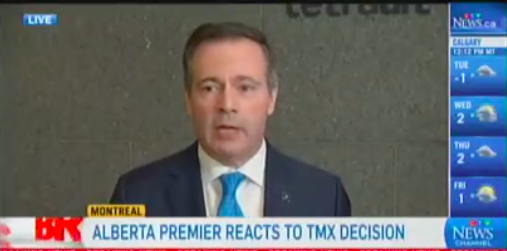
Speaking in Montreal today, Premier Jason Kenneylauded Prime Minister Justin Trudeau, telling reporters that “I have my disagreements with Prime Minister Trudeau on a number of issues … but I think they did realize there has to be at least one project that gets Canadian energy to global markets so we can get a fair price.”
3000 kilometres away from Alberta is probably a safe distance for Kenney to effuse some praise for Trudeau, something he likely wouldn’t be caught dead doing back home. But praising Trudeau for a pipeline that is deeply unpopular in Quebec while he is in that province’s largest city is a shrewd piece of political theatre on Kenney’s part.
Since he jumped into provincial politics in 2017, Kenney has used the pipeline as a cudgel against his political opponents, tarring Trudeau and former premier Rachel Notley as opponents of a project they spent incredible amounts of political capital to see completed.
Nationwide support for the Trans Mountain Pipeline expansion dropped by 11 per cent since 2018, according to a poll released by Angus-Reid last month. Urgency about climate change has become a more front and centre issue since then, most effectively demonstrated by tens of thousands of Canadians participating in climate strike marches across Canada, including more than 10,000 people in Edmonton. And since Kenney’s United Conservative Party formed government in April 2019, his government has taken a hyper-aggressive approach to responding to opponents to oil industry expansion, which may have had an impact on national opinion.
The creation of the publicly funded Canadian Energy Centre (aka The Energy War Room), a government-sponsored public relations company run by failed UCP candidate Tom Olsen and boasting a $30-million annual budget, has been front and centre in the government’s new approach.
The court ruled that First Nations have no veto and cannot refuse to compromise or insist a project be cancelled, and found that the federal government made genuine effort to consult and accommodated concerns raised by First Nations communities.
While this decision is expected to be appealed by First Nations groups at the Supreme Court, and will likely have political implications if UNDRIP is implemented in Canada, it is likely that the next round of opposition to the pipeline project will come in the form of civil disobedience and direct action.
This isn’t over yet.
UCP releases radical health care report, and look! Jason Kenney is leaving the country, again!
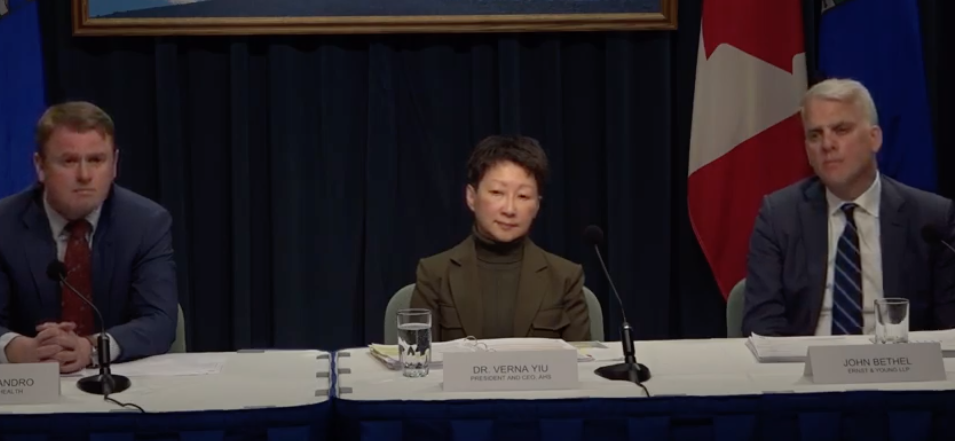
Tyler Shandro, Dr. Verna Yiu, and John Bethel (Source: YouTube)
Perhaps it is just a coincidence, but it seems pretty darn convenient that Premier Kenney was on a plane to Quebec when Health Minister Tyler Shandro shared a stage with Alberta Health Services CEO Dr. Verna Yiu and Ernst & Young spokesperson John Bethel (who attentive readers will remember as the 2004 federal Liberal candidate in Edmonton-East) in announcing the release of the international management corporation’s $2-million report on Alberta Health Services.
The report is big and bristling with the kind of ideological and predictable recommendations that you would expect from the right-wing Fraser Institute, which was cited a few times in the report. Privatization of services ranging from long-term care to security, gutting of collective agreements and salary rollbacks, and closure of rural hospitals were among the many recommendations included in the report.
While Shandro was clear that he would not risk further alienating his party’s rural base by closing rural hospitals, despite the report’s recommendations, the report did deliver the UCP with a powerful talking point – $1.9 billion in potential savings.
The report suggests that if all its recommendations were implemented, the government could potentially save $1.9 billion in costs to the health care system (of course, many of those costs could be transferred to patients). It might be unlikely that all of the recommendations will be implemented, but expect to hear Shandro repeat that $1.9 billion number, a lot.
Meanwhile, Kenney will soon leave Quebec for meetings in Washington D.C.
Kenney’s office stops releasing public travel itineraries
The Premier’s Office under Kenney appears to have stopped publicly releasing the Premier’s itinerary ahead of inter provincial or international trips. Previous premiers commonly released a brief daily itinerary that listed who or which organizations the Premier and their staff were scheduled to meet with.
A lack of publicly released itinerary meant that Albertans discovered on Twitter that Kenney’s trip to New York City in September 2019 included a speech at a reception hosted by the right-wing Manhattan Institute. It was also revealed by the Alberta Today newsletter through Freedom of Information requests that Kenney also held court at a historic speakeasy in midtown Manhattan, an event that was not listed in the standard government press release announcing his trip.
Kenney’s office also did not release an itinerary for his December 2019 trip to London, UK, citing concerns that individuals he was meeting with could be targeted by climate change advocacy groups.
With no journalists from Alberta accompanying Kenney on his international trips, the release of public itineraries is an important way to ensure some basic accountability and transparency when the Premier is travelling out of province on the public dime.
Note: Past requests for public itineraries of Premier Kenney’s international trips have gone unanswered by the Premier’s Office.
Oil well liability became a big issue in Alberta politics this month when rural municipal politicians raised giant red flags about the estimated $173 million in unpaid municipal taxes as a result of some oil and gas companies nearing insolvency and many more companies just believing paying taxes is voluntary.
Tina Faiz and Regan Boychuk joined Dave Cournoyer on this episode of the Daveberta Podcast to discuss the growing issue of oil well liability, and the political and policy repercussions created in its wake.
Tina Faiz is a communications consultant and political strategist based in Edmonton and Regan Boychuk is the lead researcher and oilfield liability expert with the Alberta Liabilities Disclosure Project.
The Daveberta Podcast is a member of the Alberta Podcast Network, powered by ATB. The Alberta Podcast Network includes more than 30 great made-in-Alberta podcasts.
You can listen and subscribe to the Daveberta Podcast on Apple Podcasts, Google Play, Spotify, Stitcher, or wherever you find podcasts online. We love feedback from our listeners, so let us know what you think of this episode and leave a review where you download.
Find us on Twitter, Instagram, Facebook, or you can email us at podcast@daveberta.ca. Thanks for listening!
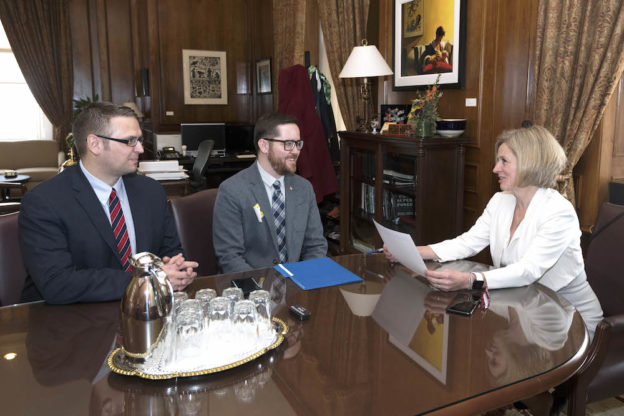
Interviewing Premier Rachel Notley for the Daveberta Podcast in April 2018 (photography by Chris Schwarz/Government of Alberta)
It is remarkable how quickly time flies by. Fifteen years ago I was probably sitting on my couch in the living room of my heavily-subsidized and very run-down University of Alberta-owned residence in north Garneau when I first clicked the publish button on my brand new blogspot.com website. That was probably how Daveberta was born.
Dave Cournoyer at a political event in 2011 (photo by Earl J. Woods)
I was in the fourth year studying an undergraduate degree in Political Science that would be drawn out for a not insignificant number of more years as I threw myself into student union politics and activism, and then provincial politics.
I had no idea that 15 years later this website would still exist, and that it would also spin off into a podcast and lead to hundreds of media interviews, conference panels and speaking engagements, because at the time blogging was a novelty and something that a lot of people were just trying out.
Maybe I am just one of the few who had staying power?
The name Daveberta was inspired, somewhat mockingly, in response to Paulberta t-shirts donned by Paul Martin delegates attending the 2003 Liberal Party of Canada leadership convention in Toronto (which I was among at the time). I figured Daveberta both sounded better and was more authentic (I am a third-generation Albertan and Martin was not).
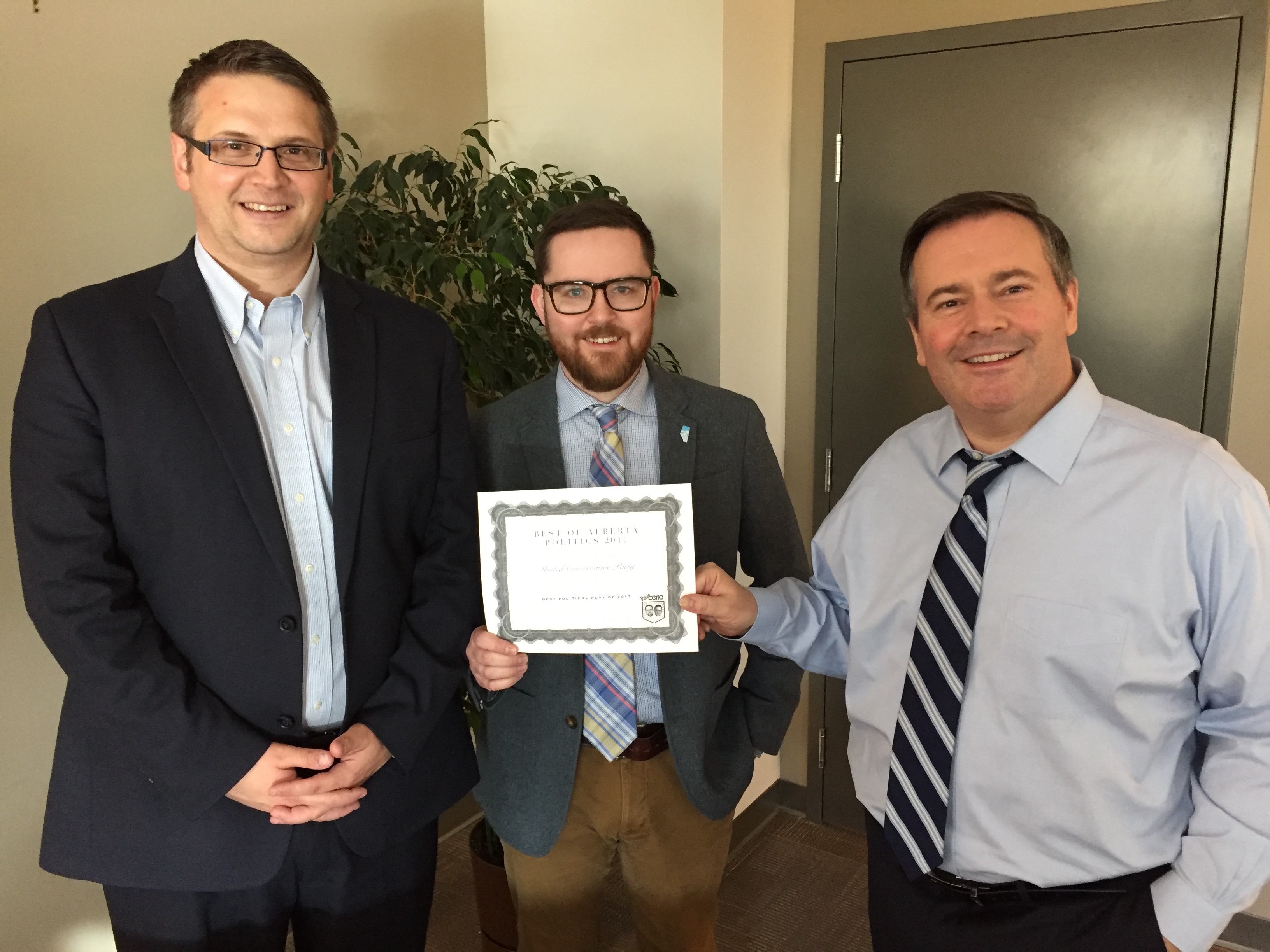
Presenting Jason Kenney with a Best of Alberta Politics Award in 2018.
A lot has changed in politics over the past fifteen years, for myself and Alberta.
Fifteen years ago I was heavily involved in student politics at the U of A and in Liberal Party politics, mostly at the provincial level. This website certainly had a partisan inclination when it was launched and along with CalgaryGrit.ca and AlbertaDiary.ca (now AlbertaPolitics.ca) became one of the go-to blogs focusing on Alberta politics.
Back then I was a proud a partisan and largely depended on blog aggregators, links from other blogs, and keyword searches to generate website traffic.
Today, I enthusiastically hold no party membership (my political inclinations have also significantly shifted) and depend much more on Facebook and Twitter to reach my readers.
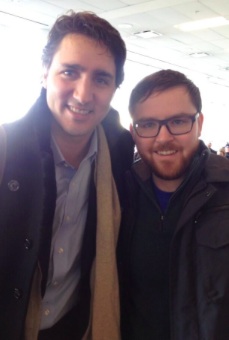
Dave Cournoyer and Justin Trudeau in 2014.
Alberta politics used to be boring, or so I am told, but the past fifteen years have been anything but boring. The political landscape has witnessed a number of political upheavals, and might be a little confusing to someone from 2005. Here’s a quick look at a few of the things that have changed in Alberta politics since Daveberta.ca was launched fifteen years ago:
Now: The United Conservative Party forms a majority government with 63 MLAs, and the NDP forms Official Opposition with 24 MLAs. Nathan Cooper is the Speaker.
“…Dave Cournoyer isn’t some obscure fat frat boy with a sticky-up haircut.” – Neil Waugh, Edmonton Sun (January 2008)
Premier of Alberta
Then: Ralph Klein was in what would soon be seen as the dying days of his premiership. Klein led the PC Party to win a reduced majority government in the November 2004 election, which was dubbed the “Kleinfeld” campaign because of the lack of central narrative of the PC Party campaign. Klein would be unceremoniously dumped by PC Party members at a leadership review in 2006, and he would resign from office months later and fade into obscurity after hosting a short-lived TV gameshow in Calgary.
Now: Former Member of Parliament Jason Kenney leads a UCP majority government, after successfully staging the merger of the membership of the PC Party and Wildrose Party, and leading the party to victory in the 2019 election. Like Klein, Kenney is hell bent on dismantling the high-quality public services that Albertans depend on each day. But unlike Klein, Kenney appears to committed to a much more ideologically-driven free market agenda.
Leader of the Official Opposition
Then: Kevin Taft had just led the Liberal Party from what appeared to be the brink of oblivion to more than triple the party’s number of MLAs. The Liberals regained most of the seats it lost in the disastrous 2001 election and made a major breakthrough in Calgary, electing three MLAs in Alberta’s largest city.
Now: Rachel Notley became leader of the official opposition after four years as Premier of Alberta. She becomes the first official opposition leader in 48 years to have previously served as premier. Notley announced in December 2019 that she plans to lead the NDP into the next election, expected to be held in 2023.
The Four Daves of Alberta politics. blogger David Climenhaga, NDP MLA David Eggen, Liberal MLA David Swann, and blogger Dave Cournoyer. (2013)
Now: Fringe politicians rally around the separatist flavour of the week, now known as Wexit, and a former respected newspaper owner and a defeated Toronto politician spoke in favour of separatism at a conservative conference in Calgary. Plus ça change, plus c’est la même chose…
It continues to be a wild ride, and a pleasure to share my thoughts on Alberta politics on this website and on the Daveberta Podcast.
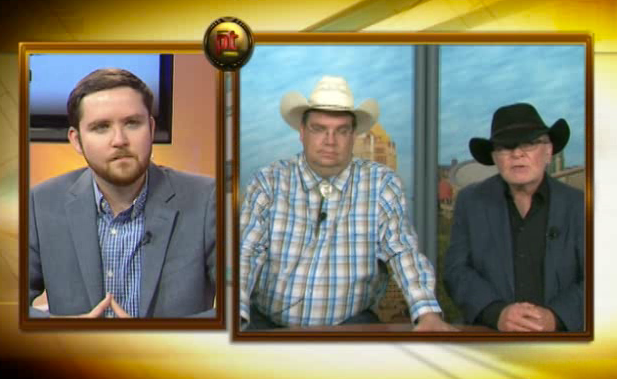
Dave Cournoyer on CTV Alberta Primetime with Duane Bratt and Don Braid. (2013)
There are a few people who I would like to recognize and thank for inspiring and supporting me along the way (this is by no means a comprehensive list and there are many people I am thankful for who helped me a long the way):
My family, and my beautiful wife Kyla in particular, have been incredibly understanding and tolerant of this hobby and my indulgences into Alberta politics.
My former boss at the Liberal Party, Kieran Leblanc, who is a dear-friend and someone who I definitely need to make time to meet for lunch with more often.
Adam Rozenhart and Ryan Hastman for helping start the Daveberta Podcast more than two years ago. The podcast continues to be a highlight for me, and a medium that I have enjoying focusing on over the past few years. (The Daveberta Podcast has been nominated in the Outstanding News & Current Affairs Series category in this year’s The Canadian Podcast Awards).
And a sincere thank you to everyone who keeps on reading this website and listening to the podcast. I may not still be writing on this website fifteen years from now, but regardless of how much longer it lasts, it has been a great experience.
Andrew Scheer and Jason Kenney at a campaign rally in Edmonton-Centre in 2019.
Six weeks after the federal election, Andrew Scheer has resigned as leader of the Conservative Party of Canada, raising instant speculation about who might enter the contest to replace him.
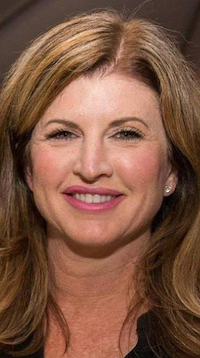
Rona Ambrose
While there does not appear to be an obvious heir apparent, Alberta Premier Jason Kenney‘s name immediately comes to mind as a potential successor. But is appears as though Kenny could just be a visitor in Ottawa for the foreseeable future.
Kenney told Postmedia columnist Don Braid yesterday he had “absolutely no intention” of running for the leadership and offered what appears to be an early endorsement of former interim party leader Rona Ambrose.
In response to rumours of his federal ambitions, Kenney told Postmedia’s Stuart Thomson that “I should be flattered that they think I’m some kind of Svengali-like genius.” The thing is, Kenney is probably the closest thing to a Svengali the Conservatives have. Whether you believe he a brilliant political operator with good intentions or a sinister political beast plotting to smash his growing list of enemies likely depends on whether you are his ally or opponent (ask Rachel Notley and Brian Jean). But there is no doubt he is a skilled career politician.
He also checks a whole bunch of boxes on the list of Conservative constituency groups.
Kenney is respected by Conservative partisans and, as long as he can keep up his winning streak, will remain one of the most prominent leaders of the Conservative movement in Canada.
Or maybe I’m just giving him too much credit.
Winning as a Conservative in Alberta is a much easier task than winning in other parts of Canada, including populous regions like Vancouver, Montreal, and Toronto. Kenney’s whistle-stop tour through Ontario during the federal election resulted in dismal returns for Conservative candidates, and a recent poll shows his approval ratings in Alberta have plummeted by 15-points since his government tabled an unpopular provincial budget, which serves as a reminder that while he is a skilled politician, he is not invincible.
Which is why he might be reluctant to jump back into federal politics.
Being premier of a large province is certainly a more influential office, at least it is in 2019, and comes with more prestige than being leader of the official Opposition in Ottawa. But staying in Alberta means he is not one-step away from becoming Prime Minister of Canada, which many people still speculate is his goal.
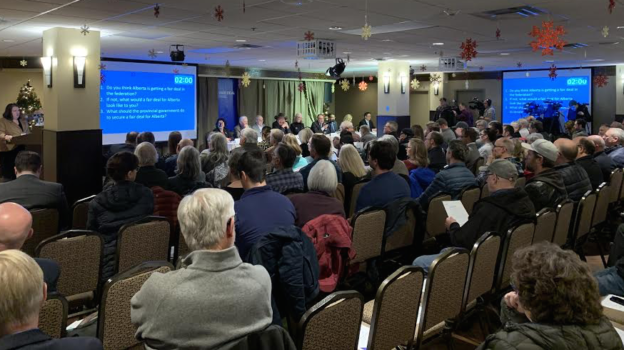
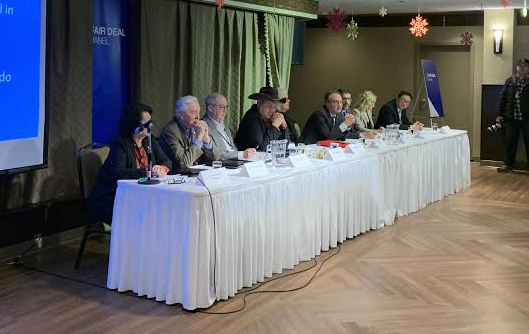
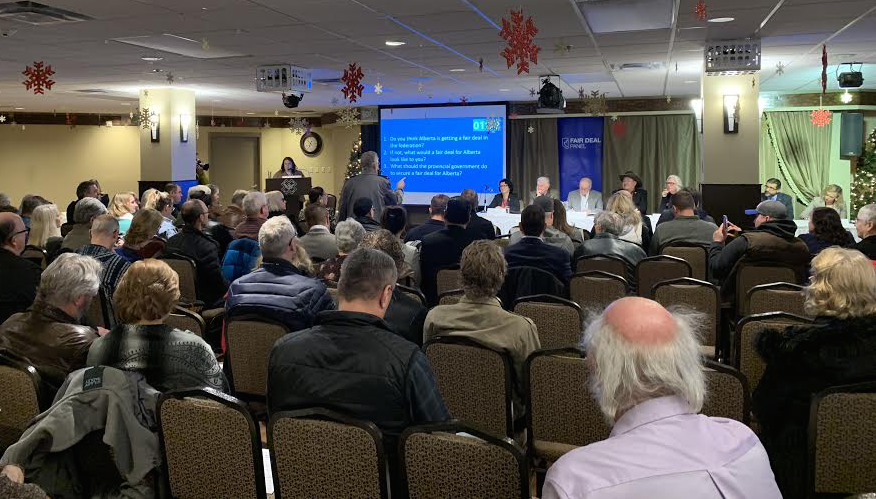
Dozens of speakers stepped up to to the mic to share their two-minutes worth of opinions at the first “Fair Deal” Panel town hall meeting in Edmonton last night. The event in the large meeting room at the St. Michael’s Heritage Hall was well-attended, but not overflowing with crowds of angry Albertans demanding separation from Canada.
Fair Deal Panelists: Oryssia Lennie, Preston Manning, Stephen Lougheed, Jason Goodstriker, Donna Kennedy-Glans, Drew Barnes, Moin Yahya, Miranda Rosin, and Tany Yao.
The first speaker up to the mic told the panel that he was a separatist from Quebec when he moved to Alberta in the 1980s and feels Alberta is not getting a fair deal from Ottawa. The second speaker used his two-minutes at the mic to boisterously declare that Canada was broken and that his personal Christmas wish was for Premier Jason Kenney to hold a referendum on separation.
A few speakers criticized the government for stirring up separatist sentiment, expressed hope that Alberta could collaborate with other provinces, and said they wouldn’t trust the United Conservative Party government to manage a provincial pension plan (a statement which got some enthusiastic cheers from sections of the room). But many of the speakers tended to share separatist, or at least anti-federal Liberal sentiments, venting frustrations about federal environmental laws, delivering detailed plot summaries of Ayn Rand’s Atlas Shrugged, and offering their expertise on constitutional issues.
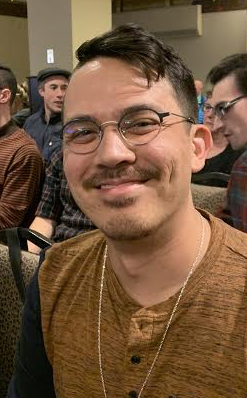
Chris Chang-Yen Phillips
In what was probably the most thoughtful two-minutes of the evening, Chris Chang-Yen Phillips, Edmonton’s former historian laureate and host of the Let’s Find Out Podcast, urged the panel to focus less on what we believe we are owed and more on taking care of each other.
Chang-Yen Phillips went on to explain that a fair deal in Confederation for him would be where every province does its part to lower carbon emissions, or transition away from fossil fuels. His comments might fall on deaf ears on the panel but it was a refreshing break from the separatist rhetoric that dominated the evening.
Who stood up at the mic was also telling. While not all of the speakers were white men who appeared to be older than 60 years old, it certainly skewed toward that demographic from my view in the room.
The panel was created following the Liberal Party‘s victory in the October 21, 2019 federal election, despite the Conservative Party earning 70 percent of the vote in Alberta, and was prescribed nine policy proposals that would ostensibly make Alberta more autonomous from the federal government in Ottawa. The proposals, ranging from creating a provincial police force to withdrawing from the Canada Pension Plan to barring municipal governments from making agreements with the federal government, are inspired by the Firewall Manifesto penned by a group of conservative luminaries in 2001.
The panel hears from a speaker at the town hall
Politically, the panel and its town hall meetings are both a relief valve and a steering wheel meant to allow Albertans to vent separatist sentiments while allowing Kenney to attempt to keep ahead of the crowd. Or at least that’s the plan.
During their time in opposition, the UCP was very eager to blame the credit downgrades on the New Democratic Party government’s “reckless” and “ideological” agenda, but it turns out that the credit rating downgrades have more to do with structural problems facing Alberta’s finances – like our unwavering over-dependence on oil and gas royalties to fund the day to day operations of the public service. That might have been a topic at a town hall interested in a fair deal for Albertans in Alberta, but this panel has a narrow political scope – and Kenney has Prime Minister Justin Trudeau is square in its sights.
There are plenty of articulate arguments to be made in favour and against pursuing the nine autonomy policies presented by the panel but they weren’t heard last night. The two-minute open mic format is a good way to let people vent and a poor way to collect meaningful information. If this is the format that is going to be used for the rest of the panel’s town hall meetings, it is difficult to believe they will gather much substantial feedback for their report to the government.
Independence Party of Alberta fires its President
Overshadowed by the media-darling Wexit group, the Independence Party of Alberta appears to be in a bit of internal turmoil.
The IPA, which recently changed its name from the Alberta Independence Party to the Independence Party of Alberta, released a statement on Nov. 1, 2019 announcing that interim president S. Todd Beasley had been removed from the position and his membership had been rescinded. The party then released another statement accusing Beasley and a group of former candidates of breaking internal party rules and being in possession of books of party membership forms.
Beasley is a controversial conservative activist who was believed to be the frontrunner for the UCP nomination in Brooks-Medicine Hat before he withdrew from the contest after making derogatory remarks about Muslims.
The Alberta Independence Party fielded 63 candidates in the April 2019 provincial election and earned a total of 0.71 per cent of the province-wide vote. Party leader Dave Bjorkman resigned shortly after the election and Wexit leader Peter Downing had announced plans to seek the leadership but his supporters appear to be continuing to collect signatures to form a separate Wexit Party.
Meanwhile, another group of separatists led by former Wildrose Party candidate Sharon Maclise, appears to be continuing its effort to collect signatures to register the Alberta Freedom Alliance as an official party in Alberta.
Public education advocate and school trustee Michael Janz joins Dave Cournoyer on this episode of the Daveberta Podcast to discuss the state of public education in Alberta and how cuts in the United Conservative Party‘s first provincial budget will impact the education system in our province. We also discuss what is behind the UCP’s drive to expand private and charter schools, and why the New Democratic Party did not cut the 70% subsidy for private schools in Alberta while they were in government.
Michael Janz (source: EPSB)
We also opened the mailbag to answer some of the great Alberta politics questions sent in by our listeners, and announce the launch of the Best of Alberta Politics 2019 survey which starts later this week.
A huge thanks to our producer, Adam Rozenhart, who tried to keep us on track during this episode.
The Daveberta Podcast is a member of the Alberta Podcast Network, powered by ATB. The Alberta Podcast Network includes more than 30 great made-in-Alberta podcasts.
You can listen and subscribe to the Daveberta Podcast on Apple Podcasts, Google Play, Spotify, Stitcher, or wherever you find podcasts online. We always love to feedback from our listeners, so let us know what you think of this episode and leave a review where you download.
Send us your feedback, or ask us any questions you have for our next episode. You contact us on Twitter, Instagram, Facebook, or you can email us at podcast@daveberta.ca.
As conservative partisans gather at the Westin Hotel near the Calgary International Airport tonight for the United Conservative Party annual general meeting, thousands of public sector workers are wondering whether they will have a job next year.
Despite promising during the election not to cut front-line services, it appears that today was the day that Premier Jason Kenney chose to break that promise, giving a new meaning to Black Friday for many Alberta workers.
Beginning on April 20, 2020, the Alberta government and its agencies will begin laying-off an estimated 750 Registered Nurses and Registered Psychiatric Nurses represented by United Nurses of Alberta, more than 1,000 health care workers represented by the Health Sciences Association of Alberta, and the elimination of more than 5,600 full time equivalent positions held by workers represented by the Alberta Union of Provincial Employees.
This does not include layoffs of teachers by school boards reacting to lower than expected education funding in the provincial budget. The Calgary Board of Education announced last week that it expects to layoff 300 teachers as a results of the UCP budget. And about 90 government lawyers are expected to be laid-off by the Department of Justice, representing about 37 per cent of the lawyers working in the government’s Legal Services branch.
From hospitals to lab services to schools, these kind of layoffs will undoubtably impact frontline workers and the delivery of the excellent public services that Albertans depend upon every day.
The layoffs are expected to take place over the next three years, but this latest development comes one week after the government seized control of public sector pension funds and moved to rollback wages of public sector workers.
Unlike some previous conservative leaders in Alberta, who saw a positive role for government and public services in society, Kenney and the team of advisors surrounding him are committed to an ideological project that is bigger than just balancing the provincial budget. They want to reshape Alberta in a more free-market and individualist image that includes increased privatization of all government services and a much more combative relationship with public sector workers and the unions that represent them.
But, as I have written before, the free market might actually be one of the UCP government’s worst enemies.
Business leaders at an exclusive Lake Louise conference today warned that ‘a declining and outdated industry, a lack of innovation and a fascination with separation’ is hurting Alberta’s image. Mary Moran, CEO of Calgary Economic Development, told the meeting that ongoing environmental criticism, delays in building oil pipelines and a surge of separatist sentiment recently led a major technology company to decide not to relocate its office to Calgary.
Kenney responded that he had not heard such criticism when he met with business owners in Houston last week. The list of people Kenney met with while he was in Texas has not been released to the public, but it is likely they are aware of the growing list of investment banks and pension funds that are divesting from the oil and gas because of that industry’s contribution to climate change.
But do not expect that to stop the UCP government, which continues to move at a breakneck speed implementing its political programme. Kenney may still have a lot of political capital to spend, but many Alberta workers will remember this Black Friday, when they discovered that his promises to them weren’t worth much more than the coroplast sign he made them on.
Notley knew what she was doing, and did not take it lightly, as she was willing to be thrown out of the Assembly for a day in order to make her point. This is the first time in recent memory that a leader of the official opposition has been removed from the Assembly.
Meanwhile, Premier Jason Kenney was on a plane to Texas safely avoiding controversy when his United Conservative Party government introduced the omnibus bill.
The Election Commissioner’s investigation is related to illegal or irregular donations to the so-called Kamakaze campaign of Jeff Callaway, the former Wildrose Party president whose brief run for the UCP leadership is considered to have been a stalking-horse for front-runner Kenney. The RCMP are conducting a separate on-going investigation into the UCP leadership campaign.
Jason Kenney (Source: Daveberta.ca)
Kenney’s campaign closely collaborated with Callaway’s campaign, and Matt Wolf, now the Premier’s Executive Director of Issues Management, played an intimate role. But that’s not the shady backroom business that is being investigated by the Commissioner or the RCMP.
The Office of the Election Commissioner was created in 2017 because it was determined that the Chief Elections Officer did not have the resources or political independence to launch thorough investigations into violations of Alberta’s election finance laws.
Wildrose MLAs argued against the creation of his office and UCP supporters have both despised and dismissed Gibson’s investigations, but it is the timing and brazenness of the firing that was shocking.
Before it was tabled for First Reading in the Assembly, Government House Leader Jason Nixon moved to fast-track Bill 22 by severely limiting debate to one hour at each stage in the Legislative process.
The UCP are changing the rules because people involved in the party broke the rules and were starting to get caught. Kenney knew that firing the Election Commissioner would be unpopular, but he is clearly willing to spend significant political capital to end the investigations into the Kamikaze campaign. It is a cynical move that is bad for democracy and bad for Alberta.
Notley asks LG to not give Royal Assent to Bill 22
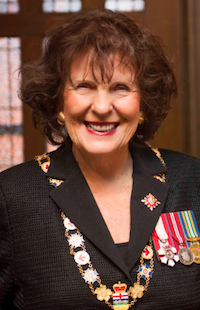
Lois Mitchell (Source: LG website)
Notley has asked Lieutenant Governor Lois Mitchell to not sign Bill 22 when it passes third reading.
It is clear that the best interests of Albertans would be served by allowing the Office of the Election Commissioner to continue its investigations into violations of Alberta’s elections laws, an unlikely outcome if Bill 22 passes, but it is both a serious request and a risky and potentially ineffective political move to ask the Lieutenant Governor to intervene (as she is likely to decline, or worse, simply not respond to the request).
That said, the Lieutenant Governor does have a power known as reservation, which has rarely been exercised over Canadian history, and probably for good reason. The powers exist in Section 55 of the Constitution Act, and explained plainly, it means the Lieutenant Governor may adopt one of three courses of action in regard to any legislation passed by the Assembly: they may assent, they may “withhold” assent, or they may reserve their assent for “the Signification of the Queen’s Pleasure.”.
I am aware of two examples in recent history in which a Lieutenant Governor opted to withhold Royal Assent to a bill passed by a provincial legislature.
John C. Bowen
In 1937, Lieutenant Governor John Bowen refused to give Royal Assent to three bills passed by Premier William Aberhart’s Social Credit government, including the Accurate News and Information Act, which would have forced newspapers to hand over the names and addresses of their sources to the government, and to print government rebuttals to stories the provincial cabinet objected to. The unconstitutionality of the three bills was later confirmed by the Supreme Court of Canada.
In 1961, Saskatchewan Lieutenant Governor Frank Bastedo opted to withhold Royal Assent for a mineral rights bill, which was later approved through an order-in-council passed by the federal cabinet in Ottawa.
There have been two recent cases in Alberta’s history where Lieutenant Governor’s have publicly mused about withholding assent.
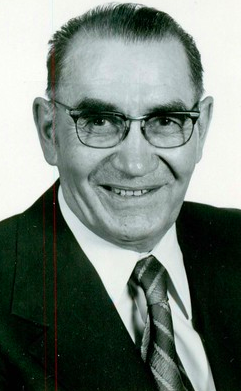
Ralph Steinhauer (Source: Alberta Lieutenant Governor on Flickr)
In 1977, Lieutenant Governor Ralph Steinhauer, the first person of Aboriginal heritage to be appointed to the post, considered withholding Royal Assent and publicly spoke against Bill 29:The Land Titles Amendment Act.
The bill introduced by Premier Peter Lougheed’s PC government was designed to prevent Aboriginal land claims in the northern Alberta, including the oilsands producing areas.
And in 2000, Lieutenant Governor Lois Hole publicly suggested she might have a long talk with Premier Ralph Klein before granting Royal Assent to Bill 11, a controversial health care bill.
And in one of the most odd-ball political plays including the Lieutenant Governor: the Kudatah. Opponents of Notley’s NDP government collected signatures for a petition to present to the Lieutenant Governor to hold a a plebiscite on the carbon tax and Farm safety laws or else they would enact a secret clause in the Elections Act to overturn the results of the May 2015 election (or something like that). With everything else that is going on lately, I don’t think Albertans need or want a repeat of that.
Daveberta Podcast host Dave Cournoyer teamed up with AlbertaPolitics.ca writer David Climenhaga at the annual Parkland Institute Conference at the University of Alberta last weekend to share what we know and what we speculate might happen with the Canadian Energy Centre Ltd. (a.k.a. the War Room) and the Public Inquiry into anti-Alberta Energy Campaigns.
Thank you to our producer Adam Rozenhart for doing a great job improving the audio quality of this episode (it was recorded on Dave’s iPhone).
The Daveberta Podcast is a member of the Alberta Podcast Network, powered by ATB. The Alberta Podcast Network includes more than 30 great made-in-Alberta podcasts.
You can listen and subscribe to the Daveberta Podcast on Apple Podcasts, Google Play, Spotify, Stitcher, or wherever you find podcasts online. We always love to feedback from our listeners, so let us know what you think of this episode and leave a review where you download.
Send us your feedback, or ask us any questions you have for our next episode. You contact us on Twitter, Instagram, the Daveberta Facebook page, or you can email us at podcast@daveberta.ca.
Thanks for listening!
(Photo: David Climenhaga and Dave Cournoyer, source: Dave Cournoyer)
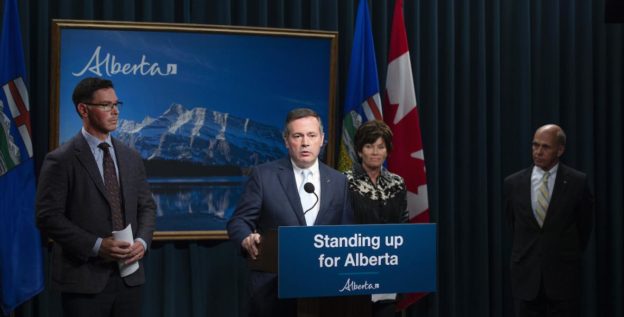
Premier Jason Kenney (at the podium) announces the appointment of Steve Allan (right) as Commissioner of the Public Inquiry into Anti-Alberta Energy Campaigns.Also pictured are then-Justice Minister Doug Schweitzer and Energy Minister Sonya Savage.
It was not a banner week for Alberta’s public inquiry into anti-Alberta energy campaigns.
Allan’s son is a partner at Dentons’ Calgary office and Justice Minister Doug Schweitzer was a lawyer at that firm before he was elected to the Legislative Assembly. Schweitzer said he severed his connections to the firm earlier this year, but Allan’s son’s employment status at the firm raises some serious questions about conflict of interest.
The inquiry’s business is shrouded in secrecy and it was designed by the government to be exempt from Freedom of Information requests that would allow a certain degree of transparency. For example, the inquiry website states that Allan intended to travel to Vancouver and Washington, DC in September 2019, and the North Coast of BC and Toronto in October 2019, but because the inquiry is exempt from FOIP requests, it is unclear who he met with during his travels.
But that has not stopped the media from digging, and the leaks from leaking.
Allen is being paid $291,000 for his one-year contract, according to information gathered by Alberta Today’s Allison Smith, and will be paid up to $800 per day to provide testimony following the completion of the inquiry’s investigation. The Edmonton Journal reported that the inquiry is hiring a part-time executive director for $108,123.
CBC also reported that Allan donated $1,000 Schweitzer’s campaign for the UCP leadership in 2017, which raises questions about the nature of his appointment as the inquiry’s commissioner.
Much of the basis of the inquiry’s investigation, that foreign-funded organizations like the Rockefeller Brothers Fund are responsible for secretly financing anti-pipeline and anti-oil groups in Canada, appears to have been discredited by investigative research done by the National Observer’s Sandy Garossino.
Garossino analyzed data on international charitable granting and found that international foundations, mostly American, have granted around $2 billion to Canadian groups over the last decade, but only 2 per cent of those funds (around $40 million) has gone towards pipeline opposition.
Of that $2 billion total in international funds, about 33 per cent came from the United States government. The second largest funder is the Bill and Melinda Gates Foundation, contributed $537 million. The Rockefeller Brothers Fund environmental grants, which have been demonized in Alberta’s political and media circles, amounted to “just two dollars per thousand in Canadian foreign grants.”
The Foundation’s submission included a report showing that funding from outside Canada represented 0.85% of total funding received by Canadian charities, and 0.26% of total funding received by charities based in Alberta.
The Foundation harshly criticized the rhetoric, fear-mongering, and false statements used to justify the inquiry and the government orders authorizing its creation.
“To even imply that support of the energy industry or even agreement with government could become a criterion for determining whether an organization receives funding comes, we suggest, dangerously close to government direction of speech and thought. Leaving aside the legality of such an action, one could suggest that such a course of action would be contrary to the very principles of democracy.”
The inquiry is due to submit a final report to the Alberta government no later than July 2, 2020. In terms of the public inquiry’s credibility crisis and the damage it and the secrecy surrounding it could cause for our province’s reputation, Albertans might eventually need a public inquiry into the Public Inquiry into anti-Alberta Energy Campaigns.
International banks continue to divest from fossil fuels
While Steve Allan’s public inquiry is focused on anti-Alberta energy campaigns, the biggest threat to the oil and gas industry in Alberta might be the free market.
Sweden’s central bank announced this week that it no longer hold bonds issued by local authorities in Canada and Australia with high carbon-dioxide emissions. Bloomberg reported that the Riksbank said it had sold its holdings of securities from Alberta, where greenhouse gas emissions per capita are three times higher than in Ontario and Quebec.
Premier Kenney’s principal secretary, David Knight-Legg, faced criticism this week after it was revealed that the senior political staffer stayed in upscale five-star hotels while travelling to London on Alberta government business. According to financial disclosures, Knight-Legg spent more than $45,000 on travel, including four trips to the British capital since the UCP formed government in April 2019.
Meanwhile, the private corporation created by the Alberta government to fight defamation of the oil and gas sector has been running on silent. Not a peep has been heard from the $30 million War Room, now renamed the Canadian Energy Centre, since former reporter and defeated UCP candidate Tom Olsen was appointed as its managing director last month.
The War Room is also exempt from Freedom of Information requests.
Deep cuts to the provincial budget are resulting in the cancellation of public services and job layoffs across the province, and the fallout from the federal election continues to dominate the political discussion. And crisis – organized crisis – reigns, as Premier Jason Kenney’s United Conservative Party government dramatically shifts the political narrative on an almost daily basis.
Preston Manning
But things got really weird last week when elected councillors of the County of Wheatland, a 8,700 person rural municipality east of Calgary, voted for a resolution calling for a possible Alberta independence vote. The councillor who introduced the motion is Jason Wilson, who according to his online biography also sits on the board of the local UCP association.
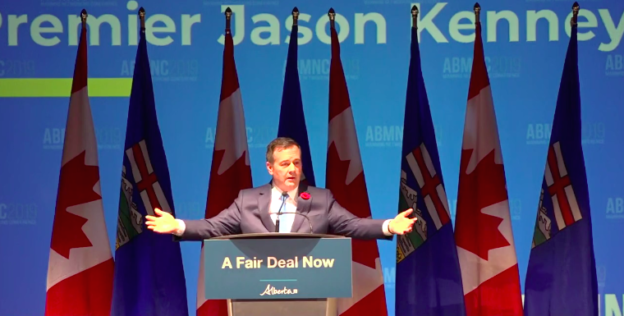
Yesterday, Kenney stood at the podium at the now one-day Manning Networking Conference in Red Deer to announce the creation of a “Fair Deal” panel that will look at ways to give the province more autonomy.
While some of the frustration felt by Albertans is legitimate, regional and partisan grievances are deeply intertwined in this province. With the UCP essentially operating as a provincial-wing of the federal Conservative Party, it is hard to believe that this panel would exist if Scheer had not snatched defeat from the jaws of victory on October 21.
The panel will be given a $650,000 budget to hold seven town hall meetings to consult with Albertans on a prescribed series of issues that have been bees in Conservative partisans’ bonnets for decades, including:
withdrawing from the Canada Pension Plan and creating an Alberta Pension Plan (something that was hinted last week and could have a big impact on the migration of interprovincial labour to Alberta),
replacing the Canada Revenue Agency by establishing a provincial revenue agency,
ending contracts with the RCMP and creating a provincial police force (the RCMP are currently investigating allegations of fraud in the UCP’s 2017 leadership contest),
opting out of federal programs like pharmacare,
forming an office of a Chief Firearms Officer (a Wildrose Party policy), and
creating an Alberta Constitution.
The panel’s mandate letter talks a lot about emulating Quebec, including implementing a rule that municipalities and school boards require the approval of the provincial government before they can enter into agreements with the federal government. This could be used by the Kenney government to cut off potential cooperation between municipalities and the federal government on projects like affordable housing, public infrastructure and climate change initiatives.
The panel and its town hall meetings are both a relief valve and a steering wheel meant to allow Albertans to vent their frustrations while allowing Kenney to attempt to keep ahead of the crowd. Or at least that’s probably the plan.
Ralph Klein
Kenney frequently boasts about the size of his electoral mandate, so it is notable that none of the autonomy polices to be considered by the panel were included in the UCP’s incredibly thorough election platform just six months ago.
The MLA committee was created in the wake of the infamous 2001 Firewall Letter, signed by right-wing luminaries Ted Morton, Tom Flanagan, Rainer Knopff, Andy Crooks, Ken Boessenkool, and future prime minster Stephen Harper, and in response to small but loud fringe groups like the Alberta Independence Party and the Separation Party of Alberta.
And, like many of the initiatives started in the final few years of Klein’s tenure as premier, it was a meant to create a distraction from what had largely become a rudderless government.
Ian McClelland
The mandate letter of the MLA committee was filled with much more flowery and hopeful language than the doom-and-gloom fear of separatism included in the mandate letter of Kenney’s panel. But the real mandate of the MLA committee was to travel the province to gauge support for the Firewall manifesto – a similar mandate of Kenney’s panel.
The MLA Committee on Strengthening Alberta’s Role in Confederation held 12 public hearings between January and March 2004 and here is what they recommended:
Pension Plan: “The Committee believes that withdrawing from the CPP and creating a separate Alberta pension plan is not in the best interests of Albertans. That is not to say that the CPP should not be improved for Albertans and all Canadians. The Committee further recommendsthat Alberta develop and advocate further CPP reforms that will end the intergenerational inequity, and move the CPP to a fully-funded foundation.” (Page 19)
Tax Collection: “Collecting our own personal income taxes would be a costly venture. One analysis suggests that set-up costs would be $30-40 million and that annual administrative costs could be between $70 and $160 million (including the costs of an additional 1,000-2,000 full time positions that might be required).By comparison, the administrative fee paid by Alberta under the TCA is less than $5 million annually. The Committee is also concerned that individual Albertans and businesses in the province would incur higher out-of-pocket costs in complying with two separate tax systems. This consideration alone makes the idea impractical. The Committee recommends that the Government of Alberta reach a new Tax Collection Agreement with the federal government that addresses Alberta’s concerns and provides increased tax policy flexibility.” (Page 21)
Mary Anne Jablonski
Police Force: “The Committee recommends that the Government of Alberta commission a detailed study of policing alternatives to the RCMP in advance of the 2007 cost review. This analysis should include a careful examination of costs, efficiencies, and levels of service. … The Committee further recommends that appropriate municipal stakeholders be consulted in the cost review negotiations in 2007, and that consideration be given to inclusion of such stakeholders on the Alberta negotiating team.” (Page 25)
Senate: “The Committee recommends that the Government of Alberta, through the Council of the Federation, encourage the Premiers to consider a process that would see the Prime Minister fill Senate vacancies from lists of provincial nominees. In Alberta’s case, the list should be generated by a Senatorial election.” (Page 29)
Intergovernmental Relations: “The Committee further recommends that the Government of Alberta re-establish an office in Ottawa. Close proximity to, and face-to-face contact with, federal decision-makers would improve relations between our governments and would help ensure Alberta interests are accurately and efficiently conveyed and addressed.” (Page 58)
Our Future: “The Committee also recommends that the Government of Alberta work towards fixing the underlying structural problems of our Canadian institutions that feed the flames of western alienation. The Committee further recommends that the Government of Alberta establish a fund for use in pursuing those legal challenges deemed to be necessary and desirable for safeguarding Alberta’s Constitutional jurisdiction.” (Page 59)
The MLA committee and its final report rejected the Firewall manifesto and was quickly forgotten after Paul Martin’s Liberals lost their majority in June 2004 and Klein’s PCs had their knuckles rapped in November 2004. But unlike Klein’s committee, which resulted in some fairly moderate and milquetoast recommendations, many of the panel members appointed by Kenney yesterday and the political environment they exist in are much more ideologically driven and politically divided.
This weird ride doesn’t look like it’s going to end anytime soon. There’s more crisis ahead.
Alberta to reopen office in Ottawa, again
In his speech to the Manning Centre, Kenney announced that the Alberta government will open offices in Ottawa, Quebec, and British Columbia. It is unusual and unclear why the Alberta government would need offices in other provincial capitals or in Ottawa, where Albertans just elected 34 Members of Parliament to represent their interests. But an office in the federal capital is not unprecedented.
The Alberta government opened an office in Ottawa in 1939. The Ottawa office was closed in 1996 and its last executive director, Gordon Olsen (brother of War Room CEO Tom Olsen), relocated to Calgary. A government review conducted in 2000 concluded that technology allows people to research information just as easily without a full-time office in Ottawa.
In 2004, Klein publicly mused about opening an Alberta government-funded office in Ottawa for the province’s elected Senate nominees, but the unpopular idea died quickly.
Premier Alison Redford reopened the office in 2013 and Calgary energy lawyer Alan Ross was hired as Alberta’s representative. Premier Jim Prentice closed the office again in 2015.
David Climenhaga from AlbertaPolitics.ca joins Dave and Adam on this episode of the Daveberta Podcast to discuss the cuts in Alberta’s provincial budget and the United Conservative Party’s growing list of public enemies, the federal election fallout in Alberta, and how the mainstream media is reporting on the Wexit group and Alberta separatism.
The Daveberta Podcast is a member of the Alberta Podcast Network, powered by ATB. The Alberta Podcast Network includes more than 30 great made-in-Alberta podcasts,
You can listen and subscribe to the Daveberta Podcast on Apple Podcasts, Google Play, Spotify, Stitcher, or wherever you find podcasts online. We always love to feedback from our listeners, so let us know what you think of this episode and leave a review where you download.
Send us your feedback, or ask us any questions you have for our next episode. You contact us on Twitter, Instagram, the Daveberta Facebook page, or you can email us at podcast@daveberta.ca.
The results across Canada were a mixed colour of red, orange, green, blue, and bleu as Prime Minister Justin Trudeau is returning to Ottawa to form a new Liberal minority government. But the results in Alberta were anything but mixed.
The Conservative Party earned 69.2 percent of the total vote in Alberta in Monday’s federal election, which is 3 percent higher than the party’s previous high-water mark of 66.8 in Alberta in the 2011 federal election.
It is no surprise that the vast majority of Albertans voted Conservative and that nearly all of the province’s elected Members of Parliament are also Conservative. This has happened in virtually every election since I was born, and about 25 years before that too.
Conservative candidates were elected or re-elected in most ridings in ranges from 70 percent to over 80 percent. It appears that Battle River-Crowfoot remains the strongest Conservative voting riding in Canada, with 85 percent of voters in that riding supporting the Conservatives.
Conservatives also dominated in Alberta’s two largest cities, earning 69 percent in Calgary, and 63 percent of the vote in Edmonton, which voted overwhelmingly for the Alberta NDP in the recent provincial election.
The Conservative Party and its predecessor parties have dominated Alberta for decades, and the Conservative have represented the majority of Alberta’s federal ridings since 1958, and have held all of the province’s seats from 1972 to 1977, 1977 to 1988 and 2006 to 2008.
This election has once again reminded Canadians of the regional divides in our country but it should also not be a surprise. Regional division is a feature of Canadian politics and our First Past the Post electoral system exaggerates these divides.
While the NDP convincingly held off Conservative challenger Conservative Sam Lilly and Liberal Eleanor Olszewski, this election further exposed fractures between the provincial and federal NDP in Alberta.
McPherson’s opponents delighted in a decision by Rachel Notley to withhold her endorsement of McPherson until days before election day but it appears to have had no impact on the results in the riding. McPherson finished with 47 percent of the vote, four points ahead of now-former MP Linda Duncan‘s results from 2015.
Liberals lost.
Amarjeet Sohi
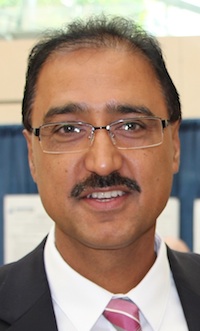
Liberal MP and Minister of Natural Resources Amarjeet Sohi was defeated by Conservative Tim Uppal in Edmonton-Mill Woods, Randy Boissonnault was defeated by Conservative James Cumming in Edmonton-Centre, and Kent Hehr was defeated by Greg McLean in Calgary-Centre, leaving the Liberals with no seats in the House of Commons from Alberta, and likely no representation in the new federal cabinet from Alberta.
The Liberals saw their province-wide vote total in Alberta cut to 13.7 percent, down from 24.6 percent in 2015. The personal unpopularity of Trudeau in Alberta, fuelled by angst and frustration with the current economic situation and the consistently low international price of oil, made it very unlikely that the Liberals would do well in Alberta in 2019.
Despite Sohi’s loss in Monday’s election, the congenial and personally popular politician is frequently named as a potential candidate for Edmonton’s 2021 mayoral election if Don Iveson decides not to seek re-election.
What could a Liberal minority government mean for Albertans?
The prospect of the Liberal minority government influenced by the NDP and Greens could lead to the introduction of new national programs that will benefit Albertans – including universal pharmacare and dental care, and expanded childcare coverage – and the prospect of real electoral reform that could ease some of the rigid political divides we saw in Monday’s election.
Trudeau announced today that his government plans to move ahead with the construction of the Trans Mountain Pipeline Expansion Project, despite delays caused by court challenges from First Nations communities. Because the construction of the pipeline project does not require any votes of Parliament, the minority situation is not likely to impact the construction of the project.
Oil pipeline aside, the Liberals are expected to push forward on their climate change plans, including the introduction of a federal carbon tax in Alberta next year. In what could be a sign of changing times, New Brunswick’s Progressive Conservative Premier Blaine Higgs announced his plans to create a provincial carbon tax, dropping his opposition the federal carbon tax.
Kenney still campaigning…
Alberta Premier Jason Kenney is showing no sign he plans to end his campaign against Trudeau, announcing this week that he has sent a letter to the prime minister outlining the Alberta government’s demands, including a plan for a resource corridor and changes to the equalization formula (none of which Trudeau campaigned for ahead of Monday’s election).
Kenney has announced plans to hold a series of town hall meetings to gauge voter frustration following the federal election. This could be similar to the MLA Committee on Alberta’s Role in Confederation created by Ralph Klein and chaired by Edmonton MLA Ian McClelland in 2004, which travelled the province to gauge support for the Firewall manifesto (the committee’s final report rejected most of the manifesto’s proposals).
The town halls are both a relief valve and a steering wheel that allows people to vent their frustrations while allowing Kenney, as Klein would say, to try to keep ahead of the crowd.
Former Alberta MLA defeated in BC
Former Alberta MLA Alana DeLong was defeated in Cowichan-Malahat-Langford, finishing second with 25% behind NDP MP Alistair MacGregor. DeLong served as the Progressive Conservative MLA for Calgary-Bow from 2001 to 2015. She ran for the BC Liberals in the 2017 provincial election on Vancouver Island as well.
Is Alberta separatism on the rise? No.
The results in Alberta and bot-driven promotion of the #wexit hashtag on Twitter have fuelled a surge of media interest of Alberta separatism, an idea that has no wide-spread support in this province.
Many Albertans are feeling a real sense of frustration with the federal government, as Monday’s election results demonstrate, but there is no evidence that Albertans are flocking en masse to separatism. None.
It would appear as though Alberta Premier Jason Kenney’s decision to campaign with Conservative candidates in Ontario during the federal election did not improve those candidates chances on election night. According to unofficial results from the election, the average Conservative vote in the ridings of the 24 candidates who campaigned with Kenney dropped from 36.3 per cent in the 2015 election to 33.2 percent in 2019.
It appears as though only two candidates who Kenney tweeted that he campaigned with while in Ontario were elected on Monday. Thornhill MP Peter Kent saw his vote percentage drop from 58 percent to 54 percent, and Markham-Unionville candidate Bob Saroya earned the same 49 percent of the vote as he did in the previous election.
Only one candidate who Kenney campaigned with, Justina McCaffrey from Kanata-Carleton, saw her party’s vote total rise (from 30 percent in 2015 to 37 percent in 2019).
It was quite unusual for a premier to campaign for their federal party of choice in another province, but it was less unusual because the premier in question is Jason Kenney, a former federal cabinet minister who very much still operates as national politician.
Kenney is frequently named as a potential candidate for the leadership of the Conservative Party, and with Andrew Scheeron rocky ground after the party’s disappointing results in the election, this is a role that might come true for the Alberta Premier sooner than expected.
His decision to help out Ontario candidates in this election could help with his leadership ambitions, but the lack of a “Kenney bump” could fuel the impression that the western politician is not as powerful a force in retail politics in Ontario’s 905 region as he was believed to be.
As Kenney’s whistle-stop tour steamed through Ontario’s Ottawa area and 905 region, the actual Premier of Ontario, Doug Ford, was nowhere to be seen.
As Conservatives reflect on the results of the 2019 election, some are already suggesting that keeping the controversial Ford out of sight may have been a tactical mistake by Scheer’s campaign. Ford was seen as a liability to the federal campaign, but in hindsight he might have been a draw for the Conservative Party in Ontario.
While Kenney is certainly popular with Conservative partisans, it would appear as though that his perceived star power might have had little impact on the chances of Ontario Conservative candidates on October 21, 2019.
Comparing the 2015 and 2019 vote percentages of Ontario Conservative candidates who Alberta Premier Jason Kenney campaigned with in October 2019 (candidates listed were mentioned by Kenney on Twitter during his campaign trip to Ontario).