Looming large over the government’s labour dispute with teachers in public, Catholic, and Francophone schools is the lavish funding the province spends on private schools.
Private schools in Alberta get 70 per cent per-student funding from the provincial government, which is the highest of any province in Canada. That tops BC, which funds private schools between 35 and 50 per cent, Saskatchewan, which funds up to 50 per cent. Ontario and the Atlantic provinces do not fund private schools at all.
Although there is a wide spectrum of private schools that provide different types of education to different groups of students, some of the private institutions receiving generous public funding include elite schools tailored to Calgary’s wealthiest families and charge more than $20,000 in annual tuition.
While the government cries poverty when it comes to the per-student funding, classroom sizes, and salary increases teachers are asking for, Premier Danielle Smith frequently points to her big promises of capital investments in the education system.
Smith promised in a televised address last year that the UCP government would build 130 new schools by 2031, which is a lot, but with the student population of the province growing by more than 33,000 per year (Smith’s number), that’s just playing catch up.
The UCP government launched a series of advertisements shortly after the ATA announced its plans to strike. The ads promote what the government describes as “agood plan” and are short, easy to understand, and are framed as a policy proposal rather than a bargaining position.
Where the paid advertising ends and the spokespeople start talking is when the government’s messaging starts going off the rails.
The government’s messaging was derailed last week when senior UCP staffer Bruce McAllister publicly berated a high school student for asking a question about the teachers’ strike and private school funding during the Alberta Next panel town hall in Calgary. McAllister, a former news anchor-turned-Wildrose Party MLA who now runs the Premier’s Office in Calgary, told the young man that his parents should spank him before he cut off his microphone.
Premier Danielle Smith, Minister of Finance Nate Horner, and Minister of Education and Childcare Demetrios Nicolaides say they are disappointed with the strike but have given no indication they were eager to return to the bargaining table to, well, actually bargain.
Smith, Horner and Nicolaides have signalled that they are prepared for a long teachers strike, and, despite claiming the cupboards are bare, the government will pay parents $30 a day to do teachers’ jobs from home, sort of, during a strike.
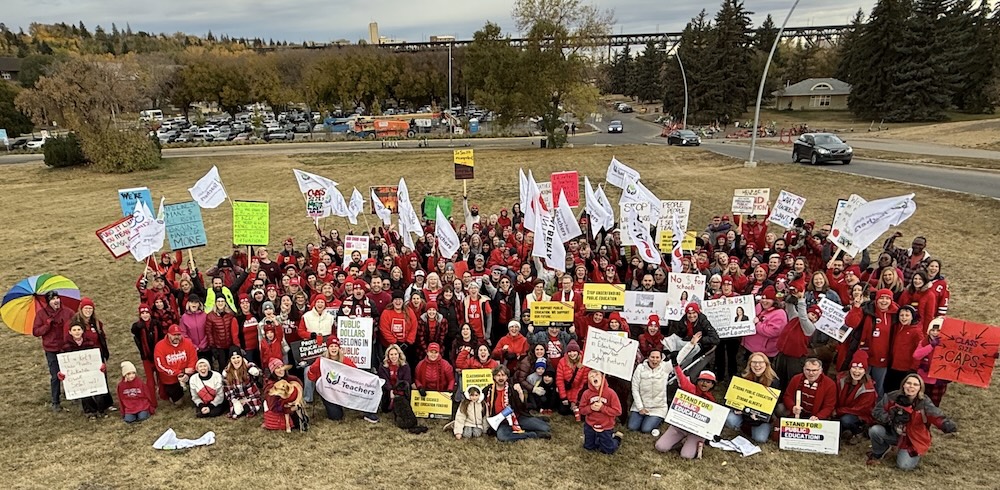
Teachers and supporters after their daily morning picket near the Walterdale Bridge in Edmonton (photo credit: Brad Lafortune)
More than 51,000 teachers launched the largest strike the history of their profession in Alberta
Schools are empty this week as more than 51,000 Alberta teachers in public, Catholic and Francophone schools launched the largest strike the history of their profession in Alberta.
The strike comes shortly after members of the Alberta Teachers’ Association overwhelmingly rejected a new contract for a second time in less than six months, with more than 90% voting against the proposal in the final days of September.
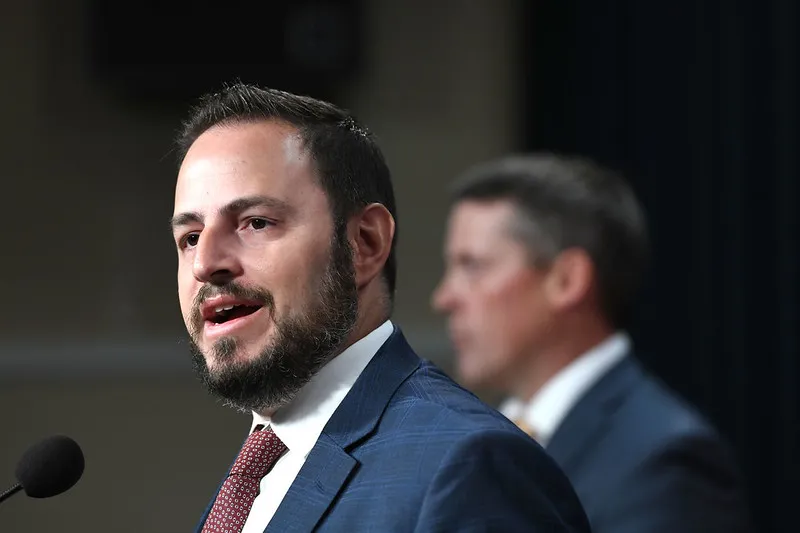
Minister of Education and Childcare Demetrios Nicolaides (foreground) and Minister of Finance Nate Horner (background) (source: Government of Alberta / Flickr)
Summer is coming to an end. Labour Day is just behind us and students are heading back to school. But it looks like Alberta teachers and the United Conservative Party government are on the brink of a major labour dispute.
It’s been 23 years since the last province-wide teachers strike in Alberta and the impasse at the bargaining table has increased the possibility of another major job action.
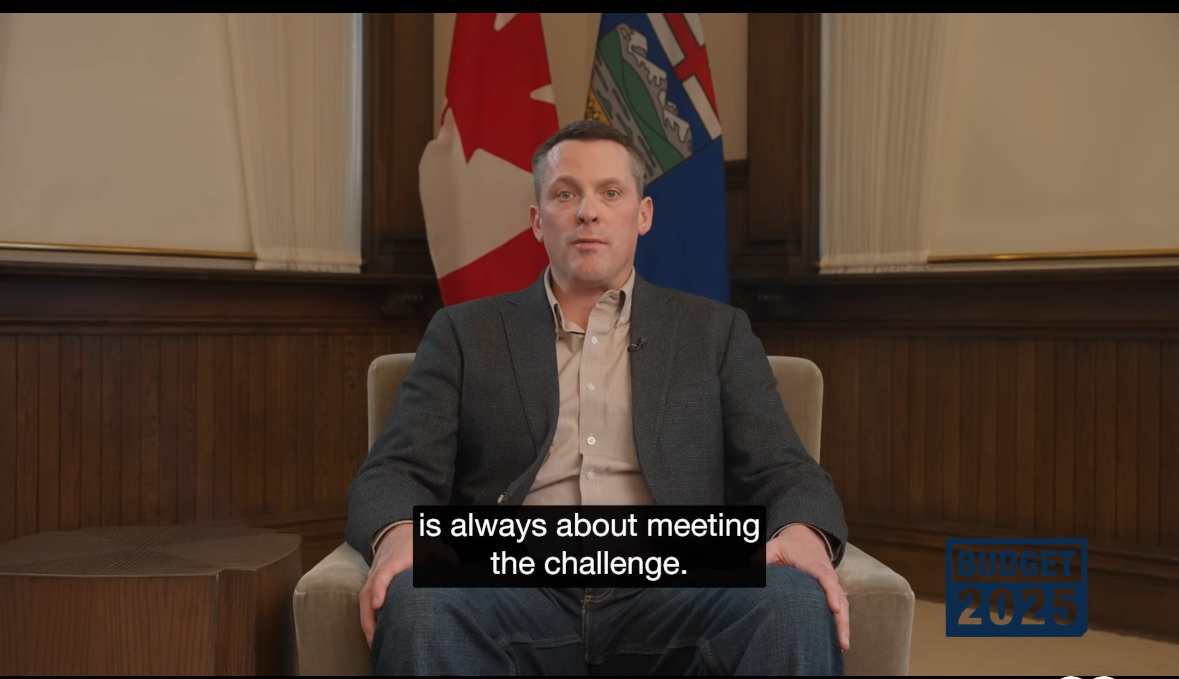
Minister of Finance Nate Horner in the government’s pre-budget release video posted on social media (source: Nate Horner / Instagram)
Alberta goes for another ride on the royalty roller coaster
After twenty years of writing about Alberta politics and about same number of provincial budgets, it’s sometimes hard not to write the same thing year after year: Alberta relies too heavily on revenues from oil and gas royalties to fund the daily operations of government.
That’s the baked-in analysis of Alberta politics. Our provincial government’s over-dependence on oil revenues is both a blessing and a curse. When the price of oil is high, things are reallygood. When the price of oil is low, it’s really bad. It is the central component of what we used to call the “Alberta Advantage.”
Alberta has been able to afford to have the lowest taxes in Canada and high spending on public services because the government could use oil and gas royalties to offset what every other province would normally collect through taxes.
Justice Minister Mickey Amery voted Best Cabinet Minister of 2024
With all the votes counted, the winners of the Best of Alberta Politics 2024 Survey have been chosen. The eighth annual survey is all about celebrating the best in Alberta politics. The winners were selected from a week-long vote for the top two choices in each category nominated by Daveberta subscribers.
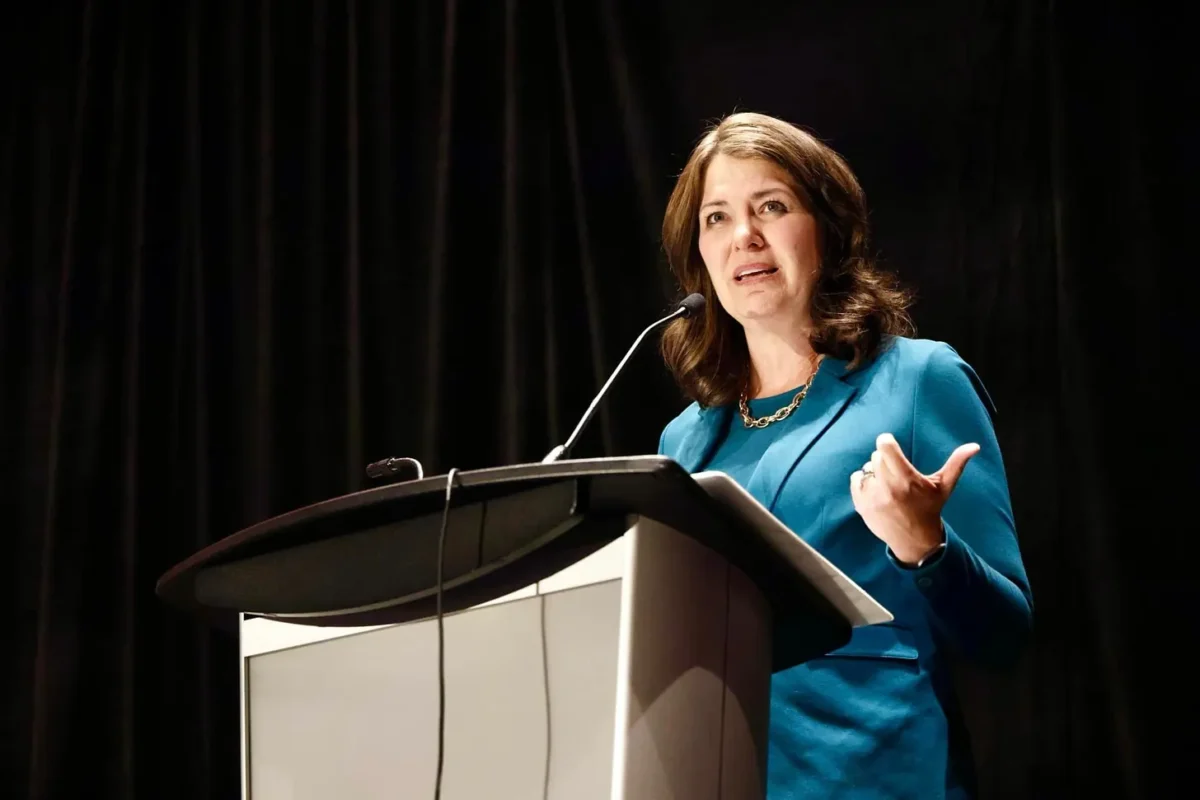
Alberta Premier Danielle Smith (photo: Danielle Smith/Facebook)
Alberta politics is unpredictable and sometimes it’s best to expect the unexpected
The main event of Alberta’s political season is nearly upon us. No, I’m not talking about the return of the Legislature or the impending by-election in Lethbridge-West. I’m talking about the United Conservative Party’s Annual General Meeting and leadership review that is happening this weekend in Red Deer.
With more than 6,000 people expected to attend, it will likely be the biggest single political convention in Alberta’s history. And it is going to be a circus.
Changes will send chills through municipal councils and create a lot of grief for MLAs
One of my goals when I moved Daveberta over to this Substack newsletter in 2022 was to take a different approach to writing about Alberta politics. For 17 years I published, sometimes, almost daily commentary on Alberta politics. Now, being on this site gives me a chance to take a breath, observe, and not feel like I need to rush analysis of what’s happening on our province’s political scene.
With that in mind, it has been very interesting to watch over the past week how Premier Danielle Smith’s United Conservative Party government has unrolled its suite of changes to municipal governance and local election laws, and responded to the loud backlash from municipal leaders.
The UCP has spent a lot of political capital and government resources in its ongoing jurisdictional fights with the federal Liberal government in Ottawa, but Smith’s sovereignty agenda isn’t limited to challenging the powers of the federal government. This week’s Bill 20, Municipal Affairs Statutes Amendment Act and last month’s Bill 18, Provincial Priorities Act are aimed at removing decision making powers from Alberta’s locally elected leaders and increasing the powers of the provincial government.
The drastic changes to the Local Authorities Election Act and the Municipal Government Act introduced by Minister of Municipal Affairs Ric McIver gives the provincial government sweeping powers to overturn municipal bylaws and increased powers to remove locally elected municipal mayors, councillors, and school board trustees.
Changes also include legalizing corporate and union donations to municipal candidates and introducing a formal structure for political parties in municipal elections in Calgary and Edmonton.
It’s hard to imagine how most of these changes would improve municipal government or municipal elections, or that there is even broad support for some of these changes (there isn’t).
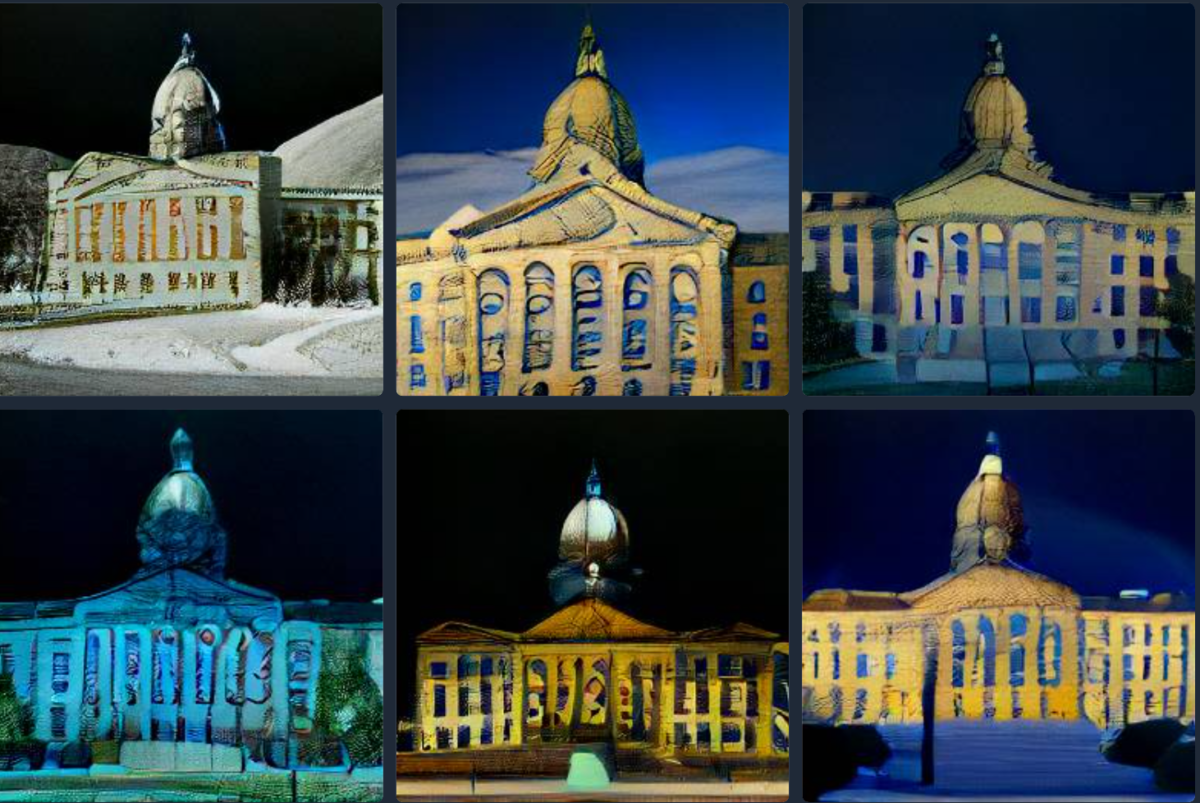
AI generated images of the “Alberta Legislature Building on the moon.” (source: DALL-E mini)
Kind of like Aunt Martha’s fruitcake. It keeps coming back at you year after year.
Over the summer months, while most Albertans were focusing on navigating wildfire smoke and intense heat, the provincial government released a steady stream of mandate letters from Premier Danielle Smith to her cabinet ministers.
The mandate letters are meant to provide direction from the Premier to the Ministers on where the departments they are responsible for fit in the government’s agenda.
Publicly releasing ministerial mandate letters provides a certain level of transparency on the surface but the stream of press releases, as conservative thinker KenBoessenkool mused last year, “turns an important governing process into a communications and stakeholder exercise.”
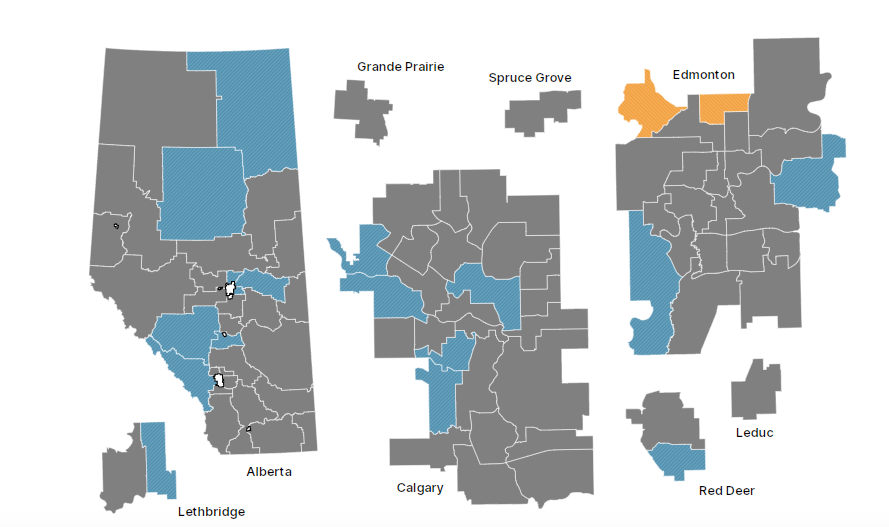
19 Alberta ridings I’ll be watching closely on Election Day (source: CanadianPolling.ca)
There are four days left until Election Day in Alberta.
Readers of the Daveberta will know I’ve been watching this Alberta election pretty closely and, while I’ve actually been watching all 87 ridings throughout the campaign, there are a few handfuls I’ve been keeping a close eye on.
Some of them will be close races and some will be won with landslides.
Here’s my list of 19 ridings I’ll be watching closely on Election Day.
“March 9th of 2020 was a pivotal day for our province. It marked the first presumptive case of Covid 19 in Alberta, commencing our province’s journey into the pandemic. It marked the worst oil price crash in Alberta’s history, leaving the provincial treasury in the unimaginable position of paying other jurisdictions to take our oil. On top of that, it was the day I was diagnosed with Parkinson’s disease. It was an incredibly tough Monday – both for our province and for me personally.”
Allard was caught in the Aloha-gate scandal in December 2021 when she and her family travelled to Hawaii for a hot holiday, despite the provincial government’s COVID-19 public health recommendations against international travel. She resigned as Minister of Municipal Affairs shortly after her return from the tropical paradise.
In December 2022, Premier Danielle Smithquietly appointed Allard as Parliamentary Secretary for Civil Liberties, though it still remains unclear what her responsibilities in that role actually are.
Former MLA jumps into Leduc-Beaumont UCP race
Former Progressive Conservative MLA Dave Quest is running for the UCP nomination in Leduc-Beaumont.
Quest served as the PC MLA for Strathcona from 2008 to 2012 and Strathcona-Sherwood Park from 2012 to 2015 and he has had a bit of a roundabout political journey ever since.
Quest shunned the UCP in 2019, running instead as the Alberta Party candidate in Strathcona-Sherwood Park, placing third with 13.38 per cent of the vote. He then placed a distant second in the October 2021 Strathcona County mayoral election. And he later joined the UCP fold in April 2022 when he signed a public letter in support of Premier Jason Kenney‘s leadership (Kenney announced his resignation a month later after a poor showing in party’s leadership review).
Also joining the UCP race in Leduc-Beaumont is Dawn Miller, who has served as a trustee with the St. Thomas Aquinas Roman Catholic Schools since October 2021.
Calgary-Bow: Demetrios Nicolaides was acclaimed as the UCP candidate. Nicolaides was first elected in 2019 and currently serves as Minister of Advanced Education.
Calgary-Buffalo: Dr. Astrid Kuhn was acclaimed as the UCP candidate in this downtown Calgary riding. Kuhn is a business instructor and communications consultant and previously worked as a reporter and news anchor with Global TV and CBC Television in Calgary.
Calgary-Lougheed: Eric Bouchard is the fourth candidate to join the race.
Calgary-Varsity: Well-known education advocate Dr. Angela Grace has been nominated as the Alberta Party candidate. Grace is the fifth candidate nominated by the Alberta Party in this election cycle.
Cypress-Medicine Hat – Damyan Davis is the third candidate to join the UCP nomination in this southeast Alberta riding.
Edmonton-Whitemud: David Masieyi is the third candidate to join the UCP race in this southwest Edmonton riding.
Innsifail-Sylvan Lake – Innisfail town councillor Jason Heistad was nominated as the NDP candidate in this central Alberta riding. Heistad also serves as Executive Secretary-Treasurer of the Alberta Union of Provincial Employees.
Lesser Slave Lake: Silas Yellowknee, former chief of the Bigstone First Nation, is the third candidate to join the UCP nomination contest.
Livingstone-Macleod: Shauna Oseen is the sixth candidate to join the UCP nomination race in this southwest Alberta riding.
NDP MLA Jon Carson announced today that he will not be seeking re-election in Edmonton-West Henday in the next election.
“Serving the people of Edmonton-West Henday has no doubt been the privilege of a lifetime,” Carson said in a statement posted on social media. “From our small campaign team huddled around the kitchen table in 2015 to the 2019 that was too close to call on election night… I know that our success was never my own, but always because of our strong team dedicated to creating a better future for Alberta families.”
Dave Cournoyer and Jon Carson at the NDP Victory Party on election night in 2015.
Carson has represented west Edmonton since 2015 when he was elected as MLA for Edmonton-Meadowlark.
An Electrician by trade, he was one of 9 NDP MLAs under 30 years old elected in Notley Wave of 2015.
Carson was re-elected in 2019 in the newly redrawn Edmonton-West Henday riding in what was the closest race in Edmonton of that election. He finished 518 votes ahead of United Conservative Party candidate Nicole Williams, a former lobbyist who has spent the past 3 years as Chief of Staff to Education Minister Adriana LaGrange.
Carson is the second NDP MLA to announce they are not running for re-election. Edmonton-Rutherford MLA Richard Feehanannounced last month that he would not seek re-election.
The area, which includes parts of the former Edmonton-Calder and Edmonton-Meadowlark ridings, has swung between the NDP, Liberals and Progressive Conservatives over the past 40 years. Notable former MLAs include Liberals Grant Mitchell, Karen Leibovici, Progressive Conservative turned Liberal Raj Sherman, and NDP MLA David Eggen (who now represents Edmonton-North West).
Druh Farrell nominated in Calgary-Bow
Druh Farrell has been nominated as the NDP candidate in Calgary-Bow. Farrell served on city council for 20 years before retiring from municipal politics last October.
She was a leading progressive voice in Calgary’s municipal debates during her time as Councillor, making her a frequent target of right-wing commentators and political action committees.
Farrell’s nomination has caused some tension with some local NDP organizers, including former president Krista Li, who have complained the party was too heavy handed in allowing the former city councilor to run.
The riding is currently represented by UCP MLA and Advanced Education Minister Demetrios Nicolaides, who was elected in 2019 with 55 per cent of the vote, unseating NDP MLA Deborah Drever, who placed second with 34 per cent.
There’s an NDP race in Central Peace-Notley
There appears to be a contested NDP nomination in the northern rural Central Peace-Notley riding. Megan Ciurysek, a Research Officer at Northern Alberta Development Council, is challenging Fairview resident and Enviro Projects owner Lynn Lekisch.
The riding is currently represented by Independent MLA Todd Loewen, who was kicked out of the UCP Caucus for calling on Premier Jason Kenney to resign. He was elected in 2019 with 75 per cent of the vote.
The riding is not named after Rachel Notley, but after her father. Grant Notley represented Spirit River-Fairview, covering much of the region, in the Alberta Legislature from 1971 to 1984.
It is fairly quiet on the UCP nomination front, with the party largely focused on Kenney’s leadership review. There are a few updates though:
Former Wildrose Party leader Danielle Smith is busy campaigning for the UCP nomination in Livingstone-Macleod, including a recent meeting with the Citizens Supportive of Crowsnest Coal group. Smith is challenging first-term UCP MLA Roger Reid.
In his first piece for CBC, Jason Markusoff breakdowns which ridings current UCP members live in. Unsurprisingly, the three ridings with the most members eligible to vote in the leadership review are Cardston-Siksika and Rimbey-Rocky Mountain House-Sundre, where nomination challengers Jodie Gateman and Tim Hoven were disqualified, and Fort McMurray-Lac La Biche, where former Wildrose leader Brian Jean just won a by-election. All three are actively campaigning against Kenney in the review.
The NDP have attracted a big name to run against United Conservative Party Minister of Advanced Education Demetrios Nicolaides. Former City Councillor Druh Farrell announced on social media today that she plans to seek the Alberta NDP nomination in Calgary-Bow.
“As a born and raised Albertan I can no longer stand by as the government attacks our education and healthcare systems, makes everyday life more expensive, and proposes devastating changes to our wild places,” Farrell said in her online announcement.
Farrell served on city council for 20 years before retiring from municipal politics last October. She was a leading progressive voice in Calgary’s municipal debates during her time as Councillor, making her a frequent target of right-wing commentators and political action committees.
Nicolaides was elected in 2019 with 55 per cent of the vote, unseating NDP MLA Deborah Drever, who placed second with 34 per cent.
Other nomination updates:
Children’s Services Minister Rebecca Schulz is running for re-election in Calgary-Shaw. The UCP nomination meeting is scheduled for March 21. Shultz was first elected in 2019 with 65 per cent of the vote.
Infrastructure Minister Prasad Panda running for re-election in Calgary-Edgemont. The UCP nomination meeting is scheduled for March 24. He was first elected in a 2015 by-election in Calgary-Foothills to replace former Premier Jim Prentice, and was re-elected in the new riding in 2019 with 52 per cent. If nominated he will face a re-match with NDP candidate Julia Hayter.
Gurinder Brar has been nominated as the NDP candidate in Calgary-North East.
Richard Bruneau third candidate to enter NDP nomination contest in Camrose. Bruneau is a bookstore owner, farmer and former Canadian diplomat who served in Afghanistan, Jordan and Palestine.
The Green Party will not be running a candidate in the Fort McMurray-Lac La Biche by-election. Party leader Jordan Wilkie told the Cross Border Interveiws Podcast that the Greens will be sitting this one out.
It certainly feels like Alberta’s political parties have shifted into campaign mode, despite the next election expected to be a year away.
NDP leader Rachel Notley was joined by an army of MLAs and volunteers for a day-long canvass in the Strathcona-Sherwood Park riding east of Edmonton. MLAs David Eggen and Lorne Dach were spotted with volunteers canvassing door to door in Edmonton-South West, and MLA Richard Feehan was door-knocking with volunteers in Calgary-Foothills and with candidate Janet Eremenko in Calgary-Currie this week. Up north, MLA Rakhi Pancholi spent most of the week campaigning alongside NDP candidate Ariana Mancini in the Fort McMurray-Lac La Biche by-election.