Categories
Alberta Politics

Get ready for a by-election in Calgary-Lougheed

Photo: A map of the Calgary-Lougheed constituency.

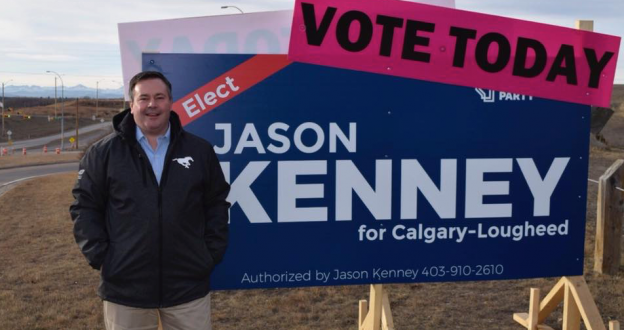
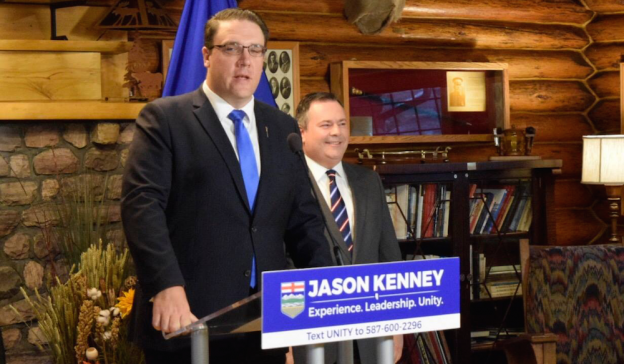
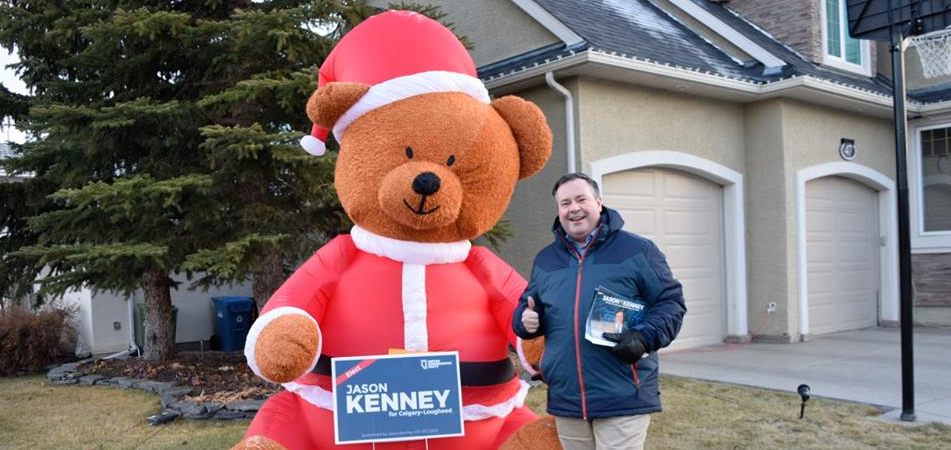
With Calgary-Lougheed MLA Dave Rodney expected to resign tomorrow in order to provide new United Conservative Party leader Jason Kenney an opportunity to enter the Legislative Assembly, a by-election will need to be called by May 1, 2018.

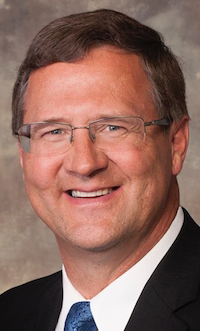
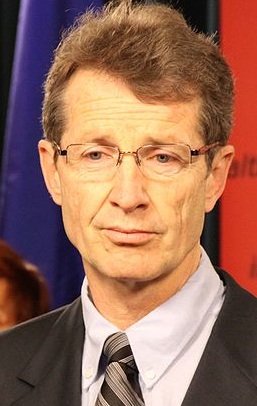
Dave Rodney MLA Calgary Lougheed
Dave Rodney

The exact timing of the by-election will be determined by Premier Rachel Notley but the smart money is on it being called soon. Every day that Kenney is not tied up with Legislative duties in Edmonton, he will be campaigning across the province.

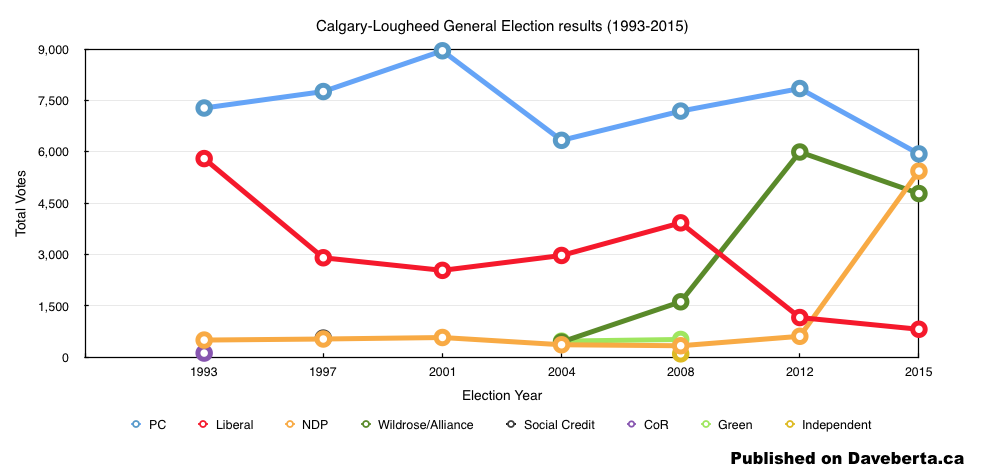
Despite being a close race in the 2015 election, with Rodney finishing 502 votes ahead of New Democrat Mihai Ion, the Orange Wave is now at low tide in Calgary. It seems likely that Kenney should have an easy time being elected in this constituency, which has elected conservative MLAs since it was first created in 1993 (but as well all know, by-elections can sometimes produce unexpected results…).

There is some irony that Kenney, who is in the midst of an ongoing feud with the Lougheed family, would become the MLA for a constituency named after Peter Lougheed. As a Member of Parliament, Kenney was quoted in 1999 describing the “neo-Stalinist make-work projects of the Lougheed and Getty years.

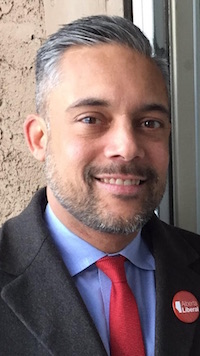
Presented with the chance to directly challenge Kenney, will Liberal Party leader David Khan carry his party’s banner in the by-election? His chance of victory are slim to none, but it would give him an opportunity to campaign and potentially face Kenney in any local all-candidates debates (if Kenney participates).

David Khan Alberta Liberal Party Leader
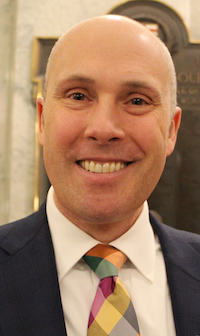
David Khan

The by-election also provides an opportunity for the Alberta Party to run a candidate. The party did not participate in the last Calgary by-election in Calgary-Greenway, but the recent floor-crossing of former NDP MLA Karen McPherson and potential future floor-crossings by former PC MLAs could provide some momentum for the upstart party.

The Calgary-Lougheed constituency was first created in 1993 and was represented by Provincial Treasurer Jim Dinning until 1997. PC MLA Marlene Graham then represented the constituency until 2004, when Rodney was first elected.

This would be the second time in recent history that a sitting MLA resigned in order to allow a party leader to run in a by-election. Len Webber resigned as MLA for Calgary-Foothills in 2014 to trigger a by-election for PC Party leader Jim Prentice. And in 1998, former Liberal Party leader Grant Mitchell stepped down as MLA for Edmonton-McClung to allow new party leader Nancy MacBeth to run in a by-election.

I have created a dedicated webpage to track party nominations and the candidates running in the Calgary-Lougheed by-election.

Here is a look at election results from Calgary-Lougheed for the General Elections from 1993 to 2015:



No place for second place in the UCP?

Brian Jean Calgary Stampede AlbertaFormer Wildrose leader and recent UCP leadership candidate Brian Jean was the only UCP MLA not assigned a role in the new Official Opposition critic roster.

Jean told reporters that he declined to accept any critic role, and despite the ill will generated towards each other in the leadership race, it seems hard to believe Kenney would completely shut-out the former party leader.

But this move, or lack thereof, will undoubtably fuel rumours that Jean is considering leaving politics. His resignation would trigger a by-election in the Fort McMurray-Conklin constituency, which he has represented since May 2015.

Categories
Alberta Politics

Jason Kenney as the face of Conservatism in Alberta

When the Legislative Assembly resumes for its fall sitting on Monday, there will be a new seating plan.

Brian Jean Wildrose Leader
Brian Jean

A new Official Opposition United Conservative Caucus made up of twenty-two former Wildrose MLAs and six former Progressive Conservative MLAs will make its debut.

Richard Starke of Vermilion-Lloydminster will continue to sit as a lone PC MLA and former UCP MLA Rick Fraser of Calgary-South East will join exiled former Wildrose MLA Derek Fildebrandt as Independent MLAs. Former New Democratic Party MLA Karen McPherson will join Greg Clark in doubling the Alberta Party Caucus. And sitting alongside Premier Rachel Notley in the government front-benches will be newly appointed Minister of Infrastructure Sandra Jansen, who left the PCs to join the NDP last November.

Leading the new United Conservative Party Caucus will be former Member of Parliament Jason Kenney, who won yesterday’s leadership vote with 61 percent, defeating former Wildrose Party leader Brian Jean, who finished with 31 percent, and Calgary lawyer Doug Schweitzer, who finished a distant third with 7 percent.

Kenney does not have a seat in the Assembly and indicated today that Calgary-Lougheed MLA Dave Rodney will resign on November 1, 2017 in order to create a by-election for his party’s new leader. Rodney was first elected in 2004.

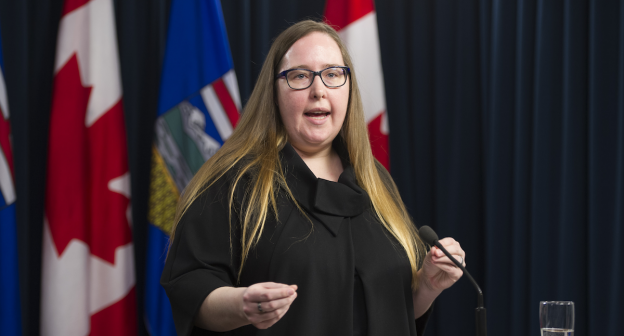
David Eggen

As the new leader of the Official Opposition, Kenney will face some immediate issues as the Assembly reconvenes. He will need to reorganize his caucus office staff, reassign his party’s MLAs to new critic roles, and set an opposition agenda for the next 16 months. Kenney will do his best to avoid the bozoeruptions that plagued the former Wildrose MLAs in his UCP caucus and pivot to issues that will solidify his party’s conservative base.

As Kenney enters his new role as the new face of Conservatism in Alberta, the NDP will hope that Albertans forgive their more unpopular policies when reminded of the new UCP leader’s more bizarre social conservative views and rhetoric.

Education Minister David Eggen will introduce legislation making it illegal for schools to “out” students who join gay-straight alliances. Bill 24: An Act to Support Gay-Straight Alliances will reopen an issue that had conservative politicians tying themselves in knots after Kenney told a Postmedia editorial board that he would support teachers outing students who join GSAs.

Eggen has said most schools have been working with the province to establish codes of conduct against discrimination and adopt policies to protect LGBTQ youth, but a small group of mostly publicly-subsidized private schools are resisting. This bill could reignite the debate over the existence of publicly-subsidized private schools, some of which charge tens of thousands of tuition per student in order to attend.

Rachel Notley Alberta NDP leader
Rachel Notley

Despite calls from their political allies, Notley’s NDP government has avoided overhauling the structure of Alberta’s school system. But open resistance by private schools over GSAs, and by publicly-funded Catholic Superintendents wanting to dumb-down the Sexual Education curriculum, could force a debate over accountability of public funds being provided to these religious schools.

Kenney has been a vocal supporter of the Catholic schools, claiming that Notley’s opposition to a dumbed-down Sexual Education curriculum is the “statist ideology of the NDP on steroids.”

Of course, Notley is not telling publicly-funded Catholic schools not to teach Catholicism, she is telling them that they must teach consent and acknowledge the existence of homosexuality (welcome to the 21st century).

Alberta is one of a few remaining provinces that provides full public funding to Catholic schools. Former PC MLA David King, who served as education minister from 1979 to 1986, has collected close to 1,000 signatures in an online petition demanding a referendum on the future of publicly funded Catholic schools in Alberta.

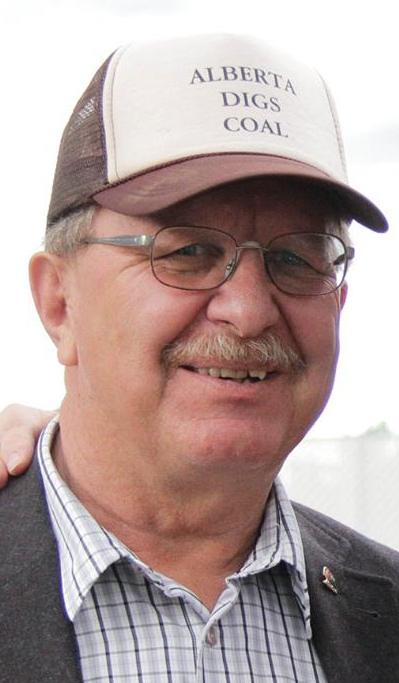
David King

On the flip-side, as Kenney enters his role as UCP leader, he will hope that Albertans forgive his more bizarre social conservative views and rhetoric when reminded of the NDP’s more unpopular policies.

Repealing farm safety laws and the government’s climate leadership plan, including the carbon tax and phase-out of dirty coal-fired power plants, were two of his key promises, along with much chest-thumping about withdrawing from Canada’s equalization program (which is not something any province can do, because the funds are collected through Canadian federal income taxes, not by the provinces).

We can expect Kenney to spend a lot of time criticizing Prime Minister Justin Trudeau, who has developed a relatively friendly working relationship with Notley’s government on issues ranging from oil pipeline construction to climate change. With deep connections to the Conservatives in Ottawa, expect a Kenney-led UCP to march in lockstep with their federal cousins on these issues.

Justin Trudeau

Notley’s NDP subtly shifted their messaging last year, focusing on launching new programs and projects they argue will “make lives better for Albertans.” This will provide the NDP with a significant contrast to the Kenney-led UCP, who they will argue would attack public services and hurt Alberta families.

Kenney has said that if he becomes Premier in 2019, the months that follow would be known as the “Summer of Repeal” as his government would immediately move to repeal legislation passed by the NDP since 2015. The trouble with Kenney’s promise to repeal all of the NDP’s agenda is that, despite anger from conservatives still bitter from losing the 2015 election, some of the changes introduced by Notley’s NDP are popular among Albertans.

Would a UCP government cancel the construction of the Cancer Treatment Centre and the Green Line in Calgary or the new hospital in south Edmonton? Would a UCP government increase school fees and cancel the $25/day childcare program? Would Kenney close schools and hospitals, like his political role model Ralph Klein did in the 1990s? Expect the NDP start asking these questions when MLAs meet in Edmonton tomorrow.

This weekend’s UCP leadership vote and the resumption of the Legislative session tomorrow marks a huge change in Alberta’s political landscape. Alberta politics has changed drastically over the past two years, and even the past decade. The next few weeks, and the next 16 months, in Alberta politics will be fascinating to watch.

Categories
Alberta Politics

Alberta NDP tops fundraising for 3rd quarter in a row, UCP expected to catch up in 4th quarter

Elections Alberta released the financial disclosures showing the results of political party fundraising in the third quarter of 2017.

Here are my quick thoughts on the latest fundraising numbers:

  • The NDP continue to demonstrate an impressive ability to raise money in Alberta. The NDP has raised the most of any party in the first three quarters of 2017.
  • This is the United Conservative Party’s first-ever quarter of fundraising, and I expect the party will raise significantly larger amounts in the next quarter when it has a permanent leader and when annual contribution limits reset before the first quarter of 2018.
  • This was likely the final quarter that the Progressive Conservative and Wildrose parties will report any significant fundraising amounts. Both parties are now controlled by the board of directors of the UCP. Funds donated to the two parties in the third quarter cannot be transferred to the UCP or any other party.
  • The Alberta Party is attempting to position itself as a centrist alternative to the NDP and UCP, but it will not be much of a political force going into the 2019 election if it party cannot start raising significantly more funds than it has in the first three quarters of 2017. I would not be surprised if these embarrassingly low fundraising returns raise questions inside the party about the future of Greg Clark‘s leadership. I expect the influence of the Alberta Together group and the influx of former PC Party officials into the Alberta Party will force the issue at the party’s annual general meeting on November 18, 2017.
  • A number of third-party advertisers (frequently referred to by the media as Political Action Committees) raised significant amounts of funds in the third quarter. I hope to delve a little deeper in this issue in a future post.
Categories
Alberta Politics

You’ll be surprised who is on Elections Alberta’s list of banned candidates

A ruling by Court of Queen’s Bench Mr. Justice William Tilleman has lifted a ban imposed on past election candidate Jamie Lall, allowing him to run in the next provincial election if he chooses. Section 57 of Alberta’s Election Act allows the Chief Elections Officer to deem an individual as prohibited from being nominated as a provincial election candidate for a period of eight or five years if they fail to file the proper financial statements with Elections Alberta following the election.

Hugh Sommerville
Hugh Sommerville

Before changes were made to Alberta’s elections laws in 1983, the head of Elections Alberta had the authority to rule individuals indefinitely ineligible to stand for provincial office if they failed to submit their financial returns on time. Three individuals are still listed as being indefinitely ineligible to run as a candidate.

“These things can happen when you’re 22 years old, and get talked into running,” wrote Hugh Sommerville in an email to the publisher of this website. The respected Drumheller-based lawyer was surprised to learn that 38 years after he stood as a provincial election candidate, he is still listed by Elections Alberta as being indefinitely ineligible to run again.

Sommerville has been elected to the board of the Law Society of Alberta and was appointed to the Alberta Health Services Board of Directors in 2015, but in 1979 he ran as a candidate for the New Democratic Party in the Three Hills constituency. He earned 222 votes.

Jamie Lall PC Chestermere Rocky View
Jamie Lall

“I ended up being ineligible because my campaign spent absolutely no money, and my campaign manager left the province for employment in Saskatchewan without filing papers to say that,” Sommerville wrote. “I was working in Fort McMurray at the time, and my mail was being sent to the family farm. By the time I actually received notice that my campaign manager had neglected to file, I was already on the naughty list,” he wrote.

The other two past candidates listed as indefinitely ineligible are Claire Williscroft, another NDP candidate in the 1979 election, and Barry Cook, an Independent candidate in the 1982 election.

“I suppose I should look into whether it is possible to get my name off the list after 38 years,“ Sommerville wrote, noting that he has no intention of running in any future provincial election.

As for Lall, he is now a member of the United Conservative Party but says he is not sure if he will run in the next provincial election, expected to be held in 2019.

UPDATE: Sommerville has been removed from the list.


Included on the list of individuals prohibited from running or serving as chief financial officers until May 9, 2024, are Edmonton City Council candidates Tony Caterina and Rocco Caterina. The senior Caterina, Tony, ran as a Progressive Conservative the 2015 election, and his son Rocco, served as his chief financial officer.

Tony Caterina told Metro Edmonton in June 2016 that he filed his financial disclosures, but was unable to retire an $11,000 deficit he incurred during the campaign.

Categories
Alberta Politics

No Thanks and So Long. Former PC MLA Rick Fraser leaves the UCP to sit as an Independent

Photo: Former PC MLAs Richard Starke (left) and Rick Fraser (right) at the 2016 Calgary Pride Parade (Photo from Facebook). 

The recently formed United Conservative Party may be leading in the polls but the party is looking a lot less united. One of the party’s 28 MLAs, Calgary-South East MLA Rick Fraser, announced on social media this morning that he was leaving the UCP caucus to sit as an Independent MLA.

Fraser, who was re-elected for a second term as a Progressive Conservative MLA in 2015, is the third politician to leave the ranks of the UCP since it was formed in July 2017. Vermilion-Lloydminster MLA Richard Starke declined to join the UCP and decided to continue sitting as a PC MLA in the Assembly shortly after he party was founded. Then, in August 2017, the party’s co-finance critic Derek Fildebrandt resigned from the caucus after an expenses controversy and a traffic-accident related court battle.

In his resignation letter, Fraser gave a number of reasons for his departure, ranging from social and economic issues to the party’s increasingly polarizing hyper-partisan tone. While the UCP does not yet have any official policies, or even a permanent leader, it is seems clear that Fraser is uncomfortable with the direction that the province’s largest conservative party is heading.

Social issues are the achilles heel for the UCP, just as they were for the party’s previous incarnation, the Wildrose Party.

The two main candidates for the leadership of the party,  Jason Kenney and Brian Jean, are openly appealing to the party’s social conservative and rural base of supporters and have been extremely reluctant to discuss any social issues. And as we saw in this week’s UCP leadership debate, only Calgary lawyer Doug Schweitzer was willing to come out in support of gay rights, taking Kenney to task for his silence.

Earlier this year, Wildrose MLAs were tying themselves in knots over student-organized Gay-Straight Alliances and whether school administrators should be required to inform parents if their children joined one of the anti-bullying clubs. The debate, which was triggered by comments Kenney made to the Postmedia editorial board in Calgary, was painful and acrimonious to watch.

And while the party’s interim governing board has issued a statement in support of LGBTQ rights, support for that position by some of UCP MLAs and party members is questionable.

The unanimous position among the UCP leadership candidates to repeal the carbon tax without proposing any alternatives to reform or replace it suggests that none of them see climate change as a serious issue.

Comments, tweets and Facebook posts promoting climate change denial and skepticism have been rampant among the former Wildrose MLAs in the UCP caucus. Earlier this year, Cypress-Medicine Hat UCP MLA Drew Barnes helped fund a film promoting climate science skepticism. And last year, Drumheller-Stettler UCP MLA Rick Strankman was  forced to apologize – twice – after penning an article comparing Alberta’s carbon tax to the Holodomor – the Ukrainian genocide of the 1930s.

An MLA’s first responsibility is to their constituents, and if Fraser does not feel he can effectively represent the people of Calgary-South East as a member of the UCP, he has every right to leave that caucus. He was elected under that banner of the Progressive Conservative Party and now that party is now essentially defunct.

Fraser writes in his letter that he will consult his constituents before making any future decisions, which means he might be open to joining another party sometime in the future. I am willing to bet that Greg Clark , leader of the upstart conservative-lite Alberta Party, is making some phone calls today.

Categories
Alberta Politics

Tracking MLA endorsements in the UCP leadership race

Members of the United Conservative Party will be selecting the party’s first permanent leader on October 28, 2017. After of this week’s fee payment deadline, four candidates will be listed on the ballot: Brian Jean, Jason Kenney, Doug Schweitzer and Jeff Callaway.

Of the 28 UCP MLAs represented in Alberta’s Legislative Assembly, nineteen have endorsed candidates in this leadership race (I am including Jean, the only sitting MLA in the contest, who has obviously endorsed himself). Here is a map showing which UCP MLAs have endorsed which leadership candidate as of September 14, 2017.Brian Jean: Leela Aheer (Chestermere-Rocky View), Wayne Anderson (Highwood), Dave Hanson (Lac La Biche-St. Paul-Two Hills), Todd Loewen (Grande Prairie-Smoky), Don MacIntyre (Innisfail-Sylvan Lake), Angela Pitt (Airdrie), Ron Orr (Lacombe-Ponoka), Dave Schneider (Little Bow), Pat Stier (Livingstone-Macleod), Glenn van Dijken (Barrhead-Morinville-Westlock), Tany Yao (Fort McMurray-Wood Buffalo)

Jason Kenney: Drew Barnes (Cypress-Medicine Hat), Grant Hunter (Cardston-Taber-Warner), Ric McIver (Calgary-Hays), Jason Nixon (Rimbey-Rocky Mountain House-Sundre), Mark Smith (Drayton Valley-Devon), Rick Strankman (Drumheller-Stettler)

Doug Schweitzer: Wayne Drysdale (Grande Prairie-Wapiti)

Categories
Alberta Politics

What if Paul Hinman had lost the 2009 by-election in Calgary-Glenmore?

Former Wildrose Alliance Party leader Paul Hinman staged an odd and brief reappearance on Alberta’s political stage this week when he announced his plans to run for the leadership of the United Conservative Party. But when the Sept. 12, 2017 deadline for candidates to deposit a $57,500 fee had passed, Hinman did not appear to make the cut.

Hinman’s blip on the political radar this week got me thinking about the bigger role he has played in shaking up Alberta’s political environment. Not as a major player but as a secondary character.

His time as leader and sole MLA representing the social conservative Alberta Alliance and Wildrose Alliance from 2004 to 2009 was fairly unremarkable, but it was the role he played after he resigned as leader that had a much bigger impact in our province’s political history.

After he was defeated in his bid for re-election in Cardston-Taber-Warner in 2008, Hinman was returned to the Legislature by a 278-vote narrow victory in a September 2009 by-election in Calgary-Glenmore. The seat was previously represented by deputy premier Ron Stevens and was believed to be a Progressive Conservative urban stronghold.

Even though he would again be unsuccessful in his bid to get re-elected in the following general election, Hinman’s win undoubtably added to the momentum of Danielle Smith‘s Wildrose Alliance going into the 2012 election.

But what would have happened if Hinman had lost that by-election race in Calgary-Glenmore?

Hinman’s by-election win provided early credibility for the Wildrose Alliance by showing that the party could elect candidates in long-held PC Party constituencies. Without this by-election win, the Wildrose Alliance’s momentum could have stalled or slowed going into the 2012 election.

Liberal candidate Avalon Roberts finished only 278 votes behind Hinman. Had she won the by-election, David Swann might have stayed on as party leader instead of resigning in 2011. A win in Glenmore might have led the Liberals to experience a resurgence in support going into the 2012 election, building on the party’s 2008 gains in Calgary. Or maybe the PCs would have simply won back the constituency in the following general election, as they did in 2012.

Popular city councillor Diane Colley-Urquhart placed third as the PC candidate in the by-election, which was not really a reflection of voters feelings towards her but of the unpopularity of then-premier Ed Stelmach in Calgary. If Colley-Urquhart had held on to Glenmore for the PCs, would PC MLAs Heather Forsyth and Rob Anderson have crossed the floor to the Wildrose Party in January 2010?

And an even larger ‘what-if’ question is, if Hinman had not won the by-election and his party’s momentum had sputtered, would Stelmach have resisted pressure from his cabinet and party to resign in 2011? Would he still be premier today?

While Hinman’s narrow win in a 2009 by-election is now an obscure footnote in Alberta’s political history, its impact on our province’s political environment and the split it helped create in the conservative movement in Alberta was huge.

Thinking about these kinds of scenarios can be endless fun for politicos (or at least for me).

Categories
Alberta Politics

The big revenue problem facing Alberta that none of our politicians want to talk about

As the Alberta New Democratic Party passes the half way mark of their first four-year term in office and the United Conservative Party chooses its next leader, a big question that remains unanswered in Alberta politics today is how, in the long-term, the Alberta government plans to deal with the revenue shortfall created by the drop in the international price of oil.

Premier Ralph Klein
Ralph Klein

After decades of rich oil and gas royalties pouring into public coffers, the Alberta government became over-dependent on oil and natural gas royalties to pay for a large portion of the daily operations of government.

The old Progressive Conservative government led by Ralph Klein used those high royalty revenues to subsidize corporate and personal tax cuts, which proved politically popular in the short-term but fiscally irresponsible in the long-term. When the international price of oil dropped in 2014, so did about $10 billion worth of expected government revenue that the PCs were depending on.

After their election in 2015, Rachel Notley‘s NDP took steps to diversify government revenue with moderate increases to corporate and personal taxes. Even after those increases, Albertans still pay some of the lowest taxes in Canada and those increases were nowhere enough to fill the revenue shortfall.

Jason Kenney Calgary Stampede Alberta
Jason Kenney

The positive news is that Alberta’s economy is recovering, but unless the international price of oil recovers, the government will remain in a deficit situation for the foreseeable future.

While I support Notley’s smart choice to continue investing in public services and capital infrastructure projects during the course of the economic recession, it is not clear that the NDP have a real plan to deal with Alberta’s revenue challenges in the long-term.

It is unlikely that the government will revisit Alberta’s comparatively low royalty rates anytime soon, and the NDP appear unwilling to start a discussion about introducing a provincial sales tax, at least until after the next election. A sales tax could help alleviate the government revenue problems and would be smart move for the province in the long-term.

It is an odd sight to read Finance Department documents that both lament a large budget deficit and boast about low taxes. The NDP inherited one big bad habit from the old PC government and have been unable to break from it.

Brian Jean Calgary Stampede AlbertaBut if you think the candidates for the leadership of the new United Conservative Party are coming up with new, bright ideas for Alberta’s long-term future, think again. Political rhetoric about returning to the mythical “Alberta Advantage” and calls for drastic cuts to both government spending and revenue are mostly what Jason Kenney, Brian Jean and Doug Schweitzer have proposed.

It is meat for the party base, but not exactly inspiring plans for Alberta’s future.

I get the impression that while they are playing from different sides of the political spectrum, both the NDP and the UCP’s prospective leaders are praying that oil prices recover enough to avoid having to raise taxes or slash the budget to shreds.

Alberta has a revenue problem. And the sooner someone is willing to “take the tax bull by the horns,” as my colleague David Climenhaga wrote, and begin planning for a more sustainable government revenue stream, the better off future generations of Albertans will be.


Schweitzer wants to lower the minimum wage

Doug Schweitzer Calgary Alberta Conservative
Doug Schweitzer

Doug Schweitzer says he would cut Alberta’s minimum wage from $15 per hour to $12.20 per hour, because it is “right choice for Albertans whose livelihoods count on it the most.”

While he is likely referring to the livelihoods of business owners, it would be the wrong choice for the people impacted the most – the lowest wage working Albertans who would have their wages cut from $15 per hour to $12.20 per hour.

It is safe to say that Schweitzer has earned much, much more than $12.20 per hour at his downtown Calgary job as a partner at Dentons, the world’s largest law firm.

Categories
Alberta Politics

Mid-week Alberta Politics Roundup

Photo: Kent Hehr with Prime Minister Justin Trudeau at the Calgary Stampede in July 2017. (Photo from Kent Hehr’s Facebook Page)

It has been a busy week for me, so without the time to write a full column-type post, here is a quick summary of what I have been watching in Alberta politics over the past few days.

Calgary MP moved in Trudeau cabinet shuffle

Calgary-Centre Member of Parliament Kent Hehr was appointed Minister of Sports and Persons with Disabilities this week as part of a fairly significant shuffle in Prime Minister Justin Trudeau’s cabinet. Hehr had previously served as Minister of Veterans Affairs, a post he had held since his election in 2015. Though the move is viewed as a demotion at worst or a lateral move at best, there is no indication that the shuffle was a reflection on Hehr’s performance as minister, which appeared to fulfill competently.

As a former amateur athlete and leader in the Canadian Paraplegic Association, Hehr appears to be a good fit for this role.

While the Minister of Sports is traditionally seen as a junior level position in cabinet, the prospect of Calgary bidding for the 2026 Winter Olympics and Canada joining with the United States and Mexico in a bid to co-host the 2026 World Cup could increase its political importance.

Meanwhile, Calgary-Skyview Liberal MP Darshan Kang announced he would take a medical leave of absence due to stress caused by allegations of sexual harassment that have dogged the federal politician over the past few weeks.

Alberta MPs in Ottawa Shadow Cabinet

Following this week’s federal cabinet shuffle, Conservative Party leader Andrew Scheer announced a new roster of Official Opposition critics. Alberta Conservative MPs in the shadow cabinet include: International Development critic Ziad Aboultaif, Agriculture and Agri-Food critic John Barlow, Status of Women critic Rachael Harder, Science critic Matt Jeneroux, National Revenue critic Pat Kelly, Immigration, Refugees and Citizenship critic Michelle Rempel, and Natural Resources critic Shannon Stubbs.

NDP Minister continues his Coal Tour

Economic Development and Trade Minister Deron Bilous continues his town hall tour of Alberta’s coal communities this week. In the Town of Hanna, Bilous and mayor Chris Warwick announced $450,000 in funding create Community Action Teams led by the Cactus Corridor Economic Development Corporation to focus on initiatives identified in a report by the Hanna Climate Change Strategy Task Force.

While Bilous left Hanna with more questions than answers, he deserves some credit for traveling to these communities holding these town halls – something the NDP government should have done two years ago.

UCP candidate calls on Alberta to national Manitoba port

Jeff Callaway was looking to generate headlines for his United Conservative Party leadership campaign, and he succeeded with his proposal for the Alberta government to nationalize and build a pipeline to access Manitoba’s Port of Churchill. Federal NDP leadership candidate Niki Ashton, who is the MP for  Churchill—Keewatinook Aski, called on the federal government to nationalize the port of Churchill in Dec. 2016.

Low federal NDP membership numbers in Alberta

Speaking of the federal NDP, the party released the breakdown of membership numbers by province ahead of its September leadership vote. Despite having one of only two NDP governments in the country, the federal NDP only recorded having 10,188 members in Alberta, compared to 52,200 in Ontario and 31,974 in British Columbia.

The low participation rate may have a lot to do with the deep political divide between the Alberta NDP and its federal and provincial counterparts over the expansion and construction of oil pipelines, which is a priority for Rachel Notley’s government. To my knowledge, no Alberta NDP MLAs have released public endorsements for any of the federal NDP leadership candidates.

Garry Keller joins the UCP caucus

Until recently he was rumoured to be eyeing the federal Conservative nomination in the upcoming Sturgeon River-Parkland by-election, but it was announced today that Garry Keller, a former chief of staff to Rona Ambrose, would join the United Conservative caucus as a special advisor.

Categories
Alberta Politics

Alberta Politics Roundup: It rarely slows down, even in the summer

Photo: Grande Prairie-Smoky MLA Todd Loewen, Livingstone-Macleod MLA Pat Stier, UCP leadership candidate Brian Jean, and Little Bow MLA David Schneider. (credit: Brian Jean’s Facebook page)

It feels like politics rarely slow down in Alberta, even in the summer. Here is a quick look at some of what has been happening:

New UCP caucus has a spending problems

A day after the United Conservative Party lined up to criticize Alberta Finance Minister Joe Ceci, it was revealed that the UCP caucus is facing a $337,000-deficit this year. The report triggered criticism of former Wildrose leader Brian Jean (pictured in the photo above) from Bonnyville-Cold Lake UCP MLA Scott Cyr and party leadership candidate Doug Schweitzer.

Cyr said Wildrose MLAs were stonewalled when they requested information about ballooning staff at the former official opposition caucus office.

Schweitzer said the new party will not be a credible voice for fiscal management if it cannot manage its own internal budget. Schweitzer has described Jean’s leadership platform as “big government” and is proposing deep cuts to the provincial budget if he becomes premier in 2019.

Bilous hosts town halls in Coal Communities

Minister of Economic Development and Trade Deron Bilous will be spending much of the next week visiting communities impacted by the phase-out of coal fired power plants. Bilous will be hosting town hall meetings in Hanna on August 27 and 28, Forestburg on August 28 and 29, and Leduc, Warburg and Wabamun on August 31. Bilous admitted earlier this month that the New Democratic Party government needed to improve its communications with these communities (I wrote about this in Nov. 2016).

Kenney too busy to meet with kd lang

When Jason Kenney was asked why he was not attending any Calgary Pride Week events, he initially said it was because he did not get an invitation. When he received an invitation from Alberta-born internationally successful musician kd lang to meet in person to discuss LGBTQ issues, Kenney’s spokesperson said the UCP leadership candidate was too busy. It appears as though Kenney will go to far lengths not to do anything that would alienate the social conservative supporters he hopes will help make him leader of the UCP in October 2017.

Hehr on the move

Calgary-Centre Member of Parliament Kent Hehr is expected to be shuffled from his role as Minister of Veterans Affairs as Newfoundland MP Seamus O’Regan is moved into the role. When Hehr was appointed to cabinet in 2015, he became the first Liberal cabinet minister from Calgary since the early 1970s. It is not yet known what his new role will be.

Kang expected to be booted from Liberal caucus

The Hill Times reports that Calgary MP Darshan Kang is expected to be removed from the Liberal Caucus this week “after an investigation into sexual harassment allegations levelled against him by a young staffer unearthed troubling findings.” Kang was elected as the MP for Calgary-Skyview in 2015 after serving two-terms as the Liberal MLA for Calgary-McCall.

Keller out of Sturgeon River-Parkland race

Gerry Keller, the former chief of staff to Rona Ambrose, has decided not to enter the Conservative Party nomination to run in the upcoming Sturgeon River-Parkland by-election. Current candidates running for the nomination include local party organizer Jamie Mozeson, recently relocated BC-businessman Rick Peterson and political staffer Dane Lloyd.


Categories
Alberta Politics

Derek Fildebrandt has a very, very bad week.

Photo: In happier times, as Derek Fildebrandt campaigned alongside Wildrose leader Brian Jean in Strathmore-Brooks on the first day of the 2015 election. (Photo from Brian Jean’s Facebook Page).

Over the course of eight days, Strathmore-Brooks MLA Derek Fildebrandt went from being a potential leadership candidate to stepping down from the United Conservative Party Caucus.

As a former spokesperson for the Canadian Taxpayers Federation and Official Opposition finance critic in Alberta’s Legislative Assembly, he had earned a reputation as a relentlessly partisan critic of the old Progressive Conservative and current New Democratic Party governments. His reputation as a fiscal crusader, and his political future, were put in question this week.

Here is a quick look at the past eight days in FIldebrandt’s political world:

August 8, 2017: Former Wildrose Party finance critic and United Conservative Party finance co-critic Derek Fildebrandt announces he will not run for the leadership of the new party. He tells reporters than he will instead use his United Liberty PAC to push the party and leadership candidates to adopt libertarian policies.

He takes a direct shot at former Wildrose leader Brian Jean, now a candidate for the UCP, saying that “he is not the best man to lead the party and lead Alberta.” (Background: Jean attempted to suspend Fildebrandt from the Wildrose Caucus in June 2016).

August 9, 2017: Postmedia reports that Fildebrandt has been renting his taxpayer-subsidized downtown Edmonton apartment on Airbnb. Fildebrandt tells the media to “Find someone under 35 with a downtown apartment that doesn’t let their apartment if they’re gone half the year.

August 10, 2017: Fildebrandt issues a statement saying he plans to donate the $2,555 he earned through Airbnb to the provincial debt. ‘I’m not interested in letting the politics of smear distract from the real issues,’ his statement read.

Rather than focusing on complaining about people trying to smear him, he should acknowledge that it was a mistake and he should apologize,” Premier Rachel Notley tells reporters.

Finance Minister Joe Ceci calls on Fildebrandt to apologize for his actions. “The public puts a lot of faith in their elected officials, and when people act like that I think they destroy that faith,” Ceci told reporters.

Alberta Party leader Greg Clark calls for penalties for MLAs who break reimbursement rules and writes to Legislative Assembly Speaker Bob Wanner to ask for an audit of all MLA living expenses.

Late that night, Fildebrandt announces he is taking leave from his position as UCP finance co-critic and is leaving on vacation.

August 14, 2017: Clark releases documents that he suggests show Fildebrandt claimed meal expenses and an MLA per-diem for the same meal nine times. Fildebrandt releases a statement admitting that there “were some administrative errors in processing meal receipts.

These expense claims are concerning and appear to be part of a larger pattern of behaviour that is unacceptable for a member of the United Conservative Party caucus,” United Conservative Party leader Nathan Cooper said in an statement

August 15, 2017: CBC reports that ‘Edmonton police conducted an investigation and on June 14, 2016, charged Fildebrandt under the provincial traffic act with leaving the scene of an accident and failing to notify the owner of the damaged vehicle.’ Cooper tells CBC he did not know about the charge. The trial was adjourned until September 6, 2017, when Fildebrandt is expected to present his evidence.

Late tonight, Fildebrandt issued a statement on his Facebook page where he took two swipes at the media before announcing his plans to leave the UCP caucus and sit as an Independent MLA.

Categories
Alberta Politics

Rebel Media becomes a wedge issue in the United Conservative Party leadership race

This weekend’s violent march of Nazis and white supremacists through the streets of Charlottesville, Virginia made international headlines and also had repercussions for the United Conservative Party leadership race in Alberta.

Leadership candidate Doug Schweitzer, a Calgary lawyer who is trying to position himself as a social moderate in the contest, used this weekend’s dark events south of the border to call on Jason Kenney and Brian Jean to denounce Rebel Media. The fringe right-wing website is more of an opposition group than a media organization and is seen to be closely allied with “alt-right” organizers in Canada and the United States.

“Enough is enough. We have to be better than this in Canada. Stand up to them for a change. We all need to lead by example,” Schweitzer tweeted.

Founders of the website include Ezra Levant, who, along with Kenney was a member of the “snack pack” in the mid-1990s, and Hamish Marshall, who is Jean’s campaign manager and was campaign manager for Andrew Scheer‘s successful federal leadership bid.

Many Wildrose Party and federal Conservative politicians have supported Levant’s Rebel website on social media, through online interviews, and participation in rallies and events organized by Levant and his employees.

Schweitzer’s challenge to Jean and Kenney will undoubtedly result in nasty pushback from a legion of right-wing twitter users, which I am sure he is prepared to respond to. But drawing a line helps Schweitzer differentiate himself from the two major candidates in the race, who have both been seen to be sympathetic or supportive of Levant’s Rebel website, and signals what kind of conservatives might not be welcome in a United Conservative Party led by Doug Schweitzer.

Categories
Alberta Politics

2012 Derek Fildebrandt to 2017 Derek Fildebrandt: No Tax Dollars for Airbnb

Photos: 2012 Derek Fildebrandt (above), 2017 Derek Fildebrandt (below).

For Immediate Release

CALGARY – Standing in front of a giant inflatable pork chop, 2012 Derek Fildebrandt denounced 2017 Derek Fildebrandt for renting his government-subsidized downtown Edmonton apartment on Airbnb.

Derek Fildebrandt Alberta Wildrose MLA
2017 Derek Fildebrandt

“People with enough money to support themselves and rent out government-subsidized second homes on Airbnb shouldn’t be the beneficiaries of taxpayer subsidized housing,” said 2012 Derek Fildebrandt, the then-Alberta spokesperson for the Canadian Taxpayers Federation.

“Making $134,000 dollars doesn’t make you rich, but it makes you capable of standing on your own two feet. If an MLA isn’t passing the smell test then it’s time for the party leader to do the right thing, and kick this person out,” continued 2012 Derek.

“Taxpayers pay good money to help house MLAs and this money is clearly going to people who don’t need or deserve it,” said 2012 Derek.

“These news reports strongly suggest that a system intended to help MLAs is being gamed and that some people are allowing it to be gamed,” fumed 2012 Derek. “We need a full audit of MLA Housing Allowance to determine the extent of this practice.”

2012 Derek also reiterated his belief in MLA recall.

“We’ve always stood for recall but 2017 Derek makes the case better than we ever could. So we want to give Albertans, and voters in Strathmore-Brooks specifically, the right to recall their MLA,” he said.

“I am writing my nomination for the Teddy Awards this morning and 2017 Derek is at the top of my list,” said 2012 Derek, as he poked the giant pork chop with an oversized cardboard fork.

– 30 –

(The above piece is satire, but most of the quotes are adapted from CTF press releases and media reports)

Categories
Alberta Politics

Derek Fildebrandt caught renting government-subsidized apartment on Airbnb

United Conservative MLA Derek Fildebrandt has been renting his government-subsidized downtown Edmonton apartment on Airbnb, according to a report by one of Postmedia’s Edmonton newspapers.

MLAs who live outside of the Edmonton area are eligible to receive a housing allowance to use toward a residence in the capital city, but the rules appear to be silent on whether an MLA can rent their government-subsidized accommodations on Airbnb while they are not there.

According to the Postmedia report, “between January and March, eight Airbnb renters reviewed the apartment. Over the same three months, Fildebrandt claimed $7,720 for accommodation in Edmonton.”

While the housing allowance makes sense, the entitlement is certainly not meant to be a secondary source of income for the MLA.

This might not be as big surprise if Fildebrandt were some Tory good ol’ boy, but he is someone who built his political career around attacking public spending by elected officials.

From the time he arrived in Alberta to work as the local spokesperson for the Canadian Taxpayers Federation, he was a very spiky thorn in the side of the old Progressive Conservative government. As the Wildrose Party finance critic since 2015, he has been an unabashed partisan in his attacks against Rachel Notley’s New Democratic Party government.

This story comes only days after Fildebrandt announced he would not run for the leadership of the United Conservative Party. In one media report, he blamed the story on Brian Jean’s “backroom operators.”

Fildebrandt could have easily used this as an opportunity to make a point about public spending by claiming the funds he received through renting his government-subsidized Airbnb and applying for a lower housing allowance. But instead, he now says he will use the funds to help pay down Alberta’s provincial debt – after he got caught.

UPDATE: Fildebrandt announced last night that he is on-leave from his position as Finance co-critic for the United Conservative Party and is leaving the province on vacation.

Categories
Alberta Politics

UCP merger kickstarts another summer of politiking in Alberta

Photo: Wildrose leader Brian Jean formally launches his campaign to lead the United Conservative Party (source: Facebook)

It has been a busy week in Alberta politics, and it is only Tuesday.

Nathan Cooper

On Saturday, 95 percent of Wildrose and Progressive Conservative Party members who cast ballots voted in favour of amending their respective parties constitutions and create a new political party – the United Conservative Party.

Only 57 per cent of eligible Wildrose members, and 55 percent of PC member, cast a ballot, which is roughly 25,000 and 27,000 members of the two parties. It is suspected that a significant number of individuals who voted held membership in both parties, and voted twice.

Here is a quick look at what has happened since:

  • As predicted on this blog a few days ago, Nathan Cooper has been chosen as interim leader of the new 29-MLA joint-Wildrose-PC United Conservative caucus. Cooper will serve as leader of the Official Opposition, though likely not in the Assembly as the Legislature is not scheduled to reconvene until after the new party chooses a permanent leader in October 2017. He is a first-term Wildrose MLA for Olds-Didisbury Three Hills and a former Wildrose caucus Chief of Staff, Carstairs town councillor, and spokesperson for the social conservative Canada Family Action group.
  • Richard Starke
    Richard Starke

    PC MLA Richard Starke will not join the new UCP caucus. Starke, who has represented Vermilion-Lloydminster since 2012, ran against Jason Kenney in the 2017 PC leadership race and opposed his plans to merge the PCs with the Wildrose Party. Starke wrote on Facebook that: “My experience, and that of many like-minded party members who have left or been driven from the party, is that our views are not welcome, and that the values and principles we believe in will not be part of the new party going forward.”

  • Wildrose leader Brian Jean formally announced his bid for the leadership of the new party at the Apple Creek Golf Course in Rockyview County. Jean was accompanied by Airdrie Wildrose MLA Angela Pitt, who has endorsed his campaign.
  • Kenney is expected to formally announce his leadership bid on Saturday, July 29, 2017.
  • Wildrose MLA Derek Fildebrandt, who is also expected to join the leadership race, vowed he would never support Jean in a leadership race. Jean briefly attempted to suspend Fildebrandt from the Wildrose Caucus in May 2016, after the MLA’s partisan antics went too far. 
  • Long-time PC Party strategist Susan Elliott announced she will be joining the Alberta Party. Elliott managed the PC Party’s successful 2012 election campaign.