Jason Kenney said last week that he will resign as the Member of Parliament for Calgary-Midnapore when the Progressive Conservative Party leadership campaign officially starts on October 1, 2016. He is expected to spend the summer months campaigning for the party leadership while presumably continuing to have access to MP resources and collecting his Ottawa salary and pension.
If Mr. Kenney does go on to win the leadership of the PC Party in March 2017, he may look for an opportunity to quickly become an MLA. If interim party leader Ric McIver were to resign as MLA for Calgary-Hays, he would create an opening for Mr. Kenney to enter the Legislature.
In return, Mr. McIver could potentially seek the federal Conservative nomination to run in the by-election to replace Mr. Kenney in Calgary-Midnapore. The Calgary-Hays constituency is inside the boundaries of the Calgary-Sheperd federal riding but was until 2015 partially in Calgary-Southeast, a federal riding represented by Mr. Kenney from 1997 until 2015.
Mr. McIver represented southeast Calgary as an Alderman from 2000 to 2012 and as an MLA since 2012. A jump into federal politics would be a natural fit. He would become one of the few Canadian politicians to have been elected at three orders of government and it would also give Mr. McIver an honourable path to bow out of provincial politics without seeking the party leadership for a second time.
Michael Connolly
Of note, Calgary-Hawkwood NDP MLA Michael Connolly was briefly nominated as the federal NDP candidate in Calgary-Midnapore before he decided to instead throw his hat into provincial politics before the 2015 election, which turned out to be a good choice. Mr. Connolly was elected as MLA in May 2015 and Mr. Kenney was re-elected in October 2015 with 70 percent of the vote.
A federal by-eleciton is expected to be called soon in the Medicine Hat-Cardston-Warner federal riding and another will be held in the Calgary-Heritage riding after former Prime Minister Stephen Harper resigns as MP, which he is expected to do this summer.
In anticipation of the three by-elections, I am maintaining a special page to keep track of the three potential federal by-elections in Alberta.
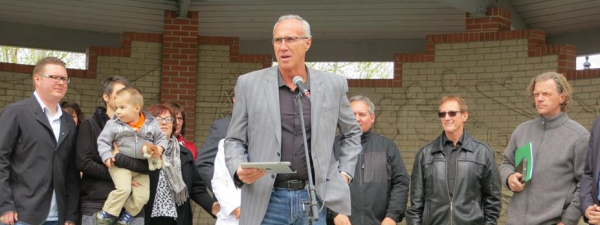
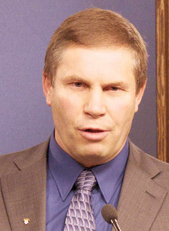
Glen Motz (at the mic) is the nominated Conservative Party of Canada candidate in the upcoming by-election in Medicine Hat-Cardston-Warner.
Glen Motz will be the Conservative Party of Canada candidate in the upcoming federal by-election in the riding of Medicine Hat-Cardston-Warner. Mr. Motz defeated five other men, including former Wildrose Party leader and Cardston-Taber-Warner MLA Paul Hinman, in a contest that drew more than 3,100 party members to vote. The candidate was chosen on a fourth round of voting using a preferential ballot system.
He also has some social conservative views that are probably closer to the mainstream in this sprawling rural south east Alberta riding than they are in most of Canada.
“I’m pro-life, there’s no question. Unfortunately it’s the law of the land in this country,” Mr. Motz is reported to have told a crowd of supporters at a candidate’s forum in June 2016. “I will continue to fight that the rights of the unborn are not eroded further. I believe in the sanctity of life.”
Women’s reproductive rights and gay rights were some of the top issues debated by a field of white male candidates in the last nomination contest held in this riding in 2014.
Following the death of Conservative Member of Parliament Jim Hillyer on March 23, 2016, Elections Canada has announced that a by-election must be called in Medicine Hat-Cardston-Warner before September 26, 2016. The earliest a by-election could have been held was May 16, 2016.
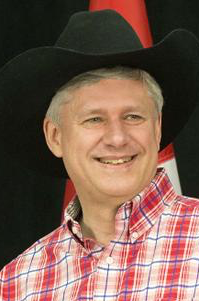
Stephen Harper
This is one of the most reliably Conservative voting ridings in Canada, so it is almost a certainty that Mr. Motz will be the next Member of Parliament. Mr. Hillyer earned 68.8 percent of the vote when he was re-elected in October 2015.
Calgary-Heritage
Another federal by-election is expected to be held in the Calgary-Heritage riding if former Prime Minister Stephen Harperresigns as an MP later this summer as predicted. The names of a handful of potential nominees for the Conservative nomination have been rumoured, including Calgary-HaysProgressive Conservative MLA Ric McIver.
While it is expected that the Conservatives will easily hold on to this riding, the Liberals did see their share of the vote skyrocket from 7 percent in the 2011 election to 26 percent in the 2015 election (the Conservative vote in this riding dropped from 74.3 percent in 2011 to 63.7 percent in 2015).
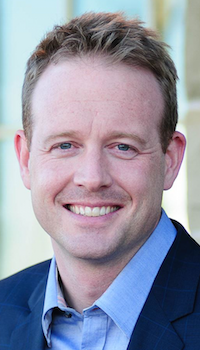
Brendan Miles
The Liberals also saw their vote share increase significantly in four federal by-elections held in Alberta before the 2015 election, including in Calgary-Centre in 2012. Without the appeal of an incumbent Conservative MP or a sitting Prime Minister, the Liberals could see their vote increase in this by-election as well.
He does not appear to have officially declared his intentions to run for the Liberal Party nomination, but past candidate Brendan Miles has been knocking on doors in the riding for months and the local Liberal association is holding a pancake breakfast during the Calgary Stampede.
Perhaps in anticipation of a surprise by-election, the local Liberals in this riding have scheduled an organization and training session for July 20, 2016.
The Senate Chamber in Canada's Parliament Buildings in Ottawa.
The Senatorial Selection Act, the law that governs Alberta’s unique Senate nominee elections, expires on Dec. 31, 2016. The longstanding policy of the Alberta New Democratic Party which supports the abolition of the Canadian Senate likely means the Act will be allowed to expire, into the dust of legislative history.
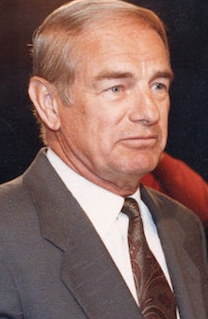
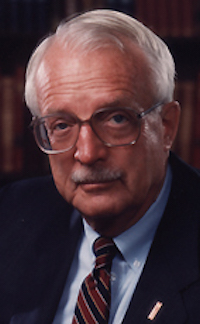
Don Getty
Members of the Canadian Senate are appointed by the Governor General on the advice of the Prime Minister. Alberta is the only province with a general election process to select Senate nominees, which have been held in 1989, 1998, 2004 and 2012.
Only a handful of Alberta’s elected Senators have actually been appointed to the upper chamber, as the election process exists outside of the Constitution and can be ignored by the federal government. Current Conservative Senators Doug Blackand Scott Tannas, elected in 2012, and Betty Unger, elected in 2004, were appointed to the Senate on the advice of former prime minister Stephen Harper.
With the exception of the 1989 election, when LiberalBill Code placed second, only the conservative Reform Party, Progressive Conservative, Alberta Alliance, Social Credit and Wildrose Party, and the environmentalist Evergreen Party have participated in the elections. Progressive candidates have also run as Independents without the backing of their political parties. In 1998, future NDP candidate Guy Desrosiers stood as an Independent Senate candidate (and placed third with 16.7% of the vote).
Rachel Notley
A high-level of rejected, declined and spoiled ballots in the Senate elections suggests that many Albertans are unengaged in this process. More than 178,000 ballots were rejected, spoiled and declined in the 2004 Senate election, amounting to 19 percent of Albertans who showed up to the polls. In 2012, more than 189,000 Senate election ballots were rejected, spoiled and declined, compared to only 7,822 in the provincial general election held the same day.
While the NDP have long supported the abolishment of the Senate, the idea has grown popular in conservative circles in recent years. Saskatchewan Premier Brad Wall has echoed the NDP’s calls for Senate abolishment, and in an odd pre-election maneuver, Mr. Harper tacitly endorsed the abolishment of the Senate if it could not be reformed (this took place after he appointed more than 50 Conservatives to the Senate, including Mike Duffy, Patrick Brazeau and Pamela Wallin).
Stephen Harper
A new Senate appointment advisory board created by the federal Liberal government led by Prime Minister Justin Trudeau after the October 2015 electionwill review nominated Canadians who meet the criteria of demonstrating a record of leadership in community service or professional expertise, a proven record of ethics and integrity and knowledge of the Senate’s role. It is unclear whether the new advisory board will place future provincially-endorsed elected nominees in higher consideration.
The current Alberta NDP government has not officially announced it will not renew the Senatorial Selection Act, but a speech from now-Premier Rachel Notley in 2009, while she was debating amendments to extend the Act until Dec. 31, 2016, strongly suggests that it will not be renewed again this year:
“…this is a piece of legislation that we can’t support because, quite frankly, it just provides a foundation to continue with what is currently a very ineffective system on the federal level.
As has been previously stated, our view is simply that the Senate should be abolished. It is not something that reflects the democratic makeup of our country. The historical rationale behind appointing a Senate has long since dissipated in terms of sort of the historical political concerns that underlay the initial construction of the Senate. The current elements of the Senate that we would effectively be promoting and encouraging the continuation of are, in my view, quite unacceptable.
Whether we elect our Senators or whether we have elections where the government chooses to appoint our Senators, we’re still dealing with the current situation, which is that the Senate itself does not reflect the national population distribution in that, you know, Alberta has six Senate seats, and New Brunswick, with about one fifth of Alberta’s population, has 10 seats. Eligibility for appointment in the Senate is still based in part on property ownership, and once appointed, Senators just get to hang around there until 75.
Whether we have this legislation or do not have this legislation, that’s exactly what’s going to happen. Having had this legislation, we’ve actually, if anything, encouraged the continuation of the Senate. We’ve encouraged buy-in to what is a fundamentally antidemocratic institution.
You know, this was something that came up originally as a means to make a political point when there were substantive discussions around Senate reform a long, long time ago. There have been no meaningful discussions around Senate reform for, I would suggest, about a decade at least.
This piece of legislation will simply give credence to what continues to be a dysfunctional system and one that is costly and one that has long since outlived its purpose. The bill has outlived the purpose, the process in Alberta has outlived the purpose, and frankly the Senate has outlived its purpose. For that reason, we cannot support the bill.”
Fifteen years ago, in Jan. 2001, six prominent Conservative lobbyists and university professors, including future prime minister Stephen Harper and provincial cabinet minister Ted Morton, penned the Firewall Manifesto.
Prime minister Jean Chretien‘s Liberals had been re-elected to a third-term in office and the failed rebrand of the Reform Party as the ‘Canadian Alliance‘ was quickly becoming apparent.
In reaction to the re-election of the Ontario-based Liberal government, the Firewall Manifesto called for then-premier Ralph Klein to build a firewall around Alberta by taking a number of actions, including the creation of an Alberta police force, an Alberta pension plan and the reduction of funds transferred from Alberta to the federal government*. Thankfully for Albertans, Mr. Klein ignored the Manifesto.
Fast-forward to Feb. 2016 and Alberta’s economy has slowed following a sharp decline in the international price of oil. For the first time in decades, Alberta’s traditionally cash-flush government is asking for economic and financial assistance from the rest of Canada.
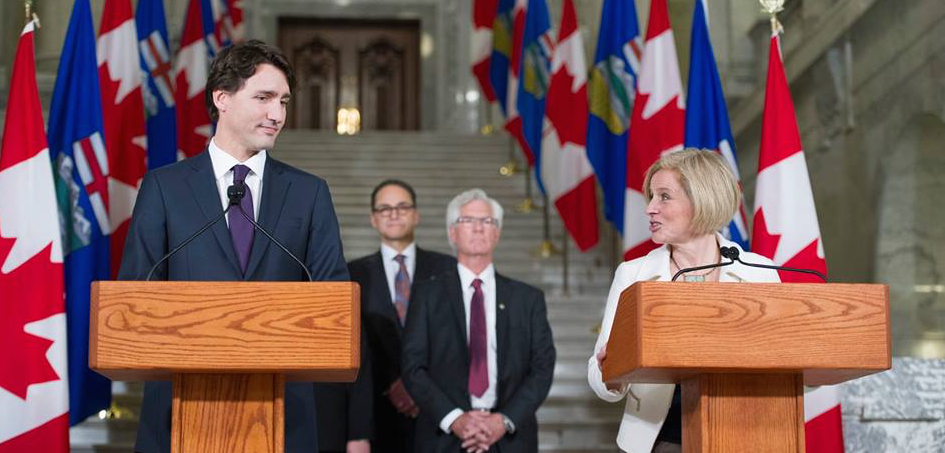
Prime Minister Justin Trudeau and Premier Rachel Notley at the Alberta Legislature on Feb. 3, 2016. (Photo from Rachel Notley’s Facebook Page)
Liberal Prime Minister Justin Trudeau and New Democrat Premier Rachel Notley stood in the Legislature Rotunda yesterday and explained plans to fast-track $700 million in previously committed infrastructure funds from the federal government to Alberta. Mr. Trudeau also announced changes to Employment Insurance rules to help recently unemployed Albertans.
Alberta’s current economic situation and the drive to expand oil pipelines across Canada serve as an important reminder about why building bridges is more effective than burning bridges and erecting (fire)walls between our province and the rest of the country.
Thank goodness we didn’t build that firewall.
*It is completely unclear how this actually would have been done.
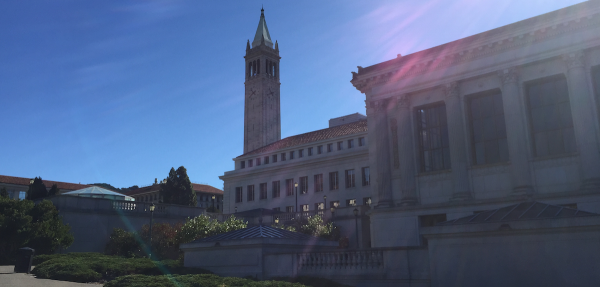
A sunny day on the campus of University of California, Berkeley.
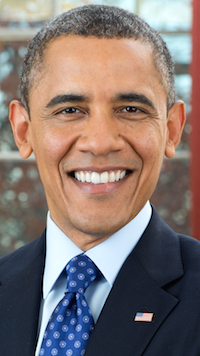
President Barack Obama
Having enjoyed the last week in the sunny Berkeley, California, it felt odd to turn on the car radio to hear the local disc jockeys discussing the tarsands and the merits of a pipeline that would pump unrefined bitumen from Canada to Texas. Being one of the most liberal areas in the U.S. – there were more than a few cars sporting “Bernie Sanders 2016″ bumper stickers – the discussion revolved around climate change and the environmental impact of the tarsands.
So, to the shock of no one who was paying attention, American President Barack Obama rejected the TransCanada corporation’s application for the cross-border permit needed to link the Keystone XL pipeline across the Canada-United States border.
It had become clear over the past few years that the project was unlikely to be approved by the American President. While counter-messages from the oil industry and environmental groups set the tone internationally, opposition to the pipeline by a handful of rural landowners in Nebraska is what ended up tying the pipeline project in the courts.
Justin Trudeau
While the rejection of Keystone XL represents a victory for the projects opponents, it also represents a failure of Canadian foreign policy. For the past decade, the federal and provincial governments have been subsidizing TransCanada by spending significant amount of time and resources providing public funding for the pipeline through lobbying activities.
Elected officials like former Premier Alison Redford and her cabinet ministers were essentially publicly-funded lobbyists as they travelled to the U.S. dozens of times to advocate for Keystone XL and other oil industry projects. The decision by Jim Prentice to appoint well-connected Member of Parliament Rob Merrifield to the post of Alberta’s representative in Washington D.C. was supposed to give a boost to the government’s pipeline lobbying goals (he was later dismissed by Premier Rachel Notley). And the government led by Saskatchewan Premier Brad Wall was reported to have paid at least $3 million to lobbyists in Washington D.C.
Stephen Harper
The Conservative government of Stephen Harper, which was rejected by Canadians on Oct. 19, had arguably been the most pro-oil industry administration we have seen in decades. But instead of trying to build a national consensus in favour of projects like Keystone XL, the Conservative government demonized opposition to the pipelines in Canada. Opponents of Bill C-51 claimed that new spy laws passed by the former Conservative government with support from the Liberals could target Canadian citizens who oppose the expansion of oil pipelines.
Prime Minister Justin Trudeau declared his support for TransCanada’s Keystone XL pipeline in a speech to the Calgary Petroleum Club in October 2013 while also criticizing the Conservative government’s approach to lobbying for the pipeline in Washington D.C. “They have poked and prodded, annoyed and irritated the Obama administration at every turn. Largely, I suspect, because they don’t know how to work with people who don’t share their ideology,” Mr. Trudeau told Calgary’s oil elite.
Rachel Notley
While Mr. Trudeau has not publicly supported TransCanada’s other major pipeline project, the Energy East pipeline, new Natural Resources Minister Jim Carrfaces a challenging task of managing the interprovincial politics of pipelines. An Energy East pipeline that would would pump oil from Alberta to port terminals in New Brunswick or Quebec, keeping jobs in Canada, was endorsed by Ms. Notley and New Brunswick Premier Brian Gallant last month.
The appointment of Ottawa MP Catherine McKenna as Minister of Environment and Climate Change, and former environment minister Stephane Dion as Minister of Foreign Affairs signals that the new federal government may not be as singularly focused on pipelines as the previous government. Mr. Dion is well versed in environmental policy after serving as environment minister from 2004 to 2006 and spearheading the Green Shift policy while leading the Liberal opposition in the 2008 election.
Catherine McKenna
One of the new federal government’s first major tasks will be to bring its ideas to address climate change to COP21, the 2015 United Nations Climate Change Conference, being held Nov. 30 to Dec. 11 in Paris, France. Ms. McKenna will be advised by a strong Alberta voice in these matters, with former Pembina Institute executive director Marlo Reynolds, a Canmore, Alberta resident, as her chief of staff.
Ms. Notley and Alberta Environment Minister Shannon Phillips will also be attending the conference in Paris.
The Pembina Institute may have spotted one of the biggest changes that the rejection of TransCanada’s Keystone XL signifies for Canada’s new foreign relations and energy strategies. In a statement released yesterday, Alberta director Simon Dyer said the “decision by President Obama reiterates that climate change is a key consideration for all energy infrastructure projects going forward.”
Here are a few items to watch out for in Alberta politics this week:
Which of the four Liberal Members of Parliament will be appointed to the federal cabinet on Nov. 4, 2015? Most speculation points toward newly elected Calgary-Centre MP Kent Hehr being given a cabinet spot. Mr. Hehr, along with Calgary-Skyview MP Darshan Kang, were the first federal Liberals to be elected in Calgary since 1968. But will one of the two Liberal MPs from Edmonton – Amarjeet Sohi and Randy Boissonnault – get a cabinet spot? If not, it would mark the first time since before Jim Edwards was appointed as President of the Treasury Board in 1993 that Edmonton has not had representation in the federal cabinet.
Two Conservative MPs from Alberta – Edmonton-Wetaskiwin MP Mike Lake and Sturgeon River-Parkland MP Rona Ambrose – have joined four other Conservative MPs with bids to become the interim leader of the Conservative Party of Canada. That party has only had one permanent leader, Calgary MP Stephen Harper, since the party was formed in 2003 and is expected to choose a new permanent leader next year.
Overshadowing debate about the Alberta NDP’s first provincial budget last week was the Wildrose Party Finance critic Derek Fildebrant‘s war with a Globe & Mail reporter and House leader Nathan Cooper‘s war against a 9:00 a.m. start time for the Legislative sitting. Will the Wildrose Official Opposition be able to move on to actual issues of substance in the second week of the fall session?
It was always expected that uniting the Wildrose and PC parties will be tough. Richard Starke, the PC MLA for Vermilion-Lloydminster, had some choice words for his Wildrose counterparts in the Legislature last week: “…the Official Opposition rather reminds me of the chippy hockey player that hacks and slashes in the corner and then, as soon as something similar happens back to them, goes running to the referee.”
I will be taking a short break from blogging this week. In my absence, check out David Climenhaga‘s informative and entertaining AlbertaPolitics.ca blog.
Incoming Prime Minister Justin Trudeau at a rally in Edmonton in the summer of 2014.
With the excitement of the 2015 federal election one week behind us, now is a good time to take a look at how the results of the election could impact Edmonton and Alberta. The reality of a majority Liberal government in Ottawa will make Conservative Albertans uneasy, but there is little reason to believe this new government will lead to doom and gloom for our province.
Last Friday, I had the pleasure of participating in a panel discussion about the election results with Edmonton Journal editor-in-chief Margo Goodhand and University of Alberta professor Steve Patten at a Institute of Public Administration of Canada event at Government House. With this discussion still fresh in my mind, here is a look at some of the ways last week’s federal election results could impact Edmonton and Alberta.
Liberal growth in Conservative Alberta Conservative Party candidates earned 59 percent of the vote and elected candidates in 29 of Alberta’s 34 federal ridings. The Liberals broke a nearly five decade long drought in Calgary with the election of Kent Hehr in Calgary-Centre and Darshan Kang in Calgary-Skyview. In Edmonton, two Liberals were elected in bellwether ridings – Randy Boissonnault in Edmonton-Centre and Amarjeet Sohi in Edmonton-Mill Woods. Since 1984, these two Edmonton ridings have elected MPs belonging to the party in government. (Note: the election results in Edmonton-Mill Woods will face a judicial recount).
The “Class of 2015” There was a significant turnover in Alberta’s representation in Ottawa, with 18 of 34 Members of Parliament from our province being elected for the first time, including seven first-time MPs representing Edmonton ridings. This ‘class of 2015’ includes four Liberals and fourteen Conservatives.
Alberta in Cabinet It is expected that Alberta will have representation in the federal cabinet but it is not clear how large that representation will be. In my opinion, it would be a grave mistake for incoming Prime Minister Justin Trudeau to not appoint a cabinet minister from both Edmonton and Calgary. The third and fifth largest municipalities in Canada should have representation at the highest levels in Ottawa. These large urban centres also represent an area of future electoral growth for the federal Liberal Party. In Calgary, the Liberals earned a surprising 30 percent of the vote and in Edmonton they earned 23 percent. The new cabinet will be sworn-in on Nov. 4, 2015.
Federal-Provincial Relations We have already witnessed a change in tone that could signal a significant improvement in the federal government’s relationship with the provinces. In the first week after the election, Mr. Trudeau invited provincial premiers to join Canada’s delegation to the important COP21 Climate Change Conference in Paris in November. Mr. Trudeau has also indicated his intention to negotiate a new health accord with the provinces.
Alberta-Ottawa Relations
The relationship between Ottawa and Edmonton would have been sour had Stephen Harper’s Conservatives been re-elected. After attacking Alberta’s NDP government numerous times during the campaign, it is unlikely that Mr. Harper and Premier Rachel Notley would have been able to develop the kind of productive working relationship that would benefit Albertans.
Even though she appeared on stage with NDP leader Tom Mulcair in the final days of the election campaign, Ms. Notley has indicated that she was willing to work with whoever became the next Prime Minister. If she and Mr. Trudeau can develop a good working relationship, Canadians may see progress on issues like pipeline expansion in the next four years. Although Mr. Harper was a vocal supporter of Canada’s oil and gas industry, he failed to secure the construction of new pipeline projects during his decade as Prime Minister.
A Municipal Agenda The Liberals promised increased investment in public infrastructure and increased funding for municipal public transit projects. During his three-terms on city council, Mr. Sohi has been an vocal advocate for expanded Light-Rail Transit funding in southeast Edmonton. Mayor Don Iveson has been critical of the Conservative government’s lack of commitment to LRT funding in the past.
Commitment to defence funding The Liberal platform committed to “maintain current National Defence spending levels, including current planned increases” which should at least be positive news for Edmontonians who work at CFB Edmonton. The last First-Past-the-Post election Mr. Trudeau promised that this federal election would be Canada’s last using the antiquated ‘first past the post’ electoral system. This would likely mean an end to Conservative overrepresentation of Alberta in Ottawa. Any system, whether it be proportional representation, single transferable vote or mixed member proportional representation, could allow voters choices to be better reflected in their representation in Ottawa. This would likely mean an end the system which allows 59 percent of voters to be represented by 81 percent of the Members of Parliament from Alberta.
Conservative Leadership With Mr. Harper’s resignation as leader of the Conservative Party of Canada, that party will be thrust into a contest to select a new leader. While that party may seek to choose a new leader from another region of Canada, it is expected that Conservative MPs from Alberta will be candidates in that race. Already, there is speculation that Calgary-Nose Hill MP Michelle Rempel and Calgary-Midnapore MP Jason Kenney are interested in seeking the leadership.
Liberals and NDP in the West Western Canada is no longer a monolith of the Conservative Party support. With British Columbia and Manitoba electing more Liberal MPs than Conservative MPs, Alberta and Saskatchewan are now the only provinces where Conservatives outnumber other parties. While the Conservatives remain strong in the rural west, that party has lost ground to the Liberals and NDP in the western urban centres of Calgary, Edmonton, Regina, Saskatoon, and Winnipeg. Twenty of the NDP’s 44 MPs and 29 of the 184 Liberal MPs were elected in ridings west of Ontario.
Trudeau wave bad news for Notley?
Conservative critics have already predicted that the rise of the federal Liberals in Alberta spells bad news for Ms. Notley’s provincial NDP. I suspect that the results of this federal election will have little impact on the level of NDP support in the next provincial election. It has been clear for some time that Mr. Mulcair is unpopular in Alberta. His noticeable absence from the province during the spring election campaign and low support for the federal NDP in four by-elections since 2011 suggests that Mr. Mulcair’s unpopularity has little impact on Ms. Notley’s political fortunes.
It’s been a rough year for Conservatives in Canada as two major elections in six months have resulted in major blows for Conservative parties in Alberta and Ottawa.
Justin Trudeau
In May 2015, former federal cabinet minister and bank vice-president Jim Prentice, a political moderate and patrician of the province’s Conservative establishment, led the 44-year long governing Progressive Conservatives to a stunning defeat by Rachel Notley‘s New Democratic Party.
These two major election defeats shattered many common beliefs about politics in Alberta and Canada. In both cases, Conservative parties were defeated by parties promising moderate progressive platforms that included tax increases and significant increases to public infrastructure investment and explicit commitments to run deficit budgets, for at least the short-term period in the case of the NDP. In Alberta, both the PC Party and NDP promised various tax increases.
On the final Sunday of the federal election campaign, Mr. Trudeau spoke to an energetic crowd of more than 2,000 supporters in the Edmonton-Mill Woods riding, home of now elected Liberal MP Amarjeet Sohi. During his speech, he explained to the crowd that if the Liberals were elected on Oct. 19, that they would raise taxes by asking Canada’s wealthiest income earners “to pay just a little bit more.”
Rachel Notley
If these words sounded familiar to anyone in the crowd, it’s because they might have heard Ms. Notley deliver nearly the exact same message five months earlier when speaking to similarly energized crowds during the provincial election. And they in both cases, the message resonated with the crowd, and on election day with voters.
This new reality will certainly come to a shock to those gathering at Preston Manning‘s institute on Oct. 22 to watch the Canadian Taxpayers Federation present former Alberta Treasurer Stockwell Day with a “TaxFighter Award” for his role in implementing Canada’s first 10 percent flat-rate personal income tax in the late 1990s and early 2000s. This is the same flat-tax that Ms. Notley’s NDP replaced with a progressive income tax system only a few short months ago.
These tax increases and other changes brought in by the NDP have not been without their critics, some more vocal and violent than others. But perhaps the biggest irony of these criticisms is that even with the tax increases brought in by Ms. Notley’s NDP, corporate and small business tax rates are still lower than they were when Mr. Day served in Premier Ralph Klein‘s cabinet.
While taxes might not have been the only issue that drove voters to the polls, it didn’t drive them away. These two elections have shattered the myth cultivated by conservative politicians, newspaper columnists, think tanks and lobby groups for decades that promising to increase taxes is political kryptonite.
As Rachel Notley proved on May 5 and Justin Trudeau showed on Oct. 19, voters in 2015 are willing to reward political leaders who present smart, sensible and responsible plans for increased taxation and government revenue.
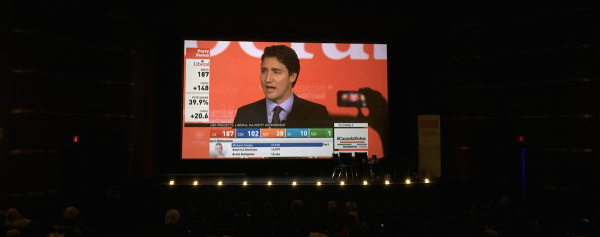
Justin Trudeau delivers his victory speech. More than 300 people packed into the Metro Cinema at the Garneau Theatre to watch the election night results on a 30 foot screen.
The dust has yet to finally settle on tonight’s election night results but we know that the Liberal Party led by Justin Trudeau will form a majority government with more than 180 seats in the next parliament. Conservative Party leader Stephen Harper, who has led his party’s government since 2006, conceded to defeat and resigned as party leader. The New Democratic Party led by Tom Mulcair, who rocketed from fourth place to Official Opposition under Jack Layton‘s leadership in 2011, was cut back to third place.
In Alberta, the Liberals appear to have cracked the Conservative fortress with wins in Edmonton and Calgary.
In Calgary-Skyview, former Liberal MLA Darshan Kanghas become the first Liberal Member of Parliament elected in Calgary since 1968. Another former Liberal MLA, Kent Hehr, is currently leading Conservative MP Joan Crockatt in Calgary-Centre with more polls yet to be counted. In Edmonton-Mill Woods, popular city councillor Amarjeet Sohi, running for the Liberals, is in a tight race with Conservative cabinet minister Tim Uppal. In Edmonton-Centre, Liberal Randy Boissonnaultis leading Conservative candidate James Cumming and NDP hopeful Gil McGowan.
While Canadians rejected a Conservative government led by a Calgary MP, Alberta will not be left without representation in government. It will be expected that at least one Liberal MP from each of Alberta’s two largest cities will be appointed to Mr. Trudeau’s cabinet.
For the NDP, it appears that only incumbent Linda Duncan was re-elected to a third-term as the MP for Edmonton-Strathcona.
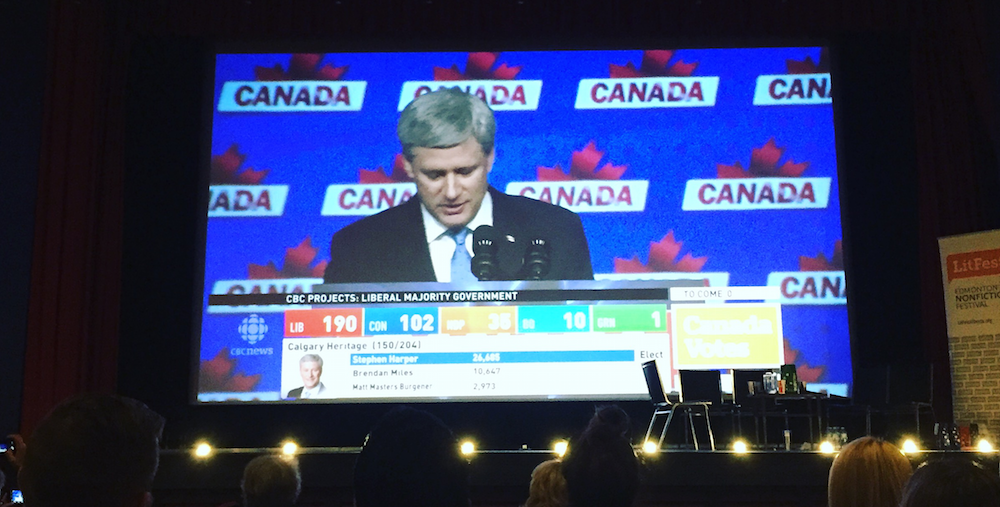
Conservative leader Stephen Harper delivers his concession speech.
There will be plenty of times in the coming days to discuss what happened on election night and over the past eleven weeks, and what it means for the future of Canada. But tonight’s results make it clear that Canadians have rejected the politics of negativity, fear and division that Mr. Harper’s Conservative believed would help them secure re-election.
Tomorrow morning, Albertans will wake up in a new Canada – with an incoming progressive Liberal Prime Minister Justin Trudeau, a progressive New Democrat Premier Rachel Notley, and progressive mayors DonIveson in Edmonton and Naheed Nenshi in Calgary.
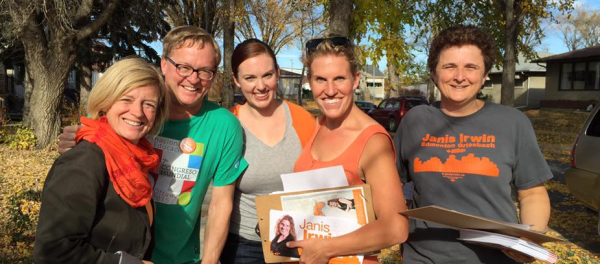
Alberta Premier Rachel Notley (left) and Education Minister David Eggen (second from the left) campaign with NDP candidate Janis Irwin (second from the right) in the Edmonton-Griesbach riding.
There is no longer any doubt that Alberta is an important battleground in this federal election campaign. While Conservatives will dominate in the provincial seat count, the Liberals and NDP believe they are positioned to win competitive races in Edmonton and Calgary. Tom MulcairandJustin Trudeau will make appearances at campaign events in Alberta during the final days of Canada’s eleven week long federal election.
Aaron Paquette
New Democratic Party leader Tom Mulcair and Premier Rachel Notley will share the stage tomorrow evening at a rally at downtown Edmonton’s Shaw Conference Centre.
The NDP are hoping that Ms. Notley’s popularity in the provincial capital can help boost the re-election effort of Linda Duncan in Edmonton-Strathcona and the election bids of Janis Irwin in Edmonton-Griesbach, Gil McGowan in Edmonton-Centre and Aaron Paquette in Edmonton-Manning. With 64 percent of Edmontonians having marked their ballots for the NDP in the recent provincial election, the NDP are hoping to extend some of that support to the federal level.
Liberal leader Justin Trudeau will spend the final Sunday of the election campaign swinging through Alberta to headline rallies for Amarjeet Sohi in Edmonton-Mill Woods and Darshan Kang in Calgary-Skyview.
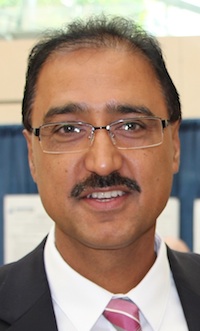
Amarjeet Sohi
Both Mr. Sohi and Mr. Kang are candidates the Liberals believe have a real chance at being elected on October 19. A Mainstreet Research poll released last week shows Mr. Sohi, a popular three-term city councillor, in a close two-way race with Conservative Tim Uppal. The Liberals are also hoping that strong campaigns can propel Randy Boissonnault in Edmonton-Centre, former Liberal MLA Kent Hehr in Calgary-Centre and Matt Grant in Calgary-Confederation to victory.
It is has not been announced whether Conservative leader Stephen Harperwill give Albertans any of his time in the final days before the election. He is running for re-election in the Calgary-Heritage riding.
Notley critics choking on Pretzel Logic
Wildrose leader Brian Jean campaigns for Conservative Joan Crockatt in Calgary-Centre.
Alberta’s newly elected NDP government was a frequent target of Mr. Harper’s during this campaign. Ms. Notley succeeded in avoiding getting dragged into a war of words with the federal Conservative leader. Instead, Finance Minister Joe Ceci, a former Calgary alderman, was the NDP’s designated hitter to respond to the federal Conservative leader’s barbs.
Wildrose leader Brian Jean, a former Conservative MP, was spotted campaigning for Conservative Joan Crockatt in Calgary this week. Mr. Jean claimed in an email to his party’s supporters that Ms. Notley was “throwing all the powers of the Alberta government behind Mulcair and the federal NDP.” The claim is plainly ridiculous.
By “all the powers,” what Mr. Jean meant was a single YouTube video of Ms. Notley’s speech to the Calgary Chamber of Commerce circulated with a government press release. The 42-minute long video of Ms. Notley’s speech included her brief remarks expressing support for Mr. Mulcair. Inappropriate? Yes. All the powers of the Alberta government? Not even close.
Dion campaigns in Edmonton
Stephane Dion spoke to Liberal supporters in Edmonton today.
Former federal Liberal leader Stephane Dion was campaigning in Edmonton today. The likeable former cabinet minister and university professor from Montreal delivered an engaging speech to about 100 party supporters at a town hall meeting in the Sutton Place Hotel. Perhaps one of the most capable Prime Ministers Canada never had, Mr. Dion is sure to be appointed to cabinet if the Liberal Party forms government in Ottawa on Oct. 19.
Still not sure who to vote for?
Elections Canada reports that 358,830 Albertans cast their ballots at the advance polls on October 9, 10, 11 and 12, 2015. If you are still not sure which candidate you will be voting for on Oct. 19, take a look through my list of candidates running in Alberta’s 34 ridings.
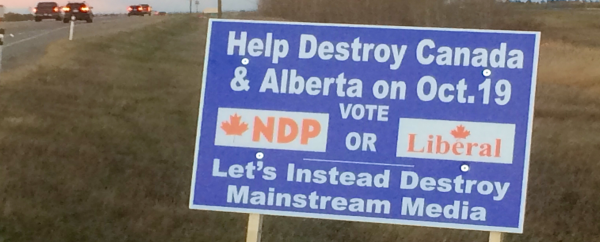
Canadians are faced with two stark options in this federal election, according to new election signs spotted north of Edmonton in the federal riding of Parkland-Sturgeon River. Either we can a) help destroy Canada and Alberta by voting for the Liberals and New Democratic Party on October 19 or b) destroy the Mainstream Media.The presence of the “or” in the message suggests that we can only choose one of the two options.
I am assuming that the sign-maker(s) will be voting for their local Conservative Party candidate in this election because these two options offered on the sign closely mirror two narratives dogmatically propagated by some Conservative Party supporters in this election and during that party’s ten years as government in Ottawa. The first being that Canada will become a jobless post-apocalyptic wasteland if Canadian voters exercise their constitutional right to elect representatives other than Conservatives, and the second that the Mainstream Media is part of some large-scale conspiracy to undermine Stephen Harper.
It is unclear who created and placed the large signs, which sit along Highway 2 north of the City of St. Albert and almost certainly violate the Canada Elections Act third-party advertising laws, but it is clear these individuals have an incredibly skewed view of how democracy and freedom of the press works in Canada and might also suffer from some serious political paranoia.
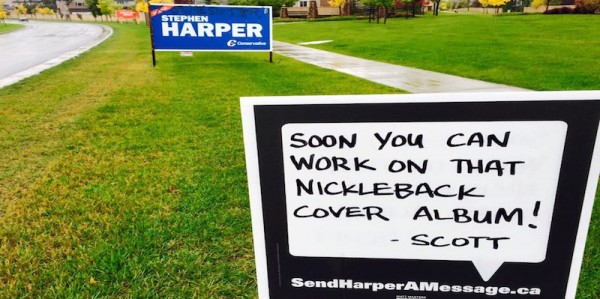
A great ad from Matt Masters Burgener, who is running against Conservative Party leader Stephen Harper in Calgary-Heritage. This might be the smartest ad of the 2015 election.
Known for its vocal anti-abortion position, the Campaign Life Coalition has taken strong positions in recent years against Gay-Straight Alliances in schools (which they describe as “homosexual-activist clubs“) and against Ontario’s new health and physical education curriculum (which they describe as ‘radical sex ed curriculum‘).
The ten Alberta Conservatives are part of a group of 86 Conservative candidates from across Canada who have received endorsements from the organization. Nine of the ten Alberta candidates on the list are men and six are incumbent MPs running for re-election (even Stephen Harper is deemed “not supportable” by this organization).
The four first-time Conservative candidates on the endorsement list are Calgary-Confederation candidate Len Webber, St. Albert-Edmonton candidate Michael Cooper, Sherwood Park-Fort Saskatchewan candidate Garnett Genuis and Lethbridge candidate Rachael Harder.
These four candidates, along with Mr. Hillyer, responded to a questionnaire from the Campaign Life Coalition affirming their opposition to women’s reproductive rights. The other five Conservatives were endorsed based on their voting records and public statements.
According to the organization’s website, Mr. Cooper “has been actively involved in the pro-life movement for many years and is known to CLC leaders.”
Here are the links to the ten Alberta candidates report cards and questionnaire responses:
A sign in Calgary-Heritage, as part of NDP candidate Matt Masters' sendharperamessage.ca campaign.
Some of the latest from the federal election campaign trail in Alberta:
NDP leader Tom Mulcair will visit the Lethbridge riding this week to campaign alongside candidate Cheryl Meheden during his visit to Alberta. He will also speak at a rally in Calgary tonight. Mr. Mulcair is back in Alberta this week to participate in a Globe and Mail debate on Sept. 17.
Liberal leader Justin Trudeau made a campaign stop in Edmonton on Sept. 9 to rally a crowd of 1,500 supporters. During his visit, Mr. Trudeau promised additional funding for the southeast LRT to Mill Woods if the Liberals form government on Oct. 19.
Both Mr. Mulcair and Mr. Trudeau met briefly with Edmonton mayor Don Iveson during their visits.
The federal Liberals have chosen their final candidate in Alberta by nominating businessman Robert Prcic in Calgary-Nose Hill. Mr. Prcic earned 3.8 percent of the vote as the provincial Liberal candidate in the October 2014 Calgary-Foothills by-election.
The Laurier Institute for the Study of Public Opinion and Policy has released projections of ten ridings that the NDP need to win to get the most seats and ten ridings the Liberals need to win to get out of third place. For the NDP, the list includes the Alberta riding of Edmonton-Manning, and for the Liberals, the list includes the ridings of Calgary-Centre and Edmonton-Centre.
ThreeHundredandEight.com is maintaining riding levels projections that show a handful of Alberta ridings in play during this federal election. As of Sept. 13, 2015, the projections show potential NDP wins in Edmonton-Griesbach, Edmonton-Manning, Edmonton-Strathcona and Lethbridge. The Liberals are projected to do well in Calgary-Centre, Calgary-Confederation, Calgary-Skyview and Edmonton-Centre.
A poll conducted by Mainstreet Technologies suggests the election in the new Fort McMurray-Cold Lake could be closer than last year’s by-election results in the old riding of Fort McMurray-Athabasca. The poll showed Conservative David Yurdiga with the support of 35 percent and Liberal Kyle Harrietha with 27 percent support. In the June 2014 by-election, Mr. Yurdiga only finished 11 points ahead of Mr. Harreitha in what was considered a very close race for this riding (in the 2011 election, former Conservative MP Brian Jean was re-elected with a margin of 58.6 percent).
Justin Trudeau at a Liberal Party rally in Edmonton's Louise McKinney Park in August 2014.
Liberal leader Justin Trudeau and New Democratic Party leader Thomas Mulcair will visit Edmonton this week to campaign with local candidates and to rally their supporters. The visit by the two leaders follows an earlier stop by Conservative leader Stephen Harper during the second week of the election.
In a competition to own the “change” message, the NDP are holding a “Rally for Change in Edmonton” on September 10 and the Liberals are holding a “Rally for Real Change in Edmonton” on September 9. It is clear that both parties have identified varying degrees “change” as a common theme in this election campaign and that message could resonate in a handful of ridings in Edmonton in this election.
It is expected that popular Premier Rachel Notley might take the stage with Mr. Mulcair on September 10, to give her personal endorsement to the federal leader. With 64 percent of Edmontonians casting their ballots for the NDP in the May 2015 provincial election, the opposition parties have reason to believe that Alberta’s capital city is fertile ground for progressive messages.
Taking notice of the political shift in the city, the Conservatives recently dispatched Ontario candidate Kellie Leitch and Calgary candidate Michelle Rempel to canvass alongside Edmonton candidates who are in tough contests. Liberal MPs Ralph Goodale and Rodger Cuzner have travelled to Alberta in recent weeks and Ontario MP Carolyn Bennett will campaign in Edmonton later this week.
With forty days left in this election, here is a look at a few races in Edmonton and northern Alberta that could have interesting outcomes on October 19, 2015:
Janis Irwin
Edmonton-Strathcona: Two-term NDP MP Linda Duncan is expected to be re-elected but a resurgence in Liberal support for candidate Eleanor Olszewski could spoil an easy NDP victory and put Conservative Len Thom in a position to win. Note: The Liberal vote fell to an astonishing 2.82 percent in the 2011 election, down from 9 percent in the 2008 election.
Edmonton-Griesbach: If a second NDP MP is elected in Alberta, it will likely be Janis Irwin in this north east Edmonton riding. Ms. Irwin’s chances are boosted by highly-organized provincial NDP campaigns in the area and helped by the embarrassingantics of retiring Conservative MP Peter Goldring. The Conservatives nominated former city councillor Kerry Diotte as their candidate. Mr. Diotte’s record on city council and lacklustre bid for mayor in 2013 have left some Conservative activists unenthusiastic about their party’s chances of holding the riding. Note: I live in this riding and can attest to the large number of orange lawn signs that have popped up over the past few weeks, including one on my own lawn.
Brent Rathgeber
St. Albert-Edmonton: Will long-time Conservative Party loyalist Michael Cooper prevail over rebel MP Brent Rathgeber?Mr. Rathgeber is running as an Independent conservative candidate after quitting the Conservative caucus in 2013 to protest the level of control held over MPs by the Prime Minister’s Office. The two-term MP is well-known in the riding, but a deep Conservative establishment in the riding could be difficult for an Independent to uproot. Note: Before being elected as an MP in 2008, Mr. Rathgeber served as the Progressive Conservative MLA for Edmonton-Calder from 2001 to 2004.
Edmonton-Mill Woods: Popular city councillor Amarjeet Sohi surprised many political watchers when he declared his plans to seek the Liberal nomination earlier this year. Mr. Sohi faces former Edmonton-Sherwood Park Conservative MP Tim Uppaland NDP candidate Jasvir Deol in what could be a fascinating three-way race. Note: Mr. Uppal ran against Liberal MP David Kilgour in this riding as a Canadian Alliance candidate in the 2000 election and Conservative in 2004 election.
Amarjeet Sohi
Edmonton-Centre: Three-term Conservative MP Laurie Hawn is retiring, leaving this central Edmonton riding up for grabs. The Conservatives have nominated former Chamber of Commerce CEO James Cumming as their candidate, while entrepreneur Randy Boissonnault is running for the Liberals and Alberta Federation of Labour president Gil McGowan for the NDP. While the demographics of this riding do not suggest chances would be favourable for the Conservatives, Mr. Hawn benefited in the 2011 election from a sharp vote split by the NDP and Liberals. Note: In 2011, Mr. Hawn earned 48 percent of the vote and the combined Liberals and NDP vote in this riding was 47.8 percent.
Edmonton-Manning: Encompassing the area of Edmonton north east of Edmonton-Griesbach, this riding could result in a close race between Conservative Zaid Aboultaif and New Democrat Aaron Paquette. Note: Mr. Paquette is also known as the founder of the clever #Ottawapiskat meme.
Justin Trudeau’s event, the “Rally for Real Change in Edmonton,” will be held on Wednesday, September 9th at 5:00 pm at the Radisson Edmonton South, 4440 Gateway Blvd.
Thomas Mulcair’s event, the “Rally for Change in Edmonton,” will be held on Thursday, September 10th at 6:30 pm at the Edmonton Shaw Convention Centre, Hall D, 9797 Jasper Ave.