If you pay attention to political pundits or follow the #ableg hashtag on Twitter, you will have read about how nasty and partisan the fall sitting of the Legislative Assembly has been. But if you logout of Twitter for a bit and ignore the embarrassing theatrics of Question Period, you will find some substantial debate and even more interesting (and sometimes confusing) politics at work on the floor of Alberta’s Legislative Assembly.
Take last week’s debate around Bill 1 as an example.
Introduced during the six-day long spring sitting earlier this year, the Workers’ Compensation Amendment Act, 2012 (pdf) was the flagship legislation of the first term of Premier Alison Redford‘s elected government. Each year, a new Bill 1 is introduced and typically tends to be a feel-good piece of legislation tailored to the government’s immediate public relations program.
This year’s Bill 1 meant to extend “presumptive coverage” to first-responders – police, firefighters, peace officers, and emergency medical technicians – to access treatment for Post-Traumatic Stress Disorder (PTSD) through the Workers’ Compensation Board. As explained in the Edmonton Journal, presumptive coverage means that anyone working as a first responder who is diagnosed with PTSD is presumed to have developed that condition as a result of their job.
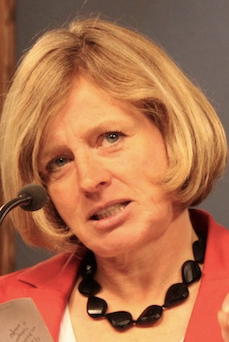
No government or opposition Members of the Legislative Assembly publicly voiced any opposition to the bill. The most interesting debate about Bill 1 occurred around two amendments introduced by Edmonton-Strathcona NDP MLA Rachel Notley that proposed to include two other professions to be covered in the Bill – corrections officers and social workers.
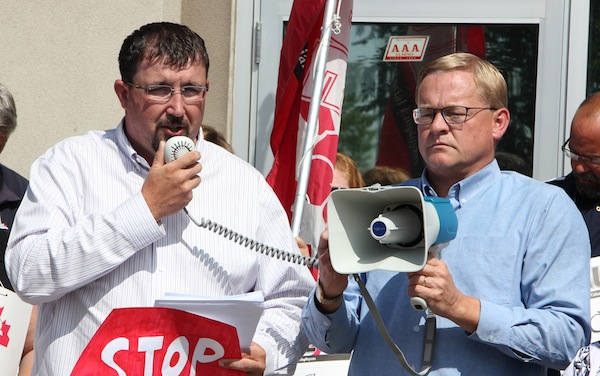
The first amendment, to include corrections officers, received strong support from the opposition benches. Ms. Notley and ten other opposition MLAs – New Democrat David Eggen, Liberal David Swann, and Wildrose MLAs Jeff Wilson, Joe Anglin, Rob Anderson, Bruce Rowe, Ian Donovan, Kerry Towle, Blake Pedersen, and Heather Forsyth – rose to speak in favour of the first amendment.
Only Human Service Minister Dave Hancock and backbench Tory Rick Fraser rose to speak against.
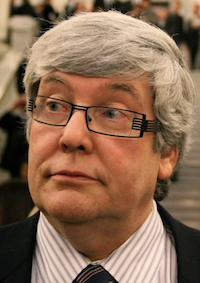
The two Tory MLAs speaking against the amendment praised the work done by corrections officers but spoke against including them in the bill, claiming that it would be unfair to pick and choose between professions (which is what the Bill did). At one point in the debate, Mr. Fraser presented the strange argument that they should not be included because police, firefighters, peace officers, and EMTs cannot “lock down” a city like some correctional institutions can be “locked down.” The two Tories made strong arguments why police, firefighters, peace officers, and EMTs should be included in Bill 1, but they struggled to explain why presumptive coverage should be limited to those four professions.
“The associate minister [Frank Oberle] talked about sort of the conflicting arguments that exist when you say, on one hand, that you shouldn’t be picking and choosing certain professions, and then, of course, he anticipated correctly that we are going to move forward with amendments to identify certain professions.” – Rachel Notley
The amendment to include corrections officers received the support of the NDP, Wildrose, and Liberal MLAs in the Assembly, but was defeated by the large Tory majority.
Ms. Notley’s second amendment, to include social workers, received strong support from NDP and Liberal caucuses. In a strange twist, most Wildrose MLAs spoke against the amendment with only Wildrose MLA Mr. Anglin breaking from his caucus and speaking in favour of including social workers in the Bill.
Presenting similar points as Tories had used only minutes before to argue against including corrections officers, Wildrose MLAs praised social workers while arguing against including them Bill, claiming that it would be unfair to pick and choose between professions.
So, it came as little surprise that Ms. Notley’s second amendment was defeated, with only the NDP, Liberals, and Mr. Anglin voting in favour.
Bill 1 passed third reading on November 1, with MLAs from all parties voting in favour.
(Read transcripts of debates in Alberta’s Legislative Assembly using Hansard)