Categories
Alberta Politics

Edmonton Election Update: School Board Trustees Now Included.

We are now five months away from the October 2017 municipal elections in Edmonton. Here are some of the latest updates to the list of candidates running in Edmonton’s municipal election, now including candidates running for trustee positions on the Edmonton Public School Board and Edmonton Catholic School District.

Edmonton Public School Board

  • Former CBC reporter Trisha Estabrooks announced tonight at The Bellevue that she will run for Edmonton Public School Board in Ward D. A long-time local CBC reporter, Estabrooks is now a freelance journalist and co-host of The Broadcast, a podcast about women and politics. She is being endorsed by Ray Martin, who has served as trustee for the area since 2013 and is not seeking re-election. Local advocate and Alberta Avenue resident Adam Millie is also running in Ward D.
  • The current chairperson of the Edmonton Public School Board, Michelle Draper, is running for re-election in Ward B.
  • Former chairman Michael Janz is seeking re-election in Ward F. Janz was first elected to the public school board in 2010 and has become well-known for his public advocacy on issues such as fair and equitable funding for public schools and improving financial literacy in schools.
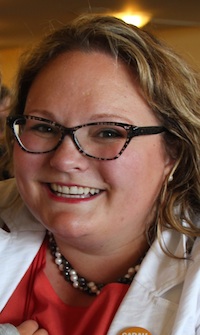
  • Bridget Stirling is running for re-election in Ward G. Stirlng was first elected in a 2015 by-election to replace former trustee Sarah Hoffman, who had been elected as the MLA for Edmonton-Glenora and now serves as Deputy Premier and Minister of Health.
  • Local photography business owner Mary-ann Fleming is running for election in Ward I.

Edmonton Catholic School District

  • Outspoken trustee Patricia Grell is running for re-election in Ward 71.
  • The current chairperson of the Edmonton Catholic School District, Laura Thibert, is running for re-election in Ward 77.
  • Trustee Debbie Engel is running for re-election in Ward 74. Engel was first elected to the Catholic board in 1998.
  • Trustee Larry Kowalczyk is not seeking re-election in Ward 72.

Edmonton City Council

If you know any other candidates who have announced their intentions to stand for Mayor, Council, or School Board and are not on this list, please send me an email at david.cournoyer@gmail.com. I will add them. Thank you!

Categories
Alberta Politics

Pipelines, pipelines, pipelines – An Alberta view of the BC election

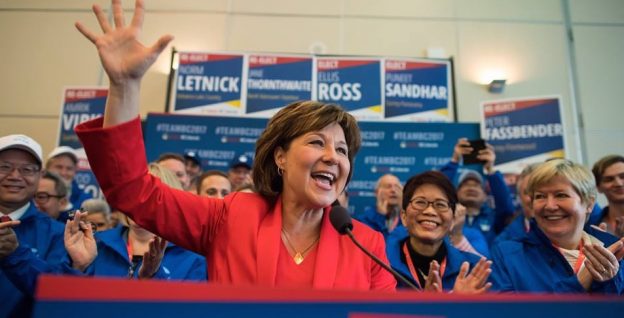
British Columbia voters reduced Christy Clark’s BC Liberals to minority status in the provincial election this week. The BC Liberals, who have formed government since 2001, elected candidates in 43 of the province’s 87 legislative constituencies (pending recounts). The official opposition New Democratic Party led by John Horgan boosted their numbers by electing 41 MLAs. And the Green Party, led by climate scientist Andrew Weaver, could hold the balance of power in the minority legislature after three Green MLAs were elected on Vancouver Island.

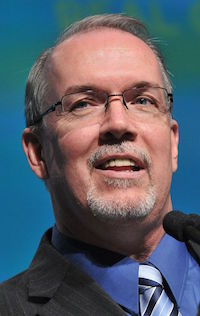
John Horgan
John Horgan

Results of the British Columbia provincial election by political watchers and pundits in Alberta are being viewed through the same lens they have viewed the entire BC election campaign: by wondering how it will impact future construction of oil pipelines from Alberta to the West Coast.

The NDP and Greens have stated their opposition to the pipeline expansion, and the Liberals gave their support to the federally approved Trans Canada Kinder-Morgan Pipeline expansion. But given the results of yesterday’s election, it is hard to say if there is any governing scenario in BC that is ideal for Alberta’s pipeline dreams.

But just because pipelines are top of mind for many Albertans, we shouldn’t fool ourselves into believing our priorities were the same priorities in the minds of BC voters who cast their ballots on Tuesday. Sure, pipelines, climate change, energy, and environmental issues were likely important issues for many BC voters, but so were health care, education, housing affordability, government corruption, political financing and many other issues.

While pipeline approvals fall under federal jurisdiction, opposition by a provincial government can create significant political problems for any project and a federal government that supports it. The unanswered question now on the minds of many Albertans is how the election results will impact the proposed expansion of the Kinder Morgan Trans-Mountain Pipeline from Alberta to a shipping terminal in Burnaby.

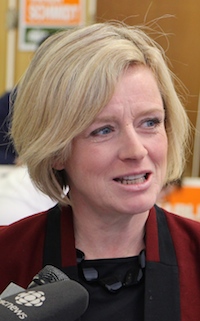
Rachel Notley Alberta NDP leader
Rachel Notley

A minority government formed by Clark’s Liberals could continue to support for pipelines, but if they become dependent on the votes of the three Green MLAs to maintain their government, political necessity could change their enthusiasm for the project. An NDP government supported by the Greens could result in further opposition to pipeline expansion.

Opposition to the pipeline by the BC NDP led pro-pipeline Alberta NDP Premier Rachel Notley to announce in Dec. 2016 that NDP political staffers in Edmonton would be barred from working on BC NDP campaigns in this election. The divide between the two parties, and two provinces, on the pipeline issue is stark. Public support for pipelines among Albertans appears to be near unanimous, while opposition to pipelines in BC is a broad and mainstream opinion.

While the BC Liberals are considered to be a conservative party, a Clark government will not necessarily have the best interests of Albertans in mind. In reaction to American President Donald Trump imposing a tariff on Canadian softwood lumber exports, Clark threatened to impose a $70 per tonne levy on thermal coal exports through BC ports. Alberta’s coal exports could be collateral damage in this move, even though Notley has questioned whether Clark actually has the constitutional authority to impose the levy.

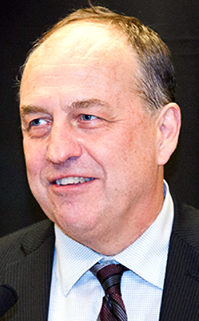
Andrew Weaver
Andrew Weaver

Clark has attacked the Alberta NDP in speeches before and during the campaign, and it would not be uncharacteristic of the BC Liberals to attack Alberta in order to further expose the rifts between the Notley government and Horgan NDP.

While Albertans focus on prospects for oil pipelines to the West Coast, it is important to remember that what Albertans perceive as their best interests are not necessarily the top priorities for voters and politicians in BC, and nor should they be.

Former Alberta MLA defeated on Vancouver Island

Former Alberta MLA Alana DeLong was unsuccessful in her bid for election as a Liberal candidate in the Nanaimo-North Cowachin constituency on Vancouver Island. DeLong, who represented Calgary-Bow as a Progressive Conservative in the Alberta Legislature from 2001 to 2015, was defeated by incumbent New Democrat Doug Routley 10,986 votes to 6,696 votes.

Categories
Alberta Politics

Two years later – Notley’s NDP victory and a reminder why Elections matter

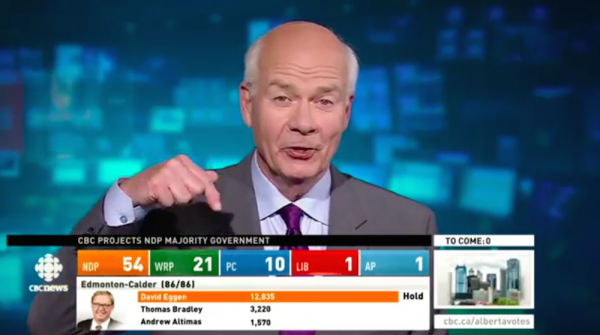
Two years ago today Albertans voted to sweep out the old Progressive Conservative government by electing Rachel Notley’s New Democratic Party into government.

Rachel Notley Alberta NDP leader
Rachel Notley

It was a surreal election that topped off a tumultuous decade in Alberta politics. It used to be said that politics in our province was boring, and that may have been true at one point. But when PC Party members delivered a stunning blow to Ralph Klein in a March 2006 leadership review, politics never seemed to get dull again in Alberta. And while no one in 2006 could, or would, have predicted an NDP win in 2015, the years of PC Party infighting and corruption marked the steep decline of a once proud PC Party establishment.

The 2015 election shows more than anything else how much campaigns matter. Even though Albertans were visibly growing tired of the old establishment conservatives, the PCs were widely expected to win a 13th re-election victory. It was almost hard to imagine any other outcome.

The Wildrose Party, which was a grasp away from forming government in 2012, was decimated by floor crossings in 2014.

On May 5, 2015, the NDP did what only one week early felt unimaginable – they formed a majority government in Alberta. It was a strange and wild election campaign.

Sarah Hoffman NDP MLA Edmonton-Glenora
Sarah Hoffman

While it looked as if the NDP might form the official opposition in that election, over the course of the election Notley chipped away at Jim Prentice’s campaign, gaining momentum through a positive and hopeful campaign that contrasted to the uninspiring institutional campaign presented by the PCs.

From Notley’s masterful performance in the televised leader’s debate to a train-wreck press conference held by four prominent CEOs, there were many key moments and events that provided a clear indication that the campaign was going well for the NDP and very, very poorly for the PCs.

I had never voted for the NDP in a provincial election until 2015. I had been a supporter of the Liberal Party led by Kevin Taft in the 2000s and was part of the group that tried to build the Alberta Party before the 2012 election. During that time, I frequently scoffed at the NDP as being merely an Edmonton-based vote-splitter and an annoying minor competitor (albeit an incredibly effective annoying competitor).

But in Notley I saw a political leader who had sparked momentum and energy in Albertans. She was progressive, urban, smart and tough – a natural replacement for a tired conservative government that had spent decades squandering and mismanaging Alberta’s energy wealth.

Shannon Phillips
Shannon Phillips

As a government, the NDP faced a steep learning curve and have had their highs and lows.

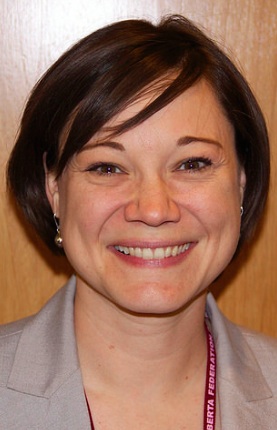
Notley started off with an inexperienced small circle of cabinet minsters. She slowly expanded the cabinet with talent identified from the MLA backbenches of the new government caucus and since then many cabinet ministers have grown into their roles quite comfortably. Health Minister Sarah Hoffman, Environment and Parks Minister Shannon Phillips, Children’s Services Minister Danielle Larivee, Energy Minister Marg McCuaig Boyd, Service Alberta Minister Stephanie McLean, Economic Development and Trade Minister Deron Bilous, and Education Minister David Eggen, to name a few, have become some of the strongest and most passionate progressive voices of Alberta’s government.

But most of all, Notley has grown into her role as Premier. She was then during the election campaign and remains now the NDP’s strongest asset in Alberta.

While they have made some embarrassing political mistakes, enflaming conservative critics along the way (while also inheriting some of the old PC government’s bad habits), Notley’s NDP government has started to catch its stride.

Danielle Larivee
Danielle Larivee

As I wrote earlier this month, the NDP subtly shifted their messaging over the past few months, focusing on launching new programs and projects that they argue will “make lives better for Albertans,” rather than trying to out-flank the conservatives on economic issues. And it is working well for the NDP.

Notley’s NDP have reshaped Alberta’s political landscape and provided a much needed breath of fresh air into the once stale conservative halls of government. While I would not place a bet on the outcome of the next election, Conservative politicians who brag about dancing a cakewalk back into government in 2019 should be reminded that it might not be that easy.

The mould was broken in the 2015 election. No party should take the votes of Albertans for granted again.

Categories
Alberta Politics

Jason Kenney emerges from hiding at Conservative fundraising dinner in Vancouver

As Premier Rachel Notley returns from leading a ten-day economic trade mission to China and Japan, political watchers have been wondering where the recently elected leader of the Progressive Conservative Party has been? Jason Kenney appeared to go into hiding around a month ago after he sparked controversy with his comments about Gay-Straight Alliances and outing gay kids in Alberta schools during an interview with the Postmedia editorial board in Calgary.

Vancouver-based website TheBreaker reported this week that Kenney was recently spotted in British Columbia speaking at a $500-a-plate federal Conservative Party fundraising event at Hy’s Steakhouse in downtown Vancouver. Kenney tweeted that he was in Vancouver for a conference, but did not mention any other political activities the PC Party leader has been engaged in on the west coast.

https://twitter.com/jkenney/status/858444975465418752

The website author, journalist Bob Mackin, alleged that Kenney urged guests at the fundraising dinner to support the BC Liberal Party of Christy Clark in the province’s May 9 general election and that a new conservative  party could be formed in Alberta as soon as this weekend.

Readers will remember that a question first asked on this blog on December 5, 2016 about whether the Alberta New Democratic Party would lend a hand to their BC cousins led to a decree by Notley banning any west coast election-related travel by her government’s political staffers. The BC NDP under the leadership of John Horgan oppose the expansion of the Kinder Morgan Trans-Mountain Pipeline, a project that the Notley NDP are firmly in favour of.

According to the latest opinion poll, conducted on April 22, 2017, Horgan’s NDP leads Clark’s Liberals 44 percent to 34 percent, with an insurgent Green Party led by Andrew Weaver polling at 22 percent support.

Meanwhile, as the unite-the-right discussions continue, a new poll released by Mainstreet Research asking Albertans who they would prefer as leader of a merged Wildrose-PC party showed Wildrose Party leader Brian Jean leading Kenney with 29 percent to 24 percent support. Twenty-four percent of respondents chose “Someone Else” and 23 percent were unsure, suggesting that there could be appetite for a third or fourth candidate to enter the contest (some Conservative activists have suggested outgoing interim federal Conservative leader Rona Ambrose could fill this void).

Jean has been criss-crossing the province holding town hall meetings ostensibly to collect feedback on the party merger, but in reality he is campaigning for the leadership of the yet-to-be-named and yet-to-be-merged Wildrose-PC party.

I am told that one of the significant issues of debate between the leadership of the two conservative parties is the timeline for a leadership vote. Jean has firmly said the leader of a new party should be chosen before October 15, 2017 while Kenney has been saying since last year that he wants a founding convention to be held in late 2017 before a leadership vote takes place in early 2018.

Jean’s preferred timeline appears to be more sensible, as it would allow a leader to hold court over a founding convention that could be unruly and filled with bozo-erruptions if a leader is not in place to keep the rowdy membership base in line. Kenney’s preference would buy him more time to compete with Jean in a leadership vote, which he might need now that he has decided to lend himself out to conservative fundraising efforts in British Columbia.

Categories
Alberta Politics

Ed Gibbons and Ray Martin not seeking re-election

Two long-time Edmonton politicians announced this week that their names will not be on any ballot when the municipal elections are held on October 16, 2017.

Ed Gibbons announced he will not be a candidate in this fall’s municipal elections. Gibbons has served on Edmonton City Council since 2001, first representing northeast Edmonton’s Ward 3 from 2001 to 2010 and for Ward 4 from 2010 until now. He served as the Liberal MLA for Edmonton-Manning from 1997 to 2001, during which he was the official opposition critic for Municipal Affairs. He was also President of Edmonton Federation of Community Leagues from 1995 to 1997.

Ray Martin NDP MLA School Trustee Edmonton Alberta
Ray Martin

Ray Martin announced that he will not seek re-election as the public school board trustee in Ward D. He was first elected to the board in 2013 and is currently serving as vice-chair.

Martin has been a fixture in Alberta politics for four decades, having stood as a candidate in nine provincial and four federal elections since 1975. He served as the MLA for Edmonton-Norwood from 1982 to 1993 and Edmonton-Beverly-Clareview from 2004 to 2008. He was leader of the Alberta New Democratic Party from 1984 until 1994 and leader of the official opposition from 1986 to 1993.

He was recently appointed as Chairman of the Board of Governors of the Northern Alberta Institute of Technology.

Categories
Alberta Politics

Edmonton City Council Elections Updates

There are 179 days left until Edmontonians cast their votes to choose their next city council. With the spring approaching and prime campaigning weather just around the corner, candidates are beginning to launch their campaigns.

Here are some of the most recent updates from my list of candidates running in Edmonton’s 2017 municipal elections:

Ward 1: First-term councillor Andrew Knack held a re-election fundraiser on March 26, 2017 at a at the Delux Burger Bar. Knack is expected to formally launch his campaign in the coming months.

Ward 4: Local artist and advocate Aaron Paquette is running in Ward 4. Paquette was the federal New Democratic Party candidate in Edmonton-Manning during the October 2015 election, where he placed third with 11,582 votes  (23.6 percent of the total votes cast). He is also known as the founder of the clever #Ottawapiskat meme that satirized criticisms of the Idle No More protests.

Ward 5: Sarah Hamilton is running in Ward 5. Hamilton is the owner of a local communications and public relations company. She previously served as the director of communications and media relations for the Coal Association of Canada from 2015 to 2017, and previous to that served as deputy press secretary for health minister Stephen Mandel from 2014 to 2015.

Ward 6: First-term councillor Scott McKeen will launch his bid for re-election on May 13, 2017 at the Westmount Community League. McKeen’s event will feature music from El Niven and The Alibi, singer-songwriter Lucette, and indie folk group Post Script.

Rental property manager and developer Tish Prouse is also running in Ward 6. He ran for city council in 2013 as a candidate in Ward 7 where he placed fourth with 1,053 votes (7.3 percent of the total votes cast).

Ward 7: Matt Kleywegt launched his campaign at the Bellevue Community Hall on March 31, 2017. According to his website, Kleywegt is a Graduation Coach with Edmonton Public Schools, where he assists Indigenous teens graduate High School. Here is the video of his campaign launch:

Ward 9: Physician Rob Agostinis will launch his campaign for election on April 21, 2017 at the Whitemud Creek Community Centre. Agostinis is a former president of the Terwillegar Riverbend Advisory Council and former president of the U of A medical alumni association. HE was briefly nominated a candidate for the Liberal Party in Edmonton-Whitemud before the 2001 election.

Also in Ward 9, engineer Tim Cartmell launched his campaign on April 9 and realtor Payman Parseyan launched his campaign on April 16.

Ward 10: First-term councillor Michael Walters will launch his re-election campaign on May 13, 2017 event at the Yellowbird Community Hall.

Ward 11Keren Tang and Brandy Burdeniuk have launched their bids for city council in this south east Edmonton ward. Tang is President of the board of the Edmonton Multicultural Coalition and is a health promotion researcher. Burdeniuk is a co-founder of a building certification and sustainability company.

If you know any candidates who have announced their intentions to stand for Mayor, Council, or School Board, please send me an email at david.cournoyer@gmail.com. I will add them to the list. Thank you!

Categories
Alberta Politics

First quarter political party fundraising puts NDP in the lead

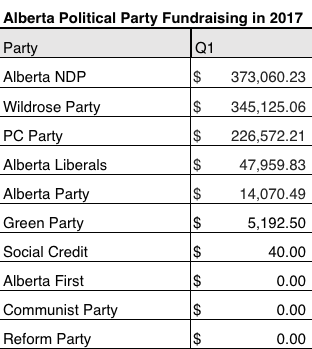
Elections Alberta released the financial disclosures showing the results of political party fundraising in the first quarter of 2017.

Combined party and constituency fundraising results show the governing New Democratic Party in the lead in early 2017, having fundraised $373,060.23 between January 1 and March 31, 2017. The Wildrose Party raised $345,125.06 and the Progressive Conservatives raised $226,572.21 in the same period. The Liberal Party raised $47,959.83 and the Alberta Party raised only $14,070.49.

These totals are considerably less than what was raised by the governing and official opposition parties in the fourth quarter of 2016, when the NDP raised $1,985,272.00 and the Wildrose raised $2,063,737.63. Similar to previous years, political fundraising in the first quarter of the year is typically lower than the previous year’s final quarter.

Both the NDP and Wildrose Party fundraised less in this quarter than in the first quarter of 2016, when the NDP raised $398,843.71 and Wildrose raised $448,912.71. The PCs raised more than twice in this quarter than the $105,436.47 the party raised in the first quarter of 2016.

This is the first fundraising quarter to fall under new political finance laws introduced by Democratic Renewal Minister Christina Gray in 2016, which lowered the maximum annual donation limits from $15,000 to $4,000. This followed reforms introduced by the NDP in 2015 that banned corporate and union donations to political parties and candidates.

Here is a quick look at the top donors for each of the five main political parties in Alberta in the first quarter of 2017:

Alberta NDP
Jamie Kleinsteuber – $2,612.50
Amanda Nielsen – $2,287.50
David Mayhood – $2,015
Thomas Dang – $1,976
Brian Malkinson – $1,702.50
Roari Richardson – $1,570

Wildrose
Harvey Aarbo – $4,000
Gordon Elliott – $4,000
Gudrun Schulze Ebbinghoff – $4,000
Robert Such – $4,000
Larry Thompson – $4,000

Progressive Conservative
Maria Binnion – $4,000
John Neudorf – $4,000
Constance Nolin – $4,000
Dennis Nolin – $4,000
Prem Singhmar – $4,000

Liberal Party
Ebrahim Karbani – $4,000
Zulqurnain Abbas – $3,500
Tariq Hussain – $3,300
Israr Ullah – $3,300
Fazal Rehman – $3,000
Saifuddin Syed – $3,000

Alberta Party
James Tererenko – $820.94
Patrick Baillie – $500
Aaron Blair – $500
Greg Clark – $500
Brad Grundy – $500
Brian Mahoney – $500

Categories
Alberta Politics

Alberta’s Conservatives are obsessed with Gay-Straight Alliances

Following Progressive Conservative Party leader Jason Kenney’s comments to the Calgary Postmedia editorial board fifteen days ago when he came out in favour of allowing schools to inform parents when students join a student-initiated Gay-Straight Alliance club, Alberta’s conservative politicians have tied themselves in knots over the issue.

Gay-Straight Alliances are student-initiated clubs meant empower students to create safe environments in their own schools, which studies have found may reduce the odds of suicidal thoughts and attempts among both sexual minority and straight students. As I wrote last week, having schools track their involvement in these clubs and informing their parents is not just creepy but could be dangerous.

It appeared as if Wildrose Party leader Brian Jean was setting himself apart from Kenney on April 3 by coming out against outing students to their parents, saying that “it’s much like a math club or a prayer club, and I don’t think that would be appropriate (for parents to be told when a child joins).” On April 4, he changed his tune, stating that parents should only sometimes be notified. But by April 5, he switched back to his original position that he did not believe parents should be notified if their child joins a GSA.

On April 6, Jean appeared to be contradicted by Mark Smith, the Wildrose MLA for Drayton Valley-Devon, who criticized a letter sent to school officials by Education Minister David Eggen reaffirming the NDP government’s belief that parents should not be informed if students join GSAs.

The NDP have visibly enjoyed the attention that Kenney and Jean’s comments have generated, on a provincial and even international level. These types of social issues generally play to the strength of the NDP, which is why Kenney desperately tried to pivot his message back to the provincial economy before disappearing from public sight last week.

The NDP are trying to frame Kenney as a social conservative – which he is – going back to his days as an anti-abortion activist while enrolled as a student at a Roman Catholic university in San Francisco.

A large portion of the membership base of the Wildrose Party is also social conservative, which both Kenney and Jean are courting for support in their bids to lead a new conservative party.

This week, the president of the Wildrose Party association in Medicine Hat evoked the legacy of residential schools and forced sterilization in a Facebook post supporting Kenney’s position. “How did the native schools turn out? Yup, that was the government telling us they knew best. How about sterilizing handicapped people? Yup, another brilliant government idea,” wrote Maureen Prince on Facebook post published on April 4, 2017. She also claimed in a Facebook post published on March 16, 2017 that the United Nations wants to “redistribute children to be raised by governments.”

Prince appears to be an active member of a conservative education group called Concerned Parents of Medicine Hat School District #76, which is a vocal critic of the NDP and its stance on GSAs.

The Concerned Parents group provided “Include Parents” buttons to several Wildrose MLAs who wore them in the Legislative Assembly this week. The group appears to be associated or allied with a province-wide conservative education advocacy group called “Parents For Choice in Education.

Parents for Choice took issue with Jean’s first and third positions against potentially outing students to their parents, saying that he and Education Minister David Eggen had the “gall to falsely and audaciously accuse parents of being the greater danger to these vulnerable youth.”

With conservative politicians stuck on the GSA issue, Premier Rachel Notley’s NDP government has been playing to their strengths, spending the past few weeks announcing lower school fees, school nutrition programs, locations for $25-per day childcare programs, and the construction of new schools, hospitals and affordable housing projects.

The NDP subtly shifted their messaging over the past few months, focusing on launching new programs and projects that they argue will “make lives better for Albertans,” rather than trying to out-flank the conservatives on economic issues. And it is working remarkably well for the NDP.

Meanwhile, despite previous claims by Brian Jean that he has “no interest” in social issues and Jason Kenney’s pledge to create a free-market conservative party, it appears that the only issue galvanizing conservatives over the past two weeks is whether or not to allow the state-sanctioned outing of gay kids.

Categories
Alberta Politics

Edmond Croteau and the Battle of Vimy Ridge

This week we mark 100 years since the Battle of Vimy Ridge.

Canadian soldiers played a defining role the famous First World War battle, which took place from April 9 to 12, 1917, by taking the ridge at great cost from the German Imperial Army. More than 3,500 Canadians were killed at the battle, which has become part of our country’s patriotic narrative as a defining moment in our nation’s history.

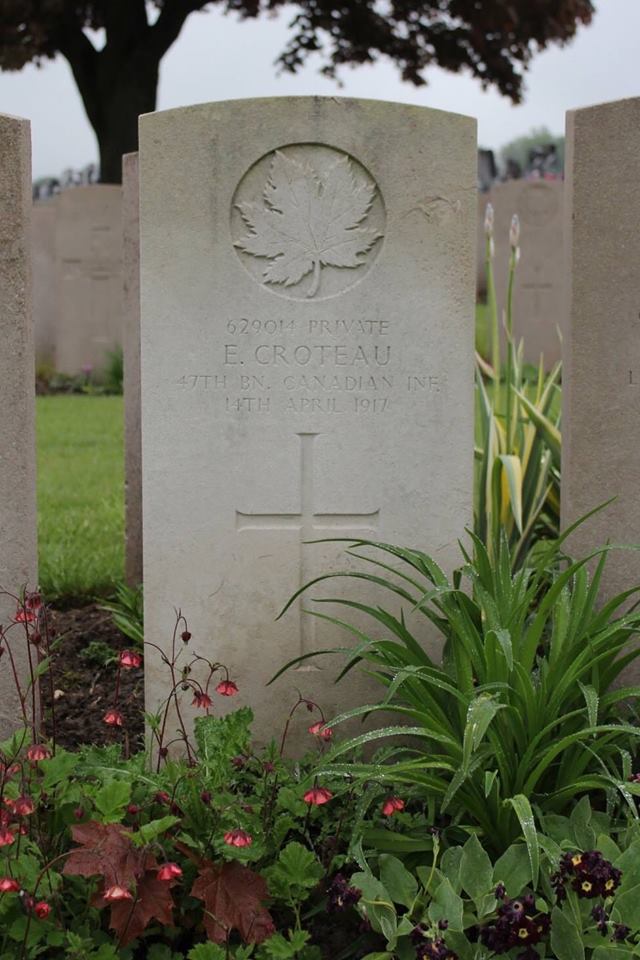
My great grand uncle, Private Edmond Croteau (photo above), fought in and died from wounds received in the Battle of Vimy Ridge.

Born in Saint-Sylvestre in October 1880, he left Quebec as a young man and traveled west to the Yukon during the height of the Klondike Gold Rush. When the gold rush died out, he moved south, settling in Maillardville, which is part of present-day Coquitlam. He enlisted in the Canadian Army in New Westminster in June 1915. He initially served with the 104th Regiment Westminster Fusiliers of Canada and later with the 47th Battalion of the Canadian Expeditionary Force, who he served with at Vimy Ridge.

Private Edmond Croteau was seriously wounded on April 11, 1917, during the successful attempt by Canadian forces to take Hill 120 (also known as The Pimple), a fortified point at the northernmost point of Vimy Ridge. He died on April 14, 1917 at the No. 6 Casualty Clearing Station. He was 36 years old.

He was buried at the Barlin Communal Cemetery Extension, Pas de Calais, France.

Edmond Croteau's headstone at the Barlin Communal Cemetery Extension, Pas de Calais, France.
Edmond Croteau’s headstone at the Barlin Communal Cemetery Extension, Pas de Calais, France.
Categories
Alberta Politics

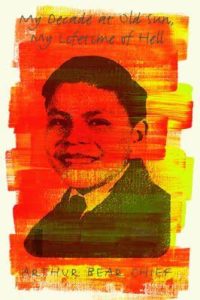
‘My Decade at Old Sun, My Lifetime of Hell’ by Arthur Bear Chief tops Audreys Books non-fiction bestseller list

Here is the list of the top 10 fiction and non-fiction titles sold in Edmonton for the week ended April 2, 2017, compiled on April 4, 2017, by Audreys Books and provided by the Book Publishers Association of Alberta.

EDMONTON  FICTION BESTSELLERS

1. Believing is not the same as Being Saved (Poetry) – Lisa Martin*†
2. The It Girl and Me: a Novel of Clara Bow – Laini Giles*
3. Fifteen Dogs – Andrè Alexis
4. Ragged Company – Richard Wagamese
5. Something Unremembered – Della Dennis *†
6. Encountering Riel – David D. Orr*†
7. The Break – Katherena Vermette
8. Milk & Honey – Rupi Kaur
9. Punk – Lex J. Grootelaar*
10. Big Little Lies – Liane Moriarty

EDMONTON NON-FICTION BESTSELLERS

1. My Decade at Old Sun, My Lifetime of Hell – Arthur Bear Chief†
2. The Hidden Life of Trees: What They Feel, How They Communicate – Discoveries from a Secret World – Peter Wohlleben, Tim Flannery
3. The Right to Be Cold: One Woman’s Story of Protecting Her Culture, the Arctic and the Whole Planet – Sheila Watt-Cloutier
4. Born a Crime: Stories from a South African Childhood – Trevor Noah
5. When Breath Becomes Air – Paul Kalanithi
6. The Bosun Chair (Memoir/Poetry) – Jennifer Bowering Delisle*†
7. Edmonton Cooks: Signature Recipes from the City’s Best Chefs – Leanne Brown, Tina Fiaz *
8. Extreme Measures: Finding a Better Path to the End of Life – Jessica Nutik Zitter
9. Hidden Figures: The American Dream and the Untold Story of the Black Women Mathematicians Who Helped Win the Space Race – Margot Lee Shetterly
10. Elon Musk: Tesla, SpaceX, And the Quest for a Fantastic Future – Ashlee Vance

*Alberta Author
†Alberta Publisher

Categories
Alberta Politics

Does anyone want to lead Alberta’s Liberal Party?

The deadline is fast approaching. On March 31 at 5:00 p.m. we will know for sure who, if anyone, wants to lead Alberta’s Liberal Party. The race to choose a replacement for the party’s last permanent leader – Raj Sherman, who resigned in January 2015 – has been less than exciting.

Nolan Crouse
Nolan Crouse

Until he dropped out of the race yesterday, the candidacy of three-term St. Albert Mayor Nolan Crouse had given the leadership contest some much needed media attention. It also gave the party some hope for its political future. Crouse is a well-known name in the Edmonton-region, which is also where Rachel Notley’s NDP has its strongest support.

David Swann was the only Liberal to be re-elected in 2015, and that was largely due to his own personal popularity in Calgary-Mountain View. He was the party’s leader from 2008 to 2011 and interim leader since 2015.

Crouse’s departure only days before the deadline left the party in a lurch. Party executives scrambled to ensure that they would have at least one candidate, or maybe even two, submit their papers before 5:00 p.m. on March 31. It would be incredibly embarrassing if no one signed up to run.

In the wake of Crouse leaving the race, rumours circulated that former Tory MLA Thomas Lukaszuk could become a candidate, but those rumours appear to have dried up.

Kerry Cundal Liberal Calgary
Kerry Cundal

CBC reports that two last-minute candidates are planning to throw their names in the race: Kerry Cundal and David Khan.

Cundal ran as a federal Liberal candidate in the 2015 election, placing second to Conservative Ron Liepert in Calgary-Signal Hill. She was involved with the Progressive Conservative Party in support of Sandra Jansen’s brief leadership campaign and the “Renew” faction of the party that opposed Jason Kenney’s campaign.

Khan is a Calgary-based lawyer who ran as a provincial Liberal candidate in Calgary-West in 2014 and in Calgary-Buffalo in 2015. He was the executive vice-president of the party until recently (his name has been removed from the party website). He has also become a frequent political commentator on CBC’s national politics program, Power & Politics.

Jacob Huffman Alberta Liberal Leadership
Jacob Huffman

Neither Cundal or Khan have formally announced their plans to run.

A third potential candidate, University of Calgary student Jacob Huffman, launched a Facebook page announcing his candidacy shortly after Crouse dropped out. The way this race has progressed it might be hard to tell whether or not his candidacy is serious, but at the rate it is going Huffman might be acclaimed (he’s already planning his victory party).

Who will actually run for the leadership of the Alberta Liberal Party? Wait to find out at 5:00 p.m. on March 31, 2017.

Photo above: Liberal Party executive director Gwyneth Midgley and David Khan at the reception following the 2017 Speech from the Throne.
Categories
Alberta Politics

Jason Kenney’s appeal to social conservatives targets Gay-Straight Alliances

Perhaps not completely understanding how much acrimony the Gay-Straight Alliance issue caused his party back in 2014, recently selected Progressive Conservative leader Jason Kenney brought the issue back to the forefront this week.

According to reports from Postmedia, when asked about Gay-Straight Alliances, Kenney told the editorial board of the Calgary Herald and Sun that he would allow schools to inform parents if their students join a Gay-Straight Alliance.

Gay-Straight Alliances are student-initiated clubs meant empower students to create safe environments in their own schools. A study from the University of British Columbia found that Canadian schools with GSAs may reduce the odds of suicidal thoughts and attempts among both sexual minority and straight students – which is why having schools track their involvement in these clubs and informing their parents is not just creepy but could be dangerous.

As Postmedia columnist Paula Simons wrote today, ”…why should publicly-funded schools treat GSAs differently than they’d treat any other student-led club? Why, that is, unless deep deep down, we still do believe that it is, in fact, a shameful, dangerous thing to be gay — or to associate with gay friends.”

Now that Kenney has secured the leadership of the PC Party, he is now effectively running for the leadership of the Wildrose Party – which he wants to merge his party into.

Kenney is known for his social conservative views and he shied away from publicly commenting on social issues during the PC leadership race. But now that he is running against Wildrose Party leader Brian Jean for the leadership of a new conservative party, we are beginning to see his open appeal to the party’s social conservative base.

While Kenney’s comments are directed toward social conservative voters he will need to win the leadership of a new conservative party, they are reckless. Allowing schools to “out” students to their parents would undermine the ability of Alberta students to create clubs that are proven to help make school environments more safe and welcoming for some of their classmates.

Crouse drops out of Liberal leadership race, Lukaszuk in?

Thomas Lukaszuk
Thomas Lukaszuk

The only candidate running for the leadership of the Alberta Liberal Party has dropped out two days before the nomination deadline.

St. Albert Mayor Nolan Crouse announced on his website that he was withdrawing from the race for personal reasons. Crouse’s candidacy would have been a big catch for the Liberal Party, which currently only has one MLA in the Alberta Legislature.

Rumours are swirling that Crouse’s departure could make way for former Tory MLA Thomas Lukaszuk to potentially enter the Liberal Party leadership race before the March 31 deadline. The former deputy premier and 2014 PC leadership candidate publicly trashed his PC Party membership card after Kenney won the party leadership on March 18.

The race is being held to choose a replacement for past leader Raj Sherman, another former Tory MLA who crossed the floor to the Liberals in 2011. He resigned as leader in January 2015.

Categories
Alberta Politics

Assdeep in Wonder – a book of poetry – tops Audreys Edmonton Bestseller list this week

Here is the list of the top 10 fiction and non-fiction titles sold in Edmonton for the week ended March 26, 2017, compiled on March 28, 2017, by Audreys Books and provided by the Book Publishers Association of Alberta.

EDMONTON FICTION BESTSELLERS

  1. Assdeep in Wonder (Poetry) – Christopher Gudgeon
  2. Fifteen Dogs – André Alexis
  3. Encountering Riel – David D. Orr*†
  4. Break – Katherena Vermette
  5. American Gods – Neil Gaiman
  6. The Summer Before the War – Helen Simonson
  7. A Dog’s Purpose: A Novel for Humans – Bruce W. Cameron
  8. 4 3 2 1 – Paul Auster
  9. Medicine Walk – Richard Wagamese
  10. Something Unremembered – Della Dennis*†

EDMONTON NON-FICTION BESTSELLERS

  1. The Event Planner – Celebrating Canada’s 150th – Cathy Harvey*
  2. Trees in Canada – John Laird Farrar
  3. The Burgess Shale: The Canadian Writing Landscape of the 1960s – Margaret Atwood†
  4. Earls: The Cookbook – Jim Sutherland
  5. Lion – Saroo Brierley
  6. The Hidden Life of Trees: What They Feel, How They Communicate:  Discoveries from a Secret World – Peter Wohlleben, Tim Flannery
  7. Medicine Unbundled: A Journey Through the Minefields of Indigenous Health Care – Gary Geddes
  8. Embers: One Ojibway’s Meditations – Richard Wagamese
  9. The Making of Donald Trump – David Cay Johnston
  10. Calling Our Families Home: Metis Peoples Experience with Child Welfare – Jeannine Carrière, Catherine Richardson

*Alberta Author

†Alberta Publisher

Categories
Alberta Politics

Former Tory MLAs jumping into municipal politics

As the October 16, 2017 municipal elections approach, we are starting to see a number of candidates from the 2015 provincial and federal elections putting their names forward to run for municipal office. At least three former Progressive Conservative MLAs who were defeated in the 2015 election have put their names forward to run:

A few other recent provincial and federal candidates are running as well:

  • Jim Black is running for city council in Medicine Hat. He was an Alberta Party candidate in the 2015 provincial election.
  • Rod Frank is running for mayor of Strathcona County. He earned 20 percent of the vote as the 2015 federal Liberal candidate in the Sherwood Park-Fort Saskatchewan riding.
Categories
Alberta Politics

My submission to the Alberta Electoral Boundaries Commission

Earlier this year I submitted a series of recommendations to Alberta’s Electoral Boundaries Commission, the appointed body tasked with redrawing Alberta’s provincial electoral districts for the next election. I initially meant to share this after I submitted it, but for no particular reason I never got around to posting them. The commission will scheduled to submit its interim report to the Legislative Assembly on May 31, 2017 and, after another round of public hearings, it will submit its final report on October 31, 2017.

Here are the recommendations I submitted to the commission in February 2017:

Population in each district

The previous Commission did a good job keeping the population of most electoral districts within ten percent of the provincial average population per electoral district. But some districts have become outliers as populations grow or decline, which creates a system of unequal representation in the Legislative Assembly.

According to Statistics Canada 2016 Census data made available on Feb. 8, 2017, there has been tremendous growth in Alberta’s urban areas, including the Edmonton region, Calgary region and the Red Deer corridor which spans the length between the province’s two largest cities. Communities like Airdrie and Cochrane have seen significant growth of more than 40 percent since the last census. Because of this, it would be appropriate to redistribute new districts into these regions of the province.

The census data also shows a decline in population in areas west of the Red Deer corridor and in east central Alberta. It would be appropriate to redistribute the boundaries of these districts to reflect this population decline.

I recommend that the commission attempt to keep districts within ten percent, but ideally within five percent, above or below the provincial average population per electoral district.

Special districts

I would prefer that no district fall below twenty-five percent of the average, as increased funding should be allocated to MLAs in geographically larger rural ridings for additional offices, staff and travel costs. But political necessity will likely lead to the existence of one or two of these special exceptions.

I recommend that if special districts are required, that be created only in extreme circumstances and be kept to a minimum number.

Naming districts

In the past there has been little or no guidelines for the Commission to name electoral districts. Some districts are named after geographical locations and some after prominent figures from Alberta’s political history.

I recommend that the Commission or the Legislative Assembly create a protocol for naming of electoral divisions for the guidance of future commissions and legislatures.

Noncontiguous districts

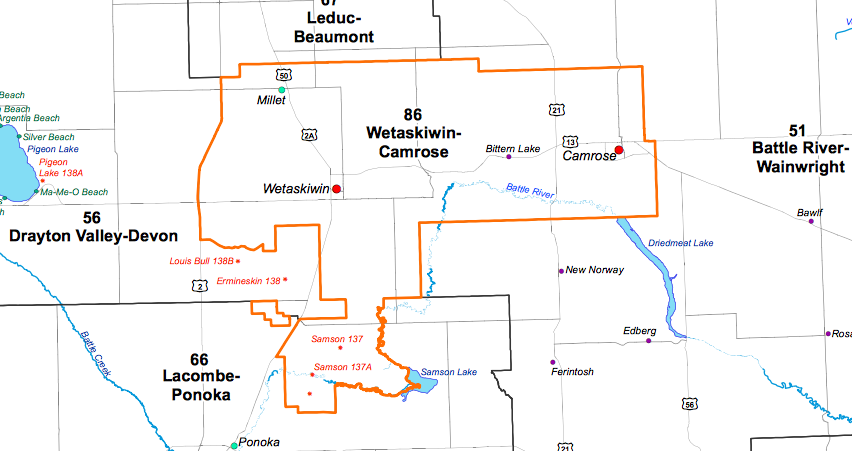
The Wetaskiwin-Camrose electoral district.

There is currently one district that is noncontiguous, meaning that a portion of the district is completely surrounded by another district. A portion of the Samson Indian Reserve #13 located in the Wetaskiwin-Camrose district is currently completely surrounded by the Drayton Valley-Devon and Lacombe-Ponoka districts.

I recommend that all districts be contiguous.

On this topic, it appears that the communities of Maskwacis are divided between two districts – Drayton Valley-Devon and Wetaskiwin-Camrose. This appears to be an anomaly as all other First Nations communities in Alberta which are adjacent to each other are kept in the same district. If the commission is seeking draw district boundaries around communities of interest, it would make sense for Maskwacis to be included in the one district.

Rural/urban perspectives

As the provincial population increases in urban communities and decreases in many rural communities, it seems inevitable that outlying districts may be fewer and larger in the future. As stated by the previous commission which existed in 2009/2010, this raises a question about how large a division can be before it involves so many non-common interests that it is impractical for the disparate issues of the electors to be represented, and for the MLA to represent them.

As was recommended by the previous commission, I agree that the Legislative Assembly needs to seriously consider how the urban/rural perspectives will be addressed in the future.