Categories
Alberta Politics

Alberta NDP raised more money than the Wildrose Party in Q3 of 2016

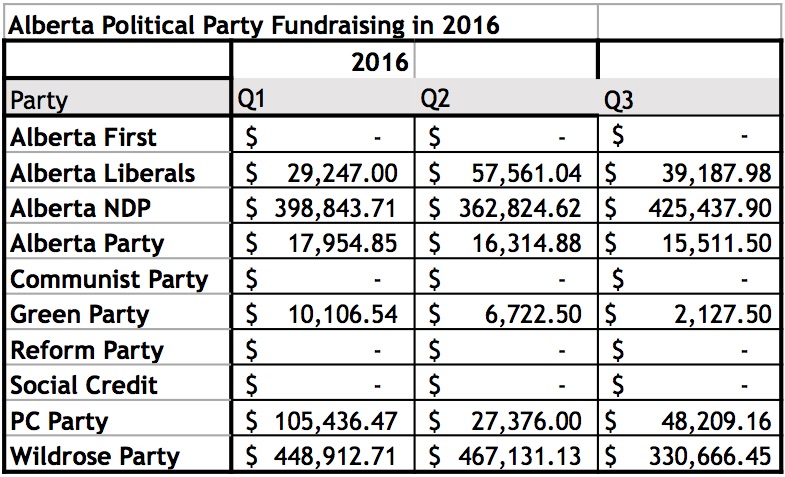
Elections Alberta has released the results of political party fundraising from the third quarter of 2016 and it shows that the Alberta NDP raised more money than the Wildrose Party for the first time since the second quarter of 2015. This marks the second best fundraising quarter for Rachel Notley‘s NDP since the party was elected to government in May 2015.

2016 Third Quarter Fundraising from July 1, 2016 to September 30, 2016
Alberta Liberals: $39,187.98
Alberta NDP: $425,437.9
Alberta Party: $15,511.5
Green Party: $2,127.5
PC Party: $48,209.16
Wildrose Party: $330,666.45

The results for the Wildrose Party represent a significant drop in fundraising for the official opposition party. This is the first time since the third quarter of 2015 that the Wildrose Party has raised less than $400,000 in a quarter.

With Wildrose supporter Jason Kenney a contender for the Progressive Conservative Party leadership, it will be interesting to see whether traditional Wildrose donors have decided to shift their financial support.

And in the midst of a leadership race, the PC Party increased their fundraising income to $48,209.16, up from $27,376 in the second quarter of 2016. The PCs have struggled to raise funds since the NDP banned corporate donations to political parties in 2015.

Here is a breakdown of political party fundraising in Alberta in the first three quarters of 2016:alberta-political-party-fundraising-2016


Categories
Alberta Politics

Very sad news today

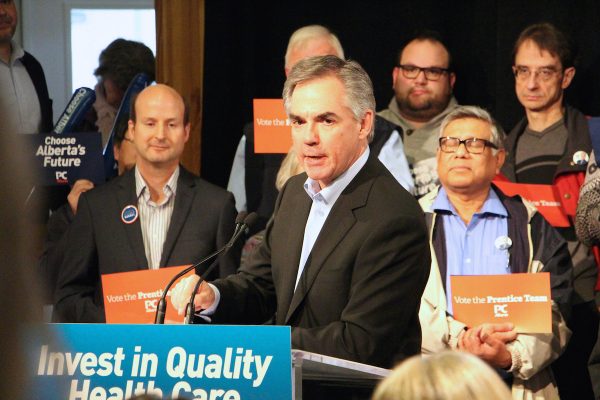
Very sad news today. My condolences to the families and friends of former premier Jim Prentice and the three other passengers killed in the plane crash on this very difficult and tragic day.

Mr. Prentice served as Premier of Alberta from September 2014 until May 2015. He was elected as the MLA for Calgary-Foothills from October 2015 to May 2015 and as the Member of Parliament for Calgary-Centre North from June 2004 to November 2010.

Categories
Alberta Politics

Remember that time 2,000 people showed up to see Justin Trudeau in Medicine Hat? Yeah? That was tonight.

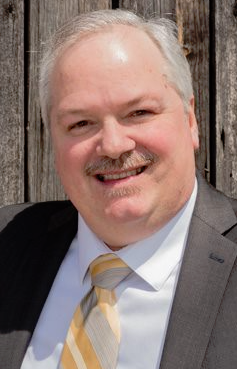
Stan Sakamoto
Stan Sakamoto

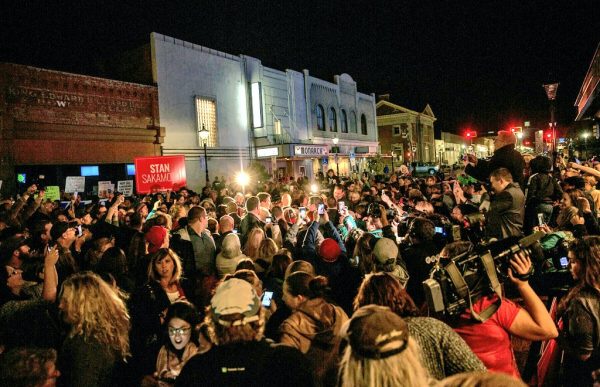
More than two thousand Albertans showed up to see Prime Minister Justin Trudeau tonight at a rally in the southern Alberta city of Medicine Hat. Mr. Trudeau was in town to support Liberal candidate Stan Sakamoto, a popular local businessman, in his bid to become the next Member of Parliament in the Medicine Hat-Cardston-Warner riding in the October 24, 2016 by-election.

The riding is believed to be a very safe seat for the Conservative Party, whose candidate earned 68 percent of the vote in the 2015 election. Candidate Glen Motz is expected to win the election but the huge turnout at a Liberal Party rally should raise some eyebrows.

While a group of protesters, some carrying Alberta separatist banners, made an appearance at the rally, the large turnout certainly defies the Conservative and mainsteam media narrative about the hostility Albertans may feel toward Mr. Trudeau and his government.

Four Liberal MPs were elected in Alberta in the last election but before forming government, the Liberals had racked up an impressive record of increasing their party’s support in a series of Alberta by-elections, most notably in Calgary-Centre and Fort McMurray-Athabasca.

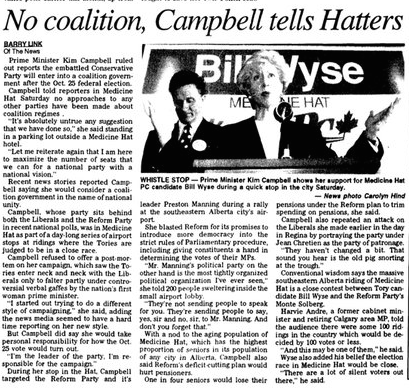
The Medicine Hat News on October 25, 1993 reporting on Kim Campbell's visit to the city.
The Medicine Hat News on October 25, 1993 reporting on Kim Campbell’s visit to the city.

There is a possibility that many of those Hatters who turned out tonight are voting for Mr. Sakamoto, but many may have just been curious to see Mr. Trudeau in person and listen to what he had to say.

I was surprised to learn that this was the first time a sitting Prime Minister has visited the city since Progressive Conservative Prime Minister Kim Campbell stopped by Medicine Hat during the 1993 election campaign.

Even during his nine years as Prime Minister, Conservative Stephen Harper never made the quick trip south of Calgary to visit the The Gas City!

Here is the full list of candidates running in the by-election:

Rhino Party: Kanye Cooper
Libertarian Party
: Sheldon Johnston [Twitter]
Conservative PartyGlen Motz [FacebookTwitter]
Liberal PartyStan Sakamoto [FacebookInstagramTwitter]
Christian Heritage: Rod Taylor
New Democratic Party: Beverly Ann Waege

Categories
Alberta Politics

Oklahoma’s Oilfield Prayer Day and The Gospel According to Alberta

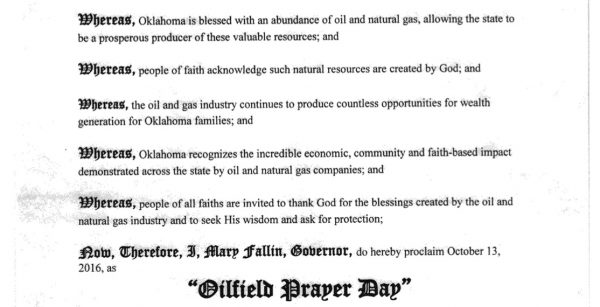
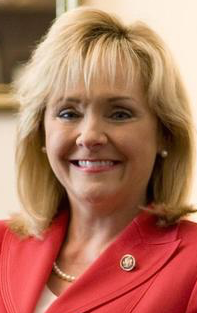
Oklahoma Governor Mary Fallin has declared October 13, 2016 to be Oilfield Prayer Day, and praying for a the price of oil to recover is something the Republican Governor says people of all faiths, not just Christians, can do.

Oklahoma Governor Mary Fallin
Mary Fallin

Oklahoma is an oil state. The State Legislature in Oklahoma City sits on top of an oil field and is the only state legislature grounds in the United States with active oil rigs. Intense use of fracking by the oil and gas industry is suspected to have caused a 5.6 magnitude earthquake in the state in September 2016.

Similar to the economic situation we currently face in Alberta, the sharp decline in the international price of oil has created a bleak situation in Oklahoma.

The Washington Post reports:

Falling oil prices have sapped the state’s economy in the past year and have caused companies to eliminate tens of thousands of industry jobs. The state has made a number of attempts to revive the sector, including giving oil companies huge tax breaks, but the outlook remains bleak.

When it comes to praying for higher oil prices, we Albertans are familiar with a few verses. Our prayer originates from a mythical 1980s bumper sticker and it has even been condensed into a single sentence:

“Dear Lord, please give us another oil boom and we won’t piss it away.” – Alberta, 20:16

Categories
Alberta Politics

Trump Never Had A Chance

Guest Post by Chris Henderson

Seemingly every day, someone tells me that they’re worried Donald Trump will win the election. Aside from the natural anxiety that comes with a  potentially catastrophic (yet still remote) possibility, I really don’t believe Trump winning is even remotely realistic. Here’s why:

1. Trump has no ground game.

Every modern election is won on ground game. Candidates can’t rely on speeches and cable news appearances. They need an army of people and tools to reach out to millions of voters throughout the election, collect data and guide campaign decisions. This matters. It defines your strategy and it helps you convert voters on the margins – the ones that you need to help you win swing states.

Building this infrastructure is essentially the modern-day purpose of the US primary nomination system. Parties believe that the successful nominee will emerge with (and because of) a sophisticated and mature ground game infrastructure to head into the general election. Trump didn’t do this. He coasted on a unique mix of populism and the anger of 13 million voters to help him rise to the top of a diverse and crowded GOP nomination field. He went into the General with no ground game, he has failed to build one since. In fact, he’s been piggybacking on the (comparatively weak) Republican infrastructure to get him through. That was a bad strategy in the first place and now after the GTBTP (Grab Them By The *cat emoji*) debacle, that resource appears to be out of his reach.

2. This is not a professional campaign operation.

Professionalized politics starts at the very top – with the candidate. A candidate sets the tone, drives the policy and starts the strategy. They attract and retain talented staff to make it all real and turn it into votes. The campaign staff create diverse and smart opportunities for the candidate to go out and represent and augment that strategy and policy. While a candidate is in charge of the campaign, a professional staff will set limits. Professional campaigns do not allow candidates to rant on Twitter at 3am. They don’t allow a candidate to skip debate prep. They don’t film half-apologies at midnight. They don’t allow a candidate to spend a week fixated on a single non-campaign issue. They don’t allow the rest of the party to abandon its Presidential candidate. They don’t outright insult and alienate people like Mitt Romney and John McCain. Trump’s campaign is completely bereft of all of these qualities.

3. He’s checkmated himself with his own rhetoric and bluster.

Donald Trump has built a campaign on a style that attracts a large number of voters who, by and large, are disenfranchised with the direction of America and the type of people who have been traditionally tasked with leading it. That’s fair enough. And it was a smart strategy to win the GOP primary, especially with Obama in office. Applying that strategy to the General election has brought him within close to striking distance of a chance at winning.

Here’s his biggest problem. He needs more than this relatively reliable cohort to win. He needs to capture the votes of more moderate, independent voters who are mailable or undecided. With the stark nature of the offence in his GTBTP video, he needs to work harder to access those particular voters. But what he needs to do to access those voters threatens to alienate his original base of voters, which he also needs in order to win. They don’t want to vote for a guy that apologizes for “locker room talk.” That puts Trump in an impossible position that a talented, experienced candidate and team might be able to navigate out of – but, as discussed, Trump doesn’t have that.

4. He’s only been ahead for a fleeting moment in this election.

Take a quick look at polling aggregators. Only once – after the GOP Convention – has he ever been polling better than Hillary Clinton. And that peak was followed with his steepest decline of the last year. His polling has been over the place, but it hasn’t crossed Hillary Clinton’s horizon. And, at this point, it seems extremely unlikely that it will. Only the most charismatic, skilled politician could make up that structural polling deficit. He doesn’t have either.

These are all critical problems. Each of them would need to be rectified in order for him to be victorious in this election. No single debate performance, Clinton scandal, rally speech or publicity stunt can save him from these serious systemic problems.

Breathe easy – Hillary Clinton will be the next President of the United States.


Chris Henderson has been working on campaigns since he was 11 years old. He once successfully convinced Dave Cournoyer to shave his beard. Today, he is a Strategist at Calder Bateman Communications.

Categories
Alberta Politics

Thank you to the teachers who helped spark my interest in Alberta politics

Today is World Teachers’ Day, which is held annually on 5 October as part of a UNESCO initiative to appreciate, assess, and improve the educators of the world. In this spirit, almost everyone can name a teacher they had in school who played an important role in inspiring, encouraging and challenging them to further their interests and studies.

I am blessed to have had many great teachers during my K-12 and university education in Alberta but there are two Social Studies teachers who I credit for playing big roles introducing me into the world of Alberta politics.

During the 1997 provincial election, as part of my Grade 8 Social Studies course at École Georges H. Primeau School in Morinville, we were given an assignment that required us to collect news paper clippings of media coverage of the election. Each evening, after my parents had finished reading the papers, I studiously cut out relevant news stories from the Edmonton Journal, the Morinville Mirror and St. Albert Gazette, and glued them into a scrapbook.

I cannot remember whether I was asked or if I volunteered, but my teacher, Al Meunier, was organizing an all-candidates forum at the school and was looking for student volunteers. Each of the election candidates was to be introduced by a student at the start of the forum and I was chosen to introduce and read the biography of Tom Turner, the local New Democratic Party candidate. I remember not completely understanding the differences between the candidates, but I do remember starting to pay more attention to Alberta politics after that event.

Three years later, Andrew Raczynski, an excellent teacher who had taught my Grade 9 Social Studies and English courses announced that he was running for the nomination to become the local provincial Liberal candidate in the next election. Unlike most rural areas in Alberta, the community I grew up in had a unique history of electing Liberal MLAs (Nick Taylor in 1986, 1989 and 1993 and Mary Anne Balisilie in a 1996 by-election). The PC candidate had only narrowly captured the constituency in 1997.

I had become more politically aware after the Progressive Conservative government attempted to ram through a law allowing for increased privatization of health care in Alberta. As a budding politico and soon-to-be voter, I was a impressed when I received personalized responses to letters I had sent to Liberal leader Nancy MacBeth and NDP leader Raj Pannu about my concerns with increased privatized health care.

I eagerly jumped at the opportunity to volunteer on Mr. Raczynski’s campaign. I was elected as a director on the local constituency association board and over the next year I campaigned alongside the candidate in communities across the sprawling rural Redwater constituency. I knocked on doors in every hamlet, village and town in the constituency and attended more rodeos, parades, town fairs and demolition derbies than I ever imagined existed.

It was a great time. I learned a lot about politics and about the people in that area of Alberta. And even though the campaign was not successful in getting Mr. Raczynski elected (not for lack of hard-work, it was a really bad election year for Liberals in Alberta) it was a worthwhile experience. I was hooked on politics.

Soon after the campaign ended, I moved to Edmonton and began studying Political Science and History at university. I continued my involvement in party politics and became active with the Students’ Union at the University of Alberta, which led to an increasing interest in communications and media.

Mr. Meunier and Mr. Raczynski were two teachers who played a big role in sparking my interest in Alberta politics.

Without them, I might have become involved in politics in some role but likely not through the same path. I thank them for challenging me to think critically about my own views, giving me an opportunity to become involved and encouraging me to pursue my interest in Alberta politics.

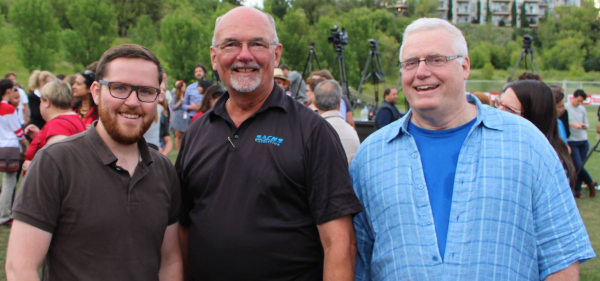
Photo Above: Me (left) with two teachers who helped spark my interest in Alberta politics, Andrew Raczynski (centre) and Al Meunier (right), at a 2014 rally featuring Liberal leader Justin Trudeau in Edmonton.

Categories
Alberta Politics

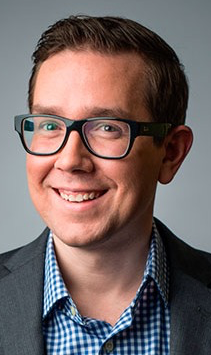
NDP hires political strategist Corey Hogan to run the Public Affairs Bureau

Political strategist Corey Hogan has been hired as the government’s new managing director of the Public Affairs Bureau. He replaces Mark Wells, who announced last week that he was leaving after a year in the job. Mr. Wells previously served as director of communications with the Alberta Union of Provincial Employees, the province’s largest public sector union.

Corey Hogan
Corey Hogan

The two sentence biography included in today’s government press statement does not do Mr. Hogan justice.

Corey Hogan has more than a decade of experience in communications, advertising and engagement. Most recently he served as the Chief Strategy Officer at Northweather, a digital communications consultancy based in Calgary.

Known to political watchers most recently for his contribution to the popular The Strategists podcast, which released its final episode last week, Mr. Hogan was already a fixture in Alberta politics before the podcast was launched. He made a name for himself as an organizer for Stephane Dion during the 2006 federal Liberal leadership convention and later in provincial politics when he worked as the campaign manager for Calgary MLA Dave Taylor‘s 2009 leadership bid and executive director and campaign strategist for the provincial Liberal Party until after the 2012 election. Two years later he was a strategist for Alberta Party leader Greg Clark’s campaign during the 2014 Calgary-Elbow by-election.

He later worked for the global public relations firm Hill & Knowlton before founding a new company, Northweather.

Not always a backroom strategist, Mr. Hogan aspired for public office in 2009 when he ran, unsuccessfully, for the Liberal Party nomination ahead of the Calgary-Glenmore by-election. That campaign saw former Wildrose MLA Paul Hinman eke out a narrow win over Liberal Avalon Roberts, providing a spark that helped propel the then-fledgeling fringe party to Official Opposition in 2012.

He was spotted earlier this year attending the NDP’s convention in Calgary and was jokingly referred to as “the Orange apologist” by podcast co-contributors Zain Velji and Stephen Carter for his progressive views on The Strategists podcast.

I admit to being initially surprised when I heard that Mr. Hogan was hired for this role. This is not because I do not believe he is capable, I expect he is, but I half expected that the new managing director would be a former NDP staffer from Manitoba, Ontario or British Columbia, where many of this government’s top political talent hails from. Mr. Hogan is a smart political operator, comes from outside the traditional NDP establishment, and has experience in Alberta politics.

As a progressive Calgarian, he will bring a different perspective into the halls of government in Edmonton and a new focus on digital communications that past Public Affairs Bureau directors may not have had. He recently launched the Canada15 online campaign, which asked the question: why can’t the federal government bring in $15 national minimum wage in every province all across Canada?

Clear and strategic communications has been a source of weakness for Premier Rachel Notley‘s NDP since it formed government in 2015. Significant communications failures around issues such as changes to farm safety legislation and a court challenge to power purchase agreements have caused the government embarrassment and cost the NDP support in the polls.

Mr. Hogan is joining a government that must simultaneously climb a steep hill and fight an uphill battle if it wants to successfully convince Albertans to embrace and accept the long list of aggressive policy changes, including the NDP’s flagship Climate Leadership Plan.

The NDP have hired a smart and strategic political operator in Corey Hogan. Now they would do well to listen to his advice.

Categories
Alberta Politics

Notley searches for her Lougheed moment by demanding pipelines for Trudeau’s carbon tax

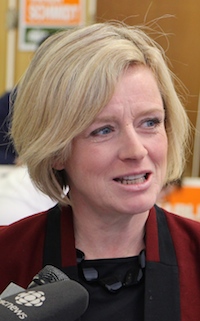
Demanding the federal government help “break the landlock” and support the construction of oil pipelines from Alberta, Premier Rachel Notley and Environment and Parks Minister Shannon Phillips drew a line for Alberta’s support of the Justin Trudeau government’s proposed national carbon pricing plan. In a statement released today, Ms. Notley stated that the Alberta government would not support the federal carbon pricing plan without federal support for increased “energy infrastructure” (a.k.a. oil pipelines).

Rachel Notley Alberta NDP leader
Rachel Notley

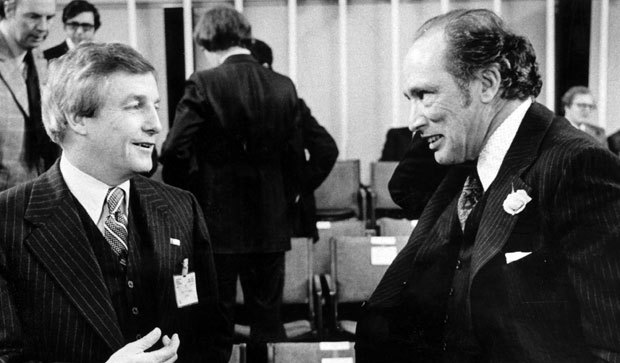
There is nothing more Albertan than a good old fashioned political battle between the provincial government and Ottawa over energy issues. Premier Notley may be hoping this standoff could be reminiscent of the heated political disputes that took place between the governments of Premier Peter Lougheed and Prime Minister Pierre Trudeau in the 1970s and 1980s. In the case of Mr. Lougheed, an iconic figure in Alberta politics, political fights with Ottawa can help boost a politician’s popularity at home.

When Progressive Conservative leader Jim Prentice began casting the New Democratic Party as “extremists” during the 2015 election, Ms. Notley frequently turned to quotes by Mr. Lougheed to support her party’s positions on issues like raising corporate taxes.

Ms. Notley’s NDP have been vocal supporters of the expansion of the Kinder Morgan Trans-Mountain Pipeline and the TransCanada Energy East Pipeline since she became party leader in 2014. Now, as government, the Alberta NDP’s support for oil pipeline expansion has contributed to an increasingly deep divide between the national and provincial NDP in this province. The national NDP, with strong support in anti-pipeline constituencies in British Columbia, Ontario and Quebec, has played a much less supportive role in advocating for Alberta’s oil industry.

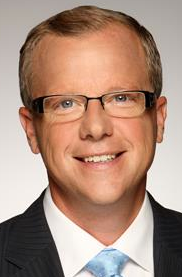
Brad Wall
Brad Wall

The Alberta government’s criticism of the federal government puts Ms. Notley in the company of conservative Saskatchewan Premier Brad Wall, a constant critic of Ottawa. But unlike Mr. Wall’s government, which has dragged its feet on tackling climate change, Ms. Notley’s government cannot be accused of doing nothing to address climate change. Alberta’s NDP government has led the charge with its flagship ‘Climate Leadership Plan‘ which includes its own carbon tax and an aggressive phasing out of dirty coal-fired power plants.

The Alberta NDP plan enjoys the support of environmental groups and oil and gas industry heavyweights like Cenovus, Suncor, CNRL and Shell.

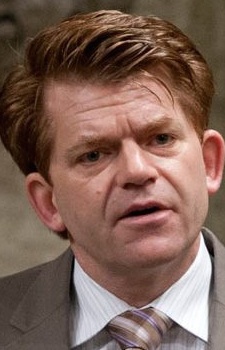
Meanwhile, opposition groups like the Wildrose Party are literally hoping to rehash the political battles of the 1980s. The official opposition Wildrose Party circulated a meme online today comparing the national carbon tax announcement to the unpopular National Energy Program of the 1980s. The Wildrose Party continues to be fierce critics of the federal Liberals and NDP but party leader Brian Jean has yet to offer any alternative solutions to reduce carbon emissions.

Brian Jean Wildrose
Brian Jean

Ironically, the Wildrose Party’s 2015 election platform proposes to “Ensure Alberta’s standards for CO2 emissions and pollutants are in line with national and international standards.” This statement was written during a time when Stephen Harper was Prime Minister and a national climate change plan was nowhere on the agenda. It is amazing how quickly politics can change in a short seventeen months.

Breaking the landlock,’ which I predict will become the latest political buzzword, is analogous to the “bitumen bubble” that former premier Alison Redford warned Albertans of in a televised address in 2014. Both buzzwords are part of a public campaign to build pipelines that would presumably allow for easier export of Alberta’s oil, and allow the private companies exporting the oil to sell Western Canadian Select at a lower discount rate than in previous years. This probably would not make a significant difference to Alberta until the international price of oil rebounds.

Over the past year, Ms. Notley has shown her willingness to work with Mr. Trudeau on a wide-range of issues. This may have led the Prime Minister to expect he would find an ally in Ms. Notley in his bid to implement a national carbon pricing plan. But by attaching strings to Alberta’s support for a national carbon pricing plan, Ms. Notley is playing a political game that could pay out political dividends at home. In a fight between the Alberta government and Ottawa, as Mr. Lougheed discovered, you can bet that nine times out of ten, Albertans will side with Edmonton.


Here is Prime Minister Justin Trudeau’s speech in the House of Commons today announcing the national carbon pricing plan:

Categories
Alberta Politics

PCs kick off leadership race 5 years after choosing Alison Redford

Alberta’s Progressive Conservatives officially kicked off their leadership race on October 1, 2016 at a party event in Lethbridge. The PC Party formed government in Alberta from 1971 until 2015, when it was reduced to third-place in the Legislative Assembly behind the governing New Democratic Party and Official Opposition Wildrose Party.

As party officials celebrated the start of this leadership race, the event marked the fifth anniversary of the party’s 2011 leadership race, which resulted in first-term MLA and justice minister Alison Redford defeating former cabinet minister and establishment favourite Gary Mar. Ms. Redford defeated Mr. Mar in a third-ballot vote 37,104 to 35,491.

At the time, there was plenty of hope and optimism that the election of Ms. Redford, Alberta’s first woman premier and a lawyer with international experience, would signal the start of a new urban and progressive agenda for Alberta. The ensuing years were instead better defined by arrogance, entitlement and abuses of power. This would end up spelling the end of the PC Party’s 44 years of uninterrupted power in Alberta.

Seventeen months after Alberta’s 2015 election, this PC leadership race represents the first time since 1965 that the winner of a PC leadership race will not also immediately step into the Premier’s office.

While the defining narrative of this race until this point has been whether or not the party should merge with the further-right-wing rural-based Wildrose Party, there appears to be little discussion about why Albertans chose to replace the old PCs with Rachel Notley’s moderate NDP.

PC Leadership Candidates

Candidates have until November 10, 2016 to join the race and party delegates will choose a new leader on March 18, 2017.

As of today, the candidates include former Member of Parliament Jason Kenney, former Calgary-Varsity MLA Donna Kennedy-Glans, past candidate Byron Nelson, Town of Devon Councillor Michael Laveck, and current Vermilion-Lloydminster MLA Richard Starke. Calgary-North West MLA Sandra Jansen is also expected to join the race.

I have launched a new webpage tracking the candidates and their social media links.

Categories
Alberta Politics

Dueling MP petitions highlight the Alberta-Quebec pipeline divide

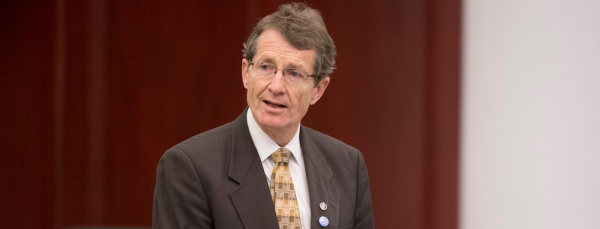
Alberta Conservative MP Shannon Stubbs, who represents the Lakeland riding, sponsored and presented electronic petition e-216 (Oil and gas exploration) to the House of Commons calling on the Government of Canada to “vocally defend the oil and gas industry and the use of pipelines, and to make the building of oil, gas and diluted bitumen pipelines across Canada, to tidewater, and into the United States, a national priority.”

Luc Thériault
Luc Thériault

Bloc Quebecois MP Luc Thériault, who represents the Montcalm riding located north of Montreal, sponsored electronic petition e-150 (Protection of the environment) calling on the Government of Canada to “refrain from turning Quebec into an oilsands superhighway,” “respect Quebec’s environmental jurisdiction” and “put an end to TransCanada’s Energy East pipeline.”

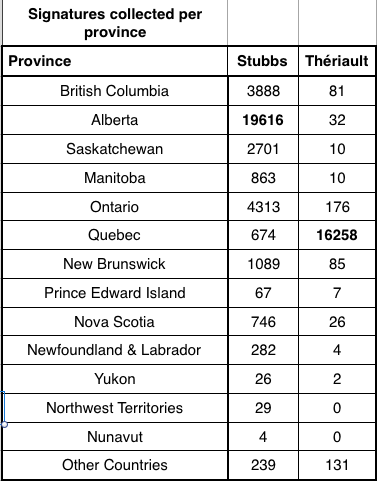
The petition sponsored by Ms. Stubbs collected 34,537 signatures, compared to 16,822 signatures for Mr. Thériault’s petition. The breakdown of which provinces the signatures came from are interesting, and demonstrate an increasingly obvious geo-political divide in the national oil pipeline debate. This is especially evident by the number of signatures each petition collected from Alberta and Quebec. Alberta signatures represent more than half of those collected for Ms. Stubbs’ petition while Quebec signatures represent 96 percent of those collected for Thériault’s petition.

Natural Resources Minister Jim Carr responded to Mr. Thériault’s petition on June 14, 2016.

Ms. Stubbs’ petition was initiated by Canadian Association of Oil Drilling Contractors president Mark Scholz as part of the lobby group’s ‘Oil Respect’ campaign (which included appearances by actor/roughneck Neal Bernard Hancock).

Here is the breakdown of signatures on the two petitions by province:

signatures-per-province-epetition-pipelines-oil

Here is the full text of the two petitions:

Petition e-216 (Oil and gas exploration)

Whereas:

  • Much of Canada’s economy comes from oil and gas exploration, extraction, transport, upgrading, refining and processing;
  • Hundreds of thousands of Canadians work directly in the oil and gas sector;
  • 100,000 oil and gas workers are now unemployed;
  • Millions more benefit from the jobs and profits created by oil and gas development;
  • Canadian governments collect $17 billion dollars annually from the oil and gas industry which is used to fund essential government programs and services;
  • Canada is a world leader in the responsible development of its oil and gas resources;
  • Pipelines are the safest mode of transportation for oil, gas and fluids; and
  • A lack of pipelines to new markets means Canadian producers often receive far less than market rates for their oil.

We, the undersigned, citizens of Canada, call upon the Government of Canada to vocally defend the oil and gas industry and the use of pipelines, and to make the building of oil, gas and diluted bitumen pipelines across Canada, to tidewater, and into the United States, a national priority.

Petition e-150 (Protection of the environment)

Whereas:
  • The Alberta-based company TransCanada would like to build a pipeline that would cross Quebec from west to east to transport more than 1.1 million barrels of crude oil per day, or 121,500 litres per minute, and that would go through more than 80 distinct watersheds, 600 waterways and various agricultural areas;
  • A study carried out by the École polytechnique de Montréal, commissioned by the Government of Quebec and published in late December 2015, revealed: that the pipeline’s route poses a serious landslide risk for various waterways, including around 30 rivers and the St. Lawrence River and its estuary; that the soil along the shoreline of the St. Lawrence River is too unstable to support a pipeline; that there is no such thing as zero risk, and the incidents involving pipeline crossings are usually found after many years of use; and that the only way to prevent all environmental repercussions is to not cross waterways;
  • Quebec would be assuming all environmental risks, and the cost is not worth the risk; and
  • Quebeckers should decide what happens within Quebec’s borders.

We, the undersigned citizens of Quebec, call upon the Government of Canada to: respect the wishes of Quebeckers and the National Assembly of Quebec; refrain from turning Quebec into an oilsands superhighway; respect Quebec’s environmental jurisdiction; and put an end to TransCanada’s Energy East pipeline.

Categories
Alberta Politics

Byron Nelson to announce PC leadership bid, pans Kenney’s hostile takeover bid

Calgary lawyer Byron Nelson is expected to announce his plans to seek the leadership of Alberta’s third-place Progressive Conservative Party tomorrow in Calgary. Mr. Nelson was his party’s candidate in Calgary-Bow in the 2015 election and was defeated by New Democrat Deborah Drever.

Early in August, Mr. Nelson took to Facebook to share his thoughts on Jason Kenney’s plans to take over the PC Party and merge it with the Wildrose Party. Here is an excerpt:

“It is, in a sense, the low-effort method of getting rid of the NDP. It is the method of taking two parties whose visions were resoundingly rejected in the last election, and hoping/assuming that there were enough people clinging to those rejected visions to beat the NDP and form government.

It involves no new vision for Alberta, as has been repeatedly seen by the comments and responses of those who tout it. It merely answers that it will govern in a “conservative manner”. Surely we can all understand and agree, based on the elections of the past 15 months, that simply trying to unite a large group, and promising to govern in a “conservative manner” is a roadmap to electoral defeat. Voters need to be inspired by a vision and a plan. When you don’t have a vision and a plan, you will not get people to vote for you.

The fact that he “unite the right” option for the PC party is countered by the “rebuilding the party” option, is an interesting study in sharp contrasts. The former involves no effort, just a suggestion that we can duct-tape two parties together and win. The latter involves maximum effort by many people. The former offers no vision for the future other than a bland promise of governing conservatively. The latter produces a specific vision and a plan.”

Mr. Nelson joins Mr. Kenney and former Calgary-Varsity MLA Donna Kennedy-Glans as the third candidate in the PC leadership race, which officially kicks off on October 1, 2016. Another Calgary lawyer, Doug Schweitzer, announced his was not entering the race last week. The party will host an all-candidates forum during its policy meeting in Red Deer on November 4 to 6, 2016.

Categories
Alberta Politics

Former Alberta MLA Alana DeLong running as a Liberal in BC election

A former Alberta MLA has been nominated to run in the upcoming British Columbia provincial election for the Liberal Party. Alana DeLong, who served as the Progressive Conservative MLA for Calgary-Bow from 2001 to 2015, has been nominated as a BC Liberal candidate in the Nanaimo-North Cowachin constituency.

Ms. DeLong served as a government backbencher during her time as an MLA in Alberta and briefly ran a campaign for the leadership of the PC Party in 2006 following Ralph Klein‘s retirement. She did not run for re-election in 2015. According to her wikipedia biography, she moved to British Columbia after her retirement.

In the 2013 election, New Democratic Party MLA Doug Routley was re-elected in Nanaimo-North Cowachin with 46 percent of the vote, ahead of his Liberal opponent with 30 percent.

If elected, Ms. DeLong would join a small group of Canadians who have been elected as representatives in more than one provincial legislature. Former Alberta MLA Gordon Dirks, who served as the PC MLA for Calgary-Elbow from 2014 to 2015 also served as a PC MLA in the Saskatchewan Legislature from 1982 to 1986.

Despite their name, the BC Liberals are known to be much more conservative than their Liberal counterparts in Ottawa and other provinces.

Categories
Alberta Politics

Should the Ethics and Accountability Committee be given a second chance?

Partisan wrangling, maneuvering and infighting appears to have derailed much of the work assigned to the Special Select Ethics and Accountability Committee by the time MLAs on the all-party committee passed a motion last week asking the Legislative Assembly to extend the committee’s mandate into spring 2017.

The committee was struck last year to review the Conflicts of Interest Act, the Election Act, the Election Finances and Contributions Disclosure Act and the Public Interest Disclosure (Whistleblower Protection) Act. Albertans had just elected their first new government in 44 years and provincial politics felt euphoric, unfamiliar and exciting. It was not long before negativity and hyper-partisan politics took grip, smothering much of the collegiality between New Democratic Party and opposition MLAs on the committee.

Government House leader Brian Mason mused to reporters that the New Democratic Party government was considering scrapping the committee when its deadline to make submissions is reached this week. Although the committee was tasked with reviewing four Acts, it only met fifteen times over the past year.

Regardless of the future of this committee, changes need to be made to Alberta’s elections and elections finance laws. Even if the committee is scrapped, the government could introduce changes to Alberta’s elections laws in the spring legislative sitting.

The NDP should lower the maximum annual amount that individuals can donate to provincial political parties. The current maximum annual donation limits in Alberta is $30,000 during election periods and $15,000 outside of election periods. The current maximum annual donation for federal political parties in Canada is $1,525.

The NDP should also implement maximum limits to how much candidates, political parties and third-party groups can spend during the election period, as already exist for candidates in federal elections. The limits should be reasonable and could easily be tied to the number of eligible voters in each constituency, as is the case in federal elections.

One potential change that has not been discussed, at least not much in public, is the possibility that the government could scrap Alberta’s fake fixed-election law. Introduced in 2011, the law states that an election be called every four years between March 1 and May 31. Alberta is the only Canadian province with a fixed-election law that does not actually include a fixed-election day.

As Albertans will remember, there is nothing to stop a government from calling an election early, like Jim Prentice’s Progressive Conservatives did in 2015. Scrapping this law would allow for the NDP to govern beyond the four year period, up to five years as stated in Section 4 of the Canadian Charter of Rights and Freedoms, meaning the next election could be held in 2020, not 2019.

The Legislative Assembly should grant the committee the time extension it has requested when MLAs reconvene on October 31, 2016. But it is difficult to imagine that both the NDP and opposition MLAs on the committee, especially Wildrose MLAs eager to embarrass the government, will conduct themselves any differently than they have in the past year since the Ethics and Accountability Committee was formed.

Categories
Alberta Politics

New Liberal leader to be chosen on June 4, 2017

The Alberta Liberals announced this week that they will choose their next leader on June 4, 2017. Current leader David Swann stepped in to the role on an interim basis before the 2015 provincial election when former leader Raj Sherman stepped down and did not run for re-election. Dr. Swann has served as the MLA for Calgary-Mountain View since 2004 and was the only Liberal candidate elected in the 2015 election.

Nirmala Naidoo Liberal Calgary Rocky Ridge
Nirmala Naidoo

The Liberals also announced that Nirmala Naidoo, the party’s Calgary co-chair of the leadership process, was stepping down as would be replaced with Calgary party official Bryndis Whitson.

The timing of Ms. Naidoo’s departure is curious because of recent news from another party’s leadership race. As the federal Liberal candidate in the Calgary-Rocky Ridge riding in the 2015 federal election, Ms. Naidoo was endorsed by her friend Sandra Jansen, the Progressive Conservative for Calgary-North West MLA and, as of last week, an expected candidate for her party’s leadership (Ms. Naidoo was also endorsed by former PC MLA Teresa Woo-Paw). It is yet to be seen whether Ms. Naidoo has left the Liberals to support Ms. Jansen’s campaign.

The Liberals will use a point system, explained here, to select their next leader. Calgarian Russell Scantlebury appears to be the only candidate openly campaigning for the leadership.

Categories
Alberta Politics

Doug Schweitzer is out of the PC leadership race

Calgary lawyer Doug Schweitzer announced in an email to his supporters today that he will not seek the leadership of Alberta’s Progressive Conservative Party. Mr. Schweitzer is the former CEO of the Manitoba PC Party and was involved in Jim Prentice‘s campaign for the Alberta PC Party leadership in 2014. He was widely seen as a potential flag bearer for centrist conservatives in the party and rumours of his candidacy had generated excitement among some party activists.

Here’s the text of the email, in which he also takes a swing at the PC Party and its leadership selection process:

Dear team,

This is a note that will disappoint some of my friends and supporters. I have made the decision not to pursue the Leadership of PC Alberta at this time.

My desire to be part of a significant political change in Alberta started a year ago in a coffee shop in Calgary – I just didn’t know it at the time.

At first, I was just meeting with friends to talk about how we could improve our province. Then I travelled across Alberta and met with people and listened to their concerns. People were frustrated and worried. Some had lost their jobs, others their homes and some had even lost hope. What was also very clear from these conversations was a deep sense of pride in the resilience of Albertans. Even in frustration, there was still a strong belief that Alberta could get back on its feet.

I gathered a group to talk about the future of Alberta. It led to some exciting meetings where we brought together hundreds of people to talk constructively about what our future could be. It was in these conversations that I was encouraged by many to seek the leadership of PC Alberta. I was humbled and flattered.

In exploring whether to run, the question that comes up across Alberta is, “How do we defeat the NDP?” The easy answer is to fuel anger and fear by spreading half-truths and representing them as facts for partisan benefit.

Our generation is tired of excessive partisanship. We want leaders that unite and empower us. We need to create the most competitive business environment in North America without sacrificing the environment. We want equality of opportunity, fairness and inclusion.

We need an Alberta for tomorrow, today.

The big question is can we do this through PC Alberta? I believe the Party needs to re-establish trust with voters, bring forward new ideas, a new plan and a new team. I was hopeful this could happen now.

In exploring this campaign, we have hosted hundreds of meetings across Alberta, attracted a talented team, and developed campaign infrastructure that is unrivalled. We are ready to launch what we believe is a winning campaign.

However, I am concerned about the Party’s commitment to a fair leadership process. In particular, the rules that have been established have raised some serious concerns that go to the legitimacy of the process.

This process has made me realize that if we stay focused on the past and established parties, we will lose the real opportunity that lies before us. That is the chance to define what it means to be a conservative for the next generation. We need a “New Blue”.

My team and I believe this opportunity cannot be realized while defending the status quo – we have to reach higher.

What I am interested in is participating in a larger debate that includes all Albertans who are seeking a strong alternative to the NDP. This is the inclusive debate Albertans deserve and one I will work to make happen.

To the volunteers that have been working with us, I’ll do my best to reach out to each of you over the coming weeks. It took me months to meet all of you, so please be patient. I truly appreciate everything you’ve done. I hope many of you choose to join us as we discuss next steps.

Yours truly,

Doug Schweitzer

The PC Party will select a new leader in March 2017. Federal politician Jason Kenney and former MLA Donna Kennedy-Glans have officially announced their plans to run. Political strategist Stephen Carter announced this week that he will be supporting Calgary-North West MLA Sandra Jansen‘s bid for the leadership, which has yet to be officially announced.