Here are a few items to watch out for in Alberta politics this week:
Which of the four Liberal Members of Parliament will be appointed to the federal cabinet on Nov. 4, 2015? Most speculation points toward newly elected Calgary-Centre MP Kent Hehr being given a cabinet spot. Mr. Hehr, along with Calgary-Skyview MP Darshan Kang, were the first federal Liberals to be elected in Calgary since 1968. But will one of the two Liberal MPs from Edmonton – Amarjeet Sohi and Randy Boissonnault – get a cabinet spot? If not, it would mark the first time since before Jim Edwards was appointed as President of the Treasury Board in 1993 that Edmonton has not had representation in the federal cabinet.
Two Conservative MPs from Alberta – Edmonton-Wetaskiwin MP Mike Lake and Sturgeon River-Parkland MP Rona Ambrose – have joined four other Conservative MPs with bids to become the interim leader of the Conservative Party of Canada. That party has only had one permanent leader, Calgary MP Stephen Harper, since the party was formed in 2003 and is expected to choose a new permanent leader next year.
Overshadowing debate about the Alberta NDP’s first provincial budget last week was the Wildrose Party Finance critic Derek Fildebrant‘s war with a Globe & Mail reporter and House leader Nathan Cooper‘s war against a 9:00 a.m. start time for the Legislative sitting. Will the Wildrose Official Opposition be able to move on to actual issues of substance in the second week of the fall session?
It was always expected that uniting the Wildrose and PC parties will be tough. Richard Starke, the PC MLA for Vermilion-Lloydminster, had some choice words for his Wildrose counterparts in the Legislature last week: “…the Official Opposition rather reminds me of the chippy hockey player that hacks and slashes in the corner and then, as soon as something similar happens back to them, goes running to the referee.”
I will be taking a short break from blogging this week. In my absence, check out David Climenhaga‘s informative and entertaining AlbertaPolitics.ca blog.
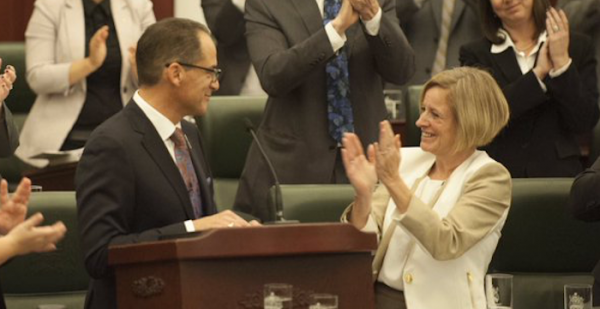
Premier Rachel Notley applauds Finance Minister Joe Ceci as he presents the Alberta NDP's first budget.
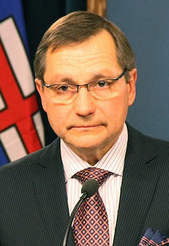
When Finance Minister Joe Ceci stood in the Legislature on Oct. 27 to deliver the Alberta NDP’s first budget, it marked the first time since 1972 that the budget was not tabled by a Progressive Conservative finance minister.
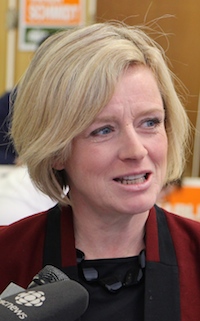
Rachel Notley
The first budget of Premier Rachel Notley‘s NDP government includes a 15 percent increase in capital spending over the next five years, with a goal to create jobs and tackle the province’s aging and neglected hospitals, schools, roads and other public infrastructure.
The NDP budget includes modest increases and projected stable funding for health care, education, advanced education and human services – core services that Albertans depend on. This was a key component of the election platform that helped propel the NDP into government on May 5. The job creation and economic stimulus elements of the budget followed last week’s creation of an Economic Development and Trade portfolio, led by Edmonton MLA Deron Bilous.
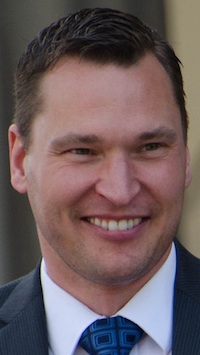
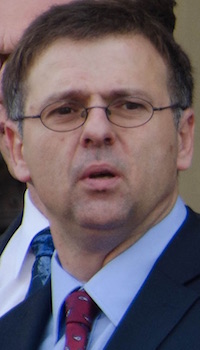
Deron Bilous Edmonton Alberta MLA Minister
A projected $6.1 billion deficit in the NDP budget is larger than the $5 billion deficit presented in the Tory spring budget, which was tabled but never passed. But the Alberta government’s eighth consecutive deficit budget is “…hardly sky is falling territory,” wrote University of Calgary economist Trevor Tombe in Maclean’s Magazine this week.
“While not trivial, obviously, it is completely manageable. Alberta is fully able to handle it and no one need panic. It represents 1.8 per cent of the province’s GDP, which is fairly small, as far as some deficits go,” Dr. Tombe wrote.
The NDP government will borrow to pay for parts of its operations budget starting next year, which will hopefully be a short-term move. Decades of bad financial management and poor long-term planning by the previous conservative government has exacerbated the provincial government’s current fiscal situation. The PCs simply became too comfortable and dependent on unreliable revenue from natural resource royalties to fund the province’s operations budget.
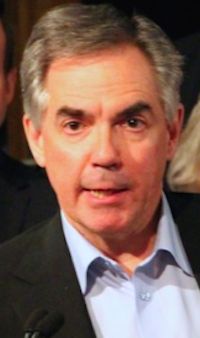
Jim Prentice
Mr. Ceci also announced that the government would legislate a debt ceiling of 15 percent debt-to-GDP in order to hold off a risk of credit downgrades and higher debt service costs.
Former premier Jim Prentice was correct last year when he warned about getting “off the royalty roller coaster.” The Alberta government faces serious revenue problems and moving Alberta away from its over dependence on resource revenue will be a significant test of Ms. Notley’s first term in government.
Any plan to deal with the revenue problem will likely come after the government receives a much anticipated report from the royalty review panel chaired by ATB President and CEO Dave Mowat. The panel is expected to finalize its recommendations by the end of the year. But it will not be enough to simply wait for the international price of oil to rise again. Albertans need to have a serious conversation about revenue and taxation, including the potential introduction of a provincial sales tax.
Mr. Jean’s post-budget press conference was somewhat overshadowed by Mr. Fildebrandt’s bizarre decision to refuse to answer a question from Globe & Mail reporter Carrie Tait (see the ~8:50 mark in this video). Mr. Fildebrandt is sour from a recent interview Ms. Tait published in which she quotes him as claiming the NDP duped Alberta voters by actually implementing promises made during the election (and he later referred to Ms. Tait as a b-list reporter and accused her of auditioning for a job in the Premier’s Office – a comment he later retracted).
Brian Jean
A joint opinion-editorial written by Wildrose MLAs Rick Strankman (Drumheller-Stettler), Grant Hunter (Cardston-Taber-Warner), and Don MacIntyre (Innisfail-Sylvan Lake) and Dave Schneider (Little Bow) and circulated to rural weekly newspapers in September 2015 provides some sense of how that party would approach provincial budgeting if elected to government:
“When governments borrow and spend, there’s no marketable asset. There’s only debt. It’s like using a credit card to buy pizza. Even when governments borrow to spend on bridges and highways rather than programs, the debt is still not connected to a marketable asset. It’s a liability. Mortgages can be liquidated. Houses can be sold. Who buys used government bridges and worn-out highways?”
This is a crude ideological approach to public governance. Using capital financing to pay for the construction and maintenance of public infrastructure like hospitals, schools, bridges and roads is nothing like using a credit card to buy a pizza.
The Alberta NDP’s first provincial budget is sensible and reflects the thoughtful approach that has defined the first six months of Ms. Notley’s tenure as Alberta’s Premier. Rather than follow a disastrous road taken by some of her predecessors, and slash funding to government services while the price of oil is low, the NDP government is taking an opportunity to invest in much needed public infrastructure when the economy is slow and the price is right. It’s not a brand new approach in Alberta politics, but it is refreshing to see a government focus on building rather than tearing down.
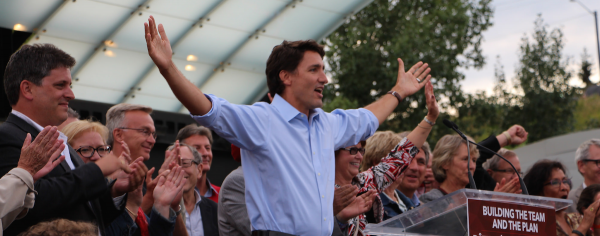
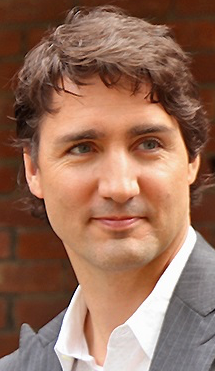
Incoming Prime Minister Justin Trudeau at a rally in Edmonton in the summer of 2014.
With the excitement of the 2015 federal election one week behind us, now is a good time to take a look at how the results of the election could impact Edmonton and Alberta. The reality of a majority Liberal government in Ottawa will make Conservative Albertans uneasy, but there is little reason to believe this new government will lead to doom and gloom for our province.
Last Friday, I had the pleasure of participating in a panel discussion about the election results with Edmonton Journal editor-in-chief Margo Goodhand and University of Alberta professor Steve Patten at a Institute of Public Administration of Canada event at Government House. With this discussion still fresh in my mind, here is a look at some of the ways last week’s federal election results could impact Edmonton and Alberta.
Liberal growth in Conservative Alberta Conservative Party candidates earned 59 percent of the vote and elected candidates in 29 of Alberta’s 34 federal ridings. The Liberals broke a nearly five decade long drought in Calgary with the election of Kent Hehr in Calgary-Centre and Darshan Kang in Calgary-Skyview. In Edmonton, two Liberals were elected in bellwether ridings – Randy Boissonnault in Edmonton-Centre and Amarjeet Sohi in Edmonton-Mill Woods. Since 1984, these two Edmonton ridings have elected MPs belonging to the party in government. (Note: the election results in Edmonton-Mill Woods will face a judicial recount).
The “Class of 2015” There was a significant turnover in Alberta’s representation in Ottawa, with 18 of 34 Members of Parliament from our province being elected for the first time, including seven first-time MPs representing Edmonton ridings. This ‘class of 2015’ includes four Liberals and fourteen Conservatives.
Alberta in Cabinet It is expected that Alberta will have representation in the federal cabinet but it is not clear how large that representation will be. In my opinion, it would be a grave mistake for incoming Prime Minister Justin Trudeau to not appoint a cabinet minister from both Edmonton and Calgary. The third and fifth largest municipalities in Canada should have representation at the highest levels in Ottawa. These large urban centres also represent an area of future electoral growth for the federal Liberal Party. In Calgary, the Liberals earned a surprising 30 percent of the vote and in Edmonton they earned 23 percent. The new cabinet will be sworn-in on Nov. 4, 2015.
Federal-Provincial Relations We have already witnessed a change in tone that could signal a significant improvement in the federal government’s relationship with the provinces. In the first week after the election, Mr. Trudeau invited provincial premiers to join Canada’s delegation to the important COP21 Climate Change Conference in Paris in November. Mr. Trudeau has also indicated his intention to negotiate a new health accord with the provinces.
Alberta-Ottawa Relations
The relationship between Ottawa and Edmonton would have been sour had Stephen Harper’s Conservatives been re-elected. After attacking Alberta’s NDP government numerous times during the campaign, it is unlikely that Mr. Harper and Premier Rachel Notley would have been able to develop the kind of productive working relationship that would benefit Albertans.
Even though she appeared on stage with NDP leader Tom Mulcair in the final days of the election campaign, Ms. Notley has indicated that she was willing to work with whoever became the next Prime Minister. If she and Mr. Trudeau can develop a good working relationship, Canadians may see progress on issues like pipeline expansion in the next four years. Although Mr. Harper was a vocal supporter of Canada’s oil and gas industry, he failed to secure the construction of new pipeline projects during his decade as Prime Minister.
A Municipal Agenda The Liberals promised increased investment in public infrastructure and increased funding for municipal public transit projects. During his three-terms on city council, Mr. Sohi has been an vocal advocate for expanded Light-Rail Transit funding in southeast Edmonton. Mayor Don Iveson has been critical of the Conservative government’s lack of commitment to LRT funding in the past.
Commitment to defence funding The Liberal platform committed to “maintain current National Defence spending levels, including current planned increases” which should at least be positive news for Edmontonians who work at CFB Edmonton. The last First-Past-the-Post election Mr. Trudeau promised that this federal election would be Canada’s last using the antiquated ‘first past the post’ electoral system. This would likely mean an end to Conservative overrepresentation of Alberta in Ottawa. Any system, whether it be proportional representation, single transferable vote or mixed member proportional representation, could allow voters choices to be better reflected in their representation in Ottawa. This would likely mean an end the system which allows 59 percent of voters to be represented by 81 percent of the Members of Parliament from Alberta.
Conservative Leadership With Mr. Harper’s resignation as leader of the Conservative Party of Canada, that party will be thrust into a contest to select a new leader. While that party may seek to choose a new leader from another region of Canada, it is expected that Conservative MPs from Alberta will be candidates in that race. Already, there is speculation that Calgary-Nose Hill MP Michelle Rempel and Calgary-Midnapore MP Jason Kenney are interested in seeking the leadership.
Liberals and NDP in the West Western Canada is no longer a monolith of the Conservative Party support. With British Columbia and Manitoba electing more Liberal MPs than Conservative MPs, Alberta and Saskatchewan are now the only provinces where Conservatives outnumber other parties. While the Conservatives remain strong in the rural west, that party has lost ground to the Liberals and NDP in the western urban centres of Calgary, Edmonton, Regina, Saskatoon, and Winnipeg. Twenty of the NDP’s 44 MPs and 29 of the 184 Liberal MPs were elected in ridings west of Ontario.
Trudeau wave bad news for Notley?
Conservative critics have already predicted that the rise of the federal Liberals in Alberta spells bad news for Ms. Notley’s provincial NDP. I suspect that the results of this federal election will have little impact on the level of NDP support in the next provincial election. It has been clear for some time that Mr. Mulcair is unpopular in Alberta. His noticeable absence from the province during the spring election campaign and low support for the federal NDP in four by-elections since 2011 suggests that Mr. Mulcair’s unpopularity has little impact on Ms. Notley’s political fortunes.
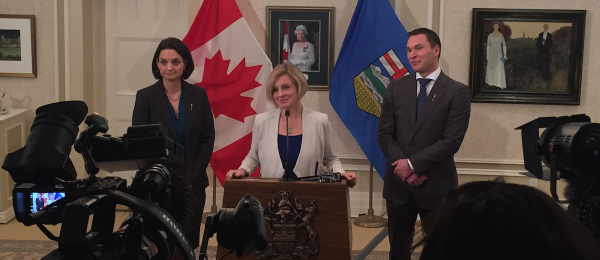
At Government House: Danielle Larivee, Rachel Notley and Deron Bilous.
Alberta’s provincial cabinet grew from twelve to thirteen today with the appointment of Lesser Slave Lake MLA Danielle Larivee to the posts of Minister of Municipal Affairs and Service Alberta.
Ms. Larivee takes over those roles from Deron Bilous. Mr. Bilous, one of the four NDP MLAs elected before this year’s orange chinook swept across Alberta, is now the Minister of Economic Development and Trade, a new department created from elements of the Ministry of Advanced Education and Innovation and International and Intergovernmental Affairs.
With Finance Minister Joe Ceci scheduled to table the provincial budget in the Legislative Assembly on Oct. 27, the creation of this new ministry is meant to send a message about the importance of job creation and economic diversification. It was announced today that the budget will also include an “economic development plan” that will help provide some direction for this initiative.
The provincial budget is expected to include significant investment in public infrastructure and job creation projects to compensate for the loss of jobs caused by the drop in the international price of oil.
Calgary No Longer the Centre of Alberta’s Political Universe
The appointment of a rural northern Alberta MLA to cabinet has already generated complaints from some Calgary-based pundits. Only four of thirteen cabinet ministers represent constituencies south of Edmonton, including Finance Minister Joe Ceci, Justice Minister Kathleen Ganley and Environment Minister Shannon Phillips.
Over the course of its 44 years in power, the old Progressive Conservative government was led by Calgarians for more than three decades – Premiers Peter Lougheed(1971 to 1985), Ralph Klein(1992 to 2006), Alison Redford (2011-2014) and Jim Prentice(2014-2015).
It is suspected that former Alderman Bob Hawkesworth would have been appointed to cabinet as Minister of Municipal Affairs if he had won a September by-election in the Calgary-Foothills riding. If this is true, Calgarians can rightfully ask why one of the other eleven NDP MLAs in Calgary wasn’t appointed to cabinet. But they would be mistaken to believe they are the only group the provincial government is trying to represent.
As an MLA representing a large rural constituency, Ms. Larivee’s appointment to the Municipal Affairs post is more likely a tip of the hat to the Alberta Association of Municipal Districts and Counties. An incredibly well-connected lobby group during the PC Party’s time in power, the AAMDC has found itself sitting on the outside of political power for the first time in decades.
The group was known in political circles as the PC Party’s “farm team,” because many of its officials have used the group as a springboard in attempts to win PC candidate nominations (including current president Al Kemmere and former cabinet minister Jack Hayden).
As a registered nurse who worked in a community health care setting, Ms. Larivee will understand some of the challenges facing the rural and remote communities represented by the AAMDC. It just so happens that Ms. Larivee’s new job starts a month before her first large event as minister – the AAMDC’s annual general meeting on November 17 and 18.
Alberta’s New Cabinet
Rachel Notley (Edmonton-Strathcona) – Premier
Deron Bilous (Edmonton-Beverly-Clareview) – Economic Development and Trade
Oneil Carlier (Whitecourt-Ste. Anne) – Agriculture and Forestry
Joe Ceci (Calgary-Fort) – Finance and Treasury Board President
David Eggen (Edmonton-Calder) — Education and Culture and Tourism
Kathleen Ganley (Calgary-Buffalo) Justice and Aboriginal Affairs
Sarah Hoffman (Edmonton Glenora)— Health and Seniors
Danielle Larivee (Lesser Slave Lake) – Municipal Affairs and Service Alberta
Brian Mason (Edmonton-Highlands-Norwood) – Infrastructure and Transportation
Margaret Mccuaig-Boyd (Dunvegan-Central Peace-Notley) – Energy
Shannon Phillips (Lethbridge-West) – Environment and Parks and Status of Women
Irfan Sabir (Calgary-McCall) – Human Services.
Lori Sigurdson (Edmonton-Riverview) – Advanced Education, and Jobs, Skills, Training & Labour
It’s been a rough year for Conservatives in Canada as two major elections in six months have resulted in major blows for Conservative parties in Alberta and Ottawa.
Justin Trudeau
In May 2015, former federal cabinet minister and bank vice-president Jim Prentice, a political moderate and patrician of the province’s Conservative establishment, led the 44-year long governing Progressive Conservatives to a stunning defeat by Rachel Notley‘s New Democratic Party.
These two major election defeats shattered many common beliefs about politics in Alberta and Canada. In both cases, Conservative parties were defeated by parties promising moderate progressive platforms that included tax increases and significant increases to public infrastructure investment and explicit commitments to run deficit budgets, for at least the short-term period in the case of the NDP. In Alberta, both the PC Party and NDP promised various tax increases.
On the final Sunday of the federal election campaign, Mr. Trudeau spoke to an energetic crowd of more than 2,000 supporters in the Edmonton-Mill Woods riding, home of now elected Liberal MP Amarjeet Sohi. During his speech, he explained to the crowd that if the Liberals were elected on Oct. 19, that they would raise taxes by asking Canada’s wealthiest income earners “to pay just a little bit more.”
Rachel Notley
If these words sounded familiar to anyone in the crowd, it’s because they might have heard Ms. Notley deliver nearly the exact same message five months earlier when speaking to similarly energized crowds during the provincial election. And they in both cases, the message resonated with the crowd, and on election day with voters.
This new reality will certainly come to a shock to those gathering at Preston Manning‘s institute on Oct. 22 to watch the Canadian Taxpayers Federation present former Alberta Treasurer Stockwell Day with a “TaxFighter Award” for his role in implementing Canada’s first 10 percent flat-rate personal income tax in the late 1990s and early 2000s. This is the same flat-tax that Ms. Notley’s NDP replaced with a progressive income tax system only a few short months ago.
These tax increases and other changes brought in by the NDP have not been without their critics, some more vocal and violent than others. But perhaps the biggest irony of these criticisms is that even with the tax increases brought in by Ms. Notley’s NDP, corporate and small business tax rates are still lower than they were when Mr. Day served in Premier Ralph Klein‘s cabinet.
While taxes might not have been the only issue that drove voters to the polls, it didn’t drive them away. These two elections have shattered the myth cultivated by conservative politicians, newspaper columnists, think tanks and lobby groups for decades that promising to increase taxes is political kryptonite.
As Rachel Notley proved on May 5 and Justin Trudeau showed on Oct. 19, voters in 2015 are willing to reward political leaders who present smart, sensible and responsible plans for increased taxation and government revenue.
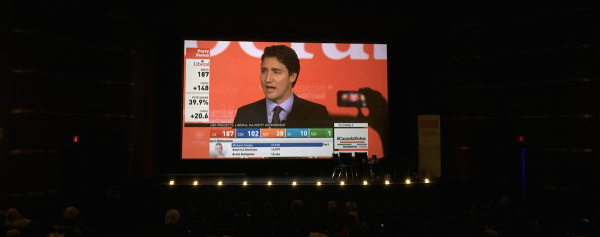
Justin Trudeau delivers his victory speech. More than 300 people packed into the Metro Cinema at the Garneau Theatre to watch the election night results on a 30 foot screen.
The dust has yet to finally settle on tonight’s election night results but we know that the Liberal Party led by Justin Trudeau will form a majority government with more than 180 seats in the next parliament. Conservative Party leader Stephen Harper, who has led his party’s government since 2006, conceded to defeat and resigned as party leader. The New Democratic Party led by Tom Mulcair, who rocketed from fourth place to Official Opposition under Jack Layton‘s leadership in 2011, was cut back to third place.
In Alberta, the Liberals appear to have cracked the Conservative fortress with wins in Edmonton and Calgary.
In Calgary-Skyview, former Liberal MLA Darshan Kanghas become the first Liberal Member of Parliament elected in Calgary since 1968. Another former Liberal MLA, Kent Hehr, is currently leading Conservative MP Joan Crockatt in Calgary-Centre with more polls yet to be counted. In Edmonton-Mill Woods, popular city councillor Amarjeet Sohi, running for the Liberals, is in a tight race with Conservative cabinet minister Tim Uppal. In Edmonton-Centre, Liberal Randy Boissonnaultis leading Conservative candidate James Cumming and NDP hopeful Gil McGowan.
While Canadians rejected a Conservative government led by a Calgary MP, Alberta will not be left without representation in government. It will be expected that at least one Liberal MP from each of Alberta’s two largest cities will be appointed to Mr. Trudeau’s cabinet.
For the NDP, it appears that only incumbent Linda Duncan was re-elected to a third-term as the MP for Edmonton-Strathcona.
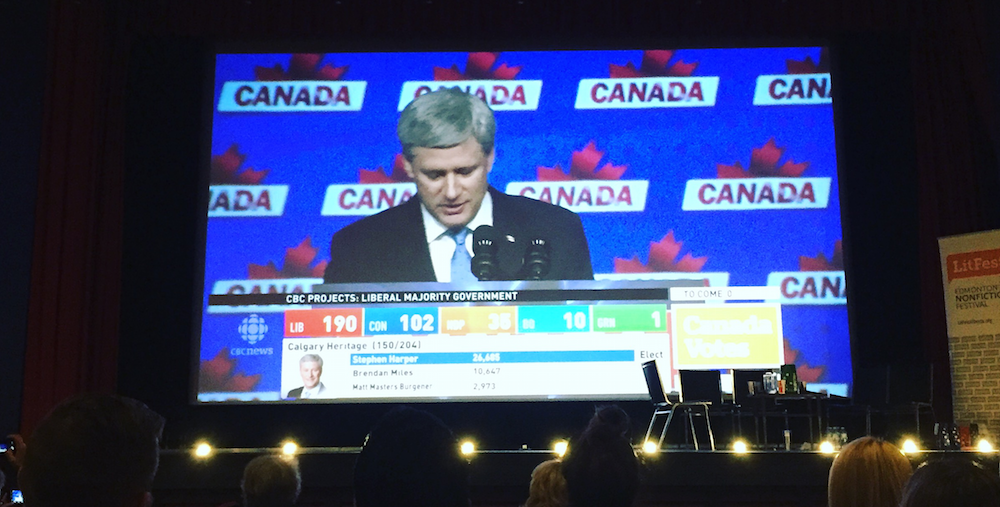
Conservative leader Stephen Harper delivers his concession speech.
There will be plenty of times in the coming days to discuss what happened on election night and over the past eleven weeks, and what it means for the future of Canada. But tonight’s results make it clear that Canadians have rejected the politics of negativity, fear and division that Mr. Harper’s Conservative believed would help them secure re-election.
Tomorrow morning, Albertans will wake up in a new Canada – with an incoming progressive Liberal Prime Minister Justin Trudeau, a progressive New Democrat Premier Rachel Notley, and progressive mayors DonIveson in Edmonton and Naheed Nenshi in Calgary.
Justin Trudeau speaks to a large crowd of Liberal supporters at an 8am rally in Edmonton on Oct. 18, 2015.
While Canadians could be on track to elect the country’s first Liberal Party government since 2004, it looks like Albertans could remain firmly in the Conservative Party camp, even after Stephen Harper‘s decade-long reign in Ottawa. But while most of Alberta’s federal ridings are expected to produce large victories for Tory candidates when the votes are counted tomorrow night, a handful of ridings in Alberta’s two major cities could produce some interesting results.
Attracting crowds of 2,000 in Edmonton and 4,000 in Calgary today, Liberal Party leader Justin Trudeau spent the final day of the 11-week election campaign in western Canada. The excitement in the crowd was undeniable. It has been a long time since Alberta Liberals have had something to be excited about.
I don’t know what Trudeaumania felt like in 1968, but the energy at today’s rally in Edmonton rivalled the energy at Rachel Notley‘s 2,000 person rally in the final week of this year’s provincial election. And I bet if you polled the people at that Trudeau rally, I would expect that most will have enthusiastically voted for Ms. Notley’s New Democratic Party on May 5, 2015. It was that ability to unite moderate and progressive voters under her party’s banner that led to the NDP’s election victory earlier this year.
While many of those moderate voters may help re-elect the Alberta NDP in 2019, they were excited about the federal Liberals today. And with moderate and progressive voters still divided between the federal Liberals and NDP in Alberta, it remains likely that any gains in the province could be marginal.
But while hopes for an NDP government led by Tom Mulcair in Ottawa may have been dashed, for now, the NDP remain well-positioned to elect two Members of Parliament in Edmonton, the epicentre of Ms. Notley’s orange wave. Two-term NDP MP Linda Duncan is expected to be re-elected in Edmonton-Strathcona. The NDP have also poured plenty of energy and resources in the campaign in Edmonton-Griesbach, where a two-way race has pitted NDP candidate Janis Irwin against former one-term city councillor Kerry Diotte.
Back at the rally, where the crowd of Liberals cheered enthusiastically for the Edmonton area Liberal candidates on stage, the largest cheers were for Trudeau and Amarjeet Sohi, the popular city councillor running for election in Edmonton-Mill Woods (where the rally was held). During his speech, Mr. Trudeau focused on some of the issues that Mr. Sohi has fought hard for on city council – like the much needed expansion of the LRT line to south east Edmonton.
Edmonton Mayor Don Iveson briefly entered the federal election fray earlier in the campaign when he criticized the federal Conservatives for not proposing new funding for Edmonton’s LRT system, while promising similar funding for projects in other cities. While his criticisms ruffled the delicate feathers of some local Conservatives, Mr. Iveson may find a more cooperative partner in a new federal government willing to invest in urban transportation infrastructure. And that kind of change is exciting.
Here is a list of some other Alberta ridings to watch on Election Night:
Calgary-Centre: Former Liberal MLA Kent Hehr is facing Conservative candidate Joan Crockatt, who was narrowly elected in a 2012 by-election.
Calgary-Confederation: Lawyer Matt Grant, running for the Liberals, faces former Progressive Conservative MLA Len Webber. Well-known former journalist Kirk Heuser is running for the NDP.
If you find yourself without an election night party tomorrow night, feel free to come down to the Metro Cinema (Garneau Theatre) and watch the coverage on a 30 foot theatre screen. While you watch the results, I will be talking politics on stage with Wab Kinew, Samantha Power, Drew Hayden Taylor and Mike Hudema. The event, part of Litfest, begins at 8:00 p.m. Tickets are $10.
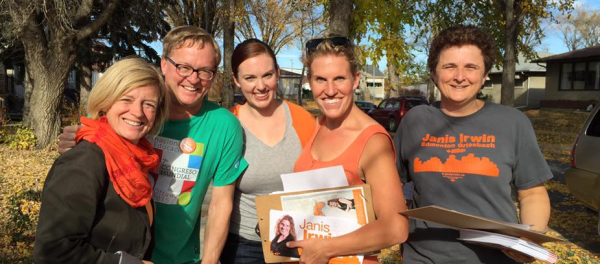
Alberta Premier Rachel Notley (left) and Education Minister David Eggen (second from the left) campaign with NDP candidate Janis Irwin (second from the right) in the Edmonton-Griesbach riding.
There is no longer any doubt that Alberta is an important battleground in this federal election campaign. While Conservatives will dominate in the provincial seat count, the Liberals and NDP believe they are positioned to win competitive races in Edmonton and Calgary. Tom MulcairandJustin Trudeau will make appearances at campaign events in Alberta during the final days of Canada’s eleven week long federal election.
Aaron Paquette
New Democratic Party leader Tom Mulcair and Premier Rachel Notley will share the stage tomorrow evening at a rally at downtown Edmonton’s Shaw Conference Centre.
The NDP are hoping that Ms. Notley’s popularity in the provincial capital can help boost the re-election effort of Linda Duncan in Edmonton-Strathcona and the election bids of Janis Irwin in Edmonton-Griesbach, Gil McGowan in Edmonton-Centre and Aaron Paquette in Edmonton-Manning. With 64 percent of Edmontonians having marked their ballots for the NDP in the recent provincial election, the NDP are hoping to extend some of that support to the federal level.
Liberal leader Justin Trudeau will spend the final Sunday of the election campaign swinging through Alberta to headline rallies for Amarjeet Sohi in Edmonton-Mill Woods and Darshan Kang in Calgary-Skyview.
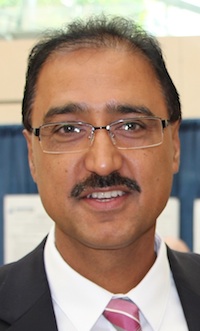
Amarjeet Sohi
Both Mr. Sohi and Mr. Kang are candidates the Liberals believe have a real chance at being elected on October 19. A Mainstreet Research poll released last week shows Mr. Sohi, a popular three-term city councillor, in a close two-way race with Conservative Tim Uppal. The Liberals are also hoping that strong campaigns can propel Randy Boissonnault in Edmonton-Centre, former Liberal MLA Kent Hehr in Calgary-Centre and Matt Grant in Calgary-Confederation to victory.
It is has not been announced whether Conservative leader Stephen Harperwill give Albertans any of his time in the final days before the election. He is running for re-election in the Calgary-Heritage riding.
Notley critics choking on Pretzel Logic
Wildrose leader Brian Jean campaigns for Conservative Joan Crockatt in Calgary-Centre.
Alberta’s newly elected NDP government was a frequent target of Mr. Harper’s during this campaign. Ms. Notley succeeded in avoiding getting dragged into a war of words with the federal Conservative leader. Instead, Finance Minister Joe Ceci, a former Calgary alderman, was the NDP’s designated hitter to respond to the federal Conservative leader’s barbs.
Wildrose leader Brian Jean, a former Conservative MP, was spotted campaigning for Conservative Joan Crockatt in Calgary this week. Mr. Jean claimed in an email to his party’s supporters that Ms. Notley was “throwing all the powers of the Alberta government behind Mulcair and the federal NDP.” The claim is plainly ridiculous.
By “all the powers,” what Mr. Jean meant was a single YouTube video of Ms. Notley’s speech to the Calgary Chamber of Commerce circulated with a government press release. The 42-minute long video of Ms. Notley’s speech included her brief remarks expressing support for Mr. Mulcair. Inappropriate? Yes. All the powers of the Alberta government? Not even close.
Dion campaigns in Edmonton
Stephane Dion spoke to Liberal supporters in Edmonton today.
Former federal Liberal leader Stephane Dion was campaigning in Edmonton today. The likeable former cabinet minister and university professor from Montreal delivered an engaging speech to about 100 party supporters at a town hall meeting in the Sutton Place Hotel. Perhaps one of the most capable Prime Ministers Canada never had, Mr. Dion is sure to be appointed to cabinet if the Liberal Party forms government in Ottawa on Oct. 19.
Still not sure who to vote for?
Elections Canada reports that 358,830 Albertans cast their ballots at the advance polls on October 9, 10, 11 and 12, 2015. If you are still not sure which candidate you will be voting for on Oct. 19, take a look through my list of candidates running in Alberta’s 34 ridings.
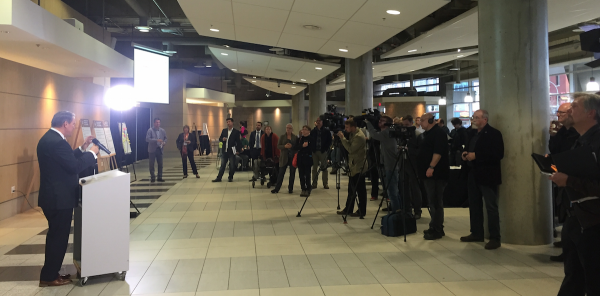
Royalty Review panel chairperson Dave Mowat addresses a crowd of about 120 at MacEwan University in Edmonton.
Alberta’s Royalty Review panel stopped in Edmonton on Oct. 6, 2015 for the fourth and final scheduled community consultation meeting. Compared to reports from a tense meeting the previous evening in Calgary, the crowd of about 120 Edmontonians was generally polite and quite tame.
A review of Alberta’s natural resource royalty rates was a key plank in the New Democratic Party‘s election platform and a panel was appointed shortly after Rachel Notley was sworn-in as Premier earlier this year. The panel is chaired by Alberta Treasury Branches President and CEO Dave Mowat and includes Town of Beaverlodge Mayor Leona Hanson, former deputy finance minister Annette Trimbee, and respected energy economist Peter Tertzakian.
The difference in tone at the two consultation meetings is likely explained in the job losses caused by the decline in the international price of oil, which has impacted Calgary and communities in northern Alberta in larger numbers than Edmonton, which has been somewhat sheltered by a boom of large construction projects and a large public sector workforce.
Unlike other parts of the province where the new government’s policies may be met with varying levels of hostility or cynicism (and where NDP MLAs were elected with thin margins), support for Ms. Notley’s party is deep in Edmonton where 64 percent of voters cast ballots for NDP candidates.
As Mr. Mowat described it, it is critical to separate overlying vision (which is inherently emotional) and the complex technical structure (which is very complex) of Alberta’s natural resource royalties when trying to have a public discussion about the issue. And to Mr. Mowat’s credit he presented the panel’s goals and answered questions from the crowd using layman’s terms with ease.
Of course, what is actually implemented when the panel submits its report to the government will be a decision left to the politicians.
An advantage of appointing an arms-length panel like the one Mr. Mowat is chairing is that the government can pick and choose what recommendations it deems viable, both politically and economically.
The drop in the international price of oil exposed a large cleavage in the government’s finances as past governments became too comfortable and over reliant on these unstable resource revenues to fund the province’s operations budget.
Like her predecessor, Ms. Notley says she plans to fix this, albeit without significant cuts to public services as Mr. Prentice and the opposition Wildrose Party proposed.
But before Alberta’s government is in a position to decide whether the royalties we collect in exchange for allowing private corporations to extract our natural resources should be lowered, kept the same, or increased, the panel is continuing to collect feedback and submissions from Albertans.
The main campus of Athabasca University, located 152 kilometres north of Edmonton.
Residents of one northern Alberta community want to know what Alberta’s new New Democratic Party government has planned for their local university.
Peter MacKinnon
Athabasca University, the province’s largest distance-learning institution employs more than 400 people in Athabasca, making it the largest employer in the town of 3,000.
There is significant fear in the town about the consequences of the university closing or relocating to a larger urban centre, like Edmonton.
In 2012, staff called for then-university president Frits Pannekoek to retire, citing questions around illegal donations to the PC Party and the institution’s finances, including the depletion of its reserve fund.
In June 2015, Athabasca University interim president Peter MacKinnonreleased a task force report on the university’s sustainability, which indicated the institution was facing insolvency in the 2015/2016 financial year. The report blamed over-reliance on tuition fees, the state of its information technology infrastructure, as well as staff compensation and the university’s location, for the university’s financial difficulties.
Lori Sigurdson
While the task force report focused on alarming terms like ”insolvency,” the university had small surpluses in its 2013/2014 and 2014/2015 budgets.
Some observers in the community have suggested that Mr. MacKinnon is playing chicken with the government in an attempt to force new Advanced Education Minister Lori Sigurdsonto commit to keeping the university in Athabasca.
Current Wildrose MLA Jason Nixon was a student representative on Mr. MacKinnon’s task force.
Politically speaking, it may have been an easier decision for the new government to make if an NDP MLA was not currently representing the area. If the constituency had remained PC territory, the NDP would not have to worry about Mr. Piquette’s re-election chances in 2019.
Now the NDP government is stuck in an odd position. Even if the new government wanted to relocate the institution, it would not be difficult to reallocate extra funds in the provincial budget to cover the deficits.
The new government also faces the question about what to do with the university’s board of governors after years of controversy. Like several universities and colleges across Alberta, the board is headed by someone with strong political connections to the old governing party.
Jason Nixon
Acting chair Marg Mrazek is a former president of the PC Party. While the Post-Secondary Learning Act gives the government the ability to replace the board, with Ms. Mrazek’s term is set to expire on July 24, 2016 the NDP may wait until that date before replacing the Tory appointee.
In many ways, Athabasca University is a microcosm for the challenges of regime change after forty-four years of Progressive Conservative government in Alberta.
But Athabasca University may be able to use its NDP connections to apply pressure to the new government. Mr. MacKinnon is the husband of former Saskatchewan NDP MLA and Finance Minister Janice MacKinnon, who served in Roy Romanow‘s cabinet in the 1990s. Premier Rachel Notley‘s Chief of Staff, Brian Topp, was Mr. Romanow’s deputy chief of staff during that period.
While the new government has been able to remain coy about the future of the institution in its first four months in office, residents of Athabasca will demand to know what the NDP has planned for their university. They may find out this week when Ms. Sigurdson is scheduled to meet with Ms. Mrazek and Mr. MacKinnon.
Justin Trudeau at a Liberal Party rally in Edmonton's Louise McKinney Park in August 2014.
Liberal leader Justin Trudeau and New Democratic Party leader Thomas Mulcair will visit Edmonton this week to campaign with local candidates and to rally their supporters. The visit by the two leaders follows an earlier stop by Conservative leader Stephen Harper during the second week of the election.
In a competition to own the “change” message, the NDP are holding a “Rally for Change in Edmonton” on September 10 and the Liberals are holding a “Rally for Real Change in Edmonton” on September 9. It is clear that both parties have identified varying degrees “change” as a common theme in this election campaign and that message could resonate in a handful of ridings in Edmonton in this election.
It is expected that popular Premier Rachel Notley might take the stage with Mr. Mulcair on September 10, to give her personal endorsement to the federal leader. With 64 percent of Edmontonians casting their ballots for the NDP in the May 2015 provincial election, the opposition parties have reason to believe that Alberta’s capital city is fertile ground for progressive messages.
Taking notice of the political shift in the city, the Conservatives recently dispatched Ontario candidate Kellie Leitch and Calgary candidate Michelle Rempel to canvass alongside Edmonton candidates who are in tough contests. Liberal MPs Ralph Goodale and Rodger Cuzner have travelled to Alberta in recent weeks and Ontario MP Carolyn Bennett will campaign in Edmonton later this week.
With forty days left in this election, here is a look at a few races in Edmonton and northern Alberta that could have interesting outcomes on October 19, 2015:
Janis Irwin
Edmonton-Strathcona: Two-term NDP MP Linda Duncan is expected to be re-elected but a resurgence in Liberal support for candidate Eleanor Olszewski could spoil an easy NDP victory and put Conservative Len Thom in a position to win. Note: The Liberal vote fell to an astonishing 2.82 percent in the 2011 election, down from 9 percent in the 2008 election.
Edmonton-Griesbach: If a second NDP MP is elected in Alberta, it will likely be Janis Irwin in this north east Edmonton riding. Ms. Irwin’s chances are boosted by highly-organized provincial NDP campaigns in the area and helped by the embarrassingantics of retiring Conservative MP Peter Goldring. The Conservatives nominated former city councillor Kerry Diotte as their candidate. Mr. Diotte’s record on city council and lacklustre bid for mayor in 2013 have left some Conservative activists unenthusiastic about their party’s chances of holding the riding. Note: I live in this riding and can attest to the large number of orange lawn signs that have popped up over the past few weeks, including one on my own lawn.
Brent Rathgeber
St. Albert-Edmonton: Will long-time Conservative Party loyalist Michael Cooper prevail over rebel MP Brent Rathgeber?Mr. Rathgeber is running as an Independent conservative candidate after quitting the Conservative caucus in 2013 to protest the level of control held over MPs by the Prime Minister’s Office. The two-term MP is well-known in the riding, but a deep Conservative establishment in the riding could be difficult for an Independent to uproot. Note: Before being elected as an MP in 2008, Mr. Rathgeber served as the Progressive Conservative MLA for Edmonton-Calder from 2001 to 2004.
Edmonton-Mill Woods: Popular city councillor Amarjeet Sohi surprised many political watchers when he declared his plans to seek the Liberal nomination earlier this year. Mr. Sohi faces former Edmonton-Sherwood Park Conservative MP Tim Uppaland NDP candidate Jasvir Deol in what could be a fascinating three-way race. Note: Mr. Uppal ran against Liberal MP David Kilgour in this riding as a Canadian Alliance candidate in the 2000 election and Conservative in 2004 election.
Amarjeet Sohi
Edmonton-Centre: Three-term Conservative MP Laurie Hawn is retiring, leaving this central Edmonton riding up for grabs. The Conservatives have nominated former Chamber of Commerce CEO James Cumming as their candidate, while entrepreneur Randy Boissonnault is running for the Liberals and Alberta Federation of Labour president Gil McGowan for the NDP. While the demographics of this riding do not suggest chances would be favourable for the Conservatives, Mr. Hawn benefited in the 2011 election from a sharp vote split by the NDP and Liberals. Note: In 2011, Mr. Hawn earned 48 percent of the vote and the combined Liberals and NDP vote in this riding was 47.8 percent.
Edmonton-Manning: Encompassing the area of Edmonton north east of Edmonton-Griesbach, this riding could result in a close race between Conservative Zaid Aboultaif and New Democrat Aaron Paquette. Note: Mr. Paquette is also known as the founder of the clever #Ottawapiskat meme.
Justin Trudeau’s event, the “Rally for Real Change in Edmonton,” will be held on Wednesday, September 9th at 5:00 pm at the Radisson Edmonton South, 4440 Gateway Blvd.
Thomas Mulcair’s event, the “Rally for Change in Edmonton,” will be held on Thursday, September 10th at 6:30 pm at the Edmonton Shaw Convention Centre, Hall D, 9797 Jasper Ave.
Calgary-Foothils by-election candidates Prasad Panda (Wildrose), Bob Hawkesworth (NDP) and Blair Houston (PC).
Wildrose Party candidate Prasad Panda became his party’s only MLA from Calgary with a fairly decisive win in yesterday’s by-election in Calgary-Foothills, stealing the constituency away from the Progressive Conservatives. PC candidate Blair Houston finished third in the constituency that elected former Premier Jim Prentice in another by-election ten months ago and in a general election only four months ago.
The New Democrats mounted what appeared to be a strong campaign with candidate Bob Hawkesworth, but the governing party was only able to finish with second place in the by-election.
The NDP lost some ground in this by-election, holding 25.7 percent of the vote compared to the 32.3 percent earned by candidate Anne Wilson in the May 5, 2015 general election but still significantly more than the 3.7 percent earned by the NDP candidate in the October 2014 by-election. The results suggest that the NDP “orange chinook” from May 2015 has not completely dissipated as some would have argued and that NDP have developed a base of support in the city that was non-existent only a few months ago.
An NDP loss in this by-election would not have been a notable outcome had that party not intentionally raised the stakes of the results by pouring significant resources into the campaign, including high-profile endorsements of Mr. Hawkesworth and at least three campaign visits by Premier Rachel Notley. The loss does not spell the end of the NDP in Calgary but it does demonstrate that the party faces strong conservative opposition in the city, which should come as a surprise to no one.
Media commentaries will likely frame the Wildrose win as a rebuke of NDP policies in Calgary-Foothills, which it was, but at a more interesting level the results of this by-election are reflective of the divide between the Wildrose and the PC Party.
While the electoral outcomes were different from the last election, the percentages of the combined PC and Wildrose votes were 59.8 percent, up slightly from their combined vote of 58 percent in May 2015. This is a major decline from the October 2014 by-election, when the two conservative parties dominated with a combined 88 percent of the vote.
Conservative voters were split in this by-election, but Mr. Panda’s win will give the Wildrose Party potent ammunition to argue that the old PC Party is not a viable conservative alternative to the NDP in the three and a half years leading up to the next general election. The by-election results do suggest that in Calgary, the mostly rural based Wildrosers could still have some hard work ahead of them, as the PC Party is at the very least “still standing.”
The Wildrose caucus will now grow from 21 to 22 MLAs, making it the largest official opposition since the Liberals had 31 MLAs in the early-1990s. The PCs have 9 MLAs in the Legislature.
Here are the unofficial results from the September 3, 2015 by-election (66/66 polls reporting):
Prasad Panda, Wildrose: 4,877 (38.3%) Bob Hawkesworth, NDP: 3,270 (25.7%) Blair Houston, PC: 2,7,46 (21.5%) Ali Bin Zahid, Liberal: 791 (6.2%) Mark Taylor, Alberta Party: 610 (4.8%) Janet Keeping, Green: 377 (2.9%) Antoni Grochowski, Independent: 46 (0.36%)
Jim Prentice looked like a political juggernaut when he won the October 2014 Calgary-Foothills by-election. Today, voters in Foothills will choose his replacement.
Today’s by-election in Calgary-Foothills is the first major litmus test for Alberta’s political parties in the post-Progressive Conservative political world. After forty-four years of PC Party-government in Alberta end earlier this year, politics in this province could still be in flux.
Bob Hawkesworth
When Rachel Notleyled NDP candidates to victory in fifteen constituencies in the city on May 5, 2015, the “Orange Wave” broke at the boundaries of Calgary-Foothills as conservative voters re-elected Progressive Conservative leader Jim Prentice as their MLA (Mr. Prentice the triggered the by-election when he resigned as MLA on election night).
Despite considerable conservative strength in Calgary-Foothills, the NDP have willingly turned low expectations into high stakes by pouring significant resources into this by-election. Ms. Notley has personally visited the constituency at least three times to campaign alongside Bob Hawkesworth, a well-known candidate with thirty-years of experience in municipal and provincial office in Calgary.
Prasad Panda
Mr. Hawkesworth’s campaign has released impressive endorsements from some unlikely figures – former Calgary Mayor Rod Sykes, former PC MLA Gordon Shrake, former Liberal candidate Brian Edy, and current city councillors Diane Colley-Urquhart and Druh Farrell– to demonstrate a broad support for his candidacy.
Talk in political circles is that he would be a shoe-in for a cabinet spot if elected, maybe as Minister of Minister of Jobs, Skills, Training and Labour or Minister of Infrastructure.
But the decline of the international price of oil and recent energy-sector layoffs may have voters in this constituency sticking with their conservative options. The opposition parties have been quick to blame NDP plans to review resource royalties for making the economic situation worse.
Blair Houston
The war of words in the by-election got nasty after it was discovered that a Chinese-language pamphlet circulated by Wildrose Party candidate Prasad Panda’s campaign accused the NDP of being communists. The Wildrose campaign claimed the translation was unintentional but it is difficult to believe this would be a mistake.
There is a reason why the communist message was only included in the Chinese-language material. According to data from the 2011 National Household Survey, 12.4% of homes in Calgary-Foothills identify Chinese as their household language and 24.1% of the population in the constituency is of Chinese ethnic origin.
Instead of repudiating Mr. Panda’s claims, Wildrose leader Brian Jean doubled down on the communist accusations, telling NewsTalk770 yesterday that the NDP “are the most socialist out of any party in Canada.”
Sandra Jansen
The presence of an increasingly depressing PC Party, represented by candidate Blair Houston could spoil an easy Wildrose victory. Mr. Houston’s campaign material claims that “only the moderate can defeat the extremes,” sending a strong message that there is still significant distrust between the two conservative parties.
The split between Wildrose and PC conservatives is evident among conservative activists on the internet.
An army of Wildrose twitterati launched online attacks yesterday against Calgary-North West PC MLA Sandra Jansen for her support of former television news anchor Nirmala Naidoo, who is running as the federal Liberal candidate in Calgary-Rocky Ridge, which overlaps with the Calgary-Foothills constituency.
Rachel Notley
Ms. Jansen responded that she is not a member of the federal Conservative Party and is under no obligation to support their candidates (her pragmatic reply is unlikely to appease her Wildrose critics).
As litmus tests, by-elections can be indicators of citizens approval or disapproval of a governing party at a given time, but by-election results are not necessarily indicators of how voters will cast their ballots in the future.
The Progressive Conservatives swept four by-elections in October 2014, including one in Calgary-Foothills, leading many political observers to believe that Mr. Prentice was an unstoppable political juggernaut. Only ten months later, Mr. Prentice is gone, the NDP have a majority government, the Wildrose rebounded into official opposition and Alberta has been thrown into a new political reality.
It is anyone’s guess what comes next after today’s by-election in Calgary-Foothills.
Unofficial results from today’s by-election will appear on the Elections Alberta website after 8:00 p.m.
“This is a sale of a depleting resource that’s owned by the people. Once a barrel of oil goes down the pipeline it’s gone forever. It’s like a farmer selling off his topsoil,” former Premier Peter Lougheed once said.
Alberta’s new NDP government has taken steps to fulfill one of their key election promises by appointing a panel to ensure Albertans are receiving their fair share from their natural resource wealth through the royalty rates paid by the oil industry to the Alberta government.
Rachel Notley
The choice of Alberta Treasury Branches President Dave Mowat, energy economist Peter Tertzakian, former Alberta deputy minister of finance Annette Trimbee, and Mayor of Beaverlodge Leona Hansonto review Albertans royalties should calm any anxiety industry leaders may have had with this process. These are sensible choices for this important review.
Like the panel reviewing Alberta’s climate change strategy, the royalty review panel is stacked with knowledgable appointees who cannot be accused being partisan New Democrats. And while some industry leaders are still uncomfortable with this year’s election results, Mr. Tertzakian has some advice for conservative-connected business leaders.
Peter Tertzakian
“The industry needs to have more than just an open mind — I think you have to go with forward thinking and that this is an opportunity to get away from business as usual,” Mr. Tertzakian told a business reporting website after Rachel Notley‘s NDP was elected with a majority government on May 2015.
The appointment of Mr. Tertzakian received immediate praise online from two prominent conservative voices – former Wildrose MLA Heather Forsyth and former Wildrose leader Danielle Smith.
The panel has an important task ahead of it and has a mandate to “optimize” returns to Albertans as owners of the resource, industry investment, diversification opportunities, such as value-added processing, and responsible development of Alberta’s resources.
Bill Hunter, who chaired the 2007 royalty review panel established by former Premier Ed Stelmach, wrote in his final report that “Albertans do not receive their fair share from energy development. Albertans own the resource. The onus is on their government to re-balance the royalty and tax system so that a fair share is collected.”
Marg McCuaig Boyd (photo by Connor Mah)
Nearly a decade after Mr. Hunter penned those words, the responsibility once again falls on Alberta’s government to ensure that Albertans are receiving their fair share from energy development.
It is up to the current panel to consult with Albertans and industry to determine what that proper balance will be.
Part of that balance will be timing, as Energy Minister Marg McCuaig-Boyd told reporters today that any changes to royalties will not be implemented until 2017. And like any other panel review, Ms. McCuaig-Boyd and Ms. Notley have the leeway to ignore any recommendations that might appear to be politically unpalatable or carry too much risk. This is why government’s like to employ these types of panels to review potentially controversial policy changes.
Politicians from the opposition benches have been fiercely critical of NDP plans to review royalties. The Wildrose, Alberta Party, Liberal and the Progressive Conservative opposition have described the review as “job killing.” A September 3 by-election in Calgary-Foothills has escalated the partisan rhetoric from the opposition, who see a by-election win as a way to discredit the new government’s agenda.
Dave Mowat
But others, like Alberta Oil Magazine editor Max Fawcett, argue that now is the perfect time for a royalty review. Canadian Association of Petroleum Producers president Tim McMillan has said he does not want the government to delay the review, and even Mr. Stelmach has said the review should happen.
Comparisons can be made to a rookie PC government led by Peter Lougheed, which reviewed royalties during its first year in office, to the consternation of industry leaders who had grown accustomed to a comfortable relationship with the old Social Credit government.
“The oil companies, not unexpectedly, are howling – while the natural gas industry is quaking in its boots because the government also has made clear it is going to change its taxes in the fall,” the Ottawa Citizen reported on May 8, 1972.
Ed Stelmach
“This is a sale of a depleting resource that’s owned by the people. Once a barrel of oil goes down the pipeline it’s gone forever. It’s like a farmer selling off his topsoil,” Mr. Lougheed once said while encouraging Albertans to think like owners.
As the owners of the resources, Albertans deserve to know whether we are getting our fair share. But the result of a royalty review is made more important if the government does something meaningful with the funds collected through the rent of our natural resources.
Alberta launched the Alberta Heritage Savings Trust Fund in 1976. Under Mr. Lougheed’s leadership, the Heritage Fund initially received 30% of government resource revenues and was worth $12.7 billion in 1986, when the PCs began a 17 year freeze on new deposits into the fund. The Heritage Fund is now worth only $17.4 billion. Despite an embarrassment of riches during most of its 44-years in power, the old conservative government proved to be poor financial managers once Mr. Lougheed retired.
In their 2015 election platform, the NDP campaigned on the promise that “100% of incremental royalty revenue, above the sums earned by Alberta under the current regime, will be invested into Alberta’s Heritage Fund.”
The current downturn in the price of oil will certainly change some of the new government’s short-term plans when the budget is tabled in October 2015, but significant investment in the Heritage Fund when oil prices do rise again will pay off for Albertans in the long-term. And ensuring that the owners – Albertans – are receiving their fair share from energy development, as Mr. Hunter wrote in 2007, will be key to this long-term planning.
‘Risky,’ ‘ideological,’ ‘experimental,’ and ‘uncertain’ are all words that the conservative Wildrose Party opposition is using to describe Alberta’s New Democratic Party government.
The Wildrose appear to have succeeded in turning the tables on the NDP, who, while in opposition criticized the old conservative government of an ideological obsession with privatization of laboratory services. All of a sudden, the government is being accused of being too ideological for protecting Alberta’s public health care system.
Like the old Progressive Conservative government, I am sure the Wildrose would like to increase privatization of the health care system. The NDP could have framed this debate as one of protecting Alberta jobs and an Alberta-based company, rather than just about cancelling a contract with a giant Australian company (it was later announced that an appeal panel determined that Alberta Health Services breached its duty of procedural fairness in the RFP process in a substantive manner).
Vitor Marciano
Premier Rachel Notley‘s three-month old NDP government need to understand that the Wildrose Party is running a permanent negative campaign, and their track record as an attack-based opposition is impressive. The Wildrose Party can lay claim to playing a central role in ending the careers of PC Party premiers Ed Stelmach, Alison Redford and Jim Prentice.
And while the Wildrose Party’s purpose for existence was momentarily questioned during the infamous MLA floor crossings, the demise of the PC government and rise of the Alberta NDP has given the party a new lease on life and a new target to attack. And the conservative opposition has many right-wing allies in its fight against the new government spanning from the editorial pages of the Financial Post to the far corners of the internet.
While Brian Jean is party leader, one of the real brains behind the operation is the venerable press secretary Vitor Marciano. Perhaps the largest mistake that Mr. Prentice and Danielle Smith made during the floor crossings was not to secure Mr. Marciano in a government job where the PCs could keep a close eye on him.
Joe Ceci
After retreating into political exile for a few months, the veteran political operator returned with a vengeance to lead the Wildrose election campaign that brought the party from the depths of the abyss to 21 MLAs, more than they won in 2012.
But despite the Wildrose’s part in destroying the PC dynasty, they lost 81,814 votes in the recent election, while the NDP gained an astonishing 477,441 and formed government.
The Wildrose is attempting to tie the new government to economic conditions caused by the decline of the international price of oil, but the Alberta NDP was elected on a moderate progressive platform and have moved swiftly to implement it. Funding was returned to health care, education and human services, two panels studying climate change and natural resource royalties were struck, corporate taxes were increased, a 3-year minimum wage increase was implemented, and a provincial budget is expected to be tabled in the fall.
Brian Jean
There is no doubt the new government faces challenging economic and revenue challenges but after a summer of reading briefing binders and moving into new offices, the NDP need to reengage in the political debate.
The recent verbal skirmish between federal Conservative leader Stephen Harper and Finance Minister Joe Ceci shows the new government does have cabinet ministers who can articulately respond to the partisan barbs of critics. Along with Ms. Notley and Mr. Ceci, I would also add Environment Minister Shannon Phillips, Justice Minister Kathleen Ganley , Education Minister David Eggen and Infrastructure Minister Brian Mason in this category.
When the legislature returns on October 26, the twenty-one Wildrose MLAs will have a daily platform in Question Period to target government ministers. The NDP can learn from some of the major communications mistakes made by the PC Party and respond promptly to the Wildrose attacks, otherwise the opposition and its conservative allies will set the agenda.
Here are a few examples of Wildrose attacks in recent press releases:
August 20, 2015 “Bad economic policies from the NDP continue to harm Alberta’s economy…”
August 19, 2015: “…the NDP government must move away from their risky, ideological experiments that will drive jobs out of Alberta…
August 18, 2015: “…Ms. Hoffman wants Albertans to believe she made the decision based on a lack of information, but it’s clear she made it based on ideology.
August 14, 2015: “…the actions this government decides to take cannot keep kicking our economy while it is down.”
August 13, 2015: “While Albertans are losing jobs by the thousands with the NDP piling on with damaging economic policies…”
August 13, 2015: “…driven by ideology and not evidence-based decision making…”
August 13, 2015: “…NDP government has contributed directly to uncertainty and job losses…“
August 13, 2015: “…more ideologically driven experiments from the NDP and career politicians…”
Social Credit was risky and ideological
William Aberhart
August 22, 2015 marks eighty years since the Social Credit League formed government in Alberta. In the 1935 election, the party went from zero to fifty-six MLAs and did not even have a leader during the election campaign (William Aberhartwas chosen as Premier on September 3, 1935).
During its first decade in government, Mr. Aberhart’s administration tried to print its own currency, legislate control over the media, tried to nationalize the banking system and banned alcohol sales.