Categories
Alberta Politics

They did what?! Reaction to the NDP Royalty Review from across the political spectrum

Here is what energy industry executives, progressive advocates and opposition politicians had to say about the Royalty Review panel report released on Friday, Jan. 29, 2016:

“Our new royalty framework recognizes the economic context of Alberta’s energy industry and the need to protect and promote good jobs. Our new system will gradually deliver greater revenue to Albertans while building a more competitive energy sector enhanced by greater transparency and performance measurements to allow Albertans to hold government and industry to our commitments.” – Rachel Notley, Premier of Alberta (press release)

“Our history of innovation has made Alberta into one of the world’s top energy producers. With the changing world we face today, it’s even more important to encourage innovation and ensure Alberta can compete. That way, everyone benefits. Our panel is proud to deliver these recommendations to improve our energy industry’s future.” – Dave Mowat, Royalty Review Advisory Panel Chair  (press release)

“Virtually none of our concerns or suggestions are reflected in the royalty report… Those ideas were passed over in favour of a plan that could have been introduced by a PC or Wildrose government… We had high hopes at least some of those progressive alternatives would have found their way into the final report. But they didn’t.” – Gil McGowan, President of the Alberta Federation of Labour (reported in the Calgary Sun and AlbertaPolitics.ca)

“Together, we created a meaningful dialogue around the energy issues both in Alberta and across Canada. I believe that together, we have developed an enduring framework and set of recommendations that will contribute to Alberta’s future prosperity.” – Leona Hanson, Panel member and Mayor of Beaverlodge  (press release)

“The most glaring omission is the complete absence of any kind of incentive for environmental improvement by industry. Under this new royalty system the government is rewarding the environmental status quo. Alberta’s energy industry is innovative and they deserve the opportunity to be rewarded for improved environmental practices. This is particularly prevalent in the decision to ignore the oilsands royalty process completely.” – David Swann, MLA for Calgary-Mountain View and interim leader of the Liberal Party (press release)

“The new royalty framework is principle-based and provides a foundation to build the predictability industry needs for future investment… The report recognizes royalties are just one part of the competitiveness equation for Alberta. With today’s economic situation, now is the time for industry and the Alberta government to work together on solutions that will make Alberta a world-class province to do business… Today’s announcement has been the result of a fair and credible process, one Albertans can trust.” – Tim McMillan, president and chief executive officer of the Canadian Association of Petroleum Producers (press release)

“They’ve done some good things that were laudable, but that keeping the royalty rates and structure was disappointing. There was a lot of room for improvement to capture a greater share of the resource generated by the industry in a high-price environment; holding the line doesn’t accomplish that.” – Ricardo Acuna, executive director of the Parkland Institute (Globe & Mail)

“I was impressed with the efforts of the Panel to understand and balance the interests of the public, the Province and the industry, but I was particularly impressed with how all of the input was considered and integrated to the Modernized Royalty Framework report. I believe the Panel’s recommendations significantly update and improve the Alberta royalty framework which should ultimately encourage investment in Alberta’s resources.” – Kevin ‎Neveu, President and CEO of Precision Drilling Corp.  (press release)

“Just like in our royalty plan, the panel has found that Albertans are getting a fair share from oil and gas royalties, and that our royalties today are globally competitive. As well, they also agreed with our plan that oil sands royalties are fair as-is, and that further transparency is needed. I urge them to take this one step further by compiling and issuing an annual Resource Owners Report, both to inform and educate Albertans as to the many ways we benefit from our energy industry.” – Greg Clark, MLA for Calgary-Elbow and leader of the Alberta Party (press release)

“We see this as a good start on increasing competitiveness and enhancing the province’s financial strength. We look forward to seeing the final details, but at this stage, we commend the Panel on delivering what looks to be a thorough and credible framework that can help Alberta companies compete in difficult market circumstances while providing a more transparent and suitable royalty system.” – Pat Carlson, CEO of Seven Generations Energy Ltd.  (press release)

“Our heart goes out to the Albertans who suffered job losses because of the instability caused by calling the royalty review. The next step is to recover from the damage done by this review and the series of poorly thought out policies that are harming our energy sector. Alberta needs to start seriously evaluating how to restore our competitiveness on the world stage.” – Brian Jean, MLA for Fort McMurray-Conklin and leader of the Wildrose Party (press release)

“We are pleased the government has concluded that the oil sands royalty framework provides the appropriate share of value to Albertans. Completion of the royalty review provides certainty, predictability and helps increase investor confidence in the Province. Industry and government can now focus on initiatives to lower costs, improve efficiencies and enhance environmental performance—all with the goal of getting Albertans working again.” – Bill McCaffrey, President and CEO of MEG Energy Corp.  (press release)

“It is no surprise to see that the Panel found the existing royalty structure to be fair and equitable for Albertans. It’s sad that this government had to create such havoc within the industry only to find out that the regime created by the Progressive Conservatives gives Albertans their fair share of resource revenues.” – Richard Gotfried, Progressive Conservative MLA for Calgary-Fish Creek

Categories
Alberta Politics

Rachel Notley boosts her credentials as a pragmatist by accepting Tory royalty rates

If you were looking for evidence that Alberta Premier Rachel Notley is a pragmatist, we saw it yesterday. Backed by the members of the Royalty Review Panel, Energy Minister Marg McCuaig-Boyd and the 16 New Democratic Party MLAs from the Calgary region, Ms. Notley announced the Alberta government would not be increasing natural resource royalty rates.

The Royalty Review wraps up the second major review panel launched by the NDP after their win in the 2015 provincial election. The report from Alberta’s Climate Change panel represents a more meaningful shift by the government by phasing out dirty coal fired power plants and introducing a carbon tax. As the Climate Change report represents sweeping change, the royalty review panel embraces the status quo.

It is not the time to reach out and make a big money grab. That just is not going to help Albertans over-all right now, and so I feel quite confident that this is the right direction to take,” Ms. Notley told the news conference in Calgary yesterday.

The decision to keep royalty rates the same is a 180 degree turn from the feisty NDP opposition we knew ten months ago, which claimed Albertans were not getting their fair share from royalties under the old Progressive Conservative regime.

It was also a sharp contrast from the words we heard from the chairman of the province’s previous royalty review. In 2007Bill Hunter wrote that “Albertans do not receive their fair share from energy development. Albertans own the resource. The onus is on their government to re-balance the royalty and tax system so that a fair share is collected.”

If you were paying attention to the moderate language Ms. Notley and NDP cabinet ministers have used when discussing royalty rates since forming government and launching this review panel in mid-2015, you might be less surprised.

With the government’s messaging in mind, it is not shocking that the NDP did not choose to ignore the panels recommendations and impose sweeping changes that many Albertans, including myself, felt were needed. It is my belief that our resource royalties should have been raised to ensure that Albertans are actually getting their fair share when oil prices are high. This report does not do that.

While the decision to accept the status quo on royalty rates will certainly be a divisive issue within the NDP caucus and party, it demonstrates that Ms. Notley is not a partisan ideologue.

The NDP would have faced a severe political backlash from its right-wing opponents, the energy industry, and thousands of Albertans nervous about the state of the economy if they had jacked up royalty rates yesterday. In the short-term, with the current economic situation in mind, it is a smart political decision to keep royalty rates the same, but in the long-term it represents a missed opportunity for Albertans.

Closing the door to royalty increases will also not help solve the revenue shortfall caused by the drop in the international price of oil. After enjoying decades of high oil and natural gas prices, the old conservative government became over dependent on resource royalties to fund the province’s operations budget. With international oil price dropping, the new government now faces a significant shortfall in revenue.

By accepting current royalty rates, the government has also rebuked months of hyper-partisan rhetoric and nasty attacks from Wildrose leader Brian Jean, who claimed the review was risky, ideological and would “not be independent or fair.” It is troubling that Mr. Jean and his party are opposed to even the concept of reviewing Alberta’s resource royalty rates, something that should be done by the Alberta government on a regular basis to assess whether our rates are competitive.

Creating mechanisms for increased transparency around royalties is one positive outcome of this review. The report recommends the annual publication of a capital cost index for oil and gas wells and the costs and royalties paid for each oil sands project. The Auditor General has reported numerous times that the old Conservative government was not properly tracking whether Albertans were receiving the royalty rates they were owed.

Significant new investment in the Heritage Fund when oil prices do rise again will pay off for Albertans in the long-term. In their 2015 election platform, the NDP campaigned on the promise that “100% of incremental royalty revenue, above the sums earned by Alberta under the current regime, will be invested into Alberta’s Heritage Fund.”

Many Albertans will disagree with the report’s claim that Albertans are currently receiving our fair share from resource royalties. Others will claim it will limit the government’s options for dealing with the revenue shortfall. But, for better or worse, it does show the evolution of Ms. Notley and her party from leftish opposition into a moderate government. For better or worse, yesterday we saw Rachel Notley boost her credentials as a pragmatic Premier of Alberta.

Categories
Alberta Politics

Oil Pipeline still King in Notley’s Interprovincial Agenda

Three years ago this week, Conservative Premier Alison Redford took to the airwaves to warn Albertans about the ominous “bitumen bubble.” Ms. Redford warned that a pipeline bottleneck and a dramatic drop in the price of oil would rob the provincial government of up to $6 billion in natural resource revenue.

Rachel Notley Alberta NDP leader
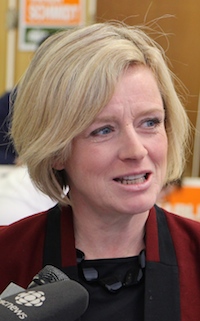
Rachel Notley

Ms. Redford spent much of her two and a half years in office focusing on pipelines, as did her successor Jim Prentice during his short eight months in the Premier’s Office.

One of the jobs Mr. Prentice left when he decided to run for the leadership of the Progressive Conservative party in 2014 was as liaison between the (now moribundEnbridge Northern Gateway Pipeline and First Nations in northern British Columbia. Despite this experience, there was little evidence of pipeline advancement during his brief time as premier before the PCs were defeated in the May 2015 election.

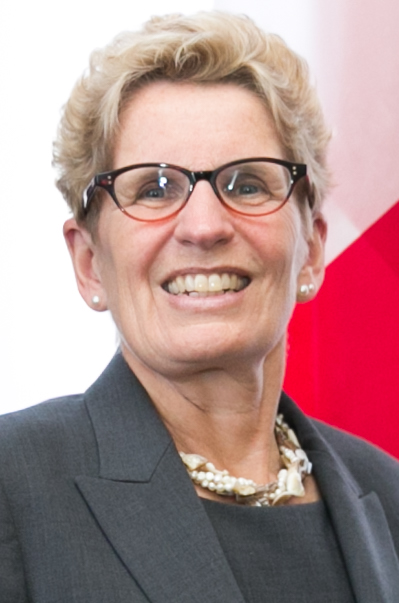
Kathleen Wynne

The politics of pipelines continue to dominate Alberta’s interprovincial agenda under Premier Rachel Notley’s New Democratic Party government. Riding the success of the National Energy Strategy accepted at the Premier’s Meeting in St. John’s, Newfoundland last summer, Ms. Notley secured the tentative approval from Ontario Premier Kathleen Wynne for the TransCanada Corporation’s Energy East Pipeline.

As AlbertaPolitics.ca publisher David Climenhaga noted last week, “Premier Rachel Notley, after less than nine months in office, secured the tentative approval of the premier of Ontario and the enthusiastic endorsement of the prime minister of Canada, both members of a different political party than hers, for a pipeline to carry diluted bitumen from Alberta to New Brunswick for refining.”

Alison Redford Alberta Election 2012 Conservative leader
Alison Redford

What we are witnessing is unfamiliar: an NDP Premier advocating for this approval of a privately-owned, privately-operated pipeline that would ship oil from Alberta’s oil sands to a privately-owned and privately-operated refinery in New Brunswick. This is hardly characteristic of the radical marxist socialist extremist that Ms. Notley’s more fanatical critics claim she is.

This pipeline will not save the Alberta government from the revenue shortfall caused by the drop in the international price of oil, which is intensified due as a result of poor long-term planning during the previous 44 years of conservative governments. But it could narrow the price gap between West Texas Intermediate and Western Canadian Select and provide a new point of export for Canadian oil while also keeping refinery jobs in Canada rather than exporting jobs to refineries overseas.

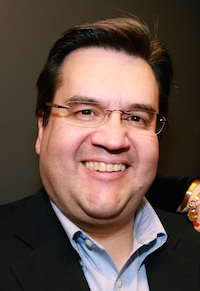
Denis Coderre
Denis Coderre

The decision to approve this pipeline will be up to the federal Liberal government, which includes strong representation from Alberta Members of Parliament.

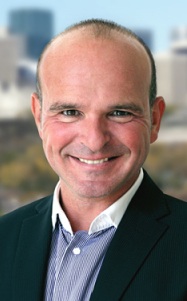
Edmonton-Centre Liberal MP Randy Boissonnault reiterated his support for TransCanada’s Energy East pipeline last week. “Our government is committed to ensuring our natural resources have access to market.  This process will include a credible environmental assessment process based on science, facts and evidence,” Mr. Boissonneault said in a statement.

Randy-Boissonnault Edmonton Centre Liberals
Randy Boissonnault

Building a national consensus around climate change and the transportation and export of Canada’s oil will be helpful for future projects. It also gives Ms. Notley an opportunity to highlight her government’s climate change plan, which includes the phasing out of dirty coal fired power plants by 2030, a move that could significantly reduce Alberta’s carbon emissions.

While Wildrose opposition leader Brian Jean squabbles with Montreal Mayor Denis Coderre over the municipal politician’s opposition to the pipeline, it would appear that Ms. Notley’s quiet diplomacy might be showing results. These type of public spats distract from the reality that Mr. Jean supports TransCanada’s Energy East pipeline but would cheer if Ms. Notley’s bid fails.

If TransCanada’s Energy East pipeline is approved before the 2019 Alberta election, Ms. Notley will be able to make the claim that an NDP Premier was able to accomplish something her conservative predecessors could not: get a new pipeline built from the oil sands to an ocean port.

Categories
Alberta Politics

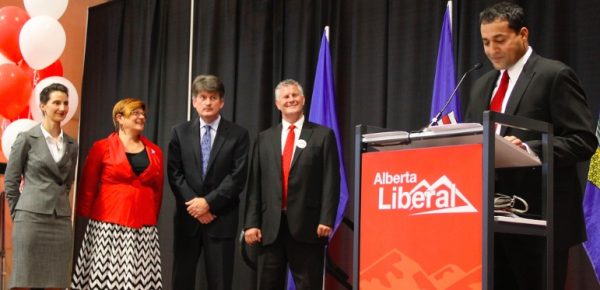
Delaying Alberta Liberal leadership vote until 2017 might break the party’s bylaws


The Alberta Liberals have decided to postpone the selection of their next party leader until spring 2017. The party had originally scheduled to hold a leadership vote in April 2016.

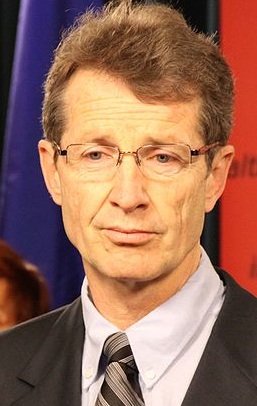
David Swann Liberal MLA Calgary-Mountain View
David Swann

The only current Liberal MLA, Calgary’s David Swann, has declined to seek the permanent job. Dr. Swann was first elected as MLA in 2004 and served as leader from 2008 to 2010 before taking over as interim leader after Raj Sherman’s resignation in January 2015.

There is question whether delaying the leadership violates the Alberta Liberal Party’s bylaws, which state:

5.4 In the event the Leadership becomes vacant for any cause the Board of Directors shall either, in its absolute discretion:

a) convene to call a Leadership Convention, or

b) convene to appoint an interim leader of the Party for a period of time not to exceed one (1) year during which period of interim leadership the Board of Directors shall call a Leadership Convention to be held prior to the conclusion of the term of interim leadership.

Liberal Party did amend their bylaws at a meeting held in late 2015 but the list of proposed amendments on their website are unclear whether this section was changed. If the section was not changed, the party would have already broken its bylaws if Dr. Swann’s interim leadership exceeded the one year period (which will take place on January 27, 2016).

It is also unclear if there are any consequences for violating the party’s bylaws.

Regardless of the bylaws, the party’s executive board is reported to have endorsed Dr. Swann’s continued role as interim leader until spring 2017.

Delaying the vote is probably a good idea for the Liberals, as it appears unlikely the party could attract many serious candidates to contest an April 2016 leadership race.

The Liberals formed the official opposition from 1993 until 2012, when a significant percentage of their supporters migrated to Alison Redford’s Progressive Conservatives and later to Rachel Notley’s New Democrats.

Despite recent Alberta breakthroughs in the October 19, 2015 federal election, the provincial party does not appear to have benefited from Justin Trudeau‘s popularity.

New voting system

The Liberals abandoned the ‘open membership system’ that was used to select Dr. Sherman in the 2011 leadership vote. Under the open system, any Albertan who provided the party with their name and contact information could vote for a leadership candidate without having to actually purchase a membership.

Although more than 27,000 members were eligible to vote in the 2011 leadership contest, only 8,640 actually participated in the vote.

Under the new system proposed at the party’s meeting in late 2015:

a. Each electoral district in the province of Alberta is allocated one point for each eligible vote cast, to a maximum as determined by the Board of Directors.

b. Should the number of eligible persons who cast ballots in the leadership vote in an electoral division exceed the number of points allocated, the points allocated to the electoral division are allocated to each leadership candidate on the basis of the 17 ratio the number of the votes received by that leadership candidate to the total number of votes counted.

c. Should the number of eligible persons who cast ballots in the leadership election not exceed the number of points allocated to the electoral division each vote for a leadership candidate shall be one point awarded to the leadership candidate.

d. The total number of points allocated to each leadership candidate from all electoral divisions in Alberta are added to produce a total for the “provincial count”

But changing the voting system and the date of the leadership race still does not solve the Liberal Party’s problem of attracting credible candidates.

I expect the Liberal Party executives are hoping that disillusion with the NDP government in one year could lead to a resurgence in party support, which, given the unexpected twists in Alberta politics over the past year, might be their best strategy.

One prominent former Liberal MLA who ran in the party’s 2011 leadership race appears unlikely to take up her party’s banner again. Laurie Blakeman, who represented Edmonton-Centre as a Liberal MLA from 1997 to 2015 posted her feelings about the Liberal Party officials on Twitter today.

Categories
Alberta Politics

A Rookie Crew: Eleven Alberta MLAs to watch in 2016

The past few years in Alberta politics have reminded us that politics can be an extraordinarily unpredictable and forecasting the future can be a very tricky business for political pundits. Aside from the obvious choices of Premier Rachel Notley, Finance Minister Joe Ceci and Wildrose leader Brian Jean, here is a list of eleven Alberta MLAs worth watching in 2016.

Deron Bilous (Edmonton-Beverly-Clareview): As Economic Development and Trade Minister, Deron Bilous faces the challenge of proving the government’s job creation plan can work as the provincial economy faces declining international oil prices.

Greg Clark (Calgary-Elbow): As leader of the one MLA Alberta Party opposition, Greg Clark is punching above his weight in getting media attention and working hard to position himself as a moderate conservative alternative to the NDP and Wildrose Parties. He was also the only opposition MLA to propose an alternative budget and climate change plan in 2015.

Nathan Cooper (Olds-Didsbury-Three Hills): With a detailed knowledge of Assembly rules and procedure, Official Opposition House Leader Nathan Cooper will prove to be a valuable asset to the rookie Wildrose Caucus.

Deborah Drever (Calgary-Bow): Elected as a New Democrat and sent into legislative exile as an Independent after embarrassing social media posts were reported, she has been the target of relentless personal attacks by Wildrose MLAs and anonymous internet trolls. She has redeemed herself as a well-spoken representative and shepherded her first private members’ bill – Bill 204 – to unanimous approval in the Legislature. Expect Ms. Drever to be invited to rejoin the NDP caucus in 2016.

Derek Fildebrandt (Strathmore-Brooks): Probably the most high profile Wildrose MLA, Derek Fildebrandt is the loudest critic of the NDP government. But his hyper-partisan outbursts, including an embarassing fight with a Globe & Mail reporter and an angry tweet directed at the Assembly Speaker, are not necessarily the kind of attention his MLA colleagues are pleased to receive. Can he tone down the rhetoric and offer reasonable solutions and alternatives in 2016?

Sarah Hoffman (Edmonton-Glenora): As Health and Seniors Minister, Sarah Hoffman is well-spoken and smart as a fox. She can explain complex issues and spar with the opposition with ease. She is a contender for strongest member of Rachel Notley’s cabinet, and I place her in the “future Premier material” category.

Sandra Jansen (Calgary-North West): Sandra Jansen is the voice of the moderate wing of the Progressive Conservative Party. She has publicly clashed with interim leader Ric McIver over his decision to endorse the federal Conservatives, and with Wildrose supporters over her decision to endorse Liberal candidates in the 2015 federal election. Her record as a vocal opponent of a merger with the Wildrose would make her a candidate to watch in her party’s next leadership race.

Danielle Larivee (Lesser Slave Lake): Appointed to cabinet as Minister of Municipal Affairs and Service Alberta in a fall shuffle, Danielle Larivee has proven herself as a tough and well-spoken advocate. As one of the government’s point-people for the fumbled Bill 6 Farm Safety Bill, she demonstrated her toughness. A Registered Nurse, she is also co-chair of the government’s review of mental health services, which is expected to be released early in 2016.

Prasad Panda (Calgary-Foothills): When he won a Sept. 2015 by-election in Jim Prentice’s former constituency, he became the Wildrose Party’s only MLA from Calgary. He has been quite quiet since his win, but Mr. Panda’s performance as MLA over the coming years could determine how far his rural-based party might expand its presence in Alberta’s largest city.

Shannon Phillips (Lethbridge West): Smart, passionate and a fierce partisan, Shannon Phillips impressed many with her calm and cool delivery of Alberta’s climate change plan ahead of the Paris Climate Change conference in Nov. 2015. As Environment and Parks Minister, she helped bring together oil industry leaders and environmental groups to endorse the province’s plan. Selling the plan and its carbon tax to Albertans over the next year will be a serious test of Ms. Phillips’ political skills.

Richard Starke (Vermilion-Lloydminster): As a critic of Bill 6, Richard Starke took a more reasoned approach to criticizing the farm safety law and avoided the hysterical and negative reactions characteristic of his counterparts in the Official Opposition caucus. One of two remaining rural PC MLAs, he is said to be interested in making a bid for his party’s leadership.

Young Alberta MLA Under 30 Politics 2016
The Under 30s: Jon Carson, Michael Connolly, Estefania Cortes-Vargas, Thomas Dang, Trevor Horne, Anam Kazim, Stephanie McLean, and Graham Sucha.

The Under 30s: Another result of the massive turnover in the legislature last year was a significant drop in the average age of Alberta’s MLAs, from 53 to 40 years old. Among the newly elected younger MLAs are a handful who are under thirty-years old (including Ms. Drever, who is noted above).

While it is not uncommon to have one to two under-30s elected to the Assembly from time to time, I cannot remember a time when so many were elected at once. It is a refreshing change, as younger Albertans bring a very different perspective than the typical older, greyer elected representative.

There could be future cabinet ministers or party leaders in this group, so in 2016, I will be keeping an eye on Edmonton-Meadowlark MLA Jon CarsonCalgary-Hawkwood MLA Michael Connolly, Sherwood Park-Strathcona MLA Estefania Cortes-VargasEdmonton-Southwest MLA Thomas Dang, Spruce Grove-St. Albert MLA Trevor HorneCalgary-Glenmore MLA Anam KazimCalgary-Varsity MLA Stephanie McLean, and Calgary-Shaw MLA Graham Sucha.


Compare this list of Alberta MLAs to watch to previous lists from 2015 and 2014.

Categories
Alberta Politics

Albertans are more progressive than you might think. I’m not surprised.

A new report, “The Quiet Majority“, released by a new group called Progress Alberta shows that we Albertans may be more progressive than we believe we are.

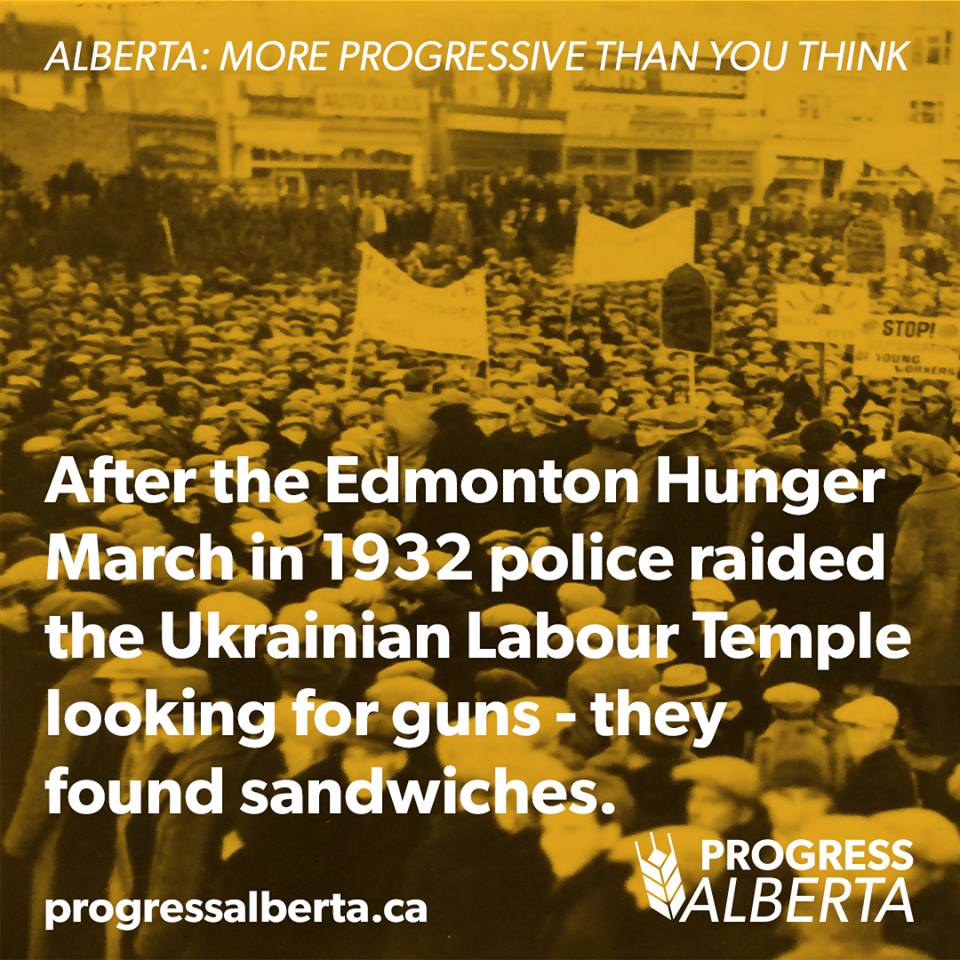
Progress Alberta Edmonton Hunger Ukrainian Strike
A infographic released by Progress Alberta.

According to a survey conducted by Abacus Data, when Albertans were asked whether they consider themselves to be progressive, 59 percent answered yes. It appears that although we identify our province as being conservative, a significantly larger group of Albertans identify as being moderate or progressive.

“Urbanization, in-migration, and generational change are all shifting the province’s political attitudes and behavior,” Abacus Data’s David Coletto said in a press release today.

The survey also shows strong support for same-sex marriage and the decriminalization of marijuana, and support for raising personal income taxes on high income earners and the introduction of a carbon tax.

This survey also reinforces the arguments made by political watchers like Corey Hogan, that shifting demographics and massive population growth have created a new political environment in Alberta which made an electoral win by the New Democratic Party possible in 2015.

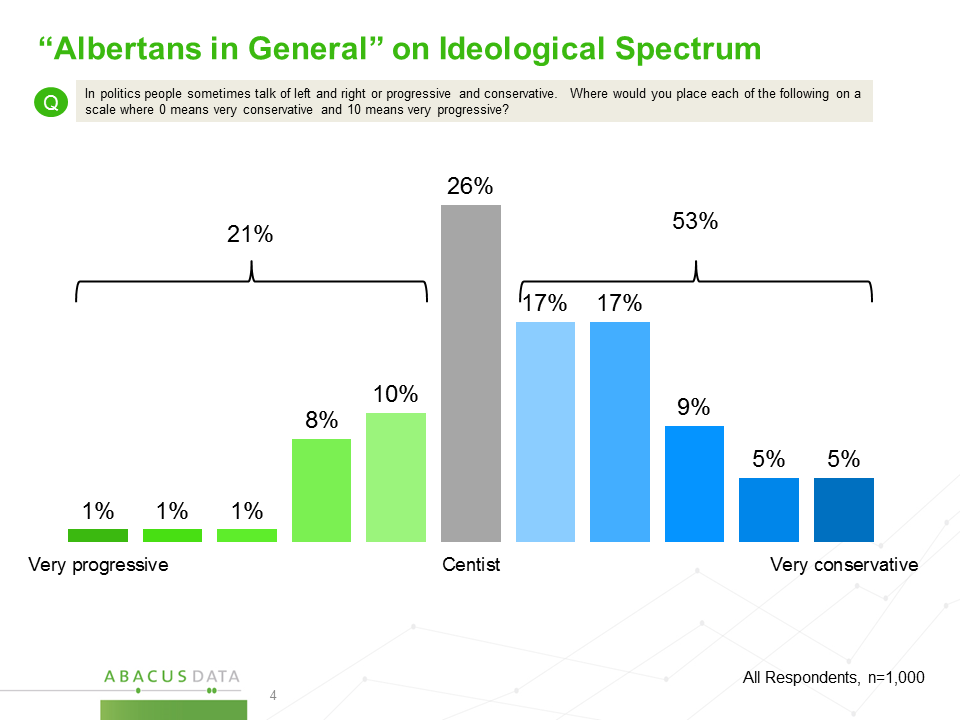
As shown in the graphs below, where Albertans place themselves and where they believe most of the population sits on the ideological spectrum is quiet different.

AB_Ideological_Self-Placement-1
Where Albertans place themselves on the ideological spectrum.
AB_in_General_Ideological_Placement
Where Albertans believe most of the population sits on the ideological spectrum.

The results of the survey are not surprising to anyone who has been paying close attention to Alberta politics, as I have over the past ten years. While there are a large number of self-identified conservatives in our province, Alberta’s electorate has always been more populist than conservative.

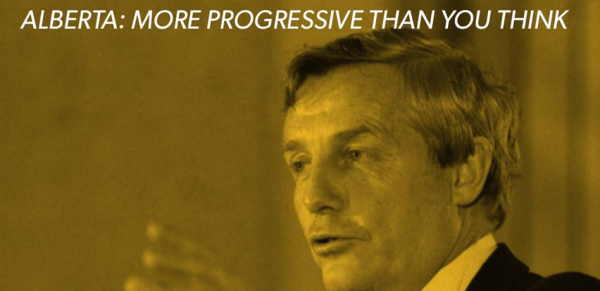
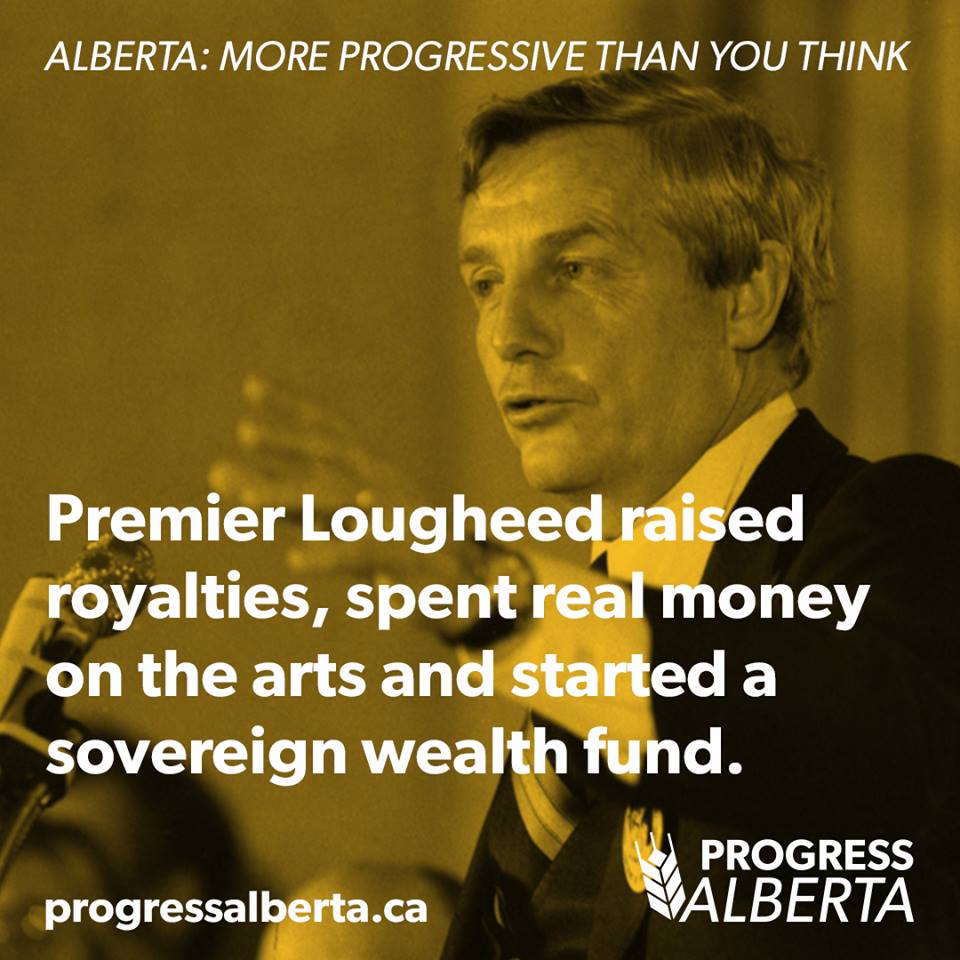
Peter Lougheed Alberta Conservative Premier
A infographic released by Progress Alberta.

The great success of the old Progressive Conservative government, starting under the leadership of Peter Lougheed in 1971, was forged with the creation of a broad political coalition that appealed to conservative, moderate and progressive voters in Alberta. And at the height of the Ralph Klein-era in Alberta politics, the Liberals and NDP were still able to garner between 30 and 40 percent of the province-wide vote.

This is why I am hesitant to predict the death of the PC Party in Alberta, even in its current weakened state.

The right-wing Wildrose Party led by Brian Jean continues to mount a campaign to take over the PC Party. At meetings across the province, Wildrose Party members are being encouraged to purchase PC Party memberships in order to push the merger agenda at constituency associations and other internal party levels.

Proponents of the take over characterize it as a merger but it is likely that the Wildrose needs the PCs more than the PCs need the Wildrose and the limited appeal of the ideological social conservatism that much of its membership base represents. The PCs won 12 elections from 1971 to 2012 by raising a big tent centrist party, not by just uniting conservatives under one conservative party banner, as Mr. Jean and MLAs like Derek Fildebrandt appear to be proposing.

A infographic released by Progress Alberta.

Many members of the PC Party, including Calgary-North West MLA Sandra Jansen remain opposed to merging with the Wildrose, which could drag the PCs further to the political right and away from where most Albertans stand, near the moderate centre. With the right leader, the PCs may be able to regain the trust of voters lost in 2015.

It is becoming increasingly clear that the Wildrose Party’s strategy is to eliminate the PC Party as an alternative while continuing to brand the NDP government as “risky”, “extreme” and “ideological,” despite no real evidence supporting those claims.

The success of Rachel Notley‘s NDP in 2015 was based on her appeal to moderate and progressive voters. It is not surprising that during last year’s election campaign Ms. Notley frequently invoked the memory of Mr. Lougheed, who was seen by many Albertans as the embodiment of a progressive and forward-looking leader.

The success of the NDP in the 2019 election could be based on their ability to remain appealing to that coalition of moderate and progressive voters. This will require Ms. Notley to keep the balance and moderation that was promised in her party’s election platform and not veer too far left to appease her party’s fringe.

This is only one poll and is not an indicator of how Albertans will vote in future elections but it does provide some valuable information about the values held by many voters in our province. It is encouraging that groups like Progress Alberta are being formed to ensure that issues important to progressive Albertans are publicly discussed in a province dominated by conservative commentators and pundits.

Publisher’s Note

I am pleased to be contributing to Progress Alberta as a member of their advisory board. See the full list of advisory board members here.

Information about the survey

The survey informing this study was conducted online with 1,000 Albertans aged 18 and older from December 2 to 7, 2015. A random sample of panelists was invited to complete the survey from a large representative panel of Albertans recruited and managed by Research Now, one of the world’s leading providers of online research samples.

The Marketing Research and Intelligence Association policy limits statements about margins of sampling error for most online surveys. The margin of error for a comparable probability-based random sample of the same size is +/- 3.1%, 19 times out of 20.

Categories
Alberta Politics

2015 was a great year for Progressive Politics in Alberta

It was an exciting year to be a progressive in Alberta.

Rachel Notley Alberta NDP leader
Rachel Notley

May 5, 2015 marked the first time since the 1930s that a conservative party did not win a provincial election in Alberta. The defeat of the Progressive Conservative government, which had been in power since 1971, by Rachel Notley’s New Democratic Party represented a significant shift in Alberta’s political environment.

October 19, 2015 marked the first time Calgarians elected Members of Parliament other than conservatives since 1968. Newly elected Calgary Liberal MPs Kent Hehr and Darshan Kang were joined by fellow Liberals Amarjeet Sohi and Randy Boissonnault from Edmonton to represent Alberta in a federal government led by Prime Minister Justin Trudeau.

Thomas Dang MLA
Thomas Dang

As someone who has been writing about Alberta politics for ten years and advocating for more progressive politics in our province, this year’s provincial and federal elections produced strange and exciting results.

A year ago, I never would have predicted a real progressive political party would win a provincial election in Alberta in 2015. Actually, on June 1, 2014, I wrote that it was probably impossible. On January 28, 2015, I predicted the PCs would win another majority.

In this case, I am very pleased to have been wrong.

Albertans rejected a conservative political establishment that had become stagnant and entitled after years of controversy, scandals and resignations. But instead of turning to the right-wing Wildrose Party, which was a few embarrassing comments away from winning the 2012 election, Alberta voters embraced a moderate progressive platform put forward by Ms. Notley’s NDP.

Ms. Notley proved to be a smart, likeable and charismatic leader on the campaign trail. I would argue that she was then and remains now her party’s greatest asset.

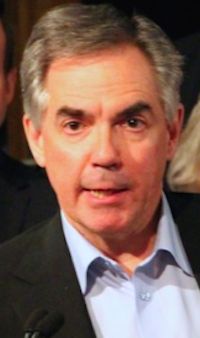
Jim Prentice Alberta Premier
Jim Prentice

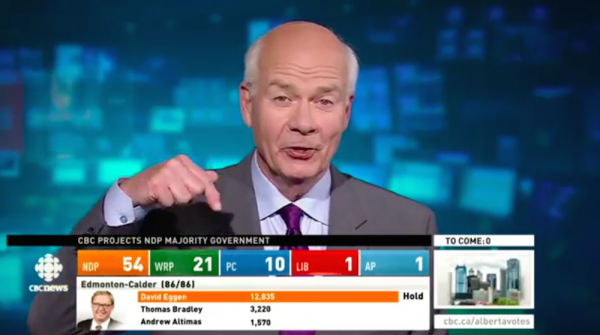
Voters opted for wholesale change by choosing 75 new MLAs, a huge turnover, to serve in Alberta’s 87 seat Legislative Assembly. The NDP started the election with 4 seats and ended it with 54 seats, including every seat in Edmonton, 15 seats in Calgary, seats in Lethbridge, Medicine Hat and Red Deer, and a handful in rural Alberta.

The PCs lost a total of 60 seats and were relegated to third place with 10 MLAs (9 after leader Jim Prentice resigned on election night) and the official opposition Wildrose won 21 seats, four more than the party won in 2012.

A record number of women were elected to the Legislature, including 26 in the 54 MLA NDP caucus and 7 of 13 cabinet ministers.

Thomas Dang, age 20, became the youngest MLA in Alberta history.

Three openly gay MLAs were elected, believed to be a first in Alberta politics.

Stephanie McLean NDP Calgary Varsity
Stephanie McLean

Stephanie McLean made headlines when she became the first MLA in Alberta history to be pregnant while in office.

Optimism was in the air as thousands of Albertans showed up to the Legislature Grounds to watch the new Premier and cabinet be sworn-in to office.

In their first session as government, the NDP banned corporate and union donations, restored $1 billion in health care, education and human services funding cuts made by the PCs, increased Alberta’s corporate tax rate from 10 percent to 12 percent and announced a phased in $15 per hour minimum wage by 2018.

Ms. Notley demonstrated an ability to reach outside NDP circles for expert advice by appointing Alberta Treasury Branches President & CEO Dave Mowat to lead a Royalty Review Panel, respected economics professor Andrew Leach to lead a Climate Change Panel, and former Bank of Canada governor David Dodge to provide advice on infrastructure investment. Calgary Liberal MLA David Swann was asked to co-chair a review of the province’s mental health services and Joseph Doucet, Dean of the University of Alberta’s School of Business, was tapped to chair the Premier’s Advisory Committee on the Economy.

David Swann Liberal MLA Calgary-Mountain View
David Swann

The PC Party patronage machine ground to a halt. University and college boards of governors are still dominated with well-connected conservatives, but some high-profile appointees have been replaced. For example, Alberta’s representative in Washington D.C. Rob Merrifield, a former Conservative MP, was replaced by Gitane De Silva, a former Deputy Minister of International and Intergovernmental Affairs and Canadian Consul General to Chicago.

On the financial front, the NDP government faces serious problems inherited from the old PC government.

After years of poor long-term planning and over-reliance on royalty revenues to fund the province’s operations budget, the sharp decline in the international price of oil had a huge impact on the government’s coffers. The drop in the price of oil has also led to significant job losses in Calgary and northern Alberta, which have impacted tens of thousands of Albertans.

Rob Merrifield Alberta Washington DC
Rob Merrifield

Instead of dealing with the drop in revenue by cutting budget funding and slashing public sector jobs, like the Wildrose and PC parties proposed, the NDP have decided to invest in public infrastructure, such as highway, school and hospital construction.

As well as keeping many Albertans in the construction industry employed during the economic downturn, investing in building public infrastructure now means the government will spend less time playing catch up when the next oil boom arrives. Ironically, this is similar to what Wildrose leader Brian Jean argued in favour of when he resigned as Fort McMurray’s MP in January 2014.

Not unexpected for a new government, especially for the first new government in 44 years, mistakes have been made. The NDP brought in a few too many out-of-province operatives to fill top political jobs, softened their position on carbon capture, and seriously fumbled Bill 6, the agri-industry and farm safety law. And rookie cabinet ministers planted their feet in their mouths on a few occasions, something they will need to learn to do less of in the new year.

Brian Jean Wildrose LeaderDespite a constant barrage of criticism from conservative critics, who claim the NDP election win was simply a fluke, a recent poll showed the NDP with a narrow lead in Calgary and a wide lead in Edmonton. The poll was not fantastic news for the governing party, but it undermines the argument that the NDP were elected by accident. The NDP appear to be developing a solid base of support among moderate and progressive voters in urban Alberta.
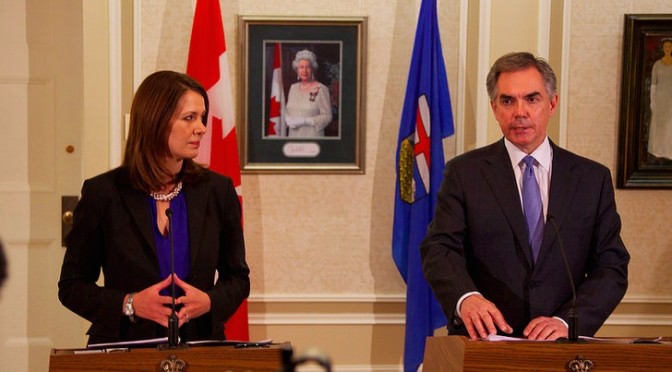
This election was a reminder that Alberta has defied its stodgy political stereotype and has rapidly become a young and urban province.

As Calgary political strategist Corey Hogan noted last week, “Alberta is the only province where baby boomers are outnumbered by their children.” The median age in our province is 36 years old, a number that is now more accurately reflected in the age of the government caucus.

The city of Calgary, long known for its conservative political roots, has now elected progressive politicians in the municipal, provincial and federal levels of government, something that would have been unheard of in past years.

According to Statistics Canada, in 1961, 53 percent of Albertans lived in rural areas. As of 2011, 83 percent of Albertans lived in urban centres with only 17 percent of our province’s population living in rural areas. This is a massive population shift that has and will continue to impact our political map for decades to come.

The year’s election was a rejection of establishment politics and a reminder that Albertans are largely politically moderate and more populist than conservative, which is an important distinction that the ruling PCs forgot after 44 years in power. It was also a reminder of how dramatically voters can abandon their traditional patterns of voting and embrace change.

This year was filled with many exciting firsts for progressive politics in Alberta. And while it is impossible to tell what the next year will bring in Alberta politics it is clear that our province changed in a significant way in 2015.


I had the pleasure of joining Ryan Jespersen on 630CHED on Dec. 16, 2015 to talk about the past year in Alberta politics. Take a listen and let me know what you think about what happened in 2015.

Categories
Alberta Politics

Breaking: Alberta’s Tories Poised to Sweep Election in Spring 2016

December 17, 2015

By: Dirk Pranter, Provincial Affairs columnist, Calgary Sunherald

Jim Prentice Alberta Premier
Jim Prentice

One year after nearly the entire official opposition crossed the floor to join Alberta’s Progressive Conservatives, the 44 year long governing party is expected to sweep the province for a record thirteenth election victory. Premier Jim Prentice is said to be preparing his party and its candidates for an early spring 2016 election.

According to Alberta’s fixed election date law, a provincial election must be called between March 31 and May 1, 2016.

The Wildrose MLA floor crossings on December 17, 2014 hurt the PCs in the polls in the first half of 2015. But after the Tories began to recover in the polls a fall cabinet shuffle brought two former Wildrose MLAs, Danielle Smith and Rob Anderson, into Prentice’s cabinet as Finance Minister and Justice Minister.

Danielle Smith
Danielle Smith

Public opinion polls now suggest most Albertans have embraced the Prentice Tories once again. The PCs now have the support of 77 percent of Albertans, according to the most recent Western Insite poll.

“A few months ago it looked like the Tories had a real fight on their hands but today they are back on top,” said Jake Randall, vice-president of Western Insite Inc. “Prentice really didn’t start resonating with Albertans until after May 2015,” he said.

Speaking on the condition of anonymity, a senior official in the PC Party admitted they were glad the provincial election wasn’t called in early 2015, as some party insiders had pushed for.

“We simply weren’t prepared to go to the polls in spring 2015,” the source said.

“We would have got smoked, boy, it would have been the end of us,” they said.

David Climenhaga
David Climenhaga

The hopes of New Democratic Party supporters were boosted when David Climenhaga defied expectations with a 67 percent landslide win for the NDP in a May 5, 2015 by-election in the Spruce Grove-St. Albert constituency.

Liberal MLAs Laurie Blakeman and David Swann added to the orange momentum on May 6 when they joined the NDP caucus, creating speculation that Rachel Notley‘s NDP could pose a serious challenge to the Tories in the next election.

But with recent polls showing the NDP back in their traditional range of 10 percent support, Albertans may never know what an NDP government looks like.

The Wildrose Party has wilted, with most of its support relegated to a handful of rural southern Alberta constituencies.

Derek Fildebrandt Alberta Taxpayers
Derek Fildebrandt

Wildrose leader Derek Fildebrandt remains a harsh critic of the PCs and is in talks to create a ‘real conservative alternative’ by merging his party with the right-wing Social Credit and Alberta First parties.

“Most Albertans are moderates and are very suspicious and uncomfortable with the kind of social conservative politics inside the Wildrose Party,” said Darlene Sinclair, professor of political science at Vermilion River University in Lloydminster.

Sinclair predicted that the PCs had successfully built a coalition of moderate and progressive minded urbanites that could keep the Tories in government for many decades to come. But she warned that even with high polling numbers, the Prentice government faces serious challenges.

Tory supporters are quick to defend Prentice from criticisms about the job losses caused by a downturn in the economy, tax increases and his refusal to make deep funding cuts to public programs.

Former Conservative MP Brian Jean, who will be running for the Tories in the Fort McMurray-Conklin constituency, said that Prentice is not to blame for job losses in the oil patch.

“It would be silly to believe that any Premier of Alberta, even Jim Prentice, has the power to control the international price of oil,” Jean said.

“It just doesn’t work like that, ” he said.

(Note: This article is a satirical take on what might have happened if the PC Party had waited until Alberta’s 2016 fixed election date to call the most recent provincial election. In reality, the PCs called the election one year early and Albertans elected Notley’s NDP with a majority government on May 5, 2015).

Categories
Alberta Politics

What new laws did Alberta’s NDP Government pass in 2015?

The fall session of the Alberta Legislature ended last week and MLAs will now spend the next few weeks working in their constituencies until the Assembly returns in early 2016. The Assembly passed nine pieces of legislation introduced by Alberta’s New Democratic Party government in its first full session of the Legislature since it formed government.

The first four bills introduced by the government reflected key promises made by Rachel Notley‘s NDP during the 2015 election. One private members bill, introduced by Independent Calgary-Bow MLA Deborah Drever, was passed by the Assembly (a rare feat for opposition MLAs).

Here is a quick look at the ten bills that were passed by MLAs since the NDP formed government in 2015:

Kathleen Ganley NDP Calgary Buffalo
Kathleen Ganley

Bill 1: An Act to Renew Democracy in Alberta

Introduced by Justice Minister Kathleen Ganley, Bill 1 banned corporate and union donations to provincial political parties in Alberta. The bill received royal assent on June 29, 2015, but was made retroactive on June 15, 2015. This new law was a major blow to the Progressive Conservative Party, which had become accustomed to relying heavily on corporate donations to fund their campaigns and operations. The ban was not extended to municipal elections.

Bill 2: An Act to Restore Fairness to Public Revenue

Introduced by Finance Minister Joe Ceci, Bill 2 eliminated Alberta’s 10 percent flat tax and introduced a progressive taxation system with five rates of personal income tax up to 15 percent for income above $300,000. Bill 2 also increased Alberta’s corporate tax rate from 10 percent to 12 percent, bringing our province in line with Saskatchewan and Manitoba. Despite the increase, tax rates in Alberta still remain lower than what existed during much of the time Ralph Klein served as Premier.

Joe Ceci Calgary NDP
Joe Ceci

Bill 3: Appropriation (Interim Supply) Act, 2015

Introduced by Mr. Ceci, Bill 3 reversed funding cuts made to education, health care, and human services by the PC government before the May 5, 2015 election.

Bill 4: An Act to Implement Various Tax Measures and to Enact the Fiscal Planning and Transparency Act

Introduced by Mr. Ceci, Bill 4 repealed and replaced the Fiscal Management Act and introduced requirements in a Fiscal Planning and Transparency Act, which include presenting government finances in a three-year fiscal plan and the establishment of a new debt cap based on a debt-to-GDP ratio of 15 percent.

Bill 5: Public Sector Compensation Transparency Act 

Introduced by Ms. Ganley, Bill 5 expanded the “sunshine list” to include employees of public agencies, boards, commissions, post-secondary institutions and health service entities whose earnings are more than $125,000 annually. This is a continuation of work already done by the previous PC government and has been criticized by supporters of the NDP as “bad policy.”

Lori Sigurdson NDP
Lori Sigurdson

Bill 6: Enhanced Protection for Farm and Ranch Workers Act

Introduced by Jobs, Skills, Training and Labour Minister Lori Sigurdson, Bill 6 introduced occupational health and safety and mandatory Workers’ Compensation Board coverage for employees of farming operations. Alberta is currently the only province in Canada without OH&S laws and employment standards coverage for farm and ranch workers. Amid protests by farmers and ranchers, the government introduced amendments to exempt farm and ranch owners and their families from the bill. This was undoubtably the most controversial legislation passed by the NDP government in 2015.

Bill 7: Alberta Human Rights Amendment Act, 2015

Introduced by Ms. Ganley, Bill 7 amended the Alberta Human Rights Act to add gender identity and gender expression as expressly prohibited grounds of discrimination.

David Eggen
David Eggen

Bill 8: Public Education Collective Bargaining Act

Introduced by Education Minister David Eggen, Bill 8 restructures collective bargaining between teachers, school boards and the government. The bill initially would have had the government be the sole party negotiating with the Alberta Teachers’ Association on matters that should be bargained centrally versus locally but an amendment to the bill allowed a new employer bargaining association to negotiate with the ATA to decide.

Bill 9: Appropriation Act, 2015

Introduced by Mr. Ceci, Bill 9 provides budget funding authority to the Government of Alberta and the Legislative Assembly for the 2015-16 fiscal year.

Deborah Drever MLA Calgary Bow
Deborah Drever

Bill 204: Residential Tenancies (Safer Spaces for Victims of Domestic Violence) Amendment Act, 2015

Introduced by Ms. Drever, Bill 204 amended the Residential Tenancies Act to allow victims of domestic violence to end their housing leases early and without penalty in order to leave unsafe home environments. Lethbridge-East MLA Maria Fitzpatrick bravely stood in the legislature to share a powerful story about her personal experiences with domestic violence.

Categories
Alberta Politics

Alberta NDP face legitimate concerns and kooky conspiracy theories in debate over Bill 6 farm safety bill

Alberta’s NDP government has been in full damage control mode since Bill 6: Enhanced Protection for Farm and Ranch Workers Act exploded in their faces late last month. While attempting to bring our province closer to national standards on farm safety – Alberta is currently the only province without occupation health and safety laws and employment standards coverage for farm and ranch workers – the bill sparked two large protests at the Legislature and continues to bring out thousands of agitated rural Albertans to government-sponsored town-hall style consultation meetings across the province.

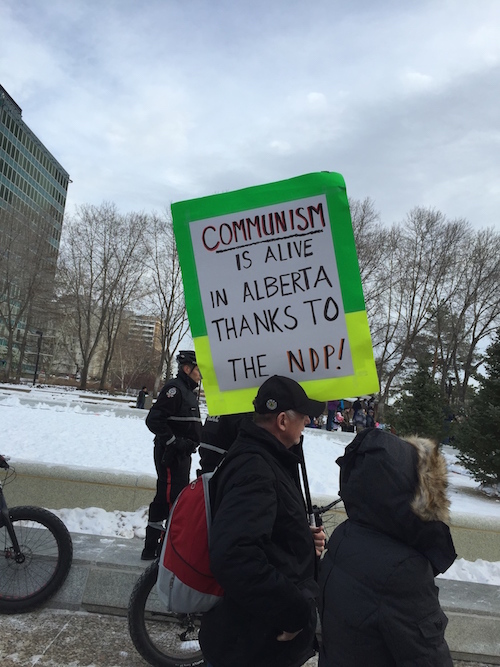
Commies
No, it’s not.

Bill 6 has been perceived as a threat to what many rural Albertans see as a traditional way of life and business on the family farm, and inept communications by the government only fuelled claims that this was the intention of the bill.

Taken by surprise, NDP cabinet ministers fanned out to the town hall meetings in an attempt to assure angry rural Albertans that they are listening to their concerns.

While the Wildrose, PC and Alberta Party MLAs have taken positions against Bill 6, the biggest advocate for the bill outside of the mostly silent NDP caucus has been Liberal party interim leader David Swann, a Calgary MLA and former medical officer of health of the now defunct Palliser and Headwaters health authorities in southern Alberta.

Returned from her trip to the Paris Climate Change Conference, Premier Rachel Notley published an open letter to reassure the media and the public that this bill was about farm safety, not about destroying the family farm.

Lori Sigurdson, Minister of Jobs, Employment and Labour, introduced amendments to Bill 6 in the Legislature this week.

The amendments, which “make clear WCB coverage would be required only for paid employees, with an option for farmers to extend coverage to unpaid workers like family members, neighbours and friends” and “make clear that Occupational Health and Safety standards apply when a farm employs one or more paid employees at any time of the year,” appear to address two of the main criticisms of the bill that many opponents and critics (including myself) have raised as concerns.

Aside from legitimate criticisms that rural Albertans were not properly consulted before Bill 6 was introduced into the Legislature, some opponents of the government have tried to spread the kookiest of conspiracy theories about the NDP’s proposed farm safety law.

Over the past week, I have heard claims that Bill 6 would:

  • allow the government to nationalize farm land to build solar or wind farms,
  • force farm workers to unionize as part of some secret communist conspiracy,
  • mark the beginning of a Stalinist farm collectivization program.

None of these outlandish claims are true. But while these claims largely emanate from the anonymity of Twitter and the internet, other oddball claims are actually being made by opposition MLAs.

In the Legislature on Dec. 1, Rick Strankman, the Wildrose MLA for Drumheller-Stettler, suggested that Bill 6 could lead to OHS inspectors confiscating privately owned firearms if they were found to be improperly stored on farms. Mr. Strankman spared fellow MLAs from hearing his best Charlton Heston impersonation.

But perhaps the kookiest of conspiracy theories comes from Progressive Conservative Party interim leader Ric McIver, who is reported to have claimed Bill 6 was part of the NDP plan to turn Alberta into a “Socialist Disneyland.” According to Metro Calgary, Mr. McIver continued in length to praise the conservatism of Saskatchewan, while choosing to omit the fact that our neighbour to the east has a 5 percent provincial sales tax, a 12 percent corporate tax rate, crown corporations for insurance, power and gas, and… farm safety legislation.

Alberta’s NDP government was caught totally off guard by opposition to Bill 6 and has helped fuel the backlash by being slow to react to concerns about changes to farm safety laws. For this, they deserve to be criticized. This is an important lesson for the new government, and one they should recognized as being lucky took place in the first year of their four year term in government, and not six months before the next election.

What’s next?

Bill 6 is currently in second reading in the Legislature.

This will not be the last time the new government will need to challenge the status quo in rural Alberta. The government’s next challenge to rural Alberta will likely be related to province’s longstanding grazing lease program, which the auditor general reports has cost the government an estimated $25 million in annual revenue and is currently under review.

Changes to Alberta’s electoral boundaries, which could be redistributed before the next election to reflect changes in Alberta’s population, would likely result in a reduction of rural constituencies and an increase of urban constituencies in the Alberta Legislature.

Categories
Alberta Politics

Alberta NDP should tap the brakes on Bill 6, its new Farm and Ranch Safety law

The Alberta government needs to rethink its approach to overhauling safety laws on family farms and ranches. Since it was introduced in the Legislature on Nov. 17, confusion about Bill 6: Enhanced Protection for Farm and Ranch Workers Act has triggered a significant backlash from Albertans in rural communities across the province.

Bill 6 would expand sections of the Occupational Health and Safety Act, Workers’ Compensation Act, Employment Standards Code and Labour Relations Code to apply to farm worksites. If Bill 6 is approved by the Legislature, WCB coverage will be mandatory and farms and ranches in Alberta will no longer be exempt from OHS laws. Alberta is currently the only province without employment standards coverage for farm and ranch workers.

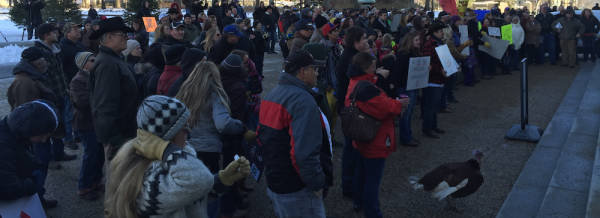
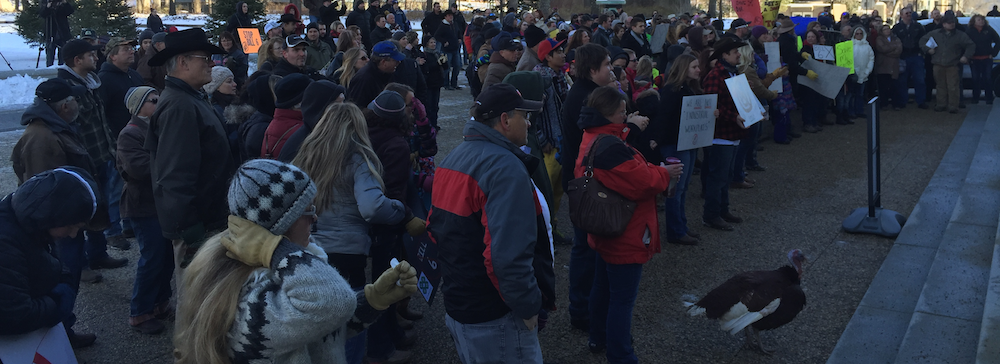
Around 200 protesters gathered at the Alberta Legislature on Nov. 27, 2015.

Nearly 400 angry farmers showed up to voice their concerns about Bill 6 at a government-organized town hall meeting in Grande Prairie last week. The event was hosted by public servants and consultants with no MLAs in attendance. Western Producer reporter Mary MacArthur reported this week that MLAs will be present at future town hall meetings planned for Red Deer, Okotoks, Lethbridge, Medicine Hat, Leduc, Vegreville, Olds and Athabasca.

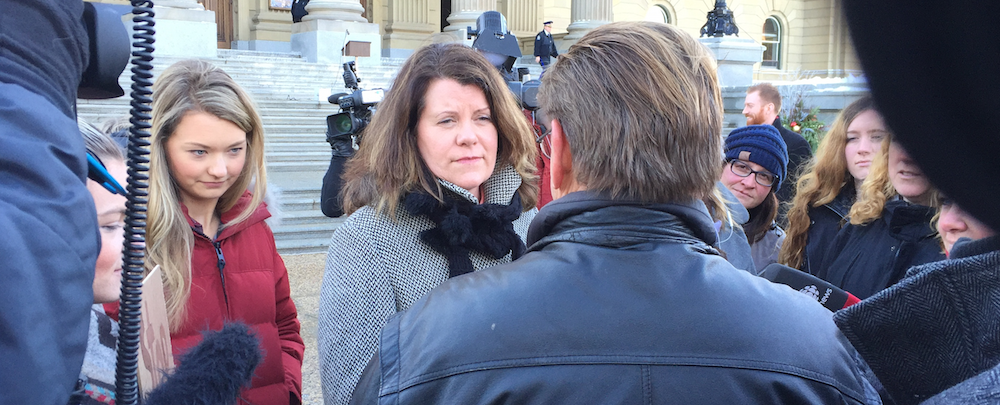
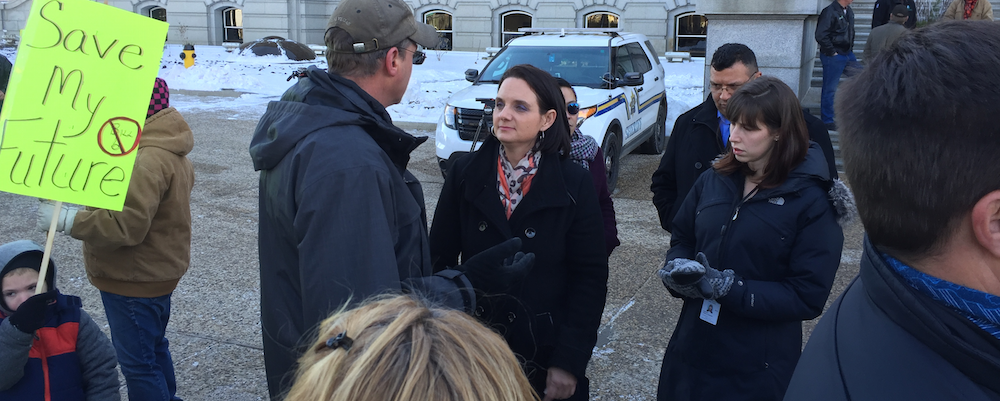
Close to 200 people, along with 2 ponies, 1 border collie and 1 turkey (see above), staged an afternoon protest against Bill 6 outside the Alberta Legislature on Nov. 27, 2015. To their credit, Jobs, Skills, Training and Labour Minister Lori Sigurdson and Municipal Affairs Minister Danielle Larivee waded into the crowd of protesters at the Legislature to hear their concerns.

Lori Sigurdson waded into the crowd of protesters outside the Legislature.

It is clear that there are some changes that do need to be made to farm safety laws in Alberta. As is the case in every other province in Canada, the government has a responsibility to ensure that safety standards exist for all worksites in Alberta, including agricultural work environments.

But this is where the New Democratic Party government may have put the cart before the horse. It is unfortunate that the government did not choose to hold these public consultation meetings before introducing the bill. It seems that the NDP could have saved themselves a lot of grief if Agriculture Minister Oneil Carlier, Premier Rachel Notley, Ms. Sigurdson and other NDP MLAs had started this process by travelling to the rural areas of the province to ask farmers and ranchers how changes could impact them.

Danielle Larivee waded into the crowd of protesters outside the Legislature.

Under current safety laws, provincial officers are not allowed to conduct investigations when a workplace fatality takes place on a farm or ranch. The WCB is a shield to protect employers from lawsuits in case of workplace injury and should probably be extended to cover all actual employees of farms and ranches. And farm workers should not be exempt from being given the choice to bargain collectively, a right affirmed by the Supreme Court of Canada.

But legal changes also need to reflect the uniqueness of family farms and ranches.

Unlike other worksites, farms rely heavily on incidental and seasonal help during spring and fall from family, friends and neighbours. And by definition, work on a family farm will include work done by family members, some who will not be paid a regular salary and some who will be under the age of 18. It has not been clearly communicated by the government how these changes would impact the day to day operations of these family farms or whether exceptions will be made for smaller farming operations.

While some of the criticism of Bill 6 is rooted in hyperbole and hysterics generated by opponents of the government, it is clear that there is much confusion around this bill, which is a communications failure on the part of the government.

Ms. Sigurdson released a statement following yesterday’s protest at the Legislature trying to clarify the government’s position. “A paid farmworker who is directed to do something dangerous can say no, just like other workers in Alberta and Canada. And if they are hurt or killed at work, they or their family can be compensated, just like other workers in Alberta and Canada,” Ms. Sigurdson said.

The debate around Bill 6 also highlights a political divide between rural and urban Alberta, neither of which are monolithic communities. It would be easy for us city dwellers to cast rural Albertans opposing these legislative changes as being backward or uncaring when we read media reports of workers or young children killed in farm accidents. And comments by MLAs like Liberal leader David Swann that the current legal framework would make “Charles Dickens blush” probably do not help foster a feeling of collaboration, even if there is a hint of truth to how far behind Alberta is in farm safety rules compared to other provinces.

Alberta is an increasingly urban province. According to Statistics Canada, in 1961, 53 percent of Albertans lived in rural areas. As of 2011, 83 percent of Albertans lived in urban centres with only 17 percent of our province’s population living in rural areas. This is a massive population shift.

The recent provincial election marked a rare moment in our province’s history where MLAs from rural Alberta do not have a large voice in the government caucus. Twelve of the 53 NDP MLAs elected in May 2015 represent rural or partially rural constituencies. Most areas of rural Alberta are represented by Wildrose Party MLAs, who have taken every opportunity to attack the new government and advance the narrative that the NDP do not understand rural Alberta.

As most of their NDP MLAs were elected in urban centres, they should heed the advice that MLA Hugh Horner gave Progressive Conservative Party leader Peter Lougheed more than forty years ago.

David Wood observed in his biography of Mr. Lougheed, the Lougheed Legacy, that “Horner made one point that Lougheed and his colleagues have never forgotten: when you start believing that the people in rural Alberta are somehow different than the people in the bigger centres, you’re making a mistake. Rural Albertans come into the cities, go to concerts, shop in the malls: they’re as sophisticated and as aware of the rest of the world as any of their city cousins.”

Ms. Notley grew up in the northern Alberta town of Fairview. Her father, Grant Notley, was elected and re-elected as the MLA for Spirit River-Fairview four times between 1971 and 1984. Coming from rural Alberta, Ms. Notley should have an understanding of these changes could impact farmers and ranchers.

The government has a responsibility to ensure that safety standards exist for all worksites in Alberta, including agricultural work environments. It also has a responsibility to clearly communicate to Albertans why these changes are needed and how they would be implemented. The NDP would demonstrate good will to rural Albertans by slightly tapping the breaks on Bill 6 and restarting this process with a thorough and meaningful consultation about improving farm and ranch safety in Alberta.

Update (Dec 1, 2015): The government announced it is proposing amendments to Bill 6 that would:

  • make clear WCB coverage would be required only for paid employees, with an option for farmers to extend coverage to unpaid workers like family members, neighbours and friends;
  • make clear that Occupational Health and Safety standards apply when a farm employs one or more paid employees at any time of the year.
Categories
Alberta Politics

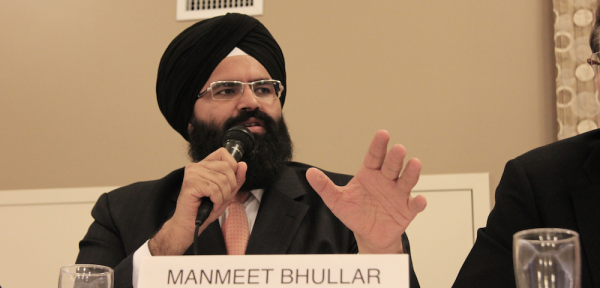
Alberta loses a big voice with the passing of MLA Manmeet Bhullar

Terribly sad news in Alberta politics today. CBC is reporting that 35-year old MLA Manmeet Bhullar has been killed in a car crash on the Queen Elizabeth II Highway while driving from Calgary to Edmonton.

Mr. Bhullar’s performance during his eight years the Alberta Legislature earned him a reputation as a skilled parliamentarian and a powerful voice for his constituents in northeast Calgary.

A star in Alberta’s Progressive Conservative Party, Mr. Bhullar rose in the ranks under premiers Ed StelmachAlison Redford, and Jim Prentice, first as a parliamentary assistant and then as Minister of Service Alberta, Minister of Human Services and Minister of Infrastructure. He most recently served as PC opposition critic for Finance and Treasury Board, and Infrastructure.

As Human Services minister, he was tasked with the difficult challenge of overhauling Alberta’s laws so more information could be released about the deaths of children in foster care. He became one of Mr. Prentice’s campaign co-chairs during his party’s 2014 PC leadership contest and was rewarded with an appointment as Minister of Infrastructure, a position he held until the 2015 re-election.

Mr. Bhullar was first elected as the PC MLA for Calgary-Montrose in 2008 at the age of 27 and was re-elected as MLA for Calgary-Greenway in 2012 and 2015. He was one of ten PC MLAs re-elected in the 2015 election.

News of his passing generated an outpouring of condolences from his colleagues in elected office:

His passion and dedication will live on in our hearts and we will greatly miss him. To Manmeet’s family: many of our colleagues are dear friends of Manmeet and his family, and it breaks our hearts to know we have lost such a great soul. Manmeet accomplished more in his brief time than most people accomplish in their lifetimes.” – Interim PC Party leader Ric McIver (full statement)

Manmeet’s accomplishments are well-known. He was a powerful community advocate from a young age and first elected to the Alberta legislature at 28. He was brave and unrelenting in his role, particularly when it came to forcefully advocating for children in care – the least powerful people in our society.” – Calgary Mayor Naheed Nenshi (full statement)

Mr. Bhullar worked tirelessly in service of this province. First elected in 2008, he proudly served as Minister of Infrastructure, Minister of Human Services, and Minister of Service Alberta. All Albertans should be proud of his significant contributions to public life.” – Premier Rachel Notley (full statement)

Words cannot express the incredible sadness we all feel over the sudden and tragic loss of our dear colleague. The absence of our friend Manmeet will be felt across the great province that he loved. To his friends, our hearts weep with you. For all his constituents, we express our sympathy and support. To the PC party, to his caucus, to all MLAs who have served with him, and for all staff who came into contact with Manmeet during his incredible time as a public servant, we mourn together.” – Wildrose leader Brian Jean (full statement)

Manmeet was a big man and his stature got attention. But more than that, much more than that, I remember his words. His words were powerful. Passionate. Intelligent. Meaningful. He is exactly the sort of person we need in public office. I am devastated. I cannot begin to imagine what his family is going through, nor his community, nor his colleagues in the PC caucus. All will miss him. Our world is a lesser place without Manmeet Bhullar. Rest in peace my friend.” – Alberta Party leader Greg Clark (full statement)


Here is video of Mr. Bhullar’s maiden speech in the Legislative Assembly, delivered on Wednesday, April 16, 2008.

Categories
Alberta Politics

Pigs fly as oil industry and environmental groups endorse NDP’s ambitious Made-in-Alberta Climate Change Plan

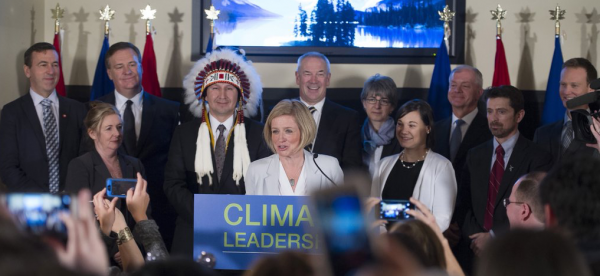
Pigs continued to fly in Alberta politics today as energy industry leaders and environmental groups joined Premier Rachel Notley and Environment and Parks Minister Shannon Phillips at a press conference to release Alberta’s much anticipated plan to take action against Climate Change. The Alberta government received the final report from the independent panel led by University of Alberta economics professor Andrew Leach and announced its plans to phase out coal burning electricity plants, phase in a price on carbon, introduce a limit on overall emissions from the oil sands and introduce an energy efficiency strategy.

Ms. Notley will now take the report and the made-in-Alberta plan to address climate change to a meeting with Prime Minister Justin Trudeau and other premiers tomorrow and to the United Nations Framework Convention on Climate Change (COP21) in Paris next week.

Here is what energy industry executives, environmental leaders and opposition politicians had to say about today’s climate change announcement:

Responding to climate change is about doing what’s right for future generations of Albertans – protecting our jobs, health and the environment. It will help us access new markets for our energy products, and diversify our economy with renewable energy and energy efficiency technology. Alberta is showing leadership on one of the world’s biggest problems, and doing our part.” – Rachel Notley, Premier of Alberta (full release)

I thank the panel members and the many Albertans, including Indigenous people, industry, environmental groups, municipalities and other partners and stakeholders for their contribution. This is the right plan for our province, and now is the right time to implement it.” – Shannon Phillips, Minister of Environment and Parks (full release)

The announcement is a significant step forward for Alberta. We appreciate the strong leadership demonstrated by Premier Notley and her government. The framework announced will allow ongoing innovation and technology investment in the oil and natural gas sector. In this way, we will do our part to address climate change while protecting jobs and industry competitiveness in Alberta.” – Murray Edwards, Chair, Canadian Natural Resources Limited (full release)

Today we are making history, with Alberta taking its rightful place as a leader on the world stage. Premier Notley promised Albertans leadership on the issue of climate change and she and her government have delivered. This is the right thing to do for both for our environment and our economy. The world needs more of this kind of leadership from major energy producing jurisdictions if we are to avoid dangerous climate change.” – Ed Whittingham, Executive Director, Pembina Institute (full release)

We fully support the Government’s new climate policy direction. It enables Alberta to be a leader, not only in climate policy, but also in technology, innovation, collaborative solutions and energy development. I believe it will lead to Albertans and Canadians receiving full value for their oil and natural gas resources, while addressing climate change.” – Brian Ferguson, President & Chief Executive Officer of Cenovus Energy (full release)

After a string of pipeline victories and over a decade of campaigning on at least three different continents, the Alberta government has finally put a limit to the tarsands. Today they announced they will cap its expansion and limit the tarsands monster to 100 megatonnes a year.” – Mike Hudema, Greenpeace (full release)

This new carbon tax will make almost every single Alberta family poorer, while accelerated plans to shut down coal plants will lead to higher power prices and further jobs losses. Wildrose will be looking at every detail of this plan closely, and we will speak out against policies that hurt Albertans and the economy.” – Brian Jean, leader of the Wildrose Party (full release)

Canadians have high expectations of themselves when it comes to protecting the environment and managing economic growth, and the world expects much of Canada. Alberta’s new climate change policy sends a clear message that Alberta intends to live up to those expectations. Today’s announcement sets Canadian oil on the path to becoming the most environmentally and economically competitive in the world.” – Lorraine Mitchelmore, President and Country Chair Shell Canada and EVP Heavy Oil for Shell (full release)

Now it’s time for the government to unapologetically promote Alberta’s emissions reduction successes to date and clearly articulate support for the long-term growth of Alberta’s energy industry, including the oil sands, conventional production, natural gas power, cogeneration and renewable energy.” – Greg Clark, leader of the Alberta Party (full release)

Today we reach a milestone in ensuring Alberta’s valuable resource is accompanied by leading carbon policy. It’s time that Alberta is seen as a climate, energy and innovation leader. This plan will make one of the world’s largest oil-producing regions a leader in addressing the climate change challenge.” – Steve Williams, President and Chief Executive Officer, Suncor (full release)

“On a public policy Richter scale, Alberta’s new Climate Leadership Plan is an 11. It is enormously positive and forward-looking and will yield measurable benefits for the health and quality of life of Albertans. Significantly, the new plan is supported by oil industry leaders, environmental organizations and other important stakeholders.” – Rick Smith, executive director of the Broadbent Institute

Alberta’s decision to move away from coal-fired electricity generation and dramatically increase its use of renewable energy reflects a trend happening in countries all over the world. More renewable energy in Alberta will reduce greenhouse gas emissions, clean the air, and produce significant new investment and jobs – particularly in rural areas of the province.” – Robert Hornung, President of CanWEA (full release)

As Premier Notley said today, we expect today’s announcement to further enhance the reputation of our sector and improve our province’s environmental credibility as we seek to expand market access nationally and internationally. As well, the province’s climate strategy may allow our sector to invest more aggressively in technologies to further reduce per barrel emissions in our sector and do our part to tackle climate change. That’s what the public expects, and that’s’ what we expect of ourselves.” – said Tim McMillan, president and chief executive officer of the Canadian Association of Petroleum Producers (full release)

Categories
Alberta Politics

Wildrose demands transparency from NDP and PCs but holds its annual meeting in secret

Alberta’s conservative Wildrose Party is holding its annual general meeting this weekend in Calgary and, according to one media source, the event will be closed to the media with the exception of leader Brian Jean‘s speech ahead of the leadership review vote on the evening of Nov 13, 2015.

It feels like an eternity in Alberta politics since the Wildrose Party’s last annual meeting in Nov. 2014, which saw then-leader Danielle Smith clash with the party’s social conservative base over support for sexual minority rights. Wildrose members at the open door meeting voted down a definitive statement on equal rights for all Albertans, destroying the party’s attempt to appear more mainstream on social issues.

Now, the Wildrose Party led by Mr. Jean will spend its first annual meeting after its spectacular return from the dead debating policy and politics behind closed doors.

Wildrose members will debate motions ranging from equalization paymentspublic sector pensions, ending mandatory membership in students’ unions, increasing access to firearms, abolishing the Canadian Senate, and allowing private enterprise to receive government grants to compete against public essential services.

Members will also debate a series of motions aimed at banning MLAs from crossing the floor to another party, an issue that nearly destroyed the party when 13 of its MLAs crossed the floor to join the Progressive Conservatives in the final months of 2014.

This type of anti-floor crossing policy could prove difficult to enforce, as it is against the spirit of the Westminster parliamentary system and idea of responsible government. Wildrose members should also note that none of the floor-crossers were re-elected in this year’s general election, providing some evidence that elements of our system of democracy worked without unneeded tinkering.

The closed door meeting could help hide controversial comments or embarrassing eruptions that regularily happen when political party members line up to speak at the microphone.

Rumours have circulated for months about a group of party members who still harbour bad feelings from the party’s March 28, 2015 leadership race and could create trouble for Mr. Jean at this annual meeting. The leadership vote, which Mr. Jean won with 54 percent to Drew Barnes’ 40 percent, was held days before the provincial election was called.

An internal investigation was launched amid allegations of illegal robocalls and the party imposed a $15,000 fine against Mr. Barnes’ campaign. The message in the robocalls allegedly attacked Mr. Jean for his $10,000 donation to Jim Prentice‘s PC leadership campaign only months before he entered the Wildrose Party leadership race.

Mr. Jean is now carefully manufacturing his pitch to convince members of the former governing PC Party to join his party’s ranks. Later in November, the Wildrose Party is hosting a “conversation” fundraiser in Calgary where Mr. Jean will make his pitch to conservatives to unite behind his party against the NDP. Any embarrassing or divisive fights at this meeting could derails those attempts.

Wildrose MLAs have eclipsed the tiny PC opposition in media attention while relentlessly hammering almost every decision made by Rachel Notley‘s NDP since they won the May 2015 election. But recently Wildrose MLAs have found themselves tied up in an embarrassing missteps including fighting a new 9:00 a.m. start time for the Legislature and a very public dispute with a Globe & Mail reporter.

Partisan debates about policy can be divisive and messy, but it is hypocritical for Wildrose Party MLAs to lambast the NDP for failing to be transparent and the PCs for being secretive and entitled while holding their own policy meetings behind closed doors.

If Mr. Jean’s Wildrose Party truly wants to prove it is ready to govern and represent mainstream Alberta, they should demonstrate it by giving Albertans a view into how their grassroots members really believe our province should be governed.

Categories
Alberta Politics

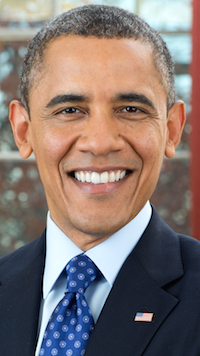
Keystone XL is dead. New government means climate change back on the agenda.

President Barack Obama

Having enjoyed the last week in the sunny Berkeley, California, it felt odd to turn on the car radio to hear the local disc jockeys discussing the tarsands and the merits of a pipeline that would pump unrefined bitumen from Canada to Texas. Being one of the most liberal areas in the U.S. – there were more than a few cars sporting “Bernie Sanders 2016″ bumper stickers – the discussion revolved around climate change and the environmental impact of the tarsands.

So, to the shock of no one who was paying attention, American President Barack Obama rejected the TransCanada corporation’s application for the cross-border permit needed to link the Keystone XL pipeline across the Canada-United States border.

It had become clear over the past few years that the project was unlikely to be approved by the American President. While counter-messages from the oil industry and environmental groups set the tone internationally, opposition to the pipeline by a handful of rural landowners in Nebraska is what ended up tying the pipeline project in the courts.

Justin Trudeau
Justin Trudeau

While the rejection of Keystone XL represents a victory for the projects opponents, it also represents a failure of Canadian foreign policy. For the past decade, the federal and provincial governments have been subsidizing TransCanada by spending significant amount of time and resources providing public funding for the pipeline through lobbying activities.

Elected officials like former Premier Alison Redford and her cabinet ministers were essentially publicly-funded lobbyists as they travelled to the U.S. dozens of times to advocate for Keystone XL and other oil industry projects. The decision by Jim Prentice to appoint well-connected Member of Parliament Rob Merrifield to the post of Alberta’s representative in Washington D.C. was supposed to give a boost to the government’s pipeline lobbying goals (he was later dismissed by Premier Rachel Notley). And the government led by Saskatchewan Premier Brad Wall was reported to have paid at least $3 million to lobbyists in Washington D.C.

Stephen Harper Calgary Stampede
Stephen Harper

The Conservative government of Stephen Harper, which was rejected by Canadians on Oct. 19, had arguably been the most pro-oil industry administration we have seen in decades. But instead of trying to build a national consensus in favour of projects like Keystone XL, the Conservative government demonized opposition to the pipelines in Canada. Opponents of Bill C-51 claimed that new spy laws passed by the former Conservative government with support from the Liberals could target Canadian citizens who oppose the expansion of oil pipelines.

Prime Minister Justin Trudeau declared his support for TransCanada’s Keystone XL pipeline in a speech to the Calgary Petroleum Club in October 2013 while also criticizing the Conservative government’s approach to lobbying for the pipeline in Washington D.C. “They have poked and prodded, annoyed and irritated the Obama administration at every turn. Largely, I suspect, because they don’t know how to work with people who don’t share their ideology,” Mr. Trudeau told Calgary’s oil elite.

Premier Rachel Notley Calgary Stampede Alberta
Rachel Notley

While Mr. Trudeau has not publicly supported TransCanada’s other major pipeline project, the Energy East pipeline, new Natural Resources Minister Jim Carr faces a challenging task of managing the interprovincial politics of pipelines. An Energy East pipeline that would would pump oil from Alberta to port terminals in New Brunswick or Quebec, keeping jobs in Canada, was endorsed by Ms. Notley and New Brunswick Premier Brian Gallant last month.

The appointment of Ottawa MP Catherine McKenna as Minister of Environment and Climate Change, and former environment minister Stephane Dion as Minister of Foreign Affairs signals that the new federal government may not be as singularly focused on pipelines as the previous government. Mr. Dion is well versed in environmental policy after serving as environment minister from 2004 to 2006 and spearheading the Green Shift policy while leading the Liberal opposition in the 2008 election.

Catherine McKenna
Catherine McKenna

One of the new federal government’s first major tasks will be to bring its ideas to address climate change to COP21, the 2015 United Nations Climate Change Conference, being held Nov. 30 to Dec. 11 in Paris, France. Ms. McKenna will be advised by a strong Alberta voice in these matters, with former Pembina Institute executive director Marlo Reynolds, a Canmore, Alberta resident, as her chief of staff.

Ms. Notley and Alberta Environment Minister Shannon Phillips will also be attending the conference in Paris.

The Pembina Institute may have spotted one of the biggest changes that the rejection of TransCanada’s Keystone XL signifies for Canada’s new foreign relations and energy strategies. In a statement released yesterday, Alberta director Simon Dyer said the “decision by President Obama reiterates that climate change is a key consideration for all energy infrastructure projects going forward.”