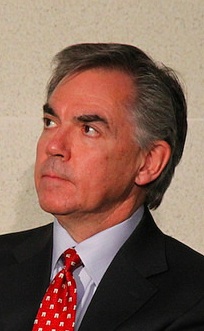
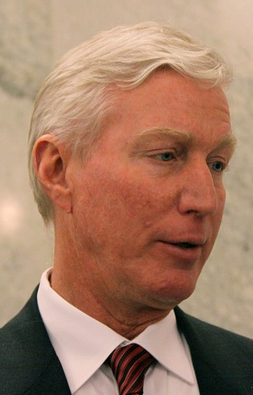
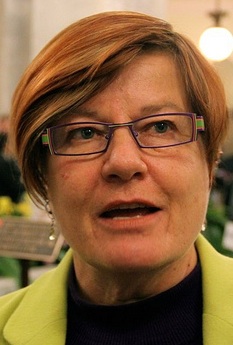
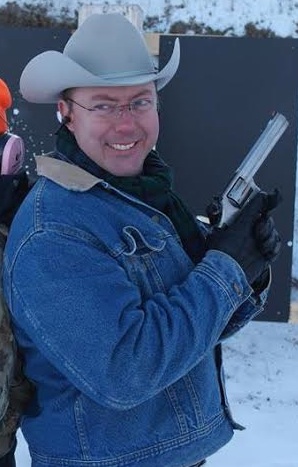
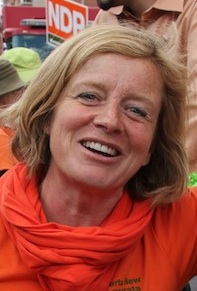
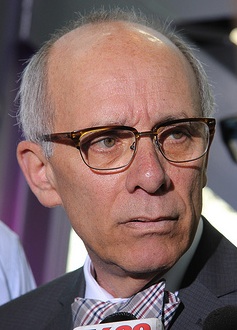
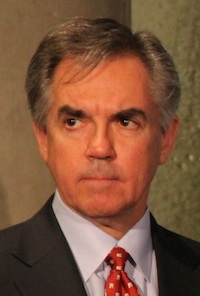
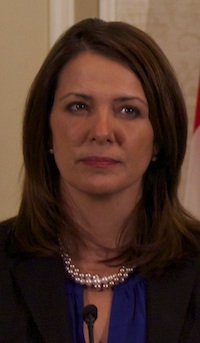
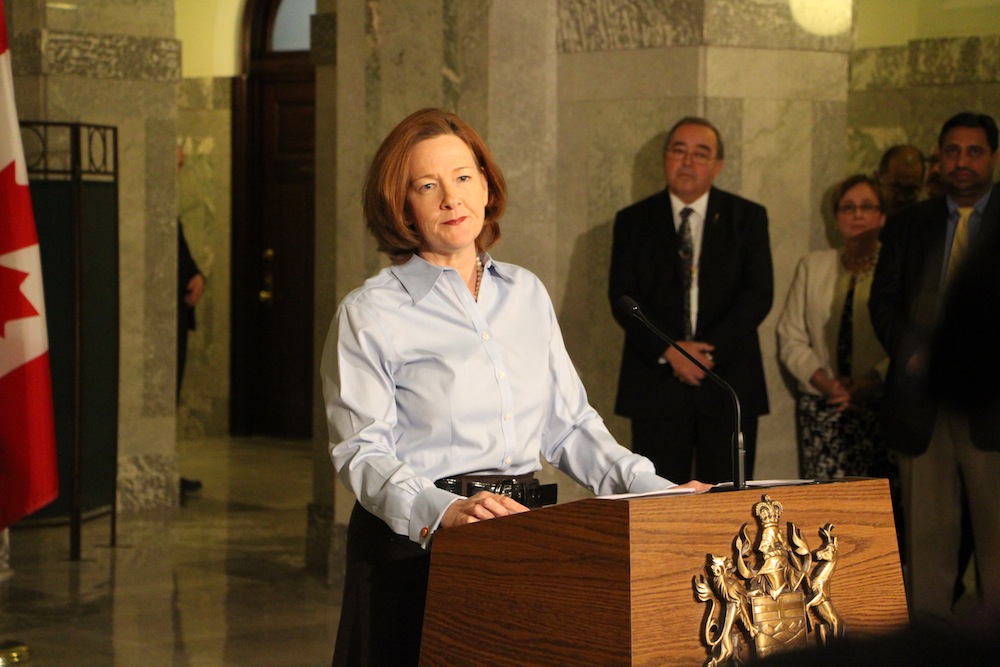
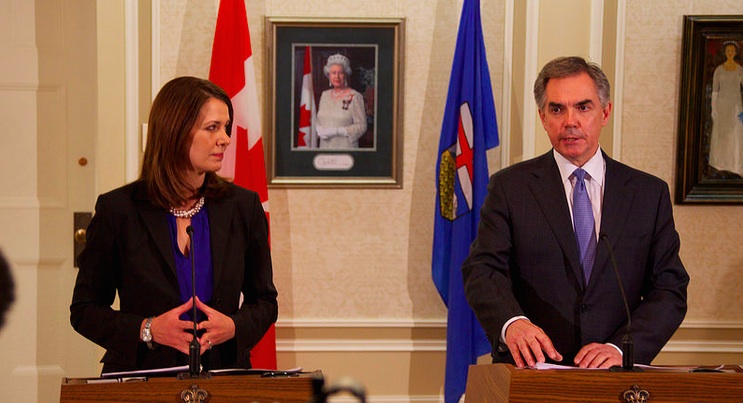
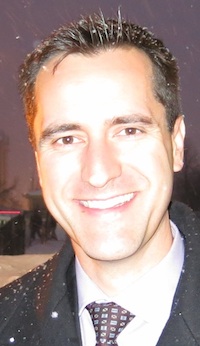
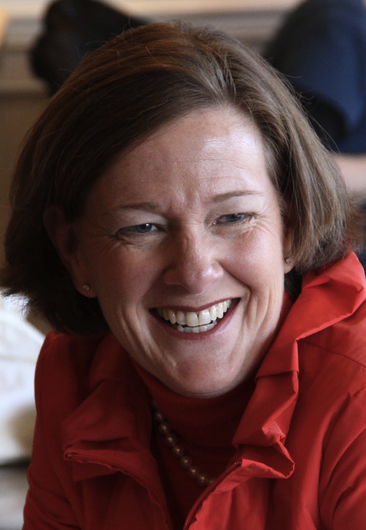
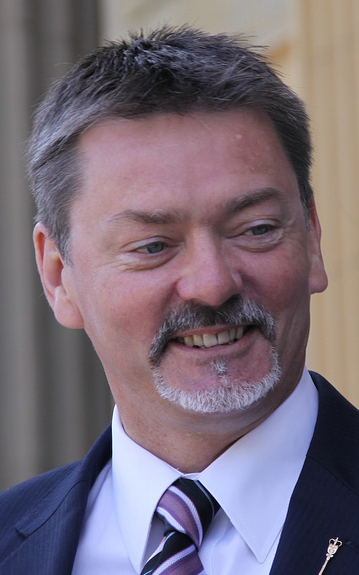
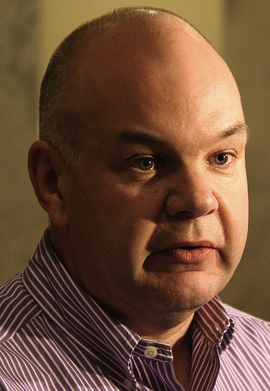
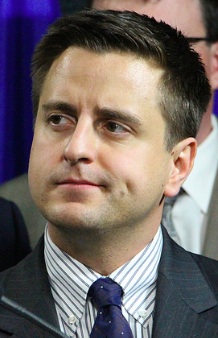
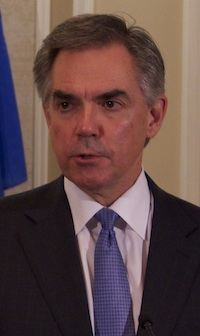
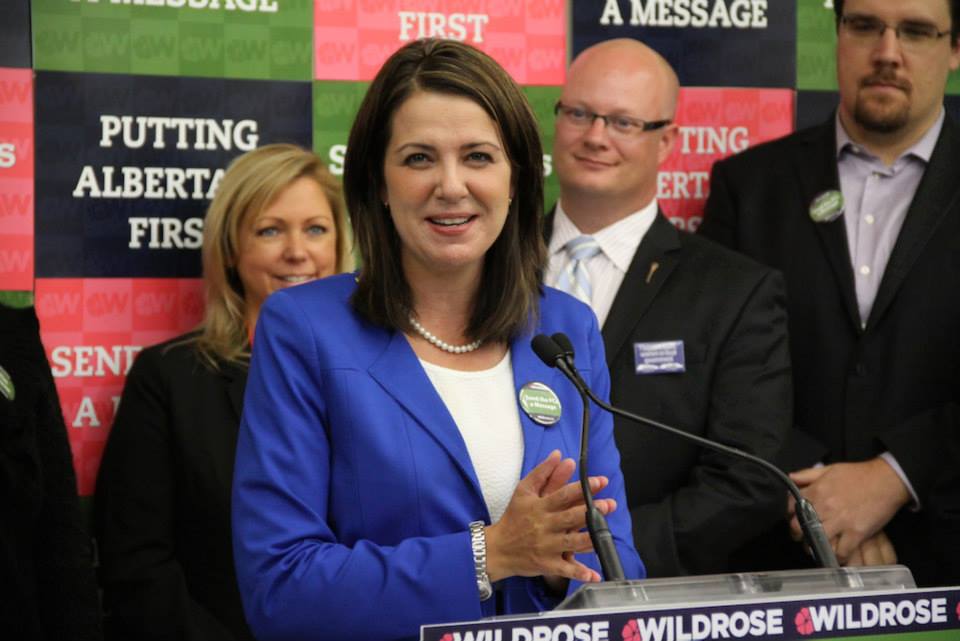
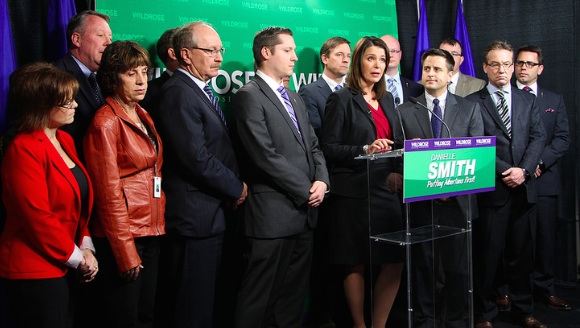
The ‘4H Club,’ Fred Horne, Doug Horner, Ken Hughes and Dave Hancock, as coined by blogger David Climenhaga.
The announcements this week by former Finance Minister Doug Horner and former Health Minister Fred Horne that they are leaving politics did not come as a surprise to anyone watching politics in Alberta.
Once powerful ministers in Premier Alison Redford’s cabinets, the two men were pushed into the backbenches when Jim Prentice ascended to the Premier’s Office in September 2014. They were also two members of the unofficial 4H Club who, along with former ministers Dave Hancock and Ken Hughes, epitomized the last generation of Alberta’s Progressive Conservative Party elite.
The scion of a genuine political family dynasty, Mr. Horner is the son of former deputy premier Hugh Horner and grandson of Senator Ralph Horner. He was first elected in 2001 and quickly rose in the cabinets of Premier Ed Stelmach and Ms. Redford.
When he ran for the leadership of the PC Party in 2011, many believed Mr. Horner to be the most competent choice for the job. But his close association with Mr. Stelmach made him an unpalatable choice. On the second ballot of the vote, of his supporters marked Ms. Redford as their second choice, leading to her victory over front-runner Gary Mar on the final ballot. His appointment as Finance Minister followed shortly after.
Their endorsements of Mr. Prentice’s bid were not enough to keep them in cabinet. After two years of arrogant, entitled and scandal-ridden Tory Government, their removal from cabinet was seen as necessary to distance the new premier from his unpopular predecessor.
The two departures follow the resignations of Mr. Hancock and Mr. Hughes in September 2014, which triggered by-elections in Edmonton-Whitemud and Calgary-West.
Eight MLAs have now announced their plans to not seek re-election in the expected Spring 2015 election:
– Airdrie PC MLA Rob Anderson
– Calgary-Fish Creek Wildrose MLA Heather Forsyth
– Calgary-Buffalo Liberal MLA Kent Hehr
– Edmonton-Rutherford PC MLA Fred Horne
– Spruce Grove-St. Albert PC MLA Doug Horner
– Calgary-McCall Liberal MLA Darshan Kang
– Bonnyville-Cold Lake PC MLA Genia Leskiw
– Lethbridge-East PC MLA Bridget Pastoor
The 1956 Ford Thunderbird is a great car and was made iconic in the film American Graffiti.
After months warning Albertans that declining oil prices will have dire consequences unless we ‘tighten their belts‘ and make ‘tough choices,” Alberta Premier Jim Prentice has made some tough decisions of his own.
Jim Prentice, at the car auction in Arizona.
Returning home from an official government visit to Houston, Texas last week, Mr. Prentice made a side trip to Scottsdale, Arizona, where he bid $54,000 on a classic 1956 Ford Thunderbird at a Barrett Jackson auction. It must have been a day of tough choices, but through persistence and determination Mr. Prentice walked away as the proud owner of this classic American car.
You can probably detect a hint of sarcasm by now. And as you can imagine, the optics and timing of Mr. Prentice’s new purchase are not great.
A 1956 Ford Thunderbird
Some people will argue what Mr. Prentice does in his personal time is his business. I have nothing against a hard working private citizen, or wealthy bank vice-president, who decides to purchase classic cars as a hobby. But Mr. Prentice is not a private citizen, he is the Premier of Alberta. And when his recreational activities and personal purchases contrast what he is saying in public, then Albertans deserve to know.
Only ten days ago, Mr. Prentice told reporters that Alberta could be facing its worst economic situation in 25 or 50 years and signalled that he may look to public sector workers for cuts or salary freezes. Why there is some hyperbole to his messaging (politicians always claim Alberta is in tough economic times), it is mind boggling that Mr. Prentice would not have the political sense to postpone this personal purchase. After nearly 30 years in politics, it is hard to believe he would not recognize how bad the optics could look.
It is also notable that the trip from Houston to Arizona was not included in Mr. Prentice’s official itinerary. It is common for “private time” to be listed on a public itinerary when the premier or a cabinet minister decides to assume personal cost to take a day or two as personal time during official travel outside the country. It is perfectly reasonable for Mr. Prentice to have taken this private time, so why was the side trip to Arizona not listed on his public itinerary?
In his short time as Premier, Mr. Prentice has proven himself to be a shrewd and skilled politician. A boost in the polls and the mass-floor crossing of Wildrose MLAs demonstrate that he has strong appeal among conservatives in this province. Just as frequent visits to the golf club undid Don Getty and a taste for overseas travel and luxury penthouses helped undo Alison Redford, it would not take much to undo Mr. Prentice’s image as Alberta’s competent “new management.”
As Premier, he needs to lead by example. And if we are indeed facing tough economic times, this $54,000 purchase in Arizona definitely sends the wrong message.
“Rat-free, PST-free and Liberal-free” has been a Conservative mantra in Alberta since the reign of Pierre Elliott Trudeau. But is this trifecta now in jeopardy?
The decline of government revenues caused by the drop in the price of oil has once again sparked the discussion around resource diversification and tax increases in Alberta. And with talk of economic doom and gloom, Premier Jim Prentice is managing expectations and preparing Albertans for the upcoming provincial budget and likely a Spring provincial election.
Jim Prentice
Will the budget include deep funding cuts or tax increases? Under most circumstances, deep budget cuts would be the natural choice for the long-governing Progressive Conservatives, but there is growing speculation that Mr. Prentice could be softening the ground for the introduction of a Provincial Sales Tax (PST) in Alberta.
At a 2013 provincial fiscal summit, economist Bob Ascah suggested that a 1 per cent sales tax could raise $750 million in annual revenue for the provincial government. Diversifying income sources with a five or six per cent sales tax could help soften the blow of the dreaded $7 billion gap that Mr. Prentice has warned will face the provincial budget if oil prices do not increase by next year.
Late last year, Mr. Prentice declared in a speech to the Calgary Chamber of Commerce that he would not consider introducing a PST, but the Premier has changed his tune in 2015, saying that everything is on the table.
This is not the first time PST has been at the centre of discussion in Alberta. Few Albertans may know it, but Alberta did have a two per cent sales tax for a short period ending in 1937.
Peter Lougheed
In the aftermath of the last major economic downturn in June 2008, when the price of oil dropped from a high of $145 per barrel in July to a low of $30 per barrel in December 2008, PC cabinet ministers like Doug Griffithsopenly mused about PST. When prices increased, resource royalties once again poured in provincial coffers and Alberta’s political class moved away from the PST discussion.
Facing a decline in the price of oil in 1984, Premier Peter Lougheed publicly mused about introducing a sales tax, but did not act on it.
The Alberta Taxpayer Protection Act, introduced by Premier Ralph Klein in 1995, states that a referendum must be held before a Provincial Sales Tax can be introduced. The PCs have shown in the past that they have no problem sweeping away old laws like this one. In 2009, the PC government amended their much touted Fiscal Responsibility Act which prohibited deficit budgets in order to pass a deficit budget.
Relying on a boom-bust economy, a real lack of long-term financial planning has been the biggest weakness of the 43-year governing PC Party.
Ted Morton
The introduction of a PST would be a bold and courageous move – one that could land Mr. Prentice in Alberta’s history books beside statesmen like Mr. Lougheed and Ernest Manning. And while under normal circumstances this would be a kiss of death to a Premier’s political career, we may now be witnessing a once in a lifetime opportunity to introduce a sales tax.
The Wildrose Opposition is both leaderless and in complete disarray, and the opposition New Democrats and Liberals could have a difficult time protesting a move that could majorly diversify the government’s revenue stream. And with the departure of Derek Fildebrandt late last year, the local Tax Outrage Industry is lacking a major spokesperson.
As reported on David Climenhaga‘s blog, Conference Board of Canada chief economist Glen Hodgson also weighed in on Alberta’s tax dilemma: “Not having a provincial consumption or sales tax is highly popular and has been great politics, but it denies the provincial government a steady and stable source of revenue through the business cycle.”
To get a grasp of how embarrassingly low our tax rates current are in Alberta, Kevin Taft in his 2012 book, Follow the Money, says that Alberta could increase its tax rates by $11 billion and would still have the lowest tax rate in Canada.
Critics will argue that a sales tax would unfairly penalize low income Albertans, and they are right. The government should also scrap the short-sighted flat tax and return to a real progressive income tax system. Alberta is currently the only province with a Flat Tax, the odd-ball brain child of former Treasurer Stockwell Day.
While Albertans look with envy at Norway’s $900 billion petroleum fund, it could be decades before our government imposes meaningful increases in natural resource royalties. The PCs bowed to political pressure from the oil and gas industry and paid a significant political price when trying to implement meaningful increases to resource revenues in the late 2000s.
The strongest opposition to the introduction of a PST may come from inside the PC caucus. Many PC MLAs are said to be unconvinced that Albertans would support a PST, and the presence of 11 anti-tax former Wildrose MLAs in the government caucus could stiffen the opposition from within. Skeptical MLAs would probably be correct that they will receive a blowback from Albertans in the short-term, but the right decisions are not necessarily the most popular when they are initially implemented. And without a credible government-in-waiting, now could be the the only time the PCs could implement a PST.
Alberta should strive to remain rat-free forever, but on the revenue front, we need to break our dependency on resource revenues that cripple our provincial government each time there is a hiccup in the market.
Jim Prentice celebrates his victory in the PC Party leadership contest on September 6, 2014.
The Progressive Conservatives gave hints today that they could be preparing for a Spring 2015 provincial election.
Reported by the Calgary Herald and confirmed by sources close to this blogger, the PC Party has set a deadline for candidates to be nominated in all 87 provincial constituencies by March 15, 2015. The Herald also reports that the PC Party has scheduled a “large number” of nominations to take place on February 21, 2015. The early nominations would put the PCs in a position to call an election in Spring 2015, and demonstrates the folly of the province’s fixed election laws.
The news of an updated nomination schedule was preceded by news that the PC Party was extending the expiry dates of all party memberships purchased in 2014 to December 31, 2015. In an email from PC Party president Terri Beaupre, party supporters were told that Wildrose supporters can now exchange their memberships for PC Party memberships. The PC Party is said to have sold just more than 40,000 memberships during its lacklustre 2014 leadership contest.
The quick nomination deadline will showcase the PC Party’s impressive organizational capacity, especially in the wake of the mass defection of Wildrose MLAs on December 17, 2014. By extending the membership expiry dates by one year, Albertans who purchased memberships last year will not need to be convinced to renew in order to vote in the 2015 candidate nomination contests.
March 15 will come quickly for some PC MLAs, especially the Wildrose floor crossers, who have barely had time to introduce themselves to their new local party members. Some new PC MLAs, like Danielle Smith, who is currently on vacation in Mexico, are expected to face strong nomination challenges from annoyed PC Party supporters in their constituencies.
The quick nomination timeline will also force some long-time PC MLAs to decide whether they are going to try and seek re-election. Lethbridge-East PC MLA Bridget Pastoor, who crossed the floor from the Liberals in 2011, announced this week that she would not seek re-election. Attention will also turn to the gang of former PC cabinet ministers who sit in the backbencher thanks to Premier Jim Prentice‘s September 2014 cabinet shuffle.
It is suspected that former cabinet ministers, such as Doug Horner, Doug Griffiths and Fred Horne, can expect to be nudged aside in order to make room for new candidates as Mr. Prentice attempts to rebrand the long-governing PC Party in his own image.
The early election call will put the opposition parties in a tough situation.
Fresh from their own leadership contest, Rachel Notley‘s New Democrats have only nominated ten candidates in 87 constituencies. The Liberals and Alberta Party have not yet started their candidate nomination process. The Liberals had originally planned to hold their first nomination meeting for January 24 in Edmonton-Mill Woods, but cancelled the event soon after it was scheduled.
Numerous Wildrose candidates have withdrawn their candidacies, leaving the party with 16 nominated candidates since the floor crossings.
The March 15 date is also perilously close to the earliest date the leaderless Wildrose Party has set to select its new leader, March 17. Rumours circulated on social media today that offensive conservative Member of Parliament Rob Anders is considering running for the official opposition party’s leadership. Mr. Anders candidacy would be a blessing for the PCs and a deathblow for the Wildrose.
Financial disclosures submitted to Elections Alberta are expected to be released in the coming weeks and will reveal the financial situation of Alberta’s political parties. The Tories will report to have raised a considerable sum of money in 2014, as will the Wildrose Party, which is said to still have $300,000 in their election war chest.
With March 15 less than two months away, Mr. Prentice may seek to use the Spring provincial budget as an election platform, as the PC Party has in the past. Relying on a disorganized opposition and using hyperbole to fan fears of an economic downturn, Mr. Prentice is in a strong position to lead his party to win its 14th consecutive election.
This is a stunning turnaround from six months ago, when the PCs were rocked by an endless string of scandals and were trailing the Wildrose Party in the polls and in fundraising. The PC Party’s apparent recovery serves as an important reminder to political watchers not to underestimate the 43-year governing PC Party.
The public entrance of Edmonton’s Federal Building (photo credit: forester401)
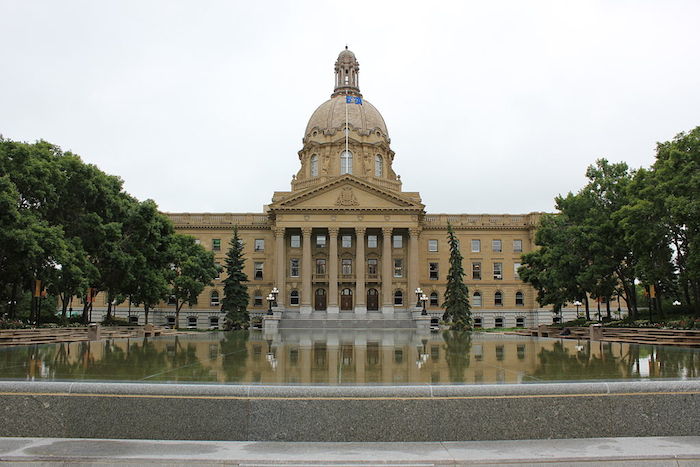
It it weren’t sitting north of the Legislature Grounds, the architecturally beautiful Federal Building would cast an ominous shadow over the capital landmark in Edmonton. Abandoned after the Government of Canada relocated to Canada Place in the early-1980s, the beautiful art deco building sat empty after 1989 until the Government of Alberta began renovations in the late 2000s. The building was originally expected to be reopened and house government employees and MLAs in 2011 but the project was delayed and costs are overrun by $100 million. It is now expected to be reopened in 2015.
The Federal Building under construction (photo credit: Mack Male)
But the most public elements of the renovated building appear to have been quietly removed from the construction plans. According to a report from the Edmonton Journal, plans to include a new ice skating rink, lower plaza and improved landscaping were cancelled in April 2013. The skating rink would have been built above the renovated building’s 650-car parking lot and provided a stunning view of the Legislature Grounds. The proposed landscaping would have included improved fountain pools north of the Legislature.
Located between the two most densely populated neighbouhoods in Edmonton, the new ice rink, plaza and landscaping would have provided activities for the general public to enjoy. Cutting the public elements, including a Zamboni to maintain the ice rink, are reported to have only removed a meagre $10 million from the expected $375 million project.
If the Federal Building sounds familiar, it is probably because it was the location of the much-loathed 11th floor Skypalace private penthouse suite that Premier Alison Redford had secretly planned to occupy. The penthouse, built as a residence for the former premier and her teenage daughter, would have included a library, dining area with a butler’s pantry, and a private elevator from the ground floor. Government documents show that contractors made more than $760,000 in changes to the 11th floor in June 2013 to build the private suite.
Former Infrastructure Minister Wayne Drysdale and former Infrastructure Minister Ric McIver both claimed to have cancelled the Skypalace project at different times, but Premier Jim Prentice told reporters in September 2014 that no more money would be spent renovating the penthouse. The already modelled residential suite is now expected to be used as meeting space instead.
But back to the public space. It is a shame the PC Government chose to, more than a year ago and in secret, axe the elements of the renovated Federal Building and the Legislature Grounds that could have become a destination for the general public and an important part of the revitalization that is happening in downtown Edmonton. Hopefully they will see the error of this short-sighted decision and re-introduce the public elements in future renovations. Our Legislature Grounds are beautiful and we should be striving to create new ways to make it a more vibrant gathering spot for Albertans.
Although most politicians in the capital appear to support the pipeline’s construction, United States President Barack Obama has not made public whether he supports or opposes the project, and his final approval will be needed to allow the pipeline to cross the American border.
Demonized by Republicans to the south of the border and Conservatives to the north for not sharing their enthusiasm for the pipeline, Mr. Obama made clear that he would wait until a Nebraska Supreme Court ruling before making a final decision.
The future of the TransCanada corporation’s new pipeline has become enveloped in the larger debate around climate change, the environment and the economic expansion in Canada’s oil sands. While most politicians in Western Canada support the Alberta-to-Texas pipeline, the recent decline in the price of oil has raised some questions about its viability.
Premier Jim Prentice and former Conservative MP Rob Merrifield, now Alberta’s voice in Washington D.C.
Pipelines and oil sands are a big reason Alberta MLAs and cabinet ministers have made at least 16 official trips to Washington D.C. since November 2011. Housed in the Canadian Embassy, Alberta has a paid representative whose main focus appears to be lobbying for the oil sands and pipelines. in the U.S. capital Former Conservative MP Rob Merrifield now holds the position, which was previously filled by retired Tory cabinet ministers Gary Mar, Murray Smith and former Calgary Mayor Dave Bronconnier.
According to publicly available travel itineraries, Progressive Conservative cabinet ministers and MLAs logged a hefty amount of air mileage in 2014, travelling to 13 countries (down from 18 countries visited in 2013).
Premier Alison Redford visits the Golden Temple in India.
In 2014, Alberta politicians made a flurry of official trips to the United States, China, Japan, India, Switzerland, Malaysia, Singapore, the United Kingdom, Germany, Australia, New Zealand, the Netherlands and Peru.
Four cabinet ministers visited Singapore last year, where the Government of Alberta opened a new trade office. China remained a popular destination for international trade missions by Alberta’s politicians.
The whirlwind of international travel slowed to a trickle when Mr. Prentice entered the Premier’s Office in September 2014, with only a handful of MLA trips to the United States and a trip to Peru by Environment Minister Kyle Fawcett, being released on the public itinerary.
Here is a Google Map tracking international travel by Alberta cabinet ministers and PC MLAs since November 2011:
Two polls released in the final weeks of 2014 could give an indication of the direction Alberta political might take in 2015.
Raj Sherman
The polls show Jim Prentice‘s Progressive Conservatives dominating in Calgary and rural Alberta. And with Wildrose Party support in decline across the province, Mr. Prentice could be tempted to call an election sometime in early 2015.
The polls also show a race for support in Edmonton between the PCs (with 30% in both polls) and Rachel Notley‘s NDP (with 32% and 34% in the two polls).
Edmonton has been a traditional region of support for the NDP and Liberals since the 1980s. All four NDP MLAs and two of five Liberal MLAs, including leader Raj Sherman, represent capital city constituencies.
While NDP candidate Bob Turner‘s strong showing in the September 2014 Edmonton-Whitemud by-election has contributed to the narrative of NDP growth in Edmonton, the Liberals remain a wild card in city. Liberal support is inconsistent in the two polls (one showing the party with 13% and the other with 28%) and that party’s traditional base of support in Edmonton should not be ignored.
Laurie Blakeman
Many New Democrats hope that the disorganization and apparent marginalization of the provincial Liberals will allow their party to make long sought after gains in Edmonton. But it may not be that easy.
As we have recently seen in other provinces, the NDP have a track record of snatching defeat from the jaws of victory.
A big challenge for both Ms. Notley and Dr. Sherman is to attract liberal and moderate Edmontonians who voted for Alison Redford‘s PC Party in order to block a Wildrose victory in 2012. Now that most Wildrose MLAs have joined the PC Party, those voters may be looking for a new home.
The potential for vote splitting and a PC Party rout in the next election, with a backdrop of a slowing economy and low oil prices, has reignited the discussion about uniting Alberta’s tiny centrist and progressive opposition parties.
I’ve tried for years and there is no budging. Each party has a core of supporters that believe their party is the best, the one and only. They will never leave or merge. Both still have infrastructure that is very hard to build, but neither can attract the volunteers and donators to be THE government. I think sometimes we spend more effort fighting each other than the PCs or WR.
While some staffers working for the Wildrose Official Opposition Caucus lost their jobs when leader Danielle Smith and 8 MLAs crossed the floor to the Progressive Conservatives before Christmas 2014, at least three former opposition staffers appear to have landed jobs working for the governing PC Caucus.
Government of Alberta online staff directory
Appearing on the Government of Alberta staff directory with job titles “Caucus Staff – Office of the Whip” are former Wildrose policy and research analyst David Jackson, former assistant to the leader of the Official Opposition Barbara Currie, and former Wildrose legislative assistant Nicholas Burris.
It is unclear what their new roles and duties entail, as they appear to be new positions reporting to PC Caucus Whip George VanderBurg.
Former Wildrose Caucus Chief of Staff Steve Rennick is said to have been hired to work in the Office of the Premier, along with one or two other former Wildrose staffers.
It is suspected that Premier Jim Prentice will announce a cabinet shuffle within the first months of 2015 in order to appoint some of the former Wildrose MLAs to ministerial positions.
Double crossing mla to retire
Wildrose leader Danielle Smith (centre) with floor crossing PC MLAs Heather Forsyth and Rob Anderson in 2010.
Meanwhile, rumour that Airdrie MLA Rob Anderson could be appointed to cabinet following his floor crossing are sure to be put to rest after his recent announcement he will not be seeking re-election. Mr. Anderson was first elected in 2008 as a PC MLA, crossed the floor to the Wildrose Party in 2010 and then crossed the floor back to the PC Party in 2014. He was expected to face a serious challenge for the PC nomination if he sought re-election as that party’s candidate in the next election.
In my nearly ten years writing about politics in Alberta on this blog, 2014 was easily the most exciting. The sheer number of scandals, controversies, fumbles and resignations made for new content on a daily basis. If I had the time and resources, I could have easily written three or four posts a day for most of the year. As this year comes to an end, I took a look through this year’s posts and compiled a list of the top ten political moments in Alberta of 2014. Thank you for reading and enjoy the list.
Rob Anders
10. Take a hike, Rob Anders
After 17 years as one of the most hyper-conservative politicians in Ottawa, Member of Parliament Rob Anders was finally shown the door by Conservative Party members. In April 2014, Mr. Anders lost a hotly contested Conservative Party nomination race in Calgary-Signal Hill to former Progressive Conservative MLA Ron Liepert. His second attempt at a nomination was in the rural riding of Bow River outside Calgary, where Mr. Anders was defeated by Brooks Mayor Martin Shields.
Merwan Saher
9. Auditor General on Climate Change A July 2014 report from Auditor General Merwan Saher found no evidence that the Department of Environment and Sustainable Resource Development properly monitored the performance of the PC Government’s climate change strategy, which was first implemented in 2008. The report uncovered serious problems with the province’s expensive Carbon Capture and Storage strategy. Mr. Saher’s report found that the total emissions reductions from the CCS program was expected to be less than 10% of what was originally anticipated. The Auditor General also reported that Alberta was unlikely to meet its 2020 targets to reduce carbon emissions.
5. Liberal near win in Fort McMurray-Athabasca
What should have been a sleepy federal by-election in the heart of Alberta’s Oil Belt turned into a race when Liberal Kyle Harrietha challenged Conservative David Yurdiga for the June 30, 2014 vote to replace retiring MP Brian Jean. Running an energetic campaign, Mr. Harrietha increased his party’s support from 10% in 2011 to 35.3%, placing less than 1,500 votes behind Mr. Yurdiga. The Liberal also defeated his Tory challenger in Fort McMurray, no small feat in the land of the oil sands. The two candidates will face off once again in the new Fort McMurray-Cold Lake riding when the next federal election is held in 2015.
Stephen Mandel
4. The October mini-election Four by-elections on October 27, 2014 provided Albertans with a mini-election less than two months after Mr. Prentice became premier. Triggered by the resignations of former premiers Ms. Redford and Mr. Hancock and PC MLAs Ken Hughes and Len Webber, the votes allowed Mr. Prentice to win a seat in the Assembly along with PC candidates Stephen Mandel, Gordon Dirks and Mike Ellis. The opposition Wildrose had hoped to win at least two of the by-elections, but were upstaged by the NDP in Edmonton-Whitemud and an insurgent Alberta Party in Calgary-Elbow.
Jim Prentice
3. Jim Prentice becomes Premier
After a first-ballot victory in a lack-lustre and uninspiring leadership contest, Jim Prentice started his time in office with a bang. After being sworn-in, Mr. Prentice implemented a swift de-Redfordization agenda, with daily announcements undoing some of his predecessors more unpopular policies and decisions. Purging Redford era cabinet ministers, selling the government’s fleet of aircraft, keeping the Michener Centre open, backing down from controversial changes to public sector pension plans and cancelling the botched license plate redesign were all no-brainers, but they projected an image of the new premier as a competent chief executive in command. Arguably, Mr. Prentice’s only missteps in his first few months in office were his aborted Gay-Straight Alliances bill and the unease caused after he tactfully dismantled the Official Opposition (see #2 below). Despite his success in distancing himself from Ms. Redford, the main thrust of Mr. Prentice’s government – promoting pipelines and the oil sands abroad – remains the same as hers.
Danielle Smith
2. Wildrose floor crossings
For four years, PCs told Albertans not to trust those kooky and scary Wildrosers. At the same time, the Wildrosers told Albertans not to trust those crooked and corrupt PCs. But in November and December 2014, Mr. Prentice’s PC Caucus accepted 11 Wildrose MLAs into their ranks, including Official Opposition leader Danielle Smith. The caucus merger, which was either in negotiations for months or sparked by the Wildrose by-election loss (depending on which story you believe),was encouraged by Conservative Godfather Preston Manning (Mr. Manning later apologized for his role). The floor crossing gutted the Official Opposition, left with 5 MLAs and enraged Wildrose supporters, who started a “Recall Danielle” campaign in her Highwood constituency. Five-term Calgary MLA Heather Forsyth stepped in as interim leader until a permanent leader can be chosen in 2015.
Alison Redford resigned as Premier of Alberta on March 23, 2014.
1. The spectacular fall of Alison Redford
“Mistakes were made” were some of the last public words Albertans heard from premier Alison Redford before she resigned as MLA for Calgary-Elbow in August 2014. Albertans have never seen a political career crash and burn this badly. A $45,000 flight to South Africa, use of the government plane to return from Palm Springs, alleged fake passenger bookings to ensure her and her staff had the planes to themselves, a secretly constructed private penthouse known as the Skypalace, and long trips to exotic destinations overseas are just some of the allegations of misuse of power she faced prior to her resignation. Months after her resignation, the Auditor General reported the existence of an “aura of power around Premier Redford and her office.”
Alberta’s first woman premier started her time in office with great promise and many Albertans believed she signalled the beginning of a new, more progressive, era in our province. Ms. Redford quickly proved those believers wrong with deep funding cuts to colleges and universities and attacks on public sector workers and their collective bargaining rights.
In the end, plummeting fundraising returns, bad polling numbers, MLA defections, and a caucus and party on the verge of revolt forced Ms. Redford to step down as Premier of Alberta and Leader of the PC Party on March 23, 2014.
Have I missed any of your top 10 moments in Alberta politics? Please share what made your list in the comment section.
A snap mid-Summer election returned Jim Prentice’s renamed “Conservative Party of Alberta” to its fourteenth term as government. In an unexpected twist of fate, Finance Minister Danielle Smith was defeated in her home riding by Wildrose Party leader Randy Thorsteinson.
But don’t feel sorry for Smith. She was appointed to the Senate in one of Stephen Harper’s last acts as Prime Minister before the Conservatives lost the October federal election. Harper’s applecart was upset when the beautiful, unseasonably warm October weather caused Canadian voters to turn out in droves.
Back on the provincial scene, NDP leader Rachel Notley led her party to a breakthrough in Edmonton to form the Official Opposition with 21 MLAs. Notley’s party won its first seat in Calgary since the 1980s and its first ever seat in Lethbridge.
But perhaps the biggest surprise was the re-election of Wildrose-turned-Liberal MLA Joe Anglin, who won by 3,000 votes in Rimbey-Rocky Mountain House-Sundre. As the only Liberal to survive the election, Anglin is now the leader of the party.
“Unlike the 2012 election, 2015 gave Albertans two clear choices in the PCs and NDP,” said Rick Dunderland, a professor of political science at University of Red Deer. “Even though the PCs still won, there is now a difference between the government and official opposition and that will be a good thing for democracy.”
Tough Economic Times behind us
With a return to $120/barrel oil, Premier Prentice praised good economic times ahead for Albertans in the 2016.
“Back to budgeting as usual,” a senior government official said. “Now we don’t have to worry about saving money for the future, because the price of oil is never going to go down again.”
The Prentice Government is facing international criticism for his government’s continued lack of climate change plan. “Alberta’s climate change framework is important and will be a continued focus of our government in 2016,” Energy Environment Minister Rob Anderson said. “Under new management, we are continuing to take the time to ensure the decisions we make are right.”
And big city mayors have a lot to celebrate. The recently negotiated City Charters granting the municipalities new powers are expected to be unveiled in early 2016. A newly released poll showed Mayors Don Iveson and Naheed Nenshi with 95% approval among voters.
Redford tell-all
Palm Springs resident Alison Redford is set to launch a new tell-all book about her time as Premier of Alberta. Driven out by scandal in 2014, Redford has dedicated her time to charity work and has announced all proceeds from the book will go to charity. Not surprisingly, Tory insiders are expecting the wurst about what might be included in the book.
Keystone XL Pipeline
Recently elected Prime Minister Justin Trudeau celebrated the approval of the Keystone XL Pipeline over a bottle of champagne with President Barack Obama during his first visit to the White House last month. Conservative opposition leader Jason Kenney complained that Canadians should thank former Prime Minister Stephen Harper for the pipeline’s success.
In an unexpected gesture, Prime Minister Trudeau named Harper the Canadian Ambassador to Ukraine where, unfortunately, the Canadian Ambassador’s residence was burned down last week by a pro-Russian mob.
Western Canada’s Big City Mayors at the 2014 Grey Cup in Vancouver. From left to right: Vancouver Mayor Gregor Robertson, Winnipeg Mayor Brian Bowman, Calgary Mayor Naheed Nenshi and Edmonton Mayor Don Iveson. Photo credit: @misssarahchan
As the collapse of the Wildrose Party and speculation about Alberta’s next provincial budget dominate political discussions, one of the most politically important discussions impacting governance in our province next year could be about the creation of City Charters.
In his first month as Premier, Jim Prentice met with Edmonton Mayor Don Iveson and Calgary Mayor Naheed Nenshi to restart discussions around the creation of City Charters for Alberta’s two largest cities.
A recent survey conducted by ThinkHQ Public Affairs Inc. and provided to daveberta.ca shows Mr. Iveson and Mr. Nenshi with 74% and 70% approval ratings. For Mr. Iveson, this is an impressive increase from a survey in March 2014 in which respondents gave him 70% approval rating.
“The two mayors of the big cities are the second and third most powerful politicians in the province,” ThinkHQ President Marc Henry told this blogger. “The mayors are obviously the two people in the province Premier Prentice has to take into consideration,” Mr. Henry said.
The popular mayors have made City Charters a priority. The adoption of charters would be a long overdue change that could recognize the crucial roles and responsibilities that our largest municipal governments have in the lives of millions of Albertans.
“Most Albertans like the idea of a charter but don’t understand it,” Mr. Henry explained. “The challenge with the city charter is defining it,” he said.
Civic charters are different in every city, but a “charter city” (a city with a civic charter) has its own stand-alone legislation, rather than following the general municipal government acts of the province. It is a special agreement between a province and city designed to meet the demands of city governance, usually by giving a city more tax-raising powers, along with more autonomy to set policy that will allow it to meet its individual needs.
The cities of Winnipeg, Vancouver and Toronto have City Charters passed by their provincial governments granting those municipalities increased levels of responsibility and access to additional revenue.
In an October 2014 blog post, Mr. Iveson explained why City Charters are important and why they can also be an abstract concept to explain:
The City Charter process can be an abstract concept; talking about roles and responsibilities with another order of government probably isn’t the sexiest thing for many people. But – I would argue – delivering on this is one of the most important factors in Edmonton’s future success. Correcting the imbalance in responsibility and authority with the Province is one of the most critical city building things we can do because it enables the ‘real work’ like building LRT lines and keeping our cities safe to actually happen.
Rather than a broad increase in taxation powers, City Charters in Alberta could include a more serious commitment to revenue sharing by the province as recognition that our big cities are no longer tiny localized organizations. They are important levels of government that provide services and infrastructure that also benefit millions of Albertans living outside the city boundaries.
Discussions about City Charters began in 2012 while Premier Alison Redford was in office but slowed down as political scandals engulfed the Progressive Conservative government. A Memorandum of Understanding signed by Mr. Iveson, Mr. Nenshi and Mr. Prentice on October 7, 2014 laid out the following timeframe for City Charters:
Phase one will address matters specific to the two cities and Municipal Affairs (MA) by Spring 2015;
Phase two will address matters between the two cities, MA and any other Government of Alberta ministries by Fall 2015; and
Phase three will address the development of a new fiscal framework for the two cities by Spring 2016.
The ThinkHQ online research panel had a sample size of 1656 people and was conducted between November 26 to December 1, 2014.
The Yards Podcast
In episode one of The Yards podcast, host Omar Mouallem talks with Mayor Iveson about downtown memories, bike culture and whether downtown development can survive another oil crash.
The mass-floor crossing, encouraged by Conservative Godfather Preston Manning, could increase the likelihood of an early 2015 general election. Now with 72 MLAs, the PCs are in a position to quickly nominate candidates across the province and take advantage of an opposition in disarray by calling a snap election early in the new year.
With Premier Jim Prentice increasingly warning of Alberta’s tough economic times, it is not far fetched to believe the PCs could seek a new mandate earlier than the 2016 fixed-election period. There is suspicion that Mr. Prentice wants to take advantage of the low price of oil in order to impose budget cuts before the price exits the “price trough” and begins to rise.
Rob Anderson
NDP MLA Brian Mason and blogger David Climenhaga suggest a snap election could be called in early January 2015, but it could be more likely the Tories would wait until February or March.
In their 43 years in government, it has been common for the PCs to table a provincial budget in February or March and then immediately drop the Writ of election in order to use the budget as their de-facto campaign platform. This timeline would also allow for an early 2015 cabinet shuffle to make room for floor-crossers Danielle Smith and Rob Anderson, and allow the Tories time to build their message around a “tough economic times” budget/campaign platform.
Mr. Prentice may also want to hold an election before more information is released by the R.C.M.P. regarding their investigation into Ms. Redford and her staff. The CBC reported on November 4, 2014 that a Justice Department internal review concluded Ms. Redford could face criminal charges if allegations about her use of government airplanes are proven by an RCMP investigation.
Doug Horner
The possibility of an early election should be a wake-up call for Alberta’s fractious non-conservative opposition parties, who are mostly contained within Alberta’s two largest cities. The lack of conservative vote split that the New Democrats, Liberals and Alberta Party had hoped to capitalize on may have vanished the moment Ms. Smith crossed the floor.
One potential speed bump to an early election could be dissent within the PC Caucus to the Wildrose MLA floor-crossing. I am told that more than a few PC MLAs are not pleased with their new colleagues of convenience, who have spent the past two years attacking and embarrassing them as the opposition. If Mr. Prentice suspects this internal dissent is potentially explosive, he may decide to hold off an election until tensions inside the PC Caucus cool down.
Fred Horne
It is yet to be seen if the hostility to the PC-Wildrose Caucus merger – including the RecallDanielle campaign – will die down or whether it will manifest itself into a real backlash at the polls. This could have a big impact on whether an early election is held. The defection has certainly left a bad taste in the mouths of many Albertans, but the political maneuver removes the most likely alternative that voters had to send a message to the Tories.
Despite having the luxury of a government-in-waiting for the past two years, it appears that the PC Party are once again are on a trajectory to form another massive majority and extend the their 43-year reign.
Wildrose candidates?
Drew Barnes
Before the mass floor-crossing, Ms. Smith’s Wildrose Party had nominated candidates in 28 constituencies. Following the leader-led defection, the number of nominated Wildrose candidates has dropped to 18.
Many of the party’s now-former MLAs were already nominated to run under the Wildrose banner in the next election. Of the five remaining Wildrose MLAs, only Drew Barnes, Pat Stier and Rick Strankman have been nominated to run in the next election.
And Lac La Biche-St. Paul-Two Hills MLA Shayne Saskiw‘s intentions remain unknown. It is suspected that Mr. Saskiw was waiting until after the Lakeland federal Conservative nomination to make a decision about staying in the Wildrose Caucus. His wife, past Wildrose candidate Shannon Stubbs, won the nomination late last week.
It is also likely that some of the already nominated Wildrose candidates will re-think their decision to run under that party’s banner in the next election. I am told that Edmonton Catholic School District Trustee Laura Thibert dropped out as the Wildrose candidate in Edmonton-Mill Woods earlier this month.
The NDP have nominated 10 candidates, not including their four MLAs and the Liberals have not yet started their candidate nomination process. Two Liberal MLAs, Kent Hehr and Darshan Kang, are leaving provincial politics to run as federal Liberal candidates in next year’s federal election.
Of the floor-crossers, none have publicly declared their plans to run for re-election as PC candidates, but many will try. And despite Mr. Prentice’s promised pledge of endorsement for their candidacies, the new PC MLAs could still face nomination challenges from their former opponents on the constituency level.
In Calgary-Shaw, arch-conservative activist Craig Chandler has already announced plans to seek the PC nomination, challenging Wildrose-turned-PC MLA Jeff Wilson.
ATTN #wrp Calgary Shaw members. You are welcome to help on my nomination campaign to defeat Jeff Wilson in the #pcaa nomination #ableg
Mass MLA defection cripples Alberta’s Official Opposition
Danielle Smith and Jim Prentice make a grande entrance at yesterday’s press conference at Government House.
Anyone already cynical about politics in Alberta will have their views reinforced with yesterday’s announcement that Wildrose leader Danielle Smith and eight of her party’s MLAs have abandoned their role as the Official Opposition and joined the 43-year governing Progressive Conservatives.
Danielle Smith
After a five hour meeting of the PC Caucus at Government House, Premier Jim Prentice and Ms. Smith walked side-by-side down the staircase to announce news that nine Wildrose MLAs had been accepted into the government caucus.
It was a shrewd move that could be a decisive win for Mr. Prentice in the Conservative Civil War that the two parties have waged against each other since the mid-2000s. But what led to this mass exodus of Wildrose MLAs?
Many political watchers, including myself, have pointed to Mr. Prentice’s leadership or the September 2014 by-election losses as catalysts for today’s news, but one long-time reader and observer of Alberta politics shared a different view:
“The Wildrose was not founded on political principles, like the fiscal conservatism of the Progressive Conservatives, or the social democracy of the New Democrats – but rather it was created, out of nothing, for the sole purpose of exerting political pressure on the PC government.”
While the Wildrose Party was founded on a social conservative base, the purpose of the party was to pull the meandering centrist Tories back to their conservative political roots. Over the past four years the Wildrose has excelled at using wedge issues like oil and gas royalties and property rights to drive the political agenda in Alberta.
Premier Ed Stelmach‘s meddling with natural resource royalties led the oil industry to quickly begin funnelling donations to the Wildrose, then led by a photogenic former school trustee named Danielle Smith. When the PCs abandoned plans to raise royalties, the Wildrose honed in on property rights and stirred up a considerable amount of fear and resentment among rural landowners, who were mostly traditional PC voters.
The nutty social conservatives proved to be the Wildrose’s greatest weakness in the 2012 election, costing the party a chance at forming government. But the many blunders of Alison Redford’s embarrassing government gave the Wildrose a renewed lease on life.
And now, with Mr. Prentice as leader of the PC Party, it has become difficult to point out significant policy differences between the two parties. By refusing to meddle in the marketplace, halting the poorly written Bill 10 and pledging to protect property rights, Mr. Prentice has robbed the Wildrose of their most effective critiques of the PC Party.
The Wildrose Party still exists with a significant campaign war chest and a membership role of 23,000. But it now lacks a leader, which the party executive says it will soon begin a search for. The steps taken by the party over the coming weeks could determine whether it can actually recover or whether it will join the list of conservative fringe parties after the next election.
Despite Ms. Smith’s agreement with new premier, the departure of the nine MLAs is a betrayal of the party’s hundreds of volunteers and donors and the more than 440,000 Albertans who voted Wildrose in the last election.
Life as an opposition MLA in Alberta is not glamorous, but as the Official Opposition, those nine MLAs played a critically important role in our parliamentary democracy. The timing and nature of the floor crossing reeks of political opportunism. And the quality of our democratic system will be weaker tomorrow with the loss of these nine opposition MLAs into the government backbenches.
The five remaining Wildrose MLAs will technically form the Official Opposition, but with their party in disarray, many political observers are watching to see if another political leader -NDP leader Rachel Notley – is able to form an effective opposition to the 43-year governing PC Party.
The nine Wildrose MLAs who crossed the floor to the PCs are:
Wildrose leader Danielle Smith introduces candidate Tim Grover during the September 2014 Edmonton-Whitemud by-election.
For four years, Progressive Conservatives told Albertans not to trust those kooky and scary Wildrosers. At the same time, the Wildrosers told Albertans not to trust those crooked and corrupt PCs. Today, it now appears that the leaders of the two parties have now put the past four years behind them and are joining forces.
Following a Tuesday, Dec. 16 caucus meeting, it is being reported that six of the Wildrose Official Opposition’s 14 MLAs, including leader Danielle Smith, have decided to leave their party to join the 43-year governing PC. Calgary Sun columnist Rick Bell reported yesterday that PC leader Jim Prentice offered a “Reunification Agreement” as incentive to his opposition colleagues.
The governing PC Caucus will meet on Wednesday, Dec. 17 and are expected to discuss the acceptance of the six MLAs into their ranks. The addition of the six would bring the total number of Tories to 69 of 87 MLAs in the Assembly. The remaining eight Wildrose MLAs would remain Official Opposition.
The Edmonton Journal’s Graham Thomson reports that a cabinet shuffle could happen as early as Thursday to make room for the new MLAs.
Some sources say that Ms. Smith could become Mr. Prentice’s Deputy Premier and Mr. Anderson, a former PC MLA who joined the Wildrose in 2010, could be appointed to a senior ministry. Another potential cabinet appointment could be former Wildrose MLA Kerry Towle, who crossed the floor earlier this month.
Once source speculated that current PC ministers like Kyle Fawcett or Maureen Kubinec could be shuffled out of cabinet to make room for their new caucus-mates.
The phenomonally rapid collapse of the Wildrose Party raises questions about the unstable foundation of the party. Splits in the party became public after the loss of four by-elections and as Ms. Smith battled with party’s activists over an equality motion and her position in the Gay-Straight Alliances debate.
Just six months ago, the Wildrose Party was out-fundraising and outpolling the 43-year governing PCs. Only three months since becoming PC leader, Mr. Prentice has been able to demoralize, destabilize and now co-opt his main opposition.
The departure of the six could damage the Wildrose Party beyond repair and remove it as a viable political force in Alberta, at least in the short-term. Whatever your opinion of the party, the floor crossings are certainly a betrayal of the hundreds of thousands of voters who cast a ballot for Wildrose candidates in order to send the PCs a message.
Wildrose Party activists are pledging to fight any formal merger between the two parties, but the loss of high-profile leader Ms. Smith is a death-blow to the party.
The loss of Ms. Smith to the government benches and the crippling of her soon to be former party is also a blow to democracy in Alberta. After coming very close to winning the 2012 election, the Wildrose have been the most effective and aggressive opposition parties in recent memory. Their work exposed corruption and cronyism in the government and ended the careers of premiers Ed Stelmach and Alison Redford.
It is unclear who will replace Ms. Smith as leader of the Official Opposition, but candidates could includeShayne Saskiw or Drew Barnes. Neither have the provincial profile of their predecessor.
While the blow to the Wildrose could rob the non-conservative opposition parties of a conservative vote split in the next election, the decline of the Wildrose creates opportunities for other opposition leaders. This is especially true for new NDP leader Rachel Notleyand Alberta Party leader Greg Clark, who now have an opportunity to present an alternative vision to Mr. Prentice’s (and Ms. Smith’s) 43-year governing PC Party.
Awards…
I was pleased to discover that daveberta.ca earned second place in the 2014 Canadian Weblog Awards in the Politics category.
Congratulations to Gender Focus for their first place finish and John Ibbitson for placing third. Thank you to everyone who continues reading, commenting, contributing and sharing this blog.
Are more Wildrose MLAs preparing to cross the floor to the Progressives Conservatives? Independent MLA Joe Anglin has told reporters that Danielle Smith‘s 14 MLA Wildrose Official Opposition Caucus will vote on Tuesday, December 16, 2014 on whether to join the governing PC Caucus.
Rob Anderson
Mr. Anglin’s comments, claims published on an anonymously blog and tweets from conservative activists fuelled the rumours of the Wildrose Party’s demise on social media last night.
The sources of the rumours are questionable, but the curious silence of official Wildrose Party social media accounts suggests that the merger of the two caucuses could indeed be on the table when Wildrose MLAs meet on Dec. 16.
More reliable sources say that Mr. Anderson and Mr. Saskiw will make a presentation to their fellow MLAs on Dec. 16 detailing an offer extended by Mr. Prentice to Wildrose MLAs to join the PC Caucus. [Update: The Calgary Sun’s Rick Bell has obtained a copy of the “Reunification Agreement.”]
This is not the first time we have heard rumours of a merger. In May 2014, Ms. Smith told reporters that then-PC leadership candidate Jim Prentice had proposed a merger of the two conservative parties. At the time, Premier Dave Hancock denied the claims, but it was clear that Mr. Prentice was reaching out to Wildrose MLAs.
Drew Barnes
Since becoming Premier, Mr. Prentice has robbed the Wildrose of its most effective talking points by committing to focus on property rights and reversing many of former premier Alison Redford‘s most unpopular decisions. In some ways, it is now difficult to tell what differentiates the Wildrose Party from Mr. Prentice’s PCs.
Last month, Wildrose MLAs Ian Donovan and Kerry Towle, crossed the floor to the PC Caucus. And only weeks before that, Mr. Anglin left the Wildrose Caucus, claiming that a ‘civil war‘ was being waged within the party.
After losing four by-elections in October 2014 and losing three MLAs since then, the normally loud Wildrosers have toned down, and in some cases struck a more conciliatory tone with the governing PCs.
Kerry Towle
Even normally hyper-partisan Justice Minister Jonathan Denistweeted about working with Mr. Anderson on a Wildrose Caucus amendment to Bill 2: Alberta Accountability Act. If that does not signal a warming of relations between the two caucuses, I’m not sure what else would.
But despite the party’s recent poor showing, a Wildrose Party led by Ms. Smith could still remain competitive going into the next election.
The party has collected an impressive war chest and has nominated candidates in more than a quarter of Alberta’s constituencies. Recent polls show the party sitting at 29% support, only five points behind Mr. Prentice’s PCs.
The question is whether the change in tone signals a new strategy or preparation for a merger with the 43-year governing PC Party? If there is truth to the merger rumours, the departure of more Wildrose MLAs (including Ms. Smith) would be a death blow to that party.
What would a Wildrose-PC Caucus merger mean?
Raj Sherman
MLAs crossing the floor is a fairly common occurrence in Alberta and Canadian politics, but I cannot think of any time when an Official Opposition Caucus has voted to merger with a governing caucus.
Unlike the merger of the federal Canadian Alliance and PC Party that created the Conservative Party of Canada in 2003, there is little to no chance another party will form government in the next election (in the context of 2003, a PC-Wildrose merger would be more like Stephen Harper‘s Canadian Alliance joining Paul Martin‘s Liberal Party).
In a scenario where nearly all the Wildrose MLAs crossed the floor to the PC Party, Raj Sherman‘s five MLA Liberal Caucus could regain its role as the Official Opposition. But the Liberals would only hold that title until MLAs Kent Hehr and Darshan Kang resigned to run in the October 2015 federal election. Upon their resignations, Rachel Notley‘s four MLA NDP Caucus could become the Official Opposition.