Categories
Alberta Politics

All about Alberta politics in Fall 2025

Danielle Smith and Naheed Nenshi will spar in the Legislature but the most interesting politics will be on the road

A recent fundraising email from Alberta NDP leader Naheed Nenshi with the subject line “Sooner than we think?” includes speculation that Smith’s United Conservative Party is “so afraid of losing power, they’re trying everything to give themselves an unfair advantage. Including US-style gerrymandering.”

Nenshi’s “US-style gerrymandering” comment was a reference to UCP cabinet minister Nathan Neudorf’s controversial proposal to split the southern Alberta city of Lethbridge into four sprawling rural-urban ridings (a story that was first reported on Daveberta). It’s certainly clear what Neudorf’s preference is, but whether it gets included in the soon to be submitted interim report of the Electoral Boundaries Commission is yet to be seen.

The new boundaries will certainly play a big role in the next provincial election but regardless of how the provincial map is redrawn, most voting intention polls show not much has changed since the last provincial election. That vote resulted in two-way race between the UCP and NDP, with Smith’s party’s dominance over almost all of the rural and small city ridings giving them a numerical edge against Rachel Notley’s Edmonton-based NDP.

Read more on the Daveberta Substack

Categories
Alberta Politics

Former Speaker David Carter warns of too many Alberta MLAs

Former Calgary PC MLA David Carter, who served as Speaker of the Legislative Assembly from 1986 to 1993, wrote to the commission expressing his concern about increasing the total number of MLAs from 87 to 89:

“This will result in crowding. Including potential hinderance in the event of fire or evacuation from the Chamber. In my opinion, these additional seats are an ill-advised intrusion by the government and should be regarded architecturally as the absolute limit to the number of seats within the Chamber. I recommend this limitation be noted in the report.”

Read more on the Daveberta Substack

Categories
Alberta Politics

UCP MLA Glenn van Dijken on the “Unique Burden of Rural Representation”

Athabasca-Barrhead-Westlock UCP MLA Glenn van Dijken asked the commission to consider what he described as the “Unique Burden of Rural Representation” when redrawing Alberta’s electoral map.

The three-term MLA urged the commission to lower the population averages in rural ridings so that rural MLAs will not have an increasingly large geographic region and more municipalities to represent in the Legislature, even if that means increasing the population averages in urban ridings.

Read more on the Daveberta Substack

Categories
Alberta Politics

Former Calgary mayor Al Duerr asks commission to respect city’s municipal boundaries

Former Calgary mayor Al Duerr argued in his written submission to the commission that lumping rural and commuter communities into Calgary ridings would be impractical, unfair and a detriment to effective representation.

The former four-term Calgary mayor, who served from 1989 to 2001, wrote that Calgary residents share different interests than people in neighbouring communities and they access different services and go to schools in wholly different school systems…

Read more on the Daveberta Substack

Categories
Alberta Politics

Former Medicine Hat MLAs Rob Renner and Bob Wanner want big changes to provincial ridings

East of Lethbridge, two former Medicine Hat MLAs are asking the commission to redraw the Medicine Hat ridings after the city was divided into two large rural-urban ridings when the riding boundaries were last redistributed in 2017.

Different submissions from Rob Renner, who was the Progressive Conservative MLA for Medicine Hat from 1993 to 2004, and Bob Wanner, who represented Medicine Hat as an NDP MLA from 2015 to 2019, argued that pairing the Medicine Hat with the City of Brooks in the current Brooks-Medicine Hat riding doesn’t well-serve the interests of Alberta’s sixth largest city.

Read more on the Daveberta Substack

Categories
Alberta Politics

UCP MLA Nathan Neudorf wants Lethbridge carved into 3-4 big rural-urban ridings

I read all 197 submissions to Alberta’s Electoral Boundaries Commission so you don’t have to

The City of Lethbridge could be carved into four provincial ridings that sprawl into the surrounding rural areas if a local United Conservative Party MLA gets his wish. Lethbridge-East MLA Nathan Neudorf submitted a written proposal to the Electoral Boundaries Commission calling for the southwest Alberta city to be reconfigured into “three or four complementary ridings that create a cohesive “agri-innovation corridor.”

Neudorf’s submission, which is one of 197 written submissions received by the commission and posted on its website, proposes a dramatic change in the electoral map he says would give “producers, processors, researches, and urban businesses a unified voice in the Legislature.”

Read all about it on the Daveberta Substack

Categories
Alberta Politics

Redrawing Alberta’s electoral map

Voters only getting 2 more MLAs despite huge population boom

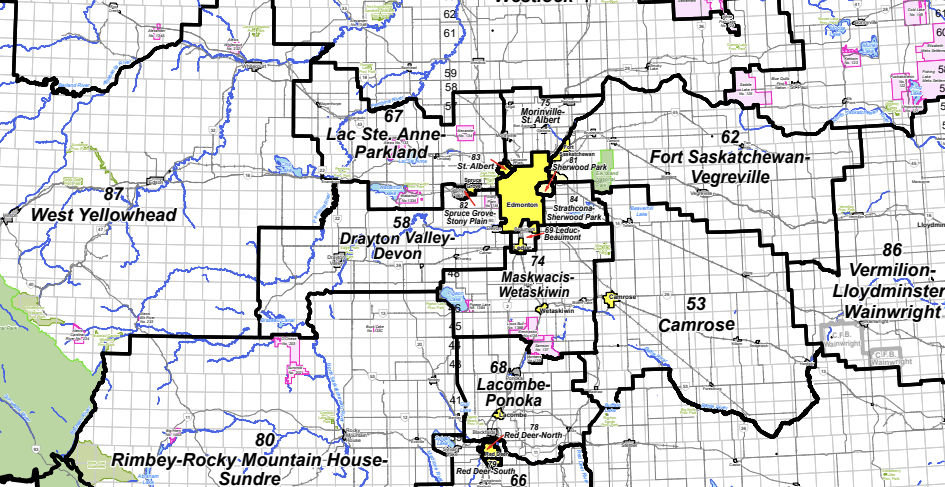
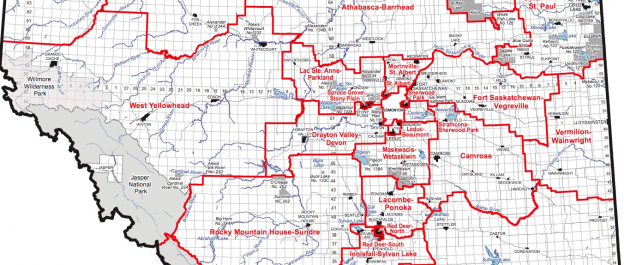
Alberta will have a new electoral map when the next provincial election is called. An Electoral Boundaries Commission has been named and will begin travelling the province next week to collect feedback from Albertans about how new riding boundaries should be drawn to reflect population changes since the last time the map was redrawn in 2017.

Read more on the Daveberta Substack

Categories
Alberta Politics

UCP cuts the “length” off arms-length AIMCo

Alberta’s $160.6 billion investments now under a government controlled cone of silence

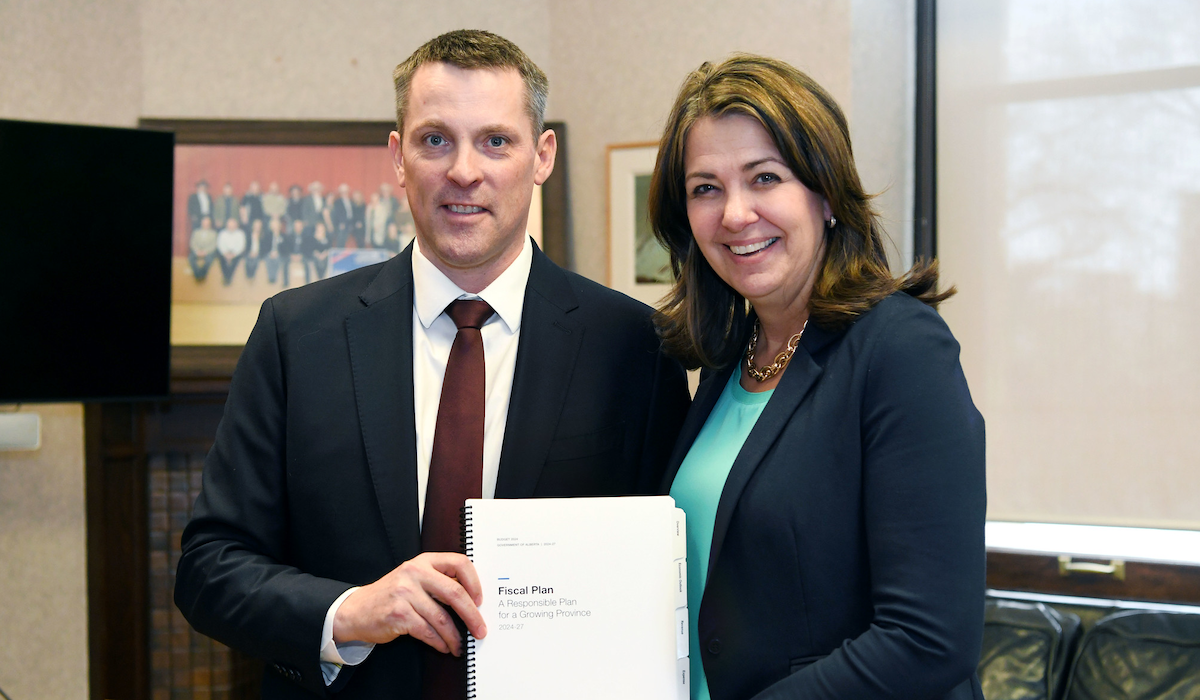
Secure in her party’s leadership after earning the support of 91.5 percent of members at the United Conservative Party AGM earlier this month, Premier Danielle Smith isn’t skipping a beat in implementing her government’s political agenda.

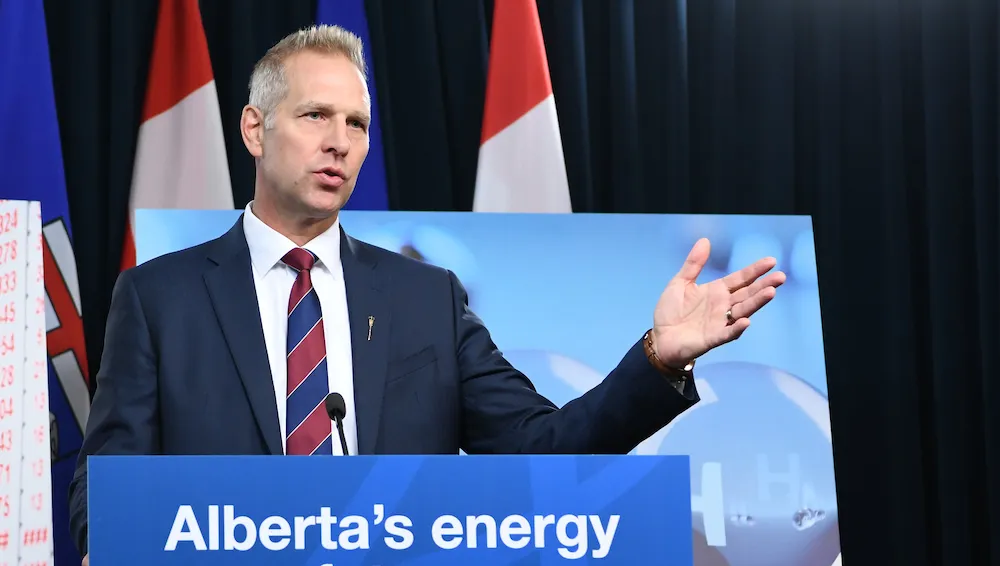
The firing of the CEO and the entire board of directors of AIMCo, the arms-length Alberta Investment Management Corporation, was confirmed through a short 9:47 am press release from Finance Minister Nate Horner last Friday.

Read the rest on the Daveberta Substack

Categories
Alberta Politics

Danielle Smith’s Fundraising Machine

A special weekend episode of the Daveberta Podcast

It’s rare that I send out a newsletter on the weekend but I thought subscribers would enjoy listening to a new episode of the Daveberta Podcast we recorded this week.

We cover a lot of ground in this episode of the Daveberta Podcast, including:

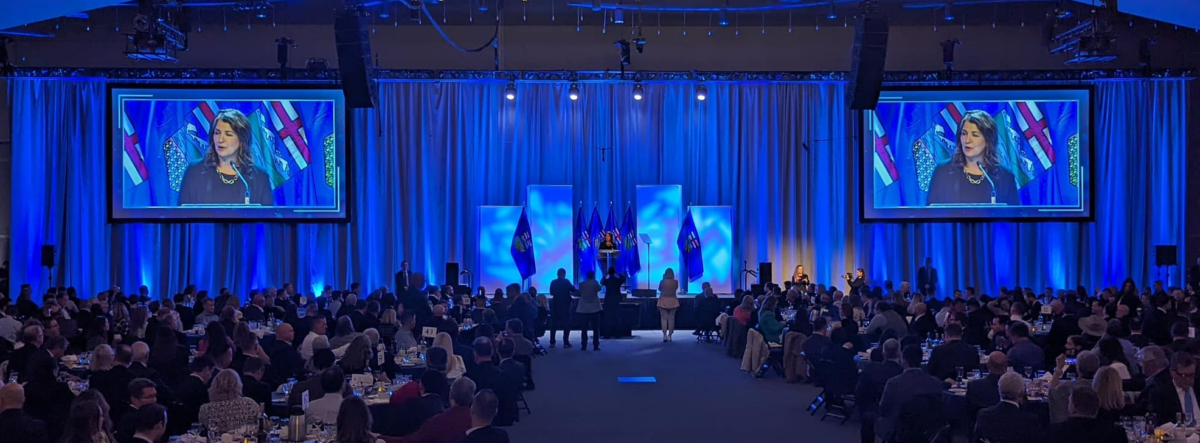
  • Premier Danielle Smith’s recent packed leader’s dinner fundraisers in Calgary, Edmonton, Red Deer and Bonnyville.
  • how the Alberta NDP leadership candidates are leaning into digital advertising on the Meta platform and what this might say about their campaigns.
  • how federal boundary changes are impacting the electoral map in south east Edmonton (I’m calling it the Mill Woods Shuffle) and former Progressive Conservative MLA Naresh Bhardwaj’s campaign for the Conservative nomination in the new Edmonton-Southeast riding (I’ve updated the list).
  • how electoral boundary commissions work in Alberta (one of my favourite topics).

The full episode of this Daveberta Podcast is available to paid subscribers of the Daveberta Substack.

Categories
Alberta Politics

Oh, Grant Hunter. Where do I start?

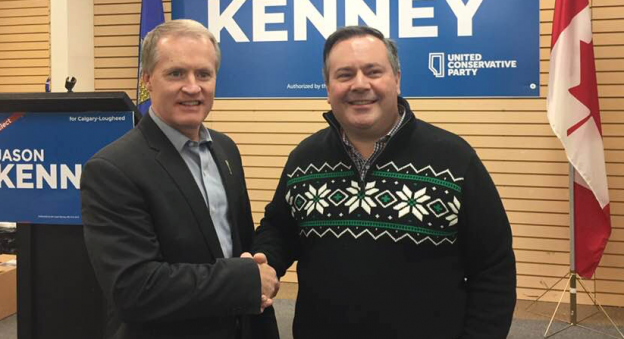
Photo: Cardston-Taber-Warner MLA MLA Grant Hunter and UCP leader Jason Kenney. (source: Facebook)

While announcing his plans to run for re-election in the new Taber-Warner district, United Conservative Party MLA Grant Hunter is reported to have compared the New Democratic Party’s 2015 election win to the 2004 Tsunami that ravaged southeast Asia and is estimated to have killed upwards of 280,000 people.

Hunter offered an apology to anyone was offended by his comments, but this is just the sort of ridiculous anti-NDP hyperbole that we have become accustomed to hearing from some Wildrose/UCP MLAs over the past three years.

But when talking about his decision to run in the new Taber-Warner district, rather than challenging his caucus colleague Dave Schneider for the UCP nomination in the new Cardston-Siksika district, he made another statement that caught my attention.

“…the NDP have put us in a bad position in this southern part here, in that when the boundaries were redrawn, they split Cardston-Taber-Warner into two different ridings.”

The Cardston-Taber-Warner district Hunter currently represents will see significant changes when the next election is called. While he may have legitimate concerns about the redistribution of the electoral boundaries in southern Alberta, it is misleading to blame the NDP for putting him “…in a bad position…”

The new district boundaries for the 2019 election were drawn by a commission composed of an independent chairperson (Justice Myra Bielby), two NDP Caucus appointees (Bruce McLeod of Acme and Jean Munn of Calgary) and two Wildrose Caucus appointees (Laurie Livingstone of Calgary and Gwen Day of Carstairs). The commission was appointed in October 2016 and held public hearings and received hundreds of submissions from Albertans throughout 2017.

Of the Wildrose appointees, Livingstone supported the final report recommending the new electoral map, including the changes to Hunter’s district, and Day submitted a minority report opposing changes to rural district boundaries.

The bi-partisan commission submitted recommendations for a new electoral maps to the Legislative Assembly for debate and it were voted into law by 40 NDP MLAs and Alberta Party MLA Greg Clark last December.

The process used to redraw Alberta’s electoral boundaries certainly has its flaws (I will write more about this soon), but with Hunter’s own party’s handpicked appointees deeply involved in the process it is misleading for him to blame the party in power for changes he might not like.

Note: 25 MLAs voted against the new electoral map, including two NDP MLAs, Colin Piquette and Eric Rosendahl.

Categories
Alberta Politics

A closer look at Alberta’s new electoral map

Readers of this blog will know that I have a long-time interest in the topic of redrawing electoral boundaries. Over the next few months I plan to take a closer look at some of the latest electoral district changes in Alberta that will take effect when the next provincial general election is called. If there is an area of the province, or a specific new district that you would like me to look at, please let me know.

South of the border, FiveThirtyEight has come out with a fascinating series of podcast episodes – the Gerrymandering Project – that focuses on how electoral boundaries are redrawn in some parts of the United States of America (we may have some problems in Canada, but they are nothing compared to the extreme level of partisan interference in some US states). Take a listen and enjoy.

Categories
Alberta Politics Daveberta Podcast

Episode 1: Calgary-Lougheed by-election, Alberta Party leadership and more.

Daveberta Podcast Alberta PoliticsThe Calgary-Lougheed by-election, the Alberta Party leadership race, a new ThinkHQ poll, Rachel Notley as Canada’s Pipeline Paladin, and changing electoral boundaries are just some of the topics covered in the latest episode of The Daveberta Podcast with Dave Cournoyer and Ryan Hastman (recorded on Sunday, Nov. 26, 2017).

Listen and subscribe on Apple Podcasts, Google Play, and wherever you find podcasts online.

We’d love to hear what you think of the podcast, so feel free to leave a review where you download it, leave a comment on this blog, Facebook or Twitter or send us an email at podcast@daveberta.ca.

We’d also like to send a special thanks to our producer, Adam Rozenhart, for his help in making this podcast a reality (and making us sound so good!).

Thanks!

Categories
Alberta Politics

Alberta’s Boundary Commission recommends new Electoral Map for 2019

Photo: Justice Myra Bielby chaired Alberta’s Electoral Boundaries Commission.

The final report of the Alberta’s Electoral Boundaries Commission was released today with recommendations to redraw the province’s electoral map for the 2019, and presumably the 2023, elections.
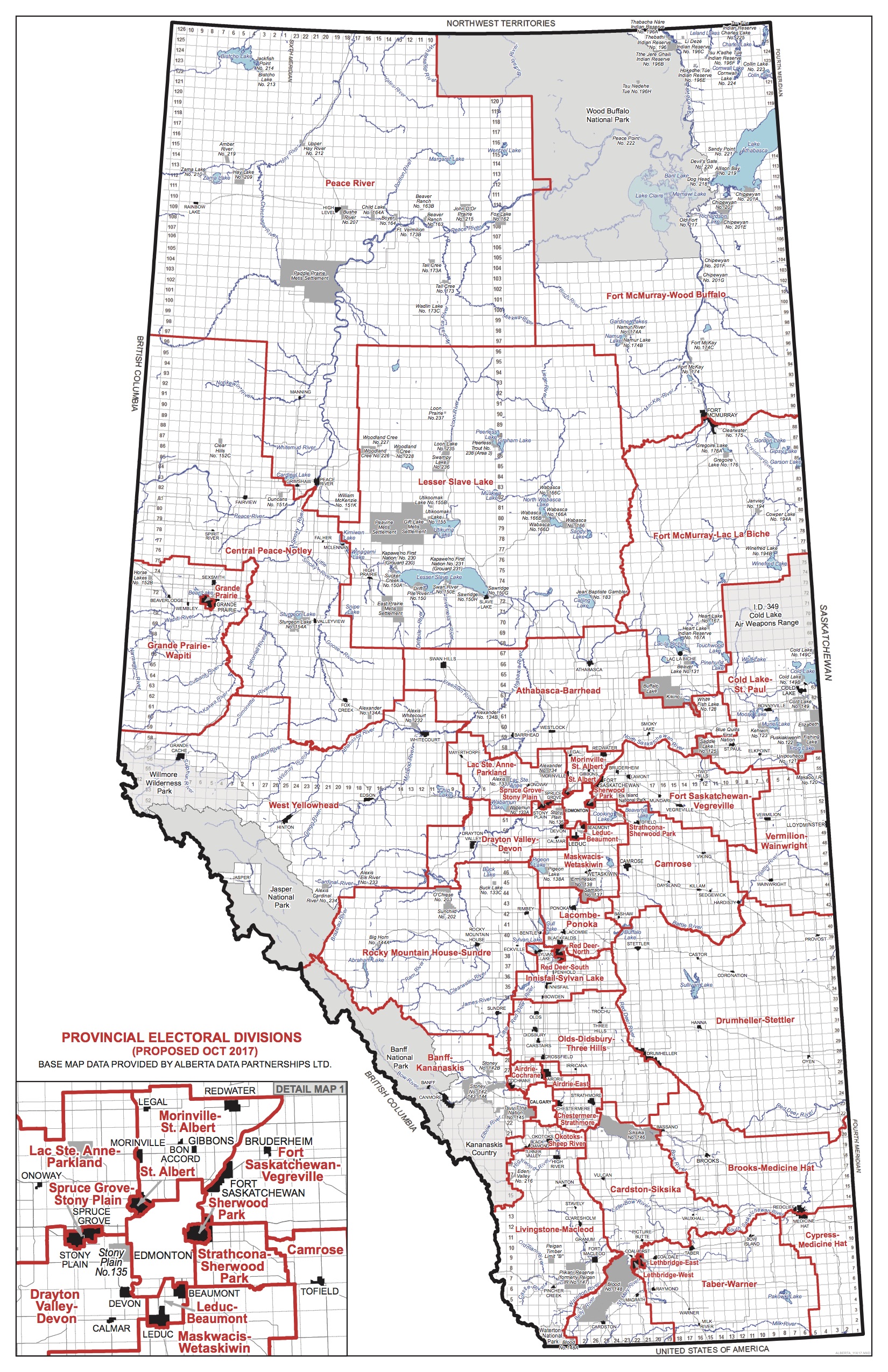
The challenge facing the five-person commission was to redraw Alberta’s electoral boundaries to reflect growth and declining population in regions across the province. Without the ability to increase or decrease the number of constituencies from the current 87, the commission’s work was no easy task.

I was pleased to see the final report recommends new boundaries that will increase representation in the Legislature from growing communities such as Calgary, Edmonton, Airdrie, Grande Prairie, Spruce Grove, Cochrane and Chestermere.

I was pleased to see the final report incorporate a number of changes that I recommended in my initial submission in February 2017 and response to the interim report in July 2017.

In my response to the interim report, I recommend that the Commission attempt to keep districts within ten percent, and ideally within five percent, above or below the provincial average population per electoral district. The commission improved this average in the final report, with 73 of 87 districts now falling with ten percent above or below the provincial average.

The creation of the Morinville-St. Albert district north of Edmonton is an improvement from both the current boundaries and those included in the interim report. Rather than splitting the Sturgeon Valley communities like spokes in a bicycle wheel-like districts like the current Barrhead-Morinville-Westlock and Athabasca-Sturgeon-Redwater, drawing these communities into a common district north of Edmonton is a sensible choice.

The final report renames some of the odd district naming choices including in the interim report, such as Calgary-Airport, Edmonton-Mill Woods-East and Edmonton-Mill Woods-West.

The final report eliminates the problems with the shelter belt-like Fort Saskatchewan-St. Paul, Vermilion-Lloydminster and Stettler-Wainwright districts proposed in the interim report.

Eliminating the non-contiguous district of Wetaskiwin-Camrose and recommending the creation of a Maskwacis-Wetaskiwin district will bring together a large community of interest that was previously split into two districts. This is positive.
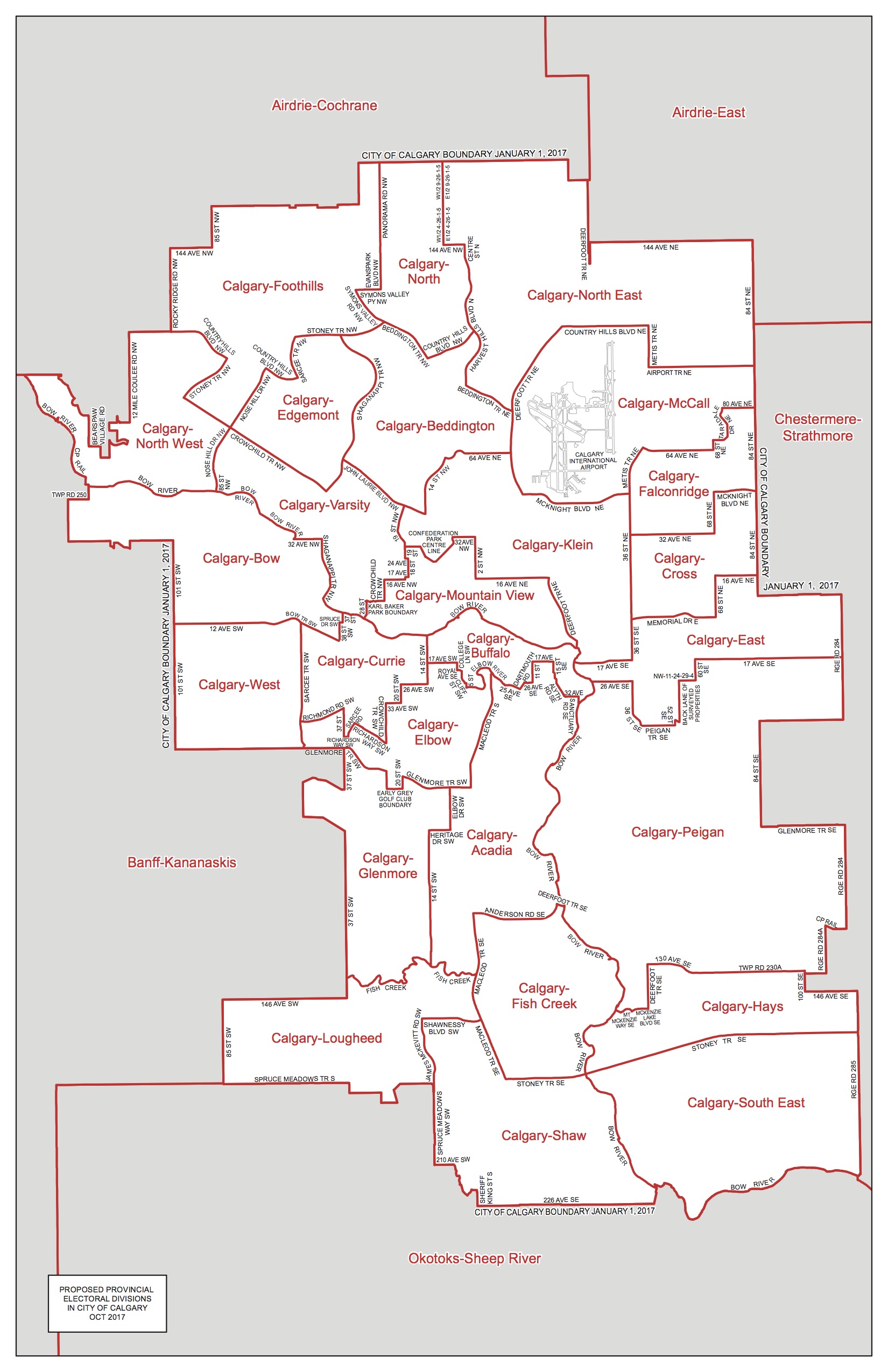
While the final report eliminates some troubling rural district changes that were included in the interim report, it does include some of its own odd boundary changes. Most notable is the hour-glass shaped Cardston-Siksika district that would include two large sprawling rural areas that connect through a narrow gap near Lethbridge.

The final report also recommends the elimination of the single urban Medicine Hat district in favour of creating two rurban districts, Brooks-Medicine Hat and Cypress-Medicine Hat. This may face criticism in Medicine Hat, which has had its own urban district since at least the 1960s.

Having to balance regional population growth and decline without having the ability to increase the number of districts makes the task of redrawing districts very challenging. The lines must be drawn somewhere. And while this final report will not please everyone, the commission should be commended for their hard work.

The final report will be presented to the Legislative Assembly in the fall session, which begins at the end of October, and will require the support of a majority of MLAs to be approved.

What does this mean for incumbent MLAs?

The boundary changes propose in the interim report could led to incumbent MLAs facing each other in next election.

In northwest Alberta, Grande Prairie-Smoky United Conservative Party MLA Todd Loewen could face Dunvegan-Central-Peace Notley New Democratic Party MLA Marg McCuaig-Boyd in the new Dunvegan-Notley district.

North of Edmonton, Barrhead-Morinville-Westlock UCP MLA Glenn Van Dijken could face Athabasca-Sturgeon-Redwater NDP MLA Colin Piquette in the new Athabasca-Barrhead district. And in northeast Alberta, three UCP MLAs – Brian Jean, Dave Hanson and Scott Cyr – will need to face the reality that only two districts will exist in their region in 2019.

NDP MLA Trevor Horne will see his current Spruce Grove-St. Albert district absorbed into a redrawn St. Albert district and the new Lac Ste. Anne-Parkland and Spruce Grove-Stony Plain districts. Much of the areas included in these proposed districts are currently represented by NDP MLAs Marie Renaud, Erin Babcock and Oneil Carlier.
 

Categories
Alberta Politics

My response to the Interim Report of the Alberta Electoral Boundaries Commission

Earlier this year I submitted a series of recommendations to Alberta’s Electoral Boundaries Commission, the appointed body tasked with redrawing Alberta’s provincial electoral districts for the next election. The Commission released an interim report in May 2017 and will be holding a series of public hearings in communities across Alberta in the coming weeks. The Commission will submit its final report on October 31, 2017.

Here are the recommendations I submitted to the commission on July 16, 2017 in response to the interim report:

Dear Commissioners,

My name is David Cournoyer, I am a voter living in the Edmonton-Highlands-Norwood constituency. I have followed the electoral boundary redistribution process for a number of years and am very interested in the process.

Proposed Alberta boundaries

I would like to thank the Commissioners for their work in this important process. The act of redistributing electoral boundaries is a challenging process and not one that should be taken lightly. In particular, this Commission faces the challenge of redistributing Alberta’s electoral boundaries without having the advantage of increasing the number of districts.

I have included below my recommendations in response to the interim report released by the Commission in May 2017:

Population

I believe this Commission can improve the population balance proposed in the interim report. The previous Commission did a good job keeping the population of most electoral districts within ten percent of the provincial average population per electoral district.

I recommend that the Commission attempt to keep districts within ten percent, and ideally within five percent, above or below the provincial average population per electoral district.

New Boundaries

I recommend the Commission consider the following amendments to the proposed districts included in the interim report:

Proposed Edmonton boundaries

Edmonton-East, Edmonton-North West, Edmonton-South, Edmonton-South West and Edmonton-West Henday: The Commission should reconsider using these geographic directional names for proposed districts, as they could cause confusion among voters. The names of the proposed districts are not necessarily reflective of their geographical areas. For example: The proposed Edmonton-East district is located west of the Edmonton-Beverly-Clareview and Edmonton-Manning districts and much of Edmonton-Northwest is located south of Edmonton-Castle Downs and east of Edmonton-West Henday.

Edmonton-Mill Woods-East and Edmonton-Mill Woods-West: I believe the names in these proposed districts may cause some unnecessary confusion among voters. I recommend the names of these proposed districts be changed.

Fort Saskatchewan-St. Paul, Vermilion-Lloydminster, and Stettler-Wainwright: These proposed district span from the Edmonton Metro area to the Alberta-Saskatchewan boundary, with the first two resembling a shelter-belt rather than a constituency representing communities of common interest. The Commission should consider redistributing the proposed districts in a way that would not divide communities along such oddly drawn east-west boundaries.

Highwood: It should be noted that under this proposed district, the Highwood River is no longer located within the Highwood constituency, for which I believe it may be named.

St. Albert-Redwater: The population of the City of St. Albert is too large to warrant the creation of two districts within the municipal boundaries. Instead of expanding a second St. Albert district north to Redwater, Smoky Lake, Buffalo Lake and Kikino, I recommend the creation of a district that would include St. Albert and the municipalities of Sturgeon County, Morinville, Legal, Cardiff, Bon Accord and Gibbons.

St. Anne-Stony Plain: I expect this has already been brought to the attention of the Commission, but the correct spelling is Ste. Anne, in reference to Lac Ste. Anne. It is my recommendation that the name of the proposed district, if it remains in the final report of the Commission, be renamed Lac Ste. Anne-Stony Plain.

Wetaskiwin-Camrose: I commend the Commission for their decision in the interim report to recommend the creation of a fully contiguous proposed district of Wetaskiwin-Camrose.

Thank you to the Commissioners for the opportunity to respond to the interim report. I wish you good luck in months ahead as you consider the feedback you have received in order to create the final report of this electoral boundary review.


Categories
Alberta Politics

A quick look at the Interim Report of Alberta’s Electoral Boundaries Commission

The Interim Report of Alberta’s Electoral Boundaries Commission was released yesterday.

Proposed Alberta boundaries

I plan to take a more in-depth look at the interim report in the coming days, and plan to write more about it, but I do have a few quick observations after taking a first glance at the recommendations.

It is important to recognize that any group tasked with redrawing electoral boundaries will be faced with a number of significant challenges. Now that an interim map has been released, I expect the commission will receive a significant amount of feedback from Albertans about these recommended boundaries.

Overall I think the interim report is probably a decent place to start the next phase of the boundary redistribution process, which will include another round of public hearings across the province. A final report will be released in October 2017.

With no mandate to increase the total number of electoral districts in Alberta, currently at 87, the commission must make difficult decisions about where redraw the boundaries in order to reflect population growth and decline in Alberta. Dividing the province’s population of 4,062,609 by the 87 electoral divisions establishes an average population per electoral division of 46,697.

Proposed Calgary boundaries

It is an actual balancing act.

Proposed in the interim report, Calgary, Edmonton and Airdrie were distributed one new district each to reflect population growth in those urban areas. Three districts were redistributed out of northwest, west central and east central rural areas to reflect lower population growth or, in some cases, a decline in population.

There are some odd recommendations for both boundaries and boundary names, which are probably inevitable for an interim report. Naming one new district Calgary-Airport was certainly a unique choice, but it does provide an accurate description of what is included in the district.

Proposed Edmonton boundaries

Some of the new boundaries will prove to be problematic, especially in the geographically large rural districts like the proposed Fort Saskatchewan-St. Paul, Drumheller-Strathmore or Taber-Vulcan. The creation of large rural districts is unavoidable in order to balance a district’s populations with the provincial average.

As I already noted, I plan to take a more in-depth look at the interim report in the coming days, and plan to write more about it.