Categories
Alberta Politics

What new laws did Alberta’s NDP Government pass in 2015?

The fall session of the Alberta Legislature ended last week and MLAs will now spend the next few weeks working in their constituencies until the Assembly returns in early 2016. The Assembly passed nine pieces of legislation introduced by Alberta’s New Democratic Party government in its first full session of the Legislature since it formed government.

The first four bills introduced by the government reflected key promises made by Rachel Notley‘s NDP during the 2015 election. One private members bill, introduced by Independent Calgary-Bow MLA Deborah Drever, was passed by the Assembly (a rare feat for opposition MLAs).

Here is a quick look at the ten bills that were passed by MLAs since the NDP formed government in 2015:
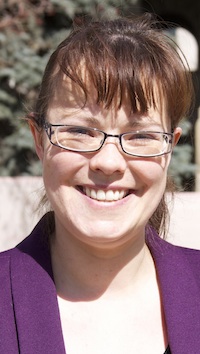
Kathleen Ganley NDP Calgary Buffalo
Kathleen Ganley

Bill 1: An Act to Renew Democracy in Alberta

Introduced by Justice Minister Kathleen Ganley, Bill 1 banned corporate and union donations to provincial political parties in Alberta. The bill received royal assent on June 29, 2015, but was made retroactive on June 15, 2015. This new law was a major blow to the Progressive Conservative Party, which had become accustomed to relying heavily on corporate donations to fund their campaigns and operations. The ban was not extended to municipal elections.

Bill 2: An Act to Restore Fairness to Public Revenue

Introduced by Finance Minister Joe Ceci, Bill 2 eliminated Alberta’s 10 percent flat tax and introduced a progressive taxation system with five rates of personal income tax up to 15 percent for income above $300,000. Bill 2 also increased Alberta’s corporate tax rate from 10 percent to 12 percent, bringing our province in line with Saskatchewan and Manitoba. Despite the increase, tax rates in Alberta still remain lower than what existed during much of the time Ralph Klein served as Premier.
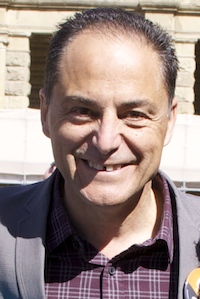
Joe Ceci Calgary NDP
Joe Ceci

Bill 3: Appropriation (Interim Supply) Act, 2015

Introduced by Mr. Ceci, Bill 3 reversed funding cuts made to education, health care, and human services by the PC government before the May 5, 2015 election.

Bill 4: An Act to Implement Various Tax Measures and to Enact the Fiscal Planning and Transparency Act

Introduced by Mr. Ceci, Bill 4 repealed and replaced the Fiscal Management Act and introduced requirements in a Fiscal Planning and Transparency Act, which include presenting government finances in a three-year fiscal plan and the establishment of a new debt cap based on a debt-to-GDP ratio of 15 percent.

Bill 5: Public Sector Compensation Transparency Act 

Introduced by Ms. Ganley, Bill 5 expanded the “sunshine list” to include employees of public agencies, boards, commissions, post-secondary institutions and health service entities whose earnings are more than $125,000 annually. This is a continuation of work already done by the previous PC government and has been criticized by supporters of the NDP as “bad policy.”

Lori Sigurdson NDP
Lori Sigurdson

Bill 6: Enhanced Protection for Farm and Ranch Workers Act

Introduced by Jobs, Skills, Training and Labour Minister Lori Sigurdson, Bill 6 introduced occupational health and safety and mandatory Workers’ Compensation Board coverage for employees of farming operations. Alberta is currently the only province in Canada without OH&S laws and employment standards coverage for farm and ranch workers. Amid protests by farmers and ranchers, the government introduced amendments to exempt farm and ranch owners and their families from the bill. This was undoubtably the most controversial legislation passed by the NDP government in 2015.

Bill 7: Alberta Human Rights Amendment Act, 2015

Introduced by Ms. Ganley, Bill 7 amended the Alberta Human Rights Act to add gender identity and gender expression as expressly prohibited grounds of discrimination.
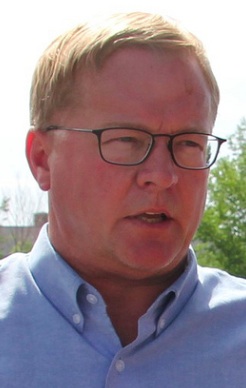
David Eggen
David Eggen

Bill 8: Public Education Collective Bargaining Act

Introduced by Education Minister David Eggen, Bill 8 restructures collective bargaining between teachers, school boards and the government. The bill initially would have had the government be the sole party negotiating with the Alberta Teachers’ Association on matters that should be bargained centrally versus locally but an amendment to the bill allowed a new employer bargaining association to negotiate with the ATA to decide.

Bill 9: Appropriation Act, 2015

Introduced by Mr. Ceci, Bill 9 provides budget funding authority to the Government of Alberta and the Legislative Assembly for the 2015-16 fiscal year.

Deborah Drever MLA Calgary Bow
Deborah Drever

Bill 204: Residential Tenancies (Safer Spaces for Victims of Domestic Violence) Amendment Act, 2015

Introduced by Ms. Drever, Bill 204 amended the Residential Tenancies Act to allow victims of domestic violence to end their housing leases early and without penalty in order to leave unsafe home environments. Lethbridge-East MLA Maria Fitzpatrick bravely stood in the legislature to share a powerful story about her personal experiences with domestic violence.

Categories
Alberta Politics

Alberta NDP face legitimate concerns and kooky conspiracy theories in debate over Bill 6 farm safety bill

Alberta’s NDP government has been in full damage control mode since Bill 6: Enhanced Protection for Farm and Ranch Workers Act exploded in their faces late last month. While attempting to bring our province closer to national standards on farm safety – Alberta is currently the only province without occupation health and safety laws and employment standards coverage for farm and ranch workers – the bill sparked two large protests at the Legislature and continues to bring out thousands of agitated rural Albertans to government-sponsored town-hall style consultation meetings across the province.

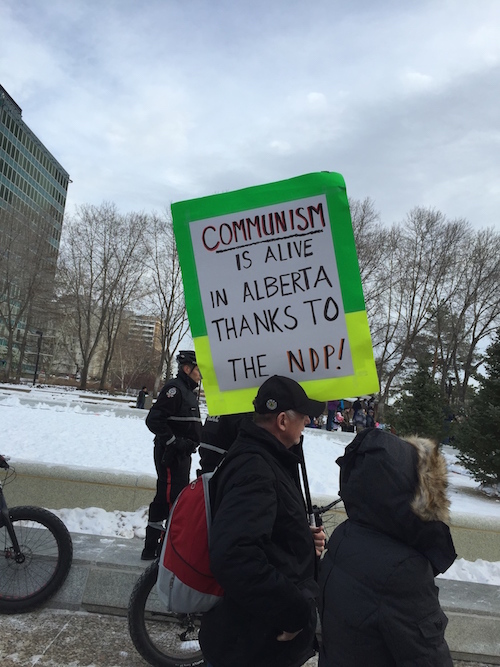
Commies
No, it’s not.

Bill 6 has been perceived as a threat to what many rural Albertans see as a traditional way of life and business on the family farm, and inept communications by the government only fuelled claims that this was the intention of the bill.

Taken by surprise, NDP cabinet ministers fanned out to the town hall meetings in an attempt to assure angry rural Albertans that they are listening to their concerns.

While the Wildrose, PC and Alberta Party MLAs have taken positions against Bill 6, the biggest advocate for the bill outside of the mostly silent NDP caucus has been Liberal party interim leader David Swann, a Calgary MLA and former medical officer of health of the now defunct Palliser and Headwaters health authorities in southern Alberta.

Returned from her trip to the Paris Climate Change Conference, Premier Rachel Notley published an open letter to reassure the media and the public that this bill was about farm safety, not about destroying the family farm.

Lori Sigurdson, Minister of Jobs, Employment and Labour, introduced amendments to Bill 6 in the Legislature this week.

The amendments, which “make clear WCB coverage would be required only for paid employees, with an option for farmers to extend coverage to unpaid workers like family members, neighbours and friends” and “make clear that Occupational Health and Safety standards apply when a farm employs one or more paid employees at any time of the year,” appear to address two of the main criticisms of the bill that many opponents and critics (including myself) have raised as concerns.

Aside from legitimate criticisms that rural Albertans were not properly consulted before Bill 6 was introduced into the Legislature, some opponents of the government have tried to spread the kookiest of conspiracy theories about the NDP’s proposed farm safety law.

Over the past week, I have heard claims that Bill 6 would:

  • allow the government to nationalize farm land to build solar or wind farms,
  • force farm workers to unionize as part of some secret communist conspiracy,
  • mark the beginning of a Stalinist farm collectivization program.

None of these outlandish claims are true. But while these claims largely emanate from the anonymity of Twitter and the internet, other oddball claims are actually being made by opposition MLAs.

In the Legislature on Dec. 1, Rick Strankman, the Wildrose MLA for Drumheller-Stettler, suggested that Bill 6 could lead to OHS inspectors confiscating privately owned firearms if they were found to be improperly stored on farms. Mr. Strankman spared fellow MLAs from hearing his best Charlton Heston impersonation.

But perhaps the kookiest of conspiracy theories comes from Progressive Conservative Party interim leader Ric McIver, who is reported to have claimed Bill 6 was part of the NDP plan to turn Alberta into a “Socialist Disneyland.” According to Metro Calgary, Mr. McIver continued in length to praise the conservatism of Saskatchewan, while choosing to omit the fact that our neighbour to the east has a 5 percent provincial sales tax, a 12 percent corporate tax rate, crown corporations for insurance, power and gas, and… farm safety legislation.

Alberta’s NDP government was caught totally off guard by opposition to Bill 6 and has helped fuel the backlash by being slow to react to concerns about changes to farm safety laws. For this, they deserve to be criticized. This is an important lesson for the new government, and one they should recognized as being lucky took place in the first year of their four year term in government, and not six months before the next election.

What’s next?

Bill 6 is currently in second reading in the Legislature.

This will not be the last time the new government will need to challenge the status quo in rural Alberta. The government’s next challenge to rural Alberta will likely be related to province’s longstanding grazing lease program, which the auditor general reports has cost the government an estimated $25 million in annual revenue and is currently under review.

Changes to Alberta’s electoral boundaries, which could be redistributed before the next election to reflect changes in Alberta’s population, would likely result in a reduction of rural constituencies and an increase of urban constituencies in the Alberta Legislature.

Categories
Alberta Politics

Wildrose Recall Bill would let 20% of voters overturn a fair and democratic election

A private members bill proposed by Chestermere-Rockyview Wildrose Party MLA Leela Aheer would allow 20 percent of eligible voters – a significant minority of eligible voters – the ability to overturn the results of a previously held fair and democratic election.

Leela Aheer Wildrose MLA Chestermere Rockyview
Leela Aheer

Bill 206: Recall Act, which passed first reading on Nov. 26, 2015, would create an MLA recall mechanism that could force a by-election in a provincial constituency if 20 percent of eligible voters from the previous election sign a petition demanding so.

If we were to have recall laws in Alberta, the threshold for overturning the results of a general election should be much higher than the 20 percent of eligible voters proposed in Ms. Aheer’s private members bill. A small minority of eligible voters should not have the power to overturn the results of a fair and democratic election.

The 20 percent requirement proposed in Bill 206 is also much lower compared to any previous recall proposals in Alberta.

Private members bills proposing the creation of recall laws in Alberta’s recent history have all come from opposition MLAs and all called for a significantly higher percentage of voters to sign the recall petition. Three private members bills introduced by Liberal MLAs in the 1990s called for recall to be triggered with the signatures of 40 percent of voters. A private members bill introduced by a Wildrose MLA in 2010 lowered the bar to 33.3 percent.

The only province with recall laws, British Columbia, requires signatures from more than 40 percent of eligible voters. B.C. adopted recall laws after it was approved through a province-wide referendum in 1991.

Even when Alberta briefly had MLA recall laws, from 1936 to 1937, signatures were required from 66.6 percent of voters to trigger a by-election.

One reason behind the low percentage in this bill is that it could make it easier for the conservative opposition to target and trigger by-elections in rural constituencies represented by NDP MLAs. In rural ridings where NDP candidates were elected in tight races, the low 20 percent threshold in Ms. Aheer’s Bill 206 would equal almost the same amount of votes received by Wildrose candidates in the recent election.

  • In Dunvegan-Central Peace-Notley, only 3,278 signatures would be needed to trigger a recall by-election under Bill 206. The Wildrose Party candidate earned 3,147 votes in that riding and NDP candidate Marg McCuaig-Boyd earned 3,692 votes.
  • In Lesser Slave Lake, NDP candidate Danielle Larivee was elected with 3,915 votes compared to the Wildrose candidate’s 3,198 votes. Twenty per cent of eligible voters would equal 3,812 votes.

Of course, Wildrose and Progressive Conservative MLAs could also become targets of the recall laws, though it is unlikely the NDP majority – like the previous Conservative majority – would ever support this bill.

In my opinion, Albertans had an opportunity to vote in a general election seven months ago and cast their ballots for candidates with the understanding they would serve as MLAs for the next four to five years. As the results of the 2015 election proved, when we are motivated by tired and arrogant governments, Albertans can be trusted to elect a new government. In 2019, Albertans will once again have an opportunity to cast their ballots and choose who will represent their individual constituencies.

A brief history of recall laws in Alberta

1936: Bill No. 76 of 1936: A Bill Providing for the Recall of Members of the Legislative Assembly was introduced by the Social Credit government and passed after their surprising win in the 1935 election. The bill required 66.6 percent of voters to sign a petition to trigger a recall by-election.

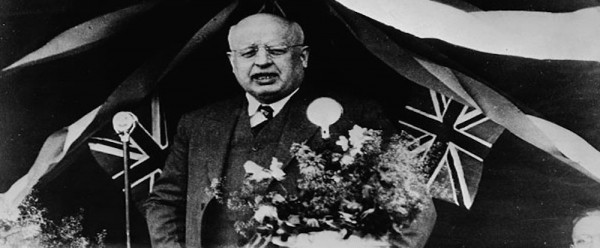
1937: The law was repealed by the Social Credit government after a group of disgruntled Albertans was thought to have collected enough signatures to recall Premier William Aberhart in his Okotoks-High River constituency.

1993: Calgary-Buffalo Liberal MLA Gary Dickson introduced Bill 203: Recall Act, which would have trigged a recall by-election if 40 percent of eligible voters signed a petition demanding one. The bill was defeated in a 42-34 vote in the Legislature.

1995: Edmonton-Meadowlark Liberal MLA Karen Leibovici introduced Bill 224: Parliamentary Reform and Electoral Review Commission Act, which would have created a commission to study a handful of issues, including recall. The bill passed first reading but was never debated.

1996: Lethbridge-East Liberal MLA Ken Nicol introduced Bill 206: Recall Act, which would have trigged a recall by-election if 40 percent of eligible voters signed a petition demanding one. This bill was defeated in a 37-24 vote in the Legislature.

1997Bill 216, Recall Act was introduced by Edmonton-Manning Liberal MLA Ed Gibbons but was never debated in the Legislature. If passed into law, the bill would have trigged a recall by-election if 40 percent of eligible voters signed a petition demanding one

2010Calgary-Glenmore Wildrose MLA Paul Hinman introduced Bill 208: Recall Act, which would have trigged a recall by-election if 33 percent of eligible voters signed a petition demanding one. Reached second reading but was not debated further.

2015: Chestermere-Rockyview Wildrose MLA Leela Aheer introduces Bill 206: Recall Act, which would trigger a recall by-election if 20 percent of eligible voters signed a petition demanding one

Categories
Alberta Politics

Alberta NDP should tap the brakes on Bill 6, its new Farm and Ranch Safety law

The Alberta government needs to rethink its approach to overhauling safety laws on family farms and ranches. Since it was introduced in the Legislature on Nov. 17, confusion about Bill 6: Enhanced Protection for Farm and Ranch Workers Act has triggered a significant backlash from Albertans in rural communities across the province.

Bill 6 would expand sections of the Occupational Health and Safety Act, Workers’ Compensation Act, Employment Standards Code and Labour Relations Code to apply to farm worksites. If Bill 6 is approved by the Legislature, WCB coverage will be mandatory and farms and ranches in Alberta will no longer be exempt from OHS laws. Alberta is currently the only province without employment standards coverage for farm and ranch workers.

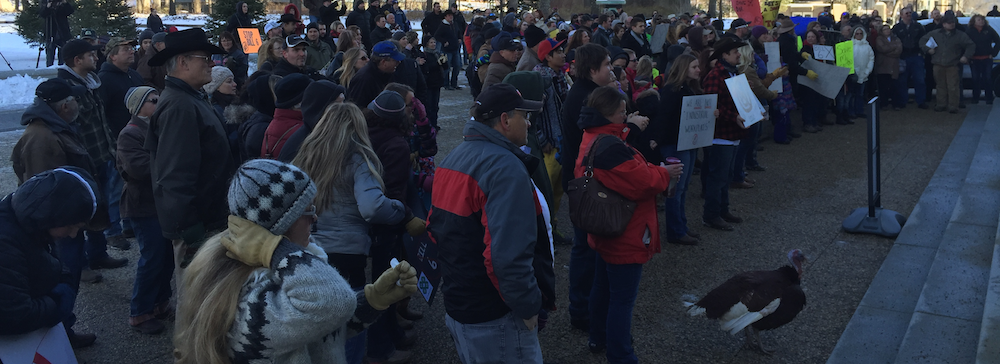
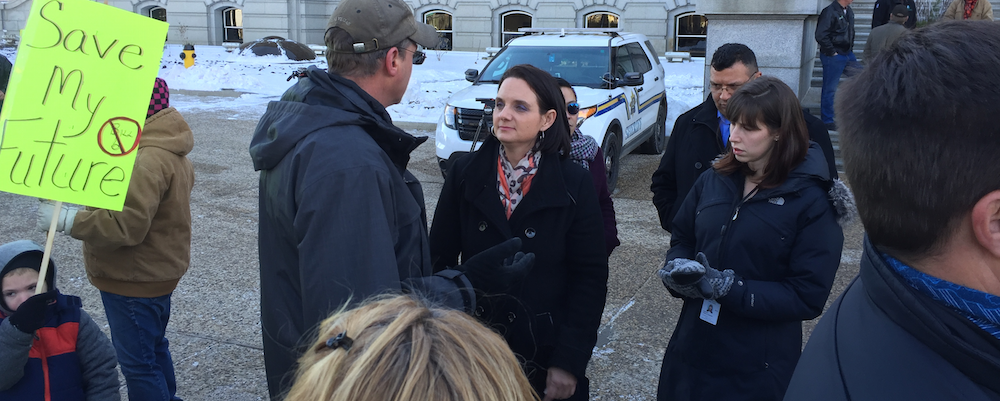
Around 200 protesters gathered at the Alberta Legislature on Nov. 27, 2015.

Nearly 400 angry farmers showed up to voice their concerns about Bill 6 at a government-organized town hall meeting in Grande Prairie last week. The event was hosted by public servants and consultants with no MLAs in attendance. Western Producer reporter Mary MacArthur reported this week that MLAs will be present at future town hall meetings planned for Red Deer, Okotoks, Lethbridge, Medicine Hat, Leduc, Vegreville, Olds and Athabasca.

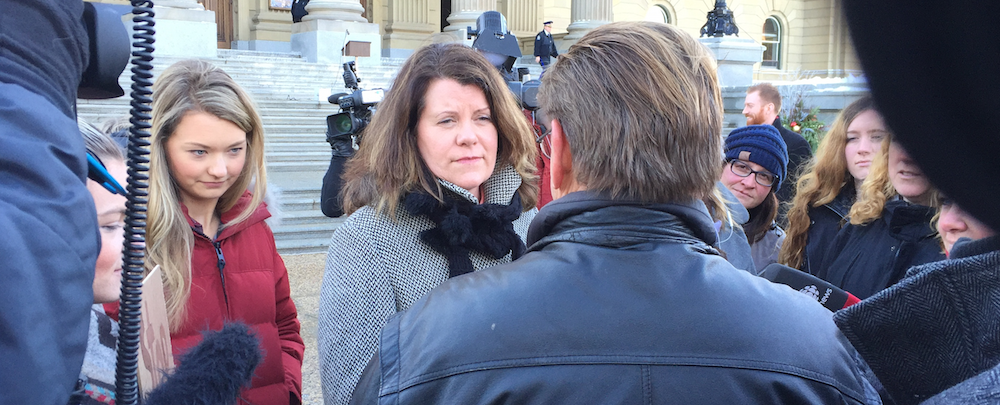
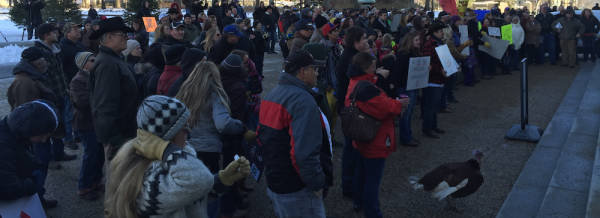
Close to 200 people, along with 2 ponies, 1 border collie and 1 turkey (see above), staged an afternoon protest against Bill 6 outside the Alberta Legislature on Nov. 27, 2015. To their credit, Jobs, Skills, Training and Labour Minister Lori Sigurdson and Municipal Affairs Minister Danielle Larivee waded into the crowd of protesters at the Legislature to hear their concerns.

Lori Sigurdson waded into the crowd of protesters outside the Legislature.

It is clear that there are some changes that do need to be made to farm safety laws in Alberta. As is the case in every other province in Canada, the government has a responsibility to ensure that safety standards exist for all worksites in Alberta, including agricultural work environments.

But this is where the New Democratic Party government may have put the cart before the horse. It is unfortunate that the government did not choose to hold these public consultation meetings before introducing the bill. It seems that the NDP could have saved themselves a lot of grief if Agriculture Minister Oneil Carlier, Premier Rachel Notley, Ms. Sigurdson and other NDP MLAs had started this process by travelling to the rural areas of the province to ask farmers and ranchers how changes could impact them.

Danielle Larivee waded into the crowd of protesters outside the Legislature.

Under current safety laws, provincial officers are not allowed to conduct investigations when a workplace fatality takes place on a farm or ranch. The WCB is a shield to protect employers from lawsuits in case of workplace injury and should probably be extended to cover all actual employees of farms and ranches. And farm workers should not be exempt from being given the choice to bargain collectively, a right affirmed by the Supreme Court of Canada.

But legal changes also need to reflect the uniqueness of family farms and ranches.

Unlike other worksites, farms rely heavily on incidental and seasonal help during spring and fall from family, friends and neighbours. And by definition, work on a family farm will include work done by family members, some who will not be paid a regular salary and some who will be under the age of 18. It has not been clearly communicated by the government how these changes would impact the day to day operations of these family farms or whether exceptions will be made for smaller farming operations.

While some of the criticism of Bill 6 is rooted in hyperbole and hysterics generated by opponents of the government, it is clear that there is much confusion around this bill, which is a communications failure on the part of the government.

Ms. Sigurdson released a statement following yesterday’s protest at the Legislature trying to clarify the government’s position. “A paid farmworker who is directed to do something dangerous can say no, just like other workers in Alberta and Canada. And if they are hurt or killed at work, they or their family can be compensated, just like other workers in Alberta and Canada,” Ms. Sigurdson said.

The debate around Bill 6 also highlights a political divide between rural and urban Alberta, neither of which are monolithic communities. It would be easy for us city dwellers to cast rural Albertans opposing these legislative changes as being backward or uncaring when we read media reports of workers or young children killed in farm accidents. And comments by MLAs like Liberal leader David Swann that the current legal framework would make “Charles Dickens blush” probably do not help foster a feeling of collaboration, even if there is a hint of truth to how far behind Alberta is in farm safety rules compared to other provinces.

Alberta is an increasingly urban province. According to Statistics Canada, in 1961, 53 percent of Albertans lived in rural areas. As of 2011, 83 percent of Albertans lived in urban centres with only 17 percent of our province’s population living in rural areas. This is a massive population shift.

The recent provincial election marked a rare moment in our province’s history where MLAs from rural Alberta do not have a large voice in the government caucus. Twelve of the 53 NDP MLAs elected in May 2015 represent rural or partially rural constituencies. Most areas of rural Alberta are represented by Wildrose Party MLAs, who have taken every opportunity to attack the new government and advance the narrative that the NDP do not understand rural Alberta.

As most of their NDP MLAs were elected in urban centres, they should heed the advice that MLA Hugh Horner gave Progressive Conservative Party leader Peter Lougheed more than forty years ago.

David Wood observed in his biography of Mr. Lougheed, the Lougheed Legacy, that “Horner made one point that Lougheed and his colleagues have never forgotten: when you start believing that the people in rural Alberta are somehow different than the people in the bigger centres, you’re making a mistake. Rural Albertans come into the cities, go to concerts, shop in the malls: they’re as sophisticated and as aware of the rest of the world as any of their city cousins.”

Ms. Notley grew up in the northern Alberta town of Fairview. Her father, Grant Notley, was elected and re-elected as the MLA for Spirit River-Fairview four times between 1971 and 1984. Coming from rural Alberta, Ms. Notley should have an understanding of these changes could impact farmers and ranchers.

The government has a responsibility to ensure that safety standards exist for all worksites in Alberta, including agricultural work environments. It also has a responsibility to clearly communicate to Albertans why these changes are needed and how they would be implemented. The NDP would demonstrate good will to rural Albertans by slightly tapping the breaks on Bill 6 and restarting this process with a thorough and meaningful consultation about improving farm and ranch safety in Alberta.

Update (Dec 1, 2015): The government announced it is proposing amendments to Bill 6 that would:

  • make clear WCB coverage would be required only for paid employees, with an option for farmers to extend coverage to unpaid workers like family members, neighbours and friends;
  • make clear that Occupational Health and Safety standards apply when a farm employs one or more paid employees at any time of the year.
Categories
Alberta Politics

Seventeen candidates now running in Edmonton’s Ward 12 by-election

With two months left until the official nomination date, 17 candidates have registered their intentions to run in a by-election to fill the Ward 12 vacancy on Edmonton City Council. Triggered by the resignation of Amarjeet Sohi, who was elected as the Liberal Member of Parliament for Edmonton-Mill Woods, the by-election will be held on Feb. 22, 2016.

Some new additions to the list include transit instructor Preet Toor, Catholic School trustee Laura Thibert, past Wildrose Party candidate Kyle McLeod, and Edmonton & District Labour Council past president Brian Henderson.

For updates, visit my updated list of the Ward 12 candidates and their social media links.

Categories
Alberta Politics

Alberta loses a big voice with the passing of MLA Manmeet Bhullar

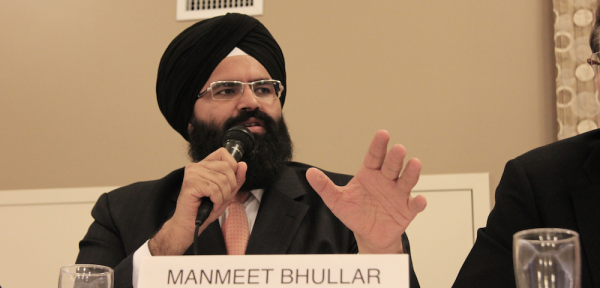
Terribly sad news in Alberta politics today. CBC is reporting that 35-year old MLA Manmeet Bhullar has been killed in a car crash on the Queen Elizabeth II Highway while driving from Calgary to Edmonton.

Mr. Bhullar’s performance during his eight years the Alberta Legislature earned him a reputation as a skilled parliamentarian and a powerful voice for his constituents in northeast Calgary.

A star in Alberta’s Progressive Conservative Party, Mr. Bhullar rose in the ranks under premiers Ed StelmachAlison Redford, and Jim Prentice, first as a parliamentary assistant and then as Minister of Service Alberta, Minister of Human Services and Minister of Infrastructure. He most recently served as PC opposition critic for Finance and Treasury Board, and Infrastructure.

As Human Services minister, he was tasked with the difficult challenge of overhauling Alberta’s laws so more information could be released about the deaths of children in foster care. He became one of Mr. Prentice’s campaign co-chairs during his party’s 2014 PC leadership contest and was rewarded with an appointment as Minister of Infrastructure, a position he held until the 2015 re-election.

Mr. Bhullar was first elected as the PC MLA for Calgary-Montrose in 2008 at the age of 27 and was re-elected as MLA for Calgary-Greenway in 2012 and 2015. He was one of ten PC MLAs re-elected in the 2015 election.

News of his passing generated an outpouring of condolences from his colleagues in elected office:

His passion and dedication will live on in our hearts and we will greatly miss him. To Manmeet’s family: many of our colleagues are dear friends of Manmeet and his family, and it breaks our hearts to know we have lost such a great soul. Manmeet accomplished more in his brief time than most people accomplish in their lifetimes.” – Interim PC Party leader Ric McIver (full statement)

Manmeet’s accomplishments are well-known. He was a powerful community advocate from a young age and first elected to the Alberta legislature at 28. He was brave and unrelenting in his role, particularly when it came to forcefully advocating for children in care – the least powerful people in our society.” – Calgary Mayor Naheed Nenshi (full statement)

Mr. Bhullar worked tirelessly in service of this province. First elected in 2008, he proudly served as Minister of Infrastructure, Minister of Human Services, and Minister of Service Alberta. All Albertans should be proud of his significant contributions to public life.” – Premier Rachel Notley (full statement)

Words cannot express the incredible sadness we all feel over the sudden and tragic loss of our dear colleague. The absence of our friend Manmeet will be felt across the great province that he loved. To his friends, our hearts weep with you. For all his constituents, we express our sympathy and support. To the PC party, to his caucus, to all MLAs who have served with him, and for all staff who came into contact with Manmeet during his incredible time as a public servant, we mourn together.” – Wildrose leader Brian Jean (full statement)

Manmeet was a big man and his stature got attention. But more than that, much more than that, I remember his words. His words were powerful. Passionate. Intelligent. Meaningful. He is exactly the sort of person we need in public office. I am devastated. I cannot begin to imagine what his family is going through, nor his community, nor his colleagues in the PC caucus. All will miss him. Our world is a lesser place without Manmeet Bhullar. Rest in peace my friend.” – Alberta Party leader Greg Clark (full statement)


Here is video of Mr. Bhullar’s maiden speech in the Legislative Assembly, delivered on Wednesday, April 16, 2008.

Categories
Alberta Politics

Pigs fly as oil industry and environmental groups endorse NDP’s ambitious Made-in-Alberta Climate Change Plan

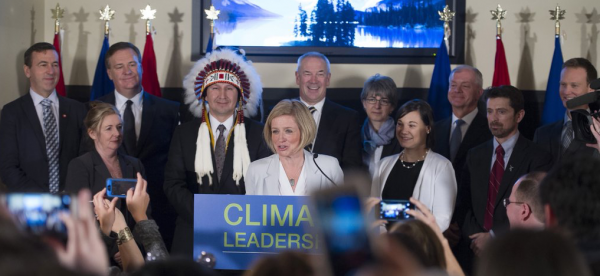
Pigs continued to fly in Alberta politics today as energy industry leaders and environmental groups joined Premier Rachel Notley and Environment and Parks Minister Shannon Phillips at a press conference to release Alberta’s much anticipated plan to take action against Climate Change. The Alberta government received the final report from the independent panel led by University of Alberta economics professor Andrew Leach and announced its plans to phase out coal burning electricity plants, phase in a price on carbon, introduce a limit on overall emissions from the oil sands and introduce an energy efficiency strategy.

Ms. Notley will now take the report and the made-in-Alberta plan to address climate change to a meeting with Prime Minister Justin Trudeau and other premiers tomorrow and to the United Nations Framework Convention on Climate Change (COP21) in Paris next week.

Here is what energy industry executives, environmental leaders and opposition politicians had to say about today’s climate change announcement:

Responding to climate change is about doing what’s right for future generations of Albertans – protecting our jobs, health and the environment. It will help us access new markets for our energy products, and diversify our economy with renewable energy and energy efficiency technology. Alberta is showing leadership on one of the world’s biggest problems, and doing our part.” – Rachel Notley, Premier of Alberta (full release)

I thank the panel members and the many Albertans, including Indigenous people, industry, environmental groups, municipalities and other partners and stakeholders for their contribution. This is the right plan for our province, and now is the right time to implement it.” – Shannon Phillips, Minister of Environment and Parks (full release)

The announcement is a significant step forward for Alberta. We appreciate the strong leadership demonstrated by Premier Notley and her government. The framework announced will allow ongoing innovation and technology investment in the oil and natural gas sector. In this way, we will do our part to address climate change while protecting jobs and industry competitiveness in Alberta.” – Murray Edwards, Chair, Canadian Natural Resources Limited (full release)

Today we are making history, with Alberta taking its rightful place as a leader on the world stage. Premier Notley promised Albertans leadership on the issue of climate change and she and her government have delivered. This is the right thing to do for both for our environment and our economy. The world needs more of this kind of leadership from major energy producing jurisdictions if we are to avoid dangerous climate change.” – Ed Whittingham, Executive Director, Pembina Institute (full release)

We fully support the Government’s new climate policy direction. It enables Alberta to be a leader, not only in climate policy, but also in technology, innovation, collaborative solutions and energy development. I believe it will lead to Albertans and Canadians receiving full value for their oil and natural gas resources, while addressing climate change.” – Brian Ferguson, President & Chief Executive Officer of Cenovus Energy (full release)

After a string of pipeline victories and over a decade of campaigning on at least three different continents, the Alberta government has finally put a limit to the tarsands. Today they announced they will cap its expansion and limit the tarsands monster to 100 megatonnes a year.” – Mike Hudema, Greenpeace (full release)

This new carbon tax will make almost every single Alberta family poorer, while accelerated plans to shut down coal plants will lead to higher power prices and further jobs losses. Wildrose will be looking at every detail of this plan closely, and we will speak out against policies that hurt Albertans and the economy.” – Brian Jean, leader of the Wildrose Party (full release)

Canadians have high expectations of themselves when it comes to protecting the environment and managing economic growth, and the world expects much of Canada. Alberta’s new climate change policy sends a clear message that Alberta intends to live up to those expectations. Today’s announcement sets Canadian oil on the path to becoming the most environmentally and economically competitive in the world.” – Lorraine Mitchelmore, President and Country Chair Shell Canada and EVP Heavy Oil for Shell (full release)

Now it’s time for the government to unapologetically promote Alberta’s emissions reduction successes to date and clearly articulate support for the long-term growth of Alberta’s energy industry, including the oil sands, conventional production, natural gas power, cogeneration and renewable energy.” – Greg Clark, leader of the Alberta Party (full release)

Today we reach a milestone in ensuring Alberta’s valuable resource is accompanied by leading carbon policy. It’s time that Alberta is seen as a climate, energy and innovation leader. This plan will make one of the world’s largest oil-producing regions a leader in addressing the climate change challenge.” – Steve Williams, President and Chief Executive Officer, Suncor (full release)

“On a public policy Richter scale, Alberta’s new Climate Leadership Plan is an 11. It is enormously positive and forward-looking and will yield measurable benefits for the health and quality of life of Albertans. Significantly, the new plan is supported by oil industry leaders, environmental organizations and other important stakeholders.” – Rick Smith, executive director of the Broadbent Institute

Alberta’s decision to move away from coal-fired electricity generation and dramatically increase its use of renewable energy reflects a trend happening in countries all over the world. More renewable energy in Alberta will reduce greenhouse gas emissions, clean the air, and produce significant new investment and jobs – particularly in rural areas of the province.” – Robert Hornung, President of CanWEA (full release)

As Premier Notley said today, we expect today’s announcement to further enhance the reputation of our sector and improve our province’s environmental credibility as we seek to expand market access nationally and internationally. As well, the province’s climate strategy may allow our sector to invest more aggressively in technologies to further reduce per barrel emissions in our sector and do our part to tackle climate change. That’s what the public expects, and that’s’ what we expect of ourselves.” – said Tim McMillan, president and chief executive officer of the Canadian Association of Petroleum Producers (full release)

Categories
Alberta Politics

Answers to the Alberta Politics crossword

Listed below are the answers to yesterday’s Alberta Politics crossword. In response to a friendly challenge from Edmonton-South West MLA Thomas Dang, check this blog next week for the Dang Hard Edition of the Alberta Politics crossword.

Across

1. Rick Strankman

3. Public Revenue

4. Brian Topp

6. Leela Aheer

7. Prasad Panda

8. Orr

10. Food

12. Nine AM

14. Difficult

15. Rona Ambrose

16. Sky Palace

18. MMXV

19. Ceci

20. Farm Workers

21. Kent Hehr

22. Elbow

24. Notley

25. Red

29. City

30. Brian Mason

31. Ric McIver

32. Thomas Dang

33. Richard Gotfried

34. Littlewood

35. Shaye Anderson

Down

2. Shannon Phillips

5. Deborah Drever

9. Robin Campbell

11. Luff

13. Olds

14. Democracy

17. Corporate Taxes

23. Sohi

26. David Swann

27. Obama

28. Goehring

Categories
Alberta Politics

PC Party financials reveal $1.5 million debt from 2015 election

Reports of the death of the Progressive Conservative Association of Alberta might only be slightly exaggerated. Financial disclosure reports submitted to Elections Alberta show the former governing party amassed a $1.5 million debt during the May 2015 election.

After reportedly nearly missing the deadline to submit its financial disclosures from the recent provincial election, the PCs posted the disclosure on its own website, which provides some detail into the overwhelming wealth of the former governing party during its failed attempt at re-election in May 2015. (The full report is now posted on the Elections Alberta website).

The disclosure report provides information about a $2,000,000 loan secured by the PC Party from the Canadian Western Bank with an outstanding balance of $1,544,866 as of July 5, 2015. Security on the loan includes a personal guarantee of $1,455,000 from a former director, who is unnamed in the document.

The report shows the PCs raised $2,802,500 in donations greater than $250 and $90,625 lower than $250 during the April 7 to July 15, 2015 campaign period. The PCs spent $4,303,969 and ran a deficit of $930,236 during the election campaign.

In response to its financial troubles, the party received significant financial transfers from some of its wealthier constituency associations, including $30,000 from Edmonton-Whitemud, $25,000 from Calgary-Elbow, $20,000 from each Calgary-Varsity and St. Albert, and $15,000 from Whitecourt-Ste. Anne.

Major donors listed on the PC Party’s financial disclosure include Richard Haskayne ($30,000), Ronald Joyce ($30,000), Ken King ($30,000), Calfrac Well Services Ltd ($30,000), MacLab Hotels & Resorts Ltd ($30,000), Matco Investments ($30,000), Christopher Potter ($30,000), Primrose Livestock Ltd ($30,000), Susan Rose Riddell ($30,000), Clayton Riddell ($30,000), Ronald P Mathison Private Banking Ltd ($30,000), Cathy Roozen ($30,000), Mike Rose ($30,000), Shane Homes Ltd ($30,000), Walton International Group Inc ($30,000), TIW Western ($25,000), CIBC ($23,750), Scotiabank ($23,750), BMO Nesbitt Burns Inc ($20,000), Matthew Brister ($20,000), Brian Michael Brix ($20,000), Grandview Cattle Feeders Ltd ($20,000), Kolf Farms Ltd ($20,000), Kelly Koss ($20,000), Mancal Corporation ($20,000), Kyle Ross ($20,000), Nancy Southern ($20,000), and Sunset Feeders Ltd ($20,000).

During its 44 years in government the PCs were able to depend on large corporate donors to help pay off campaign bills and debts, but the party has struggled after corporate donations to political parties were banned by the first law passed by the Alberta NDP Government in June 2015. Interim leader Ric McIver initially denounced the ban, but later stood with the entire nine member PC caucus in voting in favour of the bill.

The PCs will hold their annual general meeting in spring 2016 and have launched a 500-Day Plan to prepare the party for the 2019 provincial election. The PCs are expected to choose a permanent leader in early 2016.

New Unite the Right By Moving Further to the Right Group

According to a report from the Calgary Herald, a new group calling themselves “ The Alberta Prosperity Fund” has launched the latest bid to unite the two main conservative parties in Alberta. The private group is reported to have looked far to the political right for inspiration by inviting American anti-tax crusader Grover Norquist as guest speaker to a closed-door session in Calgary this week. Mr. Norquist is known for his role in pushing the Republican Party further to the political right, contributing to the deep political division in America.

The group is headed by Barry McNamar, a former vice-president of the right-wing Fraser Institute and director of the Calgary School of Public Policy. It is unclear who is providing financial support for the Fund.

Responding to the group’s formation, Wildrose Party leader Brian Jean told the Herald that “[w]e have had our lawyer send them a letter requesting that they stop telling people they have our endorsement or support.

Categories
Alberta Politics

Your Alberta Politics morning crossword

For all you Alberta politics aficionados, here is a crossword puzzle to keep you amused while you sip your morning coffee, check your email, and scan the news websites and your bookmarked Twitter hashtags before you start your day. Enjoy.

Feel free to download and print a PDF.

Daveberta Alberta Politics Crossword Puzzle

Download and print a PDF.

(The answers will be posted tomorrow)

Categories
Alberta Politics

Seven candidates announced running in Ward 12 by-election, now set for Feb. 22, 2016

Edmonton City Council confirmed today that the Ward 12 by-election to replace former councillor Amarjeet Sohi will be held on Feb. 22, 2016.

Candidates must submit their nomination papers in the Heritage Room at City Hall on Monday, January 25, 2016 between 9:00 a.m. and 12:00 p.m. More information can be found on the City of Edmonton’s Elections webpage.

Since my last update, there are now at least seven candidates who have publicly declared their intentions to run in the Ward 12 by-election:

For updates, visit my updated list of the Ward 12 candidates and their social media links.

Categories
Alberta Politics

Worth Watching: MLA Maria Fitzpatrick’s powerful speech about domestic violence

Lethbridge-East MLA Maria Fitzpatrick stood in the legislature this week to share a powerful story about her personal experiences with domestic violence. During her speech, the first-term MLA described the experiences of violence, abuse and death threats that she and her children faced from her ex-husband.
(Video via Press Progress)

Alberta MLAs have been debating a bill introduced by Deborah Drever, the Independent MLA for Calgary-Bow, that would make it easier for victims of domestic violence to flee abuse by breaking rental leases early and without penalty. Bill 204: Residential Tenancies (Safer Spaces for Victims of Domestic Violence) Amendment Act, 2015 passed second reading in the Assembly on  Nov. 16, 2015.

Categories
Alberta Politics

Wildrose demands transparency from NDP and PCs but holds its annual meeting in secret

Alberta’s conservative Wildrose Party is holding its annual general meeting this weekend in Calgary and, according to one media source, the event will be closed to the media with the exception of leader Brian Jean‘s speech ahead of the leadership review vote on the evening of Nov 13, 2015.

It feels like an eternity in Alberta politics since the Wildrose Party’s last annual meeting in Nov. 2014, which saw then-leader Danielle Smith clash with the party’s social conservative base over support for sexual minority rights. Wildrose members at the open door meeting voted down a definitive statement on equal rights for all Albertans, destroying the party’s attempt to appear more mainstream on social issues.

Now, the Wildrose Party led by Mr. Jean will spend its first annual meeting after its spectacular return from the dead debating policy and politics behind closed doors.

Wildrose members will debate motions ranging from equalization paymentspublic sector pensions, ending mandatory membership in students’ unions, increasing access to firearms, abolishing the Canadian Senate, and allowing private enterprise to receive government grants to compete against public essential services.

Members will also debate a series of motions aimed at banning MLAs from crossing the floor to another party, an issue that nearly destroyed the party when 13 of its MLAs crossed the floor to join the Progressive Conservatives in the final months of 2014.

This type of anti-floor crossing policy could prove difficult to enforce, as it is against the spirit of the Westminster parliamentary system and idea of responsible government. Wildrose members should also note that none of the floor-crossers were re-elected in this year’s general election, providing some evidence that elements of our system of democracy worked without unneeded tinkering.

The closed door meeting could help hide controversial comments or embarrassing eruptions that regularily happen when political party members line up to speak at the microphone.

Rumours have circulated for months about a group of party members who still harbour bad feelings from the party’s March 28, 2015 leadership race and could create trouble for Mr. Jean at this annual meeting. The leadership vote, which Mr. Jean won with 54 percent to Drew Barnes’ 40 percent, was held days before the provincial election was called.

An internal investigation was launched amid allegations of illegal robocalls and the party imposed a $15,000 fine against Mr. Barnes’ campaign. The message in the robocalls allegedly attacked Mr. Jean for his $10,000 donation to Jim Prentice‘s PC leadership campaign only months before he entered the Wildrose Party leadership race.

Mr. Jean is now carefully manufacturing his pitch to convince members of the former governing PC Party to join his party’s ranks. Later in November, the Wildrose Party is hosting a “conversation” fundraiser in Calgary where Mr. Jean will make his pitch to conservatives to unite behind his party against the NDP. Any embarrassing or divisive fights at this meeting could derails those attempts.

Wildrose MLAs have eclipsed the tiny PC opposition in media attention while relentlessly hammering almost every decision made by Rachel Notley‘s NDP since they won the May 2015 election. But recently Wildrose MLAs have found themselves tied up in an embarrassing missteps including fighting a new 9:00 a.m. start time for the Legislature and a very public dispute with a Globe & Mail reporter.

Partisan debates about policy can be divisive and messy, but it is hypocritical for Wildrose Party MLAs to lambast the NDP for failing to be transparent and the PCs for being secretive and entitled while holding their own policy meetings behind closed doors.

If Mr. Jean’s Wildrose Party truly wants to prove it is ready to govern and represent mainstream Alberta, they should demonstrate it by giving Albertans a view into how their grassroots members really believe our province should be governed.

Categories
Alberta Politics

Throwback Thursday: Alberta ‘should annex’ parts of Canada’s North

On April 19, 1972, Calgary MLA Dave Russell, minister of municipal affairs in the newly elected Progressive Conservative government led by Premier Peter Lougheed publicly suggested that the Province of Alberta should annex parts of the Northwest and Yukon territories.

The Calgary Herald reported that Mr. Russell’s plan was to redraw the map so that on the eastern border the province would run from the American border to the top of Canada. The province’s western border would include the Mackenzie River Valley and parts of the Yukon.

“It makes sense in view of transportation and pipelines,” Mr. Russell told the Herald.

Here is an excerpt (pdf) from Mr. Russell’s speech in the Legislative Assembly as recorded by Hansard:

Mr. Speaker, because of what is happening in the field of energy resource development and transportation on the North American continent at this time, it seems to me that there is a great deal of logic in extending the existing northern Alberta boundary from its present location up to the northern limit of our country. I am thinking that the entire area lying between an extension of Alberta’s eastern boundary and the Yukon-Northwest Territories boundary, logically some day probably belongs in the Province of Alberta.

I am putting this proposition in the form of a question, because I am wondering if it has occurred to the hon. members what an exciting prospect there is there in making the entire area, from the 49th parallel right up through the Greater Slave Lake region and the Mackenzie Delta the energy and resource corridor and political entity on the North American continent. I think the potential there and the logic of carrying out such a move makes a great deal of sense.

Categories
Alberta Politics

Putting protection of LGBTQ students and staff back on the agenda at Alberta school boards meeting

Amid allegations of financial misspending and a lack of transparency, representatives from sixty-one elected Public, Catholic, and Francophone school boards from across Alberta will gather at the fall general meeting of the Alberta School Boards Association on November 15, 16 and 17 in Edmonton.

Michael Janz Edmonton
Michael Janz

School board representatives could face another round of debate about protecting lesbian, gay, bisexual, transgender and queer students and staff. The Edmonton Public School Board will introduce a motion at the meeting for the ASBA to create a policy that protects all students, staff and families who identify as sexual or gender minorities.

I think tone at the top is very important, and it is important for the Alberta School Boards Association to take an active stance against the bullying and marginalization of lesbian, gay bisexual, transgender, queer and questioning students. I think this will send a very important signal across school boards that we do support inclusion, we do want to support our students,” EPSB chairperson Michael Janz told the Edmonton Sun.

The motion has been proposed as emergent by EPSB and will be introduced on the first full day of the meeting. Delegates will be asked whether it should be added to agenda and debated at the meeting.

Debate at the ASBA’s general meeting in 2012 attracted national attention when 62 percent of the delegates voted down a proposal to protect gay students and staff from discrimination, similar to a policy passed by EPSB in 2011.

David Eggen
David Eggen

One trustee at the 2012 meeting from the Pembina Hills School Division suggested if “children with a gay tendency” could hide their gayness it would be “for their own benefit.” The trustee later apologized but not before his comment became national news.

The debate around legislating the creation of Gay-Straight Alliances in Alberta schools became a major political issue in the final months of 2014 and created major rifts between social conservatives and moderate conservatives in the Wildrose and Progressive Conservative parties.

Recent debates at the Edmonton Catholic School District about creating safe environments for transgender students have degenerated into public scenes of crying and shouting. “I expect a higher standard from all elected officials here, generally in Alberta, and specifically with Edmonton Catholic,” Education Minister David Eggen said following the debates.

Mr. Eggen has directed all Alberta school boards to have a policy supporting LGBTQ students in place by March 31, 2016.  It has been reported that only 13 out of 61 school boards currently have stand alone policies protecting rights of LGBTQ students and staff.

The result of the debate about whether to adopt a policy protecting all students, staff and families who identify as sexual or gender minorities will likely set the tone for an important breakfast event being held for trustees and MLAs on the final day of the meeting. Twenty-eight NDP, Wildrose, Progressive Conservative and Liberal MLAs are scheduled to attend the breakfast, including cabinet ministers Brian Mason, Joe Ceci, and Oneil Carlier. Mr. Eggen scheduled to deliver an address at the breakfast.

What the Education Minister has to say in his address will likely depend on if Alberta’s elected school trustees choose to rise above the closed mindedness and ignorance that has dominated these debates in past years. Protecting students and staff is not optional.


Here is the motion that the EPSB plans to introduce:

That the Alberta School Boards Association support its members school boards in establishing and maintaining welcoming, inclusive, safe and healthy learning and working environments for all members of the school community, including sexual orientation and genders minority students, staff and families. This includes provision of support with policy development and related resources.

EPSB rationale for the motion:

  • Issues with regard to publicly funded education and supporting Sexual Orientation and Gender Identity students, staff and families have been in the news this year. The ASBA has been silent on these issues, both in policy and presence. It is proposed by the Committee that we take a second attempt at moving forward the 2012 Sexual Orientation and Gender Identity Policy to the ASBA.
  • The Committee believes it is important for the ASBA to clearly take a policy position in support of students, staff, and families in alignment with provincial legislation and our Strategic Plan outcome to provide welcoming, inclusive, safe caring and healthy learning and work environments. Research has shown that sexual minority youth experience more bullying, harassment, alienation, and suicide ideation than do their heterosexual peers and; therefore, boards are encouraged to counter pervasive cultural biases against sexual minorities through proactive and specific policy and regulation to ensure that all sexual orientation and gender identity minority individuals are welcomed, respected, accepted and supported in all of their schools.

Previous ASBA fall general meetings have been webcast. I will post a link to the website once I have confirmed this meeting will be live streamed online.