Categories
Alberta Politics

Nomination races begin for federal election 2015

There are 705 days until Monday, October 19, 2015, when the next Canadian federal election is scheduled to be held. With less than two years until Canadians choose who will serve as Members of Parliament and with new electoral boundaries coming into effect at the next election, candidates across Alberta are preparing to seek party nominations, a first step to becoming a candidate.
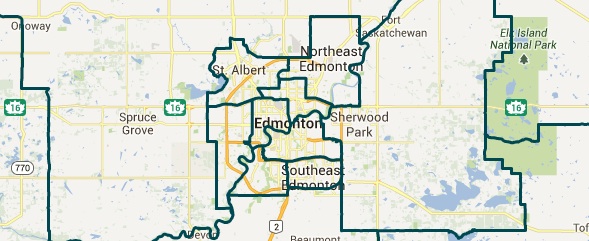
Edmonton's 2015 electoral districts as recommended by the Electoral Boundary Commission Final Report.
Edmonton’s 2015 electoral districts as recommended by the Electoral Boundary Commission Final Report.

Last week’s resignation announcement by Conservative MP Ted Menzies opens the door for a by-election to be held in southwest Alberta’s Macleod riding. When the next election is called, Macleod will be dissolved and the new Foothills riding will be created. Rumours circulated soon after Mr. Menzies announcement that Wildrose official opposition leader Danielle Smith could seek the Conservative nomination were quickly quashed when he announced she would remain as MLA for Highwood. According to the Okotoks Western Wheel, three local residents, businessman Scott Wagner, rancher Phil Rowland and former Parliament Hill staffer Melissa Mathieson, have expressed interest in seeking the Conservative nomination.

With former Conservative MP Brent Rathgeber confirming he will run as an Independent in the new St. Albert-Edmonton riding in the next election, aspirants are already lining up to contest Conservative Party nomination.

Expected to enter the race in St. Albert-Edmonton is businessman and former political organizer Ryan Hastman, who is currently employed as a Regional Director in the University of Alberta‘s Office of Advancement. Readers of his blog will recognize Mr. Hastman as a co-host of the #yegvote Google Hangout and as the 2011 Conservative candidate in Edmonton-Strathcona. He has previously worked in Prime Minister Stephen Harper‘s Office and for the Wildrose Party.

Lawyer and conservative activist Michael Cooper has already announced his candidacy in the St. Albert-Edmonton Conservative nomination and has the support of the provincial Progressive Conservative establishment, including endorsements from Finance Minister Doug Horner, Deputy Premier Thomas Lukaszuk, and St. Albert MLA Stephen Khan. Also in the race is Kevin Tam, a Conservative Party activist who is currently employed as a researcher with the provincial Liberal Opposition.

Lethbridge and southern Alberta 2015 electoral districts as recommended by the Electoral Boundary Commission Final Report.

Changing boundaries in southern Alberta mean that Lethbridge Conservative MP Jim Hillyer will soon find himself living inside the redrawn Medicine Hat riding, currently represented by Conservative MP LeVar Payne. While a nomination race between the two incumbents could easily be averted if Mr. Hillyer runs in the newly redrawn Lethbridge, he may still face a tough nomination contest now that his large base of support in the southern half of the old riding will now living in a new riding.

After a narrow win in last year’s by-election, Conservative MP Joan Crockatt can expect a strong challenge from a newly revitalized Liberal Party organization in Calgary-Centre.

Conservatives have still yet to resolve who will run in the handful of new ridings created in south Edmonton. Similar to the situation in southern Alberta, Conservatives are hopeful that nomination battles between MPs Mike Lake, James Rajotte, and Blaine Calkins can be averted. This may be even further complicated if current Edmonton-Sherwood Park MP Tim Uppal decides to seek a nomination in the newly redrawn Edmonton-Mill Woods riding. Mr. Uppal was the Canadian Alliance and Conservative candidate in south east Edmonton in the 2000 and 2004 federal elections and lost his party nomination to Mr. Lake before the 2006 election.

Rod Loyola announced his intentions to seek the NDP nomination in Edmonton-Mill Woods last year. Mr. Loyola was the 2012 provincial NDP candidate in Edmonton-Ellerslie and is currently the president of the Non-Academic Staff Association at the University of Alberta.
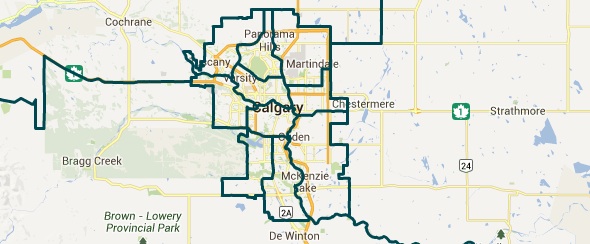
Calgary's 2015 electoral districts as recommended by the Electoral Boundary Commission Final Report.
Calgary’s 2015 electoral districts as recommended by the Electoral Boundary Commission Final Report.

With the retirement of Calgary-Nose Hill MP Diane Ablonczy, who was first elected under the Reform Party banner in 1993, Calgarians can expect a hotly contested nomination race in this riding that is considered a Conservative stronghold. One candidate rumoured to be considering a run for a nomination is Calgary-Foothills PC MLA Len Webber, who served as a cabinet minister in Premier Ed Stelmach‘s government but was shuffled to the backbenches after Alison Redford became Premier in 2011.

In the always contested Edmonton-Centre, aboriginal activist and educator Lewis Cardinal, announced earlier this year that he would once again seek the NDP nomination. In 2011, Mr. Cardinal increased his party’s support in that riding by 11%, placing second to Conservative incumbent Laurie Hawn. The central Edmonton riding was represented by Liberal MP Anne McLellan from 1993 until 2006. Hoping for a revival of Liberal support in the next election, a number of candidates are said to be preparing to contest the Liberal nomination, including entrepreneur and Rhodes Scholar Randy Boissonnault, and  2011 candidate and lawyer Mary MacDonald.

Two-term Edmonton-Decore PC MLA Janice Sarich is rumoured to be mounting a challenge against current Edmonton-East Conservative MP Peter Goldring in the new Edmonton-Griesbach riding. With Mr. Goldring back in the Conservative fold after sitting as an independent, he is expected to seek his party’s nomination in the new riding. The NDP are searching for a star candidate in this riding, after seeing their support steadily increase since the past four federal elections. The new riding also significantly overlaps the areas represented by NDP MLA Brian Mason, David Eggen, and Deron Bilous in the provincial Legislature. The NDP’s 2008 and 2012 candidate, former MLA Ray Martin, was elected to serve on Edmonton’s Public School Board on October 21, 2013.

Update (November 14, 2013): Educator Janis Irwin has announced her intention to seek the NDP nomination in the new Edmonton-Griesbach riding.

Because lists are something that this writer tends to do well, I will soon start a list tracking declared and nominated candidates planning to run in the 2015 federal election in Edmonton. If I have missed anyone in this round-up, please post a comment below or send me an email at davidcournoyer@gmail.com.

Categories
Alberta Politics

BC approves the Alberta pipeline to China

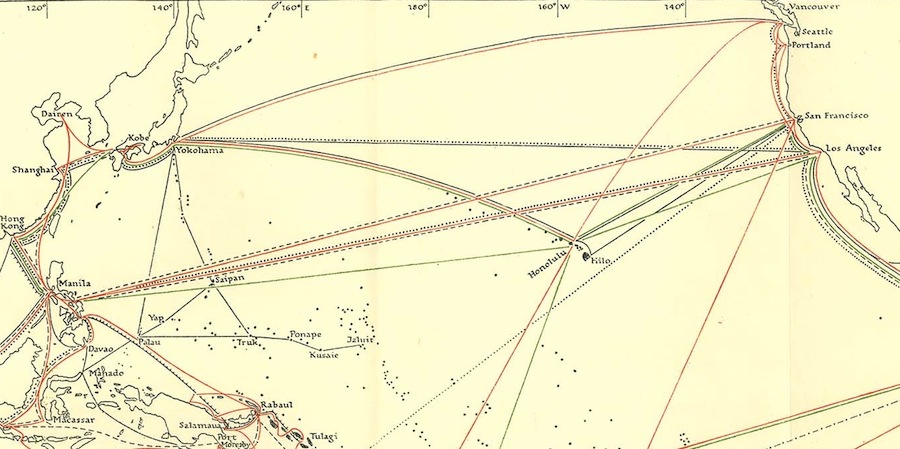
Pacific Shipping Lanes Alberta to ChinaPremier Alison Redford can celebrate a victory today as her Canadian Energy Strategy earned the public support of British Columbia Premier Christy Clark. Only mere hours after cancelling a meeting that had been arranged to discuss the Enbridge Northern Gateway Pipeline from Alberta to BC, the two premiers announced that they had agreed on a framework for the pipeline that would allow for the easier sea export of unrefined Canadian oil to countries in Asia, including China. This does not mean the pipeline is approved, but it does signal that Ms. Clark is unlikely to be a roadblock.

An agreement to open “new markets” satisfies four of Ms. Clark’s five requirements for BC to consider support for heavy oil pipelines to be approved. A press release issued by the Ms. Redford’s office reported that to reach Ms. Clark’s fifth condition, that BC recieve a fair share of the fiscal and economic benefits of the proposed pipeline, ‘Alberta agrees that B.C. has a right to negotiate with industry on appropriate economic benefits.’ The release also stated that both governments ‘reaffirmed that Alberta’s royalties are not on the table for negotiation.’ The results of this agreement shifts the pressure to the energy companies to provide a satisfactory fiscal and economic compensation to the BC government.

In May 2013, the BC government’s submission to the National Energy Board’s Joint Review Panel on the Northern Gateway Project claimed that it could not support the pipeline because Enbridge had “presented little evidence about how it will respond in the event of a spill.” While the National Energy Board, not the BC government, is responsible for environmental assessment of the project, it remains unclear what convinced Ms. Clark to change her mind.

The two premiers had publicly quarrelled over the pipeline project and Ms. Clark made the five requirements a key part of her Liberal Party’s campaign platform in the recent provincial election. While her party won re-election and the opposition NDP are choosing a new leader, it would be foolish to expect there will be no opposition to the pipeline in BC. Many northern communities, First Nations, and environmental groups in BC have pledged to stall the construction of the pipeline to the Pacific coast.

EcoJustice is raising concerns about how increased oil tanker traffic caused by the Northern Gateway Pipeline could impact a new Humpback whale recovery strategy and four critical habitats that have been identified for protection. The Department of Fisheries and Oceans currently lists the Humpback Whale as a species at risk in the northern Pacific Ocean.

Meanwhile, questions have also been raised about the role that China’s state-owned oil companies could play in the construction of the project. While the state-owned PetroChina initially withdrew from the proposed project in 2007, the corporation announced in 2012 that it would bid to build the pipeline once the project was approved by regulatory authorities.

Looking southward, Ms. Redford and International Affairs Minister Cal Dallas are returning to Washington D.C. to lobby United States Senators, Representatives, and the State Department to approve the controversial Keystone XL Pipeline that would carry oil from Alberta to refineries in Texas.

A Government of Alberta press release announcing the trip quoted North Dakota Democratic Senator Heidi Heitkamp, who welcomes Ms. Redford visit to Washington D.C. This is at least the fifteenth trip made by Alberta government ministers to the American capital since Ms. Redford became Premier in 2012.

Burying the ghosts of the dreaded National Energy Program, Federal Liberal Party leader Justin Trudeau surprised many political watchers last month with his support for the Keystone XL Pipeline. Mr. Trudeau voiced his support for the project while speaking on a panel that included former Australian Prime Minister Julia Gilliard and former U.S. Secretary of State Madeleine Albright at a conference in Washington D.C. hosted by the Centre for American Progress.

Categories
Alberta Politics

#ableg by the numbers

Alberta Legislative Assembly
Alberta’s Legislative Assembly building

Number of Government MLAs: 59
Number of Opposition MLAs: 28
Number of former Government MLAs now sitting in the Opposition caucus: 5
Number of former opposition MLAs sitting in the government caucus: 2
Number of women MLAs: 23
Number of male MLAs: 64
Number of cabinet ministers: 18
Number of associate cabinet ministers: 9

Number of times government MLAs mentioned the “building Alberta” slogan in the Assembly in the four days since the session resumed on October 28, 2013: 34

In the current session of the Legislature, which began on Wednesday, May 23, 2012…
…”oil sands” was mentioned 660 times.
…”transparency” was mentioned 683 times.
… “corruption” was mentioned 52 times.
… “apologize” was mentioned 125 times.
… “Trudeau” was mentioned 7 times.
… “Mulcair” was mentioned 17 times.
… “Harper” was mentioned 24 times.
… “Lougheed” was mentioned 245 times.
… “Klein” was mentioned 324 times.

Number of MLAs first elected in 1989, 1993, 1997, 2001, 2004, 2008, 2012: 1, 5, 2, 5, 9, 25, 37
Number of MLAs who were previously elected to municipal councils or school boards: 25 (at least)
Number of MLAs who were previously elected to the House of Commons: 1

Number of bills introduced into the Assembly in this session: 44
Number of bills that have received Royal Assent in this session: 30

Categories
Alberta Politics

The ghosts of senate reform haunt the Harper Conservatives

Stephen Harper Senate Conservatives Reform
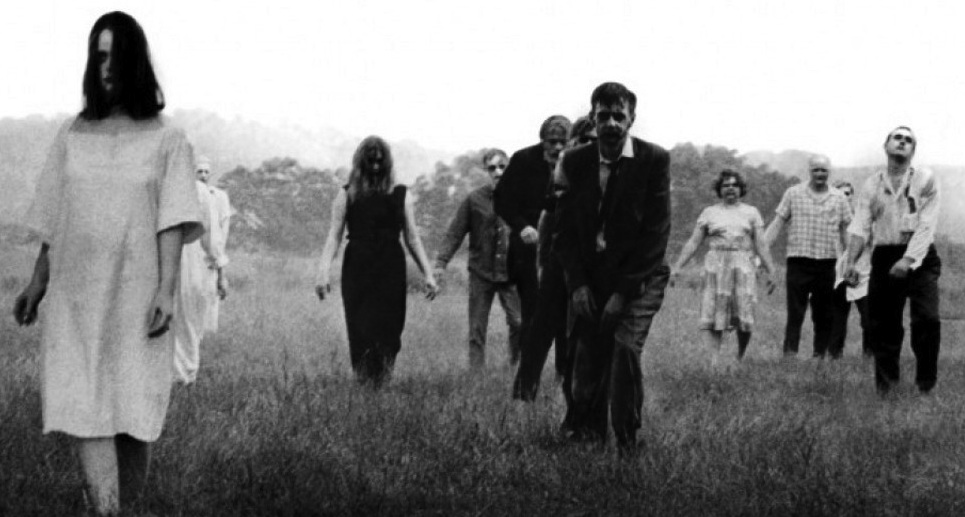
Howling “RREEEEFFFOOOORRRRMMMM,” the ghosts of the Reform Party stumble towards the Conservative Party Convention in Calgary (Yes, this is a photo of zombies, but ghosts don’t stumble).

The ghosts of Senate reform will haunt Prime Minister Stephen Harper as his party establishment gathers in Calgary on Halloween to discuss and debate party policy. After more than seven years in office, Mr. Harper’s Conservatives have accomplished little on the issue of reforming the Canadian Senate.

Who would have thought that a Senate scandal involving Conservative appointees could potentially be one of the defining stories of Mr. Harper’s third-term as Prime Minister? Was Mr. Harper not the Prime Minister who vowed to reform Canada’s archaic upper house of Parliament?

While the federal Conservatives had hoped to end this particular Senate scandal with the announcement of a new free trade agreement with the European Union and a consumer-first agenda, the wrath of Conservative Senators scorned has dominated the headlines.

After being ejected from Conservative Party ranks, Senators Mike Duffy, Pamela Wallin, and Patrick Brazeau, all appointed by Mr. Harper, have proven to be incredibly dangerous liabilities. Accused of improper spending and expenses, the three former Conservatives have turned on their former party and are drawing national attention to alleged improper activities of Mr. Harper’s former chief of staff, Nigel Wright.

Senate reform was a defining policy for the now defunct Reform Party of Canada and a historical grievance that many western Conservatives hoped would finally be resolved when the Canadian Alliance (the Reform Party’s rebranded name) merged with the Progressive Conservative Party of Canada in 2003. While the crusade for a Triple-E Senate (equal, elected and effective) helped propel the Reform Party onto the national stage in the early 1990s, there does not appear to be much political appetite for this type of reform among Canada’s political leaders.

Since becoming Prime Minister in 2006, Mr. Harper has appointed at least 52 of the Senate’s 106 members, including many failed Conservative party candidates or close associates of the Prime Minister. Despite his claims that he would approach the Senate differently, Mr. Harper has proven by his actions that he is not much different than Prime Ministers Pierre Trudeau, Brian Mulroney, Jean Chretien, or Paul Martin.

In Alberta, the only province to have held elections for Senate nominees, the votes have attracted low levels of attention and there is no indication that the upper chamber is more effective with the three current elected nominees that have been appointed.

Popular Saskatchewan Premier Brad Wall, seen by many as a potential successor to Mr. Harper, announced today that his government will revoke its support for Senate nominee election in favour of supporting abolishment of the Senate. This positions Mr. Wall alongside Official Opposition NDP leader Thomas Mulcair, who has embraced NDP’s long-standing position that the Senate should be abolished.

The Reform Party’s first leader, Preston Manning, in his role as the godfather of Canada’s conservatives, will today be hosting an all-day Manning Foundation symposium on the future of the Senate. Speakers will include Member of Parliament Pierre Poilievre, former Alberta MLA Ted Morton,  retired Liberal Senator Dan Hays, Calgary School chieftains Tom Flanagan and Rainer Knopff, and former Senator-nominee turned Wildrose Party candidate Link Byfield. This and other Manning Foundation events will coincide with official Conservative Party events in Calgary this weekend.

Provincial NDP take Lethbridge

Meanwhile, in southern Alberta, provincial New Democrats will gather this weekend for their annual convention  in Lethbridge. Delegates will hear from NDP strategist Anne McGrath and Robyn Benson, president of the Public Service Alliance of Canada.

At the annual meeting, NDP leader Brian Mason will not face a leadership review, but his party activists will debate some changes to party operations. One topic of debate will be whether the party holds annual conventions or moves to biennial conventions. Party members are also expected to debate whether the Labour movement should have two vice-presidents represented on the party’s executive council.

Most of the province outside of Edmonton is bleak for the social democratic party, but Lethbridge has provided a glimmer of hope that the NDP plan to build on. In the 2011 federal election, the NDP saw their support double to 27% and in the 2012 provincial election, Lethbridge-West candidate Shannon Phillips placed a strong second in a three-way race won by PC MLA Greg Weadick.

Categories
Alberta Politics

Hope and Debt

Alison Redford Debt Alberta
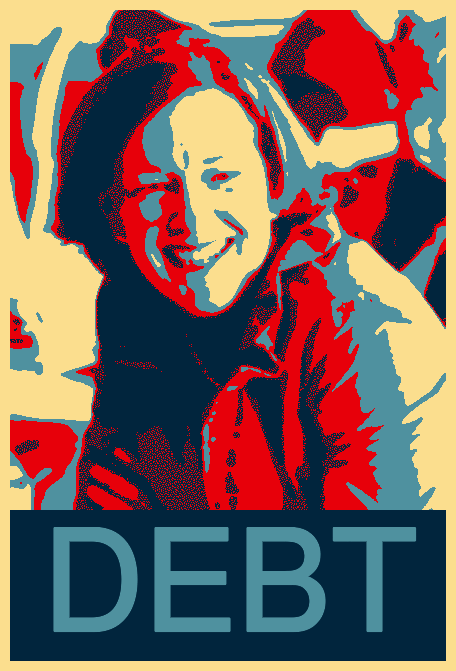
“Debt” we can believe in?

The political battle between the Wildrose opposition and long-governing Progressive Conservatives continued today as the Legislative Assembly resumed for the fall sitting. Debt was the biggest issue of the day. Wildrose leader Danielle Smith jumped at the opportunity to make light of comments Premier Alison Redford made that compared the government’s decision to accept debt financing as “hope.”

“Let’s take some of the premier’s other quotes and sub in ‘hope’ for ‘debt’ and see if that makes sense. Alberta does not have hope, and we will not incur hope. We cannot come out the current fiscal situation with hope.”
“So to the premier, if debt is hope, when can we expect to once again be hope free?”
– Danielle Smith

After a decade of worshiping an anti-debt orthodoxy that defined former Premier Ralph Klein‘s era in Alberta politics, the natural governing party changed their tune. Abandoning the culture of “no debt” that they created has undoubtably been difficult for the PCs as they embraced a new faith in capital financing. It makes fiscal sense if you want to plan for the long-term, but in the Alberta context, it symbolizes an awkward culture shift for a political party that defined itself by this rally cry.

Cabinet shuffle rumours

If there is any truth to the cabinet shuffle rumours that have been circulating in political circles, it would not be unexpected for Ms. Redford to hit the reset button after she faces a mandatory leadership review in November (I anticipate PC activists will approve of her leadership). It may surprise Albertans to discover that twenty-seven of fifty-nine PC MLAs currently serve in some ministerial or associate ministerial role (that’s 45% of the government caucus).

Doug Griffiths
Doug Griffiths

Three cabinet ministers who have caused particular difficulty for the government  and should be candidates to be shuffled are Education minister Jeff Johnson, Municipal Affairs minister Doug Griffiths, and Deputy Premier Thomas Lukaszuk.

Mr. Johnson has earned the distain of teachers and schools boards officials for his clumsy handling of the last year’s Alberta Teachers’ Association contract negotiations and the ensuing financial havoc wreaked on the education employers.

Mr. Griffiths has locked horns with Calgary’s popular mayor Naheed Nenshi too many times to be seen as an effective minister. The election of Don Iveson as mayor of Edmonton could help convince the Premier that perhaps she needs a more effective communicators in the increasingly important municipal affairs role.

Ramming through the Redford government’s cuts to post-secondary education, the powerful Mr. Lukaszuk frequently speaks as if he leads the government, leading some conservatives to suggest he has leadership ambitions of his own. Some conservatives have begun noticing similarities between Mr. Lukaszuk and former Deputy Premier Ken Kowalski.

In the first few years of Mr. Klein’s administration, Mr. Kowalski served in a powerhouse role as Deputy Premier and the unofficial “Minister of Everything.” At the time, some Tories suggested that Mr. Kowalski was actually running the government, which raised the ire of Mr. Klein. Perhaps not surprisingly, Mr. Kowalski was unceremoniously booted from the halls of power by Mr. Klein mid-way through his government’s first-term.

The curious case of Doug Elniski

Former Conservative Member of Parliament Brent Rathgeber isn’t the only former Edmonton-Calder PC MLA to go rogue. Former PC MLA Doug Elniski announced days ago that he had joined the Wildrose Party and was attending that party’s policy convention last weekend. Mr. Elniski was the second PC MLAs to endorse Ms. Redford in her bid for the PC leadership and stood at her side when she spoke to the media following her win in that race. He did not seek re-election in 2012.

Showing a surprising lack of class, Ms. Redford’s communications director Stefan Baranski took to Twitter to attack the former PC MLA for controversial comments he made years ago. It appears that many of Ms. Redford’s staff spent their weekend posting juvenile and sarcastic tweets about the opposition party’s gathering. Apparently this is how senior government staff spend their weekends these days.


Categories
Alberta Politics

Rick Miller was a true gentleman of the Alberta Legislature

Liberal Opposition Chief of Staff Rick Miller was the MLA for Edmonton-Rutherford from 2004 to 2008.
Rick Miller

Rick Miller was a gentleman in the truest sense of the word.

I was saddened to learn that former MLA Rick Miller passed away yesterday after a long battle with prostate cancer. Rick served as the Liberal MLA for Edmonton-Rutherford from 2004 to 2008 and during that time as the official opposition Finance critic. He became Chief of Staff at the official opposition caucus in 2009, a position he held until before the 2012 election.

I had the pleasure of working with Rick on several projects during his time as MLA and in the years afterward. While we had many meetings in the Annex and at Liberal Party headquarters, some of my fondest memories of Rick were on the campaign trail, door-knocking in Rutherford or hitting the road to win-over voters in the Drumheller-Stettler and Calgary-Elbow by-elections of 2007.

Soft-spoken and determined, Rick earned the respect of his colleagues in the opposition and government benches and he was one of the few opposition MLAs at the time who I would have considered to be cabinet material. Passionate about Alberta and its politics, he was one of the hardest working opposition MLAs I have known.

A family man, a rotarian, a businessman, a community leader, and a huge Edmonton Oilers fan, Rick Miller will be missed.

Categories
Alberta Politics

Wildrose can grow from Tory seeds of doubt

Do you drain a Lake of Fire or do you dam it?

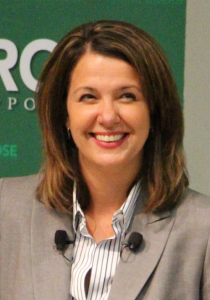
Danielle Smith
Danielle Smith

Whatever it takes, Wildrose Party activists are expected to moderate the tone of their policies at their weekend policy convention in the booming central Alberta city of Red Deer. A delicate and sometimes shaky coalition of libertarians and social conservatives (among other groups), Alberta’s official opposition party will learn from the mistakes they made in the 2012 election. On the cusp of victory, offensive remarks made by social conservative candidates in Calgary and Edmonton scared many moderate Albertans to support the long-governing Progressive Conservatives at the ballot box.

Since forming the official opposition with 17 MLAs, Ms. Smith has led a disciplined front-bench that has in many cases driven the government’s agenda, or at the least frustrated government ministers unaccustomed to their aggressive style. Implementing tactics used by the Ottawa Conservatives, the Wildrose have been relentless in their opposition to the forty-two year old governing PC Party.

Fighting back against the Wildrose, or at least trying to, Tory environment minister Diana McQueen emerged from her legislature office yesterday to attack Wildrose leader Danielle Smith’s position on climate change. While Ms. Smith’s party is undoubtably weak on environmental issues, especially on the important climate change file, the Tory government’s environmental record is not much better. While the Alberta government is doing more on this file than it has in a decade, its plan appears to be propped up by snippets of truth and focus group tested sound bites.

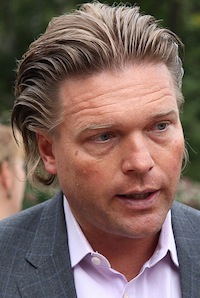
Thomas Lukaszuk
Thomas Lukaszuk

The Wildrose are looking for second chances and there is opportunity for them. With drastic cuts to education and post-secondary education, constant political meddling in the health care system and fears that public sector pension changes may negatively impact the retirement prospects of hundreds of thousands of Albertans, Alison Redford’s Tories threaten to alienate the electoral coalition of moderate voters (including many former Liberal voters) who helped them narrowly win re-election. Shooting from their hips (and frequently missing their targets), cabinet ministers Thomas Lukaszuk, Jeff Johnson, Fred Horne, and Doug Griffiths often confuse their own confidence with arrogance. The Tories do not give any impression that they were humbled by their near-defeat in last year’s election.

Some Tories may point to the electoral success of Premier Ralph Klein following his drastic budget cuts in the early 1990s, but this is a very different political environment, and I am sure that most Albertans would agree that Ms. Redford is no Mr. Klein.

A recent poll from Leger Marketing, for what it’s worth three years before the next election, shows Ms. Redford’s and Ms. Smith’s parties competing with mid-30 percent range support. The poll also shows that more than half of Albertans disagree with the government’s performance, but the Wildrose’s support in the polls suggests voters have not settled on an alternative.

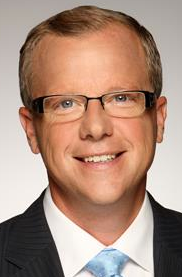
Brad Wall
Brad Wall

This weekend and over the next three years, the Wildrose Party could look to Saskatchewan for inspiration. Stalled for years in the opposition benches, the conservative Saskatchewan Party undertook a move to modernize its image and policies when Brad Wall became the party leader in 2004. The unruly coalition of Tories and Liberals led by a former Reform Party MP had been unable to defeat the institutionalized New Democrats, who dominated in that province’s major cities. Under the smart and savvy Mr. Wall, the Sask Party modernized, and slowly began to encroach into NDP held urban constituencies.

After his party finally defeated in NDP in 2007, the conservative Mr. Wall has become one of Canada’s most popular provincial leaders. Like the NDP did to the Sask Party, and the Tories did to the Wildrose in 2012, Albertans can expect to be berated by rounds of “ooga booga, the Wildrose is scary” ads in the next election. The part that will be missing from those ads is that many, if not most, current Wildrose supporters were sitting comfortably in the Tory camp until about three years ago.

Wildrose success is not entirely about policy. Planting the seeds of doubt in Ms. Redford’s ability to run an honest government will also be key to the Wildrose Party’s success in the next election. Ms. Redford’s tendency to avoid controversy by hiding the truth or bending the facts is something that many political watchers have noted. Her office’s decision to block requests to release details of more than $2 million in severance packages given to former premier’s office staffers planted one seed of doubt. Her actions, her words, and people she surrounds herself have planted others. Two bad seeds that might not go away, controversial former PC MLAs Mike Allen and Peter Sandhu, are expected to apply for re-entry into the Government Caucus.

And the Wildrose do not just need Tory voters to vote for them, they also need former New Democrat and Liberal voters to return to their prior allegiances (a key reason behind Ms. Smith’s province-wide debate tour with NDP leader Brian Mason).

So, it’s clear the Wildrose needs to moderate the tone of their policies to attract new voters, but they can also benefit greatly from the seeds of doubt that the Redford Tories appear to be planting each week.

Categories
Alberta Politics

#yegvote hangout – post-election “after hours” edition

Last night we hosted the final #yegvote Edmonton election Google Hangout. Not surprisingly, we had a lot of topics to discuss in our post-election “after hours” edition, ranging from school board races, new city councillors, and, of course, the mayoral election.

When we started recording these hangouts in June 2013, I don’t believe many of us would have predicted the 62% landslide victory that Don Iveson earned on October 21. While most media embraced the narrative of a three- or two-candidate horserace, the results would suggest that it was neither. According to unofficial poll-by-poll results, Mr. Iveson won every poll across Edmonton except eight (four where he placed second and four where he was tied).

Our new mayor was a guest on this hangout in August, and we were joined by his opponent Kerry Diotte in early October. We were also happy to have Steven Dollansky, Kathleen Smith, Aliza Dadani, the Local Good, and Chris Labossiere and Patricia Misutka join us as guests on the hangout.

Thanks to my co-hosts Mack Make and Ryan Hastman for helping make the #yegvote hangout a success. And thank you to everyone who has tuned in to watch us live or our archived videos (which will remain online for the time-being). We have enjoyed hosting these hangouts and may continue to record new versions of the hangout on EdmontonPolitics.com in the future. Stay tuned.

Categories
Alberta Politics

NDP fundraising grows, PC, Wildrose, Liberal drop in summer months

Summer doldrums and municipal elections tapping fundraising dollars across the province led Alberta’s provincial political parties to claim less in contributions in the most recent Elections Alberta disclosures. In fact, only the Alberta New Democrats claimed more donations in the third quarter  of 2013 than the second or first, and almost raised as much as the governing Progressive Conservatives. The alarmingly low fundraising numbers from the Liberal Party should be a serious concern to that party’s activists.

While their central parties claimed smaller amounts, some constituency associations spent their summers fundraising. The Progressive Conservative associations in Calgary-Hays and Banff-Cochrane claimed $40,425 and $32,475 in the third quarter. The Wildrose Party‘s Drumheller-Stettler and Lacombe-Ponoka associations raised $14,480 and $11,536 in the same period.

Expect fundraising amounts to increase in the final quarter of 2013 as the parties launch new appeals for donations and as many donors take advantage of the last minute tax-receipts eligible through donations to provincial political parties.

Here is the breakdown of disclosed political party donations in Alberta in the first three quarters of 2013:

2013 Party Fundraising Party  (<$250)  (>$250) Total
1st Quarter(Jan 1-Mar 31) PC $26,462 $525,912 $552,375
Wildrose $394,068 $133,545 $527,613
Liberal $41,918 $13,375 $55,293
NDP $91,245 $29,549 $120,791
Alberta Party $6,812 $600 $7,412
2ND QUARTER (APR 1-JUN 30) PC $25,248 $659,984 $684,232 +$158,320
Wildrose $486,472 $611,205 $1,097,677 +$570,064
Liberal $71,861 $49,255 $121,116 +$65,823
NDP $100,622 $25,412 $126,034 +$5,243
Alberta Party $6,025 $600 $6,625 -$787
3RD QUARTER (JUL 1-SEPT 30) PC $48,128 $144,389
$192,517 -$491,715
Wildrose $265.094 $94,650 $359,744 -$737,933
Liberal $24,919 $25,620 $50,539 -$70,577
NDP $101,858 $37,320 $139,178 +$13,144
Alberta Party $5,942 $1,400 $7,342 +$717
Categories
Alberta Politics

Don Iveson’s win a vote for optimism and smart planning in Edmonton

Don Iveson Karen Leibovici Kerry Diotte Edmonton Election 2013
Mayor-elect Don Iveson, and mayoral candidates Karen Leibovici and Kerry Diotte.

There will be plenty of analysis about what last night’s election means for the city of Edmonton. With 132,162 votes – 62% of the vote – Don Iveson earned a commanding victory in the mayoral election over his two main opponents, Karen Leibovici and Kerry Diotte.

This is a win for the positive campaign and a stunning rebuke of the traditional negative campaign. While his main opponents strayed into negative tactics, Mr. Iveson’s campaign avoided the taunts by focusing on remaining positive and optimistic. And it worked. This should send a strong message to voters and politicians across the land that you do not need to go negative to win.

This is a vote for the future. I spoke with many people over the past month who weren’t sure what this election was about. While “the future” and “long-term planning” aren’t sexy wedge issues like the closure of an airport or the construction of a new hockey arena, they are so much more important. Campaigns can be delivered in full-sentences. Mr. Iveson’s comprehensive platform and its focus on long-term planning differentiated him from the other candidates.

Edmontonians have given Mr. Iveson a clear mandate to move forward with an agenda to renew public infrastructure, kickstart innovation, expand LRT, and change the way we fund our city.

There are challenges ahead. As mayor, Mr. Iveson will have to build a team on a city council with six new faces. Any successful mayor understands that they are only one vote of thirteen on council. Balancing progressive voices like re-elected councillors Ben Henderson and Amarjeet Sohi and newly-elected Michael Walters and Scott McKeen, along with moderate conservatives like Michael Oshry and fiscal hawks like Mike Nickel could be a challenge.

Building a strong region will be critical to moving Edmonton forward and new opportunities exist for the Capital Region Board with new mayors Tom Flynn in Sturgeon County, Lisa Holmes in Morinville, and Roxanne Carr in Strathcona County. Regional cooperation on planning and development, as well as service delivery, are areas where the capital region could see progress over the next four years.

Solving the fiscal challenges facing Alberta’s cities will also be difficult. The provincial government needs to be convinced that Alberta’s cities require additional resources and responsibilities to address the tremendous pressures associated with fast growing populations. The introduction of City Charters could be a significant step to helping cities deal with this issue.

With the province’s most dynamic political leaders now leading our large urban municipalities, Naheed Nenshi in Calgary, Don Iveson in Edmonton, Melissa Blake in Wood Buffalo, Bill Given in Grande Prairie, and newly elected Tara Veer in Red Deer have an opportunity to pursue a strong urban agenda that the provincial government cannot ignore.

(Note: I have been happy to volunteer my personal time during the election campaign to help Don Iveson become the next mayor of Edmonton. I am ecstatic that Edmontonians have entrusted him with their votes)

Categories
Alberta Politics

Vote! Today is election day

voteAlbertans in municipalities across the province can vote today for their local mayor, reeve, councillor, or school trustee. Here are the times voting stations are open in Alberta’s seven largest cities.

In Edmonton, voting stations are open from 9:00 a.m. to 8:00 p.m. and you can find your voting station here.

In Calgary, voting stations are open from 10:00 a.m. to 8:00 p.m. and you can find your voting station here.

In Red Deer, voting stations are open from 10:00 a.m. to 8:00 p.m. and you can find your voting station here.

In Lethbridge, voting stations are open from 10:00 a.m. to 8:00 p.m. and you can find your voting station here.

In St. Albert, voting stations are open from 8:00 a.m. to 8:00 p.m. and you can find your voting station here.

In Medicine Hat, voting stations are open from 10:00 a.m. to 8:00 p.m. and you can find your voting station here.

In Grande Prairie, voting stations are open from 10:00 a.m. to 8:00 p.m. and you can find your voting station here.

You are eligible to vote if: you present authorized identification, you are at least 18 years of age, you are a Canadian citizen, you are a resident of a ward within the city of Edmonton on Election Day, you have lived in Alberta since April 23, 2013, and you have not already voted in the current election.

Categories
Alberta Politics

The new (and old) faces of municipal elections in Alberta

Tomorrow is election day and in counties, municipal districts, villages, towns, and cities across the province, Albertans will cast their votes for mayors, reeves, councillors, aldermen, and school trustees.

Naheed Nenshi
Naheed Nenshi

In Calgary, uber-popular mayor Naheed Nenshi is expected to crush his opponents, including former Progressive Conservative MLA Jon Lord and a cast of challengers from the political fringe. This election also marks a change of title for Calgary city council members, from “Alderman” to “Councillor.”

With voters in Alberta’s second, third, and fourth largest cities – Edmonton, Red Deer, and Lethbridge – selecting new mayors, there could be a shift in how municipalities interact with the provincial government. With the ongoing war of words between Mayor Nenshi and Municipal Affairs Minister Doug Griffiths, a cast of new mayors could create a new dynamic in municipal-provincial relations in Alberta.

Don Iveson Edmonton Mayor Election
Don Iveson

In Edmonton, I am supporting for Don Iveson for Mayor. But don’t take my word for it. Check out Don Iveson’s ideas for our city and be sure to take a look at what the other candidates are offering. With 6 city councillors not seeking re-election and at least one incumbent in a vulnerable position, there will be some new faces on Edmonton City Council.

While there will be many new faces on municipal councils after the votes are counted, there could be some familiar characters returning to the fray. Observers of provincial politics in Alberta will recognize some of these candidates.

Fallen Tory titan Ray Danyluk is challenging incumbent Steve Upham to become the next Reeve of the County of St. Paul.  Since the former cabinet minister was unseated by Wildroser Shayne Saskiw in the 2012 election, he has become the unofficial government representative in northeast Alberta, hosting traveling cabinet ministers at events and town hall meetings.

Alberta PC MLA Ray Danyluk
Ray Danyluk

In Fort McMurray, former PC-turned-Wildrose MLA Guy Boutilier is running for a councillor position on Wood Buffalo’s municipal council, a place where he served as mayor before entering provincial politics in 1997. In Edmonton, former MLA Edmonton-Mill Woods Liberal MLA Weslyn Mather and former Edmonton-Beverly-Clareview MLA Ray Martin could be elected as trustees on Edmonton’s Public School Board.

In St. Albert, where anonymous smear groups run rampant, former Alberta Liberal Party leader Bob Russell is aiming for a political comeback. While he was never elected to the Assembly, Mr. Russell served as Liberal Party leader from 1971 to 1974. He later served as an alderman in St. Albert from 1989 to 1992 and 1995 to 2001.

In the Village of Wabamum, former Stony Plain Tory MLA Fred Lindsay is running as part of a 3-candidate slate. Running for re-election to Wabamum village council, but not on Mr. Lindsay’s slate, is Bill Purdy, who served as the PC MLA for Stony Plain from 1971 to 1986.

Familial relations also cross municipal-provincial lines. Judy Hehr, mother of Calgary-Buffalo Liberal MLA Kent Hehr is running for a spot on the Calgary Board of Education. Strathcona-Sherwood Park PC MLA Dave Quest‘s wife, Fiona Beland-Quest, is running to become a councillor in Strathcona County. Lethbridge mayoral candidate Bridget Mearns is the daughter of Lethbridge-East‘s Liberal-turned-PC MLA Bridget Pastoor. And in Edmonton, Ward 8 councillor Ben Henderson is running for re-election. Mr. Henderson is married to Edmonton-Centre Liberal MLA Laurie Blakeman.

In the City of Airdrie, Jane Anderson, the mother of Airdrie Wildrose MLA Rob Anderson is running for a spot on city council as part of the Airdrie United slate. Mr. Anderson’s brother, Nathan Anderson, is running for re-election as mayor of the town of Crossfield.

The appearance of municipal slates in Airdrie and Red Deer could signal the return of partisan style politics in municipal government (slates were common in Alberta’s larger cities until the 1970s and 1980s).

Categories
Alberta Politics

#yegvote hangout with Patricia Misutka and Chris Labossiere

With only 4 days left until the conclusion of Edmonton’s 2013 municipal election, Mack Male and I were happy to welcome guests Patricia Misutka and Chris Labossiere to our latest #yegvote Google Hangout. Over the course of the hour-long hangout, we had a great discussion that touched on some of the biggest issues of the election campaign and what happens after the October 21 vote. Thank you to Patricia and Chris for joining us.

Tune in next week for our post-election #yegvote hangout, where we will dissect what happened on October 21 and what’s next.

In related news: The latest polls show Don Iveson in the lead with 53% support among decided voters, but everything will depend on who gets out to vote on October 21. The polls show the other candidates in a distant second and third, but don’t expect Karen Leibovici or Kerry Diotte to take their feet off the gas in the final weekend.

In other interesting news, one candidate is looking for help in distant places. The Edmonton Journal is reporting that two weeks ago Ms. Leibovici’s campaign imported a political organizer from Toronto who worked on mayor Rob Ford‘s 2010 campaign.

Categories
Alberta Politics

7 City Council races to watch in Edmonton

With most attention focused on Edmonton’s mayoral election, it is important to remember there are a number of contest for City Council that could produce interesting results on election day. There are seven Wards that I will be keeping a close watch on when voting ends on October 21.

Andrew Knack Edmonton Ward 1
Andrew Knack

Ward 1
After three-terms, councillor Linda Sloan  announced only weeks before the nomination day that she would not seek re-election. This must have been a big surprise to her lone-challenger Andrew Knack, who had already been campaigning for months. This is Mr. Knack’s third attempt at winning a city council seat and he is not unchallenged. Health economist Bryan Sandilands, community activist Jamie Post, past-Wildrose Alliance candidate Sharon Maclise, and former CTV reporter Sean Amato have also entered the race. I suspect Mr. Knack’s head-start could be hard to overcome.

Ward 2
With three-term councillor Kim Krushell choosing not to seek re-election, there is an open race in north Edmonton’s Ward 2 . Both Don Koziak and Bev Esslinger will have name recognition from their previous political adventures. A perennial election candidate, Mr. Koziak placed a close second behind Ms. Krushell in 2010 and has run for office many times in the past, including as the Edmonton-Glenora Wildrose candidate in the 2012 provincial election and the mayoral election in 2007. Ms. Esslinger is known from her time as a public school trustee and as last year’s unsuccessful Progressive Conservative candidate in Edmonton-Calder. Candidate Nita Jalkanen could also play a factor in this race as a vocal opponent of the downtown arena project.

David Dodge Edmonton Ward 3
David Dodge

Ward 3
Is first-term councillor Dave Loken politically vulnerable? Challenger David Dodge hopes so. The low-profile Mr. Loken is facing a strong challenge from Mr. Dodge, the former president of the Edmonton Federation of Community Leagues. Mr. Loken has an incumbent advantage, but it could be a close race.

Ward 5
The race to replace four-term councillor Karen Leibovici has drawn a crowd. Businessman Michael Oshry, former City Hall insider Terry Demers, transit worker Allan Santos, community league president Rob Hennigar, beer man Jim Gibbon, and former Catholic schools trustee Rudy Arcilla are among the nine candidates. My money is on the cool and confident Mr. Oshry.

Heather Mackenzie Edmonton Ward 6
Heather Mackenzie

Ward 6
Sixteen candidates have entered this race to represent north central Edmonton’s core neighbourhoods. Public school trustee Heather Mackenzie, former Edmonton Journal columnist Scott McKeen, police offcer Dexx Williams and community league president Derrick Forsythe are who I would pick as leaders of the pack. But leading the pack might not be enough. Many of the candidates in this race can expect to receive a few hundred votes each by simply being on the ballot, which could siphon votes away from the front-runners.

Ward 10
Filling Don Iveson‘s shoes in Ward 10 will be a tall order (both literally and figuratively). Community organizer Michael Walters has been pounding the pavement and waging a well-financed campaign for months. As a past provincial election candidate, Mr. Walters also has name recognition in the area. He is facing challenges from university instructor Richard Feehan and businessman Hafis Devji, but they may have a difficult time catching up. My prediction: Mr. Walters’ sweeps Ward 10 on October 21.

Ward 11
Who will replace Kerry Diotte in Ward 11? Hoping to leverage his name recognition and local outrage over potholes, two-time mayoral candidate and former city councillor Mike Nickel is attempting to stage a political comeback, but he is not alone. Mixed martial arts company owner Harvey Panesar (watch his video below), retired citizenship judge Sonia Bitar, and Mujahid Chak could be the biggest obstacles to Mr. Nickel’s return to politics.

Categories
Alberta Politics

Why I am supporting Don Iveson for mayor

Don Iveson For Mayor Edmonton 2013
Don Iveson for Mayor

Edmonton has adopted a more ambitious attitude since Stephen Mandel became Mayor in 2004. I voted for Mr. Mandel in that election because he embodied an exciting and forward-looking change that contrasted sharply with the past decade of mediocre leadership.

In many ways, I feel the same way about Don Iveson in 2013 as I did about Stephen Mandel in 2004.

Because Mr. Mandel’s leadership, the City of Edmonton is a different place. Looking outward, our City is no longer embroiled in painful public squabbles with our regional neighbours. Looking within city limits, we have seriously invested into renewing our crumbling public infrastructure and public spaces. The expansion of Edmonton’s Light Rail Transit system has been a big step in making our city more accessible and our downtown and inner city neighbourhoods are beginning to blossom.

When I first moved to Edmonton in the early 2000s, I lived in an apartment in a decrepit area of Oliver. I soon moved south of the North Saskatchewan River, but when I moved back two years later, I was surprised at how different the area had become. New condo and apartment buildings had been constructed over the past five years, which led to new businesses and restaurants in the area. This spilled over into the 104 Street district, where a bustling farmers market, restaurants and new condo developments have brought people downtown. People are now actually walking down Jasper Avenue at night!

With the closure of Edmonton’s City Centre Airport, the development of the new Blatchford district will present many challenges and opportunities. It is a blank slate that, if properly developed, could grow into a vibrant core neighbourhood. It will take discipline and foresight to make sure this happen.

It would be unfair to only focus on the city centre. Our city’s suburban communities have greatly expanded over the past nine years, putting significant growth pressures on our city’s transportation infrastructure and school systems. The next mayor will need to balance the pressures of managing growth on our outskirts and the continued renewal of downtown and mature neighbourhoods.

Mr. Mandel helped take Edmonton to where it is today and our next mayor will need to avoid the comfortable allure of the status-quo. Our next mayor will need to take Edmonton to the next step. I believe that Don Iveson is the mayor who can take Edmonton forward.

Over his two terms on city council, Don Iveson has defined himself as a hard-working and thoughtful leader through his words and actions. Reinforced by the comprehensive platform positions released over the course of this election campaign, he has demonstrated a solid understanding of the infrastructure and growth challenges facing Edmonton. I appreciate that many of the ideas he has presented in this campaign are long-term plans and opportunities that would transform our city over the next thirty-years. I believe he has the leadership skills needed to build a coalition on the next city council that can implement these plans.

Read Don Iveson’s approach to funding our city and proposals for expanded LRT and public infrastructure, new approaches to housing choice and infill, support for business and the arts and volunteer sector, as well as expanded partnerships with Edmonton’s capital region partners.

Don Iveson has taken principled positions on controversial issues like the closure of the City Centre Airport and the development of the new downtown arena district. While I disagree with his final decision to support funding the downtown arena project, I respect his ability to ask tough questions of the process and how he made his final decision. I trust him to make the best decision, even when I may disagree.

I expect Don Iveson will be the strong advocate Edmonton needs when dealing with the provincial government. Along with Calgary’s Mayor Naheed Nenshi, Alberta’s two largest cities could be the powerful force needed to fix the fiscal inequities faced by our province’s urban municipalities.

Perhaps one of the characteristics I like most about Don Iveson is that he is not afraid to dream big. “No one should underestimate our city” is a catchy phrase, but it is more than a slogan. It represents the next step that Edmonton needs to take to become a great city. Stephen Mandel helped build a solid foundation over the past decade and I believe Don Iveson is the person to lead us through the next decade.

(For the reasons explained above, I am happy to be volunteering my personal time during the election campaign to help Don Iveson become the next mayor of Edmonton. If you want to help Don Iveson become Edmonton’s next mayor, you can volunteer too!)