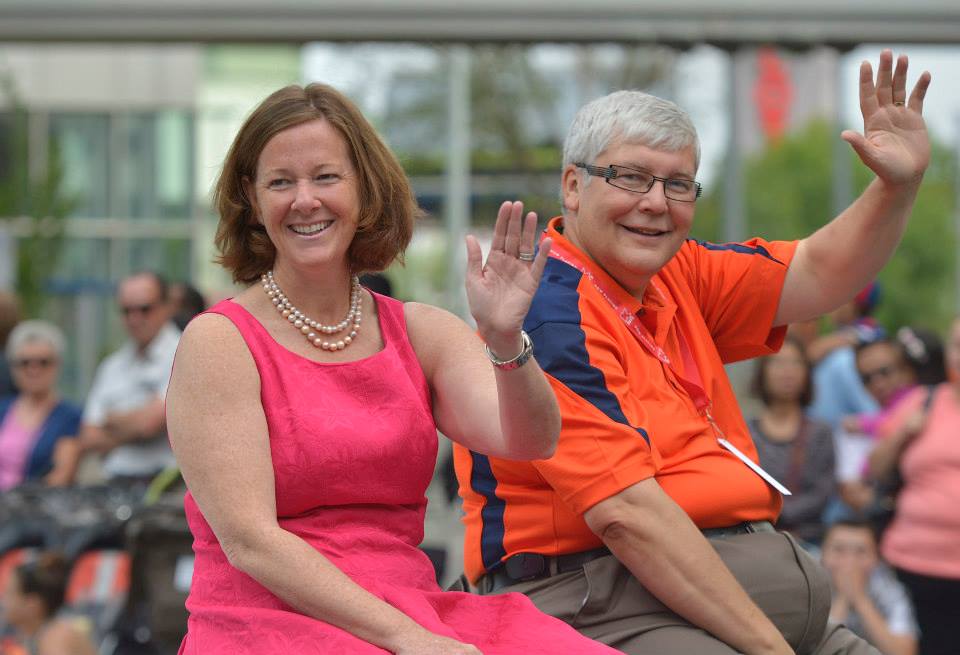
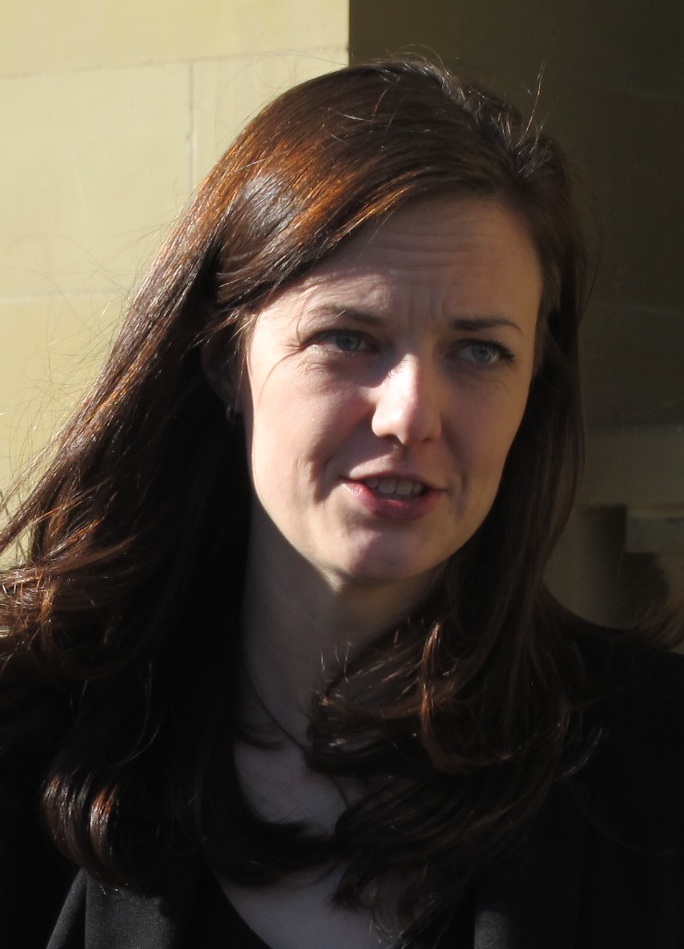
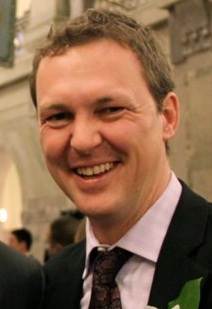
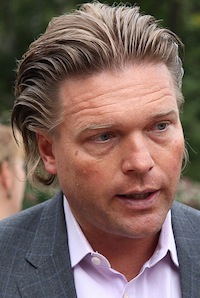
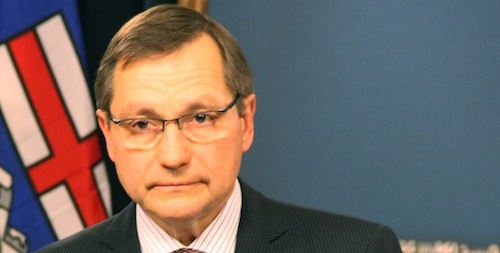
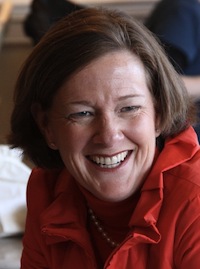
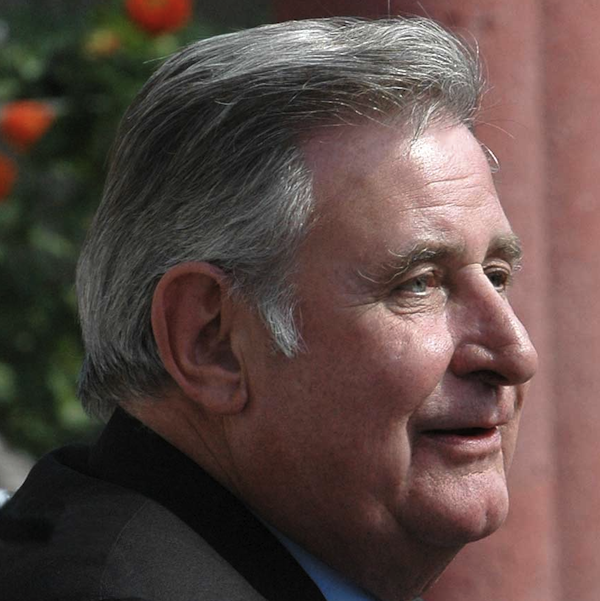
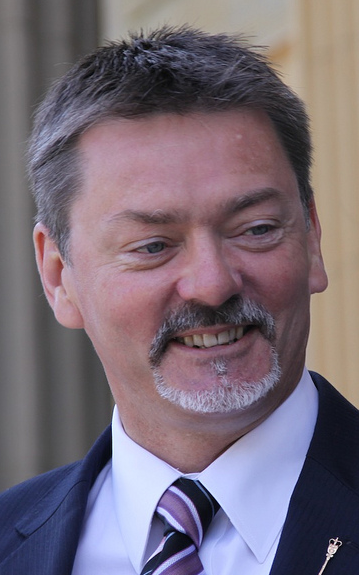
Outgoing Premier Alison Redford with incoming Premier Dave Hancock.
On March 20, 1989, Alberta’s Progressive Conservatives were re-elected with a majority government but Premier Don Getty was defeated by voters in his Edmonton-Whitemud constituency. It was a stunning embarrassment for the then 18-year governing PC Party.
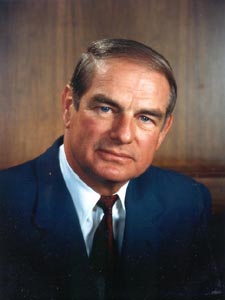
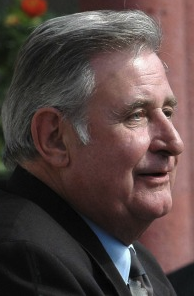
Don Getty
Twenty-five years later, on March 20, 2014, Alberta’s still-governing PCs selected Edmonton-Whitemud MLA Dave Hancock to serve as Premier of Alberta until a replacement could be chosen for the embattled departing Premier Alison Redford.
Mr. Hancock was president of PC Party during the dying days of Mr. Getty’s premiership, when it appeared as though the Tories would be defeated by the Liberals led popular former mayor Laurence Decore.
Mr. Getty’s resigned in 1992 after being dragged down by low public approval ratings and a disgruntled caucus. A divisive leadership race chose his successor, Ralph Klein, who soon after led the Tories to win a majority government in the 1993 election. Tory partisans of a certain age fondly refer to this period as “the miracle on the prairies.”
Mr. Hancock’s experience as party president during the early 1990s and his 43 years of involvement in the province’s natural governing party could help him calm the dissent in the unwieldy PC caucus.
Facing increased pressure from the opposition Wildrose Party, the next four to six months will be an incredibly important time for the Tories, as the upcoming leadership race will define the PC Party in advance of a fast approaching 2016 election.
The parallels between the early 1990s and today are not perfect, and perhaps not even fair, but they serve as a reminder about the ability of the PC Party to reinvent itself. Even at its most damaged and divided, as it appeared to be this week, the PC Party remains a political force to be reckoned with.
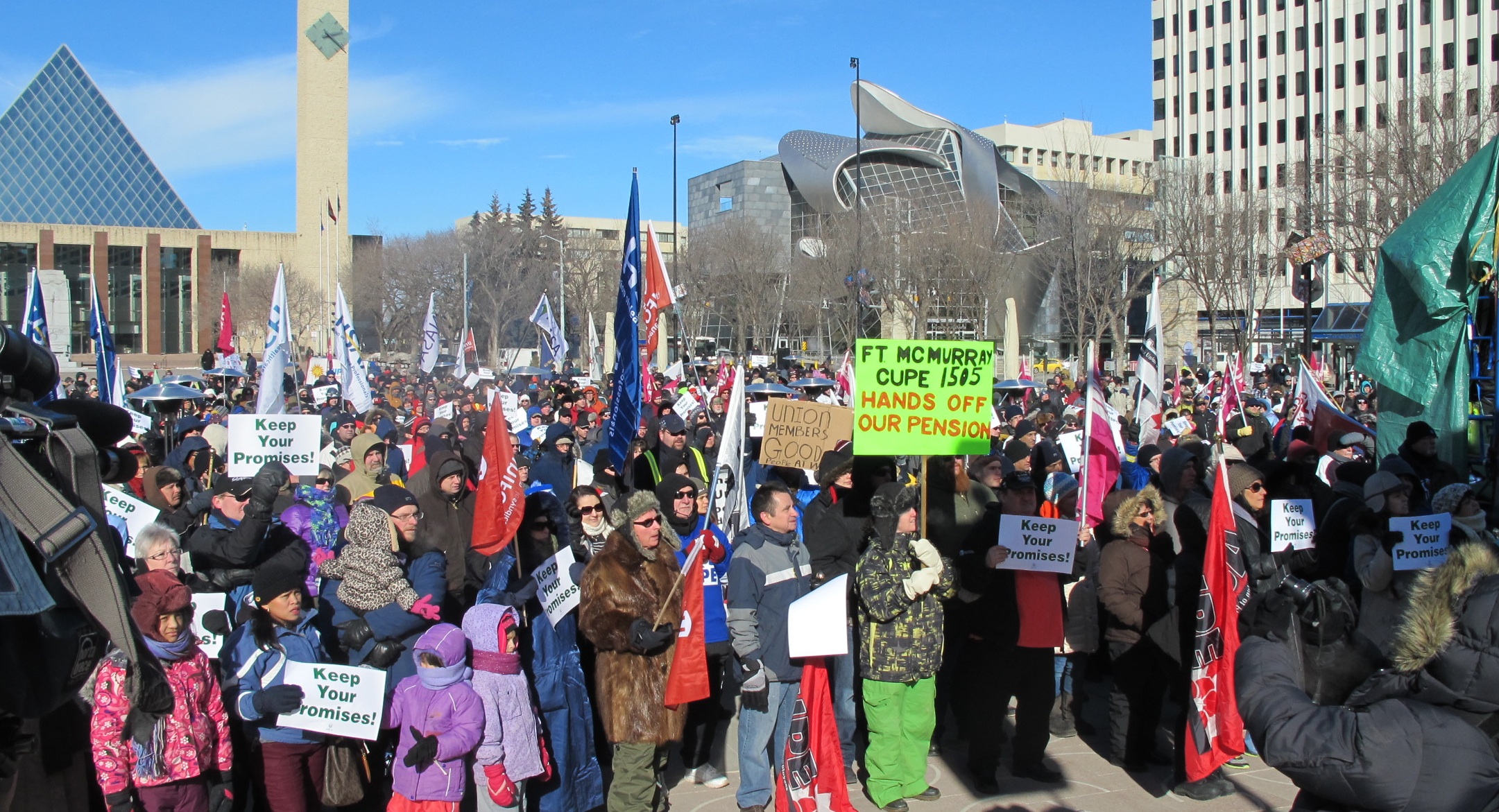
Close to 2,000 Albertans gathered in Churchill Square on March 2, 2014 to rally for secure public sector pensions.
About 2,000 Albertans from every corner of the province braved the -33C windchill yesterday to defend their modest pension plans at a rally in Edmonton’s Churchill Square. Many municipal and provincial employees are concerned that Finance minister Doug Horner‘s proposed changes to Alberta’s public sector pension plans could impact their retirement security.
NDP MLAs Deron Bilous and David Eggen show their support at yesterday’s rally.
Despite rhetoric about ‘gold-plated pension plans,’ the average full pension under the Local Authorities Pension Plan is only $15,000 per year.
Meanwhile, Premier Alison Redford is facing questions about another taxpayer funded flight on a government plane, this time from sunny Palm Springs, California.
After receiving a tip about a suspicious record in the Alberta Government Flight Manifests, I asked Ms. Redford on Twitter why a government plane flew empty to Palm Springs and returned to Calgary with her, her daughter and two members of her security detail onboard in April 2013.
Blogger David Climenhaga and Liberal MLA Laurie Blakeman at yesterday’s rally.
Ms. Redford did not respond to my tweet, but her communications director Stefan Baranski did. He explained that the flight brought the premier back to Alberta from her vacation home in order to attend former premier Ralph Klein‘s memorial service.
While the cost of the $9,200 flight to and from Palm Springs is not as salacious as Ms. Redford’s $45,000 flight to South Africa, it is unclear why the premier did not return to Alberta on one of the many commercial flights available in the six days before the memorial service.
Speech from the Throne & Budget A Speech from the Throne will open the spring sitting of Alberta’s Legislative Assembly today at 3:00 p.m. The 2014 provincial budget will be tabled by Mr. Horner on the afternoon of Thursday, March 6.
NDP to nominate the first candidate of the 2016 election
As was first reported last week on this blog, the Alberta NDP will hold a candidate nomination meeting on March 4 in the Edmonton-Riverview constituency. The NDP are expected to nominate Lori Sigurdson, manager of professional affairs with the Alberta College of Social Workers, as their candidate. The constituency is currently represented by PC MLA Steve Young.
Hundreds of supporters of the long-governing Progressive Conservative Association of Alberta will gather in Red Deer on November 22 and 23, 2013 to attend to the business of their annual general meeting and conduct a review of Premier Alison Redford leadership.
Why does a leader who nineteen months ago led her party to its 12th consecutive electoral victory have to face a leadership review?
Because it’s mandatory.
Article 15.1 of the Progressive Conservative Association of Alberta constitution states “At the second Annual General Meeting of the Association following a Provincial General Election where the Party forms the Government or at the first Annual General Meeting of the Association following a Provincial General Election where the Party does not form the Government, a secret ballot on leadership review shall be held.”
Who gets to vote?
Members in good standing of the PC Party and duly registered delegates who fall into one of the following categories:
– members of the PC Party Board of Directors
– 15 delegates from each of the 87 PC Party constituency associations (which must include a minimum of 3 youth delegates between the ages of 14 and the end of the calendar year in which they reach 26 years old)
– 20 youth delegates appointed by the Progressive Conservative Youth of Alberta, and 2 youth delegates who are full-time students from every accredited post-secondary education institution on which a PC campus club exists,
– current and past PC Members of the Legislative Assembly,
– PC candidates nominated to run in an upcoming provincial election,
– past presidents of the PC Party,
– 5 directors and up to 30 deputy directors of the PC Alberta Fund,
– PC Senators and Senators-in-Waiting,
– Conservative Party of Canada Members of Parliament from Alberta.
Why are Conservative Party of Canada MPs invited to vote in the leadership review?
This appears to be a constitutional remnant of a time when the provincial PC Party was officially tied to Progressive Conservative Party of Canada. The federal PC Party merged with the Canadian Alliance in 2003 to create the Conservative Party of Canada.
At the PC Party’s 2012 annual general meeting, delegates voted on a constitutional amendment to remove the automatic privileges of federal Conservative Party MPs and party activists at participate in provincial PC annual meetings. While the two parties have unofficial connections, friction over federal Conservative support of the Wildrose Party in the last election created a rift between the two parties. The amendment was partially approved, with Conservative MPs still being automatically invited to attend but the automatic invitation for federal Conservative riding associations to each send 15 delegates to the PC Party AGM was removed from the constitution.
What are delegates being asked to vote on?
Article 15.4 of the PC Party constitution states that the ballot shall contain the question: “Do you wish a Provincial Leadership Election to be called?”
What happens if delegates vote for a leadership review?
If a majority of ballots are marked in the affirmative, the PC Party Board of Directors shall proceed to call a provincial leadership election.
How would a new leader be chosen?
According to Article 14 of the PC Party constitution, a leadership election must be held not sooner than four months and not later than six months from the date of the leadership review.
Members in good standing of the PC Party who are Canadian citizens, at least 14 years of age and residents of Alberta for at least 6 consecutive months immediately prior to the leadership election are eligible to vote.
When the leadership election is held, the candidate who receives more than half the total valid ballots cast shall be declared the leader. If no candidate receives a majority of votes on the first ballot, a second ballot will be held with the two candidates who received the most votes. This is different from previous PC leadership votes where the three candidates with the most votes moved the the second ballot. This created situations where, in 1992, 2006, and 2011, the candidate with the most votes on the first ballot did not win on the second ballot.
Will Ms. Redford survive the leadership review?
While Ms. Redford has her detractors in her party and caucus, I believe the prospect of a majority of delegates voting for a formal leadership race is unlikely. As far as I am aware, no leader of a major Canadian political party has earned less than a majority vote in an internal leadership review (please correct me if I am wrong). But if a leadership race is called for, it would certainly be interesting to see if Ms. Redford followed her in the footsteps political mentor, Joe Clark, in contesting a leadership race.
After more than 40 years as the governing party in Alberta, the PC Party has proven its ruthlessness towards its leaders. Remember that even Premier Ed Stelmach won a resoundingly strong endorsement from his party membership after the 2008 election. But when the party establishment sensed his leadership could hurt the party’s electoral fortunes, he was challenged from within and he quickly announced his departure in 2011. Premier Ralph Klein‘s 13 year tenure as leader of the PC Party came to an abrupt end when he received a shockingly low 55.4% support in that party’s 2006 leadership review. And in 1992, Premier Don Getty chose retirement before he was forced to face any large scale internal dissent in his party and caucus ranks.
Peter Lougheed appears to be the only leader of the PC Party in Alberta who has retired from politics on his own accord since that party first formed government in 1971.
A weak endorsement of the current leadership would certainly be good news for the tire kickers in the PC Party who would like to see Deputy Premier Thomas Lukaszuk or Finance Minister Doug Horner have an opportunity to lead. But if delegates endorse the current leadership, as most political watchers are predicting, the potential challengers may have to cool their heels for at least the next few years.
The political battle between the Wildrose opposition and long-governing Progressive Conservatives continued today as the Legislative Assembly resumed for the fall sitting. Debt was the biggest issue of the day. Wildrose leader Danielle Smith jumped at the opportunity to make light of comments Premier Alison Redford made that compared the government’s decision to accept debt financing as “hope.”
“Let’s take some of the premier’s other quotes and sub in ‘hope’ for ‘debt’ and see if that makes sense. Alberta does not have hope, and we will not incur hope. We cannot come out the current fiscal situation with hope.”
“So to the premier, if debt is hope, when can we expect to once again be hope free?”
– Danielle Smith
After a decade of worshiping an anti-debt orthodoxy that defined former Premier Ralph Klein‘s era in Alberta politics, the natural governing party changed their tune. Abandoning the culture of “no debt” that they created has undoubtably been difficult for the PCs as they embraced a new faith in capital financing. It makes fiscal sense if you want to plan for the long-term, but in the Alberta context, it symbolizes an awkward culture shift for a political party that defined itself by this rally cry.
Cabinet shuffle rumours
If there is any truth to the cabinet shuffle rumours that have been circulating in political circles, it would not be unexpected for Ms. Redford to hit the reset button after she faces a mandatory leadership review in November (I anticipate PC activists will approve of her leadership). It may surprise Albertans to discover that twenty-seven of fifty-nine PC MLAs currently serve in some ministerial or associate ministerial role (that’s 45% of the government caucus).
Doug Griffiths
Three cabinet ministers who have caused particular difficulty for the government and should be candidates to be shuffled are Education minister Jeff Johnson, Municipal Affairs minister Doug Griffiths, and Deputy Premier Thomas Lukaszuk.
Mr. Johnson has earned the distain of teachers and schools boards officials for his clumsy handling of the last year’s Alberta Teachers’ Association contract negotiations and the ensuing financial havoc wreaked on the education employers.
Mr. Griffiths has locked horns with Calgary’s popular mayor Naheed Nenshi too many times to be seen as an effective minister. The election of Don Iveson as mayor of Edmonton could help convince the Premier that perhaps she needs a more effective communicators in the increasingly important municipal affairs role.
Ramming through the Redford government’s cuts to post-secondary education, the powerful Mr. Lukaszuk frequently speaks as if he leads the government, leading some conservatives to suggest he has leadership ambitions of his own. Some conservatives have begun noticing similarities between Mr. Lukaszuk and former Deputy Premier Ken Kowalski.
In the first few years of Mr. Klein’s administration, Mr. Kowalski served in a powerhouse role as Deputy Premier and the unofficial “Minister of Everything.” At the time, some Tories suggested that Mr. Kowalski was actually running the government, which raised the ire of Mr. Klein. Perhaps not surprisingly, Mr. Kowalski was unceremoniously booted from the halls of power by Mr. Klein mid-way through his government’s first-term.
The curious case of Doug Elniski
Former Conservative Member of Parliament Brent Rathgeber isn’t the only former Edmonton-Calder PC MLA to go rogue. Former PC MLA Doug Elniski announced days ago that he had joined the Wildrose Party and was attending that party’s policy convention last weekend. Mr. Elniski was the second PC MLAs to endorse Ms. Redford in her bid for the PC leadership and stood at her side when she spoke to the media following her win in that race. He did not seek re-election in 2012.
Doug Elniski at #wrpagm. He’s home. To wit: “Men are attracted to smiles, so smile and don’t give me that ‘treated equal’ stuff.” #ableg
Showing a surprising lack of class, Ms. Redford’s communications director Stefan Baranski took to Twitter to attack the former PC MLA for controversial comments he made years ago. It appears that many of Ms. Redford’s staff spent their weekend posting juvenile and sarcastic tweets about the opposition party’s gathering. Apparently this is how senior government staff spend their weekends these days.
Whatever it takes, Wildrose Party activists are expected to moderate the tone of their policies at their weekend policy convention in the booming central Alberta city of Red Deer. A delicate and sometimes shaky coalition of libertarians and social conservatives (among other groups), Alberta’s official opposition party will learn from the mistakes they made in the 2012 election. On the cusp of victory, offensive remarks made by social conservative candidates in Calgary and Edmonton scared many moderate Albertans to support the long-governing Progressive Conservatives at the ballot box.
Since forming the official opposition with 17 MLAs, Ms. Smith has led a disciplined front-bench that has in many cases driven the government’s agenda, or at the least frustrated government ministers unaccustomed to their aggressive style. Implementing tactics used by the Ottawa Conservatives, the Wildrose have been relentless in their opposition to the forty-two year old governing PC Party.
Fighting back against the Wildrose, or at least trying to, Tory environment minister Diana McQueen emerged from her legislature office yesterday to attack Wildrose leader Danielle Smith’s position on climate change. While Ms. Smith’s party is undoubtably weak on environmental issues, especially on the important climate change file, the Tory government’s environmental record is not much better. While the Alberta government is doing more on this file than it has in a decade, its plan appears to be propped up by snippets of truth and focus group tested sound bites.
Thomas Lukaszuk
The Wildrose are looking for second chances and there is opportunity for them. With drastic cuts to education and post-secondary education, constant political meddling in the health care system and fears that public sector pension changes may negatively impact the retirement prospects of hundreds of thousands of Albertans, Alison Redford’s Tories threaten to alienate the electoral coalition of moderate voters (including many former Liberal voters) who helped them narrowly win re-election. Shooting from their hips (and frequently missing their targets), cabinet ministers Thomas Lukaszuk, Jeff Johnson, Fred Horne, and Doug Griffiths often confuse their own confidence with arrogance. The Tories do not give any impression that they were humbled by their near-defeat in last year’s election.
Some Tories may point to the electoral success of Premier Ralph Klein following his drastic budget cuts in the early 1990s, but this is a very different political environment, and I am sure that most Albertans would agree that Ms. Redford is no Mr. Klein.
A recent poll from Leger Marketing, for what it’s worth three years before the next election, shows Ms. Redford’s and Ms. Smith’s parties competing with mid-30 percent range support. The poll also shows that more than half of Albertans disagree with the government’s performance, but the Wildrose’s support in the polls suggests voters have not settled on an alternative.
Brad Wall
This weekend and over the next three years, the Wildrose Party could look to Saskatchewan for inspiration. Stalled for years in the opposition benches, the conservative Saskatchewan Party undertook a move to modernize its image and policies when Brad Wall became the party leader in 2004. The unruly coalition of Tories and Liberals led by a former Reform Party MP had been unable to defeat the institutionalized New Democrats, who dominated in that province’s major cities. Under the smart and savvy Mr. Wall, the Sask Party modernized, and slowly began to encroach into NDP held urban constituencies.
After his party finally defeated in NDP in 2007, the conservative Mr. Wall has become one of Canada’s most popular provincial leaders. Like the NDP did to the Sask Party, and the Tories did to the Wildrose in 2012, Albertans can expect to be berated by rounds of “ooga booga, the Wildrose is scary” ads in the next election. The part that will be missing from those ads is that many, if not most, current Wildrose supporters were sitting comfortably in the Tory camp until about three years ago.
Wildrose success is not entirely about policy. Planting the seeds of doubt in Ms. Redford’s ability to run an honest government will also be key to the Wildrose Party’s success in the next election. Ms. Redford’s tendency to avoid controversy by hiding the truth or bending the facts is something that many political watchers have noted. Her office’s decision to block requests to release details of more than $2 million in severance packages given to former premier’s office staffers planted one seed of doubt. Her actions, her words, and people she surrounds herself have planted others. Two bad seeds that might not go away, controversial former PC MLAs Mike Allen and Peter Sandhu, are expected to apply for re-entry into the Government Caucus.
And the Wildrose do not just need Tory voters to vote for them, they also need former New Democrat and Liberal voters to return to their prior allegiances (a key reason behind Ms. Smith’s province-wide debate tour with NDP leader Brian Mason).
So, it’s clear the Wildrose needs to moderate the tone of their policies to attract new voters, but they can also benefit greatly from the seeds of doubt that the Redford Tories appear to be planting each week.
On January 25, 2011, Ed Stelmach announced his plans to step down as premier of Alberta. He left office on October 7, 2011.
Two years ago today, Ed Stelmach quietly stepped out of the political spotlight after a nearly five years as Premier of Alberta. The mild-mannered farmer from Andrew dedicated more than twenty-five years of his life to municipal and provincial politics and led the Progressive Conservative Association to win one of its largest electoral victories in forty years. Despite this win, his party’s Calgary establishment never forgave him for defeating their choice for leader.
On January 25, 2011, facing dangerous divisions in his party and caucus, Mr. Stelmach announced his decision to resign. On October 7, 2011, he was officially replaced by Calgary MLA Alison Redford.
While there were certainly controversies and missteps during his time as premier, Mr. Stelmach made significant decisions that have had a positive effect on our province. Consideringmyhistory with the man, some readers may be surprised to learn that I believe history will be kind to Alberta’s thirteenth Premier. Here’s why.
Six reasons why history will be kind to Ed Stelmach
1) Mr. Stelmach reinvested in public services and infrastructure. After years of neglect, his government tackled the province’s growing deferred maintenance budget by investing billions of dollars into public infrastructure. The $1 billion GreenTrip Fund provided to municipalities allowed for the expansion of public transit in Alberta’s fast-growing cities. A series of 5% increases to the health care budget helped to stabilize the see-saw of unpredictable funding allocated by his predecessor, Ralph Klein.
2) The creation of the Capital Region Board helped de-escalate the tensions and narrow the deep divisions between the dozens of municipalities in the Edmonton region. While tensions still exist in some corners of the capital region, Mr. Stelmach helped usher a détente by forcing the municipal politicians to use a process for resolving grievances and planning the future.
3) The creation of the Ten-Year Plan to End Homelessness set a bold plan in motion to eliminate homelessness in our province by 2017. Along with plans to end homelessness in Calgary, Edmonton, and many other cities in the province, thousands of Albertans have been successfully housed through programs like Housing First. In 2012, Edmonton’s Homeward Trust honoured Mr. Stelmach with Special Recognition for Leadership towards Ending Homelessness
4) The introduction of the Lobbyist Registry helped shine a spotlight into the shadowy world of political lobbying and horse-trading. Although not foolproof, the registry gives Albertans a chance to see who is being paid to influence their elected officials on a daily basis.
5) During his first year in office, Mr. Stelmach concluded a deal with the Alberta Teachers Association in which the province agreed to contribute $2.1 billion towards the $6.6 billion unfunded pension liability. In exchange, Alberta’s 34,000 teachers agreed to a five-year contract.
6) Mr. Stelmach moved the Tories back to the centre of the political spectrum. While he did not stay to face them in an election, he recognized that to compete with the upstart Wildrose Party, he needed to move his party to the middle, rather than the political right. While this angered his opponents both inside and outside his party, this decision may have helped save his party from political defeat in the 2012 election.
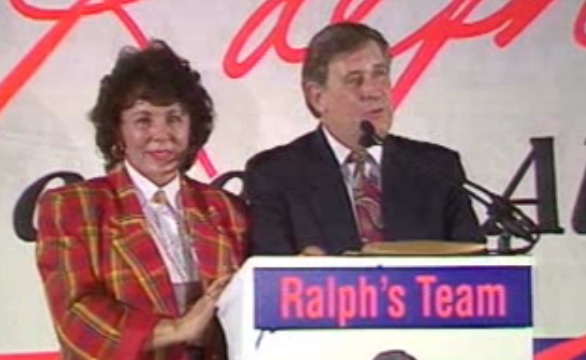
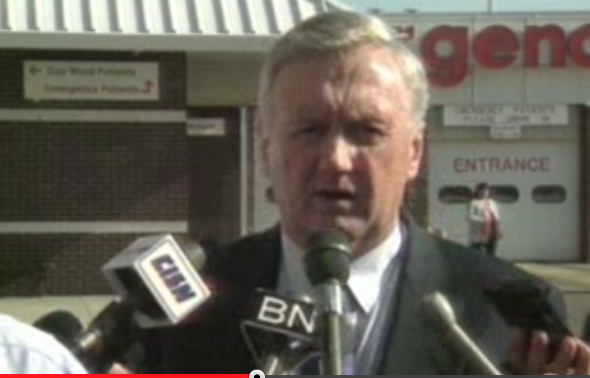
Colleen and Ralph Klein (screenshot from CBC news archive)
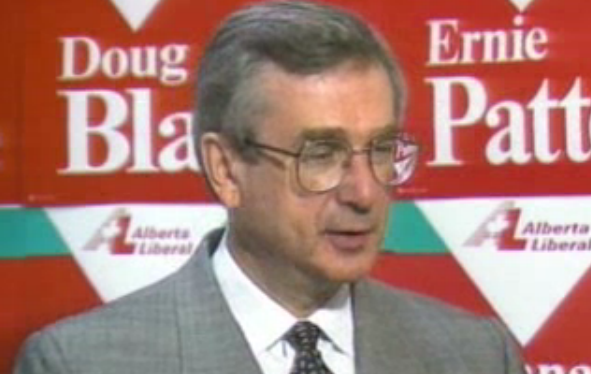
Today marks the 20th anniversary of Alberta’s 1993 election, known in Tory political circles as “the miracle on the Prairies” and to others as the election that interrupted the 1993 Stanley Cup Finals (in which the Montreal Canadiens defeated the Wayne Gretzky-led Los Angeles Kings). This election was Alberta’s most competitive in decades and saw the 22 year governing Progressive Conservatives led by former Calgary Mayor Ralph Klein face-off against the reenergized Liberals led by former Edmonton Mayor LaurenceDecore.
The Tories emerged as the victors of the closely fought election, successfully distancing themselves from the unpopular former Premier Don Getty, who Premier Klein had only replaced the year before the election. Significant retirements of long-time Tory MLAs brought a new batch of candidates on “Ralph’s Team” to compete with an impressive and well-funded slate of Liberal candidates.
Hoping to ride the wave of electoral discontent that the Reform Party would ride in the federal election later that year, the Liberals challenged the Tories on many traditional conservative issues and attracted some social conservative candidates who might not find a natural home in the Liberal Party. A few of these successful social conservative Liberal candidates, including Edmonton’s Julius Yankowsky, would later cross the floor to the Tories.
With both the PCs and Liberals campaigning on fiscal conservative platforms geared toward eliminating budget deficits and paying down debts, there may have been less policy difference between the two parties than could normally be expected.
Laurence Decore (screenshot from CBC news archive)
Similar to last year’s provincial election, where a “Lake of Fire” helped cost Danielle Smith‘s Wildrose Party more than a few votes in closely fought campaign, a controversial social issue played a defining role in the 1993 election. Political scientist Peter McCormick wrote in the Canadian Annual Review of Politics and Public Affairs, 1995, “…it was generally agreed the Liberal leader Laurence Decore’s causal raising of the abortion issue was one of the reasons his party lost the 1993 provincial election.”
On June 15, 1993, Premier Klein’s PC Party was re-elected with 51 seats out of 83 and 44% of the provincial vote. Premier Klein would lead his party through three more election victories before he retired in 2006. Winning every seat in Edmonton and a handful in rural Alberta, Calgary and Lethbridge, the Liberals elected 32 MLAs and earned 39% of the provincial vote.
A number of Tory stalwarts, including Bonnyville‘s Ernie Isley, Leduc‘s Donald Sparrow and St. Albert’s Dick Fowler were unseated by Liberal candidates. A Liberal candidate was even successful in capturing Calgary-West, the coveted constituency represented by Premier Peter Lougheed from 1967 to 1986. The Liberals have never again come this close to forming government in Alberta.
Ray Martin (screenshot from CBC news archive)
Led by Edmonton-Norwood MLA Ray Martin, the official opposition New Democrats lost the 16 seats they had won in the previous election. Electoral boundary redistribution, retiring incumbents, and the defection of Stony Plain NDP MLA Stan Woloshyn to the Tories did not help. With a rise of support for the Liberals in Edmonton and the Tory’s new popular leader Premier Klein, the NDP were abandoned by many of their traditional supporters in this election.
Watch this archived CBC news report on the 1993 election (points to anyone who can name the journalist narrating the CBC report).
Culture Minister Heather Klimchuk and Premier Alison Redford at Duchess Bakeshop in Edmonton.
Success comes with challenges, and for Alberta’s Progressive Conservatives, forty-two years of electoral success has come with its own unique set of challenges.
One of the PC Party’s biggest successes has been its ability to reinvent itself over its more than four decades in power. It is sometimes difficult to explain to someone from outside Alberta how the same party has been led by the very different leadership styles of Peter Lougheed, Don Getty, Ralph Klein, Ed Stelmach, and now Premier Alison Redford.
What does today’s version of the PC Party stand for? I am not sure its leaders have a clear idea what the latest reinvention embodies.
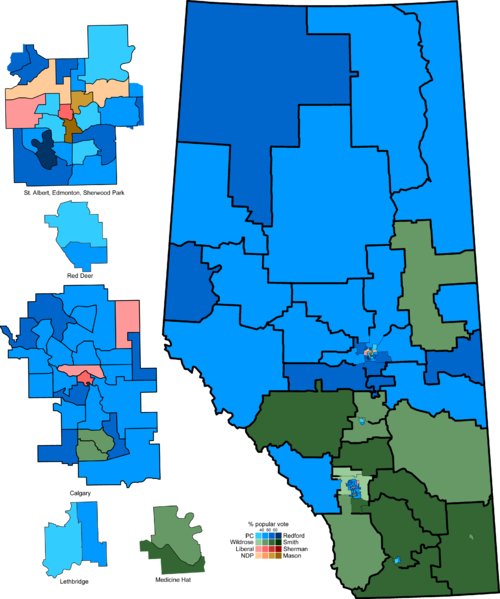
Alberta’s new political map after the 2012 election (map from Wikipedia).
Confusion appears to be another challenge of being the Natural Governing Party.
The PC Party is also less of a real political party and more of an amorphous blob that exists to sustain power.
Recognizing the need to connect with its base of activists ahead of November’s leadership review vote, Premier Redford announced at last weekend’s party policy conference in Edmonton the formation of new committees that will help connect party policy with the government’s agenda. This is a tricky goal to accomplish, as the PC Government is expected to represent all Albertans, not just those who hold a membership with the Premier’s political party.
This is also not the first time the PC Party has boldly attempted to make party membership relevant outside of leadership races or nomination contests. In the early 2000’s, Premier Klein commissioned numerous initiatives with his party’s base of activists to try to reengage with them. The success of those particular initiatives was questionable.
Following last year’s election, the latest reinvention of the PC Party is largely urban-based and faces a rural-based official opposition. The PC Party’s recent attacks on the Wildrose Party’s more extreme social conservative-base, which until recently played a significant role in the governing coalition, have demonstrated that Alberta’s Natural Governing Party might not be sure what its latest reinvention is, it is starting to show what it does not want to be.
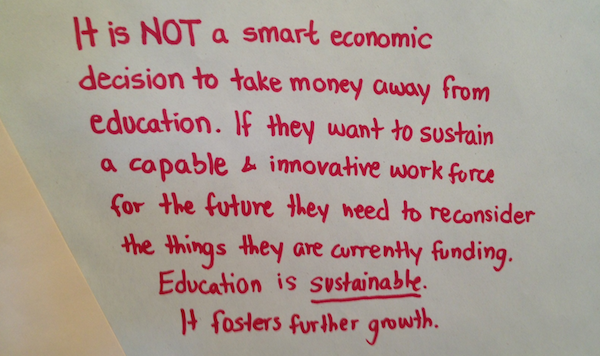
University of Alberta students penned messages to the provincial government at yesterday’s #Graffiti4Govt graffiti wall.
“We’ve been very clear that we will not be balancing the budget on the backs of students,” Premier Alison Redford told the media at a press conference yesterday.
This statement is only partially true. The provincial government is not balancing the budget this year.
Gathered to re-announced what Deputy Premier Thomas Lukaszukcasually announced off-the-cuff last week, Premier Alison Redford and her loyal Deputy declared yesterday that the provincial government provide an extra $16.5 to post-secondary institutions to cover next year’s expected 2.5% tuition increase for students. The government has framed the move as a tuition “freeze,” but it is really a one-time subsidy to hide a fee increase, as the institutions will be implementing tuition increases regardless.
So, the good news is that students will not be paying more out of their pockets in tuition next year. The bad news is due to provincial budget cuts, class sizes will be larger and there will be fewer instructors. This is, of course, if your program has not been cancelled.
Deep cuts to the provincial government’s post-secondary education budget has led Alberta’s universities and colleges to announce staff layoffs, program cutbacks and, in some cases, complete program eliminations. Mount Royal University, Grant MacEwan, NAIT, Lakeland College, and Athabasca University have announced cuts to programs and staff that will affect the quality of education Alberta students will receive in the coming years.
University of Alberta students penned messages to the provincial government at yesterday’s #Graffiti4Govt graffiti wall.
Yesterday’s announcement, like the Deputy Premier’s focus on Campus Alberta logos and mandate letters, is meant to distract the public from the affects the deep budget cuts. The fake tuition freeze and orders from Deputy Premier Lukaszuk that all institutions implement a three-year wage freeze in all future staff contracts, could drive a wedge between students and post-secondary staff, who have remained unusually unified in speaking against the budget cuts.
Unlike the broad-sweeping budget cuts implemented during Premier Ralph Klein‘s time in office, post-secondary education is a main target in Premier Redford’s cuts. These cuts may be an indication as to why the soft-spoken former Advanced Education Minister Stephen Khan was shuffled out of cabinet earlier this year in favour of the more aggressive and heavy-handed Deputy Premier Lukaszuk.
Alberta’s two big city mayors are united in displeasure over the cuts.
“When I see Edmonton’s key growth sector — our post-secondary institutions — placed in a position of fundamental uncertainty, I worry that a new era of ‘good-enough’ thinking is poised to undermine our long-term sustainable prosperity” – Edmonton Mayor Stephen Mandel (April 2, 2013)
Calgary Mayor Naheed Nenshi, an associate professor at Mount Royal University, penned an open letter to the institution’s board of governors urging them to stand up to the provincial government.
I have been on record as saying that the provincial government has made a terrible error in its post-secondary education policy – great cities need great universities and great universities need government support. No doubt these actions have made your life very difficult. However, I would encourage the leadership of MRU to stand up to the provincial government on behalf of its students, faculty, and community, rather than capitulate to the government’s bad policy. – Calgary Mayor Naheed Nenshi (April 17, 2013)
The “bitumen bubble” spin was unleashed by Premier Alison Redford during her January 24, 2013 televised address that claimed our province was in the midst of a fiscal crisis caused by the so-called “bitumen bubble” — the difference between the price Alberta can get for its heavy oil (Western Canadian Select) and what the world is willing to pay for Texas crude (West Texas Intermediate).
On the day of Premier Redford’s January televised address, Western Canadian Select sat at $59.95 per barrel, compared to $95.95 per barrel for the West Texas Intermediate.
Albertans were told this price gap was why our oil industry needs more pipelines and why our provincial government claimed it needed to institute financial cuts to public services, including a drastic 7% cut to post-secondary education funding.
As of April 8, 2013, Western Canadian Select sat at $82.97 per barrel, compared to $93.36 per barrel for West Texas Intermediate.
Premier Alison Redford
By some act of nature, the dreaded “bitumen bubble” has miraculously deflated.
Alas, this price increase has little to nothing to do with our long-ruling Progressive Conservative government. Commodity prices are determined by international markets beyond the control of any individual government or ambitious politician.
No new pipelines have been built in the meantime, but Premier Redford, along with International Relations Minister Cal Dallas and Environment Minister Diana McQueen, traveled to Washington D.C. this week to lobby for the approval of the TransCanada Keystone XL pipeline that would carry crude oil and bitumen from Alberta to refineries dotting Texas’ Gulf Coast.
I expect the Premier has left the words “bitumen bubble” out of any speeches she plans make while visiting the American capital.
Making a strong case for Alberta’s environmental record, Premier Redford’s economic arguments fell flat. She claimed that the Keystone XL Pipeline would create 75,000 jobs for Americans, despite the fact that a U.S. State Department reported the number of new permanent jobs could be as few as thirty-five once the pipeline is complete.
Premier Redford also argued that the Keystone XL Pipeline would lessen America’s dependance on countries like Venezuela and Saudi Arabia for oil imports. As the proposed pipeline would end at major Texas ports, it is widely suspected that the corporations that would own the Alberta oil refined in Texas could easily ship it overseas to China or India, rather than sell it in the United States or Canada.
Premier Redford’s fact-based talk was heavy in statistics, which unfortunately will have little effect on a national discussion about the environment and economy that is driven heavily by emotional arguments on both sides of the debate (as demonstrated by the hecklers at her speech). At least Albertans can be proud our leaders have come a long way since Premier Ralph Klein compared the causes of today’s climate change problems to “dinosaur farts” sixty-million years ago.
Sitting at 29% approval in a recent Angus-Reid survey, Premier Redford is searching for a win in the American capital that could boost her popularity at home. Even if the Keystone XL Pipeline is approved, there will be no evidence that Premier Redford’s lobbying was the reason for its success. That decision will be made by President Barack Obama.
President Obama hit California for some fundraising this week, including stops with various billionaires who fervently oppose the Keystone XL pipeline. The visit had the virtue of showing how Mr. Obama is cross-pressured between his superrich green friends who don’t need to worry about a job and the blue-collar types who wouldn’t mind laying oil pipe for $25 an hour.
Former Premier Ralph Klein, reluctantly doning a chef’s hat.
Since Ralph Kleinpassed away last week, numerous people have emailed me with their stories about his time politics and reactions to legacy in Premier.
The responses varied from loving to hostile, but easily the oddest email I received over the weekend was from a former Progressive Conservative constituency association president, who sent me an excerpt from a limited-edition “Ralph’s Team Family Favourite Recipes” cookbook that were sold at a PC Party fundraiser in 1995.
The cookbook included the favourite recipes of Tory cabinet ministers, backbench MLAs, party activists, and the Premier himself. Here is then-Premier Klein’s submission to the cookbook:
ORIENTAL HOISIN CHICKEN
Premier Ralph Klein, MLA Calgary Elbow
4 chicken breasts or legs
1/2 c Hoisin sauce
2 T Ketchup
2 T Soya sauce
2 T freshly squeezed lemon juice
2 crushed garlic cloves
Oil grill and preheat barbecue. Remove skin from chicken, if you wish. Place each chicken part on a piece of heavy foil large enough to securely wrap it.
Stir remaining ingredients together. Spoon about 2 T. of sauce over each piece of chicken. Bring long edges of foil together, fold over several times and seal ends. Press foil down to form a flat packet.
Place packets on grill about 3 inches above hot coals and barbecue for 45 minutes, turning 2 – 3 times.
Remove packet from grill. Open and pour juice into a bowl. Brush chicken with some of remaining Hoisin mixture and place on grill. Barbecue, turning and basting often, until golden brown or richly glazed, about 5 to 7 minutes. Watch carefully to avoid burning. Stir any remaining Hoisin mixture with some of chicken juices as a dipping sauce.
Variousnewsmedia are reporting that Ralph Klein has passed away at the age of 70. Mr. Klein served as Mayor of Calgary from 1980 to 1989 and Premier of Alberta from 1992 until his retirement from politics in 2006.
Rumours swirled through the halls of the Legislative for weeks. Whispers and warnings of cuts and rollbacks not seen since Ralph Klein and Jim Dinning unleashed a scorched earth policy on the provincial budget in the mid-1990s. Back in debt. Broken promises. Bankrupt budgets.
The end was nigh.
And today, the budget was tabled and the massive cutbacks did not emerge.
The end is not nigh, but remains difficult to figure out what long-term goals Finance Minister Doug Horner and Premier Alison Redford plan to accomplish with Alberta’s 2013 provincial budget. The devil is in the details and the posturing for the next provincial election, expected in 2016, has already begun.
Doug Horner
The Sustainability Fund that has saved our provincial government from going back into debt for five years is gone and in its place, the government is introducing the Fiscal Management Act, which Minister Horner says will mandate annual savings. In hindsight, and the world of smart fiscal management, this is probably something that the Tories should have started doing when they first formed government more than forty years ago.
Different than most years, this year’s budget is separated into three categories – operating, capital, and savings. This helps the government deflect criticism that it has returned to capital financing in order to build much needed public infrastructure and poses roadblocks to opposition groups hoping to make straight comparisons to previous budgets. The split also allows government ministers to argue with the deficit-hawks in the Wildrose official opposition that the “real” deficit, in the operating budget, is only projected to be $2 billion.
Overall, the budget for 2013-2014 is projected to stay the same as last year’s provincial budget, though the funding within the $36 billion has shifted. Cuts have been made.
Premier Alison Redford
The largest slice of the budget, going Alberta Health Services budget was increased by 3%, rather than the promised 4.5%. AHS Chairman Stephen Lockwood, the trucking magnate from Okotoks, weeks ago publicly declared that he would not fight for the full promised increase.
The Municipal Sustainability Initiative grants awarded to cities, towns, and counties have been frozen at $846 million, the rate in last year’s budget. This may feel problematic for some municipalities, who have already borrowed funds based on expected MSI funding in order to finance critical infrastructure projects. Alberta’s municipalities are responsible for so much of the critical infrastructure and services Albertans interact with daily.
The Alberta Association of Municipal Districts and Counties, known to political insiders as the “Tory farm team” because past rural Tory MLAs who have emerged from its ranks, expressed its disappointment in the cuts to municipal funding programs.
“Rural municipalities are responsible for the roads that keep our economy moving and the government’s lack of support for this critical responsibility will have a huge impact on our members’ budgets,” said AAMDC President Bob Barss.
The Advanced Education budget was cut by 6.8%, creating a likely situation that will see Universities and colleges turn to raising tuition and non-instructional fees levied on students to fill their financial gaps. University of Alberta President Indira Samarasekera sent a mass-email to staff and students earlier this week warning them that changes are on their way.
Calling the post-secondary cuts the largest in two decades, Council of Alberta University Students chair Raphael Jacob said “these cuts are going to have an immediate impact on the quality of our post-secondary education, and potentially longer impacts on the affordability and accessibility of degrees in Alberta.”
The budget also leaves unresolved a number of outstanding political issues facing Premier Redford’s government, such as the two ongoing labour disputes with Alberta teachers and doctors. These fights remain unresolved as the budget included a one year wage freeze for all public employees, including remuneration for doctors. The wage freeze should not be an issue for the teachers, who proposed a deal for two years without wage increases, but the doctors may move to escalate their dispute.
There will be no shortage of commentary on the political implications of this year’s provincial budget, but it is the long-game that matters. This budget is the first of a potential four before the Tories are expected call the next election in 2016. Whether they hope the Fiscal Management Act will earn them dividends from voters or that revenue from an increased price of oil will once again overflow government coffers, we are just in the first year of a four-year long political game.
Mr. Khan’s time in cabinet was largely seen as reserved and underwhelming. Ms. Cusanelli caused an unwelcome stir when she was forced to repay the government $10,600 for expenses made in her first five months in office, including $4,000 in airfare to have her daughter and mother join her at the 2012 Summer Olympics in London, United Kingdom. She was also given the unenviable task of defending the government’s large line of hospitality expenses at the London Games.
Ms. Cusanelli’s ministerial office was recently shuffled with the hiring of Chief of Staff Tammy Forbes, who previously served as the Premier’s media liaison, and press secretary Andrew Fisher, who previously served as Chief of Staff.
Replacing Mr. Khan is Deputy Premier Thomas Lukaszuk, who has been operating without an official cabinet portfolio since before last year’s election. First-term MLA Richard Starke, representing Vermilion-Lloydminster, has been tapped to replace Ms. Cusanelli as Minister of Tourism.
——
Minister Starke’s constituency has a long history of electing MLAs who later served as cabinet ministers.
First to the Tory cabinet was Lloydminster MLA Bud Miller served as the Minister of Public Lands and Wildlife in Premier Peter Lougheed‘s cabinet from 1979 to 1982.
Directly preceding Minister Starke was Lloyd Snelgrove, who was MLA from 2001 to 2012 and served in a number of portfolios during Premier Ed Stelmach‘s time in office, including a period of Minister of Finance. Citing irreconcilable differences, Mr. Snelgrove left the PC caucus to sit as an Independent MLA following Premier Redford’s successful leadership bid.
Preceding Mr. Snelgrove was Steve West, who served as the constituency’s MLA from 1986 to 2001 and served in a number of cabinet portfolios during Premier Ralph Klein‘s time in office, including Minister of Finance.
(Judging from historical trends, you might think there is a good chance that Minister Starke could one day be Minister of Finance).
Leading thinkers, key industry, non-profit and academic leaders, MLAs, and passionate citizens prepare for the Alberta Economic Summit.
Bitumen bubbles and the unpredictable price of oil mentioned in last week’s televised address have led Premier Alison Redford‘s Tory government to hastily called a one-day “Alberta Economic Summit” to continue a “conservation” about our province’s current fiscal woes and potential fiscal future.
The summit will bring together ‘leading thinkers, key industry, non-profit and academic leaders, Members of the Legislative Assembly and passionate citizens” for a day of panel discussions at Mount Royal University on February 9, 2013 (yes, that is ten days from now).
Premier Alison Redford
Despite the talk of “continuing the conversation” with Albertans, it is easy to be suspicious that the conference is a public relations exercise and a tool for the Tories to direct the public debate towards a certain direction. It seems difficult to image that any meaningful discussion about such complex issues could occur in such a short-period of time.
The government says it just wants to look at its options, which was a reoccurring theme in a discussion I had with Premier Redford last week. One option already off the table are tax increases, which despite growing public debate, the Premier says will not be in this year’s budget.
“It has got to be about economic diversification and what we want our fiscal framework to look like,” said Premier Redford when I asked her about what she would like to see come from the summit. “We want to engage people who give a lot of thought about these issues but don’t always have a chance to spend time together,” she said.
I asked the Premier if the Alberta Economic Summit was just a way for the government to deflect the public discussion away from taxes and toward a pre-determined answer. “We are not looking to deflect anything,” she said.
“As we move ahead it would be folly to say that every decision we make without consulting with Albertans would be the right decision. We want to make sure we are talking to Albertans and making decisions that reflect Albertans values.” – Premier Redford, January 25, 2013
Premier Ralph Klein
If all this talk of a big summit about Alberta’s economic future triggers hints of deja vu, you are probably not alone.
Eleven years ago almost to the day that the”Alberta Economic Summit” will be held, Premier Ralph Klein and Revenue Minister Greg Melchin held the “Alberta Future Summit” in Red Deer. The February 4, 2002 conference brought together 260 delegates to draft “strategic directions and ideas for action” for several areas identified as priorities – including the economy and fiscal responsibility.
The final report generated from the Future Summit included the following observation, which will sound familiar to anyone who tuned in to watch Premier Redford’s televised address last week:
Despite rapid growth in manufacturing and services exports over the past 10 years, Alberta continues to rely heavily on primary resource exports (such as oil, gas, grains and oil seeds) and intermediate commodities (such as lumber, pulp and petrochemicals). Alberta’s reliance on primary and intermediate resource exports makes the economy vulnerable. Economic and market diversification are key to future prosperity. – Alberta Future Summit 2002 final report
While I hope next month’s Alberta Economic Summit succeeds in generating a meaningful conversation between Albertans and their government, I cannot help but think this summit is a partially a result of the Tories failing to act on some of the advice they heard at their last big summit in 2002.
——
Today, the government launched a online build your own budget tool budgetchoice.ca, which allows Albertans to cut and raise taxes, and see a simplified version of how the provincial ledgers balance.
Curiously, participants are not given the option of raising royalties on natural resources and some Tory pet projects are not included in the tool or partially protected, including the controversial Carbon Capture and Storage Fund (CCS). The CCS Fund, intiated by Premier Ed Stelmach in 2010, directed $2 billion towards research with the private sector into the unproven technology that some large energy companies have abandoned. Of the more than $200 million expected to be budgeted for CCS in this year’s budget, only $60 million is available to be cut in the online budget scenario tool.