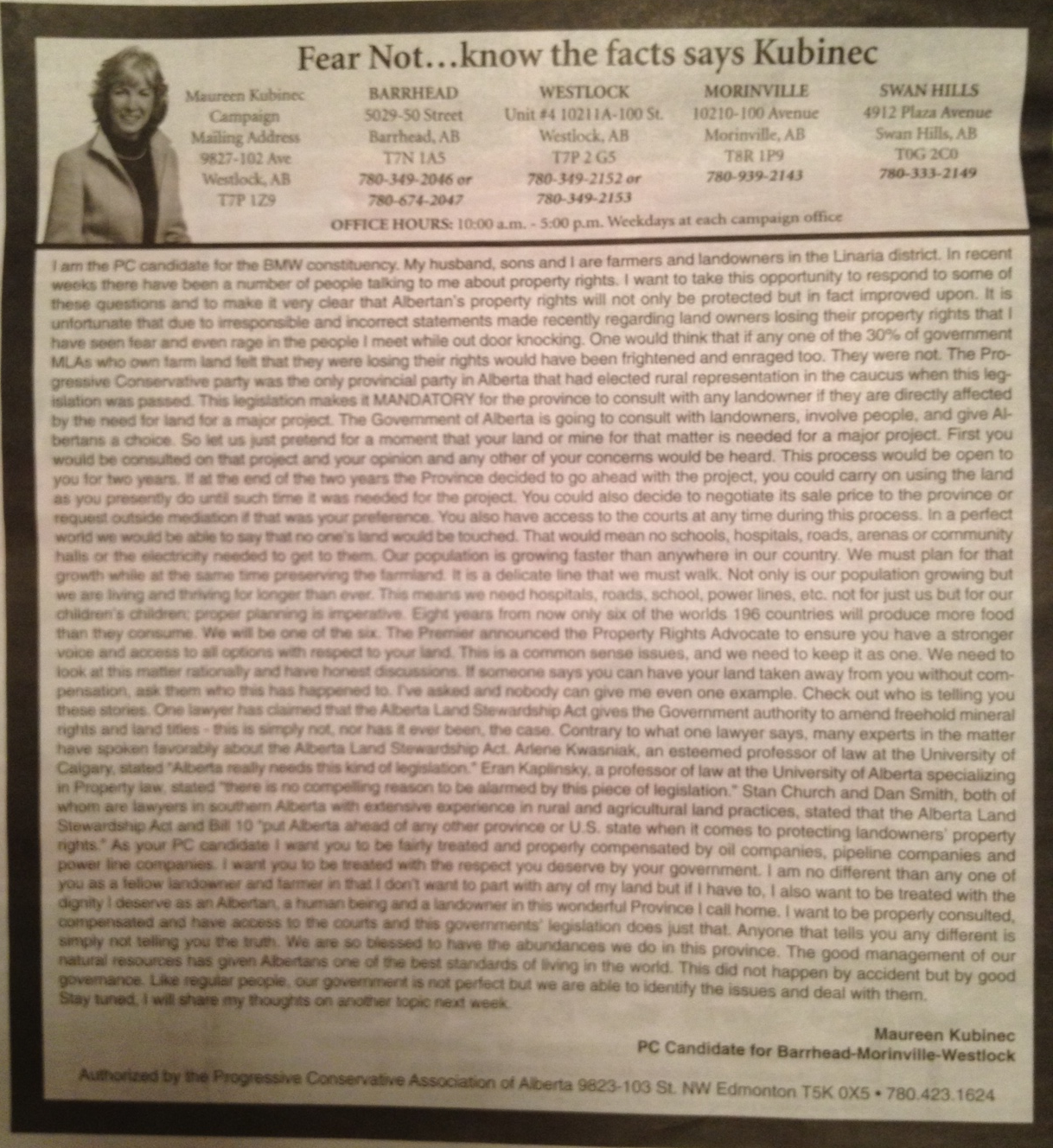
A half-page advertisement promoting PC candidate Maureen Kubinec in the St. Albert Gazette.
One of the most interesting features of the first two weeks of Alberta’s election campaign has been just how different the messaging of the two main campaigns have been.
The challenging Wildrose Party has presented a campaign with clear messaging with their five pledges to Albertans, consistent branding, and leader Danielle Smith has had much better photo-ops than her opponents. From the very beginning of the campaign, the Wildrose campaign was able to put the 41-year governing Progressive Conservatives on the defensive, a position that the big blue party is not used to playing.
The half-page advertisement (above) from the campaign of Barrhead-Morinville-Westlock PC candidate Maureen Kubinec may be an indication of the difficulty that some campaigns are having in communicating with voters. In many rural constituencies, like the one that Ms. Kubinec is standing in, it has been decades since the Tories have faced a real challenge.
With still two weeks left in the campaign and a hotly anticipated Leaders’ Debate later this week, there is still time for the Tories to catch up. They may have to pull out all the stops, but I would not count them out yet.
Alberta is the most urbanized province in Canada (81% of the population living in urban areas) and the Edmonton-Calgary corridor is one of the most urbanized regions in Canada.
Looking to put cities on the provincial election agenda, Calgary Mayor Naheed Nenshi is using the CitiesMatter.ca website to weigh in on why it is important that Albertans know where the provincial parties and their leaders stand on the future of our urban centres. Mayor Nenshi has sent surveys to each of the parties asking them about their positions on urban issues. The surveys responses are expected to be posted on the CitiesMatter.ca website when they are returned.
Dr. Urquhart correctly points out that even after the federal and provincial governments have downloaded more services and responsibilities to our municipalities, our cities receive a pittance of the revenue collected from Alberta taxpayers (just 8% in Alberta):
“From this small pot of money our cities must try to finance more than half of the infrastructure we use every day.”
Enthusiast of everything Edmonton, Mack Male, has joined a group of under-40 Albertans who are trying to put some important issues on the provincial agenda, like the expansion of Light Rail Transit in our major cities:
Edmonton and Calgary are often thought of as “car cities” but the desire to change is strong. Both cities have transportation plans that call for the expansion of light rail transit. Edmontonians consistently rank public transportation as the most important issue that the City should address. Most recently, a Leger Marketing poll showed that two thirds of Edmontonians would like to see the province fast-track its share of the LRT expansion to Mill Woods. In Calgary, Mayor Naheed Nenshi himself has been leading the charge to convince the province to provide long term and predictable funding for transit infrastructure in Alberta’s large cities.
Edmonton Journal columnist David Staples has suggested that the Wildrose Party’s proposed fiscal plan would axe the much needed transit funding, something that supporters of Danielle Smith has disputed (having an anti-LRT former mayoral candidate on her slate of candidates surely does not help reassure their critics). The Wildrose Party would cancel the existing Green Trip funding for future projects, but slot 10% of provincial tax revenues and 10% of surplus money for municipalities, which I understand could actually be less than the amount currently received through regular funding and special funds like GreenTrip (please correct me if I am mistaken).
In their “Yes!” platform, Dr. Raj Sherman‘s Alberta Liberals have called for the drafting of City Charters, the creation of a Municipal Heritage Fund (which would include direct funding for community associations), and the reinstatement of Community Lottery Boards. As a former Edmonton City Councillor, NDP leader Brian Mason, supports an increased in funding for the GreenTrip fund. Mr. Mason was also one of the only MLA’s who spoke out against provincial funding for Daryl Katz‘s new Downtown Arena.
Some people will suggest that future Wildrose Party government heavy with conservative rural MLA’s would not understand the needs of our big cities. Although there is certainly a geographical divide in our politics (urban and rural, Calgary and Edmonton, small city and big city), fanning these flames will not move our province forward.
Urban enthusiasts worried about rural decision makers should remember that only a short time ago, it was a rural conservative leader, Ed Stelmach, whose government made some of the most important urban infrastructure investments of the past decade, including the creation of the GreenTrip fund.
In a typical provincial election in Alberta, the televised Leaders’ debate is a mere formality in a process that would inevitably lead to the election of another massive Progressive Conservative majority government. Even when the perceived winner of the debate is the leader of an opposition party, the effects on the governing party have been relatively minimal. In the last election, expectations were set so low for Premier Ed Stelmach that his satisfactory performance was seen as a big win for the soft-spoken and stuttering communicator.
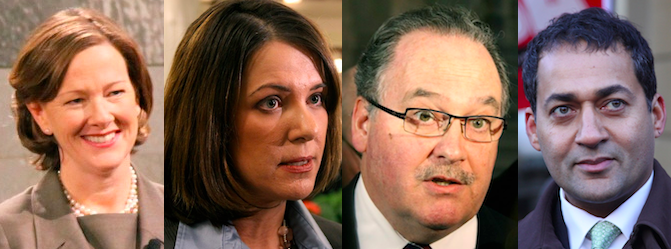
All eyes will be on Premier Redford and Ms. Smith.
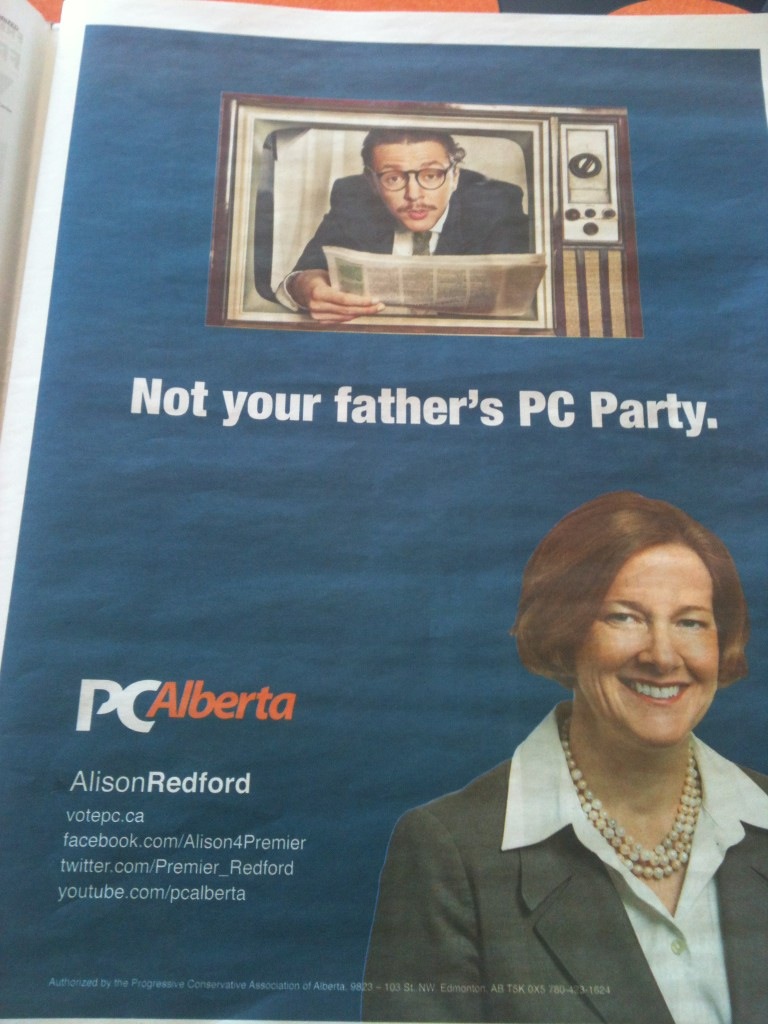
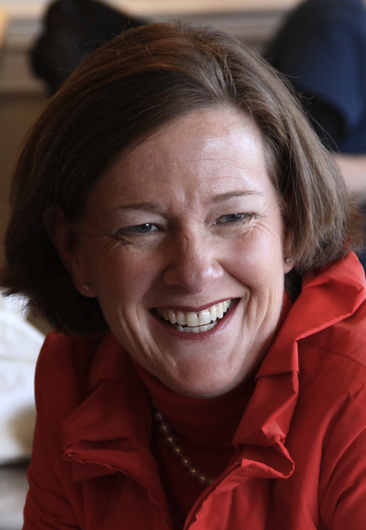
Alison Redford
The debate will be Premier Redford’s opportunity to turn the tide that has swept her 41-year governing Progressive Conservative Partyinto contention for official opposition status. Unlike her recent predecessors, she has the unfortunate task of having to answer for every misstep taken by her governing party for the past four decades.
This will be Premier Redford’s big opportunity to deliver a pitch to moderate conservatives, liberals, and undecided voters that voting for the more conservative and untested Wildrose Party just is not worth the risk. Despite a roughsixmonths as Premier, she is a skilled debater.
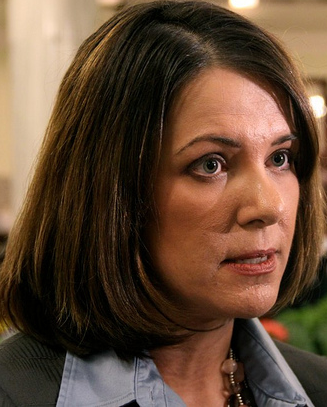
Danielle Smith
Calm and confident, Ms. Smith has been preparing for this debate for years. Despite having never been elected as an MLA or faced any of her political opponents on the floor of the Assembly, Ms. Smith has honed her political debating skills on and off television as a columnist with the Calgary Herald, a brief stint as a school trustee, a director of a right-wing lobby group, and party leader since 2009.
With Ms. Smith’s party riding high in the polls, creating the real possibility that she could be our province’s next Premier, expectations will be set high for her to perform well in this debate. I would be surprised if she does not meet these expectations, but the other leaders will be marking targets on her party’s more controversial positions on conscience rights, de-listing abortion, attacking reporters, and privatizing health care. So far, the Wildrose leader has tried to avoid even commenting on most these issues, sticking to her highly disciplined and controlled campaign messaging.
Brian Mason
Entering his third election as leader of Alberta’s NDP, Brian Mason has an opportunity to present Albertans with a clear alternative to the two leading conservative parties.
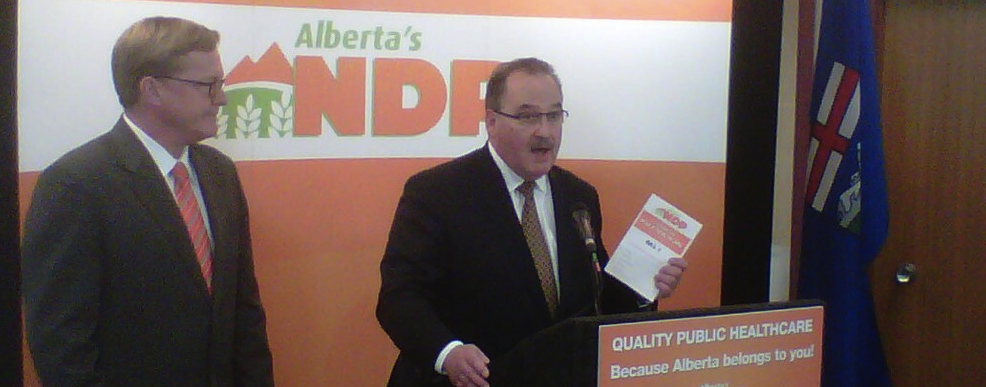
Following Ms. Smith’s announcement that her party would introduce more privatization into Alberta’s health care system, Mr. Mason jumped at the opportunity to get into the debate. With Edmonton-Calder candidate David Eggen by his side, Mr. Mason launched a campaign to “Save Public Health Care.” The NDP are polling well in Edmonton, with a recent Leger survey showing them with 20% support in the provincial capital, which has always been the centre of NDP support in Alberta.
Raj Sherman
For Dr. Sherman, who left the Tory backbenches in 2010 and now leads the official opposition Liberal Party, the debate will be his biggest opportunity to save his party from third party status or even being completely shut out of the Assembly. The Liberals became the official opposition in 1993 and since then their support has steadily declined (with the notable exception of the 2004 election when Kevin Taft led the party to double its seats in the Assembly).
Health care has been a key focus of Dr. Sherman’s campaign, and despite his professional expertise working in the Emergency Rooms of Edmonton’s hospitals, the Liberals have not been able to turn this strength into growth in the polls. Having earned a reputation for being sporadic when put on the spot, Dr. Sherman will be the wild-card in the April 12 debate.
Searching for the knock-out punch
The most interesting aspect of televised leaders’ debates, especially in elections where the results are not evident from the day the Writ is dropped, is that one misspeak or surprise Academy Award winning performance could potentially change the outcome on election day.
A screen shot of the @PremierDanielle Twitter account.
Is Wildrose Party leader Danielle Smith already measuring the drapes in the Premier’s Office?
A Twitter account named @PremierDanielle has been created. The only other Twitter user the account is following, as of this afternoon, is @ElectDanielle, Ms. Smith’s official Twitter account.
For the purpose of holding the Twitter name it would not be out of the ordinary for party or campaign staff to have created the account, but it does give us a peak into the confidence the Wildrose Party must feel even with 17 days left in the provincial election campaign (I am sure that neither the Liberals or NDP have claimed @PremierRaj or @PremierBrian).
Despite this, I am sure that the wise Toby Ziegler might have some choice words to share with them.
(Original post edited).
Update: It turns out that the @PremierDanielle twitter account was created in October 2010, the which is a year after Ms. Smith became leader of her party (perhaps some decent long-term planning from the Wildrose Party…). Thanks to commenter Brendan Mueller for pointing that out.
Danielle Smith (photo from Wildrose Facebook page)
As the face of the campaign, Wildrose Party leader Danielle Smith is her party’s biggest asset. She is media savvy, personable and, despite her limited governance experience (one year as a trustee on the dysfunctional Calgary Board of Education), she talks about becoming Premier with more confidence than any opposition leader in a long time.
But looking beyond the high-profile face of the Wildrose Party, which polls from the first week of the campaign suggest could be poised to form government, Albertans should be asking important questions about who would serve as cabinet ministers in a Wildrose Party government? The Premier is only one person at the table. Which Wildrose candidate would serve as Minister of Justice, Minister of Education, Minister of Finance, and Minister of Health?
Ask most Albertans to name a Wildrose candidate outside their own riding, and they will probably respond with a puzzled face. The lack of “star-candidates” is likely a product of timing. The Wildrose Party began to hold its candidate nominations in 2010 during a time when the party was seen to have peaked and was sitting in the mid-teens in the polls. What the party ended up with were plenty of well meaning candidates, but not many who would be defined as “star candidates.”
The recent success of the federal NDP in Quebec provides a textbook example of why any party should take seriously the candidates it nominates to run under its banner, even if it does not look like they might form government at the time.
If the Wildrose Party are to form the next government in Alberta, an important question needs to be asked about whether their candidates are the kind of politicians that Albertans want running the show. Here is a look at some of the Wildrose candidates who could end up serving as a cabinet minister under Premier Danielle Smith:
Link Byfield
– Barrhead-Morinville-Westlock candidate Link Byfield is the former publisher of the right-wing Alberta Report magazine. As has been noted elsewhere, Mr. Byfield was the president of the Society to Explore and Record Christian History and the founder of the Citizens Centre for Freedom and Democracy, which stands, among other things, “against expanding influence of the Charter of Rights.”
– Edmonton-South West candidate Allan Hunsperger is the self-described pioneer in the establishment of Alberta’s private schools in the late seventies and founder of Heritage Christian Schools.
Don Koziak
– Edmonton-Glenora candidate Don Koziak‘s short-lived mayoral bid in 2010 was kicked off by a promise to halt LRT expansion, calling the public transit “enormously environmentally unfriendly.” When asked what he would do differently, Mr. Koziak trumpeted the construction of more “interchanges and wider roads.” Toronto Mayor Rob Ford would be proud.
– A number of Wildrose candidates running in Edmonton constituencies have indicated over the past year that they would re-open the acrimonious City Centre Airport debate, even though elected City Councillors have already made the decision to phase out operations of the tiny downtown airport.
These are the highest profile stories around these candidates, the truth is that outside of Ms. Smith and the four established Wildrose MLA’s running for re-election, surprisingly little is known about the party’s candidates. And the Wildrose Party has done a superb job of focusing the media’s and voters attention on what they want, namely Ms. Smith and ensuring that she, rather than their candidates are the ones making headlines.
How often does one hear of lottery winners wasting their lifetime opportunity, and returning to the poverty whence they came.
Let this not be the case for Alberta. The insouciance of Premier Ralph Klein’s “prosperity bonuses” announcement bears the hallmarks of a prodigal’s progress, and a poorly messaged one, too. Had he meant to tell the rest of Canada that Alberta had no idea what to do with all its money, he would have done no different.
It must be difficult for Premier Redford, who, as the brightest and most intelligent leader of the PC Party since Peter Lougheed, has inherited a party that has been divided by two bitter leadership contests in less than a decade.
“Mr. Klein came along and he reverted the party backward to what I call the old Social Credit days, when Alberta was the whole focus and it wasn’t a cross-Canada focus.”
Premiers Lougheed and Klein embodied two very different visions of government within the same governing party, one which generally saw government as a positive force and another that saw government as a negative force. In the past, these differences could have been touted as an example of the resiliency of Alberta’s big blue Tory Party.
What does it all mean?
It is difficult to pinpoint what effect these high-level party posturing is having on the ground. Speaking with campaign managers and candidates from a number of parties across the province over the past week, I am consistently hearing that there is a feeling of unease at the doors. In some cases, this is leading to unlikely swings in party support.
One long-time NDP supporter from northeast Edmonton told me that some of her traditionally NDP-voting neighbours have planted Wildrose Party signs on their front-lawns. Two long-time Liberal voters from north west Calgary told me that they were planning on supporting their local PC candidate, because they admired Premier Redford.
What is indisputable is that many Albertans are unhappy with the PC’s and, at least for the moment, the Wildrose Party and its slate of untested candidates are turning that unhappiness into electoral momentum.
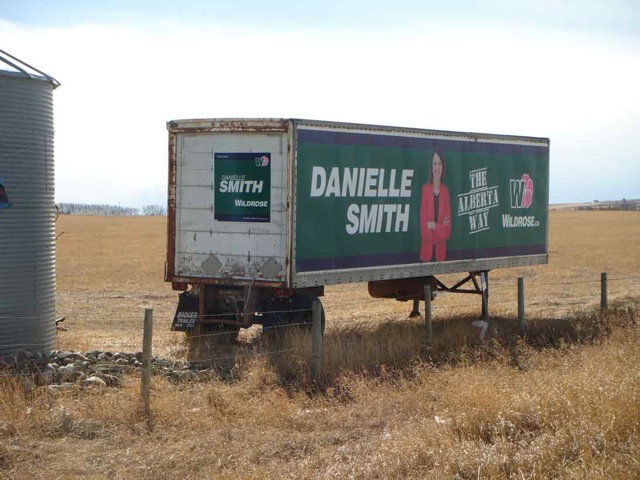
A trailer sign for Wildrose candidate Danielle Smith.
The commute to Okotoks from Calgary is a scenic drive southwest with truly spectacular mountain views on a clear day. Having travelled the route almost daily for about 15 years, I saw something this week I’ve never seen before.
Beginning at the turnoff to Dunbow Road on Highway 2, there is a series of election signs for a party other than the Progressive Conservatives (PC’s). The Wildrose Party’s Danielle Smith has a half dozen or more signs at regular intervals all the way into Okotoks. Not one PC sign could be found along the same stretch of road. The first sign of Smith’s PC rival, John Barlow, isn’t visible until just outside the town boundaries.
Glacial shift
Okotoks is adjacent to the famous Okotoks erratic, the largest of its kind in the world. It’s a town where political sensibilities shift as slowly as this “big rock,” left behind as the glaciers retreated 10,000 years ago.
Don’t let the town’s sleepy, peaceful appearance fool you, though. There’s an epic battle being waged in the community on several fronts. The traditional power base in the town has been frustrated in its attempts to overturn the sustainable Okotoks model in favour of expanding residential development. They want to build a water pipeline to the community from Calgary to fuel growth in a town that has literally “tapped out” its water supply.
A trailer sign for PC candidate John Barlow.
Bullying hits home
In the surrounding Municipal District of Foothills, it’s a different story. The MD politicians have been a burr in the sides of the provincial government for several years now, resisting attempts at regionalization. Their motives are less about protecting the environment and more about preserving the rights of their constituents to control their land. Land use planning is the enemy in these parts.
Promises to property owners
It’s not surprisingAlison Redford kicked off the race with an olive branch at her fundraiser in High River last week. She assured cantankerous landowners she was sympathetic to their concerns about property rights and about the voting structure of the Calgary Regional Partnership (CRP). The governance model gives Calgary a veto over rural planning decisions and Redford surprised everyone by promising to get rid of the veto. But, as the U2 song lyric says, “she’s the promise, in the year of election.”
The ground game
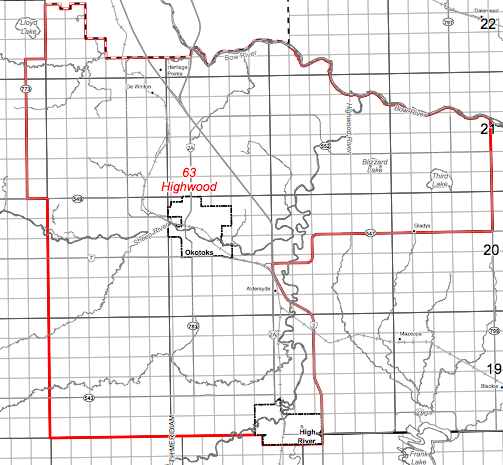
Okotoks is the largest town in the large, mostly rural riding of Highwood. Driving around, viewing the lawn signs, it looks as though Smith’s campaign has not yet penetrated these neighbourhoods. After the first week of the campaign, Barlow’s lawn signs seem to slightly outnumber Smith’s in most areas of town. In such a conservative stronghold, with an unprecedented battle unfolding, it’s surprising there are not more signs.
A map of the Highwood constituency.
Media on side
Barlow is a likeable candidate, strongly backed by business interests and younger families who can identify with his balance of community-mindedness and conservative sensibilities. He’s the comfortable choice. He’s also the associate publisher of the Western Wheel newspaper and showed questionable judgment by not stepping down from his duties immediately after being nominated as the PC candidate. He continued at the newspaper while also campaigning, not stepping down until after the writ was dropped. It’s worth noting that his backers are some of the same people who are calling for a water pipeline.
When the National Post came to town to do a story on Highwood, they reported their conversation with former pharmacist Allen King, who they described as “tidying up” around Barlow’s office. They likely didn’t realize they had stumbled on one of the town’s biggest power brokers. King is an unapologetic, anti-sustainability, conservative columnist for the Wheel and true blue Tory royalty.
Also on the ballot
Let’s be up front here. I’m a liberal, but I’ll admit Highwood shows no signs of electing a centre-left candidate any time soon. The PC’s captured 65 per cent of the popular vote in 2008. So, I’m not going to spend time on the other candidates. This is a showdown between Smith and Barlow.
Showdown at the OK-otoks corral
At first blush, Barlow might seem outgunned by the savvy, sophisticated Smith. A master politician, she’s demonstrated how to win votes, even when in unfamiliar territory and in a riding that doesn’t always welcome newcomers. This is Barlow’s first real foray into politics, but I’m not prepared to underestimate the Tory dynasty yet. They are likely putting significant effort into this race and Smith has to cover an entire province, by comparison.
The riding was also one of redrawn to give it more of a “rurban” flavour. Rural residents are likely favouring the Wildrose, but their influence may have been neutralized somewhat by the boundary changes. I’d wager the Wildrose is strong in High River as well.
Shades of the republic
Some of the more progressive voters might fear Smith’s right wing views and decide to vote for Barlow to try and keep her from winning. The worst possible outcome for Barlow is a low voter turnout. If disaffected PCs decide to stay home, rather than defend their party against the Wildrose onslaught, Smith will easily win. Given the dismal performance of the Tories thus far in the election, this seems like a serious concern for Barlow. He’s fighting an uphill battle with Smith’s political skill and Redford’s inability to control her wayward party.
Okotoks will no doubt be the main battleground. A debate organized by the chamber of commerce and scheduled for April 10 will be standing room only. Smith and Barlow will go head to head.
As I left town, I noticed yet another large billboard of Smith’s smiling face adorning a property south on Highway 2. Next to her sign, on the same property owner’s fence is a sign that reads, “Vote Ron Paul.” At this intersection, I turned left and drove back to Calgary.
Jody MacPherson raised a family in Okotoks, where she has extended family and many valued friends. She has since moved into Calgary and has been active in the Alberta Liberal Party for several years. Coincidentally, she now lives in Calgary-Elbow, Alison Redford’s home riding.
The wheels came off the Progressive Conservative election campaign this week.
If you are looking for a definition of “silly season” the first week of Alberta’s 2012 provincial election fits the bill. Despite major policy announcements from each of the main political parties this week, the campaign is being reported as a two-party race and defined by personal attacks and silly distractions.
Push Polls
Led by Wildrose Party cheerleader Ezra Levant, the conservative-leaning SUN TV tackled the Tories for a push poll launched against Ms. Smith. Of course, most media failed to remember the fact that Ms. Smith’s Wildrose Party launched their own nasty push poll against Premier Alison Redford earlier this year.
Who’s more Albertan?
Reminiscent of the federal Conservative Party attacks against former Liberal leader Michael Ignatieff, Ms. Smith tried to plant the seed in Albertans’ minds this week that Premier Redford is not a real Albertan. At a campaign stop in Edmonton, Ms. Smith told the media she believes the Premier “doesn’t like Alberta all that much.” As has been already pointed out by others, this is a ridiculous statement coming from a party leader who wants to change the government.
Ms. Smith’s statement reminded me of an ad launched by the Republican Party against their Democratic opponent during the 2006 United States Senate election in Tennessee.
Battle Stations To counter Ms. Smith’s attacks on their leader, the PC war room has set up @WhatSmithSaid, as an attempt to highlight some of the more radical statements made by the former Calgary Herald columnist. Late last year, the Wildrose Party launched The Redford Files, attacking the new Tory leader’s record.
So far, Tory attacks have fallen flat, but with polls showing a real race, I can imagine the Tory war machine is just warming up.
Stupid Tweets
And of course, the most ridiculous statement of the week goes to now former Progressive Conservative campaign staffer Amanda Wilkie. Against better judgement, Ms. Wilkie shot off a tweet at Ms. Smith, accusing her of being insincere about caring for young and growing families because she does not have any children. Ms. Smith’s response could not be more devastating for the PCs.
Is this what “change” looks like? Despite the silliness of the first week of the campaign, it has been amazing to watch the contrast between the consistent and disciplined Wildrose Party campaign and the flailing and undisciplined PC campaign. Political spin aside, if this first week is a clue about what “change” looks like, Albertans might be feeling buyers remorse after April 23.
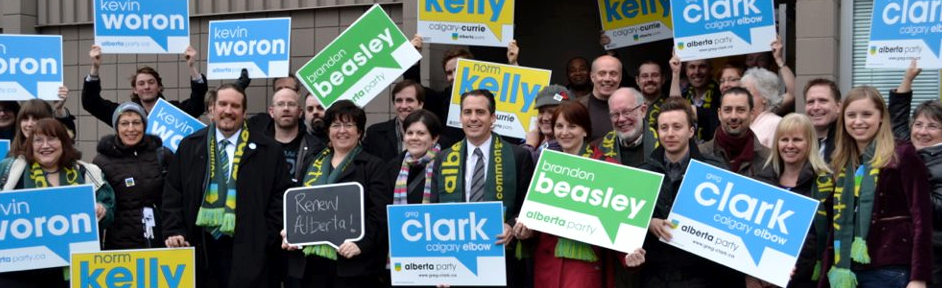
The Alberta Party gained a presence in the Assembly in January 2011 when former Liberal MLA Dave Taylor joined that party. Despite strong campaigns from candidates Michael Walters in Edmonton-Rutherford, Sue Huff in Edmonton-Glenora, Tim Osborne in St. Albert, and Norm Kelly in Calgary-Currie, recent polls have placed the party with 2% support province-wide.
If I were making the decisions, I would invite the leader’s from all the political parties to join the televised debate, but because the decision is being made by a private television company I can understand how they came to this conclusion. With only 30 candidates nominated in 87 constituencies, most viewers tuning in to the televised debate will not have the option of voting for an Alberta Party candidate on Election Day. The four other parties are expected to nominate candidates in all 87 constituencies.
What about past leaders’ debates that included parties with no elected MLA’s?
During the 1997 election, both NDP leader Pam Barrett and Social Credit leader Randy Thorsteinson were allowed to participate in the leaders debate. Neither of those parties had elected an MLA in the previous election. The Social Credit Party had not elected an MLA since the 1979 election. During the 2004 election, as the Alberta Alliance leader, Mr. Thorsteinson was not invited to join the televised Leaders; debate, despite his party having an MLA in the Assembly. Just before the election was called, Edmonton-Norwood PC MLA Gary Masyk crossed the floor to the new party.
There is no denying that the Wildrose Party is a force in this election campaign and should be represented in the televised debates, but it is important to remember that neither Ms. Smith or any of her party’s four incumbent MLA’s were elected as Wildrose candidates in the last election. Former leader Paul Hinman returned to the Assembly in a 2009 by-election and Heather Forsyth, Rob Anderson, and Guy Boutilier were elected as PC candidates in 2008 before crossing the floor to join the Wildrose Party in 2010.
Debate in front of an audience.
Instead of holding the televised debate in a sterile and controlled television studio, I would love to see the party leader’s demonstrate their debating skills in front of a live audience. A live audience would add an atmosphere of unpredictability and would force the leaders to speak to both the voters in the room and those watching their television screens.
These two polls differ in methodology. Forum used an interactive voice response telephone survey (push button) that interviewed 1069 Albertans on the day the election was called. Leger used a traditional telephone poll that interviews 1,215 Albertans in the four days before the election campaign was called. The Forum poll has a margin of error of +/- 3% and the Leger poll +/- 2.8%.
Polls released by Forum Research, Leger Marketing, Think HQ Public Affairs, and Ipsos-Reid have been released since the election was called on Monday, March 26, and have included a range of results:
Progressive Conservative: 31% – 38%
Wildrose Party: 33% – 41%
Liberal Party: 11% – 13%
Alberta NDP: 11% – 13%
Alberta Party: 2%
It is still very early in the election campaign, but polls will be very worrying for Premier Redford’s Tory Party, which has formed government for the past 41 years in Alberta.
Premier Alison Redford with PC candidates John Barlow and Evan Berger (photo from Alison4Premier Facebook Page).
Campaigning in the same constituency yesterday, it is interesting to wonder what Premier Alison Redford and Wildrose Party leader Danielle Smith would have said to each other if their paths had intersected. Close polls, push polls, and sharp criticisms have defined the first two days of Alberta’s 2012 election campaign.
Premier Redford was in Highwood campaigning with Progressive Conservative candidate John Barlow, who faces the daunting task of keeping the high-profile Ms. Smith out of the Assembly.
Campaigning in southern Alberta yesterday, Ms. Smith released her party’s pledge to table balance budgets. Under the Wildrose platform, future government spending would be limited to population growth plus inflation. Despite Wildrose Party assurances that they would not launch into a round of drastic service cuts if they are elected, I cannot help believe that a government led by Ms. Smtih would do anything but.
Health care was the focus of the second day of the election campaign for the NDP and Liberals, as both parties leaders unveiled parts of their platforms.
NDP leader Brian Mason and Edmonton-Calder candidate David Eggen (photo via @johnalanashton).
In the north end constituency of Edmonton-Calder, NDP leader Brian Mason joined candidate and former MLA David Eggen to announce that his party would create 1,500 long-term care beds, cover dental costs for Albertans under the age of 18, and bring down the cost of prescription drugs through a new provincial pharmaceutical plan. Mr. Eggen was the MLA for this constituency from 2004 until 2008, and since then has served as the executive director of the Friends of Medicare.
On the day the election was called, Mr. Eggen’s campaign team flexed their organization muscle by placing more than 1,100 lawn signs on private property across the constituency, painting Edmonton-Calder orange.
Raj Sherman campaigns in Calgary (photo via @alanacbaker).
In Calgary yesterday, Liberal Party leader Raj Shermanreaffirmed his party’s commitment to increase funding to build and operate more long-term care beds and facilities. Joined by a medical doctor and a retired health care worker, Dr. Sherman continued to call on Premier Redford to fulfil her promise to hold a judicial inquiry into doctor intimidation.
Today, the Dr. Sherman will travel to Red Deer to make another health care related announcement at the campaign office of Red Deer-North candidate Michael Dawe and Red Deer-South candidate Jeff Chilibeck.
Focusing on health care is a smart strategy for the Liberals, who are seen as strong on this issue, yet have slipped in the polls over the past four years. It gives the party an opportunity to contrast itself with the PC’s, whose poor management has created many of the staffing problems faced in the health care system, and the Wildrose Party, which would introduce a “hybrid” or “European” model of health care. It is suspected that the Wildrose model would include the introduction of private medical insurance.
Meanwhile, in Lethbridge, interesting contests are shaping up in both of that city’s constituencies.
With hours of the election being called yesterday, Premier Alison Redford kicked-off the Progressive Conservative campaign at the campaign office of Edmonton-Glenora MLA Heather Klimchuk.
First-term MLA Ms. Klimchuk is facing one of the most hotly contested races in the province, with strong challenges by former public school trustee and Alberta Party candidate Sue Huff, former Liberal MLA Bruce Miller, former NDP MLA Ray Martin, and past mayoral candidate and Wildrose candidate Don Koziak. The central Edmonton constituency has become a swing-riding in recent elections, but it was once held by Tory MLA’s Lou Hyndman and Nancy Betkowski.
After the campaign launch, Twitter reported her having visited a Tim Horton’s on the way to visit the campaign of new candidate Steve Christie in Lacombe-Ponoka. Last week, Mr. Christie replaced two-term MLA Ray Prins, who resigned after it was revealed he was being paid to chair a legislative committee that had not met in four years.
Eager to grab a scoop, two major television networks released the results of polls they commissioned in recent days. An Ipsos Reid online poll commissioned by Global News reports that the PC and Wildrose Party are tied at 38% support. The online poll surveyed 890 Albertans participating in Ipsos Reid’s online household panel (I am unclear how big the pool of Albertans in this online panel is). A CTV News commissioned ThinkHQ survey shows 44% of Albertans surveyed say the PCs don’t deserve to be reelected. No details of how these results were collected, sample size, or margin of error were included in the online news report. Poor reporting of these polls aside, these results could represent a shift in attitudes over the past month.
Liberal Party leader Raj Sherman will kickoff his party’s southern Alberta campaign at MLA Kent Hehr‘s Calgary-Buffalo campaign office this morning. Continuing to focus on health care and Premier Redford’s decision not to hold an independent judicial inquiry into health care issues, Dr. Sherman will be joined by a guest speaker who will talk about the issue of bullying and intimidation.
The Liberals are quickly filling their slate of nominations and I will update my list as I become aware of the new candidates.
The Alberta Party kicked off their election campaign in Calgary (photo from the Alberta Party Facebook Page).
Fresh from launching their election platform, the Alberta Party held campaign launches in Calgary and Edmonton. Leader Glenn Taylor, who is running in the West Yellowhead constituency, joined candidates at Ms. Huff’s campaign office in Edmonton-Glenora.
NDP leader Brian Mason is visiting the campaigns of Edmonton-Calder candidate David Eggen and Edmonton-Beverly-Clareview candidate Deron Bilous today, and will make an announcement about his party’s health care platform.
Danielle Smith, with Link Byfield by her side (photo taken from screenshot of video).
Danielle Smith kicked off the first day of the campaign surrounded by Edmonton area candidates, and with Barrhead-Morinville-Westlock candidate Link Byfield by her side (Watch the video here).
Perhaps a sign of things to come in this election campaign, the PC’s launched their first salvo against Ms. Smith yesterday afternoon on an issue that no one would have predicted. Following the Ontario Appeal Court’s decision saying that prostitutes’ rights are violated by some criminal law, the PC’s released quotes from a Calgary Herald column penned by Ms. Smith in 2003 where she advocated legalizing the sex trade.
Some of Ms. Smith’s libertarian views may pose a threat to the conservative coalition of like-minded libertarians and social conservatives that she has worked hard to build. I have little doubt the Tories will take every opportunity to expose these types of cleavages in Ms. Smith’s record, with the purpose of breaking her coalition, as well as pushing wavering moderate conservatives back into the Tory camp.
Opinions that politicians have put out into the public sphere are fair game for use by opponents and are a cautionary tale for columnists, bloggers, or even tweeters with electoral ambitions. Loose tweets sink fleets and columns supporting the legalization of prostitution will be used against you.
Alberta’s provincial election will be held on April 23, 2012. In this election, the number of constituencies are increasing from 83 to 87 (the first time increase in seats since the 1986 election).
As of today, the Progressive Conservatives, NDP, and Wildrose Party are the only parties to have nominated candidates in all constituencies. Click here to find a full list of candidates and their website and social media links. The list will be made official 14 days after the election is called.
Instead, in an attempt to bump that conventional wisdom by holding a spring sitting in the Assembly after the budget was tabled, Premier Redford may have bolstered the opposition parties resilience. With the organizational ability to have had candidates nominated in every constituency by February 10, 2012, a mid-March Election Day would have saved the Tories from a month of embarrassing media coverage and robbed the opposition parties of one full month of organizing (this also demonstrates the uselessness of the new fixed-election period, which does not set a fixed election date, but a period over three months that election can be held).
Unfortunately for Premier Redford, “change from within” has not looked very flattering over the past month. A rough pre-election session has bruised the Tories and quickly ended the new Premier’s honeymoon period, allowing the opposition parties to expose weaknesses in the Tory battle lines (some more aggressively than others).
It is difficult to say what actual effects delaying the election until after the Spring sitting will have had on Alberta’s opposition parties. Danielle Smith‘s Wildrose Party are hitting the Tories hard on the fiascos that have developed over the last month, and putting personal egos aside, they could make some significant inroads. For the Liberal Party, former Tory MLA and new leader Raj Sherman needs to prove wrong the predications of doom and gloom for his official opposition party. The NDP led by Brian Mason are hoping to replace the Liberals as the main opposition on the centre-left. And managing expectations well, the Alberta Party led by Glenn Taylor are very conscious of the uphill battle they face.
Calling in the big guns, the Wildrose Party has long-time conservative stratagist Tom Flanagan as campaign manager and Cliff Fryers, the former chairman of Enmax and chief of staff to Preston Manning, as their campaign chair. Along with flocks of federal Conservative organizers migrating to their party, rumour has it that high-priced political consultants from Ontario are being flown in to advise the Wildrose Party’s central campaign.
Despite all this new ammunition made available to the opposition parties after the rough Spring sitting, a betting man would look at the Tories’ 41 years of election victories and easily weigh the odds in their favour of winning once again. Maybe all of these cracks in the Tory armour will amount to nothing Election Day? Maybe the will make all the difference? Maybe new cracks will appear?
With an election call expected in the next week, Alberta’s political parties are loading up their campaign vehicles and hitting the road. Here is a look at some of their sweet rides:
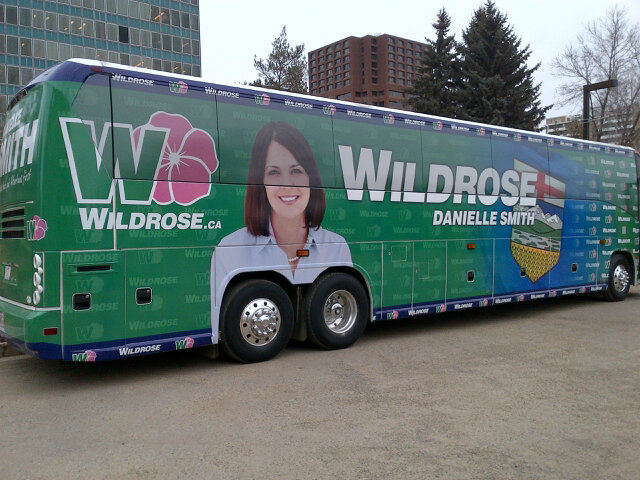
Wildrose Party leader Danielle Smith is featured prominently on her party's election campaign bus.
Wildrose Party: The first opposition party to use a full campaign bus in more than a decade. The unfortunate placement of the bus’ back wheels will surely lead to some giggles over the course of the campaign, but the presence of the bus signals that the Wildrose is investing a lot of funds in this election campaign.
As a good friend in the public relations industry wrote in an email this morning
“In politics, perception is reality. You can talk about policy all you want, but at the end of the day people will focus on what is interesting to them, and the wheels on the bus are interesting in the same way that Jay Leno’s headlines are. It’s funny to see someone screw up, and if there is some sexual innuendo in there then it’s all the more fun.”
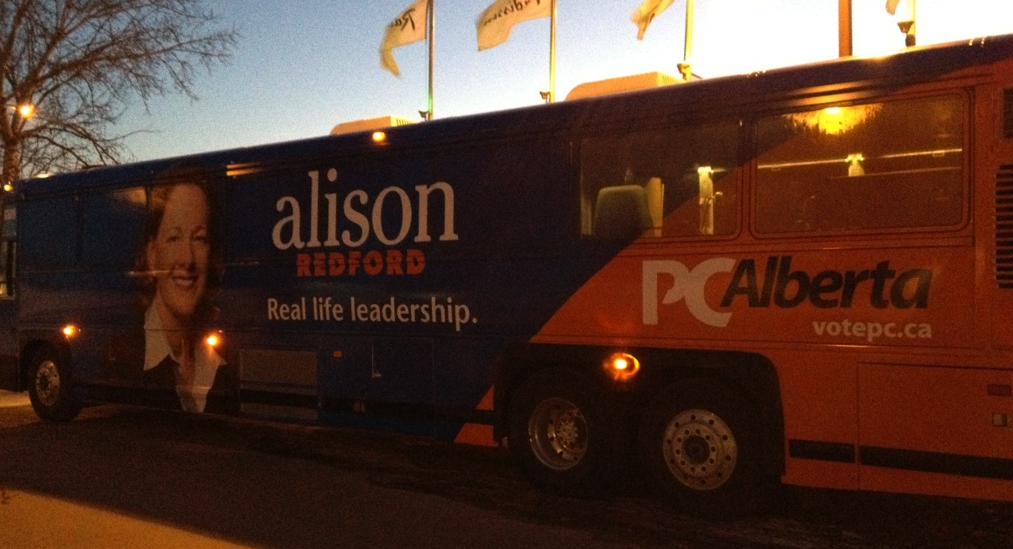
PC campaign bus.
Progressive Conservative: Alison Redford‘s PC Party launched their campaign bus at their February campaign colleges in Edmonton and Calgary, and have since been using it as a mobile billboard while stopping at candidate’s campaign offices across Alberta. The PC’s have the money and can afford to pull out all the stops, like a big bus.
Raj Sherman's campaign truck.
Liberal: Jokingly nicknamed the “Sherman Tank” by some supporters, the literal meaning may have been lost when that description was made about Liberal leader Raj Sherman‘s campaign truck . During the Second World War, the Sherman tanks earned a reputation for easily catching fire when hit by enemy shells.
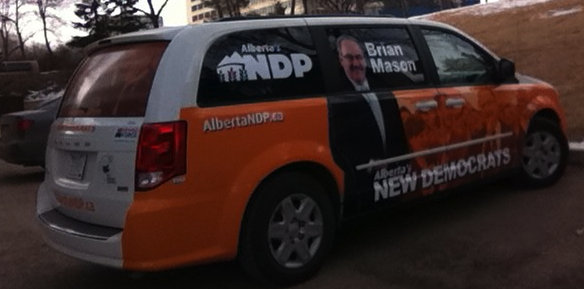
Alberta NDP leader Brian Mason's campaign mini-van.
NDP: NDP leader Brian Mason is sporting a slick new mini-van, which it is not as flashy as a giant campaign bus, but is more reflective of his party’s financial situation compared to the two main conservative parties.