Categories
Alberta Politics

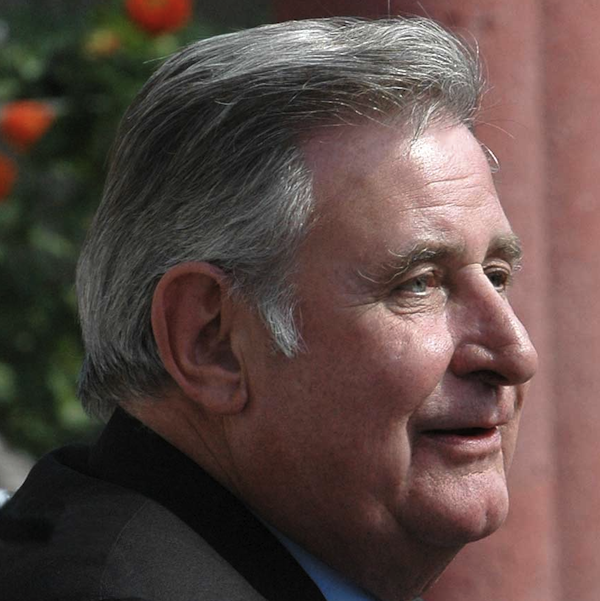
Mayor Mandel on the warpath, keeps re-election plans secret.


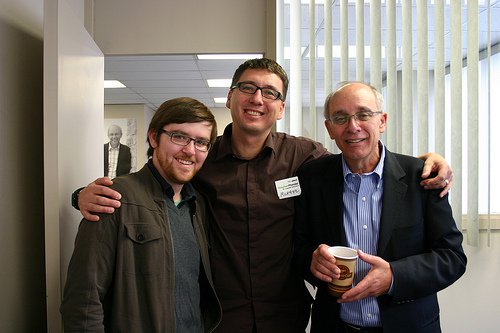
Yours truly, community organizer Michael Walters and Mayor Stephen Mandel at the Mayor's campaign headquarters during the 2010 election.
Yours truly, community organizer Michael Walters and Mayor Stephen Mandel at the Mayor’s campaign headquarters during the 2010 election.

Stephen Mandel is not ready to announce whether he will run for a fourth-term as Edmonton’s Mayor.

Speaking to a crowd of more than 2000 people at his annual state-of-the-city address to the Chamber of Commerce, Mandel avoided the topic of his political future, instead taking aim at Premier Alison Redford’s Progressive Conservatives by criticizing recent deep cuts to post-secondary education budget.

Mayor Mandel also called out the Tories for their lack of commitment to the promised City Charters and cuts to municipal infrastructure funding. It was a big shift for a Mayor who has spent his time in office influencing his provincial counterparts behind the scenes, rather than through the media.
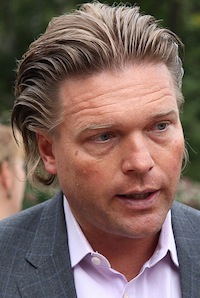
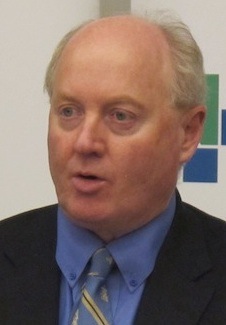
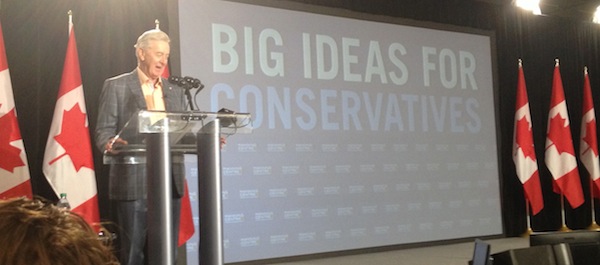
Thomas Lukaszuk
Thomas Lukaszuk

The always-eloquent Deputy Premier Thomas Lukaszuk was in the audience at the Mayor’s announcement and responded by telling the media that, “I don’t know who pissed into his corn flakes…” He might be #2 in the halls of the provincial legislature, but Minister Lukaszuk was vastly outnumbered in that banquet hall yesterday afternoon.

For all his faults, Mayor Mandel is still incredibly popular among Edmonton’s business community – a powerful constituency in the electoral coalition that re-elected the Tories in 2012.

With the Mayor on a new warpath, political watchers who were expecting the Mayor to announce his plan to retire in yesterday’s speech will have to wait (perhaps four more years if he decides to run again).

If Mayor Mandel decides to retire, this October’s vote will be the first mayoral election since 1968 without an incumbent or interim mayor on the ballot. Edmontonians have witnessed considerable growth in their city and progress on projects like downtown redevelopment and public transit expansion since he became Mayor in 2004. He will be a hard act to follow.
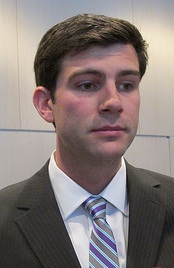
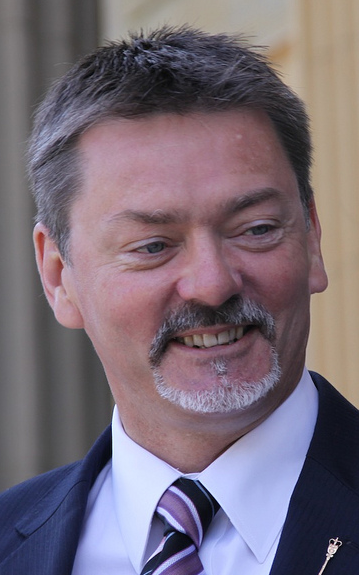
Don Iveson
Don Iveson

Mayor Mandel’s potential retirement has sparked wild-rumours and serious-speculation about who could run to replace him. While none have officially declared their candidacy, all eyes could soon focus on the handful of City Councillors who could stand to become the next Mayor of Edmonton.

As an underdog candidate in the 2007 election, Don Iveson surprised political watchers when he unseated high-profile Councillor and past mayoral candidate Mike Nickel in south Edmonton’s Ward 5. Since then, Councillor Iveson has been one of Council’s most well-spoken and thoughtful voices on issues ranging from smart growth to waste management. His role as chair of the Capital Region Board’s Transit Committee will have given him an opportunity to understand the broader needs of Edmonton’s neighbours.

Don Iveson represents a new generation of politically engaged Edmontonians who are passionate about defining Edmonton as a strong economic and creative hub in Canada.
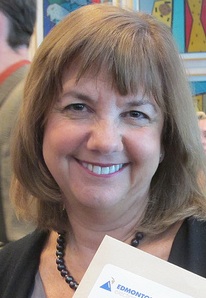
Karen Leibovici
Karen Leibovici

A popular and hard-working representative, Karen Leibovici is one of Edmonton’s longest serving politicians. She began her elected career as a Liberal MLA representing the Edmonton-Meadowlark constituency in 1993 and was elected to City Council in 2001. While she once wanted to lead Alberta’s Liberal Party, her politics have tended to be more conservative on civic issues.

Councillor Leibovici is currently finishing her term as the President of the Federation of Canadian Municipalities, the national lobby group for Canadian municipalities.

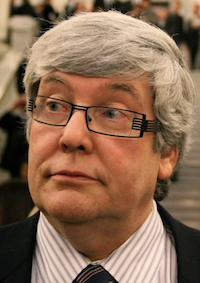
Serving his second-term representing Mill Woods, Amarjeet Sohi is a consummate retail politician and community advocate. On Council, he is a passionate voice for an area of Edmonton that has been traditionally underrepresented in the halls of power. A former representative with the Amalgamated Transit Workers Union, which represents Edmonton Transit Service staff, Councillor Sohi is one of the most down-to-earth politicians you will find in this city.
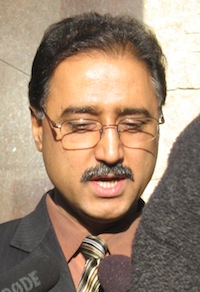
Amarjeet Sohi
Amarjeet Sohi

First-term Councillor and former Edmonton Sun reporter Kerry Diotte has made his mark over the past two years as City Council’s resident contrarian on issues ranging from bike lanes to the proposed downtown arena. Tapping into widespread frustrations about the state of city roads, Councillor Diotte recently launched the gimmicky “hole-y-cow” contest to encourage Edmontonians to report potholes for a chance to win a $500 gift certificate.

While he has been outspoken critic on city council, it is sometimes difficult to figure out what vision Councillor Diotte actually has for Edmonton.

Whether these Councillors run for Mayor in October depends on many factors, including the big question of whether Mandel will decide to seek re-election. Following yesterday’s speech, we may have to wait a while for Mandel to give us an answer to that big question. Stay tuned.


Categories
Alberta Politics

Ralph Klein’s recipe for Oriental Hoisin Chicken (from a 1995 Cookbook).

Former Premier Ralph Klein, reluctantly doning a chef's hat.
Former Premier Ralph Klein, reluctantly doning a chef’s hat.

Since Ralph Klein passed away last week, numerous people have emailed me with their stories about his time politics and reactions to legacy in Premier.

The responses varied from loving to hostile, but easily the oddest email I received over the weekend was from a former Progressive Conservative constituency association president, who sent me an excerpt from a limited-edition “Ralph’s Team Family Favourite Recipes” cookbook that were sold at a PC Party fundraiser in 1995.

The cookbook included the favourite recipes of Tory cabinet ministers, backbench MLAs, party activists, and the Premier himself. Here is then-Premier Klein’s submission to the cookbook:

ORIENTAL HOISIN CHICKEN
Premier Ralph Klein, MLA Calgary Elbow

4 chicken breasts or legs
1/2 c Hoisin sauce
2 T Ketchup
2 T Soya sauce
2 T freshly squeezed lemon juice
2 crushed garlic cloves
Oil grill and preheat barbecue. Remove skin from chicken, if you wish. Place each chicken part on a piece of heavy foil large enough to securely wrap it.

Stir remaining ingredients together. Spoon about 2 T. of sauce over each piece of chicken. Bring long edges of foil together, fold over several times and seal ends. Press foil down to form a flat packet.

Place packets on grill about 3 inches above hot coals and barbecue for 45 minutes, turning 2 – 3 times.

Remove packet from grill. Open and pour juice into a bowl. Brush chicken with some of remaining Hoisin mixture and place on grill. Barbecue, turning and basting often, until golden brown or richly glazed, about 5 to 7 minutes. Watch carefully to avoid burning. Stir any remaining Hoisin mixture with some of chicken juices as a dipping sauce.

Categories
Alberta Politics

Ralph Phillip Klein (1942-2013).

Ralph Klein
Ralph Klein

Various news media are reporting that Ralph Klein has passed away at the age of 70. Mr. Klein served as Mayor of Calgary from 1980 to 1989 and Premier of Alberta from 1992 until his retirement from politics in 2006.

Despite leading the Progressive Conservatives to form four majority governments – in 1993, 1997, 2001, and 2004 – his own party turned against him in a 2006 leadership review. He announced his resignation shortly afterward.

He had suffered from numerous ailments, including temporal dementia and chronic obstructive pulmonary disorder, since his retirement.

Here is some coverage of former Premier Klein’s passing:

Colby Cosh: Ralph Klein, R.I.P.: the deceptive shape of a shadow

Graham Thomson and Tony Seskus: Ralph Klein was unconventional, controversial, entertaining – and often underestimated

CBC: Alberta’s Ralph Klein dead at 70

Toronto Star: Former Alberta Premier Ralph Klein dies

Globe and Mail: Ralph Klein, long-time and colourful Alberta premier, has died

Categories
Alberta Politics

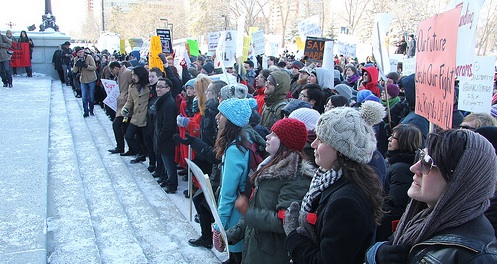
Universities, students and staff push back against post-secondary budget cuts.

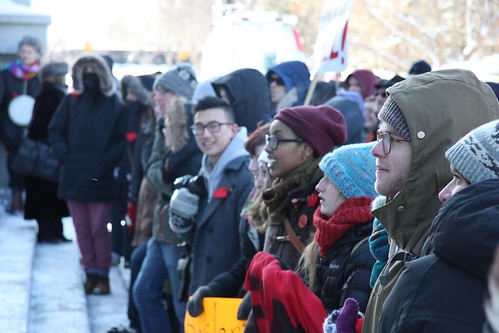
More than 600 students and staff from the University of Alberta rallied against budget cuts in front of the Alberta Legislature.

“You don’t want to have five mediocre engineering schools. You’re better off having two really good engineering schools. There’s no doubt about it.”

And on that note, Deputy Premier and Advanced Education Minister Thomas Lukaszuk kicked off his overhaul of Alberta’s Post-Secondary Education system.

Thomas Lukaszuk
Thomas Lukaszuk

It should be noted that there are only two degree-granting university-level engineering schools in Alberta (some of the smaller universities have transfer programs). Unlike the Deputy Premier, I am not in a position to comment on the mediocrity of Alberta’s engineering schools.

After recently returning from a long-scheduled personal trip to Vietnam, the Deputy Premier is faced with an uproar from students, faculty, and school administrations facing the reality of a 7% cut to Alberta’s Advanced Education budget. The budget cuts, along with government plans to harmonize institutional roles, has lead some academics to worry that their autonomy could be put at risk.

Last week, more than 600 students and staff marched from the University of Alberta to to the Legislature to rally against the budget cuts. Organizing under the banner of the ‘Coalition for Action on Postsecondary Education‘, or CAPSE, students are planning for actions to protest against the budget cuts.

Demonstrating uncharacteristic independence for a group of provincial appointees, the University of Alberta Board of Governors sent an open letter to Premier Alison Redford, warning of the consequences of the cuts. The letter was signed by governors, including board chairman Doug Goss, a former senior Progressive Conservative Party official.

Here is an excerpt from the letter:

“…we must go on the record as being deeply concerned that the recent budget decision of the provincial government to cut the university’s funding by more than seven per cent will have a dramatic effect on the progress that the U of A has made in reaching its potential, both as a research and a teaching institution.

It is difficult to imagine the detrimental effect that cutting more than $43 million from our annual budgetthis year alone will have on our students, who are the critical next generation in this province. The sameis true of our faculty, who lead the teaching and research initiatives that can help position this province as a global leader on the issues of greatest concern in the 21st century. Staff members at our university who support our students and faculty also will be deeply affected.”

Categories
Alberta Politics

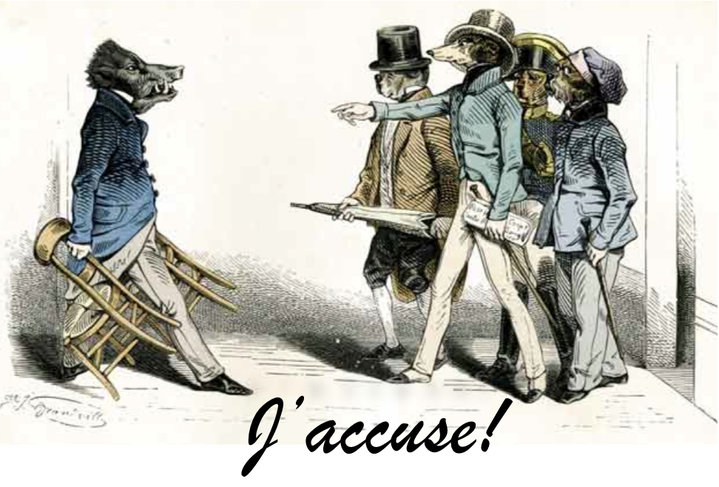
J’accuse! Thomas Mulcair’s treason and the Keystone XL Pipeline.

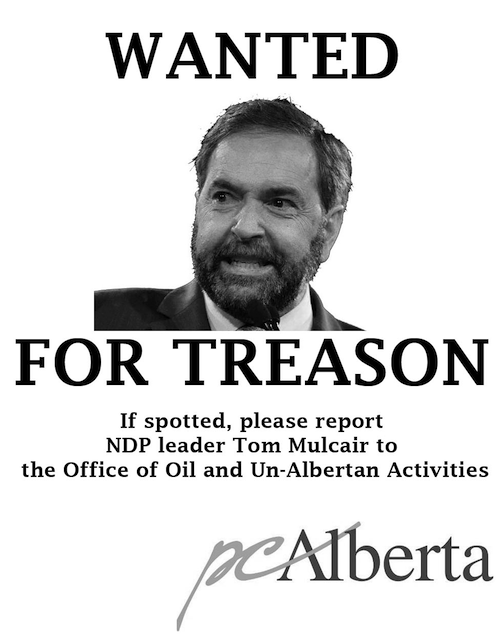
"Treason" was one of the accusations used against NDP leader Thomas Mulcair after be voiced his opposition to the Keystone XL Pipeline in Washington D.C.
“Treason” was one of the accusations used against NDP leader Thomas Mulcair after be voiced his opposition to the Keystone XL Pipeline in Washington D.C.

The rhetoric is running high this week with President Barack Obama expected to soon decide the fate of the controversial TransCanada Keystone XL Pipeline.

In Washington D.C. last week, federal NDP leader Thomas Mulcair criticized the pipeline that would ship bitumen from Alberta’s oilsands to refineries in Texas. Mr. Mulcair also took the opportunity to criticize the deconstruction of Canada’s environmental regulations by Prime Minister Stephen Harper‘s Conservative government and told the media that the pipeline would export jobs from Cnaada and would pose a threat to our country’s energy security. Mr. Muclair’s treasonous words were printed in the National Post:

“According to object studies, Keystone represents the export of 40,000 jobs and we think that is a bad thing for Canada,” Mulcair said in an interview. “We have never taken care of our energy security. We tend to forget that a 10-year supply to the U.S. is a 100-year supply to Canada. We are still going to need the energy supply to heat our homes and run our factories, whether it comes from the oilsands or it comes in the from natural gas. Fossil fuels are always going to be part of the mix.”

NDP leader Thomas Mulcair

If you do not find these words abhorrent and treasonous, you may be surprised by the whiplash reaction from Mr. Mulcair’s political opponents.

In Alberta, where a political consensus is tilting towards approval of the pipeline, Premier Alison Redford took to the floor of the Legislative Assembly to attack Mr. Mulcair and NDP leader Brian Mason for their opposition to the pipeline.

Treason” was the word Mark Cooper, the Intergovernmental Affairs Minister’s Press Secretary, used on twitter this week to describe the NDP position on the pipeline. While his tweet should be taken somewhat in jest, that word set the tone for the pipeline debate this week.

On the floor of the Assembly, Energy Minister Ken Hughes criticized the NDP by boasting about having created a  “coalition of the willing” in support of the Keystone XL pipeline. Minister Hughes’ comment was an unfortunate reference to the American invasion of Iraq in 2003, which marked its ten year anniversary this week.

Ken Hughes
Ken Hughes

Mr. Mason was more than happy to pull quotes from recently deceased former Premier Peter Lougheed, who voiced his opposition to the Keystone XL pipeline in favour of refining bitumen in Alberta. This happens to be close to the NDP position.

This is not a clear left/right issue. Prominent labour unions, including the AFL-CIO in the United States, have voiced their support for the pipeline for the jobs it would create in the bitumen refineries in Texas. Pipeline critics, like Alberta Federation of Labour‘s Gil McGowan, argue that refining oilsands bitumen in Alberta would create more jobs in-province.

Also joining the debate is former Premier Ed Stelmach, who spoke in favour of local refining today telling the Edmonton Journal “…it is in our interest to promote as much pipeline capacity as possible to move products to existing markets, and of course, new markets. But to close that differential in price, we need to sell a higher-value product.”

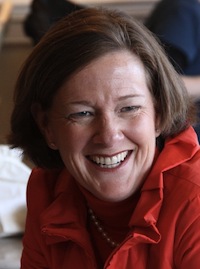
Premier Alison Redford

To the east in Saskatchewan, the partisan divide over the Keystone XL Pipeline in not so sharp. Premier Brad Wall, the province’s most popular leader since Tommy Douglas, has trumpeted the benefits the Keystone XL Pipeline could bring to Canadian and American economies. His main opponent, newly selected Saskatchewan NDP leader Cam Broten, has broken from his NDP colleagues and given his timid support for the pipeline’s construction.

The Alberta government purchased a $30,000 advertisement in the Sunday edition of the New York Times. While widely read, the ad was meant to respond to an anti-Keystone XL editorial widely circulated on the internet. The factual arguments made by the Alberta Government in the ad will likely fall flat in this highly emotional debate. While the ad generated significant earned media in Alberta, this one-time ad-buy will likely have little impact on the large debate happening in the United States.

Recognizing that Conservative Parties are seen by many Canadians as ‘weak’ on the environmental issues related to pipeline construction, the Conservative movement is putting significant energy toward finding the key messaging needed to convince Canadians otherwise.

At last week’s Preston Manning Networking Conference in Ottawa, speakers presented their analysis of the Oilsands Pipeline debate. As blogger David Climenhaga wrote, “the most creative minds in Canadian conservatism are applying their brainpower to moving forward pipeline projects – extending from Alberta, the centre of their political and economic universe, to all points of the compass.”

More on this later.

Categories
Alberta Politics

Alberta Liberal merger with federal Liberals an idea worth considering.

Raj Sherman Alberta Liberal MLA Leader
Raj Sherman

Provincial Liberal leader Raj Sherman wants his party to work more closely with the federal Liberal Party.

Conventional wisdom would inform us that the Alberta Liberals should always do everything in their power to distance themselves from their federal cousins, who remain tainted in the province after a long-string of historical grievances and well-curated myths.

But has distancing the two parties helped either party?

With Justin Trudeau expected to become leader of the Liberal Party of Canada in the next few months, could a second-wave of Trudeaumania help boost support for the provincial Liberals in Alberta?

Since the 1970s, the two parties have been officially independent with varying degrees of unofficial cooperation and confrontation. Both parties have achieved limited success in pockets of the province at certain points over past twenty years, but support for both parties has dwindled over the past decade. The Liberal presence shrunk to five MLAs in last year’s provincial election and the federal Liberals last successfully elected a candidate to Parliament from Alberta in the 2004 election .

Provincial Liberal support in Alberta:
2001 election: 276,854 votes2012 election: 127,645 votes.
Federal Liberal support in Alberta:
2000 election: 263,008 votes, 2011 election: 129,310 votes.

If a merger with the NDP, Alberta Party, and Greens, as has been suggested by Calgary-Buffalo Liberal MLA Kent Hehr, is unpalatable to Dr. Sherman, perhaps he could be convinced a merger with his party’s federal namesake would not be a bad idea.

Sharing their limited resources, as the provincial and federal New Democratic Party do officially and the Wildrose Party and Conservative Party have done unofficially, could provide stability in membership, fundraising, and organization for the two Liberal Parties in Alberta. A merger could also cut costs on duplication of resources (the two parties currently operate separate offices located opposite each other on Edmonton’s 124th Street).

Harvey Locke Liberal Calgary-Centre By-Election
Harvey Locke

The two parties already share many members and candidates are frequently seen listed on the ballot under both party banners.

There are also no shortage of former Liberal MLAs who have tried to kickstart a career in Ottawa, though all of them unsuccessful. Liberal MLAs Ken Nicol and Debby Carlson ran as federal Liberals in the 2004 election and Sue Olsen and Frank Bruseker stood in the 2000 federal election. Former party leaders Grant Mitchell and Nick Taylor were appointed to the Senate on the advice of federal Liberal Prime Ministers.

Even Dr. Sherman was a member of the federal Liberals before he was elected as a Progressive Conservative MLA in 2008 (he supported Gerard Kennedy in the 2006 federal Liberal leadership contest).

Calgary-Centre a spark of hope for the Liberals.

Liberal Harvey Locke surprised political watchers last year when he placed only 1158 votes behind Conservative Joan Crockatt in the hotly contested Calgary-Centre by-election.

Perhaps the results were a fluke, but they give the federal Liberals a sign that many voters in Alberta’s urban centres are becoming more receptive to a moderate non-Conservative alternative in Ottawa.

Categories
Alberta Politics

University students and staff rally against Advanced Education cuts.

Hundreds of University of Alberta students and staff marched to the Alberta Legislature to protest cuts to the Advanced Education budget.

Hundreds of students and staff from the University of Alberta marched to the Alberta Legislature yesterday to protest the 7% cut to the Advanced Education budget. Students and staff were joined by Liberal leader Raj Sherman, NDP MLA Rachel Notley, and NDP MP Linda Duncan.

In response to the provincial budget cuts, University of Alberta President Indira Samarasekera has asked each Faculty Dean to submit, by the end of March, a plan that will involve a 20% budget reduction for the 2014-2016 period.

Similar cuts are expected to take place at Alberta’s other Universities and Colleges.

See more photos here.

Categories
Alberta Politics

Preston Manning’s libertarian manifesto for City government.

"Hello M’aam, I am your Manning Centre candidate in this year's civic election."
“Hello Ma’am, I am your Manning Centre candidate in this year’s civic election.”

Not satisfied with their conquests of the provincial and federal levels of government, the right-wing activists behind the Manning Centre for Building Democracy are expanding their political agenda to city-level politics. Preston Manning‘s followers plan to treat this year’s elections in Calgary as a petri-dish for their yet-to-be-completed libertarian manifesto for municipal government.

The outline of the libertarian think-tank’s manifesto for civic government was laid out at last weekend’s Manning Networking Conference in Ottawa.

Cleverly branded as the “organic cities project,” Mr. Manning’s followers expressed their frustrations with urban planning and what they described as lengthy community consultation processes. Increasing private sector planning of city development and decreasing the role of accountable public planning processes is at the heart of the Manning argument.

Outlined at the conference was a vague manifesto to reduce the scope of political decision making and move municipal governments away from Mr. Manning’s followers claim are inappropriate activities, which were suggested could be municipally-owned golf courses and recreational facilities.

With exaggerated claims of interference in the lives of citizens, Mr. Manning’s followers are setting their eyes on cleaving the limited powers already laid out in the Municipal Government Act (though the Act was never referenced in the talk).

The Manning Centre’s real target is uber-popular Calgary Mayor Naheed Nenshi, who has taken a proactive stance on urban development, alarming the cabal of developers who have greatly benefited from near unlimited urban sprawl along the city’s edges.

Perhaps it was not coincidence that a sponsor of the Manning Networking Conference was the Canadian Real Estate Association, which represents the group of individuals who have greatly benefited from this urban sprawl.

Conservative Party of Calgary?

Earlier this year, the Manning Centre opened a facility in downtown Calgary to provide training and support to like-minded libertarians running in the October 2013 municipal elections. This could be the first step that leads to the creation of Conservative political parties on the city level in Canada. While political parties are normal in some large cities, like Vancouver and Montreal, most Canadian municipalities are free of slates and official partisanship.

Municipal political parties, like the Urban Reform Group Edmonton, were common in Edmonton until the 1980s when their popularity declined and they disappeared from the ballot.

Despite arguments at the Manning Centre conference that municipal governments are filled with left-leaning politicians, municipal councils are home to many conservatives, and many more non-partisan citizens. Progressive-minded candidates have had success being elected to municipal councils in Alberta, but their views are by no means the only views present at that level of government.

Consensus and coalitions exist on the municipal level that transcend traditional hard-line partisan loyalties. Unfortunately, ideologically-based slates and municipal political parties could be an inevitable result of the Manning Centre’s meddling.

Perhaps a sign of the times to come, it was announced this week that a slate of conservatives candidates in the City of Red Deer will run in the October elections under the “Red Deer First” banner. Sources in Red Deer tell this blogger that many of the key figures behind this group have ties to the provincial right-wing Wildrose Party.

Categories
Alberta Politics

Controversial Ottawa Tory operative now working for Wildrose Opposition.

More Ontario-based political operatives arrive in Alberta.

The westward migration of Central Canada-based political operatives continues.

Controversial former Ottawa Conservative staffer Sébastien Togneri is now employed as the Caucus Whip Coordinator for Danielle Smith‘s Wildrose Official Opposition.

Political watchers may remember Mr. Togneri as the aide to federal Conservative cabinet minister Christian Paradis who, in 2010, resigned over his alleged meddling in at least four different access-to-information requests.

While still under RCMP investigation, Mr. Togneri was spotted briefly working for the campaign of Edmonton-Strathcona Conservative candidate Ryan Hastman in the 2011 election.

Also recently migrated to Alberta is Mike Feenstra, who was previously employed as spokesperson for Ontario’s Liberal Minister of Natural Resources and Minister of Education. Mr. Feenstra is now employed as the Press Secretary in Energy Minister Ken Hughes‘ office.

Categories
Alberta Politics

Preston Manning throws Alison Redford, Tom Flanagan under the conservative bus.

Preston Manning
Preston Manning

OTTAWA

Speaking about the state of Canada’s conservative movement at this weekend’s Manning Centre Networking Conference in Ottawa, former Reform Party leader Preston Manning denounced the ethical and financial state of Premier Alison Redford‘s Progressive Conservatives.

“…in Alberta an aging Progressive Conservative administration has lost its way ethically and fiscally and needs to be overhauled or replaced,” Mr. Manning told an audience of close to 800 conservative activists.

Mr. Manning heaped this criticism on the forty-one year governing PCs, giving an obvious tip of the hat towards his ideological allies in the right-wing Wildrose Official Opposition.

Mr. Manning also used his speech to denounce two controversial statements and tell conservatives that they need to draw the line about what public comments are acceptable in their movement.

Mr. Manning characterized his former advisor Tom Flanagan‘s comments about child pornography and homophobic remarks made by a Wildrose candidate in the last provincial election as “intemperate and ill-considered remarks that discredit the conservative movement as a whole.”

“For the sake of the movement and the maintenance of public trust, conservative organizations should be prepared to swiftly and publicly disassociate themselves from those individuals that cross the line,” Mr. Manning said.

Numerous supporters of Dr. Flanagan attending the conference prominently sported buttons showing the face of the discredited university professor.

Categories
Alberta Politics

Alberta Budget 2013 a confusing start to the Tory re-election strategy.

Rumours swirled through the halls of the Legislative for weeks. Whispers and warnings of cuts and rollbacks not seen since Ralph Klein and Jim Dinning unleashed a scorched earth policy on the provincial budget in the mid-1990s. Back in debt. Broken promises. Bankrupt budgets.

The end was nigh.

And today, the budget was tabled and the massive cutbacks did not emerge.

The end is not nigh, but remains difficult to figure out what long-term goals Finance Minister Doug Horner and Premier Alison Redford plan to accomplish with Alberta’s 2013 provincial budget. The devil is in the details and the posturing for the next provincial election, expected in 2016, has already begun.

Doug Horner
Doug Horner

The Sustainability Fund that has saved our provincial government from going back into debt for five years is gone and in its place, the government is introducing the Fiscal Management Act, which Minister Horner says will mandate annual savings. In hindsight, and the world of smart fiscal management, this is probably something that the Tories should have started doing when they first formed government more than forty years ago.

Different than most years, this year’s budget is separated into three categories – operating, capital, and savings. This helps the government deflect criticism that it has returned to capital financing in order to build much needed public infrastructure and poses roadblocks to opposition groups hoping to make straight comparisons to previous budgets. The split also allows government ministers to argue with the deficit-hawks in the Wildrose official opposition that the “real” deficit, in the operating budget, is only projected to be $2 billion.

Overall, the budget for 2013-2014 is projected to stay the same as last year’s provincial budget, though the funding within the $36 billion has shifted. Cuts have been made.

Premier Alison Redford

The largest slice of the budget, going Alberta Health Services budget was increased by 3%, rather than the promised 4.5%. AHS Chairman Stephen Lockwood, the trucking magnate from Okotoks, weeks ago publicly declared that he would not fight for the full promised increase.

The Municipal Sustainability Initiative grants awarded to cities, towns, and counties have been frozen at $846 million, the rate in last year’s budget. This may feel problematic for some municipalities, who have already borrowed funds based on expected MSI funding in order to finance critical infrastructure projects. Alberta’s municipalities are responsible for so much of the critical infrastructure and services Albertans interact with daily.

The Alberta Association of Municipal Districts and Counties, known to political insiders as the “Tory farm team” because past rural Tory MLAs who have emerged from its ranks, expressed its disappointment in the cuts to municipal funding programs.

“Rural municipalities are responsible for the roads that keep our economy moving and the government’s lack of support for this critical responsibility will have a huge impact on our members’ budgets,” said AAMDC President Bob Barss.

The Advanced Education budget was cut by 6.8%, creating a likely situation that will see Universities and colleges turn to raising tuition and non-instructional fees levied on students to fill their financial gaps. University of Alberta President Indira Samarasekera sent a mass-email to staff and students earlier this week warning them that changes are on their way.

Calling the post-secondary cuts the largest in two decades, Council of Alberta University Students chair Raphael Jacob said “these cuts are going to have an immediate impact on the quality of our post-secondary education, and potentially longer impacts on the affordability and accessibility of degrees in Alberta.”

The budget also leaves unresolved a number of outstanding political issues facing Premier Redford’s government, such as the two ongoing labour disputes with Alberta teachers and doctors. These fights remain unresolved as the budget included a one year wage freeze for all public employees, including remuneration for doctors. The wage freeze should not be an issue for the teachers, who proposed a deal for two years without wage increases, but the doctors may move to escalate their dispute.

There will be no shortage of commentary on the political implications of this year’s provincial budget, but it is the long-game that matters. This budget is the first of a potential four before the Tories are expected call the next election in 2016. Whether they hope the Fiscal Management Act will earn them dividends from voters or that revenue from an increased price of oil will once again overflow government coffers, we are just in the first year of a four-year long political game.

Categories
Alberta Politics

Dave Hancocok’s latest consultation leads to Social Policy Framework.

Most media and political watchers are focused on today’s release of the provincial budget, but last week Human Services Minister Dave Hancock focused on the human-side of government with the release of the much anticipated ‘Social Policy Framework.’

Dave Hancock MLA Edmonton-Whitemud
Dave Hancock

“It’s part of taking an intelligent look at the social policy agenda,” Human Services Minister Hancock told this blogger in a recent interview. Minister Hancock described the framework’s contents as guiding principles for government decision-makers to use when making decisions that could have an impact on social policy in Alberta.

The government undertook extensive consultations before publishing the Social Policy Framework, engaging Albertans through discussions in-person and online.

“The discussion is often part of the solution,” said Minister Hancock. “We are bringing together people who haven’t necessarily been in the same room or had the chance to discuss these challenges together. The process has done that in many different ways.”

“It validates some of the other things we’ve been doing, like the Homelessness initiatives.” he said, while speaking about collaboration with already existing not-for-profit groups to effectively delivering services on the ground. Across Alberta, municipalities are working with local organizations and social agencies to accomplish the provincial government’s 10-Year Plan to End Homelessness.

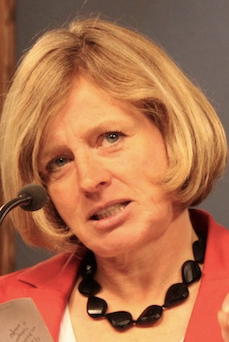
Critics like Calgary-Shaw Wildrose MLA Jeff Wilson and Edmonton-Strathcona NDP MLA Rachel Notley criticized the framework for its lack of specifics and vague wording. Ms. Notley honed in on some specific wording that she found troubling:

“The most specific elements of this document talk about the government moving away from being a service provider, moving away from being a funder, moving away from being a regulator. That says to me we’re going to see a fractured system and an increase in patchwork service delivery.” – NDP MLA Rachel Notley (Edmonton Journal, February 28, 2013)

Rachel Notley MLA Edmonton-Strathcona NDP
Rachel Notley

Not surprisingly, Minister Hancock disagreed with claims that the  provincial government intends to use the framework to download responsibilities. “It is not downloading or offloading but taking an intelligent look across the social agenda and saying how to we do this well together,” said Minister Hancock.

The resident policy-wonk

A self-described “policy-wonk,” Minister Hancock has become known for holding these types of broad consultation and visioning processes since he first entered cabinet in 1997. Similar broad consultations were held while he served as Minister of Advanced Education from 2004 to 2006 and Minister of Education from 2008 to 2011.

Government media releases tout that more than 31,000 Albertans participated in the Social Policy Framework consultations through in-person meetings and extensive online discussions.

Minister Hancock deserves some credit for taking some big steps in the government’s online consultation for this framework, which included online surveys, stakeholder blogs, and wikis where Albertans could provide feedback and upload their own response documents for public viewing. These types of online tools allow government’s to engage with citizens in ways that were not possible, or very difficult, only a decade ago.

—————

Hancock on the hyper-partisan Legislature

Asked about the aggressive tone of Danielle Smith‘s Wildrose Official Opposition, Minister Hancock described last fall’s Legislative session “not a shining point for the democratic process.” Minister Hancock, who also serves as Government House Leader, said that he hopes the tone will improve in the spring sitting that began this week.

“I think the opposition will come out of it fairly quickly when they realize that the Alberta public does not connect with it,” said Minister Hancock. “I think it will get better, because I don’t think there is an inhernent value in that kind of partisanship, on either side.”

Categories
Alberta Politics

Rural Albertans supporting lazy high-rise condo dwelling urbanites, says Griffiths.

Doug Griffiths
Doug Griffiths

Fresh from a war of words with popular Calgary Mayor Naheed Nenshi, Municipal Affairs Minister Doug Griffiths responded the a question from Edmonton-Centre MLA Laurie Blakeman with this poorly thought-out retort in Question Period today:

“It could be asked by rural Albertans why 17 per cent of the population that lives in rural Alberta that has all the oil and gas revenue, does all the work, all the farms, all the agriculture and everything associated with it, goes to support urban Albertans who sit in high-rise condos and don’t necessarily contribute to the grassroots of this economy”.

There is a lot wrong with Minister Griffiths’ statement, but to start, he should take a closer look at the urban landscape the next time he drives through one of Alberta’s cities. Most urban Albertans are likely living in single-family detached houses in suburbs, not in high-rise condos downtown (this is probably something, as the Minister of Municipal Affairs, that he should be aware of).

I wonder if he would also agree with Wildrose MLA Gary Bikman that urban Albertans also lack common sense?

Categories
Alberta Politics

What to expect in the spring sitting? Dirt, mud, and more dirt.

Alberta Legislative Assembly Building
Alberta’s Legislative Assembly Building (sans covered dome).

After a three-month break, Members of Alberta’s Legislative Assembly will gather today in Edmonton to start the spring sitting.

The commencement of this year’s first sitting will be unusual in that it will lack the traditional pomp and circumstance that comes with a Speech from the Throne. Lieutenant Governor Donald Ethell will not be invited to deliver a traditional Speech from the Throne today. The lack of Throne Speech or accompanying flagship legislation will mean a focus on the provincial budget, to be tabled on March 7. This, of course, is a deliberate move by the Tories.

Doug Horner
Doug Horner

Finance Minister Doug Horner will table the provincial government’s 2013/2014 budget on Thursday, and many political watchers are wondering what the document will include.

Over the past two months, Minister Horner and Premier Alison Redford have managed to communicate that Alberta has a revenue problem, a pipeline problem (also known as the unfortunately named ‘Bitumen Bubble’), and finally a spending problem.

Over the past week, numerous groups, including the Parkland Institute, the Conference Board of Canada, and the Alberta Federation of Labour, have released reports and survey’s demonstrating the need to reform Alberta’s revenue system.

The Premier mused about tax increases, and then ruled them out. All these mixed signals will make this week’s budget announcement a highly watched spectacle.

The continuation of the sitting also means that a handful of private members bills left over from last year’s sitting will return to the Assembly floor for debate this spring. These bills were introduced last year by opposition and backbench government MLAs.

Gene Zwozdesky
Gene Zwozdesky

This will be the second sitting of the Assembly since Edmonton-Mill Creek MLA Gene Zwozdesky was selected as Speaker by his peers. While generally seen as a fair chairman of the Assembly, Speaker Zwozdesky was highly criticized for ruling that Premier Redford did not mislead the Assembly over last year’s tobacco-gate scandal.

Watch Premier Redford focus on her strengths, like advocating on the national stage for a Canadian energy plan and for opening new markets for Alberta’s oil – like the controversial Keystone XL pipeline. As demonstrated throughout her first year in office, Premier Redford is much more effective at being a provincial advocate than being a provincial politician.

Do not expect to hear cabinet ministers or government MLAs make many comments about the fiascos that wreaked havoc for the Tories last fall. Ongoing investigations by Chief Elections Officer O. Brian Fjeldheim, retired Justice John Vertes, ethics commissioner Neil Wilksonson, and Information and Privacy Commissioner Jill Clayton will give the Tories a legitimate excuse to say “no comment.”

Will the Wildrose drive the agenda?

Danielle Smith Alberta Wildrose Party leader Election 2012
Danielle Smith

In the fall sitting of the Assembly, the newly minted Wildrose Official Opposition ran circles around the large Tory majority. It seemed like every day Wildrose leader Danielle Smith and Airdrie MLA Rob Anderson would have a new scandal or leaked documents to throw at the Tories like a live grenade.

Mirroring the tactics of the federal Conservatives in Ottawa, the Wildrose have brought a more aggressive and hyper-partisan approach than Albertans are used to from their opposition parties.

The official opposition launched a new website and series of radio ads to coincide with the budget debate, asking for Albertans feedback on the fiscal situation. While it is hard to fault the official opposition for their outreach, it is difficult to imagine the Wildrose will change their conservative ideological bent based on this mini-public relations campaign.

Three years ahead of the next election, a new online poll released by ThinkHQ shows the Wildrose leading the Tories 36% to 28%. The New Democrats and Liberals were distant from the pack at 16% and 13%. While the poll should be taken with a grain of salt, the mixed messages about provincial finances, recent conflict with Alberta’s teachers and uber-popular Calgary Mayor Naheed Nenshi are not likely working to help the Tories’ cause.

Brian Mason Alberta NDP leader Election 2012
Brian Mason

Lost in the fray during the fall sitting, these two parties need to remind Albertans that they are still there. Can the New Democrats and former official opposition Liberals succeed in reasserting themselves in the Assembly? I would not count them out.

The four-MLA NDP caucus just finished their province-wide “Broken Promises Tour”, highlighting what leader Brian Mason claims are a string of broken promises from the Tories since last year’s election. Liberal leader Raj Sherman has come out with a string of media releases criticizing the Tories.

Both parties hope that a provincial budget harsh on public services will remind Albertans of the differences between their parities and the governing Tories. The centre-rightish Liberal Party saw a mass exodus of supporters vote for Premier Redford’s Tories in last year’s election to block the Wildrose from forming government. It worked too well for the Tories, leaving the Liberals with a small five MLA caucus.

Last fall, the Wildrose Official Opposition danced circles around the governing Tories. Daily attacks from the Wildrose left the Tories stumbling and stammering to respond. New faces in the Premier’s Communications Office have already brought a more aggressive and partisan tone to their media releases and responses to opposition criticism online. This sitting, expect to see the Tories to counter the Wildrose attacks by taking a more aggressive approach to defending Premier Redford’s political agenda. That means dirt, mud, and more dirt.

Categories
Alberta Politics

Education Minister delivers teachers contract ultimatum to school boards.

After months of posturing and picking fights with Alberta’s teachers, it appears that Education Minister Jeff Johnson was just posturing. But what the rookie cabinet minister was trying to accomplish is still unclear.

Jeff Johnson Alberta Education Minister MLA
Jeff Johnson

Minister Johnson announced this weekend that he would back down on his ultimatum made last week that teachers accept his last minute contract demands. The Minister threatened salary rollbacks if the Alberta Teachers’ Association (ATA) rejected last week’s offer. The ATA’s elected council unanimously voted to reject the Minister’s demands.

In reality, hope for any provincial-level deal ended late last year when the Alberta Teachers Association, realizing that a province-wide agreement to address long-standing workload issues was not going to be reached, walked away from the table. At that point, it became clear that negotiations would return to the local school board level (where negotiations historically take place).

As the employers of Alberta teachers, locally elected school boards should be uncomfortable with the resentful tone of Minister Johnson’s ultimatum to trustees that negotiated contracts will be required to have three years of zero salary increases for teachers (as opposed to two years of zero salary increases already proposed by the teachers’ union).

“…be aware that any negotiated deals must include wage freezes for three years and no more than a two per cent increase in the fourth year. Anything else is simply not sustainable for our education system and will not be funded by government.” Excerpt from Minister Jeff Johnson’s email to school boards.

Whether teachers and individual school boards agree to two or three years without salary increases, the point remains that teachers’ salary will have little affect on this, or next year’s, provincial budget. The outstanding question is whether the ATA and local school boards can address the long-standing workload issues facing teachers across Alberta.

Laurie Blakeman MLA Edmonton-Centre Liberal
Laurie Blakeman

The Education Minister’s directive to school boards suggests that while the government has backed away from province-wide bargaining, Minister Johnson might not shy away from interfering in local bargaining.

Provincial politicians like school boards.

When popular decisions are made, like opening new schools, the provincial government takes the credit. When unpopular decisions are made, like closing schools or no-zero policies, then the provincial politicians are more than happy to let the school board trustees take the blame.

Meanwhile, following a request by Edmonton-Centre Liberal MLA Laurie Blakeman, Alberta’s Information and Privacy Commissioner Jill Clayton announced that she will investigate whether Minister Johnson breached the Freedom of Information and Protection of Privacy Act by accessing government registries to send a direct email to thirty thousand Alberta teachers.