Categories
Alberta Politics

Wildrose can grow from Tory seeds of doubt

Do you drain a Lake of Fire or do you dam it?

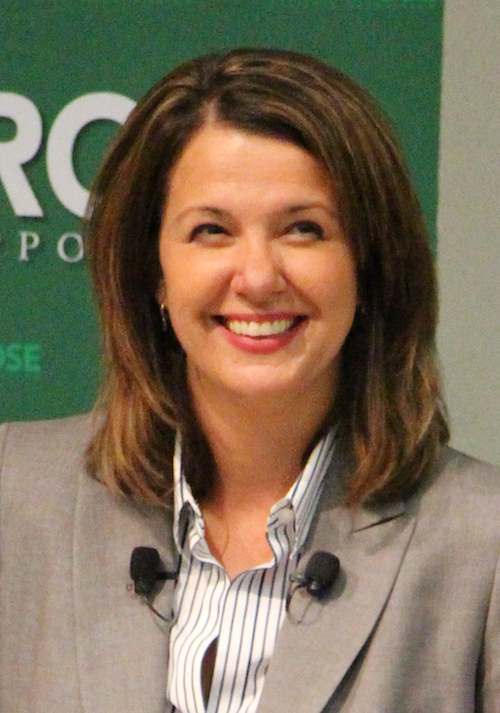
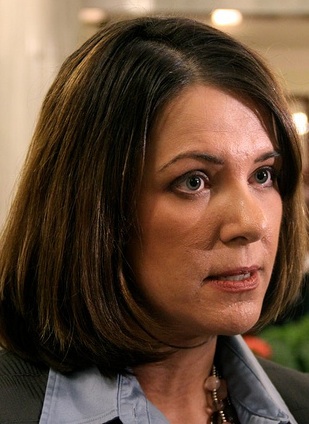
Danielle Smith
Danielle Smith

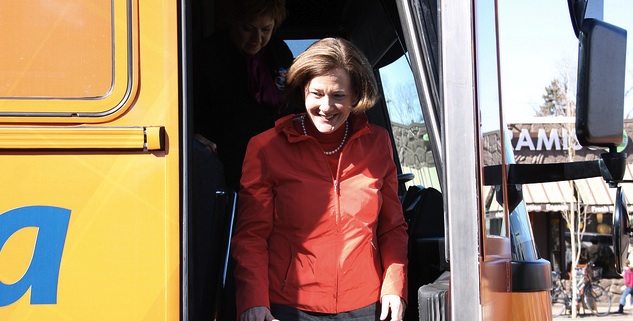
Whatever it takes, Wildrose Party activists are expected to moderate the tone of their policies at their weekend policy convention in the booming central Alberta city of Red Deer. A delicate and sometimes shaky coalition of libertarians and social conservatives (among other groups), Alberta’s official opposition party will learn from the mistakes they made in the 2012 election. On the cusp of victory, offensive remarks made by social conservative candidates in Calgary and Edmonton scared many moderate Albertans to support the long-governing Progressive Conservatives at the ballot box.

Since forming the official opposition with 17 MLAs, Ms. Smith has led a disciplined front-bench that has in many cases driven the government’s agenda, or at the least frustrated government ministers unaccustomed to their aggressive style. Implementing tactics used by the Ottawa Conservatives, the Wildrose have been relentless in their opposition to the forty-two year old governing PC Party.

Fighting back against the Wildrose, or at least trying to, Tory environment minister Diana McQueen emerged from her legislature office yesterday to attack Wildrose leader Danielle Smith’s position on climate change. While Ms. Smith’s party is undoubtably weak on environmental issues, especially on the important climate change file, the Tory government’s environmental record is not much better. While the Alberta government is doing more on this file than it has in a decade, its plan appears to be propped up by snippets of truth and focus group tested sound bites.

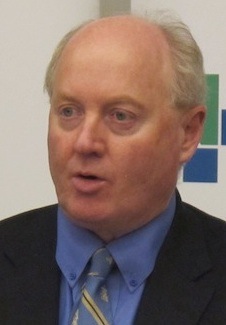
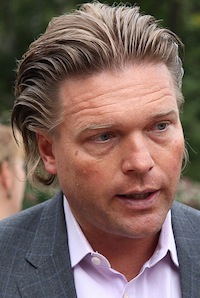
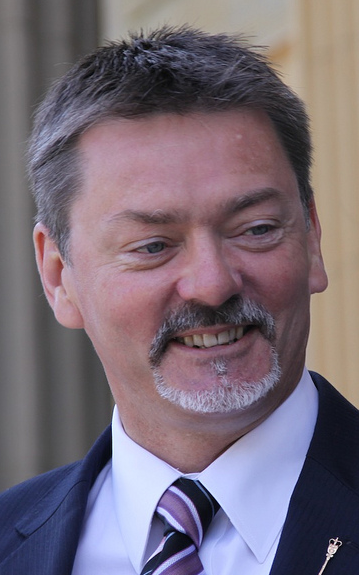
Thomas Lukaszuk
Thomas Lukaszuk

The Wildrose are looking for second chances and there is opportunity for them. With drastic cuts to education and post-secondary education, constant political meddling in the health care system and fears that public sector pension changes may negatively impact the retirement prospects of hundreds of thousands of Albertans, Alison Redford’s Tories threaten to alienate the electoral coalition of moderate voters (including many former Liberal voters) who helped them narrowly win re-election. Shooting from their hips (and frequently missing their targets), cabinet ministers Thomas Lukaszuk, Jeff Johnson, Fred Horne, and Doug Griffiths often confuse their own confidence with arrogance. The Tories do not give any impression that they were humbled by their near-defeat in last year’s election.

Some Tories may point to the electoral success of Premier Ralph Klein following his drastic budget cuts in the early 1990s, but this is a very different political environment, and I am sure that most Albertans would agree that Ms. Redford is no Mr. Klein.

A recent poll from Leger Marketing, for what it’s worth three years before the next election, shows Ms. Redford’s and Ms. Smith’s parties competing with mid-30 percent range support. The poll also shows that more than half of Albertans disagree with the government’s performance, but the Wildrose’s support in the polls suggests voters have not settled on an alternative.

Brad Wall
Brad Wall

This weekend and over the next three years, the Wildrose Party could look to Saskatchewan for inspiration. Stalled for years in the opposition benches, the conservative Saskatchewan Party undertook a move to modernize its image and policies when Brad Wall became the party leader in 2004. The unruly coalition of Tories and Liberals led by a former Reform Party MP had been unable to defeat the institutionalized New Democrats, who dominated in that province’s major cities. Under the smart and savvy Mr. Wall, the Sask Party modernized, and slowly began to encroach into NDP held urban constituencies.

After his party finally defeated in NDP in 2007, the conservative Mr. Wall has become one of Canada’s most popular provincial leaders. Like the NDP did to the Sask Party, and the Tories did to the Wildrose in 2012, Albertans can expect to be berated by rounds of “ooga booga, the Wildrose is scary” ads in the next election. The part that will be missing from those ads is that many, if not most, current Wildrose supporters were sitting comfortably in the Tory camp until about three years ago.

Wildrose success is not entirely about policy. Planting the seeds of doubt in Ms. Redford’s ability to run an honest government will also be key to the Wildrose Party’s success in the next election. Ms. Redford’s tendency to avoid controversy by hiding the truth or bending the facts is something that many political watchers have noted. Her office’s decision to block requests to release details of more than $2 million in severance packages given to former premier’s office staffers planted one seed of doubt. Her actions, her words, and people she surrounds herself have planted others. Two bad seeds that might not go away, controversial former PC MLAs Mike Allen and Peter Sandhu, are expected to apply for re-entry into the Government Caucus.

And the Wildrose do not just need Tory voters to vote for them, they also need former New Democrat and Liberal voters to return to their prior allegiances (a key reason behind Ms. Smith’s province-wide debate tour with NDP leader Brian Mason).

So, it’s clear the Wildrose needs to moderate the tone of their policies to attract new voters, but they can also benefit greatly from the seeds of doubt that the Redford Tories appear to be planting each week.

Categories
Alberta Politics

Mason vs Smith: Wildrose and NDP leaders on province-wide debate tour

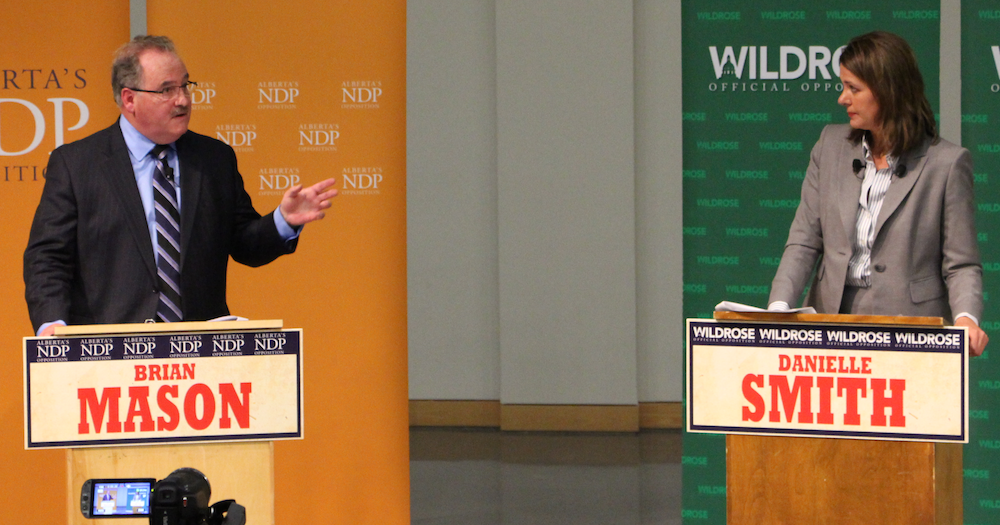
NDP leader Brian Mason and Wildrose leader Danielle Smith
NDP leader Brian Mason and Wildrose leader Danielle Smith spar at their latest debate hosted by the University of Alberta Political Science Undergraduate Association.

Three years before the next provincial election, a public debate tour might not be where you would expect to find the leaders of two political parties. Breaking convention, Wildrose Party leader Danielle Smith and Alberta NDP leader Brian Mason are joining forces to bring provincial politics to college and university campuses across Alberta. In the second of a planned seven stops, the two leaders stood at their podiums in front of a crowd of 400 at the University of Alberta last night to debate the future of Alberta.

Danielle Smith
Danielle Smith

It made me wonder when was the last time one party leader faced another in such a public arena and reflect on how this format is more humanizing than the sterile television studio we typically watch our political leaders debate in. Needless to say, it was a highly entertaining evening.

Ms. Smith and Mr. Mason playfully sparred over issues facing the energy sector, pipelines, the economy, post-secondary education, health care and public services.

On so many issues, it was refreshing to see two distinct opinions being debated. It was also refreshing that, for a change, the long-governing Progressive Conservatives were not always the centre of attention. Highlighting the point of the debate tour, Mr. Mason urged the crowd to “think past the PC government,” reminding them that he was in Grade 11 when the Tories first formed government in Alberta.

On government spending, Mr. Mason cleverly pledged his party would not raise taxes, but reversing tax cuts implemented by former Tory finance ministers Stockwell Day and Steve West. Ms. Smith affirmed that new pipelines would help Alberta restore its revenue stream, and worried that the government was becoming too centralized, especially in health care and potentially in post-secondary education.

“I’m not an expert in post-secondary education, but guess what, neither is Thomas Lukaszuk.” – Danielle Smith

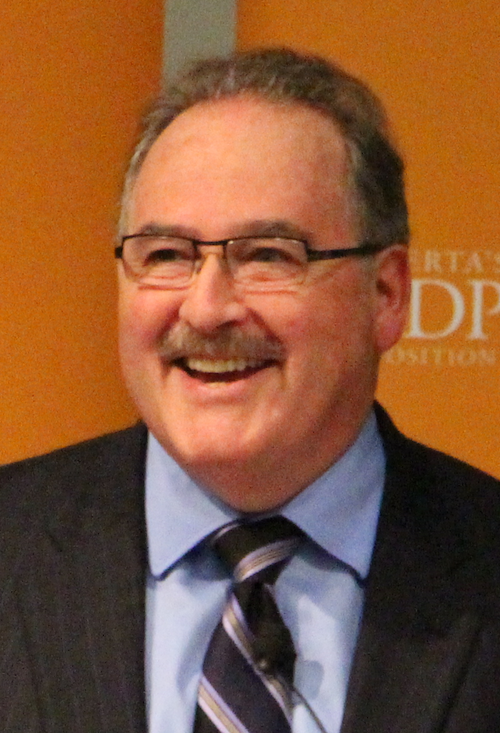
Brian Mason
Brian Mason

On the topical issue of pipelines, Mr. Mason reaffirmed his party’s support for refining bitumen in Alberta, rather than creating refinery jobs in Texas and China. Ms. Smith avoided commenting on the Keystone XL and Northern Gateway pipelines, instead focusing on the Energy East proposal that would pump oil from Alberta to New Brunswick (which Mr. Mason said he also supports).

While it may seem odd that the two opponents would so comfortably share the stage, there is method to this strategy. After recent budget cuts and government scandals, the two parties are betting that Albertans will be less enamoured with Premier Alison Redford‘s Tories when the next election approaches.

If the Wildrose wants to defeat the Tories in the next election, they not only need to steal votes away from the four-decade old political dynasty, they need other parties to do so as well. While the Wildrose does not have a strong base of support in Edmonton,  the NDP are well-positioned to steal votes away from the Tories in the provincial capital (the NDP increased their vote share in Edmonton from 18% in 2008 to 21% in 2012).

If this sounds a tad familiar, there are some parallels that can be drawn to the strategy used by Conservative leader Stephen Harper and NDP leader Jack Layton to destroy Paul Martin‘s Liberal Party in the mid-2000s (except in this case, the Martin Liberals are the Redford Tories).

If you missed tonight’s debate, check out on of the upcoming debates near you:

September 25 – Medicine Hat College
September 26 – University of Lethbridge
October 3 – Red Deer College
October 10 – MacEwan University
October 17 – Mount Royal University

Categories
Alberta Politics

Redford shines in flood aftermath, but political problems not washed away

Premier Alison Redford shakes the hand of a Canadian Forces member providing relief for flooding in southern Alberta.
Premier Alison Redford shakes the hand of a Canadian Forces member providing relief for flooding in southern Alberta (photo from @Premier_Redford on Twitter)

The day to day melee of provincial politics in Alberta was thrown out the window two weeks ago as rising rivers flooded communities in southern Alberta and forced the evacuation of more than 100,000 Albertans from low-lying Calgary neighbourhoods and surrounding communities.

Caring, compassionate, and pro-active, Premier Alison Redford has been front and centre since the flooding began, quickly flying back from a trip to New York two weeks ago, where she was speaking at a conference and meeting with oil industry investors. Only Calgary Mayor Naheed Nenshi, the calm and confident voice of his city, has been more front and centre in the media during this natural disaster.

Abandoning the government’s austerity agenda, Premier Redford announced $1 billion in recovery funding and the appointment of three new cabinet ministers to lead the recovery: Lethbridge-West MLA Greg Weadick for south east regions, Calgary-Klein MLA Kyle Fawcett for south west regions, and Calgary-South East MLA Rick Fraser for High River.

Creating a more purposeful version of ‘Ralph Bucks,’ the government provided pre-paid debit cards to residents affected by the flooding.

 Almost immediately after the government announced the appointment of new cabinet ministers, Innisfail-Sylvan Lake Wildrose MLA Kerry Towle took to Twitter to ask why Wildrose leader Danielle Smith, whose Highwood constituency includes High River, was not approached to fill one of these positions (although Wildrose MLAs represent all but three southern Alberta constituencies outside of Calgary, it still would be highly irregular for an opposition leader to be appointed to cabinet).

Despite some initial skepticism, the Wildrose leader quickly began to cooperate with the new minister.

As the flooding started, Ms. Smith was on the ground as a volunteer in High River and, after residents were evacuated from the town, she butted heads with Mayor Emile Blokland about when residents should be allowed back into the town.

With $1 billion in support promised for the flood ravaged communities, it will be difficult for the opposition Wildrose to criticize the Premier’s decision to abandon her promise to balance the provincial budget by 2014, especially as Ms. Smith’s constituency includes one of the hardest hit areas.

Overall, the Premier has assumed a pro-active position, a contrast to a 2010 in Medicine Hat, when then-Premier Ed Stelmach was criticized for not visiting the city in the aftermath.

Former MLA George Groeneveld, who represented  Highwood until last year’s election, told CBC last week that allowing development in flood zones has been a mistake. Mr. Groeneveld is the author of a shelved 2006 report that had the potential to cause major political problems for Premier Redford as the flood waters raged. “The one-in-100-year flood seems to be coming every two years, even more, especially in southern Alberta,” Mr. Groeneveld told the Calgary Herald in 2006.

While the blame for the shelved 2006 report can not personally be placed on Premier Redford, who was not even an MLA at the time, her government  furiously spun its support for the report and flood relief with Municipal Affairs Minister Doug Griffiths and Environment Minister Diana McQueen  aggressively promoting the government’s support for recommendations.

Despite these pro-active stances, the flood has not washed away Premier Redford’s political problems. The Premier has been known to keep her distance from domestic issues in Alberta, allowing cabinet ministers to take the lead on local issues while she focuses on Alberta’s international agenda.

A handful of senior cabinet ministers appear to have caused all sorts of problems and turmoil that may require the personal attention of the Premier, or new cabinet appointments, to resolve. Questions loom about the Alberta Health Services $100-million surplus in the midst of nurse layoffs and whether Health Minister Fred Horne approved the agency’s controversial bonuses for its senior executives before he fired the entire board of directors. Confusion also continues about the future of home care services.

On the education front, post-secondary staff layoffs continue and the University of Alberta remains defiant of Deputy Premier Thomas Lukaszuk‘s attempts to control their institutional agenda. Under the watch of Education Minister Jeff Johnson, school boards, like Edmonton Public Schools, have been forced to eliminate hundreds of full-time staff. Meanwhile, Alberta’s booming population is set to exceed 4-million.

Premier Redford has shined during the flood, but still faces plenty of problems once the reality of politics returns.

Categories
Alberta Politics

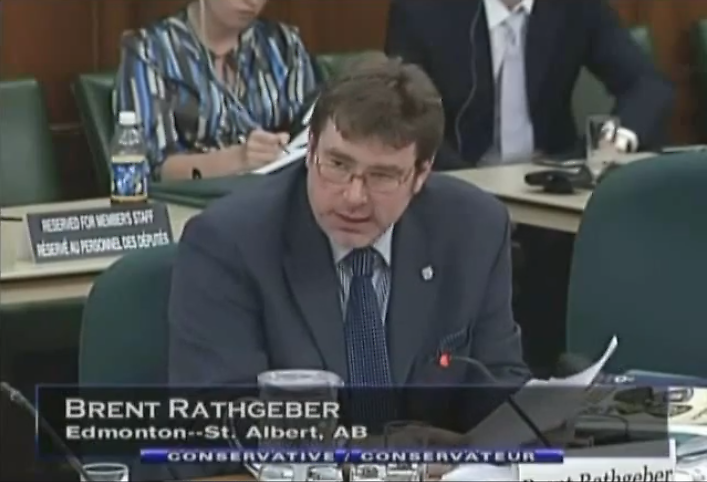
How Brent Rathgeber changed Edmonton’s political map and why the Tories might like it

Brent Rathgeber Edmonton MP
Brent Rathgeber

Edmonton-St. Albert MP Brent Rathgeber unleashed a political storm last night when he announced on Twitter that he is leaving the Conservative Party of Canada caucus. Initially citing a “a lack of commitment to transparency and open government,” he expanded his criticisms to the control Prime Minister Stephen Harper‘s office exercises over backbench MPs as interfering with the ability to represent his representing his constituents.

“When you have a PMO that tightly scripts its backbenches like this one attempts to do, MPs don’t represent their constituents in Ottawa, they represent the government to their constituents,” Mr. Rathgeber told reporters at an afternoon press conference in Edmonton.

First elected to Parliament in 2008, Mr. Rathgeber has built a case for leaving the Tories by earning a reputation as being one of the only Conservative politicians in Ottawa to purposely deviate from the party discipline enforced by Prime Minister Harper. This is certainly embarrassing for Prime Minister Harper’s government, which has been scandal plagued for the past few months, but it is yet to be seen how damaging the departure will be for the Tory government in Ottawa.

His positions have not always been consistent with one ideology. For example, he is a Conservative who opposes the government’s anti-union legislation yet has introduced a private members bill that could undermine the independence of crown corporations like the Canadian Broadcasting Corporation (which was amended by Justice Minister Rob Nicholson). Perhaps he was just bored with being one of the only contrarians in the Ottawa Tory backbenches?

Thomas Lukaszuk
Thomas Lukaszuk

Starting his political career at the provincial level in 2001, Mr. Rathgeber became an unlikely politician when he stepped in as a last minute candidate after the already nominated PC candidate, Don Koziak, decided against challenging popular Liberal MLA Lance White (Mr. Rathgeber won the election). He served one term as the Progressive Conservative MLA for Edmonton-Calder until 2004, when he was defeated by New Democrat David Eggen. This means Mr. Rathgeber holds the dubious honour of being the only Alberta Conservative to have unseated an incumbent Liberal and been defeated by a New Democrat.

Rumours are already circulating that he could be eyeing a return to provincial politics, perhaps using his new-found fame to propel him as the Wildrose Party‘s challenger to Deputy Premier Thomas Lukaszuk in Edmonton-Castle Downs.

Before he makes his decision, Mr. Rathgeber could learn a lesson from former Edmonton Tory MLA Raj Sherman. Dr. Sherman was treated as a saint when he split with the provincial Tories to sit as an Independent, he fell from grace just as quickly as had risen when he decided to join the Liberal Party.

Rathgeber’s departure could help Tories

Unexpectedly, Mr. Rathgeber’s departure from the Tory caucus may have helped save his former party from an even more devastating political storm. With electoral boundary changes being imposed in the next federal election, local Tories were not looking forward to the prospect of some incumbent MPs having to challenge each other for riding nominations.

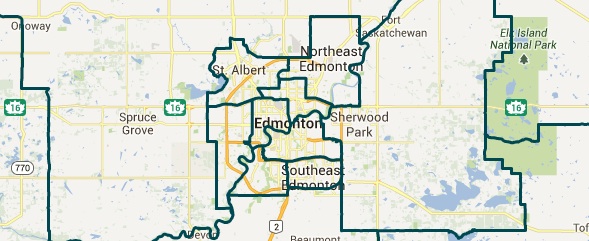
South Edmonton ridings
The Edmonton Shuffle

In south Edmonton, new boundaries have forced Tory MPs Mike Lake, James Rajotte, and Blaine Calkins to uncomfortably position themselves for the prospect of nomination fights in new ridings. Making the shuffle more complicated are rumours that north Edmonton MP Tim Uppal may seek a nomination in a south Edmonton riding, as his Edmonton-Sherwood Park riding is being dissolved. Add to this the rumours that Minister Rona Ambrose may opt to retire instead of seeking a fifth-term in the new Edmonton-West riding.

Peter Goldring
Peter Goldring

If the nomination contest tension reaches the point of fisticuffs, the Tories could offer one of these MPs an easy nomination race in the now non-Conservative Edmonton-St. Albert. This is similar to when Mr. Uppal was offered an easy nomination win in Edmonton-Sherwood Park after Mr. Lake him for the Edmonton-Mill Woods-Beaumont nomination in 2006 (Mr. Uppal was that riding’s Conservative candidate in 2000 and 2004).

Edmonton-East MP Peter Goldring said recently he would like to seek a Conservative (or even a Liberal) nomination in the next election. Mr. Goldring was welcomed back into the Conservative caucus today after he was suspended in 2011 for refusing to give a breath sample to police. Today he was found not guilty.

Mr. Goldring’s departure from the Conservative caucus a year and a half ago sparked interest among prospective Conservative nominees. Lawyer Michael Cooper, who is seeking the Conservative nomination in the new Edmonton-Griesbach riding, and PC MLA Janice Sarich, who is rumoured to be eyeing a federal candidacy, could see Mr. Rathgeber’s departure as an opening to run instead in Edmonton-St. Albert now that Mr. Goldring has been readmitted to the Tory caucus in Ottawa.

Categories
Alberta Politics

Pipelines before persons with developmental disabilities?

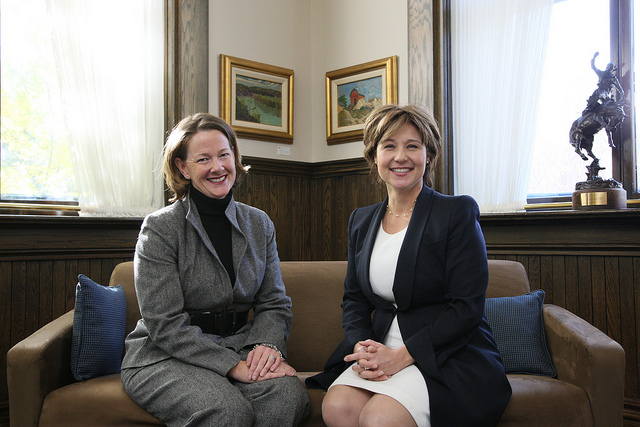
Alison Redford Christy Clark
Alberta Premier Alison Redford and BC Premier Christy Clark in October, 2011. Photo: PremierofAlberta via Flickr.

Fresh from a surprise election win, British Columbia Premier Christy Clark‘s government formally announced its opposition this week to the Enbridge Northern Gateway Pipeline that would carry bitumen from Alberta to Kitimat. A controversial issue during the heated election campaign, BC Environment Minister Terry Lake told the media that evidence supporting the pipeline “simply is insufficient for us to think it should go forward.”

Perhaps sending a political message to her western counterpart, Alberta Premier Alison Redford is flying to New Brunswick this week, hoping to use Premier David Alward‘s idea of an eastbound pipeline to kickstart her still undefined National Energy Strategy.

Thomas Lukaszuk
Thomas Lukaszuk

Maintaining a presence on the national and international stage appear to be continuing priorities for Premier Redford. The Premier has recently travelled twice to Washington D.C. to advocate for the construction of the TransCanada Keystone XL Pipeline and numerous cabinet ministers have been scouting the globe in name of the PC Government’s new slogan – “Building Markets.” Deputy Premier Thomas Lukaszuk is currently travelling in Europe, and Finance Minister Doug Horner and Agriculture Minister Verlyn Olsen recently returned from trips to China and Kazakhstan.

There is certainly value in government leaders travelling internationally, but in Alberta’s case, the perception has become that the Premier is more comfortable travelling outside of Alberta than dealing with the day-to-day domestic issues in the province.

Frank Oberle MLA Peace River
Frank Oberle

For example, a week after the Premier re-announced plans to open five new international trade offices, hundreds of Albertans with developmental disabilities and their families rallied at the Legislature and outside Premier Redford’s Calgary-Elbow constituency office to protest deep cuts to service providers.

The minister responsible for explaining the cuts, Peace River‘s mild-mannered MLA Frank Oberle, has been tongue-tied and delivering confusing diversionary messages to Albertans.

While Minister Oberle correctly states that the entire budget of his department is increasing, he has yet to convincingly explain why $42 million is being cut from programs designed to help the province’s most vulnerable citizens become more employable.

Categories
Alberta Politics

In Alberta, the billionaire walks and the working man gets the shaft.

The billionaire walks…

There was little surprise among the cynical pundit class yesterday as Elections Alberta announced that it had found billionaire Daryl Katz and his Katz Group broke no laws when the company delivered a donation in the form of a $430,000 bank draft to Premier Alison Redford‘s Progressive Conservative Party during last year’s provincial election.

Daryl-Katz
Daryl Katz

Even though the maximum donation limit during an election period is $30,000, according to Elections Alberta the $430,000 donation was legitimate because it was accompanied by a paper trail of 17 individuals and professional corporations who wished to receive tax-receipts in amounts of $30,000, $25,000, $20,000, and $15,000. Tax-receipts were issued for Mr. Katz, members of his family, and senior employees of his company.

Only the portion of the donation assigned to Mr. Katz’s Chief Financial Officer, Paul Marcaccio, was ruled inappropriate because he is not an ordinary resident of Alberta. The PC Party announced that it returned the $25,000 that was assigned from Mr. Marcaccio.

Even if the Katz Group donation was found to be legal, it certainly goes against the spirit of the law and demonstrates how easy Alberta’s flimsy political finance laws are to circumvent.

The $430,000 donation represented 26% of the money raised by the PC Party during last year’s election period. It could be speculated that this is the reason the PC Party reneged on a promise to reveal their list of donors in the final week of the campaign.

…and the working man gets the shaft.

Corrections Officers on strike last weekend.

One day after ending a 5-day wildcat strike spurred by serious concerns about safety in the workplace, Corrections Officers represented by the Alberta Union of Provincial Employees (AUPE) claim they are being threatened with punishment by senior managers in the Solicitor General’s department. This goes against an agreement to end the strike reached by AUPE President Guy Smith and the government’s front-man on the issue – Premier Deputy Premier Thomas Lukaszuk – that union members would not be punished for going on strike.

Front-line Corrections Officers at the new Edmonton Remand Centre began a wildcat strike last week after they felt serious safety concerns were not being addressed by their management. The wildcat strike quickly spread across the province as Corrections Officers at other jails walked off the job in a show of solidarity with their colleagues in Edmonton.

Having avoided making any public comments on the issue until the strike was over, Premier Redford emerged at a press conference in Calgary to announce the government would take legal action against AUPE to recoup any costs to the government caused by the strike.

Meanwhile, in a move that could unravel the one-day labour peace, Solicitor General Jonathan Denis announced the province wants to suspend AUPE’s rights to collect dues from all government employees for a six-month period.

The government’s request to the Labour Relations Board would withhold dues of tens of thousands of AUPE members who had no connection to the striking Corrections Officers and is a move that is certainly meant to cripple, and poison the government’s relationship, with the union of 80,000 Government of Alberta employees. The Public Service Employee Relations Act allows for suspension of dues only for individual union locals, not for an entire union membership.

Categories
Alberta Politics

Tories versus Wildrose: Year One in Alberta’s new political game.

Alison Redford Campaign Bus
Premier Alison Redford hops of her campaign bus onto Edmonton’s 124 Street during the 2012 election.

On April 23, 2012, Alberta’s most hotly contested election in decades culminated with the re-election of the twelfth consecutive Progressive Conservative majority government since 1971. Despite holding the large majority elected MLAs, the popular vote showed Albertans were closely divided between Alison Redford‘s Tories who finished with 44% compared to an impressive 34% showing for Danielle Smith’s Wildrose Party.

Danielle Smith Wildrose Alberta
Danielle Smith

The first year of Premier Redford’s mandate has been rough for her governing party. Scandals bubbling up from now-defunct health authorities, accusations of a personal conflict-of-interest, and allegations that her party accepted up to $400,000 in illegal campaign donations from billionaire Edmonton Oilers owner Daryl Katz have dogged her government.

Despite being branded as a policy-wonk, Premier Redford’s cabinet has implemented a confused domestic agenda that has resulted in public spats with popular Mayor Naheed Nenshi and Stephen Mandel and unnecessary conflicts with teachers and doctors. Recent budget cuts, blamed on a deflating bitumen bubble, also threaten to unravel the coalition of moderate voters who carried her party to victory one year ago.

The mixed bag that is Premier Redford’s cabinet could help explain some of this confusion. Younger cabinet ministers, like Deputy Premier Thomas Lukaszuk, Education Minister Jeff Johnson and Municipal Affairs Minister Doug Griffiths, constantly talk off the cuff and appear to sometimes be making government policy on the fly. Other ministers, like Finance Minister Doug Horner, Health Minister Fred Horne and Human Services Minister Dave Hancock, have shown restraint and maturity that comes with years of cabinet experience.

Doug Horner
Doug Horner

Premier Redford has been exceedingly strong on the national and international stage as she has travelled extensively over the past year lobbying for a Canadian Energy Strategy, the Keystone XL Pipeline, and to open new markets for Alberta’s oil sands. She appears to be less interested or willing to play the political game, which will become increasingly difficult in the face of an aggressive official opposition.

Wildrose leader Danielle Smith could have been celebrating her first year as Premier had it not been for late election bozo-erruptions that exposed an offensive social conservative element in her party. Comments about caucasian advantages and a Lake of Fire drove many moderate conservatives, liberals, and even some New Democrats, to vote PC in last year’s election.

Despite the disappointment of not defeating Alberta’s long-governing PC dynasty, Ms. Smith has grown into her role as Leader of the Official Opposition. Borrowing aggressive tactics from the federal Conservatives in Ottawa, who are organizationally tied at the hip with the Wildrose, Ms. Smith’s party is leading the most aggressive and partisan official opposition in recent memory. Her party has groomed a front-bench that dominate the media and have, in many cases, driven the government agenda from across the aisle. Rarely a week goes by where Ms. Smith, Rob Anderson, Shayne Saskiw, Kerry Towle, Bruce McAllister, or Heather Forsyth have not grabbed a headline or a prime time news story.

The Liberals, still led by former Tory MLA Raj Sherman, are still adjusting to their new role as the third-party in the Assembly after being bumped out of Official Opposition by the Wildrose. Accustomed to stealing the spotlight from the now-former Official Opposition Liberals, the four-MLA New Democrat caucus spent the past year figuring out how to play the same tricks on the Wildrose. Acclimatizing to the new political environment, Brian Mason’s NDP were overshadowed by Ms. Smith’s new team for most of last year. With some of the ‘progressive’ shine coming off Premier Redford’s Tories, the NDP are starting to find their footing again.

The Tories have broken more than a few election promises in the first year of this mandate, including pledges to balance the budget and provide stable funding for health, education, and municipalities. Despite the rough first year, Premier Redford’s Tories still have at least three years left until the next election to fulfill the promises made and mend fences with the bloc of moderate voters who saved their party from defeat one year ago today.

Categories
Alberta Politics

Fake tuition freeze flops after Redford’s $147 million budget cut.

University of Alberta students penned messages to the provincial government at yesterday's #Graffiti4Govt graffiti wall.
University of Alberta students penned messages to the provincial government at yesterday’s #Graffiti4Govt graffiti wall.

“We’ve been very clear that we will not be balancing the budget on the backs of students,” Premier Alison Redford told the media at a press conference yesterday.

This statement is only partially true. The provincial government is not balancing the budget this year.

Gathered to re-announced what Deputy Premier Thomas Lukaszuk casually announced off-the-cuff last week, Premier Alison Redford and her loyal Deputy declared yesterday that the provincial government provide an extra $16.5 to post-secondary institutions to cover next year’s expected 2.5% tuition increase for students. The government has framed the move as a tuition “freeze,” but it is really a one-time subsidy to hide a fee increase, as the institutions will be implementing tuition increases regardless.

So, the good news is that students will not be paying more out of their pockets in tuition next year. The bad news is due to provincial budget cuts, class sizes will be larger and there will be fewer instructors. This is, of course, if your program has not been cancelled.

Deep cuts to the provincial government’s post-secondary education budget has led Alberta’s universities and colleges to announce staff layoffs, program cutbacks and, in some cases, complete program eliminations. Mount Royal University, Grant MacEwan, NAIT, Lakeland College, and Athabasca University have announced cuts to programs and staff that will affect the quality of education Alberta students will receive in the coming years.

University of Alberta students penned messages to the provincial government at yesterday’s #Graffiti4Govt graffiti wall.

Yesterday’s announcement, like the Deputy Premier’s focus on Campus Alberta logos and mandate letters, is meant to distract the public from the affects the deep budget cuts. The  fake tuition freeze and orders from Deputy Premier Lukaszuk that all institutions implement a three-year wage freeze in all future staff contracts, could drive a wedge between students and post-secondary staff, who have remained unusually unified in speaking against the budget cuts.

Unlike the broad-sweeping budget cuts implemented during Premier Ralph Klein‘s time in office, post-secondary education is a main target in Premier Redford’s cuts. These cuts may be an indication as to why the soft-spoken former Advanced Education Minister Stephen Khan was shuffled out of cabinet earlier this year in favour of the more aggressive and heavy-handed Deputy Premier Lukaszuk.

Alberta’s two big city mayors are united in displeasure over the cuts.

Speaking to an audience of 2,000 people earlier this month, Edmonton Mayor Stephen Mandel shamed the Redford government at his annual State of the City Address:

“When I see Edmonton’s key growth sector — our post-secondary institutions — placed in a position of fundamental uncertainty, I worry that a new era of ‘good-enough’ thinking is poised to undermine our long-term sustainable prosperity” – Edmonton Mayor Stephen Mandel (April 2, 2013)

Calgary Mayor Naheed Nenshi, an associate professor at Mount Royal University, penned an open letter to the institution’s board of governors urging them to stand up to the provincial government.

I have been on record as saying that the provincial government has made a terrible error in its post-secondary education policy – great cities need great universities and great universities need government support. No doubt these actions have made your life very difficult. However, I would encourage the leadership of MRU to stand up to the provincial government on behalf of its students, faculty, and community, rather than capitulate to the government’s bad policy. – Calgary Mayor Naheed Nenshi (April 17, 2013)

Categories
Alberta Politics

Mayor Mandel on the warpath, keeps re-election plans secret.


Yours truly, community organizer Michael Walters and Mayor Stephen Mandel at the Mayor's campaign headquarters during the 2010 election.
Yours truly, community organizer Michael Walters and Mayor Stephen Mandel at the Mayor’s campaign headquarters during the 2010 election.

Stephen Mandel is not ready to announce whether he will run for a fourth-term as Edmonton’s Mayor.

Speaking to a crowd of more than 2000 people at his annual state-of-the-city address to the Chamber of Commerce, Mandel avoided the topic of his political future, instead taking aim at Premier Alison Redford’s Progressive Conservatives by criticizing recent deep cuts to post-secondary education budget.

Mayor Mandel also called out the Tories for their lack of commitment to the promised City Charters and cuts to municipal infrastructure funding. It was a big shift for a Mayor who has spent his time in office influencing his provincial counterparts behind the scenes, rather than through the media.

Thomas Lukaszuk
Thomas Lukaszuk

The always-eloquent Deputy Premier Thomas Lukaszuk was in the audience at the Mayor’s announcement and responded by telling the media that, “I don’t know who pissed into his corn flakes…” He might be #2 in the halls of the provincial legislature, but Minister Lukaszuk was vastly outnumbered in that banquet hall yesterday afternoon.

For all his faults, Mayor Mandel is still incredibly popular among Edmonton’s business community – a powerful constituency in the electoral coalition that re-elected the Tories in 2012.

With the Mayor on a new warpath, political watchers who were expecting the Mayor to announce his plan to retire in yesterday’s speech will have to wait (perhaps four more years if he decides to run again).

If Mayor Mandel decides to retire, this October’s vote will be the first mayoral election since 1968 without an incumbent or interim mayor on the ballot. Edmontonians have witnessed considerable growth in their city and progress on projects like downtown redevelopment and public transit expansion since he became Mayor in 2004. He will be a hard act to follow.

Don Iveson
Don Iveson

Mayor Mandel’s potential retirement has sparked wild-rumours and serious-speculation about who could run to replace him. While none have officially declared their candidacy, all eyes could soon focus on the handful of City Councillors who could stand to become the next Mayor of Edmonton.

As an underdog candidate in the 2007 election, Don Iveson surprised political watchers when he unseated high-profile Councillor and past mayoral candidate Mike Nickel in south Edmonton’s Ward 5. Since then, Councillor Iveson has been one of Council’s most well-spoken and thoughtful voices on issues ranging from smart growth to waste management. His role as chair of the Capital Region Board’s Transit Committee will have given him an opportunity to understand the broader needs of Edmonton’s neighbours.

Don Iveson represents a new generation of politically engaged Edmontonians who are passionate about defining Edmonton as a strong economic and creative hub in Canada.

Karen Leibovici
Karen Leibovici

A popular and hard-working representative, Karen Leibovici is one of Edmonton’s longest serving politicians. She began her elected career as a Liberal MLA representing the Edmonton-Meadowlark constituency in 1993 and was elected to City Council in 2001. While she once wanted to lead Alberta’s Liberal Party, her politics have tended to be more conservative on civic issues.
Councillor Leibovici is currently finishing her term as the President of the Federation of Canadian Municipalities, the national lobby group for Canadian municipalities.

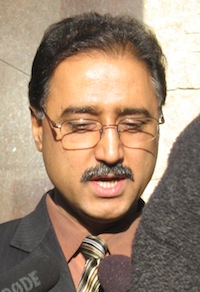
Serving his second-term representing Mill Woods, Amarjeet Sohi is a consummate retail politician and community advocate. On Council, he is a passionate voice for an area of Edmonton that has been traditionally underrepresented in the halls of power. A former representative with the Amalgamated Transit Workers Union, which represents Edmonton Transit Service staff, Councillor Sohi is one of the most down-to-earth politicians you will find in this city.

Amarjeet Sohi
Amarjeet Sohi

First-term Councillor and former Edmonton Sun reporter Kerry Diotte has made his mark over the past two years as City Council’s resident contrarian on issues ranging from bike lanes to the proposed downtown arena. Tapping into widespread frustrations about the state of city roads, Councillor Diotte recently launched the gimmicky “hole-y-cow” contest to encourage Edmontonians to report potholes for a chance to win a $500 gift certificate.

While he has been outspoken critic on city council, it is sometimes difficult to figure out what vision Councillor Diotte actually has for Edmonton.

Whether these Councillors run for Mayor in October depends on many factors, including the big question of whether Mandel will decide to seek re-election. Following yesterday’s speech, we may have to wait a while for Mandel to give us an answer to that big question. Stay tuned.

Categories
Alberta Politics

Universities, students and staff push back against post-secondary budget cuts.

More than 600 students and staff from the University of Alberta rallied against budget cuts in front of the Alberta Legislature.

“You don’t want to have five mediocre engineering schools. You’re better off having two really good engineering schools. There’s no doubt about it.”

And on that note, Deputy Premier and Advanced Education Minister Thomas Lukaszuk kicked off his overhaul of Alberta’s Post-Secondary Education system.

Thomas Lukaszuk
Thomas Lukaszuk

It should be noted that there are only two degree-granting university-level engineering schools in Alberta (some of the smaller universities have transfer programs). Unlike the Deputy Premier, I am not in a position to comment on the mediocrity of Alberta’s engineering schools.

After recently returning from a long-scheduled personal trip to Vietnam, the Deputy Premier is faced with an uproar from students, faculty, and school administrations facing the reality of a 7% cut to Alberta’s Advanced Education budget. The budget cuts, along with government plans to harmonize institutional roles, has lead some academics to worry that their autonomy could be put at risk.

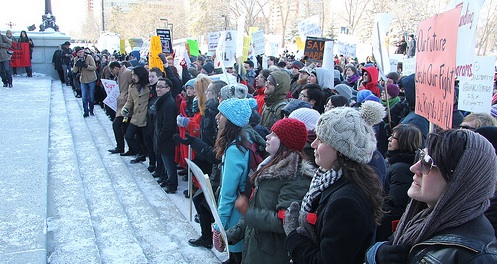
Last week, more than 600 students and staff marched from the University of Alberta to to the Legislature to rally against the budget cuts. Organizing under the banner of the ‘Coalition for Action on Postsecondary Education‘, or CAPSE, students are planning for actions to protest against the budget cuts.

Demonstrating uncharacteristic independence for a group of provincial appointees, the University of Alberta Board of Governors sent an open letter to Premier Alison Redford, warning of the consequences of the cuts. The letter was signed by governors, including board chairman Doug Goss, a former senior Progressive Conservative Party official.

Here is an excerpt from the letter:

“…we must go on the record as being deeply concerned that the recent budget decision of the provincial government to cut the university’s funding by more than seven per cent will have a dramatic effect on the progress that the U of A has made in reaching its potential, both as a research and a teaching institution.

It is difficult to imagine the detrimental effect that cutting more than $43 million from our annual budgetthis year alone will have on our students, who are the critical next generation in this province. The sameis true of our faculty, who lead the teaching and research initiatives that can help position this province as a global leader on the issues of greatest concern in the 21st century. Staff members at our university who support our students and faculty also will be deeply affected.”

Categories
Alberta Politics

Why are the Redford Tories picking a fight with Alberta teachers?

Why are the Redford Tories picking on Alberta teachers?
Are Alberta teachers about to become collateral damage in a Tory feud?

Education Minister Jeff Johnson dispatched a letter to the Alberta Teachers Association (ATA) and the Alberta School Boards Association yesterday threatening salary cuts if a new contract is not agreed to before the provincial budget is released on March 7, 2013.

Minister Johnson’s statement was made the same day that Premier Alison Redford told the media that her government will not release an austerity-minded budget (a statement made days after Premier Redford told the media that Alberta had a spending problem).

Jeff Johnson Alberta Education Minister MLA
Jeff Johnson

Whether or not an agreement is reached before the provincial budget is tabled in ten days would seem irrelevant considering the budget documents have likely already been shipped to the printers.

Yesterday’s development follows Minister Johnson’s musings earlier this month that he could force an agreement on teachers through provincial legislation.

Alberta may be known for its conservative politics, but it has been a sea of labour calm compared recently to provinces like Ontario and British Columbia. It would make little sense for the Redford Tories to unnecessarily splash tidal waves through its relationship with Alberta’s teachers.

New to the job this year, Minister Johnson may just be confused. He is the Tory government’s third education minister in less than three years to oversee the same provincial negotiations with Alberta teachers, following in the steps of the conciliatory Dave Hancock and the more aggressive Thomas Lukaszuk.

Before the province-wide negotiations came to an abrupt end in November 2012, the ATA had proposed a four-year deal that would freeze teachers’ salaries for two years and implement increases in the final two years to catch up with inflation. The ATA proposal would have ensured continued labour peace and focused on long-standing issues surrounding workload and non-instructional volunteer and supervision roles filled by teachers.

After negotiations at the provincial level stalled in November 2012, teachers turned to school boards to continue contract talks at the local level. School boards have limited autonomy in local decision making and it has always been clear that the provincial government has the ultimate control over funding.

Why would the government pick a fight with Alberta teachers when their union has presented fair and reasonable positions at the bargaining table?

Numerous sources close to the Tory government say that tension and internal politics within the Tory caucus are fuelling animosity towards Alberta’s teachers. Some Tory MLAs, who supported other leadership candidates, are said to blame the ATA for Premier Redford’s victory in the 2011 Progressive Conservative leadership contest. The tension is said to have  led to more than a few heated arguments behind the thick wooden doors of Tory caucus meetings.

While the ATA openly encouraged teachers to participate in the Tory leadership contest, claims that teachers stole the vote for Ms. Redford are just plain silly.

Although Premier Redford led her party to a majority victory in the 2012 election, it is important to note that she had the support of only one MLA when she first entered the Tory leadership contest (former Calgary-Hays MLA Art Johnston, who was twice unable to win a party nomination in 2012).

If the speculation is true, then Alberta’s teachers could become collateral damage in a Tory feud.

UPDATE: The Alberta Teachers’ Association provincial executive council have voted unanimously to reject Minister Johnson’s offer.

Categories
Alberta Politics

Is the Government pulling the plug on Athabasca University?

Athabasca University
Athabasca University’s main building outside of the Town of Athabasca

Is the Alberta Government pulling the plug on Athabasca University?

Government and institution officials say no, but sources say discussions are taking place that could drastically alter the services provided by Alberta’s online distance learning university, including a potential merger with the University of Alberta.

With a looming provincial budget and post-secondary institutions preparing themselves for potential funding cuts, sources say that ongoing high-level discussions in government could lead to a reorganization of the services offered by Athabasca University.

Deputy Premier Thomas Lukaszuk

Reached over the telephone this week, newly appointed Enterprise and Advanced Education Minister Thomas Lukaszuk said that he is not aware of any formal discussions related to a potential merger between Athabasca University and the University of Alberta.

While the minister would not endorse a forced merger, he said “it would be positive if one school could utilize another’s infrastructure.”

Sources say the changes being discussed could result in attempts to eliminate the duplication of services and infrastructure in Alberta’s post-secondary institutions.

“I will be moving to encourage institutions to collaborate and find efficiencies,” Minister Lukaszuk said. He plans to hold joint meetings with the post-secondary institutions to find ways the institutions can cooperate and share resources.

Reached via email, Athabasca University Manager of Communications and Media Relations John O’Brien wrote that he was not aware of any discussions related to a merger. Mr. O’Brien noted that Athabasca University does collaborate, on a limited basis, with the University of Alberta. Athabasca University currently contracts Internal Audit Services from the University of Alberta.

The geographic distance between the institution and its student population could make Athabasca University an easy target for government savings. At 36% of undergraduate students, Albertans are not the largest geographic group served by the distance learning institution (Ontarians are, at 36.4%).

Unlike Alberta’s other post-secondary institutions (built with bricks and mortar), Athabasca University’s online existence could make it appear politically easier to reorganize and repurpose without large protests concentrated in a single community or campus.

Financial pains

With Athabasca University projected to run operating deficits over the next three budget cycles, incorporating components of the institution, or significantly increasing its collaboration, with other institutions could be a way for the province to decrease the cost of the institution. The university’s 2012-2013 approved operating budget was estimated to be more than $137 million.

The institution’s projected budgets predict decreases in investment income and fundraising revenue, and expected increases in operating costs. In 2012, it was revealed that Athabasca University had depleted its $30 million reserve fund in only five years.

Modern technical infrastructure is also essential for any post-secondary institution that wants to survive in a highly-competitive and brand-based global online education market.

According to Athabasca University’s 2012-2015 Comprehensive Institutional Plan, the institution needs to invest upwards of $90 million to upgrade its software programs and technical infrastructure. The institution has been requesting an $80 million investment from the provincial government to cover the cost of these upgrades. Given the current political climate around government spending, the Tories may have little inclination to fulfill this request.

No political champion?

Does Athabasca University have a champion at the cabinet table or in the Progressive Conservative Caucus who will advocate for increased funding for its operations and infrastructure upgrades? Does the university have a champion who will defend its continued existence?

After becoming embroiled in the embarrassing illegal donation scandal, I am told there are more than a few PC MLAs who remain unimpressed with the conduct of the institution’s senior administration.

In 2012, a CBC investigation revealed that Athabasca University was one of a handful of post-secondary institutions to break provincial elections laws. Between 2006 and 2008, Athabasca University spent more than $10,000 on fundraising events organized by the Athabasca-Redwater and Edmonton-Whitemud Progressive Conservative associations. It is illegal for publicly-funded institutions to make donations to political parties.

Categories
Alberta Politics

Two rookies turfed from Tory cabinet.

New Tourism Minister Richard Starke, and departing cabinet ministers Stephen Khan and Christine Cusanelli.

In an unexpected move, Premier Alison Redford shuffled two rookie cabinet ministers out of her cabinet yesterday morning. Advanced Education & Enterprise Minister Stephen Khan (MLA St. Albert) and Tourism Minister Christine Cusanelli (MLA Calgary-Currie) were both appointed to cabinet in May 2012.

Deputy Premier Thomas Lukaszuk

Mr. Khan’s time in cabinet was largely seen as reserved and underwhelming. Ms. Cusanelli caused an unwelcome stir when she was forced to repay the government $10,600 for expenses made in her first five months in office, including $4,000 in airfare to have her daughter and mother join her at the 2012 Summer Olympics in London, United Kingdom. She was also given the unenviable task of defending the government’s large line of hospitality expenses at the London Games.

Ms. Cusanelli’s ministerial office was recently shuffled with the hiring of Chief of Staff Tammy Forbes, who previously served as the Premier’s media liaison, and press secretary Andrew Fisher, who previously served as Chief of Staff.

Replacing Mr. Khan is Deputy Premier Thomas Lukaszuk, who has been operating without an official cabinet portfolio since before last year’s election. First-term MLA Richard Starke, representing Vermilion-Lloydminster, has been tapped to replace Ms. Cusanelli as Minister of Tourism.

——

Minister Starke’s constituency has a long history of electing MLAs who later served as cabinet ministers.

First to the Tory cabinet was Lloydminster MLA Bud Miller served as the Minister of Public Lands and Wildlife in Premier Peter Lougheed‘s cabinet from 1979 to 1982.

Directly preceding Minister Starke was Lloyd Snelgrove, who was MLA from 2001 to 2012 and served in a number of portfolios during Premier Ed Stelmach‘s time in office, including a period of Minister of Finance. Citing irreconcilable differences, Mr. Snelgrove left the PC caucus to sit as an Independent MLA following Premier Redford’s successful leadership bid.

Preceding Mr. Snelgrove was Steve West, who served as the constituency’s MLA from 1986 to 2001 and served in a number of cabinet portfolios during Premier Ralph Klein‘s time in office, including Minister of Finance.

(Judging from historical trends, you might think there is a good chance that Minister Starke could one day be Minister of Finance).

Categories
Alberta Politics

Who are Alberta’s top MLAs of 2012?

It has become tradition on this blog that near the end of each year I publish a list of Members of Alberta’s Legislative Assembly who have been the best, worst, or most notable of the past year. Each year’s list has taken a different form and focus (see 2010 and 2011), and the addition of dozens of rookie MLAs after the spring election has left me with little more than seven months to base this list upon. There are sure to be talented and not-so-talented MLAs that have not made list this, so if you feel inspired, please feel free to make additions to the list in the comment section below.

Rookie of the Year - Jeff Wilson, MLA for Calgary-Shaw.
Rookie of the Year – Jeff Wilson, MLA for Calgary-Shaw.

Jeff Wilson (Wildrose – Calgary-Shaw) Rookie of the Year. Perhaps the most unexpected addition to this year’s list is the newly elected Wildrose Party MLA for Calgary-Shaw. Mr. Wilson was a virtual unknown to political watchers when he defeated well-funded Tory star candidate Farouk Adatia (who is now Premier Alison Redford‘s Chief of Staff), but he seems to be fitting into his new role quite comfortably. During the fall sitting, Mr. Wilson stood out from his colleagues when asking tough in question period and launching into spirited and thoughtful debates over legislation. He may have also asked one of the more light-hearted question of this year’s session.

Premier Alison Redford

Alison Redford (PC – Calgary-Elbow) A better Premier than she is a politician. In her first year, Premier Redford excels at the duties of her job, whether it be advocating for the province at international conferences or in interprovincial relations or debating shifts in government policy. The Premier appears to be less interested or willing to play the political game, which will become increasingly difficult in the face of an aggressive official opposition and a growing list of government scandals and missteps. A recent change in her communications staff may be a sign that the Premier hopes to react more swiftly to the Wildrose attacks in the new year.

Danielle Smith
Danielle Smith

Danielle Smith (Wildrose – Highwood) – A better politician than she probably would be a Premier. She was unable to lead her party into government in the April 2012 election, but with 17 MLAs and 34% of the province-wide vote, the Wildrose Party secured the Official Opposition benches. Borrowing aggressive tactics from the federal Conservatives in Ottawa, who are organizationally tied at the hip with the Wildrose, Ms. Smith’s party is leading the most aggressive and partisan official opposition in recent memory. Whether or not you like her tactics, it is nice to see the Tories sweat for a change.

Kent Hehr
Kent Hehr

Kent Hehr (Liberal – Calgary-Buffalo) The two-term MLA from downtown Calgary is easily one of the most effective and reasonable voices in the tiny Liberal caucus. Mr. Hehr has picked up the mantle left by recently retired Liberal MLA Kevin Taft and challenged the governing Tories about the serious revenue problems facing our province. More recently, his comments about uniting progressive voters drew the ire of Liberal Party archetypes. While his party plays with gimmicky name changes, Mr. Hehr is trying to figure out how to get the Liberal-minded Albertans back in the game after the party fell to third place in the 2012 election.

Doug Horner (PC – Spruce Grove-St. Albert) Trying to change the political culture around debt and budget financing in Alberta is a the tough job faced by Finance Minister Doug Horner. Taking advantage of low inflation and avoiding boom-time construction costs, Mr. Horner is leading the government to using financing to make some much needed investments in public infrastructure. While initially the clear second in command to Premier Redford, he appears to have taken a slight step back from the spotlight. If the next three years do not go well for the current Premier, Mr. Horner could find himself in a position to take his party’s reins.

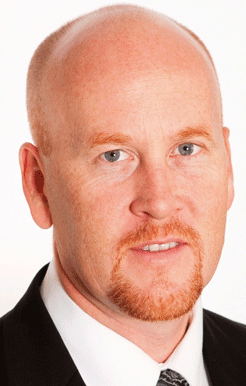
Thomas Lukaszuk (PC – Edmonton-Castle Downs) The Tory attack dog has been both Minister of Nothing and Everything at the same time. Deputy Premier Thomas Lukaszuk has been the Tory government’s main defender against aggressive attacks launched by the Wildrose Party during Question Period. Whether or not his sometimes aloof style is effective, I expect we have yet to witness just how tough this political minister is.

Kerry Towle (Wildrose – Innisfail-Sylvan Lake) and Ian Donovan (Wildrose – Little Bow) The two first-term Wildrose MLAs were thrown into the media spotlight this summer over issues related to seniors care in Alberta. As Seniors critic, Ms. Towle has been relentless in attacking the government over the quality of food in long-term care centres (an issue raised by the Alberta Union of Provincial Employees) and the “one-bath a week” policy. Mr. Donovan was thrown into the media spotlight when the Tory government closed the Little Bow Continuing Care Centre in his Little Bow constituency. As rookies finding their political footing on this issue, it was not an uncommon sight this summer to see the two Wildrose MLAs awkwardly sharing the podium (or megaphone) with NDP MLA David Eggen and leaders of Alberta’s public sector unions.

This year’s honourable mentions go to two candidates who were not elected in April, but contributed a considerable amount to the results on election day. Edmonton-South West Wildrose candidate Allan Hunsperger‘s “Lake of Fire” comments and Calgary-Greenway Wildrose candidate Ron Leech‘s “caucasian advantage” comments were a last minute reminder to Albertans about the extreme conservative elements that exist within the Wildrose Party’s coalition. It indisputable that these two men helped convince many thousands of Albertans to vote for a party led by political moderate Premier Redford, rather than Wildrose leader Ms. Smith.

On this blog, the post that attracted the highest readership and most comments in 2012 was Thorny candidates could be the Wildrose Party’s Biggest Liability. The April 4, 2012 post was shared 603 times on Twitter and Liked by 4,724 Facebook users (Thank you).

Categories
Alberta Politics

Map: Alberta cabinet ministers catch the international travel bug.

“The Redford government spent more than half a million dollars on its trip to the London Olympics earlier this year, including about $113,000 in hotel rooms that were not used…” – Edmonton Journal reporter Keith Gerein

According to the Journal, the $518,280 trip sent 29 Albertans to London including Tory Premier Alison Redford, Culture Minister Heather Klimchuk, Tourism, Parks and Recreation Minister Christine Cusanelli, government officials, artists and performers including Corb Lund and Donovan Workun.

While the trip to the London Olympics has sticker shock, it is small potatoes in comparison to the Government of Alberta’s $14 million splash at the 2010 Vancouver Olympics, where Premier Ed Stelmach and cabinet ministers hosted Olympic attendees on a $499 per ticket luxury train to Whistler and showered them with gifts that included iPod Touchs and White Cowboy Hats.

I understand the value of sending cabinet ministers on these trips to promote our province abroad and I generally believe it is in our best interest, but there reaches a certain point when return on investment needs to be demonstrated.

Over the past eleven months, Premier Redford, cabinet ministers,  and backbench Tory MLAs have traveled extensively on government business. The trips have taken Alberta Government officials to five continents and more than twelve countries, including numerous trips to Washington DC, New York, and Hong Kong.

I have created a Google Map tracking the international travel of Premier Redford, cabinet ministers, and backbench Tory MLAs since November 2011. Zoom in and click the icons to read who traveled where and when.


View Alberta Cabinet Minister and MLA Travel November 2011-October 2012 in a larger map

Note: Travel dates and locations listed on this map were found in media releases published on the Government of Alberta website.