Categories
Alberta Politics

Tom Flanagan flogged for child pornography comments.

Tom Flanagan
Tom Flanagan

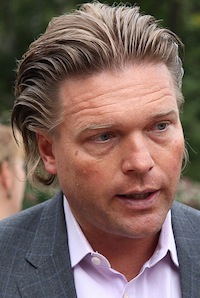
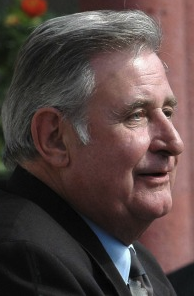
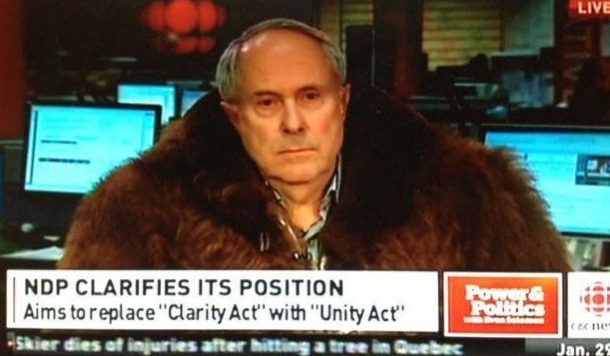
Comments made by conservative election strategist Tom Flanagan about child pornography on Wednesday night have sparked outrage and condemnation of the University of Calgary professor. Speaking at an event hosted by the reputable Southern Alberta Council on Public Affairs in Lethbridge, Dr. Flanagan was recorded telling the audience that viewing child pornography shouldn’t be a crime and that people should not be jailed for their taste in pictures. He described child pornography as a victimless crime (see the video below).

It was shocking to hear these comments come straight out of the mouth of the ‘Karl Rove‘ of Canadian politics. As a member of the right-wing ‘Calgary School,’ Dr. Flanagan helped build Canada’s modern Conservative political machine. While known for his more controversial statements about firewalls, Louis Riel, and aboriginal rights, he was the master architect of the successful tightly-scripted and wedge-issue-centric political campaigns that brought Prime Minister Stephen Harper‘s Conservatives to power in Ottawa.

Shortly after Dr. Flanagan’s comments were made public, he was dropped as a CBC commentator and swiftly denounced by his employer, the University of Calgary. U of C President Elizabeth Cannon said in a statement that “all aspects of this horrific crime involve the exploitation of children.” President Cannon announced that Dr. Flanagan had submitted his letter of retirement on January 3, 2013.

Dr. Flanagan was also denounced by the Prime Minister Director of Communications Andrew MacDougall. The professor was a well-known confident, advisor, and sometime critic to Prime Minister Harper.

Wildrose Party leader Danielle Smith moved quickly to condemn Dr. Flanagan’s comments in a statement to the media. A teacher and mentor to Ms. Smith, Dr. Flanagan served as campaign manager during the 2012 provincial election. “To be clear, Dr. Flanagan does not speak for me or the Wildrose caucus and he will have no role – formal or informal – with our organization going forward,” Smith said in her statment.

As well as condemning Dr. Flanagan, the Wildrose Party removed the weblink to the party’s “Tom Flanagan award for Outstanding Campaign Manager.”

Following the avalanche of condemnation, Dr. Flanagan released a statement:

I absolutely condemn the sexual abuse of children, including the use of children to produce pornography.

These are crimes and should be punished under the law. Last night, in an academic setting, I raised a theoretical question about how far criminalization should extend toward the consumption of pornography.

My words were badly chosen, and in the resulting uproar I was not able to express my abhorrence of child pornography and the sexual abuse of children.

I apologize unreservedly to all who were offended by my statement, and most especially to victims of sexual abuse and their families.

Categories
Alberta Politics

New Map: Calgary-Centre by-election results.

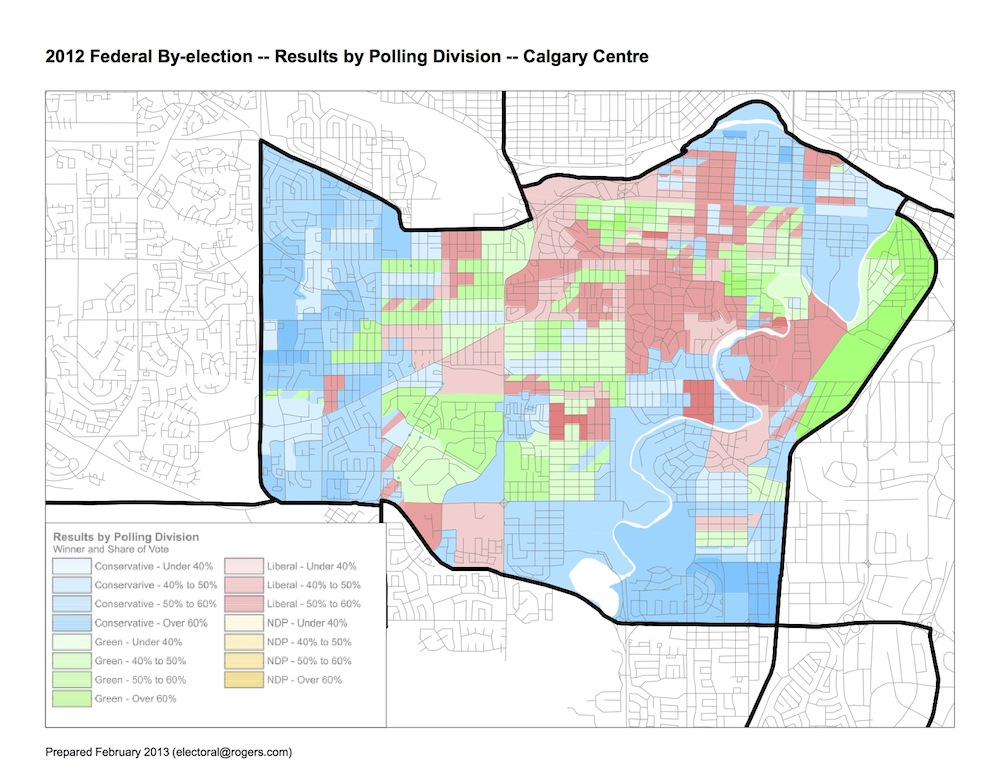
Poll-by-poll results from the November 26, 2012 by-election in Calgary-Centre (click image for larger map).
Poll-by-poll results from the November 26, 2012 by-election in Calgary-Centre (click image for larger map). Thanks to Alan Hall for the map.

Elections Canada recently released the official poll-by-poll results of the November 26, 2012 federal by-election in Calgary-Centre. The hotly contested by-election was narrowly won by Conservative Joan Crockatt, who fended off strong challenges from Liberal Harvey Locke and Green Chris Turner.

While the Conservatives were able to win in this long-held riding, this was the first time in recent memory that candidates from non-conservative federal parties came even close to winning an election in Calgary.

Here are the official results as released by Elections Canada:

Joan Crockatt, CON – 10,191 (36.9%)
Harvey Locke, LIB – 9,033 (32.7%)
Chris Turner, GRN – 7,090 (25.7%)
Dan Meades, NDP – 1,064 (3.8%)
Antoni Grochowski, IND – 141 (0.5%)
Tony Prashad, LBTRN – 92 (0.4%)

Categories
Alberta Politics

Why are the Redford Tories picking a fight with Alberta teachers?

Why are the Redford Tories picking on Alberta teachers?
Are Alberta teachers about to become collateral damage in a Tory feud?

Education Minister Jeff Johnson dispatched a letter to the Alberta Teachers Association (ATA) and the Alberta School Boards Association yesterday threatening salary cuts if a new contract is not agreed to before the provincial budget is released on March 7, 2013.

Minister Johnson’s statement was made the same day that Premier Alison Redford told the media that her government will not release an austerity-minded budget (a statement made days after Premier Redford told the media that Alberta had a spending problem).

Jeff Johnson Alberta Education Minister MLA
Jeff Johnson

Whether or not an agreement is reached before the provincial budget is tabled in ten days would seem irrelevant considering the budget documents have likely already been shipped to the printers.

Yesterday’s development follows Minister Johnson’s musings earlier this month that he could force an agreement on teachers through provincial legislation.

Alberta may be known for its conservative politics, but it has been a sea of labour calm compared recently to provinces like Ontario and British Columbia. It would make little sense for the Redford Tories to unnecessarily splash tidal waves through its relationship with Alberta’s teachers.

New to the job this year, Minister Johnson may just be confused. He is the Tory government’s third education minister in less than three years to oversee the same provincial negotiations with Alberta teachers, following in the steps of the conciliatory Dave Hancock and the more aggressive Thomas Lukaszuk.

Before the province-wide negotiations came to an abrupt end in November 2012, the ATA had proposed a four-year deal that would freeze teachers’ salaries for two years and implement increases in the final two years to catch up with inflation. The ATA proposal would have ensured continued labour peace and focused on long-standing issues surrounding workload and non-instructional volunteer and supervision roles filled by teachers.

After negotiations at the provincial level stalled in November 2012, teachers turned to school boards to continue contract talks at the local level. School boards have limited autonomy in local decision making and it has always been clear that the provincial government has the ultimate control over funding.

Why would the government pick a fight with Alberta teachers when their union has presented fair and reasonable positions at the bargaining table?

Numerous sources close to the Tory government say that tension and internal politics within the Tory caucus are fuelling animosity towards Alberta’s teachers. Some Tory MLAs, who supported other leadership candidates, are said to blame the ATA for Premier Redford’s victory in the 2011 Progressive Conservative leadership contest. The tension is said to have  led to more than a few heated arguments behind the thick wooden doors of Tory caucus meetings.

While the ATA openly encouraged teachers to participate in the Tory leadership contest, claims that teachers stole the vote for Ms. Redford are just plain silly.

Although Premier Redford led her party to a majority victory in the 2012 election, it is important to note that she had the support of only one MLA when she first entered the Tory leadership contest (former Calgary-Hays MLA Art Johnston, who was twice unable to win a party nomination in 2012).

If the speculation is true, then Alberta’s teachers could become collateral damage in a Tory feud.

UPDATE: The Alberta Teachers’ Association provincial executive council have voted unanimously to reject Minister Johnson’s offer.

Categories
Alberta Politics

Alberta has a revenue problem and a pipeline problem.

Photo of the Keystone XL Pipeline protest on February 17, 2013 in San Francisco (photo by Steve Rhodes - CC BY-NC-ND 2.0)
From the Keystone XL Pipeline protest on February 17, 2013 in San Francisco (photo by Steve Rhodes – CC BY-NC-ND 2.0)

One month ago, Premier Alison Redford took to the airwaves to warn Albertans about the revenue problem, or ‘bitumen bubble‘, the government will face in the 2013 provincial budget. The Premier cited the lack of pipelines pumping bitumen from our oilsands to external markets as a reason for the low price of Alberta oil and her government’s lack of resource revenues. Alberta had a revenue problem.

Premier Alison Redford

For the first time in recent memory, Alberta’s revenue problem was at the top of political discourse in our province. The government held a symposium to hear from experts about Alberta’s fiscal framework, but at the same time ruled out the return of health premiums and denied any rumours of a provincial sales tax (which, in fairness, would have been as popular as introducing rats into the province).

Two reasonable solutions that did not get enough attention were to increase the revenues from natural resources and to replace the Klein-era ‘flat-tax’ with a progressive taxation system that could collect more revenue without penalizing low- and middle-income Albertans.

It is hard not to point out that the group of individuals currently in a position to solve this problem are also the architects of our government’s short-sighted fiscal planning: Alberta’s Progressive Conservatives.

But late last week, before the Premier flew to the United States in a last ditch attempt to lobby politicians to approve the TransCanada Keystone XL Pipeline, she turned her government’s spin machine in a new direction, claiming Alberta now has a “spending problem.”

It is likely this is still part of the ongoing public relations campaign to manage Albertans expectations before the March 7 provincial budget.

Now let us shift to the pipeline debate and what the Premer says is the source of our (now former?) revenue problem: Alberta’s pipeline problem.

BC NDP leader Adrian Dix
Adrian Dix (photo from @taminator on Flickr)

After years of campaigns targeting Alberta’s tarsands as a major contributor to climate change, our oilsands are an easy political target for opponents of two major pipelines. Large protests across the United States last week have put the future of the Keystone XL Pipeline in question and a near political consensus in British Columbia against the Enbridge Northern Gateway Pipeline suggests a pipeline through that province is unlikely to be built anytime in the near future.

Both Liberal Premier Christy Clark and NDP leader Adrian Dix have adopted positions against the Northern Gateway Pipeline project in advance of the May 14, 2013 elections. A recent poll from Angus-Reid shows the BC NDP with 47% support compared to 31% for the BC Liberals.

Premier Redford’s cause is not without political allies south of the border. The Keystone XL Pipeline has the support of a dozen United States Governors and TransCanada claims the southern section of the pipeline, through Texas and Oklahoma, is already half-complete.

Many critics of the Keystone XL pipeline have focused on climate change, raised legitimate concerns about the devastating environmental impact of pipelines leaks, and poked holes in the number of jobs pipeline proponents have promised to create.

Even notorious Australian-American news media owner Rupert Murdoch railed against the pipeline on Twitter.

Representing more than eleven million American workers, the AFL-CIO President Richard Trumka is backing the pipeline, pitting the labour movement against environmental groups, like the Sierra Club (executive director Michael Brune was arrested at last week’s protests).

It has been speculated that having these two large and influential constituent groups on opposite sides of this debate could make it increasingly difficult for President Barack Obama to approve the pipeline’s construction over the American border with Canada.

Categories
Alberta Politics

Former Finance Ministers Morton, Liepert and Snelgrove line up with free advice.

Ted Morton MLA
Ted Morton

Free from the tight leash of party discipline, three former Finance Ministers are giving plenty of advice to Premier Alison Redford and Finance Minister Doug Horner.

Ted Morton, the former two-term Tory MLA from Foothills-Rockyview and two-time Tory leadership candidate who served as Finance Minister from 2010 to 2011, penned an opinion-editiorial in Wednesday’s Calgary Herald pointing out some common misconceptions about Alberta’s fiscal situation.

While Professor Morton correctly points out that the symptoms of Alberta’s financial woes are not a new phenomenon, his prescription is a tough pill to swallow.

In his column, Dr. Morton dispels the myths that 1) our fiscal problems are just because we are having a bad year, 2)  our fiscal problems are just because of the low price of bitumen (also known as the notorious ‘Bitumen Bubble‘), and that 3) this is just about a Budget 2013 deficit.

On his fourth argument, Dr. Morton diverts into a more conservative ideological direction. While he correctly points out the fickleness and limited life-span of some political agendas, the former Finance Minister criticizes his successor for choosing to use financing to fund capital projects. On this point, Dr. Morton appears to share the view of his ideological kin in Danielle Smith‘s Wildrose Party, who spent the waining days of 2012 on a relentless offensive against the government on this very issue.

Alberta Finance Minister Ron Liepert
Ron Liepert

Ron Liepert, the former two-term Tory MLA from Calgary-West who served as Finance Minister from 2011 to 2012, has suggested that it was time for the government to address its revenue problems by looking at tax hikes.

“Nobody likes to pay more taxes. Nobody likes to pay the taxes you’re paying today. But everybody wants the services,” Mr. Liepert told the Calgary Herald in December 2012.

Meanwhile, disgruntled former Finance Minister Lloyd Snelgrove, who quit the Tory caucus in 2011 citing irreconcilable differences with Premier Redford, told the right-wing Sun News that he does not believe the government has a revenue problem, but if it does then a sales tax should be imposed.

Back in 2010, the last Tory to seriously discuss the idea of a sales tax was then-backbench MLA Doug Griffiths (now Municipal Affairs Minister). Mr. Griffiths was publicly demonized by the opposition for even broaching the topic.

Only two years earlier, another now-former Tory MLA, who is also now one of the government’s most vocal critic of the government, stood up in Alberta’s Legislative Assembly and called for tax reform and the introduction of a sales tax in Alberta:

“I, too, believe that the government of Alberta should look into studying the feasibility of eliminating our provincial income tax and using a consumption-based taxation system in its place, with a provincial sales tax being the likely substitute revenue generator.” – Newly elected Progressive Conservative MLA Rob Anderson in April 2008.

Categories
Alberta Politics

Public Affairs Bureau boss Lee Funke resigns.

Lee Funke, Managing Director of Alberta’s Public Affairs Bureau, announced his resignation in an email to government staff today. Mr. Funke had served as Managing Director of the government’s communications branch since March 2010.

Tracy Balash, Executive Director of Communications Planning, has been asked to step in as acting Managing Director. Ms. Balash recently joined the PAB after working in Premier Alison Redford‘s Communications Office.

The PAB was already in a period of transition after the retirement of Kathy Lazowski, its executive director of strategic communications.

Here is the text of the email he sent this morning:

Good morning team,

Two weeks ago I went to Peter Watson and informed him of my decision to return to private consulting once my contract as Managing Director of the Public Affairs Bureau ended. Peter has graciously allowed me to take some personal time before my contract concludes March 31, so my last day as Managing Director is tomorrow.

Reaching my decision was difficult, I am so very proud to lead this organization. Events like the recent Alberta Economic Summit held in Calgary demonstrate the important role we play in communicating significant policy issues with Albertans. The professionalism of our team was evident the entire day and I couldn’t have been more pleased. I see that same dedication by each employee of the PAB everyday – whether it is managing a special event to announce a new program, developing a multi-media promotion campaign, designing a public consultation strategy, launching an information website, writing a speech, or responding to a media call.

The PAB has one of the most exciting and challenging functions in the Government of Alberta.

We are on the front line communicating the policy, program and organizational changes that are a daily reality in a large complex organization. And there has been much change over the last three years that I have been Managing Director. The increasing demands of a 24/7 news cycle, the advent of social media, and emergence of new political voices have meant the adoption of new tools and techniques to communicate our policy agenda with Albertans.

Of course, the election of Premier Redford as the new leader for our government also brought change. Many of us have new Ministers, DMs, and in some cases new departments. But we have also seen the addition of new policy and decision–making processes, as well as new co-workers in the form of Press Secretaries. I admire how our organization has responded by adapting and implementing the changes needed to support Premier Redford’s focused agenda.

While the past three years have been rewarding, it is now time to switch my time and energy back to my government relations and communications consulting business which has been on hold.

I will continue to be involved in public policy discussions (it is part of my DNA) and our paths are likely to cross again in the near future. I will also be spending some time with my ever patient family. I know my wife, [name removed by this blogger], is certainly looking forward to me assuming more of the responsibilities for raising our two sons.

I have asked Tracy Balash, Executive Director, Communications Planning to act on my behalf until a new Managing Director is selected. In addition, Andy Weiler, Executive Director, Strategic Communications and the rest of the head office team are in place to offer the services you need to deliver communications support to your clients. I know that you will all support Tracy and Andy over the next few weeks and apply your considerable talent and skills to the roll-out of a budget that requires tough but smart choices to deal with our government’s fiscal challenge.

Let me close by saying thank you to the PAB team for your support and encouragement.

Everything I accomplished during my tenure as Managing Director was made possible by you. I have learned much from the many projects we have worked on together and I leave this organization with new knowledge and skills. I wish you all continued success in your careers and personal life, you deserve nothing less.

All the best,

Lee

Click here to read the statement issued by Premier Redford’s Communications Director, Stefan Baranski.

Categories
Alberta Politics

Is the Government pulling the plug on Athabasca University?

Athabasca University
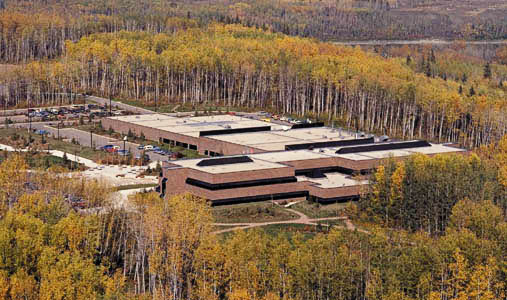
Athabasca University’s main building outside of the Town of Athabasca

Is the Alberta Government pulling the plug on Athabasca University?

Government and institution officials say no, but sources say discussions are taking place that could drastically alter the services provided by Alberta’s online distance learning university, including a potential merger with the University of Alberta.

With a looming provincial budget and post-secondary institutions preparing themselves for potential funding cuts, sources say that ongoing high-level discussions in government could lead to a reorganization of the services offered by Athabasca University.

Deputy Premier Thomas Lukaszuk

Reached over the telephone this week, newly appointed Enterprise and Advanced Education Minister Thomas Lukaszuk said that he is not aware of any formal discussions related to a potential merger between Athabasca University and the University of Alberta.

While the minister would not endorse a forced merger, he said “it would be positive if one school could utilize another’s infrastructure.”

Sources say the changes being discussed could result in attempts to eliminate the duplication of services and infrastructure in Alberta’s post-secondary institutions.

“I will be moving to encourage institutions to collaborate and find efficiencies,” Minister Lukaszuk said. He plans to hold joint meetings with the post-secondary institutions to find ways the institutions can cooperate and share resources.

Reached via email, Athabasca University Manager of Communications and Media Relations John O’Brien wrote that he was not aware of any discussions related to a merger. Mr. O’Brien noted that Athabasca University does collaborate, on a limited basis, with the University of Alberta. Athabasca University currently contracts Internal Audit Services from the University of Alberta.

The geographic distance between the institution and its student population could make Athabasca University an easy target for government savings. At 36% of undergraduate students, Albertans are not the largest geographic group served by the distance learning institution (Ontarians are, at 36.4%).

Unlike Alberta’s other post-secondary institutions (built with bricks and mortar), Athabasca University’s online existence could make it appear politically easier to reorganize and repurpose without large protests concentrated in a single community or campus.

Financial pains

With Athabasca University projected to run operating deficits over the next three budget cycles, incorporating components of the institution, or significantly increasing its collaboration, with other institutions could be a way for the province to decrease the cost of the institution. The university’s 2012-2013 approved operating budget was estimated to be more than $137 million.

The institution’s projected budgets predict decreases in investment income and fundraising revenue, and expected increases in operating costs. In 2012, it was revealed that Athabasca University had depleted its $30 million reserve fund in only five years.

Modern technical infrastructure is also essential for any post-secondary institution that wants to survive in a highly-competitive and brand-based global online education market.

According to Athabasca University’s 2012-2015 Comprehensive Institutional Plan, the institution needs to invest upwards of $90 million to upgrade its software programs and technical infrastructure. The institution has been requesting an $80 million investment from the provincial government to cover the cost of these upgrades. Given the current political climate around government spending, the Tories may have little inclination to fulfill this request.

No political champion?

Does Athabasca University have a champion at the cabinet table or in the Progressive Conservative Caucus who will advocate for increased funding for its operations and infrastructure upgrades? Does the university have a champion who will defend its continued existence?

After becoming embroiled in the embarrassing illegal donation scandal, I am told there are more than a few PC MLAs who remain unimpressed with the conduct of the institution’s senior administration.

In 2012, a CBC investigation revealed that Athabasca University was one of a handful of post-secondary institutions to break provincial elections laws. Between 2006 and 2008, Athabasca University spent more than $10,000 on fundraising events organized by the Athabasca-Redwater and Edmonton-Whitemud Progressive Conservative associations. It is illegal for publicly-funded institutions to make donations to political parties.

Categories
Alberta Politics

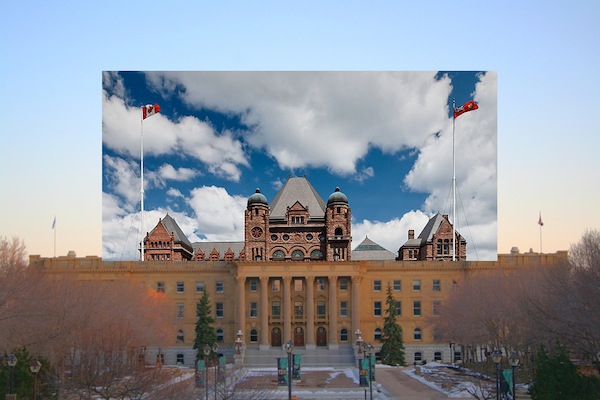
Welcome to Queen’s Park West.

Alberta Queens Park West
Queen’s Park West

The staff overhaul in Premier Alison Redford‘s Communications Office has resulted in two new hires. One was already working in Alberta’s Legislature and the other comes direct from Ontario’s provincial legislature.

Already under the dome, Michael Norris left his job as Municipal Affairs Minister Doug Griffiths‘ press secretary to become the Premier’s Issues Manager.

Neala Barton is the outgoing Director of Media Relations for recently retired Ontario Liberal Premier Dalton McGuinty and will soon begin her new job as the media relations lead in the Alberta Premier’s Communications Office (now to be referred to as “Queen’s Park West“). She is also a former reporter with CBC television in Edmonton.

Ms. Barton will be joining another Ontario political expat in Queen’s Park West, Communications Director Stefan Baranski. Mr. Baranski previously worked for Ontario Tory leaders Ernie Eves, John Tory, and Tim Hudak.

Facing-off against an aggressive official opposition, it is no coincidence that the Premier’s communications team is looking to hire political operators from a province where political competition is not a new phenomenon.

On a related note, I have been unable to confirm rumours that special orders from the Brewers Retail and Pizza Pizza will be flown in daily to Edmonton.

If you have any questions about these changes, please contact 416-967-1111.

Categories
Alberta Politics

When did Alberta become a have-not province?

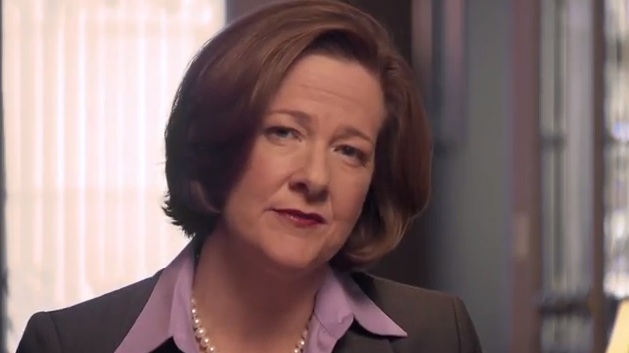
Premier Alison Redford

Eighteen days ago, Alberta became a have-not province.

Eighteen days ago, Premier Alison Redford appeared on Albertans television screens to warn them of the notorious “bitumen bubble” that has been keeping the price of our oil down.

Today, after eighteen days of political spin about deep budget cuts and tough economic times, it would be easy to believe that the federal transfer payments are on their way (finally, equalization will work for us!).

Of course, Alberta is not a have-not province.

Alberta’s economy remains competitive, our population is growing, and job growth is on the rise. Alberta is Canada’s economic engine.

Most of the talk is part of the government’s attempt to manage the expectations of Albertans before the provincial budget is tabled on March 7. From the opposition benches, there are always political points to be gained before a government budget is tabled.

As has been the case each year since the Alberta government began to run “technical deficits,” the earlier projected deficits will likely be much lower when the budget is tabled. As any accountant or political strategist knows, bookkeeping is closer to an art-form than an exact science.

On budget day, a lower than predicted deficit will result in the government looking like better fiscal managers than the opposition has claimed and the opposition researchers will be caught scrambling through the volumes of budget documents to fill their message box.

With this year’s budget ready to be sent to the printers, the first Alberta Economic Summit was held this past Saturday in Calgary.

Initially derided by the opposition parties as a government-sponsored public relations exercise, the day-long event brought together panels of experts from the private, public, and not-for-profit sector to discuss our province’s fiscal future.

Whether it was a PR exercise or not, it did present an opportunity for a continued discussion about the need to raise taxes in Alberta. Our government relies heavily on the sometimes unpredictable revenues from our natural resources to fill the gap created by our low taxes to fund our essential public services.

As Kevin Taft explained last year in his book, Follow the Money, if Alberta increased its tax rates by $11 billion our province would still have the lowest tax rate in Canada

———-
Onward and eastward, says Alward.

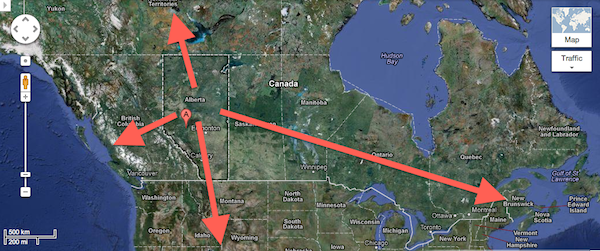
Last week, David Alward, the Premier of a real have-not province, swept into our province boasting the advantage of an eastward oil pipeline to New Brunswick’s deep-water ports as a solution to Alberta’s fiscal woes.

With almost no details or research about whether it would be financially viable, both Premier Redford and Premier Alward touted the Alberta-to-New Brunswick pipeline as progress.

Considering how many problems, both political and geographical, the province has faced with the proposed Enbridge Northern Gateway Pipeline from Alberta to British Columbia (two provinces), I can only imagine the level of political challenges that could be stirred up by an oilsands pipeline running through six provinces.

Categories
Alberta Politics

Alberta politics takes a negative turn online.

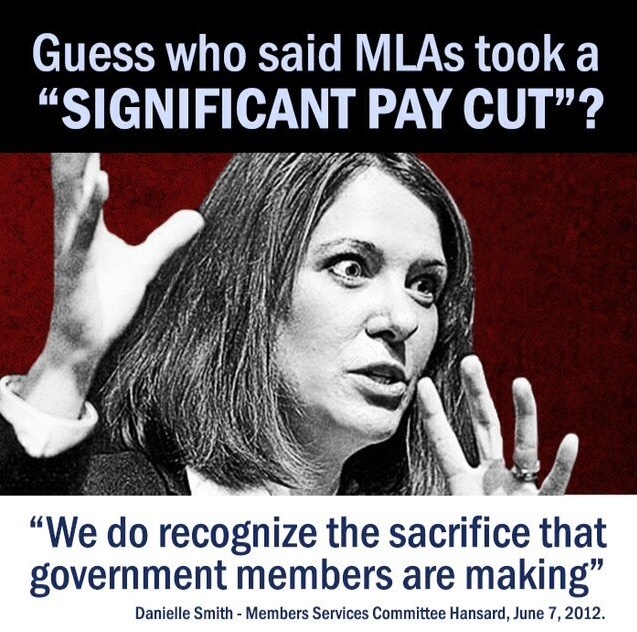
An unflattering photo of Danielle Smith in an image released online by the Premier's Communications Office.
An image released online by the Premier’s Communications Office.

MLA pay remains an uncomfortable issue for Alberta’s political leaders. Yesterday, MLA’s sitting on the Member Services Committee voted to freeze the annual cost-of-living increase to their salary and housing allowance ahead of provincial budget release on March 7, 2013.

“The rationale is clearly we want to lead by example,” Edmonton-Riverview Tory MLA Steve Young told the Edmonton Journal.

The decision to freeze MLA pay happens as rhetoric about politician and doctor pay has reached an all-time high (though the conflict is really about control).

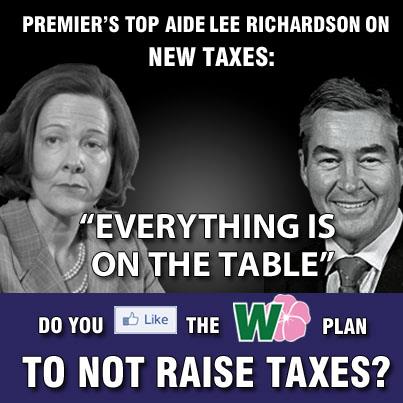
A Wildrose image picturing Premier Alison Redford in a less than flattering light.

Yesterday’s pay vote also resulted in more online mudslinging on Twitter’s #ableg hashtag, though this time from an unexpected source.

The Twitter account operated by Premier Alison Redford‘s Communications Staff  – @ABPremierComms – tweeted an image featuring an incredibly unflattering photo of Wildrose leader Danielle Smith with a quote she made at a meeting on June 7, 2012 (see image at the top of this post).

While distasteful, the reaction from the Premier’s Office is not unprovoked.

Over the past year, the official opposition Wildrose Caucus has released numerous images and info-graphics on Twitter and Facebook filled with harsh criticisms and unflattering photos of Premier Redford.

The harsh negative politics and aggressive use of images and info-graphics has helped the Wildrose Party cultivate a significant online following, who have helped spread their message through social media.

Categories
Alberta Politics

Two rookies turfed from Tory cabinet.

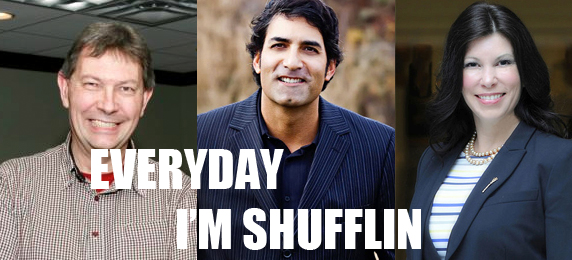
New Tourism Minister Richard Starke, and departing cabinet ministers Stephen Khan and Christine Cusanelli.

In an unexpected move, Premier Alison Redford shuffled two rookie cabinet ministers out of her cabinet yesterday morning. Advanced Education & Enterprise Minister Stephen Khan (MLA St. Albert) and Tourism Minister Christine Cusanelli (MLA Calgary-Currie) were both appointed to cabinet in May 2012.

Deputy Premier Thomas Lukaszuk

Mr. Khan’s time in cabinet was largely seen as reserved and underwhelming. Ms. Cusanelli caused an unwelcome stir when she was forced to repay the government $10,600 for expenses made in her first five months in office, including $4,000 in airfare to have her daughter and mother join her at the 2012 Summer Olympics in London, United Kingdom. She was also given the unenviable task of defending the government’s large line of hospitality expenses at the London Games.

Ms. Cusanelli’s ministerial office was recently shuffled with the hiring of Chief of Staff Tammy Forbes, who previously served as the Premier’s media liaison, and press secretary Andrew Fisher, who previously served as Chief of Staff.

Replacing Mr. Khan is Deputy Premier Thomas Lukaszuk, who has been operating without an official cabinet portfolio since before last year’s election. First-term MLA Richard Starke, representing Vermilion-Lloydminster, has been tapped to replace Ms. Cusanelli as Minister of Tourism.

——

Minister Starke’s constituency has a long history of electing MLAs who later served as cabinet ministers.

First to the Tory cabinet was Lloydminster MLA Bud Miller served as the Minister of Public Lands and Wildlife in Premier Peter Lougheed‘s cabinet from 1979 to 1982.

Directly preceding Minister Starke was Lloyd Snelgrove, who was MLA from 2001 to 2012 and served in a number of portfolios during Premier Ed Stelmach‘s time in office, including a period of Minister of Finance. Citing irreconcilable differences, Mr. Snelgrove left the PC caucus to sit as an Independent MLA following Premier Redford’s successful leadership bid.

Preceding Mr. Snelgrove was Steve West, who served as the constituency’s MLA from 1986 to 2001 and served in a number of cabinet portfolios during Premier Ralph Klein‘s time in office, including Minister of Finance.

(Judging from historical trends, you might think there is a good chance that Minister Starke could one day be Minister of Finance).

Categories
Alberta Politics

New poll shows Redford Tories in the lead.

One month before Alberta’s Legislative Assembly reconvenes to deal with this year’s provincial budget, Leger Marketing has released a new survey of political party support in our province.

Progressive Conservative: 40%
Wildrose: 28%
NDP: 13%
Liberal: 12%

This is only one survey and all political polls should be taken with a grain of salt, but the results will be a tad discouraging for Alberta’s opposition parties. While the survey shows the governing PCs dropping in support from 44% in last year’s provincial election, the opposition Wildrose has dropped from 34% in the 2012 election and the two other opposition parties have only marginally increased their support.

According to the Calgary Herald, the survey of 900 Albertans was conducted January 14 to 20 as part of the PwC Business and Consumer Confidence Index. The survey has a margin of error of plus or minus 3.3 percentage points, 19 times out of 20.

Categories
Alberta Politics

Alberta Tories confused about illegal donations.

Alberta Tories ConfusedCaught having accepted 45 prohibited donations from municipalities and publicly-funded institutions since 2009, the Progressive Conservative Association spent the past few days sending mixed messages whether it would or already had repaid the full amount of illegals funds as requested by Alberta’s Chief Electoral Officer .

Party officials previously stated the funds would be repaid, but during a conference call to PC constituency presidents last month, executive director Kelley Charlebois laid out laid out plans to not repay the funds.

“Repaying the money does us no good in the court of public opinion” – PC Party executive director Kelley Charlebois

PC Party president Jim McCormick told the Edmonton Journal last week that he felt the orders from the elections office to repay illegal donations were unfair. Mr. McCormick later downplayed his public comments in an email to PC Party supporters in which he stated his party had “fully and willingly complied and repaid the dollars [the Chief Elections Officer] asked us to.”

Mr. McCormick then stated that talks between the PC Party and the elections office would continue and his “argument is not relative to the dollar amount but rather a request for clarification on the legislation.” There is some irony in that some of the prohibited donations were made to now-Justice Minister Jonathan DenisCalgary-Egmont constituency association.

2012 PC campaign manager Susan Elliott jumped to her party’s defence on Facebook, claiming that party officials had no way of knowing that many of the donors were being reimbursed by municipalities or public institutions for money spent at party fundraisers.

I am mystified by the Chief Electoral Officer’s conclusion that a political party is responsible if an individual illegally expenses a political donation to a prohibited organization. So Joe Smith buys a fundraising ticket using a personal cheque or credit card. That’s OK. He collects the tax receipt personally. That’s OK. But later, he submits the cost on his expense claim. He has now done something illegal. The prohibited organization does something illegal by paying it. But how is it the political party is supposed to anticipate Joe’s actions, learn about them later, prevent them or correct them? Since they can do none of those things, why are they the ones cited?

The 45 cases of illegal donations identified in the investigation were all made to the PC Party, not to any of the eight other registered political parties in Alberta.

In some cases Ms. Elliott’s argument may hold water, but in other cases the PC constituency organizers may have directly or indirectly solicited funds from these individuals through their places of employment in municipalities or public institutions.

In one case, which is not being investigated because it took place before the arbitrary 2009 cut-off date set by the elections office, a PC constituency official was actually employed by the organization that the donation was made by. In the former Athabasca-Redwater constituency, the local PC President was the head of the Athabasca University secretariat, which approved the financial contributions.

As was the case with the long list of municipalities that were named in the investigation, they were encouraged to purchase tickets to PC Party fundraisers as a means of lobbying provincial politicians. Over its 42 years in power, the PCs have fostered the creation of a culture where the lines between government business and party business are sometimes blurred.

The elections office is also investigating allegations that pharmaceutical industry billionaire and Edmonton Oilers owner Daryl Katz made a $430,000 donation to the PC Party in the 2012 election, blowing away the $30,000 annual contribution limit stipulated in the Election Finances and Contributions Disclosures Act.

Categories
Alberta Politics

What the Heck? Tory tied to donation controversy now head of Alberta Economic Development Authority.

Via the Edmonton Journal:

Conservative linked to Katz donation named chairman of the Alberta Economic Development Authority

BY KAREN KLEISS, EDMONTON JOURNAL JANUARY 30, 2013

EDMONTON – Premier Alison Redford has given a provincial political appointment to a veteran Conservative insider who allegedly brokered a $430,000 donation from Oilers owner and billionaire Daryl Katz.

Media reports quoting unnamed sources suggested Wednesday that Calgary businessman Barry Heck is the party fundraiser who persuaded Katz to make the donation now under investigation by Alberta’s Chief Electoral Officer.

Redford has named Heck chairman of the Alberta Economic Development Authority.

Heck has declined to comment on the allegations, citing the ongoing investigation.

On another election finance related note, Progressive Conservative President Jim McCormick has also asked Chief Electoral Officer O. Brian Fjeldheim to reverse orders mandating that the party repay thousands of dollars in illegal donations tied to post-secondary institutions and local governments

Categories
Alberta Politics

Alberta Economic Summit to be held in ten days.

Alberta Economic Summit
Leading thinkers, key industry, non-profit and academic leaders, MLAs, and passionate citizens prepare for the Alberta Economic Summit.

Bitumen bubbles and the unpredictable price of oil mentioned in last week’s televised address have led Premier Alison Redford‘s Tory government to hastily called a one-day “Alberta Economic Summit” to continue a “conservation” about our province’s current fiscal woes and potential fiscal future.

The summit will bring together ‘leading thinkers, key industry, non-profit and academic leaders, Members of the Legislative Assembly and passionate citizens” for a day of panel discussions at Mount Royal University on February 9, 2013 (yes, that is ten days from now).

Premier Alison Redford

Despite the talk of “continuing the conversation” with Albertans, it is easy to be suspicious that the conference is a public relations exercise and a tool for the Tories to direct the public debate towards a certain direction. It seems difficult to image that any meaningful discussion about such complex issues could occur in such a short-period of time.

The government says it just wants to look at its options, which was a reoccurring theme in a discussion I had with Premier Redford last week. One option already off the table are tax increases, which despite growing public debate, the Premier says will not be in this year’s budget.

“It has got to be about economic diversification and what we want our fiscal framework to look like,” said Premier Redford when I asked her about what she would like to see come from the summit. “We want to engage people who give a lot of thought about these issues but don’t always have a chance to spend time together,” she said.

I asked the Premier if the Alberta Economic Summit was just a way for the government to deflect the public discussion away from taxes and toward a pre-determined answer. “We are not looking to deflect anything,” she said.

“As we move ahead it would be folly to say that every decision we make without consulting with Albertans would be the right decision. We want to make sure we are talking to Albertans and making decisions that reflect Albertans values.” – Premier Redford, January 25, 2013

Premier Ralph Klein
Premier Ralph Klein

If all this talk of a big summit about Alberta’s economic future triggers hints of deja vu, you are probably not alone.

Eleven years ago almost to the day that the”Alberta Economic Summit” will be held, Premier Ralph Klein and Revenue Minister Greg Melchin held the “Alberta Future Summit” in Red Deer. The February 4, 2002 conference brought together 260 delegates to draft “strategic directions and ideas for action” for several areas identified as priorities – including the economy and fiscal responsibility.

The final report generated from the Future Summit included the following observation, which will sound familiar to anyone who tuned in to watch Premier Redford’s televised address last week:

Despite rapid growth in manufacturing and services exports over the past 10 years, Alberta continues to rely heavily on primary resource exports (such as oil, gas, grains and oil seeds) and intermediate commodities (such as lumber, pulp and petrochemicals). Alberta’s reliance on primary and intermediate resource exports makes the economy vulnerable. Economic and market diversification are key to future prosperity. – Alberta Future Summit 2002 final report

While I hope next month’s Alberta Economic Summit succeeds in generating a meaningful conversation between Albertans and their government, I cannot help but think this summit is a partially a result of the Tories failing to act on some of the advice they heard at their last big summit in 2002.

——

Today, the government launched a online build your own budget tool budgetchoice.ca, which allows Albertans to cut and raise taxes, and see a simplified version of how the provincial ledgers balance.

Curiously, participants are not given the option of raising royalties on natural resources and some Tory pet projects are not included in the tool or partially protected, including the controversial Carbon Capture and Storage Fund (CCS). The CCS Fund, intiated by Premier Ed Stelmach in 2010, directed $2 billion towards research with the private sector into the unproven technology that some large energy companies have abandoned. Of the more than $200 million expected to be budgeted for CCS in this year’s budget, only $60 million is available to be cut in the online budget scenario tool.