Categories
Alberta Politics

Firing AHS board a short-term solution to a Tory political problem.

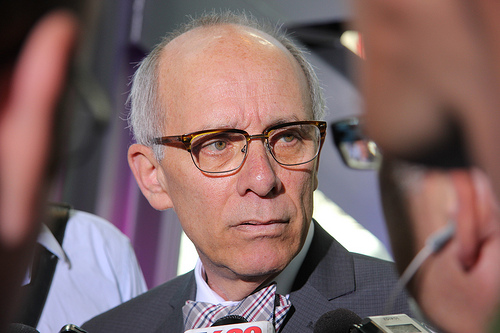
Fred Horne Alberta Health Minister
Fred Horne

Yesterday I asked “who’s the boss” in the battle between Health Minister Fred Horne and Alberta Health Services board chairman Stephen Lockwood over executive bonuses. We found out the answer early yesterday morning when Minister Horne not only fired Mr. Lockwood, but he fired the entire AHS super board, replacing them with one administrator to oversee the entire agency.

There is little doubt that the Tories decision to fire the entire AHS board puts them on the side of public opinion. Whether the decision proves to be right in the long-term, there is little doubt the centralized super board was almost universally disliked by Albertans since it was created in 2008 and the firing of the board will likely be widely supported by many Albertans. This makes it difficult to believe that Minister Horne’s heavy handed decision was made in the spur of the moment. The skeptic in me says the Tories must have been paying attention to public opinion polling and knew that enough political points could be gained by firing their own appointed AHS board. They were looking for a win and they found it, at least in the short-term.

Short-term political wins aside, the Tories will continue to face the long-term problem which is their inability to stop themselves when it comes to imposing control over those they appoint to as administrators of the health care system.

The centralized AHS-model was imposed in 2008 when Health Minister Ron Liepert dissolved the nine remaining regional health authorities, as well as the Alberta Cancer Board, Alberta Mental Health Board and Alberta Alcohol and Drug Abuse Commission. The previous regional boards, which were stacked with card carrying Progressive Conservative Party appointees, had become a political problem for Tories.
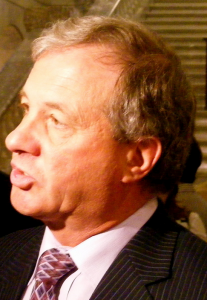
Alberta Finance Minister Ron Liepert
Ron Liepert

The normally passive boards of handpicked government appointees had become restless following the selection of Ed Stelmach as Premier in the 2006 PC Party leadership contest. Or perhaps more accurately, they had become restless after the defeat of Jim Dinning, the choice of the Tory establishment.

As I have written before, it is widely suspected that the creation of the provincial health superboard was a reaction to the political brazenness of former Calgary Health Region CEO and Ralph Klein-loyalist Jack Davis. As the Calgary Health Region recorded a $85 million deficit, Mr. Davis went public to get more money from Premier Stelmach’s government before the 2008 election, which threatened to make it an campaign issue. After Premier Stelmach’s Tories were re-elected, the regional boards were dissolved and AHS was created.

But that was not the first time in recent history that the Tories have tinkered with the health authorities to solve a political problem. In 2003, Tory Health Minister Gary Mar ended the short-lived experiment of elected regional health boards by firing most of the members who had been elected in the 2001 vote. It was widely suspected that the Tories disliked the results of their health board elections, which saw Albertans elect more than a few Liberal and New Democratic Party supporters to the new positions.

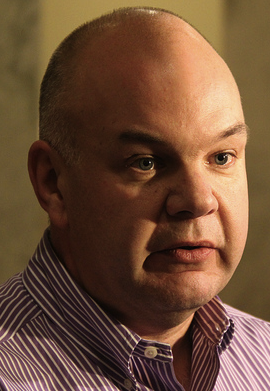
 

Categories
Alberta Politics

Who’s the boss? Fred Horne and Stephen Lockwood spar over AHS performance pay.

“Regardless of how people feel about the decision of the AHS board, I don’t think anybody would want me or a colleague to interfere with the terms of their employment they’ve agreed to. It’s a decision for the AHS board.” – Health Minister Fred Horne on Alberta Health Services performance pay (Edmonton Journal, March 28, 2013)

Health Minister Fred Horne did exactly the opposite yesterday when he issued a statement calling on the Alberta Health Services Board to withhold performance pay for its executives. In response, AHS board chairman and trucking magnate Stephen Lockwood rebuked the minister’s statement and the appointed board voted to move forward with the performance payments at a meeting in Calgary.

Fred-Horne-Alberta
Fred Horne

This issue has become a political problem for Premier Alison Redford‘s government. Unlike the government’s relationship with school boards, Albertans do not seem to perceive a difference between AHS and the Government. This has left many Albertans confused as to why the health authority is eliminating frontline staff while senior executives collect bonuses.

When it comes to picking his battles, I am not sure that Mr. Lockwood could have picked a issue where he was more off-side with public opinion.

But will this burst of independence last? The political showdown could come to an abrupt end this morning, when the government is expected to hold a press conference in response to AHS’s decision to approve the payments. The Calgary Herald’s Don Braid writes that Mr. Lockwood’s time as board chair could end today.

Of course, this is not the first time the government has demonstrated its influence over the supposedly arms-length agency.

Stephen Lockwood Alberta Health Services
Stephen Lockwood

In 2010, then-Health Minister Gene Zwozdesky pressed the AHS board to fire CEO and President Stephen Duckett after his infamous “I’m eating a cookie” incident. Dr. Duckett’s departure helped deflect other criticisms the government was facing at the time over Emergency Room wait-times and the suspension of its former legislative assistant for health, Raj Sherman.

The chairman of the AHS board at the time of Dr. Duckett’s firing was Ken Hughes, who is now a Tory MLA and Minister of Energy.

Remind me again why some people perceive the government and AHS as being the same thing?

UPDATE: I guess we now know who the boss is. Minister Horne has fired the entire AHS board over the bonuses issue.

Categories
Alberta Politics

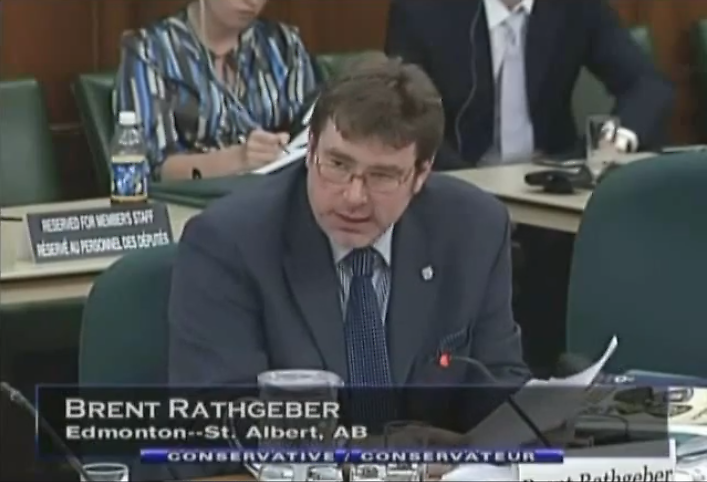
How Brent Rathgeber changed Edmonton’s political map and why the Tories might like it

Brent Rathgeber Edmonton MP
Brent Rathgeber

Edmonton-St. Albert MP Brent Rathgeber unleashed a political storm last night when he announced on Twitter that he is leaving the Conservative Party of Canada caucus. Initially citing a “a lack of commitment to transparency and open government,” he expanded his criticisms to the control Prime Minister Stephen Harper‘s office exercises over backbench MPs as interfering with the ability to represent his representing his constituents.

“When you have a PMO that tightly scripts its backbenches like this one attempts to do, MPs don’t represent their constituents in Ottawa, they represent the government to their constituents,” Mr. Rathgeber told reporters at an afternoon press conference in Edmonton.

First elected to Parliament in 2008, Mr. Rathgeber has built a case for leaving the Tories by earning a reputation as being one of the only Conservative politicians in Ottawa to purposely deviate from the party discipline enforced by Prime Minister Harper. This is certainly embarrassing for Prime Minister Harper’s government, which has been scandal plagued for the past few months, but it is yet to be seen how damaging the departure will be for the Tory government in Ottawa.

His positions have not always been consistent with one ideology. For example, he is a Conservative who opposes the government’s anti-union legislation yet has introduced a private members bill that could undermine the independence of crown corporations like the Canadian Broadcasting Corporation (which was amended by Justice Minister Rob Nicholson). Perhaps he was just bored with being one of the only contrarians in the Ottawa Tory backbenches?

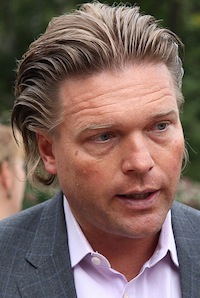
Thomas Lukaszuk
Thomas Lukaszuk

Starting his political career at the provincial level in 2001, Mr. Rathgeber became an unlikely politician when he stepped in as a last minute candidate after the already nominated PC candidate, Don Koziak, decided against challenging popular Liberal MLA Lance White (Mr. Rathgeber won the election). He served one term as the Progressive Conservative MLA for Edmonton-Calder until 2004, when he was defeated by New Democrat David Eggen. This means Mr. Rathgeber holds the dubious honour of being the only Alberta Conservative to have unseated an incumbent Liberal and been defeated by a New Democrat.

Rumours are already circulating that he could be eyeing a return to provincial politics, perhaps using his new-found fame to propel him as the Wildrose Party‘s challenger to Deputy Premier Thomas Lukaszuk in Edmonton-Castle Downs.

Before he makes his decision, Mr. Rathgeber could learn a lesson from former Edmonton Tory MLA Raj Sherman. Dr. Sherman was treated as a saint when he split with the provincial Tories to sit as an Independent, he fell from grace just as quickly as had risen when he decided to join the Liberal Party.

Rathgeber’s departure could help Tories

Unexpectedly, Mr. Rathgeber’s departure from the Tory caucus may have helped save his former party from an even more devastating political storm. With electoral boundary changes being imposed in the next federal election, local Tories were not looking forward to the prospect of some incumbent MPs having to challenge each other for riding nominations.

South Edmonton ridings
The Edmonton Shuffle

In south Edmonton, new boundaries have forced Tory MPs Mike Lake, James Rajotte, and Blaine Calkins to uncomfortably position themselves for the prospect of nomination fights in new ridings. Making the shuffle more complicated are rumours that north Edmonton MP Tim Uppal may seek a nomination in a south Edmonton riding, as his Edmonton-Sherwood Park riding is being dissolved. Add to this the rumours that Minister Rona Ambrose may opt to retire instead of seeking a fifth-term in the new Edmonton-West riding.

Peter Goldring
Peter Goldring

If the nomination contest tension reaches the point of fisticuffs, the Tories could offer one of these MPs an easy nomination race in the now non-Conservative Edmonton-St. Albert. This is similar to when Mr. Uppal was offered an easy nomination win in Edmonton-Sherwood Park after Mr. Lake him for the Edmonton-Mill Woods-Beaumont nomination in 2006 (Mr. Uppal was that riding’s Conservative candidate in 2000 and 2004).

Edmonton-East MP Peter Goldring said recently he would like to seek a Conservative (or even a Liberal) nomination in the next election. Mr. Goldring was welcomed back into the Conservative caucus today after he was suspended in 2011 for refusing to give a breath sample to police. Today he was found not guilty.

Mr. Goldring’s departure from the Conservative caucus a year and a half ago sparked interest among prospective Conservative nominees. Lawyer Michael Cooper, who is seeking the Conservative nomination in the new Edmonton-Griesbach riding, and PC MLA Janice Sarich, who is rumoured to be eyeing a federal candidacy, could see Mr. Rathgeber’s departure as an opening to run instead in Edmonton-St. Albert now that Mr. Goldring has been readmitted to the Tory caucus in Ottawa.

Categories
Alberta Politics

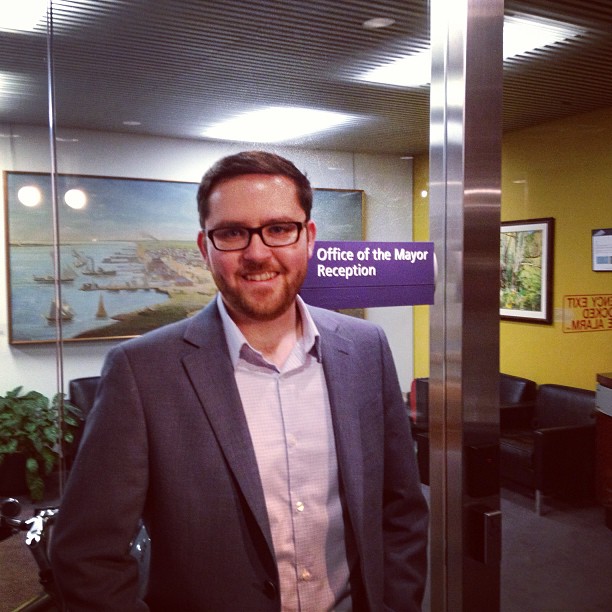
Disaster tourism hits Toronto Mayor Rob Ford’s office

Yesterday, I paid a visit to Toronto Mayor Rob Ford's office.
Yesterday, I paid a visit to Toronto Mayor Rob Ford’s office.

From the Toronto Sun’s Don Peat:

Alberta residents David Climenhaga and David Cournoyer stopped at the mayor’s office for pictures during a break in the conference they were in Toronto to attend.

Both men run political blogs back in Edmonton – Climenhaga’s is called albertadiary.ca and Cournoyer’s blog is called daveberta.ca.

“We’ve been following the story of your mayor with great interest,” Climenhaga said.

While Climenhaga said he’s not a fan of even “polite conservatives” , he admitted the visit to City Hall was a bit of “tourism” and (with a bit of prompting) even acknowledged it was a case of “disaster tourism.”

“You’re putting words in my mouth but yeah, I’d call this disaster tourism,” he said.

Cournoyer said visiting Ford’s office made sense while they were in town.

“We thought about going to the CN Tower but we thought the mayor’s office would probably be a more exciting visit considering everything that has been going on,” Cournoyer said.

Next stop on the disaster tourism tour: Senator Mike Duffy‘s summer cottage in Cavendish, PEI.

Categories
Alberta Politics

Pipelines before persons with developmental disabilities?

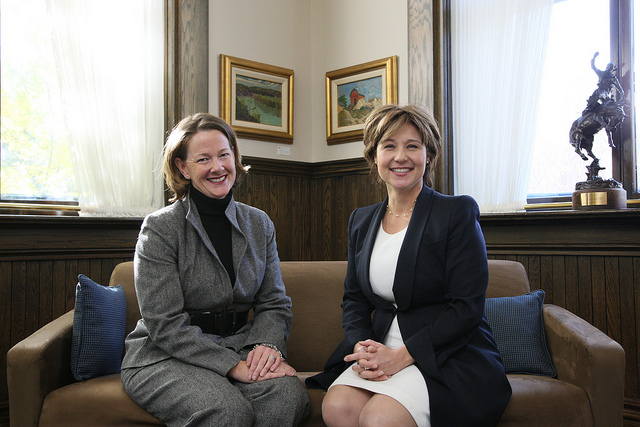
Alison Redford Christy Clark
Alberta Premier Alison Redford and BC Premier Christy Clark in October, 2011. Photo: PremierofAlberta via Flickr.

Fresh from a surprise election win, British Columbia Premier Christy Clark‘s government formally announced its opposition this week to the Enbridge Northern Gateway Pipeline that would carry bitumen from Alberta to Kitimat. A controversial issue during the heated election campaign, BC Environment Minister Terry Lake told the media that evidence supporting the pipeline “simply is insufficient for us to think it should go forward.”

Perhaps sending a political message to her western counterpart, Alberta Premier Alison Redford is flying to New Brunswick this week, hoping to use Premier David Alward‘s idea of an eastbound pipeline to kickstart her still undefined National Energy Strategy.

Thomas Lukaszuk
Thomas Lukaszuk

Maintaining a presence on the national and international stage appear to be continuing priorities for Premier Redford. The Premier has recently travelled twice to Washington D.C. to advocate for the construction of the TransCanada Keystone XL Pipeline and numerous cabinet ministers have been scouting the globe in name of the PC Government’s new slogan – “Building Markets.” Deputy Premier Thomas Lukaszuk is currently travelling in Europe, and Finance Minister Doug Horner and Agriculture Minister Verlyn Olsen recently returned from trips to China and Kazakhstan.

There is certainly value in government leaders travelling internationally, but in Alberta’s case, the perception has become that the Premier is more comfortable travelling outside of Alberta than dealing with the day-to-day domestic issues in the province.

Frank Oberle MLA Peace River
Frank Oberle

For example, a week after the Premier re-announced plans to open five new international trade offices, hundreds of Albertans with developmental disabilities and their families rallied at the Legislature and outside Premier Redford’s Calgary-Elbow constituency office to protest deep cuts to service providers.

The minister responsible for explaining the cuts, Peace River‘s mild-mannered MLA Frank Oberle, has been tongue-tied and delivering confusing diversionary messages to Albertans.

While Minister Oberle correctly states that the entire budget of his department is increasing, he has yet to convincingly explain why $42 million is being cut from programs designed to help the province’s most vulnerable citizens become more employable.

Categories
Edmonton Election

Edmonton election heats up in early summer months

Amarjeet Sohi opts out for mayor. Scott McKeen rumoured in Ward 6.

Amarjeet Sohi announces he will not run for Mayor.

Amarjeet Sohi announced this week that he will not jump into Edmonton’s open mayoral race. The two-term councillor, who had been pondering a run for mayor, will instead run for re-election in his south side Ward 12, where he was re-elected with 64% of the vote in 2010.

Karen Leibovici
Karen Leibovici

Karen Leibovici, councillor for southwest Edmonton’s Ward 5, is soon expected to announce her entry into the mayoral contest. On June 15, she will mark two decades since she was first elected to public office, then as Liberal MLA for Edmonton-Meadowlark. She was first elected to City Council in October 2001 after her defeat in the March 2001 provincial election.

Councillor Don Iveson is also widely expected to enter the race for Mayor of Edmonton. A Draft Don Iveson for Mayor page on Facebook has popped up and attracted more than 300 supporters.

Former Edmonton Journal columnist Scott McKeen is rumoured to be preparing a run in Council’s Ward 6. With incumbent Councillor Jane Batty rumoured to be retiring, Mr. McKeen would join already declared candidates Heather Mackenzie and Kassie Russell in this central Edmonton race. This would be his second attempt at office, having unsuccessfully challenged Ward 7 Councillor Tony Caterina in 2010.

Scott McKeen Edmonton Councillor
Scott McKeen

With Councillor Kerry Diotte running for Mayor, there are plenty of rumours circulating about who could run in the now vacant Ward 11. Harvey Penasar, owner of the Aggression Fighting Championship – a mixed marshal arts league – is said to be preparing a run in that ward.

In Ward 10, Zack Siezmagraff launched his campaign this morning. This is Mr. Siezmagraff’s second attempt at elected office, having run as the federal Liberal Party candidate 2011 election candidate in the sprawling rural riding of Yellowhead. Mr. Seizmagraff will face-off against community organizer Michael Walters and University instructor Richard Feehan.

University of Alberta Ph.D. student Karen Pheasant is joining the race in Edmonton Public School Board’s Ward C. With incumbent trustee Christopher Spencer not seeking re-election, there are numerous candidates in the running. Already declared are Tina Jardine and Susan Ketteringham.

See a full list of declared election candidates here

Categories
Alberta Politics

Doug Griffiths leads unconvincing charge against *scary* Wildrose robocalls.

Wildrose Alberta Robocall
Are the Wildrose robocalls really that scary?

Swinging at the chance to bloody their opposition, Alberta’s Progressive Conservatives are trying to make a connection in Albertans minds between automated robocalls made on behalf of the Wildrose Party and controversial robocalls made by Conservative Party organizers in Ontario.

It’s a stretch.

Last week the Wildrose Party was fined $90,000 by the Canadian Radio Telecommunications Commission for breaking regulatory rules around automated robocalls made during last year’s provincial election. According to the CRTC, the Wildrose Party failed properly identifying themselves when the robocalls were made (they were push-polls).

Doug Griffiths
Doug Griffiths

Unlike the controversial robocalls from Ontario, there is no indication that the Wildrose robocalls were intended to suppress or misdirect voters from their polling stations.

This difference does not seem to matter to Municipal Affairs Minister Doug Griffiths, who has led his party’s charge, calling on Elections Alberta to investigate the Wildrose robocalls. So far, Danielle Smith‘s Wildrose Party has admitted to making the calls, paid the fine in its entirety, and has released the script of the robocall in question.

As the National Post’s Jen Gerson wrote, “[o]ne can hardly fault Alberta’s besieged Progressive Conservatives for trying to squeeze the ruling  for all it’s worth.” After three years of being harassed from scandal to scandal by the Wildrose, the Tories see an opportunity to strike-back against their relentlessly aggressive opponents. And this is becoming a trend.

This new offensive strategy appears to have started with Premier Redford’s unfortunately hyper-partisan speech to a group of school children at a government press conference last month.

Manmeet Bhullar
Manmeet Bhullar

Online, ministerial press secretaries have become partisan mini-celebrities by spending their days locked in heated political arguments with Wildrose Caucus staffers on Twitter. Long-gone are the days when ministerial spokespeople at least pretended to be non-partisan.

Last week, Service Alberta Minister Manmeet Bhullar accused the Wildrose of bigotry for failing to promptly remove racist comments from their Facebook Page (a Wildrose staffer was quick to point out racist comments that had not been removed from Premier Alison Redford‘s Facebook Page). Minister Bhullar’s accusation sends a message to moderate voters, who might be unhappy with the PC Party’s deep funding cuts to post-secondary education and cuts to support for persons with developmental disabilities, that their only alternative is still scary.

The robocall accusations against the Wildrose remain thin, even the Tories use robocalls – because it is an effective campaign tool. But this is payback and we should not expect the Tories to be nice about it.

Categories
Alberta Politics

The confusing reinvention of Alberta’s Natural Governing Party.

Culture Minister Heather Klimchuk and Premier Alison Redford at Duchess Bakeshop in Edmonton.

Success comes with challenges, and for Alberta’s Progressive Conservatives, forty-two years of electoral success has come with its own unique set of challenges.

One of the PC Party’s biggest successes has been its ability to reinvent itself over its more than four decades in power. It is sometimes difficult to explain to someone from outside Alberta how the same party has been led by the very different leadership styles of Peter Lougheed, Don Getty, Ralph Klein, Ed Stelmach, and now Premier Alison Redford.

What does today’s version of the PC Party stand for? I am not sure its leaders have a clear idea what the latest reinvention embodies.

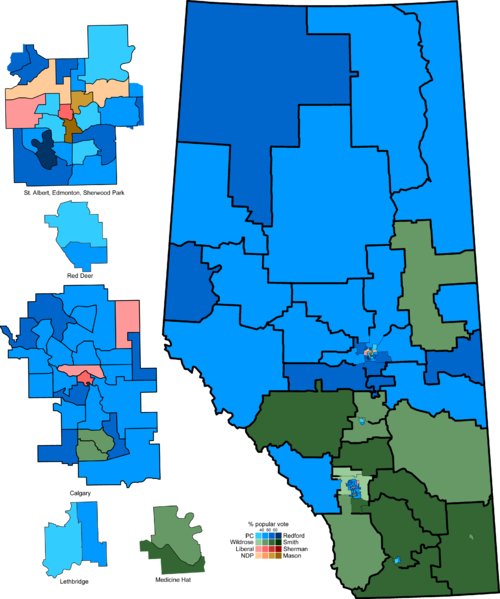
Alberta's new political map after the 2012 election (map from Wikipedia).
Alberta’s new political map after the 2012 election (map from Wikipedia).

While Premier Redford’s clear focus has been on the international stage, her government has presented a confusing domestic agenda.

The PC Party under Premier Redford claims to be progressive (though it fights with unions, and has made deep funding cuts to post-secondary education and support for persons with developmental disabilities). The PC Party under Premier Redford also claims to be conservative (despite running deficit budgets).

Confusion appears to be another challenge of being the Natural Governing Party.

The PC Party is also less of a real political party and more of an amorphous blob that exists to sustain power.

Recognizing the need to connect with its base of activists ahead of November’s leadership review vote, Premier Redford announced at last weekend’s party policy conference in Edmonton the formation of new committees that will help connect party policy with the government’s agenda. This is a tricky goal to accomplish, as the PC Government is expected to represent all Albertans, not just those who hold a membership with the Premier’s political party.

This is also not the first time the PC Party has boldly attempted to make party membership relevant outside of leadership races or nomination contests. In the early 2000’s, Premier Klein commissioned numerous initiatives with his party’s base of activists to try to reengage with them. The success of those particular initiatives was questionable.

Following last year’s election, the latest reinvention of the PC Party is largely urban-based and faces a rural-based official opposition. The PC Party’s recent attacks on the Wildrose Party’s more extreme social conservative-base, which until recently played a significant role in the governing coalition, have demonstrated that Alberta’s Natural Governing Party might not be sure what its latest reinvention is, it is starting to show what it does not want to be.

Categories
Alberta Politics

Mandel’s retirement kicks-off Edmonton’s first open mayoral race in 45 years.

Edmonton Mayor Stephen Mandel

Edmonton Mayor Stephen Mandel‘s announcement yesterday that he will not seek re-election in the October 21, 2013 election has made way for our city’s first real open mayoral contest in 45 years.

Over those 45 years, Mandel is only the second Edmonton Mayor to leave on his own terms. In 1988, Mayor Laurence Decore stepped down to become leader of Alberta’s Liberal Party. Mayor William Hawrelak died in office in 1975. All other Mayors or interim Mayors were defeated in an election.

Here’s a short history lesson about Edmonton’s mayoral elections:

When Mayor Vincent Dantzer retired from municipal politics in 1968, he was succeeded by Mayor Ivor Dent. Dent was defeated by former Mayor Hawrelak in the 1974 election. When Mayor Hawrelak died in office in 1975, Alderman Terry Cavanagh became interim Mayor. Interim Mayor Cavanaugh contested the 1977 election and was defeated by Cec Purves. Mayor Purves was then defeated by Mr. Decore in 1983. When Mayor Decore resigned in 1988, Alderman Cavanaugh once again filled the role of interim Mayor and was defeated in the 1989 election by Councillor Jan Reimer. Mayor Reimer was later defeated by businessman Bill Smith in the 1995 election. Councillor Mandel unseated Mayor Smith in 2004.

Who can Edmontonians expect to run in our first real open mayoral election in a generation?

Councillor Kerry Diotte launched his campaign last week and Councillors Don IvesonKaren Leibovici, and Amarjeet Sohi are suspected to be interested in running. The absence of an incumbent candidate might also draw candidates from outside City Council or traditional political circles.

More on this soon.

Categories
Alberta Politics

Redford Tories rack up frequent flyer miles, open new overseas offices.

Alison Redford Travel Alberta
Since Alison Redford became Premier in November 2011, cabinet ministers and backbench Tory MLAs have made trips to twenty-one different countries.

The Government of Alberta re-announced plans last week to open new trade offices in Chicago and Singapore, and yet to be announced locations in India, Brazil, and California. The Alberta Government is currently operating trade offices in Hong Kong, Beijing, Shanghai, Taipei, Tokyo, Seoul, London, Munich, Mexico City, and Washington D.C.

The re-announcement opening the new offices coincided with the release of the provincial government’s International Strategy document. Reading the document, Albertans can learn how the government is “Taking a Team Alberta approach,” “Strengthening Alberta’s position on the ground” and “Promoting Alberta within the Canada Brand.” Overflowing with buzzwords and jargon, the document reads as if it came fresh off the desk of some high-paid consultant.

Since Alison Redford became Premier in November 2011, cabinet ministers and backbench Tory MLAs have made trips to twenty-one different countries. During that time, cabinet ministers and Tory MLAs have made fourteen trips to Washington D.C., highlighting the importance that the current government is placing on its relationship with the United States and the construction of the controversial Keystone XL Pipeline.

Trips to more than a dozen countries in Asia, including twelve trips to Hong Kong (now home to Alberta’s appointed representative and former Tory leadership candidate Gary Mar), also show the importance the government is placing on trade expansion to Asia. Currently, Finance Minister Doug Horner is traveling through China and Agriculture Minister Verlyn Olson is visiting Kazakhstan.

The Edmonton Journal’s Graham Thomson suggested in a recent column that public funds might be well used by opening up a trade office in Victoria, B.C. to convince newly re-elected Premier Christy Clark to approve the Enbridge Northern Gateway Pipeline.

Here is the updated map showing international travel by Alberta Government cabinet ministers and Tory MLAs since November 2011 (click map to see locations and dates):


View Alberta Cabinet Minister and MLA Travel November 2011-June 2013 in a larger map

‘Building Markets’ and ‘Building Alberta’

Building Markets” and “Building Alberta.” are two slogans that anyone who has read a recent government press releases or listened to recent ministerial speeches will be familiar with. The key words were spoken by government ministers more than 70 times in the recent sitting of the Legislative Assembly. Are regular Albertans noticing? On Twitter, almost the only tweets that include the #buildingmarkets and #buildingalberta hashtags are coming from accounts belonging to Tory MLAs or their paid employees.

Categories
Alberta Politics

Updated: Kerry Diotte running for Mayor of Edmonton.

Leaked photos that may have been a mayoral photoshoot for Councillor Kerry Diotte were posted on Facebook by photographer Con Boland last month.

To no one’s surprise, Edmonton City Council’s resident contrarian Kerry Diotte launched his campaign at a downtown hotel this afternoon, making him the first candidate to enter Edmonton’s 2013 Mayoral Election race.

After yesterday’s “final” vote on the proposed downtown arena project, the former Edmonton Sun columnist quickly announced he would soon make an announcement about his political future. Photos leaked to this blog last month suggest Councillor Diotte has been preparing to run for mayor for some time.

The current mayor, Stephen Mandel, is not a fan of Councillor Diotte, shared some harsh words about him on CityTV’s Breakfast Television this morning: “He hasn’t done anything…. He comes to Council and tweets all the time…. He doesn’t pay attention…

When asked by reporters at today’s press conference about his vision for Edmonton, Councillor Diotte stumbled, citing “listening” and a grocery list of issues including opposing the arena, fixing potholes, and stopping the construction of bike lanes.

If trying to figure out Councillor Diotte’s vision for Edmonton is difficult, so is pinpointing his politics. He has acted as the right-wing contrarian during his three-years on city council and has attached himself to more controversial attention-grabbing issues. This has not made him popular with his council colleagues and has typically placed him in the minority vote on council (he would typically be the “1” in a 12-1 vote).

Though his supporters preach about his populist streak, it feels more gimmicky than real grassroots (his public engagement seems focused on holding contests on his website, like ‘Kerry in your Kitchen,‘ or a contest where he took a constituent to an Edmonton Oilers game).

Council Diotte’s explanation why he wants to be Mayor was not awe inspiring, articulate or well-prepared, but it was frankly reflective of the frustration felt by some Edmontonians about the leadership-style of current city administration. He is a backlash candidate who could appeal to many voters who either disagree with the current mayor or feel left out of Edmonton’s decision-making process.

Despite the many criticisms of Councillor Diotte, he should not be discounted and should, at this point in time, be considered a serious candidate.

———-

The gaggle of Wildrose Opposition Caucus staffers standing at the back of the press conference may give an indication as to how the one-term Councillor plans to build a city-wide political campaign. With the Wildrose Party looking to gain an organizational toe-hold in major Alberta’s cities before the next election, it is easy to understand why their organizers would gravitate toward Councillor Diotte.

———-

Other candidates suspected to be interested in the mayor’s chair include Councillors Don Iveson, Karen Leibovici, and Amarjeet Sohi.

Categories
Alberta Politics

CBC investigation, Wildrose aggressiveness real reasons Peter Sandhu quit Tories.

Celebrating one-year since the 2012 Tory victory: Moe Amery, Premier Alison Redford, Wayne Cao, and Peter Sandhu.
Celebrating one-year since the 2012 Tory victory is Moe Amery, Premier Alison Redford, Wayne Cao, and Peter Sandhu.

Edmonton-Manning MLA Peter Sandhu has resigned from the Progressive Conservative Caucus after a CBC investigation revealed that a company owned by the politician had accumulated a trail of unpaid debt. The report, by investigative reporter Charles Rusnell, also found that Mr. Sandhu made a false statement in a sworn affidavit.

It is not uncommon for Tory MLAs to face investigations by the ethics commissioner, but it is uncommon for Tory MLAs to actually resign from the Government caucus because of these investigations.

Mr. Sandhu’s resignation shows how different Alberta’s political environment has become in recent years. The Wildrose Official Opposition is waging a permanent aggressive campaign against the Tories, something the long-governing party is not accustomed to. And with Premier Alison Redford facing an internal party leadership review in November, the Tories are desperately trying to avoid the kind of embarrassing controversies that dominated the political narrative in 2012.

As far as I can recollect, the last Tory MLA to resign because of an ethics scandal was in 2001, when former cabinet minister Robert “Butch” Fischer quit as the MLA for Wainwright after being investigated for a breach of ethics regarding a private business deal.

Mr. Sandhu was first elected in Edmonton-Manning in 2008, defeating Independent MLA Dan Backs, who had been kicked out of the Liberal caucus in 2006 (Mr. Backs challenged Mr. Sandhu, and was defeated, in the PC nomination contest).

—-

Westward, support for Premier Christy Clark‘s Liberal Party surged in yesterday’s British Columbia provincial election, leaving Adrian Dix‘s New Democrats in the dust. Long expected to form government in this year’s vote, the NDP were only able to elect 33 MLAs, compared to 50 for the Liberals. The only win the NDP are likely to celebrate is the defeat of Premier Clark in her own Vancouver-Point Grey constituency against newly elected NDP MLA David Eby.

Categories
Alberta Politics

Tories tighten their grip over powerless school boards.

Jeff Johnson Alberta Education Minister MLA
Jeff Johnson

Provincial politicians like school boards.

When popular decisions are made, like opening new schools or announcing new funding, the provincial government takes the credit.

When unpopular decisions need to be made, like closing schools or cancelling programs, then the provincial politicians are more than happy to let the school board trustees take the blame.

As was demonstrated yesterday, provincial politicians also like school boards because they can tell them what to do. When the Calgary Board of Education voted to reject the new province-wide collective agreement negotiated by the Government of Alberta and the Alberta Teachers’ Association, Education Minister Jeff Johnson tabled a bill in the Assembly to force the agreement on all school boards in the province (Premier Alison Redford was unsurprisingly absent during the resulting commotion).

It is important to note that the vast majority of school boards and Locals representing the Alberta Teachers’ Association voted to approve the agreement. Minister Johnson’s bill simply forces the agreement on the few that refused, which happen to include Calgary, the largest school board in Alberta.

Normally, the Calgary Board of Education would have had the opportunity to sit down with the ATA and negotiate a separate local agreement. This is how, until very recently, teachers’ contracts were negotiated.

As the provincial government tightens its grip on the reins of locally elected school boards, locally negotiated teachers’ contracts may become a thing of the past, as could school boards if they ever become inconvenient for their masters in the provincial government.

———

By my count, five of the 87 members of Alberta’s Legislative Assembly previously served as school board trustees: Barrhead-Morinville-Westlock MLA Maureen Kubinec, Calgary-Klein MLA Kyle Fawcett, and Edmonton-Decore MLA Janice Sarich, as well as Wildrose leader Danielle Smith and PC MLA Teresa Woo-Paw, who served on the ill-fated Calgary Board of Education from 1998 until the dysfunctional board was fired by the provincial government in 1999.

Categories
Alberta Politics

Will Downtown Arena funding be issue #1 in Edmonton’s municipal elections?

Scrambling to fill $55 million in missing funding for the proposed Katz Group downtown arena, City Councillors voted last week to postpone any final vote on financing the project. Edmonton Mayor Stephen Mandel won the support of enough Capital Region politicians last week to potentially secure an extra $25 million for the project (though, the vote may have been improperly recorded).

Dave Colburn Edmonton City Council
Dave Colburn

As it becomes clear that poor planning and bad strategy is leaving a few current Edmonton politicians scratching their heads at how to fund this mega-project, it is becoming more likely that the downtown arena will become a top issue in the October 21, 2013 municipal elections.

There are still no candidates declared running for Mayor, but a swath of hopefuls eyeing spots on Edmonton’s City Council recently announced their intentions to run in the October elections.

In Ward 7, three-term Public School Board trustee Dave Colburn launched his campaign for City Council yesterday at the Bellevue Community Hall. Mr. Colburn recently wrote a guest post sharing some ideas about how to save inner-city schools from suburban sprawl. He will be challenging Ward 7’s incumbent Councillor Tony Caterina.

Running to replace Mr. Colburn in the public school board’s Ward D is his predecessor, former NDP MLA Ray Martin, who served as trustee for the area from 2001 until 2004.

David Dodge Edmonton City Council
David Dodge

On May 21, David Dodge will launch his campaign for City Council in Ward 3. Mr. Dodge is the producer of Green Energy Futures and the past-president of the Edmonton Federation of Community Leagues. Ward 3 is currently represented by first-term Councillor Dave Loken.

On May 14, Richard Feehan will be launching his campaign in Ward 10. Mr. Feehan is an instructor at the University of Calgary’s Faculty of Social Work in Edmonton and is a former vice-president of Catholic Social Services. Also running in Ward 10 is community organizer Michael Walters. Incumbent Councillor Don Iveson, has announced he will not seek re-election for City Council in Ward 10.

See the full list of declared candidates running in Edmonton’s municipal elections

Categories
Alberta Politics

Alberta cities grow: satellite images from 1984 to 2012.

Google, working with the United States Geological Survey, NASA and TIME, have released time lapsed satellite maps of the Earth from each year from 1984 to 2012. You can search the site for time lapsed images of locations from around the globe.

The population of the province of Alberta has grown by more than a million people in the past twenty-five years, which is demonstrate by  the growth (and urban sprawl) in our cities over that period. Below are screenshots of four Alberta cities – Calgary, Edmonton, Red Deer, and Grande Prairie – from 1984 and 2012. Also included below are satellite images of oil sands operations north of Fort McMurray in 1984 and 2012. Visit the timelapse website to search for other images.

Calgary

Satellite image of Calgary 1984 (from world.time.com/timelapse/)
Calgary Alberta 2012
Satellite image of Calgary 2012 (from world.time.com/timelapse/)

Edmonton

Edmonton Alberta 1984
Satellite image of Edmonton 1984 (from world.time.com/timelapse/)
Edmonton Alberta 2012
Satellite image of Edmonton 2012 (from world.time.com/timelapse/)

Grande Prairie

Grande Prairie Alberta 1984
Satellite image of Grande Prairie 1984 (from world.time.com/timelapse/)
Grande Prairie Albera 2012
Satellite image of Grande Prairie 2012 (from world.time.com/timelapse/)

Red Deer

Red Deer Alberta 1984
Satellite image of Red Deer 1984 (from world.time.com/timelapse/)
Red Deer Alberta 2012
Satellite image of Red Deer 2012 (from world.time.com/timelapse/)

Oilsands operations north of Fort McMurray

Oilsands operations north of Fort McMurray in 1984 (from world.time.com/timelapse/)
Oilsands operations north of Fort McMurray in 2012 (from world.time.com/timelapse/)