Categories
Alberta Politics

Guest Post: How the Alberta government can reform Payday Loan rules

There are differing opinions on payday loans and the government of Alberta wants to hear yours. One thing is certain though, they are extremely expensive and targeted at Albertans living in poverty.

For many Albertans who need quick cash a payday loan may appear to be the only or best option. Seldom is this the case. On the face of it, it looks like a quick way out. This is exactly how the loans are marketed: quick cash with the loan being done and over with after two weeks. In reality this is not how it works. If you have a bad credit you’ll need to fix bad credit first. The average borrower takes out 8 loans before exiting the cycle .

After Service Alberta analyzes the results they will lead in person consultations with lenders, borrowers, and other stakeholders to determine the path forward for regulation.

Payday loans are loans of less than $1500 with a term of less than 62 days. The average loan is $300 over 14 days. In Alberta, lenders can charge up to $23 for every $100 borrowed over the loan period.

This may look like a 23 percent interest rate, it’s not. It’s 23 percent for that two week term. In Canada, we compare the cost of financial products through the Annual Percentage Rate (APR) or annual interest. The APR on the average payday loan? 600 percent. Compare that to your credit card at 18 percent or car loan at 5 percent. No matter how you slice it payday loans are an incredibly expensive way to borrow money. More information on check loans and financial advice on this site.

The people who go to a payday lender are largely the working poor but many borrowers could be receiving government benefits like Assured Income for the Severely Handicapped or Income Support. Bottom line: The people who can least afford credit are paying the most to access it. Income support dollars could be going to pay for payday loan interest. In Calgary, there are 82 payday loan stores, 69 of them are in high poverty areas of the city. Payday lenders know their target market.

So what can improve the regulations? Lowering the interest rates would be a start. Alberta has the second highest allowable rates in the country ($23 per $100). Manitoba charges only $17 per $100. This reduces the cost to the borrower but interest rates remain in the triple digits.

Another option is to mandate installment payments on payday loans. Currently, the full amount of the loan must be repaid in one payment. For many this means giving up the majority of their paycheque and taking out a new payday loan immediately to tide over the shortfall. Installment payments would allow for people to repay the loan over a longer period of time and so that payments take up less of their paycheque. This reduces the need for immediate re-borrowing.

What Alberta should not do is ban payday lenders outright. In the 14 American states where payday loans are illegal there is an unregulated industry of lenders who charge even higher rates. Not only this but choking off the supply of short-term, small dollar credit does not diminish the demand. Demand must also be addressed through competing products with reasonable rates of interest. This is already being done in Calgary with Momentum and First Calgary Financial offering a competing product to a payday loan, known as the Cash Crunch loan, which offers credit at a 12 percent annual interest rate.

This is by no means an exhaustive list of what the provincial government can do to better protect consumers and regulate this industry. It is not only up to the provincial government to regulate this industry. Municipalities can regulate this industry through land use and licensing tools available to them. Calgary is already pursuing this, other municipalities can and have jumped on board, but not yet Edmonton.

Learn more about the high costs of payday loans, and policy options, here. Take the survey and let the Government of Alberta know what you think of payday loans.

Mik

Categories
Alberta Politics

The Best Ad of Canada’s 2015 Election

A great ad from Matt Masters Burgener, who is running against Conservative Party leader Stephen Harper in Calgary-Heritage. This might be the smartest ad of the 2015 election.

Categories
Alberta Politics

Recommended Listening: A list of my favourite podcasts

I had the pleasure of chatting with the talented Karen Unland on her excellent Seen and Heard in Edmonton podcast last week about my experiences while blogging about Alberta politics and some of the changes that have happened in online media since I started writing this blog a decade ago.

One of the things that has changed over the past ten years is the proliferation of podcasts available on almost any topic. On Karen’s podcast, I recommended a handful of podcasts that I listen to on a weekly basis. Here is an expanded list of podcasts that I would give my seal of approval:

Categories
Alberta Politics

Attention Albertans: Get out and vote. Here’s how.

After surviving ten weeks of advertising, promises, spin and gaffs from political candidates and party leaders, the time to vote for your federal election candidate is fast approaching.

Advance polls are open on October 9, 10, 11 and 12 in federal electoral districts across Canada. If you are unable to cast a ballot on Election Day on Monday, October 19, you can vote in the advance polls from 12:00 p.m. to 8:00 p.m. at a voting station near you. If you are not sure where your voting station is located or what federal riding you live in, visit the Elections Canada website and use the postal code search tool to find out.

Elections Canada accepts a wide range of identification in order to vote.

On October 19, voting stations in Alberta will be open from 7:30 a.m. to 7:30 p.m.

According to the Canada Elections Act, everyone who is eligible to vote in a federal election must be allowed three consecutive hours to cast their vote on election day. If your hours of work do not allow for three consecutive hours to vote, your employer must give you time off.

If are still unsure who the candidates in your riding are, I have Federal Election 2015 running in this election with links to websites and social media accounts.

According to Elections Canada, the largest electoral districts in Alberta are Red Deer-Lacombe with a population of 113,693, Calgary-Confederation with a population of 111,785 and Sherwood Park-Fort Saskatchewan with a population of 111,541. The least populated electoral district in Alberta is Yellowhead with a population of 98,855.

A total of 1,395,885 Albertans participated in the 2011 federal election. This estimated 52 percent voter turnout was the second lowest of any Canadian province but an increase of 2.9 percent from the 2008 federal election, according to Elections Canada reports. Voter turnout across Canada in 2011 was 14,720,580 (61.4 percent of the total number of electors on the voters list).

Historically, the largest voter turnout was 79.4 percent, which occurred during the 1958 election.

Voter turnout dipped in the 2000s, with a measly 58.8 percent of Canadians casting ballots in 2008 and 60.9 percent in 2004. Let’s not let that happen again.

Be sure to cast your ballots in the Advance Polls or on Election Day!

Categories
Alberta Politics

Rookie and retiring Conservatives criticize “no show” Southern Alberta MP

Candidates running for office usually reserve their harshest criticism for their political opponents, but in southern Alberta a rookie Conservative candidate and retiring Member of Parliament are turning on one Conservative MP running for re-election.

Rachael Harder Conservative MP
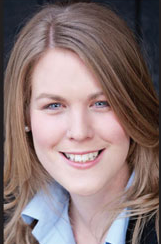
Rachael Harder

Local media reported that Conservative candidate Rachael Harder lambasted former Lethbridge Conservative MP Jim Hillyer at a forum hosted by the local Chamber of Commerce, claiming that the city endured “four years of non-representation” and “have suffered for the last four years” with her Conservative predecessor as their Member of Parliament.

But Mr. Hillyer is still running for re-election in the neighbouring riding of Medicine Hat-Cardston-Warner. Due to a change in electoral district boundaries, Mr. Hillyer’s hometown of Raymond is now in the new riding.

Mr. Hillyer shot back at Ms. Harder, telling a local radio station that she is also facing some of the criticisms she levelled against him. “They’re saying the same things she said about me. She’s not attending forums, she’s not listening, she’s not there,” Mr. Hillyer told CJCY radio.

Retiring Medicine Hat Conservative MP LeVar Payne, who Mr. Hillyer is running to replace in his new riding, also shared some harsh words about his colleague on Twitter, referred to him as “no show Hillyer,” in reference to claims he skipped to many public debates during the 2011 federal election.

Mr. Payne had previously announced in 2014 that he would not endorse Mr. Hillyer in his bid to become MP for the new riding.

Mr. Hillyer was first elected to parliament in 2011 and when the electoral boundaries were redrawn in 2014 he initially announced he would run against Mr. Payne for the Conservative nomination in the new Medicine Hat-Cardston-Warner riding. After what was likely a stern directive from his Ottawa bosses not to challenge a fellow MP, he then announced that he would run for re-election in Lethbridge.

Almost immediately after Mr. Payne announced that he would retire, Mr. Hillyer then jumped back into the nomination race in the Medicine Hat-Cardston-Warner riding.

The controversial Mr. Hillyer faced public criticism when he expressed his extreme views on gay rights and women’s reproductive rights while debating his opponents for the Conservative nomination in September 2014. Both he and Ms. Harder have been endorsed by the Campaign Life Coalition in this election.

Despite the public tension between the two Conservatives, it is likely that both Mr. Hillyer and Ms. Harder be elected to the House of Commons, which could make for an awkward working relationship in Ottawa.


2015 Election in Lethbridge and Medicine Hat-Cardston-Warner

In this election, Mr. Hillyer faces New Democrat Erin Weir, Liberal Glen Allen, Green Brent Smith and Independent candidate John Turner. Ms. Harder is facing New Democrat Cheryl Meheden, Liberal Michael Pyne, Green Kas MacMillian, Christian Heritage candidate Geoffrey Capp, and Rhino Party candidate Solly Krygier-Paine.

Transposing the results from the 2011 election into the boundaries of the new Medicine Hat-Cardston-Warner riding gives the Conservatives 25,659 votes (68.7 percent), New Democrats 5,578 votes (14.9 percent), Liberals 4,165 votes (11.1 percent) and the Greens 1,658 (4.4 percent).

Transposing the results from the 2011 election into the boundaries of the redrawn Lethbridge riding gives the Conservatives 21,617 votes (52.5 percent), New Democrats 12,329 votes (29.9 percent), Liberals 3,759 votes (9.13 percent) and the Greens 1,845 (4.4 percent).

Categories
Alberta Politics

Can Alberta’s Royalty Review get us off the “Royalty Roller Coaster?”

Alberta’s Royalty Review panel stopped in Edmonton on Oct. 6, 2015 for the fourth and final scheduled community consultation meeting. Compared to reports from a tense meeting the previous evening in Calgary, the crowd of about 120 Edmontonians was generally polite and quite tame.

A review of Alberta’s natural resource royalty rates was a key plank in the New Democratic Party‘s election platform and a panel was appointed shortly after Rachel Notley was sworn-in as Premier earlier this year. The panel is chaired by Alberta Treasury Branches President and CEO Dave Mowat and includes Town of Beaverlodge Mayor Leona Hanson, former deputy finance minister Annette Trimbee, and respected energy economist Peter Tertzakian.

The difference in tone at the two consultation meetings is likely explained in the job losses caused by the decline in the international price of oil, which has impacted Calgary and communities in northern Alberta in larger numbers than Edmonton, which has been somewhat sheltered by a boom of large construction projects and a large public sector workforce.

Unlike other parts of the province where the new government’s policies may be met with varying levels of hostility or cynicism (and where NDP MLAs were elected with thin margins), support for Ms. Notley’s party is deep in Edmonton where 64 percent of voters cast ballots for NDP candidates.

As Mr. Mowat described it, it is critical to separate overlying vision (which is inherently emotional) and the complex technical structure (which is very complex) of Alberta’s natural resource royalties when trying to have a public discussion about the issue. And to Mr. Mowat’s credit he presented the panel’s goals and answered questions from the crowd using layman’s terms with ease.

Of course, what is actually implemented when the panel submits its report to the government will be a decision left to the politicians.

An advantage of appointing an arms-length panel like the one Mr. Mowat is chairing is that the government can pick and choose what recommendations it deems viable, both politically and economically.

Last month, Ms. Notley echoed comments made by former Premier Jim Prentice when she said it was time to get Alberta “off the royalty roller coaster.”

The drop in the international price of oil exposed a large cleavage in the government’s finances as past governments became too comfortable and over reliant on these unstable resource revenues to fund the province’s operations budget.

Like her predecessor, Ms. Notley says she plans to fix this, albeit without significant cuts to public services as Mr. Prentice and the opposition Wildrose Party proposed.

But before Alberta’s government is in a position to decide whether the royalties we collect in exchange for allowing private corporations to extract our natural resources should be lowered, kept the same, or increased, the panel is continuing to collect feedback and submissions from Albertans.

These natural resources belong to all Albertans, so do your part and let the panel know what you believe the future of our natural resource royalties should be.

Categories
Alberta Politics

The Yards Edmonton-Centre Federal Election Forum

The Yards magazine’s Omar Mouallem hosted an excellent all-candidates forum in late September 2015 in the hotly competitive riding of Edmonton-Centre.

The forum, recorded in the audio file embedded in this post, features candidates Randy Boissonnault of the Liberal Party, Blaine Bilocerkowec of the Libertarian Party, and Gil McGowan of the New Democratic Party.

Conservative candidate James Cumming did not participate in the forum.

Categories
Alberta Politics

Long-term expatriates can’t vote but can run for Parliament in Canada

Canadian citizen and California resident Chris Jones is running in the federal election as an independent candidate in the Edmonton-Strathcona riding to prove a point.

“I’m running for Parliament in Edmonton Strathcona as an independent candidate, to point out the absurdity in a law that says we’re not Canadian enough to vote, but are Canadian enough to run for office,” Mr. Jones writes on his website.

He launched his candidacy in response to Election Canada’s interpretation of voting laws that was recently upheld by the Ontario Court of Appeal that deny the right to vote to Canadian citizens who have lived out of the country for more than five years.

While he does not expect to win the election, he does encourage Canadians to:

  • Tell their friends, family, and neighbours that the fight to extend the right to vote to all Canadians isn’t quite over yet.
  • Ask candidates whether they support the right to vote for all Canadians.
  • Donate to an upcoming Supreme Court appeal to establish the right to vote for all Canadians.

Listen to Mr. Jones explain the reasons behind his candidacy to CBC Edmonton AM host Mark Connolly.

Non-resident Canadian citizen Nicolas Duchastel de Montrouge has launched a similar campaign in the Calgary-Heritage riding.

Categories
Alberta Politics

10 Conservative candidates in Alberta endorsed by radical anti-abortion group

Nearly one-third of federal Conservative candidates running in Alberta ridings have been endorsed by the controversial Campaign Life Coalition for their opposition to women’s reproductive rights, according to a report from Press Progress.

Known for its vocal anti-abortion position, the Campaign Life Coalition has taken strong positions in recent years against Gay-Straight Alliances in schools (which they describe as “homosexual-activist clubs“) and against Ontario’s new health and physical education curriculum (which they describe as ‘radical sex ed curriculum‘).

The ten Alberta Conservatives are part of a group of 86 Conservative candidates from across Canada who have received endorsements from the organization. Nine of the ten Alberta candidates on the list are men and six are incumbent MPs running for re-election (even Stephen Harper is deemed “not supportable” by this organization).

The four first-time Conservative candidates on the endorsement list are Calgary-Confederation candidate Len WebberSt. Albert-Edmonton candidate Michael CooperSherwood Park-Fort Saskatchewan candidate Garnett Genuis and Lethbridge candidate Rachael Harder.

These four candidates, along with Mr. Hillyer, responded to a questionnaire from the Campaign Life Coalition affirming their opposition to women’s reproductive rights. The other five Conservatives were endorsed based on their voting records and public statements.

According to the organization’s website, Mr. Cooper “has been actively involved in the pro-life movement for many years and is known to CLC leaders.”

Here are the links to the ten Alberta candidates report cards and questionnaire responses:

  1. Blake Richards (Banff-Airdrie)
  2. Kevin Sorenson (Battle River-Crowfoot)
  3. Len Webber (Calgary Confederation)
  4. Jason Kenney (Calgary Midnapore)
  5. Mike Lake (Edmonton-Wetaskiwin)
  6. Chris Warkentin (Grande Prairie-Mackenzie)
  7. Rachael Harder (Lethbridge)
  8. Jim Hillyer (Medicine Hat-Cardston-Warner)
  9. Garnett Genuis (Sherwood Park-Fort Saskatchewan)
  10. Michael Cooper (St. Albert-Edmonton)

Campaign Life Coalition also endorsed six Christian Heritage Party candidates running in Alberta ridings.

Categories
Alberta Politics

NDP should amend more than just timelines for Alberta’s next electoral map

Alberta’s Chief Electoral Officer Glen Resler spoke to the Standing Committee on Legislative Offices on September 24, 2015 about legislated timelines that require an Electoral Boundaries Commission be appointed to redraw the provincial electoral districts.

Because the 2015 provincial election was called one year earlier than Alberta’s (meaningless) fixed election date calls for the timelines now present a difficult challenge for Elections Alberta.

Section 5 of the Electoral Boundaries Commission Act states that a commission be appointed following every second election and a minimum of eight years and maximum of ten years since the previous commission. Two elections have been held since the last commission was appointed only six years ago.

The current legislative timeline, according to Mr. Resler, would not give the commission and Elections Alberta staff enough time to prepare for the next election, scheduled to be held in early 2019.

Mr. Resler told the committee that he is recommending the government introduce an amendment to the Act to shorten the timeline so a commission can be appointed before the eight year minimum period.

He told the MLA committee that he is proposing the government amend the law to allow the next commission be appointed by September 2016 in order to have a final report prepared for approval by the Legislative Assembly in the fall of 2017. This timeline would allow Elections Alberta enough time to prepare the new electoral districts for the 2019 provincial election.

If and when Justice Minister Kathleen Ganley introduces amendments to the timeline, the government should also change other sections in the Electoral Boundaries Commission Act that would create a more fair process of drawing electoral districts.

Under the current law, the commission is comprised of two appointees nominated by the Premier and two appointees nominated by the Leader of the Official Opposition, and a “neutral” chairperson.

Ms. Ganley should recommend that the commission instead be made up of non-partisan judicial appointees made by the Speaker of the Assembly, similar to the commissions appointed to draw the federal electoral boundaries.

The government should also amend the section of the Act that lays out guidelines for the commission to redraw Alberta’s electoral districts.

Section 15 of the Act allows for the population of a proposed electoral division to be 25 percent above or 25 percent below the average population of all the proposed electoral divisions.

While many other provinces allow for a 25 percent variation, some provinces allow smaller deviations. Newfoundland and Labrador and Manitoba’s southern districts follow a general rule for deviation of up to 10 percent. Saskatchewan and New Brunswick allow for a 5 percent general deviation.

The government could easily amend the law to allow the population of each of the new electoral divisions to be closer to the provincial average, perhaps within plus or minus 10 percent or 5 percent deviation.

This Act also allows the commission to recommend up to 4 large electoral divisions with a population that is as much as 50 percent below the average population of all the proposed electoral divisions.

These conditions introduced in 1990 are largely arbitrary, allowing the 50 percent deviation for constituencies which exceed 20,000 square kilometres, are in excess of 150 kilometres away from the Legislative Assembly Building, include no town larger than 8,000 people (the original bill required no town larger than 4,000 people), include an Indian reserve or Métis settlement and share a border with the provincial boundary.

The government could reduce the 50 percent deviation to 25 percent and direct increased funding for MLAs representing large electoral districts for the cost of multiple constituency offices and an increased travel/outreach budget. In 2015, the technology exists to aid MLAs to communicate, converse, and represent Albertans in large electoral districts.

Two rural constituencies currently fall under the 50 percent exception: Dunvegan-Central Peace-Notley with 16,392 voters and Lesser Slave Lake with 19,062 voters. Other rural constituencies that have a notable lower than average population of voters include Peace River with 20,464, Lac La Biche-St. Paul-Two Hills with 23,479 voters and Cardston-Taber-Warner with 23,918 voters.

The average voting population of a constituency in Calgary and Edmonton is more than 33,000 voters. Some urban constituencies, like Calgary-South East with 46,871 voters and Edmonton-South West with 41,230 voters, have grown considerably since the last redistribution.

Our provincial population has grown considerably since the last commission was appointed to redraw Alberta’s electoral boundaries in 2009. The new government should not just amend the timelines for the next commission, it should amend the Act to empower the commission to draw fair electoral boundaries that will ensure more effective representation and equality of the voting power in Alberta.

Categories
Alberta Politics

#InsiderBaseball: NDP government shuffles ministerial Chiefs of Staff

Rumours that the NDP government was shuffling its senior staffers appears to be true. Sources confirm that three ministerial Chiefs of Staff have been shuffled into different offices and two new Chiefs of Staff have been hired.

Chief of Staff Bill Moore-Kilgannon will move from the Office of the Minister of Health and Seniors to the Office of the Minister of Human Services, Scott Harris will move from the Office of the Minister of Agriculture to the Office of the Minister of Minister of Health and Seniors, and Tony Clark will move from the Office of Human Services to the Office of the Minister of Agriculture.

It was also noted that Andrew Tarver has been hired to succeed Jessica Bowering as Chief of Staff to the Minister of Justice and Aboriginal Relations, and Miriam Rycroft was hired to succeed Robin Steudel as Chief of Staff to the Minister of Transport and Infrastructure. Ms. Rycroft previously served as a Ministerial Assistant in the same office.

It is unclear why the three senior political staffers were shuffled, though there is a chance it could simply be a human resources decision.

Tory lobby firm hires more Tories

In the world of lobbyists, the Tory-connected Canadian Strategy Group announced today that former Progressive Conservative MLA Rick Orman and former Conservative MP Brian Storseth would join its payroll. Located in Ottawa, Mr. Storseth served in the government backbenches as the MP for Westlock-St. Paul from 2006 to 2015, when he resigned and later sought the PC nomination in Lac La Biche-St. Paul-Two Hills (he was defeated in the nomination). Mr. Orman was the MLA for Calgary-Montrose from 1986 to 1993 and ran for the PC Party leadership in 2011.


Categories
Alberta Politics

Will the NDP save or shutter Athabasca University?

Residents of one northern Alberta community want to know what Alberta’s new New Democratic Party government has planned for their local university.

Peter McKinnon
Peter MacKinnon

Athabasca University, the province’s largest distance-learning institution employs more than 400 people in Athabasca, making it the largest employer in the town of 3,000.

There is significant fear in the town about the consequences of the university closing or relocating to a larger urban centre, like Edmonton.

In recent years, Athabasca University has been the source of much controversy, ranging from illegal political donations made to the Progressive Conservative Party to claims of financial insolvency.

In 2012, staff called for then-university president Frits Pannekoek to retire, citing questions around illegal donations to the PC Party and the institution’s finances, including the depletion of its reserve fund.

In 2013, four of the institution’s vice-presidents and associate vice-presidents had their positions apparently terminated without explanation to the public shortly after the Public Accounts Committee called the university out for its fiscal mismanagement. And after denying there were financial problems in 2012, the institution cut around 100 positions in 2013, citing financial difficulties.

Colin Piquette NDP
Colin Piquette

During those cuts, sources in government reported that discussions were taking place to merge parts of Athabasca with the University of Alberta, talks that then-PC cabinet minister Thomas Lukaszuk said he was not aware of.

PC MLA Jeff Johnson was unseated by NDP candidate Colin Piquette in this year’s provincial election, with the future of the university being a key issue for voters in the area. The election of an NDP MLA has led locals to believe Mr. Piquette will take action to ensure the university stays open and remains in Athabasca.

In June 2015, Athabasca University interim president Peter MacKinnon released a task force report on the university’s sustainability, which indicated the institution was facing insolvency in the 2015/2016 financial year. The report blamed over-reliance on tuition fees, the state of its information technology infrastructure, as well as staff compensation and the university’s location, for the university’s financial difficulties.

Lori Sigurdson NDP
Lori Sigurdson

While the task force report focused on alarming terms like ”insolvency,” the university had small surpluses in its 2013/2014 and 2014/2015 budgets.

Some observers in the community have suggested that Mr. MacKinnon is playing chicken with the government in an attempt to force new Advanced Education Minister Lori Sigurdson to commit to keeping the university in Athabasca.

Current Wildrose MLA Jason Nixon was a student representative on Mr. MacKinnon’s task force.

In response to the report, the Canadian Union of Public Employees Local 3911, Alberta Union of Provincial Employees Local 69 and the Athabasca University Faculty Association have launched a petition demanding the government ensure Athabasca University and its jobs remain in Athabasca.

Jeff Johnson Alberta Education Minister MLA
Jeff Johnson

Politically speaking, it may have been an easier decision for the new government to make if an NDP MLA was not currently representing the area. If the constituency had remained PC territory, the NDP would not have to worry about Mr. Piquette’s re-election chances in 2019.

Now the NDP government is stuck in an odd position. Even if the new government wanted to relocate the institution, it would not be difficult to reallocate extra funds in the provincial budget to cover the deficits.

If the NDP’s first budget is focused on job creation and stimulus, then protecting 400 jobs in Athabasca should be on the list of priorities.

The new government also faces the question about what to do with the university’s board of governors after years of controversy. Like several universities and colleges across Alberta, the board is headed by someone with strong political connections to the old governing party.

Jason Nixon Wildrose Rocky Mountain House Rimbey Sundre
Jason Nixon

Acting chair Marg Mrazek is a former president of the PC Party. While the Post-Secondary Learning Act gives the government the ability to replace the board, with Ms. Mrazek’s term is set to expire on July 24, 2016 the NDP may wait until that date before replacing the Tory appointee.

In many ways, Athabasca University is a microcosm for the challenges of regime change after forty-four years of Progressive Conservative government in Alberta.

But Athabasca University may be able to use its NDP connections to apply pressure to the new government. Mr. MacKinnon is the husband of former Saskatchewan NDP MLA and Finance Minister Janice MacKinnon, who served in Roy Romanow‘s cabinet in the 1990s. Premier Rachel Notley‘s Chief of Staff, Brian Topp, was Mr. Romanow’s deputy chief of staff during that period.

While the new government has been able to remain coy about the future of the institution in its first four months in office, residents of Athabasca will demand to know what the NDP has planned for their university. They may find out this week when Ms. Sigurdson is scheduled to meet with Ms. Mrazek and Mr. MacKinnon.

Categories
Alberta Politics

Liberals drop candidate in Sturgeon River-Parkland

A Facebook post of disallowed Liberal candidate Chris Austin.

The federal Liberal Party appears to have cancelled the candidacy of Chris Austin, who was nominated as the party’s candidate in Sturgeon River-Parkland on September 7, 2015.

According to a post on his Facebook page, Mr. Austin was disallowed because of something he has said in the past on social media. Mr. Austin said in the post that he plans to run as an Independent candidate in the riding instead.

Mr. Austin ran as the Liberal candidate in the now-defunct Edmonton-Spruce Grove riding in the 2008 and 2011 federal elections, earning 11.5 percent and 9.3 percent of the vote in those races. He was also the provincial Liberal candidate in the Spruce Grove-St. Albert constituency in the 2012 election.

His departure brings the Liberals back down to 33 nominated candidates in Alberta. A new nomination meeting has been scheduled for September 17, 2015, where the Liberals are expected to acclaim candidate Travis Dueck.

Other candidates running in Sturgeon River-Parkland include Conservative Rona Ambrose, Green Brendon Green, New Democrat Guy Desforges and Christian Heritage candidate Ernest Chauvet.

Categories
Alberta Politics

Tuesday Morning Federal Election Updates from Alberta

Some of the latest from the federal election campaign trail in Alberta:

  • NDP leader Tom Mulcair will visit the Lethbridge riding this week to campaign alongside candidate Cheryl Meheden during his visit to Alberta. He will also speak at a rally in Calgary tonight. Mr. Mulcair is back in Alberta this week to participate in a Globe and Mail debate on Sept. 17.
  • Introduced by Health Minister Sarah Hoffman, Mr. Mulcair spoke to an estimated crowd of 1,700 supporters in Edmonton on Sept. 10.
  • Liberal leader Justin Trudeau made a campaign stop in Edmonton on Sept. 9 to rally a crowd of 1,500 supporters. During his visit, Mr. Trudeau promised additional funding for the southeast LRT to Mill Woods if the Liberals form government on Oct. 19.
  • Both Mr. Mulcair and Mr. Trudeau met briefly with Edmonton mayor Don Iveson during their visits.
  • For a $50.00 donation to Calgary-Heritage NDP candidate Matt Masters Burgener, anyone can place a custom message on a campaign-style lawn sign that will be placed near one of Conservative leader Stephen Harper‘s election signs.
  • The federal Liberals have chosen their final candidate in Alberta by nominating businessman Robert Prcic in Calgary-Nose Hill. Mr. Prcic earned 3.8 percent of the vote as the provincial Liberal candidate in the October 2014 Calgary-Foothills by-election.
  • The Laurier Institute for the Study of Public Opinion and Policy has released projections of ten ridings that the NDP need to win to get the most seats and ten ridings the Liberals need to win to get out of third place. For the NDP, the list includes the Alberta riding of Edmonton-Manning, and for the Liberals, the list includes the ridings of Calgary-Centre and Edmonton-Centre.
  • ThreeHundredandEight.com is maintaining riding levels projections that show a handful of Alberta ridings in play during this federal election. As of Sept. 13, 2015, the projections show potential NDP wins in Edmonton-Griesbach, Edmonton-Manning, Edmonton-Strathcona and Lethbridge. The Liberals are projected to do well in Calgary-Centre, Calgary-Confederation, Calgary-Skyview and Edmonton-Centre.
  • A poll conducted by Mainstreet Technologies suggests the election in the new Fort McMurray-Cold Lake could be closer than last year’s by-election results in the old riding of Fort McMurray-Athabasca. The poll showed Conservative David Yurdiga with the support of 35 percent and Liberal Kyle Harrietha with 27 percent support. In the June 2014 by-election, Mr. Yurdiga only finished 11 points ahead of Mr. Harreitha in what was considered a very close race for this riding (in the 2011 election, former Conservative MP Brian Jean was re-elected with a margin of 58.6 percent).
Categories
Alberta Politics

The Uber versus Taxi fight goes provincial in Alberta

The debate over alternative car services gripping city hall in Edmonton may spill over into the Alberta Legislature. According to Lobbyist Registry reports, both Uber and a union representing taxi drivers have acquired the services of well-known lobbyists to help the corporation navigate the halls of the provincial government.

Impact Consulting principal Elan MacDonald is registered as a lobbyist for Uber, with listed activities including lobbying the departments of Transportation, Treasury Board and Finance, and Municipal Affairs with respect to ride sharing, licensing and insurance policy directives. Also working for Impact, though not mentioned in the lobbyist listing, is Brookes Merritt, a former communications director for the Alberta NDP Caucus.

Teamsters Union Local 987 has hired Alberta Counsel Ltd., which readers of this blog may recognize as the company headed by former Wildrose MLAs Shayne Saskiw and Guy Boutilier and former NDP MLA Leo Piquette (father of current NDP MLA Colin Piquette). The company recently hired former NDP Caucus outreach director Pascal Ryffel as a Senior Associate. According to their listing, the company will help the Teamsters lobby the government on many of the same issues as Uber’s lobbyists.

In May 2015, Uber Inc. registered some of its own senior employees as lobbyists in Alberta, including public policy lead Chris Schafer, who was executive director of the Calgary-based Canadian Constitutional Foundation from 2010-2014. Mr. Schafer’s successor at the CCF has taken a hard-line in favour of Uber in the pages of the National Post.

The May 2015 listing declares the company lobbying activities would focus on the Insurance ActTraffic Safety Act, and a provincial regulatory framework for ride sharing in Alberta.

A strictly regulated taxi authority in Edmonton has posed difficulties for Uber expansion into the capital city. Edmonton City Councillors are expected to discuss a draft by-law about this issue on Wednesday, September 16, 2015.

Although the NDP government has not taken a public position on the expansion Uber in Alberta, Transportation Minister Brian Mason has expressed concern about whether the company’s drivers carry proper commercial insurance coverage.