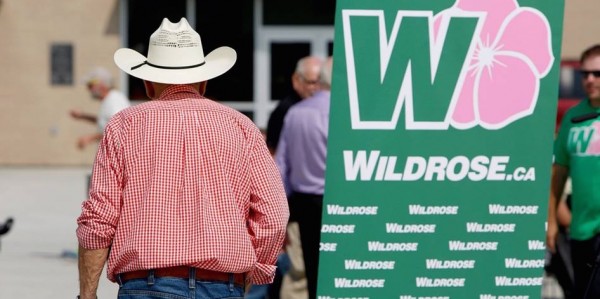
Support for Rachel Notley’s NDP is at 43 percent in Edmonton with the Wildrose at 26 percent and the PCs at 21 percent. In Calgary, the PCs are at 38 percent with the NDP at 26 percent and the Wildrose at 22 percent. In the rest of Alberta, a fairly broad term describing rural areas and medium and small urban areas, the Wildrose dominates with 48 percent support, the PCs with 27 percent and the NDP trailing with 16 percent.
The existence of the three political worlds is not new in Alberta politics, but it helps explain the deep political divisions that exist in our province today.
If an election were held today, the Wildrose Party might stand a chance at forming a rural-based government without the need to merge with the PC Party. But the poll results support my argument that rural-based Wildrose has limited appeal big urban cities like Calgary, where the PCs still hold a considerable amount of support. As provincial electoral districts are redrawn to reflect population growth in urban areas, the Wildrose might need the PC merger more than PCs need Wildrose.
The NDP is traditionally strong in Edmonton and it is not surprising that they have held on to much of their support in the capital city.
It is not surprising to see the NDP doing poorly outside Edmonton. The bungled roll-out of Bill 6, the province’s new farm safety laws, salted the earth of NDP support in rural Alberta.
NDP support in Calgary was in the low-30 percent range in the 2015 election, so that they have been able to hold on to 26 percent support leaves room for very guarded optimism for the governing party (their traditional level of support in Calgary is around 5 percent). High unemployment levels caused by the drop in the international price of oil is a source of hostility directed at the sitting government but the NDP could have room to rebound in Calgary if competing against a Wildrose-dominated conservative party in the next election.
Fight on the Right
The poll showed 48 percent of Edmontonians opposed the idea of a merger between the PCs and Wildrose parties, with 42 percent supporting the idea. Support for a merger was stronger in Calgary, at 53 percent, and outside the two large cities at 58 percent.
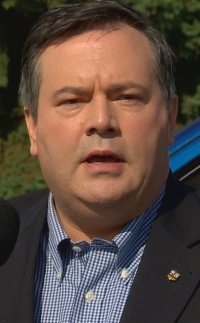
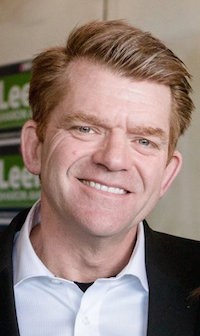
While some sort of new party will likely exist, it is not quite clear if a merger is what will actually take place. Jason Kenney, who is running on a platform of “uniting conservatives,” has at various times promised a merger (which is not legally possible), the creation of a brand new party or possibly preserving the PC Party. Wildrose leader Brian Jean has said any new party should form within the already existing framework of the Wildrose Party. So it remains unclear what the form a “new” conservative party might take in 2019.
Meanwhile, Jean has been holding town hall meetings across the province in his role as leader of the Wildrose Party, but presumably he is campaigning against Kenney for the leadership of a future Wildrose-dominated conservative party (maybe).
It is always important to look at all polls with a grain of salt, as they are a snapshot of individual responses given at a certain time. As we have come to learn in Alberta, voters do change their minds from time to time and what happens during election campaigns does matter.
The annual Family Day long-weekend is something that many Albertans look forward to. The many Albertans who take for granted the holiday on the third Monday of February may be surprised to know that the idea of creating Family Day was incredibly controversial when it was first introduced in 1989. It may be his greatest legacy as Premier, but when Don Gettyintroduced the Family Day Act on June 1, 1989, it generated some intense debate on the floor of the Legislative Assembly. Here are some quotes from the debate, care of Hansard:
Kurt Gesell
June 5, 1989 Laurence Decore (Liberal MLA Edmonton-Glengarry): “It seems to me that when your province is in difficulty, when you know that you’re going to be experiencing the lowest economic growth rate in Canada, something should be brought forward to excite and energize and stimulate Albertans. The family day Act doesn’t do that.”
June 6, 1989 Kurt Gesell (PC MLA Clover Bar): “The promise of the throne speech of love of family, home, community, and province facilitates these choices. The family day Act is an excellent start, and forms part of the measures stressing the importance of Alberta families. I want to applaud our Premier for the introduction of this initiative.”
June 7, 1989
Don Tannas
Don Tannas (PC MLA Highwood): “Government alone cannot create a true family day. It can merely provide the opportunity for others to make it a family time, and therefore it is an important step to bring focus to the fundamental importance of the family, through family day. Many of our Christian denominations emphasize having at least one day a week devoted to family activities. A family day once a year provides an ideal opportunity for all families to focus on themselves, to look at reconciling their differences, to take joy in their common ancestry, to participate in shared activities, and to focus on all the members of their extended family on a day other than a family funeral. No, Mr. Speaker, a government cannot do it by itself. Family day must grow in the hearts and minds of all Albertans, and I’m proud that this government has taken this important step.”
Norm Weiss
June 8, 1989 Ray Martin (NDP MLA Edmonton-Norwood): “I’ll stand up in the Legislature and give them credit if it’s anything close to what we’re doing in Bill 201. I point out that just like your so-called family day, Mr. Speaker — I recall them running that Bill down, but then for once they did the right thing and brought it in, the midwinter holiday. So I’m hopeful after the eighth try that they might take a look at a Bill like that. Again, government members, if you don’t understand the problem and you think everything’s okay, you’re just not listening to the public.”
June 19, 1989 Norm Weiss (PC MLA Fort McMurray): “I hope we’d see such things as family cards for family days, as we see for Valentine Day and Father’s Day and Mother’s Day and instances like that.”
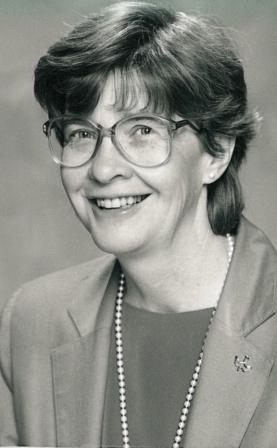
Bettie Hewes
Bettie Hewes (Liberal MLA Edmonton-Gold Bar): “We still are beset with runaways, with dropouts, with an increase in teenage pregnancy. Yet it doesn’t seem to me our Family Day will in any way help those problems that are a consistent source of stress in family life in Alberta and an increasing source of stress. Mr. Speaker, I ask the Premier and the members of the Legislature what Family Day will do to alleviate the need for respite for young families who’ve been encouraged to keep mentally or physically handicapped children at home.” … “This government’s commitment to strengthen family life has yet to materialize. With regret, Mr. Speaker, this particular family Act doesn’t accomplish it in any way.”
Derek Fox
Derek Fox (NDP MLA Vegreville): “It’s not enough to pay lip service to the family in Alberta, just to say, “Well, we love the family; therefore, everything’s going to be wonderful for families in Alberta” or “We’re going to name a holiday Family Day, and everything will be wonder- ful for families in Alberta.””
Don Getty (PC MLA Stettler): “The members opposite from the Liberal and ND parties are surely a hesitant, fearful, timid group, unable to bring themselves to look at something in a positive way. I guess they’ve been in the opposition that long that they just can’t turn around their minds in a positive, thoughtful way and think of the kinds of things they could have raised to support Family Day and talk about the exciting things that will happen in the future in Alberta on Family Day. Instead we heard a series of complaints and fears, and that’s really sad.”
“We will have this thinking of Family Day, thinking of the importance of the family. Both the NDP and the Liberal members said: will people participate; will they actually get together as families? Their view is: force them to; use state control in some way. Force litem to. Make it the law that you’ve got to get together. Now, what kind of nonsense is that? Surely that’s the kind of centralist, socialist thinking that is so wrong and the reason why they’re where they are, Mr. Speaker.”
Marie Laing
Marie Laing (NDP MLA Edmonton-Avonmore): “…all too often the member of that family that is forced to work is the mother or the woman, because they are employed in the retail trade. So we have to say: what kind of a Family Day do you have when the mother has to be at work and cannot be with her family?”
August 10, 1989 Mr. Weiss: “…the proposed amendment, as introduced by the hon member, certainly would create chaos. She went on to say, and I quote how would it help battered women, those sexually abused? I would like to say to all hon members of the Assembly that I really don’t know. Does any body know? But maybe just the reality of knowing one day has been designated as Family Day will shock both sides of a broken family into the realities that there are problems in this world, and as a realist we don’t run from them, we try and work towards improving them and bettering them from all sides It’s not just “empty rhetoric” as quoted by the hon member.”
Mr. Decore: “It is that not everybody is allowed to celebrate the holiday. The moms and the dads and the grandmothers and the grandfathers and the uncles and the aunts and the children aren’t able, many of them, to come back to that family unit to participate in that Family Day. Therefore, the Act isn’t fair; it isn’t fair to the thousands of people who must work.”
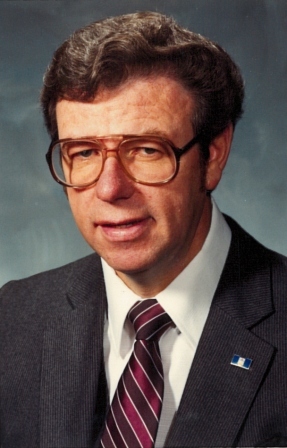
Bob Hawkesworth
Bob Hawkesworth (NDP MLA Calgary-Mountain View): “…it’s really a shame to me that they would miss the real opportunity that this Bill could provide to create a genuine Family Day, not just some bogus, poor substitute for something that we once had once a week in this province. It’s a shame to me and a tragedy to me that this government over the years has failed to act in this important way. I think it’s highly regrettable. Here is some small
way that they could rectify an injustice.”
August 15, 1989 Mr. Getty: “…the hon. Member for Edmonton-Centre [editor’s note: the MLA at the time was William Roberts] has such a hesitant, fearful, timid view of the capacity of the people of Alberta that he would want in some way to pass legislation that forces people to do certain things. It’s the socialist, state-control thought, and it’s wrong. It has been wrong in the past, and it’s wrong now. You have to have faith in the people of the province that they will develop this family day, that they will work. The government merely provides the framework; it’s the people who do it. It’s not people against their employers. Surely they’re all the people of Alberta. They work together, and together they’re going to develop family day. I know that someday in the future that poor, timid, hesitant Edmonton-Centre MLA, wherever he will be in those days, probably . . . Well, no, I won’t even speculate, because we’d probably have to help him to the food bank.”
February 1, 1990 Calgary Herald columnist Don Braid wrote about the first Family Day: “The premier failed to consider a few realities of modern family life – little things like children, work, school and day care. These matters refuse to vanish just because the couch potatoes in the legislature want another holiday and the premier waves his wand.”
UPDATE: By-elections in Calgary-Heritage and Calgary-Midnapore will be held on April 3, 2017.
Two by-elections could be called in the federal ridings of Calgary-Heritage and Calgary-Midnapore in a matter of days. The by-elections must be called in Calgary-Heritage by February 25, 2017 and in Calgary-Midnapore no later than March 22, 2017 but it is expected that they could be called at the same time as a required by-election in Ottawa-Vanier, which must be called by February 19, 2017.
Voters in both of these Calgary ridings have voted overwhelmingly in support of Conservative candidates in recent elections (63 percent in Calgary-Heritage and 66 percent in Calgary-Midnapore in 2015), so the Conservatives are definitely the favourites to win. But as all political watchers know, sometimes by-elections can produce unpredictable results. In a 2012 by-election in Calgary-Centre, the Conservatives saw their 19,770 vote margin of victory from the 2011 general election evaporate when Joan Crockatt was narrowly elected by 1,158 votes (she was unseated by Liberal candidate Kent Hehr in 2015).
Each Christmas season for many years, my parents would buy our family tickets to Stuart McLean’s show when it stopped in Edmonton on his cross-Canada tour. It became an annual tradition that each Christmas we would join hundreds of Edmontonians at the Jubilee Auditorium to listen to McLean do his masterwork. He would stand alone at the microphone for one or two hours each time and captivate the entire theatre with stories from the Vinyl Cafe.
And as he engaged the complete attention of those large audiences, he did it with humility. He acted as though he was just a normal person, which he was.
Dave Cooks the Turkey was always the crowd favourite at Christmas but my favourite Stuart McLean story was Christmas in the Narrows. In particular, the story of the lonely French-Canadian hotel manager, who, expecting to spend Christmas Eve alone was surprised by a car full of visitors – Dave, Morley, Sam, Stephanie and her boyfriend, and Arthur the dog. It was a heart-warming story and one that I always look forward to listening to as my family piled in to the truck and drove out to my uncle’s farm for Christmas Eve celebrations.
Stuart McLean was an exceptional storyteller and a Canadian cultural icon. He had the ability to connect with Canadians from coast to coast through the power of his story telling.
I never had the chance to meet him in person, but I felt like I knew him. His voice was so familiar and frequently present, on CBC Radio in the car, on a podcast at home and in the books on our shelves. I am not a person who is usually impacted by the deaths of celebrities or media personalities, but I felt genuinely sad today. His death is a true loss for Canada. I will miss him.
Thank you for the many years of stories, Stuart. Rest in Peace.
Here is the list of the top 10 fiction and non-fiction titles sold in Edmonton for the week ending Feb. 10, 2017, compiled on Feb. 14, 2017, by Audreys Books and provided by the Book Publishers Association of Alberta.
Edmonton Fiction Bestsellers
The Break – Katherena Vermette
A Still and Bitter Grave – Ann Marston *
Everybody’s Fool – Richard Russo
The Naturalist – Alissa York
Arcadia – Iain Pears
The Woman in Cabin 10 – Ruth Ware
The Slow Waltz of Turtles – Katherine Pancol, William Rodarmar
I’ll Take You There – Wally Lamb
Son of a Trickster – Eden Robinson
Memoirs of a Polar Bear – Yoko Tawada, Susan Bernofsky
Edmonton Non-Fiction Bestsellers
Facing the Shards – Joy Ruth Mickelson *
Your House, Your Choice: Whoever Told You That What You Don’t Know Won’t Hurt You,
Surely Wasn’t Talking About Your Older House – Re Peters
The Right to Be Cold: One Woman’s Story of Protecting Her Culture, the Arctic and the Whole Planet – Sheila Watt-Cloutier
The Case Against Sugar – Gary Taubes
Sapiens: A Brief History of Humankind – Yuval Noah Harari
Even Cows Cry – Ella Drobot *
Dysfunction: Canada After Keystone XL – Dennis McConaghy *
Change the Story, Change the Future – David Korten
The Lose Your Belly Diet – Travis Stork
Hidden Figures: The American Dream and the Untold Story of the Black Women Mathematicians Who Helped Win the Space Race – Margot Lee Shetterly
In the midst of an opioid crisis that is reported to have claimed the lives of more than 400 Albertans in 2016, Calgary-Confederation Member of Parliament Len Webber told the House of Commons Health Committee last week that opposition to the potentially lifesaving facilities was comparable to opposition to oil pipelines.
Here is Webber’s shockingly tone deaf response to Vancouver-Kingsway MP Don Davies during a discussion about Bill C-37 on February 9, 2017:
I don’t need five minutes. Thank you, Mr. Chair.
It was really just a thought here. I think Mr. Davies’ intention here is to try to make the application process for safe injection sites easier.
Would you be in a similar position, Mr. Davies, if we were sitting around the table here talking about application processes for pipelines in Alberta? To apply for a pipeline is extremely onerous. It’s extremely burdensome and time-consuming. It can often take years.
We fought hard as Conservatives to try to make it easier to get pipelines built throughout this country, but we’re not talking about pipelines here today; we’re talking about safe injection sites.
Would you agree, Mr. Davies, that it is very onerous to put in a pipeline in this country? Would you be in favour of making it an easier process to put pipelines in, just as you would like to have safe injection sites put in without consultation from the community?
Basically, I see the changes here giving the minister the power to basically overrule any community consultation or community decisions, whereas communities opposing pipelines is something the minister can’t overrule.
The thought is there. I was just thinking that in Alberta we are having a very difficult time trying to get pipelines put in place, and you are here talking about how you want to make it easy to put in safe injection sites. I think it’s very important that we have community consultation, that we have approval from all areas with regard to getting these sites put in place. I know there are some communities that would be opposed to safe injection sites, yet the minister can overrule the desire of the community.
I don’t support what you’re doing here, Mr. Davies, in your motion or your amendments. However, I am making again the comparison between pipelines and safe injection sites. I may not have explained it quite clearly, but you know what I’m thinking here. It’s very onerous for pipelines, yet you want it to be very simple for safe injection sites.
If you’re willing to make it easier for us in Alberta, we can make it easier for you to put in safe injection sites throughout the country.
Webber was first elected to parliament as a Conservative in 2015 and previously served as a Progressive Conservative MLA for Calgary-Foothills from 2004 to 2014. Between 2009 and 2011 he served as Alberta’s Minister of Aboriginal Affairs and Minister of Intergovernmental Affairs. He does not hold a critic position in the Conservative Official Opposition Caucus in Ottawa.
Update: Len Webber issued a statement in response to the backlash created by his comments at the parliamentary health committee.
The fine was unusually large and may have marked the first time the acceptor of a donation has been fined for accepting a donation larger than the maximum annual limit allowed under Alberta’s elections laws.
The maximum annual limit for donations at the time was $15,000 when the $17,000 donation was received from the Empress Group Ltd., which was owned by former Liberal Party leader and Edmonton-Meadowlark MLA Raj Sherman. Along with paying the $2,000 fine, the party was required to return the excessive contribution amount of $2,000 to the company.
The fine is related to a previous investigation which determined that Sherman exceeded donation limits between 2011 and 2013 by making donations through two companies he owns, Empress Group Ltd. and Raj Sherman Professional Corp. Elections Alberta deemed the two companies to be a single corporation and a fine of $500 was issued against Empress Group Ltd. The excess donations were also returned.
Party president Karen Sevcik told this blogger that the unusually large fine against the party may have been a result of the then-party leader’s involvement in the excess donations. Sevcik also pointed out that it would be impossible for the same mistake to be made again, as corporate donations were banned by the NDP in 2015 and annual individual donations are now limited to $4,000.
There are 246 days until Edmontonians go to the polls to vote for their Mayoral, Councillor and School Board candidates. While it may feel like a long time away, candidates for the October 16, 2017 have started coming forward to campaign and prepare their bids for public office.
As I have done in past elections, I have created a list of candidates who I know are running for Edmonton City Council. This is an unofficial list of candidates who have declared their intentions to stand for office, as candidates become official after Nomination Day on Monday, September 18, 2017. The list does not include all 40 candidates who have filed their intent to run, as not all of the candidates on that list have declared what position they are intending to seek.
If you know any candidates who have announced their intentions to stand for Mayor, Council, or School Board, please send me an email at david.cournoyer@gmail.com. I will add them to the list.
Wildrose Party leader Brian Jean and PC leadership candidate Jason Kenney.
“He’s not running to be the leader of the Progressive Conservative party. He’s running to destroy the party so that he can then form a new party that he’s going to run and become leader of,” Progressive Conservative Party member Jeffrey Rath told CBC Calgary.
The Priddis-based lawyer has filed a complaint with his party alleging that leadership candidate Jason Kenney’s vision runs counter to the party’s constitution and that he should be disqualified.
Kenney is running to dissolve the PC Party, not to merge or unite it with the Wildrose Party.
Despite running under the slogan “Unite Alberta,” Kenney’s goal is to win the leadership and then dissolve the party. If that does not run counter to the party’s constitution, I am not sure what else would.
The PC Party was foolish for allowing Kenney to run in the first place. Facing a lethargic and uninspiring group of “renewal” candidates, Kenney appears to have easily locked up the support of enough delegates to secure a victory at the upcoming convention.
Rath’s complaint is a Hail Mary pass but it could work. It could be difficult for the PC Party executive to disqualify him now but they should if they want their party to exist in a year from now.
Wildrose leader Brian Jean, who had previously endorsed plans for a new party, recently announced that his plans would have conservatives rally behind the current Wildrose Party structure. That’s rebranded Wildrose Party.
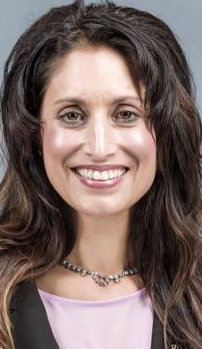
Wildrose MLA Leela Aheer, who was recently acclaimed as the Wildrose Party candidate in Chestermere-Rocky View, even announced on a Facebook video that she was proud to be running for the Wildrose Party in the 2019 election, with no mention of a new party.
This goes back to my long-held belief that the Wildrose Party needs the PC Party more than the PCs need the Wildrose. In two consecutive elections the Wildrose Party has struggled to break out of its rural Alberta base and might only be able to win an election if the PC Party is completely removed from the picture.
In 2015, the PCs were arrogant, out of touch and deserved to lose the election. But unlike the Wildrose Party, the PCs have a record of 44 years of straight election victories and a brand that many Albertans still respect.
It would not be unimaginable to see the PCs bounce back to win another election. But they won’t be able to win any future elections if they allow Kenney lead them to extinction, as he plans to do.
NDP MLAs stood behind by-election candidate Bob Turner at a campaign event in Sept. 2014. Left to right: David Eggen, Rachel Notley, Bob Turner, and Brian Mason.
Campaigns to rebuild two Edmonton area hospitals now competing for scarce funds to fix crumbling infrastructure are being run by organizations that include former Tory insiders who sat at the budget table when the decisions were made that led to the two facilities’ current dilapidated condition.
Alex the Spokes-puppet
Political jockeying for funding for the Alberta Health Services-run Royal Alexandra Hospital in north-central Edmonton and Covenant Health‘s Misericordia Hospital in southwest Edmonton is intensifying as provincial budget deliberations heat up.
The Royal Alexandra Hospital Foundation recently launched a public campaign to lobby the provincial government to provide additional funding for the hospital. The campaign’s message isn’t wrong. As the campaign’s memorable spokes-puppet points out, the Royal Alex has been on “top of the list for infrastructure redevelopment for more than 20 years.”
“New Mis Now” was a campaign slogan used by the New Democratic Party opposition during a 2014 by-election in the Edmonton-Whitemud constituency. NDP candidate Bob Turner criticized then-unelected health minister Stephen Mandel for a lack of funding from the Progressive Conservative government to build a new Misericordia Hospital in booming southwest Edmonton. Covenant Health is continuing to put pressure on the now-NDP government to invest in a new Misericordia Hospital.
They are both right. Both aging facilities are in need of major investment.
Iris Evans
But how did we get to this point?
Poor long-term planning and a legacy of political meddling in the administration of the regional health authorities is likely the real reason why two aging Edmonton hospitals are in their current condition.
The blame lies with the old PC government, which sat in power from 1971 until 2015. During some of the province’s biggest economic booms, when resource royalties from oil and natural gas flooded into government coffers, the PCs could have chosen to invest in our aging public infrastructure. But through many of the boom years that took place during their final two decades in power, the PCs were more focused on giving out tax breaks or vanity cheques than investing in public infrastructure or saving for future generations.
There is some irony that three people who were sitting at the table when the lack of long-term planning occurred over the past twenty to twenty-five years are now personally connected with the organizations lobbying the NDP government for hospital funding.
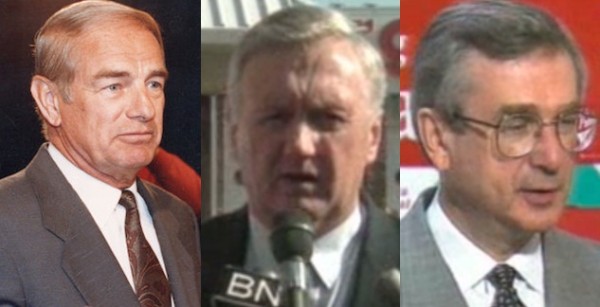
Shirley McClellan
Royal Alexandra Hospital Foundation board member Iris Evans served in the PC government from 1997 to 2012, including as minister of health and finance. Sitting on the Covenant Health Board of Directors are Ed Stelmach, a former premier and cabinet minister from 1997 until 2011, and Shirley McClellan, another former minister of health and minister of finance. McClellan served as Minister of Health from 1992 to 1996, when deep funding cuts were made to Alberta’s health care system, and later as Minister of Finance from 2004 to 2006.
So now, Albertans, and an NDP government faced with limited funds and low international oil prices, have to deal with the previous government’s lack of foresight.
As government, the NDP is now responsible for figuring out how to fix the infrastructure problems created by the old PC government while living up to the promises they made while in opposition. Some real long-term planning would be a good place to start.
Photo: NDP MLAs stood behind by-election candidate Bob Turner at a campaign event outside the Misericordia Hospital in Sept. 2014. Left to right: David Eggen, Rachel Notley, Bob Turner, and Brian Mason.
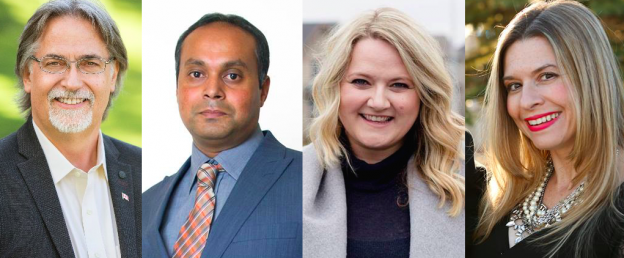
Former Conservative MP Lee Richardson will Liberals in an upcoming Calgary by-election.
A quick update on the upcoming federal by-elections in Calgary-Heritage and Calgary-Midnapore:
– Former Conservative MP Lee Richardsonwill not run for the Liberal nomination in Calgary-Heritage, but three other candidates – Scott Forsyth, Steven Turner and Kanwar Gill – will run. Forsyth is a family physician who holds both medical and law degrees from the University of Calgary He is also a Fellow at Royal Canadian Geographical Society. Turner is a former Conservative supporter who ran for the federal Liberal nomination ahead of the Calgary-Centre by-election in 2012.
– The New Democratic Party is expected to nominate Holly Heffernan as their candidate in Calgary-Midnapore on Feb. 6, 2017. Heffernan is a Registered Nurse, labour activist and past NDP candidate. She was a provincial NDP candidate in Calgary-Glenmore in 2004 and federal NDP candidate in Calgary-Southwest in 2006, 2008 and 2011.
– Darcy Gerow is the Libertarian Party candidate in Calgary-Heritage.
An updated list of nominated by-election candidates with their social media links can be found here.
“We must also ensure that a new, united party will be built on a solid foundation of conservative principles and policy. The left-liberal clique that managed to slowly highjack the PC Party must never again be allowed to seize control of Alberta’s conservative movement.”
Fildebrandt’s manifesto reads like a call to create a rebranded Wildrose Party without the moderates, centrists and liberals who once found a home in the old PC Party. Driving this ideological agenda, Fildebrandt would undoubtably be a prominent leader in the new Conservative Party, one that a province-builder like Peter Lougheed might not even recognize.
Sandra Jansen
Kenney’s hostile takeover of the PC Party appears unstoppable at this time. Along with support from former prime minister Stephen Harper, the Manning Centre, and Wildrose Party members, he appears to have secured a majority in the leadership delegate count.
Kenney’s supporters have succeeded in driving out a number of high profile political moderates from the party.
Former cabinet minister Sandra Jansen quit the leadership race after being harassed and threatened with violence. She later joined the NDP and is expected to be appointed to cabinet sometime this year.
Former MLA Stephen Khan told Postmedia columnist Paula Simons last week that he quit the PC leadership race last week after an ugly race where he was the target of racist and Islamaphobic emails from new party members supporting Kenney.
Party president Katherine O’Neill has done an admirable and thankless job trying to lead the PCs through the turbulent period. Under siege from conservative hard-liners and Kenney supporters, O’Neill represents urban, centrist and moderate views that could lead to a PC Party revival. Too bad she is not a candidate for the leadership.
One year and eight months after losing the election, the big blue tent that led the PC Party to 44 years of electoral success has collapsed but not folded. The party was ripe for Kenney’s hostile takeover but any plans to dissolve the party will have to address vendor contracts, party constitutional issues, local and provincial board approvals, legalities around fundraising and bank accounts, and fairly strict legal parameters. Despite his campaign to “unite” the two political parties, it is legally impossible to merge political parties in Alberta.
Ed Stelmach
All this is occurring at the same time as Rachel Notley’s NDP government looks more moderate and centrist by the day. And with pipeline approvals and some projections of a recovering economy, the NDP might be the sensible option on Albertans’ ballots in 2019. But attacks on the NDP, and on Notley personally, will be harsh.
Last week marked six years since Ed Stelmach announced he would step down as Premier of Alberta. Faced with a revolt by right-wing cabinet ministers and the rise of an insurgent Wildrose Party, Stelmach surprised the province at a Jan. 2011 press conference, where he issued a stern warning about the direction and tone of politics in our province, which is shockingly relevant to today:
“There is a profound danger that the next election campaign will focus on personality and US style negative, attack politics that is directed at me personally.
The danger is that it could allow for an extreme right party to disguise itself as a moderate party by focussing on personality – on me personally.
This type of U.S. style wedge politics is coming into Canada, and it comes at our peril.”
The next election may be more than two years away but that is not stopping eager potential candidates from wanting a head start on the hustings. Both the Alberta Party and Wildrose Party now beginning the process of nominating candidates for the next election.
It may feel like it is too early to start nominating candidates because Albertans are now two years, one month away from when the next provincial election is expected to be called, but we are not far away from the same time parties began nominating candidates before the last election.
Leela Aheer
The next election is expected to be called between March 1, 2019 and May 31, 2019, as Alberta’s fixed election legislation suggests.
Expected changes to the electoral boundaries for the next election could force the parties to hold new nomination meetings, but there is a real advantage in having a candidate campaigning, fundraising and organizing early.
Amendments to the Election Finances and Contributions Disclosure Act passed in the fall 2016 sitting of the Alberta Legislative Assembly introduced rules around the business of nominating candidates, something that did not previously exist in our province. Here are a few of the new rules:
Candidates running for party nominations must register with Elections Alberta. Within 10 days of the conclusion of a nomination contest, the party or constituency association is required to submit to the Chief Electoral Officer a statement including the full names of the nomination contestants.
Section 17(1) of the Act states that a maximum annual donation to a nomination candidate is $4,000.
Section 9.3 (1) states that the chief financial officer of the party or constituency association must file a statement informing Elections Alberta of the date of the official call of the nomination contest, the date of the nomination meeting, and any fee or deposit required to be paid by a person as a condition of entering the nomination contest, and the estimated cost for holding the nomination contest.
Section 32 (4.2) (a) states that all donors who have contributed more than $250 to a nomination campaign will have their names made public, similar to regular donations to candidates and political parties.
Section 41.4(1) states that nomination campaign expenses are limited to 20 percent of a registered candidate’s spending limit for an election in that constituency.
Section 43.01 (1) states that within 4 months after the conclusion of a nomination contest, the chief financial officer of a nomination contestant is required to file financial return with Elections Alberta.
We started this podcast because we believe that 100 years after some women won the right to vote in Alberta, there are challenges to figure out, successes to celebrate, inequalities that need to be exposed, and stories to discover. We hope to learn as much as you through our work on this show.
The PC leadership race has largely been devoid of any other real issues or policy discussions and focused almost entirely on Kenney’s takeover bid. Starke’s plan was extremely light on details but here’s what we know: he is open to a coalition between the two parties but he would keep the PC and Wildrose parties separate.
Jason Kenney
It is unclear if this means the two parties would not run candidates against each other, but that might be one way of salvaging the estimated $1.5 million currently sitting in the bank accounts of PC constituency associations that would be forfeit if the party was dissolved into the Wildrose Party.
Today’s announcement was likely aimed at dislodging the significant lead Kenney has secured in the delegate selection meetings, but it feels like a desperate last grasp by Starke.
Jean vs. Kenney: The bare-knuckle round
Overshadowing Starke’s plan is Wildrose Party leader Brian Jean‘s shot at Kenney. Jean announced today that he is prepared to step down as leader of his party to contest the leadership of a new conservative party, if one is created before the next election.
Brian Jean
There had been speculation for months that Jean could avoid a messy leadership challenge by running for Mayor of Wood Buffalo in October 2017 instead of fending off a challenge from Kenney, but this appears to settle it. As leader of the Wildrose Party, Jean has been unofficially campaigning for months to bolster his bid to leader the conservative movement in this province by holding town hall meetings with supporters.
Jean took the reigns of his party from the edge of the political abyss after most Wildrose MLAs crossed the floor to the PC Party in 2014. He led the rural-based party to a swift recovery in the 2015 election but has faced challengeswithin his caucusand party ever since. His party has also been stuck in the mid-30 percent range in public opinion polls over the past year.
It is unclear whether Jean and Kenney would be the only two candidates to run for the leadership of a new Wildrose-dominated conservative party, or whether a third or fourth contender would enter the contest to lead this currently non-existent party.
Khan throws in the towel
Stephen Khan
Former St. Albert MLA Stephen Khan has dropped out of the PC leadership race. The former one-term MLA gave columnist Paula Simons a fairly damning description of the state of conservative politics in Alberta: “I wouldn’t call it a dumpster fire. But I’d call it a destructive circus.”
I was confident that this race would be one of ideas and hope for Alberta’s future and I expected it to be a well-run and principled campaign. Instead, it has devolved into vitriol, anger and division. As such, I can no longer participate in this race in good conscience, nor ask my family, volunteers and supporters to do the same on my behalf.
We have seen the reputation of the PC Party damaged so badly over the course of this campaign that our credibility may be beyond repair.More concerning, we have seen volunteers, organizers, leadership candidates, members of the Board of Directors, our party President and even some PC caucus members harassed and threatened. It is clear that there is no room in this race for competing ideas and we have seen more anger and division in the last 3 months than in the half-century legacy of this party.
As I step down, I know other candidates in this leadership race will carry on the fight. I will remain a proud member and volunteer with the Progressive Conservative Party of Alberta. Going forward, I will put my support behind Richard Starke and I would ask my supporters to do the same.