An Alberta author and publisher top this week’s list of bestselling books. Ranking first in the fiction category is Nuala: A Fable, written by award winning Red Deer poet and author Kimmy Beach and published by University of Alberta Press. In the non-fiction category, Margaret Atwood’s The Burgess Shale: The Canadian Writing Landscape of the 1960s is also published by University of Alberta Press as part of the Canadian Literature Centre’s Kreisel Lecture Series.
Here is the list of the top 10 fiction and non-fiction titles sold in Edmonton for the week ended March 19, 2017, compiled on March 22, 2017, by Audreys Books and provided by the Book Publishers Association of Alberta.
Edmonton Fiction Bestsellers
Nuala: A Fable – Kimmy Beach * †
The Lonely Hearts Hotel – Heather O’Neill
Fifteen Dogs – André Alexis
If I Were in a Cage I’d Reach Out for You – Adele Barclay
The Break – Katherena Vermette
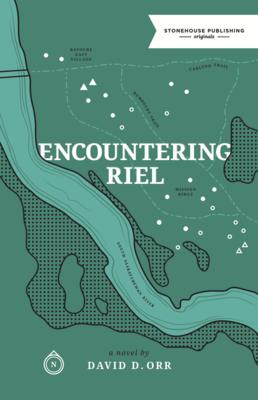
Encountering Riel – David D. Orr * †
Company Town – Madeline Ashby
Norse Mythology – Neil Gaiman
Man Called Ove – Fredrik Backman
Swimming Lessons – Claire Fuller
Edmonton Non-Fiction Bestsellers
The Burgess Shale: The Canadian Writing Landscape of the 1960s – Margaret Atwood †
Medicine Unbundled: A Journey Through the Minefields of Indigenous Health Care – Gary Geddes
Hidden Figures: The American Dream and the Untold Story of the Black Women Mathematicians Who Helped Win the Space Race – Margot Lee Shetterly
The Rainbow Comes and Goes: A Mother and Son on Life, Love and Loss – Anderson Cooper, Gloria Vanderbilt
I’ll Be Damned: How My Young and Restless Life Led Me to America’s #1 Daytime Drama – Eric Braeden
The Right to Be Cold: One Woman’s Story of Protecting Her Culture, the Arctic and the Whole Planet – Sheila Watt-Cloutier
Feast: Recipes and Stories from a Canadian Road Trip – Lindsay Anderson, Dana VanVeller
This I Know: Marketing Lessons from Under the Influence – Terry O’Reilly
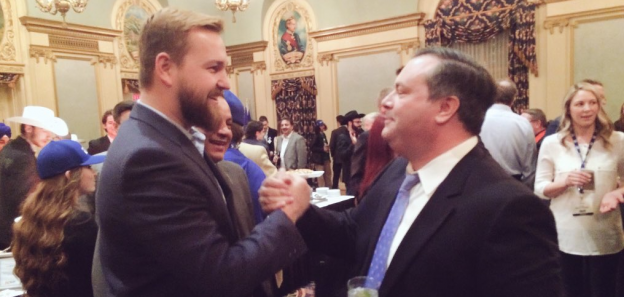
Wildrose MLA Derek Fildebrandt joined Jason Kenney on the eve of his victory in the PC Party leadership race. (Photo credit: @pcyouthalberta on Twitter)
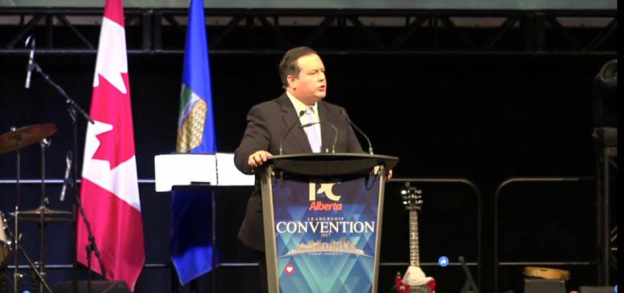
Shifting into the second phase of his campaign to unite Alberta’s two largest right-wing political parties, newly elected Progressive Conservative leader Jason Kenney met with Wildrose Party leader Brian Jean this week. According to an email from Kenney’s campaign, the two men, who are both expected to run for the leadership of a new conservative party, shared a carton of Tim Horton’s coffee in the official opposition offices located in the Federal Building.
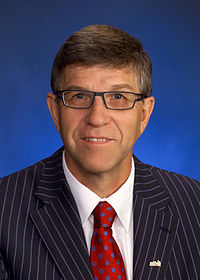
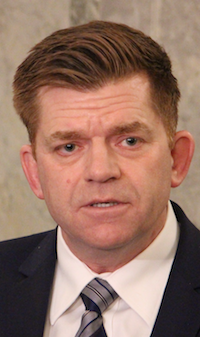
Brian Jean
Kenney emerged from the meeting alone, holding a press conference by himself without Jean outside the building to announce the creation of conservative discussion groups. Jean probably made a good decision not to participate in a joint press conference at this point, as he would have certainly been made to look like he was playing second fiddle to his main leadership rival.
Jean told CBC that he wants a new party to hold a leadership race before October 15, 2017. This is slightly ahead of the timeline proposed by Kenney, which would have the leadership vote held later in 2017 or in early 2018.
An October 2017 vote would coincide with the creation of new electoral boundaries for the next provincial election, when parties are expected to begin nominating candidates in earnest. The final report of the Electoral Boundaries Commission is due to be presented to the Legislative Assembly on October 31, 2017.
Jean also reiterated his position that a new party should exist within the current legal framework of the Wildrose Party, which puts him at odds with Kenney’s previously stated plans to either merge the two or create an entirely new party.
Wason Resigns
Troy Wason
PC Party executive director and long-time party activist Troy Wason resigned his position over the weekend. “It’s very difficult to put a round peg into a square hole,” Wason was quoted as saying about Kenney’s PC-Wildrose merger plans in response to the Feminism is Cancer email sent out the Wildrose campus club at the University of Calgary last week. His departure was not a complete surprise but a signal that the Kenney’s victory has some moderate Tories looking for an exit.
It is also notable that former Edmonton mayor Stephen Mandel’s name disappeared from the PC Party website this week. Mandel, who briefly served as the PC MLA for Edmonton-Whitemud and health minister from 2014 to 2015, was the party’s northern Alberta finance committee chairman. As I wrote earlier this week, Mandel is rumoured to be backing an upcoming “unite the centre” meeting to discuss the potential creation of an alternative to the PC-Wildrose coalition.
Merger aims to keep Tory cash
A group of PC and Wildrose associated lawyers calling themselves the Alberta Conservative Consolidation Committee believe that Elections Alberta’s statement that political parties cannot legally merge is wrong. The group is chaired by former Canadian Taxpayers’ Association president Andy Crooks and includes past Wildrose candidate Richard Jones and PC constituency president Tyler Shandro and two other lawyers.
The desire to merge the two parties rather than create a new party is likely partly driven by the estimated $1.5 million believed to be sitting in dozens of PC Party constituency bank accounts and candidate trusts. If a party dissolves, the funds are held in trust by Elections Alberta and later transferred into the Alberta government’s general revenue.
Former deputy premier Thomas Lukaszuk, who is spending much his political retirement on Twitter, posted a photo online showing the PC constituency association in Edmonton-Castle Downs, which he represented in the Assembly from 2001 until 2015, had liquidated its financial assets by donating the funds to local charities.
I do not expect a new conservative party would have trouble raising money before the next election but new donation limits have lowered the maximum annual contribution from $15,000 to $4,000. The NDP also banned corporate and union donations, which the PC Party relied heavily on before the last election. The Wildrose Party, like the NDP, have cultivated a large individual donor base, but losing that $1.5 million would be a hit.
Gotfried and the Red Menace
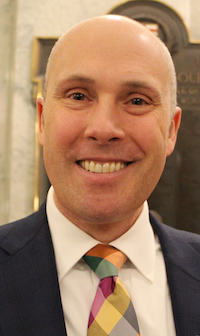
Richard Gotfried
Calgary-Fish Creek MLA Richard Gotfried, the lone rookie PC MLA elected in 2015, evoked his father’s flight from Bolshevik Russia and Maoist China during a speech criticizing the NDP government in the Assembly this week. It takes a special amount of partisan and ideological gymnastics to draw connections between brutal and tyrannical dictatorships and a freely elected democratic government in Alberta, but Gotfried did it.
This is not the first time an opposition MLA has drawn these kinds of connections. Last summer, Drumheller-Stettler Wildrose MLA Rick Strankmanapologized, twice, for an open-letter signed by nine Wildrose MLAs that compared the NDP government’s carbon tax to the Holodomor, the genocide that killed an estimated 2.5–7.5 million Ukrainians in the Soviet Union in the 1930s.
What does Jason Kenney’s PC Party stand for?
Kenney has played it pretty smooth since entering provincial politics last summer, largely avoiding getting directly caught in any of the controversy generated by his campaign. But that will not stop his political opponents from reminding Albertans of his more controversial, and in some cases totally bizarre, political statements.
There is no doubt Kenney has his share of political baggage, but his opponents, including the governing New Democrats, would be foolish to underestimate him. Despite his apparent belief in some weird conspiracy theories, Kenney is an extremely capable campaigner.
Main photo: Wildrose MLA Derek Fildebrandt joined Jason Kenney on the eve of his victory in the PC Party leadership race. (Photo credit: @pcyouthalberta on Twitter)
Oshry, the current councillor for Ward 5, announced earlier this month that he would like to see stricter rules around who can run in Edmonton’s municipal elections.
CBC reported that for the next election in 2021, Oshry would like to see candidates putting their names forward be required to collect 100 signatures and provide a $1,000 deposit. This would be an increase from the current requirement of 25 signatures and $100 deposit.
Michael Oshry
I am supportive of a change that would require potential candidates to collect 100 signatures, which I think is fair and probably good practice, but I am reluctant to support such a drastic increase to the financial deposit. For many first-time candidates, especially those without support from private sector developers, $1,000 is no small amount of money in a campaign budget.
We should not seek to limit the number of individuals seeking election by creating unnecessary financial hurdles but we can gauge their seriousness and commitment by increasing in the number of signatures required on their nomination forms.
Tracking Calgary election candidates
I have been asked by a number of readers whether I will also be tracking candidates running in Calgary’s municipal elections. The answer is no, but thankfully, Sarah Elder-Chamanara has launched a new website tracking candidates in Calgary. I will definitely write about any interesting races that develop in other municipalities during the campaign but my focus on municipal politics remains in Edmonton.
His only opponents, Vermilion-Lloydminster MLA Richard Starke and Calgary lawyer Byron Nelson, earned 21 percent and two percent support from the voting delegates.
Kenney’s leadership bid was more of a hostile takeover than a traditional leadership campaign. The central point of his platform was his plan to dissolve the 8-MLA PC Party and form a new party with the official opposition Wildrose Party. Kenney has said he plans to meet with Wildrose leader Brian Jean on Monday to further discuss his plans.
Over the course of the campaign, Kenney and his legions of social conservative supporters, many who also happen to be card-carrying members of the Wildrose Party, worked tirelessly to marginalize progressive voices in the party. Two leadership candidates, Sandra Jansen and Stephen Khan, said they and their supporters faced threats and bullying by Kenney’s supporters before they dropped out of the race. Jansen later crossed the floor to join the New Democratic Party and Khan endorsed Starke.
Kenney’s reputation for being a focused campaigner helped him win an overwhelming number of delegates at the local constituency votes. The lethargic and uninspiring campaigns mounted by his opponents were left in the dust.
Despite all the big talk by party stalwarts about the strength of the progressive-wing of the party, the political moderates just did not show up to vote in this race. The progressives who showed up in droves to vote for Ed Stelmach in 2006 and Alison Redford in 2011 stayed home this time. Or maybe they, like Sandra Jansen, like what they see from Rachel Notley’s NDP government?
Clark claims that a number of former PC MLAs and activists, including former deputy premier and vocal Kenney critic Thomas Lukaszuk, are in discussions with his party. This may be related to an upcoming “unite the centre” event in Red Deer that former PC MLA and Edmonton mayor Stephen Mandel is said to be behind. Another former PC MLA, Heather Klimchuk, said in an interview on The Broadcast podcast that she is watching St. Albert mayor Nolan Crouse‘s campaign to lead the Liberal Party.
What we discovered today is that less than two years after Alberta’s natural governing party lost its first election in 44 years, the PC Party is a shell of its former self and was ripe for a takeover by Wildrose Party supporters.
In his victory speech, Kenney confidently told delegates at the PC Party convention that he plans to repeal all the changes made by the NDP when he becomes Premier in 2019. That would mean the repeal of policies unpopular with conservatives, like the carbon tax, the Climate Leadership Plan and new farm safety laws, all introduced by the NDP.
Thomas Lukaszuk
If Kenney is true to his word this would also mean that corporate political donations would be reintroduced, small business taxes would be increased, the minimum wage would be lowered, school fees would be increased, the wealthiest Albertans would get tax cuts, and laws protecting sexual minorities from discrimination would be repealed.
When Kenney pledged today to repeal all of the changes made by the NDP, he was not talking to the now former progressive-wing of the PC Party. He was talking to the social conservative and rural base of the Wildrose Party.
Now that the takeover of the PC Party is complete, Kenney will set his sights on his main challenger for the leadership of a new conservative party, Wildrose leader Brian Jean.
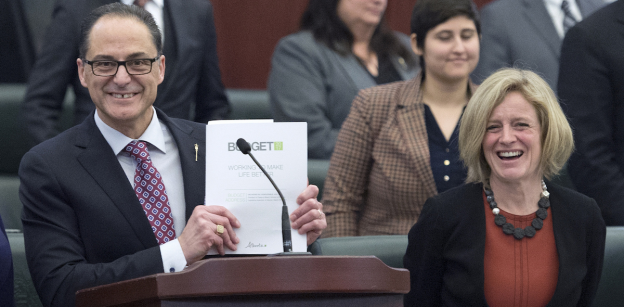
There were few surprises when Finance Minister Joe Cecistood to table the New Democratic Party’s third budget since forming government in 2015.
What I expect were strategic leaks over the past week revealed some popular highlights included in the budget, giving the government some positive media in the days before the budget was released. The construction, revitalization and renovation of schools and funding for a new hospital in south Edmonton were two of the most notable tidbits to be released in advance of yesterday’s budget speech.
If the leaks were indeed intentional, it was not a bad communications strategy considering the government’s current financial situation. It created a positive distraction from two big numbers that the conservative opposition parties want to focus on – total budget spending and the budget deficit.
But when the budget was tabled yesterday, neither of these numbers were really a surprise. We knew the NDP was not planning to make deep cuts to provincial program spending in this budget. And we knew from Ceci’s third-quarter update from the last fiscal year that the deficit would likely remain over $10 billion – it is projected to be $10.3 billion, down around $500 million from $10.8 billion last year.
Also not surprising was the response from Liberal leader David Swann, who took a more reasoned approach by applauding the government on investing in public services and infrastructure, and then pointing out where the budget failed.
The government continues to make significant investment in public infrastructure, which is long overdue in Alberta. Along with a new hospital in Edmonton, the budget includes funding for renovations at the Misericordia Hospital and new construction at the Royal Alexandra and Glenrose hospitals (which was not previously announced, so that was a surprise).
One question that remains unanswered is how, in the long-term, the government plans to deal with the revenue shortfall created by the drop in the international price of oil. For many years, the Alberta government became over-dependent on oil and natural gas royalties to pay for a large portion of the daily operations of government.
The old PC government used those high royalty revenues to subsidize corporate and personal tax cuts, which proved politically popular in the short-term but financial irresponsible in the long-term. When the international price of oil dropped in 2014, so did about $10 billion worth of expected government revenue.
The NDP took some steps to diversify revenue with moderate increases to corporate and personal taxes after they were first elected 2015 but it was nowhere enough to fill the revenue shortfall (Albertans still pay some of the lowest taxes in Canada). The positive news is that Alberta still has the advantage of having a low debt-to-GDP ratio, which means at least in the short-term our province should be able to deal with being in a deficit situation.
Overall, I am not surprised about what is and is not included in the 2017 provincial budget. I am encouraged that the NDP is not heeding the calls of the conservative opposition parties to make deep funding cuts to public services and infrastructure investments, which would be detrimental to Albertans’ quality of life during this economic downturn.
Here is the list of the top 10 fiction and non-fiction titles sold in Edmonton for the week ended March 12, 2017, compiled on March 14, 2017, by Audreys Books and provided by the Book Publishers Association of Alberta.
Alberta author David Orr’s new book Encountering Riel is on the bestseller list for the third straight week. The book is published by Edmonton-based Stonehouse Publishing.
Edmonton Fiction Bestsellers
Man Called Ove – Fredrik Backman
Encountering Riel – David D. Orr * †
Fifteen Dogs – Andre Alexis
Nostalgia – M.G. Vassanji
The Lonely Hearts Hotel – Heather O’Neill
The Break – Katerena Vermette
The German Girl – Armando Correa
The Naturalist – Alissa York
Company Town – Madeline Ashby
A Dog’s Purpose – Bruce W. Cameron
Edmonton Non-Fiction Bestsellers
Open Hear, Open Mind – Clara Hughes
Medicine Unbundled: A Journey Through the Minefields of Indigenous Health Care – Gary Geddes
Fur Trade in the West (Children’s Nonfiction) – Phyllis Arnold *
This I Know: Marketing Lessons from Under the Influence – Terry O’Reilly
Feast: Recipes and Stories from a Canadian Road Trip – Lindsay Anderson, Dana VanVeller
Edmonton Cooks: Signature Recipes from the City’s Best Chefs – Leanne Brown, * Tina Faiz *
Hidden Figures: The American Dream and the Untold Story of the Black Women Mathematicians Who Helped Win the Space Race – Margot Lee Shetterly
The Right to Be Cold: One Woman’s Story of Protecting Her Culture, the Arctic and the Whole Planet – Sheila Watt-Cloutier
Born a Crime: Stories from a South African Childhood – Trevor Noah
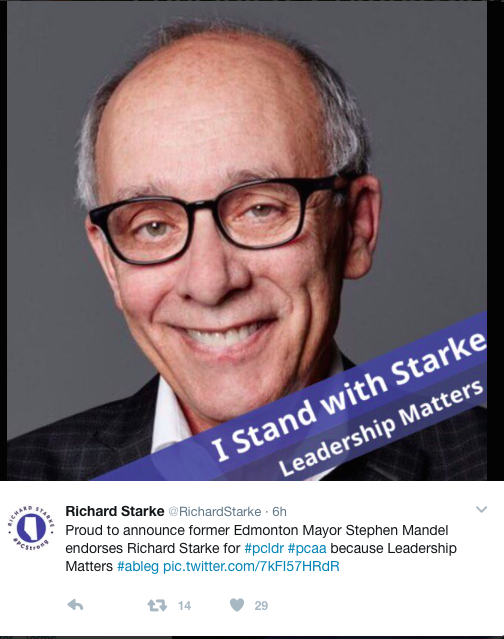
Representing PC supporters who want to renew the party, rather than dissolve it, Vermilion-Lloydminster MLA Richard Starke has announced a string of endorsements from former PC cabinet ministers and MLAs over the past few days, including former Edmonton mayor Stephen Mandel and former leadership candidate Stephen Khan.
Starke’s list of endorsers include former MLAs Doug Horner, Doug Griffiths, Thomas Lukaszuk, Mike Allen, Rob Lougheed, Hector Goudreau, LeRoy Johnson, Jack Hayden, Ron Casey, Cal Dallas, Arno Doerksen, Bridget Pastoor, Dave Quest, Teresa Woo-Paw, Ron Ghitter, Verlyn Olson, Genia Leskiw, Iris Evans, Cathy Olesen, Heather Klimchuk, Pearl Calahasen, Ray Danyluk, Jim Horsman, Peter Elzinga, Linda Johnson, and Jacquie Fenske.
It seems like an odd strategy to pull out a list of prominent endorsers after the delegate selection meetings have been held but it could be the last card that Starke’s team had to play. Kenney is an impressive campaigner and his organization solidified a solid lead in the elected delegate count.
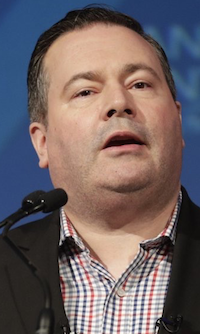
Jason Kenney
After party delegates vote to elect Kenney as their leader on Saturday, March 18, 2017, the PC Party will become a vassal of the Wildrose Party, which Kenney also seeks to lead into a new conservative party. His campaign against Wildrose Party leader Brian Jean has essentially already begun.
Starke’s campaign to renew the PC Party released a “Common Sense Plan” in January 2017 which laid out a vague plan to work with the Wildrose Party without merging with them, but even at the time it felt like a last ditch attempt to ward off Kenney’s juggernaut.
It is unclear what Starke and his supporters will do when Kenney wins the leadership in a landslide on March 18, 2017. He and his only supporter in the PC caucus, Grande Prairie-Wapiti MLA Wayne Drysdale, will have to decide whether they want to remain in a Kenney-led PC Party which could potentially cross over to the Wildrose caucus before the 2019 election.
Maybe they will start a new moderate conservative party, or join another party? Calgary-North West MLA Sandra Jansen left the PC leadership race and joined the NDP caucus in November 2016. Perhaps hoping to gain a caucus-mate, Alberta Party leader Greg Clark has been pushing his ‘Centre Together’ message targeted at centrist Tories unimpressed with Kenney’s Wildrose merger plans.
What comes after a bozo-eruption? A bozo-aftershock.
Last week I wrote about the “Feminism is Cancer” email sent out by the Wildrose Party campus club at the University of Calgary promoting the screening of a Men’s Rights film on International Women’s Day. The Gauntlet, the campus newspaper, reports that the student who the club claimed to have fired as communications director after the incident may have not actually existed. The newspaper was unable to find any student with the name “Robert McDavid” listed with the university’s registrar or the party membership list.
If The Gauntlet report is correct, either the club did not actually fire their director or they fired someone who did not want their name to be publicly associated with the “Feminism is Cancer” email.
I’ll be joining Edmonton’s historian-laureate Chris Chang-Yen Phillips and guests for a live recording of the Let’s Find Out podcast at the Needle Vinyl Tavern on Saturday, March 11, 2017.
Alberta taxpayers should not be on the hook to fund posh private schools for Calgary’s elites.
According to data released by Progress Alberta, 15 private schools which charge more than $10,000 in annual tuition fees received more than $30 million in taxpayer subsidies in 2015-2016.
One of those private schools, Strathcona-Tweedsmuir School, charges $21,660 in annual tuition fees per student, the highest of any private school in Alberta. The school has received $20.5 million in government funding since 2010 and in 2016 it raised $25 million through fundraising. At the end of 2016 the school’s two charitable foundations had $4.7 million remaining, according to Progress Alberta.
Public funding for private schools has become a hot political topic in recent weeks, with some groups calling for the Alberta government to stop public funding of private schools. I remain undecided about whether funds should be available for some private education, but I was shocked to learn that some of Alberta’s most elite and exclusive private schools are receiving public subsidies.
Conservatives politicians have stepped up to defend private schools. Wildrose education critic Leela Aheer and Progressive Conservative MLA Dave Rodney argued that private schools provide Albertans with choice in education. Aheer said in a written statement that the private system saves Albertans money because they receive 70 per cent of the per-student funding of public schools.
Both those arguments are flimsy to begin with and completely fall apart when we start focusing on private schools that charge significantly high tuition fees while also being able to fundraise large amounts of money. Most Albertans can’t afford the “choice” of enrolling their children in exclusive schools, and private schools which can generate large amounts of funding on their own can probably survive without government subsidies.
Funding exclusive private schools with admission fees that are out of reach of most Albertans only perpetuates a system of education based on economic class. Equality of opportunity should be the driving force behind public funding for education, whether it be public or private.
The speed at which Education Minister David Eggenswiftly denied any allegations that the NDP government would be defunding private schools was surprising considering the criticism his party levelled toward the old PC government on the same issue. The NDP should do what should have been done a long time ago – let Alberta taxpayers off the hook for funding these expensive, exclusive and elite private schools.
“Feminism is Cancer” was the subject line of an email sent out by the Wildrose Party campus club at the University of Calgary promoting the showing of the film “Red Pill.” The Wildrose club planned to screen the film, which online reviews describe as exploring Men’s Rights issues, on the U of C campus on International Women’s Day.
Brian Jean
The Oxford Dictionary defines feminism as “the advocacy of women’s rights on the ground of the equality of the sexes” and I will assume that the Young Wildrosers who wrote the email were not referring to cancer by its purely medical definition.
The email and the event are offensive and after a swift backlash online, the club responded on twitter that it had fired its director of communications and was no longer co-sponsoring the event.
The federal Conservative Party club also announced it would no long co-sponsor the film screening but the event is still being held by another co-sponsor, a group calling itself the “Canadian Advocates for Freedom and Liberty.” It is bizarre that even a campus political club would be so tone-deaf and insensitive, especially with talk of creating a new conservative party before the next election.
It would be easy to chalk up the “Feminism is Cancer” email to student tomfoolery or immaturity if it were not already part of a trend of Wildrose Party bozo-eruptions that go all the way back to the 2012 election.
Back in 2012, before the Lake of Fire became part of the province’s political lingo, then-party leader Danielle Smith confirmed the existence of a good conduct bonds of $1,000 to be paid by anyone who ran for a Wildrose Party nomination.
Maybe it will be time for Brian Jean and Jason Kenney to increase the good conduct bond to $10,000?
A flagship bill to cut school fees by 25 percent is familiar and friendly territory for the Alberta’s New Democratic Party. Introduced in the Legislative Assembly today by Education Minister David Eggen, Bill 1: An Act to Reduce School Fees, eliminates fees for textbooks, workbooks, photocopying, printing and busing transporting.
Last year’s Bill 1, which established a series of job creation and economic diversification committees, was much more technocratic than this year’s first bill. Eggen’s bill returns to retail politics and goes back to the NDP basics. It moves the NDP closer to fulfilling one of their campaign promises from the 2015 election, to “reduce school fees for essential services such as lunch supervision and busing.”
As an opposition party, the NDP railed against growing out of pocket fees that Alberta parents were forced to pay under the old Progressive Conservative government. Eliminating these types of school fees, which cost Albertans an average of $50 million each year, is a change that will have a positive impact in the lives of a lot of Albertans.
The elimination of fees is likely to be a popular move, and it is also shrewd politics. Like the NDP government’s increases to the minimum wage and introduction of $25 per day child care, it will be politically difficult for the conservative opposition parties to campaign against cuts to school fees in the next election.
St. Albert Mayor Nolan Crouseannounced this week that he will run for the leadership of Alberta’s Liberal Party, becoming the first and so far the only candidate to announce plans to run for the job. The party is holding a leadership vote in June 2017 to fill the position being vacated by Calgary-Mountain View MLA David Swann, a former leader who has been the party’s interim leader since 2015.
Crouse has served three-terms as mayor of the suburban city of St. Albert, located northwest of Edmonton, and is currently the chair of the Capital Region Board.
With the exception of Swann’s re-election, the Liberal Party was wiped off the electoral map during the NDP’s Orange wave of 2015.
Whoever is chosen to lead the Liberals later this year will have a big challenge ahead of them. How does a tiny party differentiate itself from a New Democratic Party government that has swallowed much of what used to be a fairly reliably Liberal vote in Edmonton? And faced with the prospect of a united/merged/rebranded Jason Kenney/Brian Jean/Derek Fildebrandt-led conservative party, why would moderates and progressives choose to vote for a tiny Liberal Party instead of the NDP?
Greg Clark
Whoever wins the Liberal Party leadership will face some of the same challenges faced by Alberta Party leader Greg Clark, who is also the party’s lone MLA. Clark has been fairly effective at generating media attention since he was elected in 2015 and generated some controversy this week when he launched a new discussion on Alberta’s fiscal future, including a Provincial Sales Tax.
Without the built in podiums that come with being government or official opposition, both Clark and, potentially, Crouse will have to step outside of the regularly comfortable political narrative to generate attention for themselves and their parties.
A huge irony is that the political split after the 2008 election that led to the the current incarnation of the Alberta Party was part of a plan to replace the Liberals as the progressive and centrist alternative to the Progressive Conservatives and Wildrose parties. In the end, the split may have actually benefited the other opposition party which was noticeably and purposely absent from those discussions – the NDP.
Former Liberal Leader on St. Albert City Council
Crouse serves on St. Albert City Council with another politician who once led the provincial Liberals in the wilderness. Councillor Bob Russell led the Liberals from 1969 until 1974. He was a candidate in the 1971 election in St. Albert and in a 1973 by-election in Calgary-Foothills but was unsuccessful in his bids for election.
Russell resigned as leader in 1974 and was succeeded by Calgary oilman and geologist Nick Taylor. Taylor would lead the party out of obscurity and serve as an MLA for Westlock-Sturgeon from 1986 to 1993 and Redwater from 1993 to 1996.
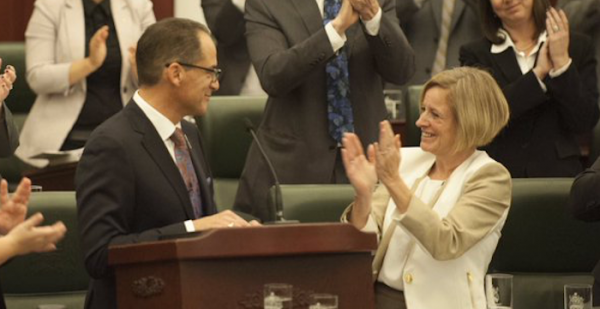
Premier Rachel Notley applauds Finance Minister Joe Ceci as he presents the Alberta NDP's first budget.
Similar to last week’s third quarter fiscal update delivered by finance minister Joe Ceci, this week’s Speech from the Throne will mostly focus on political messaging and managing public expectations. Along with the pomp and circumstance that will drape the Legislature as Lieutenant Governor Lois Mitchell reads the throne speech on March 2, 2017, the government will present its narrative for the upcoming session of the Assembly.
To give you an idea of what recent throne speeches have included, here is what the NDP government’s throne speech from March 8, 2016 promised to:
diversify energy markets.
pursue a coherent and effective economic development strategy.
invest in a greener, more sustainable economy.
pursue a responsible approach to public finance.
pursue ongoing democratic reform to ensure public accountability in all of this work.
We can expect NDP cabinet ministers to boast about achieving the approval of the Kinder Morgan Trans-Mountain Pipeline expansion and Environment & Parks Minister Shannon Phillips to release further details of the plan to address Climate Change, including government support for communities impacted by the phase out of dirty coal-fired power plants. We can also expect to hear some hint about what type of reforms the government could make to Alberta’s outdated labour laws in this session of the Assembly.
We can also expect the NDP to begin shifting away from its more activist legislative agenda into re-election mode later this year.
(One of the big stories of the upcoming session will be the one-upmanship we can expect to see between Wildrose leader Brian Jean and soon to be anointed PC leader Kenney, but I will save that for a future blog post).
The NDP inherited a financial mess in 2015 from an old PC government that relied too heavily on revenue from resource royalties to fund the daily operations of public services. As we saw starting in 2014, when the international price of oil dropped, the much-lauded Alberta Advantage of using unreliable resource revenues to subsidize short-sighted tax cuts quickly became the Alberta Disadvantage.
I support the NDP government’s decision continue investing in public services and much-needed public infrastructure projects rather than slashing-and-burning, as the opposition conservative would do.
Alberta fell behind on critical infrastructure investment during the years when Ralph Klein was premier, when his government’s singular focus was on deficit and debt reduction. I was pleased to see the PCs move away from that short-sighted approach during their final years in government and that the NDP has continued to invest in building the type of public infrastructure – schools, hospitals, roads and public transit – that Alberta’s growing population will need.
The conservative opposition parties continue to irrationally lambast the NDP for taking on debt to fund capital infrastructure projects, but on this issue I agree with the approach presented by John Kenneth Galbraith in The Good Society:
“There remain those government expenditures which are intended to improve future well-being and economic growth or which so serve. Here, borrowing is not only legitimate but socially and economically desirable. Similar borrowing in the private sector of the economy is both accepted and wholly approved even by the most eloquent, frequently vehement, opponents of the public deficit.”
The last throne speech recognized the key economic and financial challenges facing our province. “We have seen oil price drops before. We will get past this one. And we will draw the right lessons from it, and act on them,” the Throne Speech stated.
But overall, it is still not clear to me what the NDP’s longer-term fiscal plans are, or how they plan to significantly diversify the government’s revenue sources without further increasing taxes (which they should do). Maybe they are praying for another oil boom? That was the old PC government’s plan too.
Maybe we will learn more in this week’s Speech from the Throne?
O’Leary will be joined by former Conservative MP Tim Uppal who will moderate the chat. Uppal represented the Edmonton-Sherwood Park riding from 2006 until 2015 when he switched ridings and was defeated by Liberal candidate Amarjeet Sohi in Edmonton-Mill Woods in October 2015.
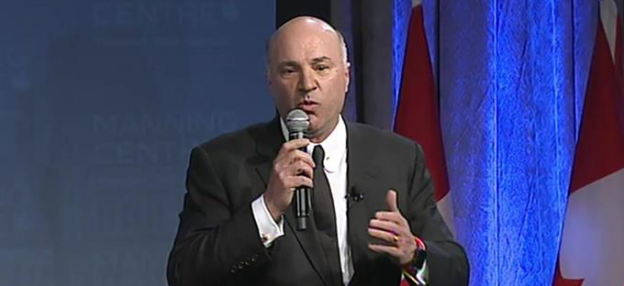
O’Leary was spotted chatting with former MP and Progressive Conservative leadership candidate Jason Kenney at last weekend’s Manning Centre Conference in Ottawa. Kenney participated in a panel discussion at the conference with Wildrose MLA Derek Fildebrandt and conference namesake Preston Manning on the topic of uniting Conservatives in Alberta.
Back to the federal Conservative leadership, Fildebrandt has endorsed leadership candidate Maxime Bernier, the Quebec MP known for his libertarian views briefly served as Minister of Foreign Affairs before resigning in 2008 after he acknowledged leaving sensitive government documents out in the open, apparently at his former girlfriend’s home. Bernier has also been endorsed by Calgary MP Tom Kmiec and former Wildrose MLA Heather Forsyth.
O’Leary does not have the support of any sitting MPs from Alberta but has gained support from Uppal and former PC MLA Ken Hughes. O’Leary was widely mocked online last year after writing an open letter to Premier Rachel Notley pledging to invest $1 million to Alberta economy if she would resign (it is not known if the letter was sent by O’Leary from his home in Massachusetts).
Federal NDP skip Alberta in leadership debate schedule
Meanwhile, the federal NDP released a schedule of debates for their leadership contest and have apparently skipped over Alberta, the only province in Canada with an NDP government.
It is an odd slight, but one that is probably welcomed by Notley’s pro-pipeline NDP government, whose Climate Leadership Plan helped gain approval for the expansion of the Kinder Morgan Trans Mountain Pipeline from Alberta to British Columbia. The divide between the Alberta NDP and its counterparts in Ottawa on the pipeline issue is stark and the federal party would not be doing Notley’s government any favours by rolling into the province trumpeting an anti-pipeline message.
By-elections will be held in the federal ridings of Calgary-Heritage and Calgary-Midnapore on April 3, 2017. Voting stations in those ridings will be open from 7:30 a.m. to 7:30 p.m. on that day.
If you are unable to cast a ballot on the by-election day on Monday, April 3, 2017, you can vote in the advance polls on March 24, 25, 26 and 27 from 12:00 p.m. to 8:00 p.m. at a voting station in those districts. If you are not sure where your voting station is located or what federal riding you live in, visit the Elections Canada website and use the postal code search tool to find out.
If you are already registered to vote in those ridings, you will receive a voter information card by mail which will tell you where your voting station is located. You should receive it by March 18. You can also use the Voter Information Service to find out where to vote.
According to section 132 (1) of the Canada Elections Act, everyone who is eligible to vote in a federal election must be allowed three consecutive hours to cast their vote on election day. If your hours of work do not allow for three consecutive hours to vote, your employer must give you time off.
If are unsure who the candidates in your riding are, I am maintaining a by-election page with links to candidate websites and social media accounts.




 Here is the list of the top 10 fiction and non-fiction titles sold in Edmonton for the week ended March 12, 2017, compiled on March 14, 2017, by
 Representing PC supporters who want to renew the party, rather than dissolve it, Vermilion-Lloydminster MLA