Categories
Alberta Politics

Tories versus Wildrose: Year One in Alberta’s new political game.

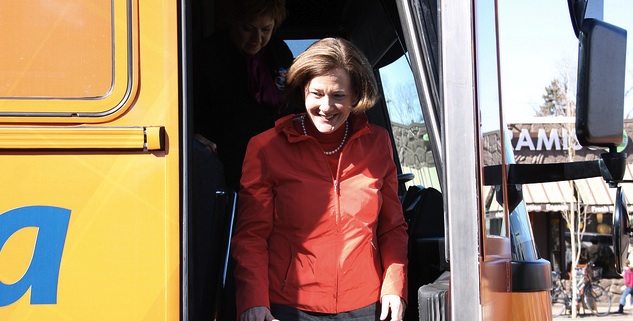
Alison Redford Campaign Bus
Premier Alison Redford hops of her campaign bus onto Edmonton’s 124 Street during the 2012 election.

On April 23, 2012, Alberta’s most hotly contested election in decades culminated with the re-election of the twelfth consecutive Progressive Conservative majority government since 1971. Despite holding the large majority elected MLAs, the popular vote showed Albertans were closely divided between Alison Redford‘s Tories who finished with 44% compared to an impressive 34% showing for Danielle Smith’s Wildrose Party.
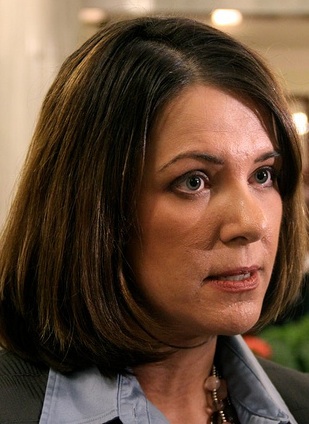
Danielle Smith Wildrose Alberta
Danielle Smith

The first year of Premier Redford’s mandate has been rough for her governing party. Scandals bubbling up from now-defunct health authorities, accusations of a personal conflict-of-interest, and allegations that her party accepted up to $400,000 in illegal campaign donations from billionaire Edmonton Oilers owner Daryl Katz have dogged her government.

Despite being branded as a policy-wonk, Premier Redford’s cabinet has implemented a confused domestic agenda that has resulted in public spats with popular Mayor Naheed Nenshi and Stephen Mandel and unnecessary conflicts with teachers and doctors. Recent budget cuts, blamed on a deflating bitumen bubble, also threaten to unravel the coalition of moderate voters who carried her party to victory one year ago.

The mixed bag that is Premier Redford’s cabinet could help explain some of this confusion. Younger cabinet ministers, like Deputy Premier Thomas Lukaszuk, Education Minister Jeff Johnson and Municipal Affairs Minister Doug Griffiths, constantly talk off the cuff and appear to sometimes be making government policy on the fly. Other ministers, like Finance Minister Doug Horner, Health Minister Fred Horne and Human Services Minister Dave Hancock, have shown restraint and maturity that comes with years of cabinet experience.
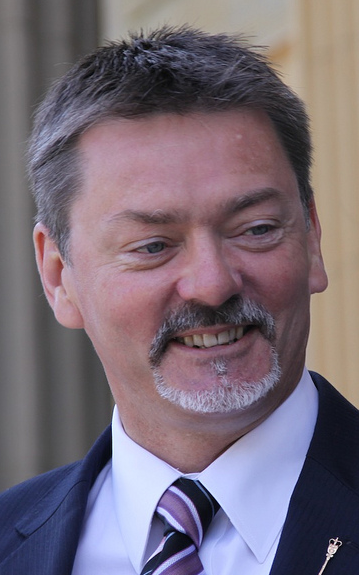
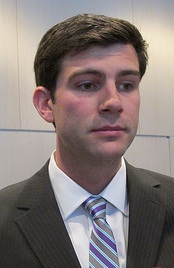
Doug Horner
Doug Horner

Premier Redford has been exceedingly strong on the national and international stage as she has travelled extensively over the past year lobbying for a Canadian Energy Strategy, the Keystone XL Pipeline, and to open new markets for Alberta’s oil sands. She appears to be less interested or willing to play the political game, which will become increasingly difficult in the face of an aggressive official opposition.

Wildrose leader Danielle Smith could have been celebrating her first year as Premier had it not been for late election bozo-erruptions that exposed an offensive social conservative element in her party. Comments about caucasian advantages and a Lake of Fire drove many moderate conservatives, liberals, and even some New Democrats, to vote PC in last year’s election.

Despite the disappointment of not defeating Alberta’s long-governing PC dynasty, Ms. Smith has grown into her role as Leader of the Official Opposition. Borrowing aggressive tactics from the federal Conservatives in Ottawa, who are organizationally tied at the hip with the Wildrose, Ms. Smith’s party is leading the most aggressive and partisan official opposition in recent memory. Her party has groomed a front-bench that dominate the media and have, in many cases, driven the government agenda from across the aisle. Rarely a week goes by where Ms. Smith, Rob Anderson, Shayne Saskiw, Kerry Towle, Bruce McAllister, or Heather Forsyth have not grabbed a headline or a prime time news story.

The Liberals, still led by former Tory MLA Raj Sherman, are still adjusting to their new role as the third-party in the Assembly after being bumped out of Official Opposition by the Wildrose. Accustomed to stealing the spotlight from the now-former Official Opposition Liberals, the four-MLA New Democrat caucus spent the past year figuring out how to play the same tricks on the Wildrose. Acclimatizing to the new political environment, Brian Mason’s NDP were overshadowed by Ms. Smith’s new team for most of last year. With some of the ‘progressive’ shine coming off Premier Redford’s Tories, the NDP are starting to find their footing again.

The Tories have broken more than a few election promises in the first year of this mandate, including pledges to balance the budget and provide stable funding for health, education, and municipalities. Despite the rough first year, Premier Redford’s Tories still have at least three years left until the next election to fulfill the promises made and mend fences with the bloc of moderate voters who saved their party from defeat one year ago today.

Categories
Alberta Politics

Fake tuition freeze flops after Redford’s $147 million budget cut.

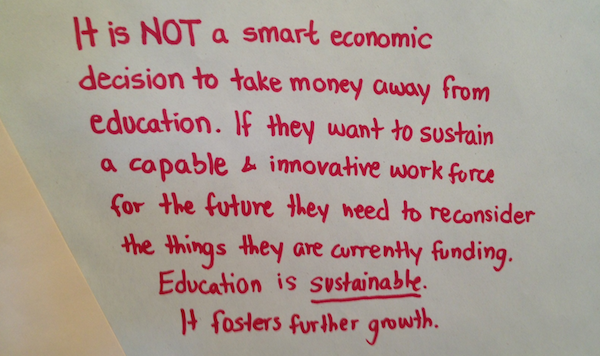
University of Alberta students penned messages to the provincial government at yesterday's #Graffiti4Govt graffiti wall.
University of Alberta students penned messages to the provincial government at yesterday’s #Graffiti4Govt graffiti wall.

“We’ve been very clear that we will not be balancing the budget on the backs of students,” Premier Alison Redford told the media at a press conference yesterday.

This statement is only partially true. The provincial government is not balancing the budget this year.

Gathered to re-announced what Deputy Premier Thomas Lukaszuk casually announced off-the-cuff last week, Premier Alison Redford and her loyal Deputy declared yesterday that the provincial government provide an extra $16.5 to post-secondary institutions to cover next year’s expected 2.5% tuition increase for students. The government has framed the move as a tuition “freeze,” but it is really a one-time subsidy to hide a fee increase, as the institutions will be implementing tuition increases regardless.

So, the good news is that students will not be paying more out of their pockets in tuition next year. The bad news is due to provincial budget cuts, class sizes will be larger and there will be fewer instructors. This is, of course, if your program has not been cancelled.

Deep cuts to the provincial government’s post-secondary education budget has led Alberta’s universities and colleges to announce staff layoffs, program cutbacks and, in some cases, complete program eliminations. Mount Royal University, Grant MacEwan, NAIT, Lakeland College, and Athabasca University have announced cuts to programs and staff that will affect the quality of education Alberta students will receive in the coming years.

University of Alberta students penned messages to the provincial government at yesterday’s #Graffiti4Govt graffiti wall.

Yesterday’s announcement, like the Deputy Premier’s focus on Campus Alberta logos and mandate letters, is meant to distract the public from the affects the deep budget cuts. The  fake tuition freeze and orders from Deputy Premier Lukaszuk that all institutions implement a three-year wage freeze in all future staff contracts, could drive a wedge between students and post-secondary staff, who have remained unusually unified in speaking against the budget cuts.

Unlike the broad-sweeping budget cuts implemented during Premier Ralph Klein‘s time in office, post-secondary education is a main target in Premier Redford’s cuts. These cuts may be an indication as to why the soft-spoken former Advanced Education Minister Stephen Khan was shuffled out of cabinet earlier this year in favour of the more aggressive and heavy-handed Deputy Premier Lukaszuk.

Alberta’s two big city mayors are united in displeasure over the cuts.

Speaking to an audience of 2,000 people earlier this month, Edmonton Mayor Stephen Mandel shamed the Redford government at his annual State of the City Address:

“When I see Edmonton’s key growth sector — our post-secondary institutions — placed in a position of fundamental uncertainty, I worry that a new era of ‘good-enough’ thinking is poised to undermine our long-term sustainable prosperity” – Edmonton Mayor Stephen Mandel (April 2, 2013)

Calgary Mayor Naheed Nenshi, an associate professor at Mount Royal University, penned an open letter to the institution’s board of governors urging them to stand up to the provincial government.

I have been on record as saying that the provincial government has made a terrible error in its post-secondary education policy – great cities need great universities and great universities need government support. No doubt these actions have made your life very difficult. However, I would encourage the leadership of MRU to stand up to the provincial government on behalf of its students, faculty, and community, rather than capitulate to the government’s bad policy. – Calgary Mayor Naheed Nenshi (April 17, 2013)

Categories
Alberta Politics

Can Stephen Mandel save Alberta’s Tories from a Wildrose win in 2016?

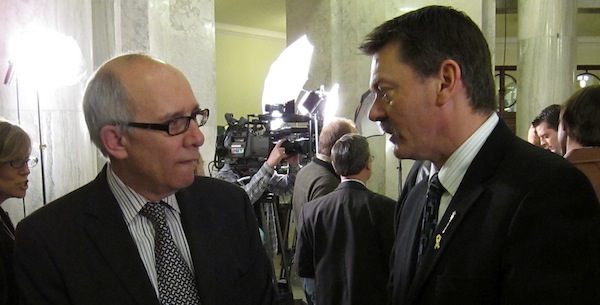
Edmonton Mayor Stephen Mandel and Finance Minister Doug Horner

Facing internal strife after a rough spring of budget cuts and deflating bitumen bubbles, Premier Alison Redford is desperately searching for political wins that will win-over Albertans in advance of the Progressive Conservatives mandatory leadership review in November.

When the Premier and her entourage hit the road for their summer Winnebago tour, they will avoid talk of unpopular cuts or broken election promises, and instead boast around the campfires and picnic tables that they were finally able to settle the long-standing labour disputes with Alberta’s teachers and doctors (and maybe a new Keystone XL Pipeline to Texas). But will this be enough?

Premier Alison Redford

Could the Tories look to Edmonton Mayor Stephen Mandel to set their party back on course?

The popular three-term mayor has yet to announce whether he will seek election later this year, and a poor showing by Premier Redford in November’s leadership review could give Mayor Mandel an opportunity to jump onto the provincial stage. As a moderate conservative with liberal social views and an independent-streak, many Tories were disappointed that Mayor Mandel sat out their party’s leadership race in 2011.

Already well-versed in municipal issues, Mayor Mandel’s recent lambasting of Premier Redford’s cuts to post-secondary education in front of a crowd of 2,000 of Edmonton’s business community has given him a topical issue that differentiates him from the current Tory leadership.

Danielle Smith Wildrose Party Alberta Election 2012
Danielle Smith

This week’s ThinkHQ Voice of Alberta online panel included questions about Mayor Mandel’s and Calgary Mayor Naheed Nenshi‘s future prospects in provincial and federal politics, fuelling speculation that supporters of the two mayors are testing public opinion.

His age, lack of experience in partisan politics, and weakness for expensive sports arenas may be reasons Mayor Mandel would not make the jump, but he would bring with him nine-years of governance experience and an extensive political organization and broad fundraising network. Mayor Mandel may not be seen as a viable long-term party leader, due to his age, but as an ‘elder-statesman’ in Alberta politics, he could serve as an experienced hand to steer the PC Party through the next provincial election.

Wildose on the move

Intent on moderating its image and flush with cash, the Wildrose Party attracted a big turnout of constituency-level organizers at its annual Leader’s Congress in Calgary earlier this month and is expecting a significant turnout at its Edmonton event on April 20.

As Leader of the Official Opposition, media-savvy Danielle Smith is sounding more moderate by avoiding issues that could alienate her from potential conservative voters who supported Premier Redford’s Tories in the 2012 election.

Serious about avoiding the mistakes that cost her party the election in 2012, Ms. Smith has toned down her skepticism of climate change and will try to avoid vouching for any future “Lake of Fire“-type candidates. While the more extreme conservatives will still be part of the Wildrose Party’s base, their activities will be more tightly controlled and relegated to the background.

At this weekend’s Leader’s Congress in Edmonton, Ms. Smith’s party will launch “Wildrose 2016 Club,” a new fundraising initiative which, presumably, is geared towards helping her party form government in the 2016 election.

Categories
Alberta Politics

Laurie Blakeman now the longest-serving opposition MLA and other #ableg milestones.

Laurie Blakeman MLA Edmonton-Centre
Laurie Blakeman

This week Edmonton-Centre Liberal MLA Laurie Blakeman was recognized in the Legislative Assembly as being the “longest-serving member to serve exclusively in opposition in Alberta’s history. Ms. Blakeman was elected on March 11, 1997 and, as Speaker Gene Zwozdesky noted, she has served continuously since that time for a total of 5,876 days over the course of five-terms.

Gene Zwozdesky
Gene Zwozdesky

Ms. Blakeman surpassed David Duggan, who served in opposition from June 28, 1926, to May 4, 1942, for a total of 5,790 days. A historical irony is that had Speaker Zwozdesky, who was first elected as a Liberal in 1993, not crossed the floor to the Progressive Conservatives in 1998, he would now own this new record.

According to my estimation, the longest-serving opposition MLA who did not serve exclusively in opposition, is Walt Buck. Mr. Buck represented Clover Bar in the Social Credit government from 1967 to 1971 and in the Social Credit opposition from 1971 until 1982, as an Independent MLA from 1982 until 1984, and as a Representative Party MLA from 1984 until his retirement from politics in 1989. Mr. Buck recently passed away.

Here are some other Alberta Legislature milestones:

Categories
Alberta Politics

Funding Edmonton’s Downtown Arena, the strange comedy of errors continues.

The strange comedy of errors that has become Edmonton’s Downtown Arena project continued this week as City Council scrambled to fill a $100 million gap in a funding plan they approved months ago.

Stephen Mandel
Stephen Mandel

Despite repeated claims by Mayor Stephen Mandel that provincial government money would fill the $100 million gap, anyone who has paid any attention over the past year will know the province had no plans to provide funding for Edmonton’s Downtown Arena project. Premier Alison Redford, Finance Minister Doug Horner, and Municipal Affairs Minister Doug Griffiths have been consistent in their public comments on the topic: “no.”

In response to the lack of never-promised funding in last month’s provincial budget, the Mayor and seven Councillors voted to withdraw a $45 million loan to be paid back through future Municipal Sustainability Initiative funding that the city could receive over the next twenty-years. In response to the decision, Edmonton Journal’s Paula Simons reminded her readers this week, “[t]he clear intent of the original council resolution was that no deal would go ahead without $100 million in new provincial money.”

Daryl-Katz
Daryl Katz

In a display of common sense against what has become Mayor Mandel’s increasingly embarrassing obsession, five Councillors – Don IvesonBen HendersonLinda SloanKerry Diotte, and Tony Caterina – voted against the motion to dedicate future Municipal Sustainability Initiative funds to the proposed Arena.

Problematic for many reasons, this decision still leaves a $55 million gap in funding and Daryl Katz – the billionaire owner of the Edmonton Oilers – said he is not interested in renegotiating the financial arrangement agreed to months ago. Mayor Mandel claims this loan will convince the provincial to fill a smaller $55 million funding gap – something the province has said it has no interest in doing.

The Municipal Sustainability Initiative was created by Premier Ed Stelmach’s government in 2007 to provide funding to municipalities for public infrastructure projects. Municipalities have discretion over how this provincial money is spent and they have typically been used to fund public transit, libraries, community halls and utility infrastructure. Using these funds to build a new hockey arena to house a privately-owned business like the Edmonton Oilers would use funds that could be used for other much-needed community infrastructure projects.

A concern for City Councillors should be that, like all funding transfers from other levels of government, there is no assurance that the Municipal Sustainability Initiative will exist over the next twenty-years. Its continued existence is based on three factors the City of Edmonton has no control over: population growth, provincial revenue, and the continued desire of provincial politicians to continue the program.

Will the provincial government change its tune and provide $55 million in direct funding? Not very likely. Mayor Mandel’s warpath against post-secondary funding cuts will have left many already unsympathetic provincial politicians now even less-willing to contribute to the project.

Also problematic for the provincial government is the ongoing is the investigation by Alberta’s Chief Elections Officer into allegations that Mr. Katz violated the Elections Finances Act by donating more than $400,000 to the Progressive Conservative Party in the 2012 provincial election (the individual donation limit is $30,000).

Categories
Alberta Politics

Bitumen bubble deflates as Redford visits Washington D.C.

Alberta Bitumen Oil Bubble
Photo may not reflect actual “bitumen bubble.”

Remember the “Bitumen Bubble?”

The “bitumen bubble” spin was unleashed by Premier Alison Redford during her January 24, 2013 televised address that claimed our province was in the midst of a fiscal crisis caused by the so-called “bitumen bubble” — the difference between the price Alberta can get for its heavy oil (Western Canadian Select) and what the world is willing to pay for Texas crude (West Texas Intermediate).

On the day of Premier Redford’s January televised address, Western Canadian Select sat at $59.95 per barrel, compared to $95.95 per barrel for the West Texas Intermediate.

Albertans were told this price gap was why our oil industry needs more pipelines and why our provincial government claimed it needed to institute financial cuts to public services, including a drastic 7% cut to post-secondary education funding.

As of April 8, 2013, Western Canadian Select sat at $82.97 per barrel, compared to $93.36 per barrel for West Texas Intermediate.

Premier Alison Redford

By some act of nature, the dreaded “bitumen bubble” has miraculously deflated.

Alas, this price increase has little to nothing to do with our long-ruling Progressive Conservative government. Commodity prices are determined by international markets beyond the control of any individual government or ambitious politician.

No new pipelines have been built in the meantime, but Premier Redford, along with International Relations Minister Cal Dallas and Environment Minister Diana McQueen, traveled to Washington D.C. this week to lobby for the approval of the TransCanada Keystone XL pipeline that would carry crude oil and bitumen from Alberta to refineries dotting Texas’ Gulf Coast.

I expect the Premier has left the words “bitumen bubble” out of any speeches she plans make while visiting the American capital.

During her speech at the prestigious Brookings Institute yesterday, Premier Redford argued the debate over the Keystone XL Pipeline has misled Americans about Canada’s oilsands. The Premier promoted Alberta’s new proposed carbon tax, defended the province’s environmental record, and championed the investment in two major Carbon Capture and Storage project (she did not mention that two other major projects have been cancelled due to poor economic predictions).

Making a strong case for Alberta’s environmental record, Premier Redford’s economic arguments fell flat. She claimed that the Keystone XL Pipeline would create 75,000 jobs for Americans, despite the fact that a U.S. State Department reported the number of new permanent jobs could be as few as thirty-five once the pipeline is complete.

Premier Redford also argued that the Keystone XL Pipeline would lessen America’s dependance on countries like Venezuela and Saudi Arabia for oil imports. As the proposed pipeline would end at major Texas ports, it is widely suspected that the corporations that would own the Alberta oil refined in Texas could easily ship it overseas to China or India, rather than sell it in the United States or Canada.

Premier Redford’s fact-based talk was heavy in statistics, which unfortunately will have little effect on a national discussion about the environment and economy that is driven heavily by emotional arguments on both sides of the debate (as demonstrated by the hecklers at her speech). At least Albertans can be proud our leaders have come a long way since Premier Ralph Klein compared the causes of today’s climate change problems to “dinosaur farts” sixty-million years ago.

Sitting at 29% approval in a recent Angus-Reid survey, Premier Redford is searching for a win in the American capital that could boost her popularity at home. Even if the Keystone XL Pipeline is approved, there will be no evidence that Premier Redford’s lobbying was the reason for its success. That decision will be made by President Barack Obama.

———–

The Wall Street Journal:

President Obama hit California for some fundraising this week, including stops with various billionaires who fervently oppose the Keystone XL pipeline. The visit had the virtue of showing how Mr. Obama is cross-pressured between his superrich green friends who don’t need to worry about a job and the blue-collar types who wouldn’t mind laying oil pipe for $25 an hour.

Categories
Alberta Politics

Spreadsheet: Tracking Alberta political party fundraising from 2004 to 2012.

Following yesterday’s release of political donations disclosure reports submitted to Elections Alberta, I thought it would be interesting to look at the recent history of political donations in Alberta. The disclosure reports are available for public consumption in difficult to search pdf files on the Elections Alberta website.

The spreadsheet below includes reported donations to Alberta’s political parties from the 2004, 2008, and 2012 provincial elections and annual disclosures from 2010, 2011, and 2012.

Alberta Political Party Donations 2004-2012

Categories
Alberta Politics

Wildrose raised big cash in 2012, Tories fell behind.

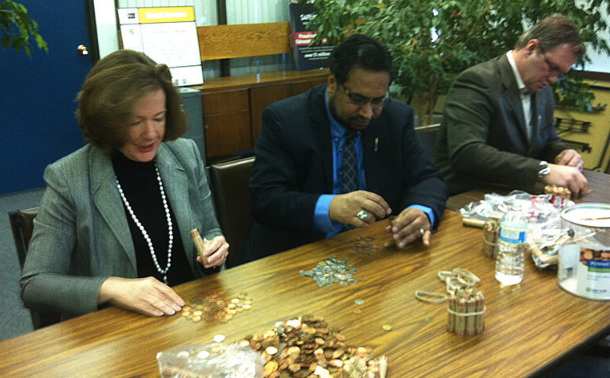
Falling behind in fundraising, Premier Alison Redford and MLAs Peter Sandhu and Steven Young count their pennies.

Unofficial political donation records published by Elections Alberta yesterday show that Premier Alison Redford‘s Progressive Conservative Association is not in the robust financial situation its leaders are accustomed to over the past four-decades in office.

At least not in 2012, when the Tory Party was eclipsed by its main rival in fundraising amounts.

Danielle Smith Wildrose Party Alberta Election 2012
Danielle Smith

Danielle Smith‘s Wildrose Party smashed political fundraising records in 2012, raising an incredible $5,916,565 over the course of the year. Contributing to the $5 million figure was $3,122,670 of revenue reported from the 2012 election and $2,793,895 raised outside the campaign period. In their non-campaign period, the Wildrose Party recorded a $175,133 deficit and $405,361 in net assets.

While the Wildrose Party attracted large donations from medium-sized oil and pipeline equipment companies, the large majority of that party’s donations came from individual donors. This trend suggests the Wildrose has harnessed a fundraising machine similar to the Conservative Party of Canada. With close ties to the federal party, it is no surprise that the Wildrose has chosen to mimic this successful fundraising goal.

Premier Alison Redford

The Conservatives under Prime Minister Stephen Harper were the first federal political party in recent history to succeed in effectively cultivating a large base of individual donors to fund their political operations. This energized base of individual donors helped free the Tories from having to depend on the large corporate donations that for decades fuelled the Liberal Party of Canada.

The test for the Wildrose Party will be whether they can sustain this level of fundraising in the years between election periods.

Meanwhile, Alberta’s PC Party reported a $3,055,621 deficit after last year’s election that had been whittled down to $794,767 in liabilities at the end of 2012. Relying heavily on corporate donations, the Tories raised $1,607,581 during the 2012 election and $2,331,592 in the non-campaign period.

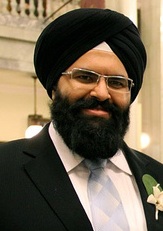
Manmeet Bhullar
Manmeet Bhullar

The Tory fundraising numbers from the 2012 election are lower than expected and are somewhat misleading as many Tory candidates raised astonishing amounts of funds on their own accord. For example, Calgary-Greenway Tory Manmeet Bhullar‘s campaign spent $133,294, Fort McMurray-Conklin Tory Don Scott‘s campaign spent $110,955.44, Edmonton-Whitemud Tory cabinet minister Dave Hancock‘s campaign spent $121,233.35, and Calgary-West Tory candidate Ken Hughes‘ campaign spent $111,796.33.

Despite the old saying that Alberta’s PCs strived to always have enough money in their coffers to run two back-to-back election campaigns, the party is struggling with a smaller donor base and growing debt wracked up in last year’s election.

Brian Mason‘s New Democrats reported impressive revenue of $1,380,659 outside the campaign period in 2012, but remain strapped with a $554,883 debt from previous election campaigns. Raj Sherman‘s Liberals reported $478,795 in revenue in the non-election period and a $30,015 surplus in funds at the end of 2012.

Categories
Alberta Politics

Mayor Mandel on the warpath, keeps re-election plans secret.


Yours truly, community organizer Michael Walters and Mayor Stephen Mandel at the Mayor's campaign headquarters during the 2010 election.
Yours truly, community organizer Michael Walters and Mayor Stephen Mandel at the Mayor’s campaign headquarters during the 2010 election.

Stephen Mandel is not ready to announce whether he will run for a fourth-term as Edmonton’s Mayor.

Speaking to a crowd of more than 2000 people at his annual state-of-the-city address to the Chamber of Commerce, Mandel avoided the topic of his political future, instead taking aim at Premier Alison Redford’s Progressive Conservatives by criticizing recent deep cuts to post-secondary education budget.

Mayor Mandel also called out the Tories for their lack of commitment to the promised City Charters and cuts to municipal infrastructure funding. It was a big shift for a Mayor who has spent his time in office influencing his provincial counterparts behind the scenes, rather than through the media.

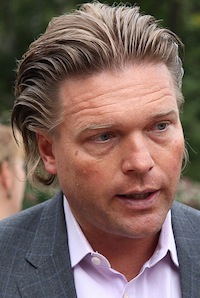
Thomas Lukaszuk
Thomas Lukaszuk

The always-eloquent Deputy Premier Thomas Lukaszuk was in the audience at the Mayor’s announcement and responded by telling the media that, “I don’t know who pissed into his corn flakes…” He might be #2 in the halls of the provincial legislature, but Minister Lukaszuk was vastly outnumbered in that banquet hall yesterday afternoon.

For all his faults, Mayor Mandel is still incredibly popular among Edmonton’s business community – a powerful constituency in the electoral coalition that re-elected the Tories in 2012.

With the Mayor on a new warpath, political watchers who were expecting the Mayor to announce his plan to retire in yesterday’s speech will have to wait (perhaps four more years if he decides to run again).

If Mayor Mandel decides to retire, this October’s vote will be the first mayoral election since 1968 without an incumbent or interim mayor on the ballot. Edmontonians have witnessed considerable growth in their city and progress on projects like downtown redevelopment and public transit expansion since he became Mayor in 2004. He will be a hard act to follow.

Don Iveson
Don Iveson

Mayor Mandel’s potential retirement has sparked wild-rumours and serious-speculation about who could run to replace him. While none have officially declared their candidacy, all eyes could soon focus on the handful of City Councillors who could stand to become the next Mayor of Edmonton.

As an underdog candidate in the 2007 election, Don Iveson surprised political watchers when he unseated high-profile Councillor and past mayoral candidate Mike Nickel in south Edmonton’s Ward 5. Since then, Councillor Iveson has been one of Council’s most well-spoken and thoughtful voices on issues ranging from smart growth to waste management. His role as chair of the Capital Region Board’s Transit Committee will have given him an opportunity to understand the broader needs of Edmonton’s neighbours.

Don Iveson represents a new generation of politically engaged Edmontonians who are passionate about defining Edmonton as a strong economic and creative hub in Canada.

Karen Leibovici
Karen Leibovici

A popular and hard-working representative, Karen Leibovici is one of Edmonton’s longest serving politicians. She began her elected career as a Liberal MLA representing the Edmonton-Meadowlark constituency in 1993 and was elected to City Council in 2001. While she once wanted to lead Alberta’s Liberal Party, her politics have tended to be more conservative on civic issues.

Councillor Leibovici is currently finishing her term as the President of the Federation of Canadian Municipalities, the national lobby group for Canadian municipalities.

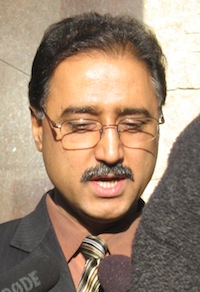
Serving his second-term representing Mill Woods, Amarjeet Sohi is a consummate retail politician and community advocate. On Council, he is a passionate voice for an area of Edmonton that has been traditionally underrepresented in the halls of power. A former representative with the Amalgamated Transit Workers Union, which represents Edmonton Transit Service staff, Councillor Sohi is one of the most down-to-earth politicians you will find in this city.

Amarjeet Sohi
Amarjeet Sohi

First-term Councillor and former Edmonton Sun reporter Kerry Diotte has made his mark over the past two years as City Council’s resident contrarian on issues ranging from bike lanes to the proposed downtown arena. Tapping into widespread frustrations about the state of city roads, Councillor Diotte recently launched the gimmicky “hole-y-cow” contest to encourage Edmontonians to report potholes for a chance to win a $500 gift certificate.

While he has been outspoken critic on city council, it is sometimes difficult to figure out what vision Councillor Diotte actually has for Edmonton.

Whether these Councillors run for Mayor in October depends on many factors, including the big question of whether Mandel will decide to seek re-election. Following yesterday’s speech, we may have to wait a while for Mandel to give us an answer to that big question. Stay tuned.

Categories
Alberta Politics

Ralph Klein’s recipe for Oriental Hoisin Chicken (from a 1995 Cookbook).

Former Premier Ralph Klein, reluctantly doning a chef's hat.
Former Premier Ralph Klein, reluctantly doning a chef’s hat.

Since Ralph Klein passed away last week, numerous people have emailed me with their stories about his time politics and reactions to legacy in Premier.

The responses varied from loving to hostile, but easily the oddest email I received over the weekend was from a former Progressive Conservative constituency association president, who sent me an excerpt from a limited-edition “Ralph’s Team Family Favourite Recipes” cookbook that were sold at a PC Party fundraiser in 1995.

The cookbook included the favourite recipes of Tory cabinet ministers, backbench MLAs, party activists, and the Premier himself. Here is then-Premier Klein’s submission to the cookbook:

ORIENTAL HOISIN CHICKEN
Premier Ralph Klein, MLA Calgary Elbow

4 chicken breasts or legs
1/2 c Hoisin sauce
2 T Ketchup
2 T Soya sauce
2 T freshly squeezed lemon juice
2 crushed garlic cloves
Oil grill and preheat barbecue. Remove skin from chicken, if you wish. Place each chicken part on a piece of heavy foil large enough to securely wrap it.

Stir remaining ingredients together. Spoon about 2 T. of sauce over each piece of chicken. Bring long edges of foil together, fold over several times and seal ends. Press foil down to form a flat packet.

Place packets on grill about 3 inches above hot coals and barbecue for 45 minutes, turning 2 – 3 times.

Remove packet from grill. Open and pour juice into a bowl. Brush chicken with some of remaining Hoisin mixture and place on grill. Barbecue, turning and basting often, until golden brown or richly glazed, about 5 to 7 minutes. Watch carefully to avoid burning. Stir any remaining Hoisin mixture with some of chicken juices as a dipping sauce.

Categories
Alberta Politics

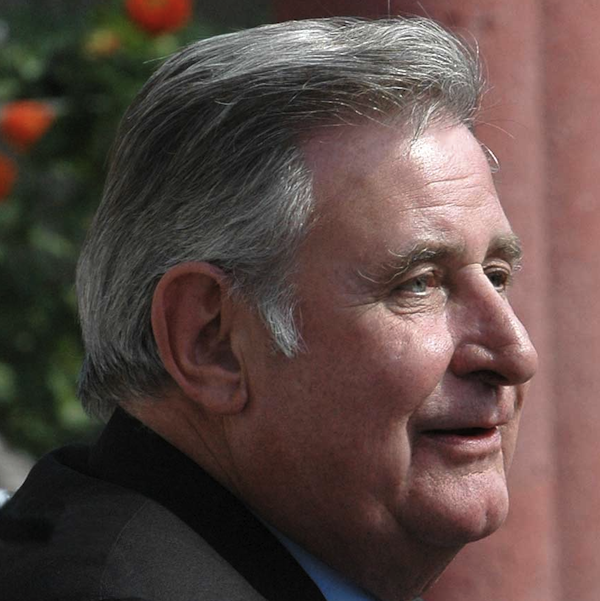
Ralph Phillip Klein (1942-2013).

Ralph Klein
Ralph Klein

Various news media are reporting that Ralph Klein has passed away at the age of 70. Mr. Klein served as Mayor of Calgary from 1980 to 1989 and Premier of Alberta from 1992 until his retirement from politics in 2006.

Despite leading the Progressive Conservatives to form four majority governments – in 1993, 1997, 2001, and 2004 – his own party turned against him in a 2006 leadership review. He announced his resignation shortly afterward.

He had suffered from numerous ailments, including temporal dementia and chronic obstructive pulmonary disorder, since his retirement.

Here is some coverage of former Premier Klein’s passing:

Colby Cosh: Ralph Klein, R.I.P.: the deceptive shape of a shadow

Graham Thomson and Tony Seskus: Ralph Klein was unconventional, controversial, entertaining – and often underestimated

CBC: Alberta’s Ralph Klein dead at 70

Toronto Star: Former Alberta Premier Ralph Klein dies

Globe and Mail: Ralph Klein, long-time and colourful Alberta premier, has died

Categories
Alberta Politics

Universities, students and staff push back against post-secondary budget cuts.

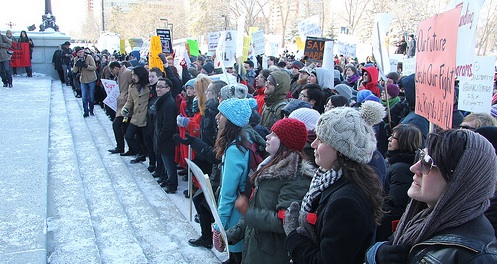
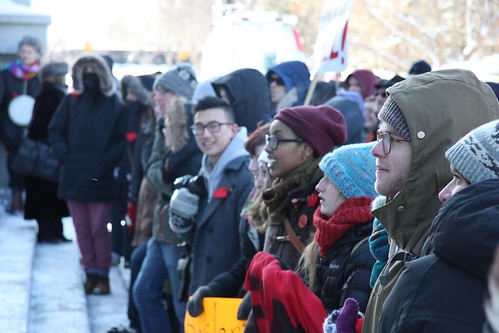
More than 600 students and staff from the University of Alberta rallied against budget cuts in front of the Alberta Legislature.

“You don’t want to have five mediocre engineering schools. You’re better off having two really good engineering schools. There’s no doubt about it.”

And on that note, Deputy Premier and Advanced Education Minister Thomas Lukaszuk kicked off his overhaul of Alberta’s Post-Secondary Education system.

Thomas Lukaszuk
Thomas Lukaszuk

It should be noted that there are only two degree-granting university-level engineering schools in Alberta (some of the smaller universities have transfer programs). Unlike the Deputy Premier, I am not in a position to comment on the mediocrity of Alberta’s engineering schools.

After recently returning from a long-scheduled personal trip to Vietnam, the Deputy Premier is faced with an uproar from students, faculty, and school administrations facing the reality of a 7% cut to Alberta’s Advanced Education budget. The budget cuts, along with government plans to harmonize institutional roles, has lead some academics to worry that their autonomy could be put at risk.

Last week, more than 600 students and staff marched from the University of Alberta to to the Legislature to rally against the budget cuts. Organizing under the banner of the ‘Coalition for Action on Postsecondary Education‘, or CAPSE, students are planning for actions to protest against the budget cuts.

Demonstrating uncharacteristic independence for a group of provincial appointees, the University of Alberta Board of Governors sent an open letter to Premier Alison Redford, warning of the consequences of the cuts. The letter was signed by governors, including board chairman Doug Goss, a former senior Progressive Conservative Party official.

Here is an excerpt from the letter:

“…we must go on the record as being deeply concerned that the recent budget decision of the provincial government to cut the university’s funding by more than seven per cent will have a dramatic effect on the progress that the U of A has made in reaching its potential, both as a research and a teaching institution.

It is difficult to imagine the detrimental effect that cutting more than $43 million from our annual budgetthis year alone will have on our students, who are the critical next generation in this province. The sameis true of our faculty, who lead the teaching and research initiatives that can help position this province as a global leader on the issues of greatest concern in the 21st century. Staff members at our university who support our students and faculty also will be deeply affected.”

Categories
Alberta Politics

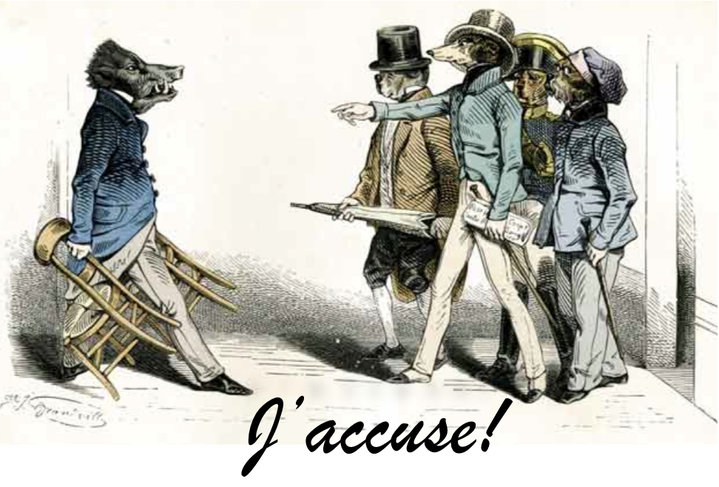
J’accuse! Thomas Mulcair’s treason and the Keystone XL Pipeline.

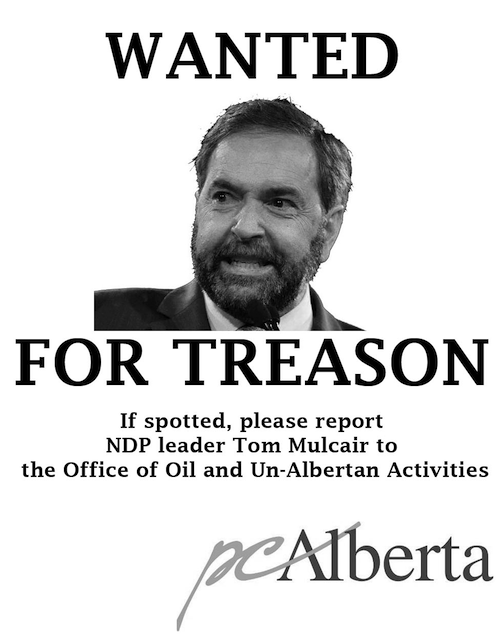
"Treason" was one of the accusations used against NDP leader Thomas Mulcair after be voiced his opposition to the Keystone XL Pipeline in Washington D.C.
“Treason” was one of the accusations used against NDP leader Thomas Mulcair after be voiced his opposition to the Keystone XL Pipeline in Washington D.C.

The rhetoric is running high this week with President Barack Obama expected to soon decide the fate of the controversial TransCanada Keystone XL Pipeline.

In Washington D.C. last week, federal NDP leader Thomas Mulcair criticized the pipeline that would ship bitumen from Alberta’s oilsands to refineries in Texas. Mr. Mulcair also took the opportunity to criticize the deconstruction of Canada’s environmental regulations by Prime Minister Stephen Harper‘s Conservative government and told the media that the pipeline would export jobs from Cnaada and would pose a threat to our country’s energy security. Mr. Muclair’s treasonous words were printed in the National Post:

“According to object studies, Keystone represents the export of 40,000 jobs and we think that is a bad thing for Canada,” Mulcair said in an interview. “We have never taken care of our energy security. We tend to forget that a 10-year supply to the U.S. is a 100-year supply to Canada. We are still going to need the energy supply to heat our homes and run our factories, whether it comes from the oilsands or it comes in the from natural gas. Fossil fuels are always going to be part of the mix.”

NDP leader Thomas Mulcair

If you do not find these words abhorrent and treasonous, you may be surprised by the whiplash reaction from Mr. Mulcair’s political opponents.

In Alberta, where a political consensus is tilting towards approval of the pipeline, Premier Alison Redford took to the floor of the Legislative Assembly to attack Mr. Mulcair and NDP leader Brian Mason for their opposition to the pipeline.

Treason” was the word Mark Cooper, the Intergovernmental Affairs Minister’s Press Secretary, used on twitter this week to describe the NDP position on the pipeline. While his tweet should be taken somewhat in jest, that word set the tone for the pipeline debate this week.

On the floor of the Assembly, Energy Minister Ken Hughes criticized the NDP by boasting about having created a  “coalition of the willing” in support of the Keystone XL pipeline. Minister Hughes’ comment was an unfortunate reference to the American invasion of Iraq in 2003, which marked its ten year anniversary this week.

Ken Hughes
Ken Hughes

Mr. Mason was more than happy to pull quotes from recently deceased former Premier Peter Lougheed, who voiced his opposition to the Keystone XL pipeline in favour of refining bitumen in Alberta. This happens to be close to the NDP position.

This is not a clear left/right issue. Prominent labour unions, including the AFL-CIO in the United States, have voiced their support for the pipeline for the jobs it would create in the bitumen refineries in Texas. Pipeline critics, like Alberta Federation of Labour‘s Gil McGowan, argue that refining oilsands bitumen in Alberta would create more jobs in-province.

Also joining the debate is former Premier Ed Stelmach, who spoke in favour of local refining today telling the Edmonton Journal “…it is in our interest to promote as much pipeline capacity as possible to move products to existing markets, and of course, new markets. But to close that differential in price, we need to sell a higher-value product.”

Premier Alison Redford

To the east in Saskatchewan, the partisan divide over the Keystone XL Pipeline in not so sharp. Premier Brad Wall, the province’s most popular leader since Tommy Douglas, has trumpeted the benefits the Keystone XL Pipeline could bring to Canadian and American economies. His main opponent, newly selected Saskatchewan NDP leader Cam Broten, has broken from his NDP colleagues and given his timid support for the pipeline’s construction.

The Alberta government purchased a $30,000 advertisement in the Sunday edition of the New York Times. While widely read, the ad was meant to respond to an anti-Keystone XL editorial widely circulated on the internet. The factual arguments made by the Alberta Government in the ad will likely fall flat in this highly emotional debate. While the ad generated significant earned media in Alberta, this one-time ad-buy will likely have little impact on the large debate happening in the United States.

Recognizing that Conservative Parties are seen by many Canadians as ‘weak’ on the environmental issues related to pipeline construction, the Conservative movement is putting significant energy toward finding the key messaging needed to convince Canadians otherwise.

At last week’s Preston Manning Networking Conference in Ottawa, speakers presented their analysis of the Oilsands Pipeline debate. As blogger David Climenhaga wrote, “the most creative minds in Canadian conservatism are applying their brainpower to moving forward pipeline projects – extending from Alberta, the centre of their political and economic universe, to all points of the compass.”

More on this later.

Categories
Alberta Politics

Alberta Liberal merger with federal Liberals an idea worth considering.

Raj Sherman Alberta Liberal MLA Leader
Raj Sherman

Provincial Liberal leader Raj Sherman wants his party to work more closely with the federal Liberal Party.

Conventional wisdom would inform us that the Alberta Liberals should always do everything in their power to distance themselves from their federal cousins, who remain tainted in the province after a long-string of historical grievances and well-curated myths.

But has distancing the two parties helped either party?

With Justin Trudeau expected to become leader of the Liberal Party of Canada in the next few months, could a second-wave of Trudeaumania help boost support for the provincial Liberals in Alberta?

Since the 1970s, the two parties have been officially independent with varying degrees of unofficial cooperation and confrontation. Both parties have achieved limited success in pockets of the province at certain points over past twenty years, but support for both parties has dwindled over the past decade. The Liberal presence shrunk to five MLAs in last year’s provincial election and the federal Liberals last successfully elected a candidate to Parliament from Alberta in the 2004 election .

Provincial Liberal support in Alberta:
2001 election: 276,854 votes2012 election: 127,645 votes.
Federal Liberal support in Alberta:
2000 election: 263,008 votes, 2011 election: 129,310 votes.

If a merger with the NDP, Alberta Party, and Greens, as has been suggested by Calgary-Buffalo Liberal MLA Kent Hehr, is unpalatable to Dr. Sherman, perhaps he could be convinced a merger with his party’s federal namesake would not be a bad idea.

Sharing their limited resources, as the provincial and federal New Democratic Party do officially and the Wildrose Party and Conservative Party have done unofficially, could provide stability in membership, fundraising, and organization for the two Liberal Parties in Alberta. A merger could also cut costs on duplication of resources (the two parties currently operate separate offices located opposite each other on Edmonton’s 124th Street).

Harvey Locke Liberal Calgary-Centre By-Election
Harvey Locke

The two parties already share many members and candidates are frequently seen listed on the ballot under both party banners.

There are also no shortage of former Liberal MLAs who have tried to kickstart a career in Ottawa, though all of them unsuccessful. Liberal MLAs Ken Nicol and Debby Carlson ran as federal Liberals in the 2004 election and Sue Olsen and Frank Bruseker stood in the 2000 federal election. Former party leaders Grant Mitchell and Nick Taylor were appointed to the Senate on the advice of federal Liberal Prime Ministers.

Even Dr. Sherman was a member of the federal Liberals before he was elected as a Progressive Conservative MLA in 2008 (he supported Gerard Kennedy in the 2006 federal Liberal leadership contest).

Calgary-Centre a spark of hope for the Liberals.

Liberal Harvey Locke surprised political watchers last year when he placed only 1158 votes behind Conservative Joan Crockatt in the hotly contested Calgary-Centre by-election.

Perhaps the results were a fluke, but they give the federal Liberals a sign that many voters in Alberta’s urban centres are becoming more receptive to a moderate non-Conservative alternative in Ottawa.

Categories
Alberta Politics

University students and staff rally against Advanced Education cuts.

Hundreds of University of Alberta students and staff marched to the Alberta Legislature to protest cuts to the Advanced Education budget.

Hundreds of students and staff from the University of Alberta marched to the Alberta Legislature yesterday to protest the 7% cut to the Advanced Education budget. Students and staff were joined by Liberal leader Raj Sherman, NDP MLA Rachel Notley, and NDP MP Linda Duncan.

In response to the provincial budget cuts, University of Alberta President Indira Samarasekera has asked each Faculty Dean to submit, by the end of March, a plan that will involve a 20% budget reduction for the 2014-2016 period.

Similar cuts are expected to take place at Alberta’s other Universities and Colleges.

See more photos here.