Categories
Alberta Politics

Notley NDP make pigs fly again with support for Climate Leadership Plan

When the Alberta government released its Climate Leadership plan in November 2015, I said that Premier Rachel Notley and Environment and Parks Minister Shannon Phillips had made pigs fly by uniting a coalition of industry leaders and environmental leaders in our province.

Defying expectations, or making pigs fly, might be a strength of Ms. Phillips. Today she brought together another impressive coalition of municipal, industry and environmental leaders to support Bill 20: The Climate Leadership Implementation Act (see list below).

Bill 20 would legislate Alberta’s carbon levy and carbon levy rebate, ensure revenue from the carbon levy is invested in addressing climate change, and establish Energy Efficiency Alberta. As economist and Climate Change Panel chairman Andrew Leach pointed out on Twitter today, carbon pricing has wide support from economists from N. Gregory Mankiw to Paul Krugman.

Since the Climate Leadership Plan was released last year, we have seen groups like Norquest College and non-profits like Iron & Earth step up to help with the transition to renewable energy.

After years of inaction by the old Progressive Conservative government, it is refreshing to have a government that believes in climate change and has actually presented a policy to address it.

The Alberta NDP’s climate change plan defies supporters of the much-maligned LEAP Manifesto, which was spearheaded by more radical elements of the federal NDP at that party’s recent convention in Edmonton. By defying the LEAPers, Ms. Phillips and Ms. Notley are demonstrating a clear difference between an NDP government that takes action and an NDP opposition that just talks big.

Bill 20 will spark some interesting debate on the floor of the Alberta Legislature.

Ms. Notley has fended off the radical environmentalists in her party and presented a sensible policy and bill. How will the opposition respond?

Alberta Party leader Greg Clark responded with a list of questions that I expect he will ask Ms. Phillips during debate.

Wildrose Party finance critic Derek Fildebrandt fell into predictable Canadian Taxpayer Federation hysteria, describing the carbon levy as “an assault on taxpayers and families.”

Wildrose MLAs will likely focus their energy attacking the carbon levy and calling for more oil pipelines, but will the official opposition defy the radical climate change deniers in their own ranks and present a policy alternative to the NDP’s Climate Leadership Plan? Will Brian Jean‘s Wildrose Party join the debate with a policy alternative beyond ‘we will repeal whatever the NDP does on climate change‘?

The NDP have told their radicals to take a hike. Can the Wildrose do the same?


List of supporters of Bill 20: The Climate Leadership Implementation Act

•Karen Sorensen, Mayor, Town of Banff

•John Borrowman, Mayor, Town of Canmore

•Don Iveson, Mayor, City of Edmonton

•Jesse Row, Executive Director, Alberta Energy Efficiency Alliance

•Mark Ramsankar, President, Alberta Teachers’ Association

•Scott Thon, President and CEO, AltaLink

•Peter Tertzakian, Chief Energy Economist & Managing Director, ARC Financial Corporation

•Grant Arnold, President and CEO, BluEarth Renewables

•Joe Vipond, Physician, Canadian Association of Physicians for the Environment

•Robert Hornung, President, Canadian Wind Energy Association

•Michael McSweeney, President and CEO, Cement Association of Canada

•Brian Ferguson, President and CEO, Cenovus

•Kathy Bardswick, President and CEO, The Co-Operators

•Ross Hornby, Vice-President, Government Affairs and Policy, GE Canada

•Cory Basil, Vice-President of Development, EDF EN Canada Inc.

•Kevin Lecht, Business Manager, The International Association of Heat and Frost Insulators and Allied Workers local 110 (Alberta)

•Robert Walker Vice-President, ESG Services & Ethical Funds, NEI Investments

•Ed Whittingham, Executive Director, Pembina Institute

•Rob Harlan, Executive Director, Solar Energy Society of Alberta

•Sean Collins, Co-Founder, Student Energy

•Steve Williams, Chief Executive Officer, Suncor

Categories
Alberta Politics

Why there is unlikely to be a Conservative Party of Alberta anytime soon

As prospects of a merger of Alberta’s two estranged conservative parties appear more and more unlikely, Wildrose Party leader Brian Jean has suggested that his party may consider rebranding with a name change before the 2019 election.

Postmedia has reported that Mr. Jean’s party has registered the names Alberta Conservative Party Association and Conservative Party of Alberta Association with the province’s societies registrar.

While these names could help the Wildrose Party further align with the Conservative Party of Canada in the eyes of Albertans, there is a possibility the name change could be denied by the Chief Elections Officer because the new name could likely be confused with the other conservative party, the Progressive Conservative Association of Alberta.

Section 7 (3.1) of the Election Finances and Contributions Disclosure Act states that:

If a registered party changes its name, the Chief Electoral Officer shall not vary the register accordingly if, in the Chief Electoral Officer’s opinion,

(a) the proposed name or the abbreviation of the name so nearly resembles the name or abbreviation of the name of a registered party as to be likely to be confused with the name or abbreviation of that registered party,

(b) the proposed name was the name of a registered party whose registration was cancelled or whose name was changed since the last general election, or

(c) the proposed name or abbreviation is unacceptable to the Chief Electoral Officer for any other reason.

Barring the dissolution of the current PC Party, it might be unlikely that a separate Conservative Party would be allowed to register with Elections Alberta.


The PC Party was officially registered as the Provincial Conservative Association of Alberta until when it added “Progressive” to its name in 1959, to conform with a similar change made by the federal party in 1942.

The Wildrose Party was known as the Alberta Alliance Party (a nod to the Canadian Alliance) from 2002 until 2008 when it became the Wildrose Alliance Party after merging with a group of disgruntled Alberta Alliance members who had formed the Wildrose Party of Alberta in 2007 (the first version of the Wildrose Party was never officially registered with Elections Alberta). According to Elections Alberta, the party’s name was formally changed to the Wildrose Party effective February 3, 2015.

Categories
Alberta Politics

1 year later – has the NDP kept their election promises to improve ethics in government?

Days after the Alberta New Democratic Party was elected with a majority government in 2015, I wrote a column outlining the promises made in the party’s election platform to improve ethics in government. One year later, here is a look at those six platform points and whether the NDP have kept their promises to implement them.

(2.1) We will ban both corporate and union donations to political parties.

This was the first law passed by the NDP after they formed government. Introduced by Justice Minister Kathleen Ganley, Bill 1: An Act to Renew Democracy in Alberta banned corporate and union donations to provincial political parties in Alberta. The received unanimous support in the Legislature and retroactively came into effect on June 15, 2015.

It is banned provincially and federally but it is still legal for corporations and unions to make financial contributions to municipal election candidates in Alberta. There is still time for the NDP to amend the Local Authorities Elections Act to ban these donations before the October 2017 municipal elections.

(2.2) We will make infrastructure decisions and priorities transparent with a public “infrastructure sunshine list,” so that funding goes to build the most important projects rather than to promote the political fortunes of the PCs.

A promise made by Premier Rachel Notley at a campaign stop in Calgary on April 17, 2015. An NDP press release at the time said that “[t]he list will indicate how projects are prioritized, including the standards used to make the decisions, and will identify when and how changes are made to those priorities.”

Infrastructure Minister Brian Mason said in July 2015 that a list would be released soon but by November 2015 he told reporters that an “artificial order” of priority might create too much animosity between municipalities. The NDP still have until 2019 to implement this promise but I suspect they have decided the political blowback from municipal governments and school boards would cause more trouble than it is worth for the provincial government.

(2.3) We will strengthen the Conflict of Interest Act to prevent MLAs from using their position to benefit their own financial interests or that of political friends, and to strengthen cooling-off periods for former political staff. We will also expand the application of the Act to apply to all senior staff of all of our province’s agencies, boards and commissions.

The Select Special Committee on Ethics and Accountability was created in 2015 to review the Conflicts of Interest Act, the Election Act, the Election Finances and Contributions Disclosure Act and the Public Interest Disclosure (Whistleblower Protection) Act.

The committee is chaired by Fort Saskatchewan-Vegreville NDP MLA Jessica Littlewood and is composed of 10 NDP MLAs, 5 Wildrose MLAs, and one Progressive Conservative, Liberal and Alberta Party MLA. The committee is expected to submit its recommendations for amendments to the Acts in September 2016. A motion introduced by Alberta Party MLA Greg Clark to extend the committee’s mandate until March 2017 failed last week.

(2.4) We will amend the Elections Act to prohibit MLAs from using government resources during elections and we will ensure the Chief Electoral officer can effectively investigate breaches of the Act.

This could be included in the Special Select Committee for Ethics and Accountability recommendations expected to be completed in September 2016. A private members’ bill introduced by Drumheller-Stettler Wildrose MLA Rick Strankman in 2016 that would ban government advertising during election periods was referred to this committee.

(2.5) We will extend the sunshine list to include our province’s agencies, boards and commissions.

Bill 5: Public Sector Compensation Transparency Act was introduced by Ms. Ganley on November 5, 2015 and came into effect on December 11, 2015. This bill extended the sunshine list to require compensation disclosure for certain employees who work for agencies, boards and commissions, public post-secondary institutions, Offices of the Legislature and provincial health authorities.

(2.6) We will respect the independence of all-party committees, and will work to respect and maintain the independence and adequate funding of the Officers of the Legislature, such as the Auditor General.

This is a perennial pledge made by opposition politicians that in practice is difficult to prove when the party forms government. When the NDP won a majority government on May 5, 2015, they also won  a majority majorities on the all-party committees of the Legislature. Like all majority governments, they are using their majority to push forward their agenda at the committee level.

As long as our legislative system is dominated by the government leadership it is unlikely that MLAs committees will actually be independent of influence from the Premier’s Office. There is little evidence to suggest that MLA committees are now controlled any more or any less than they were under the previous PC Party government.

Funding for the eight Offices of the Legislature has decreased by $26,300,000 from $152,407,000 in 2015-2016 to $126,107,000 in 2016-2017, largely due to a decrease in funding for the Office of the Chief Electoral Officer (because the next election is not expected to be held until 2019).

Ethics Commissioner Complaints

Responding to a request by Rimbey-Rocky Mountain House-Sundre Wildrose MLA Jason Nixon, Ethics Commissioner Marguerite Trussler investigated allegations that two fundraisers attended by Ms. Notley were in violation of the Conflicts of Interest Act. Ms. Trussler’s report concluded that Ms. Notley was not in breach of the act with respect to either of Mr. Nixon’s complaints.

Questions have been raised about the results of another investigation made by Ms. Trussler into allegations that former PC Finance Minister Robin Campbell had violated the Conflicts of Interest Act through his activities as President of the Coal Association of Canada. Political strategist Corey Hogan penned a letter to Ms. Trussler asking for clarification of how she interpreted the Act in this investigation.

Categories
Alberta Politics

Former AUPE president Dan MacLennan now an Alberta Liberal VP

The Alberta Liberal Party held its annual general meeting in Red Deer this weekend where the party elected its executive officers, including a name that will be familiar to government-watchers in Alberta.

While many union leaders have lined up to support the governing New Democratic Party, according to the Liberal Party’s Facebook page former President of the Alberta Union of Provincial Employees Dan MacLennan has been elected as the party’s new Vice-President Constituencies.

Known as ‘Buff‘ by those in the labour movement, the former jail guard served as president of Alberta’s largest union from 1997 to 2006. He led AUPE’s recovery from the brutal public sector job cuts of the mid-1990s and doubled the union’s membership over the course of his nine years as president.

Popular with members and the media and infamous for his friendly relationship with premier Ralph Klein, Mr. MacLennan’s time as president was not without controversy. Raids against other unions led to AUPE’s suspension from the National Union of Public and General Employees in March 2001. The union formally split from the mainstream labour movement in 2006 when it disaffiliated with NUPGE and by association the Canadian Labour Congress and the Alberta Federation of Labour.

In 2009, Mr. MacLennan was one of the eight members of the Progressive Conservative government’s advisory committee on health care policy and, in 2011, it was speculated on David Climenhaga‘s excellent AlbertaPolitics.ca blog that he might be a possible candidate for the Alberta Liberal leadership (he did not run in that year’s race).

Also elected to the Liberal Party executive board were Karen Sevcik as President, David Khan as Executive Vice-President, John Roggeveen as Vice-President Fundraising, Alyssa Moore as Secretary, Greg Springate as Treasurer, and David Gamble as Vice-President Policy.

The Liberals will choose a new leader in 2017 to replace interim leader David Swann, who is currently the party’s only MLA. Province-wide support for the Liberals plummeted to 4.1 percent in the 2015 Alberta election but a strong showing in the Calgary-Greenway by-election and the 2015 federal election has given party loyalists some hope for the future.


Firefighters join the AFL
In other Alberta labour movement related news, the International Association of Fire Fighters and five of its Alberta locals voted last week to join the Alberta Federation of Labour.

Categories
Alberta Politics

Who wants to lead Alberta’s PC Party?

A surprisingly strong turnout of 1,001 registered participants at last weekend’s Progressive Conservative Party annual general meeting in Red Deer gave party stalwarts a glimmer of hope for the third-place party but there remain some significant challenges facing Alberta’s old natural governing party.

1) They only have nine MLAs.
2) They have no money.
3) And they have no leader.

What the PCs do have is a new president. Katherine O’Neill won a contested vote to replace Prentice-loyalist Terri Beaupre, who announced months ago that she would step down at the annual meeting.

Ms. O’Neill is a former Globe & Mail reporter (known as Katherine Harding when she wrote for the G&M) who ran as a PC candidate in the Edmonton-Meadowlark in the 2015 election. As a party vice-president, she spent much of the past year traveling the province holding engagement sessions with local party officials about the future of their party after its electoral defeat.

The PCs also have a new voting system. Party delegates chose to abandon their open one-member one-vote leadership election process in favour of a more closed system where each constituency association chooses delegates to vote at a leadership convention.

The leadership race is expected be held sometime between August 2016 and May 2017.

For four decades, the PC Party’s strongest unifying factor was that it held power as government. But now that they are in opposition as the third-party, the PC Party has struggled to define its purpose for existence. The upcoming leadership race will sort out some of these issues and help define the direction of the party over the next three years.

So, who wants to run for the PC Party leadership? No one, yet, but here is a list of some potential candidates:

Inside Caucus

Richard Starke – A veterinarian and PC MLA for Vermilion-Lloydminster since 2012. He served as Tourism Minister in premier Alison Redford’s government. He is one of two PC MLAs from rural Alberta elected in the 2015 election.

Sandra Jansen – First elected as MLA for Calgary-North West in 2012, she served as associate minister of family and community safety in Ms. Redford’s cabinet. Before her election she was a TV news anchor and worked in Ms. Redford’s office at the McDougall Centre. Even though she fumbled her party’s Gay-Straight Alliance law in 2014 (something she regrets), Ms. Jansen continues to be seen as a voice of the Progressive-wing of the party. Her endorsement of two federal Liberal candidates in last year’s election raised the ire of conservative partisans.

Ric McIver – The current acting leader was first elected as MLA for Calgary-Hays in 2012 and was an alderman on Calgary City Council for nearly a decade before then. Mr. McIver served as a cabinet minister from 2012 to 2015 and was caught up in the Sky Palace scandal while serving as Infrastructure Minister. He sits firmly in the Conservative-wing of the PC Party and sometimes sounds like he would be more comfortable in the Wildrose caucus. He placed second with 11.7 percent in the 2014 PC leadership race.

Mike Ellis – First elected as the MLA for Calgary-West in an October 2014 by-election, former sergeant of the Calgary Police Service Mr. Ellis does not carry the political baggage some of the other candidates carry. His private members’ bill, Bill 205: Pharmacy and Drug (Pharmaceutical Equipment Control) Amendment Act, to restricting pill presses in response to the Fentanyl crisis, has gained him some positive press in the past month. Mr. Ellis has also co-hosted conservative partisan pub nights with Strathmore-Brooks Wildrose MLA Derek Fildebrandt, suggesting that he could be a unite-the-right candidate if he decides to run in this race.

Outside Caucus

Jason Kenney – There has been speculation in the media that the Conservative Member of Parliament may consider seeking the leadership. I do not put much weight in this speculation, as Mr. Kenney’s politics align more closely with the Wildrose Party and his ambitions appear to be federal. Mr. Kenney was first elected as an Calgary MP in 1997.

Thomas Lukaszuk – A prolific tweeter, former cabinet minister and deputy premier, Mr. Lukaszuk served as the MLA for Edmonton-Castle Downs from 2001 until he was defeated in the NDP sweep of 2015. Known as a social moderate in the PC Party, he placed third with 11.4 percent in the 2014 PC leadership race.

Brad Ferguson – The President and CEO of the Edmonton Economic Development Corporation was a keynote speaker at a well attended breakfast organized by Conservative partisans earlier this year, which raised eyebrows among some young business conservatives looking for an outsider to bring new blood into the party.

Categories
Alberta Politics

Fort McMurray provides a humanizing break from hyper-partisan politics in Alberta

One year ago, the Edmonton Journal published a letter written by Greg Stevens, in which the former cabinet minister sent Alberta’s newly elected New Democratic Party best wishes at the start of its term as government. Mr. Stevens, who served in the Assembly  from 1979 to 1989 wrote that “Albertans have weathered storms before and they will rise to this change and continue to lead Canadians ahead.”

The learning curve has been steep for the new government over the past year, but Rachel Notley has faced the largest storm of her premiership this past week.

Ms. Notley has been a calm and commanding presence as the wildfires damaged the community of Fort McMurray. The Premier, Agriculture and Forestry Minister Oneil Carlier and Municipal Affairs Minister Danielle Larivee, a registered nurse from Slave Lake who has served as a key communicator during this crisis, have been factual and compassionate in their communications with Albertans.

Clear communication has been key to the success of Ms. Notley’s daily press conferences with fire and safety officials. Ms. Notley is doing what she needs to be doing as premier: being a strong and compassionate leader for Albertans through this disaster.

Facing the wildfires that have devastated his community, including the loss of his own home, Wildrose opposition leader Brian Jean has abandoned his normally adversarial tone and has been reasonable in his support of the government’s response to the wildfire. Faced with these losses, I cannot begin to imagine what he must be going through on a personal level. Not many of us can fathom what it feels like to lose our home and much of our community to a natural disaster.

Whatever his plans for the future as leader of the opposition, Mr. Jean would be smart to recognize that the collaborative and less confrontational tone looks good on him.

Similar reflections on leadership can be made about the strengths of other elected leaders who have stepped up to help during these wildfires, including Edmonton Mayor Don Iveson, whose city has opened its doors as a refuge for tens of thousands of Fort McMurray evacuees. We continue to witness a refreshing dose of humanity in our country as people from all walks of life have stepped up to help those who have fled the wildfires.

The break in hyperpartisanship is, unfortunately, not universal. Nasty Internet memes and conspiracy theories have been promoted on social media spinning wild untrue accusations against the NDP, environmentalists and ISIL.

Not unlike other natural disasters, politicians from all sides of the political spectrum have put aside their partisan differences for a moment in order to rally for Fort McMurray. It has taken a tragic event to provide a humanizing break from the increasingly hyper-partisan and polarized daily politics in Alberta.

As we move past the disaster and closer toward cleaning up and rebuilding the community, it is inevitable that the cordial feelings will break and partisanship will return, but our leaders have an opportunity to define what tone post-wildfire politics will look and feel like.

Categories
Alberta Politics

One year ago today the NDP won in Alberta. The next day hell froze over.

The attention of most Albertans this week is rightfully focused on the wildfires that are raging through northern Alberta and the more than 80,000 residents of Fort McMurray who have fled to safer ground in the south. It is a testament to our resilience as Canadians that a mandatory evacuation order could be carried out in a community of 80,000 people without any violence or resistance.

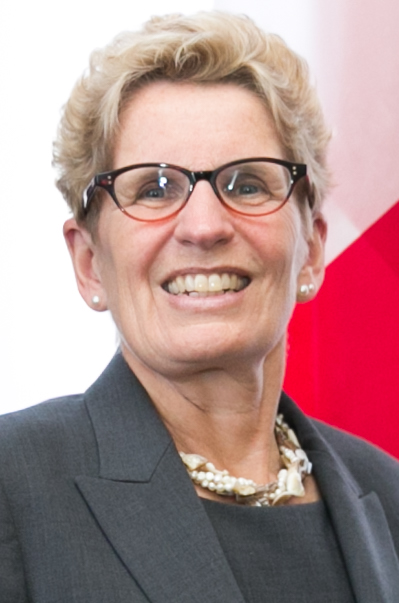
Rachel Notley Alberta NDP leader
Rachel Notley

Overshadowed by the wildfires, and rightfully so, is today’s anniversary of the major political earthquake that reshaped our province over the past year. On May 5, 2015, Albertans turned their backs on the Progressive Conservative regime that had governed since Peter Lougheed won in 1971 and replaced the old guard with a choice that would have been unbelievable in previous elections, the New Democratic Party.
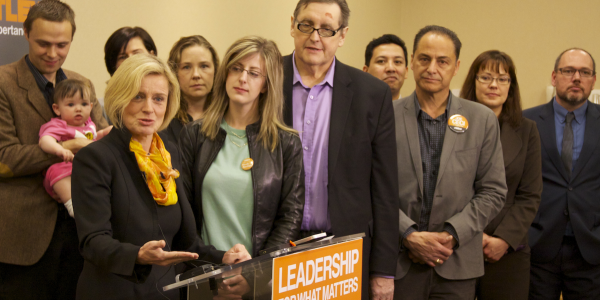
It wasn’t always a forgone conclusion that Albertans would elect an NDP government. At points during last year’s campaign. Two polls released days before the writ was dropped showed the governing PCs and official opposition Wildrose Party in a race for first place with the NDP in a distant third. Disillusionment with an arrogant and entitled PC regime that had squandered the last oil boom and the pitch-perfect campaign led by Rachel Notley’s NDP resulted in a majority government.

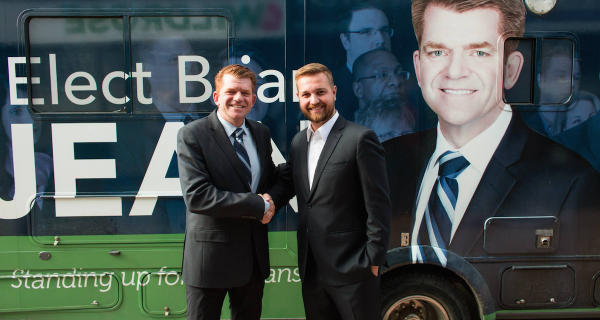
Brian Jean Wildrose
Brian Jean

Those election results exposed a demographic shift, including a split between urban and rural Alberta. The NDP elected most of their 54 MLAs in Alberta’s fast-growing urban areas and central and northern rural Alberta. The Wildrose Party, led by former Member of Parliament Brian Jean won back most of the seats lost in the 2014 floor-crossings and made gains in rural Alberta. Jim Prentice‘s Tories earned 27 percent of the vote but fell victim to the first-past-the-post system and only elected 10 MLAs. The Alberta Party elected its first MLA, leader Greg Clark in Calgary-Elbow, and the Liberals were reduced to one MLA, interim leader David Swann in Calgary-Mountain View.

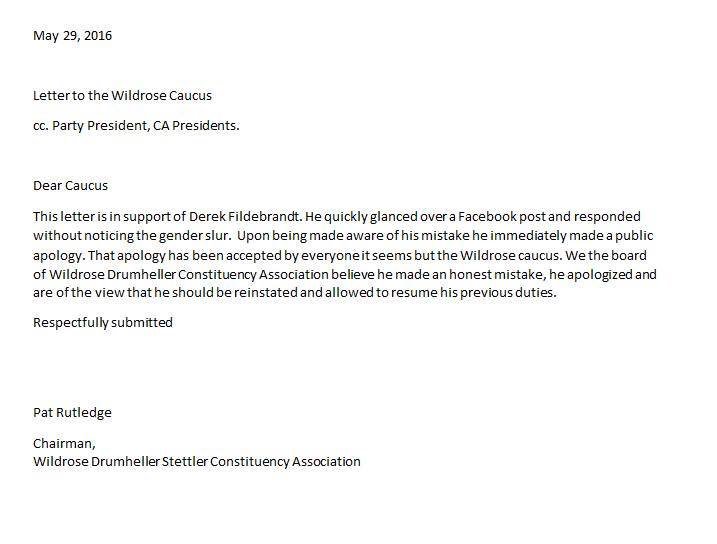
Joe Ceci Calgary NDP
Joe Ceci

May 5, 2015 saw the election of the a record number of women, including nearly half of the MLAs in the newly minted NDP caucus. The soon to be appointed provincial cabinet would have gender parity, a first in Canada. A contingent of under-30 MLAs were elected, bringing a new sense of diversity into the stodgy Legislative Assembly. Openly gay and lesbian MLAs were elected. And soon after, expecting and new mothers would become a common sight on the floor of the Assembly. Our Legislative Assembly felt more reflective of Alberta than it had in previous years.

The tone of government had changed.

The NDP banned corporate donations to political parties, a move that would never have happened under the corporate-donation fuelled PC Party. The new government not only admitted it believed in Climate Change, it also announced plans to do something about it. The NDP introduced a progressive income tax system and raised corporate taxes. They also reinstated funding to education, health care and post-secondary education that was cut by the PCs in their pre-election budget.

Smart, articulate, tough and quick on her feet, Ms. Notley has proven to be the government’s greatest asset. The senior cabinet ministers surrounding her, Sarah Hoffman, Danielle Larivee, Shannon Phillips, Kathleen GanleyDavid Eggen, Deron Bilous, Joe Ceci and Brian Mason, to name a few, have developed into a stronger team over the past year.

CBC National News Anchor Peter Mansbridge reacts to the results of Alberta's 2015 provincial election.
CBC National News Anchor Peter Mansbridge reacts to the results of Alberta’s 2015 provincial election.

Getting off the royalty rollercoaster’ by fixing a revenue system that was over-reliant on natural resource royalties to fund the government’s operations budget is a central theme of the new government.

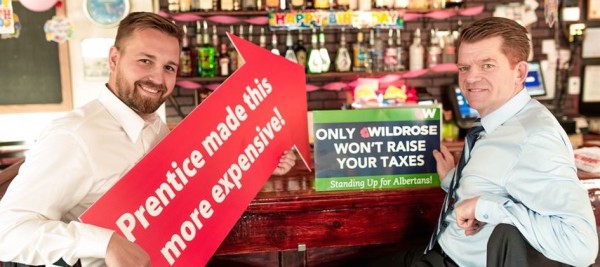
Shannon Phillips
Shannon Phillips

A sharp decline in the international price of oil meant the new government faced higher private sector unemployment and decreased activity in the oil industry in our province.

The Alberta Advantage, a myth spun by conservative politicians and pundits over the past twenty years quickly turned into a disadvantage. The low taxes boasted by the previous government turned into a disadvantage when the price of oil dropped and left the province with a $10 billion shortfall in revenue.

Instead of slashing the budget, as the conservative opposition parties would have done, the NDP looked for outside advice from former Bank of Canada Governor David Dodge. The budget tabled by Mr. Ceci included investments in infrastructure while keeping operating funding steady to avoid major service cuts and job losses that would increase the province’s unemployment levels.

Sarah Hoffman NDP MLA Edmonton-Glenora
Sarah Hoffman

The NDP plan focuses on stability and job creation but it is yet to be seen whether those large deficits will be embraced by Albertans at the next election. The future of this government, like the PC government before it, may ultimately depend on the international price of oil.

The optimism of the new government masked a certain naivety. Transitioning into the role of government has been challenging.

The transition from a 4-MLA opposition caucus to majority government led the NDP to import senior political staff from across Canada, including those with experience working in Ottawa and for NDP governments in Saskatchewan, Manitoba and Nova Scotia.

Kathleen Ganley NDP Calgary Buffalo
Kathleen Ganley

The rushed introduction of new farm safety laws made the NDP look as if they were more interested in dragging rural communities into the 21st century rather than leading them in that direction.

Like something out of the 1950s, Wildrose MLAs and conservative newspaper columnists have become prone to red-baiting, accusing Alberta’s NDP government of holding communist or socialist sympathies. While some individual NDP MLAs have self-identified as socialists, the reality is the new government has been quite moderate and even small-c conservative at times. Ms. Notley has become one of Canada’s strongest advocates for oil pipelines and the NDP even decreased the small business tax from 3 percent to 2 percent in the recent budget.

Days before last year’s election I asked the question, ‘how bad would Alberta’s conservatives need to screw up for Albertans to elect an NDP government.’ We found out on May 5, 2015.

The NDP had been elected in Alberta. Hell had frozen over.

On the morning of May 6, 2015, Albertans woke up to a new government and an unwelcome spring snowstorm. Today, as most Albertans focus on wildfires instead of politics, we can only hope for a repeat of that snowstorm to put an end to the fires ravaging Fort McMurray.


The governments of Alberta and Canada will be matching individual donations made to the Canadian Red Cross Alberta Fires Emergency Appeal to help the people impacted by the Fort McMurray wildfire. Click here to donate.

Categories
Alberta Politics

Donate to help the good people of Fort McMurray

It is estimated that between 80,000 and 100,000 Canadians have been impacted or have been evacuated from their homes in Fort McMurray after today’s wildfires devastated the city.

I have donated to the Canadian Red Cross Alberta Fires Emergency Appeal to help the good people of Fort McMurray in their time of need. I encourage you to so you as well.

Click here to donate.


The Edmonton Emergency Relief Centre is in immediate need of volunteers and donations.

Please donate:
• Diapers and Baby Wipes
• Toiletries
• Blankets/Bedding
• New Pillows
• New Socks and Underwear
• Clean Clothing

Drop off donations at Edmonton Emergency Relief Services: 10255-104 Street, Edmonton, Alberta.

VOLUNTEERS are also needed to receive, sort and stockpile donations and people will be needed to man three phone lines.

TO VOLUNTEER and help out the victims of the Fort McMurray Wildfire contact Edmonton Emergency Relief
at 780-428-4422.

Categories
Alberta Politics

“From Morinville to Oxford to Ottawa…”

Edmonton-Centre Liberal MP Randy Boissonnault is on the cover of this month’s Avenue Edmonton magazine. Read the full story here.

Categories
Alberta Politics

Alberta PCs to debate leadership changes, including delegated conventions

Activists from Alberta’s Progressive Conservative Party will be electing executive officers and debating amendments to their organization’s constitution at an annual general meeting on May 7, 2016 in Red Deer. After 44 years as government, the PC Party was defeated in the 2015 election. But after a year in the doldrums, the party showed some signs of life when it was able to hold its ground in the Calgary-Greenway by-election.

With former Jim Prentice-loyalist Terri Beaupre stepping down as party president, there appears to be a heated race for leader between former Globe & Mail reporter and past candidate Katherine O’Neill and Calgary lawyer Tyler Shandro [note: you may recognize Mr. Shandro from “govern yourself accordingly” fame]. The choice of president may determine if the PC Party moves closer or distances itself from the burgeoning ‘unite the right’ industry.

Among the amendments that will be debated are proposals to change the rules governing how the party chooses its next leader.

According to my reading of the current PC Party constitution, a leadership vote to replace former premier Jim Prentice should have happened between 4 and 6 months after he resigned on the night of the May 5, 2015 election. [note: the Liberal Party also violated their own constitution when they postponed their leadership vote until 2017]

There are various proposed constitutional amendments to change the timelines after the party leadership becomes vacant, including one changing the window to between 3 and 12 months. Another proposal would bar an acting leader from seeking the permanent leadership, which would push current Acting Leader Ric McIver out of the race.

Most of the amendments would keep a variation of the current open one-member one-vote system in tact, but one proposal that will be debated would have the PC Party adopt a delegated convention system to select a new leader.

Once the standard, delegated leadership conventions have fallen out of favour with most mainstream political parties in recent years. The Alberta Party, Liberal Party and Wildrose Party use a similar one-member one-vote system and the New Democratic Party uses a hybrid system that divides votes between members and affiliate organizations.

The return of a system where local members elect delegates to attend a convention and vote for a leader could bring an aura of excitement back to what can become a fairly dull leadership process.

Under the current open one-member one-vote system, any Albertan can purchase a party membership and vote for the next PC Party leader. This led to a wave of excitement before the leadership vote in 2006, when more than 144,000 Albertans cast ballots in the vote that selected Ed Stelmach as leader. But the open system also exposed a giant weakness when only just more than 23,000 Albertans participated in the PC Party’s 2014 vote.

Categories
Alberta Politics

Five CEOs hold a press conference in a penthouse boardroom

It was a case of political friendly fire.

With only days left before Election Day, the anti-NDP fear campaign was in full-gear but this shot might have been the final nail in the coffin for Alberta’s 44-year old Progressive Conservative Party government.

On May 1, 2015, five prominent Edmonton business leaders and PC Party donors, including then-University of Alberta Board of Governors Chairman Doug Goss, held a press conference in the penthouse boardroom of a downtown office building to warn Albertans against rejecting the Progressive Conservatives in the May 5 election.

The press conference was held the morning after PC leader Jim Prentice spoke to 1,500 guests at a $5,000 per table fundraising dinner at the Shaw Conference Centre. Even as the international price of oil had already started a sharp decline, he warned the dinner guests that a New Democratic Party government would be a blow for the corporations in Alberta.

The businessmen sat united in their opposition to NDP leader Rachel Notley‘s promise to raise taxes on corporations from 10 percent to 12 percent. Before the election was called, the PCs had proposed increases to personal income taxes and the introduction of a health care levy, but refused to touch corporate taxes. [note: Albertans overall still pay the lowest taxes in Canada, even after the NDP implemented increases following their election win].

A public letter released by the businessmen and their prepared statements at the press conference were fairly reasonable from a conservative business perspective, but the moment the men began answering questions from the media the event went off the rails.

One of the men questioned why he was being asked to pay more. “I have someone telling me that I need to pay more tax. Why is it me? Why the corporation?

Another claimed that corporate donations to children’s hospitals and charities would halt if the corporate tax rate was increased.

While I am sure this group of philanthropists and community leaders sincerely believed they were helping their friend, Mr. Prentice, these were very rich statements coming from a group of men who were sitting around a boardroom table that might have been worth as much as my house.

Sometimes your best friends can be your worst enemies. In this case, these PC donors (and soon after, the Postmedia-owned newspapers in Alberta) inflicted a considerable amount of damage on the PC Party campaign during the final week of the election. It was an incredibly tone deaf message to send to an electorate tired of years of Progressive Conservative mismanagement, infighting and scandals.

The penthouse press conference solidified the narrative that as the economy was slowing the PCs were putting the needs of the wealthy and their corporations before the needs of ordinary Albertans. It appeared as though the conservatives had forgotten how to be populists.


This post is the third in a series remembering some key moments from Alberta’s historic 2015 election. May 5, 2016 marks one year since that election. Read the first and second instalments. 

Categories
Alberta Politics

The election rally that convinced me Notley’s momentum was real

I think the PC Party needs a break from government and Albertans need a break from the PC Party,New Democratic Party leader Rachel Notley told a massive crowd of more than 2,000 supporters at a May 3, 2015 rally at the Ramada Hotel on Kingsway Avenue in Edmonton.

You don’t have to repeat history on Tuesday, you can make history,” she said.

Alberta NDP RallyAn NDP rally the previous day in Calgary attracted hundreds of supporters, an occurrence that would have been unimaginable in previous elections.

In my years writing about Alberta politics, I have witnessed many large rallies outside the Legislature. Most were gatherings focused on specific issues but I had never been to a rally this large in support of an opposition party. In fact, I had never seen so many people at an election rally in Alberta, ever.

From the moment Ms. Notley entered the room and made her way through the cheering crowd was on their feet and eager to shake her hand or snap a selfie. The crowd erupted in cheers again when she took to the stage and spoke the words “my name is Rachel Notley and I am running to be Premier of Alberta.” It was something that no NDP leader had ever said convincingly but with Ms. Notley it was different. It felt like it could happen.

Standing in the crowd at the NDP rally, I spoke with two senior citizens who were very excited to experience their first political rally. It is also the first election they will vote NDP. They voted for the PCs in the last election and in many elections before that, they told me.

In the crowd, I also spotted long-time New Democrats, seniors, students, parents and children, union activists, academics and ordinary working Albertans. I also noticed a handful of former Liberal and Progressive Conservative activists who were excited about Ms. Notley’s leadership and the opportunity for a change in government.

It was a huge contrast to the Progressive Conservative rally I wrote about yesterday. Change was in the air for the first time in 44 years and it was exciting.

Although I was still reluctant to believe the NDP would actually form government, it was impossible to deny that the momentum behind Rachel Notley’s NDP was real.


This post is the second in a series remembering some key moments from Alberta’s historic 2015 election. May 5, 2016 marks one year since that election. The first post was published yesterday.

Categories
Alberta Politics

The election rally that convinced me the Tories were running on fumes

I will be reminiscing on this blog over the next few days about some of the key moments from Alberta’s May 5, 2015 election campaign that stand out in my memory. The one year anniversary of that historic election, which saw the defeat of the 44-year old Progressive Conservative government and the election of Rachel Notley‘s New Democratic Party, is fast approaching.

One key moment was an April 14, 2015 rally held for Progressive Conservative leader Jim Prentice at a community hall in the Edmonton-Whitemud constituency, where PC MLA Stephen Mandel was running for re-election. The area had been a Tory stronghold since the 1997 election, when Dave Hancock was first elected, and voters in the area had chosen former mayor Mr. Mandel in a by-election only five months earlier.

The mid-afternoon event was well-organized and attracted a respectable crowd of about 250 supporters, candidates and party stalwarts into a hall in an affluent southwest Edmonton neighbourhood. It was a fairly typical political event, but it was an exchange at the tail-end of the rally convince me that the PC Party’s once-mighty campaign machine was running on fumes.

After a fairly unremarkable speech about his party’s commitment to fixing the problems it created in the health care system, Mr. Prentice remained on stage to take questions from the media. There had already been big signs of trouble on the campaign trail but his answer and the crowd’s response to the final media question convinced me that the PC campaign machine was running on fumes.

Over the course of the campaign Mr. Prentice had been harshly critical of the NDP election promise to review Alberta’s natural resource royalty structure and raise corporate taxes from 10 percent to 12 percent.

When asked if he would ever review royalties [note: the question was about either royalty rates or the corporate tax structure, I can’t remember for sure], Mr. Prentice delivered the most politically-mushy and non-commital answer I have ever heard: [paraphrased] ‘perhaps maybe sometime in the future my government might consider reviewing the structure.’

As soon as he delivered his response a forced cheer erupted from the party staffers in the back of the room and spread through the crowd of supporters, drowning out any further media questions and signalling an end to the official event program.

The crowd’s cheer was completely unenthusiastic. It was not the kind of answer that anyone would actually cheer. And it was undoubtably the wrong note on which to end a political rally.

If the PCs were unable to rally enthusiasm into a crowd of supporters in Edmonton-Whitemud, arguably the most loyal conservative area of the capital city, it was clear that Mr. Prentice’s party was in deep trouble in Edmonton.

On May 5, 2015, the NDP swept the Edmonton region, and Bob Turner defeated Mr. Mandel with 12,805 votes to 7,177 votes.

Jim Prentice speaks at the podium of his campaign rally on April 14, 2015.
Categories
Alberta Politics

Exclusive: Daveberta.ca now available exclusively in print paper editions

FOR IMMEDIATE RELEASE

April 1, 2016

Edmonton – Marking the first complete Blog-to-Paper jump, daveberta.ca is now available exclusively in paper form.

“I am really excited about this new historic initiative,” said daveberta.ca publisher and founder Dave Cournoyer. “I believe there is a real demand for a paper print news publication in Edmonton.”

dave cournoyer daveberta
Daveberta.ca publisher Dave Cournoyer

“I’m thinking about calling it a ‘news-on-paper’ because it will be news printed on paper,” Cournoyer said. “Readers have become accustomed to reading my blog on their computer screens and mobile devices, but I really think the next frontier is paper.”

“From the bottom of my heart I want to thank the thousands of loyal readers who have followed this blog on the internet over the past 11 years,” Cournoyer said. “I know you’re all really going to love the convenience of the new paper format.”

“While blogs like AlbertaPolitics.ca have foolishly chained themselves to the limitations of the internet, I’m not afraid to make the leap into the next frontier,” Cournoyer said. “And that frontier is paper.”

He likened the blog-to-paper transformation to the resurgence in vinyl record sales and barber shops.

“Like classic LPs and old timey barber shops, news-on-paper is very retro,” Cournoyer said. “I really think 2016 is the year news-on-paper will take off and I will be at the forefront of it.”

The news-on-paper will include a regular feature called “Paper Twitter” in which messages from readers will be printed in each edition. “The beauty of Paper Twitter is that your opinions won’t be limited to 140 characters,” Cournoyer said. “It’s genius!”

Cournoyer also thinks there is an excellent opportunity to generate revenue because news-on-paper will only be available to those who pay for it.

News-on-paper editions of daveberta.ca will be available in street corner boxes across the city starting on April 1, 2016.

– 30 –

For more information contact:
Dave Cournoyer
Publisher, Daveberta.ca
david.cournoyer@gmail.com

Categories
Alberta Politics

Is the sky blue? A Conservative win in Southern Alberta by-election a certainty

Following the death of Conservative Member of Parliament Jim Hillyer on March 23, 2016, Elections Canada has announced that a by-election must be called in the Medicine Hat-Cardston-Warner electoral district before September 26, 2016. The earliest a by-election could be held is May 16, 2016.

A map of the electoral district.

By-elections can produce unexpected results, as we have seen recently in Alberta, but as one of the strongest Conservative voting areas of the country, it is very likely the next MP for this area will be a Conservative. Mr. Hillyer was elected in October 2015 with 68 percent of the vote, ahead of Liberal Glen Allan with 17 percent and New Democrat Erin Weir with 9 percent (not that Erin Weir).

Conservatives partisans in this region of Alberta tend to occupy the social conservative side of that party’s coalition. But that does not necessarily mean they are united.

The author of this blog outside the Creation Science Museum in Bow Island, Alberta.

This electoral district spans the beautiful stretch along Alberta’s southeast boundaries with Saskatchewan and Montana. The large rural district includes the City of Medicine Hat (a city of 63,000 residents), Canadian Forces Base Suffield, the Blood Indian Reserve (the largest and second most populated reserve in Canada), a large community of followers of the Church of Jesus Christ of Latter-day Saints, and the Bow Island Creation Discovery Centre.

The area was represented by Conservative MP LaVar Payne from 2008 to 2015. Former cabinet minister Monte Solberg represented the area as a Reform Party, Canadian Alliance, Democratic Representative Caucus and Conservative MP from 1993 until 2008.

Former Social Credit MP Bud Olson was re-elected as a Liberal MP in 1968 and served as Minister of Agriculture in Prime Minister Pierre Trudeau’s cabinet until his electoral defeat in 1972. The riding became a Progressive Conservative stronghold from 1972 to 1993.

Provincially, the area is currently represented by Cypress-Medicine Hat MLA Drew Barnes and Cardston-Taber-Warner MLA Grant Hunter of the Wildrose Party and Medicine Hat MLA Bob Wanner of the New Democratic Party.