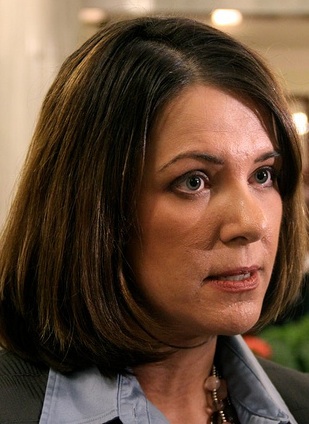
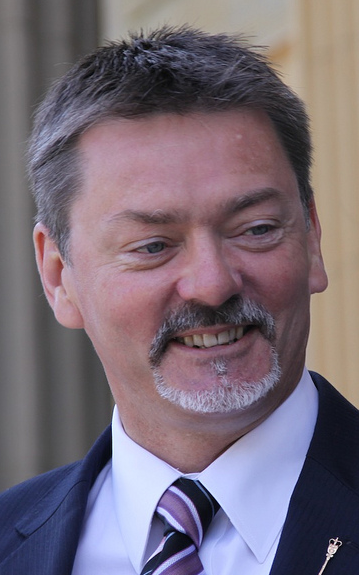
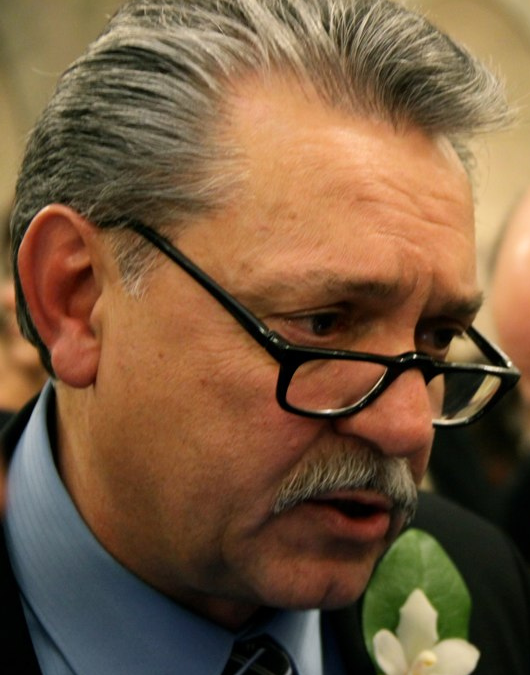
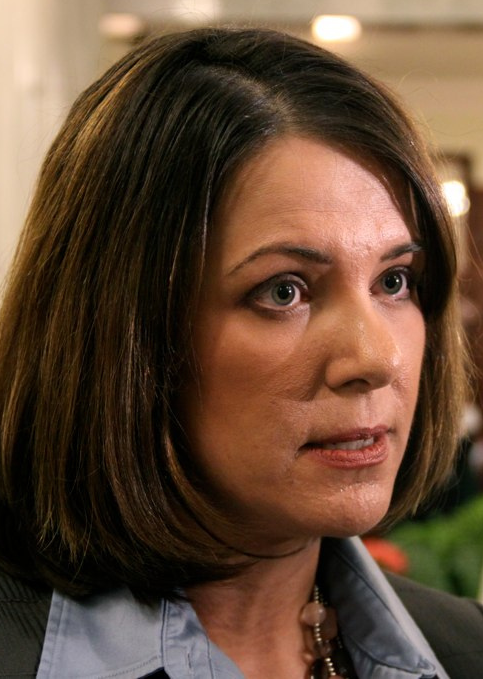
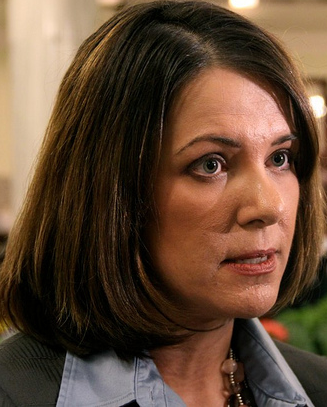
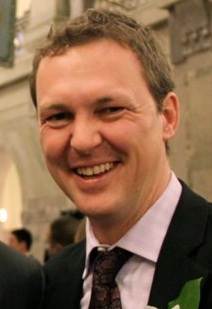
The Wildrose Caucus has released a flashy new YouTube video encouraging Progressive Conservative MLAs to join the Official Opposition.
The video begins with two former PC MLAs making the pitch to cross the floor. “I was nervous when I first did I, but I have to tell you, it is so much better over here,” Wildrose MLA Heather Forsyth says in the video. “It’s not you, it’s them,” Rob Anderson testifies.
PC MLAs Heather Forsyth and Rob Anderson crossed the floor to the Wildrose Party in 2010.
The rest of the video includes short clips of testimonials and pleas from Wildrose MLAs to their PC MLA colleagues. “It’s not your fault, your party left you. Come on over,” a welcoming Ms. Smith says in the final clip.
It is yet to be seen if any PC MLAs will accept the opposition offer.
A Wildrose history of floor crossing
In 2010, less than two months after then-Premier Ed Stelmach received 77% in the PC Party’s leadership review, two backbench PC MLAs, Rob Anderson and Heather Forsyth, crossed the floor to join newly selected leader Danielle Smith‘s Wildrose opposition. Soon after, former PC MLA Guy Boutilier joined the Wildrose caucus. It is not surprising that the Wildrose would make this pitch only one week after current PC Party leader, Premier Alison Redford, received an eerily similar 77% in her party’s 2013 leadership review.
The Alberta Alliance, the precursor to the Wildrose Party, gained its first MLA when Edmonton-Norwood PC MLA Gary Masykbriefly ran under the party’s banner in the 2004 election in the new Edmonton-Decore constituency. Mr. Masyk was defeated in his bid for re-election.
Hundreds of Albertans gathered outside of the Legislative Assembly today to protest new labour laws.
Providing a timely distraction for a government facing criticism over the sobering news stories of unreported deaths of children in the foster care system, Premier Alison Redford‘s Progressive Conservatives today suddenly introduced two pieces of legislation that could have a significant impact on labour relations in Alberta.
The first piece of legislation, Bill 46: Public Service Salary Restraint Act, introduced by Finance Minister Doug Horner, would impose a two-year wage-freeze on more than 22,000 government employees represented by the Alberta Union of Provincial Employees. AUPE is currently in negotiations with the government for a new collective agreement and this bill would allow the government to bypass a law requiring it to settle the negotiations with AUPE through arbitration, which had been scheduled for February 2014. Bill 46 would take effect on January 31, 2014 if the two parties cannot reach a settlement before that date.
This bill is reminiscent of threats made by Education Minister Jeff Johnson to the Alberta Teachers’ Association earlier this year. During those negotiations, Mr. Johnson threatened to cut salaries and impose a new contract on Alberta’s teachers if an agreement was not reached by an arbitrary deadline. Once a deal was finally reached between the government and the teachers’ union, Mr. Johnson then legislated the agreement after a number of elected school boards voted to reject the deal on financial grounds.
The introduction of this legislation raises a real question about the state of collective bargaining in Alberta. Can this government, as an employer, be trusted to bargain in good faith with its employees? And what incentive is there for employers bargain fairly with their employees if the government will just impose an agreement?
The second piece of legislation, Bill 45: Public Sector Services Continuation Act, introduced by Human Services Minister Dave Hancock, significantly increases the penalties for illegal strikes by workers who are determined to provide essential services. Mr. Hancock introduced this bill as a response to the wildcat strike by corrections officers that began at the Edmonton Remand Centre earlier this year. The government proposes to introduce harsh fines of up to $1,000,000 per day on a union in the case of an illegal strike or even the threat of a illegal strike.
As David Climenhaga wrote on his blog, the real reason the government is rushing these changes through the legislature is not the possibility of illegal strikes, but the compromise currently enshrined in the current labour relations system:
“While former premier Peter Lougheed deprived public employees of the right to strike in the event of an impasse in bargaining, in return they got access to a compulsory arbitration process. In other words, an arbitrator who looks at the facts, the laws and private-sector comparisons, and who then has the right to impose a settlement on both parties.”
With Ms. Redford turning on her supporters in the public service, Alberta’s public sector employees could find themselves with allies in untraditional places.
“A Wildrose government would never act in this way. Just because your negotiation isn’t going well, you don’t take away people’s arbitration rights that are in the contract that was signed. That’s not how you govern. That’s not good faith,” Wildrose MLA Rob Anderson told the Edmonton Sun.
For reasons that are unclear, Ms. Redford’s government is moving quickly to pass this legislation. At Mr. Hancock’s urging, MLAs have made an unordinary exception to meet for a special sitting on Friday, November 29 in order to ensure that Bill 45 passes through the Legislature in the next 48 hours and becomes law before the weekend.
Tomorrow is election day and in counties, municipal districts, villages, towns, and cities across the province, Albertans will cast their votes for mayors, reeves, councillors, aldermen, and school trustees.
Naheed Nenshi
In Calgary, uber-popular mayor Naheed Nenshi is expected to crush his opponents, including former Progressive Conservative MLA Jon Lord and a cast of challengers from the political fringe. This election also marks a change of title for Calgary city council members, from “Alderman” to “Councillor.”
With voters in Alberta’s second, third, and fourth largest cities – Edmonton, Red Deer, and Lethbridge – selecting new mayors, there could be a shift in how municipalities interact with the provincial government. With the ongoing war of words between Mayor Nenshi and Municipal Affairs Minister Doug Griffiths, a cast of new mayors could create a new dynamic in municipal-provincial relations in Alberta.
While there will be many new faces on municipal councils after the votes are counted, there could be some familiar characters returning to the fray. Observers of provincial politics in Alberta will recognize some of these candidates.
In Fort McMurray, former PC-turned-Wildrose MLA Guy Boutilier is running for a councillor position on Wood Buffalo’s municipal council, a place where he served as mayor before entering provincial politics in 1997. In Edmonton, former MLA Edmonton-Mill Woods Liberal MLA Weslyn Mather and former Edmonton-Beverly-Clareview MLA Ray Martin could be elected as trustees on Edmonton’s Public School Board.
In St. Albert, where anonymous smear groups run rampant, former Alberta Liberal Party leader Bob Russell is aiming for a political comeback. While he was never elected to the Assembly, Mr. Russell served as Liberal Party leader from 1971 to 1974. He later served as an alderman in St. Albert from 1989 to 1992 and 1995 to 2001.
In the Village of Wabamum, former Stony Plain Tory MLA Fred Lindsay is running as part of a 3-candidate slate. Running for re-election to Wabamum village council, but not on Mr. Lindsay’s slate, is Bill Purdy, who served as the PC MLA for Stony Plain from 1971 to 1986.
Familial relations also cross municipal-provincial lines. Judy Hehr, mother of Calgary-Buffalo Liberal MLA Kent Hehr is running for a spot on the Calgary Board of Education. Strathcona-Sherwood Park PC MLA Dave Quest‘s wife, Fiona Beland-Quest, is running to become a councillor in Strathcona County. Lethbridge mayoral candidate Bridget Mearns is the daughter of Lethbridge-East‘s Liberal-turned-PC MLA Bridget Pastoor. And in Edmonton, Ward 8 councillor Ben Henderson is running for re-election. Mr. Henderson is married to Edmonton-Centre Liberal MLA Laurie Blakeman.
In the City of Airdrie, Jane Anderson, the mother of Airdrie Wildrose MLA Rob Anderson is running for a spot on city council as part of the Airdrie United slate. Mr. Anderson’s brother, Nathan Anderson, is running for re-election as mayor of the town of Crossfield.
The appearance of municipal slates in Airdrie and Red Deer could signal the return of partisan style politics in municipal government (slates were common in Alberta’s larger cities until the 1970s and 1980s).
Outgoing mayor of Cochrane Truper McBridehas raised questions about the involvement of Wildrose MLA Rob Anderson in the ‘Team Airdrie United’ slate of candidates running in the October municipal elections. Mayor McBride alleged that Mr. Anderson’s involvement stems from his opposition to density requirements for new development bring implemented by the Calgary Regional Partnership. Mayor McBride is the chairperson of the CRP.
Responding quickly to the accusations, four Calgary-area Wildrose MLAs, Mr. Anderson of Airdrie, Bruce Rowe of Olds-Didsbury-Three Hills, Pat Stier of Livingstone-MacLeod and Jason Hale of Strathmore-Brooks, were quoted in a press release dening the allegations and condemned Mayor McBride as “a failed PC nomination candidate.”
Mayor McBride contested the Progressive Conservative nomination in Banff-Cochrane before the 2012 election. The nomination was won by Canmore Mayor Ron Casey and is the only rural constituency in southern Alberta that elected a PC MLA in last year’s election.
Whether Mr. Anderson is involved or not, it appears there could be a deeper level of personality politics influencing this quarrel (one of the candidates in the Team Airdrie United slate is Jane Anderson, Mr. Anderson’s mother). But there is also an undeniable push by some conservatives to have a concerted influence in this year’s municipal elections by organizing slates of candidates.
While Conservatives of varying stripes dominate the federal and provincial levels of government in Alberta, voters have been friendlier to moderate centrist and centre-left inclined candidates in the municipal sphere. Many politicians identified with the Liberal and New Democratic Parties have had successful political careers at the municipal level in Alberta.
One conservative-slate, Red Deer First has emerged in central Alberta’s largest city. Sources tell this blogger that many of the key figures behind this group have ties to the Wildrose Party.
In April 2013, a video leaked to Global Calgary showing a large group of prominent wealthy developers – known to some as the Sprawl Cabal – plotting to stack Calgary City Council with sympathetic candidates made waves in Alberta’s largest city. The video showed a prominent developer presenting a plan to defeat certain members of City Council who he perceived to be anti-urban sprawl.
After being arrested in a prostitution sting in St. Paul, Minnesota, Fort McMurray-Wood Buffalo MLA Mike Allen resigned from the Progressive Conservative caucus. For the time-being, Mr. Allen will remain an Independent MLA, as police in St. Paul have yet to place charges against him. Barring charges and a conviction, Mr. Allen could reasonably be expected to complete his term in Legislative Assembly, albeit sitting outside the PC caucus.
The opposition, including Airdrie Wildrose MLA Rob Anderson, have been calling on Mr. Allen to resign as MLA. If, by chance, Mr. Allen did resign as MLA, voters in the northern Alberta constituency would choose a new representative in a by-election.
In 2012, Mr. Allen was elected with 3,609 votes (49%), defeating Wildrose MLA Guy Boutilier, who earned 3,164 votes (42.9%). A unique election, Mr. Boutilier served as a PC MLA since his first election in 1997 until he left the Tory caucus in 2009 and joined the Wildrose in 2010. According to Elections Alberta financial reports, Mr. Allen’s campaign spent $72,825 in the campaign, compared to Mr. Boutilier’s $65,457.
In the 2012 Elections Alberta financial disclosures, the PC constituency association in Fort McMurray-Wood Buffalo reported net assets of $11,438.40. The Wildrose constituency association listed $549.58 in net assets at the end of 2012.
Low voter turnout, 34%, in the 2012 general election suggests that many voters in the constituency are undeclared or unidentified by the parties.
Despite electing candidates in both Fort McMurray-Wood Buffalo and neighbouring Fort McMurray-Conklin (where Tory Don Scott defeated Wildrose candidate Doug Faulkner), the Wildrose candidates earned strong second place finishes in the 2012 election.
Fort McMurray Today reports Mr. Boutilier remains silent on a possible comeback, but a by-election triggered by a Tory sex scandal would be the ideal scenario an opposition politician could hope for.
Guy Boutilier
A Liberal base in Fort McMurray, which elected MLA Adam Germain in the 1993 election, has near completely eroded with that party earning 3% of the vote in both constituencies. The NDP saw a spike of support in constituency in the the 2001 election, but have not had much success in the three elections held since.
Who would the Tories look to for a by-election candidate? Would any of Mr. Allen’s challengers in last year’s PC nomination step up? Candidates in last year’s PC nomination race included Andrew Highfield, Nick Sanders, and school trustee Jeff Thompson. Popular Wood Buffalo mayor Melissa Blake, who is seeking re-election in this year’s municipal vote, would be seen as a star candidate for any party and could easily fill a top cabinet position if elected into government.
A rash of automobile accidents caused deaths on the busy highway 63 put heavy pressure on the governing Tories last year. The heavy pressures of a being boom-town have created many unique growth and social challenges in this northern Alberta community that could easily become an issue in a locally-focused by-election.
But Premier Alison Redford‘s Tories may want to avoid an embarrassing by-election defeat. Two of the three most recent provincial by-elections held in Alberta have resulted in opposition parties electing candidates in formerly government-held constituencies.
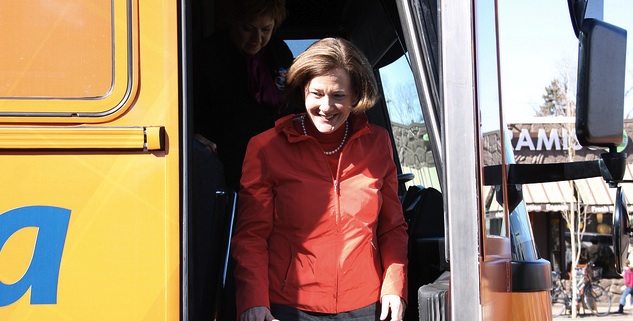
Premier Alison Redford hops of her campaign bus onto Edmonton’s 124 Street during the 2012 election.
On April 23, 2012, Alberta’s most hotly contested election in decades culminated with the re-election of the twelfth consecutive Progressive Conservative majority government since 1971. Despite holding the large majority elected MLAs, the popular vote showed Albertans were closely divided between Alison Redford‘s Tories who finished with 44% compared to an impressive 34% showing for Danielle Smith’s Wildrose Party.
Despite being branded as a policy-wonk, Premier Redford’s cabinet has implemented a confused domestic agenda that has resulted in public spats with popular Mayor Naheed Nenshi and Stephen Mandel and unnecessary conflicts with teachers and doctors. Recent budget cuts, blamed on a deflating bitumen bubble, also threaten to unravel the coalition of moderate voters who carried her party to victory one year ago.
The mixed bag that is Premier Redford’s cabinet could help explain some of this confusion. Younger cabinet ministers, like Deputy Premier Thomas Lukaszuk, Education Minister Jeff Johnson and Municipal Affairs Minister Doug Griffiths, constantly talk off the cuff and appear to sometimes be making government policy on the fly. Other ministers, like Finance Minister Doug Horner, Health Minister Fred Horne and Human Services Minister Dave Hancock, have shown restraint and maturity that comes with years of cabinet experience.
Doug Horner
Premier Redford has been exceedingly strong on the national and international stage as she has travelled extensively over the past year lobbying for a Canadian Energy Strategy, the Keystone XL Pipeline, and to open new markets for Alberta’s oil sands. She appears to be less interested or willing to play the political game, which will become increasingly difficult in the face of an aggressive official opposition.
Wildrose leader Danielle Smith could have been celebrating her first year as Premier had it not been for late election bozo-erruptions that exposed an offensive social conservative element in her party. Comments about caucasian advantages and a Lake of Fire drove many moderate conservatives, liberals, and even some New Democrats, to vote PC in last year’s election.
Despite the disappointment of not defeating Alberta’s long-governing PC dynasty, Ms. Smith has grown into her role as Leader of the Official Opposition. Borrowing aggressive tactics from the federal Conservatives in Ottawa, who are organizationally tied at the hip with the Wildrose, Ms. Smith’s party is leading the most aggressive and partisan official opposition in recent memory. Her party has groomed a front-bench that dominate the media and have, in many cases, driven the government agenda from across the aisle. Rarely a week goes by where Ms. Smith, Rob Anderson, Shayne Saskiw, Kerry Towle, Bruce McAllister, or Heather Forsyth have not grabbed a headline or a prime time news story.
The Liberals, still led by former Tory MLA Raj Sherman, are still adjusting to their new role as the third-party in the Assembly after being bumped out of Official Opposition by the Wildrose. Accustomed to stealing the spotlight from the now-former Official Opposition Liberals, the four-MLA New Democrat caucus spent the past year figuring out how to play the same tricks on the Wildrose. Acclimatizing to the new political environment, Brian Mason’s NDP were overshadowed by Ms. Smith’s new team for most of last year. With some of the ‘progressive’ shine coming off Premier Redford’s Tories, the NDP are starting to find their footing again.
The Tories have broken more than a few election promises in the first year of this mandate, including pledges to balance the budget and provide stable funding for health, education, and municipalities. Despite the rough first year, Premier Redford’s Tories still have at least three years left until the next election to fulfill the promises made and mend fences with the bloc of moderate voters who saved their party from defeat one year ago today.
Alberta’s Legislative Assembly Building (sans covered dome).
After a three-month break, Members of Alberta’s Legislative Assembly will gather today in Edmonton to start the spring sitting.
The commencement of this year’s first sitting will be unusual in that it will lack the traditional pomp and circumstance that comes with a Speech from the Throne. Lieutenant Governor Donald Ethell will not be invited to deliver a traditional Speech from the Throne today. The lack of Throne Speech or accompanying flagship legislation will mean a focus on the provincial budget, to be tabled on March 7. This, of course, is a deliberate move by the Tories.
Doug Horner
Finance Minister Doug Horner will table the provincial government’s 2013/2014 budget on Thursday, and many political watchers are wondering what the document will include.
Over the past two months, Minister Horner and Premier Alison Redford have managed to communicate that Alberta has a revenue problem, a pipeline problem (also known as the unfortunately named ‘Bitumen Bubble’), and finally a spending problem.
The Premier mused about tax increases, and then ruled them out. All these mixed signals will make this week’s budget announcement a highly watched spectacle.
The continuation of the sitting also means that a handful of private members bills left over from last year’s sitting will return to the Assembly floor for debate this spring. These bills were introduced last year by opposition and backbench government MLAs.
Watch Premier Redford focus on her strengths, like advocating on the national stage for a Canadian energy plan and for opening new markets for Alberta’s oil – like the controversial Keystone XL pipeline. As demonstrated throughout her first year in office, Premier Redford is much more effective at being a provincial advocate than being a provincial politician.
Do not expect to hear cabinet ministers or government MLAs make many comments about the fiascos that wreaked havoc for the Tories last fall. Ongoing investigations by Chief Elections Officer O. Brian Fjeldheim, retired Justice John Vertes, ethics commissioner Neil Wilksonson, and Information and Privacy Commissioner Jill Clayton will give the Tories a legitimate excuse to say “no comment.”
Will the Wildrose drive the agenda?
Danielle Smith
In the fall sitting of the Assembly, the newly minted Wildrose Official Opposition ran circles around the large Tory majority. It seemed like every day Wildrose leader Danielle Smith and Airdrie MLA Rob Anderson would have a new scandal or leaked documents to throw at the Tories like a live grenade.
Mirroring the tactics of the federal Conservatives in Ottawa, the Wildrose have brought a more aggressive and hyper-partisan approach than Albertans are used to from their opposition parties.
The official opposition launched a new website and series of radio ads to coincide with the budget debate, asking for Albertans feedback on the fiscal situation. While it is hard to fault the official opposition for their outreach, it is difficult to imagine the Wildrose will change their conservative ideological bent based on this mini-public relations campaign.
Lost in the fray during the fall sitting, these two parties need to remind Albertans that they are still there. Can the New Democrats and former official opposition Liberals succeed in reasserting themselves in the Assembly? I would not count them out.
The four-MLA NDP caucus just finished their province-wide “Broken Promises Tour”, highlighting what leader Brian Mason claims are a string of broken promises from the Tories since last year’s election. Liberal leader Raj Sherman has come out with a string of media releases criticizing the Tories.
Both parties hope that a provincial budget harsh on public services will remind Albertans of the differences between their parities and the governing Tories. The centre-rightish Liberal Party saw a mass exodus of supporters vote for Premier Redford’s Tories in last year’s election to block the Wildrose from forming government. It worked too well for the Tories, leaving the Liberals with a small five MLA caucus.
Last fall, the Wildrose Official Opposition danced circles around the governing Tories. Daily attacks from the Wildrose left the Tories stumbling and stammering to respond. New faces in the Premier’s Communications Office have already brought a more aggressive and partisan tone to their media releases and responses to opposition criticism online. This sitting, expect to see the Tories to counter the Wildrose attacks by taking a more aggressive approach to defending Premier Redford’s political agenda. That means dirt, mud, and more dirt.
Free from the tight leash of party discipline, three former Finance Ministers are giving plenty of advice to Premier Alison Redford and Finance Minister Doug Horner.
Ted Morton, the former two-term Tory MLA from Foothills-Rockyview and two-time Tory leadership candidate who served as Finance Minister from 2010 to 2011, penned an opinion-editiorial in Wednesday’s Calgary Herald pointing out some common misconceptions about Alberta’s fiscal situation.
While Professor Morton correctly points out that the symptoms of Alberta’s financial woes are not a new phenomenon, his prescription is a tough pill to swallow.
In his column, Dr. Morton dispels the myths that 1) our fiscal problems are just because we are having a bad year, 2) our fiscal problems are just because of the low price of bitumen (also known as the notorious ‘Bitumen Bubble‘), and that 3) this is just about a Budget 2013 deficit.
On his fourth argument, Dr. Morton diverts into a more conservative ideological direction. While he correctly points out the fickleness and limited life-span of some political agendas, the former Finance Minister criticizes his successor for choosing to use financing to fund capital projects. On this point, Dr. Morton appears to share the view of his ideological kin in Danielle Smith‘s Wildrose Party, who spent the waining days of 2012 on a relentless offensive against the government on this very issue.
“Nobody likes to pay more taxes. Nobody likes to pay the taxes you’re paying today. But everybody wants the services,” Mr. Liepert told the Calgary Herald in December 2012.
Meanwhile, disgruntled former Finance Minister Lloyd Snelgrove, who quit the Tory caucus in 2011 citing irreconcilable differences with Premier Redford, told the right-wing Sun News that he does not believe the government has a revenue problem, but if it does then a sales tax should be imposed.
Back in 2010, the last Tory to seriously discuss the idea of a sales tax was then-backbench MLA Doug Griffiths(now Municipal Affairs Minister). Mr. Griffiths was publicly demonized by the opposition for even broaching the topic.
Only two years earlier, another now-former Tory MLA, who is also now one of the government’s most vocal critic of the government, stood up in Alberta’s Legislative Assembly and called for tax reform and the introduction of a sales tax in Alberta:
“I, too, believe that the government of Alberta should look into studying the feasibility of eliminating our provincial income tax and using a consumption-based taxation system in its place, with a provincial sales tax being the likely substitute revenue generator.” – Newly elected Progressive Conservative MLA Rob Anderson in April 2008.
High-drama took place on Twitter’s #ableg hashtag yesterday morning as Premier Alison Redford‘s online communications team took aim at QR77 talk radio host Dave Rutherford. In response to a tweet from Innisfail-Sylvan Lake Wildrose MLA Kerry Towlecongratulating Mr. Rutherford on the 30th anniversary of the show, the Premier’s Communications staff tweeted that the show was “Wildrose Radio.”
The popular radio talk show host has become a vocal critic of the provincial Tories and is seen as a tacit supporter of Wildrose leader Danielle Smith, who is a frequent guest on his show.
Nice to see Prem Communications paying attention to tweets, but let’s understand that @rutherfordshow deals with issues and policies only.
While it might not seem smart to attack a radio program with a large audience across the province, it is not as if the Premier was receiving rave reviews on the Rutherford Show anyway. After being pummelled in the media by the opposition parties in last year’s fall sitting of the Assembly, this could be the beginning of a new and more aggressive communications strategy from the Premier’s office.
Any observer of the #ableg hashtag will have become accustomed almost daily Twitter battles between hyper-partisan Wildrose Caucus staffers and increasingly-partisan Ministerial Press Secretaries, who are now free from the non-partisan veneer of the Public Affairs Bureau.
——-
During a telephone town-hall to Progressive Conservative Party members last night, Premier Redford took a shot at the Wildrose, claiming that “if another political party had been elected, there would be NO building in this province.”
This comment follows comments by Wildrose critic Rob Anderson about the government’s four-year project to renovate the historic Federal Building in downtown Edmonton.
In fairness to the Wildrose Party, with some high-profile exceptions, its platform in the last election would have would have rolled back spending and stretched out infrastructure projects over a longer period (but not cancel it altogether). – h/tJosh Wingrove
——-
Last week, I had an opportunity to speak with Premier Redford over the phone for a few minutes following her televised address. I will have some notes about the interview posted on the blog over the next few days.
As I said on election night, despite her party’s strong showing and newly acquired official opposition status, one of Ms. Smith’s biggest challenges will be to deal with many of her party’s supporters and MLAs who will be disappointed they did not form government. With 17 MLAs and a strong record of fundraising, I expect that Ms. Smith’s party and the powers that finance it will allow her to have a second chance, rather than destabilizing the delicate coalition of fiscal hawks and social conservatives they helped her build.
Last week, an anonymous online video emerged that made waves in the ranks of the Wildrose Party. Borrowing music from Michael Bay‘s Transformers 3: Dark Side of the Moon, the anonymous creators of the online video clumsily detailed the threat that certain individuals posed to the “grassroots” of the Wildrose Party and suggested the chance of a potential coup d’etat against leader Ms. Smith (the video is now removed from the Dailymotion site).
Like blogger David Climenhaga, I hesitate to read too much into the twisted innuendo of internal party politics that this online video delved into. And I would not be surprised if, at their upcoming AGM, Ms. Smith begins taking a more hard-line approach to party discipline, similar to the approach taken by Stephen Harper when he became leader of the Conservative Party of Canada.
For the first time in decades, conservative supporters of the Wildrose Party are sitting outside to the ruling coalition of which they had previously been a pillar constituency. As Premier Alison Redford builds a new moderate political coalition, she will not have to dwell on the every-want of the “Socred Retreads,” as she called them in her speech to last weekend’s PC AGM.
Despite Wildrose MLAs relentlessly criticizing Premier Redford in the media, it must be frustrating for many Wildrose Party supporters to now watch their former party, the long-governing Progressive Conservatives, turn away from the anti-debt orthodoxy that defined former Premier Ralph Klein‘s era in Alberta politics. Without the hype of personality politics behind it, the short-sighted policies of Premier Klein’s govermnent look and feel like they are from a by-gone era. Gone are the days when even a hint of long-term investment was sacrificed in favour of short-term balanced budgets or at-any-cost debt reduction.
Premier Redford, like Premier Ed Stelmach before her, is talking about taking an adult approach to long-term financing of capital projects and maintenance of public infrastructure. With the bulk of the hard-line fiscal conservative hawks sitting in the opposition benches, Premier Redford and Finance Minister Doug Horner are afforded more fiscal flexibility.
Instead of waiting for “cash-in-pocket” to build and maintain important public infrastructure, the Tories are pushing forward with capital financing. Their newly discovered fiscal flexibility could give the Tories an opportunity to fix the problems created by their predecessors.
This of course does not mean they will not face opposition within their own caucus when charting this new fiscal course or creating a new narrative for their party. Like Premier Stelmach before them, neither Ms. Redford or Minister Horner had the support of the majority of their fellow MLAs during last year’s leadership selection.
Supporters celebrate 77 years of Social Credit rule in Alberta.
CALGARY STAR-TRIBUNE
In 1935, Fred Astaire and Ginger Rogers’ hit song “Cheek to Cheek” topped the music charts and the Winnipeg Blue Bombers became the first western Canadian team to win the Grey Cup. It was also the year that the Social Credit Party formed government in Alberta.
Fresh from celebrating the party’s 21st consecutive election win, Premier Rob Anderson will join party faithful this weekend to celebrate the Social Credit Party’s 77th year in government.
Long abandoned are the social credit monetary policies that defined the party when it formed government in 1935. Social Credit in 2012 embraces what political watchers have called the Conservatism of the New Albertan Century.
Rob Anderson
“One of the regular talking points of the Official Opposition is to claim that after 77 years of Socred rule, the province of Alberta is some grim, dark, horrible place to live,” said Premier Anderson. “It’s entirely untrue, of course. And it doesn’t say much for the Opposition that they say such terrible things about this great province.”
“Alberta is the best place to live, work and play in Canada,” said the Premier.
Only once in the party’s 77 year history has it faced the threat of electoral defeat.
Harry Strom
While the history books record Premier Harry Strom as the great conciliator of Canadian confederation, he led the dynasty to its narrowest victory the 1971 election. New to the office, Strom fought back young Peter Lougheed‘s liberal-minded Progressive Conservatives, leading his party to form a small majority government.
Four years later, Strom led Social Credit to a decisive victory over the Tories.
Many historians credit Social Credit’s survival in 1971 to the failure of the Daylight Savings Time plebiscite.
Lingering in the opposition benches in the 41 years since 1971, the PC Party has been unable to topple the long-standing government.
Current PC Party leader Raj Sherman has called the Social Credit Party old and out of touch.
“The simple fact is that over the past 77 years the government has backed itself into a corner on revenue and desperately needs to find a way to return to solid financial ground,” said Sherman, an emergency room doctor.
“While Albertans deserve to have a say in all matters of public policy, I am troubled by this administration’s penchant for government by polling – particularly when they are so selective about the feedback that they choose to heed,” said Sherman.
NDP leader Rachel Notley has called on Premier Anderson to tear down the economic “Firewall” that divides Alberta from the rest of Canada. “Too often the Socreds make poorly studied, reactionary decisions based on industry lobbying”, said Notley.
“As things stand now, we are closing our eyes, crossing our fingers, and hoping for the best,” Notley said. “Albertans deserve better,” said Notley.
Albertans can follow the weekend’s celebrations using the Twitter hashtag #after77years.
If you pay attention to political pundits or follow the #ableg hashtag on Twitter, you will have read about how nasty and partisan the fall sitting of the Legislative Assembly has been. But if you logout of Twitter for a bit and ignore the embarrassing theatrics of Question Period, you will find some substantial debate and even more interesting (and sometimes confusing) politics at work on the floor of Alberta’s Legislative Assembly.
Rachel Notley
Take last week’s debate around Bill 1 as an example.
Introduced during the six-day long spring sitting earlier this year, the Workers’ Compensation Amendment Act, 2012 (pdf) was the flagship legislation of the first term of Premier Alison Redford‘s elected government. Each year, a new Bill 1 is introduced and typically tends to be a feel-good piece of legislation tailored to the government’s immediate public relations program.
This year’s Bill 1 meant to extend “presumptive coverage” to first-responders – police, firefighters, peace officers, and emergency medical technicians – to access treatment for Post-Traumatic Stress Disorder (PTSD) through the Workers’ Compensation Board. As explained in the Edmonton Journal, presumptive coverage means that anyone working as a first responder who is diagnosed with PTSD is presumed to have developed that condition as a result of their job.
No government or opposition Members of the Legislative Assembly publicly voiced any opposition to the bill. The most interesting debate about Bill 1 occurred around two amendments introduced by Edmonton-Strathcona NDP MLA Rachel Notley that proposed to include two other professions to be covered in the Bill – corrections officers and social workers.
Only Human Service Minister Dave Hancock and backbench Tory Rick Fraserrose to speak against.
Dave Hancock
The two Tory MLAs speaking against the amendment praised the work done by corrections officers but spoke against including them in the bill, claiming that it would be unfair to pick and choose between professions (which is what the Bill did). At one point in the debate, Mr. Fraser presented the strange argument that they should not be included because police, firefighters, peace officers, and EMTs cannot “lock down” a city like some correctional institutions can be “locked down.” The two Tories made strong arguments why police, firefighters, peace officers, and EMTs should be included in Bill 1, but they struggled to explain why presumptive coverage should be limited to those four professions.
“The associate minister [Frank Oberle] talked about sort of the conflicting arguments that exist when you say, on one hand, that you shouldn’t be picking and choosing certain professions, and then, of course, he anticipated correctly that we are going to move forward with amendments to identify certain professions.” – Rachel Notley
The amendment to include corrections officers received the support of the NDP, Wildrose, and Liberal MLAs in the Assembly, but was defeated by the large Tory majority.
Ms. Notley’s second amendment, to include social workers, received strong support from NDP and Liberal caucuses. In a strange twist, most Wildrose MLAs spoke against the amendment with only Wildrose MLA Mr. Anglin breaking from his caucus and speaking in favour of including social workers in the Bill.
Presenting similar points as Tories had used only minutes before to argue against including corrections officers, Wildrose MLAs praised social workers while arguing against including them Bill, claiming that it would be unfair to pick and choose between professions.
So, it came as little surprise that Ms. Notley’s second amendment was defeated, with only the NDP, Liberals, and Mr. Anglin voting in favour.
Bill 1 passed third reading on November 1, with MLAs from all parties voting in favour.
Nearly every word uttered during debates on the floor of Alberta’s Legislative Assembly is recorded into the official transcript known as Hansard. Sometimes, Members of the Legislative Assembly make odd comments, and those odd comments are recorded into Hansard.
Edmonton-Centre MLA Laurie Blakeman: …This is an area where the government consistently underfunds and/or cuts. The first thing that’s going to get cut, the first thing on the chopping block is any monitoring staff, and that is true for any department here. If we want to go through and look at SRD, if we want to look at tourism, anything that has a monitor involved with it or some monitoring capacity is what gets cut. Then everybody, you know, puts their panties on their head and runs around when a disaster happens going: how did we miss this? Well, you missed it.
Airdrie MLA Rob Anderson: I have never run around with panties on my head.
Ian Donovan
Ms. Blakeman: Well, that’s a good thing, and I’m glad to hear that from the hon. member. But, you know, we don’t want it to reach that stage. Honestly. We don’t want it to reach that stage.
…
Little Bow MLA Ian Donovan: I want to run around with my panties; I can’t wait.
Ms Blakeman: No. Honestly, you guys. It’s funny, but you do not want to be doing that because that’s when disaster has struck, and you look like fools. …
“Mr. Katz declined requests for comment” was probably the least surprising sentence printed in the Globe & Mail this week as the national newspaper published reports that reclusive billionaire Daryl Katz had allegedly donated $430,000 to Alberta’s Progressive Conservative Party during the recent provincial election. The maximum contribution limits allowed under elections financing laws are $30,000 during the election, which makes these allegations against Mr. Katz and Premier Alison Redford‘s governing party absolutely shocking.
Daryl Katz
Initial reviews of the recently released Elections Alberta financial disclosures from the election period showed that Mr. Katz, his wife, his parents, his company and its top executives donated a combined $300,000 to the PC Party. This number was increased yesterday when the Globe & Mail reported that a source close to the PC alleged that “Mr. Katz provided a cheque for $430,000 to the PCs, a donation that was broken up into smaller pieces.” If true, Mr. Katz’s donations would represent a significant amount of the $1,522,581 raised through donations by the PC Party during the recent election.
Mr. Katz, the billionaire pharmaceutical retail company magnate and owner of the Edmonton Oilers, had previously only made small contributions to the PC Party and the Wildrose Party. In 2007, Mr. Katz’s company donated $15,000 to Mayor Stephen Mandel‘s re-election campaign.
This debacle comes only weeks after Mr. Katz’s attempted to renegotiate through the media the rich deal his company had already negotiated with the City of Edmonton to fund construction of a new sports arena. When City Councillors justifiably asked Mr. Katz to meet with them to discuss his new demands, the billionaire refused and then claimed through the purchase of an expensive full-page advertisement in a local newspaper that Councillors were being unreasonable.
Alison Redford
One of the big sticking points of the original funding agreement between the City and the Katz Group was the $100 million missing from the proposed funding formula. While Mayor Mandel has been reported as saying he was confident the provincial government would fill the funding gap, Premier Redford, Municipal Affairs Minister Doug Griffiths, and Finance Minister Doug Horner have been firm in their comments that the province would not provide the $100 million (likely due to similar funding demands that would emerge from Alberta’s other major urban centres).
Mr. Katz’s past donations to provincial political parties, which have been relatively small, makes these large donations suspect. Did Mr. Katz believe that these contributions would help his company’s chances of receiving funding from the provincial government for their proposed sports arena? Alberta’s opposition politicians seem to believe so.
New Democrat leader Brian Mason, who was a city councillor when Edmonton’s last cherished (sic) sports team mogul, Peter Pockington, threatened to move the Oilers unless the municipal government caved to his demands, has been speaking out for the past few years against provincial funding for the arena.
Brian Mason
Mr. Mason, official opposition leader Danielle Smith, and Wildrose MLA Rob Anderson questioned Premier Redford and her cabinet ministers in Question Period yesterday. Not surprisingly, Premier Redford downplayed the allegations, saying that her party would cooperate with any investigation into the matter and that the PC victory in the recent election showed Albertans had confidence in her government.
In the months before the provincial election, Premier Redford’s Tories were criticized for accepting donations from municipalities and public institutions, which are banned under political finance laws. The slow response and lack of transparency of the investigations carried out by Elections Alberta made a strong case for stronger enforcement and reform of Alberta’s election finance laws. Mr. Katz’s alleged donations makes the case even stronger.
Who raised how much?
Elections Alberta released the financial disclosures this week, giving Albertans a chance to view how well funded Alberta’s political parties were during the recent election.
Raj Sherman‘s Liberals raised $112,407 in individual and corporate donations during the election campaign, the New Democrats raised $517,165, the Alberta Party raised $36,967, and Ms. Smith’s Wildrose Party raised a staggering $2,935,008 and spent more than $3 million during that period.
The governing Progressive Conservatives only raised $1,522,581 in financial contributions during the election period and spent $4,663,202, running a deficit of more than $3 million.
The fall sitting of Alberta’s Legislative Assembly begins on October 23 and indications suggest that it will be a different than recent sittings. Aside from the brief sitting held in the spring with the almost sole purpose of ejecting retired MLA Ken Kowalski from his long-held spot in Speaker’s Chair, the newly elected Wildrose Official Opposition has had little opportunity to spar with government ministers in a formal setting.
Danielle Smith
The Wildrose Party’s gains in the April 23, 2012 election marked the first time since before the 1975 election that Alberta’s official opposition composed of mostly MLAs representing rural Alberta constituencies. Between 1986 and 2008, most opposition MLAs were elected to represent constituencies within Edmonton city limits. Due to floor crossings and a by-election, more opposition MLAs resided in Calgary between the 2008 and 2012 elections.
Over the course of the summer, Premier Alison Redford‘s PCs stumbled over issues in rural Alberta which in previous years would have been solved in a closed-door Tory caucus meeting. The closure of the fully-functional Little Bow Continuing Care Centre in Carmangay made the Tories look vengeful towards voters who abandoned their party and the cancellation of funding for the Fort Macleod police training centre made the Tories look foolish for ever approving the porkbarrel project in the first place.
Due to a lack of traditional organized conservative political opposition outside the PC Party, it has been an odd and sometimes humorous sight to watch rookie Wildrose MLA’s stand side-by-side with New Democratic Party MLAs at protest rallies over the course of the summer. While some of Wildrose MLAs first appeared awkward and uncomfortable gripping a megaphone, some of them looked like they were getting the hang of it by summer’s end. In the past, the Liberal and NDP opposition have leaned on groups like the Friends of Medicare and Public Interest Alberta to rally supporters outside the Assembly, but the main conservative voices, like the Canadian Taxpayers Federation, have tended to rely on press conferences and media releases rather than rallies on the steps of the Legislature Building.
Doug Horner
The legislative agenda presented by the government during this fall sitting will also give Premier Redford an opportunity to shape her defining narrative, which has been absent since she was elected Premier earlier this year. The government will return to its only bill introduced in the short spring sitting, the Workers’ Compensation Amendment Act, to provide additional support to police officers, firefighters, emergency medical technicians, and peace officers dealing with post-traumatic stress disorder.
Municipal Affairs Minister Doug Griffiths is expected to introduce amendments to the Local Authorities Elections Act, which would extend terms for municipal elected officials from three years to four years. Eduction Minister Jeff Johnson could introduce an Education Act, which would mark the third time the Tories have attempted to introduce a consolidated piece of education legislation in the past few years.
The decision to not release detailed documents could signal a desire for the government to shift away from the public quarterly budget updates, which are meaningless in terms of fiscal planning due to the province’s dependence on fluctuating natural resource commodity prices and have become little more than public relations exercises for the government over the past two decades.
While his party has not had much to celebrate over the past year, Liberal leader Raj Sherman earned a small victory this week. Health Minister Fred Horne announced that the anti-smoking bill introduced by Dr. Sherman and passed before the last election will be proclaimed into law by the Lieutenant Governor Donald Ethell. Dr. Sherman’s bill would ban adults from smoking in vehicles where children under the age of 18 are present.