Categories
Alberta Politics

Funding Edmonton’s Downtown Arena, the strange comedy of errors continues.

The strange comedy of errors that has become Edmonton’s Downtown Arena project continued this week as City Council scrambled to fill a $100 million gap in a funding plan they approved months ago.
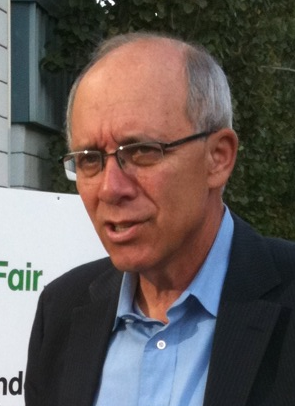
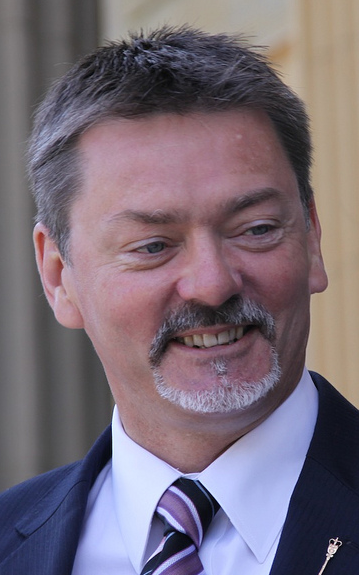
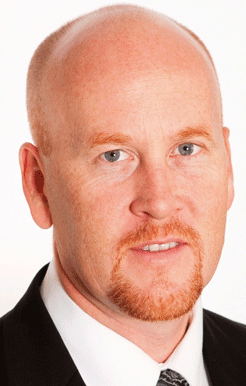
Stephen Mandel
Stephen Mandel

Despite repeated claims by Mayor Stephen Mandel that provincial government money would fill the $100 million gap, anyone who has paid any attention over the past year will know the province had no plans to provide funding for Edmonton’s Downtown Arena project. Premier Alison Redford, Finance Minister Doug Horner, and Municipal Affairs Minister Doug Griffiths have been consistent in their public comments on the topic: “no.”

In response to the lack of never-promised funding in last month’s provincial budget, the Mayor and seven Councillors voted to withdraw a $45 million loan to be paid back through future Municipal Sustainability Initiative funding that the city could receive over the next twenty-years. In response to the decision, Edmonton Journal’s Paula Simons reminded her readers this week, “[t]he clear intent of the original council resolution was that no deal would go ahead without $100 million in new provincial money.”

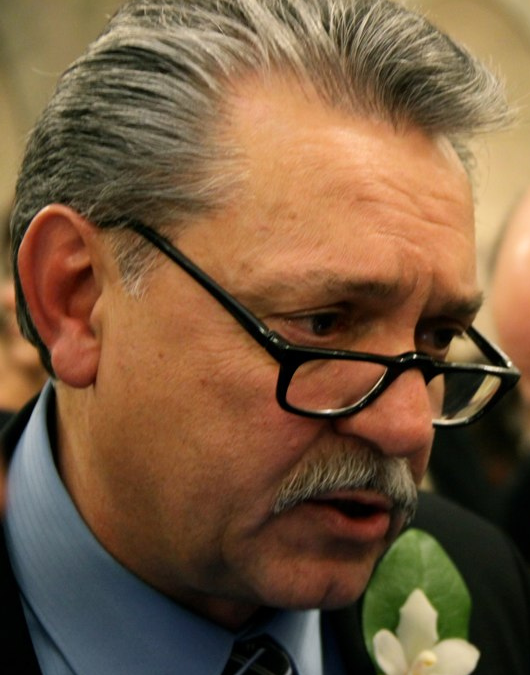
Daryl-Katz
Daryl Katz

In a display of common sense against what has become Mayor Mandel’s increasingly embarrassing obsession, five Councillors – Don IvesonBen HendersonLinda SloanKerry Diotte, and Tony Caterina – voted against the motion to dedicate future Municipal Sustainability Initiative funds to the proposed Arena.

Problematic for many reasons, this decision still leaves a $55 million gap in funding and Daryl Katz – the billionaire owner of the Edmonton Oilers – said he is not interested in renegotiating the financial arrangement agreed to months ago. Mayor Mandel claims this loan will convince the provincial to fill a smaller $55 million funding gap – something the province has said it has no interest in doing.

The Municipal Sustainability Initiative was created by Premier Ed Stelmach’s government in 2007 to provide funding to municipalities for public infrastructure projects. Municipalities have discretion over how this provincial money is spent and they have typically been used to fund public transit, libraries, community halls and utility infrastructure. Using these funds to build a new hockey arena to house a privately-owned business like the Edmonton Oilers would use funds that could be used for other much-needed community infrastructure projects.

A concern for City Councillors should be that, like all funding transfers from other levels of government, there is no assurance that the Municipal Sustainability Initiative will exist over the next twenty-years. Its continued existence is based on three factors the City of Edmonton has no control over: population growth, provincial revenue, and the continued desire of provincial politicians to continue the program.

Will the provincial government change its tune and provide $55 million in direct funding? Not very likely. Mayor Mandel’s warpath against post-secondary funding cuts will have left many already unsympathetic provincial politicians now even less-willing to contribute to the project.

Also problematic for the provincial government is the ongoing is the investigation by Alberta’s Chief Elections Officer into allegations that Mr. Katz violated the Elections Finances Act by donating more than $400,000 to the Progressive Conservative Party in the 2012 provincial election (the individual donation limit is $30,000).


Categories
Alberta Politics

Bitumen bubble deflates as Redford visits Washington D.C.

Alberta Bitumen Oil Bubble
Photo may not reflect actual “bitumen bubble.”

Remember the “Bitumen Bubble?”

The “bitumen bubble” spin was unleashed by Premier Alison Redford during her January 24, 2013 televised address that claimed our province was in the midst of a fiscal crisis caused by the so-called “bitumen bubble” — the difference between the price Alberta can get for its heavy oil (Western Canadian Select) and what the world is willing to pay for Texas crude (West Texas Intermediate).

On the day of Premier Redford’s January televised address, Western Canadian Select sat at $59.95 per barrel, compared to $95.95 per barrel for the West Texas Intermediate.

Albertans were told this price gap was why our oil industry needs more pipelines and why our provincial government claimed it needed to institute financial cuts to public services, including a drastic 7% cut to post-secondary education funding.

As of April 8, 2013, Western Canadian Select sat at $82.97 per barrel, compared to $93.36 per barrel for West Texas Intermediate.

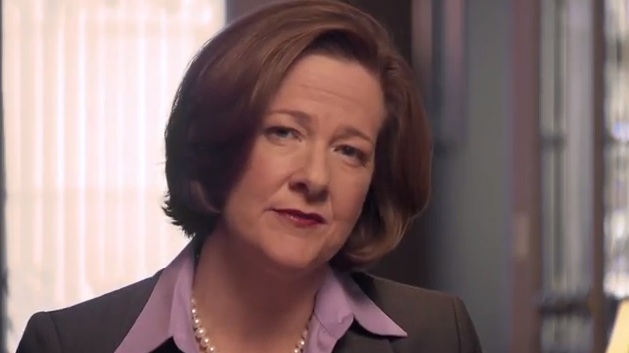
Premier Alison Redford

By some act of nature, the dreaded “bitumen bubble” has miraculously deflated.

Alas, this price increase has little to nothing to do with our long-ruling Progressive Conservative government. Commodity prices are determined by international markets beyond the control of any individual government or ambitious politician.

No new pipelines have been built in the meantime, but Premier Redford, along with International Relations Minister Cal Dallas and Environment Minister Diana McQueen, traveled to Washington D.C. this week to lobby for the approval of the TransCanada Keystone XL pipeline that would carry crude oil and bitumen from Alberta to refineries dotting Texas’ Gulf Coast.

I expect the Premier has left the words “bitumen bubble” out of any speeches she plans make while visiting the American capital.

During her speech at the prestigious Brookings Institute yesterday, Premier Redford argued the debate over the Keystone XL Pipeline has misled Americans about Canada’s oilsands. The Premier promoted Alberta’s new proposed carbon tax, defended the province’s environmental record, and championed the investment in two major Carbon Capture and Storage project (she did not mention that two other major projects have been cancelled due to poor economic predictions).

Making a strong case for Alberta’s environmental record, Premier Redford’s economic arguments fell flat. She claimed that the Keystone XL Pipeline would create 75,000 jobs for Americans, despite the fact that a U.S. State Department reported the number of new permanent jobs could be as few as thirty-five once the pipeline is complete.

Premier Redford also argued that the Keystone XL Pipeline would lessen America’s dependance on countries like Venezuela and Saudi Arabia for oil imports. As the proposed pipeline would end at major Texas ports, it is widely suspected that the corporations that would own the Alberta oil refined in Texas could easily ship it overseas to China or India, rather than sell it in the United States or Canada.

Premier Redford’s fact-based talk was heavy in statistics, which unfortunately will have little effect on a national discussion about the environment and economy that is driven heavily by emotional arguments on both sides of the debate (as demonstrated by the hecklers at her speech). At least Albertans can be proud our leaders have come a long way since Premier Ralph Klein compared the causes of today’s climate change problems to “dinosaur farts” sixty-million years ago.

Sitting at 29% approval in a recent Angus-Reid survey, Premier Redford is searching for a win in the American capital that could boost her popularity at home. Even if the Keystone XL Pipeline is approved, there will be no evidence that Premier Redford’s lobbying was the reason for its success. That decision will be made by President Barack Obama.

———–

The Wall Street Journal:

President Obama hit California for some fundraising this week, including stops with various billionaires who fervently oppose the Keystone XL pipeline. The visit had the virtue of showing how Mr. Obama is cross-pressured between his superrich green friends who don’t need to worry about a job and the blue-collar types who wouldn’t mind laying oil pipe for $25 an hour.

Categories
Alberta Politics

Wildrose raised big cash in 2012, Tories fell behind.

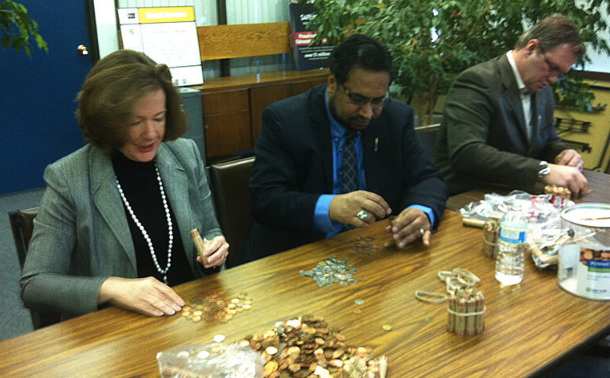
Falling behind in fundraising, Premier Alison Redford and MLAs Peter Sandhu and Steven Young count their pennies.

Unofficial political donation records published by Elections Alberta yesterday show that Premier Alison Redford‘s Progressive Conservative Association is not in the robust financial situation its leaders are accustomed to over the past four-decades in office.

At least not in 2012, when the Tory Party was eclipsed by its main rival in fundraising amounts.

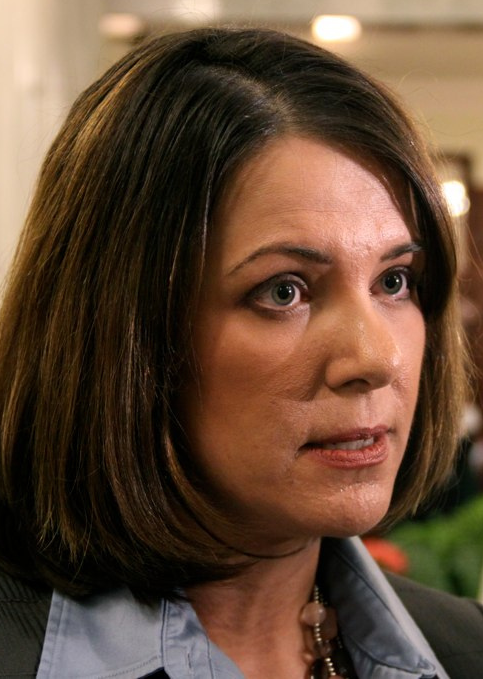
Danielle Smith Wildrose Party Alberta Election 2012
Danielle Smith

Danielle Smith‘s Wildrose Party smashed political fundraising records in 2012, raising an incredible $5,916,565 over the course of the year. Contributing to the $5 million figure was $3,122,670 of revenue reported from the 2012 election and $2,793,895 raised outside the campaign period. In their non-campaign period, the Wildrose Party recorded a $175,133 deficit and $405,361 in net assets.

While the Wildrose Party attracted large donations from medium-sized oil and pipeline equipment companies, the large majority of that party’s donations came from individual donors. This trend suggests the Wildrose has harnessed a fundraising machine similar to the Conservative Party of Canada. With close ties to the federal party, it is no surprise that the Wildrose has chosen to mimic this successful fundraising goal.

Premier Alison Redford

The Conservatives under Prime Minister Stephen Harper were the first federal political party in recent history to succeed in effectively cultivating a large base of individual donors to fund their political operations. This energized base of individual donors helped free the Tories from having to depend on the large corporate donations that for decades fuelled the Liberal Party of Canada.

The test for the Wildrose Party will be whether they can sustain this level of fundraising in the years between election periods.

Meanwhile, Alberta’s PC Party reported a $3,055,621 deficit after last year’s election that had been whittled down to $794,767 in liabilities at the end of 2012. Relying heavily on corporate donations, the Tories raised $1,607,581 during the 2012 election and $2,331,592 in the non-campaign period.

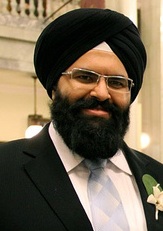
Manmeet Bhullar
Manmeet Bhullar

The Tory fundraising numbers from the 2012 election are lower than expected and are somewhat misleading as many Tory candidates raised astonishing amounts of funds on their own accord. For example, Calgary-Greenway Tory Manmeet Bhullar‘s campaign spent $133,294, Fort McMurray-Conklin Tory Don Scott‘s campaign spent $110,955.44, Edmonton-Whitemud Tory cabinet minister Dave Hancock‘s campaign spent $121,233.35, and Calgary-West Tory candidate Ken Hughes‘ campaign spent $111,796.33.

Despite the old saying that Alberta’s PCs strived to always have enough money in their coffers to run two back-to-back election campaigns, the party is struggling with a smaller donor base and growing debt wracked up in last year’s election.

Brian Mason‘s New Democrats reported impressive revenue of $1,380,659 outside the campaign period in 2012, but remain strapped with a $554,883 debt from previous election campaigns. Raj Sherman‘s Liberals reported $478,795 in revenue in the non-election period and a $30,015 surplus in funds at the end of 2012.

Categories
Alberta Politics

Mayor Mandel on the warpath, keeps re-election plans secret.


Yours truly, community organizer Michael Walters and Mayor Stephen Mandel at the Mayor's campaign headquarters during the 2010 election.
Yours truly, community organizer Michael Walters and Mayor Stephen Mandel at the Mayor’s campaign headquarters during the 2010 election.

Stephen Mandel is not ready to announce whether he will run for a fourth-term as Edmonton’s Mayor.

Speaking to a crowd of more than 2000 people at his annual state-of-the-city address to the Chamber of Commerce, Mandel avoided the topic of his political future, instead taking aim at Premier Alison Redford’s Progressive Conservatives by criticizing recent deep cuts to post-secondary education budget.

Mayor Mandel also called out the Tories for their lack of commitment to the promised City Charters and cuts to municipal infrastructure funding. It was a big shift for a Mayor who has spent his time in office influencing his provincial counterparts behind the scenes, rather than through the media.

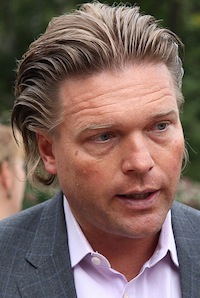
Thomas Lukaszuk
Thomas Lukaszuk

The always-eloquent Deputy Premier Thomas Lukaszuk was in the audience at the Mayor’s announcement and responded by telling the media that, “I don’t know who pissed into his corn flakes…” He might be #2 in the halls of the provincial legislature, but Minister Lukaszuk was vastly outnumbered in that banquet hall yesterday afternoon.

For all his faults, Mayor Mandel is still incredibly popular among Edmonton’s business community – a powerful constituency in the electoral coalition that re-elected the Tories in 2012.

With the Mayor on a new warpath, political watchers who were expecting the Mayor to announce his plan to retire in yesterday’s speech will have to wait (perhaps four more years if he decides to run again).

If Mayor Mandel decides to retire, this October’s vote will be the first mayoral election since 1968 without an incumbent or interim mayor on the ballot. Edmontonians have witnessed considerable growth in their city and progress on projects like downtown redevelopment and public transit expansion since he became Mayor in 2004. He will be a hard act to follow.

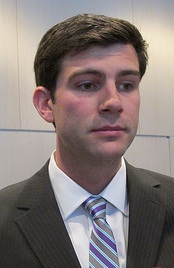
Don Iveson
Don Iveson

Mayor Mandel’s potential retirement has sparked wild-rumours and serious-speculation about who could run to replace him. While none have officially declared their candidacy, all eyes could soon focus on the handful of City Councillors who could stand to become the next Mayor of Edmonton.

As an underdog candidate in the 2007 election, Don Iveson surprised political watchers when he unseated high-profile Councillor and past mayoral candidate Mike Nickel in south Edmonton’s Ward 5. Since then, Councillor Iveson has been one of Council’s most well-spoken and thoughtful voices on issues ranging from smart growth to waste management. His role as chair of the Capital Region Board’s Transit Committee will have given him an opportunity to understand the broader needs of Edmonton’s neighbours.

Don Iveson represents a new generation of politically engaged Edmontonians who are passionate about defining Edmonton as a strong economic and creative hub in Canada.

Karen Leibovici
Karen Leibovici

A popular and hard-working representative, Karen Leibovici is one of Edmonton’s longest serving politicians. She began her elected career as a Liberal MLA representing the Edmonton-Meadowlark constituency in 1993 and was elected to City Council in 2001. While she once wanted to lead Alberta’s Liberal Party, her politics have tended to be more conservative on civic issues.

Councillor Leibovici is currently finishing her term as the President of the Federation of Canadian Municipalities, the national lobby group for Canadian municipalities.

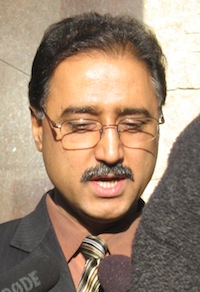
Serving his second-term representing Mill Woods, Amarjeet Sohi is a consummate retail politician and community advocate. On Council, he is a passionate voice for an area of Edmonton that has been traditionally underrepresented in the halls of power. A former representative with the Amalgamated Transit Workers Union, which represents Edmonton Transit Service staff, Councillor Sohi is one of the most down-to-earth politicians you will find in this city.

Amarjeet Sohi
Amarjeet Sohi

First-term Councillor and former Edmonton Sun reporter Kerry Diotte has made his mark over the past two years as City Council’s resident contrarian on issues ranging from bike lanes to the proposed downtown arena. Tapping into widespread frustrations about the state of city roads, Councillor Diotte recently launched the gimmicky “hole-y-cow” contest to encourage Edmontonians to report potholes for a chance to win a $500 gift certificate.

While he has been outspoken critic on city council, it is sometimes difficult to figure out what vision Councillor Diotte actually has for Edmonton.

Whether these Councillors run for Mayor in October depends on many factors, including the big question of whether Mandel will decide to seek re-election. Following yesterday’s speech, we may have to wait a while for Mandel to give us an answer to that big question. Stay tuned.

Categories
Alberta Politics

Universities, students and staff push back against post-secondary budget cuts.

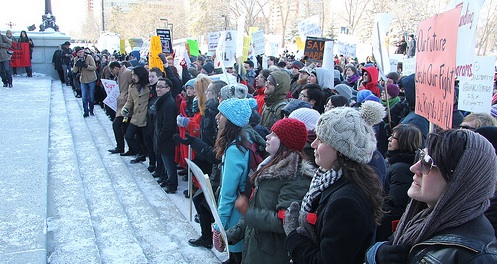
More than 600 students and staff from the University of Alberta rallied against budget cuts in front of the Alberta Legislature.

“You don’t want to have five mediocre engineering schools. You’re better off having two really good engineering schools. There’s no doubt about it.”

And on that note, Deputy Premier and Advanced Education Minister Thomas Lukaszuk kicked off his overhaul of Alberta’s Post-Secondary Education system.

Thomas Lukaszuk
Thomas Lukaszuk

It should be noted that there are only two degree-granting university-level engineering schools in Alberta (some of the smaller universities have transfer programs). Unlike the Deputy Premier, I am not in a position to comment on the mediocrity of Alberta’s engineering schools.

After recently returning from a long-scheduled personal trip to Vietnam, the Deputy Premier is faced with an uproar from students, faculty, and school administrations facing the reality of a 7% cut to Alberta’s Advanced Education budget. The budget cuts, along with government plans to harmonize institutional roles, has lead some academics to worry that their autonomy could be put at risk.

Last week, more than 600 students and staff marched from the University of Alberta to to the Legislature to rally against the budget cuts. Organizing under the banner of the ‘Coalition for Action on Postsecondary Education‘, or CAPSE, students are planning for actions to protest against the budget cuts.

Demonstrating uncharacteristic independence for a group of provincial appointees, the University of Alberta Board of Governors sent an open letter to Premier Alison Redford, warning of the consequences of the cuts. The letter was signed by governors, including board chairman Doug Goss, a former senior Progressive Conservative Party official.

Here is an excerpt from the letter:

“…we must go on the record as being deeply concerned that the recent budget decision of the provincial government to cut the university’s funding by more than seven per cent will have a dramatic effect on the progress that the U of A has made in reaching its potential, both as a research and a teaching institution.

It is difficult to imagine the detrimental effect that cutting more than $43 million from our annual budgetthis year alone will have on our students, who are the critical next generation in this province. The sameis true of our faculty, who lead the teaching and research initiatives that can help position this province as a global leader on the issues of greatest concern in the 21st century. Staff members at our university who support our students and faculty also will be deeply affected.”

Categories
Alberta Politics

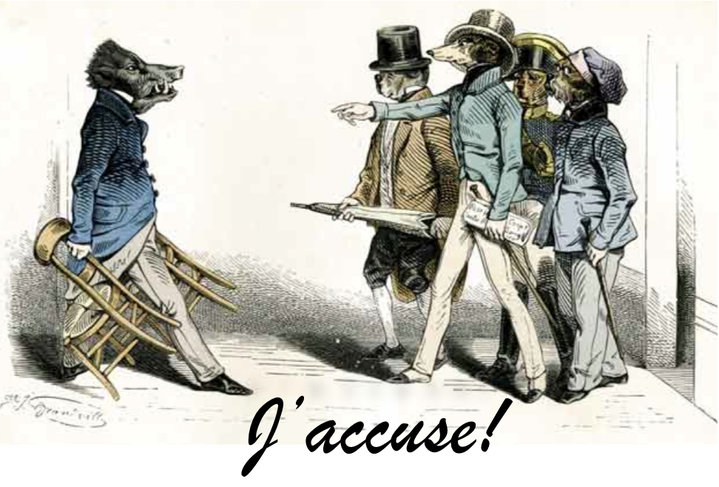
J’accuse! Thomas Mulcair’s treason and the Keystone XL Pipeline.

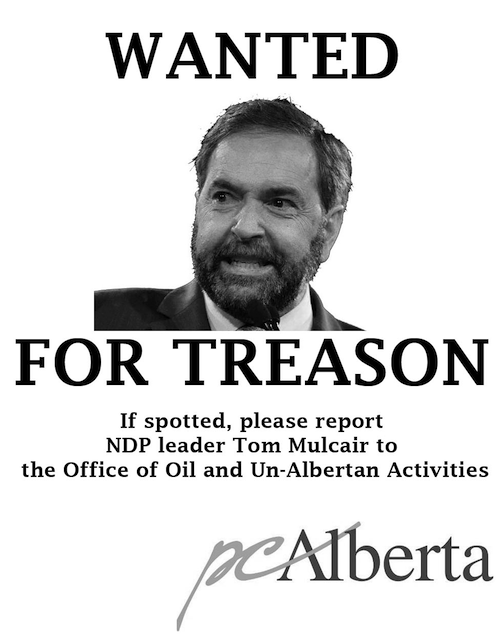
"Treason" was one of the accusations used against NDP leader Thomas Mulcair after be voiced his opposition to the Keystone XL Pipeline in Washington D.C.
“Treason” was one of the accusations used against NDP leader Thomas Mulcair after be voiced his opposition to the Keystone XL Pipeline in Washington D.C.

The rhetoric is running high this week with President Barack Obama expected to soon decide the fate of the controversial TransCanada Keystone XL Pipeline.

In Washington D.C. last week, federal NDP leader Thomas Mulcair criticized the pipeline that would ship bitumen from Alberta’s oilsands to refineries in Texas. Mr. Mulcair also took the opportunity to criticize the deconstruction of Canada’s environmental regulations by Prime Minister Stephen Harper‘s Conservative government and told the media that the pipeline would export jobs from Cnaada and would pose a threat to our country’s energy security. Mr. Muclair’s treasonous words were printed in the National Post:

“According to object studies, Keystone represents the export of 40,000 jobs and we think that is a bad thing for Canada,” Mulcair said in an interview. “We have never taken care of our energy security. We tend to forget that a 10-year supply to the U.S. is a 100-year supply to Canada. We are still going to need the energy supply to heat our homes and run our factories, whether it comes from the oilsands or it comes in the from natural gas. Fossil fuels are always going to be part of the mix.”

NDP leader Thomas Mulcair

If you do not find these words abhorrent and treasonous, you may be surprised by the whiplash reaction from Mr. Mulcair’s political opponents.

In Alberta, where a political consensus is tilting towards approval of the pipeline, Premier Alison Redford took to the floor of the Legislative Assembly to attack Mr. Mulcair and NDP leader Brian Mason for their opposition to the pipeline.

Treason” was the word Mark Cooper, the Intergovernmental Affairs Minister’s Press Secretary, used on twitter this week to describe the NDP position on the pipeline. While his tweet should be taken somewhat in jest, that word set the tone for the pipeline debate this week.

On the floor of the Assembly, Energy Minister Ken Hughes criticized the NDP by boasting about having created a  “coalition of the willing” in support of the Keystone XL pipeline. Minister Hughes’ comment was an unfortunate reference to the American invasion of Iraq in 2003, which marked its ten year anniversary this week.

Ken Hughes
Ken Hughes

Mr. Mason was more than happy to pull quotes from recently deceased former Premier Peter Lougheed, who voiced his opposition to the Keystone XL pipeline in favour of refining bitumen in Alberta. This happens to be close to the NDP position.

This is not a clear left/right issue. Prominent labour unions, including the AFL-CIO in the United States, have voiced their support for the pipeline for the jobs it would create in the bitumen refineries in Texas. Pipeline critics, like Alberta Federation of Labour‘s Gil McGowan, argue that refining oilsands bitumen in Alberta would create more jobs in-province.

Also joining the debate is former Premier Ed Stelmach, who spoke in favour of local refining today telling the Edmonton Journal “…it is in our interest to promote as much pipeline capacity as possible to move products to existing markets, and of course, new markets. But to close that differential in price, we need to sell a higher-value product.”

Premier Alison Redford

To the east in Saskatchewan, the partisan divide over the Keystone XL Pipeline in not so sharp. Premier Brad Wall, the province’s most popular leader since Tommy Douglas, has trumpeted the benefits the Keystone XL Pipeline could bring to Canadian and American economies. His main opponent, newly selected Saskatchewan NDP leader Cam Broten, has broken from his NDP colleagues and given his timid support for the pipeline’s construction.

The Alberta government purchased a $30,000 advertisement in the Sunday edition of the New York Times. While widely read, the ad was meant to respond to an anti-Keystone XL editorial widely circulated on the internet. The factual arguments made by the Alberta Government in the ad will likely fall flat in this highly emotional debate. While the ad generated significant earned media in Alberta, this one-time ad-buy will likely have little impact on the large debate happening in the United States.

Recognizing that Conservative Parties are seen by many Canadians as ‘weak’ on the environmental issues related to pipeline construction, the Conservative movement is putting significant energy toward finding the key messaging needed to convince Canadians otherwise.

At last week’s Preston Manning Networking Conference in Ottawa, speakers presented their analysis of the Oilsands Pipeline debate. As blogger David Climenhaga wrote, “the most creative minds in Canadian conservatism are applying their brainpower to moving forward pipeline projects – extending from Alberta, the centre of their political and economic universe, to all points of the compass.”

More on this later.

Categories
Alberta Politics

Preston Manning throws Alison Redford, Tom Flanagan under the conservative bus.

Preston Manning
Preston Manning

OTTAWA

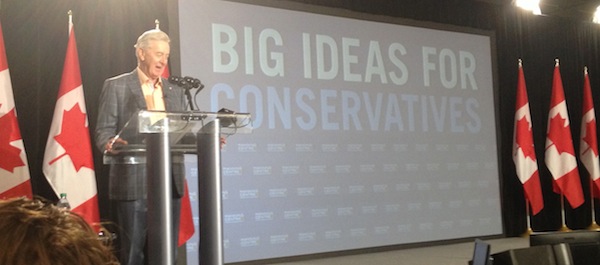
Speaking about the state of Canada’s conservative movement at this weekend’s Manning Centre Networking Conference in Ottawa, former Reform Party leader Preston Manning denounced the ethical and financial state of Premier Alison Redford‘s Progressive Conservatives.

“…in Alberta an aging Progressive Conservative administration has lost its way ethically and fiscally and needs to be overhauled or replaced,” Mr. Manning told an audience of close to 800 conservative activists.

Mr. Manning heaped this criticism on the forty-one year governing PCs, giving an obvious tip of the hat towards his ideological allies in the right-wing Wildrose Official Opposition.

Mr. Manning also used his speech to denounce two controversial statements and tell conservatives that they need to draw the line about what public comments are acceptable in their movement.

Mr. Manning characterized his former advisor Tom Flanagan‘s comments about child pornography and homophobic remarks made by a Wildrose candidate in the last provincial election as “intemperate and ill-considered remarks that discredit the conservative movement as a whole.”

“For the sake of the movement and the maintenance of public trust, conservative organizations should be prepared to swiftly and publicly disassociate themselves from those individuals that cross the line,” Mr. Manning said.

Numerous supporters of Dr. Flanagan attending the conference prominently sported buttons showing the face of the discredited university professor.

Categories
Alberta Politics

Alberta Budget 2013 a confusing start to the Tory re-election strategy.

Rumours swirled through the halls of the Legislative for weeks. Whispers and warnings of cuts and rollbacks not seen since Ralph Klein and Jim Dinning unleashed a scorched earth policy on the provincial budget in the mid-1990s. Back in debt. Broken promises. Bankrupt budgets.

The end was nigh.

And today, the budget was tabled and the massive cutbacks did not emerge.

The end is not nigh, but remains difficult to figure out what long-term goals Finance Minister Doug Horner and Premier Alison Redford plan to accomplish with Alberta’s 2013 provincial budget. The devil is in the details and the posturing for the next provincial election, expected in 2016, has already begun.

Doug Horner
Doug Horner

The Sustainability Fund that has saved our provincial government from going back into debt for five years is gone and in its place, the government is introducing the Fiscal Management Act, which Minister Horner says will mandate annual savings. In hindsight, and the world of smart fiscal management, this is probably something that the Tories should have started doing when they first formed government more than forty years ago.

Different than most years, this year’s budget is separated into three categories – operating, capital, and savings. This helps the government deflect criticism that it has returned to capital financing in order to build much needed public infrastructure and poses roadblocks to opposition groups hoping to make straight comparisons to previous budgets. The split also allows government ministers to argue with the deficit-hawks in the Wildrose official opposition that the “real” deficit, in the operating budget, is only projected to be $2 billion.

Overall, the budget for 2013-2014 is projected to stay the same as last year’s provincial budget, though the funding within the $36 billion has shifted. Cuts have been made.

Premier Alison Redford

The largest slice of the budget, going Alberta Health Services budget was increased by 3%, rather than the promised 4.5%. AHS Chairman Stephen Lockwood, the trucking magnate from Okotoks, weeks ago publicly declared that he would not fight for the full promised increase.

The Municipal Sustainability Initiative grants awarded to cities, towns, and counties have been frozen at $846 million, the rate in last year’s budget. This may feel problematic for some municipalities, who have already borrowed funds based on expected MSI funding in order to finance critical infrastructure projects. Alberta’s municipalities are responsible for so much of the critical infrastructure and services Albertans interact with daily.

The Alberta Association of Municipal Districts and Counties, known to political insiders as the “Tory farm team” because past rural Tory MLAs who have emerged from its ranks, expressed its disappointment in the cuts to municipal funding programs.

“Rural municipalities are responsible for the roads that keep our economy moving and the government’s lack of support for this critical responsibility will have a huge impact on our members’ budgets,” said AAMDC President Bob Barss.

The Advanced Education budget was cut by 6.8%, creating a likely situation that will see Universities and colleges turn to raising tuition and non-instructional fees levied on students to fill their financial gaps. University of Alberta President Indira Samarasekera sent a mass-email to staff and students earlier this week warning them that changes are on their way.

Calling the post-secondary cuts the largest in two decades, Council of Alberta University Students chair Raphael Jacob said “these cuts are going to have an immediate impact on the quality of our post-secondary education, and potentially longer impacts on the affordability and accessibility of degrees in Alberta.”

The budget also leaves unresolved a number of outstanding political issues facing Premier Redford’s government, such as the two ongoing labour disputes with Alberta teachers and doctors. These fights remain unresolved as the budget included a one year wage freeze for all public employees, including remuneration for doctors. The wage freeze should not be an issue for the teachers, who proposed a deal for two years without wage increases, but the doctors may move to escalate their dispute.

There will be no shortage of commentary on the political implications of this year’s provincial budget, but it is the long-game that matters. This budget is the first of a potential four before the Tories are expected call the next election in 2016. Whether they hope the Fiscal Management Act will earn them dividends from voters or that revenue from an increased price of oil will once again overflow government coffers, we are just in the first year of a four-year long political game.

Categories
Alberta Politics

What to expect in the spring sitting? Dirt, mud, and more dirt.

Alberta Legislative Assembly Building
Alberta’s Legislative Assembly Building (sans covered dome).

After a three-month break, Members of Alberta’s Legislative Assembly will gather today in Edmonton to start the spring sitting.

The commencement of this year’s first sitting will be unusual in that it will lack the traditional pomp and circumstance that comes with a Speech from the Throne. Lieutenant Governor Donald Ethell will not be invited to deliver a traditional Speech from the Throne today. The lack of Throne Speech or accompanying flagship legislation will mean a focus on the provincial budget, to be tabled on March 7. This, of course, is a deliberate move by the Tories.

Doug Horner
Doug Horner

Finance Minister Doug Horner will table the provincial government’s 2013/2014 budget on Thursday, and many political watchers are wondering what the document will include.

Over the past two months, Minister Horner and Premier Alison Redford have managed to communicate that Alberta has a revenue problem, a pipeline problem (also known as the unfortunately named ‘Bitumen Bubble’), and finally a spending problem.

Over the past week, numerous groups, including the Parkland Institute, the Conference Board of Canada, and the Alberta Federation of Labour, have released reports and survey’s demonstrating the need to reform Alberta’s revenue system.

The Premier mused about tax increases, and then ruled them out. All these mixed signals will make this week’s budget announcement a highly watched spectacle.

The continuation of the sitting also means that a handful of private members bills left over from last year’s sitting will return to the Assembly floor for debate this spring. These bills were introduced last year by opposition and backbench government MLAs.

Gene Zwozdesky
Gene Zwozdesky

This will be the second sitting of the Assembly since Edmonton-Mill Creek MLA Gene Zwozdesky was selected as Speaker by his peers. While generally seen as a fair chairman of the Assembly, Speaker Zwozdesky was highly criticized for ruling that Premier Redford did not mislead the Assembly over last year’s tobacco-gate scandal.

Watch Premier Redford focus on her strengths, like advocating on the national stage for a Canadian energy plan and for opening new markets for Alberta’s oil – like the controversial Keystone XL pipeline. As demonstrated throughout her first year in office, Premier Redford is much more effective at being a provincial advocate than being a provincial politician.

Do not expect to hear cabinet ministers or government MLAs make many comments about the fiascos that wreaked havoc for the Tories last fall. Ongoing investigations by Chief Elections Officer O. Brian Fjeldheim, retired Justice John Vertes, ethics commissioner Neil Wilksonson, and Information and Privacy Commissioner Jill Clayton will give the Tories a legitimate excuse to say “no comment.”

Will the Wildrose drive the agenda?

Danielle Smith Alberta Wildrose Party leader Election 2012
Danielle Smith

In the fall sitting of the Assembly, the newly minted Wildrose Official Opposition ran circles around the large Tory majority. It seemed like every day Wildrose leader Danielle Smith and Airdrie MLA Rob Anderson would have a new scandal or leaked documents to throw at the Tories like a live grenade.

Mirroring the tactics of the federal Conservatives in Ottawa, the Wildrose have brought a more aggressive and hyper-partisan approach than Albertans are used to from their opposition parties.

The official opposition launched a new website and series of radio ads to coincide with the budget debate, asking for Albertans feedback on the fiscal situation. While it is hard to fault the official opposition for their outreach, it is difficult to imagine the Wildrose will change their conservative ideological bent based on this mini-public relations campaign.

Three years ahead of the next election, a new online poll released by ThinkHQ shows the Wildrose leading the Tories 36% to 28%. The New Democrats and Liberals were distant from the pack at 16% and 13%. While the poll should be taken with a grain of salt, the mixed messages about provincial finances, recent conflict with Alberta’s teachers and uber-popular Calgary Mayor Naheed Nenshi are not likely working to help the Tories’ cause.

Brian Mason Alberta NDP leader Election 2012
Brian Mason

Lost in the fray during the fall sitting, these two parties need to remind Albertans that they are still there. Can the New Democrats and former official opposition Liberals succeed in reasserting themselves in the Assembly? I would not count them out.

The four-MLA NDP caucus just finished their province-wide “Broken Promises Tour”, highlighting what leader Brian Mason claims are a string of broken promises from the Tories since last year’s election. Liberal leader Raj Sherman has come out with a string of media releases criticizing the Tories.

Both parties hope that a provincial budget harsh on public services will remind Albertans of the differences between their parities and the governing Tories. The centre-rightish Liberal Party saw a mass exodus of supporters vote for Premier Redford’s Tories in last year’s election to block the Wildrose from forming government. It worked too well for the Tories, leaving the Liberals with a small five MLA caucus.

Last fall, the Wildrose Official Opposition danced circles around the governing Tories. Daily attacks from the Wildrose left the Tories stumbling and stammering to respond. New faces in the Premier’s Communications Office have already brought a more aggressive and partisan tone to their media releases and responses to opposition criticism online. This sitting, expect to see the Tories to counter the Wildrose attacks by taking a more aggressive approach to defending Premier Redford’s political agenda. That means dirt, mud, and more dirt.

Categories
Alberta Politics

Why are the Redford Tories picking a fight with Alberta teachers?

Why are the Redford Tories picking on Alberta teachers?
Are Alberta teachers about to become collateral damage in a Tory feud?

Education Minister Jeff Johnson dispatched a letter to the Alberta Teachers Association (ATA) and the Alberta School Boards Association yesterday threatening salary cuts if a new contract is not agreed to before the provincial budget is released on March 7, 2013.

Minister Johnson’s statement was made the same day that Premier Alison Redford told the media that her government will not release an austerity-minded budget (a statement made days after Premier Redford told the media that Alberta had a spending problem).

Jeff Johnson Alberta Education Minister MLA
Jeff Johnson

Whether or not an agreement is reached before the provincial budget is tabled in ten days would seem irrelevant considering the budget documents have likely already been shipped to the printers.

Yesterday’s development follows Minister Johnson’s musings earlier this month that he could force an agreement on teachers through provincial legislation.

Alberta may be known for its conservative politics, but it has been a sea of labour calm compared recently to provinces like Ontario and British Columbia. It would make little sense for the Redford Tories to unnecessarily splash tidal waves through its relationship with Alberta’s teachers.

New to the job this year, Minister Johnson may just be confused. He is the Tory government’s third education minister in less than three years to oversee the same provincial negotiations with Alberta teachers, following in the steps of the conciliatory Dave Hancock and the more aggressive Thomas Lukaszuk.

Before the province-wide negotiations came to an abrupt end in November 2012, the ATA had proposed a four-year deal that would freeze teachers’ salaries for two years and implement increases in the final two years to catch up with inflation. The ATA proposal would have ensured continued labour peace and focused on long-standing issues surrounding workload and non-instructional volunteer and supervision roles filled by teachers.

After negotiations at the provincial level stalled in November 2012, teachers turned to school boards to continue contract talks at the local level. School boards have limited autonomy in local decision making and it has always been clear that the provincial government has the ultimate control over funding.

Why would the government pick a fight with Alberta teachers when their union has presented fair and reasonable positions at the bargaining table?

Numerous sources close to the Tory government say that tension and internal politics within the Tory caucus are fuelling animosity towards Alberta’s teachers. Some Tory MLAs, who supported other leadership candidates, are said to blame the ATA for Premier Redford’s victory in the 2011 Progressive Conservative leadership contest. The tension is said to have  led to more than a few heated arguments behind the thick wooden doors of Tory caucus meetings.

While the ATA openly encouraged teachers to participate in the Tory leadership contest, claims that teachers stole the vote for Ms. Redford are just plain silly.

Although Premier Redford led her party to a majority victory in the 2012 election, it is important to note that she had the support of only one MLA when she first entered the Tory leadership contest (former Calgary-Hays MLA Art Johnston, who was twice unable to win a party nomination in 2012).

If the speculation is true, then Alberta’s teachers could become collateral damage in a Tory feud.

UPDATE: The Alberta Teachers’ Association provincial executive council have voted unanimously to reject Minister Johnson’s offer.

Categories
Alberta Politics

Alberta has a revenue problem and a pipeline problem.

Photo of the Keystone XL Pipeline protest on February 17, 2013 in San Francisco (photo by Steve Rhodes - CC BY-NC-ND 2.0)
From the Keystone XL Pipeline protest on February 17, 2013 in San Francisco (photo by Steve Rhodes – CC BY-NC-ND 2.0)

One month ago, Premier Alison Redford took to the airwaves to warn Albertans about the revenue problem, or ‘bitumen bubble‘, the government will face in the 2013 provincial budget. The Premier cited the lack of pipelines pumping bitumen from our oilsands to external markets as a reason for the low price of Alberta oil and her government’s lack of resource revenues. Alberta had a revenue problem.

Premier Alison Redford

For the first time in recent memory, Alberta’s revenue problem was at the top of political discourse in our province. The government held a symposium to hear from experts about Alberta’s fiscal framework, but at the same time ruled out the return of health premiums and denied any rumours of a provincial sales tax (which, in fairness, would have been as popular as introducing rats into the province).

Two reasonable solutions that did not get enough attention were to increase the revenues from natural resources and to replace the Klein-era ‘flat-tax’ with a progressive taxation system that could collect more revenue without penalizing low- and middle-income Albertans.

It is hard not to point out that the group of individuals currently in a position to solve this problem are also the architects of our government’s short-sighted fiscal planning: Alberta’s Progressive Conservatives.

But late last week, before the Premier flew to the United States in a last ditch attempt to lobby politicians to approve the TransCanada Keystone XL Pipeline, she turned her government’s spin machine in a new direction, claiming Alberta now has a “spending problem.”

It is likely this is still part of the ongoing public relations campaign to manage Albertans expectations before the March 7 provincial budget.

Now let us shift to the pipeline debate and what the Premer says is the source of our (now former?) revenue problem: Alberta’s pipeline problem.

BC NDP leader Adrian Dix
Adrian Dix (photo from @taminator on Flickr)

After years of campaigns targeting Alberta’s tarsands as a major contributor to climate change, our oilsands are an easy political target for opponents of two major pipelines. Large protests across the United States last week have put the future of the Keystone XL Pipeline in question and a near political consensus in British Columbia against the Enbridge Northern Gateway Pipeline suggests a pipeline through that province is unlikely to be built anytime in the near future.

Both Liberal Premier Christy Clark and NDP leader Adrian Dix have adopted positions against the Northern Gateway Pipeline project in advance of the May 14, 2013 elections. A recent poll from Angus-Reid shows the BC NDP with 47% support compared to 31% for the BC Liberals.

Premier Redford’s cause is not without political allies south of the border. The Keystone XL Pipeline has the support of a dozen United States Governors and TransCanada claims the southern section of the pipeline, through Texas and Oklahoma, is already half-complete.

Many critics of the Keystone XL pipeline have focused on climate change, raised legitimate concerns about the devastating environmental impact of pipelines leaks, and poked holes in the number of jobs pipeline proponents have promised to create.

Even notorious Australian-American news media owner Rupert Murdoch railed against the pipeline on Twitter.

Representing more than eleven million American workers, the AFL-CIO President Richard Trumka is backing the pipeline, pitting the labour movement against environmental groups, like the Sierra Club (executive director Michael Brune was arrested at last week’s protests).

It has been speculated that having these two large and influential constituent groups on opposite sides of this debate could make it increasingly difficult for President Barack Obama to approve the pipeline’s construction over the American border with Canada.

Categories
Alberta Politics

Former Finance Ministers Morton, Liepert and Snelgrove line up with free advice.

Ted Morton MLA
Ted Morton

Free from the tight leash of party discipline, three former Finance Ministers are giving plenty of advice to Premier Alison Redford and Finance Minister Doug Horner.

Ted Morton, the former two-term Tory MLA from Foothills-Rockyview and two-time Tory leadership candidate who served as Finance Minister from 2010 to 2011, penned an opinion-editiorial in Wednesday’s Calgary Herald pointing out some common misconceptions about Alberta’s fiscal situation.

While Professor Morton correctly points out that the symptoms of Alberta’s financial woes are not a new phenomenon, his prescription is a tough pill to swallow.

In his column, Dr. Morton dispels the myths that 1) our fiscal problems are just because we are having a bad year, 2)  our fiscal problems are just because of the low price of bitumen (also known as the notorious ‘Bitumen Bubble‘), and that 3) this is just about a Budget 2013 deficit.

On his fourth argument, Dr. Morton diverts into a more conservative ideological direction. While he correctly points out the fickleness and limited life-span of some political agendas, the former Finance Minister criticizes his successor for choosing to use financing to fund capital projects. On this point, Dr. Morton appears to share the view of his ideological kin in Danielle Smith‘s Wildrose Party, who spent the waining days of 2012 on a relentless offensive against the government on this very issue.

Alberta Finance Minister Ron Liepert
Ron Liepert

Ron Liepert, the former two-term Tory MLA from Calgary-West who served as Finance Minister from 2011 to 2012, has suggested that it was time for the government to address its revenue problems by looking at tax hikes.

“Nobody likes to pay more taxes. Nobody likes to pay the taxes you’re paying today. But everybody wants the services,” Mr. Liepert told the Calgary Herald in December 2012.

Meanwhile, disgruntled former Finance Minister Lloyd Snelgrove, who quit the Tory caucus in 2011 citing irreconcilable differences with Premier Redford, told the right-wing Sun News that he does not believe the government has a revenue problem, but if it does then a sales tax should be imposed.

Back in 2010, the last Tory to seriously discuss the idea of a sales tax was then-backbench MLA Doug Griffiths (now Municipal Affairs Minister). Mr. Griffiths was publicly demonized by the opposition for even broaching the topic.

Only two years earlier, another now-former Tory MLA, who is also now one of the government’s most vocal critic of the government, stood up in Alberta’s Legislative Assembly and called for tax reform and the introduction of a sales tax in Alberta:

“I, too, believe that the government of Alberta should look into studying the feasibility of eliminating our provincial income tax and using a consumption-based taxation system in its place, with a provincial sales tax being the likely substitute revenue generator.” – Newly elected Progressive Conservative MLA Rob Anderson in April 2008.

Categories
Alberta Politics

Public Affairs Bureau boss Lee Funke resigns.

Lee Funke, Managing Director of Alberta’s Public Affairs Bureau, announced his resignation in an email to government staff today. Mr. Funke had served as Managing Director of the government’s communications branch since March 2010.

Tracy Balash, Executive Director of Communications Planning, has been asked to step in as acting Managing Director. Ms. Balash recently joined the PAB after working in Premier Alison Redford‘s Communications Office.

The PAB was already in a period of transition after the retirement of Kathy Lazowski, its executive director of strategic communications.

Here is the text of the email he sent this morning:

Good morning team,

Two weeks ago I went to Peter Watson and informed him of my decision to return to private consulting once my contract as Managing Director of the Public Affairs Bureau ended. Peter has graciously allowed me to take some personal time before my contract concludes March 31, so my last day as Managing Director is tomorrow.

Reaching my decision was difficult, I am so very proud to lead this organization. Events like the recent Alberta Economic Summit held in Calgary demonstrate the important role we play in communicating significant policy issues with Albertans. The professionalism of our team was evident the entire day and I couldn’t have been more pleased. I see that same dedication by each employee of the PAB everyday – whether it is managing a special event to announce a new program, developing a multi-media promotion campaign, designing a public consultation strategy, launching an information website, writing a speech, or responding to a media call.

The PAB has one of the most exciting and challenging functions in the Government of Alberta.

We are on the front line communicating the policy, program and organizational changes that are a daily reality in a large complex organization. And there has been much change over the last three years that I have been Managing Director. The increasing demands of a 24/7 news cycle, the advent of social media, and emergence of new political voices have meant the adoption of new tools and techniques to communicate our policy agenda with Albertans.

Of course, the election of Premier Redford as the new leader for our government also brought change. Many of us have new Ministers, DMs, and in some cases new departments. But we have also seen the addition of new policy and decision–making processes, as well as new co-workers in the form of Press Secretaries. I admire how our organization has responded by adapting and implementing the changes needed to support Premier Redford’s focused agenda.

While the past three years have been rewarding, it is now time to switch my time and energy back to my government relations and communications consulting business which has been on hold.

I will continue to be involved in public policy discussions (it is part of my DNA) and our paths are likely to cross again in the near future. I will also be spending some time with my ever patient family. I know my wife, [name removed by this blogger], is certainly looking forward to me assuming more of the responsibilities for raising our two sons.

I have asked Tracy Balash, Executive Director, Communications Planning to act on my behalf until a new Managing Director is selected. In addition, Andy Weiler, Executive Director, Strategic Communications and the rest of the head office team are in place to offer the services you need to deliver communications support to your clients. I know that you will all support Tracy and Andy over the next few weeks and apply your considerable talent and skills to the roll-out of a budget that requires tough but smart choices to deal with our government’s fiscal challenge.

Let me close by saying thank you to the PAB team for your support and encouragement.

Everything I accomplished during my tenure as Managing Director was made possible by you. I have learned much from the many projects we have worked on together and I leave this organization with new knowledge and skills. I wish you all continued success in your careers and personal life, you deserve nothing less.

All the best,

Lee

Click here to read the statement issued by Premier Redford’s Communications Director, Stefan Baranski.

Categories
Alberta Politics

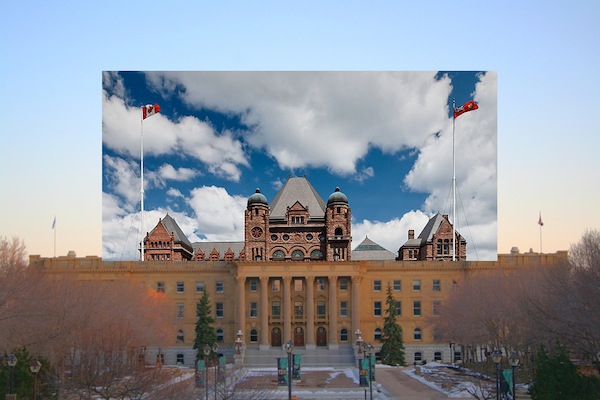
Welcome to Queen’s Park West.

Alberta Queens Park West
Queen’s Park West

The staff overhaul in Premier Alison Redford‘s Communications Office has resulted in two new hires. One was already working in Alberta’s Legislature and the other comes direct from Ontario’s provincial legislature.

Already under the dome, Michael Norris left his job as Municipal Affairs Minister Doug Griffiths‘ press secretary to become the Premier’s Issues Manager.

Neala Barton is the outgoing Director of Media Relations for recently retired Ontario Liberal Premier Dalton McGuinty and will soon begin her new job as the media relations lead in the Alberta Premier’s Communications Office (now to be referred to as “Queen’s Park West“). She is also a former reporter with CBC television in Edmonton.

Ms. Barton will be joining another Ontario political expat in Queen’s Park West, Communications Director Stefan Baranski. Mr. Baranski previously worked for Ontario Tory leaders Ernie Eves, John Tory, and Tim Hudak.

Facing-off against an aggressive official opposition, it is no coincidence that the Premier’s communications team is looking to hire political operators from a province where political competition is not a new phenomenon.

On a related note, I have been unable to confirm rumours that special orders from the Brewers Retail and Pizza Pizza will be flown in daily to Edmonton.

If you have any questions about these changes, please contact 416-967-1111.

Categories
Alberta Politics

When did Alberta become a have-not province?

Premier Alison Redford

Eighteen days ago, Alberta became a have-not province.

Eighteen days ago, Premier Alison Redford appeared on Albertans television screens to warn them of the notorious “bitumen bubble” that has been keeping the price of our oil down.

Today, after eighteen days of political spin about deep budget cuts and tough economic times, it would be easy to believe that the federal transfer payments are on their way (finally, equalization will work for us!).

Of course, Alberta is not a have-not province.

Alberta’s economy remains competitive, our population is growing, and job growth is on the rise. Alberta is Canada’s economic engine.

Most of the talk is part of the government’s attempt to manage the expectations of Albertans before the provincial budget is tabled on March 7. From the opposition benches, there are always political points to be gained before a government budget is tabled.

As has been the case each year since the Alberta government began to run “technical deficits,” the earlier projected deficits will likely be much lower when the budget is tabled. As any accountant or political strategist knows, bookkeeping is closer to an art-form than an exact science.

On budget day, a lower than predicted deficit will result in the government looking like better fiscal managers than the opposition has claimed and the opposition researchers will be caught scrambling through the volumes of budget documents to fill their message box.

With this year’s budget ready to be sent to the printers, the first Alberta Economic Summit was held this past Saturday in Calgary.

Initially derided by the opposition parties as a government-sponsored public relations exercise, the day-long event brought together panels of experts from the private, public, and not-for-profit sector to discuss our province’s fiscal future.

Whether it was a PR exercise or not, it did present an opportunity for a continued discussion about the need to raise taxes in Alberta. Our government relies heavily on the sometimes unpredictable revenues from our natural resources to fill the gap created by our low taxes to fund our essential public services.

As Kevin Taft explained last year in his book, Follow the Money, if Alberta increased its tax rates by $11 billion our province would still have the lowest tax rate in Canada

———-
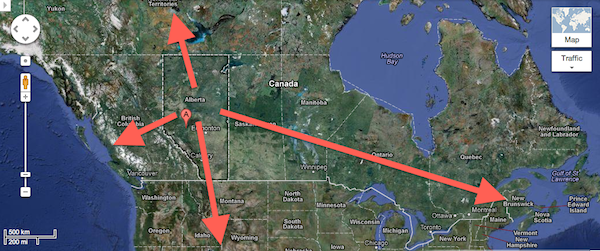
Onward and eastward, says Alward.

Last week, David Alward, the Premier of a real have-not province, swept into our province boasting the advantage of an eastward oil pipeline to New Brunswick’s deep-water ports as a solution to Alberta’s fiscal woes.

With almost no details or research about whether it would be financially viable, both Premier Redford and Premier Alward touted the Alberta-to-New Brunswick pipeline as progress.

Considering how many problems, both political and geographical, the province has faced with the proposed Enbridge Northern Gateway Pipeline from Alberta to British Columbia (two provinces), I can only imagine the level of political challenges that could be stirred up by an oilsands pipeline running through six provinces.