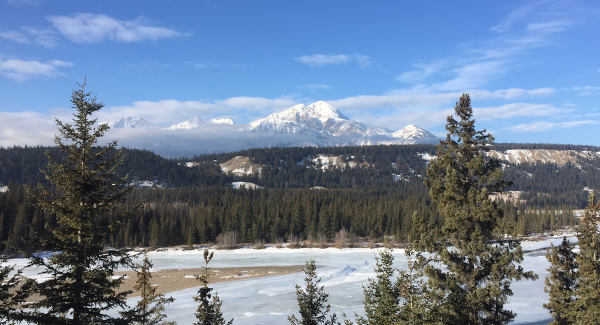
The beautiful Pyramid Mountain in Jasper National Park.
Every time I visit Jasper National Park I am instantly reminded of the natural beauty that is found in our country.
I am so grateful that my ancestors, more than 120 years ago, decided to leave their home in a small rural Quebec town to travel west to the District of Alberta, then part of the Northwest Territories (and that they decided not to leave after experiencing a few brutally cold winters on the prairies).
Edmonton can sometimes feel like an isolated and dreary place in the winter months, but it is pleasure to live an afternoon drive away from our country’s Rocky Mountain national parks.
1. A Wake for the Dreamland – Laurel Deedrick-Mayne *
2. Do Not Say We Have Nothing – Madeleine Thien
3. Wenjack – Joseph Boyden
4. Postcards from the Edge – Carrie Fisher
5. The Nest – Cynthia D’Aprix Sweeney
6. The Couturier of Milan: The Triad Years – Ian Hamilton
7. The Fate of the Tearling – Erika Johansen
8. The Association of Small Bombs – Karan Mahajan
9. The Little Red Chairs – Edna O’Brien
10. The Underground Railroad – Colson Whitehead
Edmonton Non-Fiction Bestsellers
1. Edmonton Cooks: Signature Recipes from the City’s Best Chefs – Leanne Brown *, Tina Faiz *
2. Wishful Drinking – Carrie Fisher
3. Born a Crime – Trevor Noah
4. Fur Trade in the West (Children’s) – Phyllis Arnold *
5. Edmonton House Journals 1821-1826 – Hudson Bay Company, ed. David Leonard *
6. The Hidden Life of Trees: What They Feel, How They Communicate: Discoveries from a Secret World – Peter Wohlleben, Tim Flannery
7. Behind the Kitchen Stove – Ella Drobot *
8. Notley Nation: How Alberta’s Political Upheaval Swept the Nation – Sydney Sharpe*, Don Braid *
9. A Family Outing – Ruby Remenda Swanson *
10. The Undoing Project: A Friendship That Changed Our Minds – Michael Lewis
The NDP finished their fourth quarter fundraising drive with $798,165, compared to $511,667 for the Wildrose Party, $218,792 for the PCs, $85,930 for the Liberals and $32,612 for the Alberta Party.
This was the second consecutive quarter where the NDP raised more than the opposition Wildrose. Over the course of 2016, the NDP raised $1,985,271 in donations from individual Albertans, more than then $1,758,377 raised by the Wildrose Party.
THE INCREDIBLE IMPLODING TORIES
Alan Hallman
Despite lawsuits, fines, complaints by former MLAs, and having a campaign strategist kicked out of the party, Jason Kenney’s single-focused campaign to dissolve the PC Party and merge it with the Wildrose Party appears to be on track to win a landslide at the party’s delegate convention on March 18.
And despite claims that the party remains viable, and that its constituency associations hold more than $1.7 million in the bank, none of the three candidates claiming to support the “renewal” of the current party appear to be contenders.
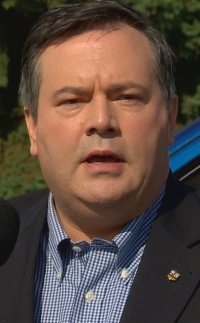
Jason Kenney
The latest explosion in the PC Party leadership race occurred over the weekend as the party executive voted to suspend the membership of long-time organizer Alan Hallman over an inappropriate tweet. Hallman, who had announced plans to sue Stephen Carter late last year, was serving a strategist, or “field organizer,” for Kenney’s campaign.
In a bombshell rebuke to the party’s elected executive, interim party leader Ric McIver publicly defended Hallman and some members of the party’s youth wing publicly appointed him as their honorary chairman the day after he was suspended. At least three members of the youth wing executive – Sierra Garner, Kyle Hoyda and Natalie Warren – tweeted they were not informed of the decision to give Hallman the honorary chairmanship before it was announced (I am told this is also a violation of the PC Party’s rules, as Hallman is no longer a party member).
It is unclear whether the blowback from McIver and Kenney’s supporters in the youth wing will convince the party executive to rescind the suspension order.
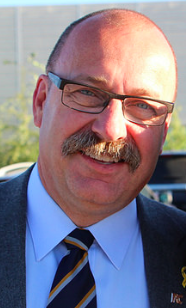
Ric McIver
Less than two years after being reduced to third place in the last provincial election, the party that led Alberta for almost forty-four uninterrupted years feels like a shell of its once mighty self. Once Kenney wins the leadership, there might not be anything left to merge with the Wildrose Party. Maybe that was the plan?
As AlbertaPolitics.ca blogger David Climenhaga notes, potential candidates to replace interim leader David Swann include include outgoing St. Albert Mayor Nolan Crouse, former Calgary broadcaster Nirmala Naidoo, and Calgary lawyer David Khan.
“There’s an opportunity right now in the middle of that political spectrum for a kind of common sense, pragmatic solution to some of the challenges we’re facing right now,” party President Karen Sevcik told CBC Edmonton. “We think there’s some room, there’s opportunity, there’s change, and when there’s change, there’s opportunity.”
Ernest Manning, Joseph Tweed Shaw, Peter Lougheed, Harry Hays, and Alexander Rutherford are a few of the Alberta politicians with electoral districts bearing their name.
Become famous in Alberta politics and one day you could have a provincial electoral district named in your honour.
It has become a custom in recent decades in Alberta for electoral districts to be named after former politicians. As far as I can tell, Alberta and Quebec appear to be the only provinces who have widely embraced the practice of of naming districts after historical figures.
“Canadians often decry their limited knowledge of their own history and fail to recognize the accomplishments of those who have made outstanding contributions to the country,” Courtney wrote, suggesting it would “be a welcome change from ponderous directional reference points and an excessive reliance on hyphenated place names.”
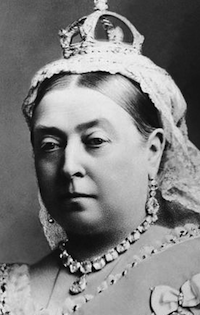
Queen Victoria
In Alberta, at least 10 out of the 87 current electoral districts bear the name of a political figure from Alberta’s history. When compiling this list, it was important to make the distinction between electoral districts that have been specifically named after individuals and districts named after communities that were already named after individuals (ie: Calgary-Currie, Lac La Biche-St. Paul-Two Hills, Livingstone-Macleod, and St. Albert).
Looking through the list, I discovered a few interesting facts. For instance, despite Alberta’s reputation as an unfriendly political environment for Liberal partisans, there are today more electoral districts named after former Liberal MLAs than there are actual Liberal MLAs in the Alberta Legislature.
Elmer Roper
The earliest instance of electoral districts being named after individuals may have been in Alberta’s first election. Two districts were created in 1905 – Victoria and Alexandra – which may have been named after Queen Victoria, who reigned from 1837 to 1901, and Queen Alexandra, wife of King Edward VII.
Why and when naming districts after historical figures began in more modern times might a little more difficult to determine. The Calgary-Egmont district, named after Frederick George Moore Perceval, 11th Earl of Egmont, was created in 1971 and existed until it was renamed Calgary-Acadia in the 2012 election.
The Calgary-McCall district first appeared in the 1971 election and was either named after First World War ace fighter pilot Fred McCall or the airfield that was named after him (McCall Air Field became the home of the Calgary International Airport after 1966). Also created in 1971 was the Calgary-McKnight district, which was either named for McKnight Boulevard or the boulevard’s namesake, Second World War flying ace Willie McKnight. The district was renamed Calgary-Nose Creek for the 1993 election.
In 1986, the Calgary-Shaw district was created and appears to have been named in honour of Joseph Tweed Shaw, who represented west Calgary as an MLA and MP in the 1920s and 1930s. He served as leader of Alberta’s Liberal Party from 1926 to 1930.
Ralph Klein
The next instance occurred in 1993, when the Calgary-Lougheed, Edmonton-Manning, Edmonton-Rutherford, Edmonton-McClung, and Edmonton-Roper districts were created, named after former Premiers Peter Lougheed, Ernest Manning and Alexander Rutherford, one of the Famous Five and former MLA Nellie McClung, and former Edmonton mayor and MLA Elmer Roper. Lougheed, Manning and Roper were alive at the time but had retired from politics many years before.
The original recommendation from the MLA committee that oversaw the redrawing of the electoral map at the time had the Manning and McClung districts in difference locations from where they now exist. Manning was originally to be located in southwest Edmonton and McClung in northeast Edmonton, until it was later discovered that Ernest Manning once owned a home in northeast Edmonton Also, Manning Drive, which was named for Manning in 1972, is in the district. An amendment introduced in the Assembly swapped the two closer to their current locations on the electoral map.
While the other names remain on the electoral map, the Edmonton-Roper district was renamed Edmonton-Castle Downs in 1997.
Laurence Decore
In 2004, the Electoral Boundaries Commission recommended the creation of the Calgary-Hays, Calgary-Mackay and Edmonton-Decore districts named after former Calgary mayors Harry Hays and Donald Mackay and former Edmonton mayor and MLA Laurence Decore. The Decore district was created from Edmonton-Glengarry, which Decore represented in the Assembly from 1989 until 1997.
Six years later, two more districts were named after former politicians. The first was Dunvegan-Central Peace-Notley was named in honour of former MLA and NDP leader Grant Notley, who represented the area in the Assembly from 1971 until 1984.
Grant Notley
And the second, created through an MLA introduced amendment in the Assembly after the Electoral Boundaries Commission’s final report had been tabled, is the only example I could find of a district being named after an individual who has recently retired from political life.
On October 26, 2010, Progressive Conservative MLA Kyle Fawcett introduced an amendment to rename Calgary-North Hill to Calgary-Klein, after former premier Ralph Klein, who had been retired from elected office for only three years. Fawcett, who represent North Hill, admitted that Klein had never actually represented that area of Calgary as an MLA, but that he was born and raised in the community of Tuxedo Park in the district.
The amendment was accepted by the Assembly, but it raises questions about the lack of process of honouring individuals by including their names in electoral districts. Unlike the process used to name parks, public spaces and schools used by municipal governments and school boards to honour notable community members, there does not appear to be a clear process in naming electoral districts.
The 2009/2010 Commission recommended in its final report that the Assembly consider adopting a protocol for the naming of electoral divisions for the guidance of future commissions. It is unclear whether any protocol has been adopted or whether the current commission will continue the trend of recommending naming new districts after political figures from Alberta’s history.
Here is the list of the top 10 fiction and non-fiction titles sold in Edmonton for the week ended Jan. 6, 2017, compiled on Jan. 10, 2017, by Audreys Books and provided by the Book Publishers Association of Alberta.
EDMONTON FICTION BESTSELLERS
1. Heartfire: A Winterkill Novel – Kate A. Boorman*
2. A Wake for the Dreamland – Laurel Deedrick-Mayne*
3. Russian Dolls: Stories from the Breathing Castle – W.P. Kinsella*
4. Wenjack – Joseph Boyden
5. The Sellout – Paul Beatty
6. Do Not Say We Have Nothing – Madeleine Thien
7. The Little Red Chairs – Edna O’Brien
8. Blood Red Summer: A Leo Desroches Mystery – Wayne Arthurson*
9. The Sympathizer – Viet Thanh Nguyen
10. Lady Cop Makes Trouble: Kopp Sisters Novel #2 – Amy Stewart
EDMONTON NON-FICTION BESTSELLERS
1. Edmonton Cooks: Signature Recipes from the City’s Best Chefs – Leanne Brown,* Tina Faiz*
2. Even Cows Cry – Ella Drobot*
3. Notley Nation: How Alberta’s Political Upheaval Swept the Nation – Sydney Sharpe,* Don Braid*
4. Behind the Kitchen Stove – Ella Drobot*
5. Sixty: The Beginning of the End, or the End of the Beginning? Ian Brown
6. Testimony: A Memoir – Robbie Robertson
7. Sapiens: A Brief History of Humankind – Yuval Harari
8. Edmonton House Journals 1821-1826 – Hudson Bay Company – ed. David Leonard*
9. Our Revolution: A Future to Believe In – Bernie Sanders
10. The Nazi Officer’s Wife: How One Jewish Woman Survived the Holocaust – Edith H. Beer, Susan Dworkin
Rural constituencies were incredibly overrepresented in Alberta’s Legislature for decades, as those areas of the province represented a powerful part of the Social Credit and Progressive Conservative parties historic voter base. As long as those parties maintained their majority governments, rural Alberta continued to play a powerful role in government.
But how lopsided was rural over-representation in Alberta?
In the 1967 election, rural Albertans were 31 percent of the population but rural areas represented 44 of 63 electoral districts in the province. That rural overrepresentation declined only slightly in the 1971 election, when rural Albertans represented 27 percent of the population and 42 of 75 electoral districts.
The blatant overrepresentation of rural areas over the province’s growing urban areas continued under the old PC government until at least the mid-1990s.
While rural gerrymandering was a hallmark of Alberta’s political history, recent Electoral Boundary Commissions have worked to equalize representation of rural and urban areas in the Assembly.
The Electoral Boundaries Act, which lays out the rules the committee must follow to redraw Alberta’s electoral map, now states that the population of an electoral division must not be more than 25 percent above nor more than 25 percent below the average population of all the proposed electoral divisions. The average population used in the 2010 report was 40,880, meaning that the allowable range for electoral division population was 51,100 to 30,660.
The last commission, which existed from 2009 to 2010, did a fairly good job moving away from overrepresentation of rural areas in the Legislature. In its final report submitted to the Assembly in 2010, 80 of the total 87 electoral districts created that year had a population that was within 15 percent above or below the provincial average and, of those, 70 electoral districts were within 10 percent of the provincial average.
The Act also states that the commission may recommend up to four electoral divisions which have a population as much as 50% below the quotient if at least three of five criteria are met.*
Two currently existing electoral districts were given this special district status in the 2010 report: Dunvegan-Central Peace-Notley, in which the population was 39.86 percent below the provincial average and Lesser Slave Lake, in which the population was 29.41 percent below the provincial average. A third district, West Yellowhead, fell 23.34 percent below the provincial average at the time, making it barely ineligible for special district status.
Eight electoral districts in Calgary, Edmonton and Red Deer were above 10 percent of the provincial average and six of the electoral districts which fell below the 10 percent average were in rural areas, according to the last commission report.**
We will not know for sure which districts fall above and below the provincial average until the commission receives updated federal census data on February 8, which oddly is also the deadline the commission set for receiving written submissions.
When the commission does receive the latest data, I would like to see all electoral districts proposed for the 2019 election be within the 10 percent above or below the average population of all the proposed electoral divisions.
I would also like to see the commission keep the number of special districts to a minimum. I would prefer that no district fall below 25 percent of the average, as increased funding should be allocated to MLAs in geographically larger rural ridings for additional offices, staff and travel costs. But political necessity will likely lead to the existence of one or two of these special exceptions.
Significant population growth across most of Alberta since 2009 could mean that we are unlikely to see major changes to the electoral map in this review. I do expect the map will need to be redrawn to reflect population growth in suburban areas of Calgary and Edmonton and growth in medium sized cities like Airdrie and Red Deer.
While some rural areas have certainly experienced a decline in population over the past eight years, which should be reflected in the new electoral map, I do not expect this commission will recommend a massive decrease in rural representation in the Assembly.
* Section 15 (2) of the Electoral Boundaries Act:
The Act provides that the Commission may recommend up to 4 electoral divisions which have a population as much as 50% below the quotient if at least 3 of the following criteria are met:
(a) the area of the proposed electoral division exceeds 20,000 square kilometres or the total surveyed area of the proposed electoral division exceeds 15,000 square kilometres
(b) the distance from the Legislative Assembly Building in Edmonton to the nearest boundary of the proposed electoral division by the most direct highway route is more than 150 kilometres;
(c) there is no town in the proposed electoral division that has a population exceeding 8,000 people;
(d) the area of the proposed electoral division contains an Indian reserve or a Metis settlement;
(e) the proposed electoral division has a portion of its boundary coterminous with a boundary of the Province of Alberta.
** Electoral Districts which were more than 10 percent above or below the average population of all the proposed electoral divisions in the 2009/2010 Electoral Boundary Commission final report:
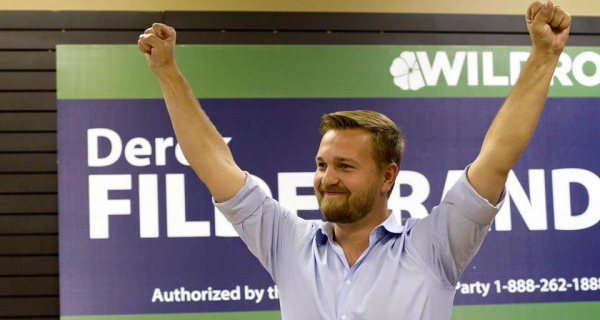
Wildrose MLA Derek Fildebrandt marked New Year’s Eve by posting photos of himself filling up his truck and jerrycans to avoid any increase to gas prices caused by the carbon tax on January 1. It is estimated that he may have saved a few dollars, but in many locations across Alberta the price of gas actually dropped after the weekend (gas at the local station in my neighbourhood in northeast Edmonton is six cents cheaper per litre today than it was on Dec. 31).
Jason Kenney
Progressive Conservative leadership candidate Jason Kenney probably levelled the silliest criticism of the carbon tax when he tweeted on January 4 a photo of Tesla charging station in Fort Macleod, which was empty. This was apparently meant to be an argument that the four day old carbon tax was a failure.
Despite claims by opposition Wildrose and PC politicians that they would repeal the tax if elected in 2019, a federal carbon tax dictated by Ottawa would likely be imposed in its absence.
But arguments in favour of the made-in-Alberta carbon tax have been, well, confusing and technical.
Shannon Phillips
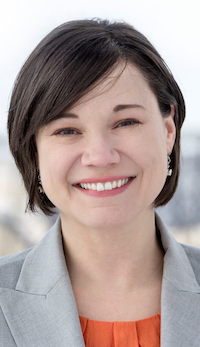
Environment and Parks Minister Shannon Phillips’ statement that the province is “still standing” the day after the carbon tax was implemented was factually correct but probably not the statement most Albertans were waiting to hear. Phillips is one of the government’s smartest cabinet ministers, and has done a good job promoting the flagship Climate Leadership Plan, but the NDP have fallen short when it comes to easing Albertans worries about the cost of implementing the carbon tax during an economic downturn.
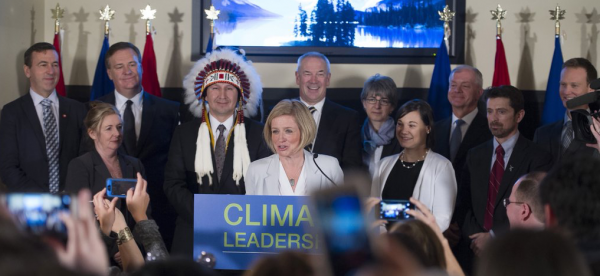
Economists like Trevor Tombe and Andrew Leach have penned or compiled intelligent arguments defending the carbon tax. Even executives of Canada’s largest oil and gas companies have come out in support of the carbon tax. Many of those executives stood on stage with Phillips and Premier Rachel Notley, along with environmental leaders, when the climate change plan was released in November 2015.
Justin Trudeau
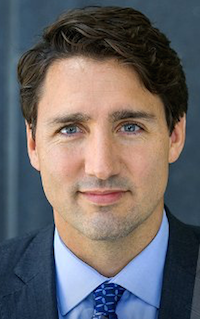
In November 2016, Prime Minister Justin Trudeauheaped praise on Notley for Alberta’s climate change plan, which includes the carbon tax, as a key reason for the approval of the Kinder Morgan Trans-Mountain pipeline expansion and the Enbridge Line 3 pipeline replacement.
But as anyone involved in politics knows, emotion and anger can sometimes trump facts, science and research. The recent presidential election south of the border confirms this.
Advertisements recently released by the Ontario government are, in my opinion, a good example of an emotional argument in favour of a climate change plan.
One of the arguments that I continue to hear is that Alberta and Canada should not implement a carbon tax because Donald Trump does not support a carbon tax. Trump also tweeted that he believes climate change is a conspiracy created by the Chinese government, so I am not confident that he is someone we should be looking to for leadership on this issue.
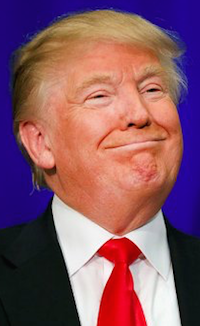
Donald Trump
Overall public opposition to the carbon tax might start to fade in the coming months as many Albertans begin receiving their rebate cheques – around sixty percent of Alberta households will get a rebate, with full rebates for single Albertans earning $47,500 or less, and couples and families who earn $95,000 or less – but the NDP government will need to work overtime to provide clear evidence of how the carbon tax will benefit Albertans.
Of the funds collected by the carbon tax, the government says $2.3 billion will go towards rebate programs, $3.4 billion will help businesses adjust to the carbon levy, $6.2 billion will go toward energy industry diversification and job creation, $3.4 billion for large scale renewable energy and technology, and $2.2 billion for green infrastructure. As well as $645 million will be directed towards the new provincial agency Energy Efficiency Alberta and $195 million to assist coal communities, which will be impacted by the phase out of coal-fired power plants by 2030.
The NDP also cut the small business tax from three percent to two percent, a change that came into effect as the carbon tax was implemented.
Taxes in Alberta remain low, some of the lowest in Canada. Investing in measures that could create a cleaner environment for the next generations is not a burden, it is a responsibility. The carbon tax is a sensible policy, but it could be an uphill battle to convince Albertans to embrace it.
Here is the list of the top 10 fiction and non-fiction titles sold in Edmonton for the week ended December 31, 2016, compiled on January 3, 2017 by Audreys Books and provided by the Book Publishers Association of Alberta.
Edmonton Fiction Bestsellers
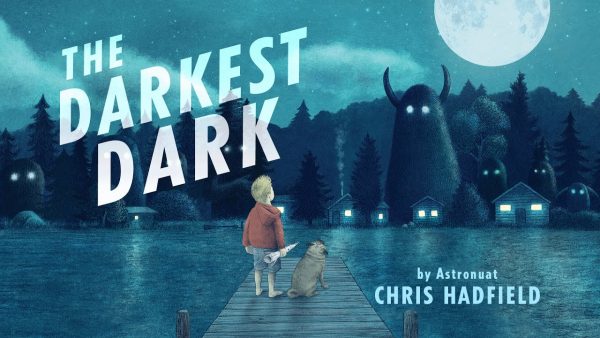
The Darkest Dark (Children’s) – Chris Hadfield, Eric Fan, Terry Fan
Wenjack – Joseph Boyden
Secret Path – Gord Downie, Jeff Lemire
Commonwealth – Ann Patchett
Bit Rot – Douglas Coupland
Robert Ludlum’s The Bourne Enigma – Eric Van Lustbader
Jerusalem – Alan Moore
13 Ways of Looking at a Fat Girl – Mona Awad
The High Mountains of Portugal – Yann Martel
Conclave – Robert Harris
Edmonton Non-Fiction Bestsellers
Edmonton House Journals 1821-1826 – Hudson Bay Company, ed. David Leonard
Edmonton Cooks: Signature Recipes from the City’s Best Chefs – Leanne Brown *, Tina Faiz *
The McDavid Effect: Connor McDavid and the New Hope for Hockey – Marty Klinkenberg*
The Fur Trade in the West (children’s) – Phyllis Arnold *
The Princess Diarist – Carrie Fisher
First Star I See Tonight: Ukrainian Christmas Traditions – Orysia Tracz
Happy City: Transforming Our Lives Through Urban Design – Charles Montgomery
99: Stories of the Game – Wayne Gretzky, Kirstie McLellan Day
Born a Crime: Stories from a South African Childhood – Trevor Noah
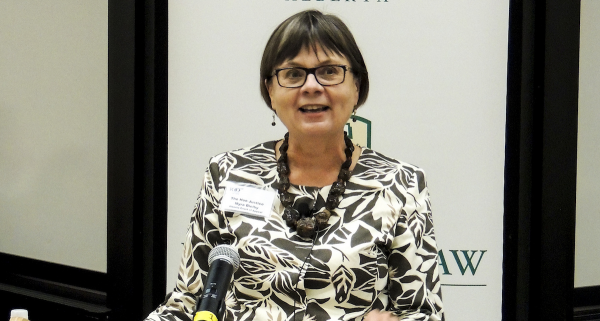
Justice Myra Bielby is chairing Alberta's Electoral Boundaries Commission.
The process of redrawing the electoral map for Alberta’s next provincial election will begin in a few weeks. The Alberta Electoral Boundaries Commission will propose a new map of provincial constituency boundaries to reflect changes in population since the last time the map was drawn in 2009/2010. (Here is a link to the current maps)
The Commission has launched their website and released the dates of the first public hearings to collect feedback from Albertans about how their provincial constituencies should be shaped.
The Commission has announced eleven locations where public hearings will be held. Public hearings in Calgary have not yet been announced but I expect they will be soon.
January 16 and 17 in Edmonton
January 18 in Fort McMurray
January 19 in Peace River and Grande Prairie
January 20 in Red Deer
January 23 in Wainwright and St. Paul
January 24 in Drumheller
January 25 in Lethbridge and Olds
January 26 in Medicine Hat
The Commission is also accepting written submissions until February 8, 2017.
An interim report will be available by May 31, 2017 and the final report by October 31, 2017.
The Commission’s membership is made up of a neutral chairperson, Justice Myra Bielby, two government appointees, Bruce McLeod of Acme and Jean Munn of Calgary, and two official opposition appointees, Laurie Livingstone of Calgary and Gwen Day of Carstairs.
I have more thoughts about how Alberta’s electoral boundaries are drawn that I will share in the coming weeks, but in the meantime, I encourage all Albertans to participate and provide their feedback into this important process.
Back in October 2015, I shared a list of podcasts that were on my regular listening feed. Each year I purposely look for new podcasts to listen to. This means removing some of my older regular listens and keeping some of my favourites.
Here are some of the podcasts new to my feed that get my stamp of approval:
Let’s Find Out: Edmonton’s Historian Laureate Chris Chang-Yen Phillips answers questions about our city’s history in this semi-regular podcast, which released its sixth episode last week.
Escape Plan and Horizon Line: Atlas Obscura is the definitive online guidebook and friendly tour-guide to the world’s most wondrous, weird, and obscure places and it is one of my favourite websites. They are now producing two podcasts.
The Axe Files and the Ezra Klein Show: Both of these podcasts include interesting and thought-provoking interviews with some of America’s key cultural, academic and political players. David Axelrod’s final podcast of 2016 included an interview with outgoing President Barack Obama.
Alberta MLAs to watch in 2017: Shannon Phillips, Sarah Hoffman, Sandra Jansen, Derek Fildebrandt, Brian Jean, RIchard Starke, Thomas Dang, Christina Gray, Jessica Littlewood, and David Swann.
In case you missed it, I joined Portia Clark on CBC Edmonton’s Radio Active program last week to talk about my annual list of Alberta MLA’s to watch. The interview begins at the 7:30 mark in the embedded player above.
Once you read the list of Alberta MLAs to watch in 2017, you can also look through previous lists from 2016, 2015 and 2014.
Any hope Alberta’s Progressive Conservative Party had of making the story of Sandra Jansen’s harassment go away is long gone as a political operative working for Jason Kenney’s leadership campaign has launched a lawsuit against a strategist who worked for Jansen’s now-defunct leadership campaign.
According to a report by the CBC, Alan Hallman claims his reputation suffered “irreparable harm” from a tweet posted by Stephen Carter. Hallman is being represented in the lawsuit by former justice minister Jonathan Denis, who is also supporting Kenney’s leadership bid.
The CBC reported that Carter will defend himself against the defamation claim and that the lawsuit is a “bullying tactic.”
“I believe it’s a tactic being used to try to suppress speech around the leadership. And that’s one of the reasons that I’m going to fight,” Carter told the CBC.
The PC Party released an investigative report last week in response to Jansen’s allegations that she was targeted by Kenney’s supporters during the party’s policy convention in Red Deer. There is digital evidence that the online harassment is real and it is likely the in-person harassment against Jansen was real as well, but the PC Party had little incentive to deliver justice after she joined the NDP.
The PC Party had little to gain by further penalizing or condemning Kenney’s supporters, as he appears to be on his way to sweeping the party leadership in 2017. The report was a way to end the story, and the allegation, that could tarnish the PC Party and Kenney’s leadership.
Thanks to Hallman, Denis and their lawsuit, the story of how a talented and high-profile woman was pushed out of Alberta’s PC Party will live on into 2017.
But according to the MLA committee membership list released on Dec. 13, 2016, Fildebrandt is no longer Chair of the Standing Committee on Public Accounts, a role he has filled since June 2015. The chair of the financial oversight committee is traditionally filled by an MLA from the Official Opposition. Fildebrandt has been replaced by Bonnyville-Cold Lake MLA Scott Cyr.
While relinquishing the chair role could be seen as a demotion caused by conflict with his party’s leadership, it likely means that Fildebrandt, a former director of the Canadian Taxpayers Federation and aggressive critic of the NDP, can now play a more active and vocal role on the committee.
Drew Barnes
The Wildrose shuffle included new assignments for Cypress-Medicine Hat MLA Drew Barnes as Energy critic, Fort McMurray-Wood Buffalo MLA Tany Yao as Health critic, Chestermere-Rockyview MLA Leela Aheer as Education Critic, Airdrie MLA Angela Pitt as Justice & Solicitor General critic, Barrhead-Morinville-Westlock MLA Glenn van Dijken as Jobs & Labour critic, and Little Bow MLA Dave Schneider as Agriculture critic. The capable and quick on his feet Nathan Cooper remains House Leader. (See a full list here)
The Wildrose caucus also shuffled their MLA committee membership: