The highest echelons of Alberta Health Services are once again being rocked by a firestorm of public criticism after it was revealed that AHS Chief Financial Officer Allaudin Merali had claimed more than $345,000 in expenses to the former Capital Health regional authority.
Questions are also being raised about the role of Alberta’s current Ethics Commissioner, Neil Wilkinson, who served as chair of the Capital Health board of directors during Mr. Merali’s time as CFO of the former regional health authority.
The controversy is a blow for Premier Alison Redford‘s PC government, which was swept into office earlier this year after promising to breath new life into the four decade old government. To his credit, Health Minister Fred Horne responded quickly to the controversy and promised that future expenses for public officials at that level will be made public on a quarterly basis. With the damage already done, the largest measure of response the government has is to ensure this does not happen again.
I have no reason to doubt Premier Redford’s political acumen or capability. Having only become Premier of Alberta eight months ago, she has hardly had an opportunity to demonstrate leadership on the national stage.
The upcoming Premiers’ conference, hosted by Premier Darrell Dexter from July 25 to 27 in Halifax, might give Albertans, and Canadians, an opportunity to watch Premier Redford demonstrate her leadership skills on a national level.
Closer to home, more than 50 organizations are calling on the Alberta Government to review the safety standards of the province’s aging pipelines.
Premier Redford has an opportunity to lead, and distinguish herself from her federal counterparts, by taking a positive lead on the renewal of the Canada Health Accord. The Accord, which was signed 10 years ago and expires in 2014, gave the provinces a significant monetary transfer for health care funding. The previous incarnation had little strings attached and the success of a future accord would benefit Canadians if more accountability were attached to the federal transfer.
Premier Redford’s road to 24 Sussex Drive is also complicated by another major factor. Only six years in to the job and still a young 53 years old, there is no indication that Prime Minister Stephen Harper will be retiring in the near future.
Relations with Premier Redford’s Progressive Conservatives is cool to cold in some, or perhaps even most most, federal Conservative circles. Immigration Minister Jason Kenney‘s recent reply-all email describing Deputy Premier Thomas Lukazsuk as a “complete and utter asshole” serves as a reminder of how strained the relations are between some federal and provincial Conservatives. In the recent election, a significant number of Conservative Members of Parliament supported Danielle Smith‘s upstart Wildrose Party.
Two years ago it would have seemed impossible, but current federal NDP leader Thomas Mulcair may actually have a shot at 24 Sussex Drive after the next federal election. The NDP are tied or leading in the polls and while there is three years until the next election (aka an eternity in politics when anything could happen), Mr. Mulcair appears to be the first Leader of the Official Opposition to take an aggressive offensive position against Prime Minister Harper’s Conservatives.
Earlier this week, the NDP released an attack ad against Prime Minister Harper, giving the federal Conservatives a taste of their own medicine. If anything, the ads demonstrate that Mr. Mulcair’s NDP are not afraid to use the same tactics that Prime Minister Harper’s Conservative Party used to destroy the political careers of weak former Liberal leaders Stephane Dion and Michael Ignatieff.
A total of four power generating plants went down across the province causing electrical blackout.
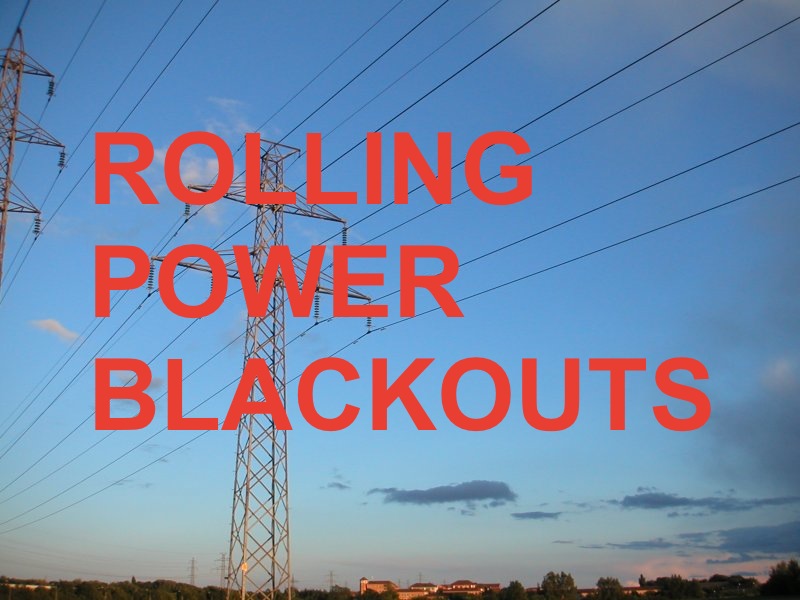
Rolling power blackouts yesterday across Alberta have some politicians raising questions about the accountability of privately-operated electrical utility companies. The blackouts also reignited the long-standing debate over the construction of controversial new electrical transmission lines in rural Alberta. A total of four power generating plants went down across the province causing electrical blackout during one of the hottest days of the summer.
Edmonton-StrathconaNDP MLA Rachel Notleytold the Edmonton Journal that re-establishing a regulated energy market in Alberta would reduce the chance of market manipulation:
“But if we aren’t going to do that, we better darn well have some answers as to why we have this coincidence of everybody not producing power on the same day,” she said. “We need to look into the relationship between the prices AESO is allowing and these plants all going off-line.”
Rimbey-Rocky Mountain House-SundreWildrose MLA Joe Anglin raised suspicions about the blackout and the provincial government’s drive to build new electrical transmission lines:
“Four major generators tripping off is really weird. It can happen, but I’m having trouble swallowing that at the moment… Even if this is 100-per-cent legitimate, they still need to investigate because economically this costs the province. But on the surface, this looks really suspicious and manipulative.”
During the recent provincial election, the Wildrose Party was successful in translating opposition by landowners to the construction of new transmission lines into electoral success in rural south and central Alberta constituencies. The Wildrose Party swept 14 constituencies in these two regions.
The Greatest Show on Earth, also known as the Calgary Stampede, kicked-off celebrating its 100th anniversary this weekend. Between the chuck wagons and rodeo clowns, politicians off all stripes will drop into Calgary over the next week to kiss babies and grill pancakes.
Twitter was, well, atwitter with chatter comparing the level of applause received by Premier Alison Redford and Wildrose leader Danielle Smith at Prime Minster Stephen Harper‘s annual Stampede BBQ. It sounds silly, because it is, and it signals how deep the divide between Progressive Conservatives and Wildrose partisans are in this province.
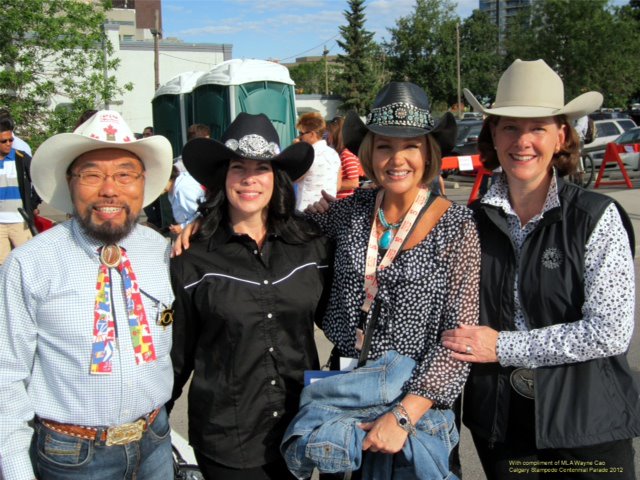
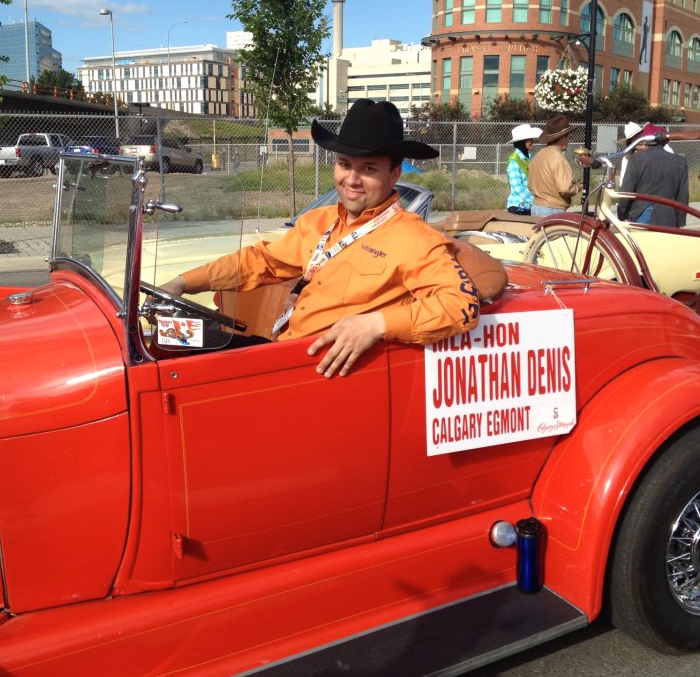
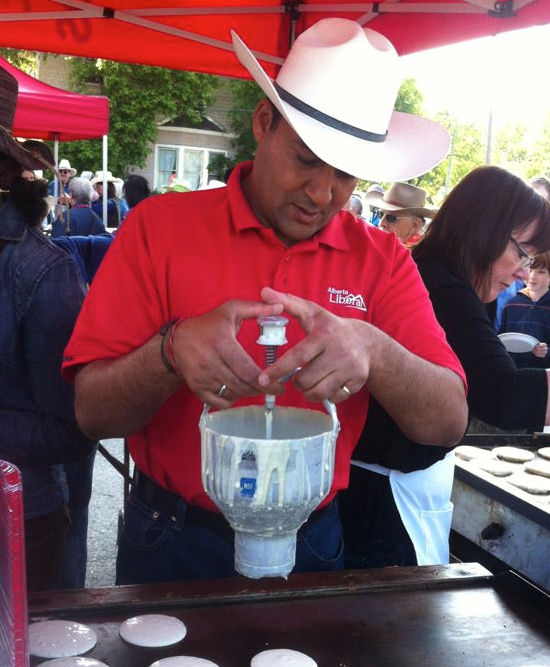
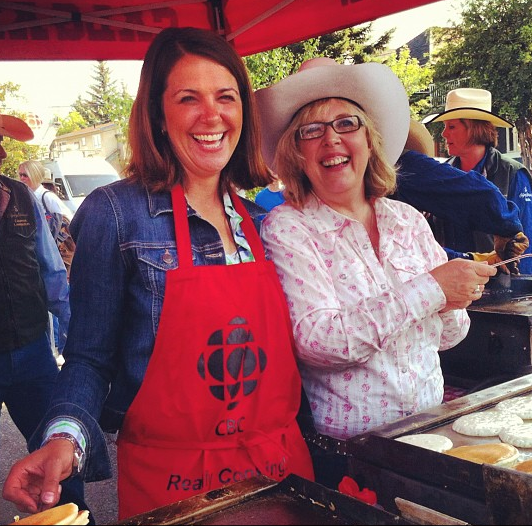
Here are some photos that were floating around social media networks this weekend. Check out Calgary Grit this week for his annual collection of political photos from the Stampede.
Calgary-Fort PC MLA Wayne Cao, Tourism Minister Christine Cusanelli, Calgary-North West PC MLA Sandra Jensen, and Premier Alison Redford. (via Wayne Cao on Facebook)Edmonton-Beverly Clareview NDP MLA Deron Bilous and Longueuil–Pierre- Boucher NDP MP Pierre Nantel. (via Deron Bilous on Facebook)Justice Minister Jonathan Denis. (via Jonathan Denis on Facebook)Alberta Liberal leader Raj Sherman. (via Raj Sherman on Facebook)Wildrose leader Danielle Smith and federal Green Party leader Elizabeth May (via via @katyanderson)
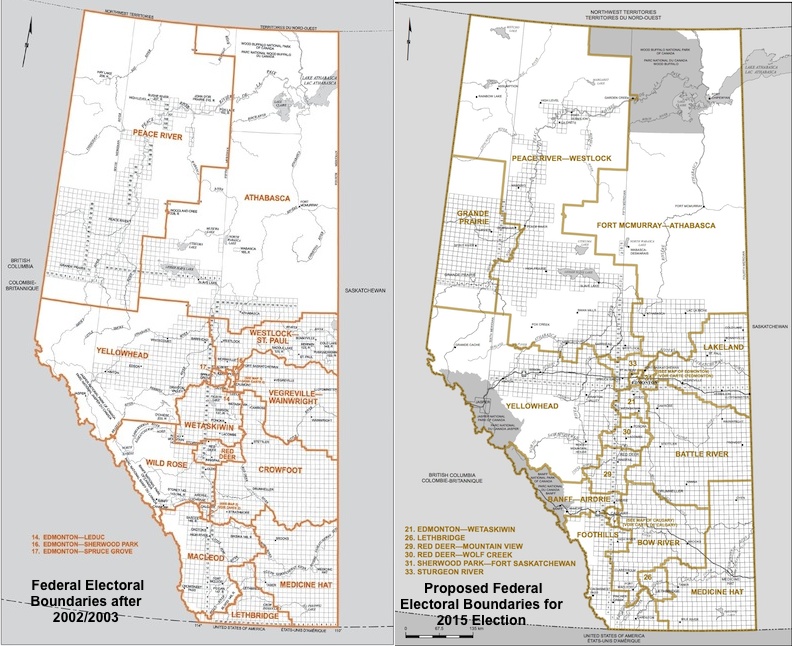
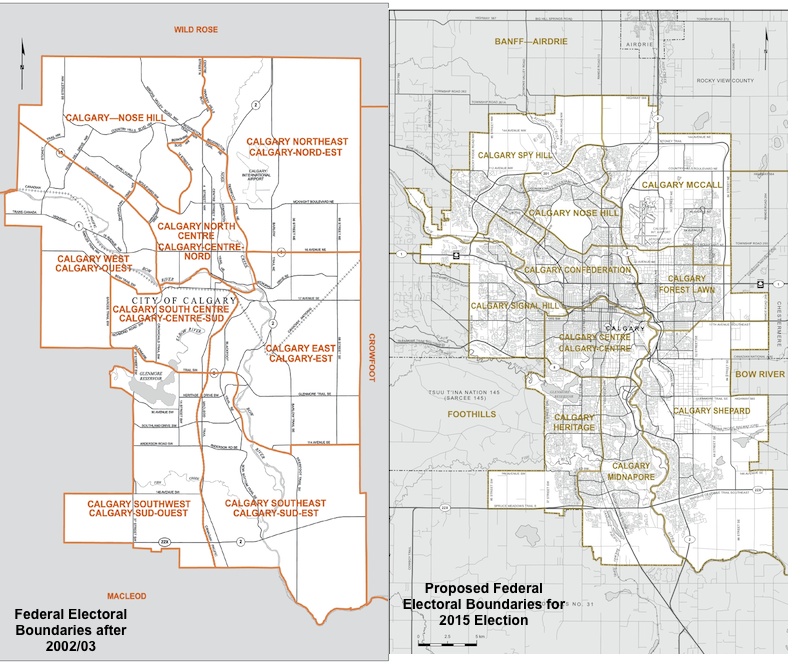
There are a number of notable changes proposed in these maps. The creation of six additional ridings will increase Alberta’s representation in the House of Commons from 28 to 34 Members of Parliament. The addition of new seats and redistribution in the proposed maps concentrate new ridings in the Red Deer corridor running north-to-south between the province’s two largest cities and the creation of a Grande Prairie regional riding in northwest Alberta.
The proposed maps also eliminate the “rurban” ridings that straddle Edmonton’s suburbs and regional communities in the currently existing boundaries in favour of purely urban ridings within Edmonton city limits. The one exception would be the proposed Edmonton-Wetaskiwin riding, which includes suburban communities in Edmonton’s extreme southern limits with a large rural area stretching towards the City of Wetaskiwin. Counting this riding, Edmonton would have nine ridings.
Calgary’s ridings remain within city limits and would increase from 8 to 10.
Below are the maps showing the current boundaries created after the 2002/2003 redistribution and the maps proposed by the current commission.
Maps showing Alberta’s federal electoral boundaries after the 2002/2003 redistribution (left) and the proposed boundaries for the 2015 election (right).Maps showing Edmonton’s federal electoral boundaries after the 2002/2003 redistribution (left) and the proposed boundaries for the 2015 election (right).Maps showing Calgary’s federal electoral boundaries after the 2002/2003 redistribution (left) and the proposed boundaries for the 2015 election (right).
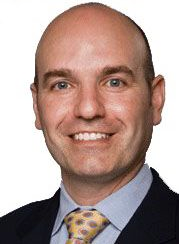
Skeena-Bulkley Valley New Democrat Member of Parliament Nathan Cullen is jumping into Calgary’s Stampede celebrations next week to host a workshop on uniting progressives in advance of the inevitable by-election in Calgary-Centre.
On July 11, Mr. Cullen will co-host a workshop with Edmonton-Strathcona NDP MLA Rachel Notley with the goal of sending “Stephen Harper a stinging message in his own backyard that his divisive politics aren’t going to cut it anymore.”
In 2011, the NDP orange wave made more of a ripple than a splash in Calgary-Centre. Parachute candidate Donna Montgomery earned only 14% of the vote, up from 9% in 2008. It is difficult to imagine any candidate other than a Conservative will win the expected by-election, but it is interesting to see that the NDP are putting some energy into cultivating and engaging potential supporters in this downtown Calgary riding.
Representing the northern British Columbia federal riding through which the proposed Enbridge Northern Gateway Pipeline will travel, Mr. Cullen has been a vocal critic of the development that would export crude oil and bitumen from the Athabasca oil sands to a marine terminal in Kitimat, BC. The NDP launched a spoof website last week in response to claims by Conservative politicians that “radicals” are holding up the public hearing process.
How will Alberta’s federal riding boundaries be altered?
Likely unbeknownst to most Canadians, commissions have been struck across the country and tasked with redrawing our federal electoral boundaries in advance of the expected 2015 general election. The process of electoral redistribution, which is done every decade, accounts for population change in the ridings which we elect Members of Parliament to represent us in the House of Commons. Separate commissions have been struck for each province.
Chairing the Alberta commission is the Justice Carole Conrad, who is currently a member of the courts of appeal of Alberta, the Northwest Territories and Nunavut. Ed Eggerer of Airdrie and Donna Wilson of Edmonton are the two public members appointed to the commission.
The commission is also tasked with adding six new ridings to the province, which will increase Alberta’s representation in the House of Commons to 34 MPs. Alberta’s two largest cities, Calgary and Edmonton, and their surrounding regions, can expect see their representation increased with the six additional ridings.
The federal commission is non-partisan in nature, unlike provincial electoral boundary commissions in Alberta, which include a neutral chairman and two representatives nominated by the leader of the governing party and the official opposition party.
In March 2012, the Alberta commission announced that it would release maps of its proposed boundary readjustments in the coming months (which suggests that it could be soon). Following the release of the maps, the Alberta commission will be holding public hearings to gather feedback on the proposed readjustments commencing in September 2012.
Tim Uppal
The last federal electoral redistribution took place before the 2004 general election. In Edmonton, a number of ridings which had previously existed entirely within the City limits were redrawn to include large rural areas surrounding the City. This is why capital region communities like Beaumont, Fort Saskatchewan, Leduc, Sherwood Park, Stony Plain, and Spruce Grove find themselves sharing Members of Parliament with suburban Edmonton voters.
In some cases, these outward stretching boundaries have led to interesting internal political disputes.
James Ford
Before the 2008 general election, conservative partisans in Sherwood Park were upset that Edmontonian Tim Uppal had won the nomination to become the Conservative Party candidate in Edmonton-Sherwood Park following the retirement of long-time MP Ken Epp. Not satisfied with internal party appeals, Sherwood Park resident James Fordchallenged Mr. Uppall by running as an Independent candidate in that year’s election. After a fierce election campaign, Mr. Uppal was elected with 17,628 votes to Mr. Ford’s 15,960.
Linda Duncan
A look at the electoral results from that campaign show that support for each candidate was divided almost entirely by the City of Edmonton boundary (Mr. Uppall earning strong support in Edmonton polls and Mr. Ford sweeping polls in Sherwood Park and Fort Saskatchewan). The geographically-based results were replicated to a lesser extent when Mr. Ford challenged Mr. Uppal once again in the 2011 general election (Mr. Uppal earned a commanding 24,623 votes to Mr. Ford’s respectable 16,263).
It is likely that all partisan eyes are waiting to glimpse at what boundary changes will be made to Edmonton-Strathcona, home of Alberta’s only non-Conservative MP. New Democrat MP Linda Duncan increased her margin of victory when she was re-elected in 2011, but shifting boundaries have a way of changing political fortunes.
I love my country. I love its natural beauty and diversity. I love that you can drive through the near deserts of Drumheller and Milk River to the majestic and amazing Rocky Mountains to the incredibly beautiful north filled with forests and lakes and the bald-ass prairie which spans as far as the eye can see – and this all within one province! I love that an area so diverse and vast on its own is part of an even vaster and more diverse country.
In the 1660s, my ancestors immigrated to New France and settled near what is now known as Sorel, Quebec. In the 1890s, my family followed an Oblate missionary westward and homesteaded at a settlement in the North West Territories, later known as Morinville. They were hard working farmers, breaking land and farming through brutally hard conditions. Along with thousands of other pioneers, they started with nearly nothing, but together they succeeded in building healthy and vibrant communities across the western regions of Canada.
The harsh climate was not their only challenge. As western Canadian francophones, they met both resistance and racism from a government dominated by Anglophones and Protestants. It seems bizarre to me that only seventy years ago in Alberta, French language instruction in schools was restricted to the last period of the day (either a half-hour or hour, I believe). It was a policy of assimilation and in many cases it worked.
Despite the overwhelming odds, western Canadian francophones pushed back. I remember my grandfather telling me the story of how my great-great-uncle, attorney Lionel Tellier, fought the Canadian government for the right to have accessible French language census forms in Alberta. The court ruled in his favour in 1941 and census forms became bilingual.
Canadians live in an incredible place. As a country, we have an unbelievable amount of wealth in natural resources, but we also have incredible potential and an untapped wealth of resources in the form of our people.
As we celebrate the 145th anniversary of this great country, let us remember the Canadians who built this country and played a role in strengthening our position as an incredible place to live.
You can be forgiven if you missed it. Hundreds of Liberals from across Alberta gathered in Edmonton last weekend for the biennial meeting of the Liberal Party of Canada in Alberta.
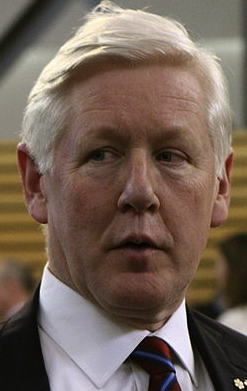
Bob Rae
Speakers and guests at the weekend conference included interim Liberal leader Bob Rae, Scarborough-Agincourt MP Jim Karygiannis, and Senators Grant Mitchell, Art Eggleton, and James Cowan. One of the main guest speakers was Donna Clare, the Edmonton-based architect who designed the new Royal Alberta Museum.
Electing only two MPs in the three prairie provinces, the west was a wasteland for the federal Liberal Party in the 2011 election. Only in Manitoba, where the party earned 16% of the vote did they place above 10% (they earned 9% in Alberta and 8% in Saskatchewan). While the west has not been a bastion of Liberal support for at least two generations, this level of support is far below the average support earned over the 1990s and 2000s.
The decline in support can also be seen at the provincial level.
With 5 MLAs and 10% support in this year’s provincial election, the Alberta Liberals are the strongest of any prairie Liberal Parties. In the November 2011 election, the Saskatchewan Liberals failed to elect any MLAs for the third election in a row and only earned 0.5% of the popular vote. In Manitoba’s election, held in October 2011, the Liberals fell from 2 MLAs to 1 MLA and earned only 7% of the province-wide vote.
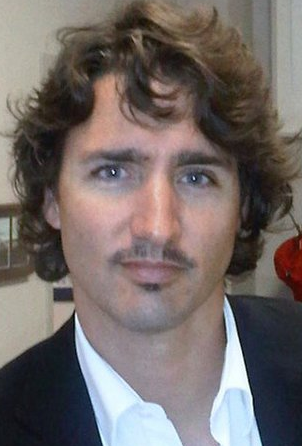
Justin Trudeau
Leadership was undoubtably a topic of discussion over the weekend conference. Next year, the federal Liberal Party will be choosing its seventh leader in ten years. Interim-leader Mr. Rae, who entered the role after Michael Ignatieff‘s resignation in 2011 election, recently announced that he decided to stand by his previous commitment not to seek the permanent leadership.
The rate at which Justin Trudeau is being touted as a leadership contender makes his candidacy feel almost inevitable. Long-shot candidate George Takach was in attendance at the weekend convention and constitutional expert Deborah Coyne entered the race today. Liberals activists I have spoken with over the past few days have named New Brunswick MP Dominic Leblanc, Quebec MP Marc Garneau, former Quebec MP Martin Cauchon, and past Ontario candidate David Bertschi all as possible candidates for the Liberal Party leadership.
Meanwhile, in Saskatchewan…
A little further to the east, supporters of the provincial NDP gathered in Saskatchewan for their annual conference and passed a resolution calling for a strategy to grow their party in the three prairie provinces. The conference included speeches from federal NDP leader Thomas Mulcair, who has not endeared himself to some Conservative leaders in the prairie provinces.
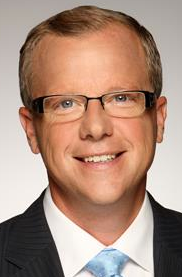
Brad Wall
The popularity of conservative Saskatchewan Party Premier Brad Wall led to the provincial NDP being nearly wiped off the electoral map during last year’s Saskatchewan election. Currently without a permanent leader, the Saskachewan NDP have scheduled a leadership vote to be held in March 2013.
The decline of NDP support in Saskatchewan is not limited to the provincial level. Once a stronghold for prairie social democrats, federal NDP support in Saskatchewan took a sharp decline in the 1990s and the party no longer has any MPs from that province represented in Ottawa.
Over time, support for the NDP has shifted away from rural areas and to the cities. This concentrated urban support has not helped the NDP in Saskatchewan, where urban federal ridings were redrawn to include large rural areas outside the cities, where the Conservatives hold strong support. Despite leading his party to huge gains across the country, I am sure that former leader Jack Layton‘s address in central Toronto did not help grow his party’s support in rural Saskatchewan. It will be interesting to see whether the NDP under Mr. Mulcair, another big city politician, will be able to regain a toe-hold in Saskatchewan in the next election.
Across the prairies, the NDP remains strong only in Manitoba, where dominance over the northern regions and the city of Winnipeg ensures the continued election of NDP majority governments in that province. In Alberta, NDP support has long been limited to a handful of constituencies in Edmonton, where the party has 4 MLAs. Federally, the NDP placed well in a few Edmonton ridings, and Edmonton-Strathcona MP Linda Duncanwas re-elected in 2011.
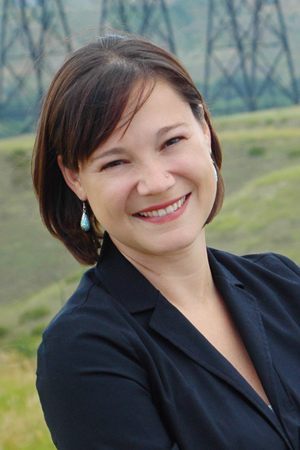
Shannon Phillips
A creed known as the Lethbridge Declaration is gaining attention in some NDP circles by those who recognize the need to reconnect with voters in the prairie provinces. It is not completely clear how they will accomplish this, but looking to the declaration’s name-sake gives long-toiling social democrats a glimpse of hope in the Conservative Party’s prairie stronghold.
The NDP experienced significant growth in support in Lethbridge in the recent federal and provincial elections. It may seem like the most unlikeliest of places, but federal candidate Mark Sandilands earned 27% of the vote, nearly doubling his vote from the 2008 election (the Conservative vote dropped 10% from 2008).
As I wrote about weeks ago, a number of municipal by-elections were held across Alberta this and last week to replace municipal officials who were elected in the April 23 provincial election.
John Borrowman
Canmore By-Election
On June 19, Vi Sanford and Sean Krausert were elected to Canmore Town Council in a by-election held to replace two councillors running in the Mayoral by-election. The Mayoral by-election was called when Mayor Ron Casey was elected as the Progressive Conservative MLA for Banff-Cochrane.
On June 25, Jonathan Bikman was elected in a Village of Stirling by-election to replace former Mayor Gary Bikman, who is now the Wildrose MLA for Cardston-Taber-Warner. Mr. Bikman received 78 votes, runner-up Coralee Leeson received 60 votes, and Ron Bore received 23 votes.
Mr. Alexander finished with 304 votes, defeating Jen Heaton with 187 votes, Bev Williamson with 94 votes, and Alec Babich with 40 votes.
Westlock County By-Election
On June 25, Jim Wiese was elected in a Westlock County by-election to replace newly elected Barrhead-Morinville-Westlock PC MLA Maureen Kubinec. Mr. Wiese won with 134 votes. The runner-up was Herb Smerychynski, who took 40 votes. Cal Busby came in third with 23 votes.
Wood Buffalo By-Election
On June 25, Colleen Tatum and Christine Burton were elected in the by-elections to replace former Wood Buffalo councillors Don Scott and Mike Allen, who were both elected to represent Fort McMurray in the recent provincial election. Keith McGrath, who resigned as a trustee on the Catholic School Board, placed a close third. Voter turnout was estimated to be around 9%.
After years of profit loses caused by an outdated business model, media corporations across North America are shutting down some newspapers and cutting staff at others. At the Ottawa Citizen, the newsroom was downsized when a substantial number of staff were laid off. One Edmonton Journal staff member recently told me that their colleagues at the paper are expecting more staff cuts closer to home.
Some companies have decided to erect online subscription pay-walls to limit the number of articles that a reader can view for free on the Internet.
In an online world where information and opinion (both good and bad) is free and abundant, I wonder if some companies realize they are undercutting their most valuable contribution to society by laying-off young journalists who have the ability, drive, and resources to report quality local news stories?
I believe reporters working for Alberta’s two big city newspapers, the Calgary Herald and the Edmonton Journal, both owned by the Postmedia Corporation, did a fantastic job providing solid and fair reporting during the recent provincial election.
Local news is what makes newspapers like the Edmonton Journal valuable to a reader like me, even if I almost exclusively read the paper online. Cutting off the eyes, ears, and noses of a local newspaper to save the face of a newspaper corporation will make me less likely to turn to that newspaper as a source of local information.
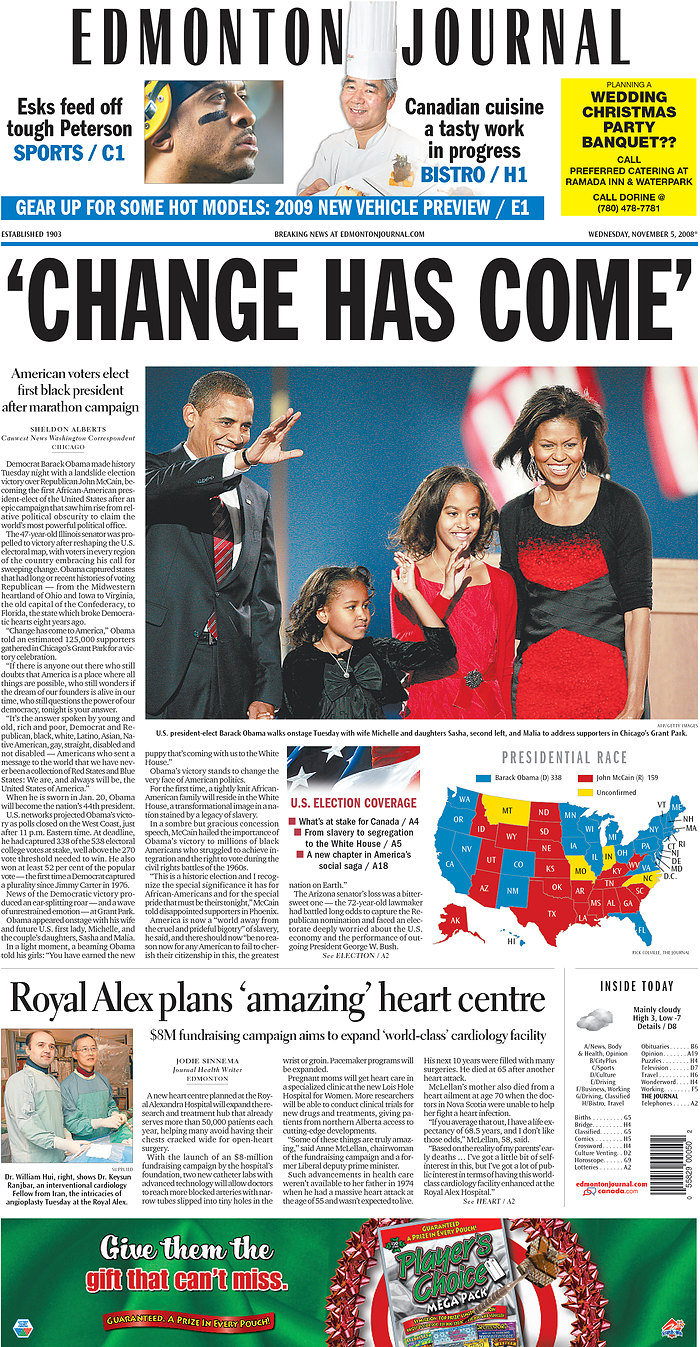
After taking some time to about it, I remembered the last time I went to a newsstand and purchased a newspaper was November 5, 2008.
The front page of the Edmonton Journal on November 5, 2008.
I was born in Edmonton in 1983 and the first Premier I remember being aware of was Ralph Klein.
Having grown up during the Klein-era, I have a different perspective of those years than most mainstream political pundits and their baby boomer cohort. I have mixed feelings about the announcement today that the former Premier will be receiving the Order of Canada, the highest honour in the land.
There is no argument against his ability as a politician to appeal to an incredibly broad cross-section of society in Alberta. He led the Progressive Conservatives to win four back-to-back majority governments and reached his political pinnacle in 2001 by winning 74 of 83 constituencies and 61% of the popular vote. He was beloved by many Albertans, but he was a larger than life personality that even he was not able to live up to in the end.
Perhaps helping shape some of my own political orientations, my formative memories of Premier Klein were not positive. I remember listening to my parents and grandparents (who are retired teachers) talk about the short-sightedness of Premier Klein’s decision to lay-off tens of thousands of public servants, nurses, and teachers across the province. As a politically interested kid, I remember watching the television and seeing a jovial political leader. I would wonder, “how could he be so bad?”
At the time Conservatives and many Liberals rallied against the perceived excesses of previous PC governments and jubilantly cheered the cuts. Over time, it would become apparent that Premier Klein’s tenancy to lead the populist mob translated into very poor long-term planning. Walk through any hospital today and you will almost immediately become aware of an incredible generational gap in the nursing profession in Alberta. An entire generation of health care and education professionals were told that Alberta was not the place for them.
In 2001, I graduated from high school and soon began my post-secondary career. Over the years, I sat in many dark and dingy Arts lecture theatres that had suffered from many years of deferred maintenance and cutbacks at the University of Alberta. Overcrowded classrooms, less one-on-one time with instructors, and increasing tuition – it was clear that the financial cost and quality of my post-secondary education were not connected. Despite this, I carried on and my academic career was strengthened and enriched by a handful of hard-working and dedicated professors.
While my classmates and I worked part-time jobs and accepted the necessity of student debt while continuing our studies, Premier Klein was accused of having plagiarized large portions of an essay written for a distance learning course through Athabasca University. Despite absolute irrefutable evidence that he had copied sections of the essay directly from the Internet, Premier Klein was cleared of the accusations and received a mark of 77% from the University. The Presidents of the Universities of Alberta and Calgary even wrote letters to the editors of the province’s major daily newspapers defending the Premier. I doubt either of them would have jumped to my defence had I attempted to plagiarize an essay.
While his tendency to overindulge in alcoholic beverages was well-known, and treated as a joke among Albertans, the ugly side of Premier Klein’s substance abuse problem reared its head in 2001. Intoxicated, the Premier had his driver stop at an inner city men’s shelter in Edmonton where he berated a homeless man. He held a sober media conference the next day and promised to clean up his ways.
In 2006, Premier Klein only narrowly won a leadership vote by members of his party. An endorsement of only 55% was a stunning blow to the once seemingly invincible politician. PC Party members sent a clear message that King Ralph had outstayed his welcome. When Ed Stelmach was selected as leader of the PC Party later that year, Premier Klein left the crowd of PC Party members in attendance with only a few flat and unceremonious words that seemed to only take 30 seconds to deliver. That was it. He had entered the Premier’s Office with a bang and left with a whimper.
Conservative political pundit and former Calgary Herald editor Joan Crockatt and former Canadian Taxpayers’ Federation board member Andy Crooks were the first two candidates to announce their intentions to seek the Conservative Party nomination in Calgary-Centre. Mr. Crooks has already been endorsed by Calgary-West MP Rob Anders, a supporter of the Wildrose Party who is known for his far-right conservative politics.
Two-term Calgary Alderman John Mar, recently in the news for his tough on potato farmers stances, entered the contest last week. With ties to the PCs, Alderman Mar could represent the voice of moderate Conservatives in the nomination contest.
Tory victory inevitable? Almost certainly, but…
Joe Clark
Unless something cataclysmic occurs in the next six months, it is highly unlikely that the by-election in this riding will result in anything but the election of another Conservative MP. The type of Conservative candidate could effect how strong that outcome is.
While it may not translate to votes on the federal level, voters in this riding have a streak of electing non-Conservative representatives on the provincial level, including Liberal MLA’s Kent Hehr and Dave Taylor (Mr. Taylor later joined the Alberta Party).
Fresh off the provincial election trail, Beena Ashar has announced her intentions to seek the Liberal Party nomination. As the Liberal candidate in Calgary-Elbow, Ms. Ashar placed a distant third behind Premier Alison Redford. She also placed third when challenging Ward 5 Alderman Ray Jones in the 2010 municipal election.
Update: William Hamilton, the 2011 Green Party candidate, has announced that he will seek the Green Party nomination when the election is called. Mr. Hamilton was also the EverGreen Party candidate in Calgary-Elbow in the recent provincial election.
Update (July 24, 2012): Andy Crooks has dropped out of the Conservative nomination.
A reply-all email from Calgary-Southeast Conservative Member of Parliament and Immigration Minister Jason Kenney about Progressive Conservative Deputy Premier Thomas Lukaszuk has given Albertans a glimpse at how split the Conservative movement in our province has become.
Kenney wrote the invective last Wednesday at 5:02 p.m. in response to an email sent from the office of MP Blaine Calkins, chairman of the federal Conservatives Alberta caucus, who wanted to know if Kenney and other MPs from Alberta would meet with Lukaszuk.
“Honourable Thomas Lukaszuk, deputy premier of Alberta will be in Ottawa on Thursday, June 21st, 2012 and is requesting a lunch or dinner with caucus,” says the email written by Calkins’ legislative assistant at 4:57 p.m. “Mr. Calkins will not be able to host this event as he has prior commitments, but would like to see if there is any caucus member who would be willing to host this event for the deputy premier.”
Kenney shot back a response just five minutes later, but instead of sending it only to Calkins’ office, he inadvertently sent it to everyone in the 26-member federal Alberta caucus, plus assistants: “I say a definite ‘no’ to Lukaszyk. I don’t think it makes sense to create a precedent to do a special caucus meeting for every visiting minister from the provincial government. Plus he is a complete and utter asshole.”
Relations between politicians from the two Conservative parties has been frayed since a number of federal Conservative Party MPs and many federal Conservative Party activists put their support behind the now-Official Opposition Wildrose Party in the recent provincial election.
During the election, Minister Kenney is reported to have said that “any attempt to hurt Wildrose by linking them to old Reform movement will backfire.”