Categories
Alberta Politics

Preston Manning’s libertarian manifesto for City government.

"Hello M’aam, I am your Manning Centre candidate in this year's civic election."
“Hello Ma’am, I am your Manning Centre candidate in this year’s civic election.”

Not satisfied with their conquests of the provincial and federal levels of government, the right-wing activists behind the Manning Centre for Building Democracy are expanding their political agenda to city-level politics. Preston Manning‘s followers plan to treat this year’s elections in Calgary as a petri-dish for their yet-to-be-completed libertarian manifesto for municipal government.

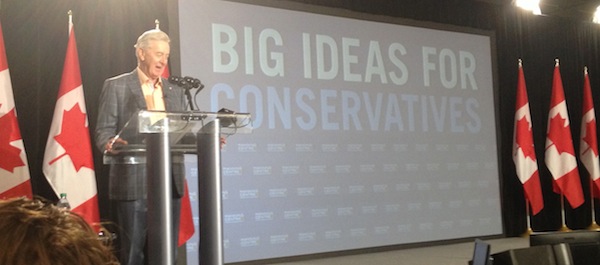
The outline of the libertarian think-tank’s manifesto for civic government was laid out at last weekend’s Manning Networking Conference in Ottawa.

Cleverly branded as the “organic cities project,” Mr. Manning’s followers expressed their frustrations with urban planning and what they described as lengthy community consultation processes. Increasing private sector planning of city development and decreasing the role of accountable public planning processes is at the heart of the Manning argument.

Outlined at the conference was a vague manifesto to reduce the scope of political decision making and move municipal governments away from Mr. Manning’s followers claim are inappropriate activities, which were suggested could be municipally-owned golf courses and recreational facilities.

With exaggerated claims of interference in the lives of citizens, Mr. Manning’s followers are setting their eyes on cleaving the limited powers already laid out in the Municipal Government Act (though the Act was never referenced in the talk).

The Manning Centre’s real target is uber-popular Calgary Mayor Naheed Nenshi, who has taken a proactive stance on urban development, alarming the cabal of developers who have greatly benefited from near unlimited urban sprawl along the city’s edges.

Perhaps it was not coincidence that a sponsor of the Manning Networking Conference was the Canadian Real Estate Association, which represents the group of individuals who have greatly benefited from this urban sprawl.

Conservative Party of Calgary?

Earlier this year, the Manning Centre opened a facility in downtown Calgary to provide training and support to like-minded libertarians running in the October 2013 municipal elections. This could be the first step that leads to the creation of Conservative political parties on the city level in Canada. While political parties are normal in some large cities, like Vancouver and Montreal, most Canadian municipalities are free of slates and official partisanship.

Municipal political parties, like the Urban Reform Group Edmonton, were common in Edmonton until the 1980s when their popularity declined and they disappeared from the ballot.

Despite arguments at the Manning Centre conference that municipal governments are filled with left-leaning politicians, municipal councils are home to many conservatives, and many more non-partisan citizens. Progressive-minded candidates have had success being elected to municipal councils in Alberta, but their views are by no means the only views present at that level of government.

Consensus and coalitions exist on the municipal level that transcend traditional hard-line partisan loyalties. Unfortunately, ideologically-based slates and municipal political parties could be an inevitable result of the Manning Centre’s meddling.

Perhaps a sign of the times to come, it was announced this week that a slate of conservatives candidates in the City of Red Deer will run in the October elections under the “Red Deer First” banner. Sources in Red Deer tell this blogger that many of the key figures behind this group have ties to the provincial right-wing Wildrose Party.

Categories
Alberta Politics

Controversial Ottawa Tory operative now working for Wildrose Opposition.

More Ontario-based political operatives arrive in Alberta.

The westward migration of Central Canada-based political operatives continues.

Controversial former Ottawa Conservative staffer Sébastien Togneri is now employed as the Caucus Whip Coordinator for Danielle Smith‘s Wildrose Official Opposition.

Political watchers may remember Mr. Togneri as the aide to federal Conservative cabinet minister Christian Paradis who, in 2010, resigned over his alleged meddling in at least four different access-to-information requests.

While still under RCMP investigation, Mr. Togneri was spotted briefly working for the campaign of Edmonton-Strathcona Conservative candidate Ryan Hastman in the 2011 election.

Also recently migrated to Alberta is Mike Feenstra, who was previously employed as spokesperson for Ontario’s Liberal Minister of Natural Resources and Minister of Education. Mr. Feenstra is now employed as the Press Secretary in Energy Minister Ken Hughes‘ office.

Categories
Alberta Politics

Preston Manning throws Alison Redford, Tom Flanagan under the conservative bus.

Preston Manning
Preston Manning

OTTAWA

Speaking about the state of Canada’s conservative movement at this weekend’s Manning Centre Networking Conference in Ottawa, former Reform Party leader Preston Manning denounced the ethical and financial state of Premier Alison Redford‘s Progressive Conservatives.

“…in Alberta an aging Progressive Conservative administration has lost its way ethically and fiscally and needs to be overhauled or replaced,” Mr. Manning told an audience of close to 800 conservative activists.

Mr. Manning heaped this criticism on the forty-one year governing PCs, giving an obvious tip of the hat towards his ideological allies in the right-wing Wildrose Official Opposition.

Mr. Manning also used his speech to denounce two controversial statements and tell conservatives that they need to draw the line about what public comments are acceptable in their movement.

Mr. Manning characterized his former advisor Tom Flanagan‘s comments about child pornography and homophobic remarks made by a Wildrose candidate in the last provincial election as “intemperate and ill-considered remarks that discredit the conservative movement as a whole.”

“For the sake of the movement and the maintenance of public trust, conservative organizations should be prepared to swiftly and publicly disassociate themselves from those individuals that cross the line,” Mr. Manning said.

Numerous supporters of Dr. Flanagan attending the conference prominently sported buttons showing the face of the discredited university professor.

Categories
Alberta Politics

Alberta Budget 2013 a confusing start to the Tory re-election strategy.

Rumours swirled through the halls of the Legislative for weeks. Whispers and warnings of cuts and rollbacks not seen since Ralph Klein and Jim Dinning unleashed a scorched earth policy on the provincial budget in the mid-1990s. Back in debt. Broken promises. Bankrupt budgets.

The end was nigh.

And today, the budget was tabled and the massive cutbacks did not emerge.

The end is not nigh, but remains difficult to figure out what long-term goals Finance Minister Doug Horner and Premier Alison Redford plan to accomplish with Alberta’s 2013 provincial budget. The devil is in the details and the posturing for the next provincial election, expected in 2016, has already begun.

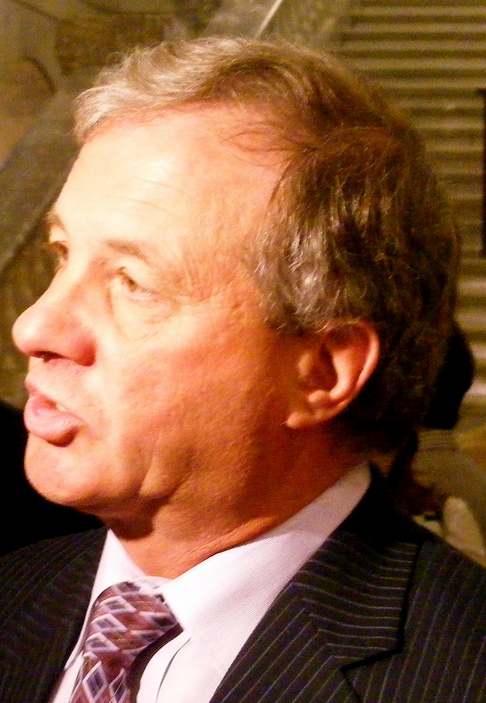
Doug Horner
Doug Horner

The Sustainability Fund that has saved our provincial government from going back into debt for five years is gone and in its place, the government is introducing the Fiscal Management Act, which Minister Horner says will mandate annual savings. In hindsight, and the world of smart fiscal management, this is probably something that the Tories should have started doing when they first formed government more than forty years ago.

Different than most years, this year’s budget is separated into three categories – operating, capital, and savings. This helps the government deflect criticism that it has returned to capital financing in order to build much needed public infrastructure and poses roadblocks to opposition groups hoping to make straight comparisons to previous budgets. The split also allows government ministers to argue with the deficit-hawks in the Wildrose official opposition that the “real” deficit, in the operating budget, is only projected to be $2 billion.

Overall, the budget for 2013-2014 is projected to stay the same as last year’s provincial budget, though the funding within the $36 billion has shifted. Cuts have been made.

Premier Alison Redford

The largest slice of the budget, going Alberta Health Services budget was increased by 3%, rather than the promised 4.5%. AHS Chairman Stephen Lockwood, the trucking magnate from Okotoks, weeks ago publicly declared that he would not fight for the full promised increase.

The Municipal Sustainability Initiative grants awarded to cities, towns, and counties have been frozen at $846 million, the rate in last year’s budget. This may feel problematic for some municipalities, who have already borrowed funds based on expected MSI funding in order to finance critical infrastructure projects. Alberta’s municipalities are responsible for so much of the critical infrastructure and services Albertans interact with daily.

The Alberta Association of Municipal Districts and Counties, known to political insiders as the “Tory farm team” because past rural Tory MLAs who have emerged from its ranks, expressed its disappointment in the cuts to municipal funding programs.

“Rural municipalities are responsible for the roads that keep our economy moving and the government’s lack of support for this critical responsibility will have a huge impact on our members’ budgets,” said AAMDC President Bob Barss.

The Advanced Education budget was cut by 6.8%, creating a likely situation that will see Universities and colleges turn to raising tuition and non-instructional fees levied on students to fill their financial gaps. University of Alberta President Indira Samarasekera sent a mass-email to staff and students earlier this week warning them that changes are on their way.

Calling the post-secondary cuts the largest in two decades, Council of Alberta University Students chair Raphael Jacob said “these cuts are going to have an immediate impact on the quality of our post-secondary education, and potentially longer impacts on the affordability and accessibility of degrees in Alberta.”

The budget also leaves unresolved a number of outstanding political issues facing Premier Redford’s government, such as the two ongoing labour disputes with Alberta teachers and doctors. These fights remain unresolved as the budget included a one year wage freeze for all public employees, including remuneration for doctors. The wage freeze should not be an issue for the teachers, who proposed a deal for two years without wage increases, but the doctors may move to escalate their dispute.

There will be no shortage of commentary on the political implications of this year’s provincial budget, but it is the long-game that matters. This budget is the first of a potential four before the Tories are expected call the next election in 2016. Whether they hope the Fiscal Management Act will earn them dividends from voters or that revenue from an increased price of oil will once again overflow government coffers, we are just in the first year of a four-year long political game.

Categories
Alberta Politics

Dave Hancocok’s latest consultation leads to Social Policy Framework.

Most media and political watchers are focused on today’s release of the provincial budget, but last week Human Services Minister Dave Hancock focused on the human-side of government with the release of the much anticipated ‘Social Policy Framework.’

Dave Hancock MLA Edmonton-Whitemud
Dave Hancock

“It’s part of taking an intelligent look at the social policy agenda,” Human Services Minister Hancock told this blogger in a recent interview. Minister Hancock described the framework’s contents as guiding principles for government decision-makers to use when making decisions that could have an impact on social policy in Alberta.

The government undertook extensive consultations before publishing the Social Policy Framework, engaging Albertans through discussions in-person and online.

“The discussion is often part of the solution,” said Minister Hancock. “We are bringing together people who haven’t necessarily been in the same room or had the chance to discuss these challenges together. The process has done that in many different ways.”

“It validates some of the other things we’ve been doing, like the Homelessness initiatives.” he said, while speaking about collaboration with already existing not-for-profit groups to effectively delivering services on the ground. Across Alberta, municipalities are working with local organizations and social agencies to accomplish the provincial government’s 10-Year Plan to End Homelessness.

Critics like Calgary-Shaw Wildrose MLA Jeff Wilson and Edmonton-Strathcona NDP MLA Rachel Notley criticized the framework for its lack of specifics and vague wording. Ms. Notley honed in on some specific wording that she found troubling:

“The most specific elements of this document talk about the government moving away from being a service provider, moving away from being a funder, moving away from being a regulator. That says to me we’re going to see a fractured system and an increase in patchwork service delivery.” – NDP MLA Rachel Notley (Edmonton Journal, February 28, 2013)

Rachel Notley MLA Edmonton-Strathcona NDP
Rachel Notley

Not surprisingly, Minister Hancock disagreed with claims that the  provincial government intends to use the framework to download responsibilities. “It is not downloading or offloading but taking an intelligent look across the social agenda and saying how to we do this well together,” said Minister Hancock.

The resident policy-wonk

A self-described “policy-wonk,” Minister Hancock has become known for holding these types of broad consultation and visioning processes since he first entered cabinet in 1997. Similar broad consultations were held while he served as Minister of Advanced Education from 2004 to 2006 and Minister of Education from 2008 to 2011.

Government media releases tout that more than 31,000 Albertans participated in the Social Policy Framework consultations through in-person meetings and extensive online discussions.

Minister Hancock deserves some credit for taking some big steps in the government’s online consultation for this framework, which included online surveys, stakeholder blogs, and wikis where Albertans could provide feedback and upload their own response documents for public viewing. These types of online tools allow government’s to engage with citizens in ways that were not possible, or very difficult, only a decade ago.

—————

Hancock on the hyper-partisan Legislature

Asked about the aggressive tone of Danielle Smith‘s Wildrose Official Opposition, Minister Hancock described last fall’s Legislative session “not a shining point for the democratic process.” Minister Hancock, who also serves as Government House Leader, said that he hopes the tone will improve in the spring sitting that began this week.

“I think the opposition will come out of it fairly quickly when they realize that the Alberta public does not connect with it,” said Minister Hancock. “I think it will get better, because I don’t think there is an inhernent value in that kind of partisanship, on either side.”

Categories
Alberta Politics

Rural Albertans supporting lazy high-rise condo dwelling urbanites, says Griffiths.

Doug Griffiths
Doug Griffiths

Fresh from a war of words with popular Calgary Mayor Naheed Nenshi, Municipal Affairs Minister Doug Griffiths responded the a question from Edmonton-Centre MLA Laurie Blakeman with this poorly thought-out retort in Question Period today:

“It could be asked by rural Albertans why 17 per cent of the population that lives in rural Alberta that has all the oil and gas revenue, does all the work, all the farms, all the agriculture and everything associated with it, goes to support urban Albertans who sit in high-rise condos and don’t necessarily contribute to the grassroots of this economy”.

There is a lot wrong with Minister Griffiths’ statement, but to start, he should take a closer look at the urban landscape the next time he drives through one of Alberta’s cities. Most urban Albertans are likely living in single-family detached houses in suburbs, not in high-rise condos downtown (this is probably something, as the Minister of Municipal Affairs, that he should be aware of).

I wonder if he would also agree with Wildrose MLA Gary Bikman that urban Albertans also lack common sense?

Categories
Alberta Politics

What to expect in the spring sitting? Dirt, mud, and more dirt.

Alberta Legislative Assembly Building
Alberta’s Legislative Assembly Building (sans covered dome).

After a three-month break, Members of Alberta’s Legislative Assembly will gather today in Edmonton to start the spring sitting.

The commencement of this year’s first sitting will be unusual in that it will lack the traditional pomp and circumstance that comes with a Speech from the Throne. Lieutenant Governor Donald Ethell will not be invited to deliver a traditional Speech from the Throne today. The lack of Throne Speech or accompanying flagship legislation will mean a focus on the provincial budget, to be tabled on March 7. This, of course, is a deliberate move by the Tories.

Doug Horner
Doug Horner

Finance Minister Doug Horner will table the provincial government’s 2013/2014 budget on Thursday, and many political watchers are wondering what the document will include.

Over the past two months, Minister Horner and Premier Alison Redford have managed to communicate that Alberta has a revenue problem, a pipeline problem (also known as the unfortunately named ‘Bitumen Bubble’), and finally a spending problem.

Over the past week, numerous groups, including the Parkland Institute, the Conference Board of Canada, and the Alberta Federation of Labour, have released reports and survey’s demonstrating the need to reform Alberta’s revenue system.

The Premier mused about tax increases, and then ruled them out. All these mixed signals will make this week’s budget announcement a highly watched spectacle.

The continuation of the sitting also means that a handful of private members bills left over from last year’s sitting will return to the Assembly floor for debate this spring. These bills were introduced last year by opposition and backbench government MLAs.

Gene Zwozdesky
Gene Zwozdesky

This will be the second sitting of the Assembly since Edmonton-Mill Creek MLA Gene Zwozdesky was selected as Speaker by his peers. While generally seen as a fair chairman of the Assembly, Speaker Zwozdesky was highly criticized for ruling that Premier Redford did not mislead the Assembly over last year’s tobacco-gate scandal.

Watch Premier Redford focus on her strengths, like advocating on the national stage for a Canadian energy plan and for opening new markets for Alberta’s oil – like the controversial Keystone XL pipeline. As demonstrated throughout her first year in office, Premier Redford is much more effective at being a provincial advocate than being a provincial politician.

Do not expect to hear cabinet ministers or government MLAs make many comments about the fiascos that wreaked havoc for the Tories last fall. Ongoing investigations by Chief Elections Officer O. Brian Fjeldheim, retired Justice John Vertes, ethics commissioner Neil Wilksonson, and Information and Privacy Commissioner Jill Clayton will give the Tories a legitimate excuse to say “no comment.”

Will the Wildrose drive the agenda?

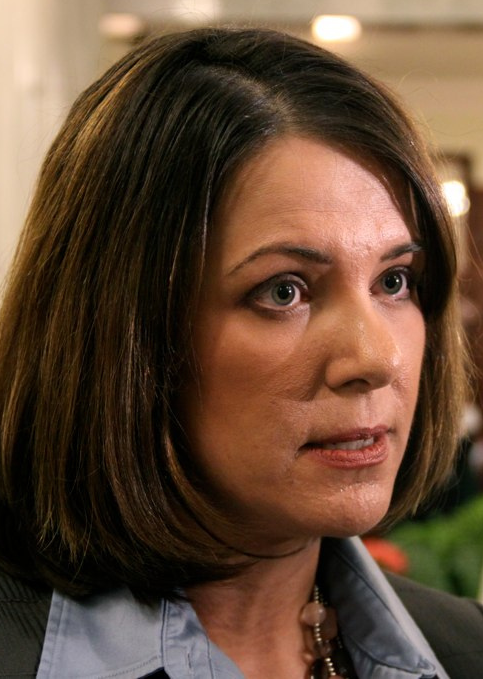
Danielle Smith Alberta Wildrose Party leader Election 2012
Danielle Smith

In the fall sitting of the Assembly, the newly minted Wildrose Official Opposition ran circles around the large Tory majority. It seemed like every day Wildrose leader Danielle Smith and Airdrie MLA Rob Anderson would have a new scandal or leaked documents to throw at the Tories like a live grenade.

Mirroring the tactics of the federal Conservatives in Ottawa, the Wildrose have brought a more aggressive and hyper-partisan approach than Albertans are used to from their opposition parties.

The official opposition launched a new website and series of radio ads to coincide with the budget debate, asking for Albertans feedback on the fiscal situation. While it is hard to fault the official opposition for their outreach, it is difficult to imagine the Wildrose will change their conservative ideological bent based on this mini-public relations campaign.

Three years ahead of the next election, a new online poll released by ThinkHQ shows the Wildrose leading the Tories 36% to 28%. The New Democrats and Liberals were distant from the pack at 16% and 13%. While the poll should be taken with a grain of salt, the mixed messages about provincial finances, recent conflict with Alberta’s teachers and uber-popular Calgary Mayor Naheed Nenshi are not likely working to help the Tories’ cause.

Brian Mason Alberta NDP leader Election 2012
Brian Mason

Lost in the fray during the fall sitting, these two parties need to remind Albertans that they are still there. Can the New Democrats and former official opposition Liberals succeed in reasserting themselves in the Assembly? I would not count them out.

The four-MLA NDP caucus just finished their province-wide “Broken Promises Tour”, highlighting what leader Brian Mason claims are a string of broken promises from the Tories since last year’s election. Liberal leader Raj Sherman has come out with a string of media releases criticizing the Tories.

Both parties hope that a provincial budget harsh on public services will remind Albertans of the differences between their parities and the governing Tories. The centre-rightish Liberal Party saw a mass exodus of supporters vote for Premier Redford’s Tories in last year’s election to block the Wildrose from forming government. It worked too well for the Tories, leaving the Liberals with a small five MLA caucus.

Last fall, the Wildrose Official Opposition danced circles around the governing Tories. Daily attacks from the Wildrose left the Tories stumbling and stammering to respond. New faces in the Premier’s Communications Office have already brought a more aggressive and partisan tone to their media releases and responses to opposition criticism online. This sitting, expect to see the Tories to counter the Wildrose attacks by taking a more aggressive approach to defending Premier Redford’s political agenda. That means dirt, mud, and more dirt.

Categories
Alberta Politics

Education Minister delivers teachers contract ultimatum to school boards.

After months of posturing and picking fights with Alberta’s teachers, it appears that Education Minister Jeff Johnson was just posturing. But what the rookie cabinet minister was trying to accomplish is still unclear.

Jeff Johnson Alberta Education Minister MLA
Jeff Johnson

Minister Johnson announced this weekend that he would back down on his ultimatum made last week that teachers accept his last minute contract demands. The Minister threatened salary rollbacks if the Alberta Teachers’ Association (ATA) rejected last week’s offer. The ATA’s elected council unanimously voted to reject the Minister’s demands.

In reality, hope for any provincial-level deal ended late last year when the Alberta Teachers Association, realizing that a province-wide agreement to address long-standing workload issues was not going to be reached, walked away from the table. At that point, it became clear that negotiations would return to the local school board level (where negotiations historically take place).

As the employers of Alberta teachers, locally elected school boards should be uncomfortable with the resentful tone of Minister Johnson’s ultimatum to trustees that negotiated contracts will be required to have three years of zero salary increases for teachers (as opposed to two years of zero salary increases already proposed by the teachers’ union).

“…be aware that any negotiated deals must include wage freezes for three years and no more than a two per cent increase in the fourth year. Anything else is simply not sustainable for our education system and will not be funded by government.” Excerpt from Minister Jeff Johnson’s email to school boards.

Whether teachers and individual school boards agree to two or three years without salary increases, the point remains that teachers’ salary will have little affect on this, or next year’s, provincial budget. The outstanding question is whether the ATA and local school boards can address the long-standing workload issues facing teachers across Alberta.

Laurie Blakeman MLA Edmonton-Centre Liberal
Laurie Blakeman

The Education Minister’s directive to school boards suggests that while the government has backed away from province-wide bargaining, Minister Johnson might not shy away from interfering in local bargaining.

Provincial politicians like school boards.

When popular decisions are made, like opening new schools, the provincial government takes the credit. When unpopular decisions are made, like closing schools or no-zero policies, then the provincial politicians are more than happy to let the school board trustees take the blame.

Meanwhile, following a request by Edmonton-Centre Liberal MLA Laurie Blakeman, Alberta’s Information and Privacy Commissioner Jill Clayton announced that she will investigate whether Minister Johnson breached the Freedom of Information and Protection of Privacy Act by accessing government registries to send a direct email to thirty thousand Alberta teachers.

Categories
Alberta Politics

Tom Flanagan flogged for child pornography comments.

Tom Flanagan
Tom Flanagan

Comments made by conservative election strategist Tom Flanagan about child pornography on Wednesday night have sparked outrage and condemnation of the University of Calgary professor. Speaking at an event hosted by the reputable Southern Alberta Council on Public Affairs in Lethbridge, Dr. Flanagan was recorded telling the audience that viewing child pornography shouldn’t be a crime and that people should not be jailed for their taste in pictures. He described child pornography as a victimless crime (see the video below).

It was shocking to hear these comments come straight out of the mouth of the ‘Karl Rove‘ of Canadian politics. As a member of the right-wing ‘Calgary School,’ Dr. Flanagan helped build Canada’s modern Conservative political machine. While known for his more controversial statements about firewalls, Louis Riel, and aboriginal rights, he was the master architect of the successful tightly-scripted and wedge-issue-centric political campaigns that brought Prime Minister Stephen Harper‘s Conservatives to power in Ottawa.

Shortly after Dr. Flanagan’s comments were made public, he was dropped as a CBC commentator and swiftly denounced by his employer, the University of Calgary. U of C President Elizabeth Cannon said in a statement that “all aspects of this horrific crime involve the exploitation of children.” President Cannon announced that Dr. Flanagan had submitted his letter of retirement on January 3, 2013.

Dr. Flanagan was also denounced by the Prime Minister Director of Communications Andrew MacDougall. The professor was a well-known confident, advisor, and sometime critic to Prime Minister Harper.

Wildrose Party leader Danielle Smith moved quickly to condemn Dr. Flanagan’s comments in a statement to the media. A teacher and mentor to Ms. Smith, Dr. Flanagan served as campaign manager during the 2012 provincial election. “To be clear, Dr. Flanagan does not speak for me or the Wildrose caucus and he will have no role – formal or informal – with our organization going forward,” Smith said in her statment.

As well as condemning Dr. Flanagan, the Wildrose Party removed the weblink to the party’s “Tom Flanagan award for Outstanding Campaign Manager.”

Following the avalanche of condemnation, Dr. Flanagan released a statement:

I absolutely condemn the sexual abuse of children, including the use of children to produce pornography.

These are crimes and should be punished under the law. Last night, in an academic setting, I raised a theoretical question about how far criminalization should extend toward the consumption of pornography.

My words were badly chosen, and in the resulting uproar I was not able to express my abhorrence of child pornography and the sexual abuse of children.

I apologize unreservedly to all who were offended by my statement, and most especially to victims of sexual abuse and their families.

Categories
Alberta Politics

New Map: Calgary-Centre by-election results.

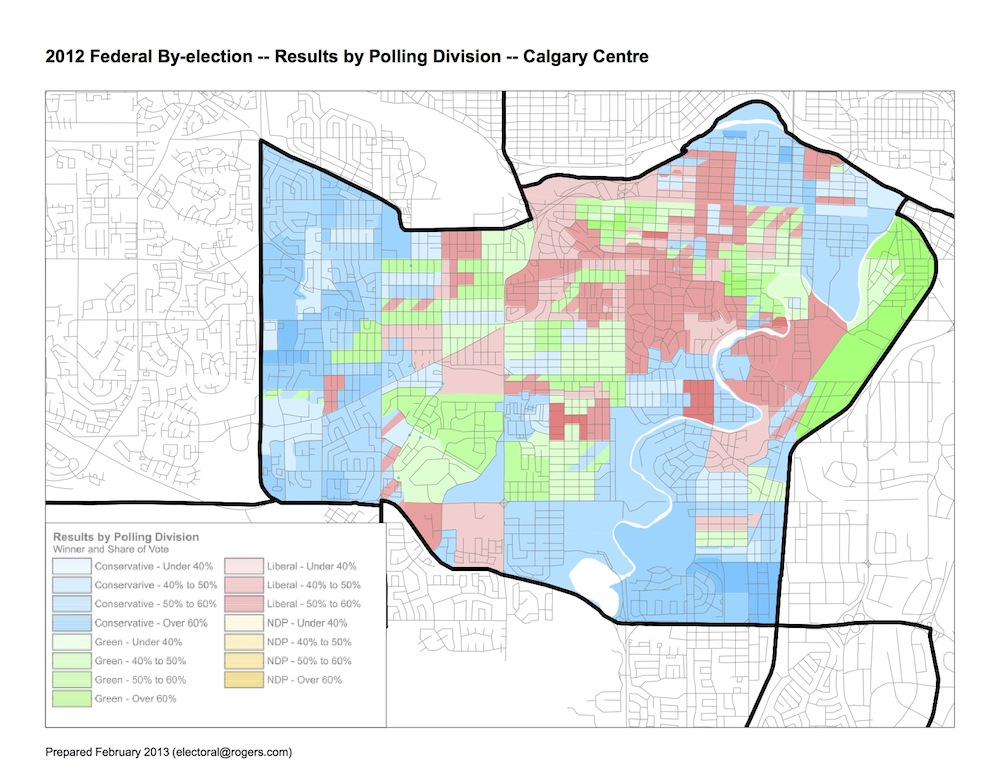
Poll-by-poll results from the November 26, 2012 by-election in Calgary-Centre (click image for larger map).
Poll-by-poll results from the November 26, 2012 by-election in Calgary-Centre (click image for larger map). Thanks to Alan Hall for the map.

Elections Canada recently released the official poll-by-poll results of the November 26, 2012 federal by-election in Calgary-Centre. The hotly contested by-election was narrowly won by Conservative Joan Crockatt, who fended off strong challenges from Liberal Harvey Locke and Green Chris Turner.

While the Conservatives were able to win in this long-held riding, this was the first time in recent memory that candidates from non-conservative federal parties came even close to winning an election in Calgary.

Here are the official results as released by Elections Canada:

Joan Crockatt, CON – 10,191 (36.9%)
Harvey Locke, LIB – 9,033 (32.7%)
Chris Turner, GRN – 7,090 (25.7%)
Dan Meades, NDP – 1,064 (3.8%)
Antoni Grochowski, IND – 141 (0.5%)
Tony Prashad, LBTRN – 92 (0.4%)

Categories
Alberta Politics

Why are the Redford Tories picking a fight with Alberta teachers?

Why are the Redford Tories picking on Alberta teachers?
Are Alberta teachers about to become collateral damage in a Tory feud?

Education Minister Jeff Johnson dispatched a letter to the Alberta Teachers Association (ATA) and the Alberta School Boards Association yesterday threatening salary cuts if a new contract is not agreed to before the provincial budget is released on March 7, 2013.

Minister Johnson’s statement was made the same day that Premier Alison Redford told the media that her government will not release an austerity-minded budget (a statement made days after Premier Redford told the media that Alberta had a spending problem).

Jeff Johnson Alberta Education Minister MLA
Jeff Johnson

Whether or not an agreement is reached before the provincial budget is tabled in ten days would seem irrelevant considering the budget documents have likely already been shipped to the printers.

Yesterday’s development follows Minister Johnson’s musings earlier this month that he could force an agreement on teachers through provincial legislation.

Alberta may be known for its conservative politics, but it has been a sea of labour calm compared recently to provinces like Ontario and British Columbia. It would make little sense for the Redford Tories to unnecessarily splash tidal waves through its relationship with Alberta’s teachers.

New to the job this year, Minister Johnson may just be confused. He is the Tory government’s third education minister in less than three years to oversee the same provincial negotiations with Alberta teachers, following in the steps of the conciliatory Dave Hancock and the more aggressive Thomas Lukaszuk.

Before the province-wide negotiations came to an abrupt end in November 2012, the ATA had proposed a four-year deal that would freeze teachers’ salaries for two years and implement increases in the final two years to catch up with inflation. The ATA proposal would have ensured continued labour peace and focused on long-standing issues surrounding workload and non-instructional volunteer and supervision roles filled by teachers.

After negotiations at the provincial level stalled in November 2012, teachers turned to school boards to continue contract talks at the local level. School boards have limited autonomy in local decision making and it has always been clear that the provincial government has the ultimate control over funding.

Why would the government pick a fight with Alberta teachers when their union has presented fair and reasonable positions at the bargaining table?

Numerous sources close to the Tory government say that tension and internal politics within the Tory caucus are fuelling animosity towards Alberta’s teachers. Some Tory MLAs, who supported other leadership candidates, are said to blame the ATA for Premier Redford’s victory in the 2011 Progressive Conservative leadership contest. The tension is said to have  led to more than a few heated arguments behind the thick wooden doors of Tory caucus meetings.

While the ATA openly encouraged teachers to participate in the Tory leadership contest, claims that teachers stole the vote for Ms. Redford are just plain silly.

Although Premier Redford led her party to a majority victory in the 2012 election, it is important to note that she had the support of only one MLA when she first entered the Tory leadership contest (former Calgary-Hays MLA Art Johnston, who was twice unable to win a party nomination in 2012).

If the speculation is true, then Alberta’s teachers could become collateral damage in a Tory feud.

UPDATE: The Alberta Teachers’ Association provincial executive council have voted unanimously to reject Minister Johnson’s offer.

Categories
Alberta Politics

Alberta has a revenue problem and a pipeline problem.

Photo of the Keystone XL Pipeline protest on February 17, 2013 in San Francisco (photo by Steve Rhodes - CC BY-NC-ND 2.0)
From the Keystone XL Pipeline protest on February 17, 2013 in San Francisco (photo by Steve Rhodes – CC BY-NC-ND 2.0)

One month ago, Premier Alison Redford took to the airwaves to warn Albertans about the revenue problem, or ‘bitumen bubble‘, the government will face in the 2013 provincial budget. The Premier cited the lack of pipelines pumping bitumen from our oilsands to external markets as a reason for the low price of Alberta oil and her government’s lack of resource revenues. Alberta had a revenue problem.

Premier Alison Redford

For the first time in recent memory, Alberta’s revenue problem was at the top of political discourse in our province. The government held a symposium to hear from experts about Alberta’s fiscal framework, but at the same time ruled out the return of health premiums and denied any rumours of a provincial sales tax (which, in fairness, would have been as popular as introducing rats into the province).

Two reasonable solutions that did not get enough attention were to increase the revenues from natural resources and to replace the Klein-era ‘flat-tax’ with a progressive taxation system that could collect more revenue without penalizing low- and middle-income Albertans.

It is hard not to point out that the group of individuals currently in a position to solve this problem are also the architects of our government’s short-sighted fiscal planning: Alberta’s Progressive Conservatives.

But late last week, before the Premier flew to the United States in a last ditch attempt to lobby politicians to approve the TransCanada Keystone XL Pipeline, she turned her government’s spin machine in a new direction, claiming Alberta now has a “spending problem.”

It is likely this is still part of the ongoing public relations campaign to manage Albertans expectations before the March 7 provincial budget.

Now let us shift to the pipeline debate and what the Premer says is the source of our (now former?) revenue problem: Alberta’s pipeline problem.

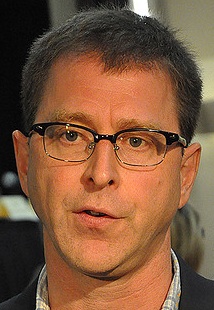
BC NDP leader Adrian Dix
Adrian Dix (photo from @taminator on Flickr)

After years of campaigns targeting Alberta’s tarsands as a major contributor to climate change, our oilsands are an easy political target for opponents of two major pipelines. Large protests across the United States last week have put the future of the Keystone XL Pipeline in question and a near political consensus in British Columbia against the Enbridge Northern Gateway Pipeline suggests a pipeline through that province is unlikely to be built anytime in the near future.

Both Liberal Premier Christy Clark and NDP leader Adrian Dix have adopted positions against the Northern Gateway Pipeline project in advance of the May 14, 2013 elections. A recent poll from Angus-Reid shows the BC NDP with 47% support compared to 31% for the BC Liberals.

Premier Redford’s cause is not without political allies south of the border. The Keystone XL Pipeline has the support of a dozen United States Governors and TransCanada claims the southern section of the pipeline, through Texas and Oklahoma, is already half-complete.

Many critics of the Keystone XL pipeline have focused on climate change, raised legitimate concerns about the devastating environmental impact of pipelines leaks, and poked holes in the number of jobs pipeline proponents have promised to create.

Even notorious Australian-American news media owner Rupert Murdoch railed against the pipeline on Twitter.

Representing more than eleven million American workers, the AFL-CIO President Richard Trumka is backing the pipeline, pitting the labour movement against environmental groups, like the Sierra Club (executive director Michael Brune was arrested at last week’s protests).

It has been speculated that having these two large and influential constituent groups on opposite sides of this debate could make it increasingly difficult for President Barack Obama to approve the pipeline’s construction over the American border with Canada.

Categories
Alberta Politics

Former Finance Ministers Morton, Liepert and Snelgrove line up with free advice.

Ted Morton MLA
Ted Morton

Free from the tight leash of party discipline, three former Finance Ministers are giving plenty of advice to Premier Alison Redford and Finance Minister Doug Horner.

Ted Morton, the former two-term Tory MLA from Foothills-Rockyview and two-time Tory leadership candidate who served as Finance Minister from 2010 to 2011, penned an opinion-editiorial in Wednesday’s Calgary Herald pointing out some common misconceptions about Alberta’s fiscal situation.

While Professor Morton correctly points out that the symptoms of Alberta’s financial woes are not a new phenomenon, his prescription is a tough pill to swallow.

In his column, Dr. Morton dispels the myths that 1) our fiscal problems are just because we are having a bad year, 2)  our fiscal problems are just because of the low price of bitumen (also known as the notorious ‘Bitumen Bubble‘), and that 3) this is just about a Budget 2013 deficit.

On his fourth argument, Dr. Morton diverts into a more conservative ideological direction. While he correctly points out the fickleness and limited life-span of some political agendas, the former Finance Minister criticizes his successor for choosing to use financing to fund capital projects. On this point, Dr. Morton appears to share the view of his ideological kin in Danielle Smith‘s Wildrose Party, who spent the waining days of 2012 on a relentless offensive against the government on this very issue.

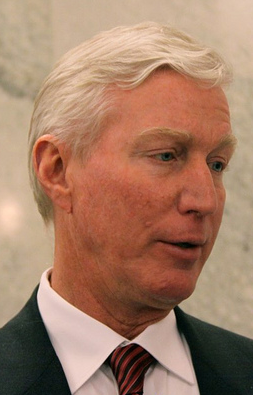
Alberta Finance Minister Ron Liepert
Ron Liepert

Ron Liepert, the former two-term Tory MLA from Calgary-West who served as Finance Minister from 2011 to 2012, has suggested that it was time for the government to address its revenue problems by looking at tax hikes.

“Nobody likes to pay more taxes. Nobody likes to pay the taxes you’re paying today. But everybody wants the services,” Mr. Liepert told the Calgary Herald in December 2012.

Meanwhile, disgruntled former Finance Minister Lloyd Snelgrove, who quit the Tory caucus in 2011 citing irreconcilable differences with Premier Redford, told the right-wing Sun News that he does not believe the government has a revenue problem, but if it does then a sales tax should be imposed.

Back in 2010, the last Tory to seriously discuss the idea of a sales tax was then-backbench MLA Doug Griffiths (now Municipal Affairs Minister). Mr. Griffiths was publicly demonized by the opposition for even broaching the topic.

Only two years earlier, another now-former Tory MLA, who is also now one of the government’s most vocal critic of the government, stood up in Alberta’s Legislative Assembly and called for tax reform and the introduction of a sales tax in Alberta:

“I, too, believe that the government of Alberta should look into studying the feasibility of eliminating our provincial income tax and using a consumption-based taxation system in its place, with a provincial sales tax being the likely substitute revenue generator.” – Newly elected Progressive Conservative MLA Rob Anderson in April 2008.

Categories
Alberta Politics

Public Affairs Bureau boss Lee Funke resigns.

Lee Funke, Managing Director of Alberta’s Public Affairs Bureau, announced his resignation in an email to government staff today. Mr. Funke had served as Managing Director of the government’s communications branch since March 2010.

Tracy Balash, Executive Director of Communications Planning, has been asked to step in as acting Managing Director. Ms. Balash recently joined the PAB after working in Premier Alison Redford‘s Communications Office.

The PAB was already in a period of transition after the retirement of Kathy Lazowski, its executive director of strategic communications.

Here is the text of the email he sent this morning:

Good morning team,

Two weeks ago I went to Peter Watson and informed him of my decision to return to private consulting once my contract as Managing Director of the Public Affairs Bureau ended. Peter has graciously allowed me to take some personal time before my contract concludes March 31, so my last day as Managing Director is tomorrow.

Reaching my decision was difficult, I am so very proud to lead this organization. Events like the recent Alberta Economic Summit held in Calgary demonstrate the important role we play in communicating significant policy issues with Albertans. The professionalism of our team was evident the entire day and I couldn’t have been more pleased. I see that same dedication by each employee of the PAB everyday – whether it is managing a special event to announce a new program, developing a multi-media promotion campaign, designing a public consultation strategy, launching an information website, writing a speech, or responding to a media call.

The PAB has one of the most exciting and challenging functions in the Government of Alberta.

We are on the front line communicating the policy, program and organizational changes that are a daily reality in a large complex organization. And there has been much change over the last three years that I have been Managing Director. The increasing demands of a 24/7 news cycle, the advent of social media, and emergence of new political voices have meant the adoption of new tools and techniques to communicate our policy agenda with Albertans.

Of course, the election of Premier Redford as the new leader for our government also brought change. Many of us have new Ministers, DMs, and in some cases new departments. But we have also seen the addition of new policy and decision–making processes, as well as new co-workers in the form of Press Secretaries. I admire how our organization has responded by adapting and implementing the changes needed to support Premier Redford’s focused agenda.

While the past three years have been rewarding, it is now time to switch my time and energy back to my government relations and communications consulting business which has been on hold.

I will continue to be involved in public policy discussions (it is part of my DNA) and our paths are likely to cross again in the near future. I will also be spending some time with my ever patient family. I know my wife, [name removed by this blogger], is certainly looking forward to me assuming more of the responsibilities for raising our two sons.

I have asked Tracy Balash, Executive Director, Communications Planning to act on my behalf until a new Managing Director is selected. In addition, Andy Weiler, Executive Director, Strategic Communications and the rest of the head office team are in place to offer the services you need to deliver communications support to your clients. I know that you will all support Tracy and Andy over the next few weeks and apply your considerable talent and skills to the roll-out of a budget that requires tough but smart choices to deal with our government’s fiscal challenge.

Let me close by saying thank you to the PAB team for your support and encouragement.

Everything I accomplished during my tenure as Managing Director was made possible by you. I have learned much from the many projects we have worked on together and I leave this organization with new knowledge and skills. I wish you all continued success in your careers and personal life, you deserve nothing less.

All the best,

Lee

Click here to read the statement issued by Premier Redford’s Communications Director, Stefan Baranski.

Categories
Alberta Politics

Is the Government pulling the plug on Athabasca University?

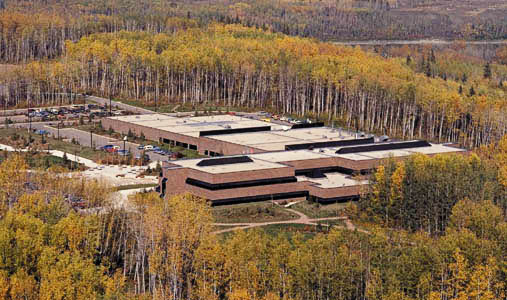
Athabasca University
Athabasca University’s main building outside of the Town of Athabasca

Is the Alberta Government pulling the plug on Athabasca University?

Government and institution officials say no, but sources say discussions are taking place that could drastically alter the services provided by Alberta’s online distance learning university, including a potential merger with the University of Alberta.

With a looming provincial budget and post-secondary institutions preparing themselves for potential funding cuts, sources say that ongoing high-level discussions in government could lead to a reorganization of the services offered by Athabasca University.

Deputy Premier Thomas Lukaszuk

Reached over the telephone this week, newly appointed Enterprise and Advanced Education Minister Thomas Lukaszuk said that he is not aware of any formal discussions related to a potential merger between Athabasca University and the University of Alberta.

While the minister would not endorse a forced merger, he said “it would be positive if one school could utilize another’s infrastructure.”

Sources say the changes being discussed could result in attempts to eliminate the duplication of services and infrastructure in Alberta’s post-secondary institutions.

“I will be moving to encourage institutions to collaborate and find efficiencies,” Minister Lukaszuk said. He plans to hold joint meetings with the post-secondary institutions to find ways the institutions can cooperate and share resources.

Reached via email, Athabasca University Manager of Communications and Media Relations John O’Brien wrote that he was not aware of any discussions related to a merger. Mr. O’Brien noted that Athabasca University does collaborate, on a limited basis, with the University of Alberta. Athabasca University currently contracts Internal Audit Services from the University of Alberta.

The geographic distance between the institution and its student population could make Athabasca University an easy target for government savings. At 36% of undergraduate students, Albertans are not the largest geographic group served by the distance learning institution (Ontarians are, at 36.4%).

Unlike Alberta’s other post-secondary institutions (built with bricks and mortar), Athabasca University’s online existence could make it appear politically easier to reorganize and repurpose without large protests concentrated in a single community or campus.

Financial pains

With Athabasca University projected to run operating deficits over the next three budget cycles, incorporating components of the institution, or significantly increasing its collaboration, with other institutions could be a way for the province to decrease the cost of the institution. The university’s 2012-2013 approved operating budget was estimated to be more than $137 million.

The institution’s projected budgets predict decreases in investment income and fundraising revenue, and expected increases in operating costs. In 2012, it was revealed that Athabasca University had depleted its $30 million reserve fund in only five years.

Modern technical infrastructure is also essential for any post-secondary institution that wants to survive in a highly-competitive and brand-based global online education market.

According to Athabasca University’s 2012-2015 Comprehensive Institutional Plan, the institution needs to invest upwards of $90 million to upgrade its software programs and technical infrastructure. The institution has been requesting an $80 million investment from the provincial government to cover the cost of these upgrades. Given the current political climate around government spending, the Tories may have little inclination to fulfill this request.

No political champion?

Does Athabasca University have a champion at the cabinet table or in the Progressive Conservative Caucus who will advocate for increased funding for its operations and infrastructure upgrades? Does the university have a champion who will defend its continued existence?

After becoming embroiled in the embarrassing illegal donation scandal, I am told there are more than a few PC MLAs who remain unimpressed with the conduct of the institution’s senior administration.

In 2012, a CBC investigation revealed that Athabasca University was one of a handful of post-secondary institutions to break provincial elections laws. Between 2006 and 2008, Athabasca University spent more than $10,000 on fundraising events organized by the Athabasca-Redwater and Edmonton-Whitemud Progressive Conservative associations. It is illegal for publicly-funded institutions to make donations to political parties.