Categories
Alberta Politics

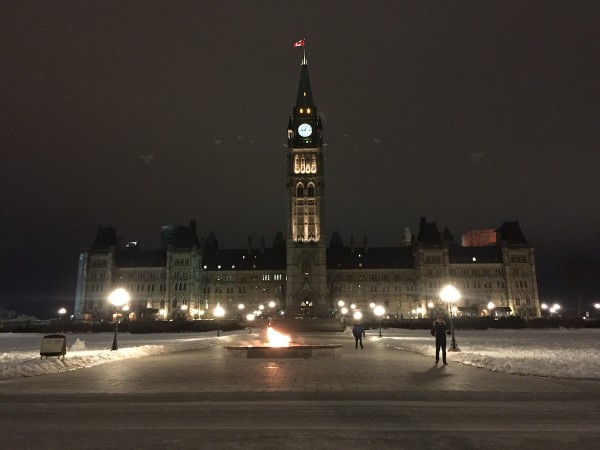
Photo of the Day: Canada’s Parliament Building

Categories
Alberta Politics

10 ways to Renew Democracy in Alberta

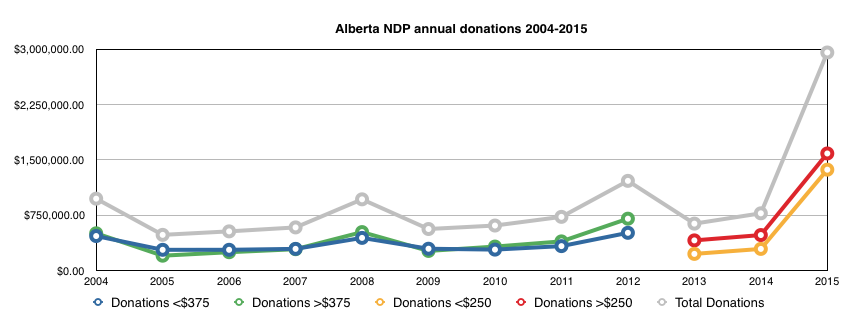
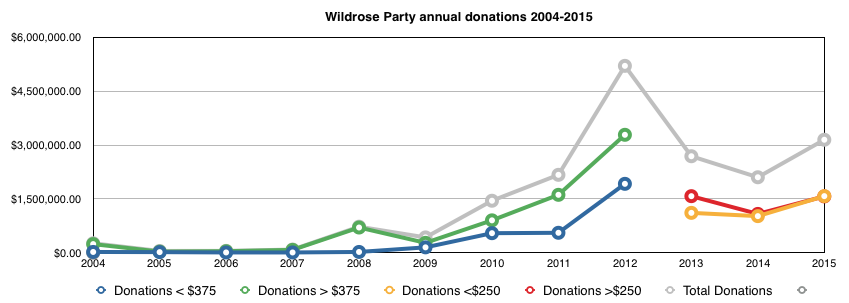
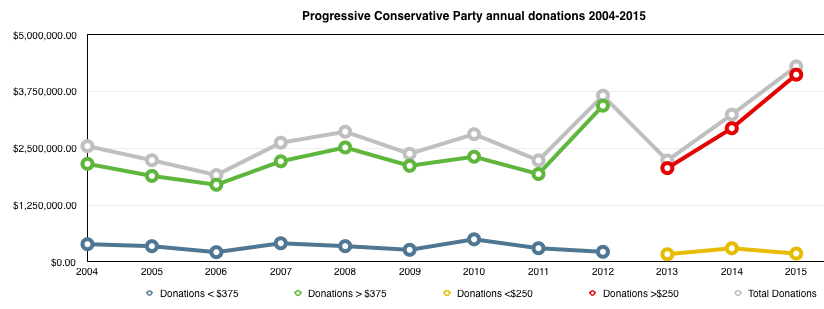
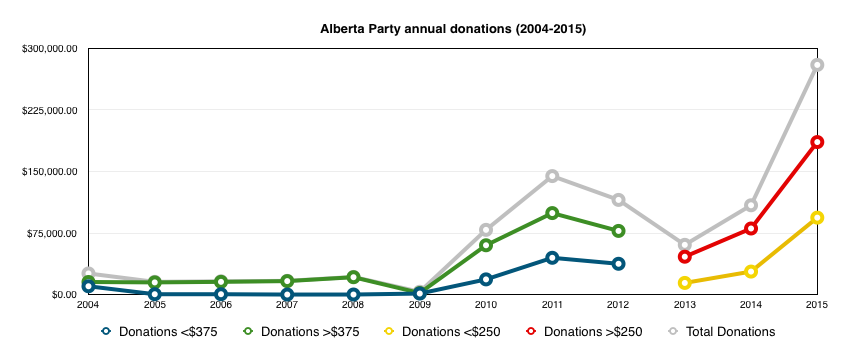
The first law created by Alberta’s New Democratic Party government’s after its election win in 2015 was Bill 1: An Act to Renew Democracy in Alberta, which banned corporate and union donations to provincial political parties.

Following the passage of this law, the Select Special Ethics and Accountability Committee was tasked with reviewing the Election Act, the Election Finances and Contributions Disclosure Act, the Conflicts of Interest Act, and the Public Interest Disclosure (Whistleblower Protection) Act.

Christina Gray Edmonton Mill Woods MLA
Christina Gray

The MLA committee is chaired by Edmonton-Mill Woods MLA Christina Gray, who was recently appointed as Minister Responsible for Democratic Renewal, and includes NDP, Wildrose, Progressive Conservative, Liberal and Alberta Party MLAs.

There has not been a comprehensive review of the Election Act in 35 years. Changes to the Act should recognize the current realities and advances in technology while ensuring the election process in Alberta is fair, transparent, accountable and efficient.

Ian Urquhart shared some of his recommendations to the committee in a recent newspaper opinion-editorial. I have already written about how the Alberta government can reform how electoral boundaries are drawn, and without diving into the complex topic of electoral reform (which is currently being dealt with at the federal level), here are ten ideas that I believe could help improve the democratic process in Alberta:

  1. Introduce Mandatory Voting as part of an intensive civics education campaign for Albertans. Voter turnout in provincial elections is abysmally low and has only surged higher than 60 percent twice in the past forty years (in the 1982 and 1993 elections). Like filing your taxes or graduating high school, voting is a civic responsibility in which all citizens should be encouraged, and required, to participate.
  2. Include a None of the Above option on the ballot in provincial elections. This would allow voters to express valid feelings of displeasure with the candidates listed on the ballot through a None of the Above option. If None of the Above receives the most votes, then a by-election will be held with a new group of candidates.
  3. Lower the maximum annual amount that individuals can donate to provincial political parties. The current maximum annual donation limits in Alberta is $30,000 during election periods and $15,000 outside of election periods. The current maximum annual donation for federal political parties in Canada is $1,525.
  4. Implement maximum limits to how much candidates, political parties and third-party groups can spend during the election period, as already exist for candidates in federal elections.
  5. If we are going to have fixed elections for general elections in Alberta, then let’s actually have a fixed election day. It is time to eliminate the open-ended March 1 to May 31 fixed election period, which was passed by the Progressive Conservative government in 2011 and is strangely unique to Alberta. All other provinces with the exception of Nova Scotia have an actual fixed election day.
  6. If we are going to have fixed election days for general elections, we should have fixed election days for by-elections in order to determine when a by-election will be called to fill vacancies in the Legislative Assembly. Current rules only say that a by-election will be called within six months of a vacancy.
  7. Hold Election Day on a weekend and extend voting hours over Saturday and Sunday to allow for more access to the voting stations. Advance voting is currently held over a four day period, so there is no reason why the Election Day cannot be extended over two days. Moving the Election Day to the weekend will make voting easier for citizens who are unable to cast their ballots on a single weekday.
  8. Introduce automated voting tabulators like those used in the 2014 by-elections and by municipalities like the City of Edmonton since the mid-1990s. This would allow for the ballots to be counted in a more efficient and timely manner.
  9. Ban corporate and union donations in municipal elections by amending the Local Authorities Elections Act. Motions supporting this idea have been endorsed by Edmonton City Council, Edmonton Public School Board and Fort Saskatchewan City Council.
  10. Give Elections Alberta the authority and resources to investigate violations of the Local Authorities Elections Act. Some municipalities are currently unwilling or do not have the resources to investigate violations of this law.

The committee is accepting written recommendations until February 26, 2016, which can be emailed to EthicsandAccountability.Committee@assembly.ab.ca.

Categories
Alberta Politics

Moe Banga wins Edmonton’s Ward 12 by-election

How many votes does it take to win a 32-candidate by-election?

2,359 out of 13,279.

Moe Banga Edmonton City Council
Moe Banga

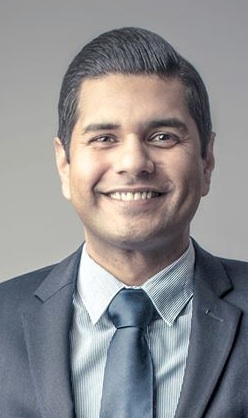
Edmonton Police Detective and community volunteer Moe Banga was elected to Edmonton City Council with 18 percent of the vote in today’s Ward 12 by-election to replace Amarjeet Sohi. The race attracted 32 candidates, a record number in Edmonton city council electoral history.

Despite the 32-way split, Mr. Banga finished more than one thousand votes ahead of his five main competitors, Laura Thibert, Arundeep Sandhu, Irfan Chaudhry, Nav Kaur and Danisha Bhaloo.

This is not the first time Mr. Banga attempted to seek political office. In June 2014, he was disqualified from the federal Conservative Party nomination contest in the Edmonton-Wetaskiwin riding. It was never made completely clear why he was removed from the contest.

Mr. Banga will now serve on city council until the next general election in October 2017.

Here is a full list of the unofficial results from the February 22, 2016 Ward 12 by-election:

1 AHMAD Shani 20
2 BALE Jason 37
3 BANGA Moe 2,359
4 BHALOO Danisha 843
5 BUJOR Victor Viorel 37
6 BUTLER Mike 371
7 CHAMCHUK Nick 222
8 CHAUDHRY Irfan 950
9 GILL Jag 169
10 GORMAN Andrew 40
11 HENDERSON Brian 541
12 HO Lincoln 146
13 JHAJJ Sam 612
14 JOHNSTONE Dan 436
15 KADLA Kelly A. 33
16 KAUR Nav 888
17 KOOPMANS R. Joey 5
18 KOZIAK Don 260
19 MANHAS Balraj Singh 466
20 MCKINNON Terry J. 49
21 PATEL Rakesh 542
22 PIETERSE Field 315
23 SANDHU Arundeep Singh 1,106
24 SEKHON Nirpal 29
25 SHARMA Yash 334
26 SHEORAN Jagat Singh 122
27 STEVENS Jeri 90
28 SZYMANOWKA Nicole 193
29 THIBERT Laura 1,283
30 TOOR Preet 665
31 TOOR Steve ‘CP’ 93
32 WUTZKE Stephen 23
Categories
Alberta Politics

Two in race for NDP nomination in Calgary-Greenway by-election

Two candidates are seeking the New Democratic Party nomination to run in the Calgary-Greenway provincial by-election, which will need to be called before the end of May 2016. The NDP nomination meeting will be held on Feb. 20, 2016.

  • Roop Rai is known in northeast Calgary from her time as a host of the Roshni program on Red FM radio station. She is now constituency assistant for MLA Irfan Sabir in the neighbouring Calgary-McCall constituency.
  • Mattie McMillan is the manager of MLA Ricardo Miranda‘s constituency office in the neighbouring of Calgary-Cross. McMillan is a former vice-president external of the University of Calgary Students’ Union and, according to his linkedin profile, a Reserve Officer in the Royal Canadian Sea Cadets. McMillan sought the NDP nomination to run in the Calgary-Centre federal by-election in 2012. I am now told that McMillan is no longer a candidate in the nomination race.
  • I am told that John Phillips, a Calgary lawyer, has now entered the nomination contest.

According to the Calgary Herald, 2015 candidate Devinder Toor will challenge Robin Martin for the March 5, 2016 Wildrose Party nomination. Mr. Toor placed third and earned 20 percent of the vote in the May 2015 election.

Dan Sidhu, Jamie LallPrabhdeep Gill and Tushar Yadav are seeking the Progressive Conservative nomination, which is scheduled to take place on Feb. 27, 2016.

Two candidates are contesting the Liberal Party nomination, which is scheduled to take place on Feb. 29, 2016.

A full list of nomination candidates and their social media links can be found here.

(Post edited on Jan. 25, 2022)

Categories
Alberta Politics

Journalism degrees or degrees of journalism

This week’s kerfuffle over the Rebel Media website’s fight with the Government of Alberta has dominated the news cycle, demonstrating the lack of experience of an NDP government still in their first year in government. Here is a quick summary of what I understand happened:

  1. Rebel freelancer Holly Nicholas attended a technical briefing meeting for media before the release of the Royalty Review Panel report on Jan. 29, 2016. She says that she was asked to leave after being in the room for most of the meeting. It is not clear why she would have been asked to leave.
  2. Rebel freelancer Sheila Gunn Reid was denied entry into a technical briefing meeting for stakeholders before the release of the Royalty Review Panel report which was being held on the same day as the technical briefing meeting for media. It is my understating that no media were allowed entry into this meeting.
  3. Ms. Gunn Reid was not allowed entry into the Alberta Legislature on Feb. 3, 2016 to attend a joint press conference held by Premier Rachel Notley and Prime Minister Justin Trudeau. Neither was I, or was blogger David Climenhaga. On that day, I was informed by the Premier’s Communications Office that this was a decision made by the Prime Minster’s Communications Office.
  4. In response to a letter sent by Rebel’s lawyer Fred Kozak on Feb. 8, 2016, a letter from a government lawyer on Feb. 12, 2016 stated the government believes that Rebel and those identifying as being connected to the website are not journalists and not entitled to access media lock-ups or other events.

The fourth point in the most mind-boggling. The Government of Alberta does not have the authority to decide who is and who is not a “journalist.” I cannot understand how someone in government thought that response would be a good idea. It makes the NDP look heavy-handed and is a good example of what the right-wing fringe means when it uses the phrase ‘nanny-state.”

Founded by former lobbyist and Sun TV host Ezra Levant, the Rebel website speaks to Alberta’s right-wing fringe and essentially operates with the characteristics of an opposition group. I find much of their coverage distasteful and intentionally provocative, but they should be allowed to attend government media events, just as other media and opposition groups would be allowed.

As Warren Kinsella and Jason Markusoff pointed out, this is exactly the reaction that Mr. Levant and his crew wanted. And even though the NDP backed down from the ban today, they have already delivered Mr. Levant the attention he sought.

Heather Boyd, the former western bureau director for Canadian Press, has been recruited by the government to recommend new rules for media access. It would be a step backward for media in Alberta if new rules restrict access and participation of new online media.

Ms. Boyd’s recommendations will be submitted to the government in two or three weeks, which means this issue will become a topic of media coverage as MLAs return for the spring session of the Legislative Assembly and the government presents a Speech from the Throne.

A changing media landscape means there will be more online media with employees and freelancers who may not fall under the traditional description of “journalist.” As the large media corporations slash staff and cut back on local content, there is still a public demand for news. Citizens are turning online for their news sources, something that most of these news companies already recognize.

As the corporate media cuts back, I expect some newly unemployed journalists to start their own innovative online news companies. New trusted sources for political information will continue to sprout up online – this cannot be stopped by the government or the already established media companies.

Categories
Alberta Politics

2016 will mark the end of Senate Elections in Alberta

The Senatorial Selection Act, the law that governs Alberta’s unique Senate nominee elections, expires on Dec. 31, 2016. The longstanding policy of the Alberta New Democratic Party which supports the abolition of the Canadian Senate likely means the Act will be allowed to expire, into the dust of legislative history.

Don Getty Premier of Alberta
Don Getty

Members of the Canadian Senate are appointed by the Governor General on the advice of the Prime Minister. Alberta is the only province with a general election process to select Senate nominees, which have been held in 1989, 1998, 2004 and 2012.

The Senatorial Selection Act was introduced in 1989, in part to allow the Progressive Conservative government of Don Getty to co-opt the issue of Senate reform, which had become a powerful rallying crying of the populist Reform Party. Reform candidate Stanley Waters won the 1989 election and was appointed to the Senate in 1990 on the advice of then-prime minister Brian Mulroney.

Stan Waters Alberta Senate
Stanley Waters

Only a handful of Alberta’s elected Senators have actually been appointed to the upper chamber, as the election process exists outside of the Constitution and can be ignored by the federal government. Current Conservative Senators Doug Black and Scott Tannas, elected in 2012, and Betty Unger, elected in 2004, were appointed to the Senate on the advice of former prime minister Stephen Harper.

With the exception of the 1989 election, when Liberal Bill Code placed second, only the conservative Reform Party, Progressive Conservative, Alberta Alliance, Social Credit and Wildrose Party, and the environmentalist Evergreen Party have participated in the elections. Progressive candidates have also run as Independents without the backing of their political parties. In 1998, future NDP candidate Guy Desrosiers stood as an Independent Senate candidate (and placed third with 16.7% of the vote).

Rachel Notley Alberta NDP leader
Rachel Notley

A high-level of rejected, declined and spoiled ballots in the Senate elections suggests that many Albertans are unengaged in this process. More than 178,000 ballots were rejected, spoiled and declined in the 2004 Senate election, amounting to 19 percent of Albertans who showed up to the polls. In 2012, more than 189,000 Senate election ballots were rejected, spoiled and declined, compared to only 7,822 in the provincial general election held the same day.

While the NDP have long supported the abolishment of the Senate, the idea has grown popular in conservative circles in recent years. Saskatchewan Premier Brad Wall has echoed the NDP’s calls for Senate abolishment, and in an odd pre-election maneuver, Mr. Harper tacitly endorsed the abolishment of the Senate if it could not be reformed (this took place after he appointed more than 50 Conservatives to the Senate, including Mike Duffy, Patrick Brazeau and Pamela Wallin).

Stephen Harper Calgary Stampede
Stephen Harper

new Senate appointment advisory board created by the federal Liberal government led by Prime Minister Justin Trudeau after the October 2015 election will review nominated Canadians who meet the criteria of demonstrating a record of leadership in community service or professional expertise, a proven record of ethics and integrity and knowledge of the Senate’s role. It is unclear whether the new advisory board will place future provincially-endorsed elected nominees in higher consideration.

The current Alberta NDP government has not officially announced it will not renew the Senatorial Selection Act, but a speech from now-Premier Rachel Notley in 2009, while she was debating amendments to extend the Act until Dec. 31, 2016, strongly suggests that it will not be renewed again this year:

“…this is a piece of legislation that we can’t support because, quite frankly, it just provides a foundation to continue with what is currently a very ineffective system on the federal level.

As has been previously stated, our view is simply that the Senate should be abolished. It is not something that reflects the democratic makeup of our country. The historical rationale behind appointing a Senate has long since dissipated in terms of sort of the historical political concerns that underlay the initial construction of the Senate. The current elements of the Senate that we would effectively be promoting and encouraging the continuation of are, in my view, quite unacceptable.

Whether we elect our Senators or whether we have elections where the government chooses to appoint our Senators, we’re still dealing with the current situation, which is that the Senate itself does not reflect the national population distribution in that, you know, Alberta has six Senate seats, and New Brunswick, with about one fifth of Alberta’s population, has 10 seats. Eligibility for appointment in the Senate is still based in part on property ownership, and once appointed, Senators just get to hang around there until 75.

Whether we have this legislation or do not have this legislation, that’s exactly what’s going to happen. Having had this legislation, we’ve actually, if anything, encouraged the continuation of the Senate. We’ve encouraged buy-in to what is a fundamentally antidemocratic institution.

You know, this was something that came up originally as a means to make a political point when there were substantive discussions around Senate reform a long, long time ago. There have been no meaningful discussions around Senate reform for, I would suggest, about a decade at least.

This piece of legislation will simply give credence to what continues to be a dysfunctional system and one that is costly and one that has long since outlived its purpose. The bill has outlived the purpose, the process in Alberta has outlived the purpose, and frankly the Senate has outlived its purpose. For that reason, we cannot support the bill.”

Categories
Alberta Politics

Documentary film about Alberta’s 2015 Election premieres on March 2, 2016

Filmmaker Kelly Wolfert will premiere his 23-minute documentary about Alberta’s historic May 5, 2015 election at a special screening on March 2, 2016 at Metro Cinema in Edmonton.

According to the event listing: “Day of Change is a look at the events taking place in Alberta’s provincial election May 5th, 2015. Following candidates new to politics, veteran politicians, supporters, volunteers, and members of various political parties, the film takes a personal, behind-the-scenes look at the NDP victory that changed the landscape of Alberta and Canadian politics like no election in recent history.

The screening is part of NorthWestFest, formerly known as the Global Visions Film Festival. Tickets can be purchased online.

Categories
Alberta Politics

Greens choose Thana Boonlert in Calgary-Greenway. Aryan Sadat runs for the PCs. [Updated]

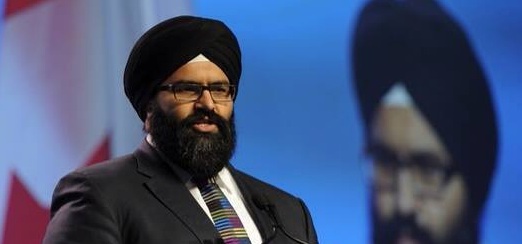
Alberta’s opposition parties are preparing for a spring by-election in Calgary-Greenway. The east Calgary constituency was represented by Progressive Conservative MLA Manmeet Bhullar from 2008 until late 2015, when Mr. Bhullar was killed in a traffic accident on the Queen Elizabeth II Highway. A by-election is expected to be called before the end of May 2016.

The Green Party is the first party to nominate a candidate to run in this by-election. Environmental engineer Thana Boonlert will carry his party’s banner. Mr. Boonlert recently ran as a federal Green Party candidate in the Calgary-Centre riding, where he earned 2.2 percent of the vote.

I am told the New Democratic Party has scheduled its nomination meeting for Feb. 20, 2016, though this is not publicly listed on the party’s website. Past NDP candidate Don Monroe posted on his Facebook Page on Feb. 1, 2016 that he is “wondering what’s going on in Greenway concerning representation” and is still waiting for the party to inform him when a nomination meeting will be held. Mr. Monroe earned 36 percent of the vote in the May 2015 election, placing eight points behind Mr. Bhullar.

The Progressive Conservative Party will hold a candidate selection meeting on Feb. 27, 2016 at Abbeydale Community Centre.

Manmeet Bhullar, Aryan Sadat and Jim Prentice in 2014.

Aryan Sadat has announced his intention to seek for the PC nomination. Mr. Sadat challenged former MLA Teresa Woo-Paw for the Progressive Conservative nomination in the Calgary-Northern Hills constituency in January 2015. In 2014, he hosted a fundraiser with then-PC leadership candidate Jim Prentice and Mr. Bhullar.

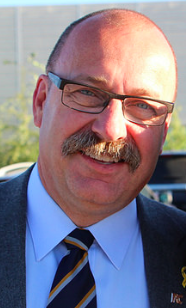
Some PC members have expressed hope that Calgary police chief Rick Hanson will seek the nomination. Mr. Hanson stepped down as police chief to run as a star candidate for the PC Party in the May 2015 election, but he was defeated by New Democrat Ricardo Miranda in the Calgary-Cross constituency.

The Wildrose Party has scheduled March 5, 2016 as their nomination date. Robin Martin, son-in-law of Calgary-Forest Lawn Conservative MP Deepak Obhrai, is running for the Wildrose nomination.

Ron Leech Calgary Greenway

Memories of the 2012 election could haunt the Wildrose Party. Four years ago, the party’s candidate in Calgary-Greenway helped destroy Wildrose chances of winning the election when he was quote as saying he had a Caucasian advantage in this multi-cultural constituency.

These comments hit the newspaper headlines about the same time as the Lake of Fire blog post from another Wildrose candidate was made public. Those two comments have saddled the Wildrose Party with a reputation as being the party of social conservatives in Alberta.

The Liberals have scheduled their candidate selection meeting for Feb. 29, 2016. A recent annual meeting of the local Liberal association was attended by the party’s interim leader David Swann, recent federal candidate Matt Grant, and Calgary-Skyview Member of Parliament Darshan Kang. Mr. Kang was the MLA for the neighbouring Calgary-McCall constituency from 2008 to 2015.

It appears that the Alberta Party has yet to schedule a date for a nomination meeting.

A recent poll released by Mainstreet Research showed the Wildrose Party with 32 percent support in Calgary, narrowly ahead of the PCs with 29 percent and the NDP with 24 percent.

Categories
Alberta Politics

Let’s end the myth of partisan-free city council elections

We need to keep politics out of elections: That sums up recent comments made by Edmonton City Councillor Michael Oshry. The west Edmonton councillor has waded into the 32-candidate by-election race in southeast Edmonton’s Ward 12, questioning the decision of some MLAs to endorse candidates in the municipal contest.

Mr. Oshry’s comments have sparked a resurgence of the popular and misinformed myth that “there is no partisan politics in municipal elections.”

It is natural for politically engaged people to be involved in elections for different levels of government. In fact, the most successful campaigns I have been involved in at a municipal level have attracted organizers and volunteers from a variety of partisan loyalties. It is also not uncommon for municipal politicians to have party connections or the support of politicians from other levels of government. Despite this, no one is proposing to bring political parties back to city council, as existed in Edmonton until the late 1980s.

Like all municipal elections in Edmonton, a number of candidates running in the Ward 12 by-election have party affiliations or are being supported by individuals involved in party politics at the provincial and federal levels.

If partisan affiliations in provincial and federal elections or endorsements from provincial or federal politicians precluded citizens from running for political office, then a number of current city councillors, including Mr. Oshry, would be ineligible to serve.

  • Mr. Oshry was endorsed by St. Albert PC MLA Stephen Khan during the 2013 municipal election.
  • Councillor Tony Caterina ran as a PC candidate in the 2015 election and ran as an Alberta Alliance candidate in the 2004 provincial election.
  • Councillor Bev Esslinger was a PC candidate in 2012 election.
  • Councillor Ed Gibbons was a Liberal MLA from 1997 to 2001. In 2015, he donated $375.00 to the Fort Saskatchewan-Vegreville PC Association and in 2007 and 2011 he donated $850 and $1,100 to the PC Party.
  • Mayor Don Iveson donated $250 to Linda Duncan’s election campaign in 2008, while he was city councillor.
  • Councillor Dave Loken campaigned for NDP candidate Janis Irwin in the 2015 federal election and donated more than $2,000 to the Alberta NDP between 2011 and 2014.
  • Councillor Mike Nickel is a former PC Party constituency director. In 2014, he donated $318.25 to the Leduc-Beaumont Wildrose Association and in 2005 he donated $600 to the PC Party.
  • Councillor Michael Walters was an Alberta Party candidate in the 2012 election and endorsed a PC candidate in the 2015 election. He also ran for an NDP nomination in 2000.

Here is a look back at some municipal politicians from the recent past who have had partisan affiliations:

  • Former mayor Stephen Mandel was a PC MLA from 2014 to 2015. He donated $3,000 to the PC Party between 2010 and 2012, while he was Mayor of Edmonton.
  • Former councillor Kim Krushell was a local PC Party constituency association president before being elected as a city councillor. In 2008, she donated $425 to the PC Party. She now serves as a regional director for the PC Party.
  • Former councillor Karen Leibovici was a Liberal MLA from 1993 to 2001 and a federal Liberal candidate in 2015. During her mayoral bid in 2013, she was endorsed by a handful of PC MLAs, including then-deputy premier Thomas Lukaszuk and PC MLA David Xiao.
  • Former councillor Linda Sloan was a Liberal MLA from 1997 to 2001. She ran for the Liberal Party leadership in 1998.
  • Former councillor Jane Batty donated $425 to the PC Party in 2010.
  • Former councillor Wendy Kinsella ran as a PC candidate in the 2001 election, while she was still a sitting city councillor.
  • Former councillor Brian Mason was elected as an NDP MLA in a 2000 by-election. He is now Minister of Infrastructure and Transportation.
  • Perhaps the strangest example of partisan involvement in municipal politics was in 2007, when the Wildrose Party donated $250 to Kerry Diotte‘s city council campaign. This is the only example I have found of a political party actually donating money to a municipal election candidate.

These lists demonstrate that after more than four decades of PC governments in Alberta, support for the governing party became engrained in all levels of politics to the point where support for the PCs from municipal politicians was not seen as partisanship, just the way the business of politics was done.

Categories
Alberta Politics

My name is Dave Cournoyer and I love Winter in Edmonton

Last week I had the pleasure of participating in the Make Something Edmonton community jury that sifted through the many applications for this year’s Winter Project Accelerator Grant. It was a fun experience and I was excited to learn about the ideas and projects that Edmontonians are proposing to make winter in our northern city a more engaging and dynamic season.

Although we have experienced some unseasonably warm temperatures this winter season, which has melted much of the snow in our city, there are still many outdoor activities and events to enjoy.

As part of the jury, I recorded a short interview outside of Cafe Bicyclette, explaining why I love winter in Edmonton (and winter patios). You can watch the video interview below and read the text of the interview on the MSE website.

Thanks to Make Something Edmonton for giving me the opportunity to contribute!

In case you missed it this past weekend, the fourth annual Flying Canoe Volant was held at La Cite Francophone and the Mill Creek Ravine. It was a fantastic event and I encourage all Edmontonians to check it out in 2017.

https://twitter.com/AlexandraHryciw/status/696025313436782592

Categories
Alberta Politics

Thank Goodness we didn’t build that Firewall!

Fifteen years ago, in Jan. 2001, six prominent Conservative lobbyists and university professors, including future prime minister Stephen Harper and provincial cabinet minister Ted Morton, penned the Firewall Manifesto.

Prime minister Jean Chretien‘s Liberals had been re-elected to a third-term in office and the failed rebrand of the Reform Party as the ‘Canadian Alliance‘ was quickly becoming apparent.

In reaction to the re-election of the Ontario-based Liberal government, the Firewall Manifesto called for then-premier Ralph Klein to build a firewall around Alberta by taking a number of actions, including the creation of an Alberta police force, an Alberta pension plan and the reduction of funds transferred from Alberta to the federal government*. Thankfully for Albertans, Mr. Klein ignored the Manifesto.

Fast-forward to Feb. 2016 and Alberta’s economy has slowed following a sharp decline in the international price of oil. For the first time in decades, Alberta’s traditionally cash-flush government is asking for economic and financial assistance from the rest of Canada.

Prime Minister Justin Trudeau and Premier Rachel Notley at the Alberta Legislature on Feb. 3, 2016.
Prime Minister Justin Trudeau and Premier Rachel Notley at the Alberta Legislature on Feb. 3, 2016. (Photo from Rachel Notley’s Facebook Page)

Liberal Prime Minister Justin Trudeau and New Democrat Premier Rachel Notley stood in the Legislature Rotunda yesterday and explained plans to fast-track $700 million in previously committed infrastructure funds from the federal government to Alberta. Mr. Trudeau also announced changes to Employment Insurance rules to help recently unemployed Albertans.

Alberta’s current economic situation and the drive to expand oil pipelines across Canada serve as an important reminder about why building bridges is more effective than burning bridges and erecting (fire)walls between our province and the rest of the country.

Thank goodness we didn’t build that firewall.

*It is completely unclear how this actually would have been done.

Categories
Alberta Politics

Notley spreads out the workload in new expanded NDP cabinet

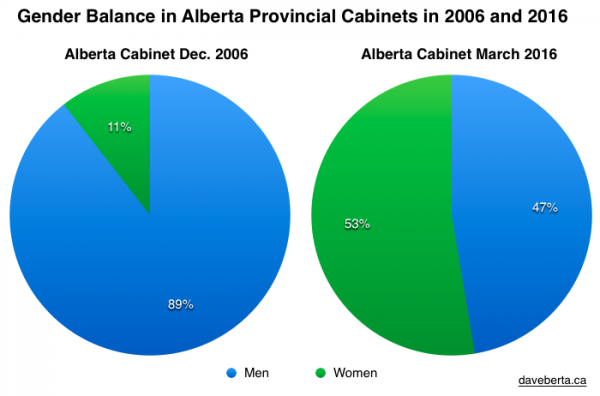
Alberta’s provincial cabinet grew by six today as Premier Rachel Notley announced an early 2016 cabinet shuffle. These appointments bring the size of Alberta’s cabinet up to 19, which is larger than the initial 12 cabinet ministers appointed after the NDP won the 2015 election but is still the smallest Alberta cabinet in more than a decade.

It became clear in the NDP government’s first half year in office that it would be unrealistic to have such a small group be responsible for so many large government ministries. Because of this, it was widely suspected that the new government would wait until 2016 before deciding which backbench NDP MLAs were cabinet material.

Here are some of the changes made as a result of today’s cabinet shuffle.

Edmonton-Glenora MLA Sarah Hoffman retains her position as Minster of Health while also taking on the role of Deputy Premier. Ms. Hoffman has proven herself to be one of the strongest members of the provincial cabinet, so this promotion is not a surprise.

Calgary-Acadia MLA Brandy Payne will assist Ms. Hoffman as Associate Minister of Health, a position that has existed in the past.

Edmonton-Riverview MLA Lori Sigurdson took a political beating during the Bill 6 farm safety law debates has been demoted from her role as Minister of Advanced Education and Minister of Jobs, Skills and Labour. She is now Minister of Seniors and Housing.

Replacing Ms. Sigurdson are Edmonton-Gold Bar MLA Marlin Schmidt as Minister of Advanced Education and Edmonton-Mill Woods MLA Christina Gray as Minister of Labour (no longer the Ministry of Jobs, Skills and Labour).

Ms. Gray is also Minister Responsible for Democratic Renewal, a role that coincides with her position as chairperson of the Select Special Ethics and Accountability Committee, which is reviewing the Election Act, the Election Finances and Contributions Disclosure Act, the Conflicts of Interest Act, and the Public Interest Disclosure (Whistleblower Protection) Act.

Edmonton-Rutherford MLA Richard Feehan has been appointed Minister of Indigenous Relations, which has been renamed from Aboriginal Relations.

Calgary-Cross MLA Ricardo Miranda, is now Minister of Culture and Tourism. He is also Alberta’s first openly gay cabinet minister.

Two new cabinet ministers, Ms. Payne and Calgary-Varsity MLA Stephanie McLean, who is Minister of Service Alberta and Status of Women, are pregnant and expecting to add new additions to their families in 2016.

Agriculture Minister Oneil Carlier is now Deputy Government House Leader, a role he shares with Economic Development and Trade Minister Deron Bilous.

It is unclear whether Mr. Schmidt and Ms. McLean will continue in their roles from the previous Legislative session as Government Whip and Deputy Government Whip. It is expected that MLAs will choose a new Deputy Chair of Committees to replace Mr. Feehan as he moves into his new ministerial role when the Legislature returns on March 8, 2016.

A full list of the new cabinet can be found here.

New Climate Change Office

The cabinet shuffle also included the announcement that a new Climate Change Office has been created to help implement the government’s Climate Leadership Plan. The new office will report to Environment and Parks Minister Shannon Phillips.

Categories
Alberta Politics

Three days left to support the Pride Tape kickstarter

1,083 backers have stepped up to donate $70.073 in support the Pride Tape kickstarter campaign since it was  started in December 2015. Launched by the Institute for Sexual Minority Studies and Services at the University of Alberta and supported by Calder Bateman Communications, Pride Tape is a campaign aimed at helping increase inclusivity for LGBTQ youth in hockey.

“Now more than ever, people should be free to love whoever they choose. Yet most LGBTQ youth still don’t feel welcome playing team sports. These kids don’t have many professionals to look up to—and for young hockey players, there are no “out” role models at all. So how can the hockey world show their support with pride? With a simple roll of tape.

Pride Tape is a badge of support from the teammates, coaches, parents and pros to young LGBTQ players. It shows every player that they belong on the ice. That we’re all on the same team. And we need your help to make it a reality.

When Pride Tape is up and running, proceeds will support LGBTQ youth outreach initiatives, such as You Can Play and the Institute for Sexual Minority Studies and Services. That means every roll of tape will make an impact on and off the ice.”

The campaign has gained the support of Andrew Ference and the Edmonton Oilers, Calgary Flames President of Hockey Operations Brian Burke, Los Angeles Kings Goalie Coach Bill Ranford and Edmonton Mayor Don Iveson, among many others.

In British Columbia, Vancouver MLA Spencer Chandra Herbert has written to the Vancouver Canucks encouraging the team to embrace the Pride Tape campaign.

The Pride Tape kickstarter is running until Feb. 3 at 11:59 p.m., so don’t miss your opportunity to support the campaign.

Categories
Alberta Politics

They did what?! Reaction to the NDP Royalty Review from across the political spectrum

Here is what energy industry executives, progressive advocates and opposition politicians had to say about the Royalty Review panel report released on Friday, Jan. 29, 2016:

“Our new royalty framework recognizes the economic context of Alberta’s energy industry and the need to protect and promote good jobs. Our new system will gradually deliver greater revenue to Albertans while building a more competitive energy sector enhanced by greater transparency and performance measurements to allow Albertans to hold government and industry to our commitments.” – Rachel Notley, Premier of Alberta (press release)

“Our history of innovation has made Alberta into one of the world’s top energy producers. With the changing world we face today, it’s even more important to encourage innovation and ensure Alberta can compete. That way, everyone benefits. Our panel is proud to deliver these recommendations to improve our energy industry’s future.” – Dave Mowat, Royalty Review Advisory Panel Chair  (press release)

“Virtually none of our concerns or suggestions are reflected in the royalty report… Those ideas were passed over in favour of a plan that could have been introduced by a PC or Wildrose government… We had high hopes at least some of those progressive alternatives would have found their way into the final report. But they didn’t.” – Gil McGowan, President of the Alberta Federation of Labour (reported in the Calgary Sun and AlbertaPolitics.ca)

“Together, we created a meaningful dialogue around the energy issues both in Alberta and across Canada. I believe that together, we have developed an enduring framework and set of recommendations that will contribute to Alberta’s future prosperity.” – Leona Hanson, Panel member and Mayor of Beaverlodge  (press release)

“The most glaring omission is the complete absence of any kind of incentive for environmental improvement by industry. Under this new royalty system the government is rewarding the environmental status quo. Alberta’s energy industry is innovative and they deserve the opportunity to be rewarded for improved environmental practices. This is particularly prevalent in the decision to ignore the oilsands royalty process completely.” – David Swann, MLA for Calgary-Mountain View and interim leader of the Liberal Party (press release)

“The new royalty framework is principle-based and provides a foundation to build the predictability industry needs for future investment… The report recognizes royalties are just one part of the competitiveness equation for Alberta. With today’s economic situation, now is the time for industry and the Alberta government to work together on solutions that will make Alberta a world-class province to do business… Today’s announcement has been the result of a fair and credible process, one Albertans can trust.” – Tim McMillan, president and chief executive officer of the Canadian Association of Petroleum Producers (press release)

“They’ve done some good things that were laudable, but that keeping the royalty rates and structure was disappointing. There was a lot of room for improvement to capture a greater share of the resource generated by the industry in a high-price environment; holding the line doesn’t accomplish that.” – Ricardo Acuna, executive director of the Parkland Institute (Globe & Mail)

“I was impressed with the efforts of the Panel to understand and balance the interests of the public, the Province and the industry, but I was particularly impressed with how all of the input was considered and integrated to the Modernized Royalty Framework report. I believe the Panel’s recommendations significantly update and improve the Alberta royalty framework which should ultimately encourage investment in Alberta’s resources.” – Kevin ‎Neveu, President and CEO of Precision Drilling Corp.  (press release)

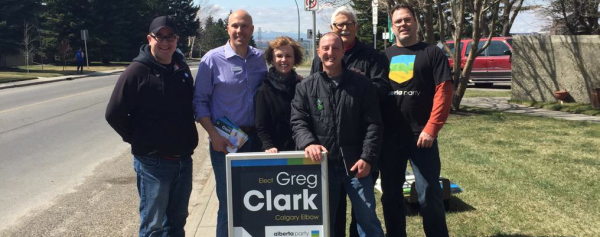
“Just like in our royalty plan, the panel has found that Albertans are getting a fair share from oil and gas royalties, and that our royalties today are globally competitive. As well, they also agreed with our plan that oil sands royalties are fair as-is, and that further transparency is needed. I urge them to take this one step further by compiling and issuing an annual Resource Owners Report, both to inform and educate Albertans as to the many ways we benefit from our energy industry.” – Greg Clark, MLA for Calgary-Elbow and leader of the Alberta Party (press release)

“We see this as a good start on increasing competitiveness and enhancing the province’s financial strength. We look forward to seeing the final details, but at this stage, we commend the Panel on delivering what looks to be a thorough and credible framework that can help Alberta companies compete in difficult market circumstances while providing a more transparent and suitable royalty system.” – Pat Carlson, CEO of Seven Generations Energy Ltd.  (press release)

“Our heart goes out to the Albertans who suffered job losses because of the instability caused by calling the royalty review. The next step is to recover from the damage done by this review and the series of poorly thought out policies that are harming our energy sector. Alberta needs to start seriously evaluating how to restore our competitiveness on the world stage.” – Brian Jean, MLA for Fort McMurray-Conklin and leader of the Wildrose Party (press release)

“We are pleased the government has concluded that the oil sands royalty framework provides the appropriate share of value to Albertans. Completion of the royalty review provides certainty, predictability and helps increase investor confidence in the Province. Industry and government can now focus on initiatives to lower costs, improve efficiencies and enhance environmental performance—all with the goal of getting Albertans working again.” – Bill McCaffrey, President and CEO of MEG Energy Corp.  (press release)

“It is no surprise to see that the Panel found the existing royalty structure to be fair and equitable for Albertans. It’s sad that this government had to create such havoc within the industry only to find out that the regime created by the Progressive Conservatives gives Albertans their fair share of resource revenues.” – Richard Gotfried, Progressive Conservative MLA for Calgary-Fish Creek

Categories
Alberta Politics

Rachel Notley boosts her credentials as a pragmatist by accepting Tory royalty rates

If you were looking for evidence that Alberta Premier Rachel Notley is a pragmatist, we saw it yesterday. Backed by the members of the Royalty Review Panel, Energy Minister Marg McCuaig-Boyd and the 16 New Democratic Party MLAs from the Calgary region, Ms. Notley announced the Alberta government would not be increasing natural resource royalty rates.

The Royalty Review wraps up the second major review panel launched by the NDP after their win in the 2015 provincial election. The report from Alberta’s Climate Change panel represents a more meaningful shift by the government by phasing out dirty coal fired power plants and introducing a carbon tax. As the Climate Change report represents sweeping change, the royalty review panel embraces the status quo.

It is not the time to reach out and make a big money grab. That just is not going to help Albertans over-all right now, and so I feel quite confident that this is the right direction to take,” Ms. Notley told the news conference in Calgary yesterday.

The decision to keep royalty rates the same is a 180 degree turn from the feisty NDP opposition we knew ten months ago, which claimed Albertans were not getting their fair share from royalties under the old Progressive Conservative regime.

It was also a sharp contrast from the words we heard from the chairman of the province’s previous royalty review. In 2007Bill Hunter wrote that “Albertans do not receive their fair share from energy development. Albertans own the resource. The onus is on their government to re-balance the royalty and tax system so that a fair share is collected.”

If you were paying attention to the moderate language Ms. Notley and NDP cabinet ministers have used when discussing royalty rates since forming government and launching this review panel in mid-2015, you might be less surprised.

With the government’s messaging in mind, it is not shocking that the NDP did not choose to ignore the panels recommendations and impose sweeping changes that many Albertans, including myself, felt were needed. It is my belief that our resource royalties should have been raised to ensure that Albertans are actually getting their fair share when oil prices are high. This report does not do that.

While the decision to accept the status quo on royalty rates will certainly be a divisive issue within the NDP caucus and party, it demonstrates that Ms. Notley is not a partisan ideologue.

The NDP would have faced a severe political backlash from its right-wing opponents, the energy industry, and thousands of Albertans nervous about the state of the economy if they had jacked up royalty rates yesterday. In the short-term, with the current economic situation in mind, it is a smart political decision to keep royalty rates the same, but in the long-term it represents a missed opportunity for Albertans.

Closing the door to royalty increases will also not help solve the revenue shortfall caused by the drop in the international price of oil. After enjoying decades of high oil and natural gas prices, the old conservative government became over dependent on resource royalties to fund the province’s operations budget. With international oil price dropping, the new government now faces a significant shortfall in revenue.

By accepting current royalty rates, the government has also rebuked months of hyper-partisan rhetoric and nasty attacks from Wildrose leader Brian Jean, who claimed the review was risky, ideological and would “not be independent or fair.” It is troubling that Mr. Jean and his party are opposed to even the concept of reviewing Alberta’s resource royalty rates, something that should be done by the Alberta government on a regular basis to assess whether our rates are competitive.

Creating mechanisms for increased transparency around royalties is one positive outcome of this review. The report recommends the annual publication of a capital cost index for oil and gas wells and the costs and royalties paid for each oil sands project. The Auditor General has reported numerous times that the old Conservative government was not properly tracking whether Albertans were receiving the royalty rates they were owed.

Significant new investment in the Heritage Fund when oil prices do rise again will pay off for Albertans in the long-term. In their 2015 election platform, the NDP campaigned on the promise that “100% of incremental royalty revenue, above the sums earned by Alberta under the current regime, will be invested into Alberta’s Heritage Fund.”

Many Albertans will disagree with the report’s claim that Albertans are currently receiving our fair share from resource royalties. Others will claim it will limit the government’s options for dealing with the revenue shortfall. But, for better or worse, it does show the evolution of Ms. Notley and her party from leftish opposition into a moderate government. For better or worse, yesterday we saw Rachel Notley boost her credentials as a pragmatic Premier of Alberta.