Categories
Alberta Politics

Nothing new under the Prairie Sun: Alberta’s Social Credit Invasion of Saskatchewan

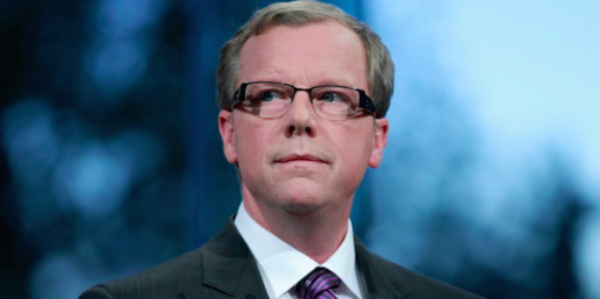
The recent news that Premier Brad Wall’s Saskatchewan Party is flush with cash from Calgary-based corporations is both noteworthy and concerning. Due to that province’s lax political finance laws, the Saskatchewan Party is reported to have received at least $2 million in donations from Alberta-based energy companies since 2006. This is notable considering the Premier’s fierce opposition to the federal government’s plans to fight climate change and his frequent criticisms of Premier Rachel Notley’s NDP government (a government that has banned corporate donations to political parties).
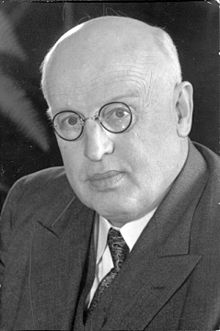
William Aberhart
William Aberhart

Mr. Wall is not the first Saskatchewan politician to get his financial backing from Calgary. There was a time when the people of Saskatchewan faced another, more literal, political invasion from Alberta.

Seventy-eight years ago, Alberta Premier William Aberhart staged an invasion of Saskatchewan politics.

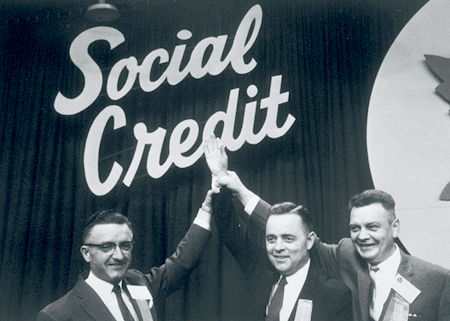
Mr. Aberhart’s Social Credit Party had swept the 1935 Alberta election, going from zero to 56 seats and forming a majority government during the height of the Great Depression. Upon learning of the election victory, the Social Credit Greenshirts in London were reported to have marched around the Bank of England Building holding torches and blowing their trumpets (no doubt inspired by the Battle of Jericho).

During its first decade in government, Mr. Aberhart’s radical administration tried to print its own currency, legislate control over the media, nationalize the banking system and ban alcohol sales.
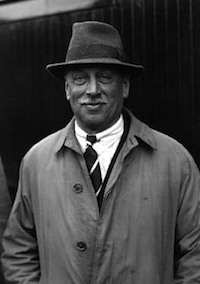
Major C.H. Douglas
Major C.H. Douglas

Eager to spread the gospel of Major C.H. Douglas and Social Credit theory, Mr. Aberhart’s party propped up a Socred Party in Saskatchewan to contest the June 8, 1938 provincial election. The Alberta Premier viewed Saskatchewan as a beachhead for his party’s expansion across Canada and, eventually, to Ottawa.

While The Battlefords Member of Parliament Joseph Needham was party leader by default, the Saskatchewan Social Credit Party organization in that election was manufactured by Albertans. It was run by Alberta MLA and Provincial Secretary Ernest Manning, who would succeed Mr. Aberhart as Premier in 1943 and serve until his retirement 1968.
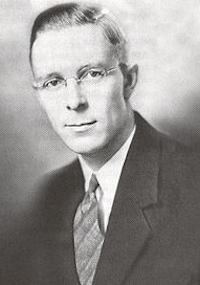
Ernest Manning
Ernest Manning

Nearly all of Alberta’s Social Credit MLAs and cabinet ministers hit the hustings in Saskatchewan, spending weeks campaigning for local candidates. Mr. Aberhart spent two weeks on the campaign trail, speaking to rallies across Saskatchewan along with a band of experts in Social Credit theory.

“The outlook in Saskatchewan is very encouraging,” Mr. Aberhart was reported to have said upon a brief return to Alberta in May 1938. “It would appear from the definite interest manifested by the people who gathered in such large numbers that they realize a change is absolutely necessary,” Mr. Aberhart said.

The “troupe from Alberta invading Saskatchewan,” as one Saskatchewan newspaper described them, did not go unnoticed and faced fierce opposition from local political establishment and opponents on both sides of the provincial border.
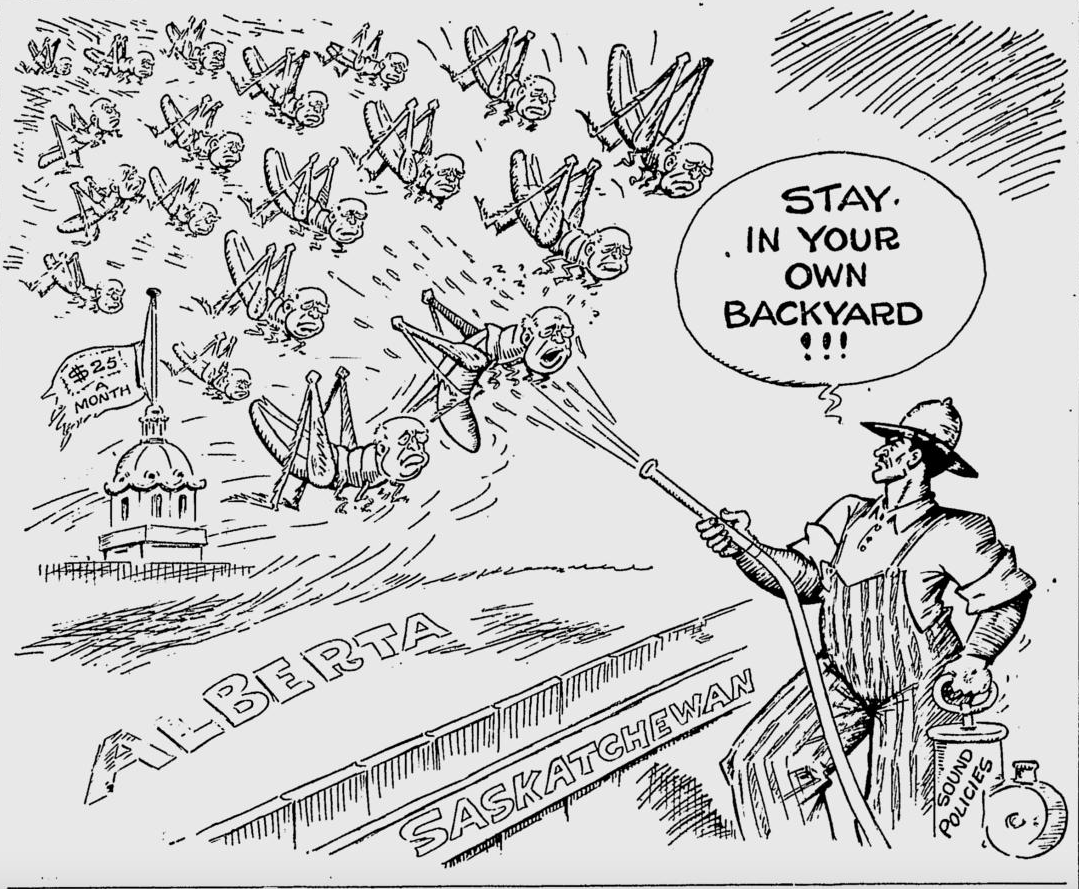
A political cartoon in The Leader-Post in May 1938.

The intentions of Social Credit candidates on the ballot were called into question by The Leader-Post, whose editors asked in a June 6 editorial who they would be loyal to if elected. “Will their loyalty be given to the Alberta Premier or to the people of Saskatchewan?,” the editorial asked.

Saskatchewan’s Liberal Minister of Natural Resources, William Franklin Kerr, called Social Credit a disease and claimed that if its candidates were elected those MLAs would represent the Premier of Alberta in the Saskatchewan Legislature.

John Hugill, a former Social Credit Attorney General who had become an outspoken critic of Mr. Aberhart, said in May 1938 that the Alberta Premier “visualizes being the dominant force in the political life of Western Canada as a stepping stone to becoming the Hitler of Canada.”

On the eve of the election, Mr. Aberhart is reported to have spoken to a rally of 5,000 people in the Town of Melville. The rally was policed by party activists, wearing official Social Credit armbands, who tossed out protesters from the event. It is unclear if the armbands were accompanied by official party uniforms. This was 1938 after all.

“Mr. Aberhart and his government are a peril to the people of Alberta. Not only is he a threat to Alberta, but his actions coming into Saskatchewan and disrupting the affairs of neighbouring province has been a menace to Canadian unity,” J.T. Shaw told The Leader-Post in June 1938. Mr. Shaw was a Knight of Columbus who traveled from Calgary to campaign against the spread of the Social Credit menace in Saskatchewan.
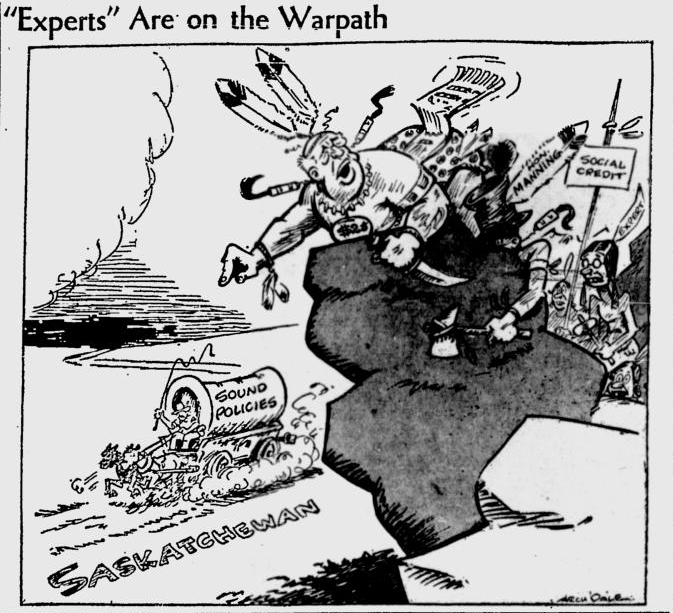
A political cartoon in The Leader-Post in May 1938.

On June 6, the Kerrobert League for Democracy, based in the town of Kerrobert, sent a telegram to the chairman of the Canadian Broadcasting Corporation asking him to stop Mr. Aberhart’s radio broadcasts into Saskatchewan. “The law prohibits radio broadcasting of political propaganda for certain periods before election days,” the League wrote. “…Premier Aberhart of Alberta took unsportsmanlike advantage of situation by broadcasting his propaganda against Saskatchewan opponents from Calgary Prophetic Bible Institute Sunday…”

Mr. Aberhart earned his nickname, “Bible Bill” from his weekly Christian radio sermons broadcast from the Calgary Prophetic Bible Institute in downtown Calgary.

Despite his best efforts, Mr. Aberhart’s Social Credit invasion of Saskatchewan was repelled. The Liberal Party led by Premier William Patterson was re-elected with a reduced majority of 38 seats and the Co-operative Commonwealth Federation formed official opposition with 10 seats. The Social Credit Party earned only 15.9 percent of the vote and elected two MLAs.

“The Alberta-run Social Credit election effort in Saskatchewan provided only two Social Credit seats in a fifty-five-seat house… The Social Credit revolution had been stopped at the Alberta-Saskatchewan border,” wrote historian Alvin Finkel in his 1989 book The Social Credit Phenomenon.

The Leader-Post editorial on the day following the election read: “The result is also satisfactory because it means the repulse of an outside government that threw itself into the domestic affairs of a neighboring province and attempted to lure Saskatchewan into adopting a plan of government and economics that has failed signally in Alberta. Mr. Aberhart and his men can now go home and attend to the business of running the province of Alberta, where they will find plenty of work to do. Mr. Aberhart may now cease from his extravagant claims that the people of the west are clamouring for Social Credit.”

Categories
Alberta Politics

Alberta can’t afford to ignore the Provincial Sales Tax

rat2.jpg.size.xxlarge.promoRat-free, PST-free and Liberal-free” has been a Conservative mantra in Alberta since the reign of Pierre Elliott Trudeau. But is this trifecta now in jeopardy?

The decline of government revenues caused by the drop in the price of oil has once again sparked the discussion around resource diversification and tax increases in Alberta. And with talk of economic doom and gloom, Premier Jim Prentice is managing expectations and preparing Albertans for the upcoming provincial budget and likely a Spring provincial election.

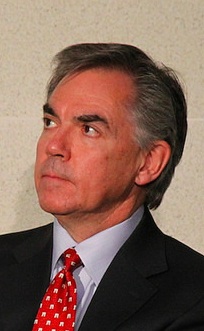
Jim Prentice Premier of Alberta
Jim Prentice

Will the budget include deep funding cuts or tax increases? Under most circumstances, deep budget cuts would be the natural choice for the long-governing Progressive Conservatives, but there is growing speculation that Mr. Prentice could be softening the ground for the introduction of a Provincial Sales Tax (PST) in Alberta.

At a 2013 provincial fiscal summit, economist Bob Ascah suggested that a 1 per cent sales tax could raise $750 million in annual revenue for the provincial government. Diversifying income sources with a five or six per cent sales tax could help soften the blow of the dreaded $7 billion gap that Mr. Prentice has warned will face the provincial budget if oil prices do not increase by next year.

Late last year, Mr. Prentice declared in a speech to the Calgary Chamber of Commerce that he would not consider introducing a PST, but the Premier has changed his tune in 2015, saying that everything is on the table.

This is not the first time PST has been at the centre of discussion in Alberta. Few Albertans may know it, but Alberta did have a two per cent sales tax for a short period ending in 1937.

Alberta Premier Peter Lougheed
Peter Lougheed

In the aftermath of the last major economic downturn in June 2008, when the price of oil dropped from a high of $145 per barrel in July to a low of $30 per barrel in December 2008, PC cabinet ministers like Doug Griffiths openly mused about PST. When prices increased, resource royalties once again poured in provincial coffers and Alberta’s political class moved away from the PST discussion.

Facing a decline in the price of oil in 1984, Premier Peter Lougheed publicly mused about introducing a sales tax, but did not act on it.

The Alberta Taxpayer Protection Act, introduced by Premier Ralph Klein in 1995, states that a referendum must be held before a Provincial Sales Tax can be introduced. The PCs have shown in the past that they have no problem sweeping away old laws like this one. In 2009, the PC government amended their much touted Fiscal Responsibility Act which prohibited deficit budgets in order to pass a deficit budget.

Relying on a boom-bust economy, a real lack of long-term financial planning has been the biggest weakness of the 43-year governing PC Party.

Ted Morton MLA
Ted Morton

The introduction of a PST would be a bold and courageous move – one that could land Mr. Prentice in Alberta’s history books beside statesmen like Mr. Lougheed and Ernest Manning. And while under normal circumstances this would be a kiss of death to a Premier’s political career, we may now be witnessing a once in a lifetime opportunity to introduce a sales tax.

The Wildrose Opposition is both leaderless and in complete disarray, and the opposition New Democrats and Liberals could have a difficult time protesting a move that could majorly diversify the government’s revenue stream. And with the departure of Derek Fildebrandt late last year, the local Tax Outrage Industry is lacking a major spokesperson.

The move also comes with the support of former Finance Minister Ted Morton, a member of the right-wing Calgary School, who recently penned an opinion-editorial in the Calgary Herald calling for a PST. And while he was teaching at the University of Alberta, Mr. Prentice’s Chief of Staff Mike Percy admitted that a “sales tax gives you greater stability.”

Kevin Taft Liberal Party MLA Alberta
Kevin Taft

As reported on David Climenhaga‘s blog, Conference Board of Canada chief economist Glen Hodgson also weighed in on Alberta’s tax dilemma: “Not having a provincial consumption or sales tax is highly popular and has been great politics, but it denies the provincial government a steady and stable source of revenue through the business cycle.”

To get a grasp of how embarrassingly low our tax rates current are in Alberta, Kevin Taft in his 2012 book, Follow the Money, says that Alberta could increase its tax rates by $11 billion and would still have the lowest tax rate in Canada.

Critics will argue that a sales tax would unfairly penalize low income Albertans, and they are right. The government should also scrap the short-sighted flat tax and return to a real progressive income tax system. Alberta is currently the only province with a Flat Tax, the odd-ball brain child of former Treasurer Stockwell Day.

While Albertans look with envy at Norway’s $900 billion petroleum fund, it could be decades before our government imposes meaningful increases in natural resource royalties. The PCs bowed to political pressure from the oil and gas industry and paid a significant political price when trying to implement meaningful increases to resource revenues in the late 2000s.

The strongest opposition to the introduction of a PST may come from inside the PC caucus. Many PC MLAs are said to be unconvinced that Albertans would support a PST, and the presence of 11 anti-tax former Wildrose MLAs in the government caucus could stiffen the opposition from within. Skeptical MLAs would probably be correct that they will receive a blowback from Albertans in the short-term, but the right decisions are not necessarily the most popular when they are initially implemented. And without a credible government-in-waiting, now could be the the only time the PCs could implement a PST.

Alberta should strive to remain rat-free forever, but on the revenue front, we need to break our dependency on resource revenues that cripple our provincial government each time there is a hiccup in the market.

Categories
Alberta Politics

Laurie Blakeman now the longest-serving opposition MLA and other #ableg milestones.

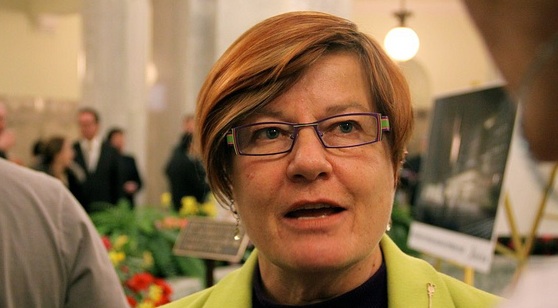
Laurie Blakeman MLA Edmonton-Centre
Laurie Blakeman

This week Edmonton-Centre Liberal MLA Laurie Blakeman was recognized in the Legislative Assembly as being the “longest-serving member to serve exclusively in opposition in Alberta’s history. Ms. Blakeman was elected on March 11, 1997 and, as Speaker Gene Zwozdesky noted, she has served continuously since that time for a total of 5,876 days over the course of five-terms.

Gene Zwozdesky
Gene Zwozdesky

Ms. Blakeman surpassed David Duggan, who served in opposition from June 28, 1926, to May 4, 1942, for a total of 5,790 days. A historical irony is that had Speaker Zwozdesky, who was first elected as a Liberal in 1993, not crossed the floor to the Progressive Conservatives in 1998, he would now own this new record.

According to my estimation, the longest-serving opposition MLA who did not serve exclusively in opposition, is Walt Buck. Mr. Buck represented Clover Bar in the Social Credit government from 1967 to 1971 and in the Social Credit opposition from 1971 until 1982, as an Independent MLA from 1982 until 1984, and as a Representative Party MLA from 1984 until his retirement from politics in 1989. Mr. Buck recently passed away.

Here are some other Alberta Legislature milestones:

Categories
Alberta Politics Satire

Social Credit celebrates 77 years in government.

Social Credit Party Alberta
Supporters celebrate 77 years of Social Credit rule in Alberta.

CALGARY STAR-TRIBUNE

In 1935, Fred Astaire and Ginger Rogers’ hit song “Cheek to Cheek” topped the music charts and the Winnipeg Blue Bombers became the first western Canadian team to win the Grey Cup. It was also the year that the Social Credit Party formed government in Alberta.

Fresh from celebrating the party’s 21st consecutive election win, Premier Rob Anderson will join party faithful this weekend to celebrate the Social Credit Party’s 77th year in government.

 Long abandoned are the social credit monetary policies that defined the party when it formed government in 1935. Social Credit in 2012 embraces what political watchers have called the Conservatism of the New Albertan Century.
Rob Anderson MLA Wildrose
Rob Anderson

“One of the regular talking points of the Official Opposition is to claim that after 77 years of Socred rule, the province of Alberta is some grim, dark, horrible place to live,” said Premier Anderson. “It’s entirely untrue, of course. And it doesn’t say much for the Opposition that they say such terrible things about this great province.”

“Alberta is the best place to live, work and play in Canada,” said the Premier.

On Friday night, Premier Anderson will join Traditional Family Values Minister Rob Anders, Telecommunications Minister Ezra Levant and Treasurer Jason Kenney in paying tribute to former Premiers William Aberhart, Ernest Manning, Harry Strom, Preston Manning, Stockwell Day, and Monte Solberg.

Only once in the party’s 77 year history has it faced the threat of electoral defeat.

Harry Strom Alberta Premier
Harry Strom

While the history books record Premier Harry Strom as the great conciliator of Canadian confederation, he led the dynasty to its narrowest victory the 1971 election. New to the office, Strom fought back young Peter Lougheed‘s liberal-minded Progressive Conservatives, leading his party to form a small majority government.

Four years later, Strom led Social Credit to a decisive victory over the Tories.

Many historians credit Social Credit’s survival in 1971 to the failure of the Daylight Savings Time plebiscite.

Lingering in the opposition benches in the 41 years since 1971, the PC Party has been unable to topple the long-standing government.

Current PC Party leader Raj Sherman has called the Social Credit Party old and out of touch.

“The simple fact is that over the past 77 years the government has backed itself into a corner on revenue and desperately needs to find a way to return to solid financial ground,” said Sherman, an emergency room doctor.

“While Albertans deserve to have a say in all matters of public policy, I am troubled by this administration’s penchant for government by polling – particularly when they are so selective about the feedback that they choose to heed,” said Sherman.

NDP leader Rachel Notley has called on Premier Anderson to tear down the economic “Firewall” that divides Alberta from the rest of Canada. “Too often the Socreds make poorly studied, reactionary decisions based on industry lobbying”, said Notley.

“As things stand now, we are closing our eyes, crossing our fingers, and hoping for the best,” Notley said.  “Albertans deserve better,” said Notley.

Albertans can follow the weekend’s celebrations using the Twitter hashtag #after77years.

Categories
Alberta Politics

ernest manning on alberta’s oil sands.

Former Premier Ernest Manning spoke on television about Alberta’s oil sands in the 1960s.